Ask ChatGPT
 UNTAPPED with Spencer Matthews
12 Oct 2026 · 49m · 22 chapters
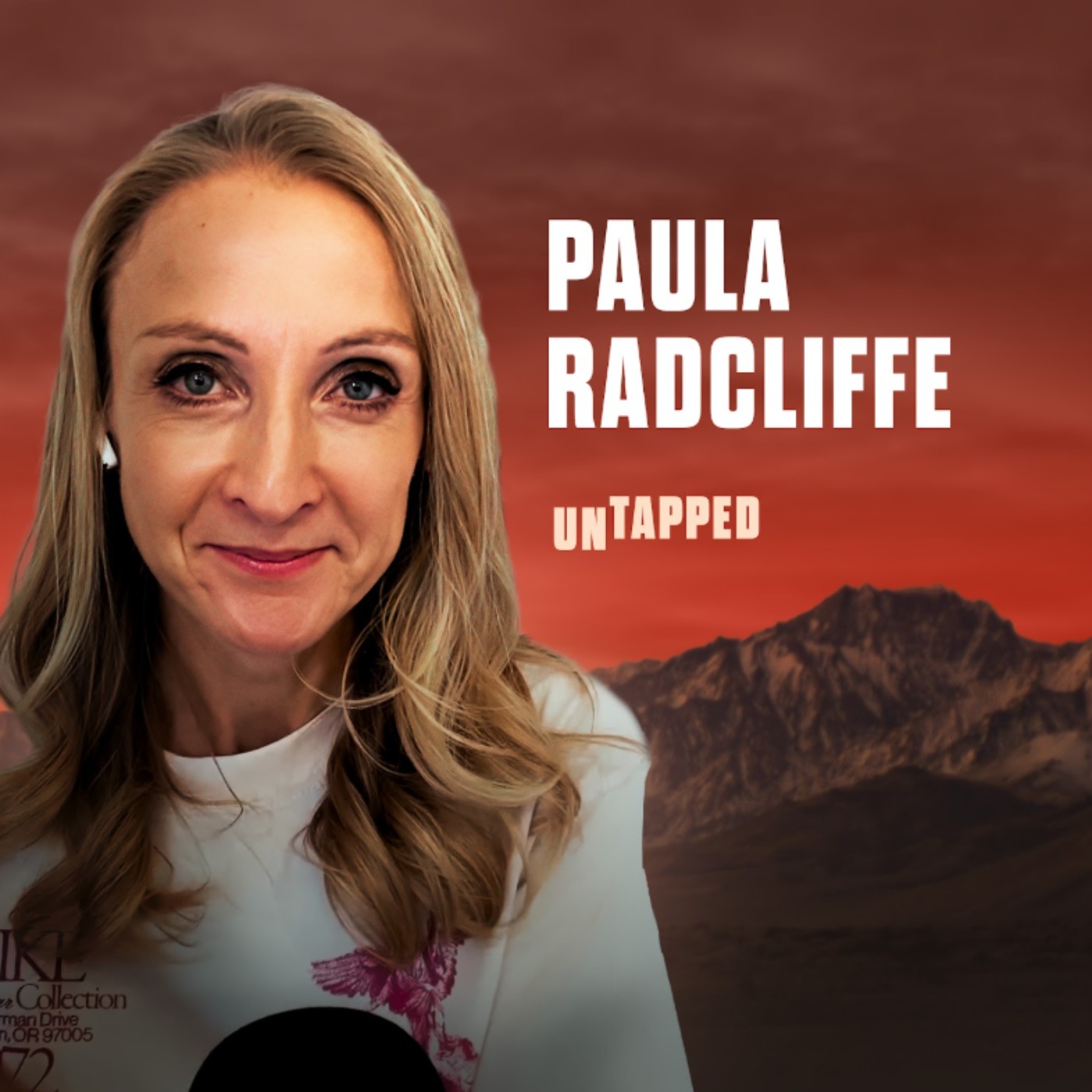
Paula Radcliffe discusses her 2:15 marathon world record at Berlin, the training and race tactics behind it, and broader marathon lessons for everyday runners. She also touches on mental coping during “dark spots,” recovery habits, and how modern marathon culture has changed.
Paula Radcliffe is the sole guest. She is a former elite marathon runner and world-record holder (2:15:25 at Berlin). The host is not named in the transcript.
She aimed for negative splits and used pacemakers; she credits altitude training (Font-Romeu base; later Albuquerque) and a high-recovery routine (massage, ice baths, frequent sleep, pulse-based recovery checks). She says marathon “holes” were usually physical, and her coping technique was mental counting. She argues starting slower and building to the end is better than banking time early.
Peter Elliott shouting “break 2:16” on the BBC bike; Athens 2004 hematoma leading to fuel depletion and stopping; 2005 Berlin toilet incident where she stopped briefly, apologized, and still set a women’s-only world record.
Written by AI. May contain mistakes.
Explore how therapy influences small moments in life.
“Therapy's biggest impact doesn't show up in some dramatic breakthrough.”
Paula shares her emotional experience leading up to her record marathon.
“I'm sure you're still recovering, but amazing, amazing performance.”
Paula details her strategy and feelings throughout her world record marathon.
“It doesn't matter what you're aiming for.”
Discover how altitude training influenced Paula's performance.
“I think I can comfortably say I've never had such a phenomenally detailed and incredible answer to a first question.”
Paula discusses her training methods and weekly mileage for competitive racing.
“And yeah, we could make it work in Albuquerque well.”
Learn how Paula's training evolved from cross-country to marathon running.
“I'm wondering back in your heyday when you were well champion, you know, running these extraordinary times, was there anything outside of normal training that you were doing to seek an advantage?”
Learn about Paula Radcliffe's structured training schedule and rest strategies.
“I grew up taking a rest day before every race and at least once a week, more than once a week when I was younger, and two days full rest before a big important race.”
Explore how training methods and recovery techniques have advanced over the years.
“I guess the only downside was then when I had kids and now when I'm working, I don't function very well on less than eight hours sleep.”
Understand the mental strategies Paula used to overcome challenges during races.
“chatting to a guest just now he said he sometimes just goes running now without his watch just for the love of running, right, just so that he can go out and enjoy it.”
Hear about Paula's experiences with injuries and setbacks during her career.
“You know, you completed the majors last year.”
Paula discusses her experience of quitting a marathon and the internal struggle that followed.
“Now I could have pushed on a bit more at that point, but I knew I wasn't going to make the finish line.”
Paula shares her insights on the growth and changes in women's marathon running since her early days.
“I guess this is pre-social media as well.”
Paula reminisces about how her father tracked her during races without modern technology.
“weekend next year, taking part in the same event on the same day, largely going through the same emotions, the same journey, all finishing together and all feeling part of that family.”
Paula discusses the significant influence her father had on her running career and personal growth.
“So he was the one that was running marathons from when I can remember.”
Paula reflects on her proudest achievements in running, including setting a world record.
“Well, first, I'm very sorry to hear about your loss, but he did at least get to experience all your wins.”
Paula explains her mental strategies for managing pain and pressure during races.
“So yeah, there's not many days where you get it all come together in that way.”
Paula recounts a challenging moment during the 2005 marathon and how she dealt with it.
“And I was just thinking I'm losing time all the time because I'm really uncomfortable.”
Learn about the difficult choices athletes face during competition and the consequences of those decisions.
“And it's not something that I'm proud of.”
Discover essential tips and common mistakes to avoid for marathon running success.
“And it's like looking back to that one, The only other alternative I had was basically just to carry on like that.”
Understand the importance of mental preparation and strategy for marathon runners.
“Don't go and experiment with a curry the night before.”
Hear about favorite marathon courses and recovery habits from a seasoned athlete.
“I mean, they've added a couple more majors since then.”
Gain insight into the legacy and influence of famous runners and the value of mentorship.
“Immediately refueling and sleep sleep's really important But yeah, refueling within that 20 minute window is so, so key.”

Get the gist, explore an idea or ask about something said.
 Claude
On UNTAPPED with Spencer Matthews, what are the key points of this episode?
Searching your listeningAutomatic transcript. May contain errors.
0:00Therapy's biggest impact doesn't show up in some dramatic breakthrough. It shows up in the smallest moments. You bite your tongue instead of escalating. You put your phone down instead of firing off that text. You say what you actually mean instead of what would hurt someone else the most. Nobody applauds those moments, but they quietly change your life. That's what growing feels like. And that's exactly what Grow Therapy is here for. Grow is therapy that works, covered by insurance. Sessions average$21 with insurance, and some pay as little as$0, depending on their plan. There are no subscriptions, no long-term commitments.
0:37You just pay per session. Grow connects you with thousands of high-quality, licensed therapists across the U.S., offering both virtual and in-person sessions, nights and weekends. You can search by what matters, like insurance, specialty, identity, or availability. and you can book a therapy session in minutes and begin in as little as two days, not the national 48-day average. See if you could pay as little as$0 for therapy in seconds at growtherapy.com slash start now. That's growtherapy.com slash start now. growtherapy.com slash start now. Availability and coverage vary by state and insurance plan.
1:23Paula Reckliffe, welcome to Untapped. Thank you. Thank you for having me. And congratulations to you. I'm going to say start off with that one. Phenomenal run in Berlin. I'm sure you're still recovering, but amazing, amazing performance. Oh, well, nothing on what we're going to be talking about with you, but thank you. It was one of the better days I've experienced with racing slash running. Yeah, I was in heaven there at the end. Just what it's all about. But we've got far more exciting things to dig into today than my marathon PB. We may as well kick off with yours, 2.15, a world record that stood for 16 years.
2:07I'd love to know just what went into that. And I'd love you to, if you can, just walk me through the race that you had, how you felt at the start, but also just how you felt on the day, the night before, the morning of, you know, what was it like to be Paula Reckliffe that day? Everybody wakes up on marathon morning, don't they? It doesn't matter what you're aiming for. You pull the curtains open and you're like, please, please let the weather be okay. And the weather was okay. And I felt good, which is the main thing. So then it was just about that most nerve-wracking time for me is that bit waiting to be able to start warming up because once you start warming up the adrenaline starts moving in a positive way and you're able to focus on things that you need to do um so before then it was really just try and stay as calm as possible get underway and and just stick to the plan um and we had the male pacemakers in that david insisted on i'd kind of had this argument with i can do it on my own he was like well i want to make sure because you had them in Chicago because it was a mixed race in Chicago.
3:11So I was trying to run alongside them for as long as possible. And my basic goal was not overcomplicate it. I knew the average time from Chicago was 5.13 miling. So that was my goal, hit as many miles as possible under 5.13 and then kind of go with it from there. So that went according to plan. I also wanted to try and run negative splits so I went through halfway I want to say it was 6805, 06 something like that through halfway and then I started to kind of try and pick it up a little bit all I knew was I was on target in terms of beating the record I didn't really know what those projections meant and then coming along the embankment with what a couple of miles to go you're approaching 24 mile marker um Peter Elliott's the famous like 800 1500 who was a huge inspiration for me growing up was actually on the BBC camera bike that day so he dropped back from the lead vehicle and he shouted out to me um Gary my husband who's on the lead vehicle um Gary says if you pick it up you can break 216 and we had kind of joked in training like saying training's going so well you can beat 216 you can beat 216 but honestly at that point I was like this is going to be what it's going to be.
4:26I cannot put any, there's no picking it up. I'm picking it up as much as I can at this point, mate. So I'm just going to hang in. But at the same time, it did give me a psychological boost because it meant I was on target. And I didn't know what it was going to be. I just remember that last mile thinking, absolutely savor this, because you don't know how long this is going to last. I'm going to put that record out there for as long as possible but at the same time I want to keep those memories as if it was yesterday so that when I'm going through those tough times in training and those setbacks I can come back to this to help me get through it so it was kind of a mix and a blur and like anyone who's run all out in the marathon I would say if they move the finish line back 100 meters everyone will get there but if you tell them it's 100 meters earlier they won't get to the finish line because your brain just switches off the minute you finish.
5:20But it's not quite as exhausting a feeling when you know you've achieved your target. So that was, yeah, that meant it was really good. I was in bits. My stomach was really falling out of me. So yeah, I was not in a good place, but I felt in a good place because I'd managed to tick it off and bring it back to London, which is what the goal was all about. I think I can comfortably say I've never had such a phenomenally detailed and incredible answer to a first question. I got goosebumps several times in your answer there, just because I think it's just so incredible listening to you. And I can relate in some small way to some of the things that you're saying.
6:04There's so much I want to ask you. You went to Albuquerque to heat train? To altitude train. altitude and hits or just altitude no altitude um so my altitude training of base of preference was uh font ramon the pyrenees um i've discovered it i did languages at uni so i discovered that on my year out absolutely love it there and have an apartment there but in january february march there's too much snow it's too risky so albuquerque was safer weather-wise while still having the altitude. Later on, I tried Kenya. But height wise for me, Albuquerque was good. I knew my roots there. And like I say, it worked for me for that block.
6:44We tried Flagstaff once and got a big dump of snow. Still was able to make it work, but had to drive back to Albuquerque because we got a big dump of snow. So it's not, you can get snow there, but it's pretty safe. You'll be able to train through. It's not as hot as it would be in the summer there. At that time in 2003, were most elite marathoners altitude training? Yes and no. I mean, there weren't as many elite runners from Europe, I guess, particularly in the marathon. So I was racing a lot of Kenyans and Ethiopians who were living and basing at altitude all the time. My big rivals from America, yes, they were based at altitude year-round.
7:26I discovered it, as I said, on my year abroad from university, so not until I was in my early 20s. um and then it really it did work for me and because I am what they call a non-responder to altitude which means that it as I understand it it never gets easy for me it never gets the same as sea level so it's always harder which I think means you're a good responder because the training means that you get more more bang for your buck because the more miles you run it's worth more because it's harder but yeah that's why I didn't need to go super high to the heights of Kenya. And yeah, we could make it work in Albuquerque well.
8:04And when you say you were looking to negative split the race, which I think is any good marathoner's goal, when do you begin to want to see the progression in pace? So if you could map out, you probably have already ran the perfect marathon in your eyes, and maybe you'll be able to shed some light on which one that was if it wasn't the world record. But what is the ideal way to run a marathon? If you're looking to do your best, what's the best possible way you can run a marathon?
8:40Therapy's biggest impact doesn't show up in some dramatic breakthrough. It shows up in the smallest moments. You bite your tongue instead of escalating. You put your phone down instead of firing off that text. You say what you actually mean instead of what would hurt someone else the most. Nobody applauds those moments, but they quietly change your life. That's what growing feels like, and that's exactly what Grow Therapy is here for. Grow is therapy that works, covered by insurance. Sessions average$21 with insurance, and some pay as little as$0, depending on their plan. There are no subscriptions, no long-term commitments.
9:17You just pay per session. Grow connects you with thousands of high-quality, licensed therapists across the U.S., offering both virtual and in-person sessions, nights and weekends. You can search by what matters, like insurance, specialty, identity, or availability. And you can book a therapy session in minutes and begin in as little as two days, not the national 48-day average. See if you could pay as little as$0 for therapy in seconds at growtherapy.com slash start now. That's growtherapy.com slash start now. growtherapy.com slash start now. Availability and coverage vary by state and insurance plan.
9:58Don't you wish everything was more rewarding? With Rakuten, almost everything is. You can earn cash back on those new shoes you've been wanting. You can save on the next trip you book. You can cash in on groceries. Just join. Shop your favorite brands and save. Target, Instacart, Expedia, Macy's, Sephora, CBS. The list is long. Save online, in-store, and at over 22 ,000 restaurants. And when it's time to redeem those rewards, get your money exactly how you want it. Choose PayPal, check, bill points, or cash out with gift cards. Eligible American Express card members can choose to earn membership rewards points instead of cash back.
10:40Terms and conditions apply. So go ahead, take a trip, fill a cart order dessert Rakuten is a world of rewards join today for free go to Rakuten.com or get the app that's r-a-k-u-t-e-n
11:00well it might be easier to say what not to do um but also the rider to that is that the advancements in shoe technology have kind of changed it a little bit so it used to be you could absolutely not go out too hard in the first half because you would pay the price you'd be too sore to be able to keep it going now you can get away with it a little bit by that I mean if you start out and you think that first 10k was a bit quick if you rein it back you kind of can recover your legs a little bit in order for not to lose it completely but that being said it is easier to get past halfway really and the old saying in the marathon used to be halfway is is 20 miles or 30k and then start picking it up because that way you are tired but if you're picking it up that's psychologically giving you a boost it's a much nicer way to be able to finish and someone described it to me once as you can gain far more time back in the last 10k than you can ever get in the bank in the first 10k so the moral being don't try and think if I leg it the first 10k that's kind of a buffer to spare and I'll be able to get my goal.
12:12It's much easier to leg it the last 10K. So to be able to pick it up and run stronger there, it's much easier to recover. I think also psychologically it is better that way around. It's hard to do because obviously, and I'm talking for listeners and myself, people that are not professional runners, it's a really difficult thing because we all assume we're going to fall off towards the end. So there is that kind of that banking of time early feels like it could be the move because, you know, my legs are going to start failing anyway. But actually, you know, if we're looking at Berlin starting a little bit slower, reserving a little bit of pace, building into the race and ending strong is I can I can vouch for it.
13:00It's the better way around. Definitely. Definitely. And if you're in doubt, try it on a long run as well. Try it on your long runs and just pick up the last couple of miles and then go and try a long run where you go hard the first two miles and try and hang on and you'll feel which is easier. Can you take us through what training was like for you? Obviously, we've spoken about altitude training. Can we talk about your weekly mileage? I mean, I have the great fortune of chatting to current Olympic marathoners nowadays And, you know, some of the steps that they take to just seize any small win or gain or percentage on top of their training is, you know, it feels like a lot for an average person, a normal person.
13:46I'm wondering back in your heyday when you were well champion, you know, running these extraordinary times, was there anything outside of normal training that you were doing to seek an advantage? and if so what was that and also just what did your training block look like so I guess I was lucky in the fact that I worked basically with my coach my club coach from I met when I was 11 when I first went along to Bedford County kind of stayed with me and then essentially handed over to my husband just when he but we stayed in contact he was just traveling less because he was just getting a little bit older and didn't want to travel so much and so my training didn't it more evolved to the marathon rather than drastically changed a lot of the things I was still doing for cross-country back when I was 18 were still in my week then and there was no rocket science to it and again that's where my coach was great he worked on what worked for me so I was on a an eight-day schedule so seven days of training and then the eighth day was a complete rest day.
14:50I grew up taking a rest day before every race and at least once a week, more than once a week when I was younger, and two days full rest before a big important race. So before a marathon, I would not run at all on the Friday or Saturday. Zero. Zero. Zero. No strides, nothing. Zero. Nothing. Just saving everything for race day itself because that was what I was used to. And I think it's all relative because nothing you do in those two days is going to make any difference. It's where you feel best psychologically. And I had grown up thinking two days rest means I go out there and smash it as hard as I can in competition day.
15:28So that's what I carried on doing. And that eighth rest day was built into my training cycle because then we would pack the seven days. So when you ask me what my weekly mileage was, that's across that seven days. So the average, if you factored in the rest day, would be lower. but what I was probably getting in then and bear in mind this is before watchers so everything has worked out what I think what pace I think I'm running at so it's a bit of an estimate but it would generally be in the 130s to 140s the highest I ever hit was 151 and that was at sea level so this is miles yeah miles in those seven days and what I did was I would have four key sessions within that on days one three five and seven so day one would often be a track session and that would be 10 to 12k of reps and day three would then be a tempo run so a 10 mile tempo run and day five would be five by six and a half minutes so essentially five by a bit over 2k uh with 90 seconds recovery and then the day seven would be my long run which would kind of be a i would run it pretty much as a tempo run so race effort not race pace and this was just rinse and repeat every week the same pretty much yeah i mean the actual length of the long run would vary ideally the speed of the tempo run gets a bit quicker um and the track sessions vary so there would be different types of track sessions so pretty much that that it was nothing special nothing complicated the key thing was bouncing back to be able to squash that much in so I had a lot I would have for the build-ups for the big marathons I would have my physio come out and stay for two or three week blocks in it and through those times I would be able to train that little bit harder because I would be getting worked on twice a day massage wise a lot of ice baths and a lot of just massages built into it to be able to recover from it I feel like you're doing all the the kind of stuff that's trendy now but you know 20 years ago yeah I mean I think I did just that was what I think helped me maybe ultimately made my career a bit shorter but now the advances in in shoe technology mean that people can recover quicker those recovery techniques are coming in we're getting all that data about your sleep I was basically taking my pulse but I was sleeping every afternoon so I'd take my morning pulse in the morning I'd try and get 10 hours sleep again it wasn't set on any sleep tracker it was just what time the clock said when I went to sleep what time when I woke up in the morning but I take my morning pulse if my morning pulse was up a little bit like four or five beats that's just a sign I hadn't really recovered so not to push too hard to take a kind of easier day that day if it was up 10 beats or more it was a rest day just not to risk pushing things too much there and then I'd sleep for two hours in the afternoon to be able to just keep doing everything so yeah it was kind of that helped me and I liked it it wasn't psychologically a sacrifice for me I actually loved I could take my family with me towards the end in the beginning part Gary was there all the time so it wasn't like I was making huge sacrifices I was doing what I loved doing as my job sleeping a lot, recovering well.
18:51I guess the only downside was then when I had kids and now when I'm working, I don't function very well on less than eight hours sleep. I think it's absolutely amazing thinking about everything you're saying, but putting the timeframe on it back then, right? Now we have, you know, whoops and things that tell us our heart rate all the time and whether or not you're recovered and, you know, what your strain is and what your HRV is. And did you say that you didn't run with a watch? No, I did run with a watch, but I didn't have your Garmin or your Coros or whatever it is that actually does your mileage for you.
19:28So I had a watch, but it just was a Casio watch that said, or later on a Nike watch that you just press start and stop on. Well, you'd have to work out your own splits in the marathon. That was why everybody wanted to get this certain. There was a watch that we actually used to drive from Font Remote to Andorra to be able to get there. um i want to say it was the timex one and you could set it to rotating beep so for example if i was doing a track session and i wanted to run three minute k pace i could set it to beep every 36 seconds and it would just do that just so you know if you're ahead or behind yeah yeah so i just knew for the beep or my coach would blow a whistle or and gary was actually got lazy towards the end he was on a bike in front of me so then he'd shout out the times from the bike and yeah exactly that for the long run we had a mile mileage thing on the bike so we knew that but that was also key and that's why I went back to the same places so in Albuquerque there's a high school called Academy High School and it's got a loop around the outside which is on dirt a little bit of road packed dirt a bit up and down and it's 3.3 miles around it so my tempo run was literally three laps of that and I knew where the mile markers were so I could check my times on that but yeah nothing complicated which is good i think because then you tune in to your body it's amazing but like i guess i guess you were a finely tuned machine who had a much better understanding of her own pace than we would right listening to this like i genuinely think and i was chatting to a guest just now he said he sometimes just goes running now without his watch just for the love of running, right, just so that he can go out and enjoy it.
21:08And he says sometimes he does hard sessions like that. He just runs really hard, but he has no idea what pace he's running at. I would have no idea, I don't think. Well, it's an interesting thing to consider, actually, like guessing paces, but certainly not over like a mile. My pace varies kind of, you know, I'm not comparing us. You can look at your watch as you're doing the mile. But yeah, you're right. That was probably why we did more track sessions or my five by six and a half minutes would be done on the same course. So then I knew roughly I need to be going past that tree at 310 or somewhere around that to know when I was running well.
21:58But you learn very quickly to tune in to your body. And I think it does help. like I did um when I was getting ready for I think it was 2015 I was getting ready for my final when I ran London one more time and I went out and I was an ambassador for a race in in Grand Canary and I ran the 10k and there were no clocks or markers k markers on the course and the amount of people freaking out because they couldn't they didn't know their splits I'm like guys we're just running it was definitely going to be 10k so I know I'm just going to be running as hard as I can for what 34 minutes or so let's just let's just try and do that and being able to do that.
22:35And interestingly, I've just recorded a podcast with Hayden Wilde, who won the half Ironman in Nice a couple of weeks ago. And as he was coming through the final transition into the half marathon, he dropped his watch. So he had no idea on pace either. And he said it was really hard because he was so used to being able to hit those splits that he had to just guess. I just think I spend the first minute or two of any race violently trying to slow myself down because like because my heart rates like 130 on the start line because I'm so excited about it and then you know you get going and even even just recently in Berlin set off with one of my best friends like the idea go off slow control it and we ended up doing that but like it's always that comedy moment where you're 100 meters in and you think you're like dog walking because you're going so slowly and you look down and you're at like 315s and it's like oh my god like you know pull the handbrake you know and then you slow it right down but because you're full of adrenaline and excitement you know something that would feel quite fast feels like walking but you're just like nuking energy because because you're going too fast and i think if i didn't have my watch like you'd be in danger of running a k at 315 type thing you know and then that would be hard to recover from for me but i would have done it in training and got it wrong so i learned quickly growing up what that felt like so you kind of learn i think without a watch you learn your inside your internal computer a little bit better to be able to not to and it's probably better on days so if you're not 100 and you're trying to hit the splits that you've trained at and you would be okay to hit at 100 then you're going to get yourself in trouble whereas if you're just tuning in to where you are what you've got on that day so your internal computer is right this is what i've got energy wise today and this is what i can expend over the first 10k of a marathon to be able to safely get to the end it's a it's an easier way than someone who's trying to hit the splits they should do from their training but for some reason things aren't right on the day of the race.
24:49I think the old way is easier to get to the end. And you're still running marathons. You know, you completed the majors last year. Yeah. Obviously, a bit of a different deal now to when you were breaking your world records and competing at the top of your game. But in either instance, do you ever, as Paula Radcliffe, get into real kind of toxic holes in the marathon? So let's start with when you were competing at the highest level. I'm sure, like anyone, the marathon distance can be treacherous, even for the best in the world. Did you ever get into serious negative kind of holes in your mind where you had to dig yourself out to continue the race or not, really, because you're so prepared?
25:41Yes, but there was usually a physical reason. for it um so yeah I came in I guess very well prepared with be ready there will be my dad had run marathons I'd have taken a lot of experience uh Ingrid Christensen actually spoke to her quite a lot Joan Benoit Samuelson kind of people who'd gone before me Steve Jones and kind of pulling in that advantage and if no one's been to a darker place in a marathon than Steve Jones and come out the other side so he's a great person to chat to about I mean he went through Chicago in 1985 45 in 61 45 and they're only just aiming for that now and held on so that's phenomenal so I went in ready that there will be dark spots get your coping technique ready and mine was actually just counting and I developed that I guess from going back to your story about the watch when I was doing five by six and a half minutes my coach would be blowing the whistle at three minutes actually sometimes a minute and a half three minutes five minutes and then 30 seconds to go so to pass the time I'd start guessing when it was going to go where I was time-wise and I'd just count in my head and I got very good at it so twice to 100 would be just outside of three minutes um three times to 100 would be just around about five minutes a bit more and that was a good gauge so then when I'm running marathons and I'm aiming to run just outside of five minute miles it was great because it was three times 100 is a mile and my technique was basically break it down so So I'm only thinking what number comes next, one foot in front of the other until I get through this bad bit.
27:12Then in the Olympic Games in Athens, I've come in, I've had a major injury, all sorts of treatment. I had basically a hematoma between my quad muscle and my femur. And they had to go in blind with no ultrasound guidance and aspirate that bleed out, put cortisone in. I was taking anti-inflammatories as well. upshot was with all the stress my stomach was not absorbing food um so a couple of days before the marathon I was thinking just keep carb loading keep carb loading you'll be fine uh I wasn't fine the leg held up uh it wasn't pain-free but it held up but I um ultimately I hit the wall properly like I ran out of fuel and I tried all of my techniques I stopped once I made myself start again I couldn't hold a straight line I just kept veering off to the gutter each time and I knew I wasn't going to finish.
28:04Now I could have pushed on a bit more at that point, but I knew I wasn't going to make the finish line. And so I did come in for a lot of criticism at the time. I was a quitter. I'd given up. It was really hard because I was kind of berating myself for those things as well. And I got a lovely letter from a man called Rob D. Castella, who's a top Australian marathon runner and he wrote me a really nice letter basically saying um that he I know you'll be beating yourself up don't because I did push myself to the point of collapse and it took me a lot longer to get back from it so then that kind of almost flipped a switch in my mind okay be kind to yourself you did what you could you weren't going to get to the finish and I can get back from this, which kind of helped.
28:53I mean, my mum at the time said to me she was really worried because she'd always seen me push through stuff. And when she saw what was going wrong in Athens, she thought, is she going to actually, is this going to get dangerous? So she was relieved when I stopped, but I was really mad with myself. And it took me a long time to kind of come to terms with it. But I guess that's the deepest hole that I didn't get through. But I mean, it's an know it's an incredible story and and also i mean i know you know this you certainly don't need me to to to mention it but people often comment on things that they don't understand and have no experience of you know like it's easy to look at somebody who has quit something for whatever reason and call them a quitter you know by the sounds of things that there was no reasonable way of finishing that race.
29:41And that is the reality. I guess this is pre-social media as well. So thankfully, thankfully. Yeah, definitely a good point now. Having two teenage kids who kind of go through that is definitely, yeah, it was much easier for me. When you look at modern day marathoning, what are the main differences outside of tech and shoe developments that you notice as a world champion? um oh wow i mean aside from the sheer amounts of people that are now running i was gonna say as as a woman that's what i notice is that when i was coming through i could probably count role models and inspirations like on two hands thankfully those women were the women that paved the way for women to even be able to run the marathon i mean joan benoit samuelson won the first one in 84.
30:33Greta Weitz winning nine times New York. Huge inspirations. Catherine Switzer and Bobby Gibb battling for women to actually be able to run one at all and having to disguise themselves as men. So that's the, I think the biggest change and the best change is the way that the community has grown. And I always say this, it is the best community in the world. There is no other sport out there where you can get 60 ,000 people and we might have 120 ,000 people over one weekend next year, taking part in the same event on the same day, largely going through the same emotions, the same journey, all finishing together and all feeling part of that family.
31:09There is nothing better than that. So that growth is huge. And seeing women in the London Marathon hit parity is a huge, huge milestone to be able to do that. And now it's trying to make that globally across us marathons that absolutely we can do that it's such an amazing distance and and and a really beautiful sense of community nowadays as well i mean when you look at you know marathon majors and you know all of these it's so well put together even even the the you know arriving at a marathon picking up the bib like dropping your bag at the start it being at the finish it's so well organized you know I can only imagine that it never used to be as slick as it is today how was the experience in your day tracking people so actually I think what we did with my dad I mean obviously I was a little kid at the time so trying to remember exactly but he would put down his projected paces where he thought he'd be at certain mile points they'd map it out with the tube map where we could get to we would be out there at Blackheath take his stuff with us and then go with my mom on the tube to different spots and you really you don't know when they're coming so you basically are thankfully there are three of us my little brother um me and my mom and we're scanning the crowd to try and find him with a carton of orange juice and a mini mars bar um and that was and i remember getting mad with him once because he stopped to drink the thing and i'm going dad all these people are going past you he's like i don't care i need to just get this energy into me um so he was doing all of that and then trying to find people at the end as well because of course there's no mobile phones there's no tracking system so if you're not under the tree by the finish that you said you're pre-arranged that you were going to be it's really hard to actually meet up with them as well something could have happened or you know you can't see anything right yeah yeah so you kind of you would miss we probably would miss at least one checkpoint along the way because we just wouldn't get there particularly in london i mean on the plus side there were less people in it so that makes it easier if you tried to find someone all the way around with no tech no trackers and no technology I don't think you could do it nowadays because there's how many people in the race it was easier in the 80s um but yeah it was it was a lot of planning going into it and sticking to pace it's it sounds um from this interview anyway that your dad was a huge inspiration to you yeah was he a uh was he a a professional runner or or did was he just an enthusiast no the rest of us just an enthusiast so basically and it took me a while to put this together.
33:45My dad was a big supporter. So he was the one that was running marathons from when I can remember. I think he'd run keenly in school and then gave it up out of school, went away to uni, met my mom, was smoking at the time. They wanted to start trying for a baby. She got pregnant with me. She basically banned him from smoking and he quit overnight, but he put on a lot of weight so then he started running again to lose the weight um so as long as I can remember my dad had run so I would join in for little bits with him and the weekend he'd do his long run and I used to join in for a little bit and I loved it I loved the feeling of just running through the forest um and sharing that time with my dad so I pestered and pestered he did some research at the time we were living in Cheshire and he found me a club for Jim Harriers and signed me up for that and then was my biggest supporter coming to races when we had to move for his job we moved down to Bedford.
34:37He found Bedford and County. He found my coach there for me and was again, driving me all over the country as a kid. And once he got mad with me when I got so nervous before a race and it was cross country relays in Mansfield. And I was maybe about 14 and I got so nervous. I was nearly physically sick beforehand and he got really mad and he said, I'm not taking you to these races unless it's fun and you're enjoying it. You try your best and that's all you can do. And then later I found out that's why he'd given up because the nerves in school were too much. So he gave up and he always regretted it.
35:12So the only time he got mad with me was when I was letting nerves get to me. My biggest supporter and like I say, my biggest kind of soundboard. And even now he's no longer with us. We lost him during COVID. But even now, if I've got something to figure out, I'll go in my head, what would dad do? And kind of figure it out from there. Well, first, I'm very sorry to hear about your loss, but he did at least get to experience all your wins. You know, he was able to witness you winning the Chicago Marathon, London Marathon. He must have been incredibly proud of you. I love stories where people's parents are kind of involved in their development, you know, the Williams sisters.
36:00and in this case you, I didn't know about the relationship. Yeah, I mean, he would never push, but he and my mum were just the biggest supporters and they would always make sure that I was kind of taxied around to training, to races. So, I mean, we used to drive up from Bedford to compete in the Durham cross-country races and it would be like leaving at 4am. My dad would drive all the way up there, cheer us on for a day and then drive all the way back. And that was his weekend. He was still working hard and doing all that. He flew out to the World Cross Country on a Friday night, basically got off the plane, came straight to the course, watched me win the World Cross Country as a junior, and then flew back.
36:41And he had a cold when he left. He had bronchitis by the time he got home. I'm loving all the stories. It's so great to hear more about you. Is your world record that stood for the 16 years your proudest moment in sport? Or do you have a more personal one? It's kind of, I'm glad you said in sport, because obviously my kids stand above that. But within sports, I think it's up there. For me personally, finally winning that World Cross Country in 2001 after I'd won it as a junior in Boston in 92 and set it a goal to try and win the seniors. It took me nine years and a lot of seconds, thirds, fifths, 18th, 19th.
37:23And so to finally do that, that was a huge thing for me. But yeah, probably the 215 because the pressure was on. It carried a lot of pressure coming into it. The whole team did, especially after that fall. And we kind of, yeah, we delivered on it. So yeah, there's not many days where you get it all come together in that way. Do you suppose, and this is a bit of a fun question, really. it's very difficult to answer it but with today's tech and super shoes and everything were we to offer a kind of prime Paula Radcliffe all of the advantages that modern day marathon runners have how much of your pb time do you think you could shave off I honestly I have no idea I mean I kind of joke and say oh it's going to be like 209 30 something or 40 something just because it would be reclaiming the world record but it's a complete joke um I have no idea I know it would be quicker um but actually the more I've thought about it I'm kind of glad I had my time when I did because I think everyone would be quicker from the time that I was racing and what I was very good at was kind of being able to push through that dead legs pain just keep going uh and that was kind of my usp if you like that was what set me apart from everyone else i could absorb huge amounts of training for a short time um and then be able to push myself really really hard so it gave me a buffer ahead of everyone else so yes i would run faster but i think others might have run more faster a bigger luck jump in their time um so i maybe wouldn't have been as ahead as i was then So I'm quite glad I had my time when I did, but I would like to know.
39:11It's such an interesting point. What is it about you that you suppose makes you able to handle pressure and pain more than others? Again, I have no idea because I only know me. I've not been inside anyone else's head to know what it feels like to them. So when people ask me these questions, it's quite hard to analyse it. I mean, I think one thing that helped was I would always kind of see it as a bit of a game rather than, oh, it hurts and I need to cope with the pain. I just think, oh, how long can I not think about it and kind of push it a bit, kick it a bit further down the road, literally, until I have to think about it.
39:49So little techniques like that. So I kind of saw it as fun to be trying to do that rather than something hard. And I think that helped. But again, I think just naturally things, we all have things that we're good at. Sometimes it had to be something I had to be careful with. So I have a high pain threshold. And if I would say to my coach, I'm running through something and he'd say, well, what is it? I could easily run through something that was six, seven, eight out of 10, nine out of 10. But it would cause a serious injury. So we would then have to go back and he'd say, if something's hurting and it's a six, you stop then.
40:27in training you don't push through it because otherwise you're going to make it a lot worse so it was something that I had to manage it wasn't me being brave I just didn't feel things was the decision to well obviously the decision to pull up and stop in in 2005 was a necessity and you still went on to win the race how did you feel in that moment because of course the world is watching there's cameras everywhere all eyes are on you you're winning the race any runner knows what it's what it's like when that happens um in 2005 there weren't toilets on the course so i had been looking for one for a while um couldn't couldn't see one i knew i'd have to climb a barrier i was uh i want to say i was about 16 17 miles in it's not easy to climb over a barrier at that point in the marathon um even without the time that you're going to lose um so I was kind of in a state of almost I'm very good at not panicking but I knew I was coming back from the massive disappointment and disaster of Athens um I was on pace I knew I was in shape um I was on pace for a women's only world record because obviously the 215 had been paced so I knew I was on pace for a 217 low um which would have been a women's only world record It was in the end a women's only world record.
41:54And I was just thinking I'm losing time all the time because I'm really uncomfortable. I really don't know what to do. And it's not something that I'm proud of. It's not something that I would ever do if you had time not to be able to do it. But at that point, I think I was just thinking, what do you need to do to make sure you win this race and try and run as quickly as possible and limit this as much as possible? And I saw a drink station coming up and it had the drapes off the edge of the table. so what I kind of really hoped was that I would be able to dive under the table um apologize to everyone and kind of be able to to carry on that way um when I got there the drapes were attached to the floor um so by then Raina's already said to Bladdy you can like whatever um and so I was just like I I'm mortified still now thinking back to it but at that time I was just like right okay you have to get back on pace um and I did get back on pace as I said it does still embarrass me now so not talking but just what I did and also but at the same time I wouldn't have run that women's only world record that I think stood for it stood for a while I want to say maybe 10 years um but it did stand for a little while um and I wouldn't have done that had I not kind of made that decision and the amount of runners that will come up to me and say I understand what you had to do because I've been there and you had to stop.
43:18And then also the runners who will come up to me and say thank you because now courses have toilets en route so you don't have to go off course. I was literally about to ask if that impacted there being toilets on the course. Well, it certainly wasn't my intention to embarrass you. No, no, no, I know. But it is something that you would never do just out on a run or down the street. But we have this discussion, right? So we've had this discussion in the studio before. Or, you know, if you were on for a big PB or, you know, in my very humble case, outside of professional sport chasing a 245, you know, what would you do?
43:55And the answer is, my answer is always I would do exactly what you did, 100%, you know, because I just don't, you know, you're not going to pull the plug on all of the work that you've done because you need a bathroom break. And if there's really nothing else to do, then, you know, as you said, you'd graciously apologize if it upset anyone. But I also think it's just a sign of strength that you just got on with it and carried on and set the record. And that was that, you know, I was never I always thought that there was no other door to go through, really. No. And I think your mind is in a different place in competition.
44:32Like you said, you just you kind of and I'm actually very good at going to that logically. Like, what do you need to do to get out of this with the best case scenario? And so then just do it and suck it up. and just get on with it. The young lady, Joanna, the world's champion, Hiroxa, who recently had a bit of an issue, is coming on to kind of chat to us as well. Yeah, I mean, again, it's so, so difficult because I kind of get both sides. And it's like looking back to that one, The only other alternative I had was basically just to carry on like that. And then you're kind of, you're uncomfortable.
45:17You're spreading all along the route instead of just in one contained spot. Yeah. No, I don't know. We can move on from the discussion about the bathroom breaks. But, you know, in her particular case, I think it's on high rocks to pull her out, not the other way around. She's competing. She's after a, you know, she's going to potentially win the world championships. Why would she pull herself? Anyway, I'll discuss it with her. But given that we have you on the show, most of our listeners are runners and they are aspiring to run marathons and events generally. Could we get your top tips, top three tips, say, for becoming a better marathoner?
46:01And also, what are the biggest mistakes that we think everyday marathoners make? okay um so i guess top three tips i'll do those first um number one would be pick pick a marathon that is like some kind of passion in you that really fires you up that you want to work towards because it's not going to be an easy road so you're going to keep have some setbacks along the way you're going to have to keep working through those and if you want to do it it's much easier to be able to do that so take some time to shop around and kind of pick the one that really inspires you to work towards then set a plan um but be flexible on that plan it can't be rigid you can't just do it because the training plan says i need to do it if you're feeling off your body's not right listen to your body and be flexible with that um and the number three would be to get your coping technique whatever you know in your mind you're going to hit at least one rough spot probably more than that in the race what am i going to do to get through that um and be be ready for it when it comes that would be the the big um three tips um things that people get wrong or we talked about if you go off too quickly you can't disrespect the marathon you don't want to be afraid of it but you can't disrespect it so you've got to kind of obey those basic rules really focus on fueling and the nutrition is so good now so practice practice practice that in your long runs know what you're going to and stick to that and stick to what you normally eat the night before as well.
47:28Don't go and experiment with a curry the night before. Go with what you always do and race breakfast as well. Plan ahead. That would be the main things. And then go in with the mindset. The thing I always advise people, look back at what you have done the night before in training. Don't worry about the runs that you missed, things that didn't go according to plan, that injury that cost me five days, six days there. Don't worry about that. Look at the consistency of what you have done and go in ready to make the most of all of that work. My favorite of those is the understand that you're going to feel some kind of pain because it's so tempting, isn't it, to go.
48:06And I did it before Berlin. I was just like, oh, well, you know, I could probably run faster, but I'm just going to take it a little easier. And I'm just going to treat it as a training run and try and enjoy the whole thing. And my friend was just like, mate, there's no chance of that. It was like 100 percent you're going to hit like all kinds of pain and all kinds of holes. And he just said, regardless of whether you're going 80%, 90 % or 100%, you're going to get the holes. And I was like, oh, okay, well, let's just run it fast then. And we'll try and deal with that. Perfect. You've returned to the marathon.
48:39Are you going to be running any more? Never say never. I mean, they've added a couple more majors since then. So I've still got a few more on that target. I was supposed to be running the Kielder Marathon this coming weekend. But I got really sick coming back from Sydney and I'm not in shape to do that. Plus, my mum fell and she's broken her hip. So I'm currently backwards and forwards trying to sort that out. So, yes, it's the short answer to that. But I've not got one planned yet. Another one that's on my bucket list is the Medoc one, the wine marathon. Oh, yes. I really want to do that. That would be, yeah, that sounds a good one.
49:18Yeah, that's, I mean, as someone who lives in France, loves their kind of heritage and history and wines and cheeses and bread and all of that. That is absolutely one that I want to do. And I was chatting to Alistair Brownlee. He did it a couple of weeks ago and he said it was a lot of fun. Wine, cheese and charcuterie and stuff. He got steaks. Food of the gods. Both steak and chips he got on the way round. That sounds just fantastic, doesn't it? I love Alistair Brownlee. He's so kind and he's been in here as well. We've been running together. He sends me true fuel gels. He's just, he's one of the greats.
49:55Definitely, definitely. Lessons of quick fires. The one piece of running advice you wish you'd known earlier? I guess it's more life advice. You can't please all the people all the time. There will always be people who are not your fans and don't like you and that's fine. Let them be. Your favourite marathon course that you've ever raced? It's a toss up for me. I think it has to be London. but because New York was my comeback place that's where I went to after Athens after Beijing and after I'd had Isla I do love the New York course there's something about running in Central Park that is just lovely London is the one that I grew up wanting to run on and then had the pleasure of running on so many times so well so I loved it The recovery habits that you would never skip?
50:41Immediately refueling and sleep sleep's really important But yeah, refueling within that 20 minute window is so, so key. Is it? Yeah. Yeah, you've got to get on that one. Then you go to 2.45. Come on. I've missed the window for Berlin at least. Oh yeah. Well, you tell me, you must have eaten something. Do you not finish starving? We finished, but like we probably only ate like an hour later. I had a couple of pizzas, but then it was mostly, we had a few pints, you see, just to celebrate the win. and then I actually didn't have dinner. I had a nice early night. Didn't sleep very well. But then, since then, Paula, we've been lots and lots of calories, lots of sleep.
51:24So it wasn't immediate. It wasn't the best recovery straight away, but we are now in a good recovery phase. So all good. And last one. One runner, past or present, that you'd love to go for a run with and it doesn't have to be me. Emile Zatapik. Okay. Okay, cool. I did say that recently on one. And they went, who is that? And I'm like, oh, please. I threw in the it doesn't have to be me bit, not that you would have said me. But if you ever fancied a run, I'd be more than happy to go running. I absolutely would love to. And as I said, I'd love to get you on Paula's Run Club as well. We can chat about your exploits over the marathon distance and all the running ones.
52:02You'd be very, very welcome there. Paula, I will take you up on that. Definitely. That would be a great honour to join you on your show. and I can't thank you enough for taking the time to join me today. You're an absolute icon and a legend of the running world. And although I'm relatively new to it all, I feel very privileged to have had the chance to chat to you. Thank you and thanks for having me and congratulations again. We'll look forward to the next one. Thanks so much.
Paula Radcliffe knows what it takes to push the marathon to its limits. The former world-record holder takes us inside the training, mindset and resilience that made her one of the greatest marathon runners ever.
She shares her golden rule for pacing, why flexibility and listening to your body matter, and how setbacks, both in running and life, changed her perspective. From world records to the toughest moments of her career, Paula reveals what a lifetime of running has taught her about performance, resilience and why the sport is about more than what you achieve.
Paula Radcliffe is an ambassador for Children with Cancer and the host of Paula's Run Club, which is. available on YouTube and via all podcast providers: https://www.youtube.com/@paulasrunclub
Heights 👉 Get 20% off your first month of any subscription at https://highpfrmc.com/UT_Heights_AU and use untappedpod at checkout
Robinhood 👉 Head to robinhood.com/untapped to get started and claim your free stock.
Hosted on Acast. See acast.com/privacy for more information.