Ask ChatGPT
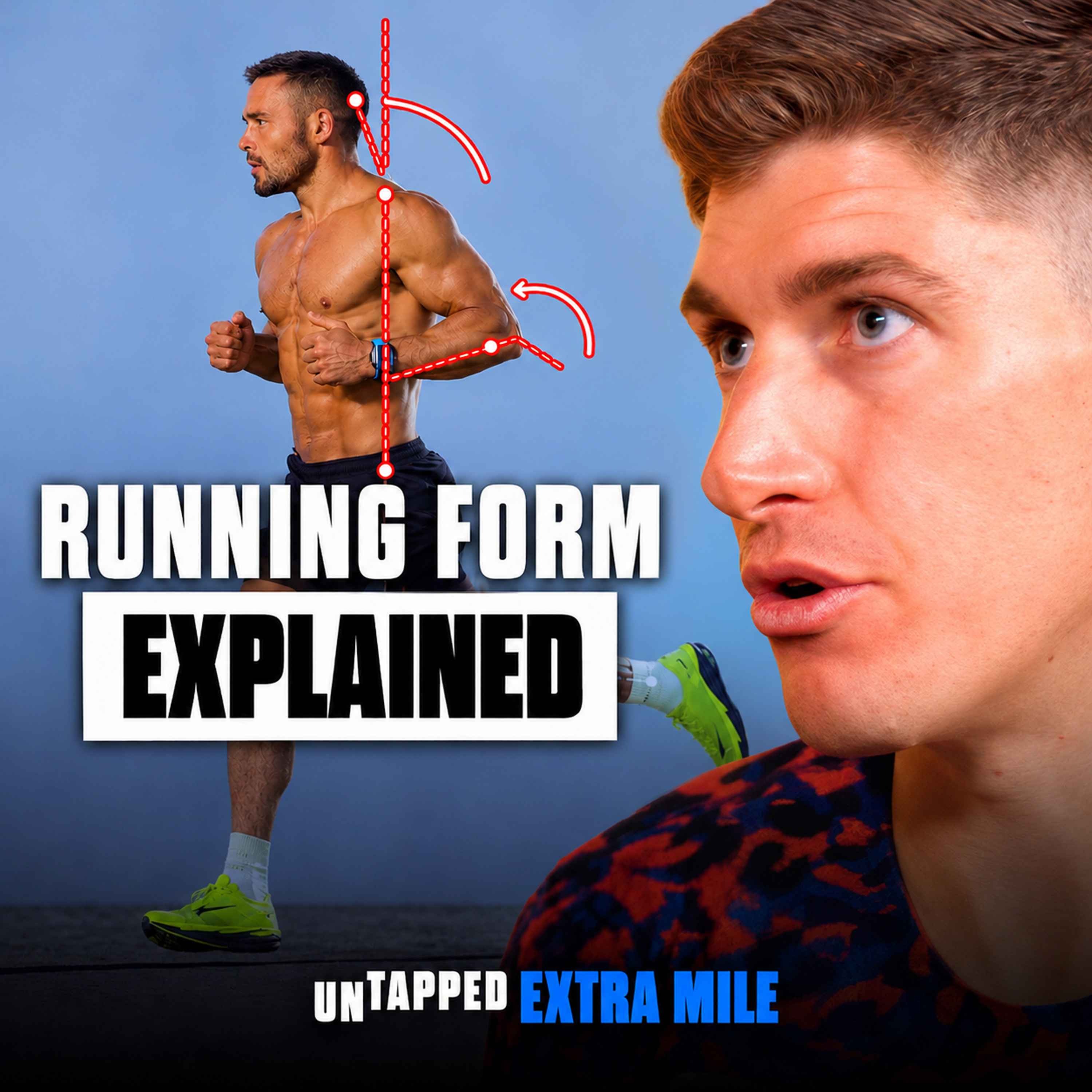
 UNTAPPED with Spencer Matthews
16 Jun 2025 · 38m · 18 chapters

Ronda Rousey discusses what made her “unstoppable,” her retirement from the UFC, and how motherhood changed her priorities. She argues that people should “weaponize their uniqueness” by finding what others are bad at and mastering it, and she describes elite performance as requiring repeated heartbreak and risk. She also explains that her late-career decline wasn’t just concussions, but a feedback loop between concussions and migraines that caused vision loss/auras and impaired snap decisions, leading her to retire.
Ronda Rousey, former UFC champion and elite judoka (her mother is a world champion in judo). She’s now in “mom mode” and training in jiu-jitsu/boxing.
She knew early she could be the best; her judo style and armbar skills were her edge. She felt obligated to fight despite worsening symptoms. She says she didn’t want to be seen as making excuses, so she withheld health details until later diagnoses.
Vision “chunks” and reading difficulty from migraine auras; bright lights/head impacts as triggers; floaters after sparring; a “zero error” mindset in her last fights; her earlier fight where she barely got hit yet still had post-fight migraine issues.
Written by AI. May contain mistakes.
Ronda shares her opinions on a viral debate regarding humans versus gorillas.
“And if you want to hear more incredible conversations with extraordinary people to help unlock the potential within all of us, then please subscribe, follow and review the show wherever you're listening or watching.”
Ronda opens up about the challenges of motherhood and reclaiming her identity.
“You know, I'm working out in my garage and I'm just trying to reclaim my body from motherhood.”
Ronda recounts her recent childbirth experience amidst chaos and challenges.
“Or the answer is no, but you could be a new something.”
Ronda reflects on how becoming a mother has changed her outlook on life.
“You can't even, I can't even tell you, like, I cannot go to the bathroom without a parade these days.”
Ronda discusses her early ambitions and the influences that shaped her drive.
“Therapy's biggest impact doesn't show up in some dramatic breakthrough.”
Ronda discusses her journey through various sports and her rise to UFC fame.
“Well, UFC specifically, that's a different spot.”
Explore Ronda Rousey's influence as a role model for women in combat sports.
“Beautiful woman, just a really, really gorgeous soul.”
Ronda discusses her feelings of nostalgia and missing the process of training and competition.
“For some reason, I really miss the process so much more.”
Ronda shares her perspective on the strategic elements of fighting, comparing it to puzzle-solving.
“When you're talking about puzzle solving, do you mean when you're fighting?”
Ronda explains how her judo background shaped her fighting style and perspective in MMA.
“was there ever a specific moment where you kind of looked around your competitive set and knew that you were the best in the world?”
Discussion on the backlash surrounding Ronda's departure from the UFC and her thoughts on it now.
“And what my mom taught me in judo was you find what everybody else is bad at and you get really good at that thing.”
Ronda discusses the health issues she faced post-UFC, including migraines and epilepsy.
“And actually, like, made some, like, I wouldn't call them, like, breakthroughs, but actually been able to, like, diagnose a lot of the stuff that was going on with me.”
Ronda discusses her health issues related to concussions and migraines.
“and I just didn't have all the information at that time.”
Ronda explains how her health issues affected her ability to compete safely.
“And so, I mean, it could be a game changer because it actually could be some solutions to it.”
Ronda reflects on the pressures and obligations she felt before her final fights.
“Or I would like, they were called like floaters.”
Ronda shares her experiences of losing and the emotional vulnerability in sports.
“But after the fight, I was had these, you know, I was dealing with like these migraine auras.”
Ronda expresses pride in her accomplishments and their impact on her family.
“And I think that's, to me, that was part of being able to perform at that highest level was to leave yourself that vulnerable to heartbreak.”
Ronda shares her decision to prioritize family and training post-retirement.
“Well, I hate to cut you off, but we got to end with the callback, which is like, you know, stand up gold right there.”

Get the gist, explore an idea or ask about something said.
 Claude
On UNTAPPED with Spencer Matthews, what are the key points of this episode?
Searching your listeningAutomatic transcript. May contain errors.
0:00I think people have forgot to weaponize their uniqueness. You find what everybody else is bad at and you get really good at that thing. And that's how you're going to beat everybody. You have to be willing to get your heart broken over and over and over again. And give it all that you have and it's still not enough. When you left the UFC, there was a lot of backlash. Data sent me to this long-term fighter's neurological study. And it would be things like I would lose big chunks of my vision to the point where I would like get a jab and I would basically go blind. Was it at its worst before your last fight with Nunes?
0:39What happens when the most dominant fighter on the planet loses? In this episode, Ronda Rousey opens up like never before. And if you want to hear more incredible conversations with extraordinary people to help unlock the potential within all of us, then please subscribe, follow and review the show wherever you're listening or watching. ronda rousey welcome to untapped thank you i'm not usually one to wade in on kind of social media trends or like stuff that i see online but because you're a legend of the fight game i thought that it would be a shame not to discuss this gorilla thing with you you know have you seen this uh gorilla thing yeah so there's there's a whole thing going around talking about whether or not 100 men versus one gorilla, like what would the outcome be?
1:29And I was wondering if in your opinion, if how many prime Ronda Rousey's would it take to beat a gorilla? No weapons. No weapons. One gorilla. How many of you would it take to beat a gorilla? Of course, well, you know, we don't need to, this is all theoretical. I think it would have to take as many of me is it would be to like crush it with my weight. You'd have to, you'd crush it with your weight. Yeah, I think people are underestimating the toughness of a gorilla. But I mean, like in a multi-fight, like what are y 'all gonna do at the same time? Like when are you gonna come behind and like throw the gorilla and bite your arm off?
2:07Like there's just, there's no, I think people are underestimating how, can I swear on this? I don't know if I'm allowed to swear. I don't know how fucking gnarly a gorilla is. Have you seen a gorilla? Like no. No, no, no chance at all. Where it becomes complicated is that there may be a hundred of you, but only kind of a few of you can get around it at once, you know? So it kind of leaves 95 of you redundant, which I think people are missing. I did consider about asking this to you, and I thought I've not got involved in the debate as such. But then I thought, ah, I'm interviewing Ronda Rousey, so I'll ask her.
2:47There you go. Enough of me to smother it with my weight. Yeah. You've been in the gym a lot recently. You even just said just now that you've got a gym session planned. Are you fighting again? I am like deep in mom, in mom mode. I am not in the studio. You know, I'm working out in my garage and I'm just trying to reclaim my body from motherhood. You know, like you become this like human assembly factory and you completely like lose your own autonomy. And you literally like, like a baby is like a parasite. it is like sucking the life out of you and just taking over everything. And I just, you know, just trying to reclaim myself from, you know, this amazing thing that women's bodies are designed to do.
3:38But it really does just like take you over entirely. And then when it's over, you know, when you've been like completely like sucked out And then there's the person and you're like left with what's left over. You're like, oh, my God, well, you know, will I ever be the same again? Or the answer is no, but you could be a new something. So, yeah, I'm just I'm trying to trying to reclaim my bodily identity, if that makes sense. When did you have your latest child? January 6th, actually. It was during the windstorm that caused all the fires in Palisades. And we were literally smelling the fires as we were released from the hospital.
4:23And the winds knocked over a tree on the car as we were driving home. Wow. It was pretty. It was a pretty eventful. I mean, the birth itself wasn't that eventful. She came out like the doctor barely got her gloves on and she was poop. she was out but uh you know second kid you know yeah well that's like a log ride i'm uh well i'm uh delighted that you had an easy birth um but but sorry sorry to hear of the uh of the circumstances surrounding getting home i mean that must have been um quite difficult i take it that nobody was hurt uh no except for like you know i think my husband's feelings were hurt because i was like you know you know that uh that first drive home with the baby and you're like oh my god nothing and then i was like i was like what's the fucking road like i like snapped or something and he was like i've never like this whole back and forth of the baby in the car we're both panicking um but no everything everything was fine and uh yeah we were good it's such um it's such an incredible time though isn't it obviously we we touched on um uh both both having having children but those those kind of first few days are always really interesting aren't they with it with a with the latest uh addition to to the family did you find that when you became a mother your um nature shifted at all i mean my whole perspective on everything changed you know people say that like oh everything's gonna change like yeah whatever everything changes and you have zero free time nothing like not not even And you can't even poop.
6:06You can't even, I can't even tell you, like, I cannot go to the bathroom without a parade these days. So, yeah, absolutely everything changes. I can't even single out, like, one thing because it is everything. But I was kind of, like, tired of myself. You know, I was getting kush lash. I don't know if that's a deep cut reference to Jerry Maguire with the guy saying he was tired of talking about himself. Kush. Anyway, I'm aging myself. But, yeah, I was just getting tired of being, you know, absorbed into my own shit. And I'm really happy to, like, have some kids to take that focus away from just being, like, self-absorbed, if that makes sense.
6:52you know which which you know when you're single and you only got your own you know stuff in your career to worry about you're just going to worry about your own self in your career and i was just over worrying about me so um it's it's kind of like a relief to to have them take center stage and to kind of be able to take a more of a back seat to them i find it interesting that you would use the word self-absorbed when it comes from a champion such as yourself do you think that having that level of dedication to yourself and to your sport and um and that drive to succeed and push yourself further was that always a part of you when did you when did you realize that you had the potential to become the woman that you have become or the woman that you were in that Octagon, for example, in UFC.
7:49Therapy's biggest impact doesn't show up in some dramatic breakthrough. It shows up in the smallest moments. You bite your tongue instead of escalating. You put your phone down instead of firing off that text. You say what you actually mean instead of what would hurt someone else the most. Nobody applauds those moments, but they quietly change your life. That's what growing feels like. And that's exactly what Grow Therapy is here for. Grow is therapy that works, covered by insurance. Sessions average$21 with insurance and some pay as little as$0 depending on their plan. There are no subscriptions, no long-term commitments.
8:26You just pay per session. Grow connects you with thousands of high-quality licensed therapists across the U.S. offering both virtual and in-person sessions nights and weekends. You can search by what matters, like insurance, specialty, identity, or availability. And you can book a therapy session in minutes and begin in as little as two days, not the national 48-day average. See if you could pay as little as$0 for therapy in seconds at growtherapy.com slash start now. That's growtherapy.com slash start now. growtherapy.com slash start now. Availability and coverage vary by state and insurance plan.
9:08This is Nick and Jack from The Best One Yet, and we are excited to tell you about Walmart Business. Staying ahead of business trends means moving fast and adapting quickly. Walmart Business helps you simplify operations so you can focus on building the next big thing. Find exactly what your organization needs with their ever-expanding business assortment and everyday low prices. Keep your momentum going fast with reliable shipping and fulfillment. Eligible organizations can take advantage of tax-free shopping, both in-store and online, saving you more while getting you everything you need. It's Walmart built for your business.
9:38Sign up for a free Walmart business account today at business.walmart.com. 75 % of women who seek menopause care don't receive it. The lying awake at 3am wondering what's happening to your body ends now. Midi is virtual care built for women in perimenopause and menopause with clinicians who specialize in women's health. Plus it's covered by most major insurances. Getting started is easy. You can book your first visit with a clinician right away. Midlife needs MIDI. Visit joinmidi.com to book your first visit today. That's joinmidi.com. Insurance coverage varies. Check with your plan for coverage.
10:15Well, UFC specifically, that's a different spot. Like when I was six, I assumed I was going to win the Olympics in swimming. And then when I was 10 and then, you know, about to turn 11, I started doing judo. I assumed I was going to win the Olympics in judo. And then when I started doing MMA, I was like, okay, I guess I'm just going to be the UFC champion now. You know, that was just the way that I did things and was raised to think of the possibilities for myself. You know, my parents, I was speech delayed. And, you know, my mom has a PhD in educational psychology, so she was super worried. And I think, you know, my dad was always like, oh, you know, she's a sleeper.
11:03Don't worry about it. And I think to kind of overcompensate from me feeling like insecure and feeling dumb, they really like went overboard and was like, you're exceptional. You're going to do amazing things and all that stuff. So I just expected any time that I did something, I was going to be amazing at it because my parents said so and they're right about everything. And yeah, so but also my mom, she's, you know, a world champion in judo and had that experience. And she gave me those lessons at a very young age of you're just going to have to be selfish. You're going to have to put your goals first in front of everything else.
11:42Your friends want to go to the movies? sorry I can't go to the movies. You want to go to prom? Sorry I can't go to prom. Oh you have this thing that you promised that you would do but it's you know conflicting with training? Sorry friend you know. Everything just has to take a backseat to it and I actually had a friend of mine saying it's not selfish it's self-focused but I think it was like well it's gotta be a little bit selfish. But I think that's so funny I've had the great fortune of interviewing following a lot of incredible athletes and i've never heard it be described as selfish to to chase your dream it's always been referenced as almost like losing out on a normal childhood or or kind of and i've always thought that odd i've i i prefer this way of thinking about it that if you want to get to the top you're going to have to be selfish and if you want to be the best you're going to have to make sacrifices and but a sacrifice in in my opinion um if it's for the thing that you love and that you know that you're gifted and destined to be then it shouldn't really feel like too much of a sacrifice it would it would air more on the side of selfishness but i think it's really cool that you just said that in the way that you did yeah well that's my mom i can't take too much credit for it a lot a lot of the brilliant things i say are shamelessly plagiarized for my mom.
13:08Your mother sounds like an incredible woman. Oh, yeah. I mean, I can give you like the short bio of my mom, but she like got a perfect score in the SATs at 16, graduated college at 19. She won the world championships in judo while she was a single mother, getting her PhD and working, you know, as an engineer in the 80s all at the same time. You know, she's kind of a lazy. Wow. out. She made me feel like I'm like, oh, I'm just like the dumb jock of the family. You know, everybody has like these like high degrees and everything like that. And I'm like, I'm gonna drop out of high school and do MMA.
13:47I'm like, you freaking idiot. It worked out all right. But like, you did, you only did that. You didn't also get a degree at the same time. Like, that's like what my mom would do. You know, I had, I had high achieving, I had a really high achieving father, high achieving siblings as well and uh felt like a black sheep you know in in my family but you know just to to state the obvious i'm sure we already know this you've gone on to inspire um you know just millions of women all over the world you know i had the great pleasure of interviewing um um meatball molly mccann uh and you're her hero you know she was a ufc champ over here in the uk from Liverpool.
14:24Beautiful woman, just a really, really gorgeous soul. And you inspired her to fight. I think your legacy in fighting is incredible and really potent. There's not a single person really that I've spoken to in the lead up to this interview that isn't aware of you and what you've achieved. So I wouldn't sell yourself short. I think your career is phenomenal deeply inspiring and it's what our show is all about oh keep it coming keep it coming i might come back and keep up all this flattery do you miss fighting in a in a professional capacity i touched on your training earlier you've got a training session as soon as you finish here you you've said it's to to regain a bit of sanity to get your body back um but like do you do you miss that feeling in your gut of competing and kind of that that element of risk that you undertake when you take on another ego in the octagon have you fought before i've had a couple of boxing fights i'm a jujitsu guy though mostly now no i miss the training a lot and um you know like you know i don't know like i think the the more of a separation you have from things the more like that you romanticize it and stuff like that.
15:43But yeah, I miss all the good things. For some reason, I really miss the process so much more. Everyone makes it so much about like the actual accomplishment and that night. And I think like the just the lifestyle of like things like feeling sore in ways that are useful of like the little ouchies that you have. You're like, oh, my thing. I did that the other day. And at the time, like, oh, man, I'm just covered in all of these little things that hurt. And you're like, oh, it just piles up on you. And you're kind of like feel bad for yourself because like, oh, I'm going to have to pay for this later, or this is going to come back in training and da, da, da, da.
16:35And like little things like that, I kind of miss. And I think just kind of being lost in mastery of something, you know, when you're great at something and, um, and everything makes sense. There's, there's nothing, you're not, I'm never in a situation where I'm like, what do I do? You know, and, uh, getting kind of lost in that, that, that flow state. I really, I really love that because There's no 10 minutes ago or 10 minutes from now. It's just everything happening in the moment. And especially the way that I fight, it's very much like taking every individual situation and going with like problem solving it as an individual, you know, and then coming up with a solution.
17:21And so I'm always like creating these solutions and solving these puzzles instead of just like reciting memorized moves, if that makes sense. And I miss that puzzle solving, if that makes sense. When you're talking about puzzle solving, do you mean when you're fighting? Yeah, fighting, training, any of it. If you're saying you're a boxer, if one person does this, or if you do that, there's only so many reactions that they're going to have. you know and out of all those reactions what's your proper reaction for you you know and making those snap decisions and judgments and things like that that's like i don't know that's like a little rubik's cube to me i i love that i guess when you're at the top of your game the the the margin between two great fighters is probably such that you can play chess and it is more like a rubik's cube for me if i go to the wrong gym and get in the wrong ring i'm just going to get my jaw broken by by someone who's a better fighter than me you know so it's kind of it's interesting obviously um i've been doing jiu-jitsu for a few years and and that's described as as chess right you're kind of playing chess with the person you have you have a you have time to kind of react to to what they're doing and how they're moving jiu-jitsu has a slower tempo and it's more um consistent but i think mma because it touches in all the different areas it uh that tempo is constantly changing you know what i mean so it's like if jiu-jitsu like the beat is like kind of like slower like that like mma you'll in the ground slower then then you'll stand up for a little bit and then you're on the on the wall and then you're doing a takedown and then you know yeah you're back on the ground and then they're trying to stand up and then you're striking and then you're on the ball again you know and so it's like a a different uh cadence you know it uh the beat changes up a lot but I think the the concept is is still the same it's you know they're not completely different things it's one it's mixed martial arts but it's still one whole thing Everyone likes to think about it as sections and everything separate from each other, but it's really one whole art.
19:43Having practiced so many different elements of your game to get you to where you were, was there ever a specific moment where you kind of looked around your competitive set and knew that you were the best in the world? And if so, were you kind of carrying that with you? like were you aware of that would you enter the the octagon and kind of know that you were the person to beat as world champ and if so what what kind of what kind of pressure did that bring to the fight well i i knew it on day one i knew that just from what i knew in judo that like like old school ufc of like this is my art and i can prove that my art is the best compared to all the other ones, right?
20:30And it was just a matter of I can get better at all of the other things that aren't this to reduce my risk and make it even, you know, separate that margin even more. But I was so convinced that the style of judo that I had developed was so efficient for fighting that I was ready to prove that just that, could get the better of everything else because I was so proud of my sport. And I was so personally offended by how little respect that it got. And I wanted to prove that. I wanted to put judo on the map and get it respect within MMA. And, you know, admittedly, I have a very unique style of judo that that just happened to be the most efficient for fighting, which isn't very common in this in like sport Olympic judo.
21:35But it it's there. I got it from I'm a white belt in jujitsu. You know what I mean? And I have the best arm bars in the world. And that's because of judo. And I wanted to prove that. that's great it's such a like interesting way of of looking at conquering the sport i think these days like i don't know i got i think people have forgot to weaponize their uniqueness you know and i think it's what sets people apart is what makes them makes them dangerous because everybody knows to expect what everybody does like what are you going to do that's different what sets you apart if and even just as promoting the fights themselves i mean it used to be that you could blur out people's faces and know exactly who was who but how they were fighting and now it'd be hard pressed to tell the difference between between people and um i think that that it's getting lost a little bit that that people are kind of getting you know fit into this mold of what like generalist MMA is.
22:42And what my mom taught me in judo was you find what everybody else is bad at and you get really good at that thing. And that's how you're going to beat everybody. And she was the original like arm bar lady. She tore out her knees when she was young. And in judo, people don't really do much work on the ground. People are not really known for submission game in judo. And so she got really great at that. And she got really physically strong. She really made strength and conditioning and stuff. And in the 80s, it wasn't really that much of an emphasis for that in women in judo. And so she got really, really strong and really, really great on the ground.
23:24And that's how she was able to win the world championships, not to do judo just like everybody else, but better than them. And yeah, that's something I I wish I could, I would see more often in the sport. And I hope that's part of the next stage of evolution where people try to look at what everybody else is missing and exploit that instead of just being a little bit better at what everybody else is doing. When you left the UFC, there was a lot of backlash and skepticism, I suppose, about the manner in which that was done. If you look back at it now, would you do anything differently? Therapy's biggest impact doesn't show up in some dramatic breakthrough.
24:16It shows up in the smallest moments. You bite your tongue instead of escalating. You put your phone down instead of firing off that text. You say what you actually mean instead of what would hurt someone else the most. Nobody applauds those moments, but they quietly change your life. That's what growing feels like. And that's exactly what Grow Therapy is here for. Grow is therapy that works, covered by insurance. Sessions average$21 with insurance and some pay as little as$0 depending on their plan. There are no subscriptions, no long-term commitments. You just pay per session. Grow connects you with thousands of high-quality, licensed therapists across the U.S., offering both virtual and in-person sessions, nights and weekends.
25:01You can search by what matters, like insurance, specialty, identity, or availability. And you can book a therapy session in minutes and begin in as little as two days, not the national 48-day average. See if you could pay as little as$0 for therapy in seconds at growtherapy.com slash start now. That's growtherapy.com slash start now. Growtherapy.com slash start now. Availability and coverage vary by state and insurance plan. This is Nick and Jack from The Best One Yet, and we are excited to tell you about Walmart Business. Staying ahead of business trends means moving fast and adapting quickly.
25:40Walmart business helps you simplify operations so you can focus on building the next big thing. Find exactly what your organization needs with their ever-expanding business assortment and everyday low prices. Keep your momentum going fast with reliable shipping and fulfillment. Eligible organizations can take advantage of tax-free shopping, both in-store and online, saving you more while getting you everything you need. It's Walmart built for your business. Sign up for a free Walmart business account today at business.walmart.com. 75 % of women who seek menopause care don't receive it. The lying awake at 3 a.m.
26:13wondering what's happening to your body ends now. Midi is virtual care built for women in perimenopause and menopause with clinicians who specialize in women's health. Plus, it's covered by most major insurances. Getting started is easy. You can book your first visit with a clinician right away. Midlife needs Midi. Visit joinmidi.com to book your first visit today. That's joinmidi.com. Insurance coverage varies. Check with your plan for coverage.
26:40You know, my great-grandma had a saying that of all the crazy things that people do, it was the best thing they could think of to do at the time. And in order to do anything differently, I would have had to have been a different person. And I don't have any regrets or anything like that. And, you know, fortunately, I have a lot more information now about, you know, what was going on with me. And I just felt like I couldn't be honest about what I was like physically going through without people feeling like I was making excuses for myself. And I also feel like I didn't owe anyone any kind of explanation, especially if they were going to shit all over it.
27:26So, yeah, I needed to figure out what was going on first. And I've actually, like, recently been able to, Dana sent me to this, like, long-term fighters, like, neurological study. And actually, like, made some, like, I wouldn't call them, like, breakthroughs, but actually been able to, like, diagnose a lot of the stuff that was going on with me. And I guess, like, still is. and I just didn't have all the information at that time. And so I couldn't hand that information to me then and to explain things better now. And so it's like, no, I don't dwell on that at all. It was the best I could do with what I had.
28:26Was it concussions that were the main problem at the time? It is concussions, but it's also, we found out that it has a lot to do with migraines. So I have epilepsy runs in my family. My sister, my uncle migraine out, like every generation, someone is epileptic. And there is a relationship between epilepsy and migraines. And I would get them when I was a kid. I used to have like a Emitrex pen that I had to stab myself with, you know what I mean, if they started to come on. and um and it would be things like I would lose big chunks of like my vision you know what I mean like um they're called auras and um I would like lose the ability to read and I would like get like these searing headaches and um but they kind of stopped when I was younger and but I was talking about my concussion history with this Dr.
29:25Burnick, I think at the Cleveland Clinic. And he was saying that people that get migraines are actually more susceptible to concussions. And the more concussions that you get, the easier it is for these impacts to set off a migraine. And he was saying that not all migraines involve a searing headache. The headache part isn't part of all of it. And so what we think was going on was we kind of ended up in this feedback loop of the more concussions I was getting, the easier it was to set off these migraines. And so in these fights, I would, you know, well, figures, two of my triggers is bright lights and head impacts.
30:10and um I would right so I get hit and I basically like lose big chunks of my vision and my depth perception and my ability to track um movements quickly and make snap decisions which is basically all the things that I need and I thought that oh I'm I have a concussion I'm out on my feet, but I wouldn't be stumbling around. I didn't lose my balance. And this is like, I had to retire, you know, because this was kept happening to me more and more often. And to the point where I would like get a jab and I would basically go blind. And he said that what he thinks is happening is these impacts now, because of all of the concussions are setting off these migraine events, which is like my neurons, I guess, get like overly excited and then they shut down.
31:11And so, I mean, it could be a game changer because it actually could be some solutions to it. You know, before I was like, oh, it's just inevitably declined. And I inevitably declined until I am shitting my pants. Great. You know, This is my life now. And I was like, I need to stop this or else I'm just speeding this up. And so now because of all this information, I'm going to go and start seeing like the migraine specialists and all these different neurologists that actually could possibly help me like address this. And these are the kind of things I felt like if I brought it up, people would think I was just making excuses for myself.
31:53And now that I'm kind of getting like some help in diagnoses and stuff like that, I don't know. There's a much more and more hopeful than I've ever been. And instead of just being like, okay, well, this is just part of it. And I just got to walk away before, you know, it gets worse. Possibly there's something I could do to make it better. And so, yeah, I just didn't have this information, you know, back then. So I couldn't, I didn't know what to say other than like, there's something going on with me. And I can't fight anymore because of it. Was it at its worst before your last fight with Nunes?
32:40It was like progressively getting worse. Like to the point where, you know, sparring sessions, anything like that. Like I would have to like shut myself into like a dark room afterward. Or I would like, they were called like floaters. Like I would like not be able to see like big chunks of my vision. And it was like lighter and lighter hits were causing it to the point where like if I was getting canned at all, I was basically like losing my vision and, you know, ability to think. And so I thought like, oh, I'm getting concussions. and um but now we're starting to figure out that no it is these are these the concussions are making lighter and lighter impacts trigger migraines and then more and more concussions are come easily because you know because I can't defend myself and every time you get one it's easier to get another one so it's like this this feedback loop and so it was just getting worse and worse and worse and worse and worse to the point where i you know towards the end i just couldn't compete at the highest level anymore and and be safe what was the feeling of of stepping into the octagon knowing what you knew at the time so with if we just use that fight as an example your your last fight with with nunez who was the champion at the time you knew that you had these issues maybe not in detail like you do today, but you will have known from sparring that you had these problems with your sight and migraines.
34:23Like, did you feel an obligation or compelled to take that fight? You knew, I'm assuming, that if you were hit by her that things could easily go wrong. And they did, of course, in the end. And I'm just wondering what kind of burden that created for you. I think there's a lot of denial going on at the time. But yeah, I also felt like very obligated. I think it was one of those fights where I was there. I think those last two fights, I felt like I was there for everybody else. And it was outside obligations that were really pushing me to be there. and um and yeah I think I just you have to think of yourself as being invincible and and even like even as I knew like it was getting worse I had to think that like oh I could be perfect I can win the fight without getting hit and um because I'd done it so many times before and I had to you know like I was playing a game of zero error and um if I'd been able to do it so much before, I was like, okay, I can do it again.
35:34I can make it a perfect fight. And then that's kind of what became what the task had to be. It wasn't that I just had to win. I had to win perfectly. With no error, yeah. Yeah, because I mean, it was even, I wrote about it in my book, which supposedly I'm on this podcast to promote the paperback version of my book, where it happened in the Sarah McMahon fight, where I basically didn't get hit at all. But after the fight, I was had these, you know, I was dealing with like these migraine auras. Now I know what they are. And I had to like shut off all the lights in the back room. And, you know, was like, I thought I had a concussion at the time.
36:21But if you look back at the fight, I barely got hit. But that was literally like the margin of error that I was dealing with. And if I hadn't finished her in that first minute, it might not have ended that way, you know. And so, yeah, it was just that was just how I convinced myself that that's what it has to be. That's how good I have to be. And and I'm the one that can do it. And that's just how I had to approach it. Do you remember the feeling of losing for the first time when you were so used to being the champ, being the face of the UFC? You know, be like. I remember every single one. When I was a little kid, I would I would cry for the rest of the day.
37:11And my mom would put me in multiple divisions. And so it was like this running joke that if I like lost earlier in the day. And I still had all these fights the rest of the day. I would bow on the mat crying, you know, beat up, beat the hell out of the other chick, bow off crying, bow back in crying, beat the hell out of the next person, bow off crying. You know, it was my first junior nationals that I lost. I was, God, I was like 12 and I locked myself in my room and I cried for a week. A week until the next junior nationals sixth weekend. And then I wanted to, because there was three and three weekends in a row throughout the, um, the whole, uh, the summer or something like that.
38:01And, um, I think that's just something that a lot of people that don't understand, like fighting at that top level that for me, I had to let it break my heart because I had to like allow myself to care that much. And I think that's, to me, that was part of being able to perform at that highest level was to leave yourself that vulnerable to heartbreak. And when people ask me, like, what does it take to be able to be the best? I'm like, you have to be willing to get your heart broken over and over and over again and put that risk out there. Because, you know, you're talking about like, oh, well, you can skip all of the going to movies with your friends, but you know you're going to get something for it in the end.
38:51Like, no, you don't. You can skip all the movies with your friends and give up everything, give it all that you have, and it's still not enough. and um you know that's um something a risk that you have to take and you have to be willing to to to let yourself be that hurt and give everything that you have and um not get anything for it and I think that's just part of it and people like to look at that like it's weakness or a bad thing or whatever, but those people are never going to achieve the things that I did. And that's part of why. And I am not ashamed or embarrassed for it because I'm so proud of what I accomplished.
39:39And that is part of it. It's not separate from it. It is a reason why I was able to accomplish those things because I care that much. And a lot of people will try and protect themselves from ever caring for anything that much so they never get disappointed and they get to you know exist in a comfortable space instead and you know I I didn't want to live there and I was about to ask you if you're proud of what you've achieved and you know looking back at uh your tremendous career are you are you you know I'm guessing you wouldn't change anything you're you're proud you're happy No, I mean, I got everything that I have now as a result of that.
40:21And I have the most incredible life and family and I'm able to be there with my kids full time and not have to work three jobs like my mom did. And I don't have to worry about where my sons are going to go for college or anything like that. And I got to do it all when I was younger. You know what I mean? And not have to work until, worry about am I going to be able to have enough money for retirement by the time I'm 65, you know? And I get to give all of my time and my energy to my family now. And I get to have all these cool war stories for my kids that, like, you know, my mom used to, you know, tell me all about during our drives to Judo and stuff.
41:17So they get to have that as well. And I just remember thinking, like, oh, my mom is such a fucking badass, you know, and being so proud of that. And I want to be able to – I'm happy that I get to give that to my kids, that they can be proud of me and be like, my mom could be up your dad, bitch, you know. like on the playground hell yeah i was like i don't even get me started about my dad my family my family will obliterate your family we'll give it a melee talk about how many members of your family will it take to beat my family fuck the gorillas i mean let's not my parents are pretty old they're not going to be much use in that fight uh brother's pretty skinny you know i think it's It'll be down to me, that one.
42:00Me on you and tell you what, I'm not up for the risk. I have three kids as well. So, yeah. Well, I hate to cut you off, but we got to end with the callback, which is like, you know, stand up gold right there. So I have to go train because I need to reclaim my body from making humans. Rhonda, that's no problem at all. Listen, we're very thankful for the time that you've given us. And thank you so much. Thanks so much for listening. We hope you enjoyed that episode. And if you want to hear more incredible conversations with extraordinary people to help unlock the potential within all of us, then please subscribe, follow and review the show wherever you're listening or watching.
42:41Thanks again. We'll catch you next week right here on Untapped.
UFC legend Ronda Rousey opens up about the grit, heartbreak, and growth that come with life at the top. From the crushing weight of setbacks to the migraines and concussions that nearly sidelined her, Ronda shares what it truly means to rebuild, physically and emotionally.
She talks about the sacrifices behind her success, how motherhood reshaped her identity, and why resilience means letting yourself break… and choosing to come back stronger.
This episode is about raw honesty, personal transformation, and the relentless pursuit of purpose, inside and outside the cage.
WHOOP 👉 With 3 new memberships, there is a WHOOP for everyone. Join Spencer in untapping your own potential: https://hppod.co/whoop
Betterhelp 👉 Be at your best with Betterhelp. Click here for 10% off your first month of therapy: http://betterhelp.com/UNTAPPED #AD
Heights 👉 Get 20% off your subscription by using Code: UT20 here: https://hppod.co/heights20
Hosted on Acast. See acast.com/privacy for more information.