Ask ChatGPT
 UNTAPPED with Spencer Matthews
2 Mar 2026 · 50m · 23 chapters
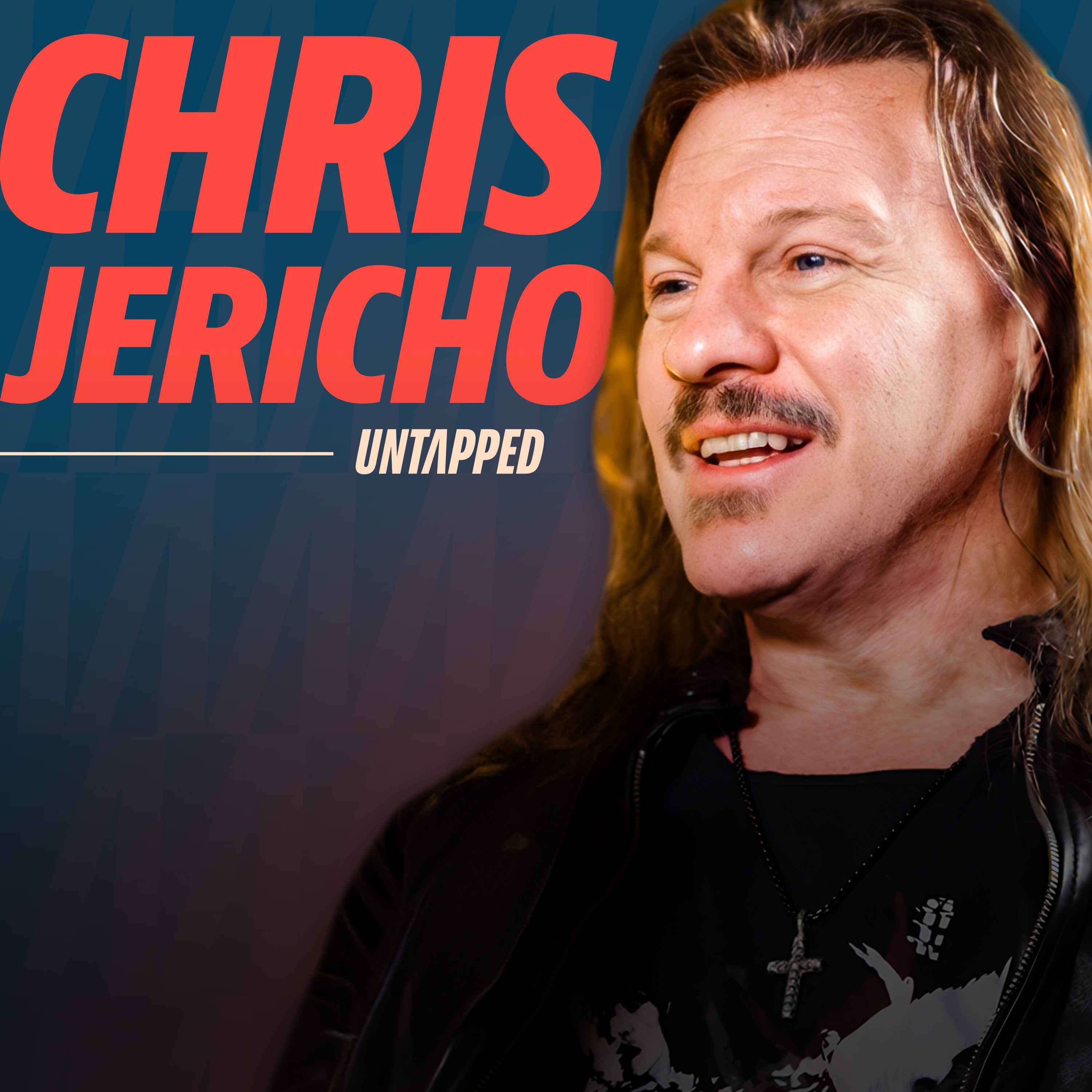
Chris Jericho discusses longevity and performance after decades in pro wrestling, focusing on fame’s early effects, injury prevention, character work, creativity/storytelling, reinvention, and fitness routines (including fasting and planking). He also touches on wrestling culture changes and his acting/improv background.
Chris Jericho is a long-running WWE/WWF and AEW star, also a musician and frontman of the band Fozzy. The host is Simon (podcast interviewer), plus occasional references to other media/guests (e.g., Vince McMahon, Mark Zuckerberg, Shawn Michaels, MJF).
Jericho says bumps are like low-speed car hits but he’s stayed injury-free aside from a broken arm in 1994. He credits longevity to character connection, reinvention (inspired by David Bowie), method acting discipline (with caution), and “what works” fitness (36–40 hour fasts monthly, twice-daily planks, weightlifting). He argues wrestling is show business built on audience reaction and long-term stories.
First match Oct 2, 1990 in Pinoka, Alberta; “suit and tie Jericho” as a hated heel for ~2 years; Vince McMahon tearing quads just running to the ring; Jericho’s 2008–2009 “locked in” main-event era; feuds lasting a year (MJF) and Shawn Michaels feud stretching beyond initial plans; studying acting with the Groundlings after leaving WWE in 2005; Fozzy’s UK growth after “Judas” (2017).
Written by AI. May contain mistakes.
Chris discusses his early wrestling career and fame in different countries.
“I'd love to talk to you about your wrestling career.”
Jericho explains the physical demands of wrestling and its impact on the body.
“For people kind of less familiar with wrestling, you were at the epicenter of the golden era, with Triple H, The Rock, The Undertaker, Kane.”
Chris shares insights on audience connection and character development in wrestling.
“I was listening to Mark Zuckerberg on a tech podcast.”
Jericho discusses the pressures and challenges of reaching the peak of wrestling fame.
“And I tell everybody in the business, young guys and girls that come in, work on your character and connect with the audience.”
Chris reflects on the professional dynamics and real-life emotions involved in wrestling.
“Did you feel a shift in pressure when you reached the top?”
Chris Jericho discusses the balance between character and reality in wrestling.
“And I'm assuming some of that filters into real life.”
Jericho shares his fitness routine, including fasting and strength training.
“Did the people who attacked you in the street end up in a skip somewhere?”
Jericho reflects on the party culture in wrestling and his personal experiences with substance use.
“I've been probably almost every day to Pure Gym, which you guys have, there's a plug.”
Jericho discusses changes in wrestling culture and his motivation to reinvent himself.
“on questions just like this at the intersection of science and technology, and we'll also add in quite a bit of nerdiness and fun.”
Jericho explains the improvisational nature of wrestling matches and crowd interaction.
“like, I don't know, Iron Maiden, 50 years of Iron Maiden.”
Learn how wrestlers create dynamic matches through improvisation and storytelling.
“You're working together and basically making it up as you go along.”
Discover the significance of collaboration and creativity in wrestling and beyond.
“You once said you have to have ideas because nobody's going to have them for you.”
Understand the art of long-term storytelling in wrestling and its impact on audiences.
“When you are telling a story in wrestling, and I like long-term stories.”
Explore how improv and acting experiences influence wrestling performance.
“And what I learned from both of them is how to commit to a character.”
Examine the unique thrill and challenges of performing live versus recorded formats.
“and from the acting lessons that I took and really studying the concept of what acting is.”
Hear Chris Jericho's personal picks for the greatest wrestlers of all time.
“If I was interviewing you, I'd walk in here with nothing.”
Discover Chris Jericho's wrestling inspirations and his view on opponents.
“And I was a huge fan of his when I was a teenager.”
Learn about Chris Jericho's personal definition of success and winning.
“It depends what your definition of winning is.”
Hear how Chris Jericho's father's NHL career shaped his mindset.
“I think from, so my father played in the NHL, which is the National Hockey League in the States for 10 years, which is a very long career.”
Chris Jericho shares insights on nurturing passion in his children.
“Yeah, I have three kids and they're all doing their own thing and that's like whatever you want to do, just find a passion and go do it.”
Chris discusses the quirky UK restaurant and its chant culture.
“We hear that on your tour in the UK, you've become rather a fan of the Slug and Lettuce.”
Explore Fozzy's evolution and recent success in the music industry.
“They might want to be the spokesman for Slug and Lettuce.”
Chris talks about his love for music and potential trivia skills.
“and I was like, I couldn't believe just how many people were there right out of the gate.”

Get the gist, explore an idea or ask about something said.
 Claude
On UNTAPPED with Spencer Matthews, what are the key points of this episode?
Searching your listeningAutomatic transcript. May contain errors.
0:03Thanks for taking the time, mate. You're a phenomenal booking for us. We're very proud to have you in. Yeah, yeah, me too. Hello. Hello, Chris. As I take a sip of coffee here. I'd love to talk to you about your wrestling career. Incredible career. Thank you. You're a fantastic champion. Over 30 years of wrestling. Yes. And fame came quite quickly to you. First four years, you know, you're a huge, household name. How did that affect you at the time? And, you know, did you enjoy it? Well, it's funny, like household name, for example. So I spent years wrestling around the world before I ever really made much of an impact in the States, which was in 96 or six years in.
0:48But I was a household name in Mexico, like I was on the cover of like the teen magazines and that sort of thing. Then I was a household name in Japan. Not household. If you're a wrestling fan, you would know who I was. Mexico was way more mainstream because of the soap operas and the magazines and all that sort of thing. But yes, at a very young age, I mean, I was on the covers of magazines, headlining arenas in Mexico when I was 22 years old, you know? But it's all relative. Like even when I first started wrestling at 19, you would go to, you know, a small town in Alberta, Canada. Like here we are in, I don't know, Rimby, Alberta, a little small farm town.
1:31But after the show, you would go to the local bar and the wrestlers would get to the front of the line and get free drinks. So you're kind of, you're famous in Rimby on that night at 19 years old. So, and then it continues to grow and grow and grow. It never really got into my head, but you do kind of feel a little differently at that point in time. Like some certain rules don't apply as much. Like whenever we had shows in Madison Square Garden, for example, if I was late, I would drive the – there's one road. I can't remember the name of the street. I would drive the wrong way down a one-way street because it cuts time off to get to the garden.
2:10and I knew it doesn't matter if I get pulled over because the cops will know, oh, it's Chris Jericho going into the garden, go right through. So you do kind of think, well, that's fine, I'll just go. It's only a block. I'll drive the wrong way. It's not a good way to be, but it just kind of gets into your head that way. It's like, it's fine. It's okay. Don't worry about it. I would like to think like that. I would end up in jail though. Well, yeah. I mean, most people probably would, but it's like, it's okay. We're right near the garden. The cops will be fine with it. So you do kind of grow up a little bit differently.
2:42You can let it get to your head, but you can't. It was just the way it was from an early age. But you're working hard to get this. So that's kind of one of the side benefits of being famous, I guess you'd say. For people kind of less familiar with wrestling, you were at the epicenter of the golden era, with Triple H, The Rock, The Undertaker, Kane. You were bang a huge central figure to those incredibly famous wrestling times. After competing at that level with men who often were quite a lot bigger than you, what kind of toll does that take on your body over time? Well, I mean, just being in the business isn't easy, whether it's big guys or small guys.
3:35it's very hard on your body. I think people don't understand just... I think taking a bump, which is the fall in wrestling, I think some doctor said it's the equivalent of getting hit by a car at 10 miles an hour or something like that. It's not a hard hit, but still, you're getting hit. I've been very fortunate to be durable. I've never been injured in wrestling. I broke my arm once in 94, which I was out for seven weeks, But other than that, I've never been injured ever. I mean, for somebody that's never done it before, you'd probably feel like you broke your back if you took a bump. I remember the first time I hit the ropes.
4:14It was like getting hit in the bread basket with a baseball bat. Like you don't realize how hard those ropes are. But for us, it's just commonplace. You just get used to it. Well, so when you spring off the ropes, you feel… You don't feel it now, but when you first do, it hurts. like it's not easy like people don't realize how hard that ring is a lot of times i think there's kind of a misconception that it's more like maybe kind of a trampoline bouncy thingy and it's oh how fun is this it's really not it's wooden boards with a little thin mat over it with kind of a springy coil thing in the middle but like a like a big giant bed spring like it doesn't really move it just kind of goes like that sort of a deal so you have to get used to that sort of thing.
5:03But then once you do, it's just kind of instinct. You don't even really notice it. And it's just kind of the way it is. So it doesn't really hurt after a while.
5:15At QVC, shopping is more than just checking out. It's discovering something new every day. Start with today's special value. Then explore exciting finds across the brands and categories you love. From beauty and fashion to home, culinary, and outdoor living. Shop now at QVC.com.
5:44ACAST powers the world's best podcasts. New school year, new podcast obsession. Hit play on this. I was listening to Mark Zuckerberg on a tech podcast. Juan, I'm sorry you had to listen to Mark Zuckerberg on a podcast. Me too. Would you like to read the email or should I? No, no, no. I I would love to read the email. My first internet memory. It's like asking what's the first time I ate food. Do you ever go online and just get absolutely run over by the onslaught of drama, disaster, and discourse? I'm Kate Lindsay, host of IcyYMI, a.k.a. In Case You Missed It, an internet culture podcast from Slate.
6:21Twice a week, we invite smart thinkers across the internet to discuss the latest trending topics and how being online right now actually makes us feel. Everything from our concerns about smart glasses. These are predator goggles. To, yes, having a mid-boyfriend is, in fact, embarrassing. Someone will literally comment and say, oh, but that's not my exact experience with, like, my partner. Like, Kyle is great. And I'm like, yeah, but we're not talking about you and Kyle. Come on and join us every Wednesday and Saturday across all podcast platforms as well as YouTube. That's Icymi. We're online, so you don't have to be.
6:54Acast helps creators launch, grow, and monetize their podcasts. Class is always in session at ACAST.com.
7:28it matter. It's how you connect with the crowd. How you get your character over with the audience. How you build a story that people care about. It's like watching a movie. You can go to a movie like some Hollywood blockbusters that they spend 200 million dollars on but it's shit because it's just all a bunch of effects and set pieces but there's no characters that you can relate to and the plot isn't good. And then you can go see another movie that maybe cost you know$500 ,000 to make, but it's one of the greatest movies of all time because you connect with these characters that you're watching.
8:04And that's what wrestling is. It's all based on that. And I tell everybody in the business, young guys and girls that come in, work on your character and connect with the audience. If you can do that, you'll always have a job, not just in wrestling, but in show business. That's what it's all about. Another primary factor, obviously, that you all have to have is extraordinary levels of athleticism. You're doing things that if performed poorly would be really dangerous. Well, you can really get hurt. It's not even the acrobatics, like even just stepping into the ring. I mean, I've seen guys, you know, tear their quads from doing nothing, taking a step, you know.
8:42Who was it who ran down and dove into the ring? Vince. Yeah, yeah. Vince McMahon tore both of his quads just running down to the ring. You know, and that happens. Like, it's crazy. Like, and you don't have to do the acrobatics. It's nice if you can. But there's guys that have made millions of dollars in wrestling that aren't really all that athletic at all. They're all just characters, you know? And that's when, as you get more into the business, you realize that. And when I was younger, it was all about moves and how many cool moves can I do? Look at this cool move and look at that cool move.
9:18And then you slowly get rid of them as you get older. Like, well, that one never really looked that good anyways. Or I can't do this one anymore. get rid of that one get rid of this one and you realize it really doesn't make a difference once again it's all about character it's all about talking on the microphone if you can talk on the microphone and talk people into the seats and talk them into watching the show that's more important than any acrobatic move you could ever do when was the first time that you felt that you really connected to the crowd to the audience it's all levels right i remember the very first match i had.
9:53October 2nd, 1990 in Pinoka, Alberta in the Pinoka Moose Hall. It was like some sort of like, I don't know, like a veterans club or something like that. I remember the first time there was probably a hundred people there, actually maybe probably less. But the first time I had the guy on the ground and I had his arm and I dropped a knee on it and some kids cheered. And I was like, wow, should I do it again? Yeah. And I was like, yes, this is amazing. I'm bigger than Hulk Hogan in my mind's eye at this point, you know? And then getting that first paycheck with my name spelt wrong, Jericho with no H, and opening up and there was a$20 bill and a$10 bill.
10:37And I was like, wow, 30 bucks, man, for 10 minutes work. This is amazing. That's kind of when I first felt that. And then as you get bigger and bigger and then going to Mexico and connecting there and then going to, you know, each step up the ladder, you connect. But right out of the gate, I realized you have to get the crowd to, should I do it again? Yeah, it's okay. So involve the crowd. And I wasn't the biggest guy, but I could have the biggest charisma and the biggest character. And that's kind of what I always focused on, which enabled me to continue to grow and build and become a big name in the business from that character and that charisma.
11:19Did you feel a shift in pressure when you reached the top? Oh, big time, for sure. So what does that feel like when, obviously, when you're kind of climbing this awesome world-famous mountain and then you reach the summit? How do you manage, you know, the character then? Well, that's when the real work starts. You know, like you work to make it to the big leagues. You know, at the time WCW and then it was WWE. And, you know, you work hard to get there. But once you get there, like, okay, now I really have to start working on this and really watch the biggest names in the business and how they do things.
11:57How can I compete with them, you know? And I always say that I was like the George Harrison of the Attitude Era in that when I first came in, I was super popular. People loved me. I was a baby face, we called it. But I was in the company with The Rock and Steve Austin, the biggest baby faces in the world. So much like George, I'm a great musician, a great songwriter, but I'm in a band with fucking Paul McCartney and John Lennon. What can I do? Nothing. There's no way I can get bigger than them. So I turned bad guy, turned heel. And that's when I really started getting to the next level because now I could be a foil for The Rock and a foil for Steve Austin.
12:38And I could go toe-to-toe with them on the microphone as a bad guy. So, you know, every dragon slayer needs a good dragon to slay. And that's what I was for those guys. And that's when I really started making it to the next level as a main event guy, being the foil for The Rock and a foil for Stone Cold. You beat them both in the same night, no? Well, yeah, that's the famous night, right? But all that's part of the story. Sure, I beat them both in the same night. Good for me. But now I have to really lock into the next step because now when you're on the top of the mountain, everyone's trying to knock you off.
13:16In wrestling, you're basically performing for an audience of one who is the boss. If it's Vince McMahon or now it's Triple H or if it's Tony Khan and AEW, whoever it may be, Eric Bischoff and WCW, you have to impress your boss. and if your boss likes you, you will get a bigger push. If he doesn't like you, it doesn't matter if 10 ,000 fans are cheering your name, they might listen a bit, but if they don't like you, they'll bring you down. So when you get to that top, top level as the champion, you really have to make no mistakes and you really have to lock in. And when I beat the Rock and Stone Cold Steve Austin the same night, I wasn't really ready to be the top, top guy.
13:55It was years after when I finally locked in, 2008, 2009. that's when I became the Chris Jericho that that you're talking to now a guy who knows what he's doing in all aspects total confidence total pro I wasn't that at that point in time in 2001 when I was the disputed champion but it's all part of the growing process and learning and building how do you separate the show from reality because obviously if you guys are doing your job properly there's some degree of actual animosity, you know, in the ring. And I'm assuming some of that filters into real life. I mean, when you're at that level, you're pretty professional because it's a million-dollar business.
14:40Well, now it's a billion-dollar business. But there are times when you might get a little bit angry at each other, you know. And I think sometimes that leads to better performances, you know. It's like if you don't like your co-star on a movie, but to hell if I'm going to let him out act me. I'm going to put on the best performance of my life to show this guy that he's not better than me. So not to get into specifics but there was a few times when that happened and even more from a character standpoint like in 2008 when I was the suit and tie Jericho I was the most hated guy in the business and not just for a month or two months I'm talking for like two years and that's hard.
15:26Because it's a lot easier to make people hate you than it is to make them like you. But once they start hating you, then they automatically start liking you more. It's like a villain in a movie like Darth Vader or Heath Ledger as the Joker or the Terminator. Like think about how scary the Terminator was in the first movie. But he's so entertaining and popular in the second movie. He's the biggest good guy in town, right? That's what happens. People start liking you. So it's hard to have people stay hating you. But I also was dropping into this character like a method actor would to where it was affecting me, you know, in real life.
16:08Like I was in a real dark place because that's what my character was, like just a real diabolical megalomaniac asshole essentially. And it's hard to kind of step out of that sometimes. So it was a real interesting, like I could never do that now at this stage in my life. But at the time, I was super method. Like I can remember getting into an elevator with a dad and his son and they were fans. And we were close to the arena and I wouldn't look at them. And they're like, hey, can you sign my autograph? And I wouldn't just ignore them. The guy got increasingly angry as we're in the cell. Like, you're not gonna look at me?
16:45Like, you're not gonna look at me? You're some kind of asshole. And now they hate me, for real. But that's what I want because I don't want to sign an autograph for them. And then they go to the arena and 10 ,000 people are booing me, but they're like, oh, he's really a nice guy. And then tell, you know, 10 people in a row, and that's now 10 people who like me because I'm a nice guy. I want the guy to be even more so like, F you and blah, blah, blah. And that's why I never had any merch at the time. I forbade the WWE to make any Chris Jericho merch. Why would I want someone wearing my shirt? I want everyone to hate me.
17:17I'll make my money main eventing pay-per-views against the good guys. I'm not worried about selling t-shirts so I had this kind of real all-encompassing evil attitude and sometimes that rubs off in in your real life but that was like I said that was years ago and I was really dropped in to be this angry person because it's all acting you're playing a character right I love that I think it's really fascinating yeah you must get some people that just switch off right I mean you by the sounds of things took it um at that point professionally at that point in time i did yeah yeah exactly to where people attacked me on the street like a couple times um and that's like you know i was cool at the time but i wouldn't want that now but for whatever reason at this point in time i was just super locked in but once again that was a two-year period where i was you know a champ the champion in the main event you know wrestling all the good guys and when somebody beat me it was a big deal to kind of take the title from the evil Chris Jericho, you know.
18:17Did the people who attacked you in the street end up in a skip somewhere? They did not because, you know, you can't go too... There was a few fights, you can find them on YouTube. I was fighting fans in the streets, but yeah, crazy time, man. You're still going strong in your 50s. Yeah. You know, what is your routine like in order to say strong, fit, healthy, injury-free? You know, what does a workout look like for you nowadays? Well, I just, about a year ago, I started fasting. And not just for like 12 hours. I'm talking like 36 hours. My brother. Yeah. But it works, man. It works. And after a while, you just get used to it.
18:58It's not even a big deal. Like, oh, I'm starving. After three hours, like, dude, stop. You're not starving. You can literally live three weeks without food. You're fine. It just makes me realize how much extra food I was eating for no reason. maybe out of habit more than anything. But then I started seeing the results from it. I also started planking. So I do that twice a day for seven and a half minutes. That's where I got up to. I like that, seven and a half minutes in the morning and at night. And I started lifting weights again, which I hadn't done. I was doing a lot of kickboxing and bicycling and that sort of thing.
19:28But I stopped that and started lifting weights again. So I think as you get older, you just have to do what works for you because there's so many diets and workouts and try this and do that. and you should try this. Just do what feels right. Try different things and stick with it. And so for me, that's kind of where I'm at here. At 55, I'm probably in better shape than I was when I was 45. I know I'm in better shape than I was a year ago from today. I see a picture from like even just last year, you can see the difference like in my face and in my body and all that sort of thing. Especially when you're on the road, like it's easy to get out of shape when you're on tour, but it's also easy to stay in shape when you're on tour because there's a lot of downtime.
20:09So I started going to the gym here. I've been probably almost every day to Pure Gym, which you guys have, there's a plug. And you get your little pin code and it's like a pod. It's like, and you get in and it closes. And there's a period of time for a second or two when you're stuck in this pod. I'm like, I hope the other side opens. And it does. And then you're into the beautiful world of the gym, but you also have to put the code into escape as well. So, but it's cool because it gives me motivation. It gives me something to do rather than just hanging out on the bus on the tour bus doing nothing.
20:44And you feel good about it, you know? And then I do my two planks and then we do a 90 minute show with a lot of energy at that as well. So it's a good tour and it's a good time to really stay in shape. Now, the other side is you could just sit in the bus all day. You could eat pizza every night. You could do nothing and you gain weight. So there's, you can make your choice. either take this path or take that path and it's not too hard once you get motivated mentally is the most important thing about physical fitness you have to want it here and then you'll you'll get it here yeah i do i do a 36 40 hour fast once a month type thing i see it as a nice kind of equivalent to a factory reset yeah you know and uh no it certainly feels good i find that if you're like if you're in like a running block and you're doing a lot of running it's quite difficult to to do the fasting as well.
21:31You know, you need to keep everything kind of fueled, I suppose. But, you know, off the back of a holiday or something, good few days of fasting. Great. The 90s wrestling scene was pretty famous for, you know, excess partying, boozing. How did that affect you at the time? I mean, it was more of an 80s thing, right? And it bled into the 90s. But I never got into drugs, never been a drug guy. Drink, but never excessively. I never had to go to rehab or anything like that. Sometimes I have to watch myself and tone down. I probably drink more than I should, but I never got into pills. I never got into hard drugs.
22:11It just was never my thing. Even though I've had a lot of friends that have died over the years from excessive drug use, especially pills. There was a lot of pills back in the 90s. That was kind of probably the most prevalent issue. Ecstasy or pain prescription. Oxycontin. You know, that sort of thing. Pain pills. Taking like 50 pain pills a day when you're probably just supposed to take one every four hours. You know what I mean? That's the type of excessiveness that you can see. Also, there was a lot of steroids back in the day. I never got into that. I mean, dabbled into it. Everybody kind of did, but never focused my whole life around it.
22:50So I was pretty lucky in that respect i just never saw the the pros of of doing drugs i guess and that kind of helped me a lot over the years to still be able to to stay you know as physically fit as i am i guess you know um yeah i never had those issues which i was pretty lucky because a lot of guys a lot a lot a lot a lot a lot of the guys did so i kind of escaped that route
23:24At QVC, fall shopping is more than just checking out. It's discovering the brands you love across beauty, fashion, home, and culinary, all in one place. Whether you're getting ready for crisp mornings, cozy nights, or everyday moments, QVC has what you need for the season ahead. With brands like Laura Geller, Philosophy, Ninja, and so many more. Shop now at QVC.com.
24:20on questions just like this at the intersection of science and technology, and we'll also add in quite a bit of nerdiness and fun. As well as a healthy pour of our experiences as women in STEM on our podcast, Technical Tea. Subscribe to Technical Tea wherever podcasts are found. We drop episodes every month.
24:51Do you see a big difference in today's wrestling culture than what you were used to? Absolutely. It's a whole shift now for the better. Maybe not quite as fun as it used to be in that guys don't really do as much now. They much more stay in after the show. And it's all because you can watch any movie on your phone or you can play any video game on your tablet. or, you know, I think before in the 90s, there was more of just boredom. There was nothing to do. So let's go out and find some action. And, you know, we're in Shreveport, Louisiana. Where's the hot club? Go hang out there till three in the morning.
25:30There's not as much of that now, which is, like I said, it's for the better, for the health of everybody. Probably just not as much fun as it used to be, but also in the long run, it benefits all of us. You've constantly reinvented yourself over the course of your career. what's the secret to staying motivated in a world that wants you to stay the same exactly that I like doing the opposite of what people expect and it does it's hard it's it's you're taking a chance in kind of not turning your back on your fan base but you know give the people what they want agreed but you also have to satisfy yourself creatively it's all based around David Bowie.
26:13That's one of my biggest inspirations when it comes to that. Always reinvented himself. You could go to a Halloween party and see 10 people dressed as David Bowie, but in different versions, and you would know them all. I would also venture to say you could go to a Halloween party and see Chris Jericho costumes, different ones, and know each one if you're a fan of the work that I've done. There was a shirt that came out a few years ago. I think it was like 18 Chris Jericho faces and they all were different. I was like, oh, that's pretty cool. I kind of like that. And that to me was always, always important.
26:49I never wanted to be a nostalgia act. And it's like, oh, you know, people still chant Y2J, which is great. I love the fact that you chant that. But that was 20 years ago. You know what I mean? Like there's a lot other things. You just made the list. It was 10 years ago now. Very short period of time. People love that. I could say you just made the list for the rest of my career, or I could just leave it and let it stay there because that's where it should be. And I'm glad that people love it, but let's create some new things. Let me write some new songs, so to speak. And I think that's part of having longevity is you have to have different eras.
27:26And some people like this version. Some people like that version. Some people hate this version. Some people hate that version. But that's all part of it. Like if you listen to any band that's had longevity, like, I don't know, Iron Maiden, 50 years of Iron Maiden. Not every Iron Maiden album is my favorite. Some I don't like at all, but that's okay. That's all part of the body of work where it's like, this is classic. This one's a little bit sketchy. I love this one. I didn't like that one. I love this tour. I love this look. That's kind of what you have to do to have longevity in this business.
28:02I love that. And it's an important lesson. can you take me through the creativity in the ring and how it works so when you take two top level wrestlers so yourself and say Triple H for the sake of it how much do you already know is there a beginning and an end and do you communicate in the ring to each other so it's interesting and it's not something you could really explain in two minutes or five minutes but like playing with a jazz band for example or improv comedy. You're working together and basically making it up as you go along. You would know the finish of the match. Okay, I'm winning, you're losing.
28:42But other than that, you would just go in the ring and just do it. Just talk to each other and come up with stuff and listen to how the crowd is reacting. And kind of that would decide what you were doing in the ring on how the crowd was reacting. And then as the years progressed, you basically come up with the entire match in the back, but it's an open canvas. You're an artist. You start with nothing, and much like a painter would paint this. Like, okay, what do you want to paint? A picture of a cow. Okay, here's the painting of the cow. That's amazing. Same thing with the rest of the day. What picture are we painting?
29:18Well, Spencer's winning and Chris is losing, but the idea is that you are fighting from underneath, but you almost win, but then you don't because three months from now, you're going to finally win. Okay, great, then let's paint that picture. So that's kind of how it is. What is it that we want to do? What do we want to accomplish? And what story are we telling to lead to the next week? Because it's a weekly segmented, episodic television show, right? So that's kind of what it is. One thing usually always leads to the next. And once you find out what the overall story is, that's how you put together the match.
29:57Basically is the easiest way I can describe it. and then once you know what you want to accomplish with the match then you get into the details of okay I'll give you a clothesline and then you duck this one and then you give me a drop kick and I go to the floor and you follow me and you kind of come with with the storyline of the match but the most important part is always the finish of the match which leads to the next step of where you want to go for the future shows. You once said you have to have ideas because nobody's going to have them for you. How important is that mindset to success, not just in wrestling?
30:30Well, I mean, when you're in any business, you have to collaborate, right? And this is show business that I've been in all aspects of it. So yeah, you have to have your own ideas, but you also have to be willing to collaborate with other creative people. If you can find those creative people to collaborate with, that's where you come up with some really great ideas as well. So I've always been open to, listen, I have a lot of ideas, but please give me other ones, whether it's for wrestling or whether it's for Fozzie or whether it's, you know, I have a cruise that we do every year, my podcast, the acting roles that I have, like give me some feedback and let's work on something here to create something even better.
31:10And that's very important. You have to let the pros be pros and work with people like I have no idea. For example, songwriting. I used to write all the lyrics for Fozzie because I'm the singer and I must write the lyrics because that's just the way it is. And then we started collaborating with a few people that are just much better lyric writers than I am. You know what? Who cares who wrote the lyrics? I have to sing them anyways. I didn't write a lyric for Judas. That's got nothing to do with me except for I'm the singer of the band who sang Judas. It's our song. It's my song. It's his song. It's theirs.
31:40But that's what you do. I could have been a, I must write the lyrics for Judas, and I'm not going to call it that because I didn't write. I'm going to call it Blue Shirt instead, Nick Ben, whatever that may be. Nick Ben in my mind might probably would not have worked as much. Back off a bit and work with people, collaborate with other creative geniuses, and let's create some cool shit. That's what it's all about. It feels like in your creative process, there's always something or someone to bounce off. So in the ring, there's the audience. When you're performing with Fozzy, there's the crowds.
32:17When you're in the ring, you've got the person that you're wrestling. Some of these storylines, I'm assuming, need to carry on, even when it's just you doing the work. So how do you get around that creatively to say you're the only one there? When you are telling a story in wrestling, and I like long-term stories. My favorite ones have always been ones that last for months. And you have to be creative. So you don't have to be on the show every week. Both guys don't have to be on the show every week. There's always a way to tell a story that elongates it. I would rather make things go longer than shorter.
32:55And I always love wrestling fans, especially modern day ones, who just want to know the answer right now. Give us the answer. If I'm watching Saving Private Ryan, it's three hours long. It's a long movie. You better be watching and paying attention. and at the end of that three hours, then you can decide if you like it or not. An hour and a half in, if I go, this movie, they haven't even found Ryan yet. This movie sucks. This is stupid. This is too long. I hear it every day from wrestling fans. My thing is shut the fuck up and let me tell my story. When it's done, if it takes a year, tough luck.
33:32This show is going on for 50 years. It doesn't have to end in a week or two weeks or three weeks. So sometimes a good way to do that is take another person, take your opponent out for a while and continue the story and take a couple detours, but it still leads back to the overarching story. That to me is the brilliance of pro wrestling. We can tell any story we want and we can make it go as long as we want or as short as we want. I did a feud with MJF and AEW. It was 366 days, literally a year and a day. There were people like, this feud is too long. Why go to something else? Why? What else do you got going on?
34:11That was the thing with Shawn Michaels and I. They wanted it to be a one-month thing. And when we, what do you have coming up? Nothing. What do you have coming up, Shawn? Nothing. Well, then why are we ending this in a month? Let's keep going. We did seven, eight, nine months. Ended up being one of the greatest stories in WWE history. I'm not saying that from an egotistical standpoint. It's true. That, to me, is the brilliance of wrestling. So sometimes to do that, take one of the components out and continue forward and then bring it back around again and then change it a bit and go over here and go over there.
34:44And suddenly you get to the top of the mountain, end of the story. That's when you know it's time to finish it. Until then, just sit back and enjoy the show. It's a show. It's show business. It's not real. It's like watching your favorite TV series. I was literally about to say, it sounds a bit like Made in Chelsea. There you go. same thing I know what Maiden Chelsea is you know it's like Game of Thrones we watch five seasons or six seasons of Game of Thrones and it's like it ends and you either like the whole show or you don't but you sure are entertained during those six years of watching and all the different storylines that's what wrestling is do you have any memories of Spencer on Maiden Chelsea?
35:24he's never seen it I love episode five when he went and did that thing with those guys it was amazing he almost got kicked off the show but you didn't that was so good yeah yeah i know thanks man so amazing there's a few times where we talk about kind of creativity from different spaces kind of changing wrestling am i right that you spent some time with the groundlings in some of your time off well so so when i left uh the wwe in 2005 i'd kind of had enough of wrestling for a while i went and studied acting and i went and essentially joined the groundlings which is probably one of the most famous improv troops in the United States.
36:03And what I learned from both of them is how to commit to a character. That's where we went to this evil Jericho that I was talking about earlier. Improv was really beneficial because you're learning to work with each other with nothing. You know, you're going out to on stage. Spencer is a ventriloquist and Chris is the ventriloquist dummy. and you're talking about rainbows and you're going out there and just doing it. And I really learned a lot about how, once again, to connect with an audience and how to commit to a character or a bit and how to play it straight. Because you can't play it like waka waka.
36:46You can't play it like goofy comedy. You got to play it straight. And that's something that's been very beneficial for years for me. Anything I do in wrestling, I always say we play it straight because even if it's the most ridiculous concept like the list for example I'm putting you on the list it's like who cares well if you play it straight like putting you on this list is the worst thing you could ever have and I'm gonna do it no no no no you just made the list that makes it cool because you're committing to it and that all came from Groundlings and from the acting lessons that I took and really studying the concept of what acting is.
37:26When you look at kind of wrestling, acting, singing, performing, what part of performance is your favorite? I think just the, once again, just connecting with the crowd and just the electricity that you experience in front of a live audience. Now, I've been doing a lot of more acting recently, which I love as well. It's not the same thing because there's no live audience. And now you take two and take three and take four and take five. And you have to have the same intensity and energy for every take. That's not easy to do either. But also you can really focus in and lock it in and try different things and get it right.
38:00When you're live, you get one chance. That's it, one chance. If you mess it up, well, you better figure out a way to fix that because here you go. Like we say, once the train leaves the station, you go. And that's the same whether it's rock and roll or whether you're wrestling or whether you're a stand-up comedian or anything that you're doing in front of an audience. You get one chance. You got to make it work. So if you can do that, that also benefits you when you're filming. Because like I say, for wrestling, if you're a top-level main event performer in the wrestling business, it's show business boot camp.
38:34You're learning a little bit of everything. Live audience, drama, comedy, how to come up with stuff instantly, how to learn your lines. Here's a script. You got 10 minutes before you go live. Like, oh my gosh, like I got to figure this out. You better figure it. So that's happened before. So I'm never nervous in front of a live crowd. I'm never nervous, like, you know, coming here today, people are like, what are we talking about? Like, I don't talk whatever about what you want. Like, whatever, man. Like, we'll make it work. That really benefits when you do more things in the entertainment world.
39:07I've seen people, I have a podcast for 13 years. I've had people come on the show that don't even really talk. Like, you do know the concept when you go on a talk show is you have to talk. You have to tell stories. It's kind of what the concept of it is. So many people don't do that or don't know how to do that or get nervous. You don't have to ever worry about that, not just you, but anybody in general. I've got it. I'm ready. Here we go. Let's rock. Let's do it. Come on. Let's make it happen. That all comes from being in front of a live audience and being very adept at knowing how to just go with the flow, man.
39:43That's how you do it. I also don't worry about anything. You can't. You can't. I know what you're saying. No, like when we're, one of the secrets why talk is Jericho, my podcast has been so successful for 13 years. It's like you have some notes. You've been glanced at them. You're a great interviewer. I never have notes. I have nothing. If I was interviewing you, I'd walk in here with nothing. You know why? Because if I met you at a bar and we start talking, I wouldn't pull out a list of questions and go, so tell me about that you would just be talking. Oh, that's interesting. That's cool. Let's talk about this.
40:16what you mentioned something very cool there. Let's go back and circle back to this. That's what it's all about. We're having a conversation and that's why it works. And that's kind of what people enjoy watching as well and hearing fly on the wall, hearing stories that they never heard before. That's what you want to draw out of people when you interview them. And once again, all of this comes, all of the skills that I have, I can't fix your wiring. If your car is not working, I don't know how to do that. Like, check the oil man like i don't know i can't build anything i can't fix anything but if you want to be entertained i'm your guy that's my skill that's all i got but i think it's enough to make it work simon i won't be needing these anymore a bit late for that of course no but but but that's serious when you get to the point where you don't any need any notes obviously you know the background of somebody sure that's cool like I would love to have you on my show because I know a lot about stuff that you've done but I don't know enough to really know like tell me some of these things that's the exciting part I'd be delighted to join you yes yes all right all right what would be your Mount Rushmore of the greatest opponents you've ever faced over the course of your career if you're talking my Mount Rushmore you know there's the certain names that everybody would pick so I'll go opposite it.
41:42The three, for me, the greatest of all time is Shawn Michaels. That's the best for what I like in wrestling. It's all subjective. Who's the greatest of all time? Well, what do you like or don't like? Shawn to me was the best from an athletic standpoint, from a character standpoint, from a storyline standpoint. I don't think it gets much better than Shawn. And I was a huge fan of his when I was a teenager. I was a huge fan of Ricky Steamboat, huge influence on me. A huge fan of Owen Hart, who I was so into. And I think it's so underrated because he passed away at such an early age. And I'd also go with the British Bulldogs.
42:22I'll put Davey Boy Smith and Dynamite Kid on there. So those are my Mount Rushmore's of inspirations that I had when I was starting to watch wrestling that I still think about to this day of like my golden era of wrestling. the guys that I love to watch were those ones there. If you're talking about Mount Rushmore of opponents that I've had, I'll put Shawn Michaels on there. I will put, who else would I put on there that I had great feuds with and great angles with. I think Moxley would be in there from our work that we did in AEW and in WWE when he was Dean Ambrose. I loved working with him. Great intensity.
42:59I had great chemistry with The Rock. It was very short because he left to do movies very early on, but when we worked together for about a year in the early 2000s, we never had a bad match or a bad angle or a bad promo segment. We were perfect foils for each other. And then I think maybe Kenny Omega had put on there. We never had, same thing. We changed the business when we had our match at the Tokyo Dome, which at the time was crazy because nobody ever thought it would happen. We're both from the same small town in Canada called Winnipeg and we pretty much packed the Tokyo Dome and the digital streaming was through the roof for New Japan Pro Wrestling, which then led to Tony Khan seeing and deciding that he could form AEW because there was so much demand for wrestling that was not WWE.
43:45So those are my four from an opponent's standpoint. Has winning always been important to you? It depends what your definition of winning is. I think what's always been important to me is focusing on something and really going for it. If it's a dream, let's say following your dreams, following your passions, and not listening to other people when they tell you you can't do it. Because when I was a kid, so many people told me, oh, you can't be a wrestler. You're too small. You can't get into music. It's impossible to make it. Or you can't do this. You can't do that. Why do you care what I'm doing?
44:19Go worry about your own shit and let me focus on it. If I believe in myself and think I can really make it happen, then I'll go make it happen. So that's my version of winning. Even if it doesn't work, that's not a failure. If you try something and give it your all and it doesn't pan out, that's still a win. It's not winning if you don't try it and just because, oh, it's too hard. And people use no. I wrote a book called No is a Four-Letter Word. Isn't that? It's almost a curse word. They use no in any way, shape, or form. No, no, no, no. Like, why? Don't tell me why it can't happen. Tell me how we can make it work.
44:54All of the people on my team know that's my motto. I don't want to hear no. How can we make it work? How can we make it happen? And that's a win. Where do you think you learned this positive mentality from? I think from, so my father played in the NHL, which is the National Hockey League in the States for 10 years, which is a very long career. But he started when he was just a kid and kind of had this impossible dream to make it into the NHL back when there was only six teams. so there was only you know 150 people playing in the NHL at the time and he made it and I think that's kind of where that came from he's always been a very positive guy so even when I had this seemingly you know impossible dream of wanting to get into wrestling he never second guessed it he was always like well let's try and figure it out and I think because he did this you know getting called up from small town Winnipeg Canada to Boston to play on the Boston Bruins when he was like 17 years old that doesn't happen it still doesn't happen but it did for him so i think because he was able to make it work he was always really positive behind me and that kind of rubbed off to like well just go for it like why not go give it a try and see how how how it works out i think maybe that's where that all came from i love that having that kind of positive uh example of success or whatever that might mean to you within your own family right is is a really interesting thing to be able to see.
46:25Yeah, I have three kids and they're all doing their own thing and that's like whatever you want to do, just find a passion and go do it. Like my son for example, couldn't catch on anything. School wasn't for him and he worked in a restaurant for a while, wasn't for him but he's always been obsessed with the ocean and fishing and the sea and he just got a job cleaning barnacles off the bottom of yachts in Miami, which means you have to scuba dive under the boat and clean these barnacles off, which is like kind of a crazy job, but he loves it. And I'm like, you know what? Fine. Be the, be the greatest barnacle buster in the world.
46:59And then, and then, and then buy the business and then become the boss. Right. But now he's under the damn boats, but loving it. And I'm like, that's, that's great. Like that is what he's into. What a strange thing, but do it, man, become the best barnacle cleaner in the world. And that will lead to other things. So it all depends on what your passion is. You have to find that for anybody in the world. Find what you love to do and just focus on it. We hear that on your tour in the UK, you've become rather a fan of the Slug and Lettuce. So, okay, so we were in Cardiff and right next to my hotel, there's a restaurant, I think it's a restaurant, called Slug and Lettuce.
47:39Now, I've been to the UK many, many times. I would say dozens, perhaps even getting close to maybe a hundred. And I've never seen a slug and lettuce. Now a slug, where I come from, is a little wormy guy that if you found in your lettuce, you would not like it. It's not a good thing. So I thought, I don't know if I would want to go into a restaurant called slug and lettuce. It's very unappetizing. It'd be like if I opened a restaurant in the States called like pig entrails, come on in, try the pork. You'd be like, I don't know. So that, of course, the thing about the UK is people love to chant different things, depending where you go, different areas.
48:17And the Welsh started a slug and lettuce chant. Slug and lettuce. Which has now become a thing, which you now have asked me about. So every time now when we go to Cardiff, there will be a slug and lettuce chant. And we expect sponsorship from slug and lettuce and free meals, you know, whenever we go there. Hey, Spence, I'll tell you what, when I posted it, I did tag Slug and Lettuce because you never know. It's good publicity for them, right? They might want to be the spokesman for Slug and Lettuce. Hi, I'm Chris Jericho. You too can enjoy a fine meal of Slug and Lettuce. I think it'd be phenomenal.
48:50Yeah, I think so too. You're a tremendous booking for us and a huge name. You're known for all kinds of things, really, but obviously I've had a huge career in WWF, WWE, and beyond, of course. right now you're touring your band Fozzy what's it like having really seen that through and you know being involved in the band for 25 years is it fair to say that it's recently kind of broken out and become this huge hit or do you feel it's always well you're building it right like anything else you have to start and build and I think when we first started Fozzy we probably had to work twice as hard to get respect because I was in the band like a wrestler how could a wrestler possibly sing Like, how can you walk and chew gum at the same time?
49:35Like, it's a ridiculous kind of concept. But we knew that, and we worked very hard to build the band. But we've been coming to the UK since 2005, and this has always been the territory, the area, the countries that really embraced us and took us to the next level right out of the gate. I remember the first show we ever had in the UK was in Nottingham, a place called Rock City. I'm from Nottingham. Okay, there you go. So you know Rock City, and there's a couple different venues within this compound. And when I walked on stage, there were so many people there, I thought I had walked into the wrong room.
50:15At QVC, fall shopping is more than just checking out. It's discovering the brands you love across beauty, fashion, home, and culinary, all in one place. Whether you're getting ready for crisp mornings, cozy nights, or everyday moments. QVC has what you need for the season ahead with brands like Laura Geller, Philosophy, Ninja, and so many more. Shop now at qvc.com.
50:48I thought I walked into some other band's gig, and I was like, I couldn't believe just how many people were there right out of the gate. It's been that way for us ever since, and we have built it. But you're right, I think over the last, probably over the last since the record Judas came out and the song Judas, which was 2017. That's when the band really started to grow to where this tour here in the UK is our biggest tour we've ever done after being here so many times. But it's really cool to see how the band is growing and see the momentum building. And every night I ask how many people here have seen Fozzy for the very first time and it's always half the crowd or more seeing the band for the first time.
51:24And considering we've been coming here for so many years, that's kind of a cool feather in our cap. Yeah, incredible. I mean, 75 million views on the song Judas on YouTube. Yeah, and the Judas record has gone gold in the States, which is 500 ,000 units, and it's about ready to get platinum, which is a million units sold, which in this day and age when no one's buying music, it's crazy, but it's all streams and views on YouTube. All of that counts into what a platinum album would be. So we're almost there, which is insane when you think about it. a million sales of anything is very hard to get.
51:59So yeah, Judas is kind of the song that broke us out to the next step. I think it's a great tune. Well, thank you. Yeah. I'm glad you like it. Have you always been musical? So like, obviously you've been, you know, singing and writing music for a long time. Yeah. Would you call it your main passion? I mean, I wouldn't call it my main passion, but when I was a kid, like I remember being like an early teenager, maybe not even like 12, 13, I wanted to be in a rock and roll band and I wanted to be a wrestler. Those are the two things I wanted to do. So my whole life has always been geared towards that.
52:30I was in the high school, had a high school band, played the Battle of the Bands in high school, and still kind of always dabbled when I started wrestling, but didn't really focus on it for a while. And then once I started making it in the world of wrestling, then we started really focusing on the band side of things again. So I wouldn't say it's my main passion, but it's definitely one of the biggest passions in my life. And not just playing music, but listening to music and knowing about music. And I could probably go off on tangents about trivia of many different bands that you'd be completely bored to tears with, but that I would love to talk about.
53:06I should be on Rock and Roll Jeopardy. I could win that. I could really win that. But that's always been something that I've been super excited and involved and interested in. Chris, it's been a real pleasure having you in. And thanks so much for taking the time to join us in person. I've loved that. Thank you. Oh, my pleasure, man. To get a chance to talk to my favorite cast member from Made in Chelsea was just brilliant. Well, there we go. I had a great time. Thank you very much, man.
Chris Jericho is a WWE, AEW & wrestling legend, and in this exclusive episode, he opens up about the secrets behind his incredible 35-year career at the top. From his early days as an underdog to beating The Rock and Stone Cold Steve Austin in one unforgettable night, Jericho has consistently defied the odds and redefined what it means to be a wrestling icon.
He also dives into his journey outside the ring with Fozzy and the Judas song that changed his band’s career. From method acting to building a successful rock career, Jericho has proven that with the right mindset, you can master any craft.
Heights 👉 Stay sharp like Spencer. 20% off Heights with code UT20: https://highpfrmc.com/ut-vitals-au1
WHOOP 👉 Join Spencer in untapping your own potential with 1 month free here: https://highpfrmc.com/UT-WHOOP-au1
Eight Sleep 👉 If you’re ready to upgrade your nights and unlock more energy in your days, start with Eight Sleep. Use code UT for £350 off the Pod 5 Ultra here
Randox Health 👉 Take care of your health today and into the future. Save 20% on all health checks now with the code untapped at: https://highpfrmc.com/UT_Randoxhealth_au
Visit Seattle 👉Start planning your perfect summer of football by searching Visit Seattle on social media, or discover more at:
https://highpfrmc.com/visitseattle-ut-au
Hosted on Acast. See acast.com/privacy for more information.