Ask ChatGPT

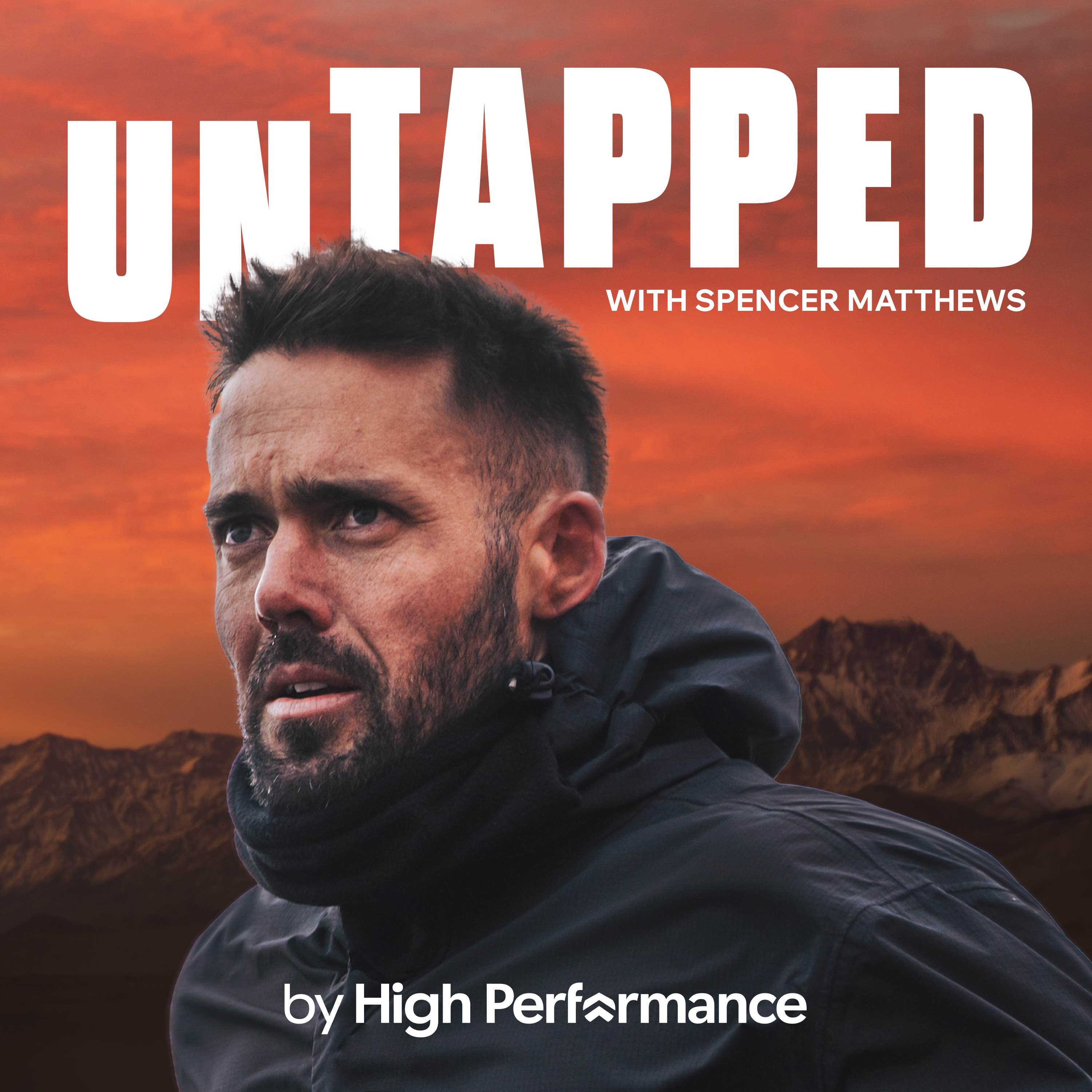
 UNTAPPED with Spencer Matthews
11 Jun 2026 · 28m · 17 chapters

Genes vs environment in athletic performance, especially running—whether people are “born” great runners or made through training, recovery, and lifestyle.
Spencer Matthews and Olly Patrick (hosts). No other guests are interviewed in the transcript.
There’s no single “speed gene” for elite endurance; athletic performance is polygenic. Elite endurance athletes tend to have genetic advantages (training adaptability, injury resistance, vascular growth), but environment/lifestyle often matters more for most people. Genes act as a “script” (genotype) while lifestyle determines the “phenotype” you express.
Nepali climbers adapting to low oxygen; ACTN3 affecting fast-twitch power and sprint suitability; COMT influencing stress hormone breakdown and stress response; Andrew Steele’s ACTN3 testing leading to slower sprint-focused training after switching coaches; Joe Tsonga’s red wine/smoking as an example of performance not being purely genetic.
Written by AI. May contain mistakes.
Explore the debate of genetic predisposition versus environmental factors in athleticism.
“75 % of women who seek menopause care don't receive it.”
Explore the debate of genetic predisposition versus environmental factors in athleticism.
“Today's topic of discussion, genes versus environment.”
Discuss how genetics can provide specific advantages for elite athletes, especially in endurance sports.
“Some people might call this nature versus nurture.”
Understanding how altitude affects physiological adaptations in athletes.
“So for example, that just took me straight to Nepali climbers.”
Learn about the human genetic code and the surprising similarities shared among individuals.
“So that's an environmental adaptation in the fact that if you and I go somewhere where there's lower partial pressure of oxygen, we still need to get oxygen to our tissues so our body will make more blood vessels.”
Examine the concept of junk DNA and its potential functions beyond traditional understanding.
“But yeah, principally, from first name terms.”
A look back at the history of DNA research and its implications for understanding genetics.
“at all of the DNA, and we might have something like what's called 6 million, no, 6 billion base pairs, that only 2 % of them seem to do anything.”
Discuss the challenges faced in finding specific genes linked to traits and diseases.
“So you could see that that's Spencer's DNA, that's Ollie's DNA.”
Learn how genetic predisposition influences athletic performance and recovery.
“And what you've got now is you've got the power of two things.”
Explore how lifestyle choices can influence gene expression and health outcomes.
“again, potentially from Caribbean origin, where that gene is particularly common.”
Discuss the interplay between biology, training, and environment in achieving athletic success.
“that's how we physically get ill over time.”
Learn how stress hormones can affect athletic performance and recovery.
“there are some advantages you will be dealt.”
Learn how specific genes affect psychological traits and athletic performance.
“But you'll also outrun me for many reasons.”
Examine how genes impact athletic potential and the importance of environmental factors.
“But there are others who haven't got those genes and still achieve extraordinary things.”
Discuss the significance of phenotype in sports and how training can be tailored.
“That may be because it's not the correct kind of carb source for you, but it also may be a gene thing.”
Discover how genetic factors influence training and performance in athletes.
“he's running whatever the benchmark is it's monstrous right?”
Learn about the significant impact of environmental factors on athletic performance.
“And I don't know actually what my jeans are.”

Get the gist, explore an idea or ask about something said.
 Claude
On UNTAPPED with Spencer Matthews, what are the key points of this episode?
Searching your listeningAutomatic transcript. May contain errors.
0:0075 % of women who seek menopause care don't receive it. The lying awake at 3 a.m. wondering what's happening to your body ends now. Midi is virtual care built for women in perimenopause and menopause with clinicians who specialize in women's health. Plus, it's covered by most major insurances. Getting started is easy. You can book your first visit with a clinician right away. Midlife needs Midi. Visit joinmidi.com to book your first visit today. That's joinmidi.com. Insurance coverage varies. Check with your plan for coverage. This message is brought to you by today's sponsor, Walden University.
0:34Set a course for change. Now is the time to make a real change in your life, career, and community. At Walden University, we give you the support and flexibility to get the W. Walden's online programs are designed for working professionals like you. You'll gain hands-on skills to take on real-world challenges and succeed. Your future is waiting, and Walden is here to help you achieve it. Take the first step to make your impact. Visit waldenu.edu. Walden University. Set a course for change. Certified to operate by Shev. Waiting for your sign? Here it is. Shop Labor Day appliance deals at Lowe's before they're gone.
1:13Get up to 45 % off select major appliances. Plus, get free delivery, haul-away, installation and parts, and a two-year Lowe's protection plan on purchases of$999 or more. Labor Day deals are On now at Lowe's. In-store and online. Valid through 916, while supplies last. Selection varies by location. See lowes.com for more details.
1:38Hello and welcome to The Extra Mile with me, Spencer Matthews. And me, Olly Patrick. Today's topic of discussion, genes versus environment. And I know you love it when I pronounce the N in that word. The only person who pronounces the N of environment. I don't think I do usually. You bring out a special side of me. Are you born a good runner? Are people naturally athletically gifted? Or can your body be built and molded to it? One of the great questions of our time. Some people might call this nature versus nurture. So that was the way we framed genetics versus environment in this sort of original discussion.
2:22the answer is broadly not entirely known there is no singular gene that is going to make you an unbelievable athlete and that's a really important piece the general theme seems to be that those who are extreme elite athletes particularly in endurance sport have some genetic advantages they have things that they were built with that meant they had a better adaptability to training, they had a better injury resistance, they had a better ability to lay down new blood vessels and so they had the capacity to be a greater athlete. But is that, so their genetics or their environment? So for example, that just took me straight to Nepali climbers.
3:05Yep. Right? They're born, you know, with advantages because they are at altitude and they spend a lot of time at altitude. And so the air and oxygen, you know, being thinner and less is something that they are physiologically used to. so that when they come down to sea level, they find it easier to exert themselves more because their body is used to having less oxygen. So that is not genetic or it is. Correct. So that would be environment. So that's an environmental adaptation in the fact that if you and I go somewhere where there's lower partial pressure of oxygen, we still need to get oxygen to our tissues so our body will make more blood vessels.
3:45Your genes are basically the code for you. So if we go back one step, you and I are unique, but we're not that unique. So interestingly, across all human species, we're all 99.1 % the same DNA. Isn't that quite interesting? That's remarkable. Isn't it? I always find that... Everyone. Everyone. So across the whole of sort of humanity, our DNA, if you look at it, so the code inscripted in every cell of your body that codes for Spencer, codes for Ollie, is 99.1 % the same. Well, that sort of answers the question then, doesn't it? Well, in that 0.9, there's a hell of a lot that could be going on. there's a hell of a lot that can be going on but surely you can't gain you know that much of an extraordinary advantage with with less than one percent so you're saying that my genetic dna is exactly the same as duane the rock johnson's well he's unknown there could be all sorts of Dwayne's.
4:41But yeah, principally, from first name terms. Yeah, but in that 0.9, bear in mind, there's 20 ,000 genes that we really have sort of come to understand through this amazing thing called the Human Genome Project, where people have looked to uncode the very sort of core of our existence. And we actually thought when we looked at DNA, we'd find a gene for why someone is faster than someone else, we'd find a gene for why someone gets cancer, a gene for why someone gets a stroke or Alzheimer's. And we didn't find genes for most of those things. So genetics in its first iteration was hugely exciting, and then quite disappointing.
5:15So when you hear of somebody saying that they are, you know, genetically gifted, what not not more than 0.9 % than somebody that's not then agreed, but that 0.9 could be defining. Bear in mind in that 0.9, there could also be a gene that codes for a protein that stops me getting a disease. So there are some genes, and genes are stretches of your DNA which code for proteins. That's what we understand. So there's also a fascinating thing about DNA that most of it was classed as junk. So when we look at all of the DNA, and we might have something like what's called 6 million, no, 6 billion base pairs, that only 2 % of them seem to do anything.
5:58So there's two ways you can look at that. we probably go, well, there's a great inefficiency to the human machine, or the science we currently understand is not the science we'll understand in 20 years' time. And so there's a huge amount about DNA that we still don't fully understand, that it would be really odd that this code that's in all of the cells of your body is only 2 % of it is used. That's an odd thing. That's wild. Isn't it? And so that used to be called sort of junk DNA. Now we're going, well, that DNA has a role in turning genes on and off. And I think, again, to look at genes, your gene is the script.
6:33How is it that they still know so little about it? Because we only uncoded this. DNA was kind of, you know, became mainstream-ish in the early 80s? No. So the full genome project was really, and I want to say either late 90s, early 2000s, when they uncoded the whole thing. When was the OJ Simpson case? Because he's seriously lucky that DNA wasn't really a thing. I knew you were referring to DNA in a crime sense, not in a genome sense. No, no, no. We've gone off genomes now. I'm just thinking it's pretty useful in like a murder case. I was actually thinking just this morning when I knew we'd be talking about this, like how easy it may have been to be a murderer prior to DNA being a thing.
7:17Me determining your DNA from mine was easier before we uncoded what a particular gene coded for and what the implication of that was. So there's an ability to understand different people. So you could see that that's Spencer's DNA, that's Ollie's DNA. But what's really happened is working out, okay, within the DNA, you've got these pairs of chromosomes, you've got 46 chromosomes effectively, 23 from your mother, 26 from your father. And that makes you completely unique, right? And that is something we could identify ages ago. What we couldn't work out is on chromosome 7, this particular strip codes for a protein.
7:53and what job does that do? And if you've got a broken version of that, does that mean your hair goes gray and mine doesn't? Who figures this stuff out, honestly? Because it's quite, it's pretty like, you know, whoever thought to look into any of this? Well, everyone's wanted to know, I mean, when DNA was first decoded, Bill Gates, who was, I think he was president of the United States at the time, said, well, today we learnt the language in which God created life. And everyone's like, right, we'll find the gene for cancer. We'll find the genes for graying. We'll find the gene for baldness. And we'll do the whole thing.
8:23and then those genes just didn't exist. And what you've got now is you've got the power of two things. Sequencing DNA has become much cheaper. It would cost several billion to decode the first person's DNA in its entirety. And now you can do it relatively cheaply. So for a few hundred quid, you can get your whole genome sequenced and we can look at all of those 20 ,000 genes and look to see whether they are the traditional version or a slightly different version, which we often call single nucleotide polymorphisms. Even as I say that, I know you're not going to enjoy that. No, you're quite wrong, actually.
8:55I really am. Well, they've been shortened to SNPs. So let's imagine, and this is where it gets relevant to when we look at how would one of us have a greater athletic potential than the other, that there might be a gene that codes for how quickly we recover from exercise. So it might be involved as a section of my DNA that's been identified through this human genome project to code for a protein that repairs tendons. Think of that. But surely, you know, at the end of the day, if you're an elite professional athlete, there may be some edge in having, you know, this particular advantage. Whereas if you're, you know, a normal person listening to this say and you consistently show up and, you know, drink very little alcohol and get good sleep and have a great diet and go to the gym and lift weights regularly and run and, you know, put yourself through, you know, really disciplined paces, then you will be more athletic than the next bloke, regardless of what your genes say.
9:45Totally. And the question will come at the very top 5%. So there's an interesting gene called ACTN3. I won't bring up many. They've all got sort of technical names. Can I just ask how you know all this shit? Honestly, genuinely. How do you have the capacity to know all of this? AC2N3. ACTN3. Right. What does that do? It codes for a little protein that would particularly repair fast-twitch muscle fibers. So remember, we have two main different types of muscle fibers, fast twitch, which generate energy extremely quickly and would combust a lot of anaerobic metabolism. So my jumping speed, my power, and then have a slow twitch, which are much more built for processing oxygen, turning that into energy.
10:27And people have a sort of natural predisposition to being more fast twitch, more slow twitch. There's some trainability, but that's also partly genetic. So I couldn't have been the fastest man in the world. I've looked at my DNA, and I don't have the DNA to be as explosively fast as an elite, again, 100-meter athlete, again, potentially from Caribbean origin, where that gene is particularly common. So think of Jamaica, how many amazing athletes they have there. And again, I've seen much data on top Olympic princes. But then why does their environment appear to have an impact on their genes then?
11:03Good question, because there's two parts. There's the gene itself. So let's just take the gene. The gene would allow that individual to repair quickly the muscle fibers involved in explosive sport, and therefore they'll have a higher training adaptability to that. So that's an advantage. Then you've got to say, well, there's also then what we call epigenetics, which is how do I get that gene to fire? So a gene isn't always working. So a gene codes for a protein, but that coding will be turned on or off by lifestyle. And this is what we call epigenetics. Think of a smoker, for example. And a positive lifestyle will turn on the positive genes.
11:39A negative lifestyle will turn on negative genes. That's how lots of things that we think about, poor sleep, too much sunlight, too much smoking, that's how we physically get ill over time. It's kind of remarkable. I once witnessed Joe Wilfrid Tsonga, a French tennis player, draining red wine and smoking cigarettes like it was his last night on Earth. Incredible. The day before his semifinal with Roger Federer. No. Which he won, I believe, or it was a quarterfinal or something like that at Wimbledon or Queens or something like that. Yeah. He was in Brinkley's drinking and smoking. And I said to him, I was like, are you playing Federer tomorrow?
12:22And then he, you know, he couldn't have cared less. Obviously being the underdog. He won the match, by the way. But at the time, I can remember thinking like, that is just like putting milk in a Ferrari. Yeah. I was like, you know, you are a genetically gifted tennis player of elite capacity, and you are just, you're really shooting yourself in the foot here. Milk in the Ferrari. Yeah, milk in the Ferrari. And if you lose tomorrow, I will know why. Yeah, and he didn't. And therefore, that gives a great example that, again, performance is not entirely down to biology, right? So the genes that give you the chance to be an elite athlete, there are some advantages you will be dealt.
13:07So if you've got genes, let's take, again, a world record holding marathon runner. They'll have a gene that means they have a high likelihood of increasing VO2 max. They will have genes that mean that they recover probably more effectively from training load. They'll have genes that support their immune system. They will have a series of genes that most likely put them in a position to achieve more at a starting point. but they'll only achieve it if they load the training, the nutrition, the sleep, and the luck, and all the other variables that play in. And here's a good example. We've just seen the enhanced games.
13:38Did you see any of that? I haven't been paying a huge amount of attention to it, to be honest. Also, they're not breaking any world records, are they? Well, they're not because the idea that I could just take drugs and beat world records suggests that performance is biological. And here we have that idea. We know when we think about athletic performance and endurance, how much this idea of the central governor theory or central nervous system fatigue plays into it. If you and I go for a run together, of course, you've got a slightly larger stroke volume on your heart. You've got more blood vessels.
14:05You've got more blood. That's why you'll outrun me. But you'll also outrun me for many reasons. You'll outrun me because your brain is more able to manage the discomfort of running, right? That's a practice thing. That's a practice thing. But there is also genes involved in our psychological state. There's a gene called COMT, which is very popularized. Like the French cheese. Similar, without the E. Comte. Yeah, so without C-O-M-T. Yeah, C-O-M-T-E, those are cheese. Like a nice 18-month. And it's a really interesting one. So in your brain, it breaks down. So this gene codes for an enzyme that breaks down some of these stress hormones.
14:43So it'll break down dopamine, adrenaline, noradrenaline. So people who've got a faulty version of this gene, a SNP, no less, a single nucleotide polymorphism, they won't break down those neurotransmitters and chemicals as quickly, and therefore stress will stay in them for longer. And if you have a really accelerated version of COMT, you break those things down really quickly. And actually, they're so definable, they actually give people different personality traits. Again, there's great debate on all of this. Whereas if you have the version that breaks down slowly, you call a strategist because you avoid stress because your body's not good at breaking down stress hormones.
15:21If you've got the one that breaks it down rapidly, you're called a warrior because you're the sort of person who walks into a room unprepared and goes, whatever happens, I can deal with it. A warrior, like a warrior, not a warrior. Yeah, no, a warrior, like the wrestler. Like a samurai. A samurai. But not somebody that worries about things. No, it's probably a little too close to warrior. Yeah, because that sounds like the other one. So warrior as in you are a samurai. So the stress... Because if you've got the version of this gene that breaks down stress hormones really, really quickly, then of course you're less concerned about entering stressful environments.
15:55If you've got the version that breaks those things down really, really slowly, then you mitigate those stressful environments by overplanning. So you rehearse your speech, you do all the things in advance, you control all the variables. Now, that takes psychology and reduces it to a gene. It doesn't work like that. But these are interesting things where if you are, again, an athlete who understands their genes, they could plan for a race in a different way to the athlete who doesn't understand their genes.
16:23Losing weight can feel like a roller coaster, full of ups, downs, and being thrown for loops, like when someone brings donuts into the office or your kids' dino nuggets start giving you that look again. That's why there's Noom. They combine GLP-1s to quiet the food noise with healthy habits that help you keep it quiet, even if you get off the meds. Their program is designed to make weight loss a smooth ride, helping you understand what drives you, so you can build better habits to not just lose weight, but keep it off. Noom. Lose for keeps. Get started at Noom.com. Not all customers will clinically qualify for medications.
17:00Individual results may vary. Who says Halloween only lasts one day? With Wayfair, one night of Halloween becomes a whole season at home. From larger-than-life yard decor and moody lighting to festive accents for every room in the house, Wayfair has what you need to make Halloween feel like magic all in one place. Because the best Halloween memories aren't made in just one night. They're made all season long. Shop Halloween decor now at Wayfair.com. That's W-A-Y-F-A-I-R dot com. Wayfair, every style, every home. This message is brought to you by today's sponsor, Walden University. Set a course for change.
17:38Now is the time to make a real change in your life, career, and community. At Walden University, we give you the support and flexibility to get the W. you. Walden's online programs are designed for working professionals like you. You'll gain hands-on skills to take on real-world challenges and succeed. Your future is waiting and Walden is here to help you achieve it. Take the first step to make your impact. Visit waldenu.edu. Walden University. Set a course for change. Certified to operate by Shev.
18:11what we understand here is there's very few things that we call mono monogenic monogenic which is one gene codes for one thing there are some diseases where if you don't have a gene you'll be ill but athletic performance is polygenic which means there's loads of different genes that all might contribute a little bit to it and some people were born with a sort of genetic luck to have really good versions of those genes which they then trained on, nourished, slept on, built over time, built psychological strategies and great. But there are others who haven't got those genes and still achieve extraordinary things.
18:45There was an Olympic long jumper who didn't have the sprint version of the ACTN3 gene, which was pretty unique. And that means you can get to the Olympic finals in an explosive sport without the gene that everyone told you was the critical part of getting there. Let's talk about running specifically then and kind of running performance when it comes to genes, genetics, DNA. I still think that what we're talking about is an edge at the highest level. Yes. Right? Like, I think that anybody who pays close attention to a well-orchestrated plan will get much better, much faster at running, you know, at the moment, you know, today.
19:33I'm working with Stephen Scullion. As a direct result of working with Stephen, because of the science and the data and the knowledge and the training structure and the discipline and the work that I'll put into it, I will 100 % become a much more efficient, better, faster marathon runner. That's a given. I'll never run a 210, though, because I've started too late in life. That level of performance supersedes my ability at this stage. Does Stephen Scullion have gifted genetics? Would you have thought being a much heavier marathoner than most other people running a 208, 209 in non-super shoes, is he genetically gifted?
20:28I would imagine so. I'd imagine he has genetic advantages. We all have advantages and disadvantages. You're right there again. The case of who's going to get there is a volume play, you know, and how early you start and how dedicated you are to that craft. And I think the great danger of genes is someone going, I'm always good at sprinting, so I can't be a marathon runner. Not true. You know, you may not be a 220, 230 marathon runner, but you can run a pretty competitive marathon. I think running is a really good example of a sport where I would almost say this matters less, right? I think the more you give to running, the more you'll take out of running.
21:06Similar to lots of stuff, but there isn't really, and of course, don't get me wrong, some runners are, of course, naturally gifted. And I know some people that can just bounce out of bed and run a sub-20 minute 5K without really practicing. There are people who can just do things that others can't. That's not so much the discussion. My point is, I think no matter who you are, as long as you set yourself goals within reason and develop a plan to get there with some guidance from somebody that really knows what they're talking about, that is possible, right? Depending on where you set your goals, of course.
21:42Totally agree. I think that person who jumps out of bed is relevant because they might have... When you look at school, the kids who are great across country, the kids who played front row, and we've got different... That different shape, you can call that a somatotype. So your classic, beefy individual is called a mesomorph. Your very narrow, sort of slim-hipped individual is called an ectomorph. A mesomorph? A mesomorph. It's an absolute compliment. If someone calls you a mesomorph, take it. What about an anamorph? I don't know what an anamorph is. Do you remember anamorphs? The book series where you flick the page at the bottom and it was these kids that became different animals.
22:16It was like a kid who became like a lizard and then would go and save the day. You love comic books. I don't love comic books. That's niche. That's not common. They were like, you know, Anamorph. Anamorph feels niche. I think that's probably got its own cult following, Anamorph. Anamorph. Well, throw out to the listeners if anyone else is into it. Well, if anyone's into Anamorphs. I like the sound of it. It's cool. Anamorphs could be a subcategory. Yeah. So there's endomorph if you're carrying a little bit, if you're the broader sort of, someone living with obesity, would be called an endomorph.
22:45So you've got these different somatotypes. I referred to you as a mesomorph this morning when you came in with your oversized t-shirt and I thought you had a mesomorphic air about you this morning. Thank you. You're welcome. But that bit would also lend into that that person's probably then got the genes to lay down the sort of fast twitch, more adaptable strength training physique, whereas the individual who just rolls out of bed and runs the sub 20 probably has got some of the DNA advantages that lend them to being a better endurance athlete. But as you're rightly saying, both can become a specialist in the other.
23:17Whether the person who was built to be the front row could become the world's best marathon runner, is a point of debate and unproven, at the moment, unprovable. That's the thing that, becoming the world's best at anything, I think you need a bit of genetic assistance, right? Totally. That's my point, right? But becoming elite level even, you probably don't, right? Spot on. So like a Hugo Fry, as an example, we enjoy talking about him at the moment, runs a 2.17 marathon. Yep. that's you know it's not it's not elite but it's it's pretty amazing yeah it's a phenomenal achievement for somebody who's not an elite professional runner so let's imagine he had all the genetic advantages and he'd started five years earlier could he have been exactly a sub 210 you know and the answer there is probably but you know then as you say it's got to be your singular focus you've got to be prepared to lose all the other things and the more we look at fatigue the more we look at it as a psychological thing this central nervous system the central governor theories this is about training your brain to absorb the pain of of being in that level of discomfort that often for that long um but these are all trainable traits and i think there's a very good book on on on genetics and sports performance called the sports gene by a guy called david epstein and and that really in no relation um i think so the real no relation i think has he got an island uh he's written some very good books actually and one of them was really there is no gene that would define whether you're going to be great or not great but there'll be genes that could make your greatness more likely more achievable probably worth though even as like an average person understanding your what are they called is it genotes genome genome genome probably understanding your genome for example like you may notice that if you have a bowl of pasta, that you become tired and sluggish.
25:14That may be because it's not the correct kind of carb source for you, but it also may be a gene thing. Is that right? Could be. And I think what you've got there is a really interesting point that your genome is the script for you. But if I took your DNA when you're one day old, it'd be pretty much similar to what I'd measure today. So is the Spencer sitting here in front of me today? Could I have told you how you'd turn out when I met you at one day old, of course I couldn't, because there's been so many different lifestyle bits that have piled on top of your body over this magnificent era that you've been with us, that you are now this unique entity.
25:49So we call you now your phenotype, right? So the person is the phenotype. And what we're saying here is actually, if you observe how I respond to different foods, or you observe that when I do plyometric training, I need two days recovery, or when I do zone two, I can also weight train in the evening. That's you saying, how does my body actually work versus what was the intention of how my body was going to work? And it's a bit like someone doing a film review of the script. And the script for you is not the end production for you. And what we get with the script is the interpretation of the script is our lifestyle.
26:23That's the director who's going to say, I'm going to really emphasize that paragraph. I'm going to leave that bit out. You know, and that is where sleep, nutrition, behavior turns the opportunity, the script of Spencer into the phenotype expressed version that we can see before us today. So I think most people in the world of sort of performance science would be more interested in measuring the phenotype, which is you today, than the genotype. Saying that there are interesting examples in running of people who, when they understood their genotype, did change their training. I refer back to the story of a guy called Andrew Steele, who was a brilliant 400-meter runner.
26:58And in Beijing, actually, he was part of the 4x4 team that got upgraded to bronze when one of the nations was caught as a drug cheat. So he got his Olympic medal. Russians? Listen, I'm not throwing any shade. Neither am I. Actually, I don't know if it was the Russians, but our listeners can fact-check. But he got it years afterwards, which is quite interesting. But he was an old-school northerner trained with long-duration running. And 400 meters, as you can well recall, is sort of one of the worst events for human physiology because it sits using almost every energy system. So it uses a sort of, you know, it's a massive combustion of, you know, anaerobic metabolism, but you've got to keep going long enough to use all these aerobic pathways.
27:39Horrendous. 400 and 800 are legends. If you run those, you are made of steel. So all that aside, his training was to do long, like loads of long endurance running and then run fast. He was really slow to start, but had a good ability to withstand. they got new coaches in for the London 2012 and they said look you're a sprint event so you should sprint train and they trained sprints, sprints, sprint recurrent sprints and he actually got slower over that four year cycle, missed out on London 2012 while that's relevant he just towards the end of that had his genes tested and he didn't have the version of the ACTN3 gene that is the sprinter's gene so he's running a sprinting event at, bear in mind he's running sub 45s was he running sub 46?
28:19he's running whatever the benchmark is it's monstrous right? That's real fast. Real. So he's in the semifinals, the Olympics, individual. He's a top, top runner. And he got a second slower when he trained against his genotype. 45 is like. Brutal. But there's the interesting point. If he understood those genes earlier, he wouldn't have adapted to training like he had the ACTN3, which was recurrent sprints and recovery from sprints. He would have stayed with the endurance and trying to finish fast. And that's an example with lots of ifs and buts. And I recall that, I'm sure, with Andrew's permission, because he's told that story to me personally.
28:55And I think the reality of that is the phenotype is interesting. Who you are today is interesting. But if we do have insights into our genotype, we can make some decisions around training, volume, recovery, certain nutrients that you might need a little bit more of compared to other people. And I think it plays a really interesting part to the sort of the self-actualized, the exploring optimizer who might want to just say, is there a margin I could steal that gives me a sense that I'm going to get quicker results for the same effort I'm putting in? So we're not there yet, but it's an interesting science.
29:25Just before you move on, it was the Russians that were banned. It was the Russians. What a great guess. What a great guess. Ah, well, listen, no prejudice here, but, you know, just a guess. So just to finish, you know, genes versus environment, At this stage, I would say that your environment has a far greater impact for the average person on your performance than jeans, from my own experience. And I don't know actually what my jeans are. But, you know, I certainly know that when I was abusing alcohol on a daily basis and I was, you know, 15 kilos over my desired weight and, you know, was giving myself absolutely no chance of achieving any kind of potential.
30:11That was the environment that I was in. Couldn't run a kilometer well, you know, walking up a flight of stairs quickly would lead me to perspire greatly. and you know my environment today where i'm conscious of uh all of that so you know i eat well and sleep well and you know drink very little alcohol and train very specifically has resulted in me becoming a far greater athlete so i think my environment matters enormously to to me whereas to your point my genes have always been the same if you if you like the extra mile uh please leave us a little a comment uh and and let us know what you think because we love it and and and we think it's here to stay um so if you love it let us know you love it because we we like reading that you know we we do drop us five stars in a review uh so that others can find us we're we're a new show and uh and we would like to keep going so lots of love cheers
31:23Hi, it's Brooke DeVard, host of Naked Beauty, and I want to talk about how I upgrade my hosting experience. There's a moment just before guests arrive when my home stops feeling like a series of rooms and it becomes an atmosphere. The light settles, the air shifts, and then the beautiful scent of jasmine, rose, and fig fill the air. It feels warm and considered. That's what Pura does. It turns fragrance into environment, a collection of beautiful, clean fragrances, all controlled from your phone. Choose your sense of place at Pura.com. Hello, I'm Monica Reinagle, host of the Nutrition Diva podcast.
31:53Summer is here and with it, the hot and sticky weather. A morning working in the garden or maybe on the golf course can leave you more depleted than you realize. And plain water isn't always the most efficient way to restore the balance. That's where liquid IV comes in. Its science-backed formula is clinically proven to hydrate faster than water alone. Whether you're exercising, playing outside, or simply surviving a summer heat wave, it's an easy way to stay hydrated. Shop now at liquidiv.com. Liquid IV, hydration that goes wherever life takes you. There's one thing that will forever change the way you sleep, and it's the softest 100 % organic cotton bedding from Bowl & Branch.
32:32You'll fall asleep faster, wrapped in the most luxurious comfort. You'll never sleep hot again with airy blankets, cloud-like duvets, and breathable sheets. You'll experience pure comfort on night one and feel your bedding get softer with every wash. Discover the difference with 15 % off your first order at bowlandbranch.com with code BUTTERY. Exclusions apply. See site for details.
Are athletes born or built? This episode dives into the nature vs. nurture debate, exploring why the Human Genome Project proved there's no single gene for speed or disease, and why 99.1% of our DNA is identical.
We break down how genes like ACTN3 can give elite athletes a head start in muscle repair and VO2 max, but never guarantee greatness. Through epigenetics, we reveal how your lifestyle and environment are the real switches, using Spencer's own journey from alcohol abuse to elite marathon runner as proof.
The bottom line: for the average person, consistency beats genetics every time. Your DNA only becomes the deciding factor at the very top. Who you choose to be matters more than what you were born with.
Better Help 👉 Join Spencer in Saying It Louder with 10% off Betterhelp Therapy. Click here: https://highpfrmc.com/ut-betterhelp-au
Do Health 👉 For your long-term health. Head to https://highpfrmc.com/dohealth-ut-au to sign up now.
Robinhood 👉 Head to robinhood.com/untapped to get started and claim your free stock.
Hosted on Acast. See acast.com/privacy for more information.