Ask ChatGPT
 UNTAPPED with Spencer Matthews
23 Jun 2025 · 47m · 22 chapters
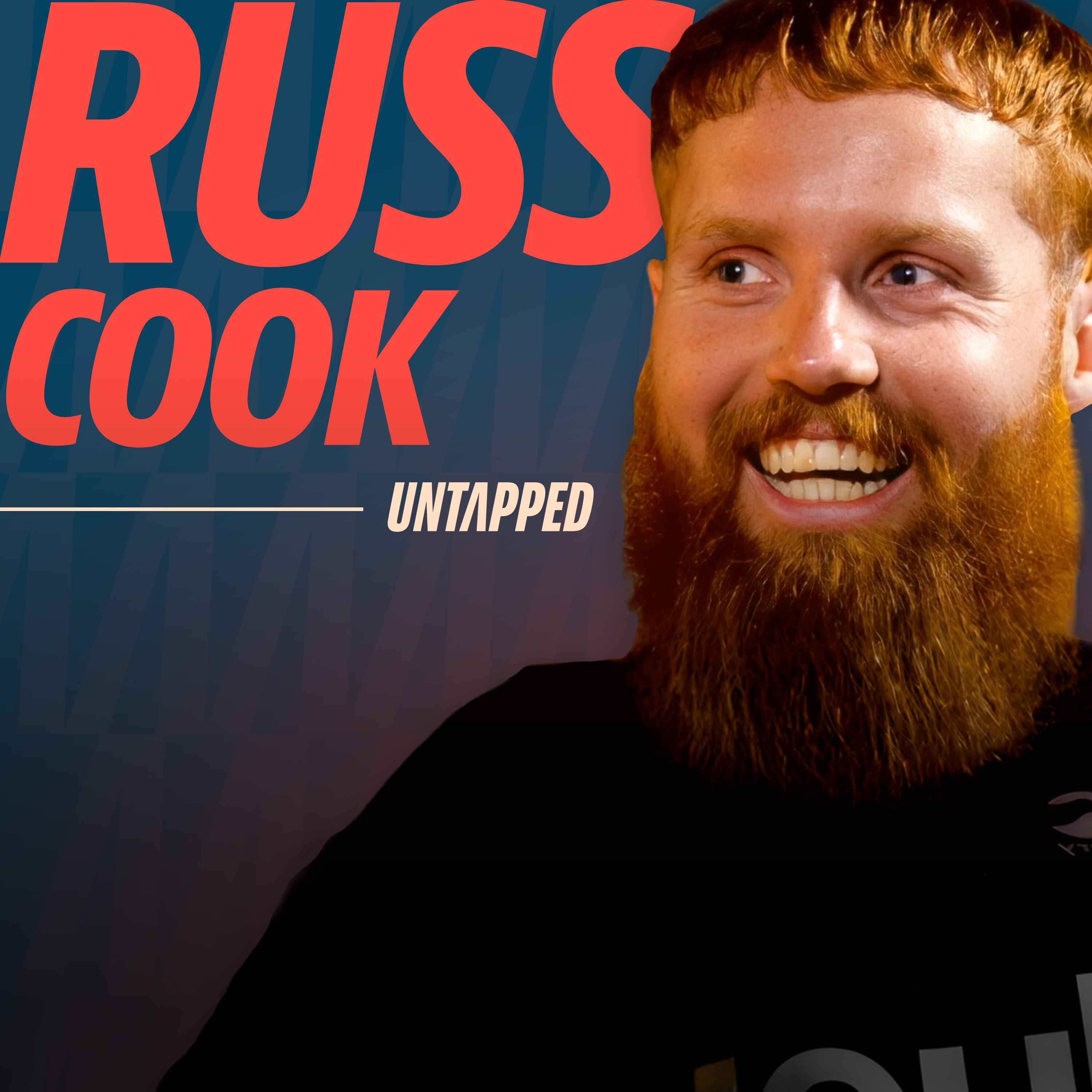
Russ Cook (“The Hardest Geezer”) discusses his run across Africa—352 days, about 16,000 km, averaging ~50 km/day—plus how it compares to his New Zealand run and what endurance means now (including ultra-running risks and record-chasing).
Russ Cook is an endurance runner and content creator known for extreme, under-supported challenges. He previously ran from Asia to London (2019) and later ran across New Zealand. He describes training with minimal resources and often no physio.
He says “getting to the start line” took years of planning/sponsorship; once underway, he felt unstoppable. He argues people should not copy Africa, but should push beyond comfort with proper planning. He claims his body adapted quickly once he committed mentally, and that injuries/logistics were managed by easing intensity rather than quitting.
sleeping in a hammock in trees; pain from nerve/back issues and a swollen foot in the Republic of Congo; food poisoning and “pissing blood” around days 24–25; a high-risk Algeria visa problem solved via a viral video; crossing finish lines in Africa vs a more “lower stakes” New Zealand experience.
Written by AI. May contain mistakes.
Russ discusses his journey, motivations, and experiences leading to his Africa run.
“I found your appetite for the challenge and just your general kind of...”
Russ shares the extensive planning and challenges faced prior to the Africa run.
“That was my kind of breakthrough sort of moment.”
Russ explains how he managed injuries and physical discomfort during the run.
“You know, when there's times in your life where everything just lines up and you're like, hell for leather, this is getting it every day for a year.”
Russ describes how his body adapted to the demands of running daily.
“with the strain of moving, even if you weren't running hard, which I think you were clearly moving well.”
Russ discusses nutrition and the challenges encountered while running in Africa.
“It's amazing even over the course of, you know, what most people would call a long run, call it 30k or something like that, that, you know, you go out for a long run.”
Learn about the creative solutions for overcoming visa hurdles when planning an adventure.
“And hopefully, you know, someone important will see it and they'll kind of open some doors for us.”
Explore the emotional differences between finishing races in Africa and New Zealand.
“you know, I couldn't complete the mission.”
Discuss the growing trend of ultra challenges and its impact on people's lives.
“The rise of ultra challenges is certainly a thing now.”
Delve into the balance between preparation for ultras and the inevitable pain that comes with them.
“To get to the end and it's very meaningful, right?”
Understand how challenges during a run can foster a sense of gratitude and perspective.
“That it just looks like you're having a jolly?”
Learn about the gradual process of gaining recognition during an endurance challenge.
“Talk me through the final days of it so and also when did it gain like national recognition?”
Explore the personal changes and pressures faced after achieving fame as an endurance athlete.
“well, we're just going to get on with this new stage, this new season, whatever it is.”
Discuss the importance of relishing the journey rather than just focusing on the finish line.
“What was the feeling that you're chasing?”
Contrast the different experiences and challenges faced while running in New Zealand versus Africa.
“Because I rolled into New Zealand off the back of Africa thinking, 3 ,000k, light work.”
Learn about the dedication and challenges faced by endurance athletes.
“And I'll be like, you are a seriously mad dog, you know?”
Learn about the dedication and challenges faced by endurance athletes.
“You don't feel like yourself, yet your doctor says everything looks fine.”
Discussion on various endurance challenges and personal capabilities.
“Would you look at, so just to get a better understanding of you, like would you look at, nothing to do with him now.”
Debate on the mental and physical limits of extreme endurance events.
“I think the track thing is harder than that because 160k took, like, I did 171 in 24 hours.”
The hosts discuss the mental aspects of endurance running and staying awake.
“but I think 81 hours You're almost better off running though because staying awake, sat still, you're never doing it.”
The hosts brainstorm ideas for a running challenge they could undertake together.
“I think it'd be, I thought this the other day, that's so funny that we were talking about this now.”
The conversation shifts to personal experiences and insights on ultra running.
“Have you seen them Backyard Ultras as well?”
The hosts provide concluding thoughts and advice on testing one's limits.
“my advice would be sometimes in life you've got to risk it for a chocolate biscuit and chocolate biscuits are well yummy.”

Get the gist, explore an idea or ask about something said.
 Claude
On UNTAPPED with Spencer Matthews, what are the key points of this episode?
Searching your listeningAutomatic transcript. May contain errors.
0:01What kind of person runs the entire length of Africa through deserts, jungles, war zones, inspiring millions, and just keeps on going? Today, I'm joined by the man who did exactly that. He's the Hardest Geezer. If you haven't subscribed to the show already, then please do. Your support helps us grow the show and allows us to keep getting incredible guests like Russ. If you already have subscribed, then thank you so much. Now, let's get untapped with Russ Cook. The Hardest Geezer. Hello, mate. You're here. I'm here. This is a wonderful, wonderful thing that you're here. I've said this before. I've said this to you before, but for the benefit of our untapped listeners, you were a huge inspiration to me.
0:41I followed you from the very start of your run across Africa. I found your appetite for the challenge and just your general kind of... Ferociousness. Ferociousness, exactly. And kind of zeal for life, if there is such a thing, to be really infectious. I just loved your content from the second I saw it. Thanks, man. I'm proud to have you as a guest. Oh, no, that's nice. Thanks. That's a really nice intro, isn't it? Thank you, mate. I'd love to talk to you about your experience of Africa, maybe, to begin with. Yeah, yeah. Were you ever full of doubt, or how did it feel? Where did the idea come about?
1:18Where it came from initially is, obviously, I ran from Asia to London, Istanbul to London in 2019. and I did that because you know I was kind of sick of the monotony of my young years wake up work you know sleep eat same thing repeat repeat go out the weekend job done so I decided to quit everything go traveling with you know not very much money but I started buying one-way tickets staying in the cheapest hostels I could find all over the world and that and I met this Italian guy who'd been cycling around the world for six years just with a few little bits on his bike and to me it was the most like inspirational thing I've ever heard.
1:57It really just showed me that all of those kind of expectations and frameworks, I think life has to be in certain way and you have to achieve this and then you move on to that and blah, blah, blah. I was like, hold on, he's just completely got the rule book and just gone, nah, rip it all the way up. And it was quite freeing really to speak to him. Obviously, I've been training and running quite a lot at the time. I'd got into marathons and things. so that kind of I had this kind of spark I'm going to run home from Asia so you know I did that I had a couple grand that I got from a clinical trial where they when I went to Australia you walk into this hospital building they pump you full of this new untested drug that they've got give you a couple grand for the pleasure it was alright to a traveller at the time as well right like free accommodation free food two weeks and they're going to pay me I was like sweet as so you know I took that money and then I bought a hammock and a camelback and a pair of running shoes and a one-way ticket to Istanbul.
2:57And then I just ran home from there. So that was kind of the start of it. And it was like super raw, obviously. There was no team. There was no support. Were you on your own? Yeah, totally on my own. I was just sleeping in trees every night, just tying my hammock up. And I just sleep there. Then I wake up, run another marathon. And for me, that was kind of like, you know, it wasn't really documented very well because I didn't really know about social media at the time. I wasn't really a social media person. I just thought I'd take a few photos along the way and just upload them to the ground for the boys back home.
3:26So yeah, I'd just take a photo every day and be like, yes, lads, I'm in Serbia tonight or whatever is going on. So yeah, I finished that and then I thought there's something in this. That was a massive journey for me. That was my kind of breakthrough sort of moment. You were speaking about your marathon in the desert. So that was my kind of like, well, I can do anything here. You know, like if I really, to me, what that showed me was I'm a ferocious little bastard, right? And if I set my sight on something and go, that is it. That is all I'm after is that. And I just chew down, then, you know, I can make anything happen.
4:05Or I could certainly make a lot more than I thought I was capable of happen. So after I finished the Asia London run, I started thinking about new continents and blah, blah, blah. And I was looking at Africa and I was like, doable. but you know that took about three years really to get that on the go because I needed for that you know for Africa I needed more resources I needed a team it wasn't physically possible without certain things in place so you know then I went on a journey of like okay well how does business work and how how do we get sponsors what do sponsors want from me why would they sponsor something like this etc etc trying to kind of bring a team on sell them a vision right we're going to do this guy i'm going to be first person to run africa we're going to film it we're going to put it on youtube we're going to do it blah blah blah we're going to make a documentary all this stuff so you know that was about a three-year process in itself just to get to the start line and then you know i always said to everyone that was involved i was like as soon as you know the difficult part for me is getting to the start line once i'm on the start line it's game over with you know we're making it happen and you did more than a marathon on many of the days yeah on average it's about 50k a day for a year for a year well 352 days yeah long but it was that It was that ferociousness in me that everything aligned perfectly.
5:21You know, when there's times in your life where everything just lines up and you're like, hell for leather, this is getting it every day for a year. And it's like, wow, it really took it out of me big time. But I knew that I wanted to leave everything out there and just leave that content. I gave it absolutely everything I had, more than I ever thought I could have. And I just left it all there. had you mapped out the time it was going to take you or did you kind of figure that out as you were going? Well, originally I thought about eight months. So originally I was kind of planning on going straight through the middle.
5:55And then, you know, as is Africa, there's coups and borders problems and all types of different problems going on. So we ended up kind of skirting around the West Coast, which added a bunch of mileage on. I did think that the line you chose was not direct. Definitely not direct, yeah. And believe me, I would have taken a direct route if I could have. but going through it was Niger Niger was a bit of an issue even throughout the project I'd often sit down with the team and go I think we should go through Niger because it would cut off about 2-3 thousand K but unfortunately it wasn't possible there was a lot of problems going on I've had the pleasure of chatting to you before about this and you mentioned that you didn't have any physio the whole time you're in Africa.
6:44No. I struggle to understand. I'm not suggesting that that's not true. I struggle to understand how your body was able to cope with the strain of moving, even if you weren't running hard, which I think you were clearly moving well. Yeah, yeah. How did you manage the pain? The pain was tough. Yeah. Probably one of the most difficult parts. and it's like, I don't know what injuries you kind of had, but I remember there was a few, like there was a back problem I had and, you know, it started all of the nerves in my legs and my lower back were like pinging off every now and again, like just kind of uncoordinated and I found that really tricky.
7:28There's a lot of stuff though that's kind of surface level pain, if you know what I mean, like things like blisters and muscle fatigue and it's only when things like snap or nerves get involved today. It's like, that's a big problem. Did you have to fix anything along the way? There was always certain things. I remember there was a, I had my right foot swelled up pretty bad. Republic of Congo, I think that was. But you can manage, you know, for me, it's all about just managing the situation. So over the course of 16 ,000K, I was like, look, it's probably unrealistic to think I'm going to go out there and just bash five, six minute Ks like every day, nonstop 50K a day.
8:10But when I picked up an injury, it was more just like, right, let's manage that situation until it's kind of got over that hill and then we can go back. So it's just like, you know, if I picked up like my back issue, for example, then I took some time to walk and like ease that intensity and then, you know, lo and behold, these things come back around. It's time, patience. The body is a remarkable thing. It really is incredible, mate. Yeah. Did you find that your body transformed, adapted to what you were putting it through? When you told yourself that it's a reality that this is, day in, day out, going to be the case, and so you eliminate any kind of doubts that this is going to stop, how quickly did you find that your body responded to that with change?
8:58100%. I always found, I don't know if you ever get this, but I might have like, I might wake up and think, oh, my knee or something, my knee, you're feeling whack today. I don't know, like I'm standing like going, I can't even, you know, I can't even put any pressure on it. And the amount of times something like that's happened and then I've gone, well, you know, in my head anyway, like the day's running is happening, right? So it's less of a, is it happening or isn't it happening? It's just how are we going to do it? And then I'll start and, you know, an hour, it might take an hour, but an hour or so in, starts easing up and we can just keep you know we just keep going it's all just push push push push
9:39therapy's biggest impact doesn't show up in some dramatic breakthrough it shows up in the smallest moments you bite your tongue instead of escalating you put your phone down instead of firing off that text you say what you actually mean instead of what would hurt someone else the most. Nobody applauds those moments, but they quietly change your life. That's what growing feels like. And that's exactly what Grow Therapy is here for. Grow is therapy that works, covered by insurance. Sessions average$21 with insurance and some pay as little as$0 depending on their plan. There are no subscriptions, no long-term commitments.
10:16You just pay per session. Grow connects you with thousands of high-quality licensed therapists across the U.S., offering both virtual and in-person sessions, nights and weekends. You can search by what matters, like insurance, specialty, identity, or availability. And you can book a therapy session in minutes and begin in as little as two days, not the national 48-day average. See if you could pay as little as$0 for therapy in seconds at growtherapy.com slash start now. That's growtherapy.com slash start now. growtherapy.com slash start now. Availability and coverage vary by state and insurance plan.
10:5775 % of women who seek menopause care don't receive it. The lying awake at 3am wondering what's happening to your body ends now. Midi is virtual care built for women in perimenopause and menopause with clinicians who specialize in women's health. Plus it's covered by most major insurances. Getting started is easy. You can book your first visit with a clinician right away. Midlife needs MIDI. Visit joinmidi.com to book your first visit today. That's joinmidi.com. Insurance coverage varies. Check with your plan for coverage.
11:31It's amazing even over the course of, you know, what most people would call a long run, call it 30k or something like that, that, you know, you go out for a long run. the different stages that you might feel in that run. So like I did a 30K the other day. First like eight or nine horrendous, as you're saying, just tired, low recovery, over-trained, glycogen levels depleted, not had breakfast, whatever excuse you might come up with. Just don't feel great, heavy, bit of pain in the knees. And then you kind of like, you hear a song that you love or whatever, or like your mind drifts a bit and all of a sudden you're 20k in and you're breezing.
12:11Yeah. You're just cruising along and all the pain that might have made you stop is banked and gone and your body kind of adapts and changes. Were you fueling a lot all the time? Obviously, with the fueling, especially at the start in Africa, it was pretty tricky. We'd be eating food off the side of the road. I was getting food poisoning all the time. On day 24, 25, I was pissing blood. It was pretty bad. I was losing so much weight. And, you know, there's a certain amount of you're just always going to be taking that risk when in a different continent eating random different food. But obviously, having Huel come on as my sponsor was big because then I had at least a staple of my diet.
13:00At least half of it was good, clean, nutritionally complete food with everything I needed in it. Did you feel it made a big physical difference? Well, in the weight loss, basically, like the first kind of two months, you can see I've just drifted. And then after I got the fuel in, it started, you know, I was still losing weight. I'm still running 50K a day in the desert and whatnot. But the decline was like less rapid. Yeah, I mean, I'm not one of these that's necessarily got all my measurements of going, like, I need this and I need that. I'm more like, I'm a freedom. I'm a freedom type of guy.
13:35I just like to go out and just, you know, I'm running. That's just how I am. Tell me if there was a time when you genuinely thought the challenge was over. So physically, I'd say I was always pretty steadfast. I'll always be able to keep moving forward. There was obviously a few logistical issues along the way that I thought, you know, this thing might get taken out of my hands. I think one of the bigger ones was probably Algeria, getting into Algeria. You know, we tried to get visas for it the first time. they said no then we flipped the whole mission on its head and started from the south to give us more time to try and kind of weasel our way in there and it was getting closer and closer and closer and we still hadn't managed to do anything we tried to exhaust all of the proper channels that we could have and then eventually I said to the boys I was like listen we've got a bit of a following online these days I reckon we try and get a video out and just try and get that thing to go set some fire to that and just let it go.
14:34And hopefully, you know, someone important will see it and they'll kind of open some doors for us. And it works. I remember the video. Yeah. So it was pretty high risk because, you know, all the advice from the people with us was saying like, Algeria is quite a closed country. If you put this video online, they'll probably take offense to it and then you're definitely never getting in. But we were, it was so close to a while. We had about, you know, 30 days or so before we were due to get into Algeria. And if I couldn't get into Algeria, you know, I couldn't complete the mission. so it was a Hail Mary and you know when that came off that was pretty big news to be fair that was incredible Obviously there are similarities in the running across Africa running across New Zealand challenge but how did the finishing moments compare in each like obviously the moment that you cross the finish line in Africa was this monumental inspiring moment that people where essentially the hardest geezer was like has arrived get born, he's, you know, like millions of people watching.
15:33How did New Zealand feel in comparison to that? Yeah, they felt pretty different to be fair. I think obviously in Africa, it was like that, you know, it was an arrival moment. And it kind of felt like my entire life had been leading towards that point. It felt like pretty monumental. I think with New Zealand, obviously, it was a bit more of a lower stakes challenge. so for me it was more just like we've run out of Ireland now that's it we've run out of Ireland and that was a challenge of my life and there is going to be many more to come and it was just like sort of a continuation of this challenges always challenges are always coming but you know Africa was definitely like a pivotal one it was like a you know that's probably how I'd describe it the guy who crossed the finish line with you?
16:26what the yellow t-shirt? guy. He beat me in my own race. He beat me in a one-man race. I remember seeing that and thinking, who the fuck is that? Some local Tunisian geezer. Fair play to him. Yeah, just pipped me to the post. The rise of ultra challenges is certainly a thing now. Yeah, every day I feel like I log on to Instagram and someone's doing a day something of something. Do you ever feel that and I'm aware that ultras were around obviously before your big mission. But as I've already said, I was inspired by you. Do you ever feel that you're inspiring people to pursue challenges that they're not ready for?
17:07Yeah, I have felt that a few times. People can do a lot of damage to themselves just running themselves into the ground. But also, I hope overall it's positive. I wouldn't recommend people to go and run Africa, for example. But I would also always recommend to go and run a bit further than maybe you ever have. Or, you know, go and push yourself. Like, go and find something that you really want to achieve and work out how you're going to do it and just go and smash it, you know. And hopefully that's, like, the overall message. Obviously, there's going to be a few people in the mix that decide to go and bury themselves and, you know, actually butch their body.
17:43But, ah, take the rough with the smooth. I think it's an interesting paradox, isn't it, if you want to call it that. I think, you know, I've tackled ultras with very little preparation and felt the pain. You found out quickly, didn't you? Yeah, I felt the pain and, you know, the emotional, you know, drama, I suppose, and jeopardy that comes with it when you feel like you're really like down and out and you've got nothing left to give because you're underprepared. That in itself is an incredible experience because you pull yourself out of the depths of hell, right? To get to the end and it's very meaningful, right?
18:25because you're teaching yourself that, you know, it's fucking hard. And when it is this hard, you almost have a greater sense of pride because you've proven something to yourself. But, you know, prior to tackling the 30, any ultra I ever did, I injured myself really badly. A big swollen foot or ankle, a big busted hip, because, you know, you're not conditioned. So you didn't really belong there in the first place. But then, of course, you do kind of belong there because you completed it. You had the moment of managing it. And I felt, you know, when I was watching you and preparing for the 1330, I thought, you know, I better take this seriously, right?
19:06Because it's a charity thing. There's going to be a lot of eyes on it. The last thing I want, you know, with my privileged reputation is to say I'm going to do this, go out and fail on day three or four or ten or whatever it might be. So, like, the stakes are high, right? It's a whole month, you know, and kind of I, for the first time in my life, really like fully prepared for it, you know, put in the time, did 2000 kilometers in prep for it, just really conditioned my body. And as a result of that, was told almost on a daily basis by people online, like, oh, you're finding this easy. Oh, this looks like fun.
19:42And, you know, and it's kind of people were almost slightly less invested in it because we were playing great music and enjoying ourselves and drinking clean cocktails and like cracking gags online. And it was kind of like, why aren't you crying? Why aren't you in pain? And it's kind of, I was trying to figure out, obviously, we weren't going to change what we were doing. To me, all that meant was like, well, you're doing a good job, right? That's what you're doing eventually. And, you know, that's what you did. Firstly, did you have that? Did people say that to you? That it just looks like you're having a jolly?
20:15Not so much, to be fair. But I mean, every month or so, something disastrous would happen. So I don't think there was enough time to really build up that time of a sense of a jolly. Especially, I mean, in Africa, it was literally like, this month is pissing blood, next month we robbed a gunpoint, then I'm held hostage in a jungle, now I'm running through the desert. Now I'm eating a snake for dinner. No physio. We've got a blue-eye Vico daily van that's an old-school minibus. So we never really hit those holiday-type vibes. With me and Africa, we didn't have to really dial up the drama because the drama was just inbuilt into the daily running of it all.
20:59There was no getting away from it, really. Just the circumstances we put ourselves were inbuilt for a mad one. At the start, I would have... We had no money, had a total ragtag team. There was barely any of us. We were like proper underdogs trying to make it happen. It felt like, I don't even know how we're going to do this sort of thing. So I didn't start feeling really grateful. I started feeling like we're up against it here. And then as I ran through more of these countries and more of the continent, met more of the people, then I started to have this sense of more like, the very fact that running the Lake of Africa has even been an idea that's entered my head shows how privileged and how lucky and how grateful I should be to even be here because there's you know I'm meeting people every day that can't even like are struggling to feed their families and all this kind of stuff and I was so that kind of that was something that grew in me as I as I traveled out the continent.
21:53Talk me through the final days of it so and also when did it gain like national recognition? I mean it came in stages I guess at the start at the start there was a big influx of people that came to and started supporting right from the early doors to be fair and then obviously towards the end it went a bit mad I was so deep in it by the end for the last month or so I was doing 75-80km days so I wasn't really doing anything other than running and sleeping so I was pretty tuned out to everything I'd chuck something on Instagram that'd close it up and that'd be that until the next day and then I'd do the same thing but I do remember seeing like it all got a bit mad.
22:36And I just didn't really think about it until I was finished. And then I came back to the UK and then I landed in London. And I was, you know, getting recognized in the tube and things. And I was like, this is wild, eh? Like, what was that like for you? Oh, it was weird. Because by the way, you were the hardest geezer before you went to Africa, right? You had a fight with one of your pals in the parking lot somewhere and you earned the right to call yourself the hardest geezer. Yeah, as the story goes, yeah, yeah. The hardest geezer, sorry, the parking geezer. It was a lot to kind of to deal with.
23:08Like my life obviously changed quite a bit when I came back. So, you know, I don't even, I don't even know if to this day I fully understand or process it or I'm just, you know, just kind of get on with it. Like the rest of my life, well, we're just going to get on with this new stage, this new season, whatever it is. But yeah, I mean, I don't know if I was necessarily made to be like in the public or like that to be honest. So I'm a bit more of a just close myself off in the world. What's it like, you know, you're the hardest geezer, you've run across Africa, you've run across New Zealand, you know, your challenges are big.
23:42They take a lot of time. They're huge. You know, other people don't really chew off what you chew, right? Is there a sense that the next thing has to be bigger, better? You know, what does being you feel like now that you've set your bar so high? Yeah, I think I do feel the pressure a bit more now. I felt like when no one was watching, I was free to kind of do whatever I want. And now with more people watching, it feels like I have to kind of, everything has to be set in place and do I have to go and top it? That's something that's kind of been in my head since I finished it. Do I have to top it?
24:27But I think my answer is only if I want to. And I have to really like make sure that it's coming from the right place. For me, like these challenges, like Africa was so difficult and so painful, as you'll know with your stuff, that you can't really do it if you don't in your heart want it. For me, if I wake up and I've got that feeling of like, I'll head back through this brick wall to get this thing done, then I'm unstoppable. But if I haven't got that, I'm fucked. So I need to like, with whatever I do in life, whether it's challenges or work, whatever I'm doing, I really need to know what it is that I want and make sure that I'm doing that and not get kind of drawn in by all of these little fancy shiny things rolling around on the periphery, you know?
25:11What was the feeling that you're chasing? So kind of, you know, you did Africa. I'd love to talk to you about New Zealand as well. Did you find the interest in New Zealand matched that of Africa or was it a little bit smaller? Was it an anticlimax or was it brilliant? How did it go? I think it was Africa and New Zealand, very different challenges, very different places, really. Africa, from the start, it's an underdog story right from the get-go. We've got nothing. We're trying to make this impossible thing happen. There's a lot more jeopardy involved. It's dangerous. I'm getting ill all the time.
25:49I'm pushing it harder than I've ever pushed it before. With New Zealand, beautiful country. We were getting welcomed in everywhere we went. we were with the tourism boards who were like helping us do the whole thing uh didn't have to worry about resources because it's all sorted out for us uh so you know if i'm completely honest with you the the challenges aren't the same you know they're very different uh and i think for that reason you know people are less interested in in running across new zealand's like i've done that kind of mileage before i've proved to myself that i can do it so for me you know the challenge of New Zealand was more one after Africa of going back to doing something that I've always loved doing running and just slowing down a bit with it and enjoying the process a bit more and I think for me that's kind of what I'm trying to take away from it is that you know with all of these challenges you kind of I don't know about you but I can get really like honed in on the finish line of everything like get to the finish get to the finish get to the finish get to the finish and I think with New Zealand it was more like okay but you know one day the finish line of life will come and you'll be dead mate so like you've got to try and enjoy the process a bit whilst you're here so um I think for me it's like all right let's figure out how we can enjoy the process a little bit more you know what were the if any what were the difficulties with New Zealand or was it uh just a far more supported effort the kind of you know did you did you even find times during that challenge where you thought you know I missed the jeopardy of Africa a bit I guess so But I think the challenges with New Zealand were probably more mental than anything.
27:25Because I rolled into New Zealand off the back of Africa thinking, 3 ,000k, light work. I'll breeze this. I barely even need to train for it. And then I rolled up and quickly found out that running is not something that you can just complete and then you're good at it for life. Running is something you need to continuously maintain. And I got probably a little bit overconfident with how tuned up my body was. so I quickly found out in New Zealand with lots of injuries so that was a big wake up call because it's like you know if you're going to take on multi-thousand kilometre runs you need to train like an absolutely mad dog and you need to be tuned up all the time you can't just slack off and think that ah it's alright it's going to be okay now but overall you know the train in New Zealand was obviously pretty difficult lots of mountains but yeah compared to Africa the challenges were not the same but then you know I'll look at a Gucci, for example, breaking that Australian record.
28:22And I'll be like, you are a seriously mad dog, you know? And I'll rate that. Yeah, you know, Will Gouge comes with some controversy, doesn't he? Oh, really? I'm not very tuned in. What's the controversy? There was a little controversy around some of his data. Like a very, very low heart rate, very, very, very fast pace for some periods. But like, I'm not calling him out, by the way. I believe that Will Gouge is a talented ultra runner. I think he's done some awesome stuff. To be honest, I'm not wading in on the situation. I don't know anything about it. There was quite a few people that questioned his data as being legit.
29:07But there's also a bunch of people that questioned it and have since retracted their comments and also went out there and saw him and watched him and witnessed him doing these long runs. There's no doubt in my mind that he's an extraordinary athlete runner. There just was some controversy around both of his big challenges, around his American one as well. I haven't actually looked at any of his data, but I do know Guji, and I would say it's almost certain that these people on the internet are just big whoppers. that have looked at some of this data and decided that, you know, he's a cheat and they've made a lot of noise.
29:49Because they do it to me as well. They say the same things to me. And I'm like, listen, the data's there. If you want to, you know, if you want to say whatever you want to say, that's up to you. But I know it. And I think a lot of people on the internet can just get a bit... I think too much of this going on. I think they're a little bit... They get a little bit jealous because, you know, they don't want to believe that someone like Gucci can do it. But the reality of faking something like this with all the data that is available these days, it would be more hassle than actually doing it. Yeah, yeah.
30:27No, I would agree with that. Yeah, I mean, I was with my, I call him my Chris Taylor for some weird reason. You know, we're not in any kind of relationship, but he's a good friend. And he was, you know, when we were in Jordan, the data was just crazy. Zero question. You couldn't possibly question it, right? Just like four devices running at all times. You know, GPS, inReach, Garmin's, Corossus, you know, like everything everywhere, heart monitors. You know, just so that anyone who goes, oh, I don't think he did Marathon 20s. There you go, mate. Yeah, we did. Which I think is an important part of this kind of stuff.
31:07he's like ripped up as well he's like ripped up shredded yeah he's a good looking bust oh he is a sexy motherfucker wow incredible put a wig on him you know what I mean
31:21therapy's biggest impact doesn't show up in some dramatic breakthrough it shows up in the smallest moments you bite your tongue instead of escalating you put your phone down instead of firing off that text you say what you actually mean instead of what would hurt someone else the most. Nobody applauds those moments, but they quietly change your life. That's what growing feels like. And that's exactly what Grow Therapy is here for. Grow is therapy that works, covered by insurance. Sessions average$21 with insurance, and some pay as little as$0 depending on their plan. There are no subscriptions, no long-term commitments.
31:58You just pay per session. Grow connects you with thousands of high-quality, licensed therapists across the U.S., offering both virtual and in-person sessions, nights and weekends. You can search by what matters, like insurance, specialty, identity, or availability. And you can book a therapy session in minutes and begin in as little as two days, not the national 48-day average. See if you could pay as little as$0 for therapy in seconds at growtherapy.com slash start now. That's growtherapy.com slash start now. growtherapy.com slash start now. Availability and coverage vary by state and insurance plan.
32:39Most women have been there. Something feels off. You don't feel like yourself, yet your doctor says everything looks fine. Spoiler, it's your hormones. Midi is a virtual care platform built for women by women and offers specialized hormone care from trained clinicians. Plus, it's covered by most major insurances. Getting started is easy. You can book your first visit with a clinician right away. It's not you. It's your hormones. Visit joinmidi.com to book your first visit. That's joinmidi.com. Insurance coverage varies. Check with your plan for coverage.
33:13Would you look at, so just to get a better understanding of you, like would you look at, nothing to do with him now. Yeah, yeah. Would you look at that challenge that he's achieved and think, I could do that? No, I can do that right now. I like the look of it. What, Australia? Well, I like the look of what he's just said. I think in many ways, and again, I hope this doesn't sound like I'm after anything or in any way not a fan of his. That's just not the case. I think when bars are set, it's fun to have a look at what can be done. Chris called me the other day and was just like, I just got a call saying that someone wants to do your exact route and beat you.
33:54I was like, great, good for them. I was like, you know, I'd love to see that happen. Crack on. I think that would be really fun. I like a bit of a healthy competition. I think it's all right. I was looking at it, right, and the distances and the times and blah, blah, blah. And from what I can tell, there'd be like a chunk left over in the day, even if you went a bit slower. And I was kind of thinking, you know, it's doable. What, the Australia thing? Mm-hmm. Do you reckon? I think so. I'm not sure, man. what was the averages do you know he was averaging just over 80 I think I'm not sure no no it was more than that bro I don't think so no yeah it was definitely more than that it was like 110 it was definitely plus 110 I think he did a fair few 110 but I think it was I think it was can we get a stat check on that it was 36 days wasn't it 36 days something like that no I think it was less actually I think it was 35 or 34 days for me once you start getting above the 1 as a day like the max I've done on a daily consistent basis for like 30 days or more has been 75 and um that was at the end of africa and when i look at that i'm like that was tough obviously it was the end of the project so i'm pretty battered up but i think i'd if i'd trained seriously for something i could maybe get in and around that but you never know until you're in the mixer do you so yeah go on what's the stats uh he did so it was 3 800 kilometers so it was in 35 days.
35:16It was an average of 110 a day. Yeah. That's pretty heavy lifting. And so, you know, 110 a day. Well, I'd love to chat to him about how he's breaking it up. So as part of my 24, I did 24 hours on the trot and did 171.3K. And I crossed 100K in 11.22. I'm trying to figure out whether if I stopped there and went to sleep for 10 hours or whatever like would I be able to just rinse and repeat that because that would be you would have thought that could be manageable but I you know that's quite a fast 100k obviously you could take 14 hours to do it instead you know slow it down considerably from where I was because I think I was running you know if you look at that is that is that just over 6 minute k's yeah so it's kind of like I don't know I think Gucci's gonna smash the pretty high bar there I like This is just in the spirit of some competition.
36:15Yeah, no, no, 100%. I would, if I thought I could do it, I would be like, yeah, I reckon I've got it. But right now, anyway, I'm like, no, Guji can have that. You've just come back off a staggy in Magaluf. Yeah. What was harder, Magaluf or Africa? Honestly, I did always say, though, that two-day benders are great mental prep for ultra running. You've got to figure out a way to stay in the game, mate. Yeah. Minimal sleep, fatigued. Keep going, brother. Those nights were the worst in Jordan when, for whatever reason, he got like an hour's kit. Ah, it's just like, you know, wild dogs or whatever, just screaming, you know, and you just can't sleep or just for whatever reason, you're just really uncomfortable.
36:54Yeah. And then like you've got, you know, your marathon's smashed the following morning and if you don't do it in a certain amount of time, it doesn't count for the world record and it's going to get 50 degrees. Yeah. Just like, you know. Grim. Yeah. Proper grim. I like the record chat though. So we've got the Australia record. It's 34 days or 35 days? 35 days. that Guz just done. Do you think you could do that? Well, as you've said, you know, I think I would need to try, like, if you... There's nothing wrong with saying you think you could do it if you can. I think it's in me to do that. Yeah.
37:19I think I would need to, to your point, prepare for it. Yeah, yeah, yeah. I'd want at least a good six months to get going to that. Yeah, yeah, yeah. At least. Good time. And, you know, you'd pick a time and you'd, you know, I'd probably take a similar team to Jordan and I would, and by the way, like, you know, huge hats off to Guz. Yeah. massive respect to him. Oh, I don't think he would take offence saying, like, I think I could beat your record. Fair chance of failure, whatever. But, like, you know, I would have a crack at that. You've got back to self, yeah. I'd have a crack at that. What about the US?
37:48I think the US is quite an interesting one. 42 days, I believe. And I think that's about 114km a day average you need to beat that. But that'd be pretty big if someone could come and top that. I think that record's existed for a very long time. Would you fancy that? Well, I mean, it's very similar, isn't it? Yeah, 114k. A bit longer than ours. It's a bit longer, yeah. No, I think, like, I saw the Will thing and I thought, firstly, I thought how fun that would be. Like, obviously, it'd be painful, but, like, my mind works. Like, you know, as I've already said, Jordan obviously was just the one marathon every day.
38:22But I, you know, there was plenty of room for more. Yeah. And the whole thing was on sand. So I didn't run on a road at all. I didn't have firm ground, not once, for a month. I think in Australia. Running on sand is dog shit as well, eh? Yeah, yeah. Yeah, it's slow. It's energy sapping. So I could shave off a lot of time from those marathons if I had a road. I think you should do it, bro. I want to see it. Will you come? I can't do that right now. No way. I couldn't break that record right now. No chance. It looked awesome. It lit a bit of a fire in me when I saw it because I loved it so much.
38:57I was really enjoying his content. And I saw it and I just thought, that would be fun going after something with a set time. Because the Jordan thing, as much as I loved it, was like, as long as I completed my marathon every day in under six hours, we're golden. So it was quite, you know, aside from maybe two or three days where that was quite rough because it was very loose sand and quite hilly. We, you know, broadly speaking, I was running them in easy in that time and it was kind of like, and I had time to enjoy myself, whereas obviously if you're up against Doogee's record, you'd be, you would be really up against it and it would be rough.
39:35Yeah. so there's there's some other records that I think would be that I've looked at I think would be interesting let's go the other one is Ned Brockman you know oh yeah yeah he tried to beat it I think he fell just short it was a hundred thousand miles that is so grim so grim so he tried to a thousand miles down a track yeah in ten days so that's about 160k a day yeah yeah for ten days forget it like nah I don't think so no because what do you think's hard of that or running across Australia with 110k average for 35 days? I think the track thing is harder than that because 160k took, like, I did 171 in 24 hours.
40:19So, like, doing 160, like, the last 11k were pretty slow and, like, doing 160 and then having to do that nine more times in nine consecutive days, no chance. I can say straight away that I'm out on day two, I reckon. I could do the 160 on day one I don't think I'm even getting 160 on day two I think I'm out already whereas 100k 110k, that last 50k is a big old chunk whereas 100k I think is I think you can do it over and over again right on the edge I think I mean yeah, this is quite big chat are we off to Australia? let's go I like the sound of this one as well longest run ever in one go 350 miles mate I think it's 350 miles something like that but okay so we were talking just before you arrived about like how fun it would be for us you and me just to set off and and stop when you drop basically just like just no sleeping nothing right just no you can fuel you can go to the bathroom you can even have a stretch you can even have you know a quick 20 minute physio but like you can't give up right you've just got to go how far do you reckon you're getting what did you say 350 miles I think it's 350 miles bloody hell that's 350 miles yeah is it because what was that like how many k is that that's like 500 and something k 560 k 560 in one hour grim just shy of 81 hours 81 hours 81 hours that would be the hardest part staying awake mate if someone if you said to me right now stay awake for 81 hours I'd be like fuck that but I think 81 hours You're almost better off running though because staying awake, sat still, you're never doing it.
42:06You just pass out. I was struggling to watch my favourite film the other day. I was just falling asleep. But I think if you're out and about moving, where would we do that? A track. You'd have to do it on a track. A track? Yeah, yeah, yeah. Fucking hell, that'd be boring, wouldn't it? No, but everywhere would get boring eventually and you might as well be on a track where you can have all your stuff right there and you can just... How far do you reckon you're making it? I reckon I've got I've got at least 200 miles in me at least I think I think it starts to get real rough after that maybe yeah I think I think I've got 50 hours in me I don't know what I think 50 hours would be I'll be like alright I can do 50 hours and then after that no sleep would really start fucking me up I think I've done about 40 or 45 hours no sleep before so that's not that's not a million miles from what I'm saying right so if I did 171k which is 104 miles or 105 miles something like that I wonder if drugs are allowed on that maybe not those kind of drugs but what some some legal drugs don't do drugs kids but no no no like you know some stimulants that can I don't know whatever like caffeine but like stronger yeah something that can keep you up yeah yeah I suppose because I don't know how people are staying awake for eight hours in one go that's crazy I've done several days on the trot when I used to work at ICAP but you know that's a different life yeah do you know you start to see what I'm saying though with like the benders kind of a good training for the ultras oh yeah yeah good mental prep I think you know those boozy days at ICAP are certainly what got me around the desert yeah I think so I'm a big believer but no I think that's pretty funny mate because I think you've kindly said that we could explore doing a challenge together or something like that I think that's a great one especially if it's at a track because it is like as well when one person stops which someone inevitably will at some point the other can continue without being in some Welsh valley somewhere yeah are you thinking relay type thing because I think relay could be relay could be interesting or just see how far we can get imagine a relay of like but one of us has always got to be running yeah just how far can you go and we have to both stay awake or can one the other get otherwise one's running one's sleeping sort of vibes and you just go until someone's fucked I mean we can fucking go for a real long time 12 hour shifts I mean how long do you reckon we could do that for I reckon we could go a pretty long time that might be a kind of like darling you're taking the kids to school
44:25see you in three months. Yeah, no, that's interesting, isn't it? I think it'd be, I thought this the other day, that's so funny that we were talking about this now. I was lying in bed thinking, like, if I just set off for a run at like six in the morning and I'm not allowed to sleep and the finish line is just giving up. Just stopping when you literally can't take another step. Like, you can sit down, as I said, sit down and rub your legs and whatever else, but like, giving up, like, when you pull the ripcord, you're done. how far do I reckon I could go. And I really don't know. But I'd love to try it.
44:59That's exactly the kind of thing that I'd love to do. I like, because there's the limit and then there's like the gun to your head limit. They're kind of different things, aren't they? So it'd be like, it'd be interesting to see what the gun to the head limit is. Yeah. I think, what kind of pace would you go? Because it's interesting, is it, would you try and bank the first like 100k quite quickly or not? I think seven minute k's. Because you can shuffle, shuffle, like, you know. Gucci shuffle. Yeah, shuffle that. Yeah. He's a shuffler. Yeah, yeah, yeah. He's a world-class shuffler. He is a good shuffler.
45:31He shuffles. Yeah, yeah, yeah. Those are long pins, mate. Get them out. Shuffle along. I like the no sleep thing because it does mean that the thing has to come to an end at some point. I think if we give ourselves rests and stuff, we're going to go for a real long time. Yeah, the no sleep thing's good. No sleep thing is good. I think we're going to do what we're going to do three full days, I think. That ultimately is where we're going to end up, isn't it? Yeah. Have you seen them Backyard Ultras as well? Is that the Beyond the... Yeah, so you do like 7K an hour every hour. Yeah, yeah, yeah. And so you've got like 15 minute windows to rest sort of thing.
46:03Those lads smashed it. Those two lads. Did you see... What lads? The one in Texas. Last Man Standing it's called. It's the BPU or BPN. Okay. There's one that's just done that in Texas. It's 7.2K or something. You've got to go an hour, an hour, an hour. They did like three and a bit days. Oh, yeah, that's sick. I think the record's like 100 hours, something for that as well. 100 hours. That's pretty tasty. Absolutely grim, isn't it? Yeah. Like imagine, imagine how knackered you are at the end of that. You go to bed and you're just like, oh. But they must be like doing little five minute catnaps.
46:38Well, he said he sat down to tie his shoelaces and he fell asleep for 10 minutes. That's sick. One of the guys, yeah. That's sick. That is sick actually. Yeah. Isn't it? Imagine like, what I find so interesting about that as well is like, what's like the, what's the fueling strategy or even like the caffeine strategy for that? Because you want to, you probably, that gets to a point where you probably need to take your little five minute power nap every hour, right? Yeah. So do you want to caffeinate up or not? Because you might caffeinate up and then you miss your sleep and then it fucks you even more.
47:10So that's mind games, isn't it? What do you even do with that? That's dark times. Yeah, real dark. Real dark. Well, listen, I think we do it. This is what this show's all about. Like we're, we should do it we should set up little cameras and we should just go we should go for it three days yeah delicious yeah we'll probably have a good chat for like the first day and then it'll be like should we go somewhere where it's not going to be freezing at night though because that will make a big difference nowhere's that cold in the UK in that night though what at the moment in summer it was zero degrees when I did my 24 hours and that just sucks I went from being boiling to just freezing which wasn't helpful obviously because then I had to I had to fight kind of hypothermia and stuff which was fine but like it I would have preferred to have just been in Africa 100 % yeah I actually quite like the heat I don't mind running in the heat yeah I like that as well yeah chuck me in for a 25er we'll find ourselves a nice little Spanish track or something where it's like 20 degrees at night and we'll just go yeah I'm key do you ever wonder what your potential is having achieved so much in this space having covered so many thousands of miles like if you had unlimited access to physio nutrition trainer cash you know sponsors whatever Do you wonder if you would ever stop?
48:23That's an interesting one for me because I think on the surface, you'd probably think that all of those things would be good to have. But I actually, I think different people are made for different things, you know, and like when I see like a Goo smashing the Oz World record or I see all of these records for longest time ran or the US or Land's Engine on Ghost, etc. or even like some of these elite ultra runners that are out there winning races and things. Like as amazing as it is, I don't think that's necessarily me. I think the parts that made me like made for Africa is that like I will go and run 50K and then sleep in a van and have no physio and eat janky like bread that I found on the side of the road.
49:13And I'll, you know, I'll get up and I'll go again. I'll do it with no money as well. and like that's where that's where I excel in that arena and I think they're slightly different arenas you know I don't know how I would get on with all of the I think in a lot of ways it might even be a hindrance to me having all of these people around me big team physios people trying to talk to me all the time maybe I'm bare suited to just being a raw dog going through Africa with like three lads in a shitty van honestly I think that's maybe the answer is that's what I'm made for unfortunately well guys listen we've had a good chat a challenge has risen from the conversation which is what the show is all about mate it's been an absolute pleasure having you on the show thanks so much for coming in and sharing your wisdom maybe we'll leave the listeners with just a passing thought you know if people are thinking about testing themselves pushing themselves potentially trying to untap the potential that I know is within everyone what would you advise them?
50:10my advice would be sometimes in life you've got to risk it for a chocolate biscuit and chocolate biscuits are well yummy. So you should risk it. Thanks so much for listening. We hope you enjoyed that episode. And if you want to hear more incredible conversations with extraordinary people to help unlock the potential within all of us, then please subscribe, follow and review the show wherever you're listening or watching. Thanks again. And we'll catch you next week, right here on Untappd.
Extreme endurance athlete Russ Cook takes us deep into the mental and physical grind of running the entire length of Africa, a feat few could imagine, let alone attempt. He opens up about battling injury, doubt, and the harsh realities on the road, revealing what it truly takes to keep going when everything around you says stop.
Did he ever want to quit? Russ shares the moments he nearly broke, the clarity that came from pain, and how purpose and perspective carried him through 352 days of running. He also speaks about what’s next, and why the journey doesn’t end at the finish line.
Russ Cook "The Hardest Geezer" is a Huel ambassador; marking Huel's 10th anniversary and inspired by his achievement of running the length of Africa, Huel has created the Limit Seeker Fund - designed to inspire ordinary people to conquer extraordinary personal goals.
This episode is about pushing past limits, staying grounded, and finding meaning in the hardest miles.
WHOOP 👉 With 3 new memberships, there is a WHOOP for everyone. Join Spencer in untapping your own potential: https://hppod.co/whoop
Betterhelp 👉 Be at your best with Betterhelp. Click here for 10% off your first month of therapy: http://betterhelp.com/UNTAPPED #AD
Heights 👉 Get 20% off your subscription by using Code: UT20 here: https://hppod.co/heights20
Hosted on Acast. See acast.com/privacy for more information.