Ask ChatGPT

 UNTAPPED with Spencer Matthews
10 Nov 2025 · 44m · 23 chapters
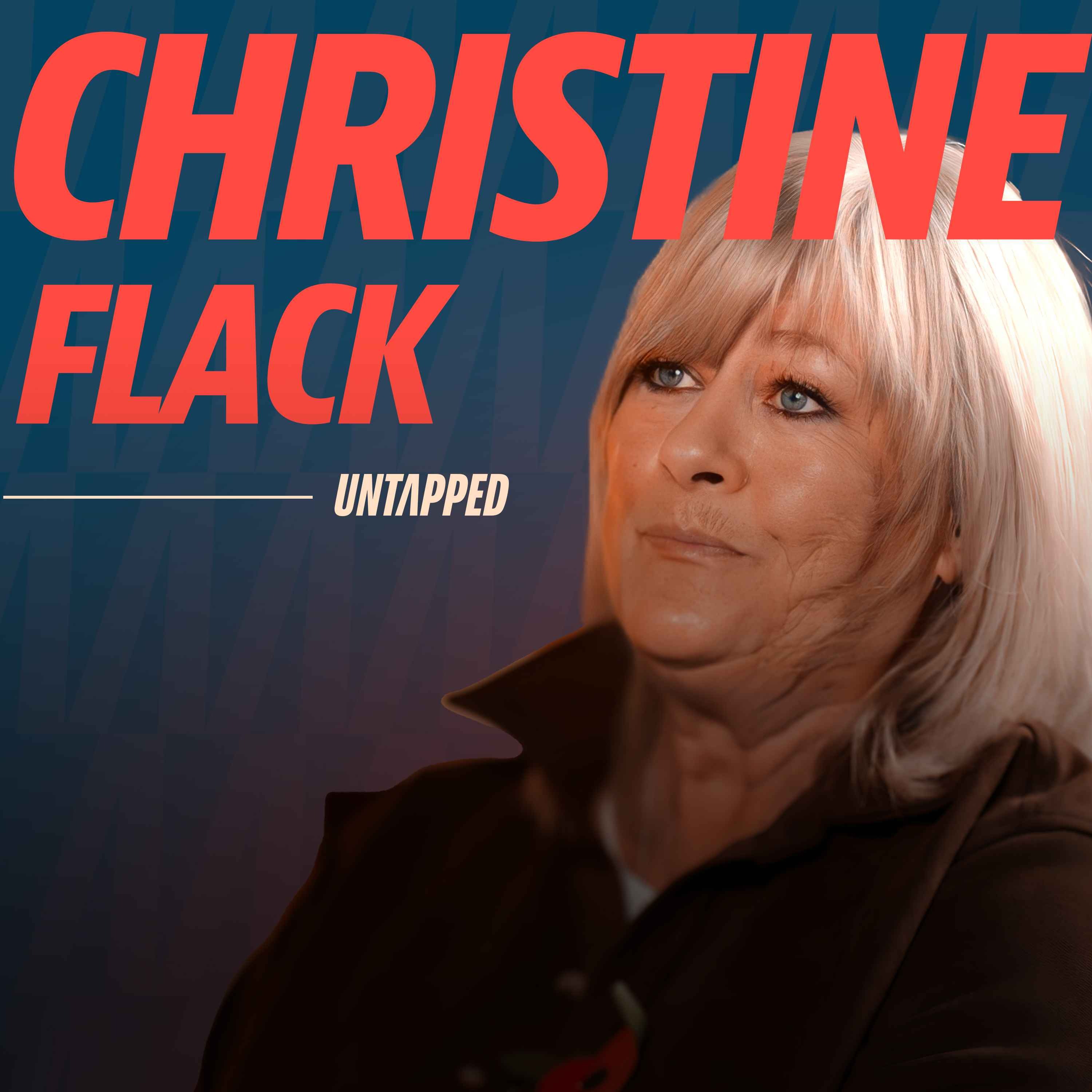
Untapped episode with Christine Flack discussing her documentary Caroline Flack, Search for Truth (Disney+), arguing that Caroline Flack’s arrest, CPS prosecution, police handling, and media coverage contributed to her mental decline and suicide.
Christine Flack is Caroline Flack’s mother. She released the documentary and speaks as a grieving parent seeking accountability regarding police, CPS, and press treatment.
Christine says police reports and decisions were inconsistent; a detective inspector allegedly pushed the CPS to prosecute after an initial caution recommendation. She claims Caroline’s self-inflicted injuries were misconstrued as the other person’s blood, and that the Sun published a blood-on-bed photo (and circled a lamp) without adequate verification. She argues the press amplified false narratives and social media followed, worsening Caroline’s state. She also says the ambulance/inquest guidance was not followed by police.
the phone confiscation; CPS decision reversal after a detective challenged it; the Sun front page and “Valentine’s card with a lamp”; Caroline losing work/charity support; fear of body-cam release; and a coroner/inquest finding of unequal treatment.
Written by AI. May contain mistakes.
Explore how therapy manifests in subtle, everyday moments.
“Therapy's biggest impact doesn't show up in some dramatic breakthrough.”
Christine shares insights about Caroline's personality and career happiness.
“You have made a documentary about your daughter.”
Christine recounts the events of the night Caroline was arrested.
“Can we talk about the evening that she was arrested?”
Examining the police's actions and the misconceptions surrounding the case.
“I don't think he realised what would happen afterwards and I know that he's really, really sorry It's quite the scene, isn't it?”
Discussing the media's portrayal of Caroline and its consequences.
“But with Caroline, she had cut her arms to the muscle and was taken to hospital straight away.”
Christine reflects on the findings of police errors and the impact on Caroline.
“I think printing an article with blood on a bed claiming that Caroline has been abusive towards someone was checked.”
Discussion highlights the mother's anger and frustration over the police's handling of Caroline's case.
“You know, when it was all happening, you just don't know what you're doing, you're listening to different people.”
Exploration of the failures in the police investigation and the lack of accountability by those involved.
“So I then went back and the IOPC did find that they'd made errors so they had to apologise.”
Addressing the mislabeling of Caroline's actions as domestic abuse and its implications.
“that we would not have used it against them.”
Discussion of the role of media and public pressure in Caroline's case and its impact on her mental state.
“the detective inspector said that wasn't an admission of guilt.”
Description of the courtroom dynamics during the preliminary hearing and the pressure on Caroline.
“Ultimately, who do you think was at large a fault, the press or the police?”
Explore the complexities surrounding Caroline Flack's story and its emotional impact.
“The story itself is a really complicated thing to understand.”
Discuss Caroline's mental health struggles leading up to her tragic end.
“I mean, Caroline's mental state as a result of all of this deteriorated, you know, all the way up until the day she took her own life, or were there signs?”
Examine the legal pressures faced by Caroline amidst media scrutiny.
“Was that the general consensus that it would pass?”
Discuss the implications of domestic abuse cases on legal outcomes and victim psychology.
“Does that not just completely crush the case?”
A recount of Caroline's final days and the support she had.
“And, you know, I spoke to a lady yesterday who deals with a lot of domestic abuse.”
Reflect on the role media played before and after Caroline's death.
“And I think her friends thought nothing would happen because there were no pills or that around.”
Discuss how Caroline's family keeps her memory alive and copes with loss.
“So when, you know, a former prosecutor that you interviewed said that it should never have gone past a caution, is that aggravating or helpful?”
Investigate how media coverage affects the families of victims.
“and her and Jo being twins, they had this sort of language between them and the same things made them funny and quotes from Blackout or whatever, you know, all these things and songs that they loved.”
Explore the need for reform in media practices post-Caroline's case.
“people around know but they just they seem to love it they seem to love that they had could say these bad things about her was the tune changed upon her death.”
Discuss the ethical responsibilities of the media in covering sensitive cases.
“Such a wild kind of concoction of things going on.”
Explore how the press influences public opinion and the challenges faced by individuals like Caroline Flack.
“Yeah, you say that, but the press are still doing that.”
Discusses the tragic circumstances surrounding Caroline Flack's death and responses from authorities.
“And on the Valentine's Day, they even created a Valentine's card with a lamp on it about Caroline.”

Get the gist, explore an idea or ask about something said.
 Claude
On UNTAPPED with Spencer Matthews, what are the key points of this episode?
Searching your listeningAutomatic transcript. May contain errors.
0:00Therapy's biggest impact doesn't show up in some dramatic breakthrough. It shows up in the smallest moments. You bite your tongue instead of escalating. You put your phone down instead of firing off that text. You say what you actually mean instead of what would hurt someone else the most. Nobody applauds those moments, but they quietly change your life. That's what growing feels like. And that's exactly what Grow Therapy is here for. Grow is therapy that works, covered by insurance. Sessions average$21 with insurance, and some pay as little as$0, depending on their plan. There are no subscriptions, no long-term commitments.
0:37You just pay per session. Grow connects you with thousands of high-quality, licensed therapists across the U.S., offering both virtual and in-person sessions, nights and weekends. You can search by what matters, like insurance, specialty, identity, or availability. And you can book a therapy session in minutes and begin in as little as two days, not the national 48-day average. See if you could pay as little as$0 for therapy in seconds at growtherapy.com slash start now. That's growtherapy.com slash start now. growtherapy.com slash start now. Availability and coverage vary by state and insurance plan.
1:18Who says Halloween only lasts one day? With Wayfair, one night of Halloween becomes a whole season at home. From larger than life yard decor and moody lighting to festive accents for every room in the house, Wayfair has what you need to make Halloween feel like magic all in one place. Because the best Halloween memories aren't made in just one night, they're made all season long. Shop Halloween decor now at Wayfair.com.
1:46Mod.com is changing the way people battle excessive fatigue. Ever hit a wall in the middle of the day and a third coffee just doesn't do it anymore? Here's what's actually happening. Coffee only briefly blocks adenosine, the chemical that tires you out. When it stops working, your system is flooded and you crash. Modafinil is a prescription treatment that works in a completely different way. Modafinil works by stimulating multiple receptors in the brain associated with wakefulness, including dopamine, serotonin, norepinephrine, histamine, glutamate, and orexin. It's a more complete solution that gives you 10 to 12 hours of steady focus and energy.
2:29To learn more, go to mod.com. Fill out your intake form, meet with a license provider, and if approved, Mod Alert ships straight to your door. Go to mod.com to get started. That's mod.com.
2:52I'm Spencer Matthews, and you're listening to Untapped. This week, I'm joined by Christine Flack, the mother of Caroline Flack, a name that so many of us know, but a story few truly understand. Christine has released a powerful new documentary, Caroline Flack, Search for Truth, on Disney +, available now, that looks at the events leading up to Caroline's death and the questions that still remain about how she was treated by the police, the CPS, and the media. It's a story about injustice, public pressure, and the human cost of fame, told by a grieving mother still fighting for truth and change.
3:27Listener discretion is advised as this episode discusses themes of mental health and suicide. This is a deeply personal and important conversation about accountability, compassion, and the impact of how we treat people when they're at their most vulnerable. This is Untapped with Christine Flack. Christine Flack, thank you so much for joining us on Untapped. You're welcome. Thank you for inviting me. It's a great pleasure. You have made a documentary about your daughter. Very powerful documentary. And thanks for that. Certainly offering lots of interesting insights into the events surrounding her death.
4:06Caroline obviously was very well known, and lots of our listeners will feel like they know Caroline. Very infectious character, lovely nature. Can you, as her mother, tell us a bit more about her as a person? I think what you saw on the TV is what she was. That's what she was like, you know, 90 % of the time. But just occasionally, she did have these really big downs. and so that was the side I think nobody saw of her but the side you saw her laughing and I think her friends would tell you she was always like that you know she loved life she loved her life she loved her work she loved her family Jodie her twin sister found a note the other day where because Carrie always wrote things down she was a great you know keeper of a diary and things like that and she'd put things I'm lucky I've got and it was family.
5:04She got her own house and, you know, she'd got her job. So really she was, yeah, she was as you saw her. And would you say that she was happy with kind of her career? She was obviously doing incredibly well, you know, around the time of the initial incident. Was she happy at that stage in her life? She was very happy. She really was. She loved Love Island. She loved the contestants. That may seem strange, but she could see why they were doing it, why they were doing those sort of programs and reality programs. And she understood a lot of them and I think she got close to a few. The ironic thing was she was telling them how to behave and to ignore the bad publicity.
6:04And she wasn't actually doing it herself. But no, she loved her career. She was happy. Can we talk about the evening that she was arrested? Can you take us back to that night and what transpired? When they very first got there, I think because Lewis is six foot five, I think, and she's this little dot, they thought he may have done something. And she said, no, no, I did it. So the very first thing the policeman wrote in his notebook was that she'd admitted to catching him with her phone and there was blood on the corner of the phone. So is the lamp also just like the sun? The lamp, no. The lamp wasn't included in the police reports?
6:48No. What had happened, Lewis phoned the police and he said, I don't know the exact words, but he said, oh, she's hit me with something. It's either a lamp or a fan or something. That was in the initial phone call. But when the police got there, they could see that that wasn't so. So the police never, ever took a lamp away. They never took a fan away. But they confiscated her phone because on the corner of the phone where she'd caught his head when he sat up, he had caught him. So that's what had happened. They'd got home. He fell asleep. she had her phone in one hand, his phone went off. And so she'd got two phones, if you like, in her hands.
7:33And she read a text from a woman and she'd gone, oi, and as he sat up. So she hadn't beat him while he was asleep. That isn't what happened. And he will tell you that, you know. So, but, you know, they were, he's drunk, I'm going to phone the police. And I think with him not being in that world, I don't think he realised what would happen afterwards and I know that he's really, really sorry It's quite the scene, isn't it? The CPS first recommended a caution Why do you think that they changed their mind? Because a detective came on duty halfway through the night and Caroline was still in the cell and she heard them talking in an open office.
8:26They was all working in an open office. She heard them talking about the case and said, oh, no, I think that should, you know, I'm going to go back to the CPS. I think she should be prosecuted. And it was the first time in this detective inspector's career she had ever challenged a CPS decision. Now, that night she was working on a murder and she was working on, because she was in charge of that area, but she took the time to phone someone in the CPS and get it changed. The original person in the CPS didn't change their mind so she went to someone else and no record was kept of what she actually told them.
9:06Because Lewis had also said that he didn't want to press charges. Yeah, and he never did say he wanted to press charges, not from the very beginning. He's never made a statement. In fact, the only statement he made was to say, no, please don't do anything and I'm worried about her mental health because she had tried to commit suicide that night. When Caroline cut herself that night quite badly in an attempt on her life, who was looking after her? So like when the blood found its way into the scene and was misconstrued as Lewis's and Caroline was taken away for abusing Lewis essentially and arrested, did anyone pay any attention or notice to the fact that she had clearly cut herself?
9:55Yeah, the police knew it wasn't Lewis's blood. They never, ever assumed it was Lewis's blood, ever. So there's a disconnect between the case and what was printed in the sun? Yeah, totally. An ambulance was called. They looked at Lewis and they said, no, he didn't, there was nothing, he didn't need any treatment. But with Caroline, she had cut her arms to the muscle and was taken to hospital straight away. And that's when, what I found out now really, because Lewis, they didn't live together, he went home with his mum and she could have gone to hospital, gone home and then gone back if they wanted to charge.
10:36You know, they had enough time. But it seemed as if the police wanted to wrap it up that night and do it. And I'm sorry to probe because obviously it's quite sensitive. It was her blood. in the room. So who made that mistake thinking that that was Lewis's blood? Because I'm assuming that Lewis would have said that that wasn't his blood. Well, Lewis actually took the photograph of the blood, the bed, and sent it to a friend. And I don't know whether he said, look, she's really hurt herself or look what she's done. I don't know. I wasn't there, so I can't say. But the friend, a friend of his, sold it to the Sun newspaper.
11:23So it was the Sun newspaper that decided to print it and sort of alludes that it was Lewis's blood and also circled a lamp in the picture. Unbelievable. And what they did, they didn't call anybody to make sure that was true. because if they had, they couldn't have printed it. Do you know what I mean? So nobody knew that was coming out until the morning it came out. I've since spoken to them and they've said it was an accident. There wasn't an editor on that night. It was a slow night. It's New Year's Eve. It was a slow night and it slipped through. So it slipped through to the front page and two pages inside as well.
12:14That's barbaric. It is. It's also, what is the, I mean, of course, you know, you and your family have already paid the ultimate price, but that kind of mistake and that kind of poor judgment on the son's behalf is a very difficult thing for them to now explain away. Oh, definitely. And, you know, you say a mistake, but it wasn't a mistake. they knew what they were doing and that has explained why they did that in the film and again I learnt that from a journalist in the film I didn't know I believed that oh the editor was away and they don't check but they do check you wouldn't put something on the front page that could ruin someone's life without checking I think printing an article with blood on a bed claiming that Caroline has been abusive towards someone was checked.
13:22I'm obviously not in a position to say, but it would be a very difficult thing to understand that that would make its way onto the front page without going through a very senior editor at that newspaper. Yeah, exactly. And now the editor of that paper at the time has been promoted. So, I mean, it wasn't Victoria at the time, but the editor that was the editor at the time is now in a better position. How does that happen? It's hard to believe. The police reports had contradictions that you discovered. how did it make you feel when the rules felt like they were being bent? It just makes you angry.
14:08You know, when it was all happening, you just don't know what you're doing, you're listening to different people. But it was after the inquest, and the coroner was so sure that Caroline was treated differently that it made me look into it. and it took two years before I got the first really answers from the police and their answers were everything was fine, didn't do anything wrong. So I then went back and the IOPC did find that they'd made errors so they had to apologise. But they still, the IOPC is still the police and they didn't think this case was grave enough to give to an outside investigator.
14:58Her lawyer said that she was being prosecuted for being Caroline Flack. Would you agree with that? Totally. It's almost... It's frustrating to even hear. Like, it's very... God, I'm struggling to find my words today. It's painful to listen to because it's clearly... it's by this stage, by her in the cell, by the new detective coming in, it's being, it's like a bad series of Chinese whispers. It's just being blown completely out of proportion by the sounds of things. Yeah. You've said in the past, because of a police error, my daughter died. What do you believe that error was? I believe it was the detective inspector.
15:44for whatever reason she did it was interfering in a case at the inquest I was allowed to talk to her but she had a barrister with her so any awkward questions the barrister would would would answer but I said to her what did you think about Caroline when you saw her because she was in a really bad way sure I never met her I didn't have time to go to the cell to see her So I said, you know, when you read the statement, she didn't read anything. She didn't look at anything. She took other people. They were telling her. But she felt that was enough to go to the CPS and get the decision changed. Do you hold any hatred towards anyone?
16:32Not hatred now, because it's got... I just wish they'd be able to say, yeah, do you know I shouldn't have done that? But again, I keep going back to the inquest, but that's where my journey started really. The coroner said to this detective, would you do anything differently now? And she said no. And yet it's been proven since that she's had to do retraining. She's had to, you know, new methods have been put in. But she's a detective inspector. This isn't, you know, in the Met. It's not a newcomer. It's almost, it's frustrating for families when people fail to take responsibility for really serious mistakes.
17:21We had a similar thing on Everest when we lost my brother. There were issues around the circumstances of his death. It wasn't a straightforward accident. And nobody had the guts to say we made a mistake. and that's when it became contentious for us as a family. Of course, yeah, because nothing will bring him back, will it? You'll never get your brother back. Yeah, but it's interesting because I think the feeling, the general feeling is I imagine it's the same for the detective as it was the gentleman, well, I never called him gentleman before, the men on Everest. They believe that any admission of wrongdoing is an admission of guilt and could be used against them.
18:06In our case, I can comfortably say that we would not have used it against them. We just wanted clarity and unexplination and we understand that mistakes happen. It wouldn't be a, right now you've given us that, we're going to prosecute you with it. And we made that quite clear, but I suppose there's a lack of trust when there's a dead young man or woman involved, particularly when it comes to the family. So I sort of understand both sides, but it would be lovely for us, well, you in this particular case, to have just had that admission of I wish I'd done things differently. It would lighten, you know, the blow of, well, albeit slightly.
18:48Yeah. But there was an ambulance driver at the inquest, and their guidelines, because they went to see her the night before, the night before she actually died, She had taken lots of tablets and things and her friends had called an ambulance. And he didn't take her to hospital because the guidelines say if they don't want to go, don't force them. But at the inquest, when the coroner said to him, would you do things differently? He said, I'd forget the guidelines. I would make her go to hospital because I could see she was in distress. So he was big enough, and I don't blame him for anything at all, but he was big enough to say, do you know what?
19:27We got it wrong that night. But the police, you know, who's still in her sort of job, wouldn't say, you know, thinking about it, I should have gone to see her or I should have read the notes myself. It just sounds lazy. Yeah. You know, there's a real lack of understanding of the case prior to making, you know, a very important decision that ultimately also contributed to Caroline's taking of her own life. It's very frustrating. And thanks, by the way, for being so kind of open and honest and sharing it all with me. You know, I remember, obviously, the case, and I remember the publicity that Caroline was getting.
20:17We've shared a couple of agents in the past, and I can remember thinking how horrendous a time it must have been for her. How did she react when she found out that it was going to court? I think she was sort of in this haze, this different world for a while. Because her barrister, he knew that what they were doing was wrong. and when you start reading things about being a domestic abuser, a domestic abuser is so bad and I mean that. You know, I worked with young girls that were married or young women that were married and had to live with domestic abusers and they were let to go home and, you know, and someone in my family had, you know, a distant family had.
21:10And it is so terrible that saying what Caroline did was domestic abuse, I think lessens that, you know? Yeah. It lessens it completely. Because how many people do you have, like you say, whether you're a boyfriend or husband or girlfriend, you have an argument. And what the barrister said or what the first CPS person said when she saw it, Carrie was 40 years old, never had anything like this before. there was just no reason to prosecute her. She'd admitted it was a, she'd done it, she'd admitted it was an accident. Because she said it was an accident, the detective inspector said that wasn't an admission of guilt.
21:55She had to, if she'd have said, yeah, I really hit him with a lamp, she would have admitted guilt. But she didn't. And so she, I can't say that. I can't say that. and yeah, it just, you know, we know where people are, in fact, there's a police officer in the film, you know, says about cases she dealt with where, you know, people have even used a knife and been released, not been charged. You can't get your head around it. You can't get your head, and Caroline couldn't and her barrister kept saying, look, it will be all right. It's got to be all right. I didn't know what the barrister was doing behind the scenes.
22:40So I did have a little bit of a, oh, he was useless. You know, what, you know, again, I found out in the film is he was doing everything. He was doing everything he should. And the police weren't listening. And the CPS weren't listening. This is a very difficult question, not in nature, but just it's a hard thing to answer. What is it about Caroline that you think the police took such a stance against? I don't know. Obviously, she's popular, good-looking, famous, but why go against her to this extent when clearly all signs pointed to it just being a complete misunderstanding? I think maybe they were frightened of what the press would say because the press were there so quickly and everything going on.
23:28And I just wonder if they thought, or we've got, you know, she's got to be an example. But that isn't an excuse. You know, there is no excuse. So I don't know what the police would think. I really don't know. It's hard to believe even in the first instance. So it's hard to make an example of her as a domestic abuser. I don't really understand, you know, why the hat would be hung on that particular thing. It's a difficult thing to understand anyway. you know when people have crimes pinned on them it's usually you know you can see it sticking somewhere yeah or something in the background that may come out and other people come out but um it yeah it was it was unreal and i think that's what she couldn't that's why she she couldn't see a way out she there was just i mean she did some you know some days she was a bit brighter she didn't know this is all right but then something would be written or something would come online and she'd go right sort of down again and she couldn't go back to her house which she really liked um because the press were just outside um the when she come out of hospital she went to stay with her sister joe and myself and two friends went to clean her flat clean all so she could eventually go back there.
24:51And we was doing everything. And then we were chased by paparazzi. That was about 10 o 'clock at night. Ultimately, who do you think was at large a fault, the press or the police? I think it was a combination, really, without, you know, if the police had charged Carrie, but hadn't given so much false information to the press, you know, if someone hadn't sold a picture of the blood, It was just a complete build-up of things that, you know, just got bigger and bigger. And even now, I was giving a talk the other day to some women, and I wanted a picture. I haven't got a picture of the blood, never had it.
25:35But, you know, you can still go online and download it, that front page. The prosecution said that that picture or the scene was like a scene from a horror movie. you were there, I think, when they said that. How did that make you feel? Couldn't believe. We couldn't believe that this first hearing, that it was like a criminal case. And they'd got one of the top prosecutors in this little courtroom. Forgive my ignorance. I don't... It's... She's being prosecuted by the system, not Lewis. Yes. So it's kind of... Yeah. And this was just a hearing. And just for those listeners who are also like me, don't have a legal background, that is because the system felt that there was a crime that was worth pursuing, even though there were no charges from the person who was supposedly being abused.
26:40Yeah. And they knew it was a phone, but the prosecutor was allowed to say in court about a lamp, about a bloodbath, about all these things that they knew hadn't been caused by Caroline. But because there was tons of press there, it then could go in the papers even more. Are the prosecution using press stories in court that are essentially false, but they're referencing them because they've been printed? No, the prosecutor had to be given the information by the CPS who had been given the information by the police. And that's when a lot of the information came out just at the initial hearing. Because Carrie had never gone to trial.
27:27This was just a hearing. Where again, they said she couldn't see Lewis. So it was all over Christmas. They couldn't see each other. Which again was, you know, they don't do that in a husband and wife with the husband or the wife has really violently attacked the person. But for some reason, they did that. And Lewis was in the court. He sat behind me and listened. And he couldn't believe what was happening. It's hard to believe. It is. The story itself is a really complicated thing to understand. Lewis is in the hearing as well, behind you. you and he know the truth but it's unfolding in a way that is completely contradicting what really happens yeah how's that making you feel dreadful in fact i went um i was with with a friend um an old school friend actually that knew carrie as a little girl and um the prosecutor was just coming out of her office as we went past her and i said are you happy with what you did and she said, if you say one more word, I'll have you arrested.
28:43That's the honest truth. So my friend just got a hold of my arm and said, Chris, we're just... It's, yeah, wow. It's really rough. It's really rough. I'm so sorry you had to go through that. I mean, it must have been an incredibly awkward, difficult thing to deal with. I mean, Caroline's mental state as a result of all of this deteriorated, you know, all the way up until the day she took her own life, or were there signs? There were some days that I'd seen her the Saturday before. I drove up to see where she was, you know, her new flat, because she'd had to move out of her house. And she was, you know, she was quite buoyant.
29:37And as I drove up, my partner, we drove in there, as you say, she was really tiny. She got her hair screwed up on top. And I said, how can a little girl be in so much trouble? You know, and she was fine that day. We went across the road, had a pub luncheon, which she loved. That was her favourite, Sunday roast. went, you know, and she seemed as if it would be all right. But then during that week, I think more and more stuff was being printed and nasty comments. And I think her lawyer was just saying, you know, they're not going to stop, they're not going to stop. And, yeah, it just got worse. She lost, you know, she'd lost her job.
30:22She'd already filmed another series that was then just, they said, no, we're not going to show it. The Children's Cancer Trust, who she did a lot for, said, no, we don't want you anymore. You know, everything was like slipping away her whole life. And as much as we said, you know, it will pass, it will pass, you couldn't get that through to her. Was that the general consensus that it would pass? Yeah, I think, you know, well, that's what we thought because we knew what had happened. So her barrister kept saying, no, look, you know, it will not. She was terrified if it went to court that they would show the body cam of her cutting herself and having this, you know.
31:13She did that with the police present? Do you know, I'm not going to say for definite whether she did or not, but she was in a dreadful state on the body cam and she didn't want that. She didn't want that out in public. Not because she was doing anything wrong, but it was her. It was a personal thing that was happening to her. No, I think that's very understandable. Was it likely to go to court? That's what we kept being told, yeah. Yeah, because, you know, again, I found out in this film, the barrister said he couldn't believe it. I'm sorry, but this again is just me being probably a bit thick with the legal system.
31:56So my apologies. Lewis taking the stand in court, right? Say it got there. And saying, this is a massive misunderstanding. I wasn't abused by Caroline. That blood was her blood because she was in a state and couldn't believe that I'd called the police, you know, whatever he may have said. Does that not just completely crush the case? No, because you don't need a victim's statement.
32:31Isn't it almost like somebody being up for manslaughter and then the victim or near victim saying, he didn't actually try and kill me, that's not true? That's what's so weird, because I believe not that long ago, there was a football player taken to court and then his girlfriend said, oh, I'm not going to press charges, and he walked away. But that wasn't happening with Carrie, and we don't know why. We don't know why. Surely it's the most important bit. I'm so sorry, by the way, for sounding... No, I think... You're far more familiar with it all than I am, but... When it is real domestic abuse, some victims are frightened.
33:10So even though they may call the police, they will then change their story. For fear of what could happen. Yes. I mean, that's not believable with the Lewis situation. And that's why I think this is doing more harm to domestic abuse cases than good. Because they don't follow up some of those cases. And, you know, I spoke to a lady yesterday who deals with a lot of domestic abuse. And she said she just couldn't believe it. it's incredible what they were doing. If we can move on towards Caroline's final days, can you describe the days leading up to the event? Who was she talking to at the time? You know, were you in touch with her a lot?
34:05Yeah, all the time. And I say her twin sister lived in London at the time. She was with her, you know. She had a group of friends that were around her, you know, that were taking it in turns to look after her or be there. And, you know, that's all we could do. That's all, you know, to get through. I'd love to have come home, but I couldn't see that happening, you know, because everything was in London and her friends, so I think that, but I could get there. It didn't take long to get to a couple of hours, so that was fine. and on the as I say on the Friday night I think she got different news and just it hurt her and I think that's when she took a lot of pills I didn't I wasn't aware of that the friends hadn't said which I can understand because you know that they were there Jodie was going to go the next morning because she had Carrie's cat waffle so she was going to take him to be with Caroline.
35:12And I was going in the afternoon on the Saturday to stay again for the weekend. But we never got to that. And her friends popped out by the time Jodie had got there. And I think her friends thought nothing would happen because there were no pills or that around. They didn't, you know, that was Caroline, was having a drink and taking pills maybe. be but I never dreamt that she would hang herself that just wasn't I don't know I just wasn't what I you don't imagine you've got to feel pretty bad to to do that and she'd even looked up how to do it that morning so it was like I've just got to do something got to get out of this and she'd locked her door so when Jo got there she couldn't get in and that was unusual for Caroline you know to lock doors and do things like that so yeah do you think if the case had been dropped that she would still be here yes do you think it was the decision to prosecute her that ultimately led to her killing herself?
36:29I think from that day, yes. But I think the media intrusion was a lot to do with it as well. Were the words of others afterwards helpful to you at all? So when, you know, a former prosecutor that you interviewed said that it should never have gone past a caution, is that aggravating or helpful? It's helpful because that is the truth but it makes you sad it makes you sad to think you know because it shouldn't have happened it shouldn't have happened but at least now I'm not this mad mother that's always on the telly or doing things there's a reason you do those things like yourself you don't want to keep reliving someone that's close to you that's died off a different day you know what I've managed to do over the last few years is keep it completely separate so her brothers and sisters and I Carrie's still about all the time we talk about all the time we laugh about her because she was quite moany at times and we'd say oh can you Imagine Carrie doing this.
37:46And her dad, who's really not well, although he and I had divorced a long while ago, they were still close. And people say, well, why isn't he in this film? Well, he's not well. And he has sort of forgotten that she's died. And Jodie went to see him the other day and said, well, Carrie's been, she's tidied up. And we had to laugh because that would have been And the last thing she did would be to tidy up. And so those things make you laugh. The things about her that we know, you know, and her and Jo being twins, they had this sort of language between them and the same things made them funny and quotes from Blackout or whatever, you know, all these things and songs that they loved.
38:35Could Jo tell something had happened before? Yeah. I think once she couldn't get in the door. Yeah. And it was Jo who found her? I can't imagine. Yeah. And it's a bond. I mean, her brother and sister, they're really close. But I think with a twin, and they'd done everything together, lived near each other, you know, they'd sort of, their lives, and Carrie loved Jo's three children. I mean, she's got, loved all her nieces and nephews, but with Jo's kids, I think she thought they were sort of hers as well. She acted like it. She sort of took them over. And, yeah, so I think if she'd have been feeling right, she'd have thought about them and, you know.
39:27The documentary focuses a lot on the case. What role ultimately do you feel the media played? a massive amount massive amount because the case most people that are going through that it's not all over the papers you know if you go through it it's you know it's personal it's not nice and the immediate people around know but they just they seem to love it they seem to love that they had could say these bad things about her was the tune changed upon her death. So did it go from being a kind of relentless pursuit, you know, of agony almost, to, you know, was anything kind published? Oh, afterwards it all.
40:22Did you receive any apologies? Only one of her friends, we met with Rebecca Brooks and some others. And, you know, they said, oh, the night she died, everybody was crying in the offices. And at the time, I'm thinking, oh, that's nice. They must have liked her. Because you're caught up with this. You want people to be nice about her. Well, Rebecca Brooks wanted to name a mental health award. Well, she has, yeah. After her and you to give the award. And we did the first year. And then you realise, Spencer, that it's sort of, do you know what? This isn't real life. This is all a way of saying, you know, oh, we're not as bad as we are, the press.
41:06And I'm glad that the award was given and the lady that received the award I still talk to. She was a lovely lady. I'd lost her son and well-deserved for stuff she was doing. But I... No, I never went again after that. It was... That isn't my life. That was Carrie's life. It wasn't our life. She often took us into that realm and it was exciting, but it wasn't my life and I didn't want to just take that over and it didn't make up for what they'd done. I can't imagine anything will. Such a wild kind of concoction of things going on. What change would you like to see enacted so that families don't have to go through this again, despite the fact that Caroline's case is obviously highly unusual and unlikely to be relived by anyone.
42:03Yeah, you say that, but the press are still doing that. And what I've done in the last couple of years, I've been invited a lot to go to things that a group called Hacked Off, you know, look into. And there's so many people, journalists, lords, ordinary people that belong to this group that are trying to get the Leveson Part 2 acted upon. And I think that would be a really good thing to come out of this, although this government, the same as the last one, really don't want to do it. And I don't know whether they're frightened of the press as well, which obviously they must be because they don't want bad things written about them, but it's dreadful some of the things the press do and get away with because there is no, there's nothing you can do about it.
42:57A ghastly bunch. A ghastly bunch. Are you going to put that in, you little devil? No, my words, not yours. I've had my fair share of being hunted by them. It can be extraordinary. It makes you understand because a lot of people don't understand. Well, why would they? They wouldn't do that. I think a lot of people read articles like, you know, media-focused articles at face value. Yes. And that's unbelievable to me. I read pretty much all news and assume that it's false. Yeah. Everything that goes across most publications. You know, I'll read something and go, I bet that didn't happen. Yeah. Is my, like, baseline.
43:46Isn't that sad? Yeah. Because there are some good journalists out there. There are. I mean, of course, there's lots of exceptions to this rule. There are plenty of fantastic journalists. So you don't want to be against everybody. But it makes you feel like that. It's a bit like the police. I know there's good police out there, but I wouldn't trust one. I wouldn't call the police. That's what has killed in me. And that's really sad because when I was younger, even when I first got married, we lived in a village. And we had a village policeman. Everybody looked up to him. You know? And it's, that's gone.
44:21What do you hope people remember about Caroline? I want them to remember that she was, she was what she was on the screen. She was a happy girl. She loved life. She had a lot of things she knew that she was grateful for. and I think the last thing in the world she would do is be a domestic abuser or abuse someone. You know, I used to watch TV and like everybody, you say, oh, I don't like that person. She'd go, you don't even know them. You know, she'd learn by being in the industry that, you know, you can't just say that about people and she used to, yeah, she taught me a lot about being tolerant and nice and kind, although that is a phrase that people use that I don't know if it means much.
45:23Do you think that the newspapers, the press, kind of pushed against what was essentially a bit of an open door that then opened the floodgates for social media and, you know, Joe Public to have their say in quite a complicated, you know, case where actually there wasn't any concrete info for these opinions to be formed from. Totally. Because that's where everybody was getting their information. They were getting the information from stories that were untrue. So they were commenting on something they didn't really know about, but were reading about. And on the Valentine's Day, they even created a Valentine's card with a lamp on it about Caroline.
46:08Now, how... Yeah, just awful. so frustrating as well just hard hard to hear hard to handle hats off to you by the way for you know sticking with it and pushing and creating this incredible documentary that I hope all of our listeners watch um it's really good thank you when asked about the content of Christine's documentary a crown prosecution service spokesperson gave the following statement Caroline's death was a tragedy and our thoughts remain with her friends and family as they continue to come to terms with their loss and the circumstances that led to her death. All decisions in this case were made on the basis of the medical opinions available to us at the time.
46:54A person's celebrity status never influences whether a case is taken forward. We are satisfied that the prosecution was correctly brought.
47:10Hey y 'all, Kelly Clarkson here with Wayfair. You know my favorite compliment during the holidays? Your house feels so cozy. That's when I know everyone's comfortable enough to kick off their shoes, grab more dessert and stay a little longer. Wayfair makes it easy with everything from dining furniture to festive guest room essentials all in one place. So whether you're hosting for an afternoon or all weekend, everyone feels right at home. Get holiday guests ready at Wayfair.com or on the Wayfair app today. Wayfair, every style, every home. Hi, this is Monica Reinagle of Nutrition Diva. Today's show is sponsored by Nature Raised Farms.
47:45Grocery shopping can be a little overwhelming, especially if you're reading labels. And in my opinion, chicken shouldn't be complicated, which is why I appreciate Nature Raised Farms. It's chicken that's just chicken, and their lightly breaded chicken nuggets are free from gluten, dairy, and soy. Look for Nature Raised Farms on your next grocery trip and feel more confident about your choices. Hi, I'm Nick, co-host of The Best One Yet. You optimize your workouts, your portfolios, and that rando startup idea that hit you in the middle of the shower. But if you're not hydrated, you're already playing catch-up.
48:19So we keep a stash of liquid IV in our studio. One stick mixed into 16 ounces of water is clinically demonstrated. To hydrate faster than water alone with three times the electrolytes of the leading sports drink, plus eight vitamins and nutrients. Whether you're traveling, exercising, or podcasting, the best business news ever, Liquid IV makes it easy to stay hydrated wherever life takes you. So shop now at liquidiv.com. Liquid IV hydration that goes wherever life takes you.
In this powerful and emotional conversation, Christine Flack — the mother of Caroline Flack — breaks her silence on how a series of police errors and relentless media speculation pushed her daughter to the edge.
Christine reveals the truth behind the headlines — how Caroline was charged against CPS advice, pursued when she needed protection, and judged publicly long before she ever stood in court.
She speaks openly about the devastating impact of that pressure, the lack of compassion shown by those in power, and the unbearable cost of being hunted by the press.
Watch Christine's new documentary Caroline Flack: Search For Truth on Disney Plus now.
Hive 👉 Take control of your home energy - smart, simple, and built for you. Find out more here:
https://highpfrmc.com/ut-hive-au
Simba 👉 Spencer knows progress starts with recovery. Sleep better with Simba, start your 200-night trial now: https://highpfrmc.com/ut-simba-au
Heights 👉 Stay sharp like Spencer. 20% off Heights with code UT20: https://highpfrmc.com/20
WHOOP 👉 Join Spencer in untapping your own potential with 1 month free here: https://highpfrmc.com/Whoop-au
Hosted on Acast. See acast.com/privacy for more information.