Ask ChatGPT
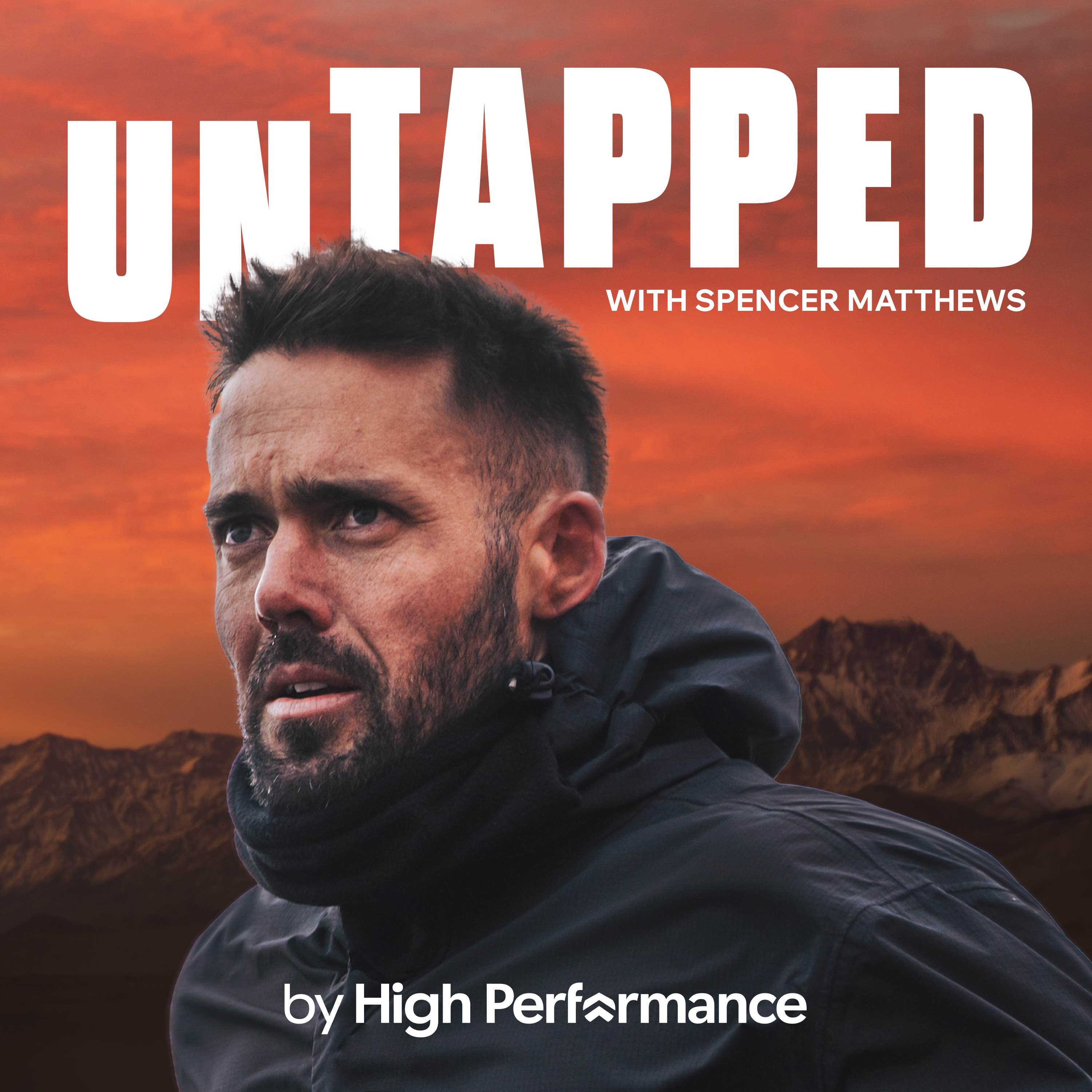
 UNTAPPED with Spencer Matthews
12 Jan 2026 · 48m · 22 chapters

Will Ahmed, founder/CEO of Whoop, discusses why less sleep can sometimes be beneficial, but focuses mainly on how continuous wearable data can improve sleep consistency, recovery, and cardiovascular training. He explains Whoop’s origin in overtraining, how it measures recovery/strain/sleep, and how it plans to evolve into a “health operating system” with AI and lab integration.
Will Ahmed played squash at Harvard (early 20s) and overtrained. He studied physiology/research, explored ECG/PSG concepts, and built the early idea for always-on, non-invasive monitoring that later became Whoop. He wears Whoop (medical-grade) and tracks “Whoop age” (physiological vs chronological).
Overtraining feels like illness; single-point measurements are less useful than 24/7 trends; sleep consistency (bed/wake timing) can matter even if total sleep varies; hard cardiovascular training (zones 4–5) supports longevity signals; Whoop’s “health span” predicts all-cause mortality via nine biometrics.
Early prototype tethered to a computer; battery/transfer limitations leading to hot-swappable battery packs; athletes like LeBron James and Michael Phelps wearing Whoop; LeBron’s recovery turning green after consecutive high-strain days; marathon exertion followed by full green recovery.
Written by AI. May contain mistakes.
Spencer shares his journey with the Whoop device and its impact on his life.
“In fact, I think that if I were to lose my Whoop for whatever reason, it would have a really detrimental impact on my mood and my life.”
Will Ahmed explains how his background in squash led to the creation of Whoop.
“Is it true that you started the company because you were a squash player and you were kind of overtrained?”
Will Ahmed explains how his background in squash led to the creation of Whoop.
“Ever hit a wall in the middle of the day and a third coffee just doesn't do it anymore?”
Will discusses the challenges and innovations behind Whoop's first prototype.
“You optimize your workouts, to your portfolios and that rando startup idea that hit you in the middle of the shower.”
Learn about the initial design and functionality issues faced in creating the wearable device.
“And that was one of the things that we were trying to de-risk of many things that we were trying to de-risk in building a product.”
Explore the thoughtful considerations behind the design and usability of the Whoop device.
“It had really slow data transfer to the point where there were situations where if your data was behind, it could never catch up to your phone.”
Discover the emotional toll of facing rejection and the resilience needed in entrepreneurship.
“going to be really minimalistic looking.”
Learn how identifying gaps in the market helped fuel the vision for Whoop despite doubts.
“I mean, the amount of rejection I faced at the age of 21, 22 years old was more rejection than I had faced in my entire life.”
Understand how Whoop positioned itself against major players in the fitness technology space.
“Firstly, it's easier to reject than to accept something that is unfamiliar.”
Hear how the endorsement of top athletes validated the Whoop product and its mission.
“is this 23-year-old going to win or Nike?”
Learn about the early days of Whoop and its growing popularity with athletes.
“I took that and it just became such a big piece of affirmation.”
Discover how athlete feedback shaped the development of the Whoop device.
“It sounds like you've got a pretty good one.”
Understand how recovery metrics became a key feature of Whoop.
“You know, did we want the data to take a really long time to transfer?”
Explore how recovery streaks influence training and health.
“how much of a signal is recovery, and seeing those athletes' rate of recovery was a really powerful signal.”
Learn how maintaining a consistent sleep schedule can impact recovery.
“I woke up this morning with a 66 yellow, right?”
Find out how Whoop helps track and improve your health span.
“the exertion in the training doesn't necessarily have a bad effect on recovery scores.”
Delve into how sleep duration affects health and recovery metrics.
“are spending a fair amount of time in like zone four and five cardiovascular efforts.”
Discover the significance of hard cardiovascular training on health.
“and people who have real issues with their health.”
Learn the technology behind Whoop and how it distinguishes activities.
“If I went for a slow zone two, you know, two hour run, I imagine my heart rate would raise to, you know, 145 or something like that for a two hour period, nice and steady, then it would gradually drop when I finish.”
Learn how WHOOP measures health data and the importance of accuracy.
“And by the way, it might even detect that you were dancing.”
Explore the potential of AI in personal health monitoring and its implications.
“There's a quote which I like, which is that AI will not replace doctors, but doctors who use AI will replace doctors.”
Discover why tracking health metrics is essential for personal wellness.
“And I do think we've achieved this notion of making health aspirational, right?”

Get the gist, explore an idea or ask about something said.
 Claude
On UNTAPPED with Spencer Matthews, what are the key points of this episode?
Searching your listeningAutomatic transcript. May contain errors.
0:01You need something from Lowe's, but your day is already jam-packed. Since MyLowe's Rewards and MyLowe's Pro Rewards members get free same-day delivery, we'll make the run for you. Seriously, just lock in your order and we'll do the rest. See you soon. Members get more at Lowe's. $25 minimum and loyalty membership required. Order eligible items by 2 p.m. Subject to weight and size restrictions and availability. Terms at lowes.com slash shipping terms. Mod.com is changing the way people battle excessive fatigue. Ever hit a wall in the middle of the day and a third coffee just doesn't do it anymore?
0:40Here's what's actually happening. Coffee only briefly blocks adenosine, the chemical that tires you out. When it stops working, your system is flooded and you crash. Modafinil is a prescription treatment that works in a completely different way. Modafino works by stimulating multiple receptors in the brain associated with wakefulness, including dopamine, serotonin, norepinephrine, histamine, glutamate, and orexin. It's a more complete solution that gives you 10 to 12 hours of steady focus and energy. To learn more, go to mod.com. Fill out your intake form, meet with a licensed provider, and if approved, ModAlert ships straight to your door.
1:23Go to mod.com to get started. That's M-O-D dot com.
1:55online, saving you more while getting you everything you need. It's Walmart built for your business. Sign up for a free Walmart business account today at business.walmart.com.
2:08I'm Spencer Matthews, and you're listening to Untapped, where elite athletes and inspirational people show us how we can all unlock our true potential. This week, we're joined by Will Ahmed, the founder and CEO of Whoop, the world's most advanced health and fitness wearable, transforming how the world understands health and performance, trusted by elite athletes, CEOs, and everyday performers who want to optimize their sleep, recovery, and focus. Let's get untapped with Will Ahmed. I am a monster Whoop fan. I appreciate that. In fact, I think that if I were to lose my Whoop for whatever reason, it would have a really detrimental impact on my mood and my life.
2:50How long have you been wearing it? I've been wearing it for a while. I wore one of your early models when it first came out years and years ago for a while. Then I went off it for a little bit, not the product itself. I just kind of moved away. I went over to the enemy for a while. I wore an aura ring for a bit and then found myself whooping again maybe two years ago. Great. Welcome back. Yes, thank you very much. All the way up to the medical grade, which we're both wearing today. It's a good one. I just find it astounding. What is your WHOOP age? It's 29. I'm about to turn 36. And my goal is to never turn 30 again.
3:32Okay, great. So that's what I'm working on. Now, to be fair, it's also been a tricky year for me because I had a newborn in February, and I had a surgery, a core muscular surgery, which I haven't had surgery since I was like five years old. So there were a couple of things holding me back a little from my age progression, but I'm happy with where I am and I think I can make some good progress. So we're a similar age. I'm 37. Okay. Are you going to show off or what? 27.4 years old on the old Whoop machine. I mean, if I was the CEO and founder of Whoop, I'd just make myself kind of 16 or something.
4:09Well, I like to do it right. I believe in accountability, personal accountability. I'd love to hear the story of Whoop and how you came to found it. I've heard a few stories about you. I've read various articles about you. Is it true that you started the company because you were a squash player and you were kind of overtrained? Yeah. And you wanted to develop something for yourself to help you understand your recovery better? Yeah. I mean, a lot of my initial foray into the space was trying to understand my own body. I used to play squash at Harvard, and I was 19, 20 years old. I was someone who used to overtrain.
4:50And I think as most of your audience knows, overtraining is where you get fitter and fitter and fitter and then you sort of fall off a cliff and you don't know why and your body feels very run down. You have a lot of the same symptoms as someone who's sick but kind of without the cough. And it's the ultimate betrayal if you're really into fitness because you don't really know what went wrong. And so I got interested in what could I measure about my own body to just better understand training. I started doing physiology research as well as a student. And mind you, at this point, it really wasn't like I want to start a company.
5:24It was, well, what can I even buy to measure about my body? And I got interested in a few different types of products as I was doing medical research. So I got interested in the ECG machine, which can do heart rate variability or could do it over a decade ago. I got interested in the PSG machine, which was the gold standard for sleep monitoring because a lot of the medical research I was reading about was talking about the importance of sleep. Really thinking about rest deeply became a fascinating concept for me. And then I also got interested in how you could measure exercise, like how much stress have you actually put on your body, how much load have you actually put on your body during a workout.
6:05And I got interested in heart rate monitors and I started researching a lot about heart rate monitors because there's a lot of medical literature on how heart rate is a good measurement for cardiovascular load. But again, the only method for measuring heart rate was a chest strap, which I'm sure you've worn. So I was asking myself now, okay, is there a way that these different technologies could be one technology and could it be in a much more non-invasive form factor? And it could be something that you could measure on your body all the time. Another theme that I was realizing in understanding the human body is that single point measurements weren't that valuable.
6:48If you and I just took our HRV right now or our heart rate right now or a variety of different measurements, it would be a little bit hard to know what state we were in. And it could be affected by caffeine or a bad night's sleep or activity or whatever. Yeah, and so I got interested in technology that wasn't just measuring a minute or an hour or a few hours, but 24-7. And you go from having a picture of someone to having a movie of someone, right? And it's a continuous picture, and that was a powerful concept. And I think I also felt, just as someone who had grown up with technology, that technology was moving.
7:32computers were moving from being on your desk to being on your lap to being in your pocket. This is 2010, so it's a couple years after the iPhones come out. And I felt like, okay, well, it seems like computing will eventually be on our bodies. And maybe the combination of sensors getting smaller, computing getting more powerful, that being on your body, maybe that's also the unlock for health. What made you take the jump to attempt to make these pieces of technology coincide in a small way? Well, I did really see it. Like I could picture this existing. I could picture being in the seat I am today.
8:17Like I could feel that I was on to something, as crazy as that sounds. and even if I go back and read the business plan that I wrote in 2011 because I actually wrote a business plan because I was a kid in school and I figured out there was a class I could take to if you had an idea you get a business if you have an idea you can write a business plan or they'll teach you how and a lot of the themes of like what we've developed and what we're even developing today are in that business plan. And so while there's many ways that Whoop has zigged and zagged over the years and we changed our business model, which became very important, and we've introduced new features, like the long arc vision of the company, which was to take cumbersome medical technology and put it in a non-invasive, always-on form factor and make it cool.
9:08We'll come back to that. But like this idea of making health aspirational, which for decades it hasn't been. And then going from the world's best athletes to general consumers to medicine, like that arc, I had that vision 15 years ago. And so in many ways, I've just been trying to play it out. And it would be impossible without like phenomenal, phenomenal people around me who really are quite gifted in a lot of different specialties, like much more gifted than I am at all of these different disciplines. But I think that I've been able to create a vision that has been largely on the right target.
9:51And I've created an environment in which world-class people of different disciplines can come together and collide and collaborate.
10:03Who says Halloween only lasts one day? With Wayfair, one night of Halloween becomes a whole season at home. From larger-than-life yard decor and moody lighting to festive accents for every room in the house. Wayfair has what you need to make Halloween feel like magic all in one place. Because the best Halloween memories aren't made in just one night. They're made all season long. Shop Halloween decor now at Wayfair.com.
10:32Mod.com is changing the way people battle excessive fatigue. Ever hit a wall in the middle of the day and a third coffee just doesn't do it anymore? Here's what's actually happening. Coffee only briefly blocks adenosine, the chemical that tires you out. When it stops working, your system is flooded and you crash. Modafinil is a prescription treatment that works in a completely different way. Modafinil works by stimulating multiple receptors in the brain associated with wakefulness, including dopamine, serotonin, norepinephrine, histamine, glutamate, and orexin. It's a more complete solution that gives you 10 to 12 hours of steady focus and energy.
11:14To learn more, go to mod.com. Fill out your intake form, meet with a licensed provider, and if approved, ModAlert ships straight to your door. Go to mod.com to get started. That's M-O-D dot com. Hi, I'm Nick, co-host of The Best One Yet. You optimize your workouts, to your portfolios and that rando startup idea that hit you in the middle of the shower. But if you're not hydrated, you're already playing catch-up. So we keep a stash of Liquid IV in our studio. One stick mixed into 16 ounces of water is clinically demonstrated to hydrate faster than water alone with three times the electrolytes of the leading sports drink, plus eight vitamins and nutrients.
11:53Whether you're traveling, exercising, or podcasting, the best business news ever, Liquid IV makes it easy to stay hydrated wherever life takes you. So shop now at liquidiv.com. Liquid IV hydration. that goes wherever life takes you.
12:08I think it's completely remarkable that you're having these internal thoughts when you're 20 years old, firstly. I mean, clearly you were a remarkable young man at Harvard at the time. What was it about this area that made you want to develop a product in the first place? So when you began to have these thoughts, how quickly did your mind go from processing the information that you were thinking about to looking to create a product? And I have a photo of the first prototype. So it began as Bobo, and you created this product. Is this when you were making it for yourself, or was this the start of the business?
13:00So the prototype that we're looking at is essentially a little mini computer in a box with a wire that connects to a very ugly Velcro bracelet with a piece of plastic on top of it. And by the way, that little mini computer box also then needed to connect to a computer. So to wear this thing, you needed to be tethered like hardcore to a wall essentially. but the positive of this prototype was that the sensing underneath the plastic and the algorithms because the algorithms matter a lot in this story the algorithms enabled the calculation of heart rate variability from the wrist which is a really important physiological metric that whoop was the first company to figure out how to do from the wrist and it was a sign that we could take really powerful medical technology and put it in a non-invasive form factor.
13:57So while it was hideous looking, the technology that it demonstrated was real. And that was one of the things that we were trying to de-risk of many things that we were trying to de-risk in building a product. The next step from that was how do you put it into a better looking smaller form factor where you could make maybe not millions of them, but you could make hundreds or thousands of them. And that ended up being our version one. I remember the version one. I mean, it wasn't quite the slick kind of medical grade that we see today, but it certainly wasn't... I mean, it was very wearable. I appreciate you saying that.
14:43Now, it had a much shorter battery life. It was like an 18, maybe best case scenario, a 24 hour battery life. It had really slow data transfer to the point where there were situations where if your data was behind, it could never catch up to your phone. Like, you'd always just be living a little bit in the past. And, but it was part of the reason that we invented the battery pack because we wanted people to never take it off and the battery life wasn't long enough. And so, you know, we wanted people to keep swiping the battery pack and we would give people like, you know, LeBron or someone like five battery packs and like, you know, just keep hot swapping them, give them to his trainer, Mike.
15:23Yeah. How long was the process of turning it from the prototype into say what ended up on LeBron's wrist? That was probably like an 18 month process. And the design process looking back on it was one of my favorite periods of whoop or chapters of Whoop because we were really deciding what is it? Is it a bracelet? Is it a bracelet with a screen? Is it a watch? If it's a watch, does it do real-time heart rate and time? And, well, does it do things from your phone? Does it do push notifications? Does it do other metrics? Can it tell you you're having a phone call? I mean, we were in a blank space.
16:08we had figured out how to measure important health data but then we needed to ask this question of how does it live on your body and the guiding principle that we kept coming back to was it needs to be in service of really good health data so like we still need to be able to collect great health data we don't want to make a decision that undermines that so for example if you add a lot of features you might actually need to dial back your health data piece right we want it to be always on we want people to never take it off so that starts to speak to needs to be comfortable probably some notion of customizable well how do you charge it if you take it off to charge it then it's not always on anymore and how much do we care about all these other features like do we want to expand this universe of what it measures of like what it does so to speak.
17:05And pretty quickly, I felt the design team and I leaned in on this idea that it was going to be really minimalistic looking. And in some ways, the design process was to take the tech out of the tech, like make it look like it's not necessarily even technology. Let's have it really be material first and non-invasive. And we're not going to have a screen on it because if it has a screen, then it's a watch. And if it's a watch, then it's competing with the other watch that's on maybe your other wrist and people don't wear two watches. So that's just going to be another reason that people take it off.
17:44The technology that I wanted to develop was quite complicated just to state it. And it involved hardware and software and data and design and brand and marketing. I literally didn't have a background in any of that. It wasn't like I was a good engineer and I was going to go find maybe a designer and we'd be off for the races. It was like I didn't know anything.
18:08But look, I started to believe more and more in the idea and it became almost like such an obsession that I didn't have a choice. I believe a lot in what are the things that you're thinking about when you're in a quiet space, you know, when you're looking at an Uber, when you're, you know, sitting in your bed before you fall asleep, when you're in the shower, like, where does your mind go? Like, I think that matters. And especially at that age, I kept thinking about this thing. And I started to believe, like, this is the greatest idea ever. And then I would go introduce the idea to the world, and they would be like, that's a bad idea.
18:50Really? Yeah, totally. I mean, the amount of rejection I faced at the age of 21, 22 years old was more rejection than I had faced in my entire life. It's just funny when you mention the dismissal. Obviously, I'm a founder as well and faced a load of rejection as well of people just not truly understanding what you're trying to build and not understanding the necessity for the product. And you feel a little crazy. I mean, you feel like you're on an island. But it's funny, I feel a real sense of understanding what you're saying, that it almost doesn't matter. Like the deterrence is impossible. It mattered not at all to me that funds or people that I was meeting would say, I just don't understand the need for this.
19:40And I'd be like, well, then your loss, you're missing it. Yeah, and I think I oscillated between that attitude and like a feeling of real pain and anxiety. Like honestly, like at that age, I was still a kid and I was still trying to figure out who I was. And I was building an identity as an entrepreneur and as a CEO and getting rejected a lot is hard. I mean, no matter how thick your skin is, it's hard. And I'm assuming also that when you're talking about rejection, you're referring to fundraise meetings? All forms of rejection. I mean, friends saying this is a bad idea.
20:27Classmates of mine who I'm trying to get involved in the idea saying no. People I'm trying to recruit, no. And then, of course, investors. And there was an avalanche of investors that said no. hundreds of investors that said no over the course of building this company. And by the way, it's a successful company. Like, it's done pretty well. So it just shows how hard it is. I mean, it's a hard thing to do. And I mean that broadly. Like, it's hard to build a business. It's hard to create something that doesn't exist in the world. If it did exist, you know, I mean, if it was easy, then it probably would exist.
21:02It's interesting, though. Firstly, it's easier to reject than to accept something that is unfamiliar. It's easier to say no. Most startups fail. So saying no to something means that you're usually right. I know people that passed on Uber and all kinds of stuff. There's also an element of if you're new to starting something and you go ask a lot of people in your life or even close to your life, I mean, a lot of them are also probably new to starting something too. And it's hard to get directions to a destination that someone else has never been to either, right? So you just have to be mindful of who you're actually talking to.
21:50Does 20-year-old you who first came up with the idea for Whoop feel now that you've achieved everything that you dreamt of achieving at that age? When you were first looking at Whoop as a business idea and wanting to prove people wrong and going out there, facing all this rejection, now when you look back at that time, 16 years ago, what would he think about where you are now? It's funny. I actually sometimes imagine this. But when I think back on my 20-year-old self, Like I do feel like that was a – it was a courageous period in my life like to try to get this thing off the ground and really not know what I was doing.
22:31And so there is an inner dialogue so to speak where I think the 20-year-old Will would be saying to the 35-year-old Will like, dude, we've gotten pretty far. Like you better keep going. Like keep going. And by the way, you have all these resources and people. Like you should be doing a lot right now. I was doing this with no one you know what I mean? like there would probably be like this feeling of like getting the thing like if I think back to trying to get the thing off the ground and just having to do everything and having to feel all of the sort of negative pressure that the idea was absorbing whereas today that pressure is distributed so to speak yeah I think my 20 year old self would both be happy where we are and like keep going You better take this to another stratosphere if you've got all these resources and people.
23:25Was there anything in the space that gave you that hope when you felt a bit crushed by the rejection that actually it's a good idea, or was this truly a world first in your eyes? So in 2013, it was rumored Apple was coming to market, Nike was coming to market, Under Armour, Puma, Adidas. So you had the biggest sports apparel brands in the world and arguably the best software hardware company in history. You also had a lot of well-funded startups. So you had companies like Fitbit that were doing, starting to really take off. Now, when I looked at those specific products, I still saw a huge gap in the market, which gave me confidence.
24:08Mind you, though, it still made it much harder to convince other people that there was a gap because just at first blush, it's like, is this 23-year-old going to win or Nike? you know like and so i get it like when i look back and i was like gosh that was kind of crazy but the mistake that let's take nike made because i have like a lot of admiration for this company and i actually when they came out with their product that was the product i was most afraid of because in many ways i was borrowing a nike playbook to build whoop i thought we're going to start with the world's best athletes we're going to get them to authentically wear the product and then we're going to tell the story of performance to the whole world and we're going to make health cool.
24:50When I looked at medical technology, it was insanely not cool, right? If you're wearing a medical product on your body, it pretty much says something's wrong with you. You know, people are like, oh, like what's going on with, you know, they see that some thing that's like hanging off you and it's beeping and it looks ridiculous. And then, and your immediate thing is like, okay, something's wrong with this person. And, and so I fell in love with this idea of like, could you create medical technology with a positive brand signal? Because when I was growing up, for me, that was Nike, or just putting a swoosh on something made it cool.
25:26So I was pretty concerned with Nike. And I knew we were going to win when I realized none of their athletes were going to wear their product. So I got the Nike Fuel Band, first day it came out, I wear it. I'm like, this is not the product. And the problem was they went straight mass market, We're going to do step counting and a fuel score. And there was nothing deeply physiological about it. It wasn't grounded at all in science. I had just spent two years reading hundreds of medical papers. And there wasn't a single piece of medical information that applied to that product. And at the same time, we were starting to see momentum with, by the way, some of their athletes wearing our product but not wearing a Nike Fuel Band.
26:12And so that's when I knew that that product wasn't going to work. And I had similar feelings about products like Fitbits that were like mass market step counters. I thought this is going to do well, people are going to buy this, but what we're building is fundamentally different. It's going to be more hardcore science, and it's going to be more aspirational. And also not really truly a competitive product, a different thing, a separate choice. you know the fuel band and the whoop to your point are different things i'm surprised that nike would allow their athletes to wear anything but the fuel band if it was a nike product i i think that in general they had a blind spot around this idea of taking the technology and starting with their athletes and then bringing it to the mass market which is strange because they were good at doing that for so many other pieces of their product portfolio and then there was just a question of like, well, what does it make an athlete, what it makes an athlete perform better?
27:10And that's where we had a lot of traction where we were able to get, you know, people like LeBron James or Michael Phelps to wear Whoop in 2014, 2015 as like our first hundred users because the idea for them of being able to understand recovery was transformational. How did that feel as a young founder, you know, having these incredible athletes wearing your product proudly in an authentic way? Well, I had irrational ways of seizing on to things that were like bright lights in an otherwise gloomy room, you know. And so, because again, I was spending most of my day being told no and being rejected.
27:54And so when we got athletes like that wearing it, I was like, yes, I knew it. We're on to something. It's going to happen. I took that and it just became such a big piece of affirmation. And I'll never forget being in my parents' living room in 2014 and watching a Kia commercial on television. And in the Kia commercial, LeBron James is wearing a whoop. And there was like 100 whoop straps in the world at that time. So that was crazy. And by the way, he was in a commercial for another product, but he didn't want to take it off because he wanted the data. And I was like, Mom, Mom, look, look. It was like one of those moments.
28:37On a much smaller level than that, it is really annoying when you have to take it off. Thank you. Well, I appreciate that. I'll do the old shoot or something, and they'll say, oh, can you take off all kind of jewelry and bands? And it's like you do feel like you're almost losing a part of yourself when you take it off. It would be a really shit thing to have to take it off. Yeah, you build a deep relationship with the data and it becomes your companion. I'd be furious if my streak ended. Yeah, that's right. It sounds like you've got a pretty good one. A little fire thing in the top left. Yeah, I've got like a 10-year streak now.
29:13Jesus, I don't. I have like a 500-day streak or something. That's quite good, by the way. I think it's okay. Yeah, I actually always travel with an additional unit just in case I have anything go wrong with my whoop. When you began to see these famous professional athletes wearing your products, even in the early days, did you have any specific feedback from them or their trainers about your products? Yeah, I think the first obvious thing was that the scores we had created were solid. Like the sort of fundamental vision of you have this sensor on your body and you're getting data in an app and the app is telling you sleep and recovery and strain.
30:00Like that's resonating. Like that's working. And so that was validating to get at the highest level. At the same time, there was a lot of feedback that we got that we kind of already knew. Like did I want to ship a product that had an 18 to 24-hour battery life that was supposed to be worn all the time? No. I knew that was a problem. I knew we needed a longer battery life. Did I want it to be as big as it was? No. Of course, I wanted it smaller. Like, did we want people to have, like, an endless stream of battery packs? No. You know, did we want the data to take a really long time to transfer?
30:33No. So there were things that, just as your own consumer of the product, were obvious that needed to change. And that was reinforced in feedback that we got. And if we didn't get it, we'd still feel that way, by the way. So I do believe in building anything, a product, a service. You want to be your greatest critic. You want to really be proud of what you're putting into the world. And you kind of need to have an obsession about it to get there. What does LeBron James' data look like? Or Michael Phelps' data look like? And by the way, do you just have access to everyone's data? I'm not trying to trip you up with some privacy thing.
31:13I don't have access to any of these athletes' data. Now, anything I know about their data has been in collaboration with them or in conversations with their trainers or so on and so forth. I will say this, though. This idea of recovery was a huge theme for the company. Maybe it was the single most important thing we invented in that time period. And there was this question of how valuable is recovery, how much of a signal is recovery, and seeing those athletes' rate of recovery was a really powerful signal. You know, our strain score is out of 21. And I remember looking at a week of data back then, and it was LeBron, and he was doing some training, and he was like 20.1, 20.2, 20.5, which, as you know from Whoop, is like those are pretty hardcore days, back to back to back.
32:06And then on the fourth day, he woke up with a green recovery. I remember thinking like, wow, that's badass. us you know like i because i i had comfortable you know i i there were days where i would do an 18 or something and try to do everything right to recover and i would wake up in the red the next day and so to be able to do that day over day and phelps was the same way where he had a crazy michael phelps didn't miss a day of training for six years straight i mean that's an insane statistic i think recovery was it was clear that we were onto something with recovery we had invented the score.
32:39It was something that no one else was doing or thought was important. I find the recovery elements insanely addictive and I'm quite an addictive person. I got an 11-day green streak once where I was kind of training most days or every day. You're probably getting slightly fitter and you're probably training super optimally. because that's the hard combination of green recovery streaks. You have to be getting a little bit healthier and fitter while also continuing to be training. I woke up this morning with a 66 yellow, right? So 67 is green. 67 feels a lot better than 66. I know it does. But I slept for like eight and a half hours or nine hours or something.
33:27I had a really, really good, perfect sleep. No alcohol, no nothing. Training good. I'm like convinced that if I'd slept for like six hours or seven hours that I'd have a higher recovery. Is that possible or not? It is possible because there's something important called sleep consistency. Sleep consistency is this concept of going to bed and waking up at the same time. And sleep consistency we've seen has huge physiological benefits. So if you're able again to go to bed and wake up at the same time, even while potentially getting slightly less sleep that can give you a physiological boost and so it may very well be possible that if you had woken up an hour earlier and that would be more consistent that's the question, is it more consistent then you could have seen maybe a lower resting heart rate and higher heart rate variability I actually find as well that the exertion in the training doesn't necessarily have a bad effect on recovery scores.
34:31So I ran a reasonably fast London marathon, you know, an all out exertion, I think it was a 20.3 day, something like that. Cycled home after we just got a line bike. My wife was at the finish line. We line biked home, went for a walk in the park, had a couple of burgers, whatever, went to sleep and woke up with a full green recovery, like an 85 % or something. So I have noticed that when I'm hammering training, I can still be in a wild green streak. Well, just to say it, that's one of the ultimate signs of fitness. You're clearly a very fit human being. Thank you, Will. He's a very fit human being, folks.
35:12What would you say is your favorite metric in WHOOP? Recovery or? Well, I've gotten more hooked on the health span. Health span for your audience is a score that we developed in collaboration with the Buck Institute, which is the leading institute in the United States for longevity, worked very closely with a guy named Dr. Eric Verdon to identify the key biometrics that predict all-cause mortality. And we looked at a universe of biometrics and we determined that there were nine that were most relevant for all-cause mortality. And now in the Whoop app, you can see how you're doing on all nine biometrics and how they contribute to your Whoop age.
36:00And your Whoop age, of course, is your physiological age versus your chronological age. And you want your physiological age to be younger. So that's been my new game with myself is getting that younger. And the best ways to get it younger are spending a fair amount of time in like zone four and five cardiovascular efforts. So like a few hours a week, if you can be like pushing yourself into kind of tempo and threshold pace if you're a runner. Some lower heart rate stuff consistently over time. Consistent sleep efforts, eight hour sleeps, no alcohol, basically being a very good boy. Well, you're close, but you're also, you're making some of the metrics even harder than they need to be.
36:49So I'll give you some like tipping point metrics. So sleep consistency that's going to bed and waking up at the same time, you like want that to be over 80%. If it's over 80%, it starts making you younger versus older. And some of this, by the way, is based on your age. So for like resting heart rate, that'll be baselined differently. A lower resting heart rate for a 20-year-old is something different than a low resting heart rate for a 50-year-old. And so there's different scales for each age group. Your hours of sleep, we kind of see a tipping point around seven hours. So if you're getting more than seven hours, that starts to positively be impacting your whoop age.
37:30If you're getting less, it's starting to negatively impact your whoop age. Interestingly with sleep, there is an average past which it starts to hurt your age. So if you get over nine hours for most age groups, I believe it's nine hours, then we actually saw in the medical research that that starts to correlate with chronic disease and people who have real issues with their health. And so over nine hours as an average tends to be a bad sign. And we can go through all of these, but training is a big theme. So heart rate zones one to three versus heart rate zones four and five. You actually mentioned getting hours a week in four and five.
38:22We actually see the tipping point for like good versus bad is closer to like 40 minutes for people. And that's over the course of a week. So I need to chill out. Well, that's why you're much younger though, because that's one where the further you go, the better, assuming your body's recovering. So sorry, just to come out of kind of whooping the data for a sec. So is it true, to the best of your knowledge, obviously recognizing that you're not a doctor, and neither am I, that hard cardiovascular activity is good for you? Yes, period, yes. and you want to train your body to be able to take on significant cardiovascular load.
39:07And signs that that's working would be your heart rate variability over time stays flat or slightly increases. That would be a sign that your body is adapting well to training. Another sign would be that your resting heart rate as you age stays flat or declines. That would be a sign that your body is adapting well to training. VO2 max, an amazingly important metric, which you probably, again, have a very high VO2 max given your background. But that's one of the key predictors of all-cause mortality, VO2 max. And one of really the only ways to improve your VO2 max is hard cardiovascular training.
39:51So there's a lot of signals that hard cardiovascular training is good for you. Now, if you have a heart issue or you're a certain age, like, okay, check with your doctor. But general feedback for the population is yes, cardiovascular training hard is good for you. How does WHOOP know what it is that you're doing in the sense that I am aware that it's a kind of heart monitor of sorts and it records that as its primary data, right like how often your heart is beating so it knows when you're exercising it knows when you're asleep because of your heart rate and the extended periods that you put your heart rate through a certain thing but how does it know so for example say you went to the pub and you had a few drinks alcoholic drinks your heart rate will raise for an extended period of time and then it will eventually drop again similar to if you were to go for a run so how does whoop differentiate between the two.
40:55If I went for a slow zone two, you know, two hour run, I imagine my heart rate would raise to, you know, 145 or something like that for a two hour period, nice and steady, then it would gradually drop when I finish. And then, you know, it may look similar to if I went for a few drinks in the pub, one will be physiologically good for me, the other not. How does it know the difference between the two activities? Well, WHOOP does use a bunch of its different sensors to do activity detection. And for example, your run has a very distinct motion signal. WHOOP also measures motion. And by understanding your motion signal, WHOOP would very easily tell the difference between a heart rate of 145 that's from running and a heart rate that's at, I don't know if it would get to 145 from drinking, but maybe it would from dancing and drinking.
42:01And by the way, it might even detect that you were dancing. So there's a bunch of different sensing under the hood that can differentiate these physiological signals. And then in terms of determining whether it's good for you or not, that's really where your body knows and WHOOP just measures your body. you know if the next day your heart rate variability is low and your uh resting heart rate's elevated and your sleep quality was disrupted which are all things that whoop measures now easily then it's clear to whoop that what you were doing wasn't necessarily good for your body it was probably negative does the journaling affect the data so no if you were to tell, so as an example, if you were to, this is theoretical now, if you were to lie to your whoop and say that you were drinking alcohol when you weren't.
42:54Don't do that. No, no, no. I don't. If you were to lie to your whoop and in your journal every day say, yes, I drank alcohol, I consumed tobacco, you know, et cetera, et cetera, when you haven't, would it consider that in your data or is it a completely separate thing? Well, you'd confuse the AI layer in the app because it might start recommending drinking or something preposterous because it would be like, you have some unique signals that we're seeing here. But in general, things you tell Whoop will not affect the scores that you get on Whoop. So no matter what you say about your sleep last night, your sleep score is going to be of the highest integrity, so to speak, according to what Whoop measured.
43:44What is next for Whoop? It's already light, small. It has a two-week battery life now, which is incredible. That was such a fantastic addition that we don't have to charge it quite as often. From somebody that is in no way involved with the company, It's in such a tremendous place. What is the future of it? Well, we're pushing on all frontiers. So we're pushing on the technology side and continuing to innovate there. We're building what I like to call a health operating system, which starts to place all of your health data under one umbrella. Today, it's your Whoop data. It's some of the things that you tell Whoop, whether it's journal behaviors or lifestyle decisions or others.
44:30we just announced advanced labs you're now going to be able to do blood testing through whoop and that becomes a fascinating data set and then you'll be able to upload all these other things that are health data points in your life you know your medical records and doctor visits and MRIs and genetics and so on and so forth and the more data that you put under this umbrella the more powerful the insights will be because on the top of it we're going to be continuing to build out our own AI that will help you summarize everything you need to know about your health. And then that AI layer will be what intersects with the healthcare industry.
45:08And that AI layer will be able to interact with your doctor. And that AI layer will be able to interact with whether you should take another product or try another product. Or it will just make health feel so personalized and preventative versus the industry that we exist in today. Will it ever replace your doctor? There's a quote which I like, which is that AI will not replace doctors, but doctors who use AI will replace doctors. and I think that's the right way to think about it in a loop context which is that this data and the AI integrated with your doctor experience and integrated and woven more into a clinician experience will be a much better experience than it is today.
46:02Now, I do think there will be areas of the medical industry that will just change profoundly. I do think the annual checkup will go away. It doesn't make any sense. you show up on a random day of the year they measure things about you that are taken totally out of context of your life and whether you just drink caffeine you know most blood pressure readings that you get in a doctor's office are wrong because people have some issue with it's called white coat syndrome where they get nervous all of a sudden that they've got a cuff on them and so it elevates their blood pressure there's a lot of these funny things about the annual checkup that I don't think make a lot of sense And I think that technology can serve the role of being a daily annual checkup.
46:44And then it creates that bridge to your doctor's office where all of a sudden there's an abnormality in your heart and, hey, you need to go see a doctor in 30 minutes. Like, okay, that's a preventative alert that is super useful. And how far away is we from that? Not to bring other products into the conversation, but the iPhone has a setting, I believe, that if you're running and you abruptly stop or fall over, then it can notify an ambulance. I think broadly speaking, this is the role that technology should play for humans is to be a step ahead of us when it comes to our health. And I think a lot of people feel like the relationship they have with the health system or medical system today is sick care.
47:41Something's wrong with me, I need to get it treated versus how can I be healthier? How can I keep an eye on what I'm doing? How can I feel better like in my life and be more optimal? General maintenance as opposed to going to the doctor when it's happened. Yeah. You want the system to feel preventative and productive. you know what brand today owns personal health like what comes to mind let me ask you a different question what owns personal computing apple see how fast that was like we can do that for three or four categories and it'll come to you like that and personal health i mean i'm just i assumed you i mean whoop does right is that where you're looking to move that we are pushing, right?
48:32My point is today, that's sort of an empty space. Like, are you going to say a healthcare company? Are you going to say a technology company? Are you going to say a supplement company? Probably what will own personal health will have characteristics of all of these things, but you will be at the center. It'll feel like you are the hub rather other than you're trying to navigate aimlessly into a hub that feels really black box and confusing, which is I think how most people feel today in relation to the healthcare industry. I think it's so exciting. Yeah, it's an exciting time. I mean, there's no question.
49:12And I do think we've achieved this notion of making health aspirational, right? To your point about you wearing it and all these professional athletes wearing it and so on and so forth, that creates a status symbol with wearing it That's not like, oh, he has a heart problem. It's like, oh, he cares a lot about his health and he's probably fit or wants to take fitness seriously. It gets positive. Most people who listen to Untapped are interested in their health. Most people who listen to Untapped are also familiar with Whoop because I talk about it a lot. Can we hear from its creator why you should wear a Whoop or if you're considering wearing a Whoop, why that would be a good idea?
49:52I think generally speaking, everyone, regardless of what stage you are on your health and fitness journey, has areas of improvement or optimization. And if you're someone listening to this and you're like, why am I tired in the morning? Or why am I not really getting the results I want from this exercise when I do it? or why is my body so stiff or why do I have brain fog or gosh, I put a lot of things in my body, supplements, caffeine, alcohol. Like what is that doing to my body? Is it helping? Like do I feel better because I do these things? I think if you have any sort of inclination that there's things happening to your body that you don't really understand and if you're not getting those answers anywhere or you're not even being positioned to ask the questions, Like, do I ask a doctor that?
50:51Do I ask some chat bot and get some generic answers? Like, do I ask my friends? Do I read a health magazine? Like, if you feel like you're not getting this anywhere, I think it's worth considering Whoop because you can only really manage what you measure. And Whoop is a 24-7 tool for deeply understanding your health and your performance. And once you start measuring these things, you start to realize where you can make slight modifications and tweaks. And it's a data set that gets very valuable to you personally where you build a relationship with it. And it can be as personal as you want it to be.
51:32You can live in a very isolated world solely with your data and no one has access to it, no one will ever see it. You can also join teams with a bunch of your friends or with well-known athletes or so on and so forth and find yourself in a more public setting trying to interact with this data. But there's no question that having all of your health data under one umbrella and then being able to interact with it in a seamless way is just going to make you on a path to living healthier. And that feels like something worth investing in. Will, thanks so much for joining me. Thank you, Spencer. Thanks so much for listening.
52:12We hope you enjoyed that episode. And if you want to hear more incredible conversations with extraordinary people to help unlock the potential within all of us, then please subscribe, follow and review the show wherever you're listening or watching. Thanks again. We'll catch you next week right here on Untappd.
52:43I'm done right. Get a free two-pack of DeWalt 20-volt max XR 8-amp hour batteries when you buy a select DeWalt 20-volt max power tool. Plus, save up to 35 % on select major appliances. The right products, the right deals. Ready when you need them. Our best lineup is here at Lowe's. Valid through 925, while supplies last. Selection varies by location. Hi, I'm Jack Cravici, Kramer host of The Best One Yet. At T-Boy, we're always talking about small decisions that can have an outsized impact. One of the simplest is staying hydrated. Whether I'm traveling, getting a workout in, or heading into a busy day, I keep Liquid IV on hand.
53:21It's clinically demonstrated to hydrate faster than water alone and contains three times the electrolytes of the leading sports drink, plus eight vitamins and nutrients. It's an easy addition to your daily routine and helps support hydration when you need it most. Shop now at liquidiv.com. Liquid IV hydration that goes wherever life takes you. Hey guys, it's Drew from the comment section. Some days my skin just needs a little coverage and other days I wanna go full glam. For those everyday moments like running errands or grabbing coffee, I've been loving the Merit Minimalist Stick because it's a foundation and concealer in one that gives me a really natural skin-like finish.
53:58But when I want more coverage, I'm reaching for the Hourglass Vanish Concealer every time. I know I'm not the only one who struggled to find the right foundation or concealer shade, which is why I always shop at Sephora. They have the best brands all in one place with so many shades, coverage options and finishes, plus expert beauty advisors, free samples, and shade matching tools both online and in-store. So whether you're looking for barely there coverage or full glam, Sephora can help you find your match.
WHOOP founder Will Ahmed shares how recovery, not effort, became the key insight that reshaped how we understand elite performance and health. From working with the world’s best athletes to building one of the most influential performance companies, Will reveals what truly separates the best from the rest.
How can someone like LeBron James handle back-to-back max strain days and still wake up fully recovered? Will also breaks down what that tells us about sleep, consistency, and the foundations of sustainable greatness. He opens up about the unseen challenges of entrepreneurship, trusting your intuition, facing hundreds of investor rejections, and holding conviction when doubt and data collide.
Will challenges the traditional approach to health, explaining why annual check-ups are broken, why preventative care should feel aspirational, and how continuous feedback can improve performance without obsession.
This episode is all about recovery, resilience, and building systems, in business and life, that allow you to perform at your best, day after day.
Simba 👉 Spencer knows progress starts with recovery. Sleep better with Simba, start your 200-night trial now:
https://highpfrmc.com/ut-simba-au
Heights 👉 Stay sharp like Spencer. 20% off Heights with code UT20: https://highpfrmc.com/ut-vitals-au
WHOOP 👉 Join Spencer in untapping your own potential with 1 month free here:
https://highpfrmc.com/Whoop-au
Visit Seattle 👉Start planning your perfect summer of football by searching Visit Seattle on social media, or discover more at:
https://highpfrmc.com/visitseattle-ut-au
Hosted on Acast. See acast.com/privacy for more information.