Ask ChatGPT
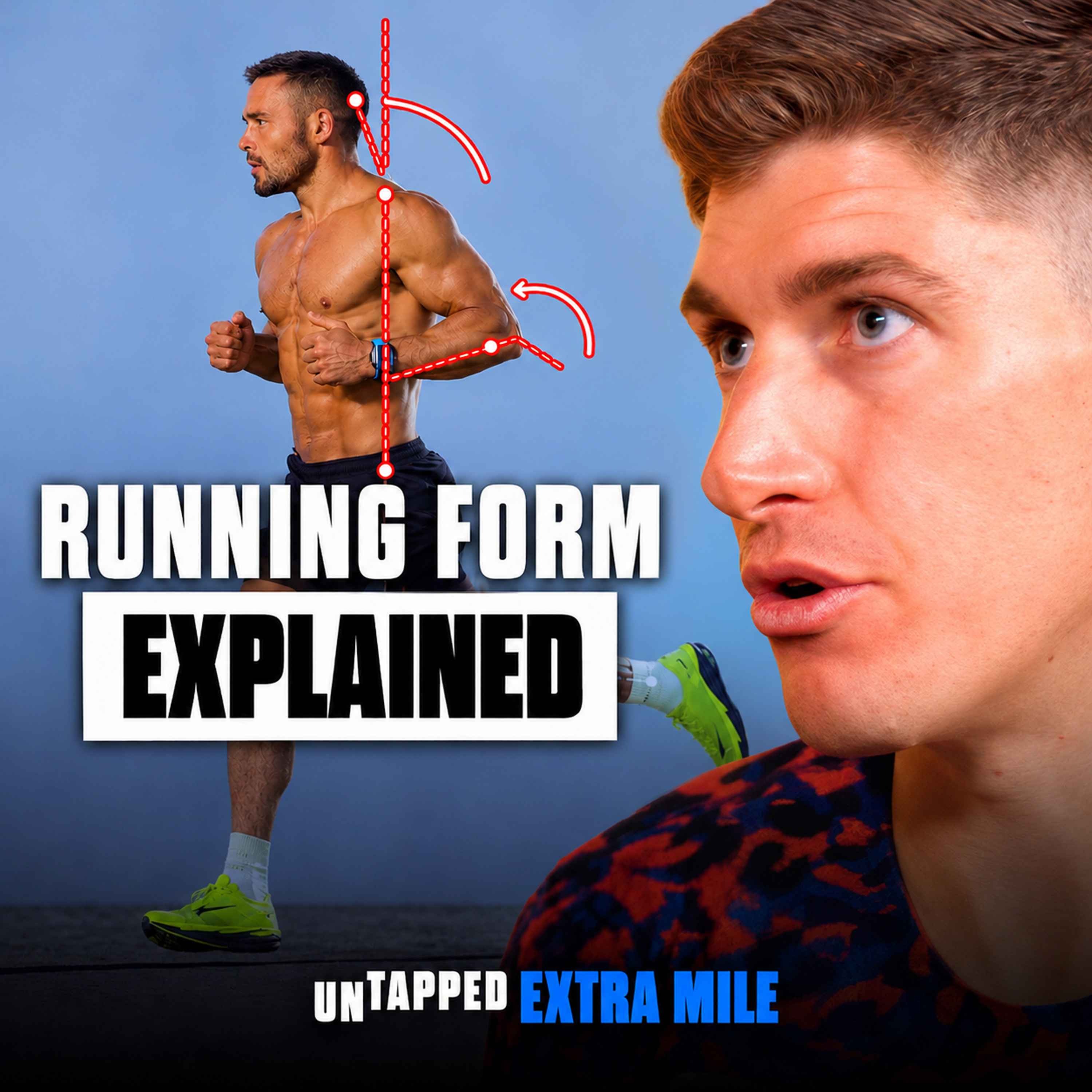
 UNTAPPED with Spencer Matthews
10 Aug 2026 · 41m · 17 chapters

Marathon training misconceptions and how to prepare for discomfort, mental “reset” moments, and pacing without over-fixating on tech.
Becky Briggs, an elite British distance runner. She earned her first Team GB vest in 2019 (U20) for the World Cross Country Championships in Denmark, placing around 40th/44th. She ran a 2:29:04 marathon PB at Manchester Marathon 2022, a trial for European Championships/Commonwealth Games/European 50k, and qualified by hitting the Commonwealth standard.
Most runners train “wrong” by thinking marathon training is just about making the race easy; it’s about tolerating hard cumulative weeks. Sessions you don’t complete on paper still teach you for marathon day. On race day, adapt to bad feelings early rather than panicking. Shoes/supplements matter less than banking miles; carbons should be limited to speed/interval work.
A failed 30k progression session in Bushy Park (5k warmup/down; final 10k faster than marathon pace) taught her to expect the marathon “wall.” Manchester Marathon PB started unwell but never hit the wall. First marathon (Olympic trial in Kew Gardens, 2021) involved fueling failure and a stop/reset, finishing 2:38.
Written by AI. May contain mistakes.
Exploration of common misconceptions about marathon training and its challenges.
“I'm guessing that sometimes the session isn't achieved in the way that it's supposed to be carried out.”
Discussion on the importance of experiencing discomfort during training and how it prepares runners for race day.
“marathon blocks I was set this one specific session that was a 30k progression run with 5k warm up and 5k warm down going from just slower than marathon pace to the final 10k being quicker than marathon pace.”
Insights on personal experiences during races and strategies for coping with pressure and discomfort.
“Of all the marathons you've ran and all the races that you've participated in, have you ever just had a perfect experience?”
Learn how mindset and personal mantras can enhance running performance.
“And I think there's a massive thing about, you know, not like the look good, run good, but it's more feel good, run good.”
Discover how the right shoes can influence performance and injury risk.
“But then to your point, it's like all these incredible people, you know, like Stephen Scullion, run a 209 in Under Armour shoes that were not plated and a size and a half too big for him.”
Understand the unpredictable nature of running and how to cope with setbacks.
“And I just, I did a kind of slow, pathetic 8K and for the rest of the morning was just like, great, I have made no progress, you know, when I know I have.”
Explore the highlights of Becky Briggs' running career and her achievements.
“Do you ever go online and just get absolutely run over by the onslaught of drama, disaster, and discourse?”
Explore the highlights of Becky Briggs' running career and her achievements.
“Acast helps creators launch, grow, and monetize their podcasts.”
Learn about the surprising performance of a young marathon runner and her approach to racing.
“So you were five minutes faster than London.”
Discover the value of long runs and maintaining pace in marathon training.
“Which is crazy because I've actually only broken 17 for the 5K once.”
Explore different training techniques and the mental aspects of marathon running.
“Everyone keeps saying, well, if you can run, you know, what was I told before Tokyo, which I guess ended up being right, but, you know, it can't work all the time, surely.”
Listen to the challenges faced during a first marathon and the importance of fueling.
“Your recovery would be a K float, which would only be about 20 seconds a K slower than your marathon pace.”
Understand how to find meaning in pain and suffering during marathon training.
“I wouldn't have ran 2.38 for my first marathon.”
Discuss the role of music in running and the underlying philosophy behind the sport.
“Like 80s to a bit of like, you know, Fred again, musicals, like Le Mis can get me through.”
Hear a discussion about the favorite distances in running and their significance.
“Number one would be the marathon because it just has so much history.”
The discussion explores the phenomenon of runners high and personal experiences during runs.
“Like, you know, it was all just, and I was like rushing, not rushing, physically rushing, like rushing in like a drug sense.”
The hosts reflect on marathon training distances and the satisfaction of completing long runs.
“I would say 30k, a 30k run, because that's when you're in marathon training, you're feeling fit, you feel really satisfied afterwards.”

Get the gist, explore an idea or ask about something said.
 Claude
On UNTAPPED with Spencer Matthews, what are the key points of this episode?
Searching your listeningAutomatic transcript. May contain errors.
0:01This is the first time we've properly spoken, but we see each other maybe every day. Yes, definitely at the moment. I feel like everyone that I go on, I see you flying past. Well, no, I'm often chasing you, I think. There's few people that we come across in the park, or that I come across in the park, sorry, who covers the kind of mileage that you cover. I mean, like regardless of what time I go running, you are there. So I don't know whether you've been there all day or if we just happen to train at the same time. But I can count on seeing you pretty much every single time I'm in the park. Yeah, yeah, I am there a lot.
0:38It is sort of the only place that I run at the moment as well. What do you think most runners misunderstand about marathon training? That it's meant to be really hard and that training hard doesn't mean that the race will be easy. That's a really good answer. So do you love your training? yeah I love the fact that it's you know it's not just about the race but it's about those like cumulative weeks of doing something difficult and keep on proving to yourself that actually you can do more than you you think you know there's a lot of marathon sessions you know I've done 10 marathons now that when I get the marathon session through on paper from my coach and I think I can't do that and then you go out and you give it your best go and you do do it and I think that that process week after week is what makes sort of the marathon so special and you know it's sort of you know putting yourself in that difficult position week after week that prepares you for the marathon being hard and being able to tolerate it.
1:33I'm guessing that sometimes the session isn't achieved in the way that it's supposed to be carried out. Do you just put it in the rear view mirror straight away and just swallow it up and move on to the next one or does it play on your mind? For sure I think it's really important to look into the potential reasons why whether there's you know um a literal reason as to why you might have not felt good on that day you know was it stress the weather did you like hit a session too hard earlier in the week you know is there something that you can actually break it down and be like okay look there's something that I could change in the future that's you know going to make this a little bit better but then sometimes you just have a bad day or sometimes mentally you just don't have it and that's sort of like okay as well but you've got to kind of give it your best go um which then you can take forwards to the marathon day because I think that a lot of people panic when on marathon day they don't feel fantastic from like kilometer one when actually it's just sort of about dealing with it and being adaptable so yeah I think that's something you can really take forwards from those marathon sessions that you maybe do sort of fail and really interestingly in some of my very early marathon blocks I was set this one specific session that was a 30k progression run with 5k warm up and 5k warm down going from just slower than marathon pace to the final 10k being quicker than marathon pace.
2:52And I never managed to complete it like successfully on paper. But that was the whole point. You know, I later sort of said to my coach at the time, you know, I just there's no way I'm essentially averaging 30k at marathon pace on my own in Bushy Park. And the point was not necessarily to actually complete it. It was to try. And it's almost when when you're really up against it in a session and it's not going your way and the headspace isn't great and you're off pace and there's kind of nothing that can get you to the pace you're supposed to be at. I find those sessions really interesting to kind of hold on to because it's almost certain that at some point in the marathon you will feel that way.
3:37You know, like in my experience, which is obviously nothing like yours yet. It's very likely that you'll come up against some form of that pain or some kind of wall that you're going to have to break down on the day. In training, I think pushing the harder times on the tired legs in the 30 degrees is just really good experience. Yeah, 100%. And I think, you know, the marathon really is about, there are going to be peaks and troughs over that 42K. There's going to be patches that we all know you'll go from feeling absolutely amazing one second and thinking, yeah, you know, I've totally got this to then, you know, 500 meters later, you know, you think I've got a stitch, like my gel's not gone down very well.
4:23Why do my legs feel heavy? But it's sort of working through that. And I think that those sessions in training where you don't quite hit it, but you carry on anyway, are the ones that really come forwards on marathon day, because on marathon day, if you have one slightly dodgy kilometer that could actually be down to your GPS or like actually a little bit of elevation that you weren't aware of, what are you going to do? Just stop. Like you can't, you know, you can't do that. So yeah, I think those sessions are arguably sometimes more important than the ones that you breeze through and just go super well.
4:55And it kind of makes sense, right? When you look at stuff in that way, you know, experiencing pain and suffering along the way to get to the goal, you'd imagine it makes sense to experience as much of that as possible. Yeah, 100%. And I think that the best marathon runners or, you know, ultra runners come from really being able to embrace and lean into that discomfort, really being able to expect it and to, when it does arrive, think this is exactly where I'm supposed to be and not fear it. And I think that that is definitely something that you can practice in training, you know, I think especially like now more than ever in terms of shoes, supplements, there are so many things out there to make the training experience as like easy breezy as possible.
5:42Whereas actually going to a location or doing it in, you know, shoes or the weather not being quite right is exactly what you need because it's not meant to feel easy and smooth. It's meant to be difficult. You know, you're preparing yourself to be able to sit in that discomfort for you know two hours and 45 minutes two and a half hours three hours whatever it is and be able to just be there once you kind of crack that code for the marathon it's like oh okay you know even exposing yourself to things like in my preparation for the European Championships we knew it was going to be really really hot and I'd go and do my run and then I didn't have access to a sauna because I was still at uni at the time and I'd you know lock myself in the bathroom and run a really, really hot bath and just sit in there for as long as possible because, yes, it was about the heat adaptation, but it was also about the tolerance to discomfort.
6:32And I think that that's something that often people miss is, you know, it's not just about like the body, but it's about the mind as well.
6:44ACAST powers the world's best podcasts. New school year, new podcast obsession. Hit play on this. Hey, this is Kim Holderness. And this is Penn Holderness. And we have a podcast called Laugh Lines. You know, we're all getting older and sometimes it's fun just to laugh about it. We've laughed about insane 90s song lyrics, unhinged summer jobs, and designing the perfect Gen X retirement home. We also have some meaningful conversations about fighting Alzheimer's, understanding ADHD, marriage, parenting, empty nesting. If this sounds like you, welcome home. You're safe here. So we called our show Laugh Lines for, you know, the lines that show up on our face because we're getting old and we're laughing.
7:23but also because we have a literal Laugh Line. It's a place you can call in and very true to us, it's a landline. You can leave a voicemail on the Laugh Line. We actually love hearing your voices and we feel so lucky that our audience is growing older with us. So what are you waiting for? Go check out Laugh Lines. It's available in all the usual podcast places and also on YouTube. Yes, I have to wear a bra and hard pants when recording this show because we put it on YouTube. The sacrifices we make for our listeners, honey. Seriously. We hope you join us soon. ACAST helps creators launch, grow, and monetize their podcasts.
7:58Class is always in session at acast.com.
8:05Of all the marathons you've ran and all the races that you've participated in, have you ever just had a perfect experience? Really interestingly, when I ran my marathon PB... 229? Yes, I sort of started in the opposite state in the sense of the day before I was convinced that I was coming down with the flu. I was, you know, my mum and dad were getting me like lemon and ginger tea from the shops. And I was like, mum, I don't know whether I'm going to make it round. I feel really unwell. So, you know, hopefully I'll be able to get to a medical tent if I do have to drop out. You know, I'm really sorry, whatever.
8:43Where is this? Sorry, where's home for you? This was, you know, this was at Manchester Marathon. home for me is East Yorkshire, so near Hull. Yeah. So I sort of said, I don't know whether I'm going to be okay, whatever. So I set off on the race, like not feeling good, but then I just didn't feel any worse, which was sort of fantastic because then, you know, I had no real high point of thinking, oh my God, I feel amazing, but I just didn't hit the wall at any point. And I, you know, was taking off the kilometers, you know, got to 35 K, it was like 7k to go you know I can I can do this I'm not feeling any worse and that was sort of the reverse of that where it wasn't like I felt amazing the entire time but I just didn't feel you know terrible that's pretty good do you believe that there's an element of running to feel so the problem I find sometimes with chasing a time is that you know exactly what your pace needs to be.
9:42So you run, you know, to that or slightly faster. And do you ever feel more comfortable traveling faster than you're supposed to be going? For sure. I definitely know what you mean in the sense of especially marathon pace, because sometimes it's a bit of a funny pace to try and like hit and try and hold. And I do definitely think that that comes to tuning in with your effort is so important. You know, I think there's no harm in like the old fashioned way of sometimes just running to a stopwatch and running hard and running easy. And some of my best training when I was younger, I had no idea what paces I was running.
10:19I would go to the track and I'd only time my recoveries. And, you know, for an 18 year old, I went to run a 34.09 10k and a sub 75 minute half marathon doing that. And I think there is absolutely no harm in, you know, running hard when you're meant to be running hard and running easy when you're meant to be running easy and sometimes the stats can overcomplicate things and then actually GPS dips out in part of Battersea Park and you think I've got so hung up about this three seconds of K and actually don't really know what I'm running. It's so funny isn't it thinking about that when Alan Turing who created the computer yeah when he was an amazing runner he would have had no idea how fast he was running yeah exactly isn't that funny yeah it's weird isn't it it's like you wouldn't not like not knowing it would almost be such a thrill to just set off and run at a pace that you think is right yeah what shoes do you do do you favor when you're running a marathon oh the past few marathons i've won the fast r3s yeah um the pumas yeah for the full mara yeah do you find they give you any calf issues um afterwards yes but i'm definitely a four foot runner i'm not a heel striker so they definitely favor four foot runners and once you kind of get into the rhythm of it if you keep light on your toes then then it is fine but they do hurt your calves the next day for sure I'm just like picturing you hobbling around yeah it's uh I have a pair of fast stars now and I've never worn them yeah I'm gonna bust them out for a park run I think yeah to kind of to have a crack are they all they're cracked up to be they're a really interesting shoe I mean I I first wore them last year for London Marathon simply because I was part of the Project 3 initiative.
12:04So I, you know, I had to wear the shoes, which was quite good in the sense of, you know, it forced me to wear them. And I was actually like, do you know what? These are really, really, really good. But what I would say is that you need to be running really quick to get the benefit from them. And I actually chose to run Chicago Marathon sort of, you know, six months later, last October, in the level down, like the DV8 Elite 3s instead, because you don't have to be right on your toes. It's not as quick of a shoe, but also it's a lot more comfy and you can kind of like, you know, alter your gait to be a little bit more natural, perhaps, rather than being completely on your toes.
12:45Or anyway, that's what I find. I feel like shoes are so individual. So we talk about a Puma Fast R as a really fast shoe. And obviously, you know, there's tech nowadays that translate to better performances. Do you think that people focus too much on making decisions around what shoes they should be wearing when they should just be banking miles? yeah for sure I think that it goes you know not just for shoes but for you know equipment tech all that jazz as well is that actually sometimes stripping it down to the basics and getting the running done is the most important thing you know you can be thinking about getting the absolute perfect pair of shoes but as long as it's comfy for you it doesn't cause you any blisters you know feels like it's you know appropriate for the session that you're doing whether it's intervals an easy run whatever then that's you know the most important thing it could be the fastest shoe in the world but if it's gonna you know rip your achilles open 2k into the marathon then it's not the shoe for you we're talking about achilles earlier yes no kind of make it makes sense i think i think it it's nice when you find something that you feel great in yes it just it just helps yeah it kind of feels like you've you know turned up to the fight with the proper gear Yeah, 100%.
14:02And I think there's a massive thing about, you know, not like the look good, run good, but it's more feel good, run good. Whether that's, you know, having a matching race outfit or your shoes or whatever it is, then if you feel like you're, you know, turning up, you wouldn't turn up for an interview in, you know, in sort of like the clothes that you do gardening in, would you? So it's the same for a race. I think dressing like a pro does help performance. Yeah, I think if you feel good and you feel confident, and that's the most important thing as well really, isn't it? It's confidence and belief in yourself and whatever it is that you have to do to help that, then that's fine.
14:42It can look different for lots of people, whether that's sunglasses or whether it's, for me, even just writing mantras on the back of my hand in a biro. What do you write on your hand? It depends on the day. Do you do that? Yeah, yeah. I do it for sessions, everything. Oh, go on, give us an example. Block out the noise. Yeah. This is everything you ever wanted. It depends what it is. For the ultra that I did in Delhi, it was for mum, dad and Georgia, which is my sister. Worth incorporating. Keep going. Yeah. Oh, for Manchester Marathon, it was just simply, you can. Just do it. Yeah, exactly. There we go.
15:20Possibly the best slogan in history. Yeah. I think. Potentially so. But no, I'm interested in the Puma Farsar. I mean, it looks like a kind of the equivalent of a Lamborghini. You know, it's pretty, it looks incredibly aggressive. Is it the type of thing that you're running on it and you kind of look down and you can't believe how fast you're traveling type thing, but it feels similar to running normally or? I don't know whether I've ever really had that with, I'm not like a shoe fanatic in the sense of, if I find a pair of shoes that are comfy, then I'm like, fine, perfect, I'll wear these. and probably alternate them with which ones are giving me blisters, which ones aren't, you know, whether they're sort of like muddy from like a rainy session or whatever, you know, I'm not super, super, super into it.
16:07But I think, yeah, they're quick. But also, I think it's really important to remember that people ran really, really quick times before the really quick shoes. and you know my quick 10k my quick half marathon when I was 18 were in a pair of like the Adidas Adios 3 racing flats and I ran really really well I do think a massive part of it is now actually being able to train in carbons allows you to recover quicker so therefore you can sort of get more out of your training week but in terms of the actual running you know that comes from the training you've done, not from the shoes. Do you see a problem with wearing carbons often in that case?
16:53I think it really depends on how much volume you're covering in a week. So for instance, I use them for my speed sessions and interval sessions, but that means that a huge amount of my weekly volume is not run in carbons. I think that, yeah, they can definitely be overworn when I see people wearing them for easy runs. You just think you're not allowing your lower leg muscles to really sort of work. And I think that that's really important. You know, we know that there are links between carbons and lower leg injuries and then just altering where the load is shifted. So yeah, I think people can wear them too often, but equally, you know, for a runner like yourself, like myself, for the interval sessions that you do do, then yeah, you know, if you've got them, wear them, but equally don't always wear exactly the same pair mix it up you know yeah I just find I I get so much pain from not wearing the carbons so I wear the Adidas Prime X3s which are kind of full of tech and you know 50 mil stack and rods and plates and that for me is like my kind of Batman outfit like I just I feel so comfortable in them I love wearing them I feel really fast in them like I feel really supported in them I never feel any pain it's almost why would you wear anything else and then I don't want to make these brands sound like they're not good shoes when they are but like I'll wear the Vemiro pluses or like some Puma Deviates or whatever and go for a proper run and my shins and calves will just like really flare up as a result of not having that additional kind of tech and support and I don't know, like I think some of it's in the head as well, like when you know that the session's going to be much harder because you're not wearing the shoe.
18:44But then to your point, it's like all these incredible people, you know, like Stephen Scullion, run a 209 in Under Armour shoes that were not plated and a size and a half too big for him. And it's kind of like, how has he done that? And it's not long ago in the grand scheme of things. You know, when we're talking about it, it's, you know, sort of five, six, seven years ago before the first carbons came out and those Nike 4%, you know, were first released and they were so hard to get hold of. And I've still kept a pair of mine. So I'm like, you know, these might be worth something one day, but there was definitely a time before that.
19:17And I think that it's one of those things where you're feeling the pain and it's feeling really difficult when you're not wearing these really high tech shoes. And is that just because you've been conditioned to rely on them? Who knows to some extent? Yes. But you know, it's really, really hard to know but I do think that there's just as we were talking about before with the marathon and discomfort is that actually sometimes things not being perfect is the best possible thing that you can do it's just so painful sometimes but that's the whole point this morning's run was just horrific I went for a like I was running five minute k's or 506s and I genuinely felt like I couldn't go much faster if I wanted to really banged up felt like the tin man and like just full of pain and ache and misery.
19:59And I just, I did a kind of slow, pathetic 8K and for the rest of the morning was just like, great, I have made no progress, you know, when I know I have. Yeah, you need to take joy from that and think I feel like this because I've been working so hard and been making the gains in sessions and a massive part of it is, you know, like that perspective. And equally, you know, if you'd have had no watch on today, and you'd have just gone out for a run and not known what pace it was, would you have felt better about the run? Yeah. Yeah. No, it's so funny. It's just, you know, I describe running as quite cruel sometimes.
20:42It's kind of like you give yourself to it completely in the hope that you're rewarded with, you know, the kind of gains that you would expect from the effort you're putting in. And you are half the time. But then that one time when you're not, it's almost like, you know, receiving lovely, beautiful comments from strangers. And then there's that one negative comment. And that's all you can think about when, you know, largely speaking, it's all positive and it's all great and it's all driving the right way. You know, we've done some sessions recently where it's just been such a joy to look at the data afterwards.
21:19You know, like, my God, you know, eight weeks ago, I couldn't have dreamt of running a session. And that was actually quite easy. you know and that's what it's all about but then if you'd given me 10 grand to run a sub 20 minute 5k this morning there's no chance of that yeah i'm like you know that's like a warm-up for me nowadays you know so it's kind of it's just weird it just wasn't working yeah some days i do think especially in marathon training it feels like you're running in somebody else's body yeah and that's and that's okay you know it's well you get that as well yeah okay it makes me feel sometimes think how on earth did I do you know this 30k session feeling like I was feeling pretty smooth in control and then you go for an easy run a couple of days later and you feel so completely different but you have to just ride the wave of it and really trust in the process and that's definitely something that I've learned over the years and learned over the many marathon blocks is that sometimes you can't predict how you're going to feel and there's so many factors that go into it and you could look into all the stats and sleep data and whatever but sometimes it's just life and life happens and some days you feel fab and some days you just don't.
22:49Do you ever go online and just get absolutely run over by the onslaught of drama, disaster, and discourse? I'm Kate Lindsay, host of ICYMI, a.k.a. In Case You Missed It, an internet culture podcast from Slate. Twice a week, we invite smart thinkers across the internet to discuss the latest trending topics and how being online right now actually makes us feel. Everything from our concerns about smart glasses. These are predator goggles. To, yes, having a mid-boyfriend is, in fact, embarrassing. Someone will literally comment and say, oh, but that's not my exact experience with my partner. Kyle is great.
23:26And I'm like, yeah, but we're not talking about you and Kyle. Come on and join us every Wednesday and Saturday across all podcast platforms as well as YouTube. That's Icymi. We're online, so you don't have to be. Acast helps creators launch, grow, and monetize their podcasts. Class is always in session at acast.com.
23:48I suppose it's quite normal, is it? If you ran like a relatively hard 26K or 30K, you know, to then go for a run the following morning or whatever is going to feel different. Yes. Regardless of how fit you are. Yeah, 100%. And I think as well that it's really funny how sometimes, and I think the fitter you get, that when it comes to a session day, you can sort of get yourself in the mindset and force yourself to do it and run really, really hard. but actually if you'd have been doing an easy run that day it would have felt so much worse which is really interesting you know like yesterday I had a double session day and I was in Wales at the weekend at Love Trails Festival and was running up and down the hills absolutely hammering some really steep hills which obviously we don't have in Battersea Park so you've just become deconditioned to them and my quads were in absolute pieces and I know that if I'd have had an easy run it would have been like an absolute slog and I would have probably really sort of not enjoyed it but I had two sessions to do one in the morning one in the evening and the warm-up really really tough you sort of think to yourself I actually don't know how I'm going to do this but then you do those first few strides and you think nope I am it's a decision I'm doing it it's amazing isn't it I know exactly what you mean yeah well like you know that you've got to go two whole you know special gears higher than the warm-up yeah the warm-up feels like hell yes and Yeah, it's, no, I'm there several times a week at the moment.
25:16Yeah. But it is an amazing sport. You know, this show has become a running show. Yeah. And it's just, I love hearing what people kind of gain from running. When did you first get called into Team GB? That was 2019. I got my first GB vest and it was for the World Cross Country Championships. I was in the juniors, so it was under 20. and yeah it was an amazing amazing experience it was in Denmark the course was really interesting they'd made a man-made hill up at the side of a museum there was water mud sand pits and yeah it was a tough tough race but yeah that was my first GB vest. How did that go?
26:00Really really well I finished I'm pretty sure it was either 40th or 44th which you know for my first ever GB outing and oh my goodness, the year before I was absolutely nowhere near even contemplating that getting a GB vest would be a reality. That was pretty, pretty, pretty amazing. Yeah, I was really pleased. And your 229 marathon. So what was your goal on the day? On the day, that was Manchester Marathon 2022. And that served as the trial for the European Championships and the Commonwealth Games that year, as well as the European 50k Championships. And the time goals, if I'm right, it was 2.32 to qualify for Europeans, 2.34 for Commonwealths, and then the next person across the line after 2.34 would automatically qualify for the European 50k Championships.
26:57And I'd ran 2.34.30-ish in London Marathon six months before. So we were kind of looking at the Commonwealth Games qualifying time. So yeah, the goals were sort of there, but I'm someone who I don't really like to think too much about the specific numbers. If I train hard and race as hard as I possibly can on the day, then the outcome will be what the time is type of thing. So as much as I'm sure my coach was like, this is what we're aiming for. I don't like to do that in my head. I will run hard and the time will be the outcome. So that's exactly what I did. And I had my watch showing just the single kilometer splits at the time.
27:40And I knew about, you know, what paces I've been doing in training and all that jazz. And it was more just the fact that the kilometers were repeatedly not getting slower, which was great, but I didn't really know what that time was going to come out as. So when I then saw the finishing clock and I was coming in and it was still on 2.28, so around 2.29.04, my goodness me, I wish I'd have sprinted a little bit harder in that last bit but I was just so shocked because I thought yeah I'm probably going to hit the Commonwealth Games standard you know it seems like it's going well but I had no idea that I was going to run 229.
28:16So you were five minutes faster than London. Yeah. So but you didn't you weren't aware of what your splits would add up to you just you just held a faster pace and just kind of, that's incredible to me. Yeah, the naivety to it was almost beautiful now looking back, but I was, you know, I had only just turned 22, which is so young to be, you know, in that position for the marathon. And yeah, it was really exciting. And I didn't want to put a crazy amount of pressure on myself. I knew what the pressure was and the potential of if I ran well, that I would be either going to the Europeans or Commonwealth.
28:52You know, I knew that in the back of my mind. But if I put too much pressure on that, then I think it could have gone the other way. So I'm really glad that I ran it the way that I did. And it definitely paid off. So at 2.29.04, you're running a 3.29 something average pace. Yeah, about that. Which is like 7, that's a 17.35k eight and a half times. Yeah, it was 1737 was the exact splits through it. It's just... God. Which is crazy because I've actually only broken 17 for the 5K once. Like, I'm not a quick runner. Well, I think you're quite... No, but, like, I struggle with that as well. I think I find the 5K just the most ghastly distance.
29:38Yeah, it's difficult. It kind of all falls apart. Like, I can't hold that. I find it really difficult. Yeah, I agree. I'm not sure I could run one 1735K at the moment, I don't think. so that's quite I think you'd be close I think you'd surprise yourself I think I think in the right circumstances 10 degrees yes a good pack at that pace maybe Stephen wants me to try and crack 17 minutes before December it's just like I think that's a focus in itself isn't it like I'm just you know it feels like it might detract from the old marathon training yeah for sure for sure but equally Sometimes it just comes with the fitness.
30:19Even when you're not doing the real top-end speed work, the fitness that you gain from quality marathon training is really, really incredible. What do you value more? The long run around marathon pace or slightly below or the faster speed stuff over, say, 10K? I think if you're training for a marathon or, you know, even if you're not training for a marathon right now, but that's something that you want to do within, you know, the next six months or something like that, there is so much value to having those hard long run sessions in there and keeping your body conditioned to not just being able to, because it's not about holding marathon pace for 5K, it's being able to hold marathon pace for 5K with 30K, a fairly good quality running already in your legs, which I think that sometimes, you know, people miss.
31:09If you're doing a session, you know, the classic marathon session, 4x5k it's all well and good holding really good splits for those first three but actually you need to be nailing that last one but also I never really understand that session because like of course you're running the 5ks at you know greater splits than you will the marathon but you're still including the kind of floats or the rest whatever you give yourself maybe 60 seconds 90 seconds maybe two minutes between the sets you're you're you're covering just over a half marathon, where's the other half? Everyone keeps saying, well, if you can run, you know, what was I told before Tokyo, which I guess ended up being right, but, you know, it can't work all the time, surely.
31:54I was told if you can run, you know, four times 5k at 4.05, considering that my marathon pace needed to be 4.10, right? It's kind of, it's not that much difference. And they were like, if you can pull that session off, then, you know, you've got the marathon in the bag. I think that's a really dangerous way of thinking about a marathon because, you know, crushing four, five Ks is great, but it's half of what you need to do. I agree. But there is also the point in the sense of, and especially the quicker that you get the marathon, the more this applies is that, you know, and especially as I'm talking now as a female athlete as well, there is a limit to how much marathon pace work you can do in a session and recover from before marathon day, because it's such a big toll on the body.
32:42you almost have to believe that you're going to be able to do it which is a really interesting way of looking at it and you know like I say it doesn't apply to sort of everyone but you can only put your body through so much in the preparation to then be able to recover from it and actually you know go go all out in the marathon but that's when a massive part of it becomes the mental side of believing that you can you can do it and it's really important to remember that doing those 4x5k You know, for instance, you know, I'm sure that Stephen would be on a very kind of similar pace to this, but you're not just doing 4x5K.
33:17You'd be doing 5K warmup. You'd be doing 4x5K. Your recovery would be a K float, which would only be about 20 seconds a K slower than your marathon pace. And I would want you to not stop running for any of any of this. You know, there's no stops for, you know, that it can be done very differently. You can run four by 5k and have three or four minutes of walking around between them, which is very different to floating at 20 seconds a k slower, where you're only just allowing yourself to recover. And then you go in again because the mental load that that is, is entirely different to just, you know, stopping and having a rest and walking around.
33:51Have you ever in a race had to reset? so in some training sessions when you know back to what we were talking about before when the mind isn't quite there you can't quite find the pace I find that if you slow it right down even just for kind of 20 seconds and you just clear your mind a bit and you you just take your foot completely off the gas maybe have you know squirt half a bottle of leucosate into your mouth have a gel and just just just kind of reset and then go again you can actually find the pace that you couldn't find before and it's a proper could it could turn into a really different session quite quickly yeah 100 i mean my first marathon was the olympic trial event in kew gardens in 2021 so a really interesting experience for my first marathon but equally it was covid it was a really strange time for everyone and you know found out about this um sort of five or six months before and i thought i was at uni at the time nothing else going on in the world what a great time for me to act as an elite athlete because there's nothing else going on.
34:58So that was hence why I, you know, did that, that marathon, you know, had just turned 21 and I had trained so hard for that, like so incredibly hard, especially for my age. And it's one of those funny things where, especially with marathon training at that point, I didn't even post on Strava. The only person that knew who had as like, as hard as I was working was me and my coach. And I was in really, really good fitness and, you know, stood on the start line and it was kind of like, you know, do or die in the sense of the qualifying time was 2.29.30. And what was I stood there for if I wasn't going to go for the qualifying time?
35:34So that's what I set out in my first marathon, you know, to go for that 2.29. And I hadn't practiced the fueling side of things enough, you know, fair enough, it was my first marathon, you know, it was new to it. And I just simply hadn't taken on enough fuel. I was picking up my bottles of Molten 320, but the pace was that bit too fast for me to actually drink enough of it to get the fuel in, to be able to, you know, actually be fueled. So I was picking up the bottles and then sort of throwing them. And I got to sort of, it was about 20 miles, about the 32K mark. And I just had absolutely nothing left, you know, couldn't see, was doing that thing of where you like, stop dead, run, stop dead, run.
36:15And luckily, because it was a two mile looped course 13 laps I got round to my coach at the next lap stopped stood still had a conversation with him and said I don't know what to do I can't see um and he was I think you'll regret it if you don't finish it so I walked and drank 500 mils of Morton and then it was like a switch and I was like I am gonna finish this you're gonna do it like you're you're finishing this and I did and I ran 238 and you know it's one of those things where with a full meltdown loads of walking and like a meal basically you ran my my current dream pace but I was you know I'd set off very quick you know and equally rightfully so you know I I would have regretted it if I hadn't have set off at that pace because if I had have you know absolutely nailed the fuel link I think I'd have ran a really, really, really amazing time that day.
37:11But it taught me so many lessons about fueling and taking it on. But yeah, that was definitely a case of if I hadn't have stopped and reset, I wouldn't have finished. I wouldn't have ran 2.38 for my first marathon. Yeah. Would have been a DNF. And that would have played on the mind as well. Oh, yes. It's an amazingly punishing distance, the marathon. It's a big mental game, that distance. What do you do to reframe your mind when you come up against it in training or in races? I think it's really remembering the reason why you're doing it. And I always tell myself that it's an absolute privilege to be in the position, doing exactly what I'm doing.
37:53So embrace it. Sit in it and embrace it. I think that that's really, really, really important. Everyone will have their different reasons why, and that's absolutely fine. But I think if you can't, you know, there's that phrase where it's, you know, suffering without meaning is just suffering, you know, and it's like, oh, pain without meaning is just suffering. So if the pain has meaning attached to it, then you're not suffering. Like it's OK. And I think for me, that's something that is so important. And I'll never let it go. Do you listen to music when you run? Only when I easy run. What kind of music do you like?
38:31Like 80s to a bit of like, you know, Fred again, musicals, like Le Mis can get me through. Like Frozen? No, more like Evita, Phantom of the Opera, Le Mis. I love all that. Do you listen to The Greatest Showman? Not really. It's quite good. It's good. Jacko can sing. Did you know that? That's not like an unknown fact about Hugh Jackman that he can sing. Hugh Jackman used to be my brother's PE teacher at Uppingham. Really? Yeah. That's crazy, isn't it? Yeah, then he went on to become a superstar. Wolverine. Very cool, isn't it?
39:30Or that leprechauns were once called shoemakers? Those are the kinds of things I love talking about on the Grammar Girl podcast. I'm Mignon Fogarty, and I've been hosting Grammar Girl for 20 years now. Can you believe it? On Tuesdays, I share quick tips to clean up your writing, and stories about language you'll want to text to a friend, like the word recipe first referred to a list of medications you'd get from a doctor. And on Thursdays, I sit down with authors, freelancers, and the people who actually make the dictionaries and style books we all argue about. Find Grammar Girl on Apple Podcasts, Spotify, or wherever you listen.
40:08And give it a follow so you don't miss an episode. Acast helps creators launch, grow, and monetize their podcasts. Class is always in session at acast.com.
40:23so you've seen these um like ranking systems online like you know the best amount of pints you can have is two pints that's number one and you know five pints might be down here somewhere because it's too many what would you do uh how would you rank your favorite distances in running oh one to three your favorite distances okay a mixture of training and races I'm going to do. Number one would be the marathon because it just has so much history. It's so special. It's such a beautiful beast that that has to be number one. It is a beautiful beast. It is. That's a very lovely way to describe the marathon, a beautiful beast.
41:04Yeah, I think it shouldn't be feared, but it should be respected. And I think that, yeah, that's... You're quite philosophical in your thinking and your answers. This is very refreshing. We like this in here. Yeah, I think that's what running for me is massively about, you know, and I think that it's something that is really important. If you took away every stat and every watch and every race start line, I would still go out and do it. And I think that that's when, you know, you'll go far in the marathon or far in running because it means more than any being attached to a number or you're worth being attached to a number so that's why like for me you know yeah like the marathon is a beautiful beast and that's why I love it so number one the marathon number two a 10k but not a 10k race just a 10k run because a 10k run is always lovely it's a nice amount of time to be running for you feel like you've been out for a decent run but also you know you don't have to sort of think about it too much beforehand you feel good afterwards you've had enough time to catch up with a friend put on a good playlist so yeah can I interject just quickly before we move on to your third distance you know they talk about runners high I now know what that means yeah since being in this block because before I used to be like oh yeah I feel good after a run but people would describe runners high like after some sessions I don't know if this is just me but I don't think it is probably I imagine this is what people mean by runners high i am actually high like do you get that where like it's i don't really know what yesterday i was in a mad rush to get this session done yeah so we went out and we went out hard yeah and like we did the session and it ended up being just under 18k and it was an hour and 11 minutes and like and then i had like five minutes to get ready yeah and then i had to line bike across town to get to this dinner meeting at 6.30.
43:04Like, you know, it was all just, and I was like rushing, not rushing, physically rushing, like rushing in like a drug sense. Like I was, like colours were really bright. I swear stuff was like moving. I was like hallucinating and felt like actually high. Like it took me 20 minutes to calm down. Is that what that is? Yeah, I think so. And it's one of those funny ones, isn't it? Where you'll never really be able to understand exactly what somebody else means. But for me, you know, runners high and some real specific moments, you know, running across Tower Bridge in London Marathon. Absolutely. You know, it's such an electric feeling, like the hairs on my arms literally standing up.
43:51And sometimes you get that, you know, out on a run on your own. And for instance, when I was in Wales at the weekend, you know, 20K solo on my own, absolutely hammering it up and down the hills. I had music playing out loud from my phone. It was just me, could see nobody else around. And those senses of like, I'm really here. And that's when I feel my absolute most alive. And I just feel so lucky to have something that is, you know, good for me and free that makes me feel so very alive. Beautiful answer. And the third distance? Difficult one. I would say 30k, a 30k run, because that's when you're in marathon training, you're feeling fit, you feel really satisfied afterwards.
44:34It's a long time on feet, but yeah, I'd say 30k. You put that on Strava and you think, yeah, that's a good run, that 30k. Also a respectable beast. Yeah, yeah, yeah. Becky, thanks so much for coming in. It's been a great pleasure to get to know you a bit. awesome to put a conversation to her face and I'll see you tomorrow I would imagine yes see you tomorrow
European U23 marathon record holder Becky Briggs shares the mindset, training lessons and race-day strategies that have helped her compete at the highest level of running.
Becky explains why tough training sessions build more resilience than perfect ones, how learning to handle fatigue is key to overcoming the marathon wall, and why carbon-plated shoes should be used strategically rather than relied on for every run.
She also shares how changing her mindset around pressure and discomfort helped her achieve a 2:29 marathon PB, revealing the habits that help runners stay resilient, recover smarter and perform when it matters most.
About Becky Briggs:
Becky Briggs is a British long-distance runner, coach and content creator. A European U23 marathon record holder with a 2:29 marathon PB, she has represented Great Britain across cross country, half marathon, marathon and 50K distances. Becky is also the founder of That’s Hot, an inclusive running community inspiring runners of all levels.
You can find her on social media at https://www.instagram.com/becky_briggs_nrg and https://www.tiktok.com/@becky_briggs_nrg?lang=en
GQ Box 👉 Treat yourself or someone else and use code UNTAPPED20 for an extra 20% off at: https://highpfrmc.com/GQ_AU
Do Health 👉 For your long-term health. Head to https://highpfrmc.com/dohealth-ut-au to sign up now.
Heights 👉 Get 20% off your first month of any subscription at https://highpfrmc.com/UT_Heights_AU and use untappedpod at checkout
Hosted on Acast. See acast.com/privacy for more information.