Ask ChatGPT

 Where Did I Go...?
15 Jun 2025 · 56m · 20 chapters
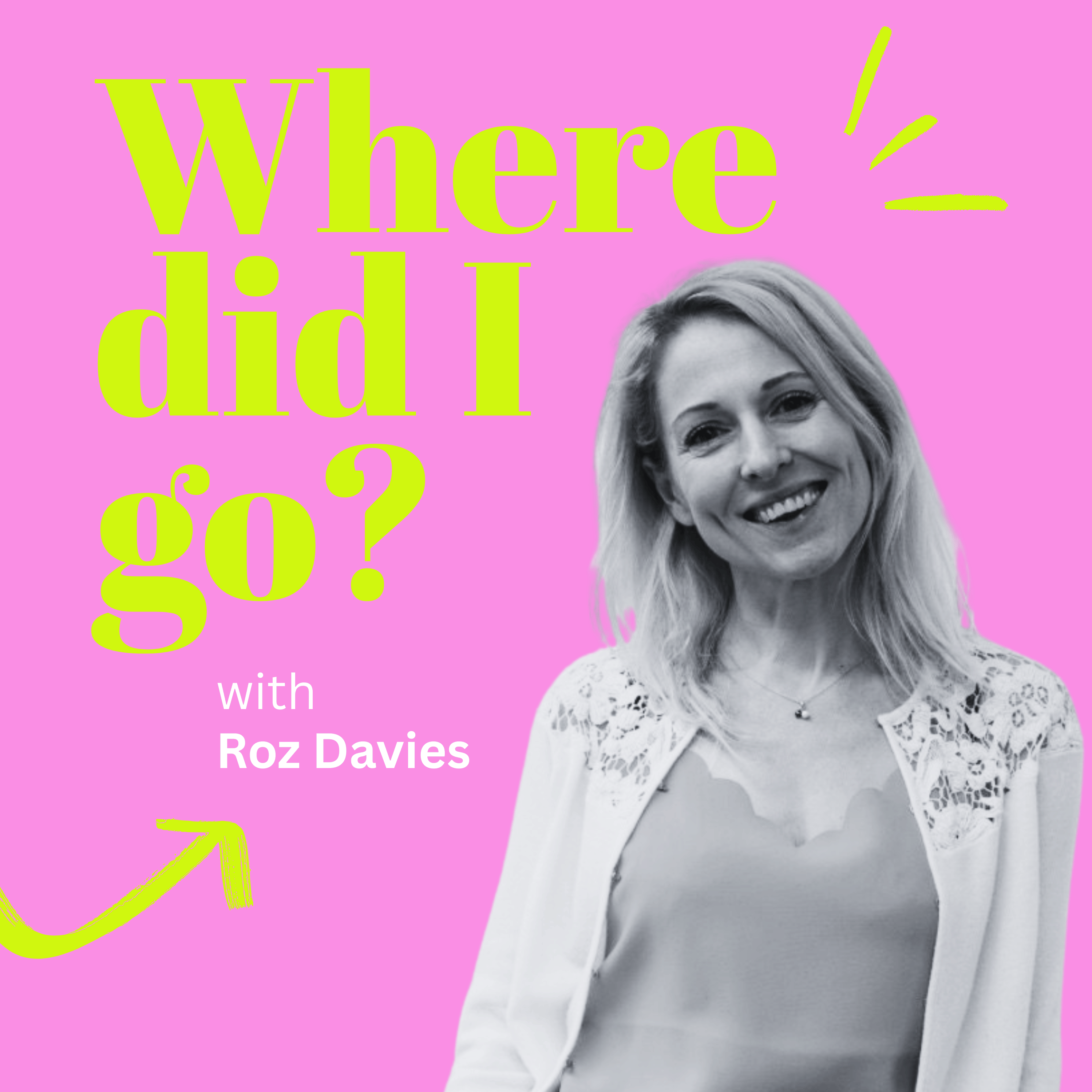
Balance without burnout for working mums, reframed as alignment with personal needs and values (not equal time on a seesaw). Roz explains how identity shifts in motherhood can erode boundaries, trigger burnout, and make women feel lost; she offers a “you powered” approach (values/energy, owning daily self, umbrella skills like noticing triggers and setting boundaries) and stresses “withdraw and restore” as a first step.
Roz Davies is a mum coach and founder of the Balanced Mum Academy. She spent about 20 years in big corporate roles, including a commercial VP role, then left after experiencing burnout as a working mum. She lives in South Oxfordshire with husband James and two kids (ages 6 and 4).
Burnout is prolonged 8–10/10 stress that pushes the brain into pattern-based survival mode; recovery is possible but you won’t be the same. Balance comes from fulfilling nine emotional needs (e.g., security, community, meaning/purpose, achievement/competence) at your required levels, which change over time. Permission to rest and introspect is necessary.
After returning to work post-second child, Roz’s “part-time” contract still meant unpaid hours, constant rescheduling, and resentment; she developed frequent infections and weekend inability to care for her kids. She regained her “spark” after leaving corporate by rebuilding connection (e.g., weekly Pilates leading to community).
Written by AI. May contain mistakes.
Discussion on the nine human emotional needs and how they contribute to a sense of balance in life.
“And we all have a slightly different level that we need of each of them.”
Introduction of guest Roz Davies and her unique perspective on balance in motherhood.
“about a topic that gets thrown around a lot but rarely gets unpacked properly balance.”
Roz shares her journey from a corporate VP role to founding the Balanced Mum Academy.
“I think like let's just get started with a little intro like maybe can you tell me a bit about who you are, what you do, how many kids you've got, all of that stuff.”
Roz discusses her struggles with balancing work and family after the birth of her second child.
“James, and my little ones are six and just turned four.”
Exploration of how prolonged stress affects identity, especially for working mothers.
“So I think I just lost myself under the huge workload and the to-do lists and the demands of everything.”
Explores the challenge of maintaining identity amidst work and family pressures.
“And the doctor, we had this hilarious conversation in Ireland.”
Discussion on how burnout manifests in working mothers and its psychological impact.
“You can very happily live at around five, six, seven, maybe you can live in that middle part where there is things that cause you stress on a daily basis and you feel like I'm under pressure.”
Insights into recovering from burnout and transforming one's identity afterwards.
“Can you truly recover and be a version of you that is normally functioning again?”
Examines the challenge of redefining success and self-belief post-burnout.
Explore the importance of self-belief and redefining success beyond societal norms.
Discuss the importance of recognizing burnout and giving oneself permission to take a break.
“And we're going through a curriculum of content to figure out who you really are and what's important to you.”
Learn how taking small, manageable steps can help regain control over personal well-being.
“My husband was saying to me, stop working.”
Introduction to the You Powered approach focusing on core values and energy management.
“I just want someone to make this all go away.”
Reconceptualize balance as alignment rather than equal distribution of time and energy.
“So figuring out who you are at your core and both in general and now in this particular period of life, then owning it.”
Examine nine emotional needs that contribute to personal fulfillment and happiness.
“Can you talk more through your way of thinking about balance?”
Steps to help identify personal core values and what truly matters in life.
“So it might not be that you need quite as much sense of achievement at the moment, but you may need much more of a feeling of meaning and purpose and that will shift over our life.”
The importance of trusting and listening to your own inner guidance for personal growth.
“So I will always come back to just ask yourself what matters to me right now.”
Discover how taking time for yourself can help you reconnect with personal passions.
“And then as time, and then I consciously decided I was going to stop doing those things and actually rest.”
Understand how to create a personalized definition of success that aligns with your values.
“And it is this, you know, so much of balance is perspective and your perception of what's happening rather than necessarily the reality.”
Learn to trust your intuition and the importance of self-advocacy in work-life balance.
“And I think it's like the last 18 months, really, that I've felt and actually probably if I'm being really honest, the last nine months that I've really felt like I deserve to do that.”

Get the gist, explore an idea or ask about something said.
 Claude
On Where Did I Go...?, what are the key points of this episode?
Searching your listeningAutomatic transcript. May contain errors.
0:00Roz Davies: Hi, I'm Dani and this is Where Did I Go? A podcast for women in the messy middle of motherhood, midlife and the identity shifts that come with it.
0:17Dani: There are nine human needs that we all have, emotional needs, that if they are fulfilled to the level that you personally need them to be fulfilled, you will feel balance. which means really feeling balanced is, you know, it's like Maslow's self-actualization. You feel happy. You feel like you're in the right place at the right time, doing the right things. You are you at your best. And these nine needs are things like security, community, meaning and purpose, achievement, competence, all of those things. And we all have a slightly different level that we need of each of them. and over time those levels will change as well so it might not be that you need quite as much sense of achievement at the moment but you may need much more of a feeling of meaning and purpose and that will shift over our life if life is no longer making you happy fulfilling your needs you need to figure out why you are the only person who can figure out why but other people will be telling you for months even years to go do it or to give yourself a break and you won't until you give yourself permission and that permission might be permission to give yourself an hour a week to do it or permission to be a little bit uncomfortable because yeah we're not used to thinking about our thoughts or thinking about what's important to us and we might see that as being selfish and but figuring out who not even who you are just figuring out what you need to be happy fulfilled to smile more all of that lovely stuff that's benefiting your family as well so give yourself permission to reach that outcome we live in a society at least in the western world where
2:08Roz Davies: doing a more typical kind of climbing the corporate ladder type thing and having a senior role and having a good salary and having a big house and all of those like symbols they're they're markers of success that's a really clear and easy way for you to feel like you're doing a good job as a person or you're fulfilling the expectations that you have of yourself that others have of you when you leave and decide to go and do something that is maybe more risky or maybe lesser paid or less prestigious you've got to define that as being successful you've got to convince yourself first and foremost that it is still valuable that it's if anything more valuable or more authentic because you're creating your own path and doing the thing that is genuinely right for you but that requires a lot of self-belief hi and welcome back to episode five of where did i go we've got a great one today i'm talking to ros davies who's a mum coach and founder of the balanced mum academy about a topic that gets thrown around a lot but rarely gets unpacked properly balance.
3:13Roz Davies: Now before you roll your eyes this isn't a conversation about colour-coded calendars or managing the perfect juggle. Roz's take on balance is different. It's about clarity, it's about knowing who you are, what you need and being brave enough to live in alignment with that, especially when life feels like it's pulling you in every single direction. Roz spent 20 years climbing the corporate ladder before walking away from a commercial VP role to support working mums in a more powerful and personal way. In this conversation we'll talk about why balance doesn't mean doing everything but just rather knowing what actually matters to you.
3:45Roz Davies: We'll talk about the identity shift that happens in motherhood and how to move through it with confidence and less guilt. We'll talk about how to get clear on your values and how that can bring you ease rather than more to-do lists. And lastly we'll have a look at what it means to feel whole again even if life keeps shifting around you. So if you're feeling stretched thin, pulled in too many directions or just unsure how to bring all of the parts of your life together, this one's for you. Let's get into it so hello it's so nice to meet you it's so good to actually see your smiling face and have
4:25Dani: a
4:25Roz Davies: chat thank you so much for all the support along the way I can't even remember how we first got connected I guess it was maybe my first post or something but I feel like we've been chatting now
4:36Dani: for a month or so yeah definitely I think we have and no it's brilliant honestly I love the podcast I'm gutted I'm not going to be listening to it this week because I'm on it I listen to it on my walk and it's it's brilliant and cathartic and just feeling like you're connected to people and understanding their stories it just it makes it all feel easier because you're not on your own so yeah I am I've loved everything so far on the podcast and I can't wait for the one after this
5:04Roz Davies: one because I will then be listening to it as a normal listener. Yay, thank you for that. I think like let's just get started with a little intro like maybe can you tell me a bit about who you are, what you do, how many kids you've got, all of that stuff.
5:17Dani: Yeah absolutely and thank you so much for having me. I'm delighted to be here and the short story is I worked in big corporate businesses, big global organizations for about 20 years. And I left there with a bit of an interesting story as to why, which I'm sure we'll get into, and decided to set up my own coaching business. And having been through burnout as a working mum, I set up a business that focuses on supporting busy working mums to figure out what's really important to them now in this period of their life and find a balance that works for them. I think balance is quite misunderstood and it doesn't always help people to think of it in the old traditional seesaw.
6:00Dani: So that's sort of what drove me to set up the business that I have. And I have two kids. We live in South Oxfordshire with my husband, James, and my little ones are six and just turned four. And of course, ruling the roost and running rings around us constantly. So yeah, it's a busy life and, but loving it. Really excited to live in the countryside having come from this sort of corporate and London always cities background we've lived in London and Dublin so I love being in the countryside I love going out for long walks and enjoying what is out there to sort of stimulate our senses I think that's a big part of my life now that that never was there before.
6:42Roz Davies: Well that's interesting so let's go into the story of why you left your corporate life like what what happened to prompt that big change?
6:50Dani: Well yeah I I don't think it wasn't sudden. Right. So like many mums, I don't think this feeling that where I'm currently at doesn't work for me anymore. It doesn't happen overnight. And it took a while for my identity to kind of shift, but also for me to realize that it was happening. I think that's the the trigger when you realize it's happening and you desperately feel a need to do something about it. So we moved to Ireland when our eldest was about 17 months old and I was pregnant at the time. And at that point, I think I was living the life that I always thought you could have as a working mum.
7:29Dani: So everything was fantastic. I was working as commercial VP in this big global business. I loved it. I was myself at work. I was basically just carrying on as normal. um yeah I was doing you know the drop-offs and the pickups but working full-time hours and I was so happy and confident in who I was and that I could do the job that I would switch off at five go and get my son and be completely present with him and enjoy my life and but then I think it all went a bit wrong when I returned to work after having our second and I do speak to a lot of mums who this seems to be a bit of a trigger point when you have a second child, but it can absolutely happen when you've just become a mom or even when you're trying to get pregnant in the first place.
8:18Dani: But I went back to work when our youngest was about six months and it was a different business, a different role. I was in a completely different industry as a senior consultant, but using all of my experience, which was really important to me to bring that with me and not start again. But I had gone part time contractually, very, very specific. It was contractually part time, but I was not working part time. The old classic there. Working the hours that you're not getting paid for. And I genuinely thought that it was going to be my golden ticket to balance my ticket to freedom as a working mum, because I had childcare sorted for when I was working.
9:01Dani: I could be available to them on my days off. and I was going to spend two days a week with my little girl and the eldest was in preschool. So on paper, it all looked like this is going to be absolutely perfect and be balanced and what I wanted. And I think that was really my undoing, frankly, because I relied on this operational structure around my world and this traditional view of balance that you spend this much time with your family, you spend this much time with work, and that's an amount of time I'm happy with. right on paper and I kind of relied on that operational structure to do the heavy lifting when in reality of course what happens when you have even one child right they get sick they get home from preschool our child minder honestly I've lost count of the amount of times that she had covid and this was still when we were having lockdowns so I'd quite often be pulled into looking after the kids or an area of my life that I wasn't expecting to be at that point and constantly having to rearrange meetings and work in the evenings when I hadn't intended to and constantly feeling guilty about not being able to physically be there or mentally be there and I think this mass of resentment actually built up that not only could I not be with my family when I wanted to be but I felt like I was being held back from succeeding at work by my family and that both the mental pressure and the mental switching all of the time and at the time you know you always have other responsibilities as well it's not just your family and your work it was the house we were moving back to England so I was arranging all of that and the dentists and blah blah blah you know the list goes on and what was really going on under all of this pressure and under all of the mental jumping all of the time was this slow erosion of my boundaries and my ability to prioritize what was genuinely important to me because I wasn't listening to what that was right I was just getting through the list yeah every day and I think what I've come to realize now having trained as a coach and having you know dug into it a lot in terms of psychologically what's happening to us and the psychology of it all our time and our energy and where we spend that is really a proxy for our identity because the experiences we have really is our life life is a series of experiences so when you're spending your time and energy on things that don't necessarily matter to you quite as much anymore yeah you're not living in an identity that you can love and be proud of.
11:43Dani: So I think I just lost myself under the huge workload and the to-do lists and the demands of everything. It makes you feel incredibly unsafe when you don't really identify with who you used to be anymore and you haven't got that clear sense of identity. So you just feel like you're on shifting sands a lot of the time, I think.
12:07Roz Davies: Yeah, I can really, really identify with that. It's so hard to just take a hard look in the mirror and think okay well I'm not that person who I thought I was anymore it's not serving me but oh my gosh then what like who who am I now and actually I've spoken to a lot of women recently who've reached out after listening to various episodes and who have said you know I do feel lost and I don't really know who I am but I don't even know where to begin because it's all such a muddy mess like I've been sort of showing up for other people for so long that I don't even know where to begin to start to ask myself the question of what do I care about now I think that's kind of a an interesting realization is that you can also lose a sense of what matters to you in this process of trying to make everything meet absolutely yeah and in trying
12:57Dani: to sort of just carry on in the world that you were in before but you've added in this huge other world of being a parent those priorities are just clashing and that that can take over everything because when you feel like you're doing a bad job at one of those two things that you know in some way is your identity you've you know proxied that to be who you are these things that I do are who I am when those two things clash it feels massively uncomfortable but without a sense of actually what is important to me you can't choose either so you kind of just try and do it all and you just keep on pushing on because it's the only thing your brain's gonna let you do if you are overwhelmed and under significant stress for a long period of time and I think that's what happens in burnout when your brain stops functioning in the normal way because of prolonged stress and that's what happened to me so I started getting viruses and chest infections and things just that just wouldn't go away for weeks and weeks and weeks and I was told by doctors both in Ireland and the UK because we while all this was going on we moved back to the UK and I was told to just stop working for at least three weeks you've got to recover physically and mentally.
14:20Dani: And the doctor, we had this hilarious conversation in Ireland. She said to me, if I ask you or tell you to stop work for three weeks, will you? And I just said, no, I'm not going to do that because it's who am I without work. But you're completely right that it feels impossible to identify because who you really are now, because we're made up of so many different experiences. We're made up of so many different values and traits and behaviors. So coming back to the very, very core of who you are is the way to rebuild your sense of identity, because your identity is always there. You don't completely lose it, but you need to recognize it because that's what we become very, very bad at, particularly as working mums, because our attention is always on how am I fulfilling the need of everybody else?
15:15Dani: And there's some changes in our brains that happen that lead to that as well when you have kids. So we're kind of set up to lose ourselves underneath it all from a physiological perspective, as well as the context we live in, which is just crazy busy at the best of times.
15:33Roz Davies: and I would say this might be a bit of a unfair statement but it's easier to continue showing up at work or showing up for your family to the extent that you can even if that's not fulfilling for you or even if it doesn't feel good that stressful existence is almost an easier reality than stopping looking inwards whatever that might mean for you and asking yourselves those hard questions of what do I actually need now like stopping to think and critically reflect is a much harder process than just pushing forwards I think when you're in a state of high stress you're walking a tightrope and if anything goes off kilter you're likely to feel in the short term a bit worse and that can be an intolerable idea for a lot of people you know I can I'm just existing I cannot make a single change right now because the thought of feeling or taking the risk of feeling worse or finding things harder is too big so I'm just going to push forward and I think a lot of people get stuck in that so you and then if you continue doing something for long enough you stop realizing that it's not serving you anymore because it's just your normal right
16:43Dani: yeah exactly and the things that we used to think were only for a short period of time oh I'll just push through, I'll just get to the end of this project, it does just become your way of being. And that doesn't mean that your body and your mind can cope with it. But you tell yourself you can because human brains love the familiar, they seek out the familiar anyway. But when you are under prolonged pressure or stress, and you edge towards burnout, what actually happens at burnout is your brain activity shifts to the primitive part of your brain that follows patterns. It just keeps doing what it's always done to keep it safe.
17:27Dani: It's literally like you are unable to access the intellectual part of your brain that would allow you to be creative, try new things, be inventive, you know, find your way out, even strategize your way out. And I do find that a lot of the time the women I'm supporting come to me because they literally have just got to a point where they cannot break this cycle they know that they need to change but it's such a terrifying prospect to take time out and you know whether that's taking time out from work or actually just take an hour out a week to think about this stuff and open up that pandora's box of what the hell could be inside and who am i now there's a lot of fear tied up in if I'm not that person I don't know if I want to see who I am now yeah so it's it's not just the the fear of the unknown it's the fear of but what if I don't like what I find yeah yeah
18:30Roz Davies: I'd love to hear from your experience based on the women that you've spoken to like how how does burnout show up in working mums like what are the some of the different ways that people can experience it because I'm I have a hunch that I think a lot of people are quite burnt out without realizing that that's what it is because they maybe have an idea of what burnout looks like which might be the very extreme you know where you're like completely incapacitated it can't function but I think there's a spectrum and you can be on that spectrum without realizing it so I'm curious if you've got any insights on what you know what are some of the signs that people
19:05Dani: should be looking out for and it there are so many honestly because burnout can show up in a number of different ways for different people and there are different types of burnout but the common theme is really if you are under a significant amount of prolonged stress so I was trained by the wonderful Kelly Swingler and she talks about a spectrum of you know how under stress you are feeling and you know how comfortable you are with how you are at the moment so if you go from zero to ten as your stress-o-meter, right? You can very happily live at around five, six, seven, maybe you can live in that middle part where there is things that cause you stress on a daily basis and you feel like I'm under pressure.
19:50But if you take that stressor away, maybe a work project or a
19:55Dani: particular relationship that's difficult, then you feel better, right? And you can go back to functioning in a normal way where you can be creative you can slow down you can speed up you're able to utilize all the different you're innate human gifts that we have you're the different abilities we have to function in life and you can flex when you keep going up to eight nine ten right if you're at eight nine ten stress is removed you come back you can cope with that burnout is when you are for a prolonged period of time in that 8 9 10 level of stress and it becomes so ingrained in how you show up and how you respond to the world that you cannot come back so you stay at that very top level of stress and eventually when burnout happens you drop off the end of that stress meter, right?
20:56Dani: So what happens when you burn out is that your brain just retreats into that primitive part where you're functioning on patterns, how you have before, because that's what your brain thinks will keep you safe. So if your patterns of behavior have been, I just work really hard, and I pick up everything for everybody, that is what you will continue to do. And yes, at some point, if that carries on, yes, you may face those physical symptoms like not being able to get out of bed or getting viruses all the time like I was doing. Even not, you know, the worst point for me was at the weekend. I felt so unable to look after my kids that I couldn't keep them safe because I couldn't look after myself.
21:42Dani: Frankly, I was in such a constant state of anxiety all of the time. I wouldn't go out with the family at the weekend. I would go to bed and send my husband off with the kids. So it can look like that. But at the same time, it can look like doing the ironing at 11 o 'clock at night because you cannot switch off. So it looks very different to different people. But the underlying driver of that behavior, whatever that behavior is, is your patterns of what you have always done before it hits that debilitating burnout that comes with long-term illnesses and chronic conditions and things that can result from the constant release of stress hormones over a very long period of time.
22:27Roz Davies: Can people come back from burnout? Can you truly recover and be a version of you that is normally functioning again?
22:35Dani: There's a few different views on this and I'm of the opinion that you can recover or you can rebuild a version of you that can live out the other side of burnout and you can thrive out the other side but you will never be the same and kelly who who trained me has talked very openly about chronic conditions that she now has as a result of burnout i have very specific mental triggers now because of my burnout so i have almost a pathological fear of setting targets because having targets and pushing towards those is one of the things that just pushed me to keep going, keep going, keep going. And, you know, and, and through my working career, that was a wonderful thing to be driven by targets and always delivering and exceeding targets.
23:24Dani: It's what got me where I, where I ended up and the success I had professionally, but now I've completely removed them because the thought of having a target just shuts me down. And it's not that it creates fear. it literally shuts me down. And that is a burnout symptom that your brain won't even go there. Because it's almost as though it knows where it's going to lead to it. You can absolutely recover, you can thrive, you can be a slightly different or even a better person after having been through burnout, but you will never be the same.
24:03Roz Davies: Yeah, it makes sense. I think if you've gone into that real sort of fight or flight state of being where you're you're in survival mode almost you know your brain really thinks there's like some existential threat it is going to change the way that you function forever you're I can very much see certainly on on the what you just said about certain things that you cannot even allow yourself to think about I have some of those myself because they were very much triggers for my own experience and it's like this fear and it's like it's not even a fear that I think I would be able to articulate it sits in my body it's a feeling I can just sort of almost even thinking about it now like so for me some of the things that are really scary are definitely linked to being in senior positions so I'm absolutely petrified of being in a role where I feel very exposed now because it felt that pressure for me was too much previously.
25:00Roz Davies: And so now I just, even if I think about getting a senior, I work in quite a big company now, the thought of being in a senior role there is quite scary. Like, and I can feel it in my body when I even think about it. And it's irrational. I could absolutely do it now, but I'm sat still with that physical response to what I experienced before.
25:21Dani: Yeah. And burnout can absolutely be the trigger that makes certainly a lot of the working mums I I support, realize that they cannot be who they were before. And there is real joy in that. There are some things that you possibly, you know, I certainly grieved certain parts of my old life when I stopped working in the corporate world. You don't have as much security because you're working for yourself and all of these things. But I had to reframe what the value was that I bring. And I had to reframe who I am in a world that lights me up, because actually, if being in that senior position no longer lights you up, what is it that will?
26:07Dani: And it may be just as much responsibility, but in a slightly different guise that you actually feel OK with. And often going through a big, it's a traumatic experience if you genuinely go through burnout, because it is not just a couple of weeks of feeling tired. And then I went to a spa day and I felt better. That is not burnout. That might be stress or it might be physical exhaustion and mental exhaustion. Burnout leaves marks. The way in which your brain functions has been different when you're in burnout. And as you come out, you're able to access that creativity again, that inventiveness, the resources that you have in the rest of your brain that it wasn't able to access when it was burning out and stuck in that fight or flight primitive part of your brain.
26:58Dani: So, yeah, it's often the trigger. And many of the women that I work with find that there's things that they love about how they now are because they realize that if working those crazy hours is going to mean that I burn out again and I just refuse to do it, there's a much stronger commitment to not do it again and to hold boundaries and to really and truly deliver for themselves on who they are and what they enjoy.
27:28Roz Davies: Yeah, and it's, I think, extra hard because we live in a society, at least in the Western world, where doing a more typical kind of climbing the corporate ladder type thing and having a senior role and having a good salary and having a big house and all of those like symbols, they're markers of success. that's a really clear and easy way for you to feel like you're doing a good job as a person or you're fulfilling the expectations that you have of yourself that others have of you it's it's an easy tick of like yes good productive well-functioning person that's a good egg when you leave and decide to go and do something that is maybe more risky or maybe lesser paid or less prestigious you've got to define that as being successful you've got to convince yourself first and foremost that it is still valuable that it's if anything more valuable or more authentic because you're creating your own path and doing the thing that is genuinely right for you but that requires a lot of self-belief so there's like a chicken and egg thing isn't it because you're at a point where you need to make big change that requires a lot of introspection and also self-belief but you might not have access to those things at a time when you're feeling particularly low on
28:42Dani: energy or lower on enthusiasm or or resilience and that's you know I I get um people coming to me all the time saying why do you offer a free call to people before they join balance mum academy because I spend an hour with every person that wants to join the program and not everybody I don't offer a place to everybody and quite often it's because they are still in burnout and me He's saying, oh, we'll come to 10 sessions of coaching. And we're going through a curriculum of content to figure out who you really are and what's important to you. Reconnect with the things that are going to light you up and give you energy rather than just drain it.
29:23Dani: It is introspection and it's deep and you need energy to be able to do that. So bringing people on who are in burnout is irresponsible. And those people who are burning out, I offer completely different support, because if you are burning out and you don't have that energy, you need to give yourself a break. You need to just step back. I think it was the Dalai Lama years and years ago said, withdraw and restore is the only treatment. And obviously that's not necessarily going into a Buddhist temple for many months, but we can find ways to do that in our modern lives. But it's a really important point that you make that I think quite often we're holding back and not giving ourselves permission to change.
30:09Dani: And the alternative to that is that you just stay where you are doing what you've always done. And if you're already on the road to burnout, that's where you're going to end up. So giving yourself permission is really just critical. And I do laugh when quite often people say, well, no one else is going to give you permission. They do. My husband was saying to me, stop working. You are working such crazy hours. Just stop. And I refused to listen. The doctor was telling me, stop work. I refused to listen. If life is no longer making you happy, fulfilling your needs, you need to figure out why. You are the only person who can figure out why.
30:47Dani: But other people will be telling you for months, even years to go do it or to give yourself a break. And you won't until you give yourself permission.
30:57Roz Davies: Yeah.
30:57Dani: And that permission might be permission to give yourself an hour a week to do it or permission to be a little bit uncomfortable because, yeah, we're not used to thinking about our thoughts or thinking about what's important to us. And we might see that as being selfish. But figuring out what you need to be happy, fulfilled, to smile more, all of that lovely stuff, that's benefiting your family as well.
31:25Roz Davies: Yeah.
31:25Dani: So give yourself permission to reach that outcome and not being afraid to put down those boundaries and hold them.
31:34Roz Davies: Yeah. And I like that because you can start small and build up from there. If it is really an hour a week, that's what you can commit to. And that time is literally thinking time. You don't even have to do anything. It's work. You have to put in the work. You have to make time for the work. I think that's like an important I've been through several periods of my life that have required me periods of professional burnout but also really serious postnatal depression and anxiety and there were you know when you're in the quagmire of it all you just can't see the light at the end of the tunnel and you sort of feel like well this is just it this is my reality now getting out of that requires a lot of work it's hard there's no way around it there's no way of like I remember I remember saying to moments where I've been particularly struggling, particularly low, I just saying to my husband, I just want someone to help me.
32:24Roz Davies: I just want someone to make this all go away. And no one can do that. And I think the moment you you make the decision that you're going to start putting one foot in front of the other, whatever that might be, open doors, see where they take you. Try fight, like go for it. Even if that is super small things, whatever that might mean to you. I think then there's a mental shift where you're like you're in active solution mode rather than sort of feeling hopeless, like things are happening to you, but rather that you have agency over the your reality.
32:58Dani: yeah absolutely and I just you've just reminded me of that I think there are two shifts that happen there's the I give myself permission shift and then there's the I can actually do this shift yeah yeah believing you can make it happen and obviously you can't get to the believing you can make it happen until you've given yourself permission it needs to come in small steps because when you are so fragile and you are so lost you need to give yourself time to come to terms with the change that you're going through and that you know because it can feel enormous if you try and figure it all out at once i very much see it as three phases of figure out what is at your core so i call it the you powered approach so it's y-o-u so it's come back to who you are so what are your values what drives you what gives you energy and what drains your energy and also what roles do you play in life right because we play so many and jumping between them is what causes a lot of this stress and tension and the pressure to that you get buried under, frankly.
34:01Dani: So figuring out who you are at your core and both in general and now in this particular period of life, then owning it. So that's the O in the Y-O-U powered approach of own what, how do you want to show up on a daily basis? How do you want to be when you're with your kids? how do you want to be when you're at work you let's focus on you and how you show up because that's a much simpler and gentler it's a kinder way of coming back to the you that you want to be and then the final part of the the three steps is that you for umbrella skills so i like to think of you know the skills that we need as busy working mums will cover you for any eventuality because they are things like knowing what triggers you into feeling overwhelmed and like you're drowning under it all and being able to respond in a more conscious and controlled fashion than allowing the emotions to overrule you.
34:59Dani: Things like listening to yourself, things like being able to focus in the moment and things that really support real moments and experiences as a mum. Those are the skills that really help you to make tiny adjustments to your life so that it can be much more in alignment with who you are and what you need, what matters to you so that you can protect it. And of course, having boundaries is another one of those skills and holding them as well.
35:25Roz Davies: So you you've alluded to shifting from thinking about balance is this kind of traditional seesaw where things need to be like you've got this flat thing that doesn't move because everything on both ends is totally the same. You think about balance more as an alignment.
35:41Dani: Yeah.
35:42Roz Davies: Depending on the things that drive you. Can you talk more through your way of thinking about balance?
35:47Dani: Yeah, absolutely. And I'm going to stick with the playground analogy of a seesaw because I love a good analogy. Oh, I love analogies. And the seesaw, I think it does a job in saying, right, if you spend this amount of time and energy in one place and this amount of time and energy in another place, it needs to be the right balance for you. I never say that balance is about things being equal. It's about the feeling of equilibrium. So I would always say it's the right balance for you. The problem with the seesaw is obviously it's work against everything else, because if it's work life balance, life is huge.
36:28Dani: Would you put all of your life against work and measure your life in that way? It just doesn't make any sense to me. but it's not about balancing those things out in terms of making them feel like they're the right amount of time for you because frankly if you needed to balance out and put more time into one area you're very quickly going to run out of time and if it was effort you're very quickly going to run out of effort from that on that basis I just cannot live with the the seesaw way of looking at it, the seesaw metaphor. But I like to think of it, you may not remember, Danny, I think you're too young, but there were these things called a balance ball in the 80s, I think.
37:12Dani: I had one, very late 80s. I'm not that old. But yeah, so it's a balance ball with a, like a ball in the middle and a ring around the outside. It looked a bit like Saturn and it was for exercise. So it was for you to practice balance and core stability. And I like to think of our life balance along those lines so if you imagine there are nine human needs that we all have emotional needs that if they are fulfilled to the level that you personally need them to be fulfilled you will feel balance which means really feeling balance is you know it's like Maslow's self-actualization you feel happy you feel like you're in the right place at the right time doing the right things.
37:57Dani: Are you at your best? And these nine needs are things like security, community, meaning and purpose, achievement and competence, all of those things. And we all have a slightly different level that we need of each of them. And over time, those levels will change as well. So it might not be that you need quite as much sense of achievement at the moment, but you may need much more of a feeling of meaning and purpose and that will shift over our life. So understanding what your needs are and being able to push in the right direction on that balance ball to keep in balance. And it doesn't mean that sometimes you won't tip over.
38:38Dani: Of course you're going to, but that's when you realize with the umbrella skill of listening to yourself and listening to what you need, you tip yourself back by putting more into your meaning and purpose bucket. So, you know, we are, we're changing beings all the time anyway, particularly when big things happen in your life, like becoming a mom or going back to work or changing jobs. So being able to figure out what you need at any given time is such a critical skill. Like sometimes you might feel like you really need to be secure and you might want to put down a foundation to make you feel financially secure or secure in your relationship.
39:18Dani: But at other times, you might need to work more on that feeling of status. And that might be something that's really important to you. So we're looking to fulfill all of those needs to whatever level works for you to feel happy and fulfilled. And if I think about when I went through the big shift from being in the corporate world to running my own business, one of the needs that I was suddenly not fulfilling at all was connection. I wasn't connecting with other mums. I wasn't really connecting with other business owners. I was just kind of on my own. And my sense of identity as being a person who is, I'm very chatty.
39:57Dani: I'm quite vibrant. I'm always talking to people. I'm happy to speak to random strangers anywhere. Quite annoyingly, I'm always doing that. But when I suddenly was out of the corporate world and no longer having meetings, I was literally on my own setting up from scratch. I suddenly felt like I'm not me anymore. I'm not as vibrant as I used to be. I'm not as energetic. And it was fixing that missing need of connection with other people that gave me back more of my spark. So I, you know, I connected with some of the other people in the village by going to a Pilates class every week. So now I just chat to random people in the village.
40:36Dani: And, you know, I I made many more connections with other female entrepreneurs who were also on their own. So these nine needs kind of underpin everything that brings us joy, happiness, fulfillment, all those lovely emotions. And if we don't listen to that and listen to the whatever sense of unease we have going on in our lives, when we feel like we've lost ourselves, we're never going to pinpoint what it is that we need.
41:03Roz Davies: so how if if somebody's listening to this and they're thinking that sounds great i really like that analogy but i've no idea where to start what what are some simple first steps that people can take to start to identify what some of their core drivers or values or needs really are well i've
41:20Dani: always come back to what matters to you because everyone is different and you know these the things that really truly matter to you don't change massively over time even if you do go through a really big transition, they will maybe shift in order, but they'll still maybe be your top three, four, five things that you will prioritize in life. So I will always come back to just ask yourself what matters to me right now. And that will help you to prioritize. It will help you to direct your energy and where you give your time to. So one of the questions that I asked myself when I was working crazy hours is what are you doing this for you know if you if you come back to what matters to you and you ask yourself what are you doing this for and it doesn't match those things that are important to you then you need to look deeper and go okay well what what do I really
42:18Roz Davies: need to be doing because it's it's like you already have the answer you just need to yeah find the time to ask yourself the question and then listen yeah and it's listening yeah it's the listening that makes the difference yeah absolutely because I think we kind of get into a mindset of not really having that much belief that the that little voice inside of our head is one worth listening to we lose sight of our own potential to really have the answers because we're always looking outwards I think for either validation or support whatever but there's so much of it that we have within us if we learn how to lean into it and trust it and and kind of be guided by it
42:58Dani: yeah and it and it doesn't need to be complex you can just literally get up in the morning and say what do i need right now yeah even if that's a glass of water or i need to lie in my bed for five more minutes before i get up just listening to whatever's going on for you in the moment is a skill that you can build um and i think you know i totally agree with what you said there about we don't listen to what's going on for us but it's it's like we have an internal barometer and an external barometer and the external one is massive and red and flashing lights and it's all we can see and the internal one is this tiny tiny little innocuous little line that we don't even look at or or try and notice so just noticing it is the place to start in something really really small as what do I need right now and then you can move it forward and really build up your ability to fill that external barometer as powerfully as you do the external one because then you've got a choice right then you can choose which road do I want to take which need do I want to satisfy right now so knowing it's there the internal barometer and listening to it even in a tiny way builds up your ability to actually act in accordance with it and um I think one of the
44:19Roz Davies: things that's been kind of eye-opening for me at least in my own experience of trying to find balance is well firstly actually that it really does require that uh retreat and restore thing that has to be the first step like I've been I'm now five years into my almost five years into my journey of being a mum and just very recently had my first long weekend without any children like my husband went away with the kids they were at their grandparents and I was on my own and I had sort of 48 hours of being like going first into that do mode I started like you know wiping down skirting boards and cleaning the fridge and I was like almost frantic like I've got all this time now and to do that long list of stuff that never gets done.
45:05Roz Davies: And then as time, and then I consciously decided I was going to stop doing those things and actually rest. And I'd say sort of after day three, I started to have these desires that had been totally lost to me for a long time. You know, I was like, I want to go for a nice long walk right now. I want to go to the gym. I want to go and see my friends. And I just had that headspace of being like, yeah, these are the things that actually drive me. I've been in kind of like this adrenaline zone of like, do, do, do all the time, make every moment productive. But when I had the opportunity to rest, those little parts of me could start to surface.
45:43Roz Davies: And but they were lost to me. And I'm not sure I would have accessed them without having a little bit of time to myself. But doing getting that time is you kind of need to ask for it because it's so easy to feel like you you need to just be present for other people. It would have been very easy for me to go on that trip with the children and with my husband. And I felt very guilty, actually, for not going. And I also had a lot of external voices being like, you're going to miss them so much. Like, what are you going to do without them? And I was like, oh, my gosh, yeah, like I'm terrible for that.
46:16Roz Davies: They're going to be without their mom for a long time. and is it really selfish and you know it was actually just my husband who's like this very constant reassuring voice that's like no they're fine I'm their dad I can take care of them you don't need to be with them all the time like take this time for yourself you need you need to sort of say what you need and then actually do it because when you take that break you will start to be able to access some parts of what it is that yeah that you that drive you yeah and it
46:48Dani: It doesn't have to be, you know, three days. No, no. If you build up the skill in a way that fits in with your life, just by giving yourself permission, because like you've just said, our husbands are going, yeah, I'll take the kids. You go do what you need to do. It's us giving ourselves permission to then use that time to actually spend it on something that we need, rather than something that other people need. And that's the big difference. And I do think that if you just start practicing listening to what you need, it just opens so many thoughts and it's like the lights switch back on again to this internal barometer rather than only seeing what everyone else needs.
47:36And the great thing about this is once you've kind of tuned into those needs that you have, it means that you don't actually often need to make massive changes in your life.
47:46Roz Davies: Like sometimes maybe you are in a job that is just totally not suitable for you and you need to make a big change there. That's real and valid. But often I think it can be that you're you're off kilter, something's off balance. And maybe all you need is to just prioritize going to the gym for an hour or prioritize taking an hour with a friend and having a coffee and a long chat. Maybe you've just been missing those smaller parts of your, you know, those needs that you have as a whole. And you've been neglecting some of those smaller things that can overall lead you to feel a bit more in balance so that then, you know, if your job is not ideal, it doesn't matter so much because there are other parts of your life that are giving you what you need.
48:25Yeah.
48:27Dani: And it is this, you know, so much of balance is perspective and your perception of what's happening rather than necessarily the reality. Because, you know, I've had so many clients who end up after going deep into what matters to them. They stay in the same company in the same job, but they change things around it. They change how they show up in that job. They change, you know, they add in elements and take bits out of their job through discussion with HR because this bit lights me up, but this bit drains me and I just hate it. So if I can get rid of that bit, actually, I love my job. And clients who have just got to a point where they realize what's actually been making them feel unhappy, uncomfortable at work is actually that it's not as busy as it used to be.
49:15Dani: And that to them means I'm failing because I'm not frantic all the time. They realize that actually it's OK. I am so much of this is around getting to a point where you feel safe to do things a little bit differently. But test it, try it, do little things. And they will all add up to making you just helping you to be more fulfilled, more happy, smiling, more better relationship with your kids, that kind of thing. that you wouldn't have expected to come from I spent an hour introspecting and figuring out what's actually going on with me it just lifts the load so much that you can then just show up how you want to in the places and the relationships that matter oh I love that also I was just
50:04Roz Davies: thinking as you you talked about people can make changes within their their roles and sometimes I think we forget that we're allowed to ask like we're allowed to say we're allowed not to be these perfect people that show up and do everything willingly and love all of it we're allowed to kind of show up and be like I've I've thought about it these are the areas where I think I add the most value these are the things that really drain me and right now I'm doing too much of them and not enough of the other stuff and I'd like to see what can move what can shift you know you get to have that conversation you're allowed to you you deserve to to show up at work and say this is what I need.
50:40Roz Davies: I've spent, I'm 35. And I think it's like the last 18 months, really, that I've felt and actually probably if I'm being really honest, the last nine months that I've really felt like I deserve to do that. And that it's not an imposition or unrealistic. And I'm sure I'm not alone in that feeling.
50:58Dani: Absolutely. And you know, it may be that when you have that conversation, they're able to accommodate some changes, or actually, you might have come up with an idea of something that you would be fantastic at that the business really needs that they hadn't even realized they needed so you can work together on something that's going to be beneficial for both of you but that's not always going to be the case and there may be instances where you have that conversation nothing changes and then you choose to leave but you choose to leave knowing why you're
51:27Roz Davies: leaving and what you need yeah absolutely okay so I'd like to um wrap up with just a very quick fire section on a couple of things that we've touched on around the theme of balance um and this is really like if someone's sort of skimming through this episode and just really wants to get to the good stuff like what are some kind of one word things that they can take away or one sentence things at least so yeah one word doesn't really work with me not gonna happen that's so fine um okay so what's when it comes to balance what's one thing you wish more mums knew and or really believed?
52:06Dani: I think it's that they can be themselves and do what's right for them and their family and the people that matter will support them. Okay so what's
52:15Roz Davies: one belief that you've unlearned about balance or success?
52:19Dani: I'm in two minds about this. I think it's probably what's on my mind at the moment is around success more because when I now describe what success is for me it's a million miles away as to where it was 10 years ago yeah and so I think what I've unlearned is that success has to be a standard definition and success really needs to align to what's important to you again which is those needs and the areas of your life that really light you up and that's what delivers balance so success and balance kind of come as a package when you get it right yeah absolutely i'm really all in on this actually this idea of success you know you define what success means no one else gets to do that oh completely and very lastly what's
53:06Roz Davies: one word to describe the version of yourself that you're becoming right now not good at one word
53:11Dani: answers one sentence just say yeah um i'm going to say intuitive because i think that internal barometer when you've strengthened your ability to listen to that you don't need to overthink you don't need to you know ruminate on every decision it just comes naturally and I've always been a planner I've always been a big thinker and pros and cons lists before I make a decision actually much more now I'm just going no it feels right because I've strengthened that internal barometer so much um so yeah intuitive go with that and the lovely thing about intuition as well is that you
53:47Roz Davies: don't need to explain it if something feels right to you and it doesn't make any sense to anyone else you actually don't need to explain it saying it feels right to me is explanation enough and if you truly believe it and it feels like you know it's supporting the overall kind of ambitions you have for yourself and your family then that's enough it doesn't need to be any more than that I can definitely in my own journey over the last few years have had to stop explaining as in I've really had to work on not explaining my decisions to people or feeling the need to do that because I don't know it's like sometimes a bit difficult to you want everyone to be on board with like what you're doing and think it's great and to get that validation and no one can really give you that but yourself no but that requires you to be really in tune with your intuition and what you
54:35Dani: said just there with it's the right thing to do for me and my family if your intuition is aligned to that you're always going to make the right decision yeah yeah absolutely okay well thank you
54:48Roz Davies: so much um where can people find out more about you and about the balanced mum academy and about
54:53Dani: the work that you do well um so you can follow me on instagram and facebook so my handle is at ros davis coaching i also have a free facebook group for working mums where i should go live once a week sharing strategies and frankly whatever's on my mind to help you find a balance that works for you. So that's called Authentic and Energized Mums. And you can go on my website, which is rozdavis.com. So R-O-Z-D-A. And that's where you can find all of my programs. So Balance Mum Academy. I've also got one on how to be present with your kids called Let's Get Present. So go fill your boots and explore.
55:29Dani: Amazing.
55:30Roz Davies: And I'll pop all of those links into the show notes so that people can really quickly get access. I'm definitely going to join the Facebook group. that sounds like my cup of tea yeah it's it's awesome fun it's good stuff thank you again so much Roz and um yeah it's just been a really great conversation diving into I think something that feels so relevant to basically every woman or actually every working parent that I know and I really like that we've you know it feels like this has been really practical as well which is
55:57Dani: super nice fabulous well it's been wonderful talking to you Dani I've loved it thank you
56:17Thank you.
Is balance a myth for working mums? Or have we just misunderstood what it really looks like?
In this episode of Where Did I Go?, Dani sits down with psychologist and founder of Balanced Mum Academy, Roz Davies, to talk about the emotional, psychological, and identity-level shifts that happen when you’re a parent trying to do it all.
Together, they explore:
Whether you're feeling lost after returning to work, struggling to juggle it all, or just questioning what "success" even means anymore—this conversation will help you reflect and realign.
Mentioned in this episodeFollow Roz Davies:
Explore her programs: ✨ Balanced Mum Academy – for working mums ready to reconnect with themselves ✨ Let’s Get Present – a course to help you feel more present and connected with your children
💡 Key takeaways🎧 New episodes drop weekly. Don’t forget to follow, rate and review the show
Burnout recovery, balance for working mums, emotional needs, motherhood identity shift, burnout symptoms, redefine success, parental burnout, Roz Davies, Balanced Mum Academy, mum guilt, mental load, postnatal burnout