
In short
Episode topic: How motherhood can expand creativity and identity instead of shrinking them; the “alchemy” of matrescence, trusting a larger process, and practical ways to keep writing/creating while parenting.
Guest
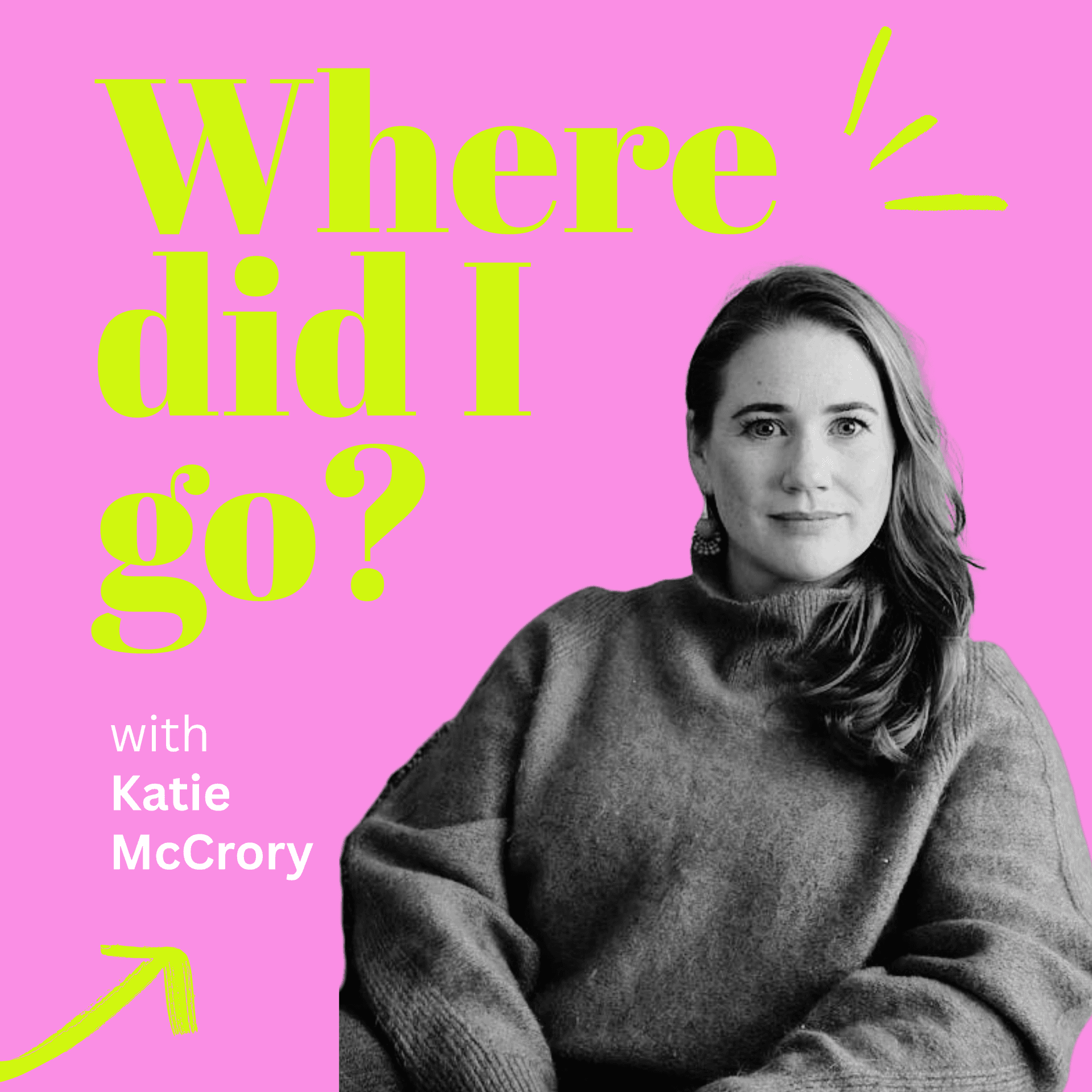
Katie McCrory, brand storyteller at IKEA; writer. She led global research into “life at home” and is writing about what creates the feeling of home.
Guest background
Faced infertility while trying for children; had a traumatic late miscarriage between her two children. She later carried her daughter and had a son via IVF. She describes motherhood as cracking her open emotionally and creatively, including a “liminal” life/death transition that helped her focus on what mattered.
Key claims
Motherhood can bring creative clarity and authenticity; creativity is possible during constrained time; “any minute spent writing is a win”; identity change (“I am a writer”) comes from showing up, not monetizing.
Notable examples
Wrote a book proposal during maternity leave; pitched agents, got silence, then reworked it with a literary consultant while undergoing fertility treatment. Wrote the manuscript by flipping between mothering and writing, using a laptop in her son’s nappy bag and writing in short sleep windows.
Written by AI. May contain mistakes. Listen to the episode to check what was said.
Chapters
Tap a time to open that second in VOFriendship and the Journey to Motherhood
1:15 to 2:24
Discussion about the importance of friendships during motherhood and the challenges of making connections as adults.
“It's as I was just saying before we were kicking things off in earnest, it's just so nice to do an episode with a friend like this is going to be a really cozy experience.”
The Emotional Journey to Motherhood
2:24 to 4:23
Katie shares her experiences with infertility and the emotional complexities involved in becoming a mother.
“So I think the process of becoming a parent happens in lots of different ways.”
Loss and the Catalyst for Creativity
4:23 to 6:43
Exploring how personal loss impacted Katie’s creative journey and her perspective on motherhood.
“up actually being quite like I am a biological parent.”
Transformation Through Motherhood
6:43 to 12:19
Discussion on how becoming a mother transforms identity and fosters creativity, including the alchemy of change.
The Magic of Life and Possibility
12:19 to 14:00
Katie reflects on the miraculous nature of life, particularly regarding her experiences with IVF and the magic of motherhood.
Opening Up to Possibilities of Motherhood
14:00 to 17:09
Exploring the transformative experience of motherhood and its impact on personal creativity.
The Journey of Writing a Book
17:10 to 19:56
Discussing the genesis of a book idea during maternity leave and the challenges faced in publishing.
Investing in Self: Hiring a Literary Consultant
19:57 to 21:07
The importance of seeking help and guidance in the writing process for personal growth.
“And I probably needed a bit of help with that.”
Balancing Pregnancy and Writing
21:08 to 23:00
Navigating the challenges of writing a book while pregnant and the emotional journey involved.
“I mean, I took photographs of it because I was like, this is ridiculous.”
The Cosmic Connection: Trusting the Process
23:01 to 24:59
The concept of cosmic guidance in achieving personal goals and creative endeavors.
“I think that was really wonderful to have her say, not a problem at all.”
Show all 25 chapters
Creative Freedom Beyond Constraints
25:00 to 28:02
Finding creative expression outside societal expectations and embracing personal desires.
“I mean, ultimately, you could have not you could have been given the message that you needed to make edits while you were bouncing on your yoga ball with Braxton Hicks and been like, you know, I actually can't right now.”
Finding Liberation in Creative Freedom
28:02 to 29:04
Explore how creativity can flourish without labels or societal constraints.
“Because I just would have been a different route there, I think.”
Balancing Motherhood and Writing
29:05 to 31:20
Learn about the author's principles for writing during maternity leave.
“write that felt really important to me I wouldn't resent him for his needs he's just a baby he's going to do baby things.”
The Joy of Creative Fulfillment
31:21 to 32:54
Discover the emotional connection to writing and motherhood as a source of joy.
“There is something about the journey that you've been on to get there, to being in it and just being so damn grateful for obviously the baby, of course, but all of it.”
Challenging the Narrative of Parenthood and Creativity
32:55 to 35:26
Discuss the common belief that parenting hinders creative work and share personal reflections.
“You know, I have parents who grew up, I mean, my mother's a writer as well.”
Maintaining Creativity Post-Book Submission
35:27 to 36:34
Learn how to sustain writing discipline and creativity after completing a book.
Evolving as a Writer
36:35 to 37:11
Understand the importance of continuous growth and improvement in writing skills.
“And I ended up rewriting that chapter and I think making it better.”
Creating Amidst Commitments
37:12 to 41:28
Explore the idea that creativity can thrive alongside parental responsibilities.
“And almost now I remember doing copy edits for the book earlier this year and thinking even in the time from when I've submitted to now the writing I've been doing, I think I'm even better.”
Modeling Passion for Future Generations
41:29 to 42:00
Discuss the desire to inspire children through personal creative passions.
Finding Joy in Creative Expression
42:00 to 44:20
Explore how embracing creativity can energize both parents and children.
Decoupling Creativity from Guilt
44:20 to 47:40
Learn how to separate self-worth from parental responsibilities and creativity.
Practical Steps to Reconnect with Creativity
47:40 to 51:00
Identify how to reclaim your creativity through intentional time management.
“People bandy around this idea of mum guilt quite a lot.”
Creative Habits and Rituals
51:00 to 54:10
Discover effective creative practices like morning pages to unlock creativity.
Publishing Insights and Future Plans
54:10 to 56:05
Gain insights into the book publishing process and upcoming projects.
“This is a little bit touching on what you just mentioned now, but is there a specific book that really lit something up in you?”
Exploring Creative Connections and Upcoming Projects
56:05 to 57:26
Discover insights on creativity, upcoming projects, and personal journeys in writing.
Transcript
Automatic transcript. May contain errors.0:00Katie McCrory:Hi and welcome to the next episode of Where Did I Go? Today we're going to be looking at creativity and how that changes when we've had children. And the reason I'm so excited about this topic is because we're consistently told that motherhood takes things away from us. Our time, our freedom, our sense of self. But what we don't often hear is how it can also spark a massive creative expansion. A total cosmic realignment of who you are and what you're here to make. In this episode, I'm going to be talking to Katie McCrory, who's a brand storyteller at IKEA, but she's also a writer, about how becoming a mum didn't shrink her creative life, but blew it wide open.
0:39Katie McCrory:While on maternity leave, Katie wrote the book she'd been thinking about for years, not because she finally had the spare time, obviously, but because motherhood stripped back everything and made what really mattered impossible to ignore. The result? A creative identity that she could never put back in the box and has become so critical to her sense of self since. We talk about what happens when your world tilts on its axis and your voice, your drive and your clarity comes roaring back after motherhood. This is an episode about expansion, about finally backing yourself and about how motherhood might just be the most creatively alive you have ever been.
1:14Katie McCrory:I am super excited for this one, let's get into it.
1:22Katie McCrory:Hello, welcome. It's as I was just saying before we were kicking things off in earnest, it's just so nice to do an episode with a friend like this is going to be a really cozy experience. We're going to get like cozy in a way I don't think I've been able to with other guests just because we have this level of familiarity. So I am so excited for today. Thank you. Thank you. What an honour and I think a testament to the kinds of friends that we bring together in our kind of, I don't want to say later lives because that makes it sound like we're kind of shuffling off somewhere but um but i think as adults right it's so much harder in this season of our life as well with young families and when time is so constrained i think the people you have around you are so important in sort of helping build up the potential of who you can be both as a parent but also as an individual yeah definitely both of us coming together in this season of our life absolutely and i think actually we could almost do a separate episode on that like how we met and the journey of uh just you know yeah exactly how do how to make friends when you're over 35 and have zero time there's definitely a book in that and it starts I love that our like our story starts with basically you talking about naked winter bathing as being like the genesis of it all so so I'll leave it there a little bit of suspense for everyone all right well let's get to the really good stuff about today I think like as an intro or as a start to this episode it would be really lovely if you could share a bit about you and about your journey to motherhood and kind of what that experience was like for you emotionally personally creatively and and yeah let's go from there yeah well I mean it's a great question because I I guess the the shorthand and I can talk about it with a lot of emotional fluency now but I think if you'd asked me in the middle of my journey to motherhood it would you know be different but it wasn't linear and that was maybe surprising to me having been taught as a teenager and as a young adult like you'll get you know pregnancies you know unwanted pregnancies are going to be the hardest thing that you'll wrestle with and so I just thought okay well that will be easy we'll just get pregnant as soon as we want and um oh I will just get pregnant as soon as I want and uh that wasn't the case and that was a shock I think initially because it really forced me to think about what was this journey that we were going on I had more time I think maybe to to wrestle with the idea of becoming a mother and the process of why I wanted that to happen so my husband and I had been together a long time and when we started trying for our family it wasn't happening so we needed a lot more help I think than we had anticipated and I think that process of being on the side of infertility kind of opened up for me kind of a whole new toolbox of language and vocabulary that I hadn't been exposed to before and made me a lot more introspective about why motherhood felt important and what kind of motherhood felt important to me.
4:19So I think the process of becoming a parent happens in lots of different ways. Mine ended up actually being quite like I am a biological parent. You know, I had the gift, I think, of being able to carry and birth my own children and not everyone needs his parenthood that way. But that process kind of cracked me open, I think. And that process of cracking open, I think, allowed a lot of other things to kind of come to the surface and come out, which, you know, we've talked about this. I wanted to see in a really positive way. I didn't want to see that as a frightening thing. And I, so I did wrestle that, you know, I think anyone who's sat with infertility or knows someone who's experienced it will know it is a, it's a hard thing to have going on in the background of your life.
4:59Whilst you're also trying to kind of show up in the everyday, do good work and create and, you know, be there for your friends who are often having, you know, if they're not having maybe similar struggles, maybe having different ones or, you know, seem to be kind of popping out babies left, right and centre. and you know you want to be a good friend um and we all know that that you know it's both and right
5:19Katie McCrory:I can be happy for them and sad for myself but I did have a very traumatic late miscarriage between the two children that we have that we're so lucky to have and I think that was that was a real reset for me and I think the biggest moment of my journey to motherhood was that process of kind of really understanding what loss felt like and wanting to get back to basics and really ask myself you know in that kind of Mary Oliver line like what is it that you want from this one world and precious life and yeah really focusing on on two things and that was we really wanted a second child and I allowed myself for the first time to vocalize that I really wanted to write a book and I'd been writing for a long time but I'd never really given myself permission to say that's what it is and so I think that whole kind of catalyst of life and death and the sort of liminal state you find yourself in as a as a mother whether you're in the journey of becoming a mother you're already a mother you're kind of wherever you are in that process of creating your family I think there is this kind of liminal state you often find yourself in and that liminal state plays up in lots of different points of becoming a parent not least the process of actually giving birth if that's part of it and I think that liminal state for me was this real moment of like transition and choosing to step through certain doors and kind of owning things for myself that I had maybe never yeah allowed myself to do before process of becoming a mother has also become the process of me um becoming a much more creative person and I think it is I couldn't have done one without the other I think I needed to be creative in order to understand how I was going to go on this journey towards motherhood and build my family but also I think I couldn't have become creative unless I had been in that very incredible act of choosing and building a family with my husband so they've become so kind of two sides of like the same coin I think I mean you've just articulated things so beautifully there and there's so much I want to tap into I think firstly this idea of the process of becoming a parent is something that I just want to touch on a little bit because similarly to you that experience for me I think I think no matter what kind of person I was before that that process both for my first child and second child could have never resulted in anything other than me being a totally different version of myself afterwards and I found that idea really really difficult because it's not something we've really told is it it's like you we're really told the myth that you like say you decide you want children and you have them and then for a lot of people there is a lot of real grit determination and sadness that can be part of the journey to having the family that you you know dream of and hopefully one day manage to to have but we don't really give much space at all to the fact that that leaves you with something something different you're you're going to be different because of that process I suppose even if it's smooth sailing so I think it's and honestly I think I spent so I'm five years after starting to try for a baby a little bit more than that so for my first child and I think I spent most of that five years feeling like that was a really negative change that I'd been through like I used to be a version of myself that was gregarious and confident and brave and whatever like lots of good things and I feel like I lost a lot of that but I didn't lose it at all it just morphed into something different but I didn't have any language to communicate what that different version of me or how that version that the pre-child version was showing up post-children and so it was there's just I'm so happy that you're giving such a articulate language to that change and how that change is totally transformative and for you while it's been full of I suppose moments that have tested you to your limits moments that you probably felt you wouldn't ever get through that you still overall managed to see the whole process as being fundamentally positive is perhaps the wrong word but a period of growth yes I think it yes it's that's exactly it and I and I would say I wouldn't wish infertility on anyone I think it's a cruel and awful thing to have to to deal with and there are lots of different outcomes to people's stories of infertility I am so lucky to have two of my own children because that's what we really wanted but like you say I think for me it It was clearly an essential part of becoming the mother I am today.
9:46Whilst I wouldn't want to go through the experiences I had to go through again, I wouldn't willingly walk up to them. I'm grateful that I've had them because they've taught me so much. They've taught me so much about the world I move through, about how many other people's experiences are so similar to mine. I'm not so alone with the things that I've had to kind of stare down. and um and I think it it did give me a whole wealth of new vocabulary it also I think helped me understand that a lot of the kind of social narratives about becoming a parent and who you become in the process of becoming a parent are still too oversimplified and I think for a long time there was this sense that you would have children and nothing would change because in the context of if you were working you would just go back right you would just like go back to your job And I just think about like, I mean, even if you had a pretty uncomplicated labor and birth and pregnancy and, you know, and even if your child is pretty low need, it's still, I mean, your world has been rocked.
10:47How could you possibly go back into something you were doing before? Like, of course, we've changed. So I think there was that. And then it shifted. And I think there's a very welcome conversation now about what happens through matrescence and the fact that we are actually changed on a cellular level. And there are parts of our children that are nestled in our brains and our lungs. And I just think this is a phenomenal thing. But there's something else I think that we miss in between those two states of like, I am utterly transformed and I must also go back to how I was before. And I like to think of it as a kind of alchemy.
11:19And I think one of the things that stuck with me after the birth of my daughter, my first child, was actually how much of myself I still was. and that was almost surprising because I'd almost then been receiving this kind of this new narrative of you will be such a different person you will be so changed and to some extent I didn't want to be completely changed because I'd also spent a lot of time with myself over the years and I'd quite like to I was and um I didn't want to become this like radically new person necessarily it was not that I didn't want to I just didn't feel that that was like it was almost like it was an ultimatum it was like have a kid and you know everything you're going to be unrecognizable I think there's an alchemy that happens and I think that's what matricence does or any kind of parenthood actually even if you've not birthed the child I think it happens for fathers as well as it may do for for parents who didn't carry their children I think there is a profound sense of alchemy that occurs when you take on this caring responsibility and for me that alchemy was about my most authentic self being able to come to the surface more she was always there I didn't change she was always there it's just that she came closer to the surface and I was able to be more with her than maybe I had been before and that's I think the shift that I love to see in other people too yes become a lot more authentic one of the things that
12:44Katie McCrory:inspired and moved me actually is the word so much when we spoke about this the first time over that coffee was the language that you used to describe this process that you've just said alchemy that it's a process of alchemy the way that you rebuild your yourself but there's something else that you mentioned before and that was almost this like cosmic mysticism this magic almost of all of it you know and I think especially when you've been through um infertility so you know I think I think the thing we talked about was sometimes I look at my so my second son was born through IVF and I love my two boys totally equally of course let's just make that clear in case they ever in case they ever listen to this one day in the future boys I love you the same you're brilliant there is something in my ability to process mentally my second son Joachim to me he is sometimes I just can't believe that he's here sometimes I look at his little feet and I think how did you start life in a petri dish like how did the process of you being here happen it's it overcame so many odds there's so many reasons you should not be here today and then here you are you know it's like pure magic to me that his his he defied every every rational kind of thought in my brain about how humans are built or built made whatever there is so much of him that is just I still look at him and think you are fucking magic so like I can't I just could cry and it's yeah it's that process definitely opened my mind to the idea that so much more is possible than I perhaps necessarily thought before yeah and that that possibility sits outside of the systems that we're used to or we've been socialized to work within right I one of the biggest struggles I had with infertility I remember talking to my best friend about it and and she said the problem is we're such good girls and we spent all of our school and university and working life thinking if we just worked hard enough get it right and trying for a baby there's no amount of homework you can do that's going to make that isn't you're not going to get an A grade for that and that really had to I had to think outside of all of these systems that I'd been working and sort of accomplishing him to think very differently about where does my head go and where does my heart go when I think about the family that I want for myself and there is something I mean I'm not a I'm not a I think I'm not a spiritual person I think increasingly I am actually more of a spiritual person I'm a bit of tarot I've gotten into tarot recently I'm not a really I'm certainly not a religious person I don't practice a kind of a you know particular like faith that requires me to be in a certain place and do certain things and I but I come from a household my parents are both you know sort of non-religious but my mother is a lapsed catholic and I think there's always been something like with respect a bit witchy about her and she's heard things and you know makes her sound crazy but yeah it's a sort of voices and I and she comes I have Irish heritage and um they you know a very powerful cultural context of um you know visions and messages being sent from other worlds and that kind of thing and I it's not that I wasn't ever open to it I just didn't understand maybe how to interact with it and then the process I think of becoming a mother especially if you give birth it does create you're suddenly in that liminal space between life and death and you suddenly realize you've actually created something you've you know you are the science you are the magic you are the cosmos you've made this you've made an entire person and the like insanity that that child comes out with all their everything assembled like it just blows my mind I remember then really wanting to kind of I don't know kind of almost offer myself up to that kind of cosmic like safety net felt like it felt like I had done everything I could and I needed to ask the cosmos for help essentially and so after I'd had this very you know traumatic loss all loss is traumatic it was very traumatic and that whole year felt very potmarked by loss and grief it was a really challenging year this was in 2022 and then in beginning of 2023 I said right okay that's it you know back to basics we want another baby and I and I want to write a book and that was like me saying okay okay this is it I'm putting it out there and within 12 months both of those things came true and I just look back and think that's wild to me yeah yeah that happened that and that is I did everything I could but I felt like there was something there was this sort of helping hand and I remember we also had IVF for our son just like you and I remember two days before we were due to go in for the the embryo transfer and we I went for a run we were staying in a summer house and it was a beautiful kind of you know setting sun and greenery everywhere and I just you know so sort of in awe of nature and I came up the crest of this hill and this voice said to me you're going to have a son and it was like someone had shouted it across the hills like that's how it sounded to me in my head and I just remember thinking okay it's gonna be okay like this is gonna be fine and it you know it's what is it I don't know I don't know what any of this stuff is none of us do but I love the idea that we're not alone shuffling around trying to make sense of it all that there might be something that we can just get a little guidance and support from and that's what that feels like that whole process of creating whether you're creating literally a child or you're creating some other body of work is about you sort of offering yourself up a little bit and placing your head and your heart in a place that is not kind of rooted down in the systems that we've built around us that feel very earthbound I think there's great there's great magic out there if we're willing to open ourselves to it so what did that look like for you in terms of your creative journey so you said I want to write a book what happened then so I when I was on maternity leave with my daughter I had the idea for the book and it is born out of the work I do so I work at Ikea and I lead uh this sort of big piece of global research into life at home and over the years we've amassed an awful lot of insights about what actually creates a good life at home but I think more importantly what creates the feeling of home and I've always been really interested in that emotional aspect of of home and it was something I was personally really interested in but you know professionally was really starting to see sort of enormous opportunity to build more into that space.
19:15So I remember walking around the park with my daughter in a stroller and this sort of idea came to me and I thought that would make a really interesting book. Because I was on maternity leave with her, I was writing a proposal. I didn't know what, you know, I did not know how to get a book published. I knew broadly speaking I needed a literary agent and then I needed to, you know, then it would go to publishing houses. I saw that, but that was kind of it. So I pulled together, I started to write a proposal when I was on maternity leave with her I pitched it out to a couple of agents and I got you know either like thanks but no thanks or just you know deafening silence and I went back to work and I just sort of both literally and metaphorically put it in a draw you know I just kind of was like okay I don't know what to do with this and now life is really busy and I don't know where to go with this but I couldn't shake the idea and I think I'm very much of the um the Elizabeth Gilbert persuasion here big magic that when ideas come to you they keep knocking you know they come back and they come back and they come back until you're ready and if you're truly never ready for it they'll go to someone else and I remember thinking if I don't do it someone else is going to do this and that's going to make me really upset I've got to give it a fair crap and in that time the research had moved on enough for me to feel I could come back to it the puzzle piece I think that I hadn't been able to quite place in the first proposal slotted in and suddenly this idea blossomed and I could I could really see it I could almost write it in my head so I knew then And I needed to get a really good proposal together.
20:37And I probably needed a bit of help with that. And that's when I decided I'm going to invest in myself. And I paid for a literary consultant, a woman I'd been following, who sat up her own sort of boutique agency. I needed someone to hold my hand a little bit. I needed someone to say, there's some red lines on your proposal. Like, this is what you're missing. In order to feel I'd really, you know, gotten as much of the sort of input I could glean. I was like, I just wanted to give it the best crack I can. and if it doesn't go anywhere I won't sit there going I wish I'd done this I wish you know I've done everything I can yeah and she was great and I worked with her over the summer whilst I was having fertility treatment and um and every evening uh we'd put our daughters to bed we're staying in a little summer house and I'd go and sit outside in the garden this beautiful garden that had horses that would come up to the fence and look at me um and a little cat little ginger cat who lived in the farm and he'd come and he'd come and like prowl it was just I was so bucolic and I would sit there and write for two hours.
21:31I mean, I took photographs of it because I was like, this is ridiculous. You know what you're giving me?
21:37Katie McCrory:You're giving me Love Actually vibes, you know, in college. He's out in Portugal or wherever he is. Exactly, with his typewriter. Every time I watch that film, I'm like, one time in my life, I need to be in that exact space doing that exact thing. And you basically did that? I did that, yeah. And, yeah, that's kind of what happened. And thankfully, I did not lose my manuscript in a pond and have to jump in very attractive woman helping you amass all the pieces yeah so that that was my life it was wonderful I loved it and I always thought you know again just take just take these moments for what they are what a privilege to be able to do this to sit with my writing and have have time for it in such beautiful settings and then it was quite a quick prop from that and things started to happen I became pregnant and I was then pitching out my proposal to literary agents was very lucky that I got offered representation by an agency that I'd had on my on my hit list it really started to feel like the cosmos was going okay you know what you've had a really rough time with it I'm gonna deal out some good cards for you now and I just remember thinking no one can be this lucky something you know it's that whole like waiting for the shoe to drop but I was very lucky and then of course I was as the pregnancy progressed getting more and more to the point where I was like Jesus this might actually happen once my agent submitted it to publishing houses you know I got the inevitable like laundry list of no thanks which is a very sobering read but all you need is one person to say yes and I found a perfect match in this brilliant editor at Transworld which is an imprint at Penguin Random House and I by that point when I was having conversations with her I was I think initially I was probably the first conversation I was seven months pregnant and I said I was like I'm not gonna you know I'm gonna be honest And I said, look, just full disclosure, I'm pregnant and I'm having a baby in two months time.
23:24And she was cool as anything. I think that was really wonderful to have her say, not a problem at all. She's like, I work with pregnant authors all the time. And if you know you can do it, I know you can do it. And then I still didn't have the deal by that point. And I was, I think, a week out from my due date and I was going to be induced. And I was basically, I was basically in very early labor. I remember sitting on a yoga ball and then she she'd come back to me and said I need you to punch up the proposal I need you to get some some stuff and I've got to get it through acquisitions so I was sitting on my laptop I mean days out from giving birth basically very it's probably overshare but hey this is a podcast about motherhood um yeah definitely with all the pre you know early labor symptoms very you know um quite strong Braxton Hicks sitting on this yoga ball just being like I just I gotta get this thing I gotta get it sent out because I have no idea what's going to happen on the other side of birth and um I remember shipping it off and just being like right now I just got to retreat within and I've got to focus on on what's coming next and like it's with you now Cosmos I was very lucky had a great labor great birth helped resolve a lot of trauma and um and then about a month later I got a book deal and I couldn't I mean it was just to me it was extraordinary that the two things I had asked for less than a year before happened in such a close sort of space of time and um and I felt so ready for it I felt so ready to write this book and it felt like it was they needed to come together the baby and the book needed to happen at the same time it felt like it was a it was like twins yeah it was an inevitability it was like both of these things will happen everyone was like oh you're nuts how are you going to do this at the same time and I was like there's no other way this was the way it was always going to
25:06Katie McCrory:be yeah it was a very powerful thing there is um something really lovely about the like the conviction that you have in you just trusted the process so much i think that's what because i think there'll be perhaps a lot of people listening to this who were turned off by the idea of you know cosmic sort of guidance because i think it is it does sit outside of our you know capitalist kind of very rational thinking way of viewing the world which we're so conditioned to believe in I think what you offering yourself up to what it brought you was a total conviction to trust the process and to back yourself like you wanted to do this and you did it.
25:46Katie McCrory:I mean, ultimately, you could have not you could have been given the message that you needed to make edits while you were bouncing on your yoga ball with Braxton Hicks and been like, you know, I actually can't right now. I don't it's not it doesn't. I don't need this enough. But you did you needed it enough. so you push through and I think there is something about when you let go of the control that being the good girl kind of instills in you that that that perfectionist a grade mindset is all about control and you in some respects let go of that and it gave you it gave you a freedom to trust the process more and I think to follow where the doors were opened for you and you walked into them And you couldn't necessarily have predicted where those draws might have been had you tried to control every step of the process.
26:39Katie McCrory:And so I think it's really inspiring to hear how whatever your cosmos is, whatever your version of that, that mindset shift is. I'm right there with you. Like I totally believe in some greater force that is supporting us on this journey of life. But if you don't believe in that, if that is a stretch too far, I think if you can find your own cosmos and let it be the thing that gives you freedom to move with intention, to have faith, to back yourself, then that is going to take you somewhere, usually somewhere unexpected. Exactly. I couldn't put it better myself. I think that's it. Like you say, the idea of something bigger can skew towards that kind of spirituality that can be quite off-putting.
27:22And it's quite off-putting, to be honest, people like it, for myself included. I think what the power that comes from what I found myself doing was that I was fully doing it for myself.
27:33Katie McCrory:Yeah. This was an entire this was a pursuit about my actualization. And that's why that was that's why it felt so invigorating and possible and expanding for me. I wasn't doing it for anyone else. And maybe that's what. Yeah. Like you say, it's about backing yourself, isn't it? It's about saying not just that we can do hard things, but we can do the things we really want for ourselves and not apologize for that. It also would have been completely fine if I'd said, I can't do this right now. Yeah, yeah, absolutely. Because I just would have been a different route there, I think. But what I profoundly felt in that moment was I can create in lots of different ways and I don't need to put labels on that.
28:16And I don't need to explain it to anyone. and I don't need to make value out of it because that's what the working world and capitalist structures and like patriarchal economics teaches us right it was about thinking outside of that context and that felt so liberating um I'm really kind of giving myself a completely different framework to believe in and that felt infinite then because the potential for creative execution is limitless when you think about it that way so let's just sort of fast forward a little bit you've
28:49Katie McCrory:had your baby you've got your book deal now you need to write the thing I'm curious what did that look like for you how did you make it happen what what was your writing process in that that period yeah so I I had two principles the first was I will never blame my son for not being able to write that felt really important to me I wouldn't resent him for his needs he's just a baby he's going to do baby things. And the other was that any minute spent writing is a win. And I think once I set the ground rules for myself, it made every day feel really energizing. And it really honored the role that I had as both a writer and a mother.
29:25So I, what I felt was I'd created in my own mind before I did anything, this beautiful balance between saying to myself, when you mother, you're mothering. And that's the time you're spending with your son because he needs you, you're feeding him playing with him bathing him whatever soothing him and when he sleeps that's when you get to to be a writer um and I would flip-flop between those two states every single day in practical terms it meant that um I basically packed my laptop in his nappy bag every single day so if we were out and you know I've spent a lot of my maternity leave over the summer so it was you know nicer weather so I could be out and the minute he was asleep I would park up hotspot my laptop and get writing and I just I mean I would try and see the funny side I remember once it took him like an hour and a half to get to sleep or something ludicrous and you know there wasn't much I could do whilst I was walking and he finally fell asleep when I was in the shopping mall and I just I just stopped I just happened to be outside a florist and I just stopped outside a florist like sat at a chair and just was like right go you know and I had an eight minute and then he woke up like eight minutes later and I just I'm thinking this is this is a bloody joke like I'm never gonna get this book written but that was eight minutes it's better than nothing you know and I chip chip chip away I'm a very I'm quite organized and I'm very disciplined and I've always been that is my type a good girl personality I guess you know take take what you can from that I had a really clear spreadsheet I knew exactly how many words I had to do each week yeah I had five months essentially from when I signed the deal to submission I had an editor who's incredibly understanding and said if you need longer that's fine I actually submitted three days early in the end and I was bereft like it was a funny feeling I was so bereft when I sent it off because the writing had given me such an extraordinary duality of purpose during this time and I it made me love my days I loved because it meant I wasn't doing all of everything I was doing some of all the bits and that kind of composition just worked really really well for me so that was how I did chip chip chip away listening to you talk it's not the first time
31:30Katie McCrory:happened but I actually can feel myself getting emotional I feel emotional thinking about it actually and I have to say I had a lot of people who were like oh I can't believe you you know and you you with and it's a beautiful wonderful sentiment when people say to me I can't believe you wrote a book whilst you're on maternity leave how did you do that and I think I and I just think god I wish you'd had that chance because it was the single best time of my life and I and I don't I'm looking to write a second book now and I'll have to write it in very different circumstances I hope I have something that feels as I don't know just giving as that process well I hope I have something else it'll be different because I'm not going to have any more children but I just I wish that kind of experience for so many people who want to create because it was extraordinary it was it was the best time and I look back on it and I think god I was so lucky to be able to do it that way.
32:24Katie McCrory:And I wonder if part of, so I didn't write a book while I was on my second maternity leave, but I did feel that that second, that year that I was, or it wasn't a year, but that period that I was off without doubt felt, feels like it was the best time of my life. There is something about the journey that you've been on to get there, to being in it and just being so damn grateful for obviously the baby, of course, but all of it. I was just overwhelmed with joy. It was just, it had been such a process to get there and I was just soaking up life in a way that I felt that I hadn't before and again it was spring summer time for me it was just every time I would see like blossom I was looking at it in a different way I was just like what is going on like I feel drunk almost you know it's just like why is the world so wonderful and so I can imagine if I also on top of that had an understanding of a different part of me that I you know really did have the time actually to explore during that period and was able to dedicate myself to it how how infinitely kind of wonderful that would have been like I totally get what you're saying about how and why that was so fulfilling for you and it bucks against the kind of normative thinking on this and that almost felt then like a pleasure in itself there's the line by Cyril Connolly I'll have to paraphrase it but it's like there's no more somber um no more somber threat to good art than the pram in the hallway.
33:51It's just such a snobby. And I get it. You know, I have parents who grew up, I mean, my mother's a writer as well. My dad's an illustrator. I grew up in a very creative household and I watched them straddle that with, you know, having two kids. And I like to think that the presence of my sister and I did not become this like existential threat to their ability to create. It certainly doesn't seem like it. You know, I think the way they live their life is great evidence of that. but otherwise it just felt like that was the that was the default narrative can't possibly you're never going to you can't possibly create the way that you could have now you've got kids right your focus is going to be split the time you have no time you have no space those things are true you have reduced time you have reduced space but like I say it comes back to that alchemy and there's there's the alchemy of wanting to create and and knowing that it's the best possible time I think because you're in this state of extraordinary creation just in the process of becoming a parent, whether it's the first time or the second time and what that means to build and make a family.
34:57And also being a parent is the most creative thing you have to do in the world. You are constantly having to think in extraordinary abstract ways about them and how you relate and the way you show up. I mean, it's just extraordinary creativity. so I think actually it's it was there was a kind of a sense of like wanting to prove that Cyril was wrong there is yeah more somber threat actually you know what I think having a pram in the hallway for me kickstarted my creativity gave me permission to do something more extraordinary than I thought I could would you say it's been a um kind of an exponential journey of growth into your creative
35:37Katie McCrory:identity or do you feel like it plateaued after you kind of you've so you submitted the book what happened after that yeah so I became like I said I was bereft I felt so sad I thought what am I going to do if I'm not getting up every and it felt ridiculous I've got this incredible baby and I've got you know another child I've got a beautiful family to like pour my energy in and and everything into um but I truly felt bereft so I very quickly decided I didn't want to lose the discipline of writing that felt like a really important part I think writing truly if you want to become a writer it's like 90 % reading you have to read an awful lot that's how you become a good writer and then it's just a muscle you have to write and write and write and write and write even if it's garbage so showing up every day and putting something on the page was really important to me so I just I was when I decided to launch a sub stack newsletter because it gave me my own enforced sort of schedule to write towards um and helps me start to you know cultivate some of the ideas around the book grow a community and and start to to reach people with my writing before the book comes out so um so I so I kind of shifted my energy to that and that's been a really beautiful part of how I've then been able to um I think keep growing as a writer and almost now when I look back I look back at in the five months I was writing the book when I submitted the proposal I'd had to write a sample chapter and I remember coming back to that sample chapter when I kind of got to it in the process of writing and I wrote the book chronologically chapter one to chapter eight and And I had already in that time gone through an extraordinary growth period as a writer, just in the four months I'd spent writing because I was doing it every day.
37:08And I ended up rewriting that chapter and I think making it better. And almost now I remember doing copy edits for the book earlier this year and thinking even in the time from when I've submitted to now the writing I've been doing, I think I'm even better. I feel like I'm getting better and better and better. And that's a wonderful thing to feel like I'm doing for myself. yeah absolutely constant growth right because um it gives me a lot of satisfaction and it means I feel very agile with my creativity um as as I talked about I mean one of the big problems with
37:41Katie McCrory:writing is finding the time to do it I have to be very disciplined I write on Tuesday Monday and Tuesday evenings once my kids have gone to bed as we all know the end of a working day your brain's like leaking out of your ears that's a really hard time to write you don't just get to squander hours just you know I don't know coming up with great ideas you have to be very precise and start getting things on the page that work very quickly and I feel like I've got a very good like I'm gig fit I feel like I can write I can write to timeline to word count you get in the zone really quick yeah I can do that I can channel it super quickly and that I think that's kind that's what my creativity looks like at the moment like yeah I'm orientated but that's super cool because do you know what I think just as you were talking it made me think about the episode of um apologies to anyone who doesn't watch this and will infinitely judge me and just like that the new sex in the city yeah no judgment here sorry I mean I don't know I always feel like I need to preface it but anyway the latest episode there's this British guy that lives sorry spoiler alert to anybody who hasn't watched the latest episode but anyway there's a British guy who's living below carry and he is a writer and he's very serious and his house is a cave and he locks himself away for six months so that he can you know do his art and it's so ridiculous because i think so many people are just totally put off by this idea of like if that if you have to suffer for your art or like if it's this you give up everything otherwise you can't do it is it yeah if if you think that you're never gonna put pen to paper because what's the point like that's just not yeah and it's so male it's so it's all the stories of like you know the Hemingways and the you know Osters and they're just these like oh great novelists of our time who drank two bottles of whiskey and yeah locked themselves away for 14 hours and had you know wives and girlfriends who did everything else around the home I read a really transformational book that my husband gave me when I was on leave called The Baby on the Fire Escape and it's about by a woman called Julie Phillips and it's an exploration of artists who help her understand what she calls the mind baby problem so it's basically a meditation on like maternal identity and sort of artistic greatness and she you know has people like Alice Neal, Ursula K Le Guin and actually the quote the baby on the fire escape is in relation to apparently Alice Neal she was a painter and her in-laws once said well the only way she could finish that painting was by sticking the baby on the fire escape and it's brilliant because it's a it's kind of a wandering through the way that these mothers mothered and in very different and extreme ways and some of them feel very unrelatable to me but some like Ursula K Le Guin feel very relatable that she actually found a real harmony in raising a family and also writing extensively as she did and with such like world renown but yeah it was a helpful corrective because I think often all we hear about is like we don't hear about the experiences of mothers mothering and also being artists creating that that very seldom do we hear those stories so there's not that many role models to look to but increasingly I would say there are so many writers who I look to and deeply admire today someone like Clover Stroud she has five kids she writes memoir um and she's a prodigious writer she talked about she reckons she could pump out a book every six months if she didn't have kids but then what kind of writer would she be not necessarily a worse one but she'd be a different one definitely yeah I look to that and think it's so not only is it possible to write and also take care of children and mother and also be in a relationship with your partner and you know all these other things that come into being like a wholehearted person as Brene Brown would say um I think it actually makes it better I think that's what I want to that's the narrative I want to see I think it's it's not just that you can do it in spite of those things you it's not about creating in spite of the commitments you have but you can create because of them yes absolutely totally I almost wish I was creative in a in a totally different space I think because I'd love to complement what you're saying with a different art form but I you know absolutely love to write and I think one of the things that I really want my children to see is that mum has some passion that is just because that like she gets lit up by something that it brings her joy that she finds playfulness in some form of expression that has that is literally just because you know because I love that I want my children to feel how it feels when I'm in the flow of something that I love you know when you're for you and for me writing for other people it could be anything it could be pottery it could be painting it could be running whatever it might be but to have that thing that sits in your body and gives you energy for me like I can I feel that humming in my in my chest when I'm really in the flow with writing I almost can't my fingers I can't type fast enough the ideas are coming it's like talking of witches it's almost like you know spells coming out of my fingertips like I just want I can't get it out quick enough and it's an energy that I don't get from anything else there's that that kind of vibration doesn't come from anything else and so I want my children to find their version of that whatever it might be and you need to model that that's important that it's not just about your productive productivity or your efficiency or whatever the markers we say are successful within our world today but that you can and should and must actually find joy through the inexplicable and that that that I really want that women and men can teach children that that skill but in order for us to do that we need to stop making creativity silly it's not like a silly hobby it's not uh it's not we need to take it seriously like it's serious that if you saying you maybe I'm putting words in your mouth now but saying out loud I want to be a writer I could have I could imagine might have felt a bit like I don't know almost you have to say that sheepishly like is that a real thing that you can say these days like will people take that seriously will people support that as a as an actual goal that has value because I feel that any time people say I want to be a musician or I want to be a artist or whatever it's like oh but there's no money in that you know that's kind of like the default sort of next reaction and how how much more we would be able to support people to sort to find themselves creatively if we could just be like that's amazing you should definitely do that because no matter what outcome if it's sort of it brings you joy yes exactly it's worth worth more than anything you might be able to charge for it right yeah yeah but I think we have there's a there's a bit of a I think um a problem I think we have today with people wanting to turn hobbies into kind of hustles as if like it's only worth it if you can monetize it yeah um and like you say it's really important just to do something for the love of it and of course like I say this with a you know that's going to be published and like that's an extraordinary gift of validation for a writer but having a published book doesn't make me a writer me showing up with a blank page every day is the thing that makes me a writer and there's a very sort of powerful way of thinking about this so James Clear who wrote Atomic Habits and I mentioned him in my book actually because he guess this idea of habit formation is really powerful in the context of the home which my book is all about and he says that behavior change is actually identity change and one of the biggest things that you can do is stop saying I write is an example rather than say I write you say I am a writer so you become the thing that you want to do and that you can say those things about yourself without feeling like you have to make it a professional expression you don't have to validate that there's you know at what point do you become a writer how many books do you have to publish awards do you have to win before you can say I'm a professional writer um I am a writer because I write more days than I don't um and that feels really good for me and I but I want to decouple that from this idea of like an occupation yeah writer because I'm also a strategist and a mother and a cook and a cleaner and yeah I do all these other things as well right some of them feel less aspirational to me but they're still part of how I show up every day um and I try and get as much joy and satisfaction out of them as I can but yeah that sense of unlocking creativity in your children you know we show we we there's nothing better than a good example right and I I got that certainly I watched my children my children I watched my parents uh that's a Freudian slip isn't it I watched my parents in their studios when I was growing up and I would watch them create you know and it was it did feel like a kind of magic to see them in their flow states and know that that was something that gave them extraordinary joy even if it didn't necessarily always bring in a lot of money because that was their occupation as well but it made them real wholehearted people as a result and a great life lesson for me so what would you say to someone who's listening to this that has some something burning in them or some little spark that they want to ignite how what would be the first step of reclaiming or connecting with that creative side of themselves um it's a great question i think one of the things that i've become aware of that i think stops i mean this and this is a this podcast is about motherhood right so sort of really addressing mothers in particular i think one of the things that stops mothers from giving themselves the opportunity to explore stuff is this idea of mum guilt and I have no time for mum guilt just it is an insidious social construct and it makes women feel bad about spending time away from their children or feel guilty about asking their partners to to to do something that they may have done otherwise I think the problem with mum guilt is it conflates love with time and those are two completely different things you know the love I have for my children is infinite there will always be more love than they could possibly take from me right there's never going to be a deficit of love yeah but time is time is finite i've only got 24 hours in any given day and what we need to do is stop conflating those two things and making them an equivalent we've got to stop making time a proxy for love and that again is a symptom of like late stage capitalism and patriarchal economics that only knows what billable hours look like and cannot measure love but i think that is at the root when i look at my peers you know whether they're close friends or other women in sort of mothers groups and so on.
48:22People bandy around this idea of mum guilt quite a lot. And I hear all too often people who are bright and brilliant and are really motivated to do things, stop themselves from giving time back to themselves to do something. I think that would be where I would want to start is by saying, don't feel like the time you take for yourself to explore something you love or something you need or something that is outside the context of your kids in any way diminishes the total amount of love you have for those kids like that's just and I've never held truck with mum girl from the from the get-go I've always said I just think it's a it's a it takes it takes away so much from people so I've always been very clear that when I'm writing and I need to write and we've agreed that that's what I'm doing then that's what I'm doing yeah and I'm not going to sit there feeling bad about it because then I can't create so I think the first thing I would say to anyone who wants to explore their creative side is have that conversation with yourself but also then have that conversation maybe with your partner because of course if you've got family and you've got kids that need you know caretaking if you if you're stepping out for a bit someone else has got to step in right and you've got to have that you've got to have that dialogue and make sure everyone's okay about it yeah um that's where I would begin I would start with time give yourself time and then I think it's like you know we just talked about this like this problem again I think is another challenge of like creativity needing to be valuable in and of itself that it needs to generate income or some other form of like measurable sort of wealth and um that's not what creativity is about at all creativity is a kind of magic that we perform on ourselves that allows us to explore within and without and find completely new colours and textures to who we are and what we like to do and can be a deeply joyful and often therapeutic process as well and that's all it needs to be it doesn't need to be you don't need to be good at it I used to go to this still life well not still life what's the one where you draw naked people crocky yeah exactly i don't know if you say it yeah um i would draw naked people badly like really badly and i've come back and show my husband these like you know charcoal drawings of naked people and he's like did they really look like that i'm like yes absolutely yes it was that size i promise it was so bad but it was so good to do something that was never gonna do i'm never gonna be a professional that's fine it's fine for me i don't need to be good at it i just need to go and do it yeah yeah different part of my brain and that was a that was a lovely thing so yeah that's where I
51:04Katie McCrory:would start yeah I um I buy into all of that so much like I definitely think alongside the decouple guilt from you know or decouple time with love I think on top of that remember that you matter like you get to have an hour at the weekend whatever tiny minuscule thing you're trying to take yeah that's not selfish like that but by thinking that it's selfish which I definitely have the tendency to do what you're really saying is I don't matter as much as everyone else in this family like I I'm you minimize your own presence or your own sense of self by always consistently putting everybody else you know on the totem pole of needs and again it's just not modeling the right things to that to our children I don't want them to just think that mum doesn't matter you know I want them to think that I have value and that my time is precious as just as theirs is and but we have to model that we have to and but and doing that sometimes means just putting yourself first and I don't I wish that wasn't such a difficult thing for a lot of mothers to do but it is and the only way around is to just get uncomfortable and do it and then just to be like right well I'm here now I'm going to whatever it is right be at the gym draw whatever because I'm here now so if I don't then I've wasted it all right let's just wrap up this conversation with a bit of a quick fire round so right now it's actually the the task is more of me not to give a load of spiel after your usually very uh articulate answers people always answer really articulately and then I go off on one so I'll try and shut up right so what is one word to describe your creativity now expanding don't say anything Dani and what's one creative habit or ritual that you really love morning pages which for anyone who's not familiar is part of the artist's way Julia Cameron wrote this guidebook for creative unblocking essentially it's sort of a spiritual path for artists it's about how to get in touch with your creative side if you're feeling blocked it was and I'm I've sort of done it on and off I've never fully done it's like a 12-week course you do these tasks but the The cornerstone is two things.
53:14One is morning pages. You wake up, the first thing you do is you write three pages of free flow just out of your brain thinking. And the other is once a week you take an artist's date. So you take some time and you go and do something for yourself. Could be, I don't know, you could just go and have a hot chocolate somewhere or go to a gallery. It's not convoluted. But the morning pages has been transformational for me. And I thought I'm never going to be able to do this because I've got kids who wake up at, you know, butt cracker dawn. How am I supposed to get up and do that? But I've made it work.
53:42I get up just before they do and I write as much as I can for three pages. And it is therapy on a page. And I think so much of the agility I found, we talked about, you know, this agility with my writing, the muscle that I use to write and the focus and clarity I have when I have ideas. I can get them on the page quickly is because every morning I just empty out the contents of my brain and it kickstart. It like it empties the pipes.
54:06Katie McCrory:Yeah, exactly. It sort of kickstarts the engine already then for a day. So morning pages, highly recommend. This is a little bit touching on what you just mentioned now, but is there a specific book that really lit something up in you? Yeah, Big Magic by Elizabeth Gilbert. The idea of where ideas come from and the creative potential of all of us is very powerful. So I recommend that to pretty much anyone. And lastly, what's the sign that you really take as the signal that you're in creative flow? I think it's when I can't avoid writing. like if it's a very visceral feeling it almost hurts like if I'm in the middle of doing other things and and it's come to me I have to I have to go and do it yeah yeah and I try and be much more flexible with that now when I allow the I allow that feeling to guide my day a bit more which is tough when you've got a full-time job and kids and whatever you can't just park things left right and center but I that's when I know okay the creativity is calling it's knocking on the door I'm gonna let it in I'm not gonna push it away do you have any um tactics whatever so you don't lose the thought like do you have a notes in your phone or a little notebook or anything exactly just literally that just jot it down I just jot it down yeah send myself an email write it on notes that's usually how I get the four of it down my notes on my phone is the most unhinged place on earth honestly and if I like ever die and someone looks in my notes this girl's like yeah literally it is exactly that it's like goes from toilet paper to some deep meaningful exploration of the self all the best notes are katie thank you so much um i know your book's not out yet what's the process of that like where can people find out more pre-order it i can't well i need to find a pithy way to say this but with all your with all your best retailers i have a uk publisher so you can pre-order it on amazon.co.uk or waterstones if you just type in katie mcclory and where the heart is um that should come out so you can already buy it it doesn't have a front cover yet to be revealed that's coming soon so yeah so that's where you can find the book and then you can also find me on substack um and i would love people to subscribe it's free you don't have to pay for it and that is lifeathome.substack.com and then you'll get a weekly news letter from me and when is the book gonna be oh yeah out in the world february 19th 2026 so spring baby yeah my book baby yeah coming so fantastic feels way off but it'll come up quick well thank you so much honestly I just have loved this so much yeah I really really really love the way that you put language so articulately to this whole process of you know connecting with yourself creatively and just finding your rhythm in creativity as well and finding what works for you and then really backing yourself thank you and it really means a lot well it's true and i know that you're you know you're you're i really see you at the beginning of quite an amazing journey i think one day in whatever i don't want to put timeline on it but someone will be saying is there a book that lit you up and someone will be like oh yeah i read this amazing book by katie mccrory and then people will be on their way to go and find out what amazing things you had to share to the world so i um that's so kind well and then they'll point to our book about how to make friends as adults right exactly we'll get that written in the world yes yes yes yes definitely but this was such a such a joy and a pleasure thank you for having me
From the publisher
Welcome to another episode of "Where Did I Go?"! This week, we're diving into the transformative power of motherhood on creativity.
Most of us have heard the spiel that becoming a mother takes away our freedom and sense of self. What we don’t often hear is how it can also spark a massive creative expansion; a total cosmic realignment of who you are and what you’re here to make.
In this episode, I chat with the incredible Katie McCrory, a brand storyteller at IKEA and a passionate writer, about how becoming a mum didn’t shrink her creative life. It blew it wide open.
While on maternity leave, Katie wrote the book she’d been thinking about for years. Not because she finally had spare time (lol), but because motherhood stripped everything back and made what really mattered impossible to ignore. The result? A creative identity that could never go back in the box.
Join us as we explore how becoming a mother can feel like the catalyst for extraordinary creative expansion.
Katie shares her poignant journey, revealing how the challenges of infertility and the joyous chaos of parenting reshaped her artistic identity. Her story is all about leaning into life's upheavals and embracing them as transformative, alchemic experiences.
We delve into Katie's writing process, her enchanting 'cosmic safety net', and the liberating shift from structured, task-oriented mindsets to a freer, more intuitive form of creation. And of course, we discuss the blessings of finding authenticity and backing yourself during one of life's most intense transitions.
So, grab a cozy drink, snuggle in, and let's get inspired by stories of maternal creativity and inner growth capturing the magic in all its forms. You won't want to miss this one!
Topics We Cover:- How motherhood can spark creative rebirth
- Infertility, loss, and the liminal space of transformation
- Writing a book on maternity leave: the truth behind the fairytale
- Letting go of guilt and reclaiming time for yourself
- The myth of the tortured (usually male) artist
- Why creativity because of motherhood hits different
- Alchemy, identity shifts, and trusting the process
- Practical rituals and writing habits that work for busy mums
00:00 – Katie’s journey to motherhood and what cracked her open 07:30 – The magic of the liminal space: life, death, and deep creative clarity 15:00 – IVF, grief, and asking the cosmos for help 22:00 – How Katie wrote her book on maternity leave 33:00 – Writing in 8-minute sprints, spreadsheet planning, and loving the process 41:00 – Substack, daily writing, and keeping creativity alive after the book deal 48:00 – Why your passions matter (and why your kids should see that) 53:00 – How to start: letting go of mum guilt and just taking the first step
Resources & Links:Pre-order Katie’s book: Where the Heart Is → Amazon UK | Waterstones (search: “Katie McCrory Where the Heart Is”)
Subscribe to Katie’s newsletter: → lifeathome.substack.com
📖 Mentioned in this episode:
- Big Magic by Elizabeth Gilbert
- The Artist’s Way by Julia Cameron
- The Baby on the Fire Escape by Julie Phillips
- Atomic Habits by James Clear
Please share it with someone who needs permission to create again — especially mothers. Tag us on Instagram, leave a review, or message Dani directly. We’d love to hear what resonated.
👉 Follow the podcast: linktr.ee/wdig
🎙️ Subscribe for new episodes every week on Spotify, Apple, or wherever you listen.