
In short
Reimagining work for modern motherhood and broader inclusion via “work style” (personalizing when/where/how you work) rather than “flexible working,” which Lizzie argues is an edge-tweak to an outdated industrial model.
Guest backgrounds
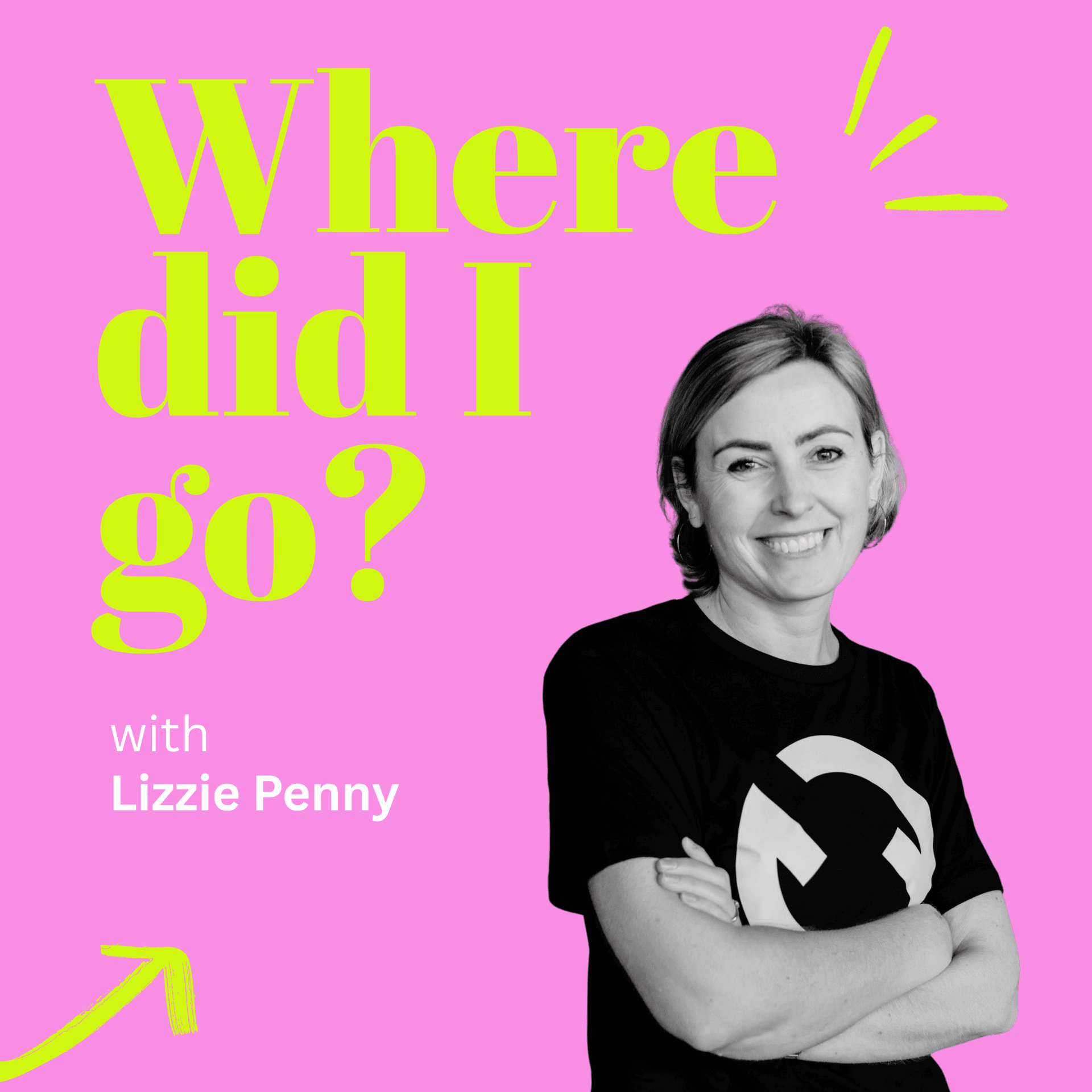
Lizzie Penny is a mum of three (11-year-old son; twin 8-year-old daughters), joint CEO/co-founder of Hoxby (B Corp/social enterprise) and co-founder of Workstyle Revolution (not-for-profit). She co-authored the Sunday Times bestseller WorkStyle.
Key claims
Inclusion must be intersectional; flexible working hasn’t closed employment gaps for structurally excluded groups. Work style requires output-based measurement, digital-first mindsets, and individualized/inclusive leadership. Productivity should be measured by quality, not time at a desk. Personalized autonomy can improve engagement and productivity (citing Gallup and Nick Bloom research).
Notable examples
Lizzie used work style during bed rest from twin pregnancy complications, during breast cancer treatment, and later while her husband also had cancer; she describes working from bed and using exercise to manage symptoms. She cites partner charities for seven excluded groups (e.g., Scope, Autistica, Mind, Carers UK, Working Families, Age UK, Astrid) and a Parliament roundtable showing overlap across groups.
Written by AI. May contain mistakes. Listen to the episode to check what was said.
Chapters
Tap a time to open that second in VOUnderstanding Workstyle: A New Concept
1:24 to 2:20
Discussion on the concept of workstyle and its implications for mothers in the workforce.
“to and we're really in for a good one this week.”
Personal Narratives and Intersectionality
2:20 to 4:36
Lizzie shares her background, emphasizing the importance of intersectionality in discussions about motherhood and work.
“For anybody who doesn't know Lizzie Penny, what do you do?”
The Need for a Workstyle Revolution
4:36 to 8:16
Exploration of why the traditional industrial work model is outdated and the need for a new workstyle.
“And in the digital age, there was a need to almost break with our immediate past, redefine not only how we work, but the language we use to talk about work.”
Reimagining Productivity in the Digital Age
8:16 to 12:00
Discussion about redefining productivity and how work style can personalize work for better outcomes.
“And one of the things we look at is excluded groups and the difference between the percentage of them who want to work and those who do.”
The Business Imperative for Workstyle
12:00 to 14:00
Arguments for why organizations should adopt workstyle for better productivity and employee satisfaction.
“And like, there's this sense of, you know, that time is not yours anymore.”
The Impact of Autonomy on Work Performance
14:00 to 14:40
Learn how autonomy in work style leads to higher engagement and productivity.
“when you look at how much attrition organizations see, it almost halves if people have autonomy over their own work styles.”
Personalized Productivity and Its Importance
14:40 to 17:13
Discover how personalized productivity fosters better well-being and engagement.
“autonomy to choose when and where they work.”
The Loss of Potential in Rigid Work Structures
17:13 to 19:21
Explore the potential lost when organizations enforce rigid work environments.
“I find myself extremely lucky to be in a situation where I get to design work around my life.”
The Birth of Workstyle
19:21 to 23:01
Hear the personal journey that led to the development of the workstyle model.
“That conviction doesn't come out of thin air.”
Navigating Personal Challenges Through Workstyle
23:01 to 25:56
Learn how workstyle provided support during personal health crises.
“And that was an awful anxiety-ridden time for me.”
Show all 22 chapters
Unlocking Potential Through Flexible Work
25:56 to 28:00
Understand how flexible work can unlock potential for individuals and organizations.
“You know, what about businesses if you've got a whole workforce that's only working three hours a day or whatever it might be, fragmented hours?”
Understanding Productivity and Diversity in Workplaces
28:00 to 29:10
Explore how productivity and diversity contribute to better organizational outcomes.
“to be at their personal productive best, you help them to continue to be financially independent, socially connected, live with purpose.”
Cultural Resistance to Change in Work Styles
29:10 to 31:08
Discuss the cultural barriers preventing faster adaptation to new work styles.
“I think there are two big reasons as we understand it.”
Organizations Pioneering Workstyle Changes
31:08 to 33:00
Learn about organizations and initiatives that promote new workstyle methodologies.
“Because I would say, you know, the people who have, as you alluded to, people who are in leadership positions were able to work within the parameters of a system that you're basically saying doesn't work.”
Shifting Mindsets for Workstyle Adoption
33:00 to 36:51
Understand the necessary mindset shifts for organizations to adopt workstyle approaches.
“What are some of the ways that you're helping businesses to kind of unlock the potential of work style?”
Addressing Structural Exclusion in the Workforce
36:51 to 40:00
Examine the challenges faced by structurally excluded groups in the workforce.
“So I think for us, a lot of the elements are not the structural change, but are the cultural change.”
Intersectionality and Workforce Equity
40:00 to 42:02
Discuss the importance of intersectionality in achieving equitable workforce outcomes.
“So in the book, we talk about seven groups who are structurally excluded and there are many more who are discriminated against.”
Intersectionality in the Workforce
42:02 to 45:36
Explore the importance of recognizing diverse identities in driving equitable outcomes in the workforce.
“One thing that we found really interesting is last year at the Houses of Parliament, we hosted a roundtable event with the CEOs of our seven partner charities.”
Embracing Complexity in Work Styles
45:37 to 46:46
Learn how viewing our identities as complex can enhance our work performance and relationships.
“I think that's our unique personal value.”
Practical Steps for Advocating Workstyle
46:47 to 49:17
Get actionable advice on how to start embracing and advocating for a personalized work style.
“Early on, Alex and I found this remarkable thing that we'd made up a word and we started using it.”
Connecting with Workstyle Revolution
49:18 to 50:49
Discover how to get involved with the Workstyle Revolution and contribute to its mission.
“Yeah, which is a good sort of entry point into, I'm sure there are a lot of people who would love to find out more about you and get involved with Workstyle Revolution.”
The Call for Fundamental Change
50:50 to 51:32
Understand that flexible working alone isn't enough; a deeper change is needed for individual success.
“So yeah, I just love to hear from people with their viewpoint on everything we've talked about today.”
Transcript
Automatic transcript. May contain errors.0:00Hello, hello.
0:01Lizzie Penny:Welcome back to Where Did I Go? So today I'm sitting down with the legendary Lizzie Huxby, who's an entrepreneur, campaigner and co-author of the Sunday Times bestseller WorkStyle to talk about how rethinking the way we work could fundamentally transform inclusion for mothers in the workforce. So the idea of work style is simple, but it's also radical. It's the freedom to choose when and where you work beyond flexibility. So it's not just flexible working. It's a complete reimagining of work designed to improve wellbeing, boost productivity, and finally include those who've been shut out by rigid systems.
0:39Lizzie Penny:We talk about what the idea of work style could mean for mothers, why inclusion has to be intersectional, and the practical steps both people, mums, and organisations can take to make change happen. We talk about what this could mean for mothers, why inclusion has to be intersectional, and the practical steps that women and organisations can take to make change happen so that they're not excluded from the workforce. Lizzie also shares the bigger purpose of driving the workstyle revolution and what a future of work could look like if we dared to rewrite the rules. If you've ever wondered what a world of work designed with real lives in mind could look like but struggle to imagine it, this conversation will open up a whole new way of thinking.
1:20Lizzie Penny:I am so excited to share this one with you. Lizzie is honestly one of the most engaging and inspiring people I've ever spoken to and we're really in for a good one this week. So let's dive in.
1:39Lizzie Penny:So we'll get into the nuts and bolts of who you are, but obviously I've had the pleasure of talking to you before now and just like right off the bat was like, well, I literally spoke to you, spoke about you, sorry, after our first conversation to my husband for like an hour. And I was like, she's just so engaging and exciting and interesting. And anyway, like fangirling aside, I'm just really, really happy that we get to have this conversation beyond the two of us and sort of share the work that you've been, you know, dedicating yourself to for a long time now to a wider audience because I think it's really, really, really important, which might be a good segue into who you are.
2:20Lizzie Penny:For anybody who doesn't know Lizzie Penny, what do you do? I'm going to start by saying that I'm a mum of three because that feels relevant. This, I've got an 11-year-old son and twin eight-year-old girls. I am the joint CEO and co-founder of two organizations. One is a B Corp and social enterprise called Hoxby, and the other is a not-for-profit called Workstyle Revolution. And essentially, what both of those organizations do is our vision is to create a happier, more fulfilled society through a world of work without bias. And it has been for more than a decade. And we seek to fundamentally reshape work to be fit for the digital age and specifically to close employment gaps through doing that.
3:08And we don't just seek to close employment gaps, we also seek to help everyone thrive at work, whatever their intersectionality.
3:17Lizzie Penny:So this idea of intersectionality is something that we're going to dive into much more in the course of this episode, but I'm really glad we've touched upon it already so far because one of the things that I've been really acutely aware of actually since I've done 11 episodes now, and they definitely tell a version of motherhood which is very white, which is very middle class, which is, you know, it's one dimension or multidimensional, but it's, you know, a certain experience of the world, which is largely a very privileged one. And I'm really aware of it. And I'm really happy that we get the chance to kind of dive into a bit more like how do we break some of those barriers down to start seeing things as more nuanced, more multidimensional than perhaps we're used to talking about things like working motherhood etc etc because everything about us influences the way we move through the world and so it's you know I just think a really important framework to build on.
4:12I think that's absolutely right and I think mass individualization is clearly a massive trend at the moment in all sorts of different ways enabled by technology and the digital age that we live in but a big part of that I think is about seeing each individual as a unique individual with all the messiness and joy that we each have and for us I think that's about work allowing each of us to personalize our work
4:40Lizzie Penny:to be at our best but also to accommodate life's shit fests you know and so my business partner Alex and I came up with this word work style which was really because we felt that work did not reflect us as individuals or anyone else as individuals. And in the digital age, there was a need to almost break with our immediate past, redefine not only how we work, but the language we use to talk about work. So the concept that you have developed is, as you've just mentioned, work style. What is work style? Because I think many people hearing it would be like, oh yeah, but I already work flexibly. You know, I can already start when I like or whatever.
5:18a sharp intake of breath.
5:21Lizzie Penny:Yes. Exactly. So that sharp intake of breath was exactly what I was hoping for. So what is workstyle and why is it so radical? So I think for us, workstyle is very distinct from flexible working. And I'll come back to that. But just to define what we mean by the word work style. Work style is really about freedom. It's about freedom to personalize your work so that it best fits around your life and your personal circumstances. And in the course of anyone's life, there will be challenges with the juggle of work and life for any number of reasons. And for us, we feel like there is a platform in the digital age to work in a fundamentally different way.
6:11And our feeling about flexible working is that flexible working, the four-day work week, hybrid working, all of those concepts are taking an industrial age model of work and tweaking it at the edges. So the nine to five, five-day-a-week concept was a product of the industrial revolution, the great social reformer Sir Robert Owen or Sir Bobby O, I actually have for anyone watching a poster. What was Bobby O do behind me? He was the first person to come up with this kind of groundbreaking concept of eight hours labor, eight hours recreation, and eight hours rest. And at the time, he was trying to create equality and social reform for the industrial age.
6:55But honestly, we think he'd be turning in his grave to think that here we are 200 plus years later, and the most inventive any of us can be is to come up with that same model of work, but just tweaking it at the edges. So for us, we don't like to be conflated with flexible working because for us, flexible working is not working for three reasons. I guess the first one is, it's flexing around that industrial age system. It needs that industrial age system to exist, which is not really relevant for the world that we live in, particularly with the rise of collaborative technology, platforms, AI, etc.
7:34Yeah. The second thing is it creates in-group, out-group dynamics. So still the prevailing way of working is roughly nine to five, five days a week. And anyone who works differently from that is seen as kind of special or different in some way. And so we need to kind of level that playing field rather than having this out-group who are allowed to do something different.
7:55Lizzie Penny:We need to fundamentally rebase the conversation. And then the third thing is that it's not creating change fast enough for any of the groups who we identify as being structurally excluded from work. I think flexible working is heralded as being this kind of modern day work when it's actually more than 70 years old. And one of the things we look at is excluded groups and the difference between the percentage of them who want to work and those who do. And those gaps are stubbornly not closing. If flexible working was working, those gaps would be closing and it's not. So we need to rebase and fundamentally start again looking at how we can work in a way that is fit for the digital age.
8:36And for us, that is personalizing work and we call that work style.
8:40Lizzie Penny:And I guess central to all of this, if you were to reimagine the industrial model of work, then you have to also reimagine how you measure value. So when we worked in factories, it was very easy because there were commodities that were produced and they were literally countable. So you could measure output in terms of things that you made. Now, of course, we work in service-based economies, which is much harder to quantify. And yet we still have this time-bound nature of us being these entities that produce without any ebbs and flows over the course of a nine-to-five shift. and that time is the measure of our productivity.
9:20Lizzie Penny:We worked for nine hours, therefore we had nine hours of productivity. And yet what I'm understanding as I'm diving more into the work style mindset is that your productivity is just as valuable if you work one hour a day or one day a week or whatever it might be, whatever fits your individualized need and your personalized set of circumstances that we need to start understanding how we measure that version of productivity as well, because it's just an entirely new way of thinking about the workforce. And an entirely new way of thinking about what is work as well, which I think is really fascinating.
9:58You're right, like the history of productivity, and I think I am personally fascinated by productivity in the digital age and what constitutes productivity. But productivity originates from products, the clue is in the name, it originates from how many products can you produce on a product line, which is no longer relevant. And so I think we moved, when we've started to become a service global economy, we moved away from productivity in terms of products and we just came up with productivity in terms of time because it was the easiest proxy for that. When really what we should be thinking about is productivity in terms of the quality of our work.
10:36Lizzie Penny:Yes. So, for instance, I go to the gym and swim three times a week. And I do that after I drop the kids at school before I start work. And for a long time, I used to say, well, I fit my work around my life, which means that I can go to the gym and stay healthy. And we can come on to talk about my personal kind of context and why that's so important for me. But I've now started to say I work from the gym three mornings a week because some of my most groundbreaking creative thinking and ideas happens when I'm in the pool or when I'm in the gym. And if we move our measure of productivity to be about quality of output rather than time spent, and we should note at this point that when we're talking about time spent, we're talking about time spent at a desk or in my office, even if it's at home.
11:27So I think there's this whole reshaping of the way that we perceive quality of work, the way we perceive productivity, and also the way that we talk about it ourselves. Because I think I am trying to lead a revolution in this area. And still, for the first eight years of doing this, I said, I don't start work till 10.30 on those mornings, which is just not true. I'm thinking about work from the minute I get to the gym or whatever it is. So I think it's a fascinating subject. We could talk for an hour on productivity alone.
12:02Lizzie Penny:It's really fascinating to me because I think what I'm, I've struggled a lot over my entire, like actually my entire life since I've been at university with this idea that you are kind of owned in effect by your employer, that they buy you and they own your time for the period of time that you're contracted for. And like, there's this sense of, you know, that time is not yours anymore. As if you as a worker and you as an individual are two things that you can separate from or disentangle from one another. And then when you grow up in that culture, then of course you're apologetic about the fact that life happens you apologize for all of the ways that you need to you know have some slack from work to make your life continue spinning could be anything could be your health could be your kids could be just that you are you work differently and you struggle to squash yourself into a box that is the typical norm or whatever that is.
13:02Lizzie Penny:And so we are brought up to diminish our well-being and our personal needs in pursuit of like a kind of corporate needs. And that's just always been something that I've struggled so much with ideologically that we have to refine the balance where it shouldn't be revolutionary to talk about well-being or like human worth as being something that is valuable to both businesses and society. Yeah. And I think that also what you're saying there is we all presuppose that if you give yourself up to your employer, that is better for you and better for the employer. Or even if you know it's not better for you, the presumption is it's better for the employer.
13:46And I think we now know that that is simply not true. There is so much data to show that autonomous personalized work makes people more productive. When you look at the thing that attracts people to organizations, when you look at how much attrition organizations see, it almost halves if people have autonomy over their own work styles. You triple engagement, according to Gallup, if people have some sort of control over their own work style. And research from Nick Bloom coming out of Stanford is the only so far research to show that you're 22 % more productive. So there is a business imperative here.
14:26There's a source of competitive advantage in how organizations work. And we spent the last 10 years essentially experimenting with work style working and working with big organizations, but delivering our consultancy work through an entirely dispersed workforce who have complete autonomy to choose when and where they work. And I think what's interesting is that at the start of that journey, we thought this was quite a benevolent thing to do. We thought it was something creating social change and that helped people to access work who otherwise wouldn't be able to. And don't get me wrong, social change is still at the very heart of everything that we campaign for.
15:05But I think one of the things that is now more widely understood and certainly no longer refuted is that personalized productivity can transform organizations. And we have a proprietary model that we spent the last 11 years developing at Hoxby. And at the heart of that is about personalized productivity. It's about how you can balance your responsibility to yourself, understanding how you're at your most productive and how you want to work with dependability to others and to an organization or an employer or clients. And really it's in the balancing of those two that you find this productivity utopia but also better well-being a better engagement with those around you with your family and better mental health so there are lots of different aspects that we think are really important in the coming together of your responsibility to yourself and your dependability to others that affect performance as a whole organization as well as
16:04Lizzie Penny:your personal performance yeah my day job is researching all kinds of different aspects around the field of life at work and the future of work. And we see this time and time again, like the better that people feel at work, the better they work. It's just a fundamental truth that we need to accept as being, you know, it's really frustrating to be honest, to sit on the sidelines and see businesses, huge businesses who honestly should know better say things like, we just work better when we're in the office, when everything points to the opposite. If that's the case, what they haven't achieved is the framework to make people successful with more individualized ways of working.
16:44Lizzie Penny:Because the fact of the matter is, it shouldn't be the case that we're all better when we're sat nine to five in an office five days a week, because that's not what the data shows. And Dani, if I'd had to work nine to five, five days a week, I would not be in work because of my personal circumstances. So even just with a sample of one, I probably wouldn't be in the workforce. And I believe I have good things to bring to the workforce. So, you know, there are people who would be structurally excluded because of their circumstances if that was the way that everyone worked. So I want to circle back to your story, but just very briefly before I do that, I think what you've touched upon there is perhaps, for me at least, the most important part of all of this is there is so much lost potential that drains out of the workforce when you make it impossible for people to engage meaningfully in work by creating these rigid structures around what work is.
17:41Lizzie Penny:I find myself extremely lucky to be in a situation where I get to design work around my life. But as you rightfully pointed out to me earlier today, and I'm happy you did correct me there, like it shouldn't be a privilege because what I bring to work, if my work didn't have that contribution. Not to toot my own horn because I'm nothing special, but I definitely add value. And if you only have a certain type of person who can fit a certain set of structures within the workspace, then you lose so much diversity of thought. And that can only be a bad thing. I think that is so true. And you are special, firstly.
18:23And everyone is special because we bring diversity of thought, we bring collective intelligence when we're all allowed to thrive in our own way. But also the context where you and I were talking about that was because you were looking after your son who was not well. And so it's not just about adding value at work, you were adding value to society by giving the care that was required for your family. And so I think this goes back to the point of reframing the way we think about it. And you talked about the talent that's excluded from the workforce. I would talk about the talent, the amazing talent that we have seen included in the workforce through Hoxby and Workstar Working.
19:02I am constantly surprised by the unbelievable talent that organizations knowingly exclude simply because they don't have Workstar Working and they won't give people the freedom to personalize their work. So there's a huge business opportunity there.
19:20Lizzie Penny:I want to talk about some of the businesses that you've worked with and some of the things that you've seen. But before we get there, there has to be a story of how work style was born, because I can't believe that something that feels so fundamental in terms of an ideological belief system that you are, as you call it, it's a revolution for you. That conviction doesn't come out of thin air. So what led you to this belief in work style and developing the model? I'll go back to the start and work style comes in somewhere along the middle. For me, it was when I had my first child, my son Finn, who is now 11, that my eyes were really opened to the enduring inequalities at work.
19:59And I am now, in hindsight, embarrassed to say that until then I was relatively unaware of inequalities at work. I had a really equal relationship with my husband. We had equal careers. And suddenly, when I had Finn, overnight, that just changed. And I know that you've talked about this before on the podcast, but for me, I had an identity crisis at that point. I went from being Lizzie Penny, entrepreneur, credible businesswoman, someone who people listened to, wanted to hear my respected opinion, to overnight being mum. I remember distinctly the midwives coming in to check on how we were going and saying, and how's mum?
20:46And I felt like saying, I have a name, like, and I have a brain. And there's a whole lot you could go into behind the challenges and wonderful joy of having a newborn child. It's such a mixed ball of emotions, let alone hormones. But I think for me, one of the things that created that real identity crisis was that my relationship with work was expected to simply stop. And I love my work, but I also work for myself. So maintaining that continuation of work was something I had a really vested interest in. So I went from wanting to work in the way that had previously suited me to suddenly really wanting to work during nap times or in the evenings.
21:34Lizzie Penny:I didn't want to work very much. Of course I didn't. And I didn't want to have to ever give up time with Finn to work. I love being a mom and I continue to adore being a mom and it's a great privilege and brings me so much joy. But I still think being able to let people access work on their terms can fundamentally change how people engage with work, but also their financial independence, their mental health, all sorts of other aspects. So anyway, that experience led me to a conversation in the pub with Alex, who is my business partner. He had recently been through burnout. So for him, he'd been on quite a different journey.
22:14But what that led to was a conversation about how the world of work should be different in the digital age. And he had had a long commute to work. He'd given all he could in terms of time. But what he found was that didn't necessarily pay back. So he really came to the conversation wanting to redefine his psychological contract with work. And I also wanted to fundamentally redefine how I worked. So it's one of those funny conversations where you start off with a rant and by the time you leave the pub, you think you're going to change the world. And here we are 11 years later, and we're still very much on that journey.
22:55But for me, the value of work style really came to the fore after we had come up with the word work style and after we had started Hoxby to test the concept because I had some serious complications in my second pregnancy with my twin daughters, Zoe and Megan, that meant that I had to have surgery at 23 weeks followed by nine weeks of bed rest. And that was an awful anxiety-ridden time for me. And being able to work from bed during those nine weeks with only a select few people knowing about my personal circumstances was totally life-changing. It was a welcome distraction, you know, so that I wasn't fully focused on the anxiety.
23:41It was a world to escape into during those long anxiety-ridden days on my own. But also it allowed me to still preserve that sense of my identity, whatever else was going on, all the turmoil. So against the odds, both our daughters survived, I am glad to say. And the day that we brought them home from hospital and could not even begin to fit a double pram through the front door of our London flat, we kept it in the car for a year. We decided it was time to move across the country to Bristol, which was something I was able to do with no disruption whatsoever to my career because I
24:16Lizzie Penny:was working in a work style way. And then fast forward to 2020 and out of the blue, I was diagnosed with breast cancer. So that again, turned my world upside down. And again, work style working was my outlet, escaping into that digital working world to contribute as much or as little as I felt up to that day or that week. And it really helped pass the time in the chemotherapy chair. It really helped the cancer diagnosis not to define me. But probably for me, the biggest benefit was that it helped to stop the cancer diagnosis from completely taking over my head, because I'm an overthinker anyway.
Read the full transcript
24:55And it just gave me somewhere to take my brain that was a stable, intellectually stimulating, non-cancer related world. So I kind of can't quantify to you how valuable that was to me at that time. And since then, almost unbelievably, my husband has been diagnosed with cancer. So now I actually fit my work around looking after him through his treatment, staying healthy myself and trying to manage the side effects of my medication. I talked earlier about going to the gym in the mornings. I have a lot of intense nausea in the mornings and going to the gym and for a swim helps with that. And also looking after three extremely energetic children and everything that comes with parenting and motherhood so for me work style is not a privilege it's a necessity it's the way that I work I am able to work and I think I have a lot to give to the working world and without it I wouldn't be here having this conversation with you
25:56Lizzie Penny:so um yeah firstly thank you for sharing your story because yeah wow I mean how many um how many bricks can you throw at someone that's really quite I don't but it's not the moment really to do you know what though Danny like shit happens to everyone is my like you know I I'm not special yeah a lot of shit happened to you though I'm not I did feel like we had a bit of a run of it and there were a few other things going on at the same time but yeah to say the least but I do think that when you dig beneath the surface and I talk about my story a lot and what's really interesting and you've talked on the podcast before about vulnerability and how if you're vulnerable other people are vulnerable back and I think what's really interesting is that actually when you scratch beneath the surface everyone has something really everyone has something going on and that means that work style is of benefit to everyone if they can adopt it so I think to any naysayers who are like, oh, well, that sounds great.
26:58Lizzie Penny:But like, what about business? You know, what about businesses if you've got a whole workforce that's only working three hours a day or whatever it might be, fragmented hours? I would just urge them to look at the monumental, despite if you could have stopped working right after Finn was born and the things that you have achieved in the 11 years since then, is it 11 years? That's right. Yeah. 11 years since then, the fact that you are effectively driving social change. So you're not just like influencing business outcomes, you're driving a rethink about how we should live. You've done all of that in those pockets of time when you were most productive, when you were most able to bring your best intellectual self.
27:38Lizzie Penny:So work style works, because if you are, as you called it before, you know, a case of one, I would hedge my bets on it being an effective model. Because if all of that had have been lost, because you were shut out of being able to work at all, then what a waste. Yeah, and what a powerful concept it could be to unlock potential the world over. If you can multiply that, you not only support people to be at their personal productive best, you help them to continue to be financially independent, socially connected, live with purpose. You bring them into a happier community. Also, you're creating organizations organizations where individuals are more productive, whereas at an organizational level, there is better collective intelligence because you have better diversity of thought and better integration of those diverse people.
28:27There are essentially all the theory. And we found this when writing the book. The book was enlightening in this. We talked about this for a long time, and then we wrote the book. And the book is not boring, hopefully, you'll agree, Danny, but it has got 600 references. So it is all substantiated by data. And what we found is actually, this is a thing, like everything you look at substantiates this. So one of the things I'm really curious about is why, if all the rational explanation is there for us to work in a work style way, why aren't we changing? Or why aren't we changing fast enough? Why are there really embracing work, still working and running with it.
29:10Lizzie Penny:And what's your take on that? Why aren't we? I think there are two big reasons as we understand it. One is that this is not just about a new structure of work. This is about a new cultural approach to work and a new attitude to work. And that actually changing culture takes purposeful effort and takes time. yeah and i think the second thing is that there are so many people in the world for whom they have a burning platform to want to change to this way of working but actually the people who have risen in the previous world of work to leadership positions now tend not to be those people because those people have not been able to rise to positions of leadership yeah that's a mass generalization there are some amazing leaders who are working with us to create change but i think on a wholesale level, the reason that, because you could argue that if this worked, markets would have adopted it.
30:08But actually, that hasn't happened because I think of the cultural side and of the leadership and the role models that we are lacking in senior positions in organizations to say, no, we need to work differently to include everyone.
30:24Lizzie Penny:It takes a very special leader to stick their head above the parapet and be like, I'm going to do something different here. And for leaders to do that en masse requires a coordinated attention. It's just, like you say, it takes time. If I think about the cycle of politics, for example, you can't do anything within a four-year window of time, really. And if it's like you're constantly swinging from one belief system to the next, then you're just stuck, like never doing anything in any direction, really. I think I've had to rebase a little bit over the last 11 years. Like in that conversation in the pub with Alex, I think I thought we'd have changed the world by now.
30:59Like I really, particularly with the pandemic and then with the book becoming a number one Sunday Times bestseller, there have been a number of times where I've thought, this is it. It's just going to run by itself. And I think maybe we are getting to that point, but it's amazing how many late nights or not late nights, I mustn't use a time reference, but it's amazing how much graft it takes, how many individual conversations to create change of this magnitude and change in terms of attitude like this.
31:31Lizzie Penny:Yeah. Because I would say, you know, the people who have, as you alluded to, people who are in leadership positions were able to work within the parameters of a system that you're basically saying doesn't work. So they've got no incentive really to make it easier or better for excluded parts of the workforce to thrive. And so when you have that, as you call that lack of diversity of thought and that lack of diversity of perspectives, then businesses would be better and would thrive more if they opened up the workforce to totally underrepresented groups of people. But they're not doing that because they're not seeing it.
32:09Lizzie Penny:And they're not seeing it because they're one very specific type of worker that fits one very specific type of work. So it just goes to show it's like a self-fulfilling prophecy, isn't it? I think that's right. And also, you know, one of my favorite references from the book is that mothers of two children are the most productive members of the workforce. You, essentially, Dani. Yeah, I can attest to that. And mothers of three children are second. So, me. I think it's really interesting that actually, mothers, for example, have the best personal productivity of anyone because we have to, because we don't have a choice.
32:50So what if you could apply that to all sorts of other groups and how much difference would that make?
32:55Lizzie Penny:So talk to me a bit about some of the businesses or organizations that you've worked with. What are some of the ways that you're helping businesses to kind of unlock the potential of work style? So essentially we have two organizations. So Hoxby is a ways of working consultancy and WorkStyle Revolution is a not-for-profit. it. So Workstyle Evolution looks at creating social change, maximizing the impact that workstyle working can have. And through there, we have Workstyle Academy, which is a very low-cost entry point to learn about working in a workstyle way. And we also have the Workstyle Pioneers Program, which is partly grant-funded, which looks at helping organizations and individuals to pioneer this way of working in practice.
33:41So essentially that's creating pilots. We also seek to inspire and showcase organizations and leaders who are doing this really well, for instance, through our WorkStyle Awards, which we've got coming up in October. So for us, that's really about leading the conversation. We also work to try and support the UK government with understanding how they can be more progressive in their thinking. Yeah. And in various other ways through just basically making a noise and being a bit disruptive, which we do enjoy from time to time. Through Hoxby, what we do is we've really codified the approach any organization needs to have in order to adopt work style working for the benefit of the organization.
34:26And so we look at what are the organizational enablers that you need to have. For instance, a digital first mentality, output-based measurement. Then we look at inclusive leadership. And we don't mean inclusive just in terms of excluding specific groups. We really mean individualized leadership. So leading a workforce with mass individualization as a mindset. And then we train in the skills that we think are required for personal productivity. And that includes self-understanding, self-motivation, self-confidence. So a whole half of that part of the model is based on responsibility to yourself, knowing yourself.
35:06And I've heard you talk on the podcast before about feeling confident to ask for what you need. But there's almost a step before that, which is having the headspace to work out what you need. Yes. And then with the Huxby model, we ladder all of that up to performance. So how does that actually help the organization to achieve its goals? And there have been some organizations that we've seen that already are absolutely leading the way in doing this. The charity Scope are amazing in terms of ways of working. The same with Zappy, Evenbreak, who are a disability recruitment charity. Lots of organizations are doing this.
35:46And so I think a lot of what we do is help support those who are on that journey, but also help showcase them so we can help inspire other organizations to work this way.
35:56Lizzie Penny:When you're starting to have conversations with businesses, what's the biggest resistance or the biggest things that people are resistant to when they start imagining a future of work style within their organization? I think one of the mindsets that we're working to really shift is that people think this is the future of work. Alex and I are speakers as well, and we are almost always booked for speaking events to talk about the future of work. And this is not the future of work. This is now. You know, for those organizations who adopt this, they get first mover advantage because you can implement this right now.
36:35And so I think where there's senior leadership thinking about ways of working, too often that is handed to an HR team as an HR question rather than recognized as being central to an organization's performance and competitive advantage. and I think partly the pandemic is to blame for that because during the pandemic lots of organizations moved to this way of working and did it overnight so they took a lot of the culture and a lot of the behaviors straight from an office environment into a digital environment when actually what work style working requires is to rethink what does leadership look like in a remote world what does culture building and team building and how do you move everyone towards a shared purpose so they feel a true sense of belonging in achieving that.
37:27So I think for us, a lot of the elements are not the structural change, but are the cultural change. That said, I think one of the biggest barriers is that people think this is too scary. We used to talk about the freedom to choose when and where you work. If you read the book, that's how we define work style in the book. And I think that level of freedom is really scary to organizations to move from the control that you talked about at the start and that parent to child relationship between an employer and an employee to move to an adult to adult relationship feels like a huge step. So through Hoxby, a lot of our consulting work is about freedom within a framework.
38:07It's about understanding what is the framework that works for that organization and then how can you facilitate everyone thriving and being at their personal best within it by training in the right skills to empower those people to deliver their work at their personally productive best.
38:24Lizzie Penny:And that culture piece is just so important because, again, it's not about adopting 200-year-old models to sort of somehow make them fit the way that we live today. It's about fundamentally rethinking what work is and how we work and designing around that and designing really from the ground up because it does require a totally new way of teamwork, a new way of collaborating, of sharing knowledge, of being together as one unit that is working towards a shared goal, but on our own terms, in our own way. I think as well, there is something around, we talked about this outside of this call, but we're hurtling towards a future of work that will be like inherently asynchronous because when AI is really driving the vast majority of the decisions we make and is actually making decisions on our behalf and is doing stuff in the background and we're kind of coordinating or orchestrating intelligence, our role, it makes no sense for that to be time-bound when the technology that's driving the way that we work will be totally timeless.
39:31Lizzie Penny:So we're hurtling it towards a reality where we're going to need to adapt. And it just makes sense that that happens now before we're at the cliff edge and we've fallen over the edge and we find ourselves in another pandemic type situation when we're suddenly at home with no framework to thrive and we've just suddenly transported what we did in office into a home environment without anything else changing like it's going to fail so the time really is now I think that's true I also think there's a social burning platform which is those people who are structurally excluded. So in the book, we talk about seven groups who are structurally excluded and there are many more who are discriminated against.
40:15But those are disabled people, people with a mental health challenge, carers, those who are neurodivergent, people who have a chronic illness, people who are aging and parents. And actually, when you look at parents and particularly mothers, they transcend all those groups disproportionately. So there is a conversation here, which is, yeah, those seven groups are structurally excluded. But also, what is the gender disparity that disproportionately affects women across those groups? You know, women are the majority of unpaid carers. There is a motherhood penalty through not having widespread adoption of work style working but also for women there's mental health there are more diagnoses for mothers as a stigma there's a lack of workplace support and even for neurodiversity you know there's an under diagnosis there's more masking and there are lack of accommodations for women so I think there's a complicated conversation here but it's really important if we're to maintain and encourage diversity within the workforce and if we're to ensure economic activity at its most fundamental level that we are keeping people in work.
41:28We need to change how we work so that we are starting to close those gaps and recognize that we now have a way. It's been really hard having to make workplace adjustments previously, but now the workplace is anywhere. So it's not about adjustments. It's about just personalizing it for everyone in the first place.
41:45Lizzie Penny:This is really a kind of nice entry point into this idea of intersectionality and how so much of that drives what you do because you can't really think of a person as being you know one category of things it's you know we're many things all the time and it's depending on which category of things combination of category of things you fall into you may be disproportionately disadvantaged than others how have you seen or can you give any more nuance to that like why is it so important that we consider the you know the whole the all of the different ways that we appear and exist in the world in driving more equitable outcomes within the workforce?
42:23One thing that we found really interesting is last year at the Houses of Parliament, we hosted a roundtable event with the CEOs of our seven partner charities. So I talked through the seven excluded groups and we partner with a charity for each of those, Scope, Autistica, Astrid, Mind, Carers UK, Working Families, Age UK. And we brought the CEOs of those charities together to host this roundtable to talk about intersectional inclusion. And the thing that struck me above all else was that it was the first time those seven people had got in one room to talk about this, even though they all campaigned for closing employment gaps for their specific group.
43:04And when we had that conversation, there was so much recognition of overlap between, you know is complex to map and we have looked at that but I think it starts with just an understanding that you know I for a start transcend more than half of the groups so do so many people and therefore supporting people who have chronic illness into work may well overlap with supporting people who have mental health challenges into work so we see every day through the work style community which is a free and open community for anyone who's just interested in work style working or wants to support what we're doing we see and hear from people who have a number of reasons why they shouldn't be able to work but have found a way through personalizing their work so again there's this big kind of anecdotal experience of people for whom yeah they don't want to categorize themselves and you know i feel uncomfortable calling myself a carer like my husband's not completely incapable of doing things but technically I am a carer yeah technically I have a chronic illness at the moment because of the medication that I'm on and the side affairs and none of us like to like label ourselves in that way but that's partly because I'm so much more than that I am a complex individual and I don't want to have that reductive label.
44:33So yeah, I think that again, Alex and I like to play with language and invent words like work style, but I think we need a whole new language around intersectionality to allow people to say who they are in ways that aren't stigmatized and don't attract discrimination.
44:52Lizzie Penny:Yeah. And you put your finger on it there and they aren't reductive, like we are complex and that requires complex problem solving to actually do something about the problems that are you know inherently that have inherently existed in the way we live our lives like you say if flexible working has been around for 70 years and if it was going to help those excluded groups it would have done by now but if we try and implement small or very narrow solutions to fix you know a problem people who are challenged in the workforce because they may be affected by caregiving responsibilities, to take one example.
45:30Lizzie Penny:We completely lose sight of all of the other things that are going to create that complex soup that we're swimming in, which is life. It is life. And that's the joy of it. That's the beauty of it. But it's also the challenge of it. So it does require nuanced thinking. And we shouldn't apologize for that. No, exactly. I think that's our unique personal value. I think part of the reason why I'm always keen to share my story is not only to connect with people and hear their stories, but also because I think it makes me who I am. You know, yeah, I'm messy. But because I'm messy, I care more. I'm more connected to my work.
46:05I'm more determined to make change. So I don't think it's as simple as apologizing because, you know, you have to go to the school play. We should be able to proudly say that we want to go to the school play. And when I'm back at work this evening, after my kids are in bed and I frankly don't go out anymore, then, you know, I'm going to do some brilliant work. So I think there's a whole element of our sense of identity and the way we view ourselves and permission to break out of that parent-child relationship with work and with employers and be able to proudly say, all of these things make me better at my job, not worse.
46:43Lizzie Penny:Love that so much. okay well i'd like to just wrap up just kind of tying back to i think most of the people listening to this will be working mums and they might be listening to this thinking i'm really inspired this sounds amazing but what do i do like what practical steps can i take right now to start either pushing for work style or at least shifting their own mindset i think the first thing is just try using the word work style in a conversation. Early on, Alex and I found this remarkable thing that we'd made up a word and we started using it. People would use it back to you in the same conversation.
47:22And we thought, that is amazing. That shows you that there's a missing word here. And I think because it's based around you have a lifestyle, why shouldn't you have a work style? People understand it. So the one thing I would say to do is just try using the word work style. the second thing I would suggest to people is that they sit down and they actually think what is my ideal work style right now and you know my work style changes every three months because something else happens and I have to change it but it's very much a living thing but the way to start is to sit down and think what do I need to be my personally most productive and I don't just mean productive at work I mean to thrive in all aspects of my life and then I think you can start to take baby steps in advocating for yourself having the conversations you need to even just sharing it with a friend so that they can help hold you to account for yeah articulating your needs yeah so I think those are the most important first steps
48:20Lizzie Penny:and I would say that's especially that kind of personal awareness and really having a strong belief in your worth, your value, your needs, your desires right now is so important because we live in a really troubled economy where I think it's an employer's market, if you like. Loads of people are scrambling for jobs and employers are basically finding themselves in the unfortunate position of being able to be a bit more demanding of their workforce and giving less movement in terms of what they will and won't allow. And so I think it needs to be a bottom up. I think that the work you do is so important at driving that change at a very structural level.
49:01Lizzie Penny:But also, I think there has to be a kind of grassroots element to this where you have a workforce that is demanding work style. That pressure also needs to exist. I would also add that if there is anyone listening to this podcast who is a leader and who is in support of what we're doing, perhaps already working in a work style way, just not calling it that or you are calling it that. we are a not-for-profit at Workstyle Revolution and the more support we can get the more change we can create so if there are leaders or organizations or brands that want to align with what we're doing and be a part of what we're creating then that is the other way that we can create great change is by partnerships with organizations that are seeking to create the same change in the world or perhaps just individuals for whom they care about this passionately and are happy to lend their voice to what we're trying to do.
49:54Lizzie Penny:Yeah, which is a good sort of entry point into, I'm sure there are a lot of people who would love to find out more about you and get involved with Workstyle Revolution. Where can they go to find out more? So firstly, connect with me on LinkedIn. I'm Lizzie Penny and I'm only on LinkedIn. I came off other social media when I was diagnosed with cancer and I've actually found, I haven't gone back onto it. So LinkedIn is where I'm at. WorkStyleRevolution.com. You can see our manifesto. You can join our free Slack community. And of course, the book WorkStyle, A Revolution for Wellbeing, Productivity and Society is available from all the bookshops and also from Amazon if anyone wants to buy from there.
50:34The other thing I would say is I'm always interested to hear from people, whether they agree with us, whether they strongly disagree. Some of my favorite conversations have been with people who don't believe in this. I will take anyone on and persuade them to my perspective. So yeah, I just love to hear from people with their viewpoint on everything we've talked about today.
50:55Lizzie Penny:So please do get in touch. And just one last thing, if you could reduce everything that we've talked about today to one message, what would you love everyone who's listened to this to take away from this conversation? I'm better at writing 80 ,000 word books and I am reducing everything down into one sentence. But I think the key thing for me is that we need change and flexible working is not the answer. It's not enough. We should be campaigning for more fundamental change through which we can really personalise work so that each individual can thrive in the way that suits them best. Lizzie, you've been absolutely amazing.
51:35Lizzie Penny:Thank Thank you so much for your time today. This is the third time we've spoken now. And I feel like every time I just feel more inspired and so kind of confident in what you're doing and really just feel very, well, inspired is the word. I'm glad that you have so much confidence in me, Dani. When I'm lacking in confidence myself, I'll think of that. Well, there's confidence of plenty here, I promise you that. Thank you so much for having me. It's been a pleasure to talk to you as always. Of course, it's been such a pleasure. Thank you. Thank you.
52:40ρόachsen
From the publisher
As working mothers, we're told that flexible working is the solution. Work from home two days a week. Do compressed hours. Start at 10am instead of 9am. But if these solutions actually worked, why do we still feel like we're constantly drowning? Why are we still apologizing for our lives? Why does the motherhood penalty persist?
Flexible working has been around for more than 70 years, yet employment gaps for mothers aren't closing. We're not failing...the system is.
In this episode, I sit down with Lizzie Penny, mother of three and cofounder of the Workstyle Revolution, a charity on a mission to create a world of work without bias. Lizzie's story is a masterclass in why we need to stop tweaking the edges of an outdated system and start demanding something entirely different.
Lizzie introduces the concept of "work style"—NOT flexible working, but a fundamental reimagining of how we measure value, productivity, and contribution in the workplace. She explains why mothers are actually the most productive workers (yes, there's data!), why you shouldn't have to apologise for going to your child's school play, and how the complexity of our lives is our superpower, not our weakness.
This conversation will change how you think about your worth at work and give you the language and permission to start advocating for what you actually need to thrive, not just survive, as a working mother.