Ask ChatGPT

 Wild Ideas Worth Living
17 Jun 2025 · 28m · 15 chapters
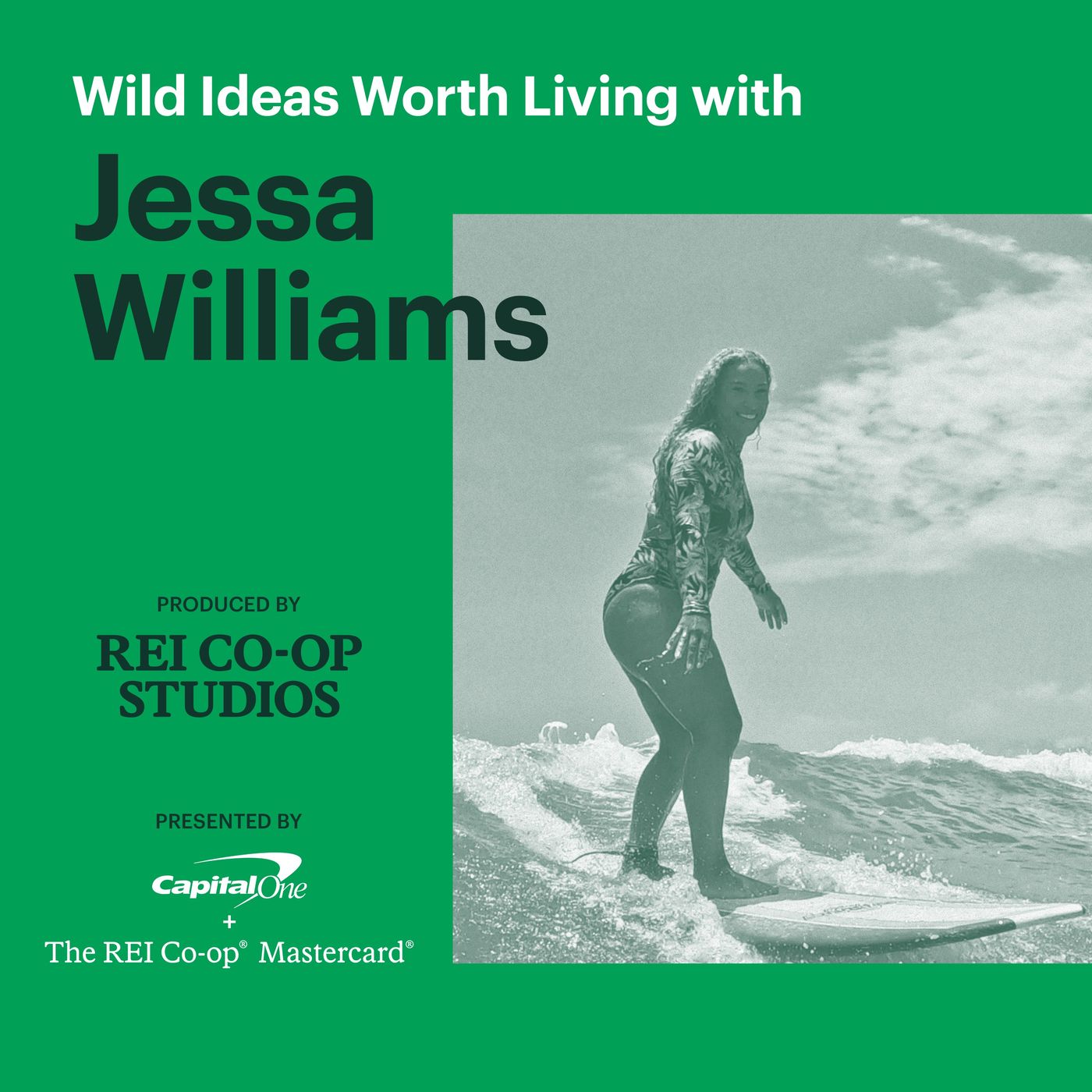
Jessa Williams’ journey into surfing and how it led her to create Intersection Surf, a Los Angeles women-of-color surf collective that builds confidence, vulnerability, and community.
Jessa Williams is a Black woman who learned to surf in 2020 after her son Marcello pushed her into lessons during the pandemic. She previously worked in tech marketing and later became a full-time organizer/filmmaker; she also met her partner, big-wave surfer Traylon Michael, through surfing.
Surfing teaches self-trust because you can’t be “saved” when the wave comes; it slows an overwhelmed brain and helps people process vulnerability and emotions. Intersection Surf provides safety after harassment and offers free first lessons and borrowed gear.
A racist harassment incident in the water sparked Intersection Surf (named for intersectionality). Her first meetup drew 100+ attendees. She describes students “coming apart” emotionally in the ocean, and mentions her award-winning short film Moving Mountains about Traylon’s mental health transformation.
Written by AI. May contain mistakes.
Discover how surfing shaped Jessa's confidence and life choices.
“I've been surfing since I was 11, and the sport has had a huge impact on my life.”
Jessa shares her background and the path that led her to surfing.
“I am so excited to be here and chat with you today.”
Jessa recounts her first surf experience and the challenges faced.
“And I got into surfing in 2020, because 2020 was the pandemic, everything was closed, my son's activities and sports were all shut down because of the pandemic, but it was safe to be outside.”
Explore how surfing became a refuge for Jessa during the pandemic.
“You know that feeling that you have when you're a kid and you're doing whatever, anything, something on your bike or a handstand in the swimming pool or whatever, and you don't get it right.”
Jessa discusses the empowerment she felt while surfing with friends.
“And now you're spending a lot of time in the ocean.”
Jessa shares her memorable surfing moments and the joy it brings.
“The three of us had all taken lessons, but it's just a different experience, right?”
Jessa shares her memorable surfing moments and the joy it brings.
“Every year, Capital One and the REI Co-op MasterCard program proudly donate$2 million to the REI Cooperative Action Fund.”
Jessa explains the motivation behind founding Intersection Surf.
“Jessa Williams learned to surf during the pandemic, when her son begged her to get in the water with him during his own surf lessons.”
Learn how Jessa Williams created a surf collective for women based on intersectionality.
“And so I think about six months maybe after that altercation happened, I created Intersection Surf and the term intersection being a play on the word intersectionality, right?”
Explore how Intersection Surf fosters friendships and combats loneliness among women.
“For Intersection's first meetup, Jessa invited people to join her at a beach south of Santa Monica.”
Discover the transformative emotional experiences women have while learning to surf.
“It's a very humbling experience to get to work with people in the water like this.”
Learn about the impact of surfing on Traylon Michael's life and mental health.
“Jessa has also felt and seen the effects of surfing firsthand for herself, for the women she teaches, and even for her boyfriend, Traylon Michael, who she also met through the sport.”
Understand how surfing has opened new opportunities and self-actualization for Jessa.
“And dating big wave surfers pretty interesting.”
Discover how surfing contributes to personal growth and resilience.
“you to do that or you're going to get knocked on your ass.”
Get insights into the production team and how to support the show.
“To keep up with Jessa, check her out at J underscore Bella on Instagram.”

Get the gist, explore an idea or ask about something said.
 Claude
On Wild Ideas Worth Living, what are the key points of this episode?
Searching your listeningAutomatic transcript. May contain errors.
0:02I've been surfing since I was 11, and the sport has had a huge impact on my life. In my 20s, I worked as a surf instructor, and I even met my partner Johnny in the water in Costa Rica. The courage I've gained from surfing has helped me in so many parts of my life, including taking the leap to pursue a career as an adventure journalist. Surfer Jessa Williams shares a similar journey, except she learned to surf just five years ago. after taking her son to his first surf lesson. The sport has been a catalyst for Jess to build a new community and to become more vulnerable, both in and out of the water.
0:41Jessa Williams: One thing that's so great about surfing is that it teaches you to trust yourself. Because no matter what, I can be right there next to the girl that I'm teaching and I can say, okay, this is the timing, this is the body positioning you need. Like when the wave comes, you have to do it and there's nothing I can do for you in that moment. And I think that's what leads to like the experience being so empowering for so many of us. Jessa Williams is the founder of Intersection Surf, a woman surf collective based in Los Angeles. For Jessa, the ocean is a place where she gets to disconnect from her busy life and empower other Black women.
1:24It was only a year after she learned to surf that Jessa launched Intersection. But since then, she's taught hundreds of women of color to ride waves. I'm Shelby Stanger, and this is Wild Ideas Worth Living, an REI Co-op Studios production presented by Capital One and the REI Co-op MasterCard.
1:47Jessa Williams: Jessa Williams, welcome to Wild Ideas Worth Living. Shelby, thank you so much. I am so excited to be here and chat with you today. So you have this beautiful surfing community, Intersection Surf, and you're a surfer. But when you grew up, did you ever surf? Did you have anything to do with the outdoors? That's a great question. No. My experience in the outdoors growing up was pretty limited. I live in L.A. now, but I grew up in the Midwest in Cleveland, Ohio. and Cleveland is a lakefront city. So we had Lake Erie. Sometimes we would swim at the beach at the lake in the summer, but that was pretty much the extent of my outdoor exposure, I guess.
2:33Jessa Williams: So how did you get into surfing and why LA? Like, how did you come out to LA? I was just like the girl who always wanted to live in LA. And so I didn't make it out here until 2018. And I got into surfing in 2020, because 2020 was the pandemic, everything was closed, my son's activities and sports were all shut down because of the pandemic, but it was safe to be outside. And I put him in to a surf lesson. Because I saw that like, here in LA, the kids out here learn how to surf when they're really young. And he did it. And the second time that he went back for another lesson, he like bullied me into doing it with him.
3:19Jessa Williams: He was like, do it with me, mom. And I was like, no, I have no desire to do that. Like, I'm good. And he just persisted and persisted like, no, no, no, no, no. I want you to do it with me. Like, just try it. Just try it. What's your son's name? Marcello. Marcello. I love that Marcello bullied you into doing it. So then what was it like when you finally surfed? How did he get you finally out there? Well, like I said, he really had to like pressure me into it. And then I just gave in because I was like, okay, I'll do it like because of Marcello. Cool mom. What can I say? I'm not a regular mom. I'm a cool mom.
3:58No.
3:58Jessa Williams: So whatever. I gave in and I put on the wetsuit. And I remember walking out towards the water and thinking, well, now that I am going to do this, how hard could it be? I was an athlete my whole life. I grew up being a very serious gymnast. So I'm like, I'll have great balance. I'll have great body awareness out there. How hard could it really be like, and then famous last words, right? I was humbled immediately, immediately, right? As the ocean has a way of doing. I, on the first time I tried to pop up, popped up just like a gymnast would and threw my arms up in the air, like I was sticking a landing or something.
4:42Jessa Williams: And I like fell off immediately. And yeah, it was just really overwhelming. And it was really hard for me. So, okay, that first lesson, something in you made you want to go back again and again. What happened next? The reason that I decided to go take another lesson was because it was harder than I thought it was going to be. You know that feeling that you have when you're a kid and you're doing whatever, anything, something on your bike or a handstand in the swimming pool or whatever, and you don't get it right. And you know how kids are like, wait, wait, wait, mom, one more time. Let me show you one more time.
5:20Jessa Williams: Wait, wait, wait. You know, I was like that because it was hard and it's hard to get up to your feet and it's hard to stay up on your feet. But like, I just want to try it one more time. And I think that feeling that I hadn't had since I was a kid just kept me coming back for more.
5:41Even though Jessa struggled in her first surf lessons, surfing gave her an endorphin rush that kept her coming back. She also noticed that after a surf session, she carried a sense of calm and happiness with her for the rest of the day. Being in the water forced her to face and get comfortable with her own vulnerability. It was a helpful feeling during an uncertain time in the world. When the pandemic hit, Jessa was laid off from her marketing job in the tech industry. The silver lining of being unemployed, however, meant she had a lot of time on her hands to get out and go surfing.
6:19If you worked in tech for a tech company, my guess is that you spent a lot of time in front of a screen. And now you're spending a lot of time in the ocean. How did that affect you?
6:30Jessa Williams: So when I found surfing, it was like, whoa, I didn't know that I could feel like this. I didn't know that like I could just go do something outside that kind of like slowed my brain down. and made me feel not overwhelmed. I just thought, I don't know, that's life. Like you're an adult, you're just constantly supposed to feel not even like stressed out, just like overwhelmed every day, like spending hours every day thinking about all the tabs that are open. And I think that's really why I love it and kept doing it. It wasn't because I was like, oh, I'm getting really great at this thing. When you're used to being like, you know, a corporate baddie and a mom and just like so many things to so many different people.
7:25Nobody can like get to me here while I'm out in the water.
7:30Jessa Williams: Like don't need anything from me right now because you ain't going to get it right. Like I can't answer a phone. I can't be distracted by like some notification pinging on my phone. Like it was the one space that I ever felt present in the moment and still do. I love that. So when did you go out on your own without an instructor? The first time I went out without an instructor, I went with two girlfriends. We went in the middle of the day. It was so windy, which if you don't surf, that's like the worst time to surf is when the winds are the highest, right? We like barely knew how to check surf line or read the surf report to see like what the forecast was going to be for the day.
8:17Jessa Williams: And it was just like carnage. But you were with your two girlfriends. So it's probably super fun and funny. We felt so cool. We were like, yeah, we did that. We just went and surfed just the three of us. We just got, yeah, worked right. The three of us had all taken lessons, but it's just a different experience, right? To just like venture out there on your own and be like, okay, I got this. But that being said, like we, I'm sure looked crazy out there, but we had, we had a great time. And like, we felt so empowered to be like, oh, we out here, like we could just go do this whenever we want to, you know, it was cool.
8:56There is something about surfing that makes you feel very cool. I don't know why, but it just, it does. So my guess is you're actually pretty good at surfing and you get good somewhat fast because you have this gymnastics background. Like I've taught enough women how to surf. And like if you have a gymnastics background, gymnasts and dancers tend to be the best at learning to surf just because they have this body awareness. Is there a moment where you like catch a wave
9:19Jessa Williams: and you do not forget this wave? Like is there a wave you remember early on? First, let me fact check you here. Yeah. I am not a great surfer. I can do it, right? But you could probably stand up and ride a wave to shore. Yeah, I can like ride a wave, right? But I'm like very mediocre. But not everybody can do that right away is what I'm saying. Yeah, I figured it out like enough to be functional with it and be able to be out there and enjoy it, which was all I cared about. But like, that's kind of something that always has made it cool to me is every other thing I've ever tried to do. A lot of it became about like being so good at it and trying to be the best at it.
10:00Jessa Williams: And like, I don't do that to myself with surfing. I'm just like, I'm just here for the vibes. I think the first time I like felt like I could successfully ride a wave on my own I definitely remember that feeling you know looking back it's like anybody who surfs knows like there's how you think you look when you go out to surf when you're a beginner versus what it looked like like it felt like such a rush right I was like oh my god like you're looking around like did you see I just did that thing. And it's like, you know, you caught whitewash and rode it like straight into the shore. Right. But it feels like how somebody feels when they catch a big, massive wave and like are doing something at a high level, which is what's really cool about surfing is that like you can kind of catch that stoke really early on, even if you can just be out there at a super beginner level, it still is going to provide like a rush of endorphins and happiness for you.
10:59Jessa Williams: And so I definitely got that rush when I could just do anything on my own.
11:12Every year, Capital One and the REI Co-op MasterCard program proudly donate$2 million to the REI Cooperative Action Fund. The fund supports hundreds of nonprofit partners that are creating a more equitable outdoors for everyone. You've even heard some of their stories on the podcast. In addition to supporting the REI Cooperative Action Fund, Capital One and REI have partnered on the REI Co-op MasterCard, bringing card members excellent card benefits that inspire more outdoor adventures. Find out if you're pre-approved for the REI Co-op MasterCard with no risk to your credit score. Go to REI.com slash MasterCard dash podcast to learn more.
11:54That's rei.com slash MasterCard dash podcast. Terms apply.
12:10Jessa Williams learned to surf during the pandemic, when her son begged her to get in the water with him during his own surf lessons. She'd recently lost her job, so she had plenty of time to figure out the basics. After only a year, Jessa started her own organization called Intersection Surf. Her goal was to provide community and a safe place for other women of color to learn the sport. The idea for Intersection came to her after she had a tense encounter in the water.
12:39Jessa Williams: One of the first times that I was out surfing, like not in a lesson setting, there was like a situation where I was harassed really badly in the water by some guy that was out surfing and he said all the words you should never say to somebody. You know, the N word, the B word was telling me to get out of the water. It was crazy. And again, this was like 2020 when like, you know, it just felt like every day we were seeing videos on our timelines on our phones of like these really heated, crazy interactions between people in public fueled by race. And I just remember feeling so angry and so powerless, specifically because this was happening while we were like out in the water.
13:35Jessa Williams: And I was such a beginner at this thing. He really caught me at my most vulnerable moment ever. And so I was like, you know what, I don't have to be like an amazing surfer to create a safe space for other Black women or women of color to get to enjoy this thing or just try this thing in a way where they feel safe and protected and seen. And so I think about six months maybe after that altercation happened, I created Intersection Surf and the term intersection being a play on the word intersectionality, right? Because I recognized that that experience that I had was sort of not just because I was a woman in the water or not just because I'm black.
14:30Jessa Williams: It was like the intersectionality of those identities that made it possible and made the experience what it was. Well, I'm really sorry that happened. But it's really cool that you started this. And you weren't like a professional surfer. When I actually started teaching surfing, I like barely knew how to surf. I could stand up. And I just, I'm really good at encouraging women to get on a board in a wetsuit, push them into waves and yell go. And it's kind of like a really key trait that you need, like to teach someone to just get in the water for the first time. Yeah, that, wow, so many similarities that everything you just said resonates with me.
15:06Jessa Williams: Like, I feel like I'm a much better teacher and coach. I mean, after I quit gymnastics, I coached for a while and I felt excited. Like it almost felt like I got to do that again. Like once I started Intersection and I wasn't just surfing in community with other women, but I was doing like very beginner surf lessons and just bringing other women into the water with me for the first time. The difference is when I'm coaching gymnastics, I can like physically get in there and like spot a girl and help her through her move and be there while she's learning that movement. And with surfing, you know, one thing that's so great about surfing is that it teaches you to trust yourself.
15:47Jessa Williams: Because no matter what, like I can be right there next to the girl that I'm teaching and I can say, okay, this is the timing. This is the body positioning you need. Like when the wave comes, you have to do it. And there's nothing I can do for you in that moment. There really isn't. So that was like an interesting experience for me where coaching gymnastics, again, I could get in there and really be with, you know, the gymnast, but with surfing, it was, I'm going to help you to the best of my ability, but girl, you know, when the wave comes, it's all on you. And I think that's what leads to like the experience being so empowering for so many of us is it really is on you to figure it out once you've gotten some direction and to overcome your fears many times when that moment comes to catch the wave and it forces you to trust yourself in that moment.
16:42For Intersection's first meetup, Jessa invited people to join her at a beach south of Santa Monica. She posted about it on Instagram and was only expecting maybe a handful of people to join her. Jessa was blown away when over 100 people showed up. There were friends of hers, connections she'd made in the water, and a ton of random women who'd seen her Instagram page and were inspired by her surfing journey. That first gathering showed Jessa that people were hungry for this kind of group. Today, Intersection Surf has blossomed into a flourishing community. It's also become Jessa's full-time job and one of her proudest accomplishments.
17:19The organization offers meetups, lessons, events, and retreats. For women who have never surfed before, Intersection provides the very first lesson for free and students can borrow all the gear they need, including a surfboard and a wetsuit. Do you have any stories of, you know, either people from that first event or people who've been through Intersection Surf and how the community has really changed them or their first time learning to surf and what it did for them?
17:46Jessa Williams: Yeah, I mean, the best thing and the coolest thing about Intersection Surf is that we created a real community, meaning it's women who are meeting through Intersection but are building their own relationships with each other. And so seeing like some of the friendships that have formed, I mean, there's girls who are best friends now because they took lessons together with us or they've just been coming around for the last few years and surfing together. And now they're so close. I think the thing that's most fulfilling is just the things that people share with you, the text messages that you get or the things that some of the girls share with me about how it's like affected their lives outside of surfing.
18:33Jessa Williams: You know, everything from the isolation that a lot of us are experiencing right now. I mean, we are collectively experiencing like an epidemic of loneliness. And I think that hits even harder for Gen Z and younger people. And so hearing about how Intersection has been able to be a space to build like real friendships, real bonds, real community, chosen family for some of the girls. Like that's not something that, you know, I could have thought of when I was just starting it. Seeing somebody go from like, I don't think I'm capable of doing this thing to trying over and over and over again and being able to do it.
19:17Jessa Williams: And for some of the girls battling through a lot of fear in between, seeing them have like that, you know, like the stoke, I guess, like that pep in their step once they leave a session and they leave the water. I take that like very seriously. It's a very humbling experience to get to work with people in the water like this. Jessa, there's no job I've ever had that changes more lives than pushing someone into their first wave. You better say that. You better say that. It's crazy because I taught women to surf when I was young and I was like 16, 17. I don't think anything of it. They'd come, they'd learn to ride a few waves.
19:58And then shortly after they'd call me and they'd be like, Shelby, I quit my job or I divorced this person that I really needed to not be with or ended this bad relationship and started this and that. And I imagine you get some of these messages.
20:12Jessa Williams: Totally. I mean, the thing that I've noticed is people kind of like come apart in the water. They do. They do, though. Tell me more. Tell me more. What does that look like? I mean, you're laughing because you get it. Show it to me. But show it to me. Nobody else gets it. What does this look like when they come apart in the water? I can describe it, but I want to hear you describe it. Listen, people come apart in the water.
20:42Jessa Williams: I don't know what it is. I can tell you what it looks like and what it feels like. I don't know why this happens. I think it's about vulnerability. You're taking people who, it doesn't matter maybe what's going on with them in their lives. When you put them bobbing around on a little piece of foam like on their surfboard and they're bobbing around in the most powerful, vast, deepest, widest, you know, natural source, which is the ocean, they are vulnerable. There's no way around it. Right. And I think being in that space just sort of like resets your brain in a way. And so a lot of times a lot of emotions can flow out.
21:27Jessa Williams: Right. So sometimes it's not the person who shows up to the lesson thinking that they're going to be scared that goes out there and is freaking out. Sometimes people think, oh, this is going to be like a fun activity for me to do with some other cool girls. And they go out there and I guess the vulnerability of being out there brings things to the surface that maybe they weren't dealing with before. And so it's a place where some people feel grief come up. It's a place where some people feel, you know, sadness and like people just come apart in the water, which is why I take it really seriously to be a part of a woman's surf journey because it's always about so much more than just surf.
22:12A lot of the time, surfing is just pure joy. But there's something about being in the ocean that is deeply healing and transformative. I've experienced it myself and seen it as an instructor. Jessa has also felt and seen the effects of surfing firsthand for herself, for the women she teaches, and even for her boyfriend, Traylon Michael, who she also met through the sport. In fact, a few years ago, Jessup produced an award-winning short film about Traylon called Moving Mountains.
22:50Jessa Williams: Surfing has brought me so many amazing things in my life, including my boyfriend. He's a big wave surfer. His name is Traylon Michael. And Moving Mountains is a documentary that I did about his life. It's all about his story of growing up landlocked, actually, and becoming a big wave surfer. And like, how did that happen? Why did that happen? And sort of the real storyline and the real reason for wanting to make a film about Trelin is about how surfing has just been a game changer for his mental health. And so I wanted to like explore that. I wanted to help him share that. for young black people in particular, that's a group of people who are disproportionately impacted with mental health struggles and disproportionately lack access to resources.
23:52Jessa Williams: So seeing what Trelin has been able to do, how he's changed his entire life through surfing, really surfing being the vehicle that has done that for him, that has completely changed his life. It just is something that I was like, I just know if other people heard your story and understood some of your experiences that they would be inspired and they would be touched. I'm excited for you. And dating big wave surfers pretty interesting. Has he pushed you into being a little bit more comfortable and uncomfortable surf? I don't know how you and your partner are with surfing together. We like when my girlfriends were like found out, oh, you're dating the surfer.
24:38Jessa Williams: I think people like envision me like spending my days like paddling out with my surfer boyfriend and splashing water and laughing and I don't know, sitting on our boards by the sunset. And like that is like not how it was ever for us. it was really hard for us to surf together. We can now, but for like the first couple of years, it was just hard. Cause like, he's like a big wave surfer. That's like, you know, he wants the biggest waves possible. I want like the most gentle, like baby waves. And like, he has been doing this for like, I don't know, 10 years at this point, but you better believe I took and still take full advantage of like learning from him.
25:23Jessa Williams: And so even though it didn't feel like easy for us to go surf together, like we did it a lot and we still do it a lot because his knowledge is just insane. Like his knowledge of the water, the environment, the conditions, the surf conditions, the waves, the why the wave does this and how it does that and what you need to do. He's just so deep into it. It just is his whole world. So for me, I'm just like, I want to continue to learn through him. And he's been like my greatest teacher for all things surf related. Oh, it's so interesting. Yeah, we're that disgusting couple that like splashes and takes away together.
26:02But it's really interesting. So you were in marketing and you got laid off. Your son bullied you into surfing. You fell in love with it. You decided to start an organization that got other women of color into surfing. And in some ways, it gave you the courage to not only start an organization, but now you're in a whole other career. You're a filmmaker, and you've pursued love. And all these other things, it sounds like, have opened up, and surfing has been a little bit of a thread. That is 100 % the truth.
26:35Jessa Williams: It's not been a little bit of the thread. It's been the thread. It's been the vehicle. I'm sure any surfer that's listening to this probably feels the same about surf having such an impact on their life. I don't know what it is. I think it's maybe what we spoke on earlier about how surfing really teaches you to trust yourself. I've done every other sport. I definitely identify as an athlete my whole life from childhood. I've been in spaces where I have not seen myself reflected that much. I've been in tech, working with some of the top tech companies in the world that, you know, are very white and male dominated, like something about surfing really woke something up in me, I guess, that gave me a physical practice every time I did it to trust myself.
27:28Jessa Williams: And I do believe that that's why now I've been able to really just be a more self-actualized person with some of the things that I've wanted to do like at a higher level and faster, right? Like I think it's just shown me that, yeah, if you just keep showing up and trying and trying and trying and give yourself permission to do it, you can do all these things that you maybe like privately, secretly kind of wanted to do or wanted to try, but like you weren't standing in your power and like surfing forces you to do that or you're going to get knocked on your ass. You know, you're going to, you're going to wipe out and fall down.
28:10Jessa Williams: And so, yeah, I have surfed to thank for a lot of the goodness in my life.
28:18If you're in LA and you want to check out Intersection, go to their website at IntersectionSurf.com. It's spelled I-N-T-R-S-X-T-N-Surf.com. To keep up with Jessa, check her out at J underscore Bella on Instagram. That's J-A-E underscore B-E-L-L-A. Wild Ideas Worth Living is part of the REI Podcast Network. It's hosted by me, Shelby Stanger, produced by Annie Fassler, Sylvia Thomas, and Sam Piers-Nitzberg of Puddle Creative. Our senior producers are Jenny Barber and Hannah Boyd. Our executive producers are Paolo Motula and Joe Crosby. As always, we love it when you follow the show, take time to rate it, and write a review wherever you listen.
29:09And remember, some of the best adventures happen when you follow your wildest ideas.
Jessa Williams is the founder of Intrsxtn Surf, a Los Angeles-based surf collective dedicated to empowering Black women and women of color through surfing. After discovering the ocean as a space for healing and self-discovery, she launched Intrsxtn just one year after learning to surf. Since then, she has introduced hundreds of women to the waves, creating a supportive community that challenges traditional surf culture and celebrates inclusivity, resilience, and joy in the water.
Connect with Jessa:
Thank you to our sponsors:
Hosted by Simplecast, an AdsWizz company. See pcm.adswizz.com for information about our collection and use of personal data for advertising.