Ask ChatGPT
 Wild Ideas Worth Living
1 Jul 2025 · 30m · 20 chapters
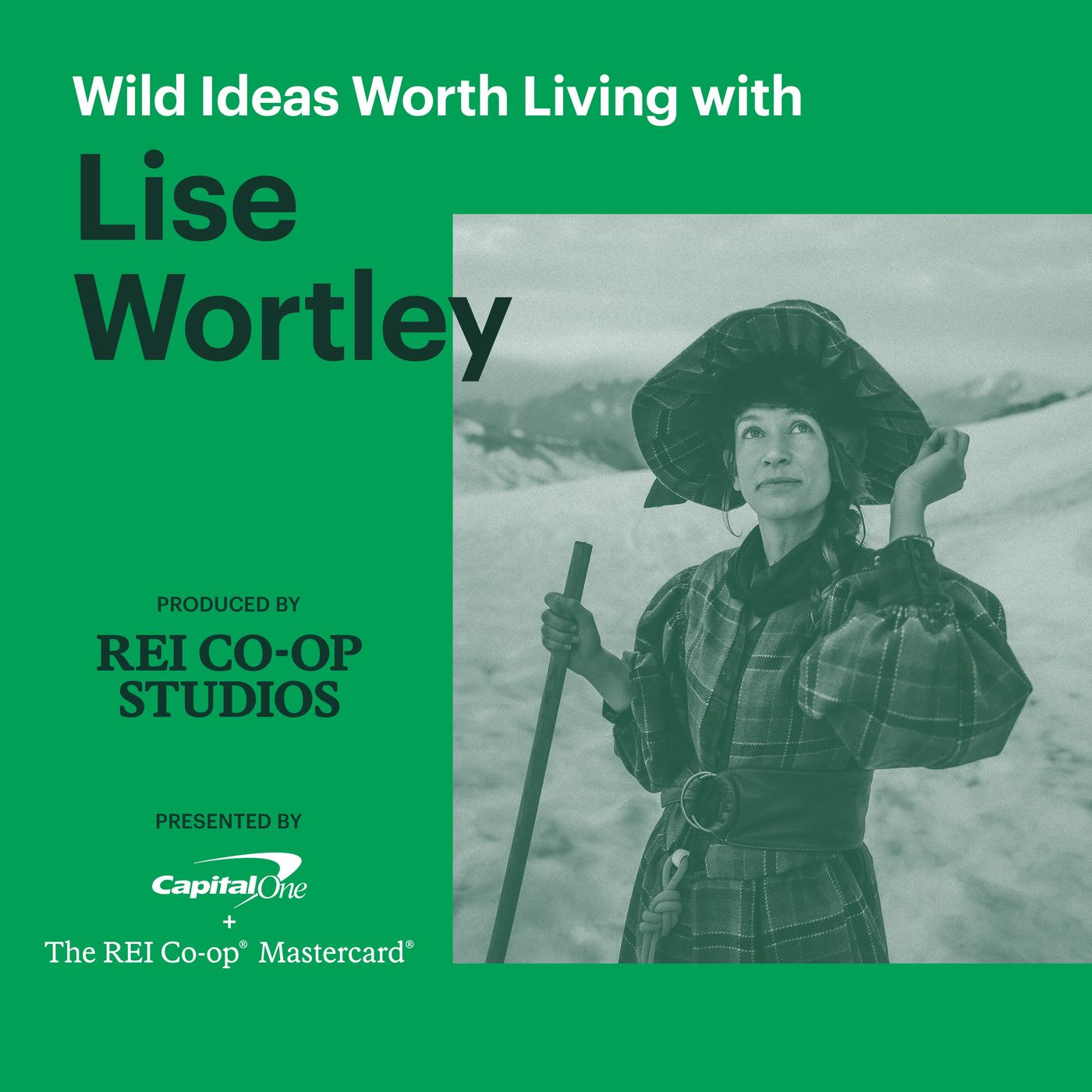
Lise Wortley retraces overlooked historical women explorers by hiking their routes while wearing historically accurate clothing and using period-style gear, aiming to understand their experiences and raise awareness of their achievements.
Lise is an England-based “accidental adventurer” who grew up outdoors in rural England, later struggled with panic attacks/anxiety in her 20s, and found nature helpful. She began the project after reading Alexandra David-Neal as a teen.
Modern outdoor tech is unnecessary for connection; replicating authentic attire helps her feel what the women felt (cold, fear, discomfort) and reveals emotions the original accounts may omit. The project also helped her move from anxiety toward confidence and presence in nature.
2017 trek retracing David-Neal toward Kanchenjunga base camp (Lakhon to Sikkim), wearing yak-wool coat and hobnail boots; a 1940s Scotland trek inspired by Nan Shepard (tweed, big boots, sideways rain); a Mount Blanc attempt honoring Henriette d’Angeville (1838) in a wool dress/bonnet and hobnail boots; future idea: Annie Londonderry’s 130th anniversary bike expedition.
Written by AI. May contain mistakes.
Discover how outdoor equipment has changed and the choices some adventurers make.
“If you're a gearhead, you know that outdoor equipment has evolved greatly over the years.”
Learn about Lise's philosophy of retracing historical women's journeys through authentic gear.
“And I would think, well, I'm never going to understand what she went through or how she actually did this and the challenges she faced if I was in modern day clothing.”
Explore Lise's background and how her childhood in nature shaped her adventures.
“You have one of the most exciting wild ideas I've heard in a very long time.”
Understand how mental health influenced Lise's decision to pursue adventure.
“So yeah, I grew up in the outdoors and then I really lost it for a bit.”
Learn about Lise's inspiration from the pioneering adventurer Alexandra David-Neal.
“And so 1910, she set off on this 14 year journey through Asia from Europe, which women just didn't do things like that at the time.”
Discover the steps Lise took to prepare for her historical adventure.
“But she found that being in nature was helpful for her mental health.”
Explore the challenges of finding authentic clothing and equipment for the journey.
“So your first big idea was to go trace Alexandra David Neal's journey into India.”
Hear about the physical trials Lise faced while retracing Alexandra's journey.
“So the finding the clothes is actually, it's a lot of research.”
Relive some unforgettable experiences Lise had during her journey.
“Do you have any stories from that trip that really stand out?”
Lise shares how her journey impacted her mental health and personal development.
“In addition to dressing like Alexandra on the trek, Lise and her group ate like her too.”
Lise shares her personal journey with anxiety and the realization that confidence takes time to build.
“I'm going to be really brave and I'm not going to be anxious.”
Discussion about Lise's project, Woman with Altitude, and her focus on historical women explorers.
“When Leigh's returned from India, she started keeping a spreadsheet of women whose paths she could retrace.”
Lise discusses her trek inspired by writer Nan Shepard's influential book, The Living Mountain.
“So it was this, so obviously it wasn't published at the time, but now it's just, yeah, really celebrated.”
Lise talks about her quest for historical gear and the challenges of finding authentic items.
“Anyway, what's some of the craziest gear you've had to carry?”
Lise shares her experiences preparing to climb Mount Blanc and the historical context of Henriette d'Angeville's achievement.
“Lise has had to source some hard to find items.”
Discussion on balancing historical authenticity with modern safety measures during climbs.
“I was like, no, I've got a backpack full of like hiking boots.”
Lise reflects on how her expeditions have profoundly changed her life and relationship with nature.
“You can't take all that as well, but yeah.”
Lise discusses her future plans and the importance of commemorating female adventurers.
Learn about Annie Londonderry, the first woman to cycle around the world.
Discover Lise Wortley's inspiring attempts at climbing Mont Blanc.

Get the gist, explore an idea or ask about something said.
 Claude
On Wild Ideas Worth Living, what are the key points of this episode?
Searching your listeningAutomatic transcript. May contain errors.
0:01Lise Wortley: If you're a gearhead, you know that outdoor equipment has evolved greatly over the years. There are ultralight backpacks that weigh virtually nothing, water bottles that keep your drink cold or hot for days, and the most waterproof raincoats you've worn. Lise Wortley chooses not to use any of it. No nylon, no Gore-Tex, no crampons. Instead, Lise's expeditions retrace the footsteps of historical women explorers whose achievements have been overlooked. I was reading the book and there's this part in it where she sleeps in her yak wool coat on a mountain pass in the snow. And I was thinking, how do you do that if you don't have a modern day puff jacket or a sleeping bag to keep you from freezing to death?
0:47And that's what kind of started it. And I would think, well, I'm never going to understand what she went through or how she actually did this and the challenges she faced if I was in modern day clothing. Like, I'm going to have to wear what she wore.
1:02Lise Wortley: Before each journey, Leaves absorbs all the information she can find about these women. She reads their journals and researches their roots, equipment they used, and clothes they wore. Then she sources the most authentic, historically accurate pieces to wear on the trail, from hobnail boots to vintage underwear. Replicating the clothing and equipment from more than 100 years ago allows Lise to experience the adventure through the eyes of these remarkable women and raise awareness about their accomplishments. I'm Shelby Stanger, and this is Wild Ideas Worth Living, an REI Co-op Studios production presented by Capital One and the REI Co-op MasterCard.
1:48Lise Wortley: Lise Wortley, welcome to Wild Ideas Worth Living. You have one of the most exciting wild ideas I've heard in a very long time. So I found you on Instagram and I was like, who is this girl? You recreate famous adventures by historical women in the clothes they would have worn at the time, like in the hundreds of years ago or in the 1800s. You just seem like a badass. How do you introduce yourself and your wild idea to people who just haven't heard of you before? I love that intro. Thank you. I don't know. Usually I just say I'm an accidental adventurer, but yours is a lot, a lot better than that.
2:25Lise Wortley: Well, I want to hear how you became an accidental adventurer. So like, when you grew up, and you're in England right now, did you grow up adventurous? Were you an outdoorsy kid? yeah I was really outdoorsy actually um I was born in London but then my parents moved out when I was about three into literally the middle of nowhere it couldn't have been more different and I was like this wild child and I just used to run around the garden like kind of feral little creature and it was amazing I had like amazing childhood and then I've actually been thinking about this a lot recently I definitely sort of lost that connection when I was a teenager and moved to the city.
3:03So yeah, I grew up in the outdoors and then I really lost it for a bit. But when I was about 27, I sort of got back into walking and back into just being in the outdoors and understanding how good it was for my mental health.
3:18Lise Wortley: I want to dive into this because I too had like a little bit of a mental awakening, let's say, at around 29, 27 to 29. It's a pretty pivotal age for a young woman and decided that I wanted to like quit my job and go into nature and write about adventure. So at 27, you must have had some sort of epiphany that was like, I want to go dress up like people from the 1800s and recreate their adventures. Like that's a really wild, specific idea. How did it come to you? So it actually started a lot earlier than that. So I, when I was sort of in my early teens, so 15, 16, I read a book by a woman adventurer called Alexandra David Neal, and I could go on about her forever.
4:04Tell me about her really quickly. She was this really amazing woman. So she was French. And so 1910, she set off on this 14 year journey through Asia from Europe, which women just didn't do things like that at the time. She left her husband behind, went off on this journey. She was the first Western woman to meet the Dalai Lama. She learned Tibetan. She lived in a cave for two years, just meditating. And yeah, she was just this incredible woman. And I'd never heard of her. And I was reading this book, like, why was I not taught about her at school? Like, who is this incredible woman? She's so inspiring.
4:38And she kind of slept on freezing mountain passes and walked for months on end through the mountains. And she was just incredible. So I read this book when I was 16. And I kind of had this idea that I would follow in her footsteps because everyone I asked was like I've never heard of her I don't know who she is I was like but she's amazing look she did all this stuff it's so inspiring and brave to do all that back then and yeah and then I think life like I said just sort of got in the way I moved to the city I started having a really difficult time with my mental health I was having really bad panic attacks like constantly had to stop going to work for a few months at one point and then eventually after all that, I kind of went back to this book when I started feeling a bit better and re-read it.
5:28Lise Wortley: In her 20s, Lise struggled with severe panic attacks and anxiety. But she found that being in nature was helpful for her mental health. When she was 27, she decided to finally pursue her dream of following in Alexandra David-Neal's footsteps. Lise set her sights on recreating Alexandra's trek as closely as possible, from Lakhon, India, to the base camp of a nearby mountain. Though she hired a local guide and a camerawoman to accompany her, Lise was determined that everything else would be historically accurate.
6:06Lise Wortley: So your first big idea was to go trace Alexandra David Neal's journey into India. but did you also I mean I know a big part of your adventures is you go back and you dress like the women and what they would have worn during this time and she was 1910 you said yeah that's when she started so yeah the other wild idea was doing it in what she had at the time how did you get this idea because no one does this it's like did you take acting school were you interested in costume like no people always say are you kind of pretending to be the person I'm like no no I'm not I just what happened was I was reading the book and there's this part in it where she sleeps in her yak wool coat on a mountain pass in the snow all night long.
6:51And I was thinking, how how do you do that if you don't have a, you know, puffer jacket, you know, a modern day puffer jacket or a sleeping bag to like keep you from freezing to death? And that's what kind of started it. And I would think, well, I'm never going to understand what she went through or how she actually did this. and the challenges she faced if I was in modern day clothing, like I'm going to have to wear what she wore. And the other thing that I noticed was because they were battling to be taken seriously, as seriously as the male kind of adventurers at the time, they would never really write about how they truly felt, like if they were scared or if they were cold or if they just didn't want to be there anymore.
7:32So I thought actually that would be a really good way to understand a bit more about how they maybe really would have felt if I was in the old stuff. So that's how it started. What was this first trip like?
7:44Lise Wortley: Like, take me back. What year was this? 2017. Okay. Yeah. So you're 27 years old or 28 years old probably by this time. And you go and you, what do you wear? How do you get the clothes? And what's it like? Yeah. So the finding the clothes is actually, it's a lot of research. So I kind of see what they mentioned they have in the book and then see if I can get the actual stuff from the time like on sort of vintage websites things like that if I can't find the actual things then I'll try and get them made or something like that so it's just a lot of research finding the stuff like a yak wal ko I had to get a contact that I had in India to pick that up because it was kind of like a traditional one so yeah it's a lot of like muddling all things together and then I really wanted to go all the way so obviously she would never talk about underwear in the book but it's just finding out what underwear looked like in 1910 like what did they have what was it like that kind of thing so I made sure everything so like rocket bras and things like that what's a rocket bra well it's like a pointy pointy bra oh um and then a lot of like all in one things so what do you mean on one things like a jumper yeah like a bodysuit like shorts and like blouse but all together I think they call them combinations actually it's just like a jumper like a like a romper but an uncomfortable romper I mean they're not that uncomfortable oh okay and I'm quite lucky in the sense that a lot of women who went to the mountains if they had to wear corsets they were like well I'm not wearing that up the mountains so they just take them off because of course other mountains not good um but yeah so it's researching all this stuff that they would have had that they don't mention and then just piecing it all together and then the shoes things like that working out what they would have had so hobnail boots mainly hobnail boots yeah so they're so sorry leather boots and then they've got nails in the bottom for grip so that's what they all wore in like the 18 and early 1900s um just leather boots um with metal nails in the bottom and you wore those yeah i wore those yeah and how many miles did you walk in these shoes i can't remember how far we went on that trip that was a long way he was like hours oh like eight or nine a day yeah for how many days that was a month that trip
10:20Lise Wortley: sorry if you're listening to this my mouth is wide open so you walked in like these boots with nails and them that were uncomfortable this itchy underwear and like whatever it was and so itchy a yak coat so itchy it sounds awful and you did nine hours a day yeah because that's the thing and I go a bit slow as well because of the shoes so it's surprising you know it's not comfortable and they're not like normal shoes, but you would be surprised sort of how they hold up in situations like that. Do you have any stories from that trip that really stand out? Like a time that just there was so much awe or you were so scared or it all fell into place?
11:05Yeah. Oh, gosh, there were so many. So the aim was to get to Mount Kanchenjunga Base Camp. So that's the third highest peak in the world. and it's in this northern bit of Sikkim. It's very remote. It's quite hard to get there because you need so many visas. So there's not many tourists. There's hardly anyone around. But it's this really sacred mountain. And Janggu, who was our guide, was of the Lepcher community descent. So they're the indigenous people that sort of lived in this part of India. And they see the mountain as this guardian deity and it's very important to them. So we kind of got to the top after a lot of trouble.
11:46So like altitude sickness, like all this stuff had sort of happened. And we got there and we were just at this moment of the trip where it was just absolutely incredible to be staring at this mountain. That's like the third highest in the world. So special and like so spiritual. And Janggu actually changed into sort of her traditional dress and did a prayer for her late father. And it was just this moment I'll never forget. It was amazing.
12:10Lise Wortley: so on this trip you basically walked nine hours a day for about a month at over 20 000 feet yeah I mean I can't remember the highest went well I'm a bit British so we say meters but 5 500 meters I don't know I don't know how many feet that is okay yeah so you're basically just your base camp is 5 500 meters which is about 18 000 plus feet yeah didn't feel good headaches feeling really sick and you're trying to walk but you have absolutely no energy and then I'm in all the old itchy stuff on top of that there's like no comfort were you worried about slipping yeah so I've actually got a lot more used to these boots um and you can trust them and interestingly they're really bad on man-made materials but when they're on rock um or like soil or things like that they're actually a lot better so you kind of learn to trust them but yeah at first you're kind of moving like a penguin, like really slowly, and just trying really hard not to twist an ankle.
13:18Lise Wortley: In addition to dressing like Alexandra on the trek, Lise and her group ate like her too. This meant stopping at the homes of people they met along the way, eating meals like curries and breads. These moments of connection were a welcome break from the challenges they faced on their trek, like extremely low temperatures and altitude sickness. Over the course of a month, the group hiked roughly 108 miles across snowy, rocky landscapes to reach their destination.
13:52After that first trip, how did you change? Well, people always ask me that. And actually, I remember coming back from that trip and I thought, well, I've done that now. I'm going to feel better. I'm going to be really brave and I'm not going to be anxious. and it was the complete opposite I felt like a tiny little wreck like it was awful and I think because I'd built up so much and I thought well if I can go and do that then why would I panic over things anymore and it was totally the opposite and actually over all this time I've just learned that it's not a quick fix and potentially it's something that you know I'll live with forever but it was still quite it had been years of feeling bad and I think I just thought you know this would change me and make me really confident and it didn't but now I look back and I'm like actually everything I've done has definitely done that it's just taken time to build up and now I'm very confident and I can like stand on a stage and talk to lots of people and things like that but I would not have been able to do that after that first trip so it was interesting coming back because actually when I was on the trip and I was in the wild and I was leading this group of people I was I was okay and I was quite confident but then it was when I got back home I just went into a little shell again so yeah interestingly it didn't didn't do what I kind of hoped it would but then I I started just sort of researching because it was a way I think a way to make myself feel better and I just really enjoyed these stories and it kind of gave me a lot of hope, I guess, that these women had been doing these things.
15:28Lise Wortley: When Leigh's returned from India, she started keeping a spreadsheet of women whose paths she could retrace. Her list includes more than 100 riders, mountaineers, and even a pirate queen from the 1800s. These women traveled all over the world, but Leigh decided that for her next trip, she wanted to stay closer to home.
16:01Lise Wortley: Lise Wortley follows the paths of historical women explorers whose accomplishments have been largely forgotten. She calls this project Woman with Altitude. Lise did her first trek in 2017. It followed the route of an explorer named Alexander David Neal, who hiked through Central Asia in the early 20th century. For her next adventure, she took inspiration from the writer Nan Shepard.
16:30Lise Wortley: After that first trip, how soon did you do the next one? So there was Nan Shepard's book that I read called The Living Mountain, and it's actually got quite famous in the UK now, but when she originally wrote it in the 1940s, no one would publish it. So she chucked it in a drawer for 30 years, and it's now kind of celebrated as the most incredible book ever written on British landscape and nature and she just she was like a she just lived in the Kangoms which is a big mountain range in Scotland but she just walked across every part of it basically and then wrote about it but she wrote it in this really sort of beautiful philosophical way and it was different to the other books at the time because it wasn't about getting to the top of the mountain it was about and experiencing the whole of the mountain and its ecosystem rather than, you know, just rushing to the top and trying to conquer it.
17:22So it was this, so obviously it wasn't published at the time, but now it's just, yeah, really celebrated. So that was the second trip.
17:30Lise Wortley: What were you wearing? What was a scary moment and what was a highlight? That one was, that was 1940s she wrote that. So I sort of head to toe dressed in tweed with my big boots again. um yeah just wandered around and I very naively thought that it was June so the weather would be lovely and I got there and obviously it's Scotland the high mountains it was just sideways rain so I just spent about five days cowering behind a rock in my really old 1940s tent thinking what am I doing why am I here but actually doing those things it really kind of understand a place more And that's when I started to really feel this connection with nature through the clothing.
18:13This was afterwards. This wasn't while I was there, like soaking wet behind the rock.
18:20Lise Wortley: So your 1940s tent did not hold up? Oh, no, no, no, no. How do you find the 1940s tent? So interestingly, 1940s and 30s and to today, you can find things quite easily because people are quite into like wartime like 1940s 1950s there's a lot of stuff that's been kept whereas before then you do really struggle so actually this one was quite interesting because I found all this stuff from the 1940s it was actually from the time um so yeah so I just sort of bought them off people that collect it really and you just find them on like ebay or facebook marketplace ebay and there's like specialist websites and things like that where you can get stuff from certain eras um yeah there's like a big community of people that love the old stuff especially like old school underwear now this sounds weird but um one of the women who makes this underwear she makes replicas of edwardian stuff she has like an eight month waiting list you have to wait for this stuff like it's really popular i imagine people do photo shoots in this underwear so it's so funny it doesn't sound that surprising to me but um i'm guessing they're not going and recreating expeditions in this underwear.
19:39Lise Wortley: No, they just like the clothes. Anyway, what's some of the craziest gear you've had to carry? Yeah, the wooden backpack was probably, this was my first trip and I did mention earlier, it was quite haphazard the way I organized it. So I didn't realize at the time when I had my budget that actually vintage rucksacks from 1910, like the frame that you could still buy they were like three thousand four thousand pounds so I just kind of tried to build my own basically but I ended up using an old chair that I found so I kind of rebuilt it but with the chair and it still looked a little bit like a chair but it was made of the same material and looked pretty similar to the ones that I was looking at online so yeah it was a big kind of wooden thing with a big basket but yeah essentially backpacks used to be wooden.
20:28Lise Wortley: Lise has gone to extraordinary lengths for historical authenticity. In addition to building her own wooden backpack and scouring the internet for 19th century style underwear, Lise has had to source some hard to find items. When finding the item is impossible, making a replica is the next best option. In fact, Lise's mom made her a wool dress and bonnet for her most recent project, a climb up Mount Blanc in Europe.
20:59Lise Wortley: Tell me a little bit about Mount Blanc because I was in Switzerland a couple of years ago and I've seen those mountains and they're stunning. Tell me who this woman is and what year she did it. So she's called Henriette d 'Angeville. My French accent's awful. But she did it in 1838. and there had been a woman that went up 30 years before but she was carried to the summit um so Henriette wanted to be the first woman to walk up herself what was it like to climb Mount Blanc in these what do you call the boots again the hobnail boots hobnail boots it was interesting because I a lot of my trips have been quite remote and I've been on my own a lot or the group I've been with it's kind of just been us and I totally didn't realize how busy Chamonix is and Mont Blanc is so busy there were people everywhere and I think one big part of it was actually stepping out in this clothing and knowing that everyone's going to be staring and everyone's going to be wondering what you're doing and that I actually found harder than the idea that I had to climb up to the top of Montblanc and sort of yeah it'd be like going to Yosemite dressing like John Muir but like yeah you're not wearing jeans or and I mean this outfit was what were you wearing something it wasn't it wasn't like the others this one was I mean she made it herself it was from 1838 it was a huge woolen dress that she had with a bonnet a massive bonnet of the same material so it matched and then underneath because back then women weren't supposed to wear trousers so it was a time where if a woman wore trousers out in public she'd get harassed and shouted at so they would wear them underneath the dress so it makes it kind of balloon even more so these big woolen trousers big woolen dress and then yeah the hobnail boots a huge bonnet and a big kind of shawl and people would kind of just stare and then I'd be like hello and then they'd sort of smile and then I'd explain the project but yeah I didn't I just didn't realize kind of how many people would be there I guess so that was the first kind of challenge was overcoming that and and that point where you're so tired you've been walking all day and then someone else and they're just being friendly asking what you're doing but all you want to do is just sit down and have a sip of water yeah they probably thought you're in like a religious cult or like they weren't sure probably that's what I would have thought so i'm just being honest it's an unusual outfit that one because she didn't there weren't outdoor clothing for women back then like she didn't have anything to base it on so she literally just made it herself which is why it was quite it was quite unusual and so you did it in these clothes well we got to the second hut because a storm came which is why we're gonna try again this year in like four months this summer you're gonna go to mount blanc and try it again yes yeah so basically we took a risk and went in September last year because I wanted to summit on the same day that she did um so yeah we tried to do it in September and summit on the same day um September the 4th uh but yeah it's really stormy at that time of year and there's it's it was still so hot so there's a lot of rock fall so we had a lot of issues when we first got there we couldn't go up because there was so much rock fall because now it's warmer the permafrost is starting to melt so that's this really ancient layer of ice that holds a lot of the rocks in place is starting to melt so these huge rocks fall and it just makes it so dangerous so we had a few days where we couldn't go because of that and then we got a little window but then a storm came and we were halfway up so you know you have to turn around and because I'm in the old stuff I take even longer so there was no way that I was going to get up and down in time and it's still a really dangerous mountain I think four people actually died the day after we came down so yeah you still have to be really really careful so yeah we'll see do you take some modern safety equipment just in case yes so one of my rules for Mont Blanc was I had to so I think they had a lot of people trying to climb it for charity and doing it in sort of costumes and things like that so they brought this rule in where you weren't allowed to climb it in in anything like that so I spent a long time trying to explain to them how this was kind of different and eventually I was allowed to do it but as long as I took modern stuff with me in case so actually everything that was in my backpack was just spare modern stuff which made it even heavier um so Henriette was famous for taking all this stuff with her well she had six porters so they took like 26 roast chickens 18 bottles of wine like all this stuff and people were like, are you going to take that?
25:55I was like, no, I've got a backpack full of like hiking boots. You can't take all that as well, but yeah.
26:06Lise Wortley: While today's equipment is certainly safer, the antique garb helps Lise connect to the women she's emulating. Plus, she's gained a lot from leaving behind modern technology. Over the years, she's learned so much about the women who inspire her trips and about herself. Lise's anxiety used to make her scared to be alone in the wilderness, but now she finds a sense of peace in taking a slower approach. She's adopted Nan Shepard's philosophy of being present in nature, rather than trying to conquer it.
26:43Lise Wortley: Do you have a favorite expedition you've done? Ooh, that's a hard question. I actually always go back to that Nan Shepard one, because it taught me so much. One thing she says in the book is how walking in the mountains sort of taught her to just be. And that's kind of how I felt after that. I kind of, I think because I don't have modern stuff and I didn't really have anything to do but just stare around. So it really taught me to just really slow down and just kind of sit. And that's fine to not be doing something. So it taught me a lot, actually, that one. You know, you've been doing this now for seven years.
27:19Lise Wortley: How has this project changed you? oh wow yeah it's definitely changed me in a lot of ways and it's only now I think where I feel more like myself and I feel more like you know what if I hadn't started this like what sort of person would I be and would I have ever gotten over that anxiety and would I still be in that awful space I was in so I feel very grateful that I've got this and it's given me a purpose and I'm definitely a totally different person so yeah it's just totally changed my life I guess sounds a bit cheesy but do you have anything else like on the horizon after that that you're eyeing I mean there's so many um yeah there's it's actually the 130th anniversary this year of the first woman who cycled around the world called Annie Londonderry and she started in America and yeah obviously a bike with no gears she was just on it in her corset her dress and just took one little suitcase with her that she put on the handlebars and off she went so I'd love to do something to kind of commemorate her this year but I don't know I'll have to think about it after Mont Blanc I can't think about two at once it's too much I love that Lise is raising awareness about the incredible women adventures we may have never known about before Lise is currently on Mont Blanc and I can't wait to hear about her second attempt you can get updates on her Instagram at woman underscore with underscore altitude.
28:49Lise Wortley: That's woman with altitude. You can also learn more about her past tracks on womanwithaltitude.com.
29:01Lise Wortley: Wild Ideas Worth Living is part of the REI Podcast Network. It's hosted by me, Shelby Stanger, produced by Annie Fassler, Sylvia Thomas, and Sam Pierce-Nitzberg of Puddle Creative. our senior producers are Jenny Barber and Hannah Boyd our executive producers are Paolo Motula and Joe Crosby as always we love it when you follow the show take time to rate it and write a review wherever you listen and remember some of the best adventures happen when you follow your wildest ideas
29:44Thank you.
Lise Wortley retraces the footsteps of historical women explorers whose achievements have long been overlooked. To fully immerse herself in their experiences, she replicates the clothing and equipment used over a century ago, avoiding modern gear to see the world as they did. Through these journeys, she shines a light on their remarkable stories and brings their legacies back into focus.
Connect with Lise:
Thank you to our sponsors:
Hosted by Simplecast, an AdsWizz company. See pcm.adswizz.com for information about our collection and use of personal data for advertising.