Ask ChatGPT
 Wild Ideas Worth Living
26 Jun 2025 · 22m · 12 chapters
Water-based camping via packrafting—how to hike into remote rivers, carry an inflatable pack raft, paddle for days, camp on shore, and plan logistics and safety (gear, PFD use, shuttle planning, clothing, balance, and repair).
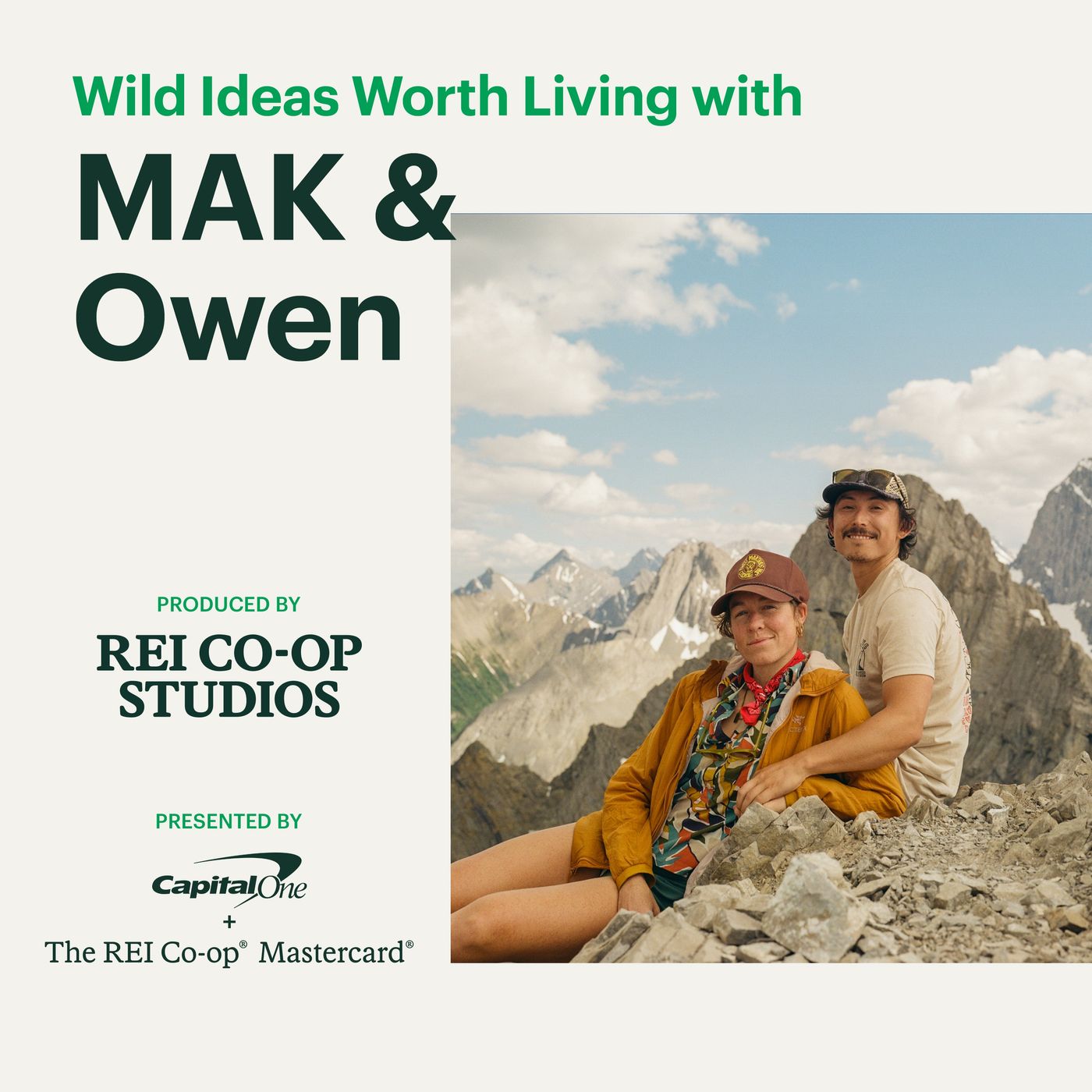
Mac and Owen, founders of Bound for Nowhere (adventure blog/social community/storytelling). They’ve lived full-time in a truck camper for nine years, meeting on a college swim team and focusing on “experience giving.”
pack rafts weigh ~7.5 lbs (up to ~20–30 lbs); PFD is the must-have; packrafting improves access to hidden coves/quiet beaches; learn via failures; start slow close to home.
forgetting life jackets and getting stopped by National Park Service; 20-mile hike-in then 7 days floating; seeing a mother moose and calf while drifting peacefully; ideal day includes coffee, cruising, mild rapids, sunning/jumping rocks, cooking/fishing by the water.
Written by AI. May contain mistakes.
Introduction of the guests Mac and Owen, their backgrounds, and their adventure philosophy.
“whether that's traveling by canoe, kayak, stand-up paddleboard, or raft.”
Mac and Owen discuss their relationship and how they became expert packrafters through practice and adventure.
“We were on the swim team in college together and we just had a mutual affection for being outside, doing interesting things and a healthy dose of like competitive nature between the two of us.”
Discussion on what packrafting is and its advantages over traditional canoeing or kayaking.
“So like you have to you have to make mistakes.”
Mac and Owen detail the essential gear needed for packrafting and safety considerations.
“A lot of the type of fun that we like to do requires a fair bit of suffering, but that's like a part of the fun, you know, type two fun.”
The hosts share early mistakes made during packrafting trips and important lessons learned.
“it can be really unwieldy in the water and that can be pretty unsafe.”
Insights on how to plan for a successful packrafting trip including logistics and considerations.
“We even, we got pulled over by the National Park Service police on boat because we didn't have life jackets.”
Discussion on the appropriate clothing for packrafting and safety measures against sun exposure.
“Is there a strategy on how you pack your backpack and how you pack your boat?”
Learn about important gear and clothing tips for packrafting in summer.
“want to say like fair weather sailors we just really love summer conditions on the water and And so people like cold water, like rafting or surfing or any of it.”
Discover strategies for beginner packrafters to ease into the experience.
“It's an incredible resource that is everything from boat care to paddling safety, not tying, how to dress for different types of weather, rescue scenarios.”
Experience an ideal day of packrafting from start to finish.
“down camp, have some coffee, hit the water, and you're kind of just like cruising your way down the river.”
Understanding the thrill and relaxation of packrafting experiences.
“Floating down a lazy river, occasionally encountering mild rapids for a little adrenaline rush, and stopping on little beaches to camp, it sounds so amazing.”
Learn about following the guests' journeys and the podcast's upcoming topics.
“To follow Mack and Owen's adventures, you can find them on Instagram at bound.for.nowhere or on their website at boundfornowhere.com.”

Get the gist, explore an idea or ask about something said.
 Claude
On Wild Ideas Worth Living, what are the key points of this episode?
Searching your listeningAutomatic transcript. May contain errors.
0:02Owen: Welcome to our summer mini-series all about camping.
0:12Owen: In these bonus episodes, we're going beyond the standard tent and campsite setup. From bikepacking and rafting, to camping with kids and dispersed car camping. Over the next four weeks, we're talking to people who are camping their own way. sharing what works, what doesn't, and how you can try it too. I'm Shelby Stanger, and this is Wild Ideas Worth Living, an REI Co-op Studios production presented by Capital One and the REI Co-op MasterCard.
0:56Owen: Today we're plunging into the world of water-based camping, whether that's traveling by canoe, kayak, stand-up paddleboard, or raft. Cruising along waterways can be a great way to rest your legs, take the weight off your back, and slow down. Plus, you get to pick the pace. You can amp things up by paddling down rapids or keep it calm by skimming across serene lakes. Best of all, traveling by water gives you freedom to explore, accessing hidden coves, secret waterfalls, and quiet beaches that most campers will never see. When you're ready to settle down for the night, you'll have the sound of flowing water to lull you to sleep.
1:38Owen: To introduce us to water-based adventures, we're talking to Mac and Owen, the founders of Bound for Nowhere, which is a popular adventure blog, social media community, and storytelling brand. For the last nine years, Mac and Owen have lived in a truck camper, driving across the country and spending as much time in nature as possible. When it comes to the water, Mack and Owen are primarily pack rafters, which means they hike into harder-to-access waterways with a portable inflatable boat in their backpack. Once they arrive at their put-in, they inflate their rafts, transfer gear from their packs to the boat, and paddle along for days at a time.
2:20With countless river miles under their belt, Mack and Owen are here to share their insights
2:25Owen: on gear selection, safety, and how to plan your perfect day on the water.
2:34Owen: Mack and Owen, welcome to Wild Ideas Worth Living. I'm so excited to have some really interesting pack rafting people on the show. Thank you.
2:45MAK: Yeah, thanks for having us.
2:46Owen: I love a good adventure love story. How did you two meet?
2:48MAK: We were on the swim team in college together and we just had a mutual affection for being outside, doing interesting things and a healthy dose of like competitive nature between the two of us. And I think that something about my relationship with Owen is that from the beginning, we haven't been gift givers. We're experience givers instead. And so instead of like prioritizing giving each other something, we always try to go give each other a really great experience. And it was like that from the first date. And so I think that the best way to put it is that has escalated into what our life is now, and that is nine years of full-time travel.
3:38MAK: And that is camping because we live in a truck. You guys have made camping and exploring your entire life and your whole career.
3:51Owen: How did you guys become expert campers, especially campers that travel by water, like pack rafting?
3:58MAK: I think that we have become experts by sheer practice. We have now nine years of experience with different forms of camping. And I think that you get better at things by also failing at them and failing quite miserably. And I can speak to many, many nights where we went out to go camp. We're like, oh, this is going to be so awesome. that's going to be rad. And then it ends up being a miserable failure. Some of the coldest nights of my life, you know, nights where we zipped our sleeping bags together, huddled together for warmth, and we still ended up just leaving it 4 a.m. because we were so cold that we were just like, I just need to start walking or else I will die out here.
4:39MAK: So like you have to you have to make mistakes. And I think it's also being willing to make mistakes, learn from them, and then also continue to feel intrigued to come out and try again, but also to try different things, which is ultimately, I think, how we got into packrafting was just like realizing that there was another way that we could do this and wanting to explore a new type of terrain. What is packrafting? So packrafting is kind of taking the idea of canoe and water travel, but having the ability to get your boat into remote places. So a pack raft is literally a boat that can be packed in with you.
5:21Owen: Are these these foldable kayak things I saw in Big Bear?
5:24MAK: Okay, so there are foldable... The industry has come a long way, thankfully. So my family had a pack raft growing up and it came in this huge duffel bag. It took up the whole backseat of the minivan. But pack rafts now today, there's foldable varieties, there's inflatable kind. I just think that it's really cool to see the innovations that have come of the industry, because it's now allowing people to access different waterways, different types of water. And I think that ultimately, the type of boat that you take is going to be dictated by the type of water that you're wanting to access. Tell me why you'd use a pack raft.
6:04Okay.
6:05MAK: I'm going to preface this. A lot of the type of fun that we like to do requires a fair bit of suffering, but that's like a part of the fun, you know, type two fun. We're all about it. So one of these trips that we did was a grueling 20 mile hike in, but then it was seven days of just floating out of this river system on the water. So it was a really challenging hike in, But then it gave us the ability to explore this entire river. And it was just so fun because we were able to be like, oh, this looks like an incredible fishing spot. We'll just pull over, throw a couple of casts in the water, keep going.
6:44MAK: Or this looks like a great spot to camp. How much do these boats weigh? Like, how much stuff are you carrying? It all depends on the type of trip that you're trying to take. How you are getting there will also kind of dictate how much weight you can take and how much the boats physically weigh, our boats weigh about seven and a half pounds. And I know that they can go all the way up to being, you know, 20, 30 pound, but there's also even lighter boats that are super featherweight and they can even like some of them even pack down to be the size of a roll of paper towels, so to speak. Amazing. Tell me about the other gear that comes with the
7:23Owen: boat.
7:23MAK: Right. So you want to have like a life jacket, uh, important things like that, depending if you're going on whitewater. So like there, it adds up a little bit more when you add some of the extra pieces of gear. We have these paddles that break up into four pieces. And so we'll just shove them in our backpack. And they're carbon fiber. So they weigh like practically nothing. And then you're going to need rope or some form of device for rescuing fellow paddlers for general safety equipment. Dry bags are always necessary. A lot of these pack rafts are air inflatable. so you also want a repair kit.
7:59MAK: One thing we haven't mentioned yet is that what's unique about these pack rafts is that you throw your gear inside the tubes of the pack raft itself. So they're sitting inside it. So you like unzip the entire thing, throw your gear in, and then you zip it closed and then inflate it. So it really becomes like backpacking, but in the water and your boat's carrying it all. And then you're also wanting to make sure that you can keep your boat relatively balanced because that balance is going to be important because it's going to help you with maneuverability and all that. Because if your boat is off balance, it can be really unwieldy in the water and that can be pretty unsafe.
8:39MAK: You obviously need to have your full standard camping gear, but again, it all has to fit. We typically go with like a lightweight backpacking setup, but you are afforded a little bit of extra luxuries.
8:54Owen: What's the most important piece of equipment, a must-have?
8:58MAK: I mean, if we're being safe, the PFD is definitely the most important. A PFD, or a personal flotation device, is like a life jacket that you wear. And it's almost like a triangle of foam in the front and in the back. Ours have really handy pockets in the front. I keep my cell phone in there, so it's easy to grab if we pass any wildlife or just want to grab a video. and uh it's also nice for keeping like a little bit of sunscreen or chapstick in and then it also has a really convenient hook for the pfd knife tell me about some of your early mistakes early mistakes we i feel like i um i'm afraid to admit this out loud sorry mom if you hear this we definitely have gone on trips without life jackets like fully forgotten life jackets and And that is, that's a no-no.
9:50MAK: We even, we got pulled over by the National Park Service police on boat because we didn't have life jackets. And then they gave us these really awful, ugly orange ones, which were like, you know, our cone of shame, so to speak. It was an honest mistake. We just forgot them. But don't do that.
10:20Owen: What are some things to take into account when planning for a pack rafting trip?
10:26MAK: You always are wanting to understand how many days you're wanting to travel for, work backwards to figure out how much food. I think the other big thing too is that if you're traveling on river, you're going from one point to another. So you kind of have to have your shuttle planned. And you're going to need a car to get you there, but then a car to get you back to your original starting point. And so I think that there's a little bit more logistics that kind of go into it than just a normal backpacking trip where you might like walk and then come right back to the same spot.
11:00Owen: How do you guys plan for that?
11:02MAK: We typically like to do pack rafting trips with people just because that's always going to help with the shuttling. If we don't have additional people or we cannot figure out a shuttle, what we'll do is a trip where you're hiking along the river in and then you're just jumping into the river and floating back to the same place.
11:24Owen: And then how do you decide where you actually go?
11:26MAK: so we usually identify a body of water that we're interested in traversing on the boats and then we'll work backwards from there trying to figure out a start and an end point the closest points we can get to with a car and then from there we're figuring out trails for hiking to get us to the water things like that and then even like more macro into that you're looking and seeing public land boundaries, things like that, to see where you can camp, where you can't camp, and then kind of planning the route with all of those variables determined.
12:05Owen: Is there a strategy on how you pack your backpack and how you pack your boat?
12:11MAK: So how you pack your backpack versus how you pack your boat are going to be pretty different. When I leave for a trip in backpack form, so before arriving at the water, everything is deconstructed I would say that I'm in like backpacking mode and the way that typically looks for us is all of our food is in a bag all of our cook setup is together we got tent sleeping bag dry bag with clothes then rolled up we have our big dry bags these are the ones that are going to fit inside of the walls on each side of our boat then we have our deconstructed paddle our PFD and on the PFD we carry a knife and that is just for the safety of being able to cut yourself out of your boat if something catastrophic happened that's pretty important and then the boat is rolled up on top of our bags then when transitioning to the water those two really big dry bags then become home for all of that gear so one side will typically have the camping gear and the clothes.
13:18MAK: The other side will have the food and the cook set up. And that will often have to kind of change around as you eat down your food and that side of your boat becomes light. You'll have to start moving clothes over to try to make sure you're balancing your boat. So that's going to kind of change every day, but that's going to be entirely based off of how much weight you have on each side of your boat.
13:39Owen: What about your clothes while you're on the water? Are you wearing different clothes than you would for hiking?
13:44MAK: depends on water temperature because if you are in really cold water particularly water that you could get hypothermia in you're going to need a dry suit of some description i will say that we have not ventured into those waters so to speak um i just feel like we're kind of like i don't want to say like fair weather sailors we just really love summer conditions on the water and
14:08Owen: And so people like cold water, like rafting or surfing or any of it.
14:13MAK: Yeah, I've got some I've got some trips I would love to do that will require a dry suit. But I think that when we are in the summer, decently warm ish water, it's actually the exact same clothes that we are backpacking in. The only thing I was going to say is that I even go harder on the sun protection because when you're in a boat, you're literally just sitting there exposed to the sun. So like a super broad hat. A lot of times I'll even wear gloves because you cannot wear enough sunscreen on your hands. Long sleeve, long pants. And this is actually something else that feels like kind of a weird thing.
14:58MAK: I made the mistake on going on a week-long river trip and I did not take lotion or enough lotion. When you are getting in and out of water that frequently, it does not matter the climate that you're in. It will dry your skin out so fast. Always, always take a little bit more lotion than you think that you need on a river trip. But two sets of clothes, usually a dry set, a wet set. you come off the river at the end of the day, change into your dry set of clothes and dry everything out overnight. Yeah. If it's breezy, I think that a rain jacket is always nice to just like repel the water. So it's not just soaking you.
15:36MAK: And if you're in white water, sometimes, you know, you're going to get wet. And then we really love hiking sandals for footwear for that kind of stuff. Like just, it makes getting in and out so much easier. Yeah. Our personal favorite are bedrock sandals. They have really great Vibram soles. So you're not like slipping or anything around the water. But hiking in, you want a full support shoe just because you're carrying a lot of weight. So like any extra love you can give your feet on the way in. Is there any other tips that you wish you'd known early? Okay, yes. We have been recommended a book that is called the Packraft Handbook.
16:16MAK: It's an incredible resource that is everything from boat care to paddling safety, not tying, how to dress for different types of weather, rescue scenarios. This is an incredible book. I wish we had it sooner. I just think it's really good from a safety perspective to be as knowledgeable as humanly possible before you start venturing out into the water. And this is a great resource to start with.
16:43Owen: What's your best advice for someone trying to packraft camp for the very first time? I would say start slow and go somewhere close and familiar.
16:56MAK: The reason for that is, is if you go in and you feel like you're not comfortable, you know, you forgot something, you need to go home early. I just think that removing as much of the pressure from this scenario is always a great place to start. Or even like don't necessarily go out and camp for the first time. Just go have a picnic on the other side and then assess and figure out what can I do better next time? What can I do to make myself feel more comfortable about it? Do I need to bring someone else with me? And just like slowly progress into it that way.
17:35Owen: What are some of the most
17:36MAK: beautiful things you've seen while packraft camping we have floated past a mama and her calf moose just like going down the down the river and the thing is because you are just kind of going with the literal flow they see so many other animals that do that like you are not taken as a threat they just kind of observe you you observe them it just feels like because you're coming on them in this like very natural way, you feel like you're really participating in the environment rather than like going out and conquering it. It's just a very different experience. It just feels like you are really there just being a part of all of it.
18:20Owen: Can you walk me through an ideal day on the water from sunup to sundown?
18:26MAK: Oh my gosh, this is like describing my perfect date. For us, usually days on the river, and this is we've let's just say we've already backpacked in the hard work is behind us we've woken up and we're at a camp spot that's right on the water and you know we slept well because you can hear the babbling like river right next to our tent uh usually because you're right on the water it's usually a very chill like entrance into the day so we'll slowly break down camp, have some coffee, hit the water, and you're kind of just like cruising your way down the river. You know, every once in a while, there'll be kind of like a little spicy feature that comes up because we enjoy some whitewater and kind of have to like navigate those features.
19:13A lot of times if we see good rocks to jump off of, we'll pull over, find a great rock to sun on
19:20MAK: and have some lunch. You can kind of be a little bit more elaborate with your food when you're pack rafting which is fun you can fully open your boat and pull your your cook stove out and make something a little bit more elaborate we've even fished and just cooked the fish that we caught occasionally like right there by the water and um I don't the days they just kind of they're so peaceful and they just kind of slip away and it just like I cannot even begin to fully describe the level of chill that it feels like. Quite literally going with the flow. Yeah, all day.
20:02Owen: Mackinac sold me on packrafting. Floating down a lazy river, occasionally encountering mild rapids for a little adrenaline rush, and stopping on little beaches to camp, it sounds so amazing. One other thing that Mackinac told me was that it's important to remember that water levels are variable. You can search online for recent trip reports to see what the current conditions are like and to make sure any rapids are safe for your skill level. While Mackinac are mostly into packrafting, a lot of their advice is applicable to other forms of water camping. Think stand-up paddleboarding, canoeing, and even kayaking.
20:42Owen: To follow Mack and Owen's adventures, you can find them on Instagram at bound.for.nowhere or on their website at boundfornowhere.com. You can also check out their podcast called Camp Nowhere wherever you listen. Tune in next week to learn all about camping with kids.
21:05Owen: Wild Ideas Worth Living is part of the REI Podcast Network. It's hosted by me, Shelby Stanger And produced by Annie Fassler Sylvia Thomas And Sam Pierce-Nitzberg of Puddle Creative Our senior producers are Jenny Barber and Hannah Boyd Our executive producers are Paolo Motila and Joe Crosby As always, we love it when you Follow the show, take a moment to Rate it, and leave a review Wherever you listen And remember, some of the best adventures happen When you follow your wildest ideas is.
Welcome to the Wild Ideas Worth Living Summer Camp Series! In these bonus episodes, we’re exploring camping beyond the traditional tent—from bikepacking and packrafting to camping with kids and dispersed car camping.
Today, we're diving into the world of water-based camping with MAK and Owen, the founders of Bound For Nowhere— a popular adventure blog, social media community, and storytelling brand.
Gear & Apparel Mentioned:
Connect with MAK & Owen:
Thank you to our sponsors:
Hosted by Simplecast, an AdsWizz company. See pcm.adswizz.com for information about our collection and use of personal data for advertising.