Ask ChatGPT
 Wild Ideas Worth Living
10 Jun 2025 · 30m · 13 chapters
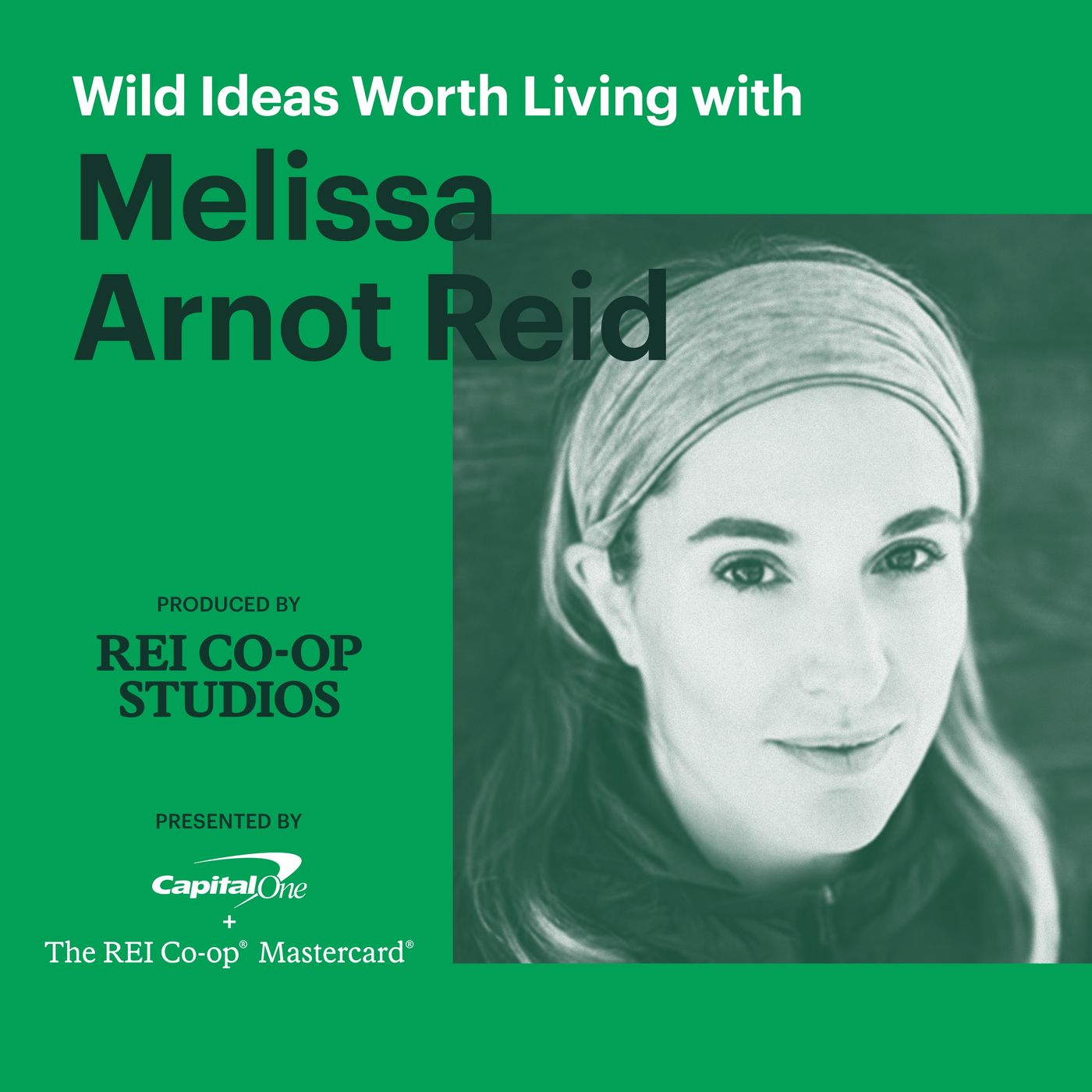
Melissa Arnott-Reed’s quest to summit Mount Everest six times—especially her first American woman achievement of climbing and descending Everest without supplemental oxygen—and how that goal became a metaphor for healing, self-worth, and learning to exist with “ease.”
Melissa Arnott-Reed is a mountaineer, adventure guide, and author. She summited Everest six times (more than any other American woman) and was the first American woman to climb and descend Everest without supplemental oxygen. She grew up on the boundary of the Southern Ute Reservation in Southern Colorado, later moved to Whitefish, Montana, and faced childhood emotional abuse, grooming by a police officer, and foster care.
Oxygen-free climbing is far more dangerous and physically slower (e.g., suiting up can take ~3 hours vs ~45 minutes with oxygen). Success required deep self-reflection and healing; the “different world” she expected wasn’t automatic.
Her first “true summit” was Great Northern in Montana; she trained and guided on Mount Rainier (glaciers, ice climbing, high stakes). She was inspired by Gerlinde Kautenbrunner (first woman to climb all 14 eight-thousanders without oxygen). She also describes using “unsavory” tactics to access international guiding opportunities and how that corroded her confidence.
Written by AI. May contain mistakes.
Learn about Melissa's journey and accomplishments as a mountaineer.
“I had long thought I'll summit Everest without supplemental oxygen and I will return to a different world and I will be a different person in that world.”
Explore Melissa's childhood and the challenges she faced growing up.
“That's more than any other American woman in history.”
Discover the impact of Melissa's upbringing on her perspective and opportunities.
“The book documents her mountaineering career, but it also details the serious challenges she faced during her childhood, including emotional abuse, rooming, and time in foster care.”
Melissa reflects on her experiences and connection to the outdoors.
“primarily native population, but like us all, I think we only know what we know until you know something else.”
Learn about Melissa's first serious hiking experience and its significance.
“I talked about having economic modesty, but I also had a really challenging relationship with my mother who had some mental health challenges.”
Melissa discusses her experiences as a young guide on Mount Rainier.
“Mount Rainier is this incredibly stoic, highly challenging, beautiful mountain.”
Melissa shares insights about her early professional relationships and challenges.
“I dabbled with this idea of like, could I guide international trips?”
Learn about Melissa's first attempt at climbing Everest and her mindset.
“And I don't say that today with any casual regard of like, oh, I did that.”
Learn about Melissa's initial experiences and challenges on Everest.
“Mount Rainier Melissa Arnott-Reed was just 23 years old when she attempted to climb Mount Everest for the first time.”
Explore the motivations behind Melissa's goal to summit Everest without supplemental oxygen.
“She continued guiding on Mount Rainier in the summer and returned to Nepal in the spring to work on Everest.”
Understand the challenges and transformative experiences of climbing Everest without supplemental oxygen.
“And I ultimately ended up using supplemental oxygen and going to the summit.”
Understand the deeper motivations behind pursuing outdoor challenges.
“Do I want a sense of cohesion with nature?”
Learn about Melissa Arnot Reid's book on her Everest experiences.
“It's one of the best Everest books I've ever read.”

Get the gist, explore an idea or ask about something said.
 Claude
On Wild Ideas Worth Living, what are the key points of this episode?
Searching your listeningAutomatic transcript. May contain errors.
0:02Simi Botic: I had long thought I'll summit Everest without supplemental oxygen and I will return to a different world and I will be a different person in that world. And the truth was far less satisfying, which was that I actually had to go on a pretty deep and intense journey of self-reflection and starting to heal and starting to really get down to the nitty gritty of like, why was I continuously recreating these terrible experiences for myself? Why was I so insistent on telling myself that I deserved for things to be hard? You know, I mean, this climbing Everest without oxygen became this internal personal metaphor for just being able to exist with ease in the world.
0:46Melissa Arnot Reid: Melissa Arnott-Reed is a well-known mountaineer, adventure guide, and author. She summited Mount Everest six times. That's more than any other American woman in history. Melissa was also the first American woman to successfully climb and descend the mountain without supplemental oxygen. If you're unfamiliar, 98 % of climbers use oxygen once they get above a certain elevation, where the air is thinner and it's harder to breathe. Summoning Everest without extra oxygen takes longer and is far more dangerous. In order to complete these remarkable accomplishments, Melissa's had to push through her share of uncomfortable experiences and risky situations.
1:30Melissa Arnot Reid: Still, the mountains have always been a place where she's felt capable, strong, and resilient. I'm Shelby Stanger, and this is Wild Ideas Worth Living, an REI Co-op Studios production presented by Capital One and the REI Co-op MasterCard. card.
1:49Melissa Arnot Reid: Melissa recently published a book titled Enough, Climbing Towards a True Self on Mount Everest. The book documents her mountaineering career, but it also details the serious challenges she faced during her childhood, including emotional abuse, rooming, and time in foster care. Melissa has processed much of the trauma from her youth by spending time in the mountains as an adult.
2:18Melissa Arnot Reid: Melissa Arnott-Reed, welcome to Wild Ideas Worth Living. You wrote one of the bravest books about Everest that I've ever read. So kudos to you. I'm really excited for it to be out in the world. Thank you so much for having me, Shelby. I'm excited to chat with you. I think we need to start at the beginning. I know that part of your story was you grew up sort of in tribal land, which I thought was very interesting. Can you talk a little bit about that?
2:42Simi Botic: Yeah, I think a lot of people, especially because my Everest career started when I was 24 years old, I think a lot of people just assumed like, oh, this, you know, very privileged American girl must have grown up climbing since she was two or something. And that absolutely was not my story. I grew up living on the boundary of the Southern Indian Reservation in Southern Colorado. My dad initially just worked construction in a nearby town, but then ultimately worked for the tribe. and we grew up with like really modest economic means. You know, we had enough, we had what we needed, but it was an extremely interesting way to grow up for me personally.
3:20Simi Botic: Going to school on the Southern Ute Reservation, primarily native population, but like us all, I think we only know what we know until you know something else. And so when I was in high school, we moved to Montana and we moved to Whitefish, which is like an affluent resort town sort of compared to, you know, the Southern New Reservation where I'd grown up. And I was suddenly very indoctrinated into some perspective on, you know, the difference in the two places that I was living. And I grew up really economically modest. So my parents couldn't, you know, buy me a mountain bike. We weren't going skiing because I was quite expensive.
3:57Simi Botic: But the outdoors were an important part of my life, just not in a traditional way. And, you know, my parents are like very authentic hippie parents. My dad, he always said like, I hope, you know, you and your sister just live out of the back of your truck and like, don't ever go work for the man.
4:13Melissa Arnot Reid: So interesting. You know, most of our parents were like, you know, go get a job.
4:17Simi Botic: Yeah.
4:17Melissa Arnot Reid: Your parents are the opposite.
4:19Simi Botic: My dad used to say it was a really lovely thing that I remember from when I was a kid. He's sort of like a subversive character in the world. And he would say when somebody would say, oh, yeah, what do you do for work? He would just sort of scoff and say, like, what makes you happy? Like, tell me that. That's a place we can start a conversation from. And I inherited that and I absorbed that and intuited that. Like, I now as an adult can say, like, I absorbed this notion that happiness was the most important thing. It was far more important than the college I would go to, the job I would ultimately hold, the, you know, accolades that I would put in front of my name would be like, do I feel contentment?
4:56Simi Botic: Do I have happiness? You know, that is what riches are. That is what arriving is. And I think it's important to sort of touch on the fact that I had a really challenging childhood as well. I talked about having economic modesty, but I also had a really challenging relationship with my mother who had some mental health challenges. And as an 11-year-old child, I ended up in a predatory relationship with an adult who was a police officer. and groomed me and, you know, coerced me into having my parents arrested, which put me in a foster home, split up my family. And ultimately, our family sort of came back together and we moved.
5:39Simi Botic: And that's why where I reference, you know, we left Southern Colorado and we moved to Montana. That was why. And I was a young adult at that point feeling incredibly exiled from my core family unit and feeling that that was of my doing. And so I think as most teenage people feel, you know, a deep sense of not belonging because you're just changing in the world and you're shape shifting and you're trying to figure out like what does belonging even feel like anymore? And, you know, I didn't know where I could belong. And for me, I got into the outdoors really for my first time seriously when I was 19.
6:14Simi Botic: And I had always been a very athletic person, but never very competitive. The competition of sport really sort of repelled me. I didn't like that aspect. So I hadn't had an outlet for, you know, using my athleticism or, you know, pushing my body and challenging myself intrinsically, which I felt really drawn to. And I went on a hike with a friend and it was like a true summit, a little bit more than just a hike on a peak called the Great Northern. And it was just a really steep hike. And on the summit, I could see the entirety of Glacier National Park. And looking the other way, the Bob Marshall wilderness, you know, extended out in front of me.
6:49Simi Botic: And it was the first time that I felt this sense of complete personal accomplishment that was my own and only my own. And it opened up the world to me in a way that I didn't even know it existed.
7:07Melissa Arnot Reid: The hike to the peak of Great Northern in Montana marked Melissa's first true summit. Climbing those 8 ,500 feet proved she was capable of doing hard things. From that moment on, she decided to immerse herself in the mountains. She knew that if she worked hard and learned as much as she could, there was a possibility of making a living by guiding. She started climbing more and became certified as a wilderness first responder and EMT. Eventually, Melissa became a guide on Mount Rainier, leading clients over technical terrain to reach the summit.
7:46Melissa Arnot Reid: I've never been to Mount Rainier, but it sounds pretty gnarly and it sounds technical. And I know, you know, you've done Everest six times. To you, it's not such a big deal. But to someone like me who, you know, I have only summited to the top of like the chairlift run at a mountain and taken it down.
8:03Simi Botic: What's Mount Rainier like? Mount Rainier is this incredibly stoic, highly challenging, beautiful mountain. And I have honestly had just as challenging of days on Mount Rainier as I have had on Mount Everest. I mean, obviously altitude is like a very objectively different thing, but the glaciers are just as big. The challenges are just as immense. It's an enormous endurance challenge. You know, you can, you know, climb vertical water ice on air, glacier ice on Mount Rainier. You can also walk up on a, you know, like relatively easy to access 30 degree slope. But any way you go, it's going to challenge you.
8:41Simi Botic: I'm curious what it was like to be a guide there.
8:43Melissa Arnot Reid: I mean, you're really young and you had other people's, you know, this is a, this is a mountain where if you mess up, like people could die. You know, I've been a surf instructor and people don't really die surfing that often. It takes a lot.
8:59Simi Botic: Yeah, I mean, the stakes are real and people die on Mount Rainier every year. And, you know, I can only really speak to what my experience was of being a guide. I was so deeply hungry for power, if I'm very honest. I wanted to sort of like brute force my way into being respected. And I knew that the guides were more respected than the clients in general in that era of time for sure. And so I knew that I had to be on, you know, the side of power. So for me, I showed up as a 21-year-old, you know, I'm 5 '3", young, small girl. And I was confronted with that when I showed up to guide tryouts myself of like looking around and asking myself like, is there a possible job that I can do where people will like quite literally question my capability of doing the job just on my general container that I am in.
9:50Simi Botic: Because that's the place I'm going to go to try to find belonging. And so I started out, you know, working. And it was a really amazing program. And it had some huge flaws to it as well. But, you know, I started out working for Rainier Mountaineering Incorporated, which was the only guide service that could commercially guide on Rainier in that era. And there was about 80 guides. There was about like five or six women total that worked there. And you would have guides that had summited Everest multiple times. You would have guides that had climbed Rainier 300 times, which I was always like, that's unthinkable.
10:23Melissa Arnot Reid: Between guiding on Mount Rainier and her extensive medical training, Melissa gained a lot of wilderness skills in a short amount of time. Mount Rainier is the most glaciated peak in the U.S. outside of Alaska, which makes it a perfect training ground for any mountaineer pursuing Everest. The trips Melissa led lasted between one and five days, depending on which route she used to take clients up the mountain. With each trek to the summit, she grew more as an athlete and as a leader. After only two years guiding, Melissa began to lead expeditions on some of the most notable mountains in the world.
11:03Simi Botic: I dabbled with this idea of like, could I guide international trips? And then I sort of like made that happen a little bit by brute force and with some like pretty unsavory behavior, honestly, to get myself to work in international mountaineering locations. So I started working in South America and Ecuador and Argentina. And that sort of like bolstered my resume and made it more possible that maybe someday I would get to the Himalayas.
11:30Melissa Arnot Reid: You said something that maybe we should just clarify. You said you got to lead these international trips for some, I think you You said like unsavory tactics. Maybe just like briefly elaborate what you meant.
11:44Simi Botic: Yeah. You know, for me, my first time getting the – even the thought that I could guide outside of Mount Rainier, I was dating a really senior guide at the guide service that I worked at. And he was sort of in charge of like selecting which guides got to go work on international trips. And I was in a really conflicted position because I disliked him a lot. He treated me terribly. I would argue that our relationship had abusive qualities to it. And I also chose really willingly to stay in that relationship because of the access to where it would take me professionally. He also held all of the power and the access to the places that I wanted to be.
12:31Simi Botic: And I sort of could like convince myself for just long enough that it was fine, that our relationship was fine if I could have access to these places. And I don't say that today with any casual regard of like, oh, I did that. I was constantly questioning, because I am leveraging this relationship to get to this place, how do I know if my skill set is actually enough? And so while I was giving myself access to these places, I was also corroding my confidence of whether or not I deserved to be there by the way that I was getting there. It feels very shameful to me. It's one of my internal cringey things that can wake me up at night sometimes and say, why did you do that?
13:13Simi Botic: Be better.
13:14Melissa Arnot Reid: Well, I want you to know as a reader, I read that and I was like, I feel like she just did the best she could do with the tools she had at the time. Yeah, thank you. And I didn't see it as like shameful.
13:25Simi Botic: Yeah. I mean, I think that one of the things that the reason why I think I'm hard on myself about it now is because I knew it then. I knew I was doing something that I would consider like a low character choice. And then now I can reflect and say, like, it also corroded my belief in whether or not I deserve to be there to such a level that, you know, it almost robbed the whole experience for me. But then once I was there, I was not just a mountain guide who worked on Mount Rainier. I was a mountain guide who guided international trips. and that was what was laying the groundwork for me to be able to say yes to guiding on Everest my first time.
14:10Melissa Arnot Reid: Mount Rainier Melissa Arnott-Reed was just 23 years old when she attempted to climb Mount Everest for the first time. She'd been guiding on Mount Rainier in Washington for two years when a client hired her for an expedition to climb the world's tallest mountain. The client had seen Melissa's medical skill set and action and was impressed with her climbing experience. For someone who has always wanted to be validated for her competence, it was a dream opportunity. Melissa had led international trips before, but hadn't yet been to Everest.
14:50Simi Botic: My first time on Everest, I decided to sort of enter this experience with extreme curiosity, which was to not do, you know, what might be considered due diligence of like reading every book about Everest and like researching every topo map of the route. I just decided to like go in empty and say like, I'm going to show up and experience it and like take it all in. And it was so incredible. Like, there were so many moments of, you know, arriving on an international flight that was like 24 hours to Nepal. And this place that I was just, I mean, you may as well have just told me that I was going to Never Never Land because it was such a theoretical place.
15:32Simi Botic: It wasn't a place that I would ever get to go. And to be immediately sort of swaddled in the colors, the, you know, closeness of personal space and the culture and just something that I had never experienced before. And I couldn't, you know, I didn't want to close my eyes because I didn't want to miss anything. I wanted to absorb it all.
15:57Melissa Arnot Reid: And what does it look like when you actually get to Mount Everest, like to base camp?
16:02Simi Botic: Yeah. You know, like most places that I've traveled where there's this incredible contrast between the urban areas that surround the mountains and then the mountains themselves, you know, you fly into a runway at 9 ,000 feet and that's the last motorized transport that exists. And so it's about a 10 day walk to the 17 ,800 foot base camp on, you know, dusty trails that are about like two yaks wide. And everything that moves up and down that valley is moved primarily on humans, you know, using porters, some using yaks, you know, now using helicopter transport and even like mules and horses. And I remember, I'll never forget, landing at the airport, getting out of the plane and looking up and like not being able to see the top of this peak that because it was so big and so close to me and like grabbing my, you know, co-guide.
16:51Simi Botic: I'm like, what's that peak? And he's like, what peak? And I'm like, that one. He's like, that doesn't have a name. That's just like a hill in front of us. And I'm like, that's a hill? Like, that's like the biggest mountain I've ever seen in my life. And that is a hill? And then you walk around the corner and it's like, bam, you're hit in the face by these like sparkling, beautiful, adorned glacier peaks that are kissing the sky. Like it is so overwhelmingly beautiful and calm in a way that you're like, I think after Kathmandu, deeply craving.
17:22Melissa Arnot Reid: It sounds amazing. So what was it like? Like, what did you learn from that first attempt? And then what made you want to go back again?
17:32Simi Botic: Yeah, I mean, I think that because I went in with such an empty mind about what I was going to experience, I learned so much. You know, I had been told that it was just only about as hard as a hard summit day on Rainier. And so that was really the only like information I had about the physicality of what I was getting into. And that was wrong. That was incorrect. I don't agree with that. I mean, it can rainier can be hard for sure. But Everest just presents a whole set of obstacles and challenges to you that are so unique to that space. So I quickly started like trying to learn all of those skills.
18:07Simi Botic: And then I also very quickly got indoctrinated into this huge international community that is the Everest climbing season. You know, the season lasts for about two months traditionally, and you're living on a glacier in an impermanent camp and you're, you know, starting to make all these new friends and you have one thing in common with everybody there, right? You're all there to climb Everest. And I loved it. I loved getting exposed to, you know, cultures that I didn't even know existed and, you know, learning from different people and feeling like both, oh my gosh, I'm so out of my league. And then that quiet reminder of like, but you're here, you know, like you're making this your league.
18:45Simi Botic: And I started to get really curious when I was there about women working on Everest specifically, because there was some female climbers. It made up anywhere from one to five percent of the total climbing population was women. And I asked, why don't women guide here regularly? And I was told, generally women are smarter than that. And I laughed obligatorily. But then I also recognize like, oh, OK, so that joke is how you keep me out. And I'm here to show you that I am, in fact, not smarter than that. And I will be returning. I really was committed to coming back.
19:29Melissa Arnot Reid: After that first trip up Everest, Melissa knew that she would be summoning again at least once. She continued guiding on Mount Rainier in the summer and returned to Nepal in the spring to work on Everest. In the back of her mind, another wild idea started to percolate. It was inspired by an encounter she had back in 2008, the first time she went to Nepal. You had this idea to summit one time, at least, without oxygen. What sparked that idea?
20:02Simi Botic: So on that first climb, my small team descended down below base camp to rest before our summit pushed. We went down to a lower village where there was grass and food and tea house beds instead of our tents to sleep in. And while we were there, a helicopter came and landed in the field. And out of the helicopter climbed Gerlinde Kautenbrunner. And she is an Austrian woman who became the first woman to climb all 14 8 ,000 meter peaks without oxygen. and she was so kind and so generous. And she asked us like, oh, what are you guys doing? And we said, oh yeah, we're climbing on Everest. And she was just treated us like we were, you know, her peers.
20:41Simi Botic: And we so clearly, you know, she was like doing the elite thing. And so one of my answers about like what sparked wanting to climb without oxygen is like, I just had an intense, deep personal curiosity of where my limits were. And also I felt like I didn't belong there. I felt like even after I had summited Everest, I still was not enough. And I needed to do this in a way that was inarguably better because I saw it as a hierarchy at that time. If you can climb Everest, you're amazing. But lots of people climbed Everest. I just summited with like 200 people. So my client is summiting Everest. So is that enough?
21:19Simi Botic: No, that's not enough. I need to do it in this way that's nearly impossible. And I, at that time, did not know that no American woman had successfully climbed and descended without oxygen. But I just decided, you know, very audaciously that I was going to climb without oxygen. And like, with incredible naivete about what that would take, I just thought, you know, I had a pretty good summit day. It was hard. And how much harder could it be?
21:45Melissa Arnot Reid: What does that mean? Like, for people who've never done mountaineering expeditions, What does climbing without supplemental oxygen look like, feel like?
21:54Simi Botic: Tangibly, it's really hard for me to explain the actual difference of climbing without oxygen or climbing with oxygen. And what are the risks? Yeah, so fundamentally, some really important things that happen when you're climbing above really like 23 ,000 feet. So outside, in the Himalayas, those very high peaks, once you start to get to those altitudes, your blood oxygen level is in a naturally decreased state for a prolonged period of time. That opens you up to huge risks like getting pulmonary edema, which is, you know, fluid filling your lungs because your cardiovascular system is sort of malfunctioning with pressure in your pulmonary arteries.
22:30Simi Botic: You're getting swelling in your brain. And then you're just having a decreased blood oxygen level, which means there's less oxygen going to all of your vital tissues, specifically your brain. And it's keeping all of your vital tissues like your peripheral tissues, like your toes and your fingers and your nose, less warm. And so those are the risks. You're risking frostbite, you're risking cerebral edema, pulmonary edema, and you're not making good cognitive decisions because you're depriving your vital organ, your brain, of the fuel it needs to make good decisions. Tangibly what that looks like is, you know, I say like 26 ,000 feet, getting ready to start climbing, putting on your down suit, putting on your boots, getting out of the tent, putting on your crampons, putting on your pack and your harness, that whole sort of costuming affair can take about like 45 minutes with oxygen on.
23:22Simi Botic: To do that without oxygen can take about three hours. And so that is to me what's tangible. Like every single movement is such an exertion that you have to recover from. And I always say I'm pretty sure that there are far more fun ways to feel that terrible.
23:40Melissa Arnot Reid: And it's not like you were going and like hanging out in oxygen chambers back at home. I mean, you're only training by going back to Everest and trying this over and over again.
23:50Simi Botic: Yeah. I mean, what I was doing was trying to get as much experience as I could at very high altitude. So Everest season typically was in the springtime. And then I was utilizing the fall or the post-monsoon season in Nepal to climb other high peaks, spending a lot of time getting to know my body at altitude, you know, trying to form a pretty intimate relationship with the difference between discomfort and danger, and then bring that back with me to Everest and try again. And I wasn't always, you know, between the years of 2009 and 2016, I returned to Everest every single year. And I wasn't always trying to climb without supplemental oxygen.
24:29Simi Botic: Sometimes I was just working as a guide again, just making a living, and again, just putting some experience into my back pocket. And I had a series of climbs where I was attempting, it was my intent to climb without oxygen. And I ultimately ended up using supplemental oxygen and going to the summit. But I was becoming more and more obsessed with this question of like, can I do this?
24:51Melissa Arnot Reid: Well, you ultimately did it, which is so badass. What changed after you did it? Like, What did it feel like?
24:59Simi Botic: Oh, gosh. Yeah. What changed after I did it? I think that what changed was before I did it, if I'm very honest. I went through such a huge journey. I had long thought, my 23-year-old, 24-year-old Melissa thought, I'll summit Everest without supplemental oxygen, and I will return to a different world, and I will be a different person in that world. I will have endless, you know, sense of belonging and respect and nobody will deny that I deserve anything. And the truth was far less satisfying, which was that I actually had to arrive at a place of healedness to be able to even succeed at this big goal.
25:41Simi Botic: And so ultimately what I had to do was go on a pretty deep and intense journey of self-reflection, facing some of those really big past traumas that I had experienced and starting to heal and starting to really get down to the nitty gritty of like, why was I continuously recreating these terrible experiences for myself? Why was I so insistent on telling myself that I deserved for things to be hard? You know, I mean, this climbing Everest without oxygen became this internal personal metaphor for just being able to exist with ease in the world. And, you know, through a series of years of really challenging seasons on Everest, I was forced to go to the edge of really what my personal motivations were and who I wanted to be in this world and start to heal some of those past narratives.
26:32Simi Botic: And as I started to do that, I started to realize that this pursuit of trying to do this nearly impossible thing could be about curiosity. And inside of curiosity, I would accept the outcome, right? So if the outcome was like, no, you're not capable of doing this, I would accept that and not continuously try to say, yeah, but. And if I don't do this, then I am not good enough. And then once I did it, it didn't, I don't want to say it didn't matter if I did it or not, but I just knew that it didn't speak to my worth.
27:10Melissa Arnot Reid: Do you have any advice that you could give listeners who want to climb a big mountain like Rainier or something else?
27:17Simi Botic: Therapy is cheaper, honestly. I think if you want to start climbing and get into mountaineering, which I could completely understand why anybody would. It's such an incredible way to interact with the mountains. Glaciated peaks in the northwest are a really good place to start. So you have Tahoma, Mount Rainier, you have Komokosha, which is Mount Baker. Generally speaking, low risk, very high experience glaciated peaks that you can put crampons on your feet, carry a nice sacks, rope up over crevasse terrain and see like, do I like this? Is this for me? And then I always invite anybody, you know, to ask themselves, like, what is why am I drawn towards this?
27:57Simi Botic: Do I want a sense of achievement, a sense of conquering? That's fine if that's what you're out for. Do I want a sense of community? Do I want a sense of cohesion with nature? Both are available to you, but I think it's always kind of nice to just figure out, like, what am I seeking? Why do I want to do this? You know, do I want to prove or show myself what I'm capable of? That's okay to want that. Like, that's kind of our human condition in so many ways. But it's also okay to, like, just go and be curious and see, like, what does this feel like? What is this like to be in this space of nature?
28:35Melissa Arnot Reid: There are so many different reasons why we pursue big things outside, but often it's because we're searching for something deeper. Maybe we're testing our physical limits, looking to connect with nature or humanity, or discovering our inner strength. Any mountain we climb, whether literal or figurative, can be transformative. Our greatest capabilities often reveal themselves when we push beyond our comfort zones. Melissa recently came out with a book about her career in the mountains, her relationship with Everest, and her quest to get to the top without oxygen. It's called Enough, Climbing Toward a True Self on Mount Everest.
29:20Melissa Arnot Reid: I highly recommend it. It's one of the best Everest books I've ever read. You can get it wherever you buy your books. You can follow Melissa's adventures on Instagram at Melissa Arnot and on her website at MelissaArnot.com. That's M-E-L-I-S-S-A-A-R-N-O-T.
29:43Melissa Arnot Reid: Wild Ideas Worth Living is part of the REI Podcast Network. It's hosted by me, Shelby Stanger, produced by Annie Fassler, Sylvia Thomas, and Sam Pierce Knitsberg of Puddle Creative. Our senior producers are Jenny Barber and Hannah Boyd. Our executive producers are Paolo Motula and Joe Crosby. As always, we love it when you follow the show, take time to rate it, and write a review wherever you listen. And remember, some of the best adventures happen when you follow your wildest ideas.
30:27Thank you.
Melissa Arnot Reid is a legendary American mountaineer, adventure guide, and author who has summited Mount Everest six times—more than any other American woman. She was the first American woman to climb and descend Everest without supplemental oxygen, pushing the limits of human endurance. Through extreme challenges and high-risk climbs, Melissa has found strength, resilience, and purpose in the mountains.
Connect with Melissa:
Thank you to our sponsors:
Hosted by Simplecast, an AdsWizz company. See pcm.adswizz.com for information about our collection and use of personal data for advertising.