Ask ChatGPT
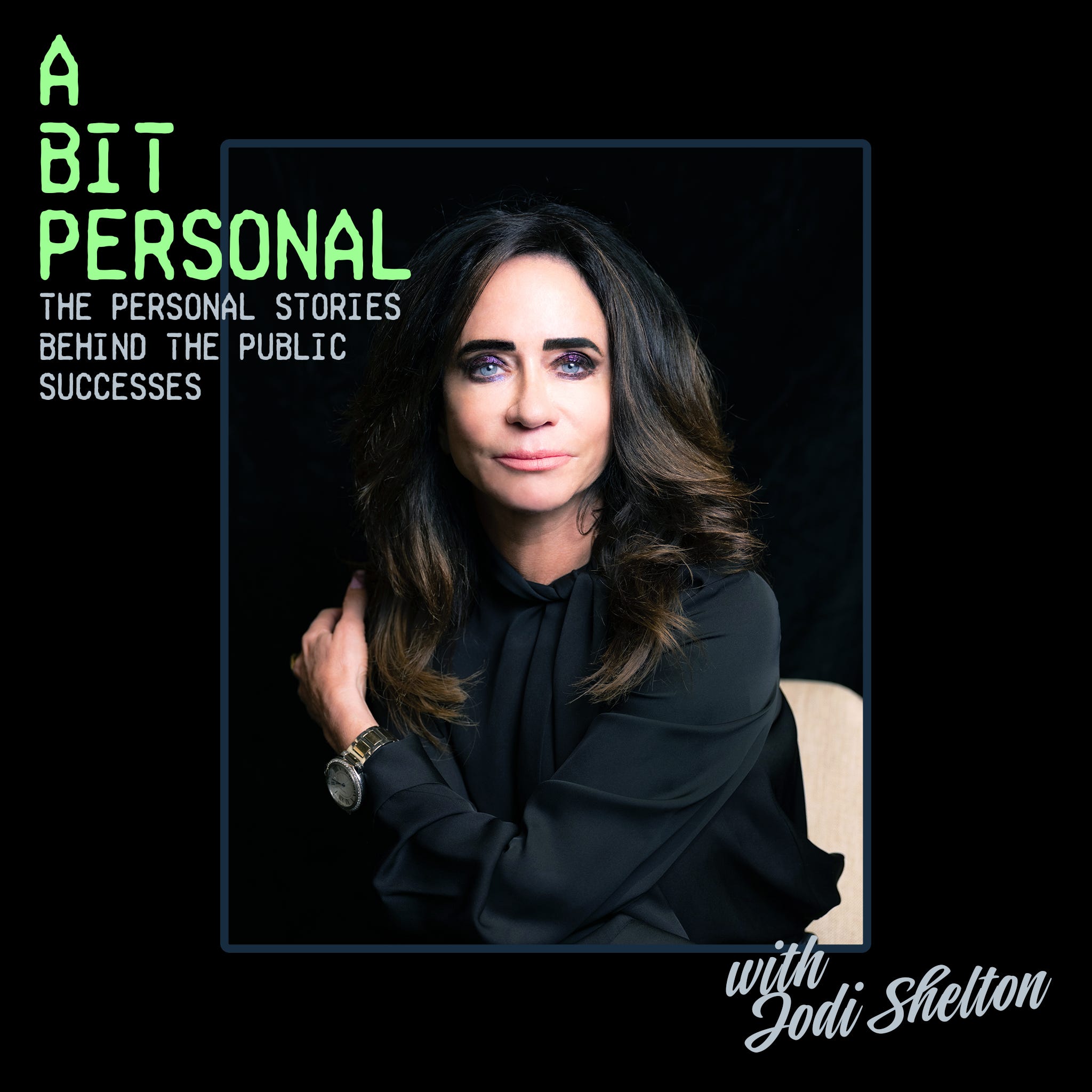
 A Bit Personal with Jodi Shelton
1 Oct 2026 · 1h 26m · 35 chapters
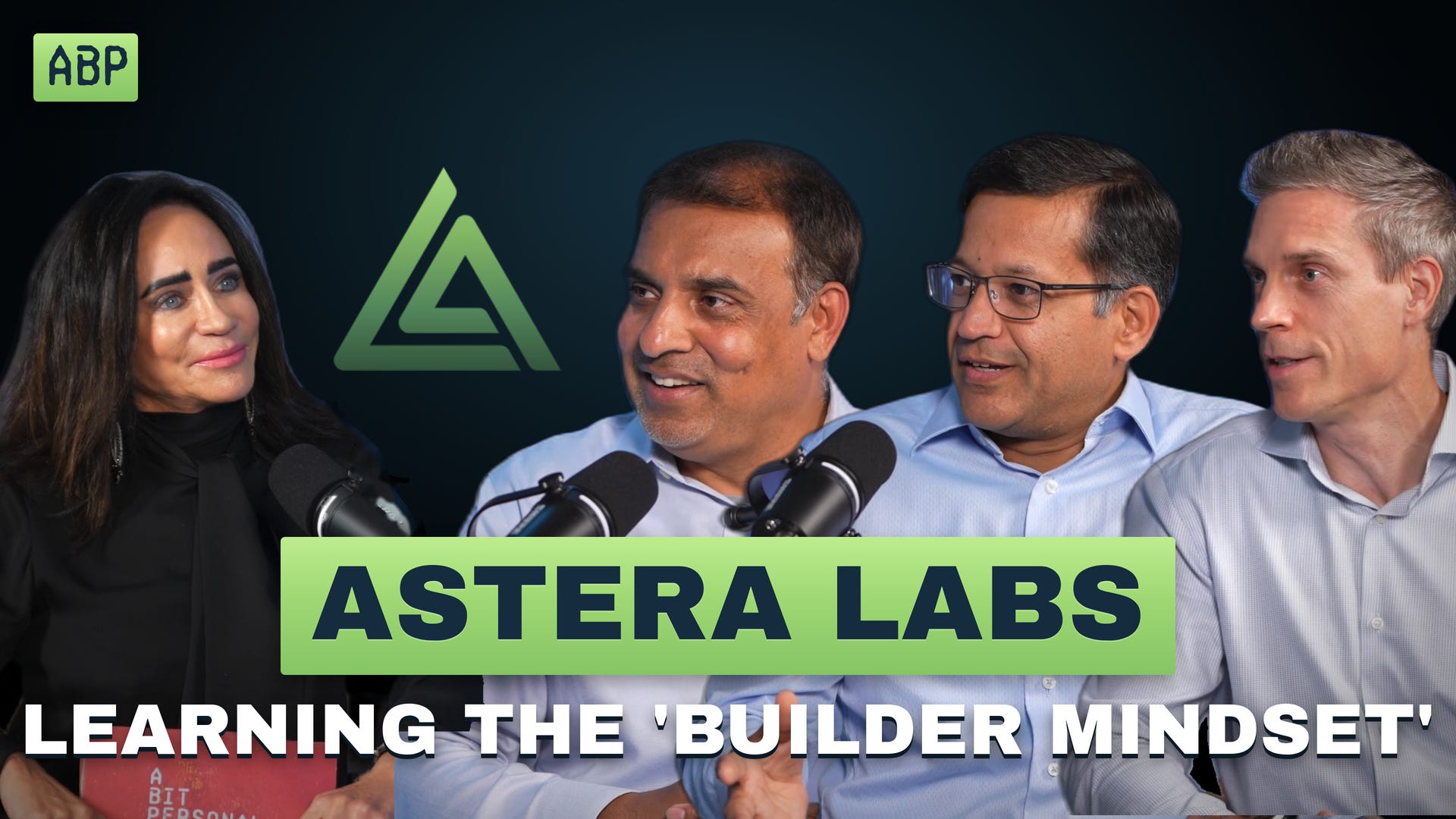
Astera Labs’ origin story and “builder mindset” behind AI infrastructure—how three former Texas Instruments engineers left corporate life to build chips that connect GPUs/CPUs and move massive data fast enough for large language models and hyperscale data centers. The episode also covers leadership, trust, disagreements, and personal values that shaped their partnership.
Written by AI. May contain mistakes.
Sanjay shares how he met Jitendra and Casey, highlighting their reputations and initial impressions.
“I would always see this thing when we were together in National Semiconductors.”
The founders discuss their relationships and how they formed a strong partnership at Texas Instruments.
“First of all, Sanjay, thank you for the kind words.”
Casey explains how to discuss Astera Labs and its significance in the semiconductor industry.
“So I was quite impressed with both of them.”
The founders discuss Astera Labs' pivotal role in AI and their focus on excellence.
“with a great degree of excellence in whatever we are doing.”
The founders share their childhood experiences and family expectations that shaped their paths.
“So first of all, Jitendra, tell me about sort of your family's expectations for you when you were growing up.”
Explore the impact of family upbringing on personal values and entrepreneurship.
“It was more in terms of sort of the impact you live on society or people and so on.”
Discuss the journey from wanting to become a doctor to pursuing engineering.
“And so did they also emphasize engineering when you were a kid?”
Analyze important values instilled by parents and their lasting impact.
“I mean, imagine going to school, and the way kids are put in different classrooms are based on what their parents did at school.”
Understand the concept of delayed gratification and its relevance in life and work.
“Well, for me, my dad would always say these two words, which I absolutely hated as a child, grew to hate, delayed gratification, meaning you work hard now for the results that you will get in the future.”
Reflect on childhood experiences that fostered entrepreneurial spirit.
“what would we recognize in that little boy that's still with you today?”
Examine how early experiences influenced career paths in engineering.
“Was there any either person, place, event that happened that sort of changed the trajectory of your life, or were you always on this path to greatness?”
Compare cultural upbringing influences on personal and professional development.
“but it did not pan out, so yes, they are both engineers.”
Exploration of how Jitendra's parents shaped his career mindset.
“As far as my parents go, you know, they never encouraged me to do one career or another.”
Sanjay discusses his journey to America and his entrepreneurial goals.
“Sanjay, tell me a little bit about your journey to America.”
Sanjay shares his initial experiences and cultural shocks upon arriving in the U.S.
“Not anymore in the true sense of going back and living there, but I do have a big family.”
Discussion about the education path and opportunities available in the U.S.
“Here, what the country allowed us to do, right from national TI and of course, as Terra, is to pursue the dream that we have.”
How the idea for Estera Labs developed through various entrepreneurial endeavors.
“I will say, though, that the initial first impressions were very interesting.”
Discussion on the challenges faced and innovations pursued while starting Estera.
“Even though we were in large corporations, we were initially involved for an automotive product.”
The founding story of Astera Labs, including early ideas and collaboration.
“So for me, I was like, guys, TI doesn't want to do it.”
Discussing the trust among co-founders and the risk assessment of starting a new venture.
“And when the timing was right, it definitely gave us the confidence to go launch something of our own.”
A fun segment where the founders answer rapid-fire questions about each other.
“Okay, I'm going to go through a few rapid fire questions about each other.”
Discussion on integrating family values and support in the business journey.
“So we have to hear a few of your jokes before we end here.”
Learn how effective collaboration among co-founders drives company success.
“I mean, I have, of course, these two, you know, my co-founders, brothers in arms, as they say.”
Discover the importance of constructive disagreement in decision-making.
“I will tell you there are still situations where we need to get involved, but increasingly the intent is that.”
Understand how a strong culture supports product development and customer relations.
“but it becomes the right decision, which is we are not trying to get ourselves ahead of ourselves.”
Explore the interplay of preparation and opportunity in achieving business success.
“successful you can be as you become larger.”
Analyze the current backlash against AI and its long-term implications.
“There seems to be, at least in the last maybe six months, almost be a little bit of a backlash about AI, okay?”
Discussing the importance of preparing young people for the AI revolution through internships and education.
“and enable things for the kids to learn about AI, be ready for it.”
Exploring the societal impacts of AI and how historical revolutions have improved quality of life.
“Are you okay with all these kind of data centers being built and like, you know, cooling and energy and so on?”
Discussing AI's potential to revolutionize healthcare, particularly in cancer treatment.
“what do we do with all of this new GDP or productivity or the gains that have now been created?”
Addressing the public relations issues faced by data centers and the need for better communication.
“But anytime there's a disruption in technology, in the global economy, there's going to be some backlash.”
Exploring the personal sacrifices involved in founding a company and maintaining family life.
“But then everybody got wiser and kind of figured things out.”
Highlighting the importance of family involvement in startups and the shared sacrifices made.
“because starting a company, it is a good 80, 100, 120-hour weeks.”
Discussing how Astera Labs aims to retain its startup culture while scaling as a public company.
“And I guess in some senses, starting a family was a bit of a sacrifice for me.”
Learn how being small and nimble can be an advantage in the AI landscape.
“how far we have come or what we are achieving.”

Get the gist, explore an idea or ask about something said.
 Claude
On A Bit Personal with Jodi Shelton, what are the key points of this episode?
Searching your listeningAutomatic transcript. May contain errors.
0:00Jodi Shelton: There are thousands of startup stories in Silicon Valley. A great idea, a leap of faith, a garage. But today's story is different. It's not just about one founder, it's about three. Three engineers who met while working at Texas Instruments. After years of experience and more than a little courage, they walked away from the security of corporate life to build something together in a garage. At the time, very few people were talking about AI infrastructure. Even fewer were thinking about one of the biggest challenges, how to move enormous amounts of data between thousands of processors quickly enough to keep artificial intelligence running at full speed.
0:40Jodi Shelton: The three founders of Estera Labs, Sanjay, Jitendra, and Casey, saw that challenge long before the rest of the world did. Today, their technology quietly sits at the heart of many of the world's most advanced AI systems, helping connect GPUs that power everything from large language models to hyperscale data centers. Astero Labs became the fastest semiconductor company in history to reach 1 billion ARR in only 32 quarters and went on to become one of the most successful IPOs in March of 2024. So how did three people build enough trust to leave successful careers together? How do they navigate disagreements, uncertainties, and years of risk without letting that partnership fall apart?
1:25Jodi Shelton: And after building one of the most important AI infrastructure companies in the world, what have they learned about leadership, friendship, and themselves? Today, we're going to hear that story, not just from one of them, but from all three. This is A Bit Personal with Jodi.
1:47Jodi Shelton: okay welcome to a bit personal so this is going to be a very unique show because i've got the three founders of astera labs so sanjay jintendra and casey welcome thank you jordi great thank you to be here i promise it's going to be a lot of fun it won't be too painful go easy and i you know i think it's really again it's going to be an interesting conversation because you know you guys have formed a friendship a partnership a trust you've built kind of your family's lives around you know each other and I think that that's a very unique perspective and a very lucky that you guys have found each other and built something quite extraordinary together so I would just like to start by asking maybe each of your perspectives on how you met each other and you know because sometimes that first impression or that first meeting may go a little bit differently for each one of you.
2:42Jodi Shelton: So Sanjay, maybe start with you. Yeah, absolutely. So I met Jitindra. Actually, his reputation preceded him. I would always see this thing when we were together in National Semiconductors. He would always win this patent of the year, patent with most revenue and all that. And I was like, who is this guy that wins all this stuff? especially because both of us happened to work on products the first eight years. I was in software. He was in chip design. And unfortunately, we never made money the first few years. And that bothered me, and later I learned it bothered him as well. So anyway, for me, the first introduction to Jitindra was his reputation.
3:23And when I met him, obviously it was very clear that there was something unique, and not just from a technology and thought process standpoint, But just the humility he brought, so I was instantly drawn to him, and we have together created businesses back in National and then TI. And then now here we are at Estera.
3:44Jodi Shelton: So did TI bought the part of National that you guys worked in? Correct. So we were bought by TI in 2012, I believe. That's when I met Casey. So at that point, we were general managers and running different businesses back in national. Casey was part of TI's ASIC business. And I got this call saying, you have two people to pick from. One is relatively new, but a lot of capability. And the other one was a senior person that knew what to do. I don't know what it was, but it was someone actually came and whispered in my ear and said, if you want to go for something remarkable, Casey is the guy. And this was a manager that managed both.
4:33I was like, all right, let's go ahead. And that was, I think, a very fortunate moment because working with him back in TI and here has been just a super joy in what he brings to the table. I suspect there is probably very few people in the world that can do that.
4:51Jodi Shelton: Poor guy who didn't get chosen. Does he know who he is? That's what he missed out on. I'm sure he knows. Everybody does better. I think we tried to hire him at one point. Yes, we did. Okay, Chitindra, what about you? What was your first meeting like? First of all, Sanjay, thank you for the kind words. Please only believe half of what he said. I have a very interesting story, actually. So I had a manager, and my manager's manager went to Colorado, which is where Sanjay is based out of, was based out of at the time. And then he went there, and he came back, and he said, you know, there is this guy, Sanjay Gajendra, who you must meet.
5:27He thinks like you. Those were his exact words. You must meet Sanjay Gajendra, he thinks like you. So, well, I didn't know him at the time, and, you know, of course it was forgotten after some time. And then just as luck would have it, he relocated from Colorado to the Bay Area and then ended up in the same group that we were in. So I was managing the design organization, or part of the design organization at the time. Sanjay was running marketing, and so we together started to concoct different ideas and so on. And so that's how I met Sanjay first, from my manager's manager, about somebody who, quote-unquote, thinks like me.
6:03And then about Casey, exactly what Sanjay said. We were trying to figure out, hey, who we can get from TI, and there were two names, and indeed there was somebody who said, you know, very much that you should pick Casey, and we are so glad that we picked Casey.
6:18Jodi Shelton: Casey, you remember it that way? Pretty much, yeah. I was in Dallas at the time, as Sanjay mentioned, at TI, and I got an opportunity because not only did TI acquire a national semiconductor, but TI was exiting the custom ASIC business. So I knew at some point I had to find a different group to join, and I got an opportunity to fly out and meet these gentlemen. And I just remember being very impressed with not just them, but the team in general. And I walked away thinking that, you know, wow, these guys are running like a startup. They've built their own company inside of a much larger company.
6:56They could cover architecture, design, commercial aspects, business, you know, business case, ROI. And I just felt invigorated by that, you know, just experiencing that from these two individually and the teams that they were leading as well. and I remember that before I made the journey out to California I had the opportunity to have a call with Jitendra and a few other analog designers I think at the time he was leading analog design if not all of design for a particular business unit and the call was set up because I think there was a customer system where it was a TI ASIC so product that I worked on interfacing with one of the products that they built.
7:42Okay. And so we had to work out some issue. And I remember thinking, and here's this analog design manager who's talking about not just transistors but the whole system. How does it work? What are the startup conditions? How does the firmware work? And all the different protocol details. And I thought, wow, that's not normal for an analog designer to be that broad in terms of his understanding. So I was quite impressed with both of them. And it was a no-brainer for me to join their team.
8:11Jodi Shelton: so you know in our industry i often say that you know i don't know five or six years ago when you go to a dinner party and say that you were in the semiconductor industry people's eyes would glaze over they would walk away not not so interested now of course it's changed a lot but it's still a pretty pretty difficult industry to understand and estera labs is a also a difficult company to understand so casey if you're at a dinner party how do you explain to someone next to you what you do, what industry you're in, and what Astera Labs does. I typically say I work in semiconductors. We design and deploy semiconductors for AI applications to help the brains of AI talk to each other faster and more efficiently.
8:56And before I complete that sentence, usually their eyes glaze over. That is my best attempt at kind of distilling it down to its essence. Okay.
9:07Jodi Shelton: You guys have a better dinner answer? Well, the difference, yeah. Well, I usually start with, I work at Estera Labs, and they're like, what do you do? So we build chips that connect GPUs and CPUs together. So if you're asking a question to your favorite AI agent, it's likely going through some of our chips. Okay. And then I try to steer away the conversation back to more dinner-like topics. Another glass of wine, please. There you go. Yes. All right. So, Astera Labs is an incredibly important company for the AI revolution. But again, it's not like everybody knows who Astera Labs is. I mean, certainly in our industry, you're very famous, but maybe not outside of the industry.
9:50Jodi Shelton: Does that bother you, or is it better that way? Yeah, I don't know if bother is the word. I mean, I think we've always, just as individuals and as a company, what we have tried to do is stay focused on what we are good at and what does it take to operate with a great degree of excellence in whatever we are doing. So I think to that standpoint, I don't think it bothers us. I think sooner or later, everyone feels it. Sometimes we'll have to explain it a little bit better. like what Jitindra and Casey noted in terms of how we impact their lives. And usually we use different ways of explaining through analogies and so on.
10:37But in general, at least the way we'd like to operate is stay focused on the mission. The mission is to create an iconic company. The mission is to create technology that ensures that AI becomes mainstream and accessible to every tier of the society. And as long as we're doing that, I think it gives us great satisfaction. What happens in terms of people's perception about Estera, sooner or later they will realize. I'm sure someday people didn't think about NVIDIA, but today everyone knows NVIDIA. And I'm sure at some point we will get there.
11:11Jodi Shelton: Okay. Makes sense. It doesn't bother me one bit. I'm actually very happy not to be in limelight. Just to go on the stage with you at GSA has probably given us a lot more publicity and a lot more nervousness to me than anything else. Okay, so one of the, again, the most fun parts about this podcast is getting to know the more personal side of you and how you became the leader and the founder and the person, the man you are today. And a lot of that starts with childhood. Okay, so think of this as your therapy session. So I'm going to start. Very easy. Remember what I said earlier. Please. I'm going to start with Jitendra.
11:51Jodi Shelton: and actually Sanjay kind of maybe asks some questions right after one another to see, since you were both raised in India, to see if there are some similarities to how you grew up. So first of all, Jitendra, tell me about sort of your family's expectations for you when you were growing up. You could be anything you wanted to be in my family, so long as it was engineer or doctor. So my family was extremely focused on, you know, education. So I'm really thankful to both of my parents on what they did for me and my brother. Both of us are engineers. But they could also, both my dad and my mother were very different.
12:29My dad was an engineer, and his kind of mantra in life was, do the best that you can, don't worry about the results, put in the work. If you're feeling tired, go to sleep, wake up early, whatever it is, you'll figure it out. My mom, when I was small, she would say, oh, you're going to become a CEO one day. And I'm like, oh, you know, this is my mom just being my mom and so on. And, you know, of course, moms always have confidence with their kids. Little did I know that it will actually come true. But at the same time, she was like, work hard. You know, she would wake up early in the morning to make sure that I wake up.
13:03Jodi Shelton: Wow. Then I will wake up and then promptly go back to sleep. And then she'll come back and, like, you know, tell me, why am I waking up so early just because you're going to go back to sleep again? So they were both great and they took such good care of both me and my brother in terms of encouraging us and providing the right environment for us to be here today. I'm immensely grateful for that. Sanjay, what was your parents' idea of success? Yeah, I think it was actually my parents were quite different. I think my dad was probably more outspoken and he had big plans and visions. and while he was working in a day job, he had other things that he did to just supplement the income and all that.
13:47My mom was probably the one that had the biggest heart that I've ever known, so she was the one that, you know, she was very socially active. She would be in various, you know, volunteering and all that stuff, but for her, the idea of success was not measured in money. It was more in terms of sort of the impact you live on society or people and so on. So I was sort of, it was a two, meaning my dad was probably more entrepreneurial and my mom was more of a socialist. So I think there was that style of upbringing that I could learn from both. But if anything, I think for me, the biggest takeaway I had was for me, it was a little bit tough financially growing up.
14:35So my mom had to work and stitch clothes for others for just getting some extra cash. And for me, it was not that she did it or she never felt sorry for it or whatever. She saw that as a way of independence. And for me, the idea of entrepreneurship was really associated with independence. How do you be in a setup where you're not dependent on someone to give you a job or give you a rise or whatever, that you want to put yourself for me. That was, I mean, she didn't say this explicitly, but to her actions what I was taking away was that little extra money she had gave her so much joy to do things that she otherwise would not be able to do for herself or for, you know, I have two other siblings.
15:23So that was probably the most memorable thing I have, you know, coming from my childhood when it comes to my parents and what truly inspired me to take the path and to be where I am today.
15:37Jodi Shelton: And so did they also emphasize engineering when you were a kid? I don't think you can escape that growing up in India. But to be honest, I think my dad in particular wanted me to become a doctor. He had, I think he had a personal thing where, you know, like he grew up in a family and there was someone in his family that ended up becoming a doctor, but there was some family drama which left him to a mark that he wanted to get his kids to become a doctor, whatever. I won't go through that story right now, but he was very driven, and I was very clear I want to become a doctor as well. But unfortunately or fortunately, I miss the, you know, in India, you go through similar things like what you have here, like SAT type thing to get to pre-med.
16:29And I missed the ranking by like one or two points, meaning I didn't make it into a scholarship, which was necessary for me to go and do my medicine. It was very expensive. Even now it is, I think. So anyway, so I could not afford to go study medicine. So I ended up doing engineering, which I don't regret now, but that's how it played out. We don't either.
16:57Jodi Shelton: so are your parents proud of of everything you've accomplished yeah absolutely i mean this is i mean not just my parents my family right i mean again i grew up in a setup which was small town back in india mining town really cut off from the world um it was everyone that uh lived in the town worked in the iron ore plant, and everything in your social life reflected the hierarchy in the company that you worked. I mean, imagine going to school, and the way kids are put in different classrooms are based on what their parents did at school. So the clubs that you go, the sports that you play are decided again by, you know, the hierarchy in the company.
17:44So I grew up in a set up that was, you know, it was great learning, but it also had its little nuances that we had to go through. So there were a lot of people that needed superheroes and someone that breaks through that more because we grew up in a little bit of, like I said, a lower tier. And it, for me to kind of break through that and be at a point where I am and today, you know, hear about the same classmates the same folks from the town just feel so proudly of me and how that makes my mom who truly was I think is probably more proud for what I was able to do growing up in that setup than me as her son but someone that grew up in that and became what I what what today where I am okay yeah that's a great
18:36Jodi Shelton: story that's a great story so what about some of the most important values and ideals that you either got from your parents or someone else when you were growing up? What do you think that those are that, again, you can kind of see in yourself today? Well, for me, my dad would always say these two words, which I absolutely hated as a child, grew to hate, delayed gratification, meaning you work hard now for the results that you will get in the future. But in hindsight, those were so true, and I am so thankful that he kind of drilled that into us that you should work hard, not necessarily about what the results would be, but just put your best, and then never have any regrets back at the end, whether it works out well or not.
19:22And then for my mom, she was a little bit different. So my dad is very analytical, being an engineer and so on. My mother was a teacher. She retired as a principal of actually the schools that we studied in. So she always taught us to be optimistic, to of course work very hard. You need to put in all the work. Don't become too confident of yourself. You know, if you don't work hard, you're not going to get anywhere, no matter how smart you are. So I'm just really grateful for all the lessons that we got, both me and my brother as kids.
19:55Jodi Shelton: So that whole delayed gratification works well for the semiconductor industry, right? Yeah, yes, that's right. You cannot compile a piece of software and say, oh, it works. You've got to wait 18 months for the results to show up. So what would be, if you looked back at your 12-year-old self, Sanjay, what would we recognize in that little boy that's still with you today? Oh, my God, 12 years. So I want to say I was extremely, I won't use the word entrepreneurial. it wasn't entrepreneurship but I was like risk-taking I wanted to be the best I wanted to like I used to play sports a lot growing up and I would you know again it seems like a what is that sad story but it's not but I would you know to get I used to play badminton a lot and and I would keep breaking the strings on it.
20:56And getting it repaired was tough to go get it done from outset. So I learned very quickly to do it myself. And then I used to have a racket that was not the greatest. So I would go and compete in all these things and then go and convince the organizer saying, hey, I won whatever, eight different events from badminton through ping pong and this and that. Can you please combine all of these little awards? They would give us little trophies, combine all of this and give me the money so I can go buy a better racket or trade it for something. And, you know, at that point, they would look at me and some people obliged.
21:34Some people said, you know, this is all you're going to get. But now when I look back on little things like that and, you know, and see myself where I am today, I can see how those kind of things actually help me. In fact, it's growing in that setup and trying to do things even though people said no and you somehow figure out to convince them. And I think those are all areas that when I was at that age, I didn't pay much attention. But now I can see how the initial learnings or the things that have shaped me were born in that age. If that's not entrepreneurial, I don't know what is. I've not heard this story before.
22:15Did they give you the money? What's that? Did he give you the money? Yes, so I managed to convince them to, there used to be, Jitana might know, Yonex, which is famous, is very expensive. I couldn't afford that, but Yonex was a full graphite racket. And then there was a, I want to say a Korean brand called Kiptim, which just had graphite on the shaft of the racket. Rest of it was aluminum. So I could afford that, and I managed to convince the organizer to say, take all of this, give me some. I don't know whether the organizer paid it out of his pocket because I don't know how he pulled it off, but I was able to buy a racket, and then I saved it for four years like it is made of gold.
22:56That was my dedication to that.
22:58Jodi Shelton: So it never broke another string? No, it broke, but I would never give it to anyone. I would always take care of it like this is the last racket I was ever going to get. And, you know, yeah, no, it was pretty fun. Yeah, it teaches you the value of money early on. So, Jitendra, what about you? Was there any either person, place, event that happened that sort of changed the trajectory of your life, or were you always on this path to greatness? Well, you know, I don't even know if I'm on that path now. But something that did happen is very luckily for me, I learned very early on, probably in that same like 13, 14 years of age, that I wanted to be an electrical engineer.
23:45And how that came about is actually kind of interesting. One of my cousins, he was in the same city that I was in. He was studying there. And we had this old Panasonic tape recorder. And the tape recorder broke. It stopped working. And he happened to be at home and he said, oh, my elder brother, I'm going to take it to the repair shop. And he said this one thing that I still remember. And he said, why don't you do it yourself? And up until then, there was no concept that you could take a piece of equipment, machinery, whatever it is, and repair it yourself. You always took it to the repair person.
24:20So I said, okay. So I opened it up. Needed to find Phillips had screwdrivers, which were not very common in India back then. Opened up, found out that the belt that connected the motor to that cassette drive shaft was broken. So went and bought another, kind of like a rubber band, basically, and put it there. And voila, it started working. So that was very good. Then I said, how do I make the sound of this thing better? He said, oh, you have to design an amplifier, and you need to take the speaker out of this one and put it on a clay pot. And then it's got a bigger echo chamber, and it'll sound better.
24:57And I said, okay, how do you design an amplifier? So really that one statement of saying, why don't you do it yourself, started me down this path, and I realized I really loved circuit design. And I've been building circuits since I was in eighth grade. I have smoked resistors, I have smoked diodes, connecting them in the wrong direction. My first circuit was a work of art. The whole circuit was put together in 3D because I did not know the concept of a PC board. So there was a transformer and all these resistors and capacitors and transistors were all hanging in free space. And it didn't work.
25:34And I took it to somebody who could tell me, and he looked at it and he looked at me and looked at it again. And he said, why don't you get a piece of plywood and put them all flat in one dimension, and then we'll try to debug it. But anyway, luckily for me, I really got started in electrical engineering early, and I tell my kids also that knowing what you want to do in life early on is probably the biggest blessing that one can have.
25:58Jodi Shelton: Yeah, and both your boys are engineers. We tried very hard to at least have one of them get into medicine, but it did not pan out, so yes, they are both engineers. All right. Casey, talk a little bit about some of the cultural differences. I mean, you've heard the way that they grew up. Maybe think about it from that perspective of how you were raised and how was it very different from the way that they were raised? I'm sure it was very different, but I think there are also a lot of similarities probably. I'm the youngest of four brothers. I have a twin brother, but I'm two minutes younger than him, so still the youngest.
26:33And I think for me, a lot of what I eventually became was heavily influenced by my brothers, in addition to my parents, of course. But my brothers, the oldest one is a very successful, accomplished musician, and just very talented in that area, put in a lot of work to get there. And that motivated me, and it rubbed off on all the brothers, actually, to pursue music, in addition to academics. They were not mutually exclusive. In fact, in many cases, they support each other, I've found, through the years. So that inspired me, not out of any desire to compete with my brothers, but just being in awe of the results of all their hard work, the performances that they gave, the gigs that they did to earn money.
27:24That was inspirational for me. And my second oldest brother is a very smart guy and engineer as well. He was salutatorian of his high school class, so listening to his speech at graduation, listening to all the presentations he gave and the different projects he worked on and just the accomplishments he's made not only in high school but college and in his career really inspired me to pursue academic excellence and excellence in everything I pursue, really, related to work and schoolwork. So that rubbed off on me a lot. As far as my parents go, you know, they never encouraged me to do one career or another.
28:09In fact, it wasn't common, at least in my community, for parents to really, you know, drive their kids to a particular profession. They, in fact, they never even, you know, got on my case about studying or or applying to universities or anything like that. They just always encourage us to work hard, do our best. You know, don't dwell on failures. Move on and, you know, quickly go in a different direction or focus on, you know, what you can do, what you're good at. And so I think in general, they just encourage us to do our best. And whether we chose engineering, three of us did, or chose music performance, I think they would have been fine either way.
28:59For the record, we tried to hire all the engineering Morrisons. We only succeeded with the one. Imagine what the company could have been if we had the other.
29:08Jodi Shelton: Sanjay, tell me a little bit about your journey to America. So why did you – was that always an aspiration? Was that your parents' aspiration? Growing up, it was about the independence and sort of the entrepreneurial spirit. Very early on, I was like, this is what I want to do. I was very clear about it. And during my college days, I had multiple jobs, multiple failed businesses. But that was who I was, and I enjoyed it. So when I got out of college, I worked in India for a little bit. But I was very clear in India, I want to say nine out of ten companies in the tech do services business. Very few companies do products, like products where you're thinking about what's needed and so on.
29:58So I sought after being in a product type of projects when we initially started off. and for me the idea of product I think from being back in India and looking at the US product companies and at that point Microsoft, Apple and all these great companies you think about sort of the innovation and the kind of stuff that they do was always inspirational and at the same time when you know around the 1990s early 2000s of course there's a lot of people that moved from India to the U.S. because first it was the Y2K stuff. A lot of work was there and so on. So in either case, it was one of those things where I wanted to be around products.
30:48I wanted to be around great companies. I wanted to sort of experience that, learn from it, and essentially prepare myself to the eventual point that if something were to happen where I could do my own thing, then I'm ready for it. And thankfully, what I had envisioned about the country turned out to be much bigger than what we really thought. We thought we'd stay for five years, maybe go back, but obviously we've stayed put and it's been a great ride.
31:21Jodi Shelton: Do you ever think about going back? Not anymore in the true sense of going back and living there, but I do have a big family. Still back in India, my mom's still there. I do want to do something for the country where I was born, along with what we're doing here. So I do see myself right now working on projects that are leveraging the technology, AI technology, for enabling different social tiers in the country, which I think countries like India are probably not even aware of how much of impact AI would have because there's so many jobs there that do like back-end processing, transcription services and all that, which completely get wiped out.
32:11So I do see myself going back and enabling not just India, but countries that are in that realm where high population, that low-tech type of field. So I do see myself sort of working more closely with India and other regions in that similar demography over time. But I don't know if we will actually go and live there forever.
32:35Jodi Shelton: And so what was your first impression when you came to America? It's actually a funny story. I landed on July 3, 1999. I distinctly remember I landed in LA, and I was put up in a hotel. I came out, and there's a bunch of kids that came around saying, are you going to go watch the fireworks? I'm like, what fireworks? Growing up in India, there's a festival called Diwali where you do fireworks. And of course, they were talking about July 4th, and it was first city I came was LA. And I must say, first of all, the fireworks was great. For the first time, I truly enjoyed the fireworks. But LA was a little overwhelming.
33:22You know, growing up in India, you have a certain imagination of the US. I mean, the pictures that you see are, of course, glamorous, and everything seems so nice and clean. But LA just reminded me that just felt like I was living in the street for some reason. So it wasn't that cool. So we quickly moved out of L.A. to Colorado, and then we opened the door there, and we see barn and horses outside. We were like, okay, where is the America that we have promised, which are the skyscrapers and fancy cars and this and that. So anyway, so I think those were my initial impressions, but what we loved about America then and we continue was that we were allowed to do what we want to do.
34:08Because in India, what happens is that you have to earn your stripes. It doesn't matter how good you are. You have to go through the years. And by that time, who knows, right? Meaning technology would have changed or you might not be motivated anymore. Here, what the country allowed us to do, right from national TI and of course, as Terra, is to pursue the dream that we have. Make sure that, meaning it's all based on what we can do. There is not a whole bunch of external barriers that can bring you down. That, I think, for someone like me and the passion and the sort of the ambition I had to create a company, it's been, like, fantastic.
34:48And I'm so thankful for the country and everything that people here have done for us.
34:53Jodi Shelton: Okay. Jitendra, so you attended IIT in Bombay, so a very, very prestigious university before you came over and went to Stanford. So tell me about that process or that journey. I mean, as I said earlier, you know, my parents were quite invested in our education. And actually, I didn't know what IIT was. But, you know, I would say my dad, to the more extent my dad found out about all of these things. He said, hey, these are the, you know, opportunities that you have and that you should pursue. And so, of course, like everybody in India, I studied for the exam. And it's an entrance exam. It's nobody reads your essay.
35:30You take a very quantitative test and you get some scores on the test. And that decides sort of the path that you go on. And I'm not going to say that was better or worse, but that's what you had to do. So I scored well enough in the exam to get into these IITs, and my parents would have been very happy for me to stay at one of the IITs that were closer, like in Delhi or in Kanpur. But I wanted to go to Bombay because, A, I had heard a bunch about Bombay. It's more metropolitan. And of course, I would get my branch of choice, which was electrical engineering, which I was. It was probably a little bit close call at either of the other ones.
36:08I said, I want to study electrical engineering, so I'm going to Bombay. And they let me go. Soon after, my dad came back to Bombay and said, it's time for you to go home because I managed to get into one of the good government jobs. And he had worked in a government job really all of his life. And I think he was really disappointed that I said no and that I will not. And then at the end of the day, you also become a product of the environment that you are in. And in IIT, a lot of people go to the U.S. to study further. So it was just something that you did. And in my family, my other role model outside of my parents is my uncle, who left for Singapore at an early age.
36:48And so he was the cool uncle who was bringing very good gifts and everything. In fact, he started his own company when he was about 50, about the same time, you know, that we started Estera. So he was definitely a role model. And so, you know, the moral of the story was if you go abroad, more opportunities might open for you. So I think that also led to my belief that, hey, you know, maybe we can really realize the potential of, you know, what we have by going to the U.S. And, of course, as Sanjay said, we are really, really thankful for what the country has given us. And, of course, I've lived more of my life in the U.S.
37:23now than I did in India. I will say, though, that the initial first impressions were very interesting. So, you know, we came, me and my classmate also was my roommate at Stanford. We came on the same flight. We were quite tired, so there was a little bit of time between somebody who was going to come to pick us up. So we went to the restroom to rest. That was a surprise. and then you know then we came home and and stanford has this very interesting uh um scheme where they will set you up with a local family so you'll learn a little bit more of the cultures and so on and i thought i spoke pretty decent english but they were not able to understand me because it turns out our pronunciation in india is just very different from the way you pronounce the same word here okay so that was a learning experience um and then they helped me buy a bicycle.
38:12I invested a significant portion of my net worth then in buying this bicycle. And I would go on a road and like what's up with this zinc pad? You go on the road and everybody would say zinc pad. And nobody could like, I guess I probably did not ask anyone. Eventually it was pedestrian crossing. But it is written in the opposite order of how you typically read it. So there are many such little things that I got used to. I mean the other one I would say is in India might is right. So the car yields to the bus, and the pedestrian yields to the car. And here we would get to a stop sign, and the car is waiting.
38:51I'm like, car, please go. And the car is, no, you please cross. So it was very interesting.
38:57Jodi Shelton: All things that, you know, those of us who have been here forever don't understand. Yeah, have a very different perspective. So one of the great things about Estera Labs is that, you know, you guys started it as grownups. I mean, you weren't 23 years old when you started it, right? And so, you know, I just want to understand a little bit about the process that you went through in deciding to start the company. So whose idea was it first? Sanjay's. Yeah. The entrepreneur here. Yeah. Yeah, no, it's, I mean, we, Casey joined a little bit later, but Jitendra, me, and there's one other person who is still here, Nate Ungar, we would travel a lot early days.
39:46We created a couple of businesses, and we would go meet customers, do all this. And I want to say we had, it was the best time because we would fly on planes. All we're talking about is new ideas. What can we do? All harebrained ideas. I mean, none of them would have worked. but you know okay we have we go travel we collect a whole bunch of like foreign exchange coins and we invariably come and throw it at home we're like hey when you come come back to the state so we're living what about just throw it into a jar and you get something back in in the u.s currency whatever right it was many many ideas that we worked on and we would actually sit and try and journal it document it understand what are some ideas that we could be building so i i don't want to say Estera just happened, but we kept thinking about it.
40:35Even though we were in large corporations, we were initially involved for an automotive product. Then when cloud was happening, we started creating a business around it. Then we're talking about two, three of us and creating teams that were three, four hundred people with hundreds of millions of dollars of revenue. We were always putting ourselves in situations where there was a big problem to be solved and trying to imagine how do you go and try to do it in a way that take that opportunity and create something out of it. So that was probably, I want to say, always part of our conversation. And then when, Estera, I think, I don't know if you heard this story, it really happened by accident because when we saw this notion of what we call heterogeneous compute, we actually went to TI management first and said, you know, every year in September they have We were all GMs at that point.
41:31You have to go present your long-term plan, and we talked about this. TI taught us a lot of different things, but they're also very clear about their business model, which is focus on broad market. They would rather sell a part to thousands of parts to thousands of customers versus trying to go vertical, which was the data center market. So they very nicely said this is not something that fits the business model. They wouldn't want to go to TSMC and all that. So for me, I was like, guys, TI doesn't want to do it. We see this transition right in front of us where at that point the server motherboards had like a CPU from Intel or AMD.
42:14But now we were starting to see the same motherboards start having CPUs, smart NICs, GPUs. where the foundation, the interconnect fabric has to change in order to keep up with the notion that you have multiple processes that can produce and consume data. So I was the first one to jump on it. And I was, of course, since we've been talking all the time, so I, you know, tried, of course, started talking to Jitendra and then Casey. And at some point, he was waffling. So I was like, managed to convince Casey. I remember in like a parking lot, I'm like, hey, we're having this conversation. I don't know if Jitendra will come or not.
42:54Do you think you will come along? And anyway, long story short, he joined as well, and he can tell the story how he changed his mind or I don't know what happened. But anyway, that's how the company got started. Okay. I'll tell you the entrepreneurial scale. So when there is a new idea, you know, sort of you have to take a leap of faith, right? You're at the edge of the cliff. Sanjay will jump. Then he'll probably look down and say, okay, where am I going to land? That's his scale. I will go to the edge and look, you know, is there water there? Do I know how to swim? Will I survive? And then I will jump.
43:29Casey will jump because I tied a rope to his legs.
43:35But my, you know, I think what Sanjay said is correct. I think the interesting part with us was we're always trying to figure out where the problems was, where the problems were. and what we could do. And for me, that started very early, actually even in college. So I don't know if I shared with you guys. My roommates, we had a company named, GJM Enterprises, named after our initials. And we had some really good ideas. But we did not implement any of them because somebody had already, quote unquote, done it. So we did not, and of course then we graduated. And then in the early 2000, we had another sort of a company in the formation with me, my wife, my brother, and my wife's brother.
44:18And so we had, again, good ideas, but we did not do them because somebody else had done it. And then, of course, my kind of entrepreneurial thoughts took a big break until then I met Sanjay. And then we would talk about many ideas, and I think Sanjay was probably the proposer of most ideas, and I was probably the shooter of most of those ideas. And then, of course, Casey joined, and Sanjay was saying, we would intentionally pick seats on the airplane that were right next to each other. He got the aisle seat because, you know, he's got the longest legs. But we would talk about strategy and what we should do, what we shouldn't do, and so on.
44:55And that ended up becoming a very successful business for National and then for TI. And when the timing was right, it definitely gave us the confidence to go launch something of our own. And I don't quite remember it kind of waffling or not waffling, but, yeah, I did shoot down many ideas before this particular one. I still remember the call. I was in Germany on vacation with my wife and my two kids. And then I got the call that Sanjay said, hey, you know, I'm resigning. I'm done. And so then I told my wife that, you know, at some point I will also resign. And I remember she was like, oh, really?
45:34Do you really want to resign? And we had been talking about it, but it was the first time that I think it got real for her. and so the rest of the trip we talked about you know should we start a company what should we do how should it be and so on and the kids were in the back listening or playing video games I don't know but again just very very thankful for all the support my family has provided my wife being the the foremost at that to to say okay go do this that was the year that my older son was entering high school okay so it was you know quite a leap to say hey I'm gonna be busy and and not as available.
46:11So yes, really thankful for all the support and of course the opportunity that came together.
46:16Jodi Shelton: So Casey, what made you trust these guys? Basically that you could build a life together. Well, after working with them for several years, getting to know their personalities and their capabilities, being a brilliant business mind that Sanjay is, fantastic negotiator, someone who's down to earth and able to convince customers of just about anything and to Tender being a brilliant analog designer but also a sensible business person as well, I knew that from a core capability standpoint, this was a very safe bet to join them. And I didn't have kids at the time, so my calculus was a little bit different.
46:57I basically just got out a spreadsheet and said, okay, here's all my savings. Here's what I've got in my 401K. here's how long I could go and still be comfortable without getting a salary. And after that, math worked out to the point where I could probably go, I forget what the number was, maybe a year or two. I thought, okay, the risk is low financially. I could always go crawling back to TI or somewhere else if things failed. And why give up the opportunity to spend a year, two, three, who knows how long with some of my best friends and people I really respected? it's a once in a lifetime opportunity.
47:35So it was an easy decision for me.
47:36Jodi Shelton: Okay, I'm going to go through a few rapid fire questions about each other. And so I want you guys just to point to the person who it applies to. Point of fingers, ready? Yes. And for those people only listening and not watching, I'll say who you pointed to. But who is the most patient among the three of you? Patient, I think I'm pointing to Casey. Casey. So there's a little disagreement. So both of you to Casey and you to Jitendra? Yeah. Okay. And by the way, you can say yourself. I'm not going to describe any positive qualities to me. No, you can. You have to. Okay. Who's the most stubborn? Stubborn, yeah.
48:21Okay. It's unanimous. It's Jitendra.
48:24Jodi Shelton: Okay. Who's the most likely to change their mind? Yeah. Okay, Casey, everybody agrees. Who's the best listener?
48:37Maybe Casey. Okay, Casey.
48:39Jodi Shelton: Casey, you're winning a lot of these. Who's the most competitive? Sanjay, for sure. Probably. Who's the perfectionist? Oh, Casey, easy. There's no question. No question. Do you think that of yourself, Casey? Yeah. We do the slides ready to go to the customer. I can see this thing like wiggling around. The things are being straightened up and whatever. I'm like, I know Casey. Till he does that, he wouldn't let us present. Morgan Stanley celebrated its 90th anniversary last year. And its tech investment banking team has prided itself in working with the most innovative entrepreneurs and leadership companies for decades.
49:23Jodi Shelton: During that time, they've led IPOs for hundreds of tech companies, including Apple and Arm, Astera Labs, Broadcom, Cisco, Facebook, Google, NVIDIA, Salesforce, and Uber. In addition, they've worked as a trusted advisor and executed thousands of M &A and transactions for some of the industry's most defining deals in technology. Throughout the years, Morgan Stanley's tech investment banking team's success has been achieved by dedication, consistency, and a North Star purpose of helping its clients maximize their opportunities and overcome their challenges. Now let's get back to the episode. Who's the first to apologize?
50:11Okay.
50:12Jodi Shelton: Casey? You know, Casey. Yeah. Who worries the most? Also Casey? Yeah, probably. Okay. Who makes everyone laugh? Jintendra. One-line king. One-liner king. The jokester. Okay. So we have to hear a few of your jokes before we end here. Who keeps the meetings moving? Sanjay? Yeah, I'm pretty demanding in meetings, but Jintendra tries to keep it efficient, so I don't know. I try to avoid meetings, actually. Who loses sleep over things? Not me. I'll tell you that much. Thankfully, we all sleep well, I think. All of you are good sleepers? I think Sanjay sleeps the least, probably. Yeah, I sleep the least, but that's how I'm built.
51:02Jodi Shelton: Okay. Who's the best engineer? Jitendra. No, no. No, no, no chance. He won the best engineer award. I mean, he has a trophy to show for it. I don't have any trophies. So the garage story of you guys starting in a garage is literal, which is a great American myth most of the time. So whose garage did you start in? Sanjay's. My garage. Okay. And what did your wife think of this? I think, see, at that point, what we did when we started the company, we didn't make it about ourselves. We said, let's get the family involved. Okay. Because it's, you know, of course we need the support, which we're very grateful for that they're provided.
51:46But we also said, let's make it about everyone, right? So I used to train middle school kids and high school kids in my garage for various different things from programming through various science competitions. So I had a setup with a bench and some chairs and all that and whiteboard and stuff like that. So I was like, yeah, let's start there. And I don't think we, my wife was totally fine. I mean, we talked about, I mean, some of the first things we did was let's talk about the values for the company. Let's talk about the name, we made it a fun thing. Everyone pitching in, the family all came up with the logos for the company.
52:32You know, they all participated and they were part of it. We used to, you know, do different things and talk to the family right from the beginning. I love that. Yeah, so they knew what was happening. My kids, I think, they were younger, but my older one, just like him, was just starting high school. So they were pretty much involved in it and so on. So I think it was just a nice, happy feeling as we went through the first phases of building the business case, getting the funding, which we thought was going to be tough. so yeah I don't think there was any resentment from the family at all even his dog knew about it Finn knew about our company and he was very vocal about it correct
53:17Jodi Shelton: so who came up with Estera Labs? Casey we had a lot of suggestions but I think Casey came up with Estera what was the theory behind it? there were some not so creative aspects to it we wanted to have something that begins with the letter A we wanted to have something with the word labs in it or at least actually that came later once we came up with astera which isn't really a word it kind of has some root words in it like star or star-like like the aster flower is named the way it is because it looks like a star and we all kind of liked cosmology and thinking about the universe and things like that But we also knew that we wanted to build connectivity solutions.
54:05And, you know, stars can be connected to each other in constellations. So we thought that kind of meshed. And then once we came upon Astera, we needed to find a domain that was free. And astera.com was taken. I think it was some medical-related company. But Astera Labs was free. And Labs is a name that was used by other startups who we aspired to be like, you know, some startups that had ended up having common investors, in fact. So that's how we came up with it.
54:41Jodi Shelton: So who decided or how did you guys decide that Jitendra was going to be the CEO? Well, you look at the most handsome, the most charming. Is that what it was? Well, no, that would be Casey, actually. That would be Casey. No, no, no. I wouldn't win that one. I mean, who can be the most willing and dealing? Well, then that would be Sanjay. I don't think you really debated it. I don't think we did. I always followed this guy, right? So I always reported to him in my previous, like once we started working together, I always saw him as, of course, someone that we deeply respected, and of course, he was good in what he did.
55:19So I think, I don't think there was a debate at all.
55:23Jodi Shelton: Okay. I think I had the most gray hair. Yeah, he's the oldest one too, we should say that. So we're like, all right, let the old guy get the CEO. There you are, I'm so grateful. Tell me about your journey. So first of all, you told me at a dinner that we were at recently that you're an introvert. Yes. So how does an introvert lead a great company? Well, together with other people. Okay. I can't imagine leading the, I think people talk about this, your CEO is the loneliest job in the world and so on. I don't see it that way at all. I mean, I have, of course, these two, you know, my co-founders, brothers in arms, as they say.
56:06So I don't find it very difficult at all. We have different areas that we focus on. Both Casey has, you know, his area that he focuses on is exceptionally good at it. Sanjay is the best marketer that I've ever known. He's exceptionally good at marketing and business and so on. I like to figure out how to build things, what things to build, how to keep a team together. And we all contribute into each other's area of expertise. So I find it really a very joyful experience to be the leader of this company, even though really the company is led by not just me or not just the three of us, but many people who are in the leadership team and then many people who are working day in and day out for truly a cause.
56:54As far as my own sort of personality, I definitely am a shy person. I am, at least when it comes to work, mostly I would characterize myself as an introvert. But there are times when you have to sit in front of Jody and you have to talk into a mic. And so of course we bring the A-game and try to get through that.
57:14Jodi Shelton: So there hasn't been sort of that lonely decision that only you have to make? No, not one. I think I can say that pretty confidently. Oh yeah, absolutely. Not only. I think that's the uniqueness that we have, which has helped us sort of build Estera, is that there are a lot of tough moments, tough decisions to be made, but somewhere we complement each other in a way that is extremely strong and positive. And it also allows us to sort of achieve many things in parallel. It does, I feel for CEOs that are just by themselves, because everything ends at them. Here, what we have is an opportunity where we can divide and conquer.
57:57And I think not just between three of us, but with the rest of the team, at least the philosophy that we try to promote within the company is that you work for me, but I work for you as well. And just that simple way of thinking allows us to really have a force-multiplying type of effect where everyone is enabled in different ways to take the company forward. I will tell you there are still situations where we need to get involved, but increasingly the intent is that. How do we enable the broader team? How do we make sure that we can take the best decision possible? I personally believe the reason we have been able to think like that is when we got out of TI, we were not in exec positions.
58:41We were mid-level managers that had to deal with a lot of things rolling up our sleeve. and when we started Astera and grew the company, that piece of us has never really changed. We don't know how to be a typical C-level exec in a large semiconductor company. We don't know, and we're just doing what was right and what worked for us, and that, I think, reflects in everything we do and the culture that we're building here at Astera.
59:07Jodi Shelton: So has there been an instance that the three of you disagreed on something, and an example of how that got resolved? Let me give you an example first. We just had an offsite recently. We don't have too many offsites because of me. We have a few offsites because of him. So we had one, you know, recently, and there was a request from the team, specifically to the two of us. You know, I think Casey gets away from this one. Can you guys agree more? I mean, quite like succinctly put, that was the request. And so what is the point of that? If you just agree, then you just don't even need two people.
59:43One person is good enough. So I think a lot of the power that comes in the decision making or the efficiency of decision making, the correctness of decision making comes because we disagree. However, there is a lot of trust amongst each other and at some point in time a decision must be made and we will make a decision together and one decision moves forward until it's proven incorrect and then we've got not big egos and we will change it. So your question was give me, give you an example. What was the last disagreement? Well, maybe we just had to go this morning, I don't know. No, we disagree a lot, to be very clear.
1:00:24I mean, from small things to big things. Like, I think the way we are built, I am like the big picture guy, the top stone guy. I'm thinking four years ahead, you know, we are doing this whole thing called Estera 3.0, how do we become a large public company? and I'm like that thing. And I can go crazy in my ideas about how to achieve that. Jitindra is a realist in the room, and he's coming and saying, this can't happen, this won't happen, whatever else, right? And we are constantly trying to make our points. But the solution to that, and of course Casey comes in with the depth and more of the finer aspects of what they were trying to solve.
1:01:07But somewhere the solution comes together where it's maybe in the middle or wherever it ends up, but it becomes the right decision, which is we are not trying to get ourselves ahead of ourselves. At the same time, we are not being conservative. And we are trying to approach this from top down, bottoms up, horizontally, and whatever it is, and taking the best possible decision at that point. but the most important thing I'll also reiterate what Jitana said is that the goodness I think for three of us is the respect and trust and no ego you know he could make a point get away with it I'm not going to hold it against him and I think that simple notion has helped us to kind of make sure that we keep moving at some point his decision may be wrong and then we're like okay we all took a decision didn't work out let's back out and do what else we have to do okay there are so many times you all did not agree and Casey pulled in one direction maybe the two of us were together or maybe me and Casey were together Sanjay's pulling in the other direction but at the end the decision we took I would say invariably hundred percent of the time was a better decision than any of us could have taken
1:02:15Jodi Shelton: individually you know I've talked to a lot of CEOs over the years and there is this idea of an echo chamber that people are going to say what you want to hear and it doesn't sound like that that is the case oh with you all We're almost three and more amongst the leadership. In fact, we just had a new CHRO start, and her first day was literally at this offsite. So she witnessed sort of the exchange that was going on, and afterwards she told me, I have never seen anything like this before. People in the room could say anything. Most CEOs will prohibit people from saying a certain amount of things.
1:02:49But I think that is really what gives us strength as a company.
1:02:52Jodi Shelton: So Casey, when you guys were starting out, what did you envision in terms of what kind of company that you would build? I mean, technology is one thing, but focusing on the culture, what did you want to build? Well, before I get to the culture, in terms of the business and the company itself, in terms of what style of company we wanted to build, we always set out to build a company based on products and customers, not hype. And there's a lot of startups who have this fantastic idea for some elaborate accelerator or chip that does all the AI training and inference and it does it better than anyone out there.
1:03:35We started with very basic, but still much needed products and we were gonna focus on products and customers. And I think as part of that, in terms of culture, execution was a big part of the culture that we wanted to build. Because in order to have customers and products, You need to start with a solid idea, design the chip, tape it out, and do it on time, and more importantly, when you told the customer that you would deliver it. So meeting those commitments was important. Execution, trust. Trust amongst ourselves, amongst our team, but also with our customers. We wanted to become kind of an extension of our customers' engineering team.
1:04:21We wanted them to feel like we are in it with them, we're part of their team, trying to solve their problems day in and day out. So that was a big aspect of it. And I would say those are the two foundational aspects of our culture. We've added to our values over time with inputs from the leadership team, from the company at large. And I think we're constantly trying to think about and intentionally shape our culture, because that's such a crucial part of a company when you're tiny, but also when you're rapidly growing. The more you can maintain that foundation of culture, the more you can scale and the more successful you can be as you become larger.
1:05:05Manuel Alba, who's one of the founding investors in the company, chairman of our board, all in all kind of the godfather of Estera Labs, he calls us an old-fashioned company. What does that mean? What that means is we attempt to, at least, we attempt to build products that our customers like that we can sell for profit. Very simple three-step plan. Build products that customers like and then sell them for a profit. That's what we started doing. That's what we still do.
1:05:35Jodi Shelton: So let's talk a little bit about the product. So you guys had been working on, you know, pretty quietly working on your product for a while. And then sort of the chat GPT moment happened. and suddenly everybody is interested in AI and interested in a sterile lab. So did you just feel lucky or validated at that point in time when that happened? I can start maybe. So, you know, this has come up many times. And hey, we were waving the flag for the last, whatever, four years. Then after the chat GPT moment happened, then I think people started to take notice. And I still remember at the IPO time, you know, part of this job is you have to give more speeches than you like.
1:06:17But I had to say a few words at that bell ringing.
1:06:20Jodi Shelton: In 2024, right? In 2024, the bell ringing ceremony. And I think what I said there, I will repeat here, which is luck or timing is just one thing. Luck really means when you are ready, and then the opportunity presents itself. There could be the opportunity, but you're not ready. Or you could be ready, and the opportunity never comes. So I think what it was for us is we saw something like Sanjay described earlier, hey there is something going to happen in AI where all these companies building accelerators will need a connectivity solution and so we built it. And what happened with the chat GPT moment is just an exponential growth from that point on.
1:06:58And that was luck. Who knew that this chat GPT moment will happen and will happen in 2023. But we had been preparing for it and when it was time to to deploy a whole bunch of, you know, hopper GPUs to the rest of the world. We were right there with our product to make sure that, you know, we could deploy that and our customers could count on it. So, yes, you know, you have to have some amount of timing or luck, but we have to be prepared, and I think we were prepared.
1:07:25Jodi Shelton: There seems to be, at least in the last maybe six months, almost be a little bit of a backlash about AI, okay? So you see some states that are canceling data center projects, even in Texas, which was going to be like the largest home of data centers in the world. And, I mean, they're not canceled, but, you know, people are looking into it, okay, because there's a big strain on infrastructure, so energy, land, and water. Do you think we just got ahead of ourselves, or is that backlash just it'll fade? And by the way, it's data centers, but it's also, you heard any time that at these graduation ceremonies at university, people talked about AI, they kind of got booed off the stage.
1:08:11Jodi Shelton: So what is this about? Yeah, so I think, I mean, in general, obviously, the infrastructure build out requires a lot of capital, and there's a lot of people jumping in. So I think in general, here's my take on it. I think the impact or the influence that AI can bring to our lives is proven. It's going to happen. Will it happen in the pace and the trajectory that we are right now? You can question that, meaning there will be a moment like right now where everyone looks at the AI tools, they see the immediate productivity, they're excited about it, but there will be some learning from it, meaning there will be some bottlenecks that will emerge downstream, meaning you can increase the pace of certain phase where you're generating a lot of data, but to process the data or verify the data that requires one more tool or some human to look at it, you start hitting this bottleneck.
1:09:14So I think in general, AI as a technology, we are super convinced that it's here to stay. I mean, the whole various different things we do at Estera for chip development, for all of our hiring, all of our finance and other tools, it's incredible the amount of improvement that we can get and what we can do. But the use cases will go through it sort of refining or honing, if you will, and those things will create a certain impact, I think, from a deployment standpoint, whether it is government policies or people issues, like you said, where there's a big fear that AI is going to take away jobs, especially, like you said, the university kids.
1:09:57So my take and our take from Estera's standpoint is to try to explain and enable things for the kids to learn about AI, be ready for it. At Estera, for every three employees, we bring in an intern. We target 50 % of our new hires through new college programs or NCG, new college grad programs. So what we're telling them is that this is a technology that they can benefit, but they have to be prepared to learn that. As you know, we also do high school internship. Why do we do that? It's from early, if you're able to show them what are the benefits of AI, what are the things that could change, then they at least get some time to change their perspective, change the courses that they take or how they prepare for the job industry.
1:10:47And that's how at least we see happening is that rather than being afraid of it, we need to embrace it. Yes, it'll change the way we do certain things, but it'll end of the day, net net, just like the internet revolution or social media, we'll all find a happy place where things reach a higher state of productivity or economic benefits. It's such a coincidence that my wife asked me this question just within the last week, actually. Are you okay with all these kind of data centers being built and like, you know, cooling and energy and so on? And I mean honestly, to be honest, I had not given it as much thought.
1:11:26It's like above our pay grade type question. But then I did give it some thought. And first of all, I would say two things. First, as a company, just like Sanjay said, we have to do everything that is for the betterment of society. I think all of us very firmly believe in that. Outside of what happens in terms of product development, Estera is very, very involved with the community in giving back, whether it's through some community outreach or preparing the next generation of students to tackle the life that is coming at them. Because frankly, this genie is out of the bottle. AI is out and is not.
1:12:03Nobody can put it back. And every time a revolution has happened in the past, whether it was the industrial revolution or the PC revolution or the internet revolution, eventually it has made our lives better. Email is still doubtful whether it made it better or not. But in general, people have become more efficient. They are able to do more. And overall, the average status of life, what is the word? The quality of life has gone up for most people on an average. And I think this AI revolution is going to be no different. It is absolutely going to unlock much more potential in the society. And then after that, it is really up to the society, what do we do with all of this new GDP or productivity or the gains that have now been created?
1:12:52How do we distribute amongst us? And that will define who we are as a society. But I do think that changes will happen invariably. Horse carriages were replaced by trains, and so the job profiling will change, and there will be probably a period of time where some people are unhappy, others are happy because they got an opportunity. the best we can do is we can prepare this coming generation for this change and how to handle it best. So I am personally extremely bullish on what AI will do for us. AI has already shown that in the world of coding, it can make great gains. What needs to happen, I think, is AI also needs to come up with a discovery, invention, I don't know what you would call it, which really betters the life of everybody.
1:13:38Standard of living, that's what I was looking for. But for example, if we are able to come up with a cancer treatment, then all of these doubts will be erased. And I really do believe that at some point in time, AI will enable a better cancer treatment by increasing the productivity of human engineers and doctors and chemists who are working to solve these problems. So I'm extremely bullish on AI. I was just reading last night that through AI, there's some revolutionary research into not just research but deployment of personalized vaccines for melanoma cancer. So things like that, just as we were saying, are incredible.
1:14:18And I do think as an industry, as a semiconductor industry, AI industry, we do need to do a little bit better job communicating the benefits of this technology and the benefits of data centers even in terms of job growth, in terms of how they're getting better at water recirculation, at energy usage, at local energy generation. Communication is definitely part of it. But anytime there's a disruption in technology, in the global economy, there's going to be some backlash. And we just need to focus on the positive benefits. We need to continue working to make sure this technology can be usable.
1:14:56Jodi Shelton: Yeah. I think that data centers in general have a big PR problem on their hands. Whenever you're like comparing the chemical industry with data centers, then you've already kind of lost that battle, so you have a long way to go. Look at when FABs got started. They dumped all kinds of nasty chemicals into the ground to begin with. But then everybody got wiser and kind of figured things out. So I think as a society, we'll figure things out as well. Okay, Sanjay, you said it, and we'll kind of close on this, in a speech for the, I guess, Entrepreneur of the Year for E &Y. You made the statement that the days are long and the sacrifices are real.
1:15:40Jodi Shelton: So tell me how that manifests in your personal life, how the kind of sacrifices that you've had to make and sort of maybe what advice you give to people that are starting out their careers. Can you really be a founder of a company like Astera Labs and have a happy family life and personal life as well? Yeah, let me answer your last question first. Absolutely. You can start a company. You can be a founder. I think there is tremendous goodness in that. But it does come at a lot of cost, both personally and as a family and, you know, your social network and so on. There is no two questions about it.
1:16:23I think my family has gone through a lot. I've gone through a lot. I'm sure these guys do. But I think what I would say is that, you know, end of the day, it's all worth it. Because what it does, whether it's a, you know, a successful company or not, it does allow you as a human being to sort of, you know, test out your limits. What is possible? How can you create something that adds value, enables people to do different things and so on? And there are a lot of intangibles. Like my kids watched me sort of go through this motion. Now they're a lot more confident. My son, in fact, today incorporated his first company.
1:17:05He's two years out of college, worked for two years. Today he incorporated, started his own company. And in two years, I mean, it's a great concept. And I love the confidence. I love the way he's going about it. And I don't think that would have happened if he had not seen me go through the path and seen that, okay, this is doable. Yes, it's tough, but I'm going to do it, right? So I think those are all the positives of it. And I mean, look at Estera, how many, you know, multimillionaires that have come out of it, how many people's lives have changed, given them confidence. You're talking about material changes in their life, and that translates into many more people that they impact.
1:17:47So I think there is a lot of goodness in starting a company. But I will also say that pick the right time, meaning don't go into starting a company if you have kids that are one-year-old, two-year-old, like at a point where you and the family needs your attention. because starting a company, it is a good 80, 100, 120-hour weeks. Every time someone says no, and which they will as a small company, you have to dig in and keep pushing the mission along. And that takes time away. That takes energy away. And if you are in a situation where you're not financially secure, if families need you more than the career and so on, don't do it because you're going to do a disservice both to your family and to yourself and the company and the people that are actually joining you because it's impossible to have two major things going on in your life.
1:18:49So what I tell people is definitely start a company, but make sure that you have some safety net, you have some margin for error, and then go full out and never look back. The risk taker is talking about safety net. I would just add one thing. Everything that Sanjay said is, of course, true. But I would say that the focus should be on journey. You better enjoy what you're doing. And therefore, it's really important to do it with the right set of people, which is where I think that we got very lucky. Not just the three of us, but also the people that joined the company, just really on the promise of a power fund.
1:19:25And they're all like family now. So I think it's really important that you must enjoy the journey. You must have the right people to do this with. you must be ready to change your mind about what you started and go in a different direction I think one of the things that is we can a core of our success is we always embrace new opportunity because together with others we could do more than what we had ever imagined to do ourselves so I think that's one thing that I would say and then you know talking about sacrifices I have to give credit to my wife and also collect a lot of brownie points in the process even like I said when we started the company my older son was just going into high school and those are very formative years and then certainly he saw you know what we went through and learned from it but all the time she was holding down the fort there are so many you know matches and games that I never went to and the ones that I did go to I would be glued on the phone you know all the time so I mean she just did an incredible job you know connecting with the kids and making sure that they were doing everything you know I tried to help them with their homework even they ran into difficulty that's really all that I can take care of for.
1:20:32So really very very thankful for you know my wife for holding on the floor and for the kids for really not giving us any trouble. You know they they are as you said earlier they are both engineers now and we went through COVID you know with the kids in school. My son went to college first year of college was he was actually at home. Yeah so yeah so I think all of these were were big sacrifices that the family made on our behalf and I really want to thank them from the bottom of my heart. For me it was a little different. I didn't have kids, I wasn't married when we started Estera Labs. But their point about family sacrifice resonates a lot with me.
1:21:12In fact, many of our early employees had families. I remember one early employee in particular, his wife was eight months pregnant when he joined and he was employee number 15 or 20. So very early on taking a big risk and his wife's about to give birth to their first child. So it was important for us not only to treat our families, keep them in the loop, keep them part of the game, keep them involved with the company and involved with company outings and things like that, not just for our own families but for the team as well. And we've kept up with that. We regularly do family-based events. We try to incorporate family members.
1:21:55we've hired many family members. I think we've had multiple generations working at Astero since the early days. And I guess in some senses, starting a family was a bit of a sacrifice for me. It perhaps got delayed a bit because of these 80-hour weeks at Sanjay Mention. But, you know, that is, it's a crucial part. I wasn't in this situation myself, but I think, you know, not only do you need to get support and buy-in from your family, but they also need to be prepared for the possibility that this will not work out. And having that conversation up front and having a plan is crucial.
1:22:38Jodi Shelton: Yeah, I think that the good news is that you guys were incredibly successful, so the kids have to be like, yay, I'm glad we made that sacrifice. But, you know, things can go the other direction. I mean, hundreds or thousands of companies fail every year. And so I think what you guys have built here is extraordinary. I think your friendship and how you work together is very admirable. And I know a lot of people who work at Estera Labs and, you know, what you guys hoped to build, I think you have, which is, you know, has to make you feel really good. You're still building. Yes. Yeah, that's right.
1:23:14Jodi Shelton: That's right. In fact, Sanjay, you've talked about a big company, that there's oftentimes a problem with innovation in big companies. But certainly Astero Labs wants to be a big company. So how do you make sure you maintain that? Yeah, absolutely. Nowadays we say we're a public startup. We're a public company, but I think the DNA of the company is still a startup. You know, anytime there is a challenge or opportunity, we don't think about how big or complex it is. We think about how do we solve it. That builder mindset is what has allowed us to get so far. In fact, that's who we are. We are builders.
1:23:58And it's like Dithana said, it's not like where we are, how far we have come or what we are achieving. That itch of like keep building, right? that keep building, doing basic things around people, treating them with respect, staying humble, making sure the next generation is prepared for. I think those are things that we take great pride in. And for us, like you noted, I think being small and nimble in a time like AI where things are moving fast is actually our asset. That's our superpower. We can move faster than others. We don't have the sort of the baggage from working in other industries or other markets which have a different profile than how AI is.
1:24:43So I think we are thankfully in the right place at the right time. Now the key is, like you said, how do we be intentional about culture? How do we make sure that spirit of that startup mindset is not lost and we continue to thrive and grow? And I think we will do it because it's part of who we are. We are builders. I think the idea that size stifles innovation is just fundamentally wrong. And there are other companies that have shown it can be done. I mean, NVIDIA is a prime example. Amazon is a prime example of where people, these companies have grown from just like what Estera was to now way, way, way bigger than what Estera is and still innovating at a furious pace.
1:25:25I mean, furious pace. So it can be done and we will continue to go down the path that these other giants have been.
1:25:35Jodi Shelton: Okay, thanks guys for sharing your story with us. Thank you so much. Thank you for the opportunity.
In 2017, three engineers walked away from stable, established careers at a major chipmaker to chase a problem almost no one outside the industry understood: as AI workloads exploded, the GPUs powering them would need to talk to each other faster and more reliably than existing connectivity could support. Nobody was building for that yet.
In this episode of A Bit Personal, Jodi Shelton sits down with all three co-founders of Astera Labs — CEO Jitendra Mohan, President and COO Sanjay Gajendra, and Casey Morrison — the team that met at Texas Instruments and turned a shared conviction into one of the defining infrastructure companies of the AI era. From a founding team of ten to a public company on the Nasdaq, and now recipients of EY's World Entrepreneur of the Year award, their story is a case study in what it takes to build something the world doesn't yet know it needs.
We talk about the leap of faith it took to leave secure jobs behind, how three friends turned co-founders divide leadership without losing the friendship, the sacrifices nobody sees in the years before the breakthrough, and what changes — and what doesn't — once your company becomes a critical piece of the AI supply chain.
This is a conversation about partnership, timing, and the long, unglamorous middle of building something built to last.