Ask ChatGPT
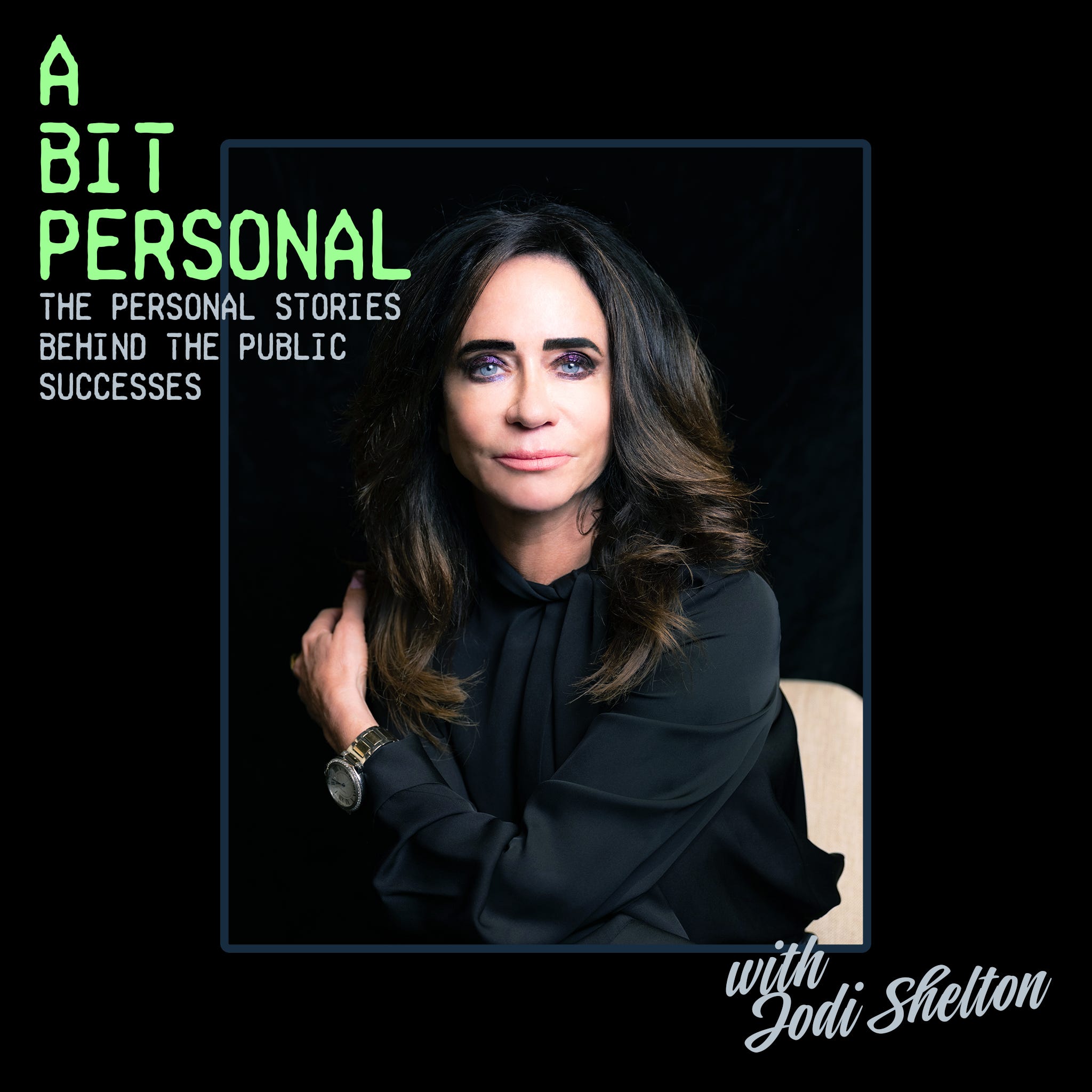
 A Bit Personal with Jodi Shelton
15 Oct 2026 · 1h 6m · 26 chapters
AI’s impact on technology leadership, plus Arm CEO Rene Haas’s personal path and how Arm is changing (from licensing CPU IP to producing its own silicon). The episode also covers the failed Nvidia acquisition of Arm, Haas’s leadership style, and lessons from mentors like Jensen Huang.
Rene Haas is CEO of Arm (Cambridge-based). He previously led Arm’s core intellectual property business, worked at Nvidia (including as a GM), and spent 15 years in semiconductors across startups (Tensilica, Sentara) and large firms (TI, Xerox). He grew up in an immigrant, science-and-academia household in Rochester/Webster, New York; his father fled Nazi Germany and his mother was from Portugal.
Arm’s CPU IP is “the brain” behind most modern devices; leadership requires speed, knowing the business numbers cold, and leading through influence rather than org charts; conviction must be paired with the ability to pivot quickly when opportunities change.
Haas describes Nvidia’s “startup-like” culture under Jensen; a Jensen business review where he was asked to explain his business from a whiteboard; and a pivot away from x86 CoreLogic chipsets to Tegra.
Written by AI. May contain mistakes.
Discussion on Renee Haas's background and his rise to the CEO position.
“I'm very excited about this conversation.”
Exploration of ARM's technology and its relevance in modern devices.
“Probably at an intellectual level because I'm a natural kind of curious guy.”
Renee discusses his transition to CEO and the lessons learned from previous roles.
“Well, we are that brain in about every single device you can think of.”
Renee shares his father's story of fleeing Nazi Germany and how it shaped him.
“You know, I thought that we're a very important company in a market that is exploding.”
Renee reflects on his childhood in a scientifically and academically stimulating environment.
“So my dad was born in Germany in the 1920s.”
Explore how Rene Haas's upbringing shaped his academic pursuit and family dynamics.
“My parents made sure we had books all over the place.”
Rene discusses his feelings of identity and his choice of Clarkson University for engineering.
“They would speak and their English was impeccable but the accents were heavy.”
Rene shares experiences from his early career and how he transitioned into leadership roles.
“And I felt if I did a PhD for two or three years, I'd be giving up two or three years of where the industry might be going.”
He reflects on the importance of curiosity and learning in shaping his career path.
“Oh, that was a very easy penny drop moment, right?”
Rene discusses the qualities that make a good leader and draws parallels to basketball.
“Well, I mean, obviously part of leadership is the curiosity and the desire to know the business, but it also takes a certain kind of person to lead.”
Explore how basketball principles influence leadership styles.
“Basketball is about having players who all can fulfill a role, the right role on the team, and then ultimately doing the right thing that makes the team better than the sum of the parts.”
Learn the key lessons from working in startups that shaped leadership skills.
“And I was all about recruiting the best talent.”
Understand the differences between startup agility and corporate structure.
“Oh, the best things I learned about both companies.”
Discover the importance of influence and accountability in business leadership.
“But obviously they have a very low attrition rate and a lot of people resonate with that.”
Learn why understanding every detail of your business is crucial.
“I think I had my laptop, but it's closed.”
Explore the balance between strong conviction and the ability to pivot.
“Another thing I learned from Jensen was, you know, he would call into my direct reports or someone on my team directly if you want an answer.”
Learn about the importance of decisive pivots in business strategies.
“And I remember we were in a business review, and this is around the time the mobile revolution was just kicking off.”
Discover the impact of cultural understanding on leadership effectiveness.
“And everyone's got to agree, you know, that's the right thing to do.”
Understand how historical perspectives shape business approaches.
“You get them kind of too close into their space and they have different beliefs and they're going to have friction.”
Explore Rene's path to becoming CEO and his vision for ARM's future.
“And I lived in the UK for a number of years.”
Learn about the necessity of adapting and taking risks in leadership.
“Masa is also a lot of similarities between how, let me back up and further, SoftBank, he is the founder of SoftBank.”
Discuss how AI is shaping demand for innovative technology solutions.
“Kodak stuck onto film and paper for forever, right?”
Explore the complexities and challenges of slowing down AI development.
“If we deliver that innovation based on ARM, I think that's great.”
Discuss the positive potential of technology and its historical challenges.
“So there's a part of me that looks at this, and I don't know that AI, it's a complex being, the software that creates the models that can learn.”
Delve into personal family history and the impact of heritage on identity.
“Technology has generally created a whole lot of good, but in the early days without guard bans has not always been the best thing.”
Reflect on the balance between career success and parenting sacrifices.
“so if he would have seen you know you would Jim Cramer he would have been thrilled yeah so we did doing it on his birthday.”

Get the gist, explore an idea or ask about something said.
 Claude
On A Bit Personal with Jodi Shelton, what are the key points of this episode?
Searching your listeningAutomatic transcript. May contain errors.
0:00Jodi Shelton: If you're not in the tech industry, you may not immediately recognize the company name Arm, but I can almost guarantee that you use its technology every day. Their tech is in over 350 billion devices around the world, and yet for most of its history, it's operated largely behind the scenes. And the Arm CEO, Renee Haas, is the first American to run this Cambridge-based company, a quiet giant who stepped into the top job not through a carefully plotted succession, but through one of the most dramatic corporate collapses in tech history, the failed$40 billion NVIDIA acquisition of Arm. For decades, part of the genius of Arm was that it supplied technology to companies that competed fiercely with one another without really competing with them itself.
0:49Jodi Shelton: Now under Renee, that's beginning to change. Arm is moving into the production of its own silicon. So what happens when a company everyone depends upon also becomes a competitor? Well, this is one of the things that I want to talk to Renee about. But as always, I also want to understand the person behind the resume. We talk about his father and family. We talk about him being a grandfather and a father, and what he learned from working with people like Jensen Huang, Masasan, what it was like to become the CEO of ARM, the ARM IPO, and of course, we talk about AI. So let's get a bit personal. Here's my conversation with Renee Haas.
1:36Jodi Shelton: So Renee, welcome to A Bit Personal. Thank you, Jodi. I'm very excited about this conversation. and to learn more about the personal story behind your public success. So I've been in the industry for a long time. You have too. But I've known Arm for just about all of my career. I was good friends with Robin Saxby. You're still good friends with Robin Saxby. Your predecessor was the chair of GSA. So I've had a front row view to what an extraordinary company Arm is. and a lot of people, I mean, it's not necessarily a household name. I mean, in semiconductors out in Silicon Valley, of course, everyone knows who Arm is, but not everyone knows.
2:18Jodi Shelton: Oh, not at all. And semis, yes, but no. And you kind of get outside that solar system, not well-known at all. A little better well-known than we were maybe five or six years ago, but still, no, not as well-known as I think we maybe ought to be. But yet you're in 350 billion devices around the world. So obviously critically important. So how does it feel to be the head of a company that again is everywhere and at the same time sort of under the radar? Oh, I feel very lucky to be honest with you to lead a company like this. Probably at an intellectual level because I'm a natural kind of curious guy.
2:59We are in every single end market you can think of. So when you look at Meta glasses or you look at a Mercedes-Benz or you look at a data center or you look at a smartphone PC and you think, gosh, how does that product work? What's new about the technology? Where is it going? We see everything. We've got a bird's eye view into all of it. So leading a company that from a technology and hardware standpoint kind of sees everything, I feel I'm incredibly lucky to be part of the company and leading the company.
3:31Jodi Shelton: So if you're at a cocktail party and you don't want to bore someone to death telling them what ARM does, how do you describe what you do? So what I try to draw a parallel to is what it is that we actually create, which is the CPU. But a lot of people don't know what a CPU is, right? So I try to draw an analogy between a CPU and the brain. That every modern electronics device, no matter what it is, needs a brain just like every human needs a brain. Well, we are that brain in about every single device you can think of. Because back to the 350 billion devices, which is an insane number, there's a lot of resistors and capacitors and inductors that are in those kind of things, right?
4:12So it's not just a volume thing, right? Because people can look at it and say, oh, you're in a lot of devices, but do you mean anything inside those devices? Are you actually relevant? And kind of explaining that the CPU, what it does, and it's the brain and it runs everything. and people like oh wow how come I've heard that company and what's your symbol number it turns into that kind of discussion exactly okay so you know
4:35Jodi Shelton: you've only been the CEO for four years but you seem quite natural at it honestly I don't know about that yeah so how does it how did you make that transition I mean was it one that you kind of were expecting your whole life so this is easy or was it something to get comfortable with no you know I imagine you've talked to other folks on this podcast who asked the question, do you dream to become a CEO? For me, no. That was really not the life choice. What was the life choice was I want to be involved in technology companies constantly learning and doing new things. That was kind of the coarse grain of it.
5:15But as I did a lot of different jobs, and that's the other thing I did in my career at Jodi, I did almost kind of every job you can possibly imagine in setting a new business, product engineering, engineering, test engineering, design engineering, marketing, sales, startups, big companies. When I did the smaller companies, which I did around the late 1990s, there, when you're in a small company of 20 people, you've got your eyes on everything, you're doing everything, et cetera, et cetera. So in those two startups, did I look and say, hey, I could do a better job than the CEO? Not really. It was just you're in a small nucleus.
5:49Everyone's got a big job to do. and the CEO is in some cases not somebody who was trained to be a CEO. In fact, in both cases, it was Tensilica and then Sentara, both CEOs were first-time CEOs. They were tech guys learning how to do it. And then I learned what my role was, but I never kind of thought, gosh, I could do a better job than Chris. He was the CEO of Tensilica at the time, Chris Rowan, or Rob Gifonse, who was the Sentara CEO. But when I went to NVIDIA, the CEO was a different character, right? Jensen and a Jensen with Jensen no one goes in a video thinking okay you know I'm gonna take Jensen's job right it's not it's not how the company's run Jensen's the founder done even at the time I was there in 2006 had done an amazing job bringing the company kind of to where it was so my mindset was never at NVIDIA okay what do I need to do someday to take Jensen's job I was I was a leader inside the inside the machine and learning how to I was on Jensen's staff, so had tons of exposure to him.
6:48But the benefit of that was the learnings. Okay. The learnings of what do great CEOs do? And I learned a lot of that. So when I came to Arm, Simon Seegers was the CEO at the time, and then we had a lot of changes, you know, inside Arm with SoftBank buying us. And at one point after SoftBank bought us, I was given role as president, you know, running the core intellectual property business for Arm, which was kind of a mini-CEO job in of itself. So it's a long-winded way of saying that, I don't know if I stumbled into the role, but I had great leaders to watch, great mentors, and then the job I had before the CEO was leading Arm's core IPG business, the IP business, for four years, four or five years.
7:31So I felt like when the time came, it wasn't as big a jump as, you know, at least learning the business as I thought it might have been. There were a lot of other things to learn, but the business part I knew well.
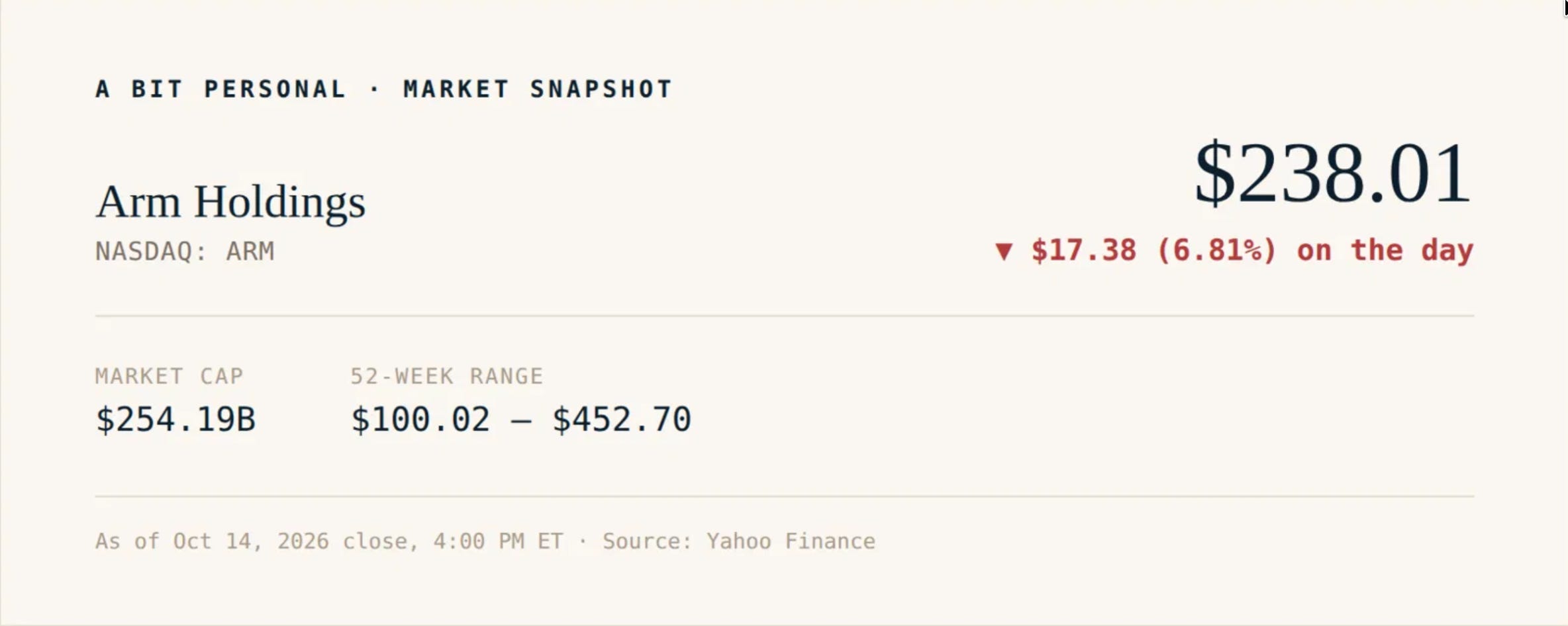
7:41Jodi Shelton: Okay, and you took the company through a very, very successful IPO, and now the company is worth a quarter of a trillion dollars. Does that blow your mind? No. You know, I get that question a lot, and it's going to sound a little bit too arrogant, but no, if that makes sense. I knew that when we went through the IPO process and we were, I think$50 billion was the valuation, did I think that$50 billion was the means to an end? No, absolutely not. You know, I thought that we're a very important company in a market that is exploding. And as AI has obviously been a turbo charge to everything that's gone on in technology business, the fact that we are at the size that you just described, no, I'm not that surprised about it.
8:28It's a big number. I'm proud of it. I'm proud for the company and the people have done to it. But no, it's not something I wake up and say, oh, my gosh, I'm 500 feet high up on this ladder. How did I get up so high?
8:38Jodi Shelton: Right, right, okay. We want to do better than that. So I want to get to know how Rene Haas became the man and the leader that you are today. And, you know, usually to do that, you really do have to go back to where someone started. So I want to go back and explore some of your family history. It's a pretty amazing story. Your father, Jewish father who fled Nazi Germany as a child, and then you have a Portuguese mother. But yet you all ended up in Rochester, New York. So it's a, I love to hear how that happened. And then, you know, maybe tell me a little bit about your father and whether or not as a child you understood what he had survived.
9:19Jodi Shelton: Did he talk about it? Yeah. So my dad was born in Germany in the 1920s. And as you said, his family was Jewish. My grandfather, and you learn these things, you know, back to your question, how you kind of got to where you got to. My grandfather was a really strong business guy, had his own company, quite successful. My dad didn't really talk about that much. We sort of learned that over the decades. But the wealthier families who were Jewish in Germany sort of saw the smoke signals early. Their assets were being seized, their companies were being seized, and pretty quickly my grandfather realized around the early 1930s that the family was not going to be safe staying in Germany.
10:06So they bounced around Eastern Europe. They went to Austria. They went to the Czech Republic. They kind of went from border to border to try to find a home. Ended up in Portugal because Portugal was accepting Jews at the time without visas.
10:24Jodi Shelton: Okay. So they could land in Lisbon, Portugal. And my grandfather, who was a super successful, as I said, businessman in Germany, is now living in Lisbon and is having to scramble to put together any kind of income for the family. And in fact, I remember stories when I was, we would visit Lisbon when I was like 10, 12 years old, and I would be out with my grandfather, and we'd go past a shop, a shop that would sell candies and things of that nature. And he said, I don't want to go in there. And I said, well, why not, grandfather? He said, well, because I sold them some faulty pens and they're going to come back after me.
10:59So he was kind of an odd jobs person. He could not really find much of a way to make a lot of money. In fact, most of the money that they had, they put into putting my father through university. So my dad grew up in Lisbon, but he had been grown up in Germany. So he had a very heavy, thick German accent. So if you ever see audio tapes of him, he was very analogous looks wise and sound wise to Henry Kissinger. Okay. Very, very similar. And so he grew up in Lisbon, Portugal, but he was a very curious science guy. Got his PhD in basically physics and physics and chemistry and was very, very technically oriented.
11:44My mom, who was born in Lisbon, came from a completely different area, around the liberal arts area. So she had also an advanced degree, Ph.D. in romance languages.
11:55Jodi Shelton: Oh, wow. Spoke Latin, French, German, Portuguese, you know, tons of languages. A Jewish guy and a Catholic woman getting married in Portugal was not really kind of the mainstream kind of thing. So I think both sets of parents weren't wild about it, the grandparents, but they ultimately were, you know, okay with it. But my dad, my grandfather, convinced my dad that there aren't really any jobs for physicists in Portugal. You need to go to the United States. And this is now late 1950s, early 1960s, post-World War II. The U.S. is hiring a lot of post-Cold War Eastern European scientists. So my dad got a job.
12:37In fact, it was a semi-daughter company, Philco, in Philadelphia, Pennsylvania, which is basically they were doing transistors and amplifiers for television sets and radios. So I was actually born in Philadelphia, and so was my younger brother. But not long after my dad was at Philco, his boss left, went to a young promising company in upstate New York in Rochester that was doing photocopiers, which was Xerox. So my dad ended up being a researcher for Xerox Corporation. At the time he retired, I think he was the number two inventor that they had there, like 60 patents and such around liquid crystals and inkjet printing and the like.
13:20But yeah, so he ended up in Rochester, New York, actually Webster, which is the suburb, and worked for Xerox for his whole career. So that's why I grew up in kind of sleepy Webster, New York.
13:30Jodi Shelton: Okay, such an interesting story. So your household must have been so interesting. I mean, was it a calm household? Was it chaotic? It must have been very intellectual. It was very intellectual because you had my mom, and it's interesting as I was thinking about the discussion we were about to have in terms of where did I get sort of the skill set that I have. My mom, because she was really from the language area and language arts and English as well, was a big reader. So we had books around the house kind of all the time. So I was a very early reader. My parents made sure we had books all over the place.
14:06But my dad was a scientist. So I took geology classes at the museum at age seven when all the other kids are out playing Little League Baseball. And just backing up for a second, upstate New York is pretty rural. And yes, there's a lot of intellectual folks who work for Xerox and Kodak. But I was kind of the alpha child, not alpha in terms of alpha male. But my parents didn't know how to raise kids in the United States. So most kids are doing Little League Baseball, they're doing Pop Warner football. And I'm at a rocks class. you know in the at the museum of which initially I was like you know why can't I go off and do what the other kids are doing you know why am I out here you know studying quartz and obsidian and all the different minerals and stuff but it was a great upbringing okay you know so yes it was a very intellectual household you know there was microscopes and photo labs and all kinds of science
14:55Jodi Shelton: Shakespeare so and everything yeah yeah and with my mom it was every book you can possibly imagine so I kind of kind of had both conflances it is your brother younger than you are? I'm the oldest of three boys. Three boys, okay. And I'm the only one of the two. I don't have a PhD like the other two have. So you're the slacker. I'm the flam slacker. So what were your parents expectations for the kids in the house? Academics were everything. Okay. Absolutely everything. And my mom, you know, if she met someone who had a Harvard or a Cornell PhD or an MIT PhD or Stanford PhD, you know, you were golden.
15:31In an ideal world we would
15:32Jodi Shelton: all have been professors teaching in academia. They were very, very much around academia because both my parents had had advanced degrees and even my dad at Xerox working in the research labs and research labs in the 60s and 70s were very pure research oriented. You know if products didn't come out of the research labs it was kind of okay. You know this is back in the days of Bell labs where you had very pure research being done. So yeah they weren't super commercially oriented. I think I cut that from back to my story. I think I got that from my grandfather. From the skipped generation because it for my two parents it was all about academic excellence.
16:10Jodi Shelton: So what would happen if the kids disappointed the parents? Whether it's you know getting in trouble at school or not making straight A's? They were very very strict. Okay. They were very very very strict. I mean they followed all the report cards. My mom was a substitute teacher in the high schools so she knew everybody in the system so there was there was no there was nowhere to hide in terms of that goes and you know I think as most firstborn children firstborn children tend to follow the rules a little bit more than their brothers and sisters so I was very much stayed in my lane and so being immigrants they probably had a very different attitude about America than sometimes we do being born here very grateful very appreciative of the opportunity of what was that like yeah Yeah, they, I think they became U.S., like I said, they became the U.S.
17:00in the late 50s, early 60s. I think they only became U.S. citizens like after the year 2000.
17:06Jodi Shelton: Okay. But they loved the United States. They loved America. They loved the opportunity that it could bring. But I definitely did not feel whatever, end quote, American is, part of my first name. My mother, you know, taught in France for a number of years. She liked the first name Renee. This is again upstate New York where there's Bob and Sue and Sally and Tim. Renee was not a pretty uncommon name back then. I took a fair bit of ribbing on that growing up. So combination of two parents and they had very heavy accents. So you felt European? Oh yeah, I felt like a foreigner. Not everyone could, we'd have friends over and not everybody could understand my parents.
17:47They would speak and their English was impeccable but the accents were heavy. So yeah, I did not feel, I felt like a foreigner.
17:55Jodi Shelton: So then you went, you ended up going to Clarkson University, studying engineering there. So not MIT, not Harvard for your mom, not Stanford, Berkeley, which are the more branded names for kind of the Silicon Valley Titan types. Yep. So do you ever feel like you had more to prove because you didn't have that pedigree? No. No, never bothered you? Not at all. Okay. No, not at all. I mean, why did I choose Clarkson? wanted to stay reasonably close to home. It's about four hours away. But Clarkson at that time was offering something that not many universities were offering, at least in the Northeast, was a degree in electrical and computer engineering.
18:34So the degrees back in the day were either computer science or electrical engineering, but Clarkson was being pretty aggressive in terms of electrical and computer engineering degree. So technically the degree is ECE, and what that meant was a lot of the third year and fourth year courses had pretty deep computer engineering criteria and academia type of classes. So yeah that was probably the main reason I chose Clarkson. I mean looked at Cornell, looked at Syracuse. I don't think I could have gotten into MIT to be honest with you. But yeah, no I've never thought oh my gosh because my pedigree is Clarkson.
19:12I'm a big believer that you know you are whatever you make yourself of. Right, right. The university is a great time to learn how to learn, but it's not a sign of who's going to be great.
19:23Jodi Shelton: Did you think about going to get your PhD? Never. Never. Never. You wanted to get out and start making money. No, because I looked at it in terms of, I was really fascinated by what was going on inside the real world. Okay. And I just always felt that the best training you could get in terms of the advancement of technology was to be in it. Okay. And I felt if I did a PhD for two or three years, I'd be giving up two or three years of where the industry might be going. So my parents weren't happy with that, you know, but I was pretty, pretty stubborn in terms of, no, I want to go to work straight away.
19:57Jodi Shelton: So then you go to work. At one point in time, you worked for Xerox. Was there ever a crossover with your father? Yeah. Yeah, yeah, yeah. I started at TI, which at the time was the largest semiconductor company in the world. and I knew I wanted to be around semis because in university you know started to learn about everything with computer engineering and what was going on in terms of the product lines but I also felt you know if you pick semiconductors you can almost go in any direction possible because it's the foundation it still is today I was 1984 and that's unchanged in 2026 it's foundational to the electronics industry and TI was the biggest right so I thought okay you know TI is the biggest that will afford me the most exposure to different things so I worked there for for three years in Houston that's like moving to a different country well and this is the IQ test I took a job trip there in February left Potsdam New York which was like zero degrees got to Houston it's 70 degrees no humidity, this is February.
21:05And I told my parents, I said Houston has the best weather in the country. It's got no humidity, 70 degrees. And then when I got there in June it was 96 degrees, 70 % humidity. But TI was a great place. It was a great place. You know, they had, they actually, we actually had a fab in Houston. We had a bipolar fab in terms of by CMOS where I worked in for six months. We had low cost, low cost assembly in Singapore, of all places. So I spent time in Singapore for three months they sent us there. So learned everything relative to how chips are built, made, tested. My first job was in in product engineering and then ultimately did design engineering but was was my mom in particular didn't like me being 2 ,000 miles away and was really leaning on you know come back to come back to upstate New York.
21:54So I went back to upstate New York and got a job at Xerox where I had co-opt in college. Okay. But for two and a half years, I was in the building next to my dad's.
22:06Jodi Shelton: So we'd go to lunch. Okay. Which, you know, looking back, the idea of working in the same company with my dad was working, at the time I was wild about it because my dad was a pretty successful individual inventor there, and I was always his son. And I was thinking, I want to be able to have people recognize me for the work that I'm doing. Right. But looking back, it was so lucky to be able to do that for two and a half years. So in the early part of your career, were you particularly ambitious? I mean, you said you didn't want to, you never dreamt necessarily of being a CEO, but I mean, when did you know that you wanted to maybe go beyond engineering into leadership?
22:50Oh, that was a very easy penny drop moment, right? Okay. So I was at TI, as I said, for a number of years, deep in terms of the product stuff. And then at Xerox, we were working on a multifunction machine. It was a printer, fax, scanner, and copier. It was a pretty sophisticated machine in terms of the electronics and mechanicals. When you're trying to push paper at 10 pages per minute, 20 pages per minute, one of the things you're trying to make sure that this doesn't happen is a light on fire, things of that nature. So the electromechanical interaction is pretty strong. So we're working on this product and it was fascinating, right?
23:26I'm learning about I was doing the ASIC design for the memory controllers and Everything in terms of the the inkjet feed through it was an inkjet But Jody, but the thing that was the penny drop moment for me was I was always the guy in the all hands who would raise the question or ask the question of Is this thing priced correctly and who's gonna buy this product? And it seems kind of big for what we're doing and HP's got some really good products out there And I remember my manager at the time, there was an all-hands, after the all-hands, he took me to his office and he said, Rene, you know, you can't be asking those kind of questions.
23:59You know, Phil, Phil was the leader of the group at the time. He said, your job is to make sure that ASIC gets taped out on time and the memory controller works. And I remember thinking, I'm probably 20 to 29 years old, thinking, oh my God, I'm a failed engineer, right? Because the stuff I'm thinking about isn't oriented with where engineers need to think about. I had this, there was a conventional wisdom that was sort of being put upon me that says engineers think about how to engineer things. They don't think about, you know, products. Today it's very different, right? We get all hands, we get all kinds of questions from our engineers that are very business oriented.
24:32But back then in the environment I was in, it wasn't that common. So I remember just thinking to myself, am I in the right place, you know, in the right domain? And then got a call from an outside recruiter to become an FAE for NEC semiconductor. And to me, back to my TI analogy, it looked like the best of all worlds. NEC Semiconductor is now, this is now 1989. NEC Semiconductor is the largest in the world. They had passed TI. I'm sure you can remember this. The Japanese are wiping the floor, semiconductor-wise, with all the U.S. firms. And NEC was an incredibly broad-based supplier because NEC was quite vertically integrated.
25:12They were big in radios. They were big in PCs. They had their own workstation business. They had a big consumer business. So they had a ton of semiconductor products. They did microprocessors. They did microcontrollers. They had an ASIC business. And I thought, gosh, to be an FAE, I can still stay technical because someone's got to explain how the products work and whether the customers can use them. But now I can talk to different customers across the different geographies. What a great job. So that I think is what having made that move was and back to the ambitions. My ambitions were never I've got to become an FAE manager or I've got to become a senior director.
25:54I was just always motivated by how can I learn? I'm quite curious. What's gonna make me smarter about where the world and technology is going? And that's what I tell a lot of young folks in terms of charting a career path because if you're essentially quite curious and you work really, really hard and you have high ethics and values and you care about people, you're going to have more opportunities thrown at you than you can possibly imagine. And that's kind of what happened to me. I had a lot of different opportunities that came my way.
26:27Jodi Shelton: Morgan Stanley celebrated its 90th anniversary last year and its tech investment banking team has prided itself in working with the most innovative entrepreneurs and leadership companies for decades. During that time, they've led IPOs for hundreds of tech companies, including Apple and Arm, Astera Labs, Broadcom, Cisco, Facebook, Google, NVIDIA, Salesforce, and Uber. In addition, they've worked as a trusted advisor and executed thousands of M &A and transactions for some of the industry's most defining deals in technology. Throughout the years, Morgan Stanley's tech investment banking team's success has been achieved by dedication, consistency, and a North Star purpose of helping its clients maximize their opportunities and overcome their challenges.
27:21Jodi Shelton: Now let's get back to the episode. Well, I mean, obviously part of leadership is the curiosity and the desire to know the business, but it also takes a certain kind of person to lead. So what kind of attributes do you think that you had that would that made you think you'd be a good leader in terms of leading people not just the business? Yeah so I you know one of the parallel things that I did in college and in high school is played a lot of basketball. Okay so you finally got to play sports after geology. Yes finally but now that my parents knew that I was in college and now I can go off and do whatever I want to relative to activities are not academic related.
28:00Basketball was always my sport. If you're tall you've got a bit of an advantage in that you know you you'll probably be able to be chosen to be on a team if you're tall so basketball ended up kind of be my game as I got taller in junior high school high school. But Jody basketball is an amazing team game because at the end of the day business and sports have a lot of metaphors and back to the leadership piece, I was always A, loved the game of basketball, and basketball was not about having the five best players. Basketball is about having players who all can fulfill a role, the right role on the team, and then ultimately doing the right thing that makes the team better than the sum of the parts.
28:42So I do attribute some of the interest and passion I have for playing basketball and and being part of that as helping to become a leader.
28:51Jodi Shelton: Okay. We had an intramural basketball team. We won the college championship, you know, three years, three years running. The first year, I was probably the best player on the team. The third year, I was probably the sixth best player on the team, but I was the captain. Okay. And I was all about recruiting the best talent. And if recruiting the best talent meant that I played less, it was completely fine, right? And I think back on that as, yeah, maybe that was probably a pretty good leadership learning piece that you don't need you want people around you who are smarter than you better than you can do things in ways that you can't because it lifts all boats right so I think that helped I think that that helped a lot as I was when you're and I became a manager quite young actually at NEC semiconductor I became a an FA leader at age 30 and every person on the team was older than me but I entered it I think with some level of humility and I know to say that you're humble maybe doesn't mean you're humble but I didn't assume I was gonna I would lean back on my basketball learnings how do I make the team better and I'm here to help you get great and help NEC get great it's about me sort of directing things so that helped that helped me learn right yeah no I get it so you sort of left those big companies next and went to work for some startups in Silicon Center that you mentioned.
30:12Jodi Shelton: So what did you learn at those companies that you have brought forward to your career at ARM? Oh, the best things I learned about both companies. When I joined Tensilica, I think we were 13 people, 14 people. Wow. And Sentara, we were like 21. And at Tensilica, we grew to about 150. Sentara, we maybe got to 100 folks. When you're 15 people, company politics, your job title. That's not my responsibility. Go after and have someone else to go off and do that. Process matters versus results. Doesn't matter startup. You are just trying to figure out how to stay alive. Right. You are just, you are only as good as, and it used to be a badge of honor saying that the VCs have given you this much money, you've raised all this much money, etc., etc.
31:02But all that basically says that you're going to pay that money back at some point in time. So, So be really frugal in terms of how you spend other people's money and be really purposeful in terms of how you run the company. And if you've got somebody who's got a big ego or somebody who's all about title or cares a lot about process, in a startup, you are dead. You will die really fast. So those kind of skills and probably more importantly, what resonated with me, that resonate with me because those were all the things that I abhor in big companies and small companies was incredibly liberating right we do many of this stuff right this is this is the in some ways they were the most fun jobs I ever had okay they were stressful because you literally didn't know you know could the company be out of money you know at the end of the year and you're on to the
31:53Jodi Shelton: next thing but everything had impact everything at impact yeah so so really really understanding that actions matter you can make mistakes but results matter so all the all the fluff of someone standing up saying here are my quarterly objectives and the 17 things I need to do and grading them at the end of the at the quarter doesn't matter start if you just got to figure it out you got to make it happen you've got to get results and you've got to move fast and so those skills probably helped you then when you went on to Nvidia because even though it wasn't a startup at that point in time it probably operated like a startup in some ways absolutely yeah yeah that's what resonated right so and I and I kind of felt that intrinsically when I went there okay but when I got there and I saw how Jensen operated I said well this is a startup if we were 5 ,000 people at the time for a billion in revenue you know probably doesn't in two days these days but it operated it operated very much as a startup Jensen did use the you we're 30 days out of 30 days from going out of business and things of that you know things of that nature we weren't but he behaved that way right and the culture felt that way and and it was a very self-selecting culture in that if that was not the environment that that you would thrive in or the environment that you thought was going to be correct for how you put values in your career then you would leave.
33:20But obviously they have a very low attrition rate and a lot of people resonate with that. So yeah, I felt like from 98 when I joined Tensilica till I came to Arm in 2013, I had 15 years of startups.
33:34Jodi Shelton: Okay. Yeah. No, it's interesting because their CFO still operates that, I mean, it's something a really low number like$10 ,000. If you're asking for $10 ,000 you have to justify it. I mean it's pretty incredible that it's sort of still run the Jensen way. So tell me what you walked away having learned from Jensen that once again that you brought to your career arm. So many things but one of them was so at NVIDIA I was a GM and it was very interesting structure there because the GM's at NVIDIA he looked at the GM's and said you are you are the CEO of this business you're responsible for all the revenue you're responsible for the product and if the business is failing or not profitable I'm holding you responsible and accountable and at the time I left the business I was running was 25 % of the company revenue okay I probably had five direct reports okay so in many companies if you're a general manager you've got these solid lines of engineering, solid lines of product development, product marketing.
34:41The GM job back then at NVIDIA was highly matrixed. And part of the philosophy that Jensen had was you are going to lead through influence. If you have to lead through what the organization chart says on hard lines, and you may know now finding an org chart in NVIDIA is darn impossible. It was impossible we didn't have the back back then so one of the learnings was that leading through influence is super important okay and what an organization chart says is not so critical as opposed to being able to articulate what's important for the business and driving people to do the right thing for for the company so that was one that resonated with me right away and and and if I think about how I lead at arm I couldn't tell you too deeply about how underneath by our leaders how it's all organized because we will move people around very quickly as needed as I saw it in video but the other thing another story is that knowing your business cold knowing knowing the strategy knowing the numbers knowing everything that's a critical about your business that I learned really quickly another story so I'm pretty early in my career at NVIDIA and Jensen says you know I want to have a business review with you and I said okay I'll bring my couple of my product marketing guys I'll bring my business analyst he's got his laptop we've got the spreadsheet so Jensen I know how it is these days but back then he didn't really have an office he had kind of a table and a whiteboard so show up it's like 3 30 on a Thursday or Friday afternoon I forget exactly which day and he looks around he says what are those guys doing here I thought you wanted them here for the business or you?" He goes, no, I don't need them.
36:28I just want you. So, all right. I'm a little bit naked, right? My marketing guys are gone. My business analyst guy is gone. I think I had my laptop, but it's closed. And he says, all right, go up on the whiteboard and tell me about your business.
36:42Jodi Shelton: Wow. So, it was not only an open-ended question about the numbers, the products, the competition, where do you start, right? Where do you even begin to talk about where your business is today, where your threats are, what your strategies are, what is your competition doing. And of course it was a train wreck, right? The first time I did it, like, oh my gosh, I can't remember exactly is that 28 % margin or 30 % margin, etc, etc. But what it learned and what he was teaching was, if you are running this business, you need to know and understand those facts cold and wake up with them in your brain the whole time.
37:25and by the time I left I could do those things you know pretty pretty well but that is something I have brought going forward okay you know we'll do we'll do reviews with folks and they'll say what do I need to prep what I need to prep like just bring your brain right you should know that the questions I'm going to ask you you should have the answers to and or be able to get them almost immediately and it is very it's it's it moves the whole company faster I get that right and so if I think about lots of little tidbits and stories like that
37:59Jodi Shelton: those are some things I learned okay and that and that is under an umbrella of speed because one of the things that I love from startups being small with speed you know 20 people how you know how much time can you stand you're talking about things that need to get done when the company's 5 ,000 people 10 ,000 people, you've got hierarchy, you've got different levels. Another thing I learned from Jensen was, you know, he would call into my direct reports or someone on my team directly if you want an answer. And in the beginning, it's a little, it can be debilitating, a little bit nervous, right?
38:32Oh my gosh, you know, run that through me, I'll check it and I'll check it. Next thing you know, you've got lots of checks and filters and dilution and you've lost time. So when I came, now that I lead, and That's how I led when I was running IBG. And now if I need to call into two levels deep to get an answer, I'll do it. And people know that. But they know it's coming from a place of I'm not trying to get by the GM. Not second guessing.
38:57Jodi Shelton: No, we're trying to get to the truth. Yeah. And the faster you get to the truth and the person who's got the answers, we'll just get the answer. I love that. Yeah. So what are some things that maybe you intentionally didn't copy? Or not copy is the wrong word, but tried to emulate from Jensen. Oh, we're all different people. Yeah. Right. I mean, he's a he there are so many things that Jensen does that totally resonate with me in terms of the leadership and the intellectual honesty and speed. But we're very different. You know, we're very different individuals in terms of in terms of how we how we operate.
39:33I would say I'm probably more of someone who gets everyone's voices, you know, into the room as opposed to dominating the room in a way that maybe he does personality wise. But I would say weirdly enough, there's probably more similarities between how we work, which is probably why we work together so well. When NVIDIA tried to buy ARM in 2020, and I think it was sometime around September 2020, the deal was announced. Thinking back about that process, he and I were just operating back and forth so fast in terms of we text something. We just knew him so well. Just knew him so well. And it's a combination where I think our styles resonated.
40:13Jodi Shelton: Right. Right. Just in terms of the approach. So I have a question about him that can also, then you can answer it as well. But, you know, sometimes it's hard to know the difference between conviction and ego. Okay, because conviction, obviously Jensen had great conviction for AI. And when, you know, when a lot of people didn't, and he believed in it so strongly, and it turns out he's right. So it wasn't ego, it was conviction, and thank goodness he stayed on that path. But so often a CEO must be 100 % convinced that there is the right way. When do you know it's not the right way? I mean, was there any examples of Jensen being able to be talked out of something or see the light, being able to tell him that he was wrong?
41:05Jodi Shelton: And then, you know, what about you? Can people tell you you're wrong about something? What he was really good at, and I like to think I'm pretty good at, is staying on a path with total conviction and total passion, but being able to switch pretty quickly. If you need to. If you need to, and not feel like it's going to be, you know what, I can't really switch on this because we've got so much invested. And we've got so much energy put into it. I'm just going to lose some face that it kind of looks like I made a mistake. And I remember there was a time at NVIDIA, we were doing CoreLogic chipsets that were based on x86.
41:50And we were involved, as NVIDIA now, we were involved in a pretty nasty dispute back and forth with Intel, whether we could continue the roadmap. And these were just CoreLogic chipsets for the straight laptop market. And I remember we were in a business review, and this is around the time the mobile revolution was just kicking off. and the teams had made a series of presentations in terms of where we thought smartphones were going, where the growth was as irony would have it with ARM and the fact that low power was going to be very, very key. And on a dime in that meeting, he just decided we're not going to continue this chipset stuff anymore.
42:27Jodi Shelton: Okay. We're now going to pivot everything to doubling down on trying to do the Tegra business. That's what the Tegra business was. And, you know, I remember at the time, everyone loved the decision because it felt like the right decision. But at the same time, it wasn't an easy thing for him to make because he had been one of the people most vocal about, you know, kind of where that business was going to go. I've done a bunch of the same things. Right. You know, as we've kicked off these efforts around, you know, building chips and doing different test chips and stuff, I've killed a bunch of them.
42:59And why did I kill them? because, and again, people looked at them, they were big projects, I talked about them in front of lots of different engineers, and it was around essentially building some test chips for I.O. and things of that nature. The details are probably less important in that it was obvious to me that another opportunity was bigger, and it was going to happen faster, and if we kept on this other activity, we were going to miss out on the larger activity. and I just had a sense of conviction that this was the right thing to do and there's a lot of things written and said about well stay the course you know be a board and keep at it etc etc there's really no right answer on it right what CEOs have to do every single day but no I've done a lot of the same yeah
43:48Jodi Shelton: no I admire that yeah yeah I think it's I think it's an important characteristic to be able to just say oops yeah that's we need to pivot yeah and i've had you know out guys room they'll still say to me gosh you know had we kept that might have been interesting but the other thing that you get from that jody is that the other thing that's important about doing that is getting the whole ship to move with you right because the the biggest thing that can set a company back or an effort back is the stragglers that say you know what don't really believe in that decision i'm going to keep some skunks works project going on that uh you need to say you know what we're we're we're not going to go for it on fourth down we're upon.
44:25And everyone's got to agree, you know, that's the right thing to do.
44:27Jodi Shelton: So one of the things I admire about your career, and I think that how you were raised now explains a lot of it, and that's your ability to go into different cultures and be pretty comfortable and not, I mean, really integrate and feel comfortable. So, you know, when we first had our first conversation, we sort of bonded over our views on China and our experiences there. So, you know, you've been, you know, obviously very involved in US organizations, British, Japanese, Chinese. So tell me what your experiences are with those different cultures and sort of what are the pros and cons and the pros meaning what can we learn from those other cultures and maybe what to avoid in those how that those other cultures do business?
45:12Yeah, that's a big it's a big question. I was very fortunate and again having grown up a family where neither parent was was born in this country and both parents were born in different countries and both had different religious upbringings and you had mentioned something earlier that the visitors the house must have been pretty eclectic and they were you know they were Portuguese Hungarian Czech Austrian British so had a lot of travel my dad because he was a researcher had a lot of experiences where he would deliver papers in Stockholm or in Copenhagen or in London and he'd throw us along right so we we we saw a lot of the world or I saw a lot of world when I was a little kid and it just helped me I think have an appreciation for everything's different and you have to appreciate that people's views are shaped by the environments that they grew up in and particularly when I was growing up the world was very was much smaller from the standpoint of now with the internet and social media and whatever it is you can learn a lot about China you can learn a lot about Europe and just by access to Instagram or TikTok back then you had to go there right and and and you really realize that there's not a right or wrong way it's just a different way right and if you look at history just tribal tribes have existed for for centuries and centuries and there are spats between the Koreans and the Japanese and there are spats between the Israelis and the Palestinians and there are spats between the Scots and the English.
46:45It's a little bit of people are people. You get them kind of too close into their space and they have different beliefs and they're going to have friction. That's kind of the nature of how the world has been. So I recognize that and I appreciate that. So when I think about dealing with different cultures and different backgrounds, and we have it here at Arm where we're a British company. A lot of my leadership team are Americans. Americans and British, we speak the same language. We are pretty different people in terms of how we express opinions, how open we are to confrontation. And I lived in the UK for a number of years.
47:24So when we get the groups together and the Americans are, let's fight it out, let's hash this out, let's argue in the room. And the British are a little bit like, I'm not that wildly comfortable about having this discussion in a public forum. you need to find a balance. It's not a right or wrong. It's very much how people were raised and what their comfort feeling is. Similar with China or Taiwan or Japan. So yeah, I'm a big historian in that kind of stuff. If you look at England or you look at Japan, island nations grew up a very different way. The Japanese and the British are not very dissimilar in terms of how they keep their cards close.
48:05They may not tell you their true feelings until you actually get to know them, you know, super well. Japanese are incredibly polite people, incredibly warm, but a Japanese person would never expect you to show up their house unannounced. It's like, oh my gosh, how do you even know where I live, let alone come by to my home? So, I think having appreciation of that is pretty important. I've been fortunate to have that exposure.
48:32Jodi Shelton: So when you became, when you were chosen to become the CEO of ARM, you know, kind of the NVIDIA ARM thing blew up one day and it was announced that you were CEO. Obviously you must have known, I mean there must have been some grooming and some preparation. So tell me about what Mossa saw in you to decide that you were the right leader for ARM. Yeah, so I think what happened, so he knew me obviously because we had, we would do board meetings and I would present the strategy for the core business and we resonated pretty well. Masa is also a lot of similarities between how, let me back up and further, SoftBank, he is the founder of SoftBank.
49:13He's been running it for 40 plus years. So if you think about what's a pattern here, who does Rene resonate with? Founder CEOs. Masa is a founder CEO and we found, I've found over the years, that before this all kind of came up that you know he and i resonated you know pretty well so in the weeks coming up to to my appointment uh formal appointment and we were talking about where the business could go someday we just we just bonded okay it was very it was very obvious that how he saw things and i saw the the art of the possible were really very very similar um and you know he's he's a very different guy than Jensen he's much more of an investor as opposed to an operator but in terms of looking around corners and taking big risks and moving quickly very very similar
50:05Jodi Shelton: yeah he seems like he's on a different universe than the mere mortals of the world absolutely yeah he's a little bit like Willy Wonka with technology okay uh and uh and I bet that that resonates with me okay so we we have a very very good we have a very very good relationship so I I think it was pretty quick in the time that we were thinking about it. And I told him, one of the things I did tell him was I said, there's nothing that ARM can't do as an independent company that we wouldn't have done inside NVIDIA. Right? It may take time, it may take different kind of strategies, etc., etc., but this is not the end of the world for the company that the acquisition can go through.
50:44We have an incredible platform, we have incredible reach, and in a core technology space that is just exploding with opportunity. And this is just when the AI thing was really starting to get large. So, yeah, it was a confluence of a lot of things that came together.
50:59Jodi Shelton: So I have to ask you, during those early discussions, maybe right up until the time that it was announced that you were going to be the CEO, did you talk to him about Arm having its own products? Sure. So that was part of the reason that he chose you. Yeah, yeah. We talked about, you know, could it be possible? Okay. And I said, you know, it was exploratory. And we looked at it and I said, yeah, it is possible that we could do this. It's not a, we should do products and not do IP. It was never that because I feel very strongly that both are needed. But there were clearly markets that were underserved, that wanted to arm technology that I thought we could bring value to.
51:46Okay. And he didn't disagree.
51:49Jodi Shelton: Okay, so just a little bit of background for those listening. You know, Arm has been an IP and an architecture supplier to the industry. And so you supply competitors who compete against each other, but they have the Arm core. Right. Okay, but you have never had a product line of your own. You have the IP. Right. And so the decision to have products of your own is really consequential. I mean, it's changing the nature of the company that had been around for 35 years. This was a big gamble. So tell me how you felt comfortable with that kind of risk. Well, for starters, and I think this whole conversation has kind of been building to it, if you are not willing to adapt and or cross lines that people would have said before can never be crossed, history will be written for you.
52:40Jodi Shelton: Okay. you won't write your history i like that if you want to write your history you have to be willing to break glass and break boundaries because the future is not what the past looks like and if we would come ahead discussion back on the video thing 10 years ago and said they're going to be building behemoth systems the size that they're building and financing their customers to to buy their products in order to keep a cycle of capital intensiveness going on you'd say huh really those gaming cards right how's that even possible so i have just always felt that you can't be bound by this is what we've always been doing um and maybe you know maybe my xerox my scene where xerox is today and i grew up in upstate new york the two biggest companies where i grew up were Xerox and Kodak.
53:33Kodak stuck onto film and paper for forever, right? They had the goods to do digital cameras. They had the goods to do everything around digitization, but couldn't move out their sacred cow. Xerox had all the goods in the 70s around the information technology. They had everything around workstations. They had the GUI interface. They had what what was the Mac operating system before Steve Jobs saw it and said I got to do this. So the world is full of examples, and I've lived a bunch of them, that says you keep doing what you're doing, you're going to end up in a certain place. And it's not, to me, Jody, for people who look and say, oh, you were an IP supplier, and now you're doing chips, that is kind of foreign to the ecosystem and such.
54:26But I just think about it in a much more expansive way. It's about delivering great products to solve the world's technology problems. And there may not be an IP licensing business for anybody in 10, 15 years.
54:38Jodi Shelton: But could you have, you probably wouldn't have done this at a different time in history. I mean, it's because of AI and the opportunity. Do you agree with that or no? Well, AI has created an enormous demand for compute, right? And just the nature of what artificial intelligence is, it's a bunch of brains. back to what we do, right? We do brains, right? We do the brain of every device. Well, what is AI? Well, AI is a brain at the end of the day. And what does a brain need? A lot of compute, a lot more compute than we've ever seen before. So yes, it has created a very, very good entryway to solving some very interesting problems.
55:18But I think the kind of problems that CPUs and general compute can solve for AI are way beyond just the data center. The data center is kind of the factory that produces the tokens, but everything at some point finds its way into something that's smaller, faster, cheaper, more efficient, whether it's inside this room, an ambient level of compute, whether it's something that's on your clothing, whether it's something that's sitting inside these microphones. It's unlimited opportunity. So yes, to some extent, AI has created this window for unbelievable innovation. And if our partners deliver the innovation based on ARM, that's great.
56:00If we deliver that innovation based on ARM, I think that's great. It's really all about solving really complex problems. And I think AI has created an incredible opportunity of complex problems.
56:11Jodi Shelton: Okay, so obviously this week, and this episode will come out maybe a month from now, but maybe it will still be the talk of the town. But the whole idea of pulling back and slowing down on AI that sort of started circulating over the weekend. So even if it was wise to slow down, do you think it's at all possible for us to slow down AI? I don't think it's wise, and I think it's possible. Okay, interesting. And here's a little bit of a corollary on this. What you have here is a bit of an unprecedented situation where the leaders in developing the products are basically saying, my quality and reliability is not good enough.
57:02I'm delivering products faster than I can get my hands around quality and reliability.
57:08Jodi Shelton: You say, well, gosh, if somebody was doing that in another industry, you wouldn't ask the government to police yourself, right? it, you'd kind of say, get your bleep together and fix your product problems. You know how your products are designed. You know how your products work. You should be able to put the same level of quality and reliability checks into it. So we do it arm. Right. That's like me saying, you know what, I'm putting out IP so fast, Jody, that it might melt ASML's photolithography machines, might melt the EUV machines, which could cause all kinds of fires. but I got to get this IP out.
57:47You look at it and say, and then I would be saying, you know what, we got to police the IP industry because it's going to cause a real problem with these steppers and people talking. You look at it and say, what? So we had a little bit of a, we're in an unprecedented situation where AI is moving as fast as it is and respectfully, the companies who are brilliant companies with brilliant researchers are moving at breakneck speed and are but are kind of telling us that I can't police myself so yeah the engineer in me right looks at us and says this is a quality reliability problem and you're not putting the engineering and you're not putting the quality and reliability checks into the product you're releasing stuff that's not safe so why don't you slow yourself down right right instead of saying hey let's all slow down.
58:43So there's a part of me that looks at this, and I don't know that AI, it's a complex being, the software that creates the models that can learn. And researchers at these companies will tell you, the models are learning and making decisions in ways that we don't understand. But again, it's on the company developing the product to get their hands around that. So I found the whole thing, and I'm an older vintage, right? So I'm going to sound like the old guy, where it's like young, and this guy from Anthropic who worked there for six months, you know, 25 years old, whatever the heck he is. I'm going to get an engineer coming into our company, being at ARM for six months, saying, this IP that's being released is just, it looks bad, and something awful is going to possibly happen.
59:35Jodi Shelton: Right. It's kind of calling on the company you came from and say you don't really have the checks and balances inside your own organization. So I do think to some level, this is a problem that the frontier model makers need to figure out. Because globally, how would you solve it? You'd have to get every company in the world that's developing a frontier model and align on something relative to safety, quality, reliability. And I think this is not what companies should do this. This is what good companies do. So separate from your role as the CEO of ARM, just as a father, grandfather, brother, son, do you worry about the future of mankind based upon what we're developing in AI?
1:00:24No.
1:00:25Jodi Shelton: Okay. No. I'm a techno-optimist. Technology has generally created a whole lot of good, but in the early days without guard bans has not always been the best thing. Early days of cars, there was no such thing as a driver's license. You've got a car, you need to go, right? Rules the road didn't really exist. Traffic lights and stop signs, I'm drawing a corollary to that. So, So someone growing up in an age where there were tons of auto accidents, right? So if you're having this conversation in 1895 or 1905 about these motorized automobiles replacing horses, I'd say, oh, this is going to kill us all.
1:01:08Jodi Shelton: Right. People in cars going five times the speed of what we can do today. So no. But I think we do a much better job of solving the problem that I just described to you earlier. It's a technology company that is delivering technology solutions need to own the safety guard bands. Okay, so we have a few minutes to wrap up here. So I want to get back on the personal side for a moment, if you don't mind. So, you know, we talked a lot about your father. and you know as you as you look back on things now is there anything that you wish that you could have asked him that you didn't you know based upon you said that you now that you know through different people in your family you learning different stories about your grandfather and stuff is there anything that you wish that you would have asked you know he he and my grandfather as well understandably so did not talk much about what happened when they left Germany at that time.
1:02:10I would have loved to learn more about how that impacted the family. There were family members that died in the concentration camps of his first cousins, aunts and aunts and uncles. It was something that they just never really talked about much. I would have just loved to learn more about how that impacted him, how it shaped him for sure.
1:02:33Jodi Shelton: And did he get to live to see your success? He passed away in 2008 so he passed before the financial crisis. You can get to see all of that but no he would have been very very tickled had he known and one of the things and Masa was cool about this when it was time to do the the IPO three or four years ago Masa wanted to do it on a Wednesday which was September 13 and I said well September 14 would be what would have been my dad's 95th birthday can we do it on the Thursday which he said yeah we can do it on that's so cool yeah yeah so that was a that made it a very very cool day right because he is in his later years he sat in a recliner and watch CNBC from 6 a.m.
1:03:21until 8 p.m. so if he would have seen you know you would Jim Cramer he would have been thrilled yeah so we did doing it on his birthday. Okay. It was a nice moment.
1:03:32Jodi Shelton: That's very cool. And so, and you also obviously are a father. And tell me about, I mean, your kids are grown now, but, and so you weren't raising them when you were CEO of Arm. But the buildup to become the CEO was a, you know, huge dedication of your career to your job. And how do you, what kind of father were you? Do you think, do you have any regrets about the time that you were able to spend with them? I think anybody who is in this role or has been doing the kind of work I was doing to get to where I'm at, there are all kinds of sacrifices in terms of time spent with kids growing up and I would say I'm no different in that camp.
1:04:16Do I wish I had spent more time with them at the events that they have, the special moments that they can't get back? You know, 100 percent, absolutely. If I look at the glass half full. They're both great kids, they've got great jobs, they work really hard. They know hard work matters and they know you can't really kind of cut around corners. I like to think they got some of that, not for me preaching it, because I'm a big believer both in terms of how I parented but also how I lead. People watch what you do, they don't hear what you say. You could say a lot of things but, and that's the other thing I learned about CEO job, people really watch your your actions so I think they've grown up to be both very very successful people both in their personal lives and their professional lives and I think some of it was just from from watching how I how it worked
1:05:06Jodi Shelton: and of course the reward or the grandkids well now I can but now I actually will make the excuse to go see some things so my granddaughter did a her her recital for Christmas time or recital in June and and if I can get down there to go there for an hour and a half I find a way and go there. I can't remember I was there but it's fun to go do. That's nice, that's nice. So just end on this, what do you hope people take away from what matters to you? Oh gosh I think hopefully people listen to this and say you know what for a for a CEO running a company that is as important as you just described a$250 billion dollar market cap, blah, blah, blah.
1:05:49Hopefully it's at that number when we do this, maybe bigger. Sounds like a pretty normal guy, a pretty regular guy. And I hope that's what people take away and listen. That's how I be myself.
1:06:01Jodi Shelton: I think that, so that's step one. Great. So anyway, thanks for being here, Renee. It's wonderful to know more about your story, and I'm positive the audience is going to appreciate it. I hope I didn't put you to sleep with all this stuff. No, That was great.
There is one piece of technology inside nearly every smartphone, PC, car, and AI system on the planet — and most people have no idea it exists. In this episode of A Bit Personal, Jodi Shelton sits down with Rene Haas, CEO of Arm Holdings, to talk about the architecture quietly running the modern world.
Rene took the helm at Arm in 2022 after a career that wound through Tensilica, Scintera Networks, and NVIDIA, arriving at the company just as it was preparing for one of the most closely watched IPOs in tech history. We talk about what it took to lead Arm through that transition, what it means to run a business whose designs sit underneath the entire semiconductor industry rather than compete directly in it, and how the explosion of AI has reshaped what customers and investors expect from Arm next.
Rene opens up about the bets that shaped his career before Arm, what he's learned about leading a company everyone depends on but few people can name, and how he thinks about Arm's role as the industry's balance of power keeps shifting.
This is a conversation about architecture, influence, and what it takes to lead from underneath the products the world actually sees.
This video is sponsored by Morgan Stanley.