Ask ChatGPT
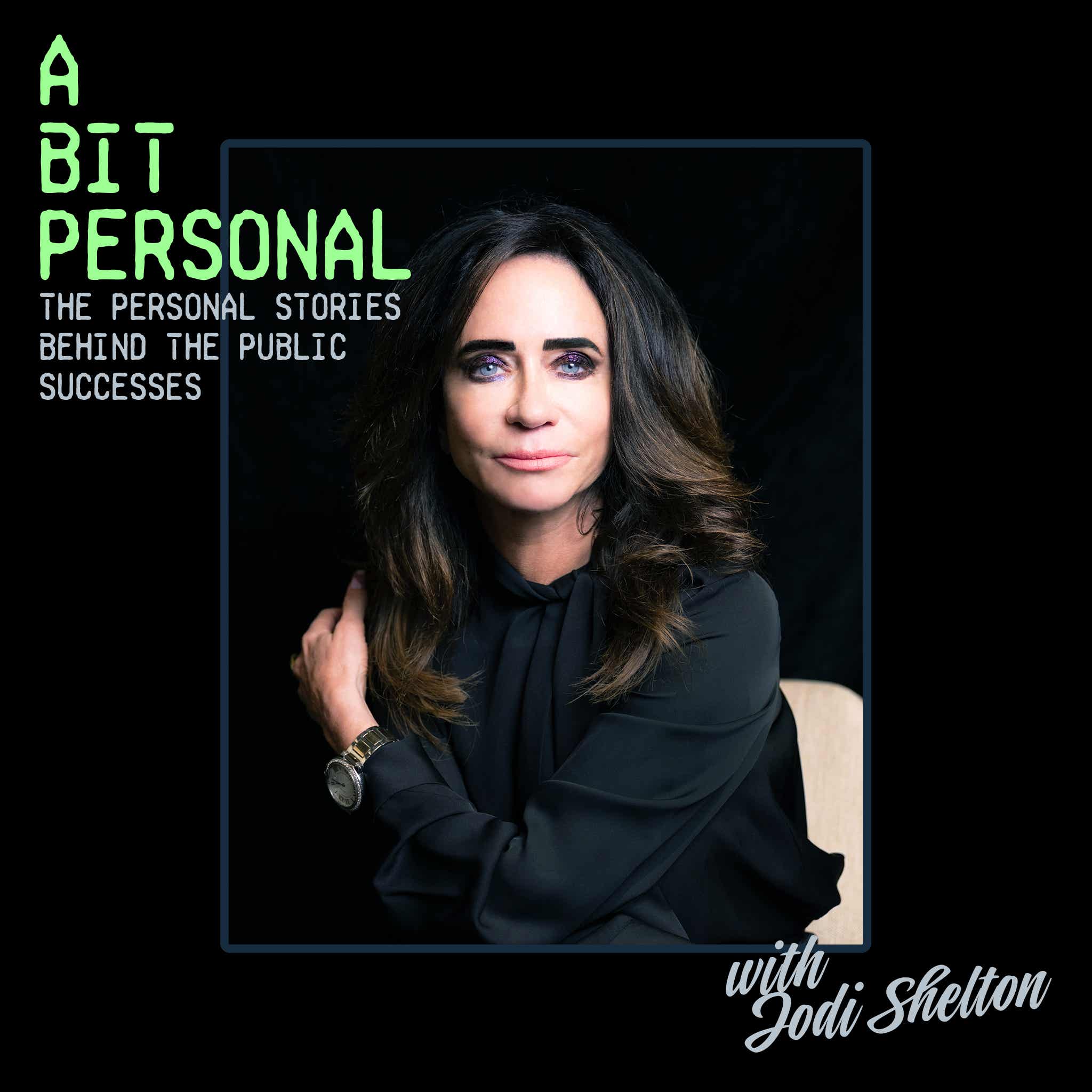
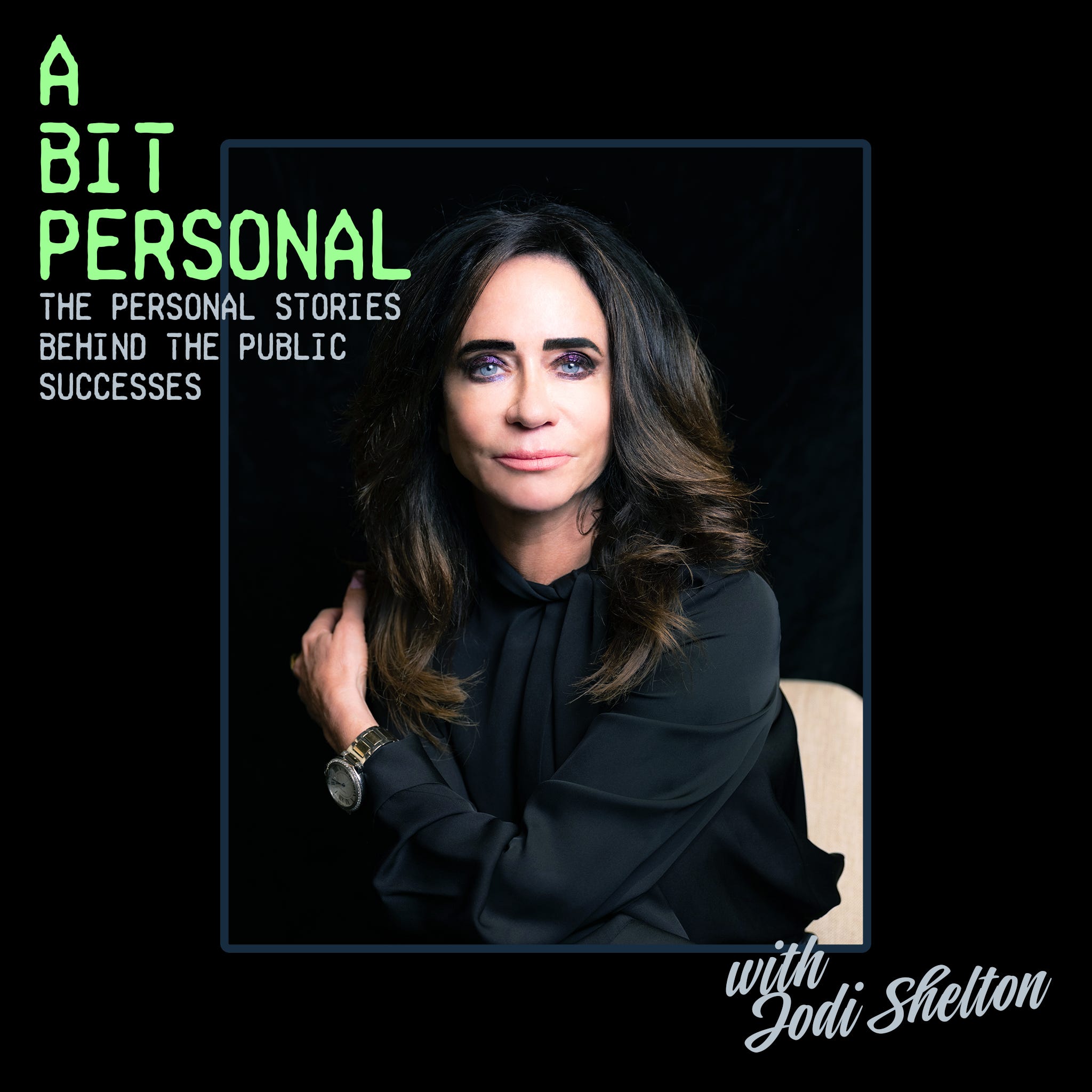
 A Bit Personal with Jodi Shelton
5 Nov 2026 · 57m · 27 chapters
A Bit Personal live from Stanford with Dr. John Hennessy, former Stanford president and current Alphabet chairman, on his path from Long Island to pioneering risk computing (MIPS), building Silicon Valley’s semiconductor/computing ecosystem, leading Stanford, and his views on AI, education, humility, and meaningful life.
John Hennessy is a computer scientist/entrepreneur/educator; Stanford faculty since 1977; Stanford president for 16 years; Turing Award recipient; chairman of Alphabet. He co-founded MIPS (commercializing risk/RISC ideas) after Stanford/Berkeley research; he also served on Google/Alphabet’s board.
Silicon Valley’s success isn’t preordained; it’s driven by tolerance for failure. AI will augment rather than fully replace humans, and society under-invests in safeguards against misuse. Humility enables better feedback while staying ambitious. In education, AI changes how students must practice problem-solving and critical reasoning.
Stage moment with Morris Chang and Jensen Huang at Stanford; Stanford financial aid reform (zero tuition under $100k family income); AI examples like Transformers at Google Brain and AlphaGo at DeepMind; concerns about model misuse and security flaws in AI-generated code.
Written by AI. May contain mistakes.
John discusses his accomplishments, including awards and significant events.
“Yeah, I'm very excited to have this conversation.”
Exploration of how John's parents shaped his values and interests.
“I think we had lots of history with AI, but most of it was history of disappointments rather than real breakthroughs.”
John shares nostalgic memories from his childhood in Long Island.
“I still think of reading as the superpower that I try to install in my granddaughters.”
John reflects on his academic struggles and turning points in education.
“Okay, so why don't you describe to me maybe a memory that you have from your childhood that sort of kind of wraps up and encapsulates that period of your life?”
John discusses his early experiences in computer science and engineering.
“So then you go to Villanova for engineering and then on to Stony Brook to get computer science degree, master's.”
John addresses common misconceptions about Silicon Valley's development.
“Okay, so you got to be witness to all of that.”
Explore the unique culture and appeal of Silicon Valley and Stanford.
“I think the Valley has created a mystique around it, and it's had this incredible talent magnet, as has Stanford.”
Discuss the experience of imposter syndrome among academics and how to overcome it.
“You know, probably a combination of people in the early 80s.”
Learn about the transition from academic life to entrepreneurship and the challenges faced.
“So you then have a foray, you mentioned it a moment ago, into entrepreneurship.”
Understand the importance of business models and technology innovations in startups.
“that people have such conviction about something like Jensen did, you know, 10 years before AI.”
Discover the evolution of leadership skills through experiences at Stanford University.
“It's a lot harder to get through two wickets.”
Examine the role of humility in effective leadership and how it fosters collaboration.
“I always tell people, you know, every time if you're leading, every time you make an enemy, you're reducing the amount of time that you can be a leader because you build up your list of enemies.”
Explore the significance of feedback mechanisms for effective leadership.
“I mean, look at Washington as an echo chamber these days.”
Learn about major changes in financial aid and interdisciplinary research at Stanford.
“So it turns into a bigger mess over time, and then you have to go fix it.”
Discuss the challenges faced in reforming education and the impact of MOOCs.
“So that was really an attempt to change the structure of the university and how it could pursue important problems that were critical to society.”
Understand what sets consequential leaders apart in the tech industry.
“I am actually very hopeful about current machine learning-based AI as a way to really get AI tutors and reform in our education system and a better education system than we have today.”
Explore the history and contributions of Jensen Huang and NVIDIA.
“but each of us was driven with a vision of what we were going to do and how it was going to change things.”
Discover Google’s initial vision and the talent behind its success.
“He's got a lot of good people at NVIDIA these days.”
Analyze Google’s contributions and position in the AI landscape.
“from Andy Bechtel, Simon David Cheriton, and then a round of venture capital.”
Examine what we may be overestimating and underestimating about AI.
“I mean, I think they, you know, Transformers that are currently the thing that's driving all of LLMs were done at Google Brain.”
Discuss the need for regulations and safeguards in AI technology.
“So I think we need to find that technology.”
Discuss the challenges AI presents in education and the need for cognitive engagement.
“Okay, so I want to talk about AI through your educator's lens.”
Learn how AI is reshaping educational methods and the challenges it poses.
“You know, it's kind of the Malcolm Gladwell 10 ,000 hours to be able to be good at something.”
Explore the potential opportunities and challenges presented by AI advancements.
“I know that I believe it's true in Austin, Texas, that AI is not allowed in the classroom anymore.”
Hear insights on maintaining personal relationships while achieving professional success.
“And to try to understand, not just because I want to know everything about your personal life, because I do, but also because, I mean, you're a model for people.”
Discover the importance of leadership qualities and community contributions in today’s world.
“And, you know, right now, I'm focused on trying to do things that give back to an environment that's been very generous to me.”
Explore the traits that indicate potential leadership in young individuals.
“If you have two 25-year-olds in front of you, can you pick one leader from another?”

Get the gist, explore an idea or ask about something said.
 Claude
On A Bit Personal with Jodi Shelton, what are the key points of this episode?
Searching your listeningAutomatic transcript. May contain errors.
0:00Jodi Shelton: Today my guest on A Bit Personal has fingerprints on an extraordinary number of institutions and technologies that built Silicon Valley. And we're recording live right here at Stanford, which feels appropriate because so much of his story starts on this campus. Dr. John Hennessy is a computer scientist, entrepreneur, educator, and the former president of Stanford University, and today is the chairman of Alphabet. Long before any of that, he was one of the pioneers of risk computing, research that fundamentally changed how processors are designed, and eventually earned him the Turing Award, the closest thing computing has to a Nobel Prize.
0:37Jodi Shelton: He joined the Stanford faculty in 1977 and has spent 16 years as the Stanford president. My own relationship with John goes back to 2010 when he won the Dr. Morris Chang Exemplary Leadership Award from the Global Semiconductor Alliance. We went on to do a couple of programs together, including one of my favorite memories is an event that happened right here at Stanford where John, Dr. Morris Chang, and Jensen Huang were all on the same stage. Think about that combined impact of those three people alone have had on computing. But this podcast isn't really about the resume, as impressive as it is, but it's but I want to understand the person behind it, the kid from a big family on Long Island, the engineer who became the entrepreneur and the professor who became the president of Stanford.
1:25Jodi Shelton: The husband and father behind all those titles and the person who spent decades surrounded by some of the smartest, most ambitious people in technology. So today we're going to talk about ambition, failure, leadership, Stanford, Google, AI and family and what John has learned about building a successful career and a meaningful life. Let's get a bit personal live from Stanford with Dr. John Hennessy.
1:56Jodi Shelton: Dr. Hennessy, welcome to A Bit Personal. Thank you, Jerry. Yeah, I'm very excited to have this conversation. And it's very exciting because we're here at Stanford in front of a live audience. So you're pretty used to that. Best way to do it. Yeah, so it's very exciting. So our careers, over the course of our careers, our paths have crossed a couple of times. And so I want to bring up a couple of memories that I have of meeting you. And the first one was when you won the Dr. Morris Chang Exemplary Leadership Award from the Global Semiconductor Alliance, I believe 2010. What was that like for you?
2:31Well, that was wonderful to get the recognition of your peers and your colleagues. And for an academic to be recognized in industry is really extraordinary. and it was a great honor because I've known Morris for many years. Of course, he was a student here at one point, so it was a terrific honor for me.
2:53Jodi Shelton: The other one was shortly thereafter, so after I had met you, we did an event here at Stanford with yourself, Dr. Morris Chang, who is the founder and former chairman of TSMC and the one and only Jensen Wong. I can't believe we had all of you guys on stage. Well, it was an extraordinary time, I think. And I recall we were trying to boost the student interest in semiconductors and the important role semiconductors have played. Remember, the valley started as a semiconductor valley, not as a computer and software valley, but it rapidly changed and grew over time. So it was an opportunity. And now I think we see how critical semiconductors have become to our future.
3:39Right.
3:40Jodi Shelton: And at that point in time, you're right. I mean, people really didn't understand. So we were out kind of preaching the gospel of semiconductors and did it right here at Stanford. To have you guys on stage again would be amazing. It was such an iconic moment. And do you think at that point in time that any of us really understood what computing would be 15 years later? Well, I think we certainly didn't see the AI revolution coming at the pace and scale it's come, for sure. I think we had lots of history with AI, but most of it was history of disappointments rather than real breakthroughs. So we didn't see that coming.
4:19But this is an observation about the valley. If you look at the valley, it's these waves of innovation that come along that really change the landscape fundamentally, right? the personal computer and the microprocessor, then the internet, then the World Wide Web, then mobile came along. Each of these really reshapes things and builds whole new great companies.
4:44Jodi Shelton: So you've had such a varied career and had so many titles during the course of your career. So when you're at a cocktail party and someone doesn't know you, they say, You know, excuse me, who are you? Who are you? A professor. That's what I start with and that's what I finish with because that's the thing I really have put most of my life and energy into. That's the room you feel most comfortable in. Yes. Is rooms like this. Okay, that's very neat. So as you know, this podcast is called A Bit Personal because we do like to get a bit personal. We like to understand the man behind the resume, the personal story behind the public success.
5:24Jodi Shelton: So I want to go back to your childhood in Long Island. And first, let's start with your parents. You had a father who was an aerospace engineer, a mother that was a teacher. What did you get from each of them that you think still, that you still see and recognize today? I'd say from my father, I got a love of problem solving and engineering. And engineers are problem solvers. That's what they do, right? And so I got a love of that from my father and I got a love of reading from my mother. She really instilled that love of reading in me. And I think they're both, they're incredible gifts. I still think of reading as the superpower that I try to install in my granddaughters.
6:05Jodi Shelton: So what, besides those two, you know, the problem solving and the reading, what kind of values did they imbue in you and your siblings? Well, certainly responsibility. I spent six years going to summer camp every summer. It was competitive, but it was competitive in a way that was friendly. Everybody knew what the rules were. And the highest award given at this summer camp wasn't for the greatest athlete. It was for the person who was the best sportsmanship. And so it rewarded that. And that really sent an important message about values. Everybody was responsible. We had six kids in the family.
6:48Everybody had a chore on Saturday. Everybody had a chore at dinnertime, whether it was setting the table, clearing, washing. Everybody had to chip in. You've got to do that in a bigger family.
6:58Jodi Shelton: Yeah, and a bigger family, I guess you either have the choice of chaos or it's sort of very military-style order, and everybody does what they're supposed to do. So it sounds like yours Well, some mix of both, probably. There's certainly still chaos with six kids. What was it like at the dinner table? It was fine. We had a rule. The rule was take all you want, but eat all you take. And everybody would, but my mother had to work hard to get healthy food on the table for six kids. And then my father in those days, when I was probably five through ten, aerospace engineers were working three shifts a day because Sputnik had been launched.
7:40We were behind. And my father would work the graveyard shift as an engineer. And they were working that way. So my mother kind of took care of us, became the reader and bedtime stories and all that sort of thing. But they made it work.
7:55Jodi Shelton: How do you think that your parents would describe you as a kid? Maybe a little bit of a wise guy or a little bit of, certainly they would say nerdy, probably. Nerdy. Okay. So when they gave you the 16-volume encyclopedia and you read it from front to back, they would say, oh, that's just John. Yeah, they would. In fact, I used to get in trouble for reading at night, hiding the light and reading when I was supposed to be sleeping. but it didn't seem to hurt me in the end. Okay, I remember actually being in an elevator with you in Taiwan, and my kids were probably, I don't know, five and eight, or maybe even a little younger, and I said, you know, John, someday I would love my children to go to Stanford.
8:38Jodi Shelton: He said, are they in science camp, or are they in math camp? And I was like, I've already failed. Okay, so why don't you describe to me maybe a memory that you have from your childhood that sort of kind of wraps up and encapsulates that period of your life? Oh, that's a good question. I'd say, you know, when we were... So I had my grandparents lived a few miles away, and my grandfather was the completely self-made man. His first job was loading buckets of sand to make cement out by Coney Island. So he started very much in a working class way and had worked his way up and married my grandmother, who was from a highly polished.
9:31She had gone to finishing school in England. So they were kind of complete opposites. But they were the ones that actually sponsored us going to summer camp. and my grandfather would come over and he'd say to them, he wasn't allowed in the camp during the evening, but they'd come over after dinner and they'd say, oh, do you know where those Hennessy boys are? And he says, here's 25 cents, go find one of them. And they'd go find us and he'd give us a dollar, which in those days a dollar was a lot of money. And so we really had a great time. And sometimes they'd say, well, who are the Hennessy kids?
10:10He goes, the ones that all have blonde crew cuts, right? Because that's how we had our hair then.
10:15Jodi Shelton: So your grandparents were a very important part of your childhood. Yes, they were.
10:22Jodi Shelton: So you're talking about winning awards at these camps and going to the camps and reading at nighttime, winning all these awards. You're a pretty smart kid. Tell us something you were bad at. Oh, I was lazy. I was a lazy student. I was a lazy student. And it frustrated my teachers because I wouldn't do the homework and they'd get an A on the test. And I was lazy through high school. And then I had an encounter with my high school math teacher. And it was a parent-teacher conference. And in high school, you're there with your parents listening to the teacher's feedback. And the teacher says to me, John has a very fine mind, but he has a lazy mind.
11:09And she was exactly right. And then she said, I'll make you a deal. If you promise to work hard, I'll let you take algebra and geometry at the same time so you can be on track to take calculus in your senior year. And I said, okay. It's the first time somebody challenged me with something that I could really feel the challenge. Okay, now I'm going to do this. And it was a real turning point for me.
11:34Jodi Shelton: Okay. So then you go to Villanova for engineering and then on to Stony Brook to get computer science degree, master's. So was technology sort of always your destiny, you think? Oh, I think so. I mean, I'm classical growing up with chemistry kits and building rockets and doing all the usual, some electronics, doing the usual things. I was always interested in the field. And, you know, I got interested in computing. In those days, they didn't teach computer science in high school at all. But there was a computer club. And we had a teletype that had a remote connection with a paper punch tape and all.
12:17And you could write code. And that's how we learned coding.
12:23Jodi Shelton: Okay, so then you end up at Stanford as an assistant professor in the late 70s. So what was it like? I mean, obviously Silicon Valley was very different. Stanford was very different. Did you see the writing on the wall back then of what it could become? I think nobody completely understood. I mean, Gordon Moore had already published the paper that contains Moore's law, but nobody had really thought through what the implications of this technology were going to be, let's say over not just one or two years, but over a decade. Nobody had really thought it through. At that time, when I came to Stanford, when you wanted to go visit the leaders in the computer industry, you got on a plane and you flew to Boston or New York.
13:08Because that's where. Or if you were in supercomputing, you flew to somewhere in Minneapolis or Wisconsin. But that's how you communicate with those people. And there wasn't much of an industry here. HP was there. There were a few other. And the semiconductor companies, Intel and Zilog and others national. But there really wasn't much in the computer field at that time. And it wasn't until the set of companies that were built in the 80s, well, Apple first, but then the set of companies that were built in the 80s that really created a major swing in the leadership in the industry.
13:42Jodi Shelton: Okay, so you got to be witness to all of that. So when people have these myths about Silicon Valley or misconceptions, what do you see through even now? that what is one of the biggest myths about Silicon Valley? You know, I think that it's preordained. I think the Valley has created a mystique around it, and it's had this incredible talent magnet, as has Stanford. Stanford's been a giant talent magnet for students around the world, many of whom then decide, this is a pretty nice place to live. If I could get something started here, maybe I'll stay here, right? So there is that mystique to it.
14:24But if you look at the attempts to clone the valley, none of them gets above a B minus or C plus. They haven't really worked, partly because the set of things that exist in the valley, including tolerance for failure, because we've had people in the valley who failed, right, and failed pretty miserably, and then they recover or they take what's left of the failure and they make something of it. So that's one of the wonderful things about the Valley.
14:55Jodi Shelton: So you said you describe yourself as a professor and you love teaching. So who saw in John Hennessy that you could be a major leader at Stanford? Who saw that potential in you? You know, probably a combination of people in the early 80s. Jim Mindell, who was then the leader of the Center for Integrated Systems, who believed in the MIPS project that we were undertaking and spurred on the local integrated circuits facility here at Stanford to actually build the chips for us, which was a real push for them in terms of building something at that scale. And Jim Gibbons, who was then dean of engineering, and really supported me and awarded me an endowed chair when I was, what, I would have been 25, 27?
15:44No, 35, sorry, 35. 35, off by 10.
15:47Jodi Shelton: Okay. Again, it sounds like you're, you know, one of the smartest people that we know. No. So I have to ask you. There are lots of smart people out there, Joey. There are a lot of smart people, but a lot of smart people often walk in a room and feel that they're not qualified to be there. You know, the whole idea of the imposter syndrome we've heard a lot about. So have you ever experienced that? Did you ever walk in and say, I really don't belong here? No, but I realize I walk into things and I really don't understand. For a young computer, when I was a computer scientist, I could literally go to any PhD oral in computer science and understand at the PhD defense what they were doing.
16:32That's not true anymore because the field has expanded by so much and gotten so deep in some areas. And that's to watch that change occur. So sometimes I'll be, even today, I'll be chairing a PhD oral, so I'm not the expert, I'm not the reader. And I'm trying to figure out what they're really doing and really understand what's going on here because I'm out of my depth.
16:54Jodi Shelton: That happens all the time. Happens all the time in a university. One of the great things about, one of the humbling things about a university is that there are thousands of undergraduates on this campus that know more about fields than I know about those fields. And that reminds you that everybody has their own expertise, but they're limited to that. So do you have any advice for those of us who sometimes face imposter syndrome of how you get over it? I think you have to be comfortable with it. One of the great things I sometimes tell people, if you really want to learn a subject, teach it to somebody else.
17:33Because then you really have to understand it to do it. And that's a good way to think about how you're going to overcome your imposter syndrome. Pretend you're the teacher.
17:43Jodi Shelton: So you then have a foray, you mentioned it a moment ago, into entrepreneurship. So you started MIPS, which was the commercialization of risk. So tell us a little bit. I mean, that seems like a pretty big transition from professor to business leader, business executive. So how was that transition? How did you manage that? Well, I had had some experience because Jim Clark brought me into his company when he spun out Silicon Graphics, since I had done some work on the geometry engine, built a key part of the software that helped build that chip. So I had been a consultant for them for a while. I understood something about the Valley, but I was a reluctant entrepreneur.
18:22When we published our papers, we thought, these results are so compelling. Four graduate students built something that is several times better than a chip that Intel just finished with 400 engineers. So I said, this is a pretty good idea. We just have to write the papers. And then that's not what happened. In fact, the two companies that had been doing exploratory projects both canceled their decision to go forward with them. So eventually what happened was Gordon Bell, who had been the senior leader at Digital Equipment Corporation, the second largest computer company then, for a lot of years, said, this technology is too disruptive.
19:04It's too innovative. It's going to obsolete their existing products. You have to start a company to get it out there, if you really believe it, because they won't bring it out. So that kind of pushed us over the edge. And then one of my co-founders, John Massouris, decided not to go back to IBM because they had just canceled the project that was similar to the work that he was doing. And we got together with another Stanford alum, Skip Sturder, and got the company started. But it was three engineers who didn't know anything about running business. didn't know what a gross margin was, didn't know what percentage of the budget could be spent on engineering, didn't think they needed sales and marketing because the product was so obviously great.
19:51Why do you need sales and marketing? So there was a lot we didn't know.
19:56Jodi Shelton: So how'd you learn it? By the seat of the pants. I mean, I learned it the hard way. And when I eventually, many years later, was in the dean's role at Stanford, one of the things I really tried to do was strengthen our teaching of entrepreneurship because I said, I never want a Stanford student to be in the situation we were in where there was great information asymmetry and we didn't really, we didn't optimize what we were doing. We made a lot of mistakes and, you know, the regret I have is that the mistakes we made meant that 20 % of the company ended up in the hands of the investors rather than in the hands of the employees.
20:38Jodi Shelton: Well, I find it very interesting that you sort of pushed forward the technology when, again, a lot of smart people thought that it was not going to happen. And so, you know, I find that sometimes in Silicon Valley that people have such conviction about something like Jensen did, you know, 10 years before AI. But sometimes that conviction can be confused with ego or stubbornness. How do you know the difference? Well, in the end, I think a good explanation of quantitatively why an approach makes sense is really critical. One of the problems we had with the reduced instruction set, the risk ideas, was we kind of stumbled on them, quite honestly, both the research group here at Stanford and the research group up at Berkeley, led by my colleague Dave Patterson.
21:28We kind of stumbled on these ideas. We just thought we should rethink how architecture should work because microprocessors very different than the technology that was being used in mainframes or mini computers and the designs in industry copied what had been done in mini computers so we just said let's just take a look at it and see if these should be designed differently. We stumbled on it and I didn't have a really good explanation for why this risk approach was delivering greater performance until a few years later when I finally got a key insight from another paper that somebody else had written.
22:09And when we wrote that paper, it was clear to everybody what the key insight was. But it took several years to get that insight.
22:18Jodi Shelton: So what advice do you give the people in the room today and our audience listening about when you need to learn to pivot. When do you make that call? Yeah, you do need to learn to pivot at different points. And, you know, there are different inflections. One of the challenges we faced in MIPS was we not only had a new technology, but we had to kind of reinvent the business model. Morris hadn't started TSMC yet. There wasn't yet a silicon foundry business. So we had to go out and develop foundry-like relationships to get access to technology. And so we had both a business hurdle, we had to get through a new business model, and which became fabulous, but there was no fabulous then in the early 1980s, a new business model and a new technology.
23:07That's two wickets you have to get through. It's a lot harder to get through two wickets. So I've told lots of young people starting to Pick one. You either have a new business model or you have a new technology. But if you pick both, raise a lot of money.
23:24Jodi Shelton: All right. So then you talk about a pivot. You became the president of Stanford in 2000. So had that I mean, once again, I asked about destiny. Do you think that that was always your destiny? Was that your goal to become the president? No, my goal was after I spent some time at the company. I decided I missed working with students and that was really where my heart was and that I would come back to the university and kind of reverse roles so I was just a consultant to the company and spent most of my time back at Stanford. And I could have been perfectly happy just being professor for the rest of my life.
24:02And I got involved in leadership through a series of different opportunities. And I found that I enjoyed recruiting new faculty. I enjoyed helping them grow their careers and be successful. So it was really an experiential positive for me. And then I kept doing it.
24:23Jodi Shelton: And so at some point during that time, you discovered I'm really good at leading as well. Yeah. And you had a knack for it. And you learn it slowly. I mean, I'm a bit of the proverbial frog in the pot of water and the water's boiling and the frog doesn't realize he's cooking until it's too late. And so I did it bit by bit. And by the way, leadership is something where it's very hard to jump over rungs in the ladder because the skills you need and the strength you need to deal with difficult problems in ways that it's empathetic and humane, which you have to do. I always tell people, you know, every time if you're leading, every time you make an enemy, you're reducing the amount of time that you can be a leader because you build up your list of enemies.
25:12And when that list gets too long, it's over. So you want to try to find ways to deal with people and to be thought as a good leader.
25:24Jodi Shelton: So do you think that leaders are, if they're born, or it really is something you develop? And what about people who feel at this age that they're very uncomfortable thinking about leading other people? Try something small. Start small. I started running a joint laboratory at Stanford and start small, working on small problems, and work your way up. But that also is the way, I mean, there's stress that comes with leadership when you have difficult situations. So you have to learn how to manage that stress as well. And the first few times you do, you encounter difficult situations, you may mess up a little bit.
26:03But if you can learn from that and try to correct yourself in the future and do better, you'll be more successful.
26:11Jodi Shelton: So you talk a lot in your book, which you just signed for me, thank you, a lot about humility and leadership. And I think that we look around today, and that is not what we see from leadership. I mean, I personally know quite a few semiconductor CEOs that I would describe as humble. But in general, when you think about whether it's our political leaders, business leaders, or Silicon Valley leaders, that is not the word that comes to mind. It depends on the leader. I mean, if you think of people like Morris Chang or Gordon Moore. The past. Sun Darvichai today. I think you'd see that. I'm a believer in humility because I think it solves a lot of problems.
26:59It makes it, first of all, if you're humble, it's very easy to ask for help because you realize there are other people who know more about a particular endeavor than you do. You diffuse this difficulty that arises when you become a leader. Nobody wants to say you're wrong. They're too cautious about it. But if you're humble about it, then everybody will feel more engaged and more capable to say, oh, I don't think that's a really bad idea. So you need that kind of feedback, and I think it's critical. I distinguish between being humble and still be ambitious.
27:38Jodi Shelton: Okay. Right? So define humble for us. Humble means you're open. You don't act like you're the smartest person in the room. You're open to criticism. You're open to feedback. And you're willing to ask other people for help. Right, and it's hard to create an environment like that at a company because a lot of times, you know, the CEO, people are very cautious to give them the real feedback. So they kind of create an echo chamber. A good CEO, it is. You can create an echo chamber. I mean, look at Washington as an echo chamber these days. I mean, I think that's not a good thing. It's not a good thing.
28:14But I think good CEOs will have people they'll turn to, they can go to, and they can ask. And it's not like somebody is going to confront the CEO in front of the board and say, you're crazy. But there'll be a way to get that kind of feedback and interaction.
28:30Jodi Shelton: So during your time as president, what do you think was the one lesson you learned that you really didn't know before you started? In a big organization, people mess up and create problems, usually unintentionally, but sometimes negligently. And then they don't like to admit that they did something wrong and help repair it. So it turns into a bigger mess over time, and then you have to go fix it. And how do you fix the problem of needing to do that? I think the problem, the ones that were really hard were circumstances where people could argue they obeyed the letter of the law, but not the spirit of the law.
29:16And you try to reinforce the spirit of the law. What is the goal of the institution? Why are we operating the way we're operating? What values do we have? And articulating values and mission is a good way to do it. What's our mission? What are our values? And that can be critical.
29:36Jodi Shelton: What's the one accomplishment that you feel most proud of during that time? Probably there's two. One is we made the biggest enhancement to undergraduate financial aid in the history of the university in those years. where we discovered that lots of people with limited financial resources would look at the sticker price and wouldn't even apply to Stanford. So we had to really simplify financial aid, and that was when we first made the change that if you came from a family with under$100 ,000 a year, your tuition bill was zero. So that was a really big change. The other big change was really trying to foster and build interdisciplinary research activities focused on the really big problems we face as a society, whether it's health care or the environment or international peace and security.
30:30So that was really an attempt to change the structure of the university and how it could pursue important problems that were critical to society.
30:39Jodi Shelton: What didn't you get accomplished that you really wanted to? Oh, lots of things. We didn't get some initiatives we really wanted to try to focus on. They never quite completely gelled. We did one in, we have a fine education school, but we tried to build a cross-disciplinary engagement with education. Part of what happened there was MOOCs didn't play out to be quite the revolution that we initially anticipated, partly because MOOC stands for Massively Open Online Course, partly because a course like that, without any prerequisites or any assurance that students were at the same level, fit some students very well and left others completely lost.
31:29So that wasn't quite the model. I am actually very hopeful about current machine learning-based AI as a way to really get AI tutors and reform in our education system and a better education system than we have today. But the first generation of technologies didn't do it.
31:49Jodi Shelton: So I want to go back just a moment to that moment on stage with you, Morris Chang, and Jensen Wong. Again, three people that have made amazing contributions to the semiconductor industry and computing in general. Is there anything about the three of you that, I mean, anything about consequential leaders that people have in common? I mean, because as you said a few moments ago, there's a lot of smart people in this world. But not a lot of smart people change industries. Yeah, I think we each were on a mission. We were each driven to kind of prove out our concept and our idea. and I think that's true about each of us in different ways.
32:38We're three very different people, but each of us was driven with a vision of what we were going to do and how it was going to change things.
32:47Jodi Shelton: So kind of that visionary aspect is what makes the difference. Yeah, and commitment and willingness to work hard on it. So you knew Jensen way back when. So tell us if you saw all those years ago that this man was going to be who he is today. Well, of course, you can never quite predict. He was a great engineer. And he was intense. He was really focused. So I think those things played out. And I think, but he, and, you know, NVIDIA's history, everybody sees it now as this giant success, but they don't remember. It was rocky when they were in the GPU business, core GPU business. There was some rockiness there that occurred early on, but he saw them through that, and he's become a legendary CEO in the Valley now, along with the best of the Steve Jobs of the world and Andy Grove in an earlier time.
33:44I mean, he belongs in that camp of incredible CEOs.
33:48Jodi Shelton: So he said he really was quite influenced by you as a graduate student here. Does he ever call you for advice? Rarely, rarely. He's got a lot of good people at NVIDIA these days. But he was recently doing an interview for Ezra Klein. Okay. And Ezra Klein, at the end of his interviews, asked people to recommend three books. And the first book he recommended was Hennessy and Patterson. So that was pretty good that he still recommends our book this many years later. And what about Morris? Did you see something in Morris early on? Morris is a deep intellectual but was most impressive about from the very beginning.
34:33He said, TSMC is a semiconductor manufacturing company. We will never compete with our customers. And he has stuck to that like glue. And it's been part of the reason of his success. because then he's had to build a manufacturing powerhouse, a company that really knows how to bring up, they can bring up a new semiconductor line better than anybody in the world. And that's a phenomenal skill.
34:59Jodi Shelton: Okay, so in 2004, you joined the Google Alphabet Board of Directors. And, you know, did you, I mean, this was even before they were public. Right. Right? So what was it like back then? And I mean, did you see and understand what Google was going to become? Well, they already had significant revenue. I mean, from the very beginning, Google, you know, they raised a small amount of money from Andy Bechtel, Simon David Cheriton, and then a round of venture capital. But they never needed the round of venture capital because they had revenue early on. But they became, they were technically very deep from the very beginning.
35:38It was technically a really deep company. and they were very quantitatively focused. We will try to make every decision on the basis of some quantitative analysis if we can. And that was really impressive. I remember when the company was young, before I joined the board, I took a freshman seminar down to see Larry Page and Sergey Brin down at the Google campus. And I asked them about the vision for a campus. And at that time, I'd say Larry and Sergey were both in their, maybe they were 30. And they said, well, our vision is we're going to organize all the world's information and make it accessible and useful to people.
36:21I said, that's a pretty good vision. So they had a big vision and they were willing to do things in a different way, which I thought was valuable. And with Eric Schmidt, you had a triumvirate of really great talent at the top of the company.
36:36Jodi Shelton: So how is Google doing in the AI race? I think they're doing fine. I mean, I think they, you know, Transformers that are currently the thing that's driving all of LLMs were done at Google Brain. So they've done a lot of key technology pieces there. And I think, of course, at Google DeepMind in UK, they're the ones that built AlphaGo and really made the key breakthrough in game playing there. So I think the race is going to continue. There's a lot more technology to do. We are at the beginning of the AI revolution, and I think we're going to see a lot more progress over the next few decades. So as chairman, is there any sort of decision, either chairman or as the executive team, is there any sort of decision that has had to be made in the last 18 months that five years ago you would have never dreamt a decision would need to be made on that topic?
37:33Oh, certainly the amount of capital being spent by these companies are, well, five years ago, we never would have dreamed of spending this much capital to build these data centers. But these data centers are critical to fuel the AI revolution. So that's something that certainly is new.
37:52Jodi Shelton: So what do you think that we're overestimating and underestimating about AI? I think we're overestimating its ability to completely replace human function. I think we're overestimating its ability. At the same time, we're underestimating its ability to replace certain human functions. So there's going to be, and my view is the most interesting AI technology will be technology that augments what people do rather than simply replaces them or creates a lower quality experience for people. So I think we need to find that technology. And this is the first time I think we've seen a technology with both the depth and the breadth that AI has.
38:43We've had other transformative technologies. Certainly the personal computer was transformative. The internet was transformative. But this technology seems to touch virtually every field, every discipline, and it can touch it in quite a revolutionary way, as we've seen in recent results.
39:02Jodi Shelton: So if you were on the standard debate team and you were tasked with arguing against AI, maybe not AI in general, but maybe the velocity of AI, what would be your key points? Okay, so my key points would be this technology can be used for bad things. We don't have adequate ability to control its misuse currently. Therefore, we should think about how do we either create the regulatory mechanisms to deal with it or slow it down until we can figure out what those regulatory mechanisms are. I think right now we're probably under-investing in figuring out how we're going to prevent bad things from happening.
39:57And we've seen recently the whole set of things, the hugging face break-in and break-ins to various government sites, that have occurred when people were not trying to do something bad, when they were just perhaps a little sloppy or didn't contemplate everything that could occur. I mean, Jensen said it's bad engineering. There's probably some truth to that. But now imagine that somebody's trying to use that technology to purposely cause damage. I think it's clear we don't have adequate safeguards against that.
40:28Jodi Shelton: And so who should police that? You know, I think there's two options. One is the companies kind of decide that they're going to create some ways of policing it, perhaps collaboratively. Probably it has to happen collaboratively with government. I don't think government can probably do it on its own. The talent base isn't there right now. But government working with industry and with universities as a neutral party could find a way to begin to solve that. And whether or not we create agencies or we create tests that companies would use before they release models, those techniques are probably the right direction to go.
41:13Jodi Shelton: This episode is brought to you by ASE, the leading global provider of outsourced semiconductor assembly and test services. The future of compute will not be defined by silicon alone, but by advanced packaging innovation and manufacturing scale. That's the vision driving ASE's chiplet and heterogeneous integration solutions, scaling silicon breakthroughs into real-world performance across AI, HPC, and data centers. Learn more at ASE's website or follow ASE on LinkedIn and X, and be sure and watch our episode with Tian Wu, the CEO of ASE. You'll love it. Okay, so I want to talk about AI through your educator's lens.
41:54Jodi Shelton: So, you know, previous generations, my generation, your generation, certainly one of the ways that we learned was through sometimes the mundane task, writing that paper over and over again, all of those kinds of things that AI talks about eliminating. You know, it's kind of the Malcolm Gladwell 10 ,000 hours to be able to be good at something. Can you become exceptional without that struggle? I don't think so. I think you need the cognitive engagement, or some people have called it cognitive friction. You need that challenge. I think the interesting thing that's going to happen is what happens in education?
42:34I mean, think about science and engineering education. Problem sets are the backbone. That's where you learn how to do it. Okay, yes, you go to the classroom, you hear the lecture, but really, where do you really learn the material? You learn the material by going and solving the problems yourself, right? Now how do we get this in a world where you can look up the answer as quick as that? We're going to have to find a new way to do that. Some of my colleagues are experimenting with doing a tutorial structure, for example. So you come in and go up to the blackboard and solve the problem on the blackboard and show the instructor that you're not in the material.
43:11Others are saying, well, I've thought about how do I ask the students to teach the other students in the class? So go read all the AI material you want online and put together a small lecture on a particular topic. So invert the system in different ways to really challenge students to really master the material.
43:31Jodi Shelton: So what needs to be being taught that isn't being taught and maybe reversely what needs to stop being taught at universities? Well, I think we have to find new ways to teach. I mean, thinking about structuring creative arguments and critical reasoning is actually more important in the age of AI. AI doesn't replace the need to do critical reasoning. AI sharpens the need for you to go read that. We already have this problem with AI-generated code. You look at AI-generated. How hard is it to read somebody else's code? It's hard. Even with comments, it's hard to read it and figure out if it's right.
44:11Now it's AI-generated code, and you have to read it and figure out whether it's right. This is a hard task, but you can't trust the system to generate. We already know from a number of research papers that AI-generated code tends to have difficult security flaws that are hard to spot. So we're going to have to figure out how we build a mechanism that brings human intelligence together with machine intelligence.
44:37Jodi Shelton: So what do you think about certain educational systems? I know that I believe it's true in Austin, Texas, that AI is not allowed in the classroom anymore. So what do you think of that? Is that the answer? I don't think that's the answer. I mean, the one thing I can tell you is just as it's important to understand the limits of AI, it's also important to understand what AI can do for you. And depriving somebody of a tool like that is saying, well, we're not going to teach you calculus because it's mathematics. What do you need to know that for? I think there's a real role for understanding how to use AI as an effective tool that lets you do high-quality work efficiently.
45:20Jodi Shelton: So someone needs to teach the teachers how to do that. Yes, yes, for sure. Which sounds like a really big problem. So what do you have to say to kind of this generation of why they should be optimistic about the future? I think every new technology has created new opportunities. Certainly, I look at the history of the valley here and see all these new technologies that came along. And we can't always predict where that new technology will really create change. I remember going over to see the prototype of Yahoo that Jerry Yang and Dave Filo were building. They actually had their offices in a trailer that was right over out here.
46:09And I went over to see it, and they showed me that their favorite pizza place had just put up the ability to order online. And that was the first time I realized that the internet was going to change the way we buy everything and the way we do everything. So there are these changes that occur and they create whole new opportunities. I think AI is going to be the same way. It's going to create new opportunities. Is it also going to automate some jobs? Yes, it's going to automate some jobs. The one thing we have to be careful as a society is this change may occur a lot faster than we're ready for.
46:45and we're going to have to retrain and commit to retraining people for these new career opportunities that will be created. We may not exactly know where they are yet.
46:55Jodi Shelton: And what do you think that the young people, we know what they worry about because you've just talked about it, what don't they worry about that they should be worried about? Give them something else to worry about. We should leave them. You know, I think the pluses and the minuses. I mean, when I look at the situation around the world, you'd say it's a little chaotic. Democracy has suffered a setback. But there have been other setbacks in the history of the country that we've recovered from. And I think we've recovered because there are enough people that are committed to the right values and important roles and commitments that we have.
47:41And I think it's not time to give up on democratic society around the world. It's time to re-engage and see how we make it better.
47:49Jodi Shelton: Okay, so I want to spend the last few moments that we have together on, again, a bit personal. And to try to understand, not just because I want to know everything about your personal life, because I do, but also because, I mean, you're a model for people. And people, you know, are really struggling with how that they live their lives in modern times and balance everything and achieve everything. So tell us, let's start with, you know, you've been married. You married your high school sweetheart and have had this amazing, you know, I guess 40, 50 year love story. And so start with that and tell us about how on earth did you maintain a marriage while building this incredible career?
48:35Oh, that's a good question. I think, yes, so I married the young woman that I took to my senior prom, actually. That was our first date, and we've been married for 52 years. You know, you either grow together or you grow apart. So we grew together. you know she made she worked early on but then once we had children she decided she wanted to which was a good thing because my work was getting more complicated I started MIPS when our when my wife was pregnant with our second son so it wasn't the best of timing but I always tried to stay dedicated to to my two sons and to participate in their life and I just changed my schedule over time.
49:25So I'd be home for dinner. I'd have dinner. I'd do the bedtime stories, get kids ready for bed. Then I'd go log in and get back to work. So I could make that work as a way of staying in touch. And that way you grow together. And she's added a lot to my life. So she comes from a family that's steeped in art and the arts. And she's educated me about that and taught me a love of the arts, and that's been a valuable addition to my life as well.
49:58Jodi Shelton: So what chapter in your life do you think she enjoyed the most and maybe the one she enjoyed the least? Oh, she thought the years that I was dean of the School of Engineering were the best years because it was a job that was challenging but not incredibly stressful. And that made it some... Engineers are logical people. They're rational. You can reason with them. So she thought those were great years. I think what she'd say about the years when I was president and she was first lady was that they were an incredible experience, but very demanding. That's what she'd say. It was very demanding, but incredible experience.
50:49She met all these incredible people, you know, and had the opportunity to be at a number of wonderful events, and she loved that.
50:59Jodi Shelton: So, you know, you talked about reading your kids' bedtime stories, but tell us really about what kind of father you were. And again, how can you be a completely dedicated father and have these demands when you were president of Stanford? No TV. No TV. So basically, there was family and work, and that was it. And that's what I would center my life around. And I've never needed too much sleep, so that probably helps as well. But that made it possible. What have your sons taught you now that they're adults about? Oh, how do you know whether or not you did a good job with your kids? when you see them as parents.
51:48That's the ultimate test is to see your kids as parents because then you realize we messed up a bunch of things, but we didn't mess up the really important things.
51:59Jodi Shelton: Okay, so again, people listening today and people in this audience that want to go off and do really great things. They want to start businesses. They want to change industries. They want meaning in their life, but at the same time, They don't want it at the sacrifice of family, of time, of health. So help describe what a meaningful life is and sort of maybe the top two or three pieces of advice about what not to sacrifice. So I think nobody at the end of their life ever says, I should have worked more hours. I should have done, you know, they may say I should have made different choices, but they won't say that they would have worked more hours.
52:42I'm very fond there's an old quote that says the best purpose in life is to live for something that remains after you're gone and so I've always believed in that it's when you get to be my age and you look back and say what do you really reward you reward what do you what do you feel the most reward from the positive changes you've made in other people's life and the people you've helped along the way.
53:10Jodi Shelton: So again, you've sort of been recognized with every important award in your field, been recognized. You're very, very well admired by not only academia, but in the business world. So have you really been able to sit back and say, hey, you know, I'm pretty proud of what I've done? Have you enjoyed it? I've been extremely fortunate to be in the right place at the right time on a number of occasions. And I think that, and to work with extraordinary people. I mean, the initial group of students that did the MIPS project with me, I mean, extraordinary. They did extraordinary work. You know, working with Teresa Meng on a theorist, that was an extraordinary opportunity.
53:53She was absolutely brilliant. Working with the Google guys, it's truly an amazing group of people I've had the chance to work with. And I've tried to learn from everybody that I've had the opportunity to work with, both whether it's students or peers or somebody I'm working for. I try to learn whenever I can.
54:13Jodi Shelton: So again, I think that one of the things, I have kids in their 20s, and I hear friends of theirs talk about that maybe they'll forego having children because they don't want to make some of these tough choices. So it's nice to see that you can have it all? I don't know. There are choices you make in your life. I think I've always taken the view, I've taken two views. One is, first of all, I don't want to live a life of regret. I don't want to say I could have done that, but I didn't have the courage or the fortitude to go do it. And secondly, highest and best use. at any given time, what is the best use of the time I have available?
55:02How can I have the most positive impact on the world? And so that's what I've tried to focus on.
55:08Jodi Shelton: Okay, so a word we do not hear in Silicon Valley very often is the word enough. I mean, you know, not talking about wealth or resources, but when is it enough? I mean, have you reached that point? It's enough. I told him, I said, do not give me any more awards. Give them to younger people. Do not give me more awards, please. Yes, certainly. It's enough. It's enough. It's enough on that regard. And, you know, right now, I'm focused on trying to do things that give back to an environment that's been very generous to me. So what's the most important thing you're working on right now? Well, probably I'm spending, since I stepped down as president, I've spent the last 10 years working on Knight-Hennessy Scholars as a way to build a new generation of young people who are equipped to be leaders in what, as you pointed out in a lot of your questions, is a much more difficult world than it was a while ago.
56:05Jodi Shelton: If you have two 25-year-olds in front of you, can you pick one leader from another? Not necessarily. I think it's hard to predict how young people will go. I mean, the one thing, there are some things you can look at. Are they willing to think outside the box? are they resilient? Have they overcome challenges in life? Because those are going to happen later on in lots of people's careers. So looking at those things is one way to see whether or not they have the ability to be a leader. Well, I think we covered a lot of ground. I learned a lot, and I really enjoyed getting to know you better, and I think my audience will as well.
56:47Jodi Shelton: So thank you for being a guest on A Bit Personal. Great. Thank you, Jodi. Great. we'll be right back.
Welcome to A Bit Personal LIVE from Stanford!
Ask John Hennessy who he is, and he’ll tell you the same thing at the start of the conversation and at the end: a professor.
Recorded live at Stanford in front of a student audience, this episode of A Bit Personal finds Jodi Shelton sitting down with the man who taught Jensen Huang, advised Bill Dally, helped launch the RISC revolution, founded MIPS, led Stanford as its president, and today serves as Chairman of Alphabet. But the story starts much earlier, on Long Island, with an engineer father working the graveyard shift in the years after Sputnik, a mother who gave him a lifelong love of reading, five siblings, and a family dinner rule: take all you want, but eat all you take.
John opens up about the high school math teacher who called him lazy and challenged him to prove her wrong, the reluctant entrepreneur who started a company without knowing what a gross margin was, and why he believes humility and ambition belong together. He shares what he saw in the leaders he’s known, from Jensen Huang to Morris Chang to Larry Page and Sergey Brin, and gives his candid take on where AI is headed, what young people should be learning, and what it means to build a career without giving up the people who matter most.
The conversation ends where the best ones do, with a love story: 52 years of marriage to the girl he took to his senior prom, and a life measured by what remains after you’re gone. The episode also includes a live audience Q&A on AI, hardware, entrepreneurship, and what it takes to lead.
This is a conversation about teaching, humility, and the quiet influence of someone who helped shape the people who shaped the industry. This is A Bit Personal.