Ask ChatGPT
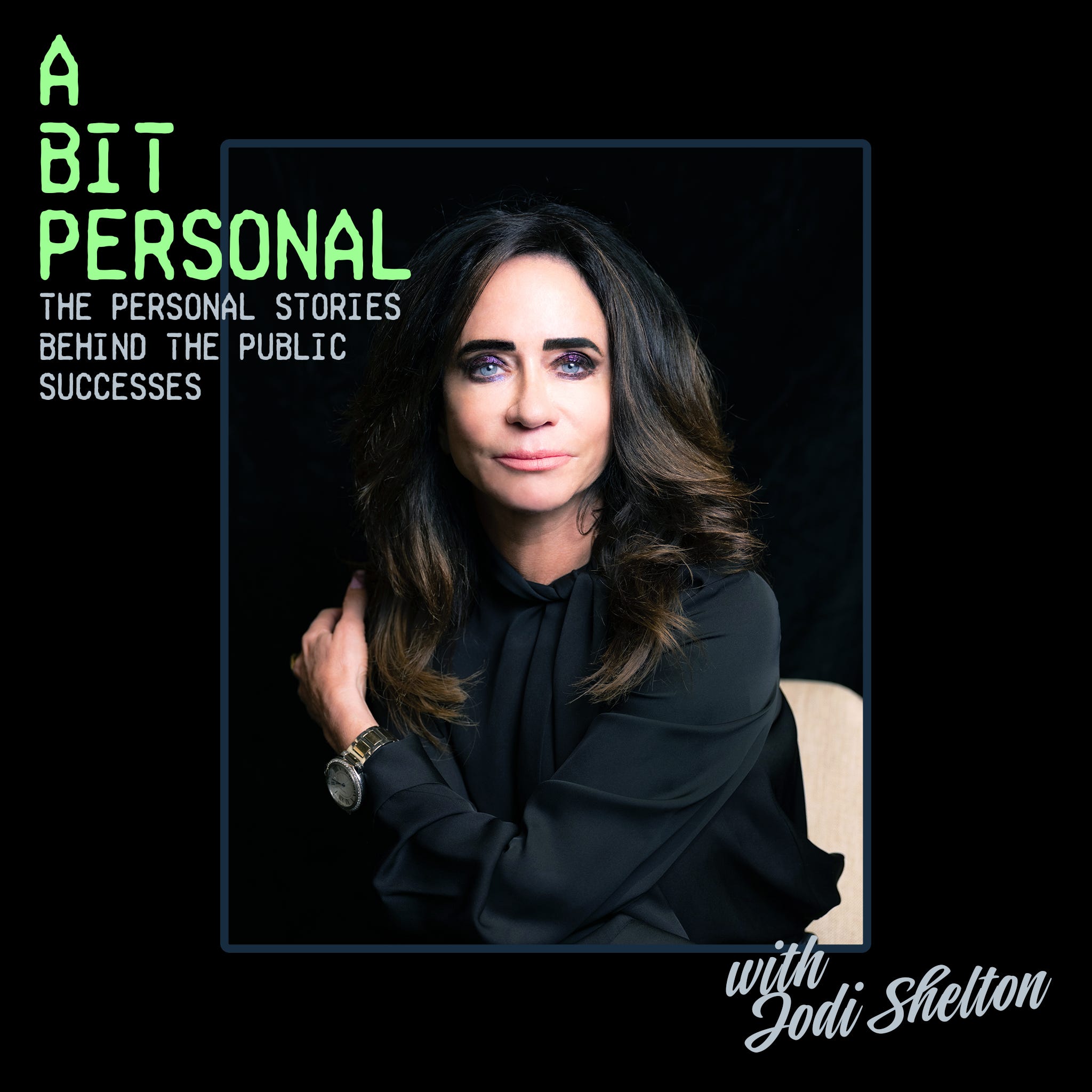
 A Bit Personal with Jodi Shelton
21 Oct 2026 · 1h 15m · 33 chapters
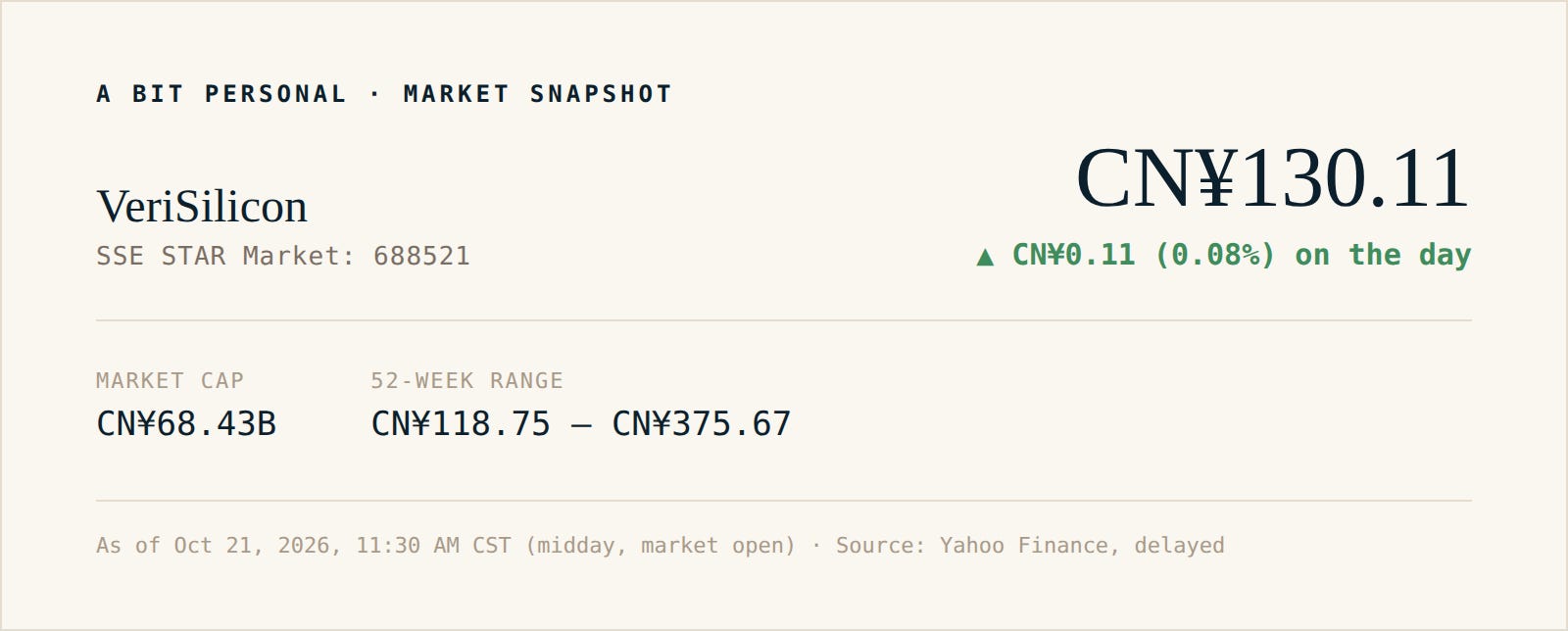
Wayne Dai, founder/chairman/CEO of Verisilicon, discusses his path from Shanghai during the late Cultural Revolution to UC Berkeley and academia, then returning to China to build chip-design services and a culture he summarizes as “Fair, Care, Share.” He also comments on China’s innovation/commercialization, talent pipelines, work-life balance vs “996,” and AI’s shift from cloud training to on-device/edge use (e.g., small offline models, “AI toys/glass”).
Dr. Wayne Dai is a semiconductor industry veteran and a bridge between China and the world. He studied in the US (UC Berkeley computer science) and taught at UC Santa Cruz before founding Verisilicon. He later helped lead Verisilicon’s move to China and its Star Market IPO (Aug 18, 2020). His family includes semiconductor leaders: sister Wei Li Dai (Marvell co-founder) and brother Wei Jin (semiconductor CEO).
Verisilicon’s culture drives retention and productivity; fairness includes stock options even for non-engineers (receptionist/driver). China is strong at commercialization (1-to-10) and improving patent seriousness, while the US excels at “0-to-1.” China’s AI advantage will come from edge inference and real-world data capture.
swimming across the Hongpu River; passing Shanghai Jiao Tong University via early national exams; commuting US–China while running PhD students; annual company New Year parties where employees bring kids; recruiting screening from 10,000 applicants to 100–200 interviewees; offline AI toy/glass concept using small models open-sourced with Google collaboration.
Written by AI. May contain mistakes.
Discussion of Wayne's childhood in Shanghai during the Cultural Revolution.
“Well, thank you for being a guest on my podcast.”
Wayne shares his experiences with the national entrance exam and schooling in the countryside.
“like to grow up in Shanghai during that time.”
Wayne narrates his immigration to the U.S. and experiences at UC Berkeley.
“that time I had to work the day, which is very hard work actually.”
A look into Wayne's ambitions, teaching experiences, and the differences in academic expectations.
“And, I mean, it must have been a pretty emotional journey going from China to the U.S.”
Wayne discusses the importance of vision in education and adapting to market trends.
“It's good civic and the industry is okay.”
Learn how identifying the right problem can lead to successful solutions.
“Because of that, you can solve whatever the problem because So you have deep mass background, solve the open problem.”
Explore the challenges and motivations behind moving from academia to a corporate environment.
“So it was very natural for you to go from being a professor to being an executive.”
Understand the personal and professional factors that influenced the decision to return to China.
“So even after I took one, that time I still had more than 10 PhD students.”
Discover the complexities and challenges of pursuing an IPO in the Chinese market.
“At the very beginning, we decided more internationally.”
Learn about maintaining international operations and the global workforce dynamics in a Chinese company.
“Even given current geopolitical situation, still very international.”
Explore how company culture fosters strong employee relationships and loyalty.
“We acquired, we rented some team in Bay Area.”
Understand the importance of community-building events in fostering company culture.
“Then later you can tell somebody who went to university and share, say, which major, which university.”
Gain insight into the realities of working in tech companies in China versus common misconceptions.
“We don't sell computers, sell TVs, right?”
Learn about the technological advancements and competitive landscape in China's tech sector.
“And, you know, in the U.S., there is this image of what it's like to work for a technology company in China.”
Discussion on the challenges and advancements in autonomous driving technology.
“Later on, the battery is the most important.”
Exploring the unique company culture and values at Verisilicon.
“Well, they seem to have sort of broken all the rules for a typical car company.”
Insights into essential leadership traits and organizational structure at Verisilicon.
“Even though the majority of people are here.”
Exploring how HR influences company practices and fairness.
“So that's make sure the fairness, like the financial department is independent.”
Discussing the different approaches to innovation between China and the U.S.
“that China is in general on its innovation path.”
The evolution of patent respect and innovation in China's technology sector.
“Many countries went through the process.”
Examining the implications of U.S.-China relations and partial decoupling.
“You can maybe invent advantage, So do you think that the US policy towards China has helped accelerate China's development and shift?”
Speculating on China's future role in global technology and innovation.
“Design China, manufacture China, for China.”
Discussing the integration of AI in chip design and its implications.
“Air is how to use task to finish for you.”
Exploring China's initiatives in energy and technological advancements.
“You compute the people who know how to use air.”
How AI toys and tools can reshape education for young children in China.
“So you need leaf, you need a small branch.”
Discusses the impact of technology on education and data capture.
“Obviously from the current education system.”
Explores advancements in robotics and China's position in the field.
“If you want to do it, if you say this IP won't make a chip, you add Verisilicon.”
Compares Chinese and American cultural perspectives through art and engineering.
“They're starting to have many EDA companies.”
Explains the design light business model and its implications for the industry.
“All those things, you need big pictures, very important.”
Learn about the importance of integrity and customer focus in business models.
“They even don't ask how much money you made.”
Discover personal insights through a quick Q&A segment with Wayne Dai.
“If you don't make your employee happy, our employee can service customers.”
Explore Wayne's perspectives on future opportunities and valuable life advice.
“Okay, all right, so back to the professor.”
Discuss the dynamics of U.S.-China relations and Wayne's optimistic outlook.
“So what are you hopeful for for the future?”

Get the gist, explore an idea or ask about something said.
 Claude
On A Bit Personal with Jodi Shelton, what are the key points of this episode?
Searching your listeningAutomatic transcript. May contain errors.
0:00Jodi Shelton: Today I'm going to get a bit personal with a great friend of mine, Dr. Wayne Dai, the founder, chairman, and CEO of Verisilicon, a company at the heart of China's chip design ecosystem and also quietly powering many of the world's most advanced technologies. But Wayne is so much more than a semiconductor industry veteran. He also serves as a bridge between China and the rest of the world. I personally credit Wayne with helping me develop an understanding, appreciation, and admiration for China. He combines his deep technical professorial brilliance with warmth, humor, and a true curiosity and care for people.
0:40Jodi Shelton: I'm excited for you to get to know Wayne Dye.
0:48Jodi Shelton: Okay, Wayne Dye, how are you? Good. Good. Well, thank you for being a guest on my podcast. This is very exciting. So you know how I love to be in Shanghai. And the weather is amazing here this week. and I'm actually in Pudong right now at the Vera Silicon headquarters.
1:03Wayne Dai: My office.
1:04Jodi Shelton: Yes, in your office. So it's great to be here. You know, we share a lot of China stories, right? So you're the one who took me to hold the pandas and we've had many hot pot dinners in Chengdu with my children. They still remember one time that you told them what they were eating, that there's no English translation. Yes. It was a very good memory and, of course, most importantly, you taught me how to eat hairy crab. So I'm excited for people to get to know your personal story behind your public success, which is what this podcast is all about. Maybe this is the first
1:38Wayne Dai: English interview.
1:40Jodi Shelton: Well, it's going to be fun, I promise. And I think the audience is really going to enjoy it. So you were born and raised in Shanghai. And then you went to the US and got your undergrad, graduate, and PhD, and then you started a family there, you started your career there, and eventually you ended up back in China, okay? So I want to start at the beginning. I want to start in the childhood area, during your childhood, during those formative years. So you grew up at the end, towards the very end of the Cultural Revolution. So it was the reformation and open period in China, huge changes, very transformative.
2:21Jodi Shelton: And so tell me what it was like to grow up in Shanghai during that time. And also you're part of what is known as, is it the Gakko Reformation generation?
2:31Wayne Dai: Yeah.
2:32Jodi Shelton: So tell us a little bit about what that is.
2:33Wayne Dai: You mean the national exam?
2:35Jodi Shelton: Let's start at your childhood. And I know that you were also kind of a mischievous kid too, because you've told me about swimming across the Hongpu River.
2:43Wayne Dai: Yes, I have one younger brother and young sister. So we had to send to kind of the ball school, right? And we come once a week. So three kids are actually different age. So we kind of put in the same class in a way. So that's kind of led you to the more independent when you're very young. So you mentioned the story actually when the elementary school, one time we went across Wonpul River to swim across. So actually parents had to sign. So I signed for my parents. Did this swimming across Wonpul River. Of course that time was not that clean. Actually, it's early, 77, 78, the first start of the national entrance exam.
3:37Wayne Dai: Before it's from factory or from countryside, you don't need to take exam. Okay. By recommendation.
3:44Jodi Shelton: So yours was the first generation that took that reinstated?
3:48Wayne Dai: Yeah, it was an exam, but that time I'm not from high school. Okay. So you probably didn't know. That time, I'm actually in the countryside.
3:57Jodi Shelton: Okay.
3:58Wayne Dai: When you graduate. So that time the rule is this. The first one go to countryside. The second one Go to the factory. The third one can potentially go to some kind of school, okay? Special schools, right? So that means where you go is decided This is not far away from Shanghai. They're called Tsongmi area. This island The island is quite big actually. Probably a little smaller than Taiwan
4:28Jodi Shelton: What's it called?
4:29Wayne Dai: It's called Chongming Island. So now it's very nice, the size in place. That time is the countryside, but that's kind of government owned, kind of big, like army.
4:43Jodi Shelton: So you did farm work? Yes, I did three years.
4:47Wayne Dai: But when the national exam comes, when that time I compute high school students, that time I had to work the day, which is very hard work actually. Then you have to prepare to compete with the high school student.
5:01Jodi Shelton: So how did you even know you were capable of doing that?
5:04Wayne Dai: But that's the only way to get out of this countryside. Okay. You can have the exam, you can pass, you can come to Shanghai. That's why I got admitted by Shanghai Jiao Tong University, the top university.
5:18Jodi Shelton: So you just trained yourself.
5:19Wayne Dai: Yeah, this is very important, right? Okay. And I remember that time, this whole island, maybe 10 ,000 people, including high schools, local high school students, maybe also someone like me from a country. In the exam, I'm probably number two, school number two, and there's 10 ,000 people. Wow. Right. So because that time, actually, the high school is physics and math, not right now engineering. So then this applied physics. Wow. So actually I studied for two years. Then I transferred to UC Berkeley to computer science. So that time actually when I came to the US I didn't see any computers. The reason to choose computer science is someone told me physics, you may become high school teachers, how to find a job.
6:15Wayne Dai: Just mainly just for the job. Actually, our family immigrated one year earlier than me, in 1979. My brother, my sister, my parents, because our grandparents in the U.S. for a long, long time. Okay. Uncle. Both sides, actually. Grandparents, grandparents-in-law. That's how you knew you wanted to come to the U.S. We only have one family in Shanghai. In China, they always think of when you're getting older, you'll need back. So we are the one choosing as a candidate to stay here, right? Otherwise, you cannot come back. But later you even cannot visit during that time.
6:49Jodi Shelton: So you thought you would go to the US, train, and then come back and teach?
6:54Wayne Dai: No. No. The whole family would immigrate.
6:58Jodi Shelton: So you leave, you go to the US, you go from a completely closed society to the most liberal college campus in America. Even we studied English, actually, Cultural Revolution also studied English.
7:11Wayne Dai: But you cannot really speak. You can read a little bit. So I think I remember I needed Japan, I think, to transfer. I never went outside the country. In the airport, I needed to make a call. It was very difficult to make a call in English. So I went to the U.S. and maybe it took six months to catch up in English, then go to Berkeley. So that's how I started. Yeah.
7:39Jodi Shelton: Okay, so you arrive in the U.S. Yeah. And, I mean, it must have been a pretty emotional journey going from China to the U.S. Did you feel alienated? Did you feel like you are maybe liberated having been in China during that time and suddenly the world is your oyster, you can do whatever you want in the U.S.?
8:00Wayne Dai: Yeah, but because, you know, my brother and my sister are at the UC Berkeley. Actually, my sister, Weili, was the first one. Okay, she was the first. That time, she was in high school. At that time, most Chinese from Taiwan, Hong Kong, almost none from many China. Later, actually, she introduced us to Berkeley, actually. And I remember when we started Berkeley, every quarter of admissions, look at our school to see how the three kids were doing. So we're the first bunch of kids from mainly China to study at Berkeley. Okay.
8:41Jodi Shelton: And at least you guys were together. That must have helped.
8:44Wayne Dai: Yes.
8:45Jodi Shelton: At least you had each other. Yes.
8:46Wayne Dai: Now, you know, not only were three. My wife, my brother, and my sister-in-law, my brother-in-law. The other three, they're all from Berkeley, all from computer science.
8:58Jodi Shelton: Right.
8:59Wayne Dai: Right.
8:59Jodi Shelton: And all in the semiconductor.
9:00Wayne Dai: In the computer science, you need the right program to stay in the computer lab very late. So that's why we know each other only meet at the computer room.
9:11Jodi Shelton: Is that where you met your wife?
9:13Wayne Dai: Yeah, because my wife is the customer where he lives. So that's how we end up with six, three pairs in the same department.
9:23Jodi Shelton: Amazing. I mean, it really is. I mean, first of all, to have three successful children in one family. that one worked at the countryside, one worked in the factory. I mean, it's just a really remarkable story.
9:37Wayne Dai: Only my sister at that time was a student at the school. Okay. Yeah.
9:43Jodi Shelton: Okay. And so what values did your parents instill in you that caused kind of this ambition and also the unbelievable focus that it takes?
9:54Wayne Dai: My parents were actually quite stable in Shanghai, right?
9:58Jodi Shelton: Okay.
9:58Wayne Dai: For their generation, only reason, right? It's for the children. Yeah, for the children, yeah.
10:05Jodi Shelton: Okay.
10:06Wayne Dai: The most important study is not like making money, so that's not easy, yeah.
10:10Jodi Shelton: Just so the audience knows that your sister is Wei Li Dai, who is the co-founder of Marvell with her husband, Sahas Sitarja, and your brother Wei Jin also was the CEO of his own company and in semiconductors. And so then every one of your spouses also is in civic and under.
10:29Wayne Dai: Yeah. It's good civic and the industry is okay. Otherwise, we're in trouble because we're not diversified, right?
10:35Jodi Shelton: Yeah, you got lucky. Okay, so tell us about that time in your life that you were teaching at UC Santa Cruz, right? Yes, yes. So did you think that you would stay and always be a professor? I mean, it seems very much your demeanor. Yeah, I mean, the professor in the U.S.
10:52Wayne Dai: is quite different from China.
10:54Jodi Shelton: Okay.
10:54Wayne Dai: If your faculty in the university will give you money, a department will help establish most grants from school. You know, as the U.S., actually, you bring money to school. We call it overhead. 50 % of money you raise and you give to school. Okay. You can only use the rest 50%. And you got nine months salaries because they have 12 payments. So if you don't have a grant, first, you don't have a student. You pay salaries. You work for 12 months, you got nine months paid. And the most important, you only have six years. This is the best time after PhD. If you don't get tenure, you have to leave. Okay, that's what you do.
11:36Wayne Dai: They're very tough, yeah. Some schools, actually, they get two tenure tracks. They call it tenure track. You know only one of them can stay.
11:44Jodi Shelton: Okay.
11:45Wayne Dai: So when you give tenure, once, right, you know, you get a grant, you get a student, you need research, and published papers, they all have cycles. Six years is very fast. So when evaluating is not your department, your peers say you're good, they will ask compatible schools, if this person in your department, will you give this present tenure, or the industry in this field. So it's very tough. So in the way, how professor came to company, you actually run your company in a way. You pay salary. You have to raise funds. When it comes down to downtown, people can laugh. I cannot laugh, still the more.
12:28Wayne Dai: So you still need to maintain the ground and you need the marketing also. The government, the industry, how you sell your idea, right? Get funding. So that's like running a small company. That's quite different from a professor in China. China. So in doing this, the marketing, sales skills, I mean, in a way you need a vision also. Like a student, I always say, the student, very smart, they can do the right thing very well, do the wrong thing also very well, whatever the subject you ask them to do, right? Then they find out that when they graduate, they cannot find a job. So my job is to find the right subject.
13:09Okay.
13:10Wayne Dai: Not at that time when they enter, when they graduate four or five years from now, they become hot topic. If 10 years later they cannot find a job. So that's how you see how the vision look like. That's really impact later on. We position few things very well. 10 years ago we position FD as well. That's not mainstream. Mainstream is FinFan. Five years ago, they're tripling things. three years ago, I said this year, AI class going to boom. So this kind of vision, right? This is exactly what you're doing, professor. I always tell students, you have two ways to take a degree. One, you're from math physics, come to engineering department, your math background much better, right?
14:01Wayne Dai: Because of that, you can solve whatever the problem because So you have deep mass background, solve the open problem. Or if you don't have that differentiator, you have to find new problem. You cannot solve the existing problem. How you compute team in MIT or Stanford, they have 50 people work on this, right? So when you pick the right problem, in the right direction, you will be the first one. That you solve the first 20 % effort, you solve 80 % problem. Later on, you're 80 % of the remaining 20%. They always refer. You get the first paper, right? I think the Berkeley actually, in terms of CEOs, the company, once I see the statistics, in terms of staff company, Professor Berkeley probably number one.
14:51So that's how this environment trend affected the right marketing and has a vision.
14:59Wayne Dai: So that's the difference.
15:01Jodi Shelton: So it was very natural for you to go from being a professor to being an executive.
15:30Wayne Dai: I see for some time, several times, 80s, 90s. But this time, I think I know Richard. He built a manufacturing.
15:40Jodi Shelton: Right. I remember visiting him in the trailer park when they were breaking ground.
15:45Wayne Dai: So I think this is probably the right time. So how I made me to quit, decided to move back. U.S. only two secure jobs, federal judge and tenured professor. Right? The president has terms and CEO can be fired any day.
16:04Jodi Shelton: Right.
16:05Wayne Dai: To give up tenure is a big deal. You cannot say only for money. There's many ways you can make money. Right. So you must have a different division. You believe in something.
16:16Jodi Shelton: If you would have gotten tenure, would you have stayed?
16:19Wayne Dai: No, I got tenure. You did get the tenure. I was a full professor.
16:22Jodi Shelton: Okay.
16:23Wayne Dai: Right. In fact, I got tenure early, four years.
16:25Jodi Shelton: Okay.
16:26Wayne Dai: Not only six years. I got the presidential young investor award, President Bush, the old Bush that day, I think. So doing very well. So even after I took one, that time I still had more than 10 PhD students. It took a while for me to let them all go graduate. Very productive.
16:53Jodi Shelton: So for many years, you sort of commuted from the US to China?
16:56Wayne Dai: Yes, yes. You know, Santa Cruz, they're winding road. They drive.
17:00Jodi Shelton: Yes, yes.
17:01Wayne Dai: Right? So it's not easy. Sometimes I get down at the airport and drive to Santa Cruz to teach.
17:09Jodi Shelton: How many PhD students did you get through after you made the decision to come back to China?
17:14Wayne Dai: But that time I still have 10, but I took them. So always I had the most, at any time I probably had more than 10 PhD students. You support 10, 15 students and they lose money every year. The salaries, right? You pay them tuition and pay salaries, especially for foreign students. Right. Even more expensive.
17:35Jodi Shelton: Okay, so then you, so SMIC gets started and you think, okay, now is the time. So you still, your family's still in the US, they're American citizens, but you decide to come back. That must have been difficult.
17:48Wayne Dai: Yeah, of course, some back force. At the very beginning, we decided more internationally. We never envisioned the very same IPO in China. We don't have any China investor. We have IBM, we have Intel, or even World Bank, Sierra Ventures, Austin Ventures. This is most all U.S.
18:07Jodi Shelton: Okay.
18:08Wayne Dai: Right? Later, they have Wharton, but now it's still the U.S. fund. In fact, 2015, we passed the NASDAQ, Rocio, which is ready to go. Okay. 2015. That time China established a so-called new board, not the stock market, it's another one. It's like a NASDAQ like, so it encourages us to move back. So we need to restructure the company, become a China company, but later on, after it came back, it's gone for whatever reason. So we're stuck in a way. You cannot IPO in China. That time Hong Kong did not understand technology that much. It's good to later have the star market, otherwise it would be really trouble for us.
18:52Jodi Shelton: And what year was that that you went public on the star market?
18:54Wayne Dai: 2020, August 18, right? So we have more than five years. So that's the big change for us to move to China, right? But we still quite international, 30, 40 % revenue from outside China. Even given current geopolitical situation, still very international. We have offices in East, Munich, Japan, Korea, so always very international. But most, but 98 % engineers in China.
19:32Jodi Shelton: You've got to watch China, I mean, from the inside, I have from the outside a little bit, but from, for 20 years that you've been here, really watch it evolve and watch the innovation and design evolve from primarily manufacturing to design. So what's your take on where China is today?
19:55Wayne Dai: Yes. Many China companies, they have a team from the U.S. Start from the U.S. Actually, most of our people, besides me, almost all people growing in China. China area has lots of graduates, lots of training. I would say China's most sales office support. We acquired, we rented some team in Bay Area. Eighteen years ago, we acquired dollar space for one team. These people, as a logic, for 18 years, people didn't leave until retired.
20:34Jodi Shelton: Amazing.
20:35Wayne Dai: Right? This is not Chinese. Right? So we did very successful all the acquisitions. Every Thanksgiving, I usually go to Dallas, sometimes direct from Shanghai, right? So every Christmas in Bay Area, sometimes we're both on the bay, right? Every New Year, we have a big New Year party. So every year, these three places. I remember 2008, it was a crisis. Many companies canceled Christmas parties. They saved the money. This is most important, you need that, right? I have families, starting from 20, every year, we have a party. But that time I say, everyone bring the kids. I say, oh, Elsa, we just have employee lunch.
21:19Wayne Dai: We don't never bring the kids, even though these kids are growing very similar age, but never meet each other. Especially I say, if you bring every kid as a gift. I remember that time I have iPod shuffle to the music.
21:36Jodi Shelton: Yes, yes.
21:37Wayne Dai: So you have the brain. You cannot say I have how many kids. I went to a store, I said, maybe we should buy different colors, maybe most kids. So they only have five colors. But someone brought five kids, actually. So, so, so nothing's then every year we give. Then later you can tell somebody who went to university and share, say, which major, which university. You really see the whole growth. So that's how we make the family, that tradition. I remember the first day I went to Dallas with ASI executives to announce this. Everyone looked at me very strange. Like from Laos Space, said, China still IP, why you buy IP?
22:26Wayne Dai: IP, 30 million US dollars at that time. It's a big deal, right? and even though I was a university professor, but it's China based. These people are from Intel, Motorola, TI. Some people have five degrees. Very proud. I remember there's one event during 911. There's a Shanghai parent that went to see the kids. They died in the plane crash, both parents. So there's a jazz singer, Chris Walker, the jazz singer. He wrote the song, together with Stan. He never went to China, even writing Chinese. I love China. So I saw the news. He said, someday I'd like to sing the song in front of their family. I said, oh, this is good.
23:22I have a small Tian Ming barrier, and most in Shanghai.
23:27Wayne Dai: This is really China, U.S. I think this is very good. But he's not trying to make money, right? He's very good. So we organized a concert here. We're a small company. We don't even have a brand. We're a service company. We don't sell computers, sell TVs, right? Why do we need to do a concert? You can imagine. You're seeing on the stage, there's a story behind this very good. So my first time, I just show the slides. I don't talk about visions. And they said, this is interesting. The high tech company organized a council. At some point, they know. Right? Immediately, they start to relax. Then I saw a ping pong table there.
24:09Wayne Dai: You know, there's some link with China. I brought HR from Bay Area. I don't steal my HR. So I say, after my talk, someone can win over her, right? 10 % raise. You know, US most 2.5%, 3 % raised. These people high salary. I see you first time you cannot lie, right? You promise something, right? There's like about 30 people, so I guess one. But they didn't know that HR is the national university that the champion in China. How you can win over someone like this. But with that, they at least say, oh, right. It's quite interesting. Immediately, the relation getting close, right? Then I say, okay, in two weeks, all the managers go to Shanghai.
25:07Wayne Dai: They say, we not only don't have visa, I don't have passport. We never go to outside US. I need to apply passport first.
25:17Jodi Shelton: In what year was that?
25:19Wayne Dai: That's like the second year, like 2007 or something at that time.
25:22Jodi Shelton: Okay.
25:24Wayne Dai: People brought the beef and jelly, because the Texans people need to eat meat. They have instant noodles, all those things. They thought Chiang Xiong may have a problem with meat. So it starts from that point. So I immediately have a small bowl, not a big bowl, in one flavor. The French people doing wine testing. Texas was a beer. They probably don't have wine test before. Not like California. You can tell the two sides, right? The lighting, the small bowl, the evening, complete change the image to Shanghai. That's how the starting point. That's why we have this New Year party. It's very important.
26:10Wayne Dai: Looks like this party event, right? This really shows how the culture, soft power is important. So important. Right, important. We have a New Year party every year in China. This January, 3 ,000 people with families. So we have close to 900 people and some, they bring their family, 800 people, total more than 1 ,000 people full plan, child plan from Chengdu to Shanghai, stay in the Cary Hotel, Firestar Hotel with kids. Because how proud the kids are. So sometimes our employees want to change jobs. Kids disagree. They don't want parents to change jobs. You see? That's very important.
26:55Jodi Shelton: Okay, so Vera Silicon is definitely known in China as one of the best places to work. So I want to explore that a little bit more. So it's very much like a family. You told me that story before, how the kids are like, no, mom, dad, you can't leave this company. So it's very interesting because I also believe in the soft power. And, you know, in the U.S., there is this image of what it's like to work for a technology company in China. In fact, only, you know, maybe three or four weeks ago on CNBC, they were talking about BYD. And the commentator said something like, well, of course, BYD is successful because they, you know, it's practically slave labor.
27:35Jodi Shelton: They work all the time. It's awful. Blah, blah, blah. So help us demystify what it's like to work for a technology company in China.
28:09Wayne Dai: Later on, the battery is the most important. So I think this is the most reason they make this company. Now, of course, they're very successful with the batteries, the electric car, very efficient, right? But in terms of autonomous driving AI, you have to see the second part, if they can lead. Now they face the Xiaomi, or they have very good high tech. But I think that's the main reason. And there's also the ecosystem. Lots of people, they manage the supply chain. It's difficult to be qualified. You're a part of it. Vendors. And they start to have this chip, invest on the high tech, the chip side, the team.
28:55There's a research institute to invest in more long-term things.
29:01Wayne Dai: They're not just doing near-term things. and they know how to team up with partners. Clearly, we are very advanced in terms of autonomous driving. Recently, we did very advanced autonomous driving trips. Recently, China also realized you cannot just compare the price, right? They start to control the way to expand. But I think they are challenging the next phase, autonomous driving. like a Tesla has. That's not easy, the AI part. So I hope they can also win the second phase. They're yet to be seen, actually.
29:42Jodi Shelton: As technology pushes towards new limits, some of the most important breakthroughs happen at the foundations of modern computing. SiliconBox is working at that edge. They focus on advanced semiconductor packaging and chiplet integration, helping turn ambitious architectures into scalable, real-world systems. Their work addresses a challenge leaders across the industry recognize, how to move innovation out of theory and into production. What stands out about Silicon Box is their role in enabling what comes next. As AI and high-performance computing reshape the industry, they're building the infrastructure that allows those ideas to scale responsibly and reliable.
30:23Jodi Shelton: To learn more about how Silicon Box is advancing the future of semiconductor integration, visit silicon-box.com. Let's get back to the episode. Well, they seem to have sort of broken all the rules for a typical car company. And I think, you know, people are fascinated with BYD. And they wonder if there's a lesson to be learned or if it's very uniquely Chinese, the way that the speed and again, the kind of work ethic. Do you think that car companies in other parts of the world can learn from that?
30:55Wayne Dai: Our company, every age is 32. Of course, about 30 % in 10 years is more experienced. If you look at the top-down SOCs, there are many years, 10, 15 years. But every year, there are lots of graduates. They can come back to how we look for people. So that kind of new graduates, that's quite different. Other power countries, it's not easy to. You don't have that many graduates to choose from. So I think in U.S., Japan, the IC design, right, maybe close to 50 or so, most people are doing AI or software.
31:36Jodi Shelton: Yeah, there's a big talent gap. In the U.S., actually, a study that I recently read said that only 2 % of Gen Z, which is the youngest generation working right now, only 2 % of them have the values that hiring managers look for. That's pretty crazy. So when you talk about some of these young engineers that you mentor here and that you bring into Verisilicon, do you think that there's a gap in the values of that generation? I mean, do they have the same work ethic? How do they see themselves on the world stage?
32:11Wayne Dai: When we do recruiting, we are worldwide online exam. Worldwide. People from US, from Hong Kong, from Singapore, most Chinese, of course. Worldwide, like 10 ,000 people doing a written exam.
32:29Jodi Shelton: Wow.
32:30Wayne Dai: From the 10 ,000 people, we have 1 ,500 doing the interview. From 10 ,000 to 1 ,500. That's still a lot of people. Each one, six rounds of interview. Wow. I've got some of the three techniques wrong. Two HR. Why do I need two HR? One completely in English. If someone read, write is good, but you cannot speak. We are 30, 40 % from outside China. You have to conference call all the time.
33:04Jodi Shelton: That's incredible.
33:05Wayne Dai: People cannot listen and understand. That's not easy for the local students. Right, the two wrongs. Then the CEO finally, six wrongs. then come up with 100 or 200. 10 ,000 to 1 ,500, 100, 200. This kind of screening, you can tell, it's very difficult. That's how to begin with, the pool, the talent pool is very good. So I think the last three years, we have those, just graduated two or three years, they found more than 70 patents. How come the fresh graduates can find patterns? Right? That means those people's qualities are quite good. So that's what our advantage is. Yeah. Now, like BYD, even manufacturing, mostly undergraduate degree, good schools.
34:01Wayne Dai: So that's how the background to begin with.
34:05Jodi Shelton: Okay. So you don't really, I mean, you're not really too concerned about the talent gap?
34:12Wayne Dai: Yeah, here is because people encourage to go to people software, not hardware, especially IC, right? Receive lots of attention, this chip. So I think this is where large talent to choose from. This is our advantage.
34:28Jodi Shelton: And you don't see any kind of values gap. Those engineers that, especially by the time they're screened down to 100 people, I mean they they have the right work ethic and the right values that you need.
34:40Wayne Dai: You know, the most China's high tech company, you have 10 stamps in the morning, stamp when you leave, right? A lot of overhead. You know, I was a company with no stamp.
34:53Jodi Shelton: So what do you think when you hear people talk about the 996 rule in China?
34:57Wayne Dai: Yeah, but from day one, I can stamp. When you have 996, you cannot see your kids, actually. Right. Right. So one time I interviewed, they said, well, in other places, they asked how late you can stay every day, 9 or 10. Or Saturday, Saturday, you can work one day or two days. Ask this question. The eyes talk something complete opposite. So actually, the critical age for kids is three years, five years. They're two-time points. If you don't see them, I don't want to share with the kids. Like you did with your two boys. Make a big difference. Later on, we're into elementary school, right? You need good discipline, whatever.
35:43Wayne Dai: That's also important.
35:44Jodi Shelton: But if you don't see the kids, how are you, right?
35:46Wayne Dai: Later, you regret even spending more time. So I remind them, you need life, work, balance. In particular, don't sacrifice your kids. That's why we have a family day. We have a summer school. Actually, it's good. Because otherwise, they worry about these kids, other things. they always, always, they say, oh, because your company at that time asked me overtime. They forgot about overtime pay problem. They only remember the reason you have today because that time, you know, 996, right?
36:17Jodi Shelton: And just so the audience knows, 996s work from nine to nine, six days a week. Yes. So, okay, so that's, but it's common practice in other, maybe not at Verisilicon, but other places in China.
36:30Wayne Dai: Yeah, we have overtime. I can't tell you about it, but I think, for example, if the kids sleep, they open your computer or something. That's what - Just more flexible. Yeah, but the efficiency is important. You cannot work every 12 hours. Right. Efficiency. Family is important. You can tell. They're happy, right? But other people are more worried. They lay down, right? So it's actually not good for the employee, for the company eventually.
36:59Jodi Shelton: Okay, so we sort of, we were talking about how the efficiency and finding the right people, that that's very important to your culture. And, you know, maybe other Chinese companies can learn from yours. So give us an idea of what, I mean, what's the overall culture? I mean, in one sentence, how would you, or maybe, as you said, one slogan.
37:19Wayne Dai: Yeah. So usually when you walk to some company, they may have big bands and work hard or something, right? So our culture, first, fair.
37:30Jodi Shelton: Fair.
37:30Wayne Dai: Our receptionist, my driver, has stock options. That's very unusual in China. Even bottom engineers don't have it. It is certain levels, right? So very fair. Everyone's important. It's like a U.S. company. Second, care. Not only care, employers care the kids. You can tell they don't want parents to leave the company, right? The third one is share. So share means the senior people, the mentors, right? Very willing, willing to teach. So that's why when you're fresh graduate after three years, you should be much better than you're hiring from other company. Five years experience. Why? Because during the three years, more productive.
38:22Wayne Dai: Some company, you're A team, B team, compete. So this is very competitive. So we never have that kind of things. That's efficiency, right? The young people grow much faster. So our Chengdu team, after master degree, two and a half years, they all bought a house. That's in China. Shanghai may be five years more difficult because it's too expensive. So the mentor also has a responsibility to do housing too. One time I learned impressive is those kids have down pain. So the whole group help. Those young people, they don't have much money to help you for the first young people. This kind of sharing is very unusual, right?
39:08Wayne Dai: The company cannot ask employees to do this, right? So the sharing is very good. Ten years later in Shanghai now, more than in Shanghai. People close to 900 people. Quite different from many years ago you visit. So this is shared. The last year, we never asked for nine or six years. So people really self-motivated. It's important. So that is how the whole common culture. Actually, it's quite efficient.
39:40Jodi Shelton: It probably, I mean, it seems like it helps a lot that you have sort of this East-West mentality, right? You're a global citizen, right? So you can bring what's good from U.S. values and Western values in general and what's good in China.
39:56Wayne Dai: And we email mostly English. Even though the majority of people are here. So we communicate that they have no problem. I think always number one is integrity, not capability. Capability always can help to grow, right? Number two is attitude. Number three is capability. When high people know what you have learned, what you have done, what you can learn, can do. So we really pay attention to the integrity and also the attitude.
40:29Jodi Shelton: So these, obviously, these are very important traits. What do you think are the best traits that an aspirational leader can be developing, whether at Verosilicon or somewhere else, to help them get in a leadership position? What do you look for in traits for leaders?
40:43Wayne Dai: I have one theory like when I build team, right, it's always, I think the A team, like means the first class, usually they hide B team or B plus, A minus. If it starts with B, B usually has C, the C has D. So you immediately know if they start with A, start with B, really immediately determine the future of this whole organization, right? So I think it's very important when you're a team, the first, the leader. If the A people leave Canada, that means you are B. You have the eye of the change. Right? So it's very important. And also we do promotion twice a year. Dynamic, it's not like it depends how many years you work.
41:32Right?
41:33Wayne Dai: So the junior people can move up. They were two track. If you're technical, you just do technical. Then maybe you should switch back to technical or doing managing, you can try it. Both tracks equally, each same level equally paid, right? It's stock option. So we have two tracks. We really pay attention. All the HR directly for the CEO. So GMVP cannot hire all five people. So HR has this power, right? It can determine what to do. So that's make sure the fairness, like the financial department is independent. So a lot of practice really followed the way U.S. is now. More than 20 years with Deloitte, all this stuff, this is a big accounting firm, very expensive.
42:24Wayne Dai: When it's small, why you need such big ones? You know, in the U.S., there's the worst of senior, right? Right. Those are very expensive. and then here is the law for 20 years. The DNA, right? You say the Western, those things are very important. Some companies say, oh, you work for something, right? They say, okay, I hire you. They actually just think maybe you bring something, right? We have the science. You cannot bring anything. You should remember, maybe next time they would take maybe more things from your company to somewhere else. So we make sure we have the sign you cannot bring anything to this company.
43:10Jodi Shelton: Okay, so that leads us to where you think that China is in general on its innovation path. And I want to tell you a story that I recently read talking about the difference between the U.S. and China. And one of them was that, And this was a guy named Dan Wong who works for Hoover Institute. And he was saying that the U.S. is good at laying ladders and China is good at climbing them. And it gave the example of the solar cell was invented in the 50s by Bell Labs in the U.S. They never really did. It was sort of like a science project. Then Germans came in and took it. And then eventually Chinese really made the solar market.
43:57Jodi Shelton: right? So first of all, do you think that that's a fair analogy on the climbing versus laying ladders? And then secondly, it seems to me that the most important thing is figuring out how to commercialize innovation, and China is so good at that. So maybe innovation, commercialization. Yeah, I think 20 years ago, right, people always say innovation in the U.S., cost in Taiwan.
44:26Wayne Dai: When Taiwan moved in, probably the U.S. company should get out. Later on, China is terminated. When China, Taiwan should move out. 20 years ago, probably that case. And the same thing with patents, people always say, intellectual property. If you remember the German days, Japan, they all, you know, they decided to summer job in a big Japan company. They have a department called CAC, Compute Edit Copy. They also copied. German copied. Japan also started with that. If you don't have patents, you will not respect patents. So China is very serious about patents. I see the last 20 years change because you start to have patents.
45:11Wayne Dai: So that's really the process. Many countries went through the process. Now China has paid more attention to patents, and they're more serious, the law will deal with other things. So same thing with innovation. Right now in China, look at AI, right? Most people, most innovation are U.S. and China. They're not just copying, right? But in general, still, U.S. is good at zero to one because the venture capital investment, the failure is okay kind of mentality. Sometimes, the secure investor is not really venture capital. There are lots of protections and other things. So China may be good at 1 to 10 or something.
45:59Wayne Dai: But it's still because of the environment, the investment committee. I think getting better, I think you cannot China only copy of it.
46:09Jodi Shelton: What about the commercialization side? China's really good at that.
46:12Wayne Dai: Because of the market, right? Because when you commercialize the investment, there's a chicken-egg problem. If you see the larger market, so people willing to invest, right? Because that's the reason, the market. And also the people. Before, mainly it's because the labor costs, right? Right now it's the engineering, right? The benefits, not labor benefits. Right now the labor is not necessarily an advantage. It starts getting expensive. But the engineers are still the poor, right? Their advantage is still there. number of graduates each year with the higher education, right? So now I start to see the scientists.
46:55Jodi Shelton: Actually, China publishes lots of papers.
46:58Wayne Dai: They know all the papers are useful, but still lots of research, lots of papers, lots of patents, actually. So governments start to pay attention to the scientists, like professors, scientists, to technology transfer. They encourage transfer. You can maybe invent advantage,
47:30Jodi Shelton: So do you think that the US policy towards China has helped accelerate China's development and shift?
47:43Wayne Dai: I always think you can partially decouple or precision decouple for whatever reason, certain field or certain companies, but you should not or cannot complete decoupling. The U.S. also say that, right? You cannot complete decoupling. This is for both benefit, but maybe partially, right? At least China don't want actively decoupling. But everyone needs a certain national security. with the U.S. also need the national security, every country. So right now, not China for China, right? You know, Europe for Europe, U.S. for U.S. Local for local should be, right? Sometimes China say, oh, you want to put them into China car, design China, BYD included, right?
48:29Wayne Dai: Design China, manufacture China, for China. Then it's, and understand, it's for global. I always say, if a chip named ST, NSP, you cannot discriminate. If design China, manufacturing China for China, you cannot say this is not China made, right? So you should not...
48:51Jodi Shelton: Those two companies in particular have done pretty well in China.
48:54Wayne Dai: Yeah, so you cannot discriminate. Say, oh, this is falling. For national security point, you should treat equally. It is the same as a company. So they didn't manage something China for China. But sometimes Europe for Europe. So Global Foundry start to have some in Dresden, New York, right now in Singapore, right? Then you finally become Global Foundry. It's really global now, right? That's actually in the way sometimes help. For example, sometimes give some trouble with this local flow, but sometimes also benefit. Not any local company design for, right? So we did lots of work for ST, for NSP, all those companies.
49:40Wayne Dai: Everyone in China is trying to. But you cannot complete the couple.
49:44Jodi Shelton: If it's local for local everywhere, then that kind of regionalization is very inefficient.
49:50Wayne Dai: But you cannot do extreme. That's why I say partially couple, precision couple, not completely couple. Yeah.
49:59Jodi Shelton: And what do you hope in 10 years from now that we say about China in terms of where their stature in the world in terms of technology and innovation and leadership? What do you hope people say?
50:13Wayne Dai: Air really is something, for example, the software internet just tools. Air is how to use task to finish for you. That's a big deal. whatever you have PowerPoint or spreadsheet, just tools, right? Whatever you do, just tools. Now that in the way you replace, so that's the reason the laughing barrier, you can tell, that's quite serious. Software doing very well, right? Even chip design. We have a nationwide contest, very same cup. So this year we intentionally, quietly, put two teams. Our competition is three days, open, open everything, to really do the work. It's not like a reading exam. The two teams know nothing about chip art and no, but know air very well.
51:04Wayne Dai: So they should bring the air tool without knowledge about your field, see what they do. So first afternoon, the other people still study the question, understand what the project they should do. They got the result. Unfortunately, the result is not quite right. Then they don't know what to do. Because if one of the team members, one of the three, knows the chip, they can navigate. So they have to work very hard because they don't have a few knowledge, try to steal the AI to navigate. Finally, they got everything correct. right but that's really wanting us to come earlier than we thought they not only know how to write code they know how to design chip that's serious this comes to my surprise so that but we cannot give them a war because before we didn't say you can use ai but next year if you don't know ai you buy you by yourself if you know air so most likely will be mixed someone knows air someone knows chip Then you do much faster, which is open to air.
52:14Wayne Dai: So that's come to much earlier. So I taught everything now. You are not computer air. You compute the people who know how to use air. Sooner or later, if you don't do air, you'll be a little bit Eastern. So that part, I think, right now, mainly US-China lead. But behind it, still the electricity, the energy, the problem. Right? It's crazy the way the energy. So that part, I think, is China. So yeah, they all pay attention to the energy problem.
52:46Jodi Shelton: What's China's answer to it?
52:47Wayne Dai: So we have this nuclear, right? Currently we have a new trend doing this very seriously. I think China is quite good at this. But another thing is I remember people pay attention to the data center. This is a branch of the tree. So you need leaf, you need a small branch. So it's not on the cloud training, but you need the fine tuning and the inference on the age. So I always think you need to pay attention to age. You really make money at age, not on the cloud. But that part, you can see the mobile internet. It's from the US, right? then Alipay, TikTok, all the things. China is doing well. But it's starting from the US, right?
53:38Wayne Dai: I think the age is eventually, well, why you do the data center? How you make money, right? So I think the age is like mobile internet. China laid off, fall off, right? They are actually doing more innovations. So that's what I always say. You don't only pay attention to the car, the training car. Eventually, the age too, right? When the fine-tuning and the influence card will be more than training card in the cloud. Right now, for example, the air glass, like three years ago, we did the Google Glass very well. Right now, I say air toys, why? Because I remember the three, five years of critical age.
54:18Wayne Dai: The parents are too busy, right? The best story, they don't have time. Right now, we're doing small models. The reason we, together with Google, we open source small AM or small. No 1B, right? Less than 0.5B, 0.27B. This model put in the toy or put in the glass. Put in the glass means real translation of the cloud. Rather have a delay, right? The toy, you can communicate. Rather, we just this afternoon, the team showed me. I give them some keywords, Apple, and dogs, a certain keyword. You may make a story for him. You say, you want 10 minutes?
54:59Jodi Shelton: You're working with Google on this?
55:01Wayne Dai: We open a model for that. They're based on small models. Offline, you don't need hotspot, Wi-Fi, a cell phone next to this. Complete offline. This toy, right? Then I say the most important thing when there's less than three years old, All the research by MIT shows it's not doing some fancy things. It's just communicating with the kids. It doesn't matter what you say. Just start to speak. Sometimes parents don't have time to do this. They can mimic a parent, father's son, mother's son, right? Then communicate with kids. Then I just started. We put a few keywords in. You mimic a story, version one, version two, you can choose.
55:43Wayne Dai: You say, I want 10 minutes, best story. There's really benefit. I want to change the way education was. Right now, China, you know, from young everyone works very hard, right? But this is not what we want. We don't want people how to remember the answer. We want people how to answer, ask the question. Obviously from the current education system. So from kids from very young, three years. Before elementary schools, you use the tools, the air toy, air pad, air glass, to really change. That's how we, even though we do lots of other high-end things, but I think this, that kind of new market, not cell phone, air phone, the air pad is important, but air PC.
56:31Wayne Dai: I think this air toy, air glass is important. Air glass really means this is what you see, what you heard. You capture all the data. So I always say transformation is not fun. Then really they mean read all the book, whatever human rights, right? This, even if you read everything, that's not the real data. Right? But every day I see or driving, sort of those the real data, they call space computing, right? the 3D space data, real world model, what they talk about. That's something not from reading from text. They do the next token prediction, this is the language things. It's not real 3D world models.
57:20Wayne Dai: So the glass can capture those things. When driving, you capture all the real data. That's how, more difficult. They call physical air or the space air. This is not easy. Like I put a model in the class real time. You don't need to go to the class to the real time translate. Of course, there's limited. You cannot translate everything. Just a common conversation is limited, right? You don't want too sophisticated. When I put to a story for kids, you don't need too sophisticated story. Of course, you need to make the logic, right? You cannot, right? But simple stories. So with some limitations, small model can put in a toy offline.
58:00Wayne Dai: The glass always on. When we release with Google, now that's another collaboration, right? Many years we go to Google on this. We open source. Open source. Google say you can free. But if you give it free, I have no warranty, right? Someone sue you, you cannot say, because I give it free. If you take a chip and come back, say something wrong, you cannot ask Google, I can't go. I give it free, right? Google always do something else. But they say, if you want to support the commercial, you go to Verisilicon on their website, right? He's not in this IP business, right? If you want to do it, if you say this IP won't make a chip, you add Verisilicon.
58:43Wayne Dai: Because Verisilicon, no branding. Because I don't want inventory, right? Always other people, right? I just service. So no branding, of course, no boundaries. I can do glass, do autonomous driving, They're going to toy and do everything. This is our business model. So no inventory, no boundaries. That's how we make our business. It's a service. There's no product. But I encourage people to say, you don't pay attention always to make a data center or whatever, but you want to try to innovate with all the education. We have lots of kids, right? The elderly, right? the age, right? We do robots, right?
59:25Wayne Dai: Those elders, how to, very difficult care, right? Young people don't want to do these kind of things, right? So you will see this another wave, like mobile internet. We have a lot of innovations in China's ahead.
59:41Jodi Shelton: What about the robot side of things? Everybody always talks about that China's very head-on on robotics.
59:46Wayne Dai: Yeah, the robot, of course, like they're human, right? But sometimes, only have hand, no hand, it's okay, right? Depends on what application. Really, clean your house, there's no hand, no hand, but doing very well, right? So you don't necessarily have to, of course, there's an advantage to look like a human, right? But not everything, you need that. The advantage, right, to have, because you can easily get it from a human, also not look strange, people will, if you have three hand, it'll look strange, right? But most important is hand. You don't need to move. But the hand, the demand, number of degrees of freedom, that's very complicated.
1:00:28Jodi Shelton: Is there someone leading in that in China?
1:00:31Wayne Dai: Yeah, in China, someone only to handle. You can tell immediately that the mechanics, automation, there's a lot of... China has a very complete industry chance. This is like a mechanic or something. It's not just chips. We have all this. And also the application. The innovation in the application, I see this will happen. They really make money. You invest so much on the data center. It's doing for what? That's a bigger model, right? You need the applications. China will do this quite well.
1:01:08Jodi Shelton: What is China doing in the area of EDA? I know that, you know, and I ask because your brother used to...
1:01:15Wayne Dai: I'm also an EDA, right? I'm PhD, okay.
1:01:19Jodi Shelton: So you're selling tools to Chinese companies? What is, what do you guys do?
1:01:24Wayne Dai: So actually, we, our days, that time, design automation company, DSC, every year is to launch all the new submerge acquisitions. Because Cadence Synopsys really merge many companies every year. The challenge is beginning, you only have some point tools. It's a long way to get complete flow, or the pure cadence analysis. But maybe some point tools or some verifications, easier than design. Some have emulation also, right? I think it's a long way to go. They're starting to have many EDA companies. They only do point tools. Okay.
1:02:03Jodi Shelton: And you guys are doing a point tool?
1:02:05Wayne Dai: No, we don't do tools, right? This is different. We do IP, but we never do EDA.
1:02:10Jodi Shelton: Okay, so we'll close here. Let me just ask you a couple of other questions. because I wanted to get your thoughts on this. One of the ways that I describe to people sort of the difference between U.S. culture and China culture is, and this isn't original to me, I heard this story from someone that, you look at these amazing Chinese landscape paintings that are pretty common over here. And if a Chinese person looks at that painting, they see the majestic mountains and the wide open skies in the jade green lake and they observe all the topography and if the u.s a person american sees that they notice a little person in a boat and that's what they hang in on you know there were studies that show these too so do you think that that demonstrates the difference or illustrates the difference between the u.s and chinese culture and kind of explain it to us but you see the chinese
1:03:09Wayne Dai: traditional painting is a black white a lot of white place you see that the oil painted they are full full of the colors right very difficult you see but it's chance paintings bigger place of white only have black right traditional only black white right yeah this kind of indicate how you look at the bigger pictures but you from the distance the view is from distance now I I think it's very important because my PhD professor used to be dean of college engineering, right? You always tell me the big picture is important. That's why my students look at what topic you do. It's more important than to teach you how to detail solve problems.
1:04:03Wayne Dai: The big picture is important. You know, the chiplet is nothing more than you open a chiplet, several pieces, right, than one piece. It used to call, if you remember, mortgage modules. You know, Lisa, one of the reasons MD events is because chiplet, right? If you do one big chip, probably Intel. You cannot compute Intel. Right, then actually it turns out it won't be one piece. You can multiple pieces, right? That's one of the reasons. So the DNA is really from that. days when I was a PhD student, right? I used to be IEEE multi-trimolage conference, general chair for seven years, Santa Cruz conference.
1:04:42Jodi Shelton: Okay.
1:04:43Wayne Dai: This is multidiscipline, computer society, circuit systems, packages, device society. Those are all big for IEEE society. To put a multidiscipline together, single track for seven years. Then we find out, what do you do? It's a multi-trimolage. People do integration, one chip. You don't know how to integrate, right? They don't multi-chimology. The name seems not so good. So then, more than 20 years ago, I invented terms, system in package. So SOC is a special case of system in package. Then I say system in package is giant chip with non-miniature PC ball. That's why you have a Covax or whatever, right?
1:05:29Wayne Dai: inside 3D, you have to behave like a one-chain. That's why the internet is sophisticated, right? That's TSMC, Covirus, all those things, right? They're well. So this is a big picture, it's important. FDSR also, there's a reason why, right? We're changing, try to solve the problem that knows below 28, FinFed and FDSR. It's not going to replace something, like working with two legs. the RF integration or certain things that FTSR is good but that's not mainstream so 10 years ago if you do this now mainstream is not easy but not proven actually is quite good so like air glass all said who want this glass early is 26 but I said 25 will take off really take off but we say the glass you You don't need a display.
1:06:27Wayne Dai: Most naturally, the voice. The micro light is not mature. You cannot have it in 30 grams. Eight hours, you cannot charge. You cannot take glass to charge. You have to be cheap. It look like glass. First, it's like glass. All those things, you need big pictures, very important. If you really look at the whole painting, the Chinese painting style is really big picture from far to see the whole big picture.
1:06:54Jodi Shelton: Yes. The Chinese do that better than?
1:06:57Wayne Dai: In a way. I think this, you look at the painting, you see the difference, right? Yeah. Interesting.
1:07:03Jodi Shelton: Okay, so how at the end of the day do you want your legacy to be remembered and that of Varicillac?
1:07:11Wayne Dai: You know, first of all, we don't do manufacturing, right? I think you really help the fabulous industry. More than 30 years, TSMC. More than 30 years, SMIC. Say, I build fab. You don't need to build. That's how you're fabulous. global, right, at that time, really contribute to have that. But even they saw the cap-explot, but OPA is still too high. It would be IP itself or everything itself, more than 25%, 30%, so their gross margin had to be 50%, otherwise it cannot survive. So look at all the financial reports. If one plot line, 40%, they have to be either sell or just close down. So we solved the OPEX problem.
1:07:55Wayne Dai: But we don't tell people, fabulous designless. They don't know what they do, right? Just branding. So we say design light. So if you, that time, really workers found you to create a fabulous industry, amazing, the JSA did. That time, at the beginning, not everyone believed this, right? But we really lead the next way called design light, not designless. That means if it's core competency, you should insource. If non-core currency, you try to outsource it. Right, like you get the land, important, you get the right place, the right house, rather than invent the bathroom kitchens, the IPs. Or not necessarily have your own construction crews.
1:08:38Right?
1:08:39Wayne Dai: Like we have 100 chip in production. Right? So we do 30 chip a year. The product company does a few chips. So that's the scale. We have 400 IP companies. The scale is different. So there's design light. I said, well, next way we lead is design light. Solve the all-based problem. But we do service. You have to be very clear. You cannot do product. It's important. Then you compute your customs. Sometimes very attempt is I should do my product. After a few times, I'm the best, right? So when I interview the final interview, I don't need to interview technical or other things, just ask them, I have most complete eyepiece, right?
1:09:28And also we have leading, we do very advanced designs, table many chips, while we do our own chip product to other people's chip to service.
1:09:39Wayne Dai: Why is that, right? And they always say their chip is here. Their press release will not say very significant for me. Right, right. Right? So you need to really make sure you understand we are serviced now. We don't upfront investment, marketing, no inventory. You don't need to sell. Once they place order, you ship. They even don't ask how much money you made. I say$8,$5. You should not ask me how much money. You sell$7,$8 a yacht. I don't care. You have to take if you place order. If you cannot sell, we don't lose money. We don't do fuel support, no inventory. So this is, but you need to remember, we are service.
1:10:20Wayne Dai: You cannot suddenly do product, compute your customers. So it's not easy to, they get the fabulous, right? The TSMC, I think one of the reasons growing very well is integrity. In the interview, you need to answer this question, why we don't do our own product? If you don't product, you don't come to Veracillic.
1:10:38Jodi Shelton: Now people know how to answer the question.
1:10:40Wayne Dai: Yeah, the correct answer is no inventory, no boundaries. Good.
1:10:45Jodi Shelton: Okay. So the legacy is you built this entire new business model. Design light.
1:10:50Wayne Dai: GSM helped the fabulous industry. We are leading the next wave of design light. One is CapEx and the OpEx.
1:10:56Jodi Shelton: So anything that I should have asked you that I didn't ask you?
1:10:59Wayne Dai: I think CEO, right? C means customer. No customer, no business. E means employees. If you don't make your employee happy, our employee can service customers. I put all the owners last. If you have good customers, you're happy employees, immediately serve the interest of your owner. The order has to be CEO in this order.
1:11:25Jodi Shelton: Makes sense.
1:11:26Wayne Dai: Okay. I'm not finished yet.
1:11:28Jodi Shelton: Nope. One more, I promise. I'm going to just do what I call the last take out. Okay, so this is just a few questions. Just the first thing that pops into your head, you answer. So if you were not doing this job, what would you be doing?
1:11:43Wayne Dai: I'm still teaching at the University of California, that's clear.
1:11:46Jodi Shelton: Okay, all right, so back to the professor. What is your favorite vacation spot?
1:11:51Wayne Dai: Actually, believe it or not, you know the Hainan Island?
1:11:56Jodi Shelton: Okay, yes.
1:11:57Wayne Dai: The size is almost like Taiwan. But there are much better, but not lots of mountains, much less population. From December 18th, no visas. So some FDA approved illegal using China, you can legally use in China.
1:12:15Jodi Shelton: If you had someone tells you you have to be 25 years old again, okay, do you want to be 25 years old when you grew up or 25 years old?
1:12:24Wayne Dai: So one thing, even though you can see where we have lots of the councils or whatever, but I don't play music. even though I like listening to music. I think right now it's important for AI days. Why the interest? Not just math, physics, or engineering.
1:12:48Jodi Shelton: So it would be then a good time to be 25 because the world is your oyster now in ways that maybe it wasn't when...
1:12:54Wayne Dai: Yes.
1:12:56Jodi Shelton: The best piece of advice you've ever received?
1:12:59Wayne Dai: So like I said, my PhD advisor, this is the big picture. You need to have big picture. It's very important. Don't just focus on small things.
1:13:09Jodi Shelton: That makes sense. So what are you hopeful for for the future?
1:13:15Wayne Dai: I know our stock market. You know our stock. The magic day is last September 23rd. If you look at all the stocks, it certainly gives a lot of policy where they try to increase Why? Because if you want to increase their expense, local, you don't have money, how do you expense? How do you price your bubble? You give salary increase, you cannot. Only way to increase the local demand is to increase the stock price. That's the only way. So I very firmly believe this is working on. So from last September to this September, our stock increased 7x, 700%. So this is the whole trend, right? So we have this, the Shanghai's change index, like prediction of the 4 ,000 point.
1:14:11Wayne Dai: It recently is 4 ,000 point.
1:14:12Jodi Shelton: Until next September or by the end?
1:14:14Wayne Dai: No, not 4 ,000 point already. So definitely the stock will be long, increasing, but slowly, not too fast.
1:14:20Jodi Shelton: So it sounds like you're pretty positive.
1:14:21Wayne Dai: Yeah, I think this is the way. But you hope with the U.S.-China relations.
1:14:25Jodi Shelton: So you think you're hopeful that there's going to be some resolution?
1:14:28Wayne Dai: Yes, I think. Because you cannot complete a couple. It is not good for either side. Yeah, so I really hope both will find a way to have win-win situation. That's why I'm kind of the bridge, right?
1:14:44Jodi Shelton: Yes, yes.
1:14:44Wayne Dai: And you also do it, always believe, right? How long have you had two boys learn Chinese in Shanghai? 2008. 2008, right? Yes. So you learn Chinese, you have vision, right? So you know this is important, the U.S. and China.
1:14:58Jodi Shelton: Yes. And I'm hoping that we're going to get you a better place. So anyway, thank you for being part of this and for getting a bit personal.
1:15:05Wayne Dai: Okay. Thank you.
This week I have something special for you…I released this episode last season but think it deserves another post. Wayne Dai builds his company around a simple order: customers first, employees second, owners last. He is the founder, chairman and CEO of VeriSilicon, a Shanghai chip design company, and he told me how a childhood in Shanghai, a computer lab at Berkeley and a professor’s life shaped the way he treats people. Along the way he talks about why he is against the “996” work schedule, how he hires, and what a toy that tells stories offline says about where AI is going.
From farm work in Shanghai to a Berkeley computer lab
Wayne grew up in Shanghai near the end of the Cultural Revolution, the oldest of three kids who were sent to school together and learned to be independent early. As a child he swam across the Huangpu River, and since his parents had to sign a permission slip, he signed for them. Before the national exam resumed, he spent three years doing farm work on Chongming Island.
When he reached the United States, he had never seen a computer. He chose computer science, he says, mainly for the job: someone told him physics might leave him teaching high school. At Berkeley he and his brother and sister were, in his words, among the first students from mainland China there. He met his wife in the computer lab, and his brother and sister and their spouses all ended up in computer science and semiconductors too.
The professor who ran a small company
At UC Santa Cruz, Wayne says, a professor in the United States runs something close to a small business. You raise your own funding, you pay your students, and you have six years to earn tenure. Half of the money you bring in goes to the school.
The part that stuck with him is picking the right problem. He told his students to choose a topic that will matter when they graduate four or five years later, not the one that is hot today. Solve the first 20 percent of a new problem, he says, and you have solved 80 percent of it. He applied the same instinct when he left campus to build VeriSilicon, and for years he commuted between California and China while still supervising more than ten PhD students.
The FCS Rule: Fair, Care, Share
Wayne describes VeriSilicon’s culture in three words. Fair: his receptionist and his driver have stock options, which he says is unusual in China. Care: the company cares about employees’ kids, and he says some children tell their parents not to leave. Share: senior people mentor the young ones, so fresh graduates grow fast.
He is also against the “996” schedule (9 a.m. to 9 p.m., six days a week). From day one, he says, he did not want people missing the years when their kids are three and five. The company has a family day and a summer school, and its New Year party draws about 3,000 people with their families. It started in 2008, when many companies cancelled their holiday parties and he told everyone to bring their kids, with an iPod shuffle for each child as a gift.
Integrity first, capability third
When Wayne hires, his order is integrity first, attitude second and capability third, because capability can be taught. The process is demanding: from about 10,000 people who take a written exam, around 1,500 are interviewed. Each goes through six rounds, including a technical round, two with HR (one fully in English, since 30 to 40 percent of the business is outside China), and a final interview with him.
He has a theory about teams too: start with an A team and it will hire A people, start with B and it will hire C. If the A people leave, he says, that means you are a B and have to change. His CEO shorthand is the same idea in order: C is customer, E is employees, and the owners come last.
AI, small models and the big picture
Wayne ran an experiment this year: a three-day design contest in which two teams knew AI very well but nothing about chips. They had to use AI tools to do the work. The first results were wrong, and the teams struggled, but in the end they got everything right. He says it came earlier than he expected, and next year anyone who does not know AI will be on their own.
He also sees AI moving out of the data center. With Google, VeriSilicon has worked on small open-source models, and he showed me an offline toy that turns a few keywords into a bedtime story, with no Wi-Fi or phone needed. His advice for anyone building a career is the best advice he ever got, from his PhD advisor: keep the big picture in view and do not get stuck on small things.
Try this week:
Wayne’s order is customers, employees, owners. Write down the three people your work serves and put them in order. Then pick one small thing you can do this week for the person you put last.
Keep reading
* VeriSilicon and Google Jointly Launch Open-Source Coral NPU IP from Business Wire (November 10, 2025). The Google collaboration Wayne mentions: an open-source chip design for low-power, always-on AI in devices like wearables, which connects to his offline story toy.
* The Landmark IPO of VeriSilicon on the Shanghai STAR Market. VeriSilicon’s own announcement of its August 2020 listing, and what the company does: custom chip design services and semiconductor IP licensing.
* Chinese officials call 996 work schedule illegal from TechNode (August 27, 2021). Background on the 9 a.m. to 9 p.m., six days a week schedule that Wayne says he has opposed from day one.
This episode is proudly sponsored by Silicon Box!