Ask ChatGPT
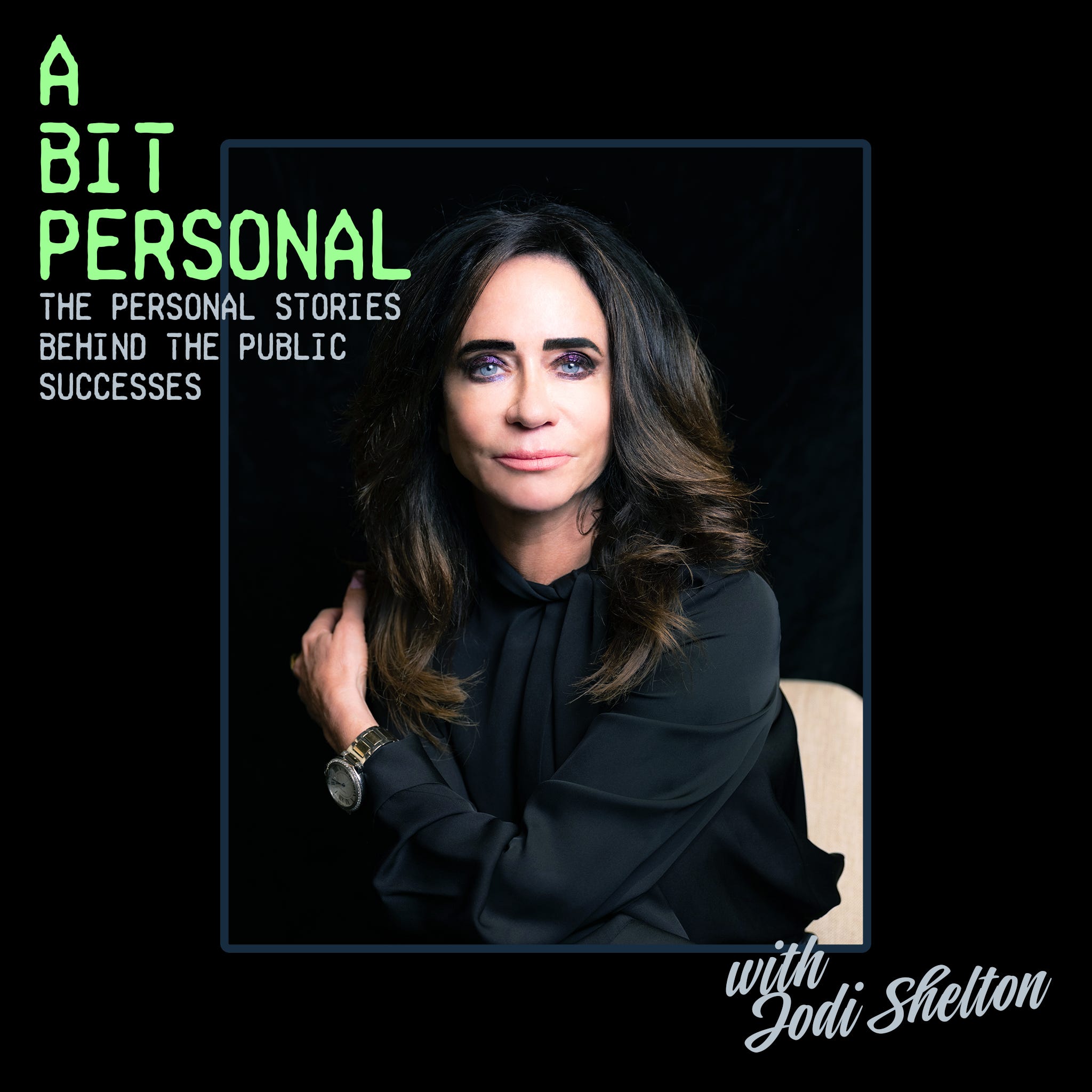
 A Bit Personal with Jodi Shelton
5 Oct 2026 · 1h 19m · 31 chapters
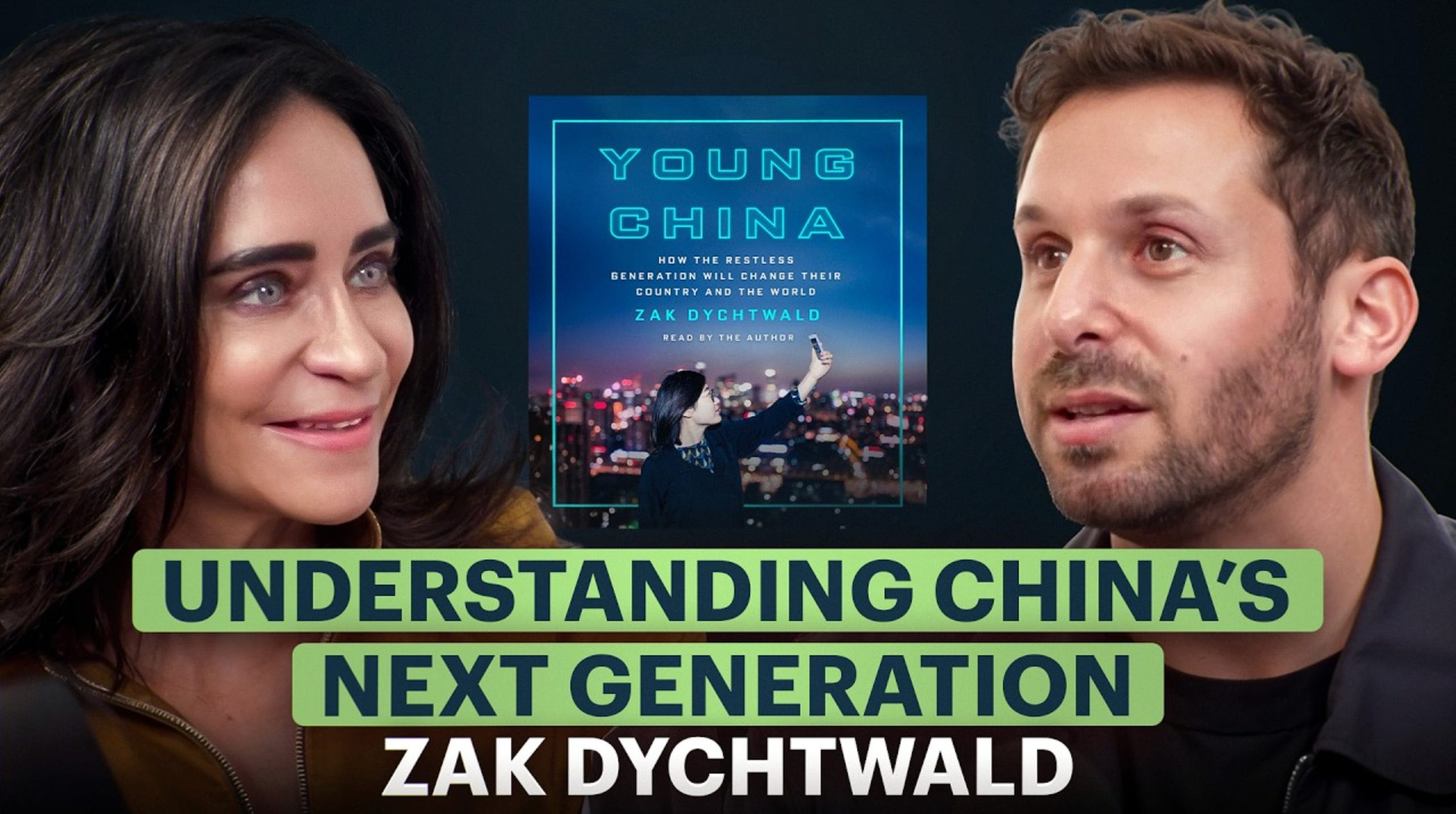
A “China briefing” explaining “Young China” and why AI is a turning point, aimed at global leaders. Zak Dychtwald argues Western views often misread China’s intentions and people, and that China’s youth-driven pace of change is reshaping global competition.
Zak Dychtwald is founder of Bridgeworks Global and author of Young China. He grew up near Berkeley, studied in New York, studied abroad in Hong Kong, and became obsessed with China after early experiences in Shenzhen. He started Young China Group (people-first perspective) in 2017 and now studies cross-geo team execution and how Chinese companies go global.
Written by AI. May contain mistakes.
Zach shares his background and expertise on China.
“Zach is one of the clearest thinkers on this topic.”
Zach discusses his personal journey and what inspired his focus on China.
“You haven't heard them yet, but we've talked about them a little bit.”
Zach reflects on the differences between Western and Chinese cultures.
“So when was it that you sort of discovered kind of the aha moment of Western culture and Chinese culture are just so different.”
Discussion on the outdated perceptions of China and the importance of recognizing the younger generation's influence.
“So I think when when people back home think of China, it was even more so back in 2010.”
Exploration of generational differences and hiring dynamics among Chinese youth.
“And then one is that sort of backwards looking version, 5 ,000 years of history, which everyone in China always really likes to talk about.”
Explore how each generation perceives intelligence and wisdom differently.
“One of the most difficult, I mean, I think this is, I should remember who actually said this.”
Understand the contrasting experiences of baby boomers in China and the U.S.
“Like this has been a big word the last three, four years.”
Learn about the 'lying flat' phenomenon among Chinese youth and its implications.
“So you do have a group of people who are moving to second and third tier cities.”
Examine the differences in work ethic and culture between generations in China.
“They're always frustrated that the younger generation wants more work-life balance.”
Discuss how Chinese companies are perceived and their work dynamics globally.
“with companies in Europe, we work with companies in China.”
Discover how perceptions of hard work are changing within Chinese society.
“I think that, you know, in comparison to maybe that, you know, I mean, Leo Lee and I were talking and it's like, you actually don't want your daughters to have to work as hard as you because that's why you work so hard.”
Learn about the adaptiveness of Chinese companies and its impact on innovation.
“There's a saying in China that came out of, I think it was 93, Deng Xiaoping gets credited with it.”
Explore the distinction between modernization and Westernization in China today.
“They're not the folks who are featured on any Forbes list.”
Learn about Shanghai's unique position as a westernized city and its impact on perceptions of modernization.
“Shanghai is far and away the most westernized city in mainland China.”
Discuss the lingering effects of COVID-19 on Chinese society and the perception of foreign presence.
“And what I found is that every conversation that I've had about COVID since I've been here, it's like they still have PTSD.”
Examine the shifting attitudes of young Chinese towards studying abroad and the perceived barriers.
“And the opportunities in China, even though it's a really tough job market here, are perceived to increasingly be at parity with what's on offer in the U.S.”
Explore China's rapid economic growth and its implications for global competition and innovation.
“I mean, just we talk about talent markets a lot.”
Understand the pride young Chinese feel in their country's development and achievements over the years.
“And it used to be that you'd pay attention to China to compete in China.”
Analyze the cultural similarities and pride shared between Americans and Chinese people.
“So when people compare China today to the U.S.”
Discusses the pride in cultural identity and the perception of success in China compared to the U.S.
“It's that people feel comfortable in China.”
Offers insights on how semiconductor CEOs can better connect with and understand the Chinese market.
“So from the numbers I've seen, about 30 to 40 percent of end products that semis go into are consumed here in China.”
Examines China's evolving global competitiveness and the importance of understanding its market dynamics.
“Even if, you know, demographic collapse happens.”
Learn about the importance of global competencies in Chinese firms and BYD's competitive advantages.
“the sophistication in managing global teams, the ability to collaborate well across time, distance, culture, government, that's a skill set that is severely undervalued.”
Explore common misconceptions about China's political structure and youth sentiments.
“Okay, so I'm going to list off some, I think, the biggest myths.”
Discuss the state of China's economy and its significance in the global market.
“And I think people severely underestimate first quality of pride, as well as the importance of alternatives.”
Delve into the advancements in China's semiconductor industry and its global impact.
“You know, necessity is the mother of all invention, right?”
Understand China's strengths in technology commercialization and the innovation landscape.
“On innovation, we obsess over invention in the U.S.”
Explore how China's ability to commercialize and rapidly iterate technology surpasses traditional notions of innovation.
“I mean, the whole idea that the solar cell was invented at Bell Labs in the 1950s.”
Discuss the competitive dynamics between U.S. and Chinese companies and the challenges faced by each in their respective markets.
“BYD specifically, like 2014, Elon Musk famously laughed at BYD when he was asked about them in an interview.”
Highlight the lessons U.S. businesses can learn from the Chinese market to enhance their global competitiveness.
“market's the biggest in the world probably for whatever you do.”
Examine the growing cultural impact of China globally, especially among younger generations.
“You have to create that within the organization.”

Get the gist, explore an idea or ask about something said.
 Claude
On A Bit Personal with Jodi Shelton, what are the key points of this episode?
Searching your listeningAutomatic transcript. May contain errors.
0:00Jodi Shelton: Today on A Bit Personal, we're going to do something a bit different. We're not going to be telling a personal story behind the public success of a CEO or tech executive. Instead, we're going to give a briefing, a tutorial of sorts, and quite frankly, a wake-up call. Before you listen to the next few episodes of A Bit Personal, where I interview two fascinating CEOs from China, We have invited Zach Dykwald, the founder of Bridgeworks Global and the author of Young China, to join us to be our guide and help us navigate through the complexities of China. For those of us who consider ourselves global leaders or global citizens or even just curious individuals, it is imperative for us not to misunderstand China, not its intentions, its ambitions, its economy, and especially not its people.
0:52Jodi Shelton: Zach is one of the clearest thinkers on this topic. He advises CEOs, policymakers, and investors on how to navigate China and how we can better understand a very misunderstood society.
1:12Jodi Shelton: Zach, thanks for being here with me. Thanks for having me. Yeah, especially since you just got back to Shanghai. So you came from Arkansas to Shanghai and I'm leaving Shanghai tomorrow to go to Arkansas. I bet we're the first people that can ever say that. It's a major thoroughfare, the Arkansas-Shanghai connection. Is it? Okay, well. It's not. I'm joking. We probably are the only ones. But yeah, great to be here. Thanks for having me. So what I'm trying to do with this interview is that I interviewed two completely fascinating CEOs of China-based companies. So Wayne Dye and Leah Lee. And so before we show those episodes, I just wanted you to sort of give our audience a tutorial on China and help us kind of navigate the complexities and try to put those two interviews in context.
2:01Jodi Shelton: You haven't heard them yet, but we've talked about them a little bit. And they, you know, they range from discussions about both both Wayne and Leo were both on farms during the Cultural Revolution. Wow. Both of them taught themselves and both of them went to university in the U.S. on their own accord. So it's pretty it's both fascinating. So they're going to be really fun to listen to. So before also before we get started, maybe just tell the audience, how is Zach an expert on China? I mean, you don't look like a guy that one would say, oh, yeah, let's go. Let's go talk to Zach about China. So tell us how all of this happened.
2:39Jodi Shelton: And by the way, just as a little preview, we've got a signed copy. Well, first, thanks for having me. And by the way, with with those two executives, the generational lens will be really useful. Right. So quick about me. I'm from northern California, from Berkeley originally, actually next to Berkeley, Orinda, sleepy little town. Went to school in New York, studied abroad in Hong Kong and would go on the weekends to Shenzhen with the robotics team that I was a part of. and it was from there that I got pretty obsessed with China. I graduated, came back to China, thought I'd be here for a year. One year turned into four.
3:19I became obsessed with the language. There's a saying in Chinese, without accidents, there are no books, or without accidents or incidents, there are no stories. I had enough accidents and young China was born. This was back in 2017. And at the time, I thought I was going to be a journalist or an academic. And then I spoke with journalists and academics and was dissuaded from either profession. I started Young China Group, which was my sort of first company, basically aimed at bringing a people first perspective from China to the world. That was the goal of the book. That was the goal of the company.
3:59I basically wanted to keep doing what I was doing writing, but at a larger scale. And now I run something called Bridgeworks. Bridgeworks is powered by YCG. It's sort of an extension of the work, which is a cross geo collaboration lab. We study how great teams across the world work in the best companies. So if you have a team in US, you have a team in China, you might have great strategy. How do you actually execute across the world? And then from China, we also focus on how do these companies who for the last 10, 15, 20 years have been really focused on the domestic economy. How do they go global?
4:34How do they manage global teams? What does Chinese leadership look like? What does innovation look like from China? So that's what I've been focused on for the last 15 years. It started when I was 20 years old. It's taken a lot of twisting turns over the last little bit, but it's been really focused on a people-first perspective on China, different than a government-first perspective and different from a macroeconomic-first perspective.
5:00Jodi Shelton: So when was it that you sort of discovered kind of the aha moment of Western culture and Chinese culture are just so different. What were some of the observations when you first were here versus maybe now that maybe it's changed a little bit? So it actually, what got me interested in coming here was the recognition they were so different. And I've actually never told this particular story. I was in a Chinese modern literature class back in Columbia. It's super random, honestly. This was before you even came to Hong Kong. This was before I even came, and this was part of a requirement. And one of the things when you read books or you look at the stories that sort of define a nation's psyche, you learn a lot about all of the stories that happened before it.
5:50And so most of Western literature is sort of based around the hero's journey idea. A lot of it can be sourced back to either Greek or Roman stories. China had an entirely different constellation of stories and references in all of their modern literature from anything I'd ever encountered. So like what makes someone heroic? What makes them brave? What makes them masculine, feminine? What is honorable? When you look at modern Chinese literature, it was just totally different than anything I encountered. I decided to go to Hong Kong, not based on the modern literature, but actually based on science fiction.
6:30I was a big science fiction reader. And if you look at the pamphlets of particularly Europe versus the pamphlets for the University of Hong Kong of where to study abroad, one looked like a history book. The other one specifically looked like the book Do Androids Dream of Electric Sheep, which would become the movie Blade Runner. I had never been to Asia. And so the idea that the future could be happening here was what brought me here. And then when I when I started to go from Hong Kong to Shenzhen on the weekends, the recognition that the China that was being described to me back home. What I was hearing from my professors, even when I was certainly what I was hearing from my parents, the people around me, that it was so different than what I was seeing and experiencing.
7:16So what are a few of those examples? The easy and obvious one is I expected sort of a big brother person to be following me around the moment I passed through Luohu Station from Hong Kong to Shenzhen. Right. So I think when when people back home think of China, it was even more so back in 2010. But it's certainly the case now. The first thing they think of is government. right if you look at the books we read growing up you know Fahrenheit 451 certainly um Animal Farm uh 1984 there's a lot of these books that are organized around sort of what I think of it as as a as a Cold War hangover right you know a lot of lessons learned from that era um and so in my head I had expected China to be sort of the bad guys in a Marvel Comics view of the world.
8:10And when I came here, I was really surprised that the people I were meeting first were just people. They were interested in improving their own lives. They were interested in learning. They were really interested in us.
8:23And this version of good, bad U.S. China that had been set up for me really breaks down on that personal fundamental level.
8:34Jodi Shelton: Almost everywhere in the world, right? When you get down to it. Almost everywhere. If you allow yourself to get down to it. Yeah. And, you know, this is, I think, particularly coming from the U.S., like we have this we do have this sort of view of the world. And keep in mind, like 2000 politics, you're talking about sort of the axis of evil. I mean, it really does feel like we often seek neat, easy divides between us versus them, good versus bad. But on the personal level, every place I've ever been, but certainly China, you just have people who are trying to make a better life for themselves.
9:08Right. And in China, I was stunned by the intensity with which people were seeking to create a better life for themselves. Right. So. Also, so so that's sort of good versus bad, capitalist versus communism. The other big aha moment was, OK, when people are looking at China, they're typically describing China from the 80s or 90s. The pace of change in China is such that what would typically take 10 years in the U.S. might only take six months in China. And so I found that what people were describing about China was already deeply outdated and particularly focused on the older generation. So it might be the older generation who's running businesses, certainly the older generation who's running government.
9:50But when I was 20 backpacking around the country, I lived in the outskirts of Chengdu for six months in a balsa wood bunk bed with 20 other 23-year-old Chinese kids. They were missing that young China version. So we have good versus bad. And then we also have old China versus young China. One is fiercely forward looking. One is disruptive. One is incredibly hardworking. And then one is that sort of backwards looking version, 5 ,000 years of history, which everyone in China always really likes to talk about. But it's not what's interesting about where China's going.
10:24Jodi Shelton: So so obviously focusing in on the younger generation, which you've done a lot of, is fascinating. So what is, you know, recently in a report, a survey that came out, I think out of Colombia, that looked at the youngest generation going into the job market in the U.S. Yeah. And it's like two percent of them had the values that hiring managers were looking for. Not like 50, but two. Yeah. And so so I've been asking people in China since I've been here, you know, do you find that same divide? And maybe it's because some many of the companies I'm talking to really can pick and choose the best and the brightest.
11:07Jodi Shelton: But in general, do you find that there's just this huge divide between this youngest generation? Because how do you describe young China? What is the age group? It's a really important distinction. So just to get a sense for scale here, just so I'm an American millennial. American millennials are no longer young. Tough, tough for us. But we're working through that. Just to give you an idea for compare apples to apples here. There are 440 million millennials in China, so people of millennial age. There's around 700 million millennials and actually 600 million millennials plus Gen Z in China. So really large population.
11:48There are more millennials in China than there are people in the U.S. and Canada combined. There's more young people in China than there are young people in North America, the Middle East and the European Union combined. So just from a size point of view, aside from India, it's the largest youth population in the world. Right. You're talking about a demographic giant. Different than India, it also young people here have significant spending power, certainly when compared to India, much less so when compared to their peer cohort in the U.S. So I know I was just using millennial Gen Z. I would, as like a first lesson on China, throw out Western constructs when you're looking at China.
12:30The word for millennial in China is Chen Xi Dai. I have never heard it said when talking about the Chinese population. Because China changes so fast, and we could talk about how to conceptualize that in a second, these 20-year buckets that we use to divide our generations simply does not work. So the whole boomer, Gen X, millennial, Gen Z, Gen Alpha, or whatever you want to call them, that's a construct that was made based on the historical context of which American generations were coming up in. That historical context is fundamentally different here in China. And so when we talk about generations in China, rather than a 20-year divide, we typically talk about 10.
13:11You have the post-50s, post-60s, post-70s, post-80s. The post-80s was right at the beginning of form and opening. We call that the guinea pig generation every now and then. The post-90s generation is known as the me generation. I call them the restless generation in the book. That's really the pivot generation in China. But savvy marketers won't even do the 10-year gaps. They'll either do five to three-year gaps. They say, Every three years, there's a generational gap in China. It just moves too fast. We created something called the Live Change Index to help conceptualize that, which I could talk about in a second.
13:45But the outcome is the rest of the world has generation gaps. China, because of its pace of change, has generation gulfs.
13:52Jodi Shelton: So there's just not a big understanding between the two generations or? So when it, like, let's get to hiring. One of the most difficult, I mean, I think this is, I should remember who actually said this. I want to say it was Aristotle. But every generation thinks they are smarter than the last and wiser than the next. Like, this is just, this has been true for thousands of years. We just did a big youth research with a big report with EY on this. And there's some interesting convergence right now with Gen Z around the world. So if you were to look at boomers or people of boomer age in China versus boomers in the U.S., couldn't be more different.
14:34Right. You were talking about the entrepreneurs before who who survived the cultural revolution, who survived the Great Leap Forward. It's killed 45 million people in the famine. People had to eat tree bark to survive. You compare that to my dad's generation who was deciding whether or not to go to Woodstock, you know, sex, drugs and drugs. I mean, it's just absolutely incomparable. There's interesting convergence right now with young people in China, young people in the U.S. and really young people around the world. So when it comes to hiring, people always ask me, are young people in China really lying flat, Tang Pian?
15:07Like this has been a big word the last three, four years. We've heard you say that.
15:11Jodi Shelton: Tell the audience what that means. So lying flat is sort of akin to quiet quitting. It's this idea that the relentless competition that defines childhood in China, the competition to get into a good middle school, high school, competition in the college market, the graduate school market, the job market, the marriage market, really top to bottom. Young people in China are just saying enough is enough. I don't want to compete anymore. If I were to summarize Young China, the whole book in one word, the word would probably be pressure. Like the condition of youth in China is pressure, is pressure to compete.
15:48Jodi Shelton: But how do they escape that? I mean, you can escape that if you're in the U.S., but you really can't. Right. I mean, how do you escape it? So these last three, four years, there has been this lying flat phenomenon where people are just saying they're done. You know, keep in mind, before COVID, so I know we don't talk about COVID very much anymore. But I want to. Yeah, we should. It's a watershed moment. And it's also probably the first global generationally defining moment in human history. I'm going to it's a sort of a big statement, but I'm going to put that there. So before Covid, Alibaba was always hiring.
16:21Tencent was always hiring. Pinduoduo, Meituan were always hiring. Like you always knew somebody who was getting a promotion, who was getting a job, who was I mean, even though there was a lot of young people coming out of the job market or coming out of higher education, around 13 million every year, these companies were growing, expanding and hiring. For the last four or five years, they haven't been, right? They haven't been. And so you do have a group of people who are deciding to have a big apartment in a small city instead of a small apartment in a big city, who are deciding that busting their tail for Alibaba to maybe just get laid off over the last year or two maybe isn't worth it.
17:00So you do have a group of people who are moving to second and third tier cities. Chengdu, I think of like as the capital of lifestyle cities in China, it's where I used to live. Great time. It's not a second tier city, it's a first tier city, but it's sort of, you go there to have a better quality of life, optimizing for lifestyle rather than cash flow. Cities like Beijing, Shenzhen, Guangzhou to a lesser degree. And Shanghai, sort of the old guard first tier cities, are where people still come to compete. I would toss Hangzhou in there as well. So to answer your question, there is a massive, there's a pretty substantial divide between generations in China, right?
17:39This generation gulf thing. So when people in Alibaba, I keep bringing them up, they're always frustrated that the younger generation is not as hardworking as the older generation. They're always frustrated that the younger generation wants more work-life balance. They're always frustrated that people, that the 996 work culture, right, nine in the morning to nine at night, six days a week, isn't palatable to young people. There's a good amount of generational fist shaking, sort of back in my day, we all were working all the time and sleeping on the floor of the office and whatever it is. But whenever I say this to a Western audience, I always caution people, right?
18:17So when you compare young people in China to the older generations in China, are they more or less hard-working? Definitely less hard-working. No shadow of a doubt. The older generation was known as the eat bitter generation, right? Doing difficult things for long periods of time at the prospect of delayed gratification so that the next generation can have a better life. The next generation's here. They want to have a better life now. So let's put that there. When you compare young people in China to my generation in the US in terms of how hard are they willing to work they still far outstrip the average American now does that mean they're more innovative does that mean they're more disruptive does that mean they're more creative certainly not they're not the same thing but when it comes down to hard work I think particularly in the US we really like this idea that China is getting lazier.
19:13I do think that's a little bit of a bedtime story that we tell ourselves to say, hey, China is not as competitive as we think they are.
19:21Jodi Shelton: Yeah, it's interesting because when I've been asking quite a few people about the 996 concept and no one disavows it, they just may say, well, yes, but people can do it. You know, they can go home and put their kids in bed first. You're right. Yeah, they bring their computers home. Like they actually, maybe they can have dinner in five minutes with their family. So there's this really interesting phenomenon. So at BridgeWorks, we study how teams collaborate across the world, right? So we work with companies in the U.S., we work with companies in Europe, we work with companies in China. When American companies go global, they have a litany of issues.
19:56The power dynamic between headquarters and regional sites is usually stilted. That's not a surprise. Americans are not the most global, so we don't always know what's going on. Our market knowledge is typically lower. Global management is hard, language, time zone, etc. So a lot of different problems. When Chinese companies go global, they have, let's call it three problems. One of them is government relations and market access. Most of that has nothing to do with individual companies, right? That's usually the great game government stuff. The second is branding, which they've gotten a lot better at the last five years.
20:34The third, And this is what we've been seeing in spades is no one in the world will work as hard as their Chinese workforce. So we talk with Chinese companies who have teams in Malaysia, who have teams in Singapore, who have teams in Mexico, teams in Brazil, right, as they're going as they're going global. And when you interview their their teams around the world, the one complaint time and time again is working at China speed just isn't sustainable for anyone else. and so is this young generation less hard-working than the eat bitter generation right than the the generation that came out of the cultural revolution who during the 80s and 90s it was the first time that more work meant more money right which wasn't true during Mao's era absolutely they're less hard-working and uh you know they're they're benefiting from all the hard work from their from their parents and grandparents uh but when we when we compare the talent base here with their peer generations around the world, hard work isn't the issue.
21:37It's never the issue.
21:39Jodi Shelton: Right. Yeah. I see the same thing. I think that, you know, in comparison to maybe that, you know, I mean, Leo Lee and I were talking and it's like, you actually don't want your daughters to have to work as hard as you because that's why you work so hard. Right. And so it's like this conundrum that, you know, well, they'll just never understand. I mean, you don't want them to understand. That's the point. You know, if you were to ask anyone why they work so hard, it would be to give my family a better life. And then when their family enjoys their better life, they're like, hey, what are you doing?
22:12Why, you know, hard work is the answer to everything. It is it's pretty universal. It feels particularly exaggerated here in China. I would say that the last five to 10 years, I've watched folks in China become more involved in the global conversation around what is a life for. So I can give you a really concrete example. In 2014, I went down to Guangzhou to interview this founder of a company called Chaoji Kechengbiao. I think the Chinese or the translation is super scheduler. It was this kid who was, I think, like 22 at the time and had made an app for college students to be able to see who else was in their class.
22:53The college markets in China are so large, it's the land of big numbers, right, that it actually became a really popular app, but not for the reasons that he expected. It actually became sort of a dating app because you could see who else was in your class and then you could shoot him a message. You know, China is not the most extroverted of cultures. And so being able to do that was really appealing to people. It became wildly popular. I went down and interviewed him and I asked him what was the biggest shock of starting to talk with foreign investors, right? He started to get global interest back in 2014.
23:29And what he said was, I didn't realize that what we were doing, how hard we were working was unique until you told us. So I didn't realize that these 80, 90 hour weeks were weird. I didn't realize that four or five of the co-founders sleeping on the floor of the office to save on rent for the first few months was strange. I mean, this is all we've known. And then once we were told how unique this is, we started to sort of grok or understand that, hey, this isn't how everyone in the world does it.
24:06Jodi Shelton: Right. There's a saying in China that came out of, I think it was 93, Deng Xiaoping gets credited with it. It's actually, he didn't say it. But, you know, when you're a leader, you get credit for other people's work sometimes. It means crossing the river by feeling the stones, which in the 90s, it was a beautiful way of saying, we don't really know what we're doing as a country. We're on one side of this bank of history, looking out on the other side, which is development. And then there's this rushing river of time that we have to traverse in order to get to the other side. But we don't really have a plan.
24:47we're going to put our foot into the river we're going to try to find steady purchase we're going to shift our weight we know that we're going to slip we know that we're going to fall we know that we're going to have to adapt as we go that rushing river right that that need to adapt adapt adapt has turned into a superpower for a lot of chinese companies for a lot of chinese innovators for a lot of Chinese people, right? The adaptiveness and adoptiveness of the country is a real asset to any company building for China, right? I think China is the product gauntlet for the rest of the world. What people are building China, the rest of the world will use over the next three to five years.
25:30But the flip side of that, the pace of change is so demanding. We focus on the people who have adapted around that and have won and succeeded. But there's huge swaths of the population who get beat up in that rushing current, who won't make the news. They're not the folks who are featured on any Forbes list. You know, the pace of change in China can both be an incredible asset as it forces you to evolve and adapt at a different speed than the rest of the world. It's also punishing.
26:05Jodi Shelton: So it was interesting. Do you know who Dan Wong is at Hoover Institute? Yeah, of course. OK, so he I was listening to something he was saying the other day and he was talking about how that it's fascinating because Americans really aren't that interested in China. Yeah. And then you said like right after I listened to that, you made the statement that for young Chinese modernization does not mean Westernization. And I think that for sure, America thinks that those are the same thing and they're not. So if that's the case, then it seems like sort of maybe going in opposite directions. I think of the word I think of is cultural gravity.
26:44Right. So over the last 30, 40 years, as a country has modernized, they've westernized. I mean, Japan is the easiest example. Japan hasn't fully westernized at all. But when you think about how they do business, when you think about their participation in global governance, when you think about their adoption of global norms, they've sort of fallen into a U.S. center of gravity, which you could argue was established post-World War II. What's so interesting about China, because of its economic demographic and on the back end of those two, increasing political clout, it's the first Asian nation to have enough cultural gravity to start to really change the way that our world spins.
27:29And so young people haven't had to just fall into a Western way of doing things as much as the tiger economies had to do in the 80s and 90s. I mean, one of the big mistakes that we've seen over the last 20 years when Western companies come to China is just assuming that young people here wanted to be treated like young people there just with different haircuts. Shanghai, by the way, I think is to blame for that. There's something I call the Shanghai fallacy. I think I might have talked about this with you. Yes. So it's you come to Shanghai. Shanghai is far and away the most westernized city in mainland China.
28:06You speak with somebody who is your guide throughout the city. They've spent their entire life changing their mental diet just so they could have that conversation with you. You look out at the bund. You focus on the brands that you recognize. You kind of ignore the ones you don't. You have a great steak, a beautiful glass of wine. And you think, wow, for China, modernization means westernization. The problem is Shanghai is the least representative city in the country by most standards. Right. And you have a group of young people who grew up no longer equating Western with better. So for the older generations, Western almost always meant better, better brands, better quality.
28:47It won't you know, a toy won't break in your kid's mouth. Right.
28:50Jodi Shelton: They wanted to go to the U.S. to be educated. They wanted to go to the U.S. to be educated, which, by the way, that that dream isn't dead. We're just sort of... Do you think some of this had to do with COVID and the fact that for so long, Chinese didn't see Western people in China for what seemed like a long period of time? And even, I mean, we said that we were going to talk about COVID. And what I found is that every conversation that I've had about COVID since I've been here, it's like they still have PTSD. Totally. So we are still living in the shadow of COVID here in China. Full stop. The COVID economy hasn't fully ended.
29:34I'll give you just on the foreigner stat, a fun stat. In 2023, when I first, we actually, I've only been in Shanghai for two and a half years. So we moved here recently. I know I love to talk a lot of junk about Shanghai, but it makes a lot of sense when you do global work. and there was fewer foreigners in Shanghai in 2023 than there were in 1923.
29:56Jodi Shelton: Amazing. Just like that. That was my observation because I came in 2023 and walking around the Bundt, I saw no one. And now so there's a lot of there's a lot of foreigners who have come back, but they're different foreigners. Right. So there's far fewer Americans. A lot of Saudis. A lot of Saudis. A lot of Saudis. You know, the planes are full between Shanghai and Riyadh. By the way, a lot of that is just Chinese companies have a huge amount of trouble raising capital from the U.S. over these last four or five years. And so Saudi is it's not the only game in town, but it's an increasingly popular game in town.
30:32And a lot of Europeans. Right. So just far fewer Americans. It's a real shame. So I definitely think the look, if the U.S. were to open its doors, if the U.S. were to make it easier to get visas, do I think that more young people would go and study there? Absolutely. It used to be that 31 percent of folks studying in the United States at any given time came in China, came from China. 31%. A massive number. Lee Bollinger, the former dean of Columbia, when the visas were shut down in 2020, if you remember, he was the very first person to stand up and defend the right of foreign exchange students and particularly Chinese people to come and study abroad.
31:14He did not do this because he's a good guy. He did it because Chinese students were his best client, right? Just full stop. That number has gone down considerably just because it's so hard. And the U.S. is giving people the message either hard or soft. So hard in terms of actual legislation, soft in terms of vibes. You're not welcome here. The job market is harder. It's harder for people to get long-term visas there. And the opportunities in China, even though it's a really tough job market here, are perceived to increasingly be at parity with what's on offer in the U.S. And then you get the upside of getting to be close to home, be close to your family in a culture that's familiar.
31:58You're not limited by what they call the bamboo ceiling, which is the belief that Chinese nationals or people of East Asian descent are great analysts, not necessarily good managers. And that sounds like it shouldn't be an issue in 2025, but you'd be surprised. They also don't have to work sort of, we call it the two jobs. People work their nine to six when they're working in a global organization focused on the Chinese market, which is they face the competitive demands of the market that they're aimed at every day. And then they work their six to 12 where they have to explain to some guy named Ted how the market in China works, how it operates.
32:41I mean, it's just a huge amount of labor that goes into some of this global work. And particularly Chinese nationals who are hired to sort of explain the Chinese market to a Western audience. It's just tiring. It wears people out. The analogy we use most often, it's like running a marathon with a rock in your ship. Like you could do it for a little bit, but by mile three, you're sort of limping. By mile five, you're walking. By mile 10, you're thinking, what am I doing? Like, you know what? What is this all for? Right. You're actually starting to see this from India, too. So Indians are no longer going to the U.S.
33:12to study and trying to stay in the numbers and in the proportions that they were five, 10 years ago. I mean, this is also a sign of the strength of the local markets. Right. So this isn't it's not really a U.S. China thing. That's part of it. But there's also, I mean, when you look at what's happening here, even with difficult job markets, there are. I mean, it's if you're top talent, particularly with a with some global experience, then you're going to be in demand here in China right now. So there's not a problem with graduating with an engineering degree and not getting a job in China right now.
33:51Oh, there is. If you're great at engineering and you graduate and you could prove your excellence, then there's a lot of opportunity. I mean, just we talk about talent markets a lot. I think it's one of the things that we most underappreciate about China is the quality of talent. Like there is this moment, we call it the Grok 4 movement. So there is a lot of big moments in AI this year. obviously DeepSeat coming out sort of reminded the world that China is competitive after four years of kind of only focusing on government when they looked at China. But then the Grok 4 moment, someone took a selfie of the team that helped to launch Grok 4 and like 80 % were either Chinese or Chinese American.
34:34A number of them were Chinese nationals, researchers in Chinese organizations. And it was this sort of like head scratching moment on the internet of like, damn, where is the AI talent coming from? So there's 40 LLMs in the US. There's, I think, 13 in China that are pretty good. But 70 % of AI patents come from China right now. Like just the...
34:56Jodi Shelton: Wow, 70%. 70%. And I mean, we increasingly live in an economy of two, which isn't popular to say. But when you look at talent, when you look at Fortune 500s, I think there's 136 in the U.S., there's 135 in China. Even when you look at GDP, right, the U.S. still outshines China considerably. And it doesn't look like China will surpass the U.S. anytime soon, which is sort of the only metric we were measuring China against back in 2020. But China is still larger than the third, fourth, fifth and sixth economies combined. When the USSR was at its peak during the Cold War, it represented about 10 percent of the global economy.
35:36China represents about 18 today. Like, I don't care how you look at it from talent, from from from economic output, from size of companies, from impact on the rest of the world. Even though we live in a multipolar world, which is absolutely true, you're really only talking about two major powers. If I were to ask you, where's the next major disruption in medical technology where is the next new innovation coming in consumer technology where is the new where is the next ev innovation coming from where is the next um mobile tech innovation coming from that there there's i mean where's the next innovation in cancer drugs there's only two places that are really going to come to mind um we often overlook china just because it's so far away and we really only think about government but there's so much happening here for global executives to not have it on their radar, it's a huge mistake.
36:37And it used to be that you'd pay attention to China to compete in China. But now people need to have a China strategy because Chinese companies and Chinese ideas will increasingly be coming to compete with them
36:48Jodi Shelton: wherever they are. So before we move to talking like advice to CEOs, I wanted to say one other thing on the um on the choice of you know chinese young chinese to westernize yeah one of the things that i've been hearing is that you know the young chinese people look around and say i mean like look at our subway look at our infrastructure yeah and then if either they visit the u.s or they have friends that visit you know obviously it's it's not the same thing at all and so i think that it's a pride issue too that hey you know we're doing pretty well over here like life is pretty good. So it's a loaded question uh right we when I when I talk about young China my last point is always pride and one of the most frustrating things when I speak with Americans is how quickly we discount the pride that young people feel if they do feel pride they're seen as brainwashed by the government, right?
37:53That's something that I just see time and time again. And the reason it's so frustrating is it discounts the lived experience of every young person here. So I'm going to back into this a little bit. We created something called the Lived Change Index. I created this a few years ago. We published it in HBR, Harvard Business Review, and maybe we can post it in the show notes just if people want to check it out. So I said 1990 was the pivot generation before. I was born in 1990, convenient. From 1990 to today, as an American, I've watched our per capita GDP increase around 3x in my lifetime. So 3x better education, 3x longer vacations, however you want to imagine it, like imagine it in real terms.
38:39It's not a perfect measure of quality of life, but it's pretty good when you're comparing across the world. It doesn't take into account the Gini coefficient and wealth disparities, but pretty good when you're comparing across the world. Someone born in 1990 in China, in the last 35 years, have watched their per capita GDP increase 33x in their lifetime. 3x in the US, 33 in China. Maybe it's just a developing country thing, right? What about India? India, 1990 to today is about 5x. Brazil, 2.3. Germany, 1.9. If you look at the top 40 economies today, pretty well everyone else around the world is less than 10x.
39:21The cascading implications from this live change index disparity are pretty far reaching from tech adoption to the speed at which people's perceptions or stereotypes around China get outdated, typically being 10x faster than anywhere else in the world. But just from the pride point of view, the amount of young people I've seen or I know who have watched their village turn into a town, turn into a city, who watched their uncle be proud to roll a flying pigeon bicycle into their house in the early 90s to having two cars in the driveway now. I mean, these are these are people's lived experiences.
39:58Jodi Shelton: They're living transformation. Yeah. So they've seen it. Like, you know, so they don't think about they don't think about government changing their lives. They think about their parents changing their lives. Right. So when people compare China today to the U.S. today, there's a lot that the U.S. still there's a lot of appeal there. But again, there's a sense that the U.S. doesn't want them. And then the areas where China really feels like it's outstripping a lot of the world is one that comes up the most is actually safety. so like if you're in San Francisco and New York which San Francisco, New York and LA is where a lot of Chinese young people will go either for study or for school and if you look at rates of crime if you look at I mean if you just look at crime crime on the street people much prefer to be in China and then you start to get into conversations about China and surveillance state and like absolutely those are valid conversations and And the result is for the average person, that crime is considerably lower.
41:03Jodi Shelton: Right. Right. So it's just I mean, the quality of life from that perspective, the level of convenience, the way that technology is integrated into daily life here. You know, I don't leave. I've actually last time I flew to India, I forgot my wallet just because I have not I do not carry a wallet in China. I haven't used cash in three years here. The ability to get anything you want delivered at. you know, basic things like your lunch at work. So I tried to I was in Minnesota not so long ago and I ordered a Chipotle burrito to my overpriced Marriott. It costs thirty four dollars like the burrito somehow costs nineteen dollars for a burrito.
41:40And then the door dash fee plus the tax this and the and I have to give I have to tip everyone like it just there's a certain amount of safety and convenience that people really appreciate here. And then I think what people often also discount is the sense of home team pride. Right. So it's not just all the progress that China has made. It's that people feel comfortable in China. If you're from here, just like people in the U.S. being from the U.S., there's a lot of pride in that. Like people will go around wearing American swim trunks when they're swimming in Europe. Like we were. This is actually a place where the U.S.
42:15and China have a lot in common. There's just a lot of home team pride in who they are, what they stand for and what they've accomplished. Americans and Chinese have much more in common than we'd like to admit to ourselves. We're both very proud. We both think we're the center of the world. We both sort of expect folks to fit into our ecosystem rather than the other way around. We have a very strong sense of self.
42:41Jodi Shelton: You were talking earlier off camera about kind of the sense of pride that people have in Jensen as a Chinese face. Totally. Totally. So this has actually been a major. So, again, we do this workforce research. And one of the challenges for folks in China is the sense that they've actually been far less successful on the world stage. So particularly if you look at the U.S. and you look at the tech ecosystem, there's a huge conversation in China about how many Indian faces you see, how successful India and Indians have been in the U.S. And you look at, you know, from from from Google to Microsoft to I mean, there's just like there's so many really successful people of Indian descent.
43:22And there's been this sort of void from China and, you know, the Chinese diaspora. And so Jensen, as a symbol, as much as a business leader, has sort of revivified this sense that, hey, not only can we do stuff in China, which let's call Jack Ma was a symbol of that. Like when I first came to China in 2012, if you go to the if you look at like the backpacks and the notebooks, Steve Jobs was on the cover of them. And this idea was that, OK, we need more of that Steve Jobs energy in China. This is 2012. Right. So more of that innovation, more disruption. By 2013, he'd been completely replaced by Jack Ma.
44:04Jack Ma was this symbol of domestic success, innovation, disruption, outside-the-box thinking. But he was really domestic. Alibaba, in many ways, aside from as a method to source product around the world, has really failed in going global. Now, they might still succeed, but they sort of let the world down, or they let a lot of people down who expected them to have a lot of success. You could argue the same thing about Jingdong and some of the early Chinese internet companies. So if Jack Ma was the first symbol of domestic disruption and innovation, Jensen is sort of a sign that, hey, Chinese people can be, or people of Chinese descent can be successful anywhere.
44:45The leather jacket helps, right? You're not just successful, you're cool. The idea that people around the world are bending over backwards to meet with him, to be like him, to invest in him. Yeah, he just has really tremendous symbolic value here.
45:00Jodi Shelton: And Lisa Su probably as well. Totally. I mean, honestly, there's the semiconductor industry punches above its weight in terms of East Asian representation. Much more, honestly, than internet companies. Semis really seems to stand apart in that respect. Yeah, I agree. I agree. Okay, so what advice then? I mean, you give advice a lot to brands, which makes a lot of sense. I mean, you know, brands that need to come in and figure out how to penetrate the youth market. But what about semiconductor CEOs? What would be your advice to them on building teams here, doing local for local, whatever the themes are?
45:44Yeah. Advice. So from the numbers I've seen, about 30 to 40 percent of end products that semis go into are consumed here in China. 30 to 40 percent. China is the largest consumer of NEVs, new energy vehicles. They're the largest consumer of mobile phones, largest consumer of laptops. Like kind of top to bottom, everything that seemed to have a semiconductor in it is sold most here. and generationally it's not created equal. Young people in China have significantly more consumer clout than even young people in the U.S. So when you're talking about consumers who are redefining the industry,
46:30I mean all of the industries towards which semiconductors feed, there's really one generation who you're talking about and that's young people here. And so if for nothing else, to understand how young people want to use the technology that you're supplying. I mean, you just have to be here. There's a word that I was thinking about in preparation for this, Jody, which we don't hear that much anymore, which is the next billion users. I worked with Google's MBU team back in 2019. There was this idea that the next billion people to get online, the next billion people to be using a mobile phone, The next billion people to be connected would be using technology in a significantly different way than the first billion.
47:14China has always been the capital of the next billion users. Most companies couldn't access it, especially, you know, like the Googles of the world. So we kind of like, all right, we just skip to India. But when you look at how people will be using technology, I believe firmly that China really is the product gauntlet for the rest of the world. And so you absolutely need to have a China for China strategy. I think that China for China strategy, by the way, will evolve to be a China for Asia strategy and then maybe a China for the next billion user country strategies, wherever those are around the world.
47:45But you also need to recognize that what's being invented in China will be coming to your market. Whether or not those products can access them themselves or it's other companies seeing what's working in China, copying the world's former copycat. That's what China was. And then bringing them to places like the U.S. It used to be that you needed to have a strategy for China. Now you need to expect to be disrupted by China, by the ideas that are being incubated here and brought to the rest of the world. Mercado Libre, when they're looking around the world, are not thinking, hey, how can I be more like Amazon?
48:20They're thinking, hey, how can I be more like Alibaba? Flipkart, the same. I mean, when people are looking for ideas and technology these days, they're no longer looking towards the U.S. to the degree that they were 5-10 years ago. The next piece I would say on the you need a China strategy, this is the worst that Chinese companies will likely ever be at global competition. Today is the worst. Yesterday they were a little bit worse than that. A year ago, significantly worse than that. So if you are already, if you're not concerned yet about how successful BYD is around the world or what sort of new medical technology is coming from China, which, by the way, is a great fit for much of the world through socioeconomic proximity.
49:10Something that's made for someone in Chongqing or Chengdu is probably a really good fit for someone who's from Mumbai, Mexico City, Buenos Aires, whatever. Just because of socioeconomic proximity, they sort of have the same purchasing power from one place to the other. These companies right now will look back on this 10 years from now and say, wow, China was so immature in its global sophistication. unsophistication. These companies were so early in their access and penetration of global markets. They were so unsophisticated in their ability to manage global teams. Ten years from now, that's going to be totally different.
49:50And so if you think that this is just going to go away and there's so many different versions of the China's going to go away story.
49:58Jodi Shelton: Right. Even if, you know, demographic collapse happens. I know that's one of our favorite things to talk about. So by the way, China is a shrinking nation and a lot of young people don't want to have kids. That's like a whole that's a whole nother conversation that, you know, 20 or 30 countries are having in the world. Totally. Yeah. So not unique to China, but pronounced in China. There is a reason why China is investing so much in AI and automation. If the last 30 years of China's economy was demography and destiny, right, just massive working population willing to do a lot of the world's global work for cheap.
50:31that's really the economic miracle in China. This next 30 years is about China detaching its demography from its destiny. So there's a lot of, that's a whole other conversation. So just to get back to this point, however good or bad China is at global competition today, remember that this is the worst they'll be. They're just gonna get better. Which I think we sort of forget. The third piece is talent. actually Jensen talked about this at GSA where I got to speak four hours after him. But in my head, just right next to him, right? Pretty much on the same stage. And he talked about how many of the great minds who are defining the future of the industry that he's in come from here.
51:19trying to figure out how to enjoin that quality of talent and then how to empower your global team. So we see this all the time. People have a China for China strategy and then they just partition whatever people are learning from China from their global organization. Your best resource to understand what's happening in China, to learn from some of the disruption here and bring it globally is your China-based team. Yeah. So few organizations have an innovation or an ideas pipeline from China back to headquarters. Usually the local team is either doing manufacturing, they're doing marketing, they're doing sales.
52:00It's sort of like last mile delivery. But if you're trying to figure out, hey, how can I tap into what's happening in China to inform our global disruption or global innovation so that we can compete with Chinese ideas? the easiest and most obvious example is listen to your Chinese but your China based team and include them in your strategic conversations right strategic conversations normally I'm thinking of one company in particular over 50 percent of their of their revenues come from China pretty well no one on their actually no one on their board is Chinese very seldom are their China-based teams included in product conversation.
52:42Rarely are their Chinese teams included in strategic conversations, despite so much of the sales happening here in China. Now they're starting to realize that what's being developed in China is better than what they have back home. And so they're finally starting to bring their engineers here. They're finally starting to bring some of their strategic level executives here, not to make any decisions for the China market, but to inform their decisions for their global markets. Right.
53:08Jodi Shelton: That's pretty, I mean, that is a great piece of practical advice. And it's relatively easy to do. I wish this weren't true, but I hear time and time again that you only really think about a market once you wake up in it. I wish it weren't true, but it seems to be. And so, you know, vote with your feet. I know your industry is sensitive, right? And I've been lucky enough to make a lot of friends in your industry, in part thanks to you. But there's a lot of other folks who I've been able to link up with. And we're starting to see people find opportunities in China that are both really valuable for them and don't trigger a political risk conversation, at least not immediately.
53:50When you're talking about entering the market or being involved in the market, that's pretty risky. When you're talking about learning from the market. First, that's not so capital intensive compared to compared to other activities. It's also something that, you know, how expensive is inspiration? Right.
54:07Jodi Shelton: No, I think it's a great piece of advice. I hope people really, really listen to that because I can see that. And, you know, it's interesting also that you say that, you know, things are only going to get better for China companies on the global landscape. One of the things that I've seen in this industry, though, is that most of the companies on the semiconductor side, when I first started coming here, which was actually 25 years ago, most of them were educated in the U.S. They, many of them, and still are today, U.S. citizens. Yeah. Okay. So they were very comfortable doing business with the West and with the global market.
54:52Yeah.
54:52Jodi Shelton: A lot of the CEOs that I see now of these companies are, you know, they're these are organically grown companies and they don't have that same that same education. And, you know, maybe that's fine. But do you think that that presents a problem? We call these bridge competencies. Right. So when you're doing global work, be it within an organization or interacting with global partners, we often focus on like market competencies. but these bridge competencies, do you know how to talk with Western actors? Do you know how to have a conversation across cultures? Do you understand how time zone or language impacts your ability to collaborate?
55:33Like these are actually massively important and severely undervalued. There is no doubt. I mean, I can think of BYD as an example. BYD is not the best EV here in the Chinese market, but they have been the best at going global, right? And they're now the largest producers of electric vehicles in the world. The sophistication in interacting with global actors, be it government in Europe, the US, Mexico, wherever, or your global partners, the sophistication in managing global teams, the ability to collaborate well across time, distance, culture, government, that's a skill set that is severely undervalued.
56:16So in some cases, I mean, particularly with the semi-industry's involvement with the government here, It's really complex. It's really complex. And and I do believe that China based firms who do not have those global competencies will be in trouble. Now, I will say this, even if those senior executives don't themselves have global exposure, there are so many young people who have studied abroad. I mean, like if you if you think about the quantity of people who have global experience and if you think about the job market here, which, again, is is difficult. I have seen a number of executives surround themselves with PhDs who got who got their education in the U.S., who have work experience in the U.S.
57:00So I think the tide at the end of the day has increased dramatically in terms of global exposure, global competence, global cosmopolitanism. It's a tough one here in China, if you compare it to 10 or 20 years ago.
57:13Jodi Shelton: And so BYD had that. BYD just showed a sophistication, a sort of doggedness in competing around the world. So even though, again, they're doing well in China. But, you know, if you look on the road, they're certainly not the only game in town. In fact, we talked with someone from BYD recently who said their most competitive market is China. OK, like there's increasingly the sense here with a lot of the folks who I speak with that if you could survive in China, you could thrive globally. China is so dogged, so competitive. Consumers are so spoiled here, spoiled for choice. And they have such high expectations for pace of iteration.
57:54If you if you could just survive here, you could do really well globally. BYD, I think, is a great example. OK, OK.
58:00Jodi Shelton: Makes sense. Okay, so I'm going to list off some, I think, the biggest myths. All right. By the way, I'm saying they're myths. Maybe they're not. Okay. So you either dispel them or say, no, that has a bit of truth to it. Fine, let's do it. Okay, so the first one is that China is monolithic. Okay, there's a centralized government, and that dictates all the rules and the mission and the vision and all of that. So is that true or not true? Total myth. And in many ways, actually, the semiconductor industry is a great example of this. You might feel push pull from city governments or provincial governments versus the central government.
58:36So there's something called the mayoral system, which I don't want to get too in the weeds here. But a lot of these cities have their own KPIs around production, around Fortune 500s coming and establishing themselves in their cities. and sometimes those are directly at odds with what the central government is saying. So sometimes there's been a sense that like city governments have their foot on the gas and the central government has their foot on the brakes. If it looks a little bit more chaotic on the outside, it actually is. So at the end of the day, people are listening to the central government, but there is a major difference city to city, province to province in how what the central government is saying, and there's a new five-year plan right now, by the way, it, how they're interpreting, digesting, and then executing on that on a city level.
59:21Jodi Shelton: OK. Yeah. OK. Hefei is a great example of that. So like where the EV capital of China and the new energy capital of China is in a city called Hefei, which most people have never heard of. And they have just taken the initiative to be EV friendly, to be new energy friendly and have drawn a lot of great companies to them and created an entire ecosystem there, sort of like what Hangzhou and Alibaba have been able to do. But in Anaheim province, which, you know, 10 years ago, nobody was flying to La Fae for global work reasons. Now those those flights are packed. OK, OK. OK. Second one, you've kind of answered to some extent, but it's that young people feel oppressed here and that maybe there is a dissatisfaction among young people that could maybe change the system someday.
1:00:09I'd say myth for 90 percent of people. And this is the question that I get asked the most. So the question I get asked the most is, when is the revolution coming? People don't ask it in that way. The way they typically ask it is, if there is a bargain between government and people, that government provides growth and people provide obedience, then as growth deteriorates or slows, how much will that obedience be withdrawn? And I think people severely underestimate first quality of pride, as well as the importance of alternatives. And I've had the opportunity to say this to U.S. senators. The biggest threat to.
1:00:50And this this, by the way, we're going to have to talk about whether or not this can stay on the podcast. But the seriously that the biggest threat to. To young people's perception of their own government here is a high functioning, enviable alternative. right high functioning and enviable um there's really good data on the perception of democracy uh comes from freedom house based in dc um they're you know they're a they're a democracy watchdog and and the perception of democracy around the world has been um in decline for the last i think 15 years now um and so i think people severely underestimate you know it's like switching costs in tech right it's not enough not to like what you have the alternative has to be significantly better in order to consider switching.
1:01:37I think 2022 with the white paper protest was the high watermark of discontent. And that was specifically discontent with bad policy, not necessarily bad government. It sounds like a nuance.
1:01:50Jodi Shelton: But it was COVID. Correct. COVID policy. Bad policy. And lots of young people severely distraught with that. And by the way, when I said, we're still living in the shadow of COVID. The COVID economy, and if you look at consumer confidence, it dropped off a cliff. We're still living in that, right? But the sense that young people are severely dissatisfied or oppressed is, again, a projection of U.S. values on a place that doesn't subscribe to them. Okay. So the third one is that obviously China's economy has slowed, but it's slowed and it's just not as important and just not as much of a threat as it used to be.
1:02:38It's consumer economy, definitely worse. It's manufacturing and technology production is actually doing great right now. I think particularly when you think about AI, the quality of AI talent, the quality of AI companies. When you think about global competition, you're really only talking about the U.S. and China. So in terms of its importance to the world, I'd say stable, much more stable than actually perceptions of China. Perceptions of China change much more than China changes itself. There's no doubt that consumers have taken a major hit these last three, four years. I would specifically be watching the real estate market.
1:03:14The worse the real estate market is here, and there's a major correction happening, the poor the country feels, particularly the consumer class. Okay.
1:03:24Jodi Shelton: Yeah, makes sense. So would it surprise you kind of along the same line of misperception, would it surprise you to know that semiconductors, at least this is the report that I got back from all of my visits to these companies, is that semiconductor progress accelerated by about 3x since export control began? Wouldn't surprise me. You know, necessity is the mother of all invention, right? The CHIPS Act, by the way, I think was... If the moment where I felt a major disconnect between what the public seemed to be talking about was the CHIPS Act. That was the closest to war I think we came. And it never really gets talked about that way.
1:04:14But it was this pretty surgical moment. You know, I knew people who were working in China, in the industry, American citizens who had to leave that day or put themselves at major risk with their own government. It really hit China where it hurt. It was precise in ways that the Trump administration, and I don't want to get into politics here, but I mean, the level of precision with that was really significant.
1:04:40Jodi Shelton: But that was during Biden. Exactly. So this is what I'm saying. Like, you know, Biden was never called a China hawk to the he was never as voluble as as Trump was. Now he sort of goes back and forth. But I don't think Biden's team and I don't think it had much to do with Biden, but he had some very intelligent people on his team. The CHIPS Act was incredibly precise and impactful in the pain it caused the government. and the industries here. So I don't think you could overstate how effective that was. So China has made incredible strides over these last few years. There will be enormous investment from everything I know about your industry, which I've, this is going to be ridiculous.
1:05:31So my favorite saying in China is ban men non fu. It means a amateur woodworker showing off in front of a master craftswoman, craftsperson. So I am, this is a ridiculous thing I'm about to even try to do, but from everything I've heard is that you can't spend, you can't spend your way into skipping generations in the semiconductor business. So in your industry, I think China will do very well, all the way up to maybe leading it, like to sort of fast follower semis. There still is a lot of, a lot of concern once you get to leading edge tech here. So I think the industry here is going to boom. I think the concern around lagging behind the U.S.
1:06:20is still quite severe with everyone that I speak to. So China's made great strides. There's a lot of great headlines. And there's pretty good consensus that some of those headlines are overstated and that China's ability to catch up to leading edge semiconductor tech is what will remain a pretty significant problem, even as capacity for the rest of the field continues to grow and expand. Right.
1:06:45Jodi Shelton: Well, I mean, I think I really surprised at how well some companies over here have done. And again, it's it's that when they would go out to their customers, their customers were helping them with quality. Yeah. OK. In a way that they would have never done if it was a U.S. company, they would have just said, no, I'll just use the U.S. company. So it's one of those unintended consequences. Yeah. It's funny. When the Chips Act happened, I was speaking with an investment group in the U.S. who invests heavily in the industry. They had a host of Chinese analysts and pretty well everyone said that, you know, it's forcing China's hand.
1:07:21And China does very, you know, you could say a lot of bad things about the Chinese government if you wanted to. And we don't have to do that in detail here. One of the things it does really well is focus and invest in national priorities, be it solutions. to the aging population, be it AI investment and certainly infrastructure investment, semis are essential infrastructure for future technologies. It was seen as a sort of life and death moment by the central government and has been treated with that level of attention and care. When you add to that the quality of talent here. Yeah, there was never any question about, at least from from folks I spoke with, about whether or not China could build a really great organic domestic industry.
1:08:18The question was just about pace. And I do think the pace has surprised folks, myself included.
1:08:24Jodi Shelton: Yes. Although, again, my opinion doesn't matter here. Jodi, has it surprised you the change? age. You know, I think I thought it could happen, but to see the reality is pretty shocking. One of my favorite China watchers, this guy, Bill Bishop, I interviewed him for my book in like 2015. He writes a great subset called Sinicism. He said to me then, no one's ever made a lot of money betting against the Chinese government. And by the way, he's really critical about the Chinese government. And again, we could, whenever you speak to a Western audience about China, you always have to put the asterisk like, yes, there's a lot of flaws.
1:09:01Yes, there's like absolutely. And all of that's true. But when the when the country decides to pivot, it pivots hard and different than other countries around the world, it can be targeted and focused in its deployment of capital. You couple that with the quality of talent. So we always focus on on capital deployment. Like if it was just about having a strong central government, there'd be a lot of countries around the world and a lot of enthusiastic autocrats who would get behind it. It's not as simple as that. I think people constantly undervalue the quality of talent here in the innovation ecosystem.
1:09:40Jodi Shelton: And they shouldn't. They shouldn't. On innovation, we obsess over invention in the U.S. Like we think about people in turtlenecks sort of gazing off into the future and creating and we focus on invention. And so we sort of discount China's style of innovation, right? We love the zero to one stuff. China's great at one to 10. So innovation, scaling, speed. So that, okay. So that was actually going to be my next one is that, you know, the myth China is innovative, but it's, but I do, I have heard you talk before about what China is so amazing at is the commercialization and the, um, the adoption of technology to the point that it's like, which is more important.
1:10:18Jodi Shelton: I mean, the whole idea that the solar cell was invented at Bell Labs in the 1950s. Who cares? Right? Invention matters. So I don't want to discount invention. But we think of invention as the entirety of innovation, and it's not. It's just the first part. China is increasingly at invention parity. So lagging behind the US, for sure. But when you think about their ability to scale, commercialize, and iterate at speed. So I talked before about the demanding customers here. People expect product innovation cycles here at a tenth of the time of what customers expect in the US. And we've heard this just across the board for people who are making global product.
1:11:04like when once you enter china you have to have a for china production capability not because they can't build it in mexico but because consumers here just demand faster iteration
1:11:19Jodi Shelton: and innovation which is what we saw which is why byd has been so successful that yeah they have new models in um such short cycles i mean in these tiny little cycles they'll just hear feedback and then they'll fix it. And then like the distance between the strategic office and the actual production line is 100 meters, right? You know, we say this all the time in Shenzhen, that you could be designing the product and creating it in the same space. Whereas in the US, it's like, they'll take months for it to send plans back and forth to agree on things, to send executives both ways to do QA. I think it really is one of China's strengths.
1:11:58BYD specifically, like 2014, Elon Musk famously laughed at BYD when he was asked about them in an interview. They've surpassed Tesla in their global production capabilities, right? And again, this is probably the worst they'll be at going global. Now, Tesla is going to get great at it, too. But, you know, walk around. I know this is you come here often, but there's so many. The quality of the electric vehicle offering is so good here. And the value proposition is so tight. Again, highly demanding customers who are about a fifth as wealthy as Americans. Right. So the actual value proposition has to be much tighter here.
1:12:41that, I don't know, like Elon Musk, RJ Skirringe, like Rivians are great. But I think if you're putting them next to this sort of same quality offering here in China, be about a third of the price. Where China really thrives is on user interface, particularly in anything with IOT integration, right? So like just how a product looks and feels, particularly mobile integration. And just the quality of product that you're getting here at the price point that you're getting it at is so much better. And again, it goes back to these customers. These customers just demand it. This is why, I mean, if you were to ask any Chinese innovator, if you were to ask any Chinese entrepreneur who you would most like to sell to, no one would say Chinese people.
1:13:32It's too hard. It's too hard. The competition is too much. They're too demanding. They have less disposable income. We always forget this, but China is significantly poorer than Japan, Korea, certainly the US. If you were to ask someone in China who they'd most like to sell to, it's us. It's Americans. We're the best customers. They can't sell to Americans for the most part. And so they have to create tighter value propositions in order to sell to who they're able to sell to. And so what comes out of that is just a leaner, tighter product offering. And so I think U.S.-China competition in some ways is a little bit boring.
1:14:07Like Americans will win in America. Chinese will probably win in China. I think the much more interesting conversation is how U.S. and Chinese competition will unfold everywhere else. And so if you think that China is not coming to the U.S. market, that's fine. The U.S. market's the biggest in the world probably for whatever you do. Fine. But if you care about global markets at all, you will be competing with Chinese companies to a much greater degree than I think most global executives appreciate today.
1:14:32Jodi Shelton: Yeah, I think that we don't think about it that much. Which is a shame. I also think our pride around innovation is blinding us to a lot of the learning from the Chinese market that we can do. So where Chinese companies don't, Chinese companies will never fail on product. The product is always going to be tight if it's survived in the Chinese market. these other areas though where u.s companies i think could really excel brand trust right this is something where u.s companies i still have significantly more experience certainly issues like government relations uh but also global management i think people forget how difficult it is to operate across the world we have a decade we have several decades of an advantage in that space and we've seen a lot of chinese companies really really really struggle attrition rates are crazy high once they have to manage across the world.
1:15:23I think if Americans kind of put, if we put our pride to the side and say, hey, there's a lot of, there's a lot that we can learn from the Chinese ecosystem and being willing to learn, if we can have sort of comparable product, we could actually out-compete China in these other areas of global sophistication when running a global business. I think if we could put our pride around innovation to the side and learn from here, then US companies could be out competing Chinese companies for a really long time.
1:15:54Jodi Shelton: Well, I think that that's the best piece of practical advice that you've given. So I think that that's terrific. Use your team as an idea bank over here. You've got teams here, so why not really figure out how to take advantage of it? Listen to them. What a novel concept. Americans listening. But by the way, a lot of folks in China also aren't equipped to be sharing this. Right. Like the ability to to explain what's happening here in the market. It's not just something that everyone intuitively can do. So you really do have to intentionally create the space for these ideas to flow back and forth.
1:16:33I would highly recommend actually making it part of someone's mandate to be doing that. Like if you expect this to informally happen, it won't. We've seen a number of companies who are like, yeah, I trust Tom on the other side of the world. Like, we'll just talk with each other. Doesn't happen. So you actually have to formalize this. We call it an innovation pipeline. You have to create that within the organization. You have to formalize it and you have to make it part of people's mandate. Otherwise, it just won't be a priority.
1:16:59Jodi Shelton: OK, so people can reach out to you if they want to really figure out how to do it. Yeah. And when's the GSA market tour going to happen? When are you going to take a bunch of executives to China? We need to do it. Yeah, let's do it. There it is. Leave your tech at home. in your industry it's funny I get I get messages from everyone like I got a message from someone who makes dog food the other day uh and they were coming to China they're like should I leave my cell phone I'm like what are you what like what sort of proprietary look in in in sensitive areas and yours is the most um still have to be cautious right but if you're hunting for ideas there's few better places on earth anything i didn't ask you that you've given me two hours of your life yeah sorry about that and i forget everyone please forgive my jet lag brain um we didn't talk about cultural clout right when is trying to be starting to impact the rest of the world culturally and say that for next time.
1:18:02The thing that I would look out for the most is clues of China going global. So it could be in Las Vegas, you'll realize that you could scan Alipay or WeChat Pay at the casinos. You probably didn't even look at that before, but start to pay attention to it. When you land in Sydney, start to notice how many of the advertisements for real estate are in Mandarin, right, rather than in English. Just start to look for clues of China's consumer clout exerting itself around the world. Because it's not just in China. It's not just in Asia. I mean, when you're in Thailand, you can see like everything's in Mandarin.
1:18:37But just start to notice how the consumer clout, particularly this young generation, is starting to impact wherever you live, even if it is the US. and again I would expect that that we are at the worst a lot of these companies are and their and their ability to impact globally so I would just start to look for clues in your in your daily
1:19:04Jodi Shelton: okay okay yeah that's a good it's a good idea we'll do it cool okay thanks a million back Thanks, Jody. Always great to see you. Thanks, you too.
In this special bonus episode of A Bit Personal, Jodi Shelton sits down with Zak Dychtwald, author of Young China and a leading expert on the country’s modern evolution. While the semiconductor world is often viewed through the lens of policy and hardware, Zak helps us understand the story driving China’s massive bet on AI and silicon.Zak examines China’s “90s generation,” a demographic wave of 400 million that global companies can no longer afford to misunderstand.