Ask ChatGPT
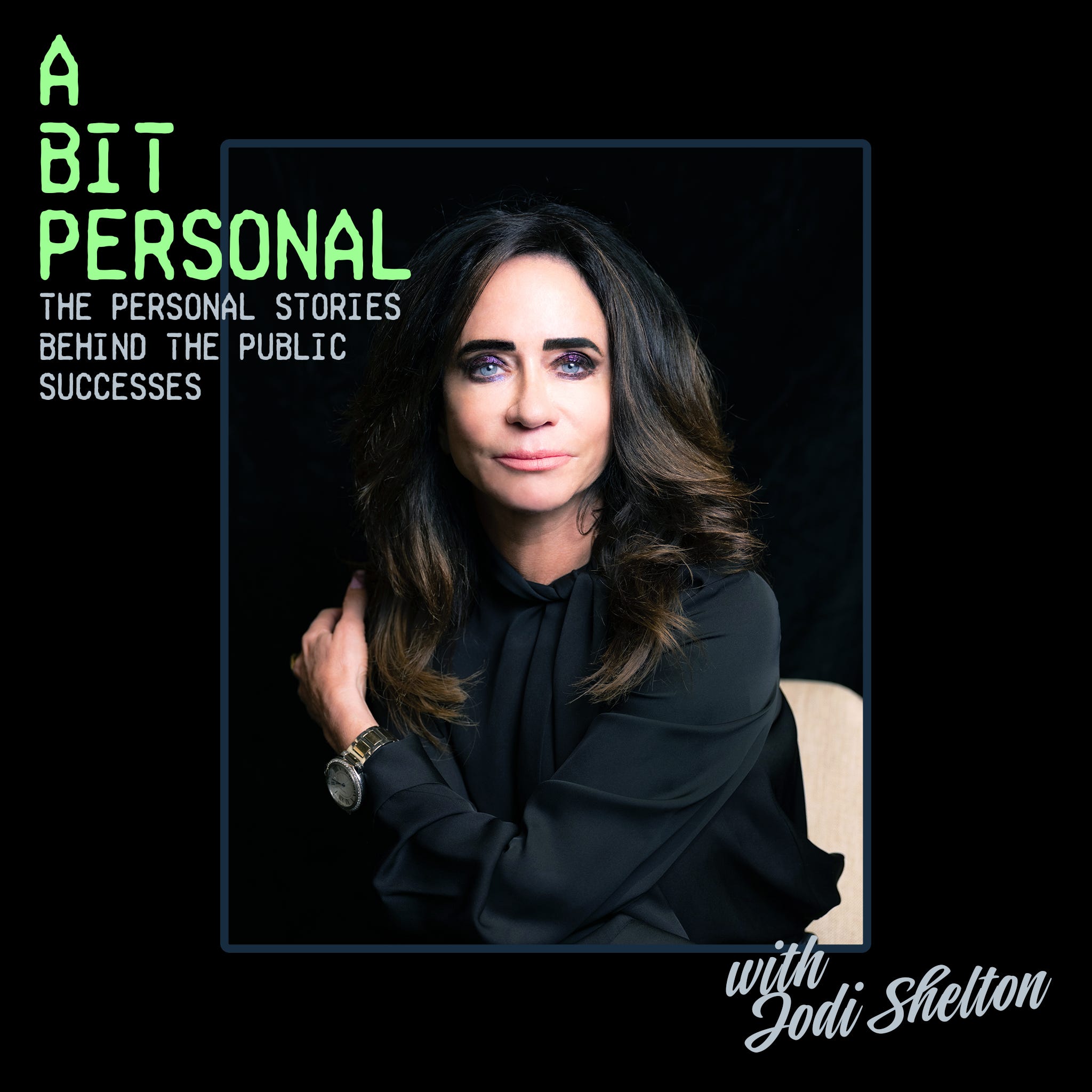
 A Bit Personal with Jodi Shelton
4 Oct 2026 · 1h 3m · 30 chapters
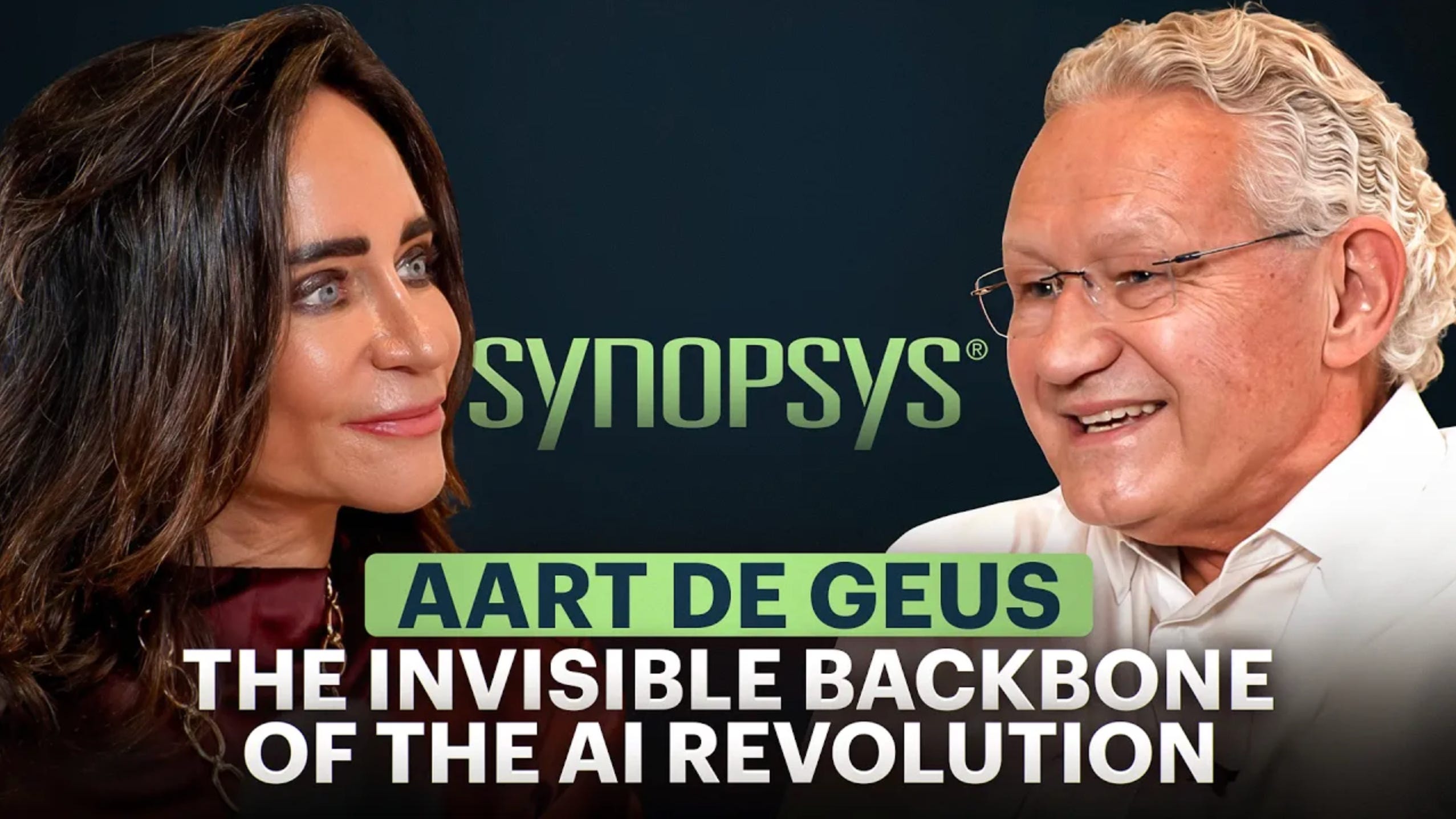
Dr. Aart de Geus, semiconductor pioneer and “father of EDA,” discusses how a “yes if” mindset replaced “no because” at Synopsys, linking leadership, learning, listening, philanthropy, and jazz to navigating AI-era systemic complexity (especially energy/climate).
This episode’s guest is Dr. Aart de Geus, founder of Synopsys (1986) and executive leader for nearly 38 years; known for EDA. He also plays guitar and performs with his band Legally Blue (about a dozen outdoor gigs/year). The host is not profiled beyond being a long-time acquaintance.
“Yes if” opens doors; “no because” closes them. Effective leadership rests on integrity (do what you say), passion, perseverance, and contrarian “truth tellers” reframed into positive “if” solutions. Group success is “multiplication,” not addition—teams recover from mistakes together. Leaders must pair brains with heart and courage to act, including community help. Systemic complexity requires learning, adapting, collaborating.
Synopsys “rule of 40” (revenue growth + profitability) coincided with a profitability curve break starting in 2019. A young manager’s stalled project restarted when the team tried a “yes if” approach. He cites Barney Kessel’s advice: find better people, practice until you’re as good, repeat, then teach.
Written by AI. May contain mistakes.
Aart shares his love for music and his band, Legally Blue.
“And thank you for inviting me into your recording studio.”
Aart discusses the shift from a 'no because' mindset to 'yes if' and its impact.
“And some of them have been things that I've observed, but some of them have been point blank lessons that you've taught me, things that you've told me.”
Aart explains the changes at Synopsys and the success from adopting a positive mindset.
“It sounded a little bit esoteric, maybe.”
Aart elaborates on the balance of intellect, empathy, and bravery in leadership.
“And, you know, of course, this was the work of many, many people that all had their own yes, if change vectors to execute on.”
Discussion on philanthropy's importance and instilling values in children.
“Okay, so another quote that I love from you is that if you have the brains to understand, you should have the heart to lead, and you've recently added, and the courage to act.”
Learn how listening enhances group dynamics and leadership effectiveness.
“The training is not over for our children who are adults now.”
Explore the essential traits that characterize effective CEOs and leaders.
“And what are some of the traits that you've seen consistently in very effective and very successful CEOs and leaders in general?”
Understand the prevalence of imposter syndrome among high-achievers.
“So it's very interesting because it can be debilitating for some people.”
Discover the process and criteria for choosing a successor in leadership.
“And that's a multiplication, not an addition.”
Learn how to intuitively understand and manage systemic complexity.
“And so one of my criteria is, can people understand systemic complexity somewhat intuitively and deal with it without being overwhelmed?”
Explore the current socio-political landscape and its challenges.
“I mean, that's a perfect lead into the sort of the next topic, which is sort of the state of the world today.”
Discuss the challenges of change and learning from crises.
“Although I must say, hey, if I look at my parents, when the Cuba crisis happened, which was the early 60s, that sounded overwhelmingly big too.”
Examine how social media influences thoughts and perceptions.
“to that but also never forget of the people that in the crisis are actually the ones that get hurt And if one sees it that way, now one can start turning into a yes if.”
Reflect on personal growth and the importance of evolving beliefs.
“has caused is this kind of constant comparison versus contribution.”
Learn how to align your time and resources with your values.
“And so I think the increase of saying it's our responsibility, actually that's another way of adding the brains to heart, to courage, to action, right?”
Discuss the complexities of energy and climate in today's world.
“that both of our now grown-up daughters have become really good people.”
Discover the impact of surrounding yourself with the right people.
“And therefore, we have to find a way to bend that curve in a different direction.”
Explore the challenges and joys of parenting while balancing work.
“So how did you sort of protect fatherhood?”
Explore the complexities of parenting and the importance of nurturing relationships.
“oh, I don't want to be like my parents, for starters.”
Discuss how to maintain a healthy relationship amidst professional ambition.
“and your personal life so that your children do have some understanding.”
Reflect on how the pandemic reshaped family interactions and relationships.
“We were in the same house and we met 17 times and crossing at the kitchen.”
Understand how jazz influences leadership and teamwork in various contexts.
“Okay, so you've already given a few examples of how it influenced your leadership.”
Hear the story of meeting jazz legend Barney Kessel and its life lessons.
“So you, when you were young, you met one of your jazz idols.”
Discuss how one wishes to be remembered and the importance of inspiring others.
“And I think that for me suddenly sealed the whole notion of what learning is all about.”
Engage in the process of crafting insightful questions for upcoming guests.
“Well, Lisa is a person I greatly admire.”
Explore how strong leadership can reshape a company's future in the AI landscape.
“And in that sense, she became the CEO that fixed it to being viable.”
Discuss the challenges of learning and adapting in a fast-evolving AI environment.
“all the questions that you had about media influencing us, AI now maybe tricking us and what have you.”
Aart de Geus shares his thoughts on achievements and future focus.
“So the first is, who's the smartest person you ever met?”
Discover personal preferences and insights about life and relationships.
“And I was thinking, have they talked to my doctor?”
Aart de Geus discusses the idea of being youthful and embracing new challenges.
“Well, my adult daughters would think of me as a coffee Neanderthaler because I go, instant coffee, some creamer and some sweetener.”

Get the gist, explore an idea or ask about something said.
 Claude
On A Bit Personal with Jodi Shelton, what are the key points of this episode?
Searching your listeningAutomatic transcript. May contain errors.
0:01Jodi Shelton: Hi, today we're going to get a bit personal with Dr. Aart de Geus, one of the storied pioneers of the semiconductor industry, having founded Synopsis in 1986 and leading it for nearly 38 years. He's also known as the father of EDA. EDA is Electronic Design Automation and is one of the most critical supply chain partners in the semiconductor ecosystem. For those of you not in the industry who may not know art, you're going to love this episode because it's going to break all stereotypes about who the leaders are that matter in Silicon Valley. In some ways, he is the soul and conscience of the semiconductor industry.
0:38Jodi Shelton: He's one of those individuals who leads and lives by a set of deeply held values. Please join me in welcoming a soulful blues musician, a deep thinking philosopher, and an actively deliberate philanthropist. Thank you.
1:27Jodi Shelton: Welcome to A Bit Personal, Art. Thank you for being here. Hey, thank you for being here. And thank you for inviting me into your recording studio. This is so cool. I hope it works for you. And there's music behind us. Okay. Here we go. So tell me a little bit about how often do you come in here? Well, I try whenever I'm home to at least play 15 minutes or so. So, you know, if you become super charged from work, nothing better than being able to crank a guitar up a bit and the stress comes down. But I wish I could play way more. And you also perform. So tell me about your band. Yeah, we have a band, Legally Blue, and we do about a dozen gigs per year or so.
2:06But the gigs are like two and a half hours, two times an hour, 15 minutes, which is a lot of material to actually get on top of.
2:12Jodi Shelton: So where do you play? Oh, a lot of things outdoors. Okay. And, you know, some of our favorites are, for example, Sunnyvale closes Main Street and then they put tables so people can eat there and a stage. And then we play the evening. Okay. That's really cool. Yeah, it is really cool. So you and I have had the opportunity to know each other for roughly 20 years. That long? Really? Okay. Which means we both started as teenagers. Yeah, I was thinking kindergarten, but okay. Yeah, that's fine. Teenage prodigy. Oh, yeah. So anyway, so during that time, I've learned a lot of lessons from you. And some of them have been things that I've observed, but some of them have been point blank lessons that you've taught me, things that you've told me.
2:55Well, some of that material has come back to me. So it's cool.
2:59Jodi Shelton: That's nice. So you have to tell me about that. Okay. So I want to start there with sort of your philosophical leanings. Okay. So you're a pretty deep thinker. So yes, you are the father of EDA and everybody knows you're a super smart guy, but it goes deeper than that. I mean, you're really quite a deep thinker on both business side as well, I think, as the personal side. So one of the things that you championed at Synopsys was this mind frame of yes, if rather than no, but. No, because. No, because. No, because. Yeah. Okay. No, because. All right. No, but works pretty well too, actually. All right.
3:39Jodi Shelton: So that's my new saying. Anyway, so tell me a little bit about why you adopted that and what does it really mean? And how did you see sort of a transformation within Synopsys just because of a different mindset? Yeah, you know, actually it started, I think, 2017, 18. I had noticed that the company had become more stodgy. And maybe the reality is I had become more stodgy. No. Oh, yes. No, no, no. it's very easy to become more no-change oriented. And essentially, we were doing fine, but our profitability had not really grown. And so somehow it occurred to me that there were so many reasons that we couldn't do this.
4:24No because, because, because, and so on. And suddenly one day, I realized, hey, we have an enemy, it's no because. And what's our friend? Yes if. And the ifs and the becoses are actually sort of the same. But the mindset change to go to a yes if from a no because is actually extremely fundamental because it opens doors, whereas every no because essentially closes them. And so I sort of announced to the company that I'm going to try to do this change. It sounded a little bit esoteric, maybe. But then for the entire 2019, I did tours and roundtables with small groups of employees in front of, let's say, 100 or 200 other employees.
5:08And I would pick people that were sort of lower middle management, but that had a little spark. And essentially asked them, hey, what do you think of this? And it was completely improvised. There was nothing to read or so. and very quickly it started to take some form. And I knew the first little success was when somebody reported, hey, you know, I talked with my kids at dinner about it. And they got it immediately. And they also immediately diagnosed us, the parents, as being so no because. And kids are like that, of course, because kids are open-minded to many, many ideas. and from there it moved forward pretty quickly maybe the second moment that I knew we had something was when somebody one of it was a young lady a young manager who was in one of those groups of three or four people and she reported that oh they had a group meeting on some project that didn't go anywhere and it wasn't you know this didn't work and that didn't work and they were completely stuck.
6:14And she said, and I know that when she told me that, she was a little insecure if she could do that. She said, well, and then somebody at the table said, let's try this stupid art thing, you know, that yes if. And she said exactly, I loved it. Because A, it showed that she had courage for starters. But more importantly, what she said afterwards is, we tried it and suddenly the dynamics changed. And that's when I learned a lesson is that the the no-because to yes-if transition is not just a personal thing or a project one, or it is a group one. Because very often we are all stuck in our own no-becausees, but when you tell somebody else on a yes-if basis, the other person often can solve some of the ifs.
6:59And that's when it started to take off.
7:02Jodi Shelton: Right. Any specific concrete examples of something that happened? There's a massive concrete example because we cobbled it with what we called at that time the rule of 40. And the rule of 40 was the addition of the growth rate of revenue and the profitability. And we were well below 40 and said, oh, we're going to move in that direction, which is a very measurable thing. And if you look at our results, starting literally in 2019, you can see a break in the curve of profitability and align that for many years, then continue to go up. And, you know, of course, this was the work of many, many people that all had their own yes, if change vectors to execute on.
7:48But that mindset change, for me, it turned into an insight that I've had the opportunity to use with so many people. And by the way, you know, I meet a very no because person almost every day, early on, it's called the mirror. And there the I is with yet another set of no becauses. And I've somewhat learned to say, no, no, today not. I'm going to be yes if. I'll figure it out.
8:14Jodi Shelton: Practice what you preach. Practice what you preach. And preaching is, you know, it's really a role model ultimately, right? Right. And what about applying it to your personal life? It very much applies because when you are a CEO, as you know, there are so many things that are fundamentally conflicting. in urgency, in importance, in who to deal with, in what decisions to make. And consistently asking oneself the question is, what is actually between the yes and the if? Yes, we can do this if. And by the way, it's not just if, right? It's if, if, if, if, if, if, if, if, if, if, if, if. Right. There's always a slew of those.
8:58And by daring to look a little bit more like a child towards the future, anything is possible, one actually comes in with an energy level that actually opens doors.
9:10Jodi Shelton: Right, right. Energy being very important in our industry, right? Now especially. I'm sure we'll get back to that later. Yes, more than one meaning there. Yeah, yeah. Okay, so another quote that I love from you is that if you have the brains to understand, you should have the heart to lead, and you've recently added, and the courage to act. So what does that triad look like? Well, here too, you know, it's an old history in many ways, partially because one of the great benefits I got by being early in synopsis, other people actually essentially pushed and told me that caring for others in the community is actually important.
9:55You know, I grew up with parents that, yeah, they would give some money to people, but we didn't have much money and it was not really learned, right? And suddenly I discovered as a CEO, you not only have the opportunity, but you also, in my opinion, have a necessity and a responsibility to look at the circles around the company, which initially were things such as simple as, you know, a second harvest in Silicon Valley. You know, the very fact that today there are many hundreds of thousands of people in Silicon Valley that have not enough to eat is a surprising situation, you would say. It was sort of a surprise to me, too, at that time.
10:42But out of that came sort of this notion of think beyond yourself. And I must have heard or coined this terminology of they who have the brains to understand should have the heart to help. and that was really through all of these years became gradually a mantra because i saw here is this super intense industry the high-tech industry and specifically of course in our case semiconductors and actually there are a lot of brains and in all fairness for top leaders there's no time because we're sitting on this exponential of change that you need to constantly be on and still if you have the brains you should do some helping and so i use that within the company and it's then years later that i realized there was also there are also other force fields and we have seen this in the last seven eight years in the global situation that suddenly there's scary things happening around us and then suddenly it becomes well you should also have the courage to act and courage has to come with some wisdom there's no point in sort of making some claims and then be shut down or so.
11:54But it is necessary for people that have this fantastic responsibility of leading a company or an organization to say, you know, we think for the long term, we think broader than ourselves. Right.
12:10Jodi Shelton: And we'll talk a little bit more in a few minutes about your philanthropy, but obviously you take this again and apply it to your personal life, that we do have a big responsibility as individuals. We do. And, you know, over time, obviously, Synopsis has done well. Therefore, we have done well as a family. And there too, you know, in philanthropy, over time becomes important to actually realize there are many, many, many great causes. The question is, and I think one should give broadly, but at the same time, if you have the opportunity to give more or even participate in certain things, it's useful to understand which ones will have the biggest long-term impact.
12:53And therefore, it's also useful to understand who are the leaders and how do they act. Because, you know, leading an NGO, a non-government organization is a really tough job. And I can tell you, I've met some people that were just extraordinarily good. Fantastic.
13:10Jodi Shelton: Yeah, I have as well. And I think that what you were saying earlier about that you didn't really learn it necessarily as a child. I mean, it was one of the number one priorities for me when I was raising children. Yes, yes. And we started going to Haiti when my kids were like nine years old, nine and 11. Yes. So what about your family? Did you really try to breed that into your children? In a milder form. Okay. Early on actually I took both of our young daughters at that time to the distribution of food of Second Harvest and what they saw they were very quiet afterwards because it was I think one of those moments of realizing oh yeah yeah there are other challenges in the world.
14:02The training is not over for our children who are adults now. Because over time, they have to participate more, and they will, and they are learning well.
14:12Jodi Shelton: Right. Yeah. It's a good lesson. So one of the other lessons that I remember, and actually it was something that you told me, and I have used this so often, and I've quoted you, and I give you credit. Well, you don't have to get credit. I'm wondering what it is. No, that is that people determine the value of a meeting by how often they hear their voice. And for my job, when I'm managing a group of CEOs, that has played an incredibly important role. And I think about it all the time. And it's not just, it's not hearing their voices for the sake of hearing their voices, right? It's not an ego thing.
14:51Jodi Shelton: People want to be heard. So do you still believe that? Do you remember that? Do you remember telling me that? Yeah, I remember that. And it's quite a while ago because my thinking has evolved a little bit because I realize often people are very stressed when they have to speak up in an environment that has maybe other great people and so on. And so there's a reason they remember only what they said, because that's the highest intensity moment right i would add something to that now which is that uh in any group and that includes the two of us the listening part is just as important and then the third thing is can you make the other person feel an inch taller by the time the the meeting is over and you know in in music and and sometimes jazz gets stereotyped too and you you hear sentence like you know really work well on the silences what the hell does that mean well actually listening in a band is a fantastic thing and it's just as hard because you know i'm concentrating on making sure i make no mistakes and when i do that i'm not listening to the other band members but when i'm relaxed enough so that i'm not worried about my own mistakes and let's say for argument's sake i'll put you as the drummer and suddenly you do a little thing and i hear that the organ player picks up that same little accent, suddenly everybody wakes up.
16:18And if then I can do something that increases that accent, now suddenly the band is cruising, right? Call it being in the pocket. And that means suddenly you're together. And whenever you can do that in a meeting, and again, yes, if works with that because solving a bad if is a really big yes. And if it's clear that, you know, we solved it together, I brought up a problem, I really didn't know what to do. And you say, yeah, but go left instead of right. And suddenly it's, oh, wow, I hadn't thought about that. The very fact that I recognize that you just gave me a little gift is a gift back to you, right?
16:56And so the dynamics of groups can be so improved if one were just a better listener. And your know-to-self becomes still a better listener. Right, right.
17:08Jodi Shelton: Yeah, no, I think I remember, I don't know if you remember who Bob Pepper was. Oh, yes, yes, yes. Level one. Great leader. And he told me very early on, Jody, I think your superpower is listening. I was like, really? I mean, I was so disappointed that that was my superpower. And maybe ultimately he's right. Yeah. And listen and then do something with it that makes Bob Pepper proud that he told you something. That's right. That's right. So you're in a position that you get to be around a lot of CEOs, myself as well. And what are some of the traits that you've seen consistently in very effective and very successful CEOs and leaders in general?
17:50Well, you know, that is an unbelievably broad topic, right? One of the characteristics that people don't often recognize is just the word perseverance. You know, I'm always surprised that somebody who maybe was not the super smart one, was not the super well-placed one, but who didn't give up actually became successful. And so perseverance is actually one of the key characteristics of being successful. Now, defining CEO by sort of the job attributes, I always start with the values. And the foundation of the values is integrity. and integrity is a big three-syllable word, but it can be easily translated in do what you say and say what you do.
18:39If you're there, you have the foundation of trust building. And sometimes what you do ends up not being so great and then you have to say that too, right? And so in my value pyramid, that is absolutely the foundation. Now at the top, I put something very different, which is passion. The passion for what you do, and probably that's also one of the reasons that gives people a drive to move forward, but passion is contagious. And the people that have that and then can surround themselves with not only compliments to themselves, but also people that can build each other up is one of the characteristics that really great CEOs have.
19:26And, you know, earlier you may say, oh, Art, you did this or that with the company. It is always we. It is always we. And actually, earlier, didn't we not briefly discuss how important it is to have somebody who is a contrarian? Right. Somebody who actually say, hey, real mirror here. Right. Watch this thing here.
19:45Jodi Shelton: You're truth tellers. You're truth tellers. And there's some that are sort of always sort of on the no because side. But even that, the skill is to take their because thing and turn it in a positive if and then do whatever yes we can around that. But we all have limited capabilities. And so you become really who you surround yourself with. And if you're willing to have opposites or people that think more broadly or have different skills, they're a gift. They're absolutely fantastic gifts. Right, right. So were there any traits that you found important as a leader that you really didn't have naturally that you had to either earn or learn over time?
20:28yeah yeah you know i i always feel and still feel right now that i've them a fraud had that i know so much less than i wish i had uh i wish i had done some mba i wish i'd actually pay attention in engineering class uh i wish i had spent spend more attention earlier to health but at the same time you can say no no that's not a good attitude this is all stuff that by being confronted in in high responsibility or high leverage situations hopefully you learn how to how to do better but i've heard from a number of other people that are very intense in their domain this this notion of you know deep down i'm a fraud you know i'm faking it until I know how to do it real, for real.
21:23And you can also say, hey, that's the courage to do some bets, to try something.
21:28Jodi Shelton: Right. Yeah, I think it's interesting because, you know, you often hear about women having imposter syndrome. Oh, yeah, that's what it's called, right? Yeah. So now I'm talking to one of the most successful CEOs in the world who also had imposter syndrome. So it's very interesting because it can be debilitating for some people. Are you an imposter? Maybe. I mean, please, I'm sitting in a room of people that are twice as educated as I am, three times as smart. So of course, I'm like the real imposter. But you know what? It's still fun. So here's why I will argue that you're not. It has not much to do with education.
22:04It has not much to do with all these other skills. People may have other skills than you have or in some areas better and some areas not. But you have passion. You have passion for excellence. You have passions for learning, for improving things. That is what matters. That's what matters.
22:22Jodi Shelton: Yeah, well, at least I have that. Not at least. That's a lot. That's a lot to have. So you went through a transition at Synopsis where you handed over the role of CEO to Sasin Ghazi, and you're now the executive chair at Synopsis. What's the name of the guy again? Sasin? Sasin. Sounds familiar. Sounds familiar. Yeah? so he must have those characteristics okay so that's you know maybe um go through the criteria that you know that you went through in choosing him to basically you know trust him with your life's work and then maybe how did you know it was time all right i don't trust him it's my life's work because it wasn't my life it was our life work and actually 25 years he was part of that to build this.
23:10But yeah, how do you trust somebody with the future of the company? And I mentioned some of the criteria from the values point of view. But actually, let me use sort of the definition of vitality that I like to use. And I like to define vitality in three lines. The first one is both the ability and the drive. And you can replace the word drive with persistence or energy. It takes actually hard work and literally also physical persistence to do this. So ability and drive to learn, adapt, and collaborate. Without learning, you're nowhere in our field. And actually in many fields, you're nowhere.
23:56Because we know not only do we still live on exponential, we live on a whole bunch of exponentials right now. And so the speed of learning and the quality of learning is absolutely essential. Secondly, you can learn a lot academically, then decide, well, I've learned it. The adaptation is really turning it into the practice of things. And the third one is collaboration. What we do is not possible as individuals. Everything we do is a team, and it's not an additive team. It's a multiplicative team. A single person fails on something important. We all fail together. And a great example is just in semiconductors.
24:34It doesn't matter if synopsis made a mistake in the tool or the designer made a mistake in using the tools or the manufacturing made a mistake in manufacturing the thing. The three of us, we all fail. Right. And that's a multiplication, not an addition. Right. And once one understands this notion of multiplication, there's something very profound, which is most of the things we deal with are not scale complexity issues. They are systemic complexity issues. Many things are interwoven. And so in this ability to learn, adapt, and collaborate, those three words try to capture both that sophistication and the necessity to continually be on the ball.
25:13And of course, we do learn, adapt, and collaborate in order to survive and thrive. And a lot of CEO work is surviving in so many ways. Personally, as a team, as a company, as circumstances change, as geopolitics hammers one, whatever it is, you're still there. So that's the vitality. And I would consider the learning, the principal one, because it's a starting point. And what was very clear to me already many years ago, about 15 years ago, was clear that Sassine was an outstanding learner. And, you know, just looking at now the last 18 months, he's had to learn a lot of stuff that was yet different than anything we had done before.
26:01Jodi Shelton: Yeah, and he, I mean, obviously a lot of regulatory and geopolitical complexities when he was trying to get the ANSYS deal done. And so what did you, you know, teach, not necessarily to Sassine, but teach the culture and the leadership at Synopsis of how to handle that kind of pressure? Well, and it's sort of Synopsis, but it's also in the specific case of Sassine, is that I had thought about succession a long time ago. and was always looking for, you know, where's their potential talent? And preferably from the inside, because it reduces risk substantially. And so part of not so much the teaching as the enabling teaching was to, over time, help him be in different positions in the company.
26:45And at some point in time, you know, so he was sort of spiraling gradually up. And by the time he became COO and then later COO and president, it became clearer and clearer hey you know something's happening here and uh and all of those steps was learning partially with my advice but a lot of that was also just now put him in the situation and actually don't say much and that was actually difficult for me to step back because a number of people started thinking oh yeah art has nothing to say anymore and so that was unbelievably difficult to not say oh the answer is this or we should do this and so on but but but let him speak first and drive things.
27:27But having said that, in the process, it was clear to me that he was a fantastic choice. That doesn't mean that there's not a lot more he has to learn. And as you said, the geopolitical challenges started well before that, about six, seven years ago, with challenges between the U.S. and China. And then there was another form of geopolitical or geo-period issues, which was, of course, COVID. That was a big challenge in many ways. But that's a great example of systemic complexity becoming even more systemic. And so one of my criteria is, can people understand systemic complexity somewhat intuitively and deal with it without being overwhelmed?
28:12Jodi Shelton: This episode is brought to you by Needham & Company. George Needham founded Needham & Company with the vision to be one of the leading investment banks to the semiconductor industry. Most founders pivot, but for more than 40 years, Needham has been part of the fabric of the semiconductor industry and has partnered for decades with industry leaders like Applied Materials, Intel, Lamb Research, and Synopsis. Having had a front row seat for numerous cycles, Needham has never felt stronger about the industry's short and long-term prospects and looks forward to continued partnering with today's and tomorrow's industry leaders.
28:47Jodi Shelton: Let's get back to the episode. Right, right, yeah. I mean, that's a perfect lead into the sort of the next topic, which is sort of the state of the world today. Okay. And, you know, how, you know, whether it is the geopolitics, whether it is our consumption of social media, our consumption of news. And it seems that technology has created so many benefits for humanity. And some challenges. There's a lot of both unintended and maybe in some cases intended consequences when you think about social media, for example. Yeah. So what's your advice on, you know, how we can live a more soulful existence with all this chaos and turmoil and all the white noise?
29:34Yes, I think it's an extraordinarily difficult question that you're asking here because many of the forces that you're describing are much bigger than individuals. They're also much bigger than even groups that don't know what they have unleashed and where it's going. Although I must say, hey, if I look at my parents, when the Cuba crisis happened, which was the early 60s, that sounded overwhelmingly big too. And it could have been. And every generation has had essentially these, certainly in the last 200 years, these waves of technology or new capabilities or warfare that have shocked humanity.
30:19And some of the shocks ended up being positive. But many things, change is painful in general. Even if it's positive change, if you take the steam engine, well, for all the people that had horses to drive some stuff or so, suddenly the train destroyed that. And over time you say, well, it's more efficient and there's advances. But the transition is what's actually most difficult. And we're seeing this right now. There's an unbelievably high degree of hunger for more energy. and yet we all know that right now a large amount of the energy produces emissions that are catastrophic for humanity and so there's a transition that's needed well transition i think it was maggie thatcher even that said you know it has to get worse before it gets better and all c all ceos know the simple question never let a good crisis go unused and there's some truth to that but also never forget of the people that in the crisis are actually the ones that get hurt And if one sees it that way, now one can start turning into a yes if.
31:26You know, if we understand that this transformation will lead to these people or these entities to be harmed, what can we do preemptively about it? And just by putting it into the if set, we have broadened our own systemic understanding to something where leadership is actually worthy.
31:45Jodi Shelton: Right, right. Right. So when one of the things, again, that social media has, one of the problems that it has caused is this kind of constant comparison versus contribution. But the other thing is, is that you're pigeonholed into believing one thing, and then you're fed that information sort of over and over again. And we've heard about these algorithms doing that. And so it becomes very difficult to change one's mind about something. In our industry, we're pretty used to changing. I mean, we have to be flexible about everything. You change on a dime. I mean, this year doesn't look anything like last year, and it certainly doesn't look like it did five or ten years ago.
32:27Jodi Shelton: So maybe what's something that you've changed your mind about that actually took persuasion from either someone else or some other group that, you know, that you're proud that you were mature enough and progressive enough to sort of change your mind about it?
32:48Yet another one of those very difficult questions, because when do you know it's just learning versus when do you know, no, I actually was fundamentally stuck on a model that was too simplistic of the world? And so, you know, just maybe reusing an example that we talked about earlier, this notion of how is it possible that Silicon Valley needs multiple services that provide food? You know, was that just being blind? Was it just, well, you know, I had not seen that? Or was it actually a naive version of understanding of the world? And, you know, if I look at, let's say, the great American adventure since World War II, the immense success of the country in actually bringing up one of the highest standard of living is somewhat touched by the fact that there are a lot of people in this country that are below an acceptable standard of living.
33:59and that one of the most remarkable countries in the history of certainly the last 100 years has not been able to deal with that. And I'm part of that. I'm part of the industry that's been successful, that has been changing all of these things. And all of these questions, by the way, now are greatly amplified to the whole question, so what's AI going to do about this? And, well, there's some remarkable great successes and there's some remarkable, awful stories already about what it could do. At the end of the day, it's us. It's us that decide, us humans, that decide how we deal with the world.
34:37And so I think the increase of saying it's our responsibility, actually that's another way of adding the brains to heart, to courage, to action, right? To action. Right. I think I'm still learning. I'm still learning. And the question is learning how to be effective in this.
34:58Jodi Shelton: Right. So we were talking earlier about that I had recently reread Clayton Christensen's book, How to Measure Your Life. And I mean, it's a great book. But one of the things that he brings up is that where you spend your time and resources, that reflects what your real values are. Like we may think we believe one thing, but if you're not spending your time and resources on it, then you probably really don't believe that. So what do you spend your time and resources on that you fundamentally believe aligns with your values? Well, you know, and I look at this synopsis time and the now different synopsis time, because at the beginning, there was almost no choice.
35:44You know, as a young CEO and then as a not so young CEO, who was the same? Who was like no choice on time? I think you and I remember vaguely E-Times, which was a newspaper at that time before the internet about our industry, right? Of semiconductors and that thing would arrive I forget which day of the week and the first thing I would go very quickly through it what horrible thing has just happened that could endanger us as a company it was always this paranoia of tomorrow and I've never lost that and I think only the paranoid survive was Andy Grove's gift to book them, I guess. Yes. And there's some truth to that.
36:25And so the reality is, how much choice do you have over your time? And so if Christian says, yeah, but you have to take choice, you have to make choices, he's absolutely right about that. And I would say, oh, well, you know, I have to spend better time with my family. And, you know, I'm thankful the fact that both of our now grown-up daughters have become really good people. but at some point in time it was like, okay, here's the little tag I have on my shirt when I come home from yet another trip say, your dad, I'm your dad, just remember that. And the stress and the jet lag and all of that were difficult.
37:06Now in the next phase now where I'm essentially really the top supporter of Sassine by being chair, I spend the rest of my time on a whole new quest. And the whole new quest is actually to understand the systemic complexity of energy and climate. Now, I'm already starting to modify it and wanting to say AI, energy, and climate, because AI is such a forcing function of change right now, which is both a potential issue and potential opportunity to use that to drive different energy considerations. And the reason I'm so vested in that is because I can easily see why what's happening on the emission side is heading straight to a massive human catastrophe.
37:56And therefore, we have to find a way to bend that curve in a different direction. That's back to the earlier talk. It's so difficult to actually transition things, right? Because it gets worse before it gets better. And so trying to dedicate as much time I can on that is in the category of the topics. But the other angle to your question is, or Christensen's assessment, is not just which time, it's which people. And that goes back to, I think, lessons that I wish I had learned earlier. But at the end of the day, often people, let's say, that want to go to college. You know, they have all these expectations.
38:36You have to write an essay on what you're going to do with your life and why it's worthy to come to our university and stuff like that. And they have no clue. They have no clue. And they're almost panicky. And I've changed my advice there towards saying, hey, you know, just pick the people you really like, people that you respect, the professor that was able to make you an inch taller just because you're excited about something. and until you know what your passion is going to be and how you may or may not make a difference around you align yourself with people you think are great and i think that is really good advice
39:14Jodi Shelton: yeah i think that you know i think it was tom friedman many years ago at the u.s executive forum said that you know this generation would have like seven different occupations in their lifetime okay yeah okay and if you do then that means that you can miss on the first couple of them yeah and i i would and tom is really good at at putting it in very tight uh little sentences right i i would say don't use the word miss on a few of them if you could really learn and experiment right yes and and it's actually our fear of being a miss that stops us from being open-minded and learning just like my fear of playing the wrong note makes me not listen to what our keyboard player just did yeah that's a perfect analogy so okay so I want to touch a little bit more on on fatherhood okay so you know because I think that you know I hear kids now and both men and women say you know I don't even want to have children because you know just the kinds of choices that have to be made, again, men and women.
40:26Jodi Shelton: So how did you sort of protect fatherhood? And what advice do you have for someone sort of starting their career on how you manage that and still have a close relationship with your children and have an impact? Well, that's sort of the stuff I did, but even more the stuff I wish I did, right? And I wish in hindsight that I had more often at dinner talked about what I actually do. At the same time, I look back and I say, I had no ability to do that. Because after, I don't know, a 12 half hour or 14 half hour meetings, you're completely zapped. And still, the few stories I told, the few things, they did pick up.
41:11And of course, they look like they're not listening at all, right? But they still hear it. They still hear it. And so, you know, I have the good fortune to have as a spouse somebody who is equally passionate about her work. She works in cancer epidemiology and is a researcher and publishes papers. And so she has an understanding for what it's like when she is under stress. and yet another grant proposal or paper is due next Monday and there's essentially no sleep and just finish those things. And so we have been able to support each other. But I think what our kids learned out of that is a certain degree of intensity and passion.
41:58And in different forms, they have found their own way to say, oh, I don't want to be like my parents, for starters. They're working way too hard. But at the same time, be very balanced and good people. And so I don't know that I knew the recipe, but there's no question in my mind that, you know, children are the greatest gift you can get. And sometimes it's not your own children. Sometimes if you don't have children, there's some other child around that can be helped and that can greatly benefit from some act of love or attention.
42:35Jodi Shelton: This episode is brought to you by GSME. GSME is a leading global provider of tailored silicon solutions dedicated to empowering semiconductor and system companies with cutting-edge technology and unparalleled expertise, founded in 2022 by Farhat Jahangir. Its comprehensive range of services include end-to-end chip design, full turnkey manufacturing capabilities, rigorous quality assurance, and strategic incubation to help its partners bring innovative products to market. At GSME, they are committed to transforming semiconductor manufacturing landscape by optimizing processes, accelerating product development cycles, and ensuring faster time to market for next generation applications.
43:19Jodi Shelton: GSME gives full visibility of the supply chain to its customers. Now, back to the episode. Yeah, I like this whole idea of sort of the integration of both your professional life and your personal life so that your children do have some understanding. I see people doing that more now. So then, you know, again, to get a bit personal. So tell me a little bit about how you made it work with two ambitious people in the home, highly successful, highly passionate about what they do. How did you maneuver that? I remember that the CEO of PepsiCo, I recently listened to a podcast that she did. And she said that her husband thought, PepsiCo, children, my mother, then all these things, and the husband came dead last.
44:05Jodi Shelton: And so, you know, it's easy to put your spouse dead last. So how did you guys avoid that? You're still married, so you must have avoided it. Yeah, well, but you just sent me into the ultimate guilt trip of all the things that I could have and should have done better. And so, you know, let me just highlight first that my wife is maybe the greatest gift that I got and not always appreciated it sufficiently for that because he somehow found an understanding of, you know, this guy, whatever he does, he won't stop because that's who he is. And it's more over time that I've gotten to appreciate how many steps she took to make that possible and put herself on a back burner that once the kids were out of the house, suddenly I saw the intensity that she had.
44:57And so in hindsight, I wish she had been able to be more supportive of her career earlier on, but she made our family successful. And I don't want to go too far into the guilt trip because flowers won't do, right? This is much deeper than that.
45:19Jodi Shelton: Well, does she get to spend more time with you now or it's equally as challenging? You know, actually, in a weird way, one of the best experiences as I look back was COVID. Yes. We were in the same house and we met 17 times and crossing at the kitchen. Were your children here too? No, they were not. They were not. They are in their 30s. And so COVID was five years ago. And so and suddenly we had brief lunches together, just sitting outdoors. and I think it matured, maybe matured just me. I probably needed more maturing, but it was actually a way to learn how to do things differently. Right, yeah.
46:07Jodi Shelton: It's been good. Yeah, I think that if something good came of COVID, it was family time in many cases. For some, and for some, it was the opposite, right? It was the big challenge. Right, yeah. So let's switch gears and talk a little bit more about jazz. Yes. Okay, so you've already given a few examples of how it influenced your leadership. But maybe a little bit more about how, you know, how it has impacted your life and how you lead. Well, you know, sometimes I joke or maybe don't joke and say, hey, leading a band is a lot harder than leading a company. and partially it's not a joke because creative people have an ability to turn a corner when you don't expect it to happen and actually one of the coolest things I'm still learning that as a band and we're interesting and this is now management from Synopsis coming into the band saying oh let's talk about this and let's make it sort of clear that one of the rules is if somebody makes a mistake while we're playing a gig, the role of the rest of the band is to make that mistake away, not look at, you know, why did you do that?
47:25And, you know, we all make mistakes. And interestingly enough, the singer is the person that needs to be protected most. You know, it's sort of like the queen in chess or something like that. And I would never say that she makes mistakes. I just say, oh, she made a decision to not go to the chorus, but to what's called the bridge. And the whole band goes, did we just go to the bridge? What happened here, right? Our job is to, in zero time, redo the chords, figure out what to do so that she sounds great. And being able to voice that explicitly, A, brought many jokes about it. and the singer says, do you mean I make mistakes?
48:11No, we all make those. But this is the playing together. This is the notion of we're a multiplication, not an addition. And it's been cool to see how the band has done well with that. And we all make mistakes like this from time to time. And the more we can do that together, that's not any different than a good exec team. An exact team shines when somebody, not somebody, when we are in a bad spot and we turn all yes if as hard as we possibly can on each other. Right.
48:52Jodi Shelton: Yeah, I get that. So you, when you were young, you met one of your jazz idols. Yeah, Barney Kessel. Is that the story? Yes, that's the story. So tell us about meeting him and maybe how it impacted and changed your thought process. Well, so I'm an undergrad in Switzerland. I grew up mostly in Switzerland. I was an undergrad. And nearby a town called Montreux, which is well known for his jazz festival, Montreux Jazz Festival, the Lake of Geneva. And I had been to a couple of concerts there before. and I had learned one thing, which is, hey, you know, when they open the doors, if you're close to the doors, you run like crazy because it's open seating.
49:36And if you're really fast, you can make it to the first or second row. Don't go for the first row because if you're on the first row, you will certainly find it's all reserved. Go for the second row. That's as close as you can get to the musicians. So then there was this guy, Barney Kessel, was really a great jazz guitar player from the very first generation. So his first records are like 1940s, that far back. And he was going to play and I needed to go see that. And I had one record by him and I'd read the back cover like 40 times while listening to it. And so I went so early, so early that the doors were not closed yet.
50:17And so it was sort of dark and I can still today see it towards the left long hallway. there was some some light and some some sounds and I sort of just moseyed in and to my great surprise it turned out it was a cocktail party not that I knew at that time what a cocktail party was with people standing around with some glass talking to each other and it turns out it was the release cocktail party of a record by Barney Kessel so that it was the the recording company had organized that and so i'm sort of looking around and suddenly right there right there i see him and and at that point in time my whole body changed sort of i started to do sort of this random wall interesting ceiling and meanwhile my internal laser i'm laser guided to get closer and closer and closer to the to this guy and so i'm sort of standing there and suddenly our eyes meet And he had dark, very forceful eyes.
51:18Okay. And I just blurted out. And I couldn't speak English very well at that time. I just blurted out, Mr. Kessel, how do you practice? And he was so magnanimous. Oh, that's easy. You find some people that are better than you. You play with them and you practice and you practice until you're just as good. And then you find some people that are better than you, and you practice and you practice until you're just as good. And then a third time, you find some people that are still better than you, and you practice and you practice until you're just as good. And then when you cannot find anybody, you come see me and you teach me.
52:03Jodi Shelton: I love it. And the reason I know exactly about 15, 18 years or so ago, I found in one of my notebooks, like you do when you're an adolescent, you glue stuff in, you write things down, a little poem, that kind of stuff. I had written down exactly what he said, the three times. And to me, the magic of his closure, all these years later, was sort of the essence of learning combined with the essence of humility. Such a beautiful center. And then you teach me. Right. And I think that for me suddenly sealed the whole notion of what learning is all about. It is actually cherishing the fact that one is not as good as what could be, that there are other people that are so fantastic around one.
52:55And it also consolidated this whole notion of just don't look for your own passion. The passion will come at an unexpected moment. Surround yourself by people that are great, people that humble themselves, people that are generous role models.
53:14Jodi Shelton: That's what I've done. Look who I get to be around. It's great. It's mutual. So I want to end by asking you, when it's all said and done, how do you want to be remembered? How do you want the industry to remember you? How do you want your family and humanity to remember you? Well, I don't think humanity is going to matter so much. You make a big difference on climate. Well, no, I haven't. See, that's the problem. But you still have time. Still have time. Well, I'll work hard on it. But, you know, and I don't know if I'm worth remembering, but it's a difficult question because if I think what I actually cherish most is if I hear later, and sometimes I do hear that, that I inspired somebody.
54:03It is sort of the, and also, I love discussions like this because we're both learning, right, at the same time. And yes, you have to put the focus a little bit too much on me, but the fact is, it's in discussions like this that one sharpens one's own understanding while hopefully making the other person find, oh, there's something that changes my life. And so, you know, inspiring people, making them an inch taller, and I feel horrible to say I've many times made them an inch smaller and not always been great at this but nonetheless doing something that inspires people to be bigger and better in some form or other is probably the one thing that I would be most thankful if that was the epitaph on the stone or whatever at the end.
54:54Jodi Shelton: Well you have one person you've inspired so. Well thank you, thank you. Thank you for doing this with me. this has been fun so let me ask you this i want to i'm going to get to this last portion which we call the last tape out so i'm going to do the last tape out the last tape out yeah the tape better be good that's right and i'm going to ask you some questions you quick answer but before i do that all right think about a question for one of our future uh guests on the show so one of them is going to be Lisa Su. Okay. So what should I ask Lisa Su? What would you like to ask Lisa Su? Maybe they're the same.
55:33Well, Lisa is a person I greatly admire. And so, you know, one wants to ask somebody about something that's actually difficult. And I want to say she has done two very great things already, which is A, she essentially restored a company that was heading from disaster to utter disaster, i.e. down the drain. And in that sense, she became the CEO that fixed it to being viable. Then she became the CEO that established a whole new position for that company back in industry, where it was no longer a number two player or distance number two player, but became a real player. That is an unbelievable accomplishment in its own and built, essentially had to rebuild the company to be viable and then build it to become a very strong company.
56:33So strong, actually, that with that comes an immensely difficult challenge, which is now the whole world is changing again, partially helped but what she and a number of other great leaders in our industry have done, which is enable this whole AI++ world. And with it comes all the questions about energy, all the questions that you had about media influencing us, AI now maybe tricking us and what have you. But most importantly, how will she learn when there are no teachers? There are no people that are that far ahead. Of course, she can learn from competitors and so on, and that is a way to learn.
57:19But how will she learn? Or is it no, the specifics don't matter as much as the fundamentals, which she has many of.
57:28Jodi Shelton: Okay. All right. Well, we will let her know that. So, okay. So, I'm going to ask you these quick questions. Okay. You can take as long as you want to answer them. Okay. Okay. All right. So the first is, who's the smartest person you ever met? Well, smart is not the same as intelligent. And, you know, one person comes up to mind, I spent as an adolescent every summer on a farm. And, you know, the farmer who was also a bit of an entrepreneur in that village was maybe 15 years older than I am. So it was sort of more of a big brother or a second father, if you like. and he was pretty down to earth on things including the vocabulary that when it rained it was not a little rain it was always a catastrophe of rain and so on because people that that work on real farms on on real things that have to do with with feeding a village the animals and all that they really know about reality and and i've learned probably more on that farm on management than any other place certainly before I became a manager.
58:34Jodi Shelton: Okay, I love that. I love that. So what is a misconception that people have about you? Well, you know, often people ask me, are you not proud of this and that and achievements and so on? And the misconception is I am completely focused on tomorrow, not yesterday. I'm always interested. by moment a problem sort of semi goes away, I'm already on to the next thing. And, you know, actually I learned this lesson one more time during the passing the baton to the scene because once I announced it, there were so many people that were humbling, so thankful and letters and phone calls and some people said, can I meet you one last time?
59:25And I was thinking, have they talked to my doctor? or do they know that, you know, am I dying or what's happening? And it became, in all the so humbling thank yous, I was more and more depressed until I understood something. Every single one speaks in passive voice, in past tense. You did this, you had that, you worked this, thank you for, and so on. And the very few that look at, and what's next, sort of, it's so great that now you don't have to work so hard and you can go play golf or something that for me is horrible, but okay, nothing wrong with golf. But I was so interested in, so no, I want to be doing something that's newly challenging and not be on a zillion boards or so, but something truly where you don't know what the outcome is going to be.
1:00:16Jodi Shelton: Right, right. Okay. So what is your favorite vacation spot? Well, you know, I think favorite, what makes my vacation spots favorite is the people I'm with. It's the people I'm with. And frankly, any spot can become favorite because some stupid little restaurant somewhere where we just talk to the night is just as great as being on the highest mountain and have the world around us, which is fantastic too. It's all who you do it with. Okay. Yep. Makes sense. So what is your pet peeve? No, because. That's pretty easy. Yes. I cannot stand that. Okay. So what is your go-to coffee order? You do coffee?
1:01:06Well, my adult daughters would think of me as a coffee Neanderthaler because I go, instant coffee, some creamer and some sweetener. Okay, done. Okay. That's a level of sophistication.
1:01:23Jodi Shelton: All right. Okay, so this is an interesting question. If you had to be 20 again, would you choose to be 20 today? Or would you wish to be 20 when you were growing up? It's not if you had to. I am 20 again. I am absolutely 20 again. I always say that I have age dysmorphia. I am 20 partially because being 20 means trying and doing stuff where you actually don't know what the outcome is going to be, where it may be crazy to even hope for it. There is a timeline that's ticking backwards from life. But I'm still looking at my driver's essence, and I want to scratch out the number. So I am 20 right now this minute.
1:02:11Jodi Shelton: Well, I'm 20 with you. Fantastic. Just fun 20-year-olds. So thanks for doing this with me. Oh, thanks for the honor of having this done. Good. It's been fun. Thank you. Thanks.
How does one build a Fortune 500 pillar of the semiconductor industry from the ground up? In this episode, Jodi Shelton sits down with Aart de Geus, Founder and Executive Chair of Synopsys.Aart has spent decades at the intersection of silicon and software, leading the company that provides the very tools used to design the complex chips. We dive into the grit required to scale a global tech giant, the evolution of Electronic Design Automation (EDA), and why Aart believes the future of innovation is as much about humanity as it is about hardware. Plus, we explore a different side of the tech icon: his life as a blues musician and how the rhythm of the stage influences the boardroom.