Ask ChatGPT
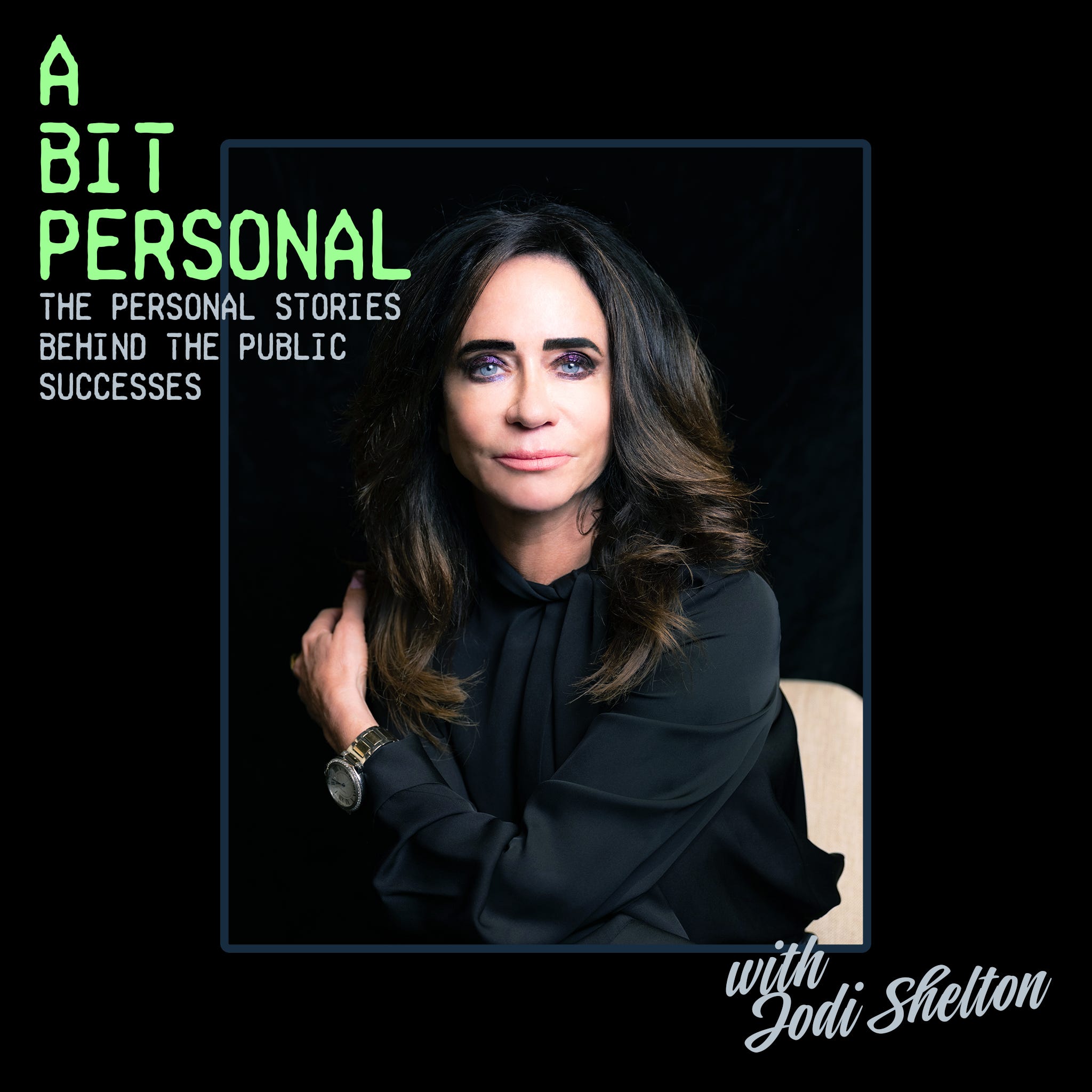

 A Bit Personal with Jodi Shelton
4 Oct 2026 · 1h 27m · 36 chapters
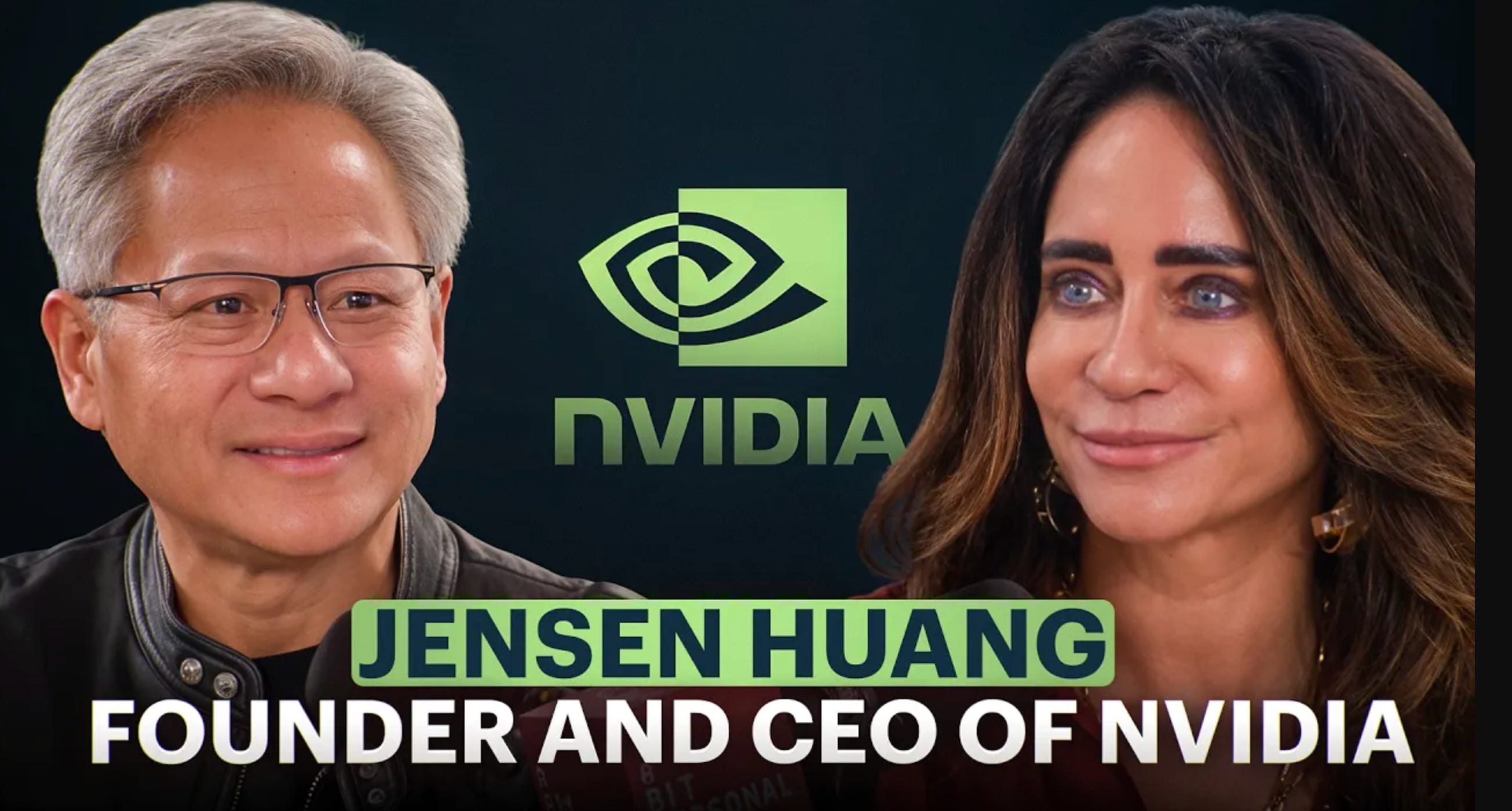
Jensen Huang (NVIDIA founder/CEO) discusses how NVIDIA’s first-principles strategy, CUDA, and deep learning “phase changes” enabled a shift from CPU/PC computing to AI-driven platforms, plus his leadership philosophy (“empty chair,” character over competence) and personal background shaping his approach. He also predicts that faster computers will make today’s hard problems feel smaller, turbocharge science, and expand opportunities via AI.
The episode is a conversation between Jensen Huang and interviewer Jody (referred to as “Jody” and “Alex” in places). No other guests appear; the “guests” are Jensen Huang and the host/interviewer.
NVIDIA’s edge is not only inventing technology (e.g., CUDA) but productizing it, shaping strategies, and building ecosystems/markets. Self-supervised learning removed a human-label bottleneck, unleashing scaling laws. Leadership is institutional (CEO as board-reported employee, not “church/prison”). Hiring should keep chairs open until the right person; “corporate character” is the differentiator.
CUDA presentations to tiny university/startup audiences; pivot after AlexNet; learning “languages” of proteins/cells/quantum; “NVIDIA law time” being ~1000x faster than Moore’s-law-era cycles; interviewing 22 CFO candidates before hiring Colette (implied Colette Kress). Personal examples include childhood hardship in Kentucky (hanging bridge, bullying) and family integration with work (spouse Lori reading everything, kids attending events).
Written by AI. May contain mistakes.
Jensen Huang discusses the early days of NVIDIA and its mission to reinvent computing.
“So let's find out what your values are, your personal story behind your public success.”
Huang reflects on the importance of foresight in technology and business.
“Well, you know, in order to create the future, you have to live in the future long before it happens.”
Discussion on advances in learning technologies and their impact on industry.
“And so I think in a lot of ways, I've been living in this future for a long time.”
Huang elaborates on how NVIDIA is addressing complex problems with advanced AI.
“We knew that AlexNet couldn't have been the end of it and that the architecture is something that's quite scalable.”
Huang shares insights on confidence, belief, and the importance of first principles.
“So the kind of confidence that it takes to do what you did, to be able to see into the future and be absolutely confident that it's going to happen.”
Discussion on the role of a CEO and the importance of accountability in leadership.
“and therefore if you believe this, then so what?”
Jensen Huang discusses the mindset required for effective leadership.
“board members who are however size the board is, the CEO is let go.”
Huang reflects on his growth and learning as a CEO over 33 years.
“I didn't know the sensibility of employees and how to create a culture and what does it even mean to say culture.”
Huang explains NVIDIA's management structure and its impact on leadership.
“And I care about it as if it's one of my children.”
Huang shares his approach to hiring and finding the right people for NVIDIA.
“And it also speaks to our resilience like no other company will have.”
Huang emphasizes the importance of corporate character during challenges.
“That applies to all 60 of the NVIDIA direct reports.”
Huang discusses the culture of tolerance and learning from mistakes at NVIDIA.
“how teams come together during adversity.”
Huang believes in developing character and greatness in employees through their experiences.
“and so long as maybe a couple of things that's really super important to me, so long as the teammates gave everything of themselves, that's good enough for me.”
Jensen Huang discusses the qualities he looks for in team members and how he fosters greatness within them.
“not lose the person and the company not giving up on you simultaneously.”
Jensen reflects on the sacrifices made for NVIDIA and how his family's support played a crucial role.
“So you talk a lot about pain and suffering as kind of building blocks of NVIDIA.”
Exploring Jensen's approach to leadership and the importance of being present and supportive.
“I think that integration of family life and work life, it works for some people.”
Discussion on the value of experience over youthful energy in achieving success and wisdom.
“I want your show to be great, not for me, but for you.”
Jensen begins to share how his childhood experiences shaped his character and career.
Jensen Huang discusses the advantage of wisdom and experience over youthful speed.
“But there's something that's just really that I feel I have today that I really didn't have in my 30s.”
Jensen shares the highlights and lowlights of his childhood and their impact on his character.
“So tell me about a little bit about kind of the highlights and lowlights of your childhood that you think impacted, that you can specifically trace to impact some characteristic that you have now.”
Jensen recounts how his mother taught him English despite her own limited knowledge.
“but it didn't stop her from every single day teaching us English.”
Jensen reflects on his challenging experiences as a child in Kentucky, including cultural differences.
“And Oneida Baptist Institute is on top of a hill.”
Discussion about Jensen's family and their pride in his achievements.
“They made Kentucky sausage and gravy and biscuits.”
Jensen talks about his passion for cars and his memories of owning a Koenigsegg.
“So, you know, you were maybe the mundane things.”
Jensen shares his vision for the future of AI and its potential impact on various fields.
“What's the world look like in five years from now?”
Discussion on how advancements in AI will lead to more problem-solving opportunities.
“result, we're going to solve more problems.”
Discover how AI is opening new avenues for problem-solving and creativity.
“that we dream up looks more tenable, then we're going to come up with more problems to solve.”
Explore the evolving job landscape as AI transforms industries and creates new opportunities.
“And so I think that in the future, and the AIs that I use now with OpenAI and Gemini and Grok, And, you know, I use perplexity and anthropic.”
Learn about the potential of robotics to enhance everyday life and companionship.
“Hopefully, the GDP actually grows because of the short, you know, overcoming the shortage, the labor shortage that we have.”
Hear Jensen Huang's thoughts on his legacy and the impact of NVIDIA on the world.
“And so Momo and Kuma needs their own version of pets.”
Gain insights into the importance of collaboration and vulnerability in leadership.
“Well, I think it's always fun when the good guys win.”
CEOs often feel lonely and vulnerable, relying on others for help.
“You know, that was in somebody else's name.”
Jensen Huang answers rapid-fire questions about intelligence and misconceptions.
“Okay, so I'm about to wear out my welcome, I think.”
Jensen explores favorite vacation spots and the bliss of ignorance.
“And the reason for that is because I have very, very long memories of Japan and how important it was to saving our company and the early business trips that I've been there.”
Exploring how ignorance can be a superpower in pursuing new adventures.
“We had the opportunity to do that way more than people do today.”
Jensen Huang discusses the lack of an end game and the importance of staying in business.
“People ask me, Jensen, what's your plan?”

Get the gist, explore an idea or ask about something said.
 Claude
On A Bit Personal with Jodi Shelton, what are the key points of this episode?
Searching your listeningAutomatic transcript. May contain errors.
0:08Jodi Shelton: It's nice to be here. Thanks. Welcome to the inaugural podcast for A Bit Personal. The inaugural? Yeah, the inaugural. You're the first one. The first? You were the first that I asked and you said yes in one second. Oh, dear. So you regret you said yes? Well, I didn't realize it was going to be A Bit Personal. Yeah. Yeah, we're going to go deep. Okay, well, just keep it nice and shallow. You like that better. Anyway, so the concept of the podcast is that the general public is really very interested in people like you that are determining the future of technology, which is the future of their world, right?
0:47Jodi Shelton: So let's find out what your values are, your personal story behind your public success. You like that concept? No, not really. Yeah? Not really, but I'll go on. Celebrity. People want to know about celebrities. I don't see myself as a celebrity. And I'm not a celebrity. I just happen to run a very important company. And I'm the CEO of one of the most successful technology companies in history. We made some good decisions a long time ago. In 1993, we wanted to reinvent computing. And we had a perspective about how computers ought to be built. and it was a not very popular view for a very long time, and it was rather controversial in fact.
1:35And everybody thought that microprocessors and CPUs, and this is the time you and I met.
1:41Jodi Shelton: Yes. You know, most people don't realize, I mean the audience probably don't realize, that you and I met 1994, probably 1993 late, you know, that kind of stuff. And so NVIDIA was trying to do then what we're trying to do now, reinvent computing and and at the time in Silicon Valley as you know it was during the era of CPUs and Moore's law and the PC revolution and in fact all of your early customers right we're all PC chipset startups they they were the formation of the fabulous semiconductor industry Sirius Logic s3 Western Digital Trident remember all those companies yes those those were the the forefathers of of NVIDIA, and here we are.
2:32We're trying to create a new computing approach, and it took 33 years for this to happen. But I just happened to be the CEO of that company, that's all.
2:43Jodi Shelton: And it happened really, maybe not for you, but for the world, it happened very suddenly. It was basically November of 2023. The whole world changed. So how was that transition? Well, you know, in order to create the future, you have to live in the future long before it happens. And to be honest, when we first started CUDA, we invented the technology. The thing that I'm really proud about NVIDIA is we're great at inventing technology, but then inventing products to carry the technology to market. You know, there are countless companies and researchers and inventors who have created technology, and they're the people that say things like, oh, I did that before, or I thought of that, or I invented that.
3:41And so anyways, it always kills me that all these great inventors didn't also have the benefit of having great product inventors. These are the innovators that take these inventions that then invent products to take it to market. But then you also have to invent strategies to take it to market. And then you have to invent, in fact, even the market. You have to shape the market to receive your products that you invented and the strategies that you developed. And NVIDIA was really built to be a company that can invent technology, invent products, invent strategies, and invent ecosystems and markets.
4:23And we've done that repeatedly. And so I think in a lot of ways, I've been living in this future for a long time. There was a strategy a long time ago. We don't do it as much anymore, but it was called CUDA Everywhere. And people tell stories of me schlepping CUDA to universities and startup companies and established companies. I schlep CUDA everywhere. And sometimes there'll be an audience of literally three people. And I would pull out my, and back then, I'd pull out my laptop and present CUDA and tell them about why this is going to change the world. And I visited researchers and laboratories and went to conferences.
5:08You know, I put on more coup de miles than any human in the world. And so for a long time I've been living in this future. You tell the story long enough, you kind of feel like it's happened. And so I think all of this is still a great, great delight. and in my mind it's not surprising because the first principles that we built the company on are fundamental principles. They're not based on a hunch or it's not based on a taste or it's on fundamental principles of computer science. And so what is happening now is in a lot of ways inevitable. The thing that I would say, though, is that by making something go incredibly fast, if you would make something go a thousand times faster or a thousand times larger or a thousand times smaller, whatever that is, some phase change happens.
6:13And that phase change and the result of that, the state that it results in is surprising. Okay. And so I think in a lot of ways, we knew that deep learning could be a lot larger, which is the reason why we pivoted the whole company behind it. We knew that AlexNet couldn't have been the end of it and that the architecture is something that's quite scalable. And the amount of data in the world is abundant. And so that was a natural resource we felt that was achievable. The one technology that I knew was going to be an obstacle to us was unsupervised learning or self-supervised learning. that the computer could learn by itself without human labeling because humans would be the bottleneck.
7:00And when that happened, I knew we were off to the races. And people still, I was just on an investor roadshow, and people would tell me that I told them right around that time that there was a phase change. And if you go back and listen to my earnings call, when I jump into a topic that's really important for the world, I emphasized it really, really clearly. And I talked about it on every single Investor Roadshow and everywhere I go, I would talk about those things. And that unsupervised learning or self-supervised learning has really made a great achievement. And then the scaling laws were unleashed.
7:37And then we were, boom, off to the races. Now, the type of problems we're able to solve as a result of that is still surprising to me, because you knew the phase shift would come and you knew the platform would come, but as a result of all that, we're now learning the language of proteins, and we're learning the language of cells, and we're learning the language of quantum, and we're learning the language of all these representations of all these different things. And the language that we use to represent information in the past is now being reinvented. Everything from geometries and textures to now 3D Gaussian splats, and all of these different representation you know it's kind of like like all of a sudden we became so smart that the English language actually got changed.
8:27That we no longer use the words and vocabulary and structure and grammar that that we use because all of a sudden we became so much smarter that we we can communicate in another dimension. And so we're maybe beeping and blopping at each other you know it's you know it's kind of like that that movie Arrival you know all of a sudden we're just looking at shapes and the amount of information just looking at shapes, you know, causes us to be able to, allows us to communicate a much, much deeper way and much faster way. And so, so it's incredible that we're, we're not only solving problems that are completely unimaginable before and, and we're doing it at a speed now.
9:09What used to be Moore's law time, you know, NVIDIA's time, NVIDIA law time is completely, I mean, it's a thousand times faster. And so the next 10 years is going to be extraordinary. That I think is, that's exciting.
9:23Jodi Shelton: So the kind of confidence that it takes to do what you did, to be able to see into the future and be absolutely confident that it's going to happen. So we, as you said earlier, we met in 1994. I've been the same since. I know. Yeah. I was in my 20s. You, maybe you're a little older than me, hopefully. I was 29 when you're 30. Okay. Yeah. So I remember our very first meeting at the headquarters in Sunnyvale, Tiros Way or something. Yeah, exactly. It's a massage parlor or something like that. Okay. Yeah. Acupuncture parlor. Yeah. That makes sense. Anyway, I was interviewing you for a magazine and I said, so Jensen, are you worried about sort of the rotating door in Silicon Valley, people coming and going because a lot of CEOs are complaining about this.
10:10Again, you're 29 or 30 years old and you were like, hmm, Jody, NVIDIA is neither a church
10:17Jodi Shelton: nor a prison. You don't have to come and you don't have to stay. And I remember being so impressed by it. I was like, who is this guy? Such confidence and such wisdom at a young age. And I remember Morris Chang has a similar story when he first met you that you immediately said, I'm going to be your biggest customer or one of your biggest customers. And he's like, wow, that's a lot of gumption. So where did that confidence come from at such an early age? Well, you know, it's rough to know everything, you know? I'm just kidding. No, by the way, Morris will be happy to know NVIDIA is TSMC's largest customer now.
10:56Jodi Shelton: Yeah, yeah. I'm sure he's very proud of you. Yeah, and I'm proud of him.
11:04We were his largest customer during the PC revolution. Okay. And now we're his largest customer again, and I'm very happy about that.
11:15You know, I say that you have to believe what you believe. And so your belief shouldn't be based on anecdotal, you know, somebody said something, therefore you believe it. You have to reason through for what reason do you believe this and break down your reasoning into sound first principles. And then you have to check it on a regular basis that these principles that you're building everything that you believe in and are doing are sound, that the foundation is sound. And if it's not sound, if it changed for some reason, it wasn't a first principles, maybe it wasn't defined by anchored in physics or anchored in ground truth or something like that.
12:03If that changes, then you reevaluate and you move on. And so I've always lived in that way. And so if you believe in something, you owe it to yourself to do something about it. And I believed in what we're doing. I believed it in 1993. I believe it today. and therefore if you believe this, then so what? And just keep reasoning through it. And then, you know, I'm doing that reasoning exercise in my head continuously. I'm constantly, you know, reevaluating, constantly extrapolating, constantly reevaluating the past. And that's, you know, if you're having meetings with me, and yesterday we're having meetings, in so many different meetings, I would reason through the past again.
12:56And this is how we got here. And notice all of those assumptions were right, but some of those assumptions were in fact wrong. And as it led to this moment, we were agile and we readjusted. But it's always good to go back in time and reevaluate and re-reason through that. It teaches you how to reason forward. And so because I've always done that,
13:23you know, I just live in that truth. And to this day, I still believe that I still feel like I'm an employee of this company. And I care about this company a lot, but there are a lot of employees that care about this company a lot. the CEO was always designed to be in a well-governing, well-governed company. The CEO was always designed to report to the board of directors, and the board directors report to shareholders. And if the CEO doesn't do his job, you know, according to 12, 13, 15 board members who are however size the board is, the CEO is let go. And so therefore, it's an employment in an institution.
14:19And it's not like a church because not everybody gets to come. And it's not like a prison because not everybody has to stay. And so that state of mind keeps you grounded. It keeps you humble. It keeps you fresh. You're always earning your job. And sometimes people ask me, Jensen, do you love your job? I don't love my job every day, but I do it to my mightiest every day. And I think that that comes from that whole package of recognizing that one I'm the best person for the job I believe that and two I have to earn being the best person for that job every day so I mean
15:14Jodi Shelton: you have been you are Nvidia and Nvidia is you I mean that's you've become that I'm the most frequently taken picture of the people of Nvidia yeah but whoever is the next CEO of this company is going to be there is can there really be a next CEO of this company? Well there will never be one like me and and and the reason for that is because because I was raised by the company you know when I first started started in video I didn't know anything about being CEO or a strategist or or product maker or you know industry creator or you know I I didn't know how to do any of that I know how to raise money I didn't know how to talk to shareholders, understand the sensibility of shareholders and policymakers and you know country leaders and company leaders.
16:04I didn't know any of that. I didn't know the sensibility of employees and how to create a culture and what does it even mean to say culture. I couldn't formulate a company strategy if I tried and so that was day one and in that 30 in this 33 years, I've become better at all of that. And, you know, if there's ever a Yoda of company strategies, you know, and industry creators, you know, probably looks, you know, a short little guy like me. And so I think the, I've dedicated my career learning these things, and I'm a good student. And I also bring to the job a level of intensity and deep care that is harder to hire into.
16:55You know, in a lot of ways, you know, NVIDIA is one of my children. And I care about it as if it's one of my children. And my children even help me, you know, raise those children. it. And so in a lot of ways, I feel about it that that is hard to replace, that that is true. But that's because I've been doing it for 33 years. And I've seen every aspect of it, its successes and failures and setbacks and things that it did, you know, smart and dumb and stupid. And, you know, I've seen all that. And so I have a feeling about this company that you can't easily replace by hiring somebody who's just good at doing something.
17:45And so I get that. On the other hand, the way that the NVIDIA management team is set up, I've got almost 60 direct reports. And there are 60 people who could be world-class CEOs for many other companies. And I reason in front of them constantly, I mean, literally all the time. and every single decision I made, I've made in front of them. I've reasoned through it in front of them. I've spoken about successes and setbacks and challenges and adversity all in front of them. And so in a lot of ways, NVIDIA has 61 CEOs.
18:30And they care deeply about this company. Many of them have been here for a long time, 33 years in some cases. And so I think NVIDIA has just been built like no other company ever has been built. And it also speaks to our resilience like no other company will have.
18:51Jodi Shelton: So obviously that kind of structure that you have is very legendary in the industry now. Everybody talks about it, these nearly 60 reports. So in order for that to work, those people have to be exceptional. Yeah. Okay. And not just brilliant, because there's a lot of brilliant people in Silicon Valley. They have to be exceptional specifically for NVIDIA. Yeah. So tell me a little bit about how you curate those people. And then secondly, there's been many times that you didn't hire in a position until you found the right person. And I'm thinking specifically of Colette. You interviewed 22 CFOs before you hired her.
19:26Jodi Shelton: And now she's a legend in her own right on Wall Street. So maybe how did you choose her and how do you curate those types of people? What do you look for?
19:41An empty chair is better than a chair filled with the wrong person. And so I'm never in a hurry.
19:53The company will keep moving on. And whether it's a missing CEO or missing VP of anything, the company will keep moving on. And so you just have to have the confidence of what I just said. If you can convince yourself of what I just said, that these two ideas, the empty chair and the company is going to keep moving on, then it buys you enormous amounts of time until you find somebody that is a combination of a lot of things including you just like them you know Colette on his on her first week I think she asked me you know Jensen how long do you want me to be your CFO and I said for as long as we shall live and death do us part yeah yeah because the alternative doesn't make sense any other answer is the wrong answer.
20:51For what reason is there an end date? And the end date is when she decides NVIDIA is no longer right for her. That applies to Colette. That applies to all 60 of the NVIDIA direct reports. And I keep chairs open for a long time. And the company just keeps on carrying on. And people swarm the mission. Whatever the mission is, whatever the job that needs to be done, people will swarm it anyways. And worst case, I'll do my best and just carry on. And so that's just a philosophy. Don't ever fill a chair with the wrong person. Wait until the right person comes along. And that right person, I'm asked all the time, what makes a great what makes a great employee, what makes a great leader.
21:45Surprisingly, I don't have the answer. And the reason for that is this. They're all smart. They're all competent. You find me a CFO somewhere, and I promise you they're competent. And they're competent enough. and so so that you hire you find me a you find me a whole bunch of functions you find me a ceo and i'm i work with ceos all over the world and they are all competent let's just be clear about that right and and many of them when i'm working with them i was like gosh you know you're super competent and super smart. It's all completely true. And yet, in the end, what makes the magic of NVIDIA is a combination of the chemistry of the people that are together.
22:42But mostly, I would tell you that it's just corporate character. And that character comes from somewhere. That's what defines great companies. Somehow, there are a lot of companies building chips. We invented the GPU, but from a volume perspective, we're the smallest GPU company in the world. I know that sounds weird, but we are. Everybody makes more GPUs than I do. It's like some random person makes more GPUs than we do. And so clearly, it's not that. And so I think somehow there's a magic in the corporate culture, the corporate character,
23:37how teams come together during adversity. I mean, people see us just kind of strolling through life, but getting Grace Blackwell into production almost broke our company's back, but we wouldn't let it. It is just extraordinarily complicated and incredibly large scale, and the expectations were incredible. And for us to live up to it and exceed it with it almost breaking our back, that that's a hundred percent character right that's not intelligence that's not hard work um there are a lot of people that work hard there are a lot of people that are super smart that is 100 character and where that comes from um you you just you you can't interview that into existence you know and the thing that that i believe is this.
24:37I actually kind of believe that you can bring almost any buddy into Nvidia and we will instill character into you. And that I think is the magic of our company that that somehow we could we could suffer pain and we can endure incredible challenges and come out of the other side. And we could do it over and over and over again. And very few companies can do that as a team. Usually somebody gets left behind. You know, usually what happens is you go through one of these incredible challenges and then somebody leaves because of a bad feeling or because they were blamed and they were fired or they somehow felt, by the way, it's always somebody's fault.
25:35Let's be clear about building companies and teams. At the end of the game, we lost as a team. But there's no question who dropped the pass. And so we have to be clear about that. And we are clear about that. And because we have such a safe environment, all the people who dropped passes in the past, including myself, and I've dropped plenty of passes, and the passes I drop, everybody's watching. Nobody's been fired for dropping passes. And so this company has developed a culture, a personality, a lot of it reflecting our own, that tolerance and forgiveness and learning from mistakes. and so long as maybe a couple of things that's really super important to me, so long as the teammates gave everything of themselves, that's good enough for me.
26:40Jodi Shelton: So is that, I mean, you have a reputation for really not liking to fire people and hopefully no one likes to fire people, but so that's your theory that you have to make these people better or your team has to make them better? Yeah, like the company made me better.
26:57I wasn't then what I am today. And what I know today, no volume encyclopedia could hold it. And if somebody were to ask me what did I learn at NVIDIA and write a book, I wouldn't even know where to start. you know and just and so so this company gave me the chance to become what i am and this company also gave the entire management team the opportunity to become what they are and i gotta tell you 100 of those 60 people are different today than they were when they started i can tell you they're great today we were fine in the beginning we're good in the beginning like anybody else. And so the company tortured greatness out of us.
27:51And the company forged incredible character into us. That's the magic of this company, that you could do that, not lose the person and the company not giving up on you simultaneously. That's our greatness, I think. And can you hire people into that? Yes, I believe so. And I've proven repeatedly that we've done that. And the people that come in, they're good. And I see them and I'm good and they're good. So long as I enjoy working with them, they can't be a jerk. And so long as they can't be self-serving, they can't be, you know, I can't work with people that can't answer simple questions. That's my trigger.
28:42To the extent that they really want to be part of the team, they can be transparent, they can be vulnerable, and they can learn. They don't have to know it all, you know, they just have to learn it all, you know, and to the extent that all of that is true, So we'll forge greatness into them.
29:03Jodi Shelton: This episode is brought to you by GSME. GSME is a leading global provider of tailored silicon solutions dedicated to empowering semiconductor and system companies with cutting-edge technology and unparalleled expertise, founded in 2022 by Farhat Jahangir. Its comprehensive range of services include end-to-end chip design, full turnkey manufacturing capabilities, rigorous quality assurance, and strategic incubation to help its partners bring innovative products to market. At GSME, they are committed to transforming semiconductor manufacturing landscape by optimizing processes, accelerating product development cycles, and ensuring faster time to market for next generation applications.
29:48Jodi Shelton: GSME gives full visibility of the supply chain to its customers. Now, back to the episode. So you talk a lot about pain and suffering as kind of building blocks of NVIDIA. That's our secret sauce. Yeah. And you've said before that. Yeah. Come work with me. That's my gift. It's very attractive. Yeah, exactly. Yeah. So what do you think about, I mean, if you're, if it's true, right? It's so interesting. It's, you know, when people, when people ask, you know, why, why come work at NVIDIA? Pain and suffering is a big part of it. Right. Was there ever any sort of sacrifice that you made that was too big for what you accomplished at NVIDIA?
30:31No.
30:33Jodi Shelton: Everything was worth it. You have to do it right. I think I was fortunate. In my case, I was fortunate because Lori Madison Spencer were kind of, you know, grew up with the company. And I was fortunate that Lori always had a great interest in the company. And she didn't meddle, but she knew everything about the company. She just dedicated herself to read everything, learn everything, and always be there. And she's never missed an event. She's never even missed one of our campy little shareholder meetings back in the old days when we did it live.
31:27And her interest and dedication to supporting the company and me rubbed off on the kids. and the kids read everything, watched everything, came to everything. They probably listened to more bad speeches of mine than any human ever.
31:47Jodi Shelton: The pain and suffering. The pain and suffering of that. And so I was fortunate that they had the interest in the company and loved the company the way I loved the company. And so my sacrifices for the company, probably for that reason, didn't translate directly into a sacrifice for them. I missed most of the karate tournaments, and I missed most of their practices. Most is too generous for me, but I would say nearly all. and so and back in the old days we didn't have smartphones and so the the definition of going to work means going to work and it meant missing every dinner it meant missing every weekend and so you know that's what we did and so I was fortunate that that you know our family chemistry made it possible for them to not feel alienated.
32:54They felt part of it the whole time.
32:56Jodi Shelton: I think that integration of family life and work life, it works for some people. It worked for me too. My youngest went to meet Morris Chang when he was four months old. So they've known this industry and been around it for the whole time too. And which one did I meet? You met Elijah. Elijah, right. And then my youngest is Hudson. Okay. Okay. Yeah. Yeah. Yeah. He interviewed you. That's right. Yeah. He was terrific. Yeah. What's he doing now? He works at Ferrari. Wow. No way. Very cool. No way. Okay. Well, I know who to call to get the first EV. Yeah. Exactly. Yeah. Yeah. Yeah. And then the youngest is going to be a filmmaker.
33:36Jodi Shelton: So he's at NYU Film School. Is that right? Yeah. Wow. Okay. Well, one of these days when they make a documentary of you, I guess. Yeah. Exactly. Yeah. Exactly. One of the, I think, one of your best characteristics or skill, because you could say it's either, is that although you're for sure the hardest working billionaire in the world, maybe Elon would argue with that, but when you're with someone, you're all in. They have your undivided attention. It's as if you have nothing better to do than sit down and talk to me. And you make people feel special. That's a rare gift. So tell me a little bit about that intentionality and what others can learn from it, because I think it's one of the most important gifts.
34:22Jodi Shelton: Or again, skills. I'm not sure which it is. I appreciate that. I think it's humility and respect. You know, I think the, I love watching people cook. I don't know about you, but I love watching people cook. I love watching people do gardening. I love watching people do things they love and that they're good at. When we go to restaurants, I always prefer to sit at the bar so I'm closer to the kitchen. I love watching people do their work. Because, you know, I respect their artistry. I respect their craft. I respect, I'm inspired by them dedicating themselves to the work that they do. And you're always learning something.
35:20You come out of that moment and you're slightly enriched by something you learned or greatly enriched by a new thought. or, you know, and so I think from that perspective. Another perspective is I always want to help. I want your show to be great, not for me, but for you.
35:47Jodi Shelton: Thank you. And I want your work to be great. And when somebody comes to me to ask me for help, I want them to succeed. If a CEO calls me, and these days I have a lot of CEOs who call me to ask for partnership or I want them to succeed, not for my benefit, for his benefit, for their benefit. And I always enjoyed meeting Julie Sweet. I want her to succeed. She's a fantastic CEO. I want her to succeed. Accenture, right. Yeah. And so the list goes on. You know, I want, I love watching people, other people succeed. And, and I love that I was able to help a little bit.
36:34And I'm not sure where that comes from, but it's a combination of these two things. You know, I'm here because I want to, I want you to be able to get the most out of your opportunity. I want you to be able to launch this inaugural, you know, a little bit too personal. Is that what you call it?
36:58Jodi Shelton: Yeah, a bit personal. Okay, a little bit too personal. That's my new title for you, a little bit too personal. We'll change it. You know, I bet a little bit too personal is probably catchier. Yeah. Yeah. We'll go rebrand everything. It came from Jensen. Anyhow, I think that's the reason why. So, you know, this philosophy of pain and suffering, we'll talk about it a little bit more. So I recently heard Andy Karp on a podcast. And I don't wear a watch. Yeah. And as you know, everybody at NVIDIA is told when I'm doing something, you know, don't bother me. Okay. Everything else can wait. We'll be here till lunch.
37:40Jodi Shelton: If that's what it takes. If that's what it takes. So Andy Karp said that you can either enjoy your 20s or you can be successful. Do you believe that philosophy? I mean, is it really that a person has to, I mean, you know, not everybody is going to be the CEO of Palantir or the CEO of NVIDIA. But what does it take for a young person? What is the message to young people about their career and their success? Yeah. Yeah. Gosh, Alex is so smart, and he's got all kinds of very deep philosophies. And I guess I'm kind of low-key about all that stuff. You know, I personally think it's pretty incredible that Morris worked until his 80s.
38:32he's still sharp as a knife and and that you know if there's a definition of a late bloomer you know look up late bloomer in wikipedia it's probably going to be you know picture of morse and so how is that a bad thing that you get to you get to enjoy the the most productive times of your life and you get to do it for 50 years, you know? And, and, and if that's the case, and I'm kind of of that same cut, same cut. I mean, I, I would really love that I'm doing something productive rather than, you know, the cliche and things, you know, I'm going to go travel the world for the rest of 20, 20 years of my life.
39:21And, or, or, which is fine, you know, which is fine I mean but I'm traveling the world now and and I I also think that that during our 20s I will have to agree that in my 20s I feel smarter I can concentrate with greater intensity I think faster and but but the thing that that I would say is completely missed is all of the ability to be wiser, to be more nuanced, to be more strategic, to think longer term.
40:04I think all of that is missed in the 20s. And I don't know how you learn those things by not living those things. You could always repeat those things by reading it. And you could always, you know, these days you could always watch YouTube and be sufficiently empathetic, you could kind of, you know, feel what other people are going through. So you could maybe live their life, you know, live their life through them, live your life through them and somehow gain that wisdom by watching. So imitation learning is a real thing. And so I think that that's terrific. But there's the grit that comes along with enduring the knowledge of how to deal with pain and suffering, the feelings of it.
41:02Not the physical feelings, but the emotional toil and going through the agony part of it, the fear part of it. And there are real fears. I mean, you know, fear is a real thing in running companies. We have the lives of tens of thousands of people in the decisions we make. When things are not going well, to not feel fear, to not feel anxiety, to not feel vulnerability, you know makes you in fact a bad leader to be so crass that that you don't even care that how things are going to turn out and so I don't know how you've how you learn those things without actually going through it and and so I I I guess I see it both ways if you if you succeed early your energy is abundant you know you could stay up later pull all-nighters and You could work 10 times harder.
42:07But there's something that's just really that I feel I have today that I really didn't have in my 30s. And as a result, even though I'm not thinking as fast as I used to, I come to the right answers faster. Because I have the benefit of wisdom and patterns and better strategy thinking. And so, you know, I'll go toe to toe with a 20 year old all day long. I believe that. Yeah, yeah. They got nothing on me.
42:39Jodi Shelton: So let's get a little bit too personal. Okay. Okay. So tell me about a little bit about kind of the highlights and lowlights of your childhood that you think impacted, that you can specifically trace to impact some characteristic that you have now. Maybe just kind of walk us through coming from Taiwan to the U.S. and that ordeal or that experience, the journey.
43:10I don't think I'm extraordinarily or spectacularly intelligent. I don't think I'm an outlier. When I was a kid, and during that time, even entering schools, you have to take tests. And apparently, I did very, very well in the test. And back then, you have to do national tests and things like that. And I did very well in the test. And I kind of remember my mom always just telling everybody, telling me that you're incredibly smart. and whether that was actually true or not, the fact that my mom kept saying it over and over again probably was helpful and it kind of put a burden on me to need to be smart.
44:02And so maybe that's one of those things about parenting and leadership, that when you set expectations that are beyond reason on some people and on your company, in a lot of ways, they rise to it.
44:25And you can also imagine people cowering from it. But in my case, it just didn't do that. It helped me rise to it. That wasn't important. It comes to mind. I guess. Another one, another one I would say is just witnessing, witnessing someone do something. You know, we were learning how to speak English and my mom didn't even know how to speak English, but it didn't stop her from every single day teaching us English. I mean, how is it possible that somebody who has no clue of English be teaching us English? And my mom didn't even graduated from high school I don't think. And so she just bought a Webster's Dictionary and wrote the English word.
45:17She learned how just by looking at the patterns, wrote the word and wrote the Chinese translation, folded a piece of paper in half and then made us memorize all these words. and um i don't know if we're pronouncing it right and but anyhow that that that taught me something about about someone with with uh incredible will that even if you don't know how to do something
45:47Jodi Shelton: it shouldn't stop you you know how hard can it be right and and so um i remember that when i was a kid. I remembered going to Kentucky in my job. I was the youngest kid in school. And Oneida Baptist Institute is on top of a hill. And every day I had to walk down this hill and cross a river and then cross a really large field. And then there's a little school there. And that's where I'd go. And along the way, you know, kids would, you know, because I was the first Chinese kid ever show up in Kentucky. It was 1973. And so the town kids were kind of rough. And they were rough on me when I crossed that bridge.
46:47And the hanging bridge had wooden planks. And the water's way down there. And I got across, and some of the planks were missing.
46:59And they'd be on the other side waiting for me. You know? And I'm nine years old. Wow. And I did that every day.
47:13Jodi Shelton: Pain and suffering. You know? You're nine years old. Here's a river. Here's a hanging bridge. Wow. Wooden planks. Some of them are missing. on the other side, that's the worst news. You live to make it across the board. That's when you're in trouble. Right. Yeah. But I did that every day, every morning. And then in the afternoons, I come home, and my job was to clean the bathrooms. You know, every kid had a job. My older brother, he was 11. His job was to work in the tobacco farm. and that was my job, cleaning the bathrooms. And I did that every day. Do you think any of those people know where you are now?
47:59The president of Bonita Baptist Institute just sent me an email. They send me Christmas present every year. And they send me, they know I love sausage and gravy and biscuits.
48:10Jodi Shelton: You learned that in Kentucky. Oh, yeah. Yeah, yeah. Oh, my gosh. And when I went back, I think it was my 45th birthday or something like that. My family took me back there. And the cafeteria ladies that cooked when I was there, they're still alive and they came back to cook a meal for me. Wow. Yeah. That's incredible. It was incredible. Yeah. They made Kentucky sausage and gravy and biscuits. It was delicious. So did your parents get to see your success? Yeah, yeah. They're still around. They're great. Oh, good. Yeah, yeah. They're so proud of you. They are. Yeah, they are. Okay. Yeah. They know every detail.
48:53My dad reads everything.
48:54Jodi Shelton: Okay. He reads everything, and everybody who says things that are somewhat derogatory or adversarial towards me, he gets mad. And so I tell him, don't read everything. You're going to be mad all the time. Don't read the bad press. Yeah, you're going to be mad all the time. That's cute. Yeah. So what do you miss about sort of life before all this ginsanity? So, you know, you were maybe the mundane things. You're a car guy. You don't even get to drive anymore. No. You were the first and only person that I've ever known that owned a Koenigsegg. A Koenigsegg. Koenigsegg. Yeah. Christian's an amazing architect.
49:36He's an amazing designer. That's a great car.
49:38Jodi Shelton: Yeah. You still have it. When you turn it on, it sounds exactly like a Batmobile. Wow. Yeah, and it's like a seven-step process to turn it on because it's that powerful. You can't just let anybody turn on. Wow. Yeah. I don't have it anymore. I don't drive anymore. Right. You miss that? Yeah, a little bit, yeah. Yeah, it's kind of cool. I mean, I still look at the cars, you know, the new Ferraris, and I still enjoy looking at them. I think they're pretty terrific. Yeah. Yeah, great feats of engineering. They really are. It's amazing. I've been to the Ferrari factory and it's amazing to watch. And to learn that what started out as an industrial instrument, equipment, then evolved into, you know, our largest consumer consumption.
50:31And then now many of these are pieces of art, you know.
50:36Jodi Shelton: They are. Yeah, they're incredible. Yeah, so it's great to see that. This episode is brought to you by Maverick Silicon. So if we're sitting here five years from now, podcast is hugely successful because of this inaugural podcast. What's the world look like in five years from now? And what's going to surprise us the most about what the world looks like?
51:03So if we go back to the first principles, and then we gauge it with pragmatism and practicality. And then all the sensibilities about adoption of technology and the impact of technology. There's several things that I would say. I think, first of all, the work that we're involved in and what NVIDIA's work in and artificial intelligence and the rest of industries work in this area. There's no question that the computer will completely transform from something that we
51:48program to something that programs itself with a great deal of guidance from us. And so we still have to tell it, you know, what do we want you to go learn? And so in the past, we would teach a computer Japanese. But in the future, we would tell the computer to go learn Japanese. And so now the way that we use computers will be transformed, of course. The computer will be able to deal with problem sizes that are a billion times larger than anything we're working on today. And so in a way, we can't even comprehend what that means because coming up with a solution is one thing. Even formulating a problem in our head to go solve is a completely different thing.
52:37And many problems, many solvable problems are limited by our own imagination about how to formulate the problem and how to think about the problem. And so the size of the problem that we can engage, whether it's the complexities of digital biology or the complexities of physical sciences or quantum physics or, you know, all of the things that are material sciences, that's going to be easy. All of the type of things, you know, even mundane things like traffic jams, a lot of these things are going to be largely easy. Smart grids, there's so much waste in the grid, you know, artificial intelligence will will go figure out how to deploy energy, just enough energy, and instead of over-provisioning energy where you've got a lot of energy that's wasted.
53:25So the idea of AI being able to solve those, what is largely mundane problems, is going to be quite incredible. And so every field of science will be affected, will be affected, every hard problem today They will be turbocharged. And when the tool, when the instrument, when the tool is way, way faster, then the problem looks way smaller. And so let me give you an example. If an airplane were to travel Mach 10, then obviously the world becomes a smaller place. And because of jet planes, we made the world smaller. The world used to be a lot bigger. And so it's the same thing with the computers NVIDIA makes because of what we make is so much faster.
54:13We made every problem smaller to the point where one day researchers at OpenAI said, hey, why don't we just take all of the Internet data and just give it to this computer? Because all of a sudden, all of the world's Internet data looks so small. These days, when we look at all of the world's Internet data, it looks tiny to us because the computers have become so fast. and that that attitude will pervade almost every field of science you know back in the old days everybody goes wow this is a really hard problem now it's going to look really simple and and so in five years time that is going to be the state of mind of every scientist engineer entrepreneur innovator all of those hard problems now just look really simple and so as a result, we're going to solve more problems.
55:04So that's one outcome. Another outcome, of course, is that companies will be incredibly productive. What are hard problems today are going to be simple problems tomorrow. And so managing our supply chain will be way easier, so we have hardly any waste. Designing our computers are going to be way easier. And so we can try more examples. Not that we'll release more computers than we are today. We do it once a year. But we'll try more iterations of these examples of computers so that the one that we release every year is so much better.
55:44Let's see. That's one. And so our company will be more productive. We'll make more profit. Every company will be more profitable.
55:52Jodi Shelton: We'll all be richer. Yeah, we'll be more profitable. One of the manifestations of it though, as I connect these two ideas, is if every problem that we dream up looks more tenable, then we're going to come up with more problems to solve. And so instead of having fewer jobs, I actually feel what's likely to happen is that we're going to be busier than ever. And the reason for that is because we're going to think of more and more ideas of things that we can solve now that we didn't used to be able to solve. All those things that were off the table are now on the table. And all of the experiments we, it was too expensive to try.
56:38They're all, every experiment should be tried. And, or the AI is going to help us go try those experiments. And so to the extent that we have imagination and we have a lot of problems that we were deferring or we couldn't solve before, I think they're all going to be on the table. One thought experiment is imagining. So today, when I'm working, I'm surrounded by 60 geniuses. And they're surrounded by a few thousand geniuses. And in my case, I'm surrounded by 60 people who are all better at what they do than I am. In a lot of ways, they're basically artificial super intelligent, relative to me in their field.
57:22And yet I've got no trouble working with all of them. And so I think that in the future, and the AIs that I use now with OpenAI and Gemini and Grok, And, you know, I use perplexity and anthropic. And, you know, all of these AIs, in their way, they're already smarter than I am. And yet I've got no trouble working with them every day. And so that's number one. But what's really interesting, though, is that when I formulate problems for my team to go do, I often have the benefit of waiting the two or three or four days for them to go find the answer or formulate the answer back to me, that allows me to then go think about the next step and then thinking about the next step.
58:08Because in order for me to think through my steps, I need intermediate answers to come back. What if those answers come back basically in a second? That's the thought experiment. My day, my days would be insanely busy now because I'm now the critical path of everything. And so I've got to go, okay, now I've got the answer of that. Therefore, I've got to think about this. I've got to kick off another experiment. Now I've got the answer to that. And so I feel that we're busier today because information technology is faster today, would you say? Yes. We're getting information and knowledge and answers so fast now.
58:49It puts us in a critical path. Therefore, we're busier than ever. I have a feeling that a lot of people are going to feel that way. And then lastly, for the people that didn't benefit from the technology industry that you and I had the benefit of being part of, all of a sudden artificial intelligence closed that technology divide. One of my favorite things is just vibe coding. Anybody could be a software programmer now. And vibe coding is creating software that is better than a lot of software programmers. And so I love the work that Cursor does. I love, you know, I met the CEO of Lovable the other day, and he's a terrific guy and a startup in Sweden.
59:32And I'm really happy to see that. And so I think that AI is going to close the technology divide. And everybody who are really gifted at their craft, but maybe they don't know how to scale themselves with technology, they now have AI to help scale them. And so one of the stories that the Lovable CEO was telling me is all these companies, all these people are creating basically small businesses. And from the software that was written by Lovable, they're making$2,$3 million a year now. That's incredible.
1:00:05Jodi Shelton: It is. And so they're welcomed into the world's economy, not burdened by technology anymore because AI made that possible. And so I have a feeling that five years from now, it is likely that we're all going to be more gainfully employed, that the economy is going to be more productive. Hopefully, the GDP actually grows because of the short, you know, overcoming the shortage, the labor shortage that we have. And inflation will go down. You know, a lot more fields of sciences are being tackled. Now, of course, there's the Doomer view, the other view, which is half of the world's jobs will be lost and things like that.
1:00:52I think that it's more likely that 100 % of the world's jobs will change than 50 % of the world's jobs will be lost. And it's very likely that 100 % of people who don't have jobs today, because of AI, can make a living.
1:01:16and of course you know our technology would change a lot but that's the part that that's less interesting I think I think you know in five years time to us the computer still a computer the applications are just smarter but they look like applications and they're still software we're doing e-commerce maybe we don't go to websites anymore, but our agents do the shopping for us, but they're still buying it from Amazon and others, right? And so I think a lot of things will probably stay the same. And then maybe just one wish list is, you know, I wish that, and I hope that, not wish, but I hope that the work that we're doing with robotics and human robotics, you know, turn into something.
1:02:04and we all have our own version of R2-D2 and C-3PO's running around and they're cute and adorable. During GTC, at the end, I always have the Disney robots on stage and how adorable are they? Why shouldn't everybody have them? And I hope that Disney decides to merchandise them because they're so adorable. They're so incredible. My pets need pets, right? And so Momo and Kuma needs their own version of pets. And so I hope that that happens because there are a lot of lonely people, and I actually have been approached by several that hopes to have robots that they can interact with at home because they're living by themselves and they're getting older.
1:02:59And so there are a lot of different reasons why these robots could be quite helpful, not to mention they're just adorable. And so that's an extra bonus of all the things that we're doing.
1:03:11Jodi Shelton: Someone to cook and clean. Will you watch them cook? Will you enjoy it as much when the robots are cooking? You know, well, the answer is yes. And the reason for that is because I have all the resources today to not cook, and yet I do. Yeah. Right? And so I don't have to. I choose to. and we could be surrounded by all kinds of staff, but we're not. Lori and I are just by ourselves, and she made chili last night. It was really terrific, and she made it by herself. We'll probably continue to do all that. Our favorite moments, my single favorite moment is when the kids come over and we're all cooking and enjoying cocktail.
1:03:58That's the perfect day.
1:04:00Jodi Shelton: Great bonding in the kitchen that goes on. Yeah, that's as good as it gets. That's what we do all this for, for that moment. That's exactly right. So how do you, at the end of the day, how do you want to be remembered? It's all said and done.
1:04:23Well, first of all, it's nice to be remembered. And I'm fortunate that because of what NVIDIA has done and what we've built and the impact that we have in the single most important technology industry in the world, the most important instrument of humanity, computers, that NVIDIA will likely, long beyond me, be important to the world. And I was fortunate to have been a founder with Chris and Curtis. I was fortunate to have stayed on top of the pile and continue to learn and not be the reason the company went out of business, but oftentimes the reason the company stayed in business.
1:05:30that I built something that is quite consequential to the world, that it wasn't just consequential to an industry or to a community, but a company that's really genuinely consequential to the world. Not many people in the world get to say that.
1:05:49Jodi Shelton: Right. You know, that I was the founder and I'm here enjoying this and doing this, that the company turned out to have been what it was, what it is. And to have the impact on so many other industries, literally every single industry in the world. To have employees that have been here for 33 years and their lives enriched. second generation and even third generation employees are now starting to work here that we're able to to grow an employee base you know around the world that they're they're in israel and and and and be able to to to share with them you know their desperation and then now their joy and their hope and and and to share with them their sorrows and not many people get to say they're not many get to experience that and to be part of that and then build an employee base all over the world and you know in China I'm proud of them our employees in Taiwan I'm deeply proud of them and all of our employees in India I'm so proud of them and our European employees.
1:07:09And so Canadian employees, we're growing a large Canadian base. And one of these days I'm hoping that NVIDIA gets to extend ourselves into the global south. The rest of the world that wants to be part of what we all enjoy today. I was just talking to somebody yesterday about the work that we're doing in Africa. and the work that we should be doing more in Latin America and Southeast Asia. I'm so proud of the impact that our company has. And so how do people remember me? They'll probably remember me as a founder and builder of NVIDIA. That's probably... And a good guy. Well, that goes without saying.
1:08:07He has a great sense of humor and he doesn't take himself too seriously. And in a lot of ways, I'm still a reluctant CEO. I like being inside the company more than I like being outside the company. I like not giving speeches than giving speeches and I like not giving keynotes at all and yet I have to do it and so I'm a highly reluctant CEO but I'm a very enthusiastic NVIDIA builder and any aspect of my job that is necessary to do that I'll do And so that's a long-winded answer for I have no idea what people remember me as.
1:09:02Jodi Shelton: Well, I think it's always fun when the good guys win. So I love watching your success. I've loved it all of these years. It's been fun to watch all the ups and downs. You've seen every one. Right, yeah. It's great. You've seen every one. You've seen absolutely every one. And just as a reminder to all the CEOs, nobody does it alone. We are the CEO, but somebody has to be. And if not for the generosity, really, your generosity, early days, talking about NVIDIA and all of those Morris Chang Awards didn't hurt. You know, that was probably the Morris Chang Award. It was probably the first award I ever received that meant something.
1:09:57Jodi Shelton: Wow, that's very cool. I love that. You know, that was in somebody else's name. And that he actually played a role in selecting. And that meant a lot to me. It means a lot to me today.
1:10:18and the generosity of all the companies that we work with. You know, CEOs need help, and I have no idea how many times I've started conversations with them, I need your help. Right. You know, and oftentimes I really need your help, and you're really the only person who can help me. and people have been generous and gracious to help me along the way, you know, share with me their knowledge and teach me how to do things and help me get things done. And so that's maybe the real life lesson of CEOs. It's surprisingly a vulnerable. Yeah.
1:11:02Jodi Shelton: A lonely position too, right? Yeah, it can be. It can be. Yeah, it can be. but Jodi I would say it's probably lonely in our heads in our head it's lonely in our head space it's lonely because you're trying to solve a problem that sometimes are kind of tricky and you're talking to yourself you know and for a long period of time so many challenges almost every transition in our company, every phase shift, every time I reinvent the company I've spoken to myself probably I don't know how many thousands of hours right and and in that time you're quite lonely you know and but but it but we we also have to recognize that everybody wants to help us they want us to succeed and like you know you said earlier you you like watching me succeed I know you want me to succeed and I want you to succeed and so in a lot of ways we're not alone that way.
1:12:00Right. And so, so we're, you know, CEOs are a surprisingly vulnerable skill. It's a, or profession, maybe, you know, you're, you can't do anything alone. And so you're, you're at the mercy of almost everybody. You're the charity of everybody. And, and, you know, maybe, maybe the world may make, makes it look like we're formidable leaders, but we're the most vulnerable of all the people in the company and and and I often say you know I'm the only person in the company who can't get anything done without other people's help yeah and and that I think that's true for all for most CEOs and and so that that's the that's the learning maybe you know that that CEOs are are more vulnerable than they allow themselves to feel.
1:12:57But I got no trouble with that. I've got no trouble feeling vulnerable.
1:13:03Jodi Shelton: This episode is brought to you by Morgan Stanley. Morgan Stanley celebrated its 90th anniversary last year, and its tech investment banking team has prided itself in working with the most innovative entrepreneurs and leadership companies for decades. During that time, they've led IPOs for hundreds of tech companies, including Apple, Arm, Astera Labs, Broadcom, Cisco, Facebook, Google, NVIDIA, Salesforce, and Uber. In addition, they worked as a trusted advisor and executed thousands of M &A transactions for some of the most industry-defining deals in technology. Throughout the years, Morgan Stanley's tech investment banking team success has been achieved by dedication, consistency, and a North Star purpose of helping its clients to maximize their opportunities and overcome their challenges.
1:13:56Jodi Shelton: Now, let's get back to the episode. Okay, so I'm about to wear out my welcome, I think. I've been here a while. Why are people, you know, they've been taught to not do that. No, no, no, No one has. Yeah. I'm just kidding. So we're going to end on some rapid fire questions that I call the last tape out. Wow. Okay. Okay. Don't tell me. The first. Yeah. Yeah. Don't tell me when my last tape out is. See, now I'm holding myself because this is the part I don't like. Okay, go. Who's the smartest person you've ever met? Who's the smartest person I've ever met? I can't answer that question. and I know what people are thinking.
1:14:40The definition of smart is somebody who's intelligent, solve problems, technical.
1:14:50But I find that that's a commodity. And we're about to prove that artificial intelligence is able to handle that part easiest. Right. Yeah. And so as it turns out, let me give you another example. Everybody thought software programming is the ultimate smart profession. Look what is the first thing that AI is solving, software programming. And so it turns out that the definition of smart is very different than most people think.
1:15:22And I think long-term, the definition of smart, and my personal definition of smart is someone who sits at that intersection of being technically astute, but human empathy and having the ability to infer the unspoken, around the corners, the unknowables. People who are able to see around corners are truly, truly smart. And their value is incredible. To be able to preempt problems before they show up, just because you feel the vibe. and the vibe came from a combination of data, analysis, first principle, life experience, wisdom, sensing other people. That vibe, that I think, that's smart. That I think is going to be the future definition of smart.
1:16:43And that person might actually score horribly on the SAT. Right. And so, anyhow.
1:16:50Jodi Shelton: Okay. Okay. What's a misconception people have about you?
1:17:00These are hard questions. First of all, I don't know what they're, what's their, give me an example of a conception they have of me.
1:17:05Jodi Shelton: That you love to be in the public eye, that you're a great, you know, you're a great speaker so you love to give speeches and you already said that that's not true. Yeah, that is not true. Right. That is, in fact, exactly the opposite of what I love. Public speaking scares the living daylights out of me. And it scares me not at the moment. Right now, I am in deep anxiety over GTC, Washington, D.C. Yeah, coming up. It's two weeks away, less than two weeks away. And I am deeply anxious. I've been deeply anxious for a week, excuse me, a month. And so these things wear on me. They're always in my mind.
1:17:49And they stress me out.
1:17:54So I don't know how to explain it. Companies meetings scare me to death.
1:18:01Jodi Shelton: Yes. Scare me to death. Because I'm on stage, and they're the most important people in the world to me. it is the single most important speech that I give in a lot of ways but it's impossible to prepare for it and and and everything I can tell them on a presentation I've already said on some video somewhere they ought to just go watch that and so I hate I hate to regurgitate you know talks to them because they you would never do that to your family you wouldn't you would never come home and give your GTC talk to your family. And I hate doing that. And so it has to be genuine, has to be unique, it has to be useful, has to be meaningful to them, has to make a difference.
1:18:50I'm still leading the company. There's still an outcome that I'm looking for. And so you've got to do all of that, and you've got to do it fresh. And so I have no idea how it's going to turn out until it turns out. And so the entire time, during earnings week, people think that the earnings is stressful to me? Not even a little bit. Okay. The company meeting stresses me out. So the conception is exactly wrong.
1:19:16Jodi Shelton: Right, right. Yeah. That's good. Okay. What is your favorite vacation spot? Wherever my family is and wherever we're cooking, having cocktail. Okay. But if I had to name two places, one place or two, it's hard for me. but I can tell it's my favorite vacation spot because I know I'm happy landing. I'm always happy landing in Hawaii because we're typically together. I'm really happy when we land in Taiwan, and the reason for that is because the people are great. And I've got really important partners there and long-term friendships there. And my family is oftentimes with me. I'm genuinely happy when I land in Japan.
1:20:11Okay. And the reason for that is because I have very, very long memories of Japan and how important it was to saving our company and the early business trips that I've been there. Even though business-wise, largely unproductive over the years, I still somehow have great joy landing there. And so maybe those are kind of three places. And my family's oftentimes with me when I'm landing. Okay.
1:20:40Jodi Shelton: That's good. Yeah. Pet peeve. People who don't listen to my question, understand my question, answer my question during important times. Okay. When we're dealing with very hard situations, very difficult times, and we need facts, we need facts, and I ask a question like that, if somebody doesn't answer it, it triggers me almost instantaneously. Okay. And the reason for that is because I don't understand why the person underappreciates the context of this meeting, that we're doing something really important, and that we're trying to get to the truth, and we're trying to get that we need to get there fast.
1:21:23I just don't understand. I never understand, and I don't understand to this day. Okay. And somehow, it always triggers me. and if somebody wants to trigger me, that's the way to do it. That's the way to do it.
1:21:35Jodi Shelton: Yeah. We have a trick to making Jensen mad. Okay, one last question that someone asked me recently, and I love this question. It's if you had to be 20 years old all over again, would you do it today or would you relive in our day? I would relive it in our day. And the reason for that is because I thought that our 20s was happier than these 20s. And I think everyone deserves some time to be oblivious and not to wear all of the world's problems on their shoulder on day one. I just don't think it's necessary. Nobody can convince me of it otherwise. That there's some joy in ignorance, and there's a superpower in ignorance.
1:22:38NVIDIA would not be possible today if not for the fact that I was ignorant to the fact that it's impossible to build NVIDIA.
1:22:48Jodi Shelton: Right, right. In fact, it's impossible to build NVIDIA. You can't build NVIDIA. You just can't. But nobody can convince me otherwise because I didn't know any better.
1:23:03And I think that optimistic people, you can't convince them that they can't make it better they're so ignorant they're so oblivious to the truth that they are optimistic how is that a bad thing and i feel that we're we're we're raising generation of of very cynical too informed they're cynical not because they're They're inherently cynical. They're cynical because they just see so much stuff. It's too much stuff. There's time for that. We have to build up some internal reserve of optimism. We have to build up some internal reserve of goodness that you see only the good. You have to find a way to build up that muscle.
1:24:01Jodi Shelton: Yeah. We had the opportunity to do that way more than people do today. Yeah. And we did that in our 20s. Yeah. When we're optimistic, we're superhuman, and everything was possible. You know? And so that, I would choose my early 20s. Okay. Good note to end on, ignorance is bliss. Ignorance is bliss. Yeah. And ignorance is a superpower. are. And anybody who tackles a new adventure, if not for ignorance, they would think it's too hard to even engage it. And I'm really quite fortunate to have been so informed. I was informed and hardworking. I had some capabilities, but the ignorance was helpful to me.
1:24:57And I approached everything with this attitude, how hard can it be? Now, it turns out it's really hard. You have no idea. Right? Look at what you built. and if you would have known everything then that you know now and all the feelings and all the setbacks and all the disappointments and you bottle all of that up you put it all in one place you would never do it you know and and i would never do it and and so i think the the ignorance was a superpower and and then the other the other thing that's a superpower is having you know having no end game. NVIDIA has no end game. People ask me, Jensen, what's your plan?
1:25:41We don't have one. Staying in business is our plan. We have future dreams of the world, and we imagine how technology would be different, but staying in business is 100 % the plan. And somebody asked me once, and I get asked all the time, I guess, Jensen, what are your goals, life goals. I don't have any, you know, just working, staying employed, being able to do good work surrounded by amazing people. That's, that's the goal. And so in a lot of ways, you know, having no end game is, is really has been really helpful to NVIDIA. Okay. Yeah. So anyways, that's my end game point for the end of the show.
1:26:27Jodi Shelton: I love it. Thanks for being my first guest. This was super fun. thank you this was terrific great to see you great to hang out with you you too
In a conversation three decades in the making, host Jodi Shelton sits down with Jensen Huang, the visionary co-founder and CEO of NVIDIA.Jodi and Jensen’s professional journey began over 30 years ago, long before GPUs powered the global AI revolution. This deep-rooted history allows for a side of Jensen rarely seen by the public. We travel back to the early days of NVIDIA. To the risks, the near-failures, and the relentless grit, all before looking ahead. From the origins of accelerated computing to the future of generative AI, this is a masterclass in vision from the man who saw the future before it arrived.