Ask ChatGPT
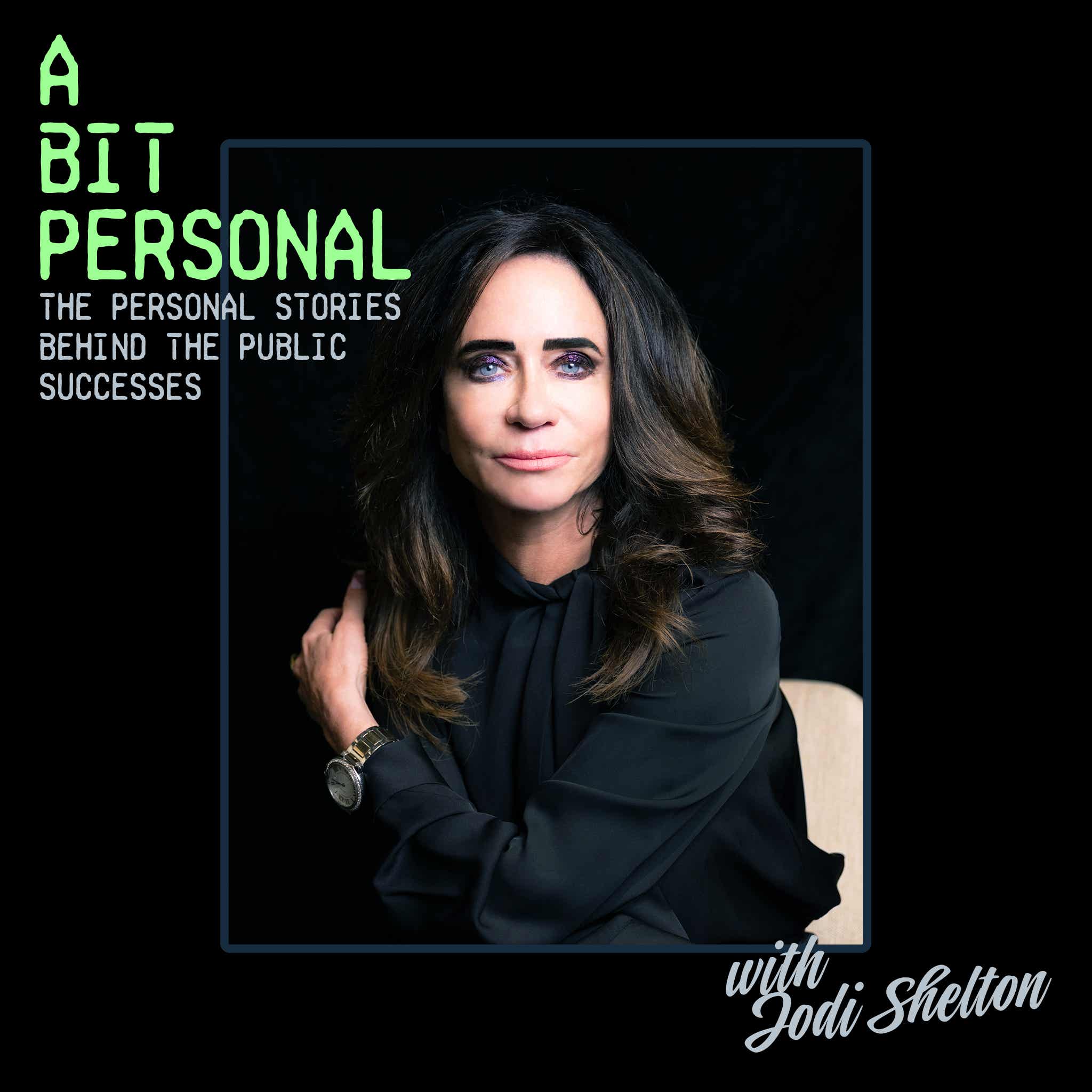
 A Bit Personal with Jodi Shelton
5 Oct 2026 · 53m · 16 chapters
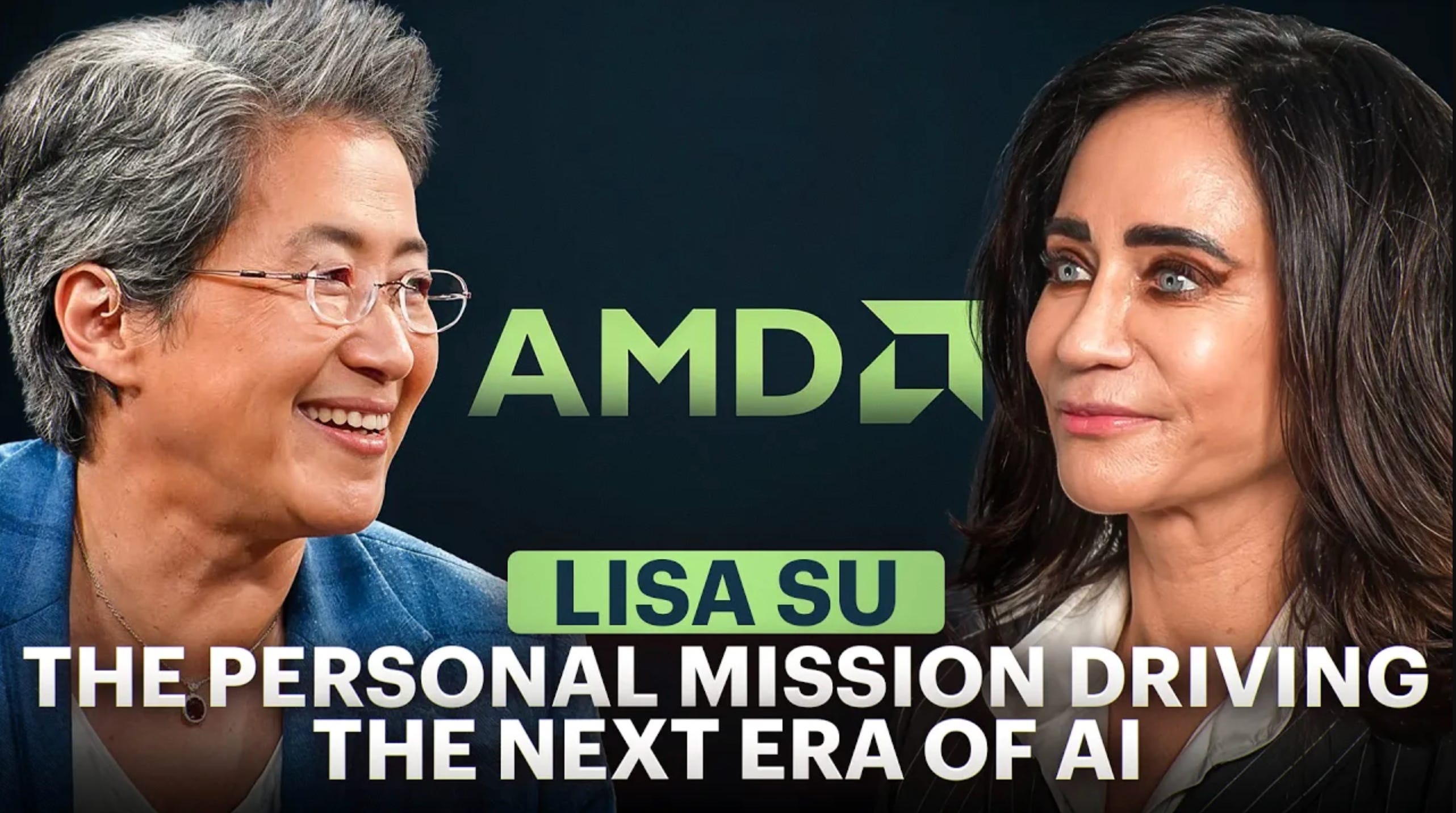
Dr. Lisa Su (AMD CEO) discusses her engineering-driven leadership, AMD’s turnaround, and how AI is shaping semiconductors and healthcare. She also addresses “glass cliff” concerns, imposter syndrome, government/policy engagement, and what she’s excited about next.
The episode is a conversation between host Jody (unnamed in transcript) and Dr. Lisa Su. No other guests appear as interview subjects. Mentioned figures include Mark Papermaster (AMD), Fortune reporter, Lou Gerstner (mentor), Art Digius (asked a question), and CES/industry leaders (Microsoft, Meta, Google, Tesla) in the host’s GSA pivot.
Su says she joined AMD because she believed it was a great semiconductor company, not because it was fragile; she didn’t know the term “glass cliff.” AMD’s hardest early decision was restarting its server roadmap, dropping market share before rising to “a bit over 40.” Major strategic calls included chiplets/packaging and switching leading manufacturing to TSMC. She frames leadership as continuous learning, judgment over headlines, and learning from mistakes.
MIT semiconductor research (X-ray lithography, reactive ion etching); parents’ immigration and work ethic; her mother’s company-building; AMD’s server turnaround; CES AI education pledge hackathon with 15,000 high school applicants and a winning team of three girls.
Written by AI. May contain mistakes.
Exploration of Lisa Su's career milestones and achievements.
“And the second important accomplishment was the GSA's pivot to encompass software, systems, solutions, and services alongside SIMIs, and we brought on key leaders from Microsoft, Meta, Google, and Tesla, to name a few.”
Discussion on Lisa's recognition as a leader and the significance of AI.
“And so I like talking about AI and I think, you know, I think 2025 was really a year when people started to realize just how impactful it is.”
Lisa shares her identity beyond her role as CEO and her engineering roots.
“What I get to do is talk to them about strategy, you know, talk about how to think about, you know, sort of our market position and some technical strategy, I would say, some of the larger decisions.”
Lisa reflects on her upbringing and family influences that shaped her.
“I went to the Bronx High School of Science with a lot of other geeks and nerds and got a chance to spend a lot of time on you know sort of math and science type things.”
Lisa discusses her educational journey and early experiences in engineering.
“when you won that's right that's right actually when at when I won the Morris Chang Award my parents were able to come to the ceremony by the way that ceremony meant so much to them.”
Learn about the early interests and experiences that led Lisa Su to semiconductors.
“Like, you know, just being on a computer by yourself didn't seem interesting.”
Lisa discusses her journey at AMD and the challenges the company faced when she joined.
“And so we had the opportunity to do summer assignments and analog was right outside of Boston.”
Explore the concept of the Glass Cliff and how Lisa navigated her leadership role.
“Freescale was a great, great company, but it was more of an embedded company.”
Learn about Lisa's mindset and experiences when she became CEO of AMD.
“You know they whatever I did some interview with them it was maybe like a few months after I became CEO and the reporter asked me well how do you feel about the glass cliff?”
Lisa reflects on some of the hardest decisions she faced as CEO and their implications.
“So when you got to AMD, let's say in maybe the first couple of years, what's one of the hardest decisions that you made?”
An overview of significant technical decisions made in the semiconductor industry.
“Well, there are lots of technical decisions that are like that, Jody.”
Exploring the impact of imposter syndrome and discussing leadership experiences.
“I think it's hard because at the end of the day, the data is never perfect.”
Lisa Su discusses leadership challenges and the evolving role of semiconductors.
“Okay, so speaking of confidence, your leadership is really on the public stage nowadays.”
Lisa Su discusses the solitude of leadership and the importance of truth tellers.
“And now I completely get it, because, you know, As CEOs, I think the more we kind of take in information from different sources, the better we can do our day job.”
Lisa Su shares personal experiences that drive her excitement for AI in healthcare.
“So Lisa, what's not done about your story?”
Lisa Su reflects on her role as a leader and inspiring young people in tech.
“Okay, so, you know, you are very symbolic in your leadership, okay, because you're an Asian American, you are a woman, and you don't want to be known as an Asian leader or a female leader.”

Get the gist, explore an idea or ask about something said.
 Claude
On A Bit Personal with Jodi Shelton, what are the key points of this episode?
Searching your listeningAutomatic transcript. May contain errors.
0:00Jodi Shelton: Today we're going to get a bit personal with Dr. Lisa Su, one of the most consequential leaders in the modern semiconductor era. As the chair and CEO of AMD, Lisa is widely credited with one of the most remarkable turnarounds in Silicon Valley history. We'll explore the journey of a true industry builder, one who broke barriers and redefined success. Lisa is recognized for her strategic clarity, her deep technical acumen as an MIT-educated electrical engineer, and her fierce commitment to innovation. I had the opportunity to work closely with Lisa when she was the GSA Chair in 2018 and 2019. During this time, we accomplished two important goals.
0:39Jodi Shelton: One was the creation of the GSA Women's Leadership Initiative. Specifically, she championed and personally funded the GSA University Program. And the second important accomplishment was the GSA's pivot to encompass software, systems, solutions, and services alongside SIMIs, and we brought on key leaders from Microsoft, Meta, Google, and Tesla, to name a few. You'll have the opportunity to learn about the woman behind the decisions, the doubts, the sacrifices, and the moments that shaped her leadership long before the spotlight ever found her.
1:17Jodi Shelton: Lisa, how are you? I'm great, Jody. Good. It's great to see you. And you've had an amazing show here at CES. It has been a busy week for sure. Yes. So you're a real star here. That is for sure. So it has been an amazing couple of years for you. I mean, your whole career and journey has been amazing. But the last couple of years, you've really, you know, you are a great leader among great leaders and people are really recognizing that so you have you have prepared and positioned amd to be one of the major enablers and benefactors of the ai era and as a result of that you have been named person of the year two times in a row by time magazine okay i think that you're the only person consecutively to do that well i would say with a group with a group individually in 2024 for as a group of AI architects in 2025.
2:13Jodi Shelton: Right. So it's, again, very proud of you. It's really amazing. What is it like to get that phone call and to get it twice? And how do you prepare for that? I mean, are you on a short list? Do you know about it? That's funny that you say that. I can honestly say you don't know. Okay. You don't know. So, you know, when these things come around, as you know, Jody, I don't actually love the spotlight all that much, but we certainly have a lot of passion around AI and what AI can do for the world, for businesses, for people. And so I like talking about AI and I think, you know, I think 2025 was really a year when people started to realize just how impactful it is.
2:55And so it's fun to be in a place where you're sort of at the center of the technology that is sort of the most important technology that we've seen in the last 50 years.
3:08Jodi Shelton: Yeah, it's very. So you do talk a lot about innovation and technology and AI. So I appreciate the trust that you've put in me to get a bit personal today. Yeah, I'm a little worried about that. Yes, yes, yes. Let me just say, but let's see. I'll be nice. But, you know, I think that one of the main reasons that I've decided to do this is because people like you have become true celebrities. And people want to know about the celebrities, okay? And they want to know about the people that are really going to impact their lives and impact the world. So I think it's important. So, again, I really do appreciate, you know, getting an idea of the personal story behind the public success.
3:49Jodi Shelton: Jodi, anything for you? Okay. Okay, you will see afterwards, right? Okay, so I'm going to start actually with a kind of tough question that I think most people would have a difficult time answering. And how would you introduce yourself if you did not mention anything about AMD or your role or your title? So who is the real Lisa Sue?
4:13Well, you know, I usually describe myself when I'm talking to someone is, you know, they'll ask me, what do you do? or and I say I'm an engineer like that's really how I describe myself that's how I think of you know myself you know over you know sort of if I think about everything that I've enjoyed about my career or about you know sort of my life it is there's so much that revolves around being an engineer and building things and you know working on on products that come to reality now the fact that I'm doing it at AMD and that I'm doing it as a CEO is fantastic and phenomenal but you know when you write on those immigration forms they ask you what is your occupation I always write engineer so okay well it's a much bigger job how much engineering do you actually get to do not much I must say not much these days we have you know brilliant engineers we have 25 ,000 engineers at AMD.
5:15They do all the real hard work. What I get to do is talk to them about strategy, you know, talk about how to think about, you know, sort of our market position and some technical strategy, I would say, some of the larger decisions. But yes, it's been a long time since I've designed chips, that's for sure.
5:35Jodi Shelton: But I guess at the end of the day, an engineer is someone who solves problems. And my guess is you do a lot of that every single day. I do enjoy knowing what we're doing and knowing you're helping the team kind of think through you know sometimes one of the things about engineers is like you almost have too much information and what I really believe we need to do is simplify to what are we really trying to accomplish what are the most important things that we're really trying to accomplish and I spent a lot of time thinking about that. Okay. So give us an idea of some of the experiences, events, or people that really impacted the young or the younger Lisa Sue and you know how it helped shape the leader that you are today.
6:25Jodi Shelton: So maybe growing up or even in your you know early teens or as a young adult. Yeah well um you know Jodi my my parents immigrated to the United States when I was really young so I was three years old my dad came to the US for grad school and he brought the family and I think what I really remember influencing you know me when I was young is really just my parents and the work ethic and their expectations of what their kids were supposed to do and this idea of you know we're here in the US this is you know the greatest opportunity ever we want to ensure that, like for my dad, it was all about, hey, our kids are going to be great at math and science.
7:13And so those were the things that we spent time on. And I think as you grow up, you realize you gravitate to different things. And perhaps in my case, I always had this curiosity about how things worked. And so I tell the story about how my brother had his remote-controlled old car that was going down the hallway and you know one day it stopped working and I was like that's really interesting why did it stop working and so you know we unscrewed it and recognized that there was a wire that had come loose and if we connected back the wire it started working again and that was that was such an aha moment that you know you could do these things so you know those are some of the the things that I remember and you know I went to school in New York.
8:00I went to the Bronx High School of Science with a lot of other geeks and nerds and got a chance to spend a lot of time on you know sort of math and science type things. Were you the smartest person in your class? Absolutely not. I can tell you for sure I often felt inferior to the people who were around me. Like I would join the math club and be like you know why can't I solve these math problems as fast as these brilliant people around me. But it was very motivational. It was motivational to hang out with really smart people. Right.
8:33Jodi Shelton: Yeah. And so when you look back, are any of the your classmates in positions like you were in today? I mean, do you keep up with any of them, track their success? You know, I keep up with a few of them. I would say in different areas. Some folks have started companies. Others have, you know, sort of gone out of engineering type stuff and gone into finance type stuff. But yes, there were some pretty inspirational people in terms of just how smart they were. You're probably the most famous alumni. I don't know about that, but I would say that we each went our own ways. Okay. And your parents just must be so proud.
9:18Jodi Shelton: What do they think about your career and how it's gone? Well, I like to tell Well, the story, like, you know, my mom was such an inspirational figure to me. You know, she passed away a few years ago. But what inspired me about her is, you know, she came to the U.S. with my dad, didn't really speak English, you know, really well, had to learn English, had to learn how to bring up a family in a new place. And, you know, she decided she was going to start her own company. Okay. And this was like when we were, you know, maybe in junior high school or so. She decided she was going to start her own company.
10:01And like that was just amazing. Like just watching her build that company from, you know, just her. It wasn't my dad and her. It was her. And then building up over time to a multimillion dollar company. Wow. And so she was like doing important export stuff from Taiwan and Asia. And from time to time, when I was growing up or when I was in school, she would say, well, someday, Lisa, you should come take over my company. And I would say, okay. We would talk about some of the things, what customers did. I learned a bit about business that way. And I think it was sometime maybe when I was at AMD or maybe when I became CEO, So I think she finally said, well, I guess you're not going to come run my company.
10:55And I said, mom, no problem. We will always be able to talk about your business. But yeah, I have a few things that I need to take care of. So did she stay?
11:05Jodi Shelton: She stayed with it even after you were CEO of AMD? Oh, absolutely. Absolutely. Actually, I'm actually really proud of what she's built. and it's one of those things where you can see just how hard it is you know to build you know something you know from scratch and make that work but it's still it's still around and I still check in with the company every once in a while so that's very cool yeah I had the opportunity to meet your mom and dad when you won that's right that's right actually when at when I won the Morris Chang Award my parents were able to come to the ceremony by the way that ceremony meant so much to them.
11:43Jodi Shelton: Oh, that's great to hear. Yeah, it's really fun. And you know, you so deserved it that year. And I don't know if you remember, that was kind of the year of women because you won Morris Chang. And that was the first year that we introduced the Women's Leadership Initiative Award as well. So it was a really great night. So, okay. So I want if you can just sort of highlight your a few things in your academic and professional career and maybe walk us through the trajectory and give us some highlights of decisions that you made that you look back on now that are critical to getting you where you are today.
12:25Well let's see so as I said I went to high school at Bronx Science did a lot of math and science stuff I ended up going to MIT for undergrad. And again, showing up at MIT is also a place where there are just a lot of really, really brilliant people. And probably one of the most important things that shaped my career is I decided that I needed to get a job. Because this idea of, of course, my parents took great care of me, but this idea like I wanted to have a job. And so at MIT, there were a lot of undergraduate research opportunities where, I mean, I think I got paid like$4 an hour or something, like something very, very nominal.
13:09But my first undergraduate research assignment was in a semiconductor lab. It was actually in Hank Smith's lab at MIT working on X-ray lithography. And Jodi, I was doing nothing really interesting. Like, you know, I was taking like little two inch wafers and putting them into a reactive ion etcher and pressing the button and coming back an hour later. I was basically a grad student's grunt person. But it was so interesting for me. I was like, oh, my goodness. This is like like it was just remarkable. I would put it on the on the microscope and look at the little lines. And I think that's what really got me into semiconductors.
13:51Like this idea that you could do this. And I don't want to say it was kind of random, but it was actually kind of random. Like I could have gotten a job, you know, actually I did do a programming thing on the side and it didn't seem interesting, frankly. Like, you know, just being on a computer by yourself didn't seem interesting. But being part of a lab and doing experiments and actually seeing, you know, research being done is what first got me into semiconductors. And, you know, I would say throughout my college years, like I was not the best student. I mean, I was an okay student. I was probably, you know, an A - student.
14:28Like, I would get some As, I would get some Bs, but I was not, like, the best book smart. But put me in a lab and put me with a team and, you know, give us a project that had goals. And that was, like, super interesting. And that's kind of where, you know, where I really, you know, got interested in being a semiconductor device person.
14:52Jodi Shelton: Okay. Okay. So it's also interesting that you, at some point at MIT, you worked for analog devices. I did. That's right. And you're on the board now. Don't you love that full circle moment? It was. So again, this is very much part of this notion of we wanted to get practical experience. And so we had the opportunity to do summer assignments and analog was right outside of Boston. So I could stay in Boston and just drive out there. And yeah, I did three summers at analog. and actually did my master's thesis of doing some work at analog devices. And at that time, again, I was very, very, very low on the totem pole.
15:35But Ray's data is such an icon in the industry. So I enjoyed being there. And then years later, meeting Ray and having him ask me to join the Analog Devices Board, I'm not on the board now, but I was on the board for some time, was like, wow, that's pretty cool. And actually, some of the people who supervised my internship were still there in much more senior positions than when I was doing an internship. But that just tells you the longevity in the semiconductor business.
16:14Jodi Shelton: Now you have to pinch yourself thinking that you, you know, meet someone that was probably your hero as a young woman. That's right. Very cool. So let's move on to AMD. So you got a phone call from the chair of AMD that said it's time. And so I want to talk a little bit about this leadership research concept of Glass Cliff. So when you get the phone call, AMD was not in a great position. It was a very fragile company. I think that a lot of people felt like whoever became the leader, that AMD may not be around in a few years. So when you get that phone call, how do you evaluate it? By the way, Cliff, Blast Cliff, which I'm sure you know, is the idea that women get key positions when companies are in crisis.
17:07Jodi Shelton: That often sets people up for failure. So how did you assess whether or not this was a genuine opportunity or if you were being set up? Or by the way, if you even cared if you were being set up, maybe you were so confident that you could make it successful. And maybe where did that confidence come from? Yeah, well, I mean, Jodi, maybe just to give a little bit of perspective, right? I spent a good amount of my early career at IBM. And, you know, that's kind of where I really felt like I learned how to be, you know, a manager and a leader and a technologist. They just have such a great way of bringing you through different programs.
17:44So like every two years I did something different. And then I spent four or five years at Freescale Semiconductor. And so when I actually joined AMD in 2012, I joined AMD because I actually thought AMD was a great company. I mean, I thought it was a great semiconductor company. I didn't have in my mind that it was fragile, frankly. I had in my mind that I was a semiconductor person. This is kind of what I trained for. And I liked working on high-performance processors. That's what I worked on at IBM. Freescale was a great, great company, but it was more of an embedded company. And so I wanted to get back into high performance, and I wanted to be at a company where I thought I could make a difference.
18:29And so that's why I joined AMD. I joined AMD in 2012. and frankly, my picture of AMD at the time was great company, didn't execute necessarily very consistently, so sometimes they had great things going on, sometimes they had not so good things going on. This is a place where I could help. And so I joined. Now, one of the things you realize is sometimes you walk into things and you don't know exactly what you've walked into and so I walked in in 2012 and I think if you remember back in that time the second half of 2012 into 2013 was actually a really tough period for PCs like 90 % plus of AMD's business was in PCs and the PC market was going through incredible transformation and frankly it was a big down cycle because you know smartphones were on the rise and so the company did go through some tough times.
19:30So, you know, I got the quote-unquote call in 2014 that it was time to be, you know, what I consider being CEO of AMD. And I was like, absolutely, yes. Like, this is my dream job, right? That's kind of the way I looked at it. I looked at it as, this is an amazing opportunity. You know, yes, there's a lot to do, but fundamentally, you know, the bones of the company were high performance heritage, phenomenal engineers, you know perhaps some business decisions that needed or some business and strategy decisions that needed to be made a little bit differently. So but to your point about Glass Cliff, like I literally did not know what that term meant.
20:20Okay I had no idea. The very first interview that I did after becoming CEO was with Fortune magazine. You know they whatever I did some interview with them it was maybe like a few months after I became CEO and the reporter asked me well how do you feel about the glass cliff? I'm like what? Like what is that? I don't know what that is. And so like I just didn't think of it that way. I mean I never I never thought of this as like this is an amazingly hard job it's gonna I just thought about it as this is an amazingly great opportunity and I trained for this so
21:05Jodi Shelton: let's see what we can do with it so even when you were at IBM did you know that ultimately you wanted to be a CEO yeah it's hard to say that I knew that I wanted to become a CEO. I think I knew that I wanted to help make the big calls. You know what I often found is as an engineering manager, as an engineering leader, that you could do a lot of things right and there are a lot of technical decisions to be made to get a product out to market. But if the fundamental strategy was not right then it didn't really matter and I felt like I wanted to be at the table to make the big calls. And I trained to do that in semiconductors.
21:50Like I didn't have, you know, I loved IBM as a company. Like it was super hard for me to leave IBM as a company. I still consider the, like I grew up there. But their mission in life wasn't semiconductors. Their mission in life was systems and software and services. And I just didn't think I was experts in those areas. And so I had to leave IBM so that I could practice sort of what I'm best at.
22:15Jodi Shelton: This episode is brought to you by Morgan Stanley. Morgan Stanley celebrated its 90th anniversary last year, and its tech investment banking team has prided itself in working with the most innovative entrepreneurs and leadership companies for decades. During that time, they've led IPOs for hundreds of tech companies, including Apple, Arm, Astera Labs, Broadcom, Cisco, Facebook, Google, Nvidia, Salesforce, and Uber. In addition, they worked as a trusted advisor and executed thousands of M &A transactions for some of the most industry-defining deals in technology. Throughout the years, Morgan Stanley's tech investment banking team success has been achieved by dedication, consistency, and a North Star purpose of helping its clients to maximize their opportunities and overcome their challenges.
23:08Jodi Shelton: Now, let's get back to the episode. So when you got to AMD, let's say in maybe the first couple of years, what's one of the hardest decisions that you made? Maybe the hardest news you had to tell the board or tell your employees? Well within, I think within a few months of getting there, by the way, Mark Papermaster, my partner in all this, he joined AMD about three months before I did. So he joined to run engineering and I joined to run the business units and I would say we were kind of tossed into this hey let's figure out what we what we have here and I think the the hardest thing was just recognizing that there were a lot of things that needed to be fixed and that this was going to take time and anybody who wanted a quick fix was probably going to be disappointed.
24:05Like one of the things that we had to do, you know, today, one of the things I'm very proud of is our data center products, our server product line has really become like the standard in the data center. and when I joined AMD we were probably about I don't know maybe 10 % market share in servers but we had a completely uncompetitive roadmap and we were we were going to if we kept doing what we were doing we would have consistently just lost more share because you know we had made some decisions that that weren't necessarily the right ones and so the decision that we had to make is we had to start over.
24:49Like we had to say, hey, this roadmap that we're on is the wrong one. Let us start over. Let's do something from scratch. And that's actually kind of a hard decision because what we had to say is we actually have to go down before we can go up. And I think when I took over as CEO, we were probably at 1 % market share. So we went from the time I started to in three years we went from 10 % to 1 % and I think we just finished last year at like a bit over 40. So to convince people that that's the way to get there required a bit of a leap of faith but I think it starts from the fundamental belief of you know this is the right strategy, these are the right markets but you know you have to make the right technical decisions and it will take time.
25:39Like we told, I told my board look this is going to take three generations and five years and just hang, you know, make sure that we fund and we invest correctly such that, you know, we can build that franchise. Okay. So what about a decision maybe that you almost made one call, made a different one,
26:02Jodi Shelton: but it kind of stays with you and not stays with you maybe because of regret or even like patting yourself on the back that you've made the right decision, but to show kind of the thin margin in decision making, like it can go one way or the other. Well, there are lots of technical decisions that are like that, Jody. I mean, one of the things that we can say about our business is you don't actually know that you're making the right decision for three to five years. Yes. And, you know, probably one of the most important decisions that we made early on was, you know, we decided to go away from sort of the traditional sort of scaling construction of just making your chips bigger and bigger.
26:48And, you know, we decided to go to chiplets and break things up and use packaging technology. That was actually not an easy decision. I remember sitting with Mark and three or four of our technical fellows, including folks like Sam Napstinger and Joe Macri, and just sitting there and saying, are we going to fundamentally fork our roadmap? And is that the right call? Because that's not what other people in the industry are doing. And I think that was one of the major calls that we've made. You know, another major call was deciding, you know, really to change fundamentally our relationship with Global Foundries and go with TSMC as our leading manufacturing partner.
27:35And I think with those calls, they do kind of sit with you because you're like, wow, I probably can't go back from this one. Right. But I think it's those types of things that it helps to have a bit of a technical background to kind of understand sort of what are the tradeoffs there.
27:56Jodi Shelton: Yeah, I can't imagine that a semiconductor company could ever be run by anyone that didn't have a strong, strong technical background. I would agree with you, Jodi. I think it's hard. I think it's hard because at the end of the day, the data is never perfect. So you have to make decisions with imperfect information. Okay. So I want to ask you a few questions about imposter syndrome. So we hear a lot about that. And you hear a lot about it, women talking a lot about it. But the truth is, is that I've spoken to several male CEOs that say that they've experienced it. And experience that they think, okay, when am I going to kind of be found out?
28:34Jodi Shelton: But is there ever a time that you think that you're still earning your seat at the table? Or is that long past? Well, I think, look, if I go a little bit to the question that you asked about AMD, I mean, the fact that a number of people were wondering whether we were going to quote unquote make it wasn't a great feeling, I can tell you that. It's not that I believed that, but to have that be such a pervasive kind of thing was not all that inspiring. So I view it as my job was to go from, let's call it, taking the company from what was not such a great place to making a good company and then going from good to great and now going from great to best.
29:27And in each one of those phases, you kind of have a different mindset. But it's the same basic thing, which is, wow, we have such a great landscape of opportunity, but we still have a lot to prove. And so it's not a personal thing for me. I think I personally feel like I'm pretty happy with all that we've accomplished. But we're not done. I mean, we have like the ambition for what we can do for the industry, for what we can do for humanity in terms of technology is still so much. So that's what I think about.
30:08Jodi Shelton: So any advice to people, you know, especially young women? You know, we obviously have this women's leadership initiative that we started with you. And you have any advice to maybe specifically women of how you just get over it? because it can be a debilitating syndrome, to be honest. I will say, Jodi, first of all, I love this Women's Leadership Initiative. I'm so proud of you and of GSA and of, you know, the entire board that supported it. I remember when you came to me with the idea, and I was like, yes, yes, absolutely, and we took it to the board, and everyone was so super supportive. So I'm really, really proud of the work that you and the team have done there.
30:51And relative to advice for women, yeah, sure. I mean, I think I have advice for maybe women and men. But the basic principle is you have to have a bit of confidence in yourself. And the confidence in yourself is around you can solve this problem. Like in the moment, I often say that I learned a lot more from the times that I made mistakes. and when I completely screwed up, then for things that went well, because I remember those times well. Like I remember the first project that I really messed up and the first quarter that I completely missed. And the first bad thing I said on an earnings call that I shouldn't have said.
31:37Like I remember those moments. Like I don't remember all the good moments, but I remember those moments. And my advice to women is, it's okay to remember those moments, but you have to learn from that and recognize that every one of those is a learning experience. And in general, that's what life is about. Life is about continuing to learn. No one's ever perfect. Everyone's going to make mistakes. You just want to make more right calls than wrong calls. And, you know, having a support infrastructure that helps you do that is important. Like, I was very lucky. I think I had a support infrastructure, you know, everywhere that I was.
32:14I had bosses, mentors that were tough, but recognized that there was talented potential there. And so it's like you can be really, really tough, but then give somebody a lifeline. I mean, that's what I think good leaders do. And so, yes, I think that's the biggest advice I can say is don't be daunted by failures. actually treat your failures as an opportunity to really learn from them and grow from them and gain experience. Like these days, I'm like, hey, you know, there's nothing you can do to me because I've already gone through all that stuff. And I think that's an important level of confidence to build.
32:56Jodi Shelton: This episode is brought to you by GSME. GSME is a leading global provider of tailored silicon solutions dedicated to empowering semiconductor and system companies with cutting-edge technology and unparalleled expertise, founded in 2022 by Farhat Jahangir. Its comprehensive range of services include end-to-end chip design, full turnkey manufacturing capabilities, rigorous quality assurance, and strategic incubation to help its partners bring innovative products to market. At GSME, they are committed to transforming semiconductor manufacturing landscape by optimizing processes, accelerating product development cycles, and ensuring faster time to market for next generation applications.
33:41Jodi Shelton: GSME gives full visibility of the supply chain to its customers. Now, back to the episode. Okay, so speaking of confidence, your leadership is really on the public stage nowadays. So you are a true celebrity in your own right, for sure. Please don't say that. I don't like that. But it's amazing to watch you. I mean, like all of us have this incredible sense of pride to see you on the stage at CES or, you know, on CNBC or wherever it may be. It's really great to watch. But, you know, it's complex enough running AMD, which is, you know, one of the most innovative companies in the world, one of the most complex technologies.
34:22Jodi Shelton: It's global. And you're right in the middle of this incredibly complex geopolitical environment. And so my question is, how do you deal with that? I mean, you know, semiconductor CEOs used to worry about technology, customers, investors, employees. And now you have an entirely new audience, which are governments, not just the U.S. government, by the way, but governments all over the world. And so how do you pivot and, you know, deal with that kind of almost policy advisor? And then how have you had to evolve as a leader? And, you know, did you have help of, you know, coaches or advisors, stylists, whatever it may take?
35:04Jodi Shelton: I mean, because you're on public stage all the time. And by the way, I have to tell you, Lisa, I mean, you look better than ever. You just you just really embarrass me. No, it's true. It's true. It's true. So how did you evolve to become the Lisa Sue we know today? Well, I think it's, I think Jody, it's exactly, it's actually not that different from, you know, technology and business things. I think it's, we have to all learn. Like, I am learning every day. And I truly mean that. By the way, I completely agree with you. I think if you asked me, you know, five years ago, like, did I need to be in Washington, D.C.?
35:48And if I was there once or twice a year, that would be a lot, frankly. And it's really changed. And I think it, you know, in one sense, I think the semiconductor industry was a little bit reluctant to get super involved because, you know, we're like, hey, maybe we should stay below the radar screen. But the truth is, I think we should take it as a very positive thing for the industry like our business our capabilities our technology are so important to you know every government in every country that and it's also complicated right it's not like the airline industry or the oil industry the semiconductor industry is its own thing we have our own ebbs and flows we have our own investment cycles that it's important for us to show up and have a seat at the table.
36:42And so, you know, I view it as actually a privilege to be able to kind of contribute at that level. But it's definitely a learning experience. And a learning experience that goes through, it's like on-the-job training. On-the-job training of, you know, we have, you know, of course, a government affairs team. We have some sort of consulting firms that we use, but primarily it's just direct interaction in terms of just being able to tell the story of why semiconductors are important. You know, my whole thing in this framework is I don't ever want our industry to be viewed as we're so parochial, all we care about is, you know, the CHIPS Act, you know, getting incentives or whatever, that kind of stuff.
37:31I really think that that's secondary. I think the most important thing is for us to be viewed really as a trusted partner for the government, for administration officials, that we're here to help solve the collective problem, not just our industry's problem. Of course, we want our industry to be well-treated, but we want to solve the collective problem of, you know, how do we ensure that our technology is, you know, first of all, you know, being a U.S. company we want to make sure that the U.S. maintains our technology leadership and our ability to continue to lead but we also want access to global markets you know you know China is a very important market for us as well as a number of other geographies and so we have to you know strike that balance but I think the key for us is to ensure that as an industry we show up with the greater good in mind.
38:26And from that standpoint, I wouldn't say I love it, but I would say that it's an important part of the job. And probably last year I was in D.C., I don't know, 12, 13 times a year.
38:40Jodi Shelton: So what percentage of your time do you think is not just in Washington, but thinking about it and working on it? I don't know that I have a percentage. I think it's an active front of mind conversation. And by the way, for my peers as well. I think we've all taken a much more active role to make sure that people understand our industry. Right. We've been pitching the criticality of semiconductors for, well, I've been doing it for like 20 years. You've been doing it for a long, long time. I think definitely the last three or four years it's become quite front and center. and I think we're making progress by the way Jodi.
39:23I'm actually pretty encouraged that we're making progress that people are understanding that semiconductors are different and we should be front of mind but we you know we're not like every other you know industry.
39:35Jodi Shelton: Right so you've been known to say that that leaders are made or taught and not born but you're in a situation where there's really no teachers. Actually, Art Digius asked me to ask you this question. How do you learn when there are no teachers? When you're at the peak of innovation, you're doing something that there's no precedence for. Well, first of all, I love Art. Art has been just such a great friend. And I can tell you a story about Art. When I first became CEO, he was the first CEO to send me a note. Nice. And it was a really thoughtful note congratulating me on the job and saying, this is the loneliest job ever, but I'm always here if you want to talk.
40:22And I remember that well. I think the answer is we're always learning from other people. Whether it's an actual teacher or it is, you look at, I spend a lot of time looking at what's happening in the industry, looking at what's happening across the industry, just kind of studying patterns and asking people for advice. So it doesn't have to be a boss. It can actually be a, actually I even ask a number of our, let's call it expert engineers for advice. And just really try to, I think that the key for all of us in these types of roles is to treat them as continuous learning. like the more we study and when I say study it's like look across you know one of the things I learned um you know Lou Gerstner was a a real you know early mentor for me and um you know Lou just actually passed away right before the end of the year so um it really a condolences to his family but I remember I had a chance to spend some time in his office and when I spent time in his office as his technical assistant, this was early in my career, I was shocked at how much time he spent not managing the company.
41:47Like, he actually spent most of his time external, you know, with customers, you know, reading, like he read, like, anything. Like, I was his technical person, so I was feeding him a whole bunch of technical trends and things like that. And now I completely get it, because, you know, As CEOs, I think the more we kind of take in information from different sources, the better we can do our day job. And there are lots of people who can actually run the company, but I think just making sure that we are always thinking about whether the strategy is the right strategy or whether there are adjustments that need to be made are the things that I do.
42:27Okay.
42:28Jodi Shelton: And just to tie this back to Art's comment about how lonely the CEO can be. So obviously, leadership is profoundly solitary. And a lot of times what happens is that there's sort of an echo chamber created around a CEO because they want people around who's supporting them. So two questions with that. How do you deal with the loneliness? And secondly, how do you make sure that you have truth tellers around you? Well, first of all, I think I'm a little too busy to be lonely. It feels like people are around all the time and we have a lot of things going on. But, you know, in those moments when you're trying to decide what to do next or, you know, is that strategy really the right strategy?
43:13It's true. You're often debating with yourself. Like, is that really going to work? The way I deal with that, honestly, is I really like talking to the people who are true experts in the field. And because that just helps me think through problems. And the thought process being you will never have perfect information, but the more context you have, the better choices you can make in that process. Okay.
43:46Jodi Shelton: And you make sure you have your truth tellers around you. We do. We do. But that echo chamber thing is an issue. So every once in a while you have to go to the people on the ground. That's why I love going to the labs. When we are bringing up systems, I love going to the labs to just talk to the engineers who are bringing things up so I can figure out what's going on. Every leader I respect has a moment where they realize the real job is judgment, not the public narrative, not the headlines. Judgment, especially when the stakes are high and the future is unclear. KPMG works with technology leaders in that space.
44:25Jodi Shelton: They help companies think through transformation with a sharper sense of risk and responsibility, particularly as AI changes what it means to operate at scale. Learn more at KPMG.com. Now let's get back to the episode. So Lisa, what's not done about your story? What do you have left to finish? What do I have left to finish? Look, I think we are at this incredible moment where AI is sort of on this acceleration path, and there are people who are still saying, is it real? Is it not real? How real it is? And I think my story, our story, AMD's story, is just showing people the power of the technology and really unlocking it over the next number of years.
45:17Jodi Shelton: Okay. And so what are you most excited for in the next five years, of course, in terms of AI, but business, professional, and as a human? And what do you worry most about? Well, I think from a technology standpoint, what I'm most excited about, and this is less to do with just AMD's business, but just what's possible. I'm really excited about sort of the intersection of what technology can do with healthcare. Like that's a place and you know all of us have our personal stories but you know perhaps my most personal story is you know I talked about my mom and you know sort of what a inspiration she was to me.
46:06She got really ill a few years ago and it was just a tough situation because I had to watch my hero as someone who needed so much help and I was very much a part of that. She was in the intensive care unit for like 60 days. Nobody thought she would make it but we got her through that and she lived another good couple of years after that but you know, she ultimately did pass away. And what I noticed about healthcare in that time is it was so imperfect. Like, it was so imperfect. I mean, we had great doctors and all that. So I'm thankful for the doctors that we had. But they didn't have the information in an integrated fashion, where like, you had, you know, the heart doctor and the kidney, you know, specialist and and the other, like, you just had all of these different specialties, but not really, you know, like, we are not individual pieces, right?
47:13We are total human beings. And I really felt like medicine was not using the power of technology. And now I see what's happening with AI, and we're still just scratching the surface, but But I can see that with the models that we're developing, with the right information that's being fed in, there is a path where we can substantially change the quality of care that people receive, hopefully extend lives. We had a healthcare panel on our CES stage and I took away from it. Healthcare can be a lot more predictive about who's going to have a problem. It can be a lot more preventative, so you can take care of it earlier.
48:01And I think it can be a lot more personalized. And so I'm pretty excited about that. Like if I wasn't doing, like, I don't know much about medicine, but if I wasn't doing what I was doing, that would be kind of something I'd be really interested in exploring because you realize it's just such a personal thing, right? because, I mean, everyone has their similar story, and you can see just how what we do can make such an impact on people's lives. Okay.
48:34Jodi Shelton: Okay, so I do have one more. One more. Okay, so, you know, you are very symbolic in your leadership, okay, because you're an Asian American, you are a woman, and you don't want to be known as an Asian leader or a female leader. You want to be known as a great leader, which again, I think that problem solved because everybody now knows that. But when I was in China, it was interesting. I was speaking to this Zach Dykwald, who I don't know if you know who that is, but he's an expert on China. And he was talking about how the Chinese take great pride in both you and Jensen because you're, you know, these of Chinese descent and you're global leaders.
49:16Jodi Shelton: And then, of course, you know that women admire you so much and think, okay, I can be a Lisa Su, or at least I know that there's a path to get there. So how do you, you know, have you ever led differently because you're first or only and maybe look back on it and think, okay, that was because I was the first or only? Or how do you feel about representing these big groups of people? Well, first of all, it's an honor for those things to be said. I think maybe five years ago, I used to find it to be a little bit of a burden, quite honestly, for the reasons that you said. At the end of the day, I don't want somebody to say, well, she's the best woman CEO.
50:00That's very kind, but I'd rather somebody say, she's a phenomenal CEO. And now I actually view it really as a privilege and the privilege being, look, I'm so lucky to be where I am today. It is an amazing time in tech, it is an amazing role, and I get to work with brilliant people and we're making a difference in the world. If I can help others kind of get maybe just a little bit of confidence and a little bit of sort of inspiration to do you know follow their you know dreams like that's great that's great and I will say you see the impact so readily right one of the things that you know we did is you know the president has the president the lady had this AI action plan and as part of it there was a AI education pledge and so you know I told like it came together very very quickly and I asked our team okay well look if we're gonna make this pledge we're actually gonna do something about it and we you know put together a hackathon with with this organization hack club which is a great organization and we had over 15 ,000 high school students who applied to be part of it.
51:27We had a whole bunch of them come to Silicon Valley and we're going to do some more throughout the world. And the winning team, which had nothing to do with me, by the way, I didn't get to vote, I didn't even know what was going on, ended up being, you know, three high school girls. Oh, nice. Who were like the best, you know, they learned how to program AI in a weekend. And there were lots of other great, great projects, but I mean, that's pretty cool. So if we can take our platform and do something that inspires the next generation of students, absolutely. Like now I feel like that's part of my job is to make sure that we can do that.
52:07Jodi Shelton: Well, if being an inspiration is part of your job, you've done it well. So thank you for taking the time with me today and sharing your personal story. I appreciate the friendship. I appreciate all you've ever done for me and for the GSA. It's very meaningful. Jody, you have done a phenomenal job for our industry, so thank you. And, you know, look forward to doing much more together. Okay. Thanks. Appreciate it.
AMD’s comeback is one of the most unbelievable stories in modern tech and Lisa Su is the reason it happened. In this episode, Jodi Shelton sits down with Dr. Lisa Su, Chair and CEO of AMD.Some CEOs chase hype. Lisa Su chased execution. Guess who won. In this episode, Jodi Shelton sits down with Dr. Lisa Su, Chair and CEO of AMD.This is the part of tech history people will pretend was obvious later. It wasn’t. In this episode, Jodi Shelton sits down with Dr. Lisa Su, Chair and CEO of AMD.