
In short
Podcast Notes: A Book with Legs - Episode with Brad Klontz
Episode Overview
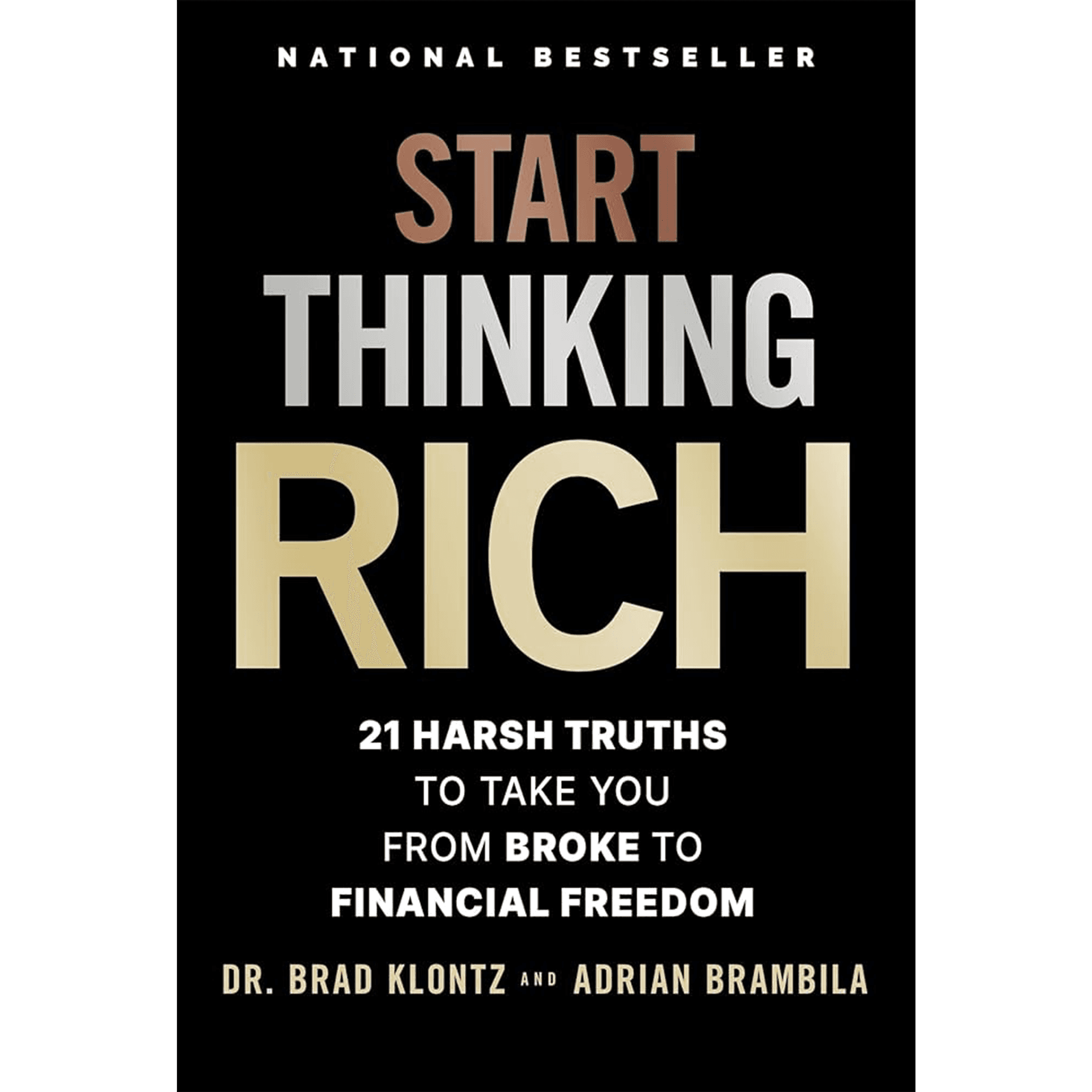
- Title: Brad Klontz - Start Thinking Rich
- Host: Cole Smead, CEO and Portfolio Manager at Smead Capital Management.
- Guest: Dr. Brad Klontz, financial psychologist and co-author of *Start Thinking Rich: 21 Harsh Truths to Take You from Broke to Financial Freedom*.
- Theme: The psychological aspects of wealth-building and how to reshape one’s mindset around money.
Key Themes
- Understanding Wealth
- Definition of Wealth:
- Wealth is not just about high income; it is about the ownership of time and the ability to live without financial stress.
- Wealth vs. Rich: Rich individuals often work long hours for their income and may lack true financial freedom.
- The Importance of Mindset
- Mindsets Around Money:
- Poor mindsets lead individuals to pursue quick financial gains (e.g., lottery, quick schemes), which are often self-destructive.
- Successful wealth-building requires a long-term perspective, often described as "getting rich slowly".
- Capitalism and Competition
- Capitalism as a Game:
- Emphasizes the importance of understanding the rules of capitalism to succeed rather than blaming systemic issues.
- Acknowledges that individuals can shape their financial destinies within the capitalist framework.
- Personality and Financial Behavior
- Locus of Control:
- The mindset of attributing success or failure to personal choices rather than external factors (like political or economic systems) is crucial for achieving financial freedom.
- Emphasizes personal responsibility in financial decision-making.
- Marriage and Financial Success
- Benefits of Marriage:
- Married individuals generally have higher net worth due to dual incomes and shared expenses.
- Marriage fosters healthier financial attitudes and promotes future planning.
- Housing as an Investment
- Ownership vs. Renting:
- Owning a home often leads to wealth accumulation; many millionaires own their homes.
- Fixed mortgage costs can provide long-term financial stability compared to rising rental costs.
- Retirement and Purpose
- Retirement is for Dead People:
- Advocates against traditional retirement as it can lead to a loss of purpose and identity.
- Encourages finding purpose in activities that promote engagement and social connections.
- The Power of Collective Neuroscience
- Social Circles Influence Financial Mindsets:
- Surrounding oneself with financially savvy individuals can lead to better financial habits.
- Poor mindset can be contagious and detrimental to personal financial growth.
Key Takeaways
- Reshape Money Mindset: Cultivating a rich mindset involves viewing wealth-building as a gradual process and understanding one’s relationship with money.
- Invest in Relationships: Relationships, particularly marriage, can significantly impact financial well-being.
- Embrace Ownership: Owning assets (such as a home) can provide both financial stability and peace of mind.
- Prioritize Purpose: Engaging in meaningful work or hobbies can enhance life satisfaction and maintain a sense of purpose.
Conclusion This episode emphasizes the psychological factors influencing financial success and advocates for a proactive, responsible approach to wealth-building. Dr. Klontz's insights encourage listeners to examine their mindsets around money, the importance of social circles, and the impact of life choices on financial freedom.
---
For more insights and discussions on value investing and psychological aspects of wealth, tune into the *A Book with Legs* podcast.
Written by AI. May contain mistakes. Listen to the episode to check what was said.
Transcript
Automatic transcript. May contain errors.0:02You're listening to A Book With Legs, a podcast presented by Smeed Capital Management. At Smead Capital Management, we advise investors who fear stock market failure. You can learn more at SmeadCap.com or by calling your financial advisor.
0:22Welcome to A Book With Legs podcast. I'm Cole Smead, CEO and Portfolio Manager here at Smead Capital Management. At our firm, we are readers, and we believe in the power of books to help shape informed investors. In this podcast, we speak to great authors about their writings. The late, great Charlie Munger prescribed using multiple mental models and analysis. We analyzed their work through the lens of business, markets, and people. How do you view wealth? Is it a healthy view or is it a damaging view? This is what we'll discuss today as we talk about Start Thinking Rich, 21 Harsh Truths to Take You from Broke to Financial Freedom with co-author Brad Klontz.
1:00Now, before I have Brad say anything, I'll give our listeners a little bit of background on Brad. He's a clinical psychologist by background. He's an associate professor of practice at Creighton University, Hyder College of Business, co-founder of the Financial Psychology Institute, and managing principal of YMW Advisors. Dr. Brad is a co-author and co-editor of eight other books on the psychology of money. Brad, thanks for joining me today. I'm excited to be here. so you uh so i i was mentioning this before um we are not the typical podcast to come out and do a self-help book and why i liked your book was the principles you dealt in and also really how people evolve over their life uh we did a book um the myth of american inequality with uh senator graham from texas and he talked about how people will start in the lowest income quartile of their life after college, let's say, or during college.
1:59And then they end up being in the highest income quartile. And we never talk about how there's different stages to life in wealth. And I think your book does such a good job of talking about these stages. Where do you start? Where do you need to go? And how does that mentality need to change? And so that's why I'm really excited to discuss this. But I just want to start out by, you've written other books on money. Why this story? why now? Well, I have a lot of attempts to educate people on social media. And so this book was frankly inspired by a lot of comments I've gotten over the last 10 years on posts and just identifying where people are getting stuck in terms of their mindsets.
2:40And my focus has really been on researching success mindsets clinically and what can we draw from the research to apply to our daily lives. As a clinical psychologist, that's what I do. I have someone in my office, and it's like, how do we make your life better? How do I help you make your life better? And so this book was, it's really sort of an exciting way to put together these research-based concepts around how to climb the socioeconomic ladder. Sure. So what is wrong with this statement? Quote, sure, we don't have money, but that's because it wouldn't make us happy anyway, end quote. Well, there's several things wrong with it.
3:22So first of all, I used to sort of teach that as an understanded concept in psychology, where over the course of decades, there's been research on money and happiness, income and happiness quite specifically. And what I've noticed is the number seems to track the median income in the United States. So essentially, it was$50 ,000 a year or$75 ,000 a year. number and it sort of tracked where the median income was. And the message that was going out was that as soon as you hit the average, so you look around, you got pretty much what everyone else has. And there's a psychological basis behind this, by the way.
3:55There's really no association between money and happiness above that. Well, the problem with that statement is first and foremost, it's been essentially debunked by better designed research. So the curve actually continues, which is something I think everyone sort of kind of had a feeling about, you know. And, you know, it matters how you spend the money, of course. But the downside to it, and my co-author, Adrian, talks about this in the book, where he sort of set that as like, well, if you make money above that, then you're going to have less happiness. And so there's a misconception out there around that that ceiling, first of all, there's no association with happiness above it.
4:32And then secondly, that there's some sort of downside to having more than that. Sure. Well, we're going to show that chart you put in the book early on. I think we'll be pulling it up here. So here's a look at what you're getting at, which is that the assumption has been there's a minimal amount of happiness you can attain. And once that, there's no increasing benefit. And as you point out here, your life satisfaction goes up with income. okay um now to your point i would say in a study that says okay how do you get to the median income doesn't have more to deal with dealing with it just reduces the negative externalities that can be in your life for example you know not being able to pay rent not being able to have food that's what the median income really gets rid of it was that fair statement yeah i think that's half of it so half of it is just as you're saying like you can put clothes on your kids you have food.
5:23You're not having a constant sense of economic insecurity. But then there's another component on the psychology side, which is called relative deprivation. And so a lot of studies have been done on this where your financial wellness is entirely subjective based on your comparison to other people. So you could be in a very poor area and you have two goats, everyone else has one, and you have this subjective experience of being wealthy. And I think that's part of it too, is when you're comparing, how are you doing compared to other people? Well, I think the other part to this, I mean, have you ever, Brad, have you ever met a human that can't tell you who's ahead of them in life?
5:59No, not really. And some of the billionaires I've worked with, they're very focused on where they end up on the list, on the Forbes list of richest people. It's like, all right, I guess you got to have a goal, you know? Okay. So that kind of gets us sore next. It's in your book. And I really like this. You talk about capitalism as a game or competition? Explain this because we're kind of getting into some of the idiosyncratic nature of people that are wealthy, but just in general, think of it as a competition. Explain that to us. Well, so we're fairly agnostic in this book in terms of what system is better.
6:34And there's a reason for that. I see people really get stuck with being focused on that the system is rigged and there's something wrong with it. Therefore, I cannot achieve the things I want to achieve in life. And so that's a very toxic mindset in terms of self-destruction, frankly, in every aspect of your life. And so we look at it as it's a game. So we're not taking a position that, like we can make an argument, we could probably put together a fairly good argument that capitalism is the best system that's ever existed in terms of the day-to-day experience of people when it comes to quality of life.
7:10There's a strong argument there, but we just dodged the argument altogether and said, hey, it doesn't really matter. I mean, we live in the world of capitalism. That's the game. And so the idea is to learn the rules so that you can see that the game you're playing. So why does a high income might not mean that you're rich? Yeah. So we do talk about the difference between rich and wealth and what's a poor mindset, what's your rich mindset, it comes down to your definition of what is rich. And this is a very personal definition, right? For me, it's owning your time. So I look at you as being wealthy, the more time you own and buying back more of your time as an approach to becoming wealthy.
7:54And I know, and I'm sure you know, people who make multiple six figures a year, but they don't own any other time. They have to work 70 hours a week to pay the bills. And when I look at that, to me, that's not rich. I mean, you're a slave to your boss, to your house payments, your car payments. And that's just not a great quality of life, at least in my opinion. So on that, I mentioned Charlie Munger in my opening. Charlie Munger talks a lot about the idea of delayed gratification. You obviously talk about that. Effectively, in this competition, there is a trade-off though, right? You might do that now, as long as you can build up enough savings, let's just say off of that, you know, I'll call that treadmill because later you're not going to do it forever to your point about what's income and savings versus accrued wealth, if you will.
8:46Right. Yeah. Delaying gratification is very, very important. And by the way, we're just not wired to do that. So it's the strange people who do it, who overcome our natural biological wiring to consume everything right now. And so, yeah, very, very important that you do that. There's a downside to that. We talked about it a little bit before we went live here, where people can be so focused on the future. And by the way, you have to have a future orientation. So as an example, studies on people who meditate, they tend to have less net worth, and they tend to make worse investing decisions. And I know this sounds terrible.
9:22I'm actually a fan of meditation, but the research is extremely clear. And I know you're saying, yes, but yes, but well, they actually put all that in the studies. And it turns out that the more, and think about meditation. So like mindfulness meditation, the idea is to focus on the moment and forget about the future, forget about the past. Well, if you're forgetting about the future and you're focusing on your experience in the moment, when the market is crashing, you're going to sell, right? You're not thinking about the future. You're thinking about your panic. And so essentially you have to have an exciting vision too, is another component of it.
9:57And I've done some research on this, how to get people to save more money. Well, you have to have a really super exciting, palatable vision of why you're asking yourself to delay gratification, because it's why we struggle, because most of us are just not wired to do it. So you have to override that with something really, really exciting about a future goal. Sure. And the other idea you get to early in the book is you talk about this idea of getting rich slowly. I think that's, again, something that Munger talked a lot about is the idea of, you know, getting rich slowly. How do you, and this will be something I think we'll probably come back to just because, you know, you obviously deal with wealthy people in your work.
10:35I, you know, we do as well in our work in the investment business, but there are times that something could be a get rich slowly game. I think of like back in, you know, 10 and 11 and 12, like no one wanted to touch stocks. It was super, you know, you had to be an idiot to do that, but you could get rich slowly, not overnight, obviously. Now we're at a very different place in the stock market, I would argue. How do you think about that get rich slowly versus get rich quickly? Because even things that can be one thing can turn into another thing later. Yeah, I feel like when I'm focused on trying to help people sort out their mindsets around money and how that fits in with their long-term financial goals, the whole concept of getting rich quick is probably one of the most self-destructive mindsets that I've ever seen.
11:24And typically the people who have it are people who are struggling or they're frustrated or they feel like they're missing out. And so then they'll get sucked into the latest get rich quick scheme. So in the book, we talk about the lottery. That's just the most popular example. But I know you saw it, the whole crypto craze. And I think there's always, it used to be, it was tulips, wasn't it? Way back when. And I think there's always going to be something that people are drawn to because we want to cut to the front of the line because it's actually really boring. like when you actually get down to what it takes to grow your wealth for most people.
11:57And by the way, researching, like, like, you know, a big part of this book is looking at all the stats and, and I'm a, you know, I'm a researcher. So how do people get rich? And, and by, by the way, if it was, they got rich quick, I would wrote a book on exactly how to do that. Um, but that's not, that's actually not how most people are doing. And it's that mindset that we call a poor mindset. So poor mindset, when you approach a vesting is, you know, I'm going to take my 10 ,000 and I'm going to turn it into$100 ,000 in the next year or two. And if that's your mindset around investing, you're going to end up losing your money.
12:28Yeah. I think of the mindset, to your point on investing, is how stupid am I willing to look? Because to your point, when everyone else is running after something, by nature, we want friends. We want to be part of a community. We want to be part of a fabric. And getting rich slowly means you will often have to say, I'm willing to look like an idiot while everyone else does something. Yeah, that's right. And I mean, and you're hitting something that's really, really profound and important. And that is, I think that most of our decisions around money can be explained by our prehistoric brain. So 99 % of our time on earth as human beings, it's been small hunter gatherer tribes of a hundred to 150 closely related people.
13:12And of course, of course, you're worried about how other people see you. I think it's, I laugh every time I hear somebody say, oh, you shouldn't worry about what other people think. It's ridiculous. We're actually wired to care very intensely about what people think, especially if we feel like we're part of that group. And so essentially, whether it's rushing into the stock market because it's a bubble or rushing out when it's a crash or wearing the newest, fanciest things, or God forbid you're on Instagram making you feel deprived every single day, that we're wired to actually want to belong to the group.
13:48So you talk about a person that you knew where they had a situation, they could get either a lump sum, I think you said in the book it was$300 ,000, okay? Or they could get a$40 ,000 settlement per year from a workplace compensation issue, okay? They chose the lump sum. uh i you know why is this the proclivity of the poor mindset in other words is it just it's it's the bird in the hand is too great um how do you how do you think about that yeah it's because the math on that is pretty clear you know you want 40 years of 40k a year do you want 300k right now and i think i think when when this individual and a lot of people do this when they see that big number, they start to think of all the ways they can spend it.
14:35And so we have a chapter in the book, you don't want to be a millionaire. You just want to spend a million dollars. And that's essentially the mindset that this individual had. A lot of people are vulnerable to it. They see the 300K. They're like, oh, I'm going to go buy a house. I'm going to buy a new car. I'm going to take everyone on vacation to Disneyland. We've always wanted to go. And then before you know it, the money's gone. Yeah, I agree. Let's see. So another thing I wanted to touch on is, you know, you're because we're also it speaks to is there's times where the simple setup of an annuity over time, right, to your point about the$40 ,000 a year, it's just a far better approach for many people.
15:11How do you obviously, you know, you deal with, you know, estate planning with people and financial planning and things that nature. I mean, I was born in 1983, I'm 40 years old. For most of my career in the investment business, No one's been able to go out and say, hey, I'd like to get an immediate annuity for, say, 5%. Now, that's been highly attainable. Now, the funny thing, Brad, is no one's going out and saying, you know what? The game's been really good. How about I set my next 20 years of income up away from the stock market? Because I don't have to take much risk to attain that. And then I can give myself the peace of mind or time to do other things.
15:45Do you see anybody doing that? Because, I mean, I don't. Yeah, that's actually a really great observation. And then you have to ask yourself why. Why is that not happening? In the past, that would be so envious, desirable, right? Correct. Yeah. But what happens is we tend to have some FOMO, right? So fear of missing out. It's like, oh, but the stock market's been doing this. So why would I settle for that? And so I think that's people, frankly, who just aren't clear around the mission and around the history. And one of the things that I've found to be true in all of our research on financial psychology, and you're really going to resonate with you too.
16:24It's like we have a, it's, it's a framing bias is what we call it in behavioral finance. And when times that, when things are exciting or when we're stressed, our frame of reference in terms of time gets really, really narrow. And we start to see things, um, you know, and if you look at the, uh, for example, the Dow Jones industrial average, if you have the chart of the last hundred years, I mean, it basically looks like a nice, nice, joyful little climb, you know, but when you carve out any six month period, it's like, oh my gosh, all this turmoil. And essentially that's what people tend to focus on is that narrow frame of reference.
16:56I don't know if you've looked at this, but this is something we've brought up a lot with our investors and on the podcast. And you'll also like this because it's all about what people are doing. It has nothing to do with valuations or interest rates or anything like that. So the St. Louis Federal Reserve publishes a statistic that you can ascertain its equities as a percentage of total household financial assets. In other words, just tracking what portion of American households have in stocks, okay? Well, here's what's fun about today. It's the highest number ever in the history of the data set going back to 1952.
17:28The other two highs, and we'll probably touch with this because I want to talk to you about your Kauai day trading experience, which that was a fun little part. The other two highs are 99 and 1969. Now, I find them interesting because, again, Did I say P.E. multiples, interest rates, what was going on in the economy? I said nothing. But it's a negative correlation coefficient with the four 10-year S &P 500 returns across that data set. So I point it out because, to your point, I look at today as I think the S &P will lose money over a decade. Now, to your point, is that happening very often in the 100-year chart of the S &P or the Dow Jones?
18:06No, but it does happen. and how many people are willing to step back and say, this is, the old Munger said, the young man knows the rules, but the old man knows the exceptions, okay? In other words, there's a wisdom and experience to that to know that some things can go too far. And so I was thinking about a lot in your book. Let me pivot a little bit. You talk about what the Bible does say about wealth, briefly in one of the chapters and what it doesn't, and you kind of pointed out that people tend to go to where they want in things like that to say, well, here's what this says. But in the same book, you can see something that would not agree with that.
18:46Yeah. So we did use that just because we wanted to offend as many people as possible. We decided to talk about religion, but we used it as an example for messages we get around money. And in my research, we call these money scripts. These are beliefs we have about money. For most of us, they're held out of our conscious awareness. and religions will teach certain things around money. And we use the Bible as an example, you know, where there's definitely verses in there that you could say, oh, having money's bad, you know, or it's easier for a rich camel to go through an eye on a needle than a rich man to get into heaven.
19:18I mean, you can find verses that do that. Conversely, you can find other verses that talk about how, you know, God wants you to have abundance. And so essentially what we what we understand from psychology is something called a confirmation bias. And this is what I want your listeners to just be conscious of and aware of, because this bites us all the time. So essentially you have a belief, right? So in my research, one of the categories of money beliefs we found, we called money avoidance. And these are beliefs like rich people are greedy, money corrupts, there's virtue in having less money. And this is a belief pattern.
19:53No big surprise. It's associated with lower net worth, lower income. And if you grew up in a lower socioeconomic environment, you're more likely to harbor these beliefs. And by the way, I came from a lower socioeconomic environment. And it's one way to make you feel better about your plight. You were born into this certain SES. And so - It's not your fault. Well, not only that, but it's certainly not your fault. And also those people are less desirable. Let's be honest, I wish I was rich. So this is what we find in our research too. Money avoiders tend to be the ones who are more strongly thinking that money would be better, make their lives better.
20:28I want to be rich. It's going to take time. I don't know how to do it. I don't even know any rich people. So I can immediately feel better by looking for examples of nasty, terrible, rich people. And so that's called the confirmation bias. So I will ignore examples of people who have money and have done great things in the world. And I'll focus on people who have done bad things. And so essentially that's the confirmation bias is applied in all areas of our life. My wife does it to me all the time. She thinks that I'm not helping out enough. So she doesn't notice the times that I'm helping out.
21:00And I try to like direct her towards those. But yeah, so this is something that trips us all up. And it's really important to be aware of that because all the studies on success show that open-mindedness and being willing to examine your beliefs and admit that you don't know everything is associated with success in essentially every area of life. Hi, I'm Cole Smead, CEO and Portfolio Manager here at Smead Capital Management and host of this podcast. If you enjoy this podcast, I'd like to invite you to check out SmeadCap.com. At our firm, we are stock market investors. We advise investors who fear stock market failure with a discipline that has proven success over long periods of time.
21:39Learn more about our funds at SmeadCap.com. Past performance is not indicative of future results. Investing involves risks, including loss of principal. Please refer to the prospectus for important information about the investment company, including objectives, risks, charges, and expenses. Read and consider it carefully before investing. Speed funds distributed by UMB Distribution Services, LLC, not affiliated. So the next question that I want to ask you, Brad, that I really liked in the book, I'm going to quote right out of the book. Quote, why would you trust your college professors to teach you to run a business if they haven't been successful entrepreneurs?
22:15End quote. Explain this. Yeah. So this chapter, I think it was called, Your Teachers Can't Teach You How to Get Rich. And it's a cautionary tale around who are you getting advice from? Like if you're approaching a struggle in life, where are you getting information about how to pursue this or how to achieve this particular goal? I'll use writing a book, for example. so I had a goal of writing a book and I'm thinking my first book and I didn't know anyone who wrote any books and so the conversations I would have would be people telling me that it's hard it's difficult one person told me oh yeah everyone wants to write a book you know and I'm like oh man well that's discouraging and then meanwhile I remember I was in a bookstore and I was looking at a book and I saw that this author had graduated from the same university I graduated from and I thought you know what I'm gonna do I'm gonna try to find this guy's email and see if I can talk to him.
23:07And sure enough, because of that university connection, I got on the phone with this guy and I just picked his brain for 30 minutes. And in his presence, here is his attitude. Well, of course you can write a book. That wasn't even part of his discussion with me. It was like, of course you can. Of course you can. And so one of the best hacks I've had in terms of success in my life is to try to find somebody a step or two ahead of me, whatever the goal is, and try to pick their brains and try to understand how they're looking at things. And I'm going to go back to the tribal metaphor. So when you're in a particular tribe, and you might be really happy in that tribe, we can think of a socioeconomic tribe if you want.
23:45Let's say that you're low income and you're really happy with that. That's fine. There's certain beliefs, certain ways people do business, certain cars they drive, places they eat. And then if you want to go to another tribe, like middle class or upper income, they think about things very differently. They have different customs, different traditions. They have different numbers of forks at a place setting. You know, they employ different advisors and experts that you may not be accustomed to if you grew up lower income, middle class. You never met a financial advisor. How do you trust those people?
24:16Well, ultra wealthy people, they just about all have advisors. And so it's like you have to learn a new culture in order to succeed in a culture or a group that you want to join. At the same time, though, you also said that in the book, you said that a college education is a ticket to the middle class. Why do you say the middle class, not the upper class? Well, it's at least a ticket to the middle class if you pick the right degree. And so we actually did talk about college in there. And again, I'm on social media all the time. I try to be open-minded. And so I'm not sure if you've caught the news that a college degree isn't worth it anymore.
24:58You know, this is what's being promoted to young people, by the way, on social media right now. Sure. So be alarmed. And I just simply, you know, I'm like, oh, really? Is that true? You know, so let me go look at the research. And so then I go look at the Department of Labor statistics. And it turns out that right now, and by the way, they ask, like, how much money you're making each week. The average college grad, it's like over$1.2 million more over the course of their life in terms of income. However, you can pick degrees that are worse than minimum wage. And not only that, you've now racked up$30 ,000,$40 ,000 in student loan debt.
Read the full transcript
25:35And so now you're making less than minimum wage or at least minimum wage, and you have all this debt. And so college can be a horrific decision. So really, it is a business decision, which was the ultimate frame we're trying to encourage people to adopt. Well, and to your point, it is an investment. You're investing money today and time for a, I'll call it, higher annuity payment in the future that can vary. And the question is, is it going to produce the returns you expect? It's funny. So when I was reading your book, you showed the ones that produce high incomes right out, which would be computer science-oriented degrees.
26:08I think of programmers, for example. I think it was the Wall Street Journal, and I want to say it was in the last five or six years. They had a study where they looked at computer coders versus I think it was a history major. And they pointed out that the coder in the first decade after school made way more money. But by the age of 50, the history major ended up having a higher total income because it was low at the start and rose much more as you got later in their career. So I also, to your point, there's also kind of like the, if you need to make money right away, one pays off in a different way versus the other one was a get-rich-slowly kind of a game in comparison.
26:44So to your point, it's really who you are and how you can deal with that. Is that fair? I think so. I'm curious about that study. I want that to be true. As somebody who loves the humanities, to be honest. Yeah, and I'm a humanities junkie too. So I just say it because what they pointed out, and I'll bring it to another thing you talked about, but they pointed out that the coder needs time because that's their primary asset is the ability, how much time they can code versus in the humanity sense of things. It's not about your time. It's your ideas, and that's how you drive value. And so they were pointing out that as a coder went into the stage of life of, say, getting married, having kids, they lose time, which means they lose the ability to drive the same relative income compared to the past because of the time.
27:30So on that, you talk about the billable hour, kind of what I was just talking about there. In your work, you reach the point where you are only as good as the time you spend in it, your billable hours for your clients. um charlie munger talked a lot about as a lawyer he ran into that same problem he only got paid based on his time um how important do you think is for people to think about going from there to what's your value and thus how do you accrue things outside of time yeah it's it's a it's a good question because i had my personal route and preference and and i do want to say this and i think it's really important because another false narrative that you see all over social media is that if you want to become a millionaire, you have to be an entrepreneur.
28:17And again, I'm very curious when I see stuff like that. Is that true? I'm an entrepreneur, a serial entrepreneur. I also know that most businesses fail. And then I did find research, the best I could find, the majority of millionaires, like seven out of 10, are employees or professionals. And what they have is a rich mindset though. So as soon as they're getting paid, they're setting aside some money for retirement or financial freedom, whatever you want to call it. And they're doing that early. And thousands and thousands of people were becoming millionaires every year from 401ks and IRAs. So that being said, what I saw in my own life is I had aspirations of making more money, climbing the socioeconomic ladder.
28:58And by the way, I picked the highest paying profession in mental health that I could find that didn't require me to go to med school, which I didn't really want to do. And so in college, I'm like, okay, so it's so funny. When I went into school to become a psychologist, my professors, by the way, I'm already in school. And they're like, Hey, we're here to help people not make money. And I'm like, what are you talking about? I just took out a hundred thousand dollars in student loans. And you're telling me we're not here to make money. I mean, what did I just make a horrible, horrible mistake? But for me, it was an investment from the start.
29:27And, um, and I saw though, that even though I'm getting highly, you know, I'm getting a lot of, a lot of money per hour, I just had to work more hours. And so that was the path for me. And I had young kids. And I'm like, man, I don't really want to do that. I want to have more money. I don't want to work more hours. And so for me, 20 years ago, I had it in my mind, like, how can I have, I would say more passive income. And I say more passive income because it's not passive. Like most income isn't really passive when you hear about passive, passive real estate investing. Have you ever, you ever owned a house that you're managing?
30:01It's not very passive. But I was looking at ways like, how could I be, if I happen to be sick for a couple of weeks, am I going to lose half my income for the month? And so for me, that has been my focus professionally is like, how can I have multiple streams of income? How can I own more and more of my time? Frankly, without waiting to quote retire, which by the way, I plan to never retire. But like, how can I own more and more of my time? That's been the game I've been trying to play in my own life for the last 20 years. Well, we're going to come back to the retirement thing. Cause that's, That's particularly the reason why I wanted to do the book with you.
30:33But to your point, so where I ran into that, I was born and raised in Seattle. Our company was in Seattle. And I made good money in Seattle. There's no income tax in the state of Washington. There's only a property tax. So we moved our company about four and a half years ago. And I often get the question from people, how could you go from a state with no income tax to Arizona, which has now a 2.5 % flat income tax? And then I take them through all the time I used to lose trying to get to work, trying to go to my kids' events. I think about all the time I lost in the week, and I would gladly give up 2.5 % of my gross income to get that time back, which is a very – because from a net, you just think your net of taxes, that doesn't make any sense.
31:17But from a personal perspective, it makes all the sense. I mean my old commute, good day, 25 minutes, bad day, hour. my commute now seven to eight minutes good or bad day i mean it's just mind-blowingly and really reinforces the principle you're getting at in this book um let me go to the next thing so you tell a story about this this kid named henry he's going up to bat and what does his dad tell him um i'm trying to remember which which story was henry where his dad his dad said hey go walk oh right And you start to explain that as the mindset. Yeah, yeah. So by the way, you see this in baseball, and I coach baseball, and my kids play baseball and all that.
31:55Yeah. And it is the mindset. We also talk about another kid in there whose dad's playing the lottery. That's why I was wondering which one we're talking about. Yeah, yeah, yeah. Oh, yeah, that's the other one. And I think it's the same mindset. And it's like you're stepping up to the plate, okay? And how do you approach life? Are you stepping up to just kind of squeak and get a walk? Or are you swinging for the fence? Yeah. And we, you know, I think the best mindset in baseball and Pete Rose would talk about this too. People would bring their kids up to him all the time and hey, you know, tell my kid how to hit, you know.
32:25And essentially he's like, you know, hit as hard as you can. And then what's the second piece? Harder, swing harder, swing hard. You know, you're up to the plate. You know, there's a home run potential. There's hard ground balls. You're going up for a walk and it's okay. It's okay, but you just need to be conscious of it. Like for me as a psychologist, that's really what's most important to me. like are you consciously aware of how you're approaching life are you consciously aware of how you're approaching you know getting up to hit and making those choices conscious to me that's what's most important like I don't think everyone needs to become a doctor a lawyer whatever whatever you attribute success like you don't need to do that I just want to make sure that you're making a conscious choice not to do that I had a kid that I worked in schools for many years in Hawaii and I had a kid who was really upset because she wanted to be the number one drummer in the band.
33:15And they have chairs, right? So she was the second chair. And this is something really upset, and she was really irritated by it. And so I did a little exercise with her, and I said, well, how many hours do you practice a week? And she told me, and do you have private instructor? No. And then I said, well, how many hours a week do you think he's practicing? And she said, I don't remember offhand, but it was something like six hours. This kid is putting a lot of time, She's putting one hour a week. And I said, okay, well, this is how you become first chair. Just practice seven hours a week for the next year.
33:46And she sat there and she goes, well, I don't, I don't really want to do that. And I said, perfect. And by the way, she didn't feel bad about being second chair anymore. She made the conscious choice. And to me, like that, that's the most important thing. So when you brought up the baseball thing, I had like a flashback to when I was a kid, I was 12 years old playing little league baseball. There's two outs, bottom of the last inning. We're done by like three runs. I think there's bases loaded or something like that. And my dad's actually umpiring the game. There's no conflict of interest in that, right?
34:17So 3-2 pitch, maybe three, four inches outside. What do I do? I take the pitch. What does dad do? He rings me up for strike three. And I couldn't. I was so mad at the time. And I said, how could you do that? You knew it was outside. And he said something along the lines of, listen, you needed three runs to score. the person coming up behind you was never going to get a hit there that you cannot put your team in the situation where someone else has to do it you got to be the person to do it okay and it's weird that I think now is like what a blessing as a kid but I screamed bloody murder because to your point it's not that's not what we want to do naturally but that was a very valuable thing for me from parent to child in that case that was miserable at the time and I think a lot about that, like you're saying, with your own kids.
35:04Yeah. And the other thing that comes to mind, too, is we get frustrated with our kids when they take a pitch and then they turn around and they look at the ump. Just in case. Well, it's like, how did I do? And the reason I don't love it and the reason I'm trying to teach my kids the opposite really comes down to this psychological concept called locus of control. And by the way, this is throughout the entire book, we're focused on locus of control. And essentially that means the location in which you attribute control for the outcomes you're getting in life. And if there's one thing I could give to my kids that I'm trying to give them, it's an internal locus of control where they think that they struck out because they missed the ball or they swung at a bad ball, not because the ump made the call.
35:58You know, if you're looking at the up, it's close. It's a close pitch, you know, and if it's that close, you should be swinging for the fence. That's essentially the mindset we're trying to instill. But I think it's a really important mindset when it comes to money, when it comes to education, when it comes to your relationships, when it comes to your business goals, the more you can take responsibility for things, the more you can frankly blame yourself for the things you're getting in life and the bad things, especially the better off you'll be. Yeah. You talk about the power of collective neuroscience.
36:32You talk about it in the context of who are you friends with, but I also think about this a lot in the context of who do you work around? Who do you work with? It can be just as powerful there. Can you explain that? Yeah. So mindsets are infectious. They are infectious. And so we actually have a chapter in there. If you want to get rich, you got to get rid of your poor friends. and I said these were harsh truths, right? And we do describe, make the differentiation between poor and rich. So, you know, or I mean poor and broke. So broke is you have no money, poor is a mindset. So we talk a lot about a poor mindset and this is something that's terrible for you.
37:12And so essentially if you're around a bunch of people who have a poor mindset, so by the way, these can be people who all make six figures and they live paycheck to paycheck. check and as soon as they got that first six-figure check they went and got the best best apartment they could get they leased a mercedes they go out to eat every weekend to get the appetizers they get the drinks they have a net worth of zero and if you're hanging around people even high income people like that they might by the way help you become high income but if they're living like that like with a poor mindset it will bring you down you will only be able to fight it for so long and so because eventually you're going to start feeling bad about yourself human psychology kicks in and then you're going to want to go buy that handbag or that new watch or whatever it is.
37:52And so trying to be conscious around what is it you want in life, whether that, like I said, whether you want to be an author, for example, whatever it is. And then how can you be around people who are already around the path to achieving that, or at least a step or two ahead of you, because that's the mindset you want to understand. You want to understand how they think. You'd ask Pete Rose how to hit because you know he's a hitter. So how does he think about hitting? What's his attitude when he goes up to the plate? You don't want to be asking people who want to take a walk all the time because they're going to be teaching you their mindset, and you're going to end up with the results they're getting.
38:28So I'll hit this real quick, and not that we need to spend a lot of time on it. Friend comes to you from your past, says, hey, can I borrow some money from you? What's your response? Well, first of all, it's like no. It's the same thing I tell my kids. um no i mean i would it's and it's it is my friends i'm going to want to know more about that i'm going to try to help them frankly but probably not give them the money uh because to me that's it does several things like i i had a college professor tell me that if you ever want to get rid of a friend just loan them 20 bucks um and because it changes the dynamics of the relationship so now all of a sudden um am i lending you this money should you be paying it back.
39:10And I caution people like, unless you're totally willing to let go of that money. So quite literally, your friend says, I can't pay my rent. Could I borrow$100? And then tomorrow, you see them with a brand new set of sneakers. And if you're not 100 % okay with that, I'm not sure you should give them the money because you're going to be destroying your relationship. So I try to find other ways to help. Like, why are you in this situation? What happened? How can I help you think through this and plan for it in the future. And I would add family into that too. I would never recommend you do that because you can just ruin Thanksgiving as we come up on it here soon.
39:45Yeah. It changes the dynamics of the relationship. So it's very dangerous. And it's also dangerous to say no, by the way, too. I should throw that out there. So I'm always trying to find no and how can I help you? Yeah. Who can I introduce you to? Who else can I, to your point, an arm's length transaction. So on page 121 of your book, you talk about this idea of like, what do you get paid in your time per hour, let's just say. And therefore, when you buy a good, you should think about it as though how many minutes or how many hours of your time did it cost you to really kind of equate money and time together.
40:19I totally agree with you. Another book that we talked about prior that we've done here on the podcast, I think fulfills exactly what you're getting at. It's called Superabundance, where they look at time prices and they track the price of goods in time, much like you do on page 121. Do you look at time and money as a perfect relationship? Because ultimately we all die. So it's not perfect, but would you say it's the closest thing we have? Yeah. I mean, to me, it's sort of the frame of wealth. So we have a chapter in there that poor people buy stuff, rich people own time. And so for me, that's always been a focus.
40:54You know, there's the fire movement. If you heard of the fire movement, these people are real, real sort of extreme around owning their time. And I'm not sure that I'm ready to go to live in that level of sort of poverty to get there. But the mindset's really, really incredible. And it's like the idea of how can I own more and more of my time so I can do what I want, when I want, with who I want. To me, that's been the game. To me, the game is not how fancy is your car. By the way, if that actually led to happiness. I would actually be telling you.
41:52Not indicative of future results. Investing involves risks, including loss of principle. Please refer to the prospectus for important information about the investment company, including objectives, risks, charges, and expenses. Read and consider it carefully before investing. Smead funds distributed by UMB Distribution Services, LLC, not affiliated. Wealthy people are good at the art of time satisfaction, okay, is what you say in your book. um so i let's this is not a focus your book but i want to talk about this let's just say we're looking among wealthy people people that have accrued wealth in their life or their family or whatever that may be okay so when i look at like what's going on in second third fourth homes of wealthy people um how do you evaluate that in other words i look at it right now i mean my like my family we're gonna go out and get a place to rent where i know the owner of that is literally paying twice as much to own it as we are to rent it at the time that we're doing that.
42:55And how do you evaluate when this idea of time satisfaction, because it's a great location, you feel pleased by that or something along those lines, you're back to actually doing, like you said, you're buying luxury goods. This is not time satisfaction. Because I think I see that going on a lot as I watch luxury real estate prices in destination places are absolutely bonkers the last three to four years. Yeah. It's a trap that I see people fall into. And it's the idea that this next purchase is going to bring me more happiness. And so I've seen it. I've seen a lot of people in the phase of unwinding, winding up and unwinding.
43:37And so this is the typical pattern, by the way. Okay. At my house, I'm going to get a second house here. I'm going to get a place where I can ski and then maybe a summer home. And then eventually people are like, oh my God, I got to manage all this. And then they just want to get rid of it all. Um, and because they want to simplify their life. And so I just, it's just one of those things where it, I think it's really, really helpful to actually be good at visualizing things. I heard a comedian once say that the only people who cheat on their spouses are people who have no imagination, you know, they can't think about what's happening next, you know, and then they're sort of shocked at their entire life melting, um, and things going awry because they didn't really picture it.
44:16And so I've actually talked myself out of more goals by closing my eyes and visualizing actually attaining it and how it feels and what am I doing? And then at the end of it, I'm like, all right, no, I'm not going to spend the next 10 years trying to get that. It's not giving me what I actually want and actually need. And so I think it's a balance and it's something to be sort of consciously thinking through because we are all subject to the hedonic treadmill. So you have this thing inside of you that is going to say, I'm never satisfied. I want more, more, more, more. This is the curse and blessing of humanity.
44:51We have indoor plumbing because we had ancestries that said, no, no, no, no. This isn't okay. I want things to be different. I want to be able to go to the bathroom inside. But just understand that hedonic treadmill, there's no happiness on the other side of that. Yeah, I agree. Because I think about the utility. Let's say I'm going to maximize utility from an economics perspective, well, I'd have to get a lot of enjoyment out of that. And can you really do that among three different locations all at once? I don't think that works like that. So I think a lot about that as I try to address, like, what is that?
45:26And it's funny to say this. I mean, I'm 40 years old. I make a good living. I'm like one of the few people in my neck of the woods that doesn't own a second home anywhere. And it's like, to your point, in the mind, you say, well, something might be wrong with me, or I might need to fix this, when in reality, that's just a feeling you have on the outside of humanity, looking in saying, why am I not like everyone else? Let me touch up one more thing. You talk about this idea of quiet luxury or stealth wealth. When you talked about this, I thought a lot about my wife. She might buy something nice, but she does not want a logo tattooing your view of her.
46:03um do you think that's very common because i live in scottsdale arizona and it's a pretty flashy place so i think you know trying to get a picture of this outside of my own bubble if you will is always really helpful yeah so so i did a study where we looked at the ultra wealthy and i compared them to a group of middle class i'd say upper middle class people so the ultra wealthy in the study had an average of 11 million in net worth and i compared them to a group of people that had half a million in net worth and looked at a bunch of psychological stuff that we're talking about a lot of those things now.
46:37But I also asked them, how much money did they spend on their last house, watch, vacation, and car? Okay. So now one group has about 20 times more net worth than the other group. And they only spent twice as much on those things. And I found that to be fascinating. It actually blew my mind because I would assume it'd be 20 times more. I mean, that's the logical answer. That's what I was sort of expecting. And really, there is a very false narrative in Scottsdale, especially. No, there are other places too. LA, but by the way, not most places, just so you know, Miami, Scottsdale, LA. There are certain places where you see these lavish outward displays of wealth occurring.
47:20But understand this, that is absolutely not Most wealthy people, bottom line, and this is all research, most wealthy people, they are money vigilant, as I described. That's the money script pattern we've found. They believe that it's important to save for any day. They'd be a nervous wreck if they didn't have money saved for an emergency. If you ask them how much money they made, they would probably tell you they make less than they actually do. Conversely, other groups in the studies, they had money status beliefs. They would tell you they make more than they actually do. and those people had lower net worth and they came from lower socioeconomic backgrounds.
47:57So outward displays of wealth that what you should assume is they actually have lower net worth because statistically that is much more likely. The other thing too is you don't know where they are on the wealth cycle. We talked about this, right? You get wealthier. Well, some people are in the process of becoming less wealthy because they have spent, and you only hear about these stories after they, you know, people. Yeah, the trust fund babies or things we hear about that. Yes, or the entertainers who had$25 million and now they have$500 ,000. So you don't know where they are on the cycle of blowing through generational wealth or mismanaging money.
48:30But the bottom line is that that need to display outward displays of status, you got to think about what is that psychology? What's happening? There's some insecurity there. There's a desperate need to be seen as valuable. And so what I always try to train people is when you're seeing that stuff on social media, odds are they actually have less net worth than people who don't have those outward displays of wealth. I'll give you another example, too. I grew up in a working-class town in Michigan. Now I live in Boulder, Colorado. The labels were way bigger in my low-income environment than they are in Boulder.
49:04You can't even find a label here. So there really is something to be said about that stealth wealth. to your point about label so um i live in phoenix arizona now i i when i was jokingly saying living in scottsdale if i tell you know my neighborhood is split half of it's in scottsdale half of the neighborhood is in phoenix so when i tell people oh i live in phoenix they're like oh i'm sorry to hear that kind of like i've lost the game of life now the truth is they don't know where i live in the sense of those two cities but i just say it because it's those those stigmas are so powerful to the outsider.
49:41There is night and day between Scottsdale. Scottsdale is like a 20 mile long city north to south and there's poor, rich, everything under the sun, but yet it has that stigma of, oh, it's a, it's a really normal good where the more income you attain it and so on and so forth. Um, let me pivot marriage. Why is marriage so important? So for all the young people that are like, why should I marry my girlfriend or boyfriend that I've been dating for the last decade of life, why would they do that? Yeah, we have a chapter that we say, go to college, get married, buy a house. And so first of all, I'm not saying you should get married, but the bottom line is - I am, but I want you to go ahead.
50:21I am too. I'm too. But quite literally on social media, there's this whole dark masculine hole on social media that I found myself in one day. And it's like, you know, marriage is a scam. You know, women just take your money, blah, blah, blah. So there's an entire generation of people growing up that think marriage is a scam and it's actually going to hurt your net worth. And so as a scientist, I'm like, really, is this true? So I go look at the research and it actually turns out that married people have significantly higher net worth. And so like between the ages of 25, 35 for women, they have 7x the net worth than their single counterparts at the same age.
51:01And for men, it's three times the net worth as their single counterparts. And I think there's many reasons for this. So the first is, I think, fairly obvious and practical. It's like you got dual salaries, you got sharing expenses, especially in the age of inflation. By the way, this gap has gotten bigger with inflation. But there's another element in all the studies we've done on psychology and money. When we talk about beliefs around money, people who are married have healthier beliefs around money. And I think there's a reason for that. And it's essentially, you have somebody in your life saying, what are you doing?
51:37Like, what are you spending your money on? And it sort of like, makes you become more aware of your beliefs around money and what it is you're doing. And I think it also, you know, quite often you're together and you're planning a future together. So there's a future orientation that gets built into having a close relationship. So it turns out it's good for your net worth. Yeah, you guys don't touch on this in the book, but how would you then say, what would the studies then say on kids? Because, for example, you and I talked before, I always ask people the question, do we have too many people in this world or do we have too few people in this world?
52:11How would you answer that question? And then how do you think about kids as part of that, where are you going? what are you on mission for as a married couple? Yeah. So I actually don't really have an opinion on too little, you know, um, I, I guess I wanted more people because I traded a couple. Um, yeah, but it's also as a capitalist, like if it's a competition, are there more people to do business with and flavors and everything like that? Well, if you want to talk on the economy side, like, I mean, we're, we're in a lot of countries are in big, big trouble because they don't have enough people.
52:46And who's going to take care of the older generation and the whole population shift? And so there's sort of a worldwide panic right now about we need more people. Yeah. But I don't see a lot of studies trying to attack how you solve that. For example, I saw this the other day. Israel, which so everybody knows they're in a war zone if you're checking the news in the last year, they're producing three to four children per household. It is true for secular Jews as well as conservative Jews. And so it's interesting to watch a place like that divert completely from the rest of the world in so many ways.
53:20And yet I haven't seen anybody come out with a study that says, well, here's why that you could be in a war zone and have that. Yeah, well, we were talking before, too, that a lot of your listeners are into history. And I think it's fascinating that it's the more liberal, highly educated people who are having less kids, and it's the more conservative, more religious people who are having more kids. And I think just in terms of history, too, I wonder what the world's going to look like in 100 years as that trend continues. You're hitting on something I've talked a lot about with people. I say, listen, I know this sounds a very weird, bizarre conversation because it's not in your book, but I like what you touch on.
54:02From a historical context, I've thought about this kind of like a pruning. I know it sounds really weird to say, like you prune a tree. You take off the branches that you need to get rid of because the tree can't grow until those branches are gone. And what you just said is the people that don't reproduce prune themselves in a way, and you end up with the remainder of the tree, and then it begins to grow again. I've thought about that it's a weird way to think about history but everyone has the chance to do what they want it's just what they choose to do is what the outcomes end up giving what's interesting about your metaphor too is I have immediately envisioned a self-pruning tree so as nobody's pruning you it's like you're taking your branch and you're cutting it off and you're ending it you're saying I'm done it's a choice people are making but I also as somebody who's fascinated with history too we also have this belief now we're really off topic here we have this belief that the world just gets more liberal.
54:53And by the way, I'm not even casting judgment around liberal or conservative. But in reality, when you actually look at what happens is it comes in waves. And so Iran's a perfect example where like in the 60s, very liberal, women's liberation, miniskirts, I mean, women just driving. And now it's the opposite of that. So it's gone way more fundamental in terms of eradication of women's rights. I mean, in really profound ways. And so just the assumption that things are going to move in one direction with the stock market, with the population is erroneous. Yeah. So you have two takes on housing in your book.
55:34If you just share with Adrian, I like your take a lot better. But so I think you give seven benefits it provides. And I think they're just so on point. Let me just start with one, though, and I'd love to just kind of explain more. Yeah, please don't test me on all seven. Yeah, no, I won't, but let me just use this. So I come to you, let's say I'm getting advice from you, Brad, and I say, hey, Brad, if I go to get that mortgage at 7 % right now, that's just a lot more expensive than, say, it was in the not-too-distant past. Well, what that inherently doesn't say, though, is as though it's an ever increasing cost.
56:17No, no. At 7%, I've fixed my cost in for my future housing needs. And what no one is saying is that if inflation is good or bad, no matter what, I don't pay the price increases outside of just the maintenance of the home. And I don't hear anyone make that case of what if this actually provides more safety in your life for future costs and therefore is beneficial to you emotionally, physically, like we talked about with kids, right? You talked a lot about how that safety enhances the experience of the child in that home to have better mentalities around life and money. And yet I don't hear anybody say, you know what, the fact that I know what my problems are and I can address those matter of factly actually helps me as a human psychologically.
57:00Yeah. So Adrian and I get into a bit of a debate around whether homeownership is good or bad in terms of wealth. And, you know, again, I kind of go to the research and he did too, by the way, he's got some great spreadsheets in there. He does. His data on it. I just don't know too many people are going to go live in a van, which was his experience. So I tip my cap to him. I have four kids. I couldn't do that. Not even in a motor home for that matter. He's living in a great house now. But it's like, And by the way, again, on social media, there's all this, you know, renting's better. There's all these people saying, you should rent, you should rent, it's better.
57:37Meanwhile, like nine out of 10 millionaires, I say it's own their own homes. And so you got to sit back and say, hmm, that's interesting. So you're hearing, if you want to become wealthy, you should rent. Meanwhile, nine out of 10 wealthy people own their own homes. Yeah. Okay. Well, I'm sort of in favor of if there's a goal you want to achieve, and 90 % of the people who achieve that goal are doing a certain thing, you might want to consider doing it. And there's some good reasons for it too. So the argument for renting is there's less phantom costs, et cetera. I don't think they really take into account how much rent will be in 20 years for that same thing.
58:14Correct. I agree. The compounded effect of that. Yeah, I agree. Meanwhile, you've locked in your house cost, maybe not the tax, but at least the mortgage payments. You could also refinance later if you're worried about the insurance trade being too high. but it's forced savings too. It's forced savings. So now what most people don't do is take the extra money they would have saved on rent. Those phantom costs, what is that? You have a phantom cost account you're putting money into? No, you're not. And so the argument would be like, if you invested the rest, you'll be wealthier on the end. And there's a great argument there, scientifically, statistically.
58:46I lean more towards the, what are all these rich people doing? I'll probably want to do that for many reasons, including safety and security. Like most people are renting early in the place for like two years. Your landlord could be like, guess what? Get out. That happened to me when I first moved to Boulder, we were just going to rent for a while and I'm looking around and there was no other house to rent in our school district. So quite literally I'm going to have to change schools for my kid. And at that point we're just like, all right, we're buying a house. So there are other reasons to do it, but the fact is it's for savings and most wealthy people own their own homes.
59:22So another thing is, again, we've just been so shaded by low interest rates for a long time. Another argument that can be made is what if paying off your mortgage actually becomes your best investment decision for a while? So on 7 % mortgage, let's just say you're in a 25 % tax bracket, which is obviously not the highest. You are making 8.75 pre-tax returns to pay off that mortgage. Now, if you can't get that from the stock market. You can't get that from the bond market. You can't get that from your bank. You can't get that from passive income by owning real estate. That's a great return. And I don't hear anyone say, oh, maybe we're in the era where people accrue savings via paying down debt tied to their home.
1:00:02And that actually is the best way to become the next millionaire. Yeah. And even if it's only like a three or 4 % historic appreciation in terms of ROI, it's leveraged for most people, right? I agree. I agree. You make money on the total principle of it too. I'm thinking about the pay down of the corpus. To your point, if it goes up in value, it could be a double whammy. It's a wonderful thing. Yeah. And by the way, I've never met somebody who had some sort of cash infusion, paid off their mortgage and regretted it. But I know a lot of people who haven't done it, who do regret it. So even if you got a low interest rate, again, on paper, it might make sense to invest it, the difference, whatever.
1:00:42A lot of those people, too, having to really experience the 40 % downturn in a market, which is an exciting experience that everyone listening is probably going to have at some point. At some point, yeah. But yeah, so it's, yeah, not to be too conservative, but the bottom line is I have a very low interest rate right now, and I would love it if I didn't have a mortgage payment. Hey, I want to give a big shout out to everyone who's been working so hard on the show. You know, we recently hit the top 10 investing podcasts on Apple Podcasts and even number one in the business category in several countries.
1:01:15As you may know, this show is brought to you by Smeet Capital Management. Smeet Capital Management understands how frustrating and illogical the stock market can be. If you are searching for funds with a proven track record, give the Smeet funds a look, or better yet, reach out at SmeetCap.com. And don't forget to mention that you're a fan of the podcast. Past performance is not indicative of future results. Investing involves risks, including loss of principal. Please refer to the prospectus for important information about the investment company, including objectives, risks, charges, and expenses.
1:01:48Read and consider it carefully before investing. Smead funds distributed by UMB Distribution Services, LLC, not affiliated. Okay. So I've been waiting the whole time to ask you this, Brad, but why is retirement so bad? And why is it so bad, particularly if you're a man or if you're a woman that has to live with that man might be a better way of putting it. Yes. We have a chapter titled retirement is for dead people, which is a controversial hot take, especially if you're retired, but we looked up the definition of retirement. It basically means to stop working. And when we looked up the definition of work, work is an activity to design to achieve a purpose or result.
1:02:31And our suggestion is that it's terrible for you psychologically to no longer engage in activity designed for a purpose or result. And there's actually an entire syndrome that has been identified in Japan. You talked about the impact on males. Well, in Japan, there's a lot of workaholics. So by the way, I'm married to, my wife is Japanese. There's a bunch of workaholics in Japan whose entire identity is wrapped up around work and who I am. So they actually have something called retired husband syndrome in Japan. It's entire interventions designed to try to help the woman feel less miserable around the guy who no longer has a purpose or something that he's doing.
1:03:11And so the bottom line is you really have to have purpose. And so I think that if you're attaching too much on the idea of retirement is going to make you happy, that's really not how it works. Especially as you mentioned, if you're real, your identity's wrapped up in work. because in work, you have to face challenges. You get into what's called in psychology a flow state where you forget about your worries. In retirement, on vacation, on the weekends, you have more unstructured free time. This is sort of the hack. And the bottom line is people are less happy. There's been a lot of research on this.
1:03:46And as I say this, no one's gonna believe me, but trust me, it's true. People are less happy on vacation and on the weekends than they are at work. and not if you ask them, but if you give them little happiness meters and every hour they have to check in, they're less happy on vacation and on the weekends because it's unstructured. So the key is you have to have a sense of purpose. And by the way, you can just make this up. Maybe your purpose is getting gold medals in pickleball and you wanna become really good at pickleball. It almost doesn't matter what it is, but it needs to involve other people so that you have social connections and it needs to be something that you're passionate about and that you can sort of lose yourself in the activity.
1:04:25Yeah. I'm going to show another chart that you have here later in the book. And this is going to look at poverty rates over time across various countries. This is the, I'll call it the compounding effect of history and economics and capitalism and human creativity and all these great incentives coming together to produce this outcome. Do you ever think of anything that can stop this? I mean, we talked a little bit about population as a potential issue, beyond population maybe as a potential issue. Do you ever look and say there's something that could halt this progress and trend over time, or is it just going to continue to decline over time?
1:05:03It's sort of leveled out, I think, if I recall, like within the last decade or two. But the point of this too is you hear all the time how bad things are. And I think it's like any student of history understands how ridiculous that statement minutes. Like we live in the best time in human history. Now you can debate and say, oh, 10 years ago is better or something, whatever. This is the absolute best time in human history. The quality of life across the world has never been better than it is right now. And I just think that's something that we should get excited about. It's like one of the stats that most millionaires in the US are self-made.
1:05:43This is an incredible statistic that should make you really, really excited if you want to make a better life. And so I, and I, again, it sort of gets at a mindset, like it's a defeatist mindset. Some people peddle this sort of like, it's like a learned helplessness. They peddle it. It just disgusts me when I see it, frankly. Um, and it's usually people feel bad about themselves or something. Um, I don't really understand it, but the bottom line is to me, it's like, that's a message of empowerment. How incredible, of course, things, we should work on things. Of course, capitalism has its failures.
1:06:16Of course, of course. But we have never had more opportunities than we have right now. And by the way, Adrian's whole thing is making money online. He made$1.7 million living in a van. It's like, you couldn't do that in the past. There's never been a time where there are more opportunities. And by the way, I think that's the best mindset too. That is the best mindset for success. And the statistics happen to back it up. But aren't you going to tell us that a politician is going to fix all of our problems naturally, Brad? I know. I know. We're just finished up with an election here. A lot of people are happy.
1:06:51A lot of people are sad. And one of our chapters is your political party doesn't give a shit about you. And the bottom line is they don't. And when I looked at poverty rates in the US, as I mentioned, I grew up humble beginnings. And people in my family were like, oh, we're going to vote for this person. They're going to make our lives better. Well, the poverty rate has been flatlined my entire life. They're not going to make it better for you. Maybe they'll send you a check for a thousand bucks or something. I guess that's a new thing now to get reelected. That's what I would do if I was president.
1:07:20I would immediately send you all a check. But the bottom line is it's an external locus of control. So it's not just your politicians, your political party, your boss at work. Nobody's going to do this for you. You have to do it yourself. And what's so interesting historically too, Cole, my grandfather, that wasn't necessarily the case. My grandfather, there was the promise of social security. He worked for GM. GM was going to pay him a pension. As a matter of fact, they did. Then when he died, they gave it to my grandma. Well, a few years back, all of that pension stuff got taken away. The liabilities got taken off the corporations.
1:07:54Now it's a defined contribution plan. What makes me so sad is nobody got a postcard you know telling them this they're not being taught it in schools and so when i run across people are like oh well the system's going to take care of me i mean it bothers me because i'm worried about those person but i understand why they got that idea and even historically it was the tribe who would take care of you um and don't romanticize that too much too because if you were if you're behind the tribe and you're walking along a warrior would come around and bash you over the head um for the benefit of the tribe.
1:08:27So don't romanticize our hunter-gatherer days too much. But the bottom line is we had tribes that would take care of us. Companies were supposed to take care of us. The government's supposed to take care of us. Nobody's going to take care of you. Wake up. You got to do it yourself. That is sort of the mindset that we're trying to instill. Well, I agree. And I think, to your point, giving people ownership of how they think about things, how they think about everything from their income to their wealth to their time. I think you and And Adrian, do such a great job of hitting that on your book. I want to ask you, for our listeners, where can they follow you, Brad, going forward?
1:09:01And where can they follow Adrian as well? Yep. So I'm at Dr. Brad Klontz on social media. You can find Adrian Brambila on all social media, too, where we're there trying to educate. And for your listeners, we have a website, startthinkingrich.com, slash abookwithlegs, where if people want to get the book, then get it there. But we'll also have some other giveaways in appreciation for your audience. Awesome. Well, this has been a lot of fun. I thank you for your time and thank Adrian for me too. Start Thinking Rich makes me think about the second, third, and fourth gears that we must shift into into our marriages, our families, our careers, and really our legacies as we grow.
1:09:40Very few people equate time and money as interchangeable. We talked a lot about that today. Though it can't stop death, it can slow it for sure. We must focus on both time and money. If you enjoyed this podcast, go to Apple, Spotify, YouTube, or wherever you listen to A Book With Legs. Give us a review. Tell others about the books and authors like Dr. Brad Klontz that we get to share the world with and through. Let's see. For our tribe, if you have a great book you'd like to recommend, email podcast at smeedcap.com. That's podcast at smeedcap.com. You can also send your suggestions to us on X.
1:10:16Our handle is at smeedcap. Thank you for joining us for A Book With Legs podcast. We look forward to the next episode.
From the publisher
In this episode, financial psychologist Brad Klontz joins Cole Smead to discuss his book, Start Thinking Rich: 21 Harsh Truths to Take You from Broke to Financial Freedom, which explores the psychological factors surrounding wealth-building. Klontz provides insights into how individuals and investors can shape their mindsets around money to achieve long-term financial goals.


