
In short
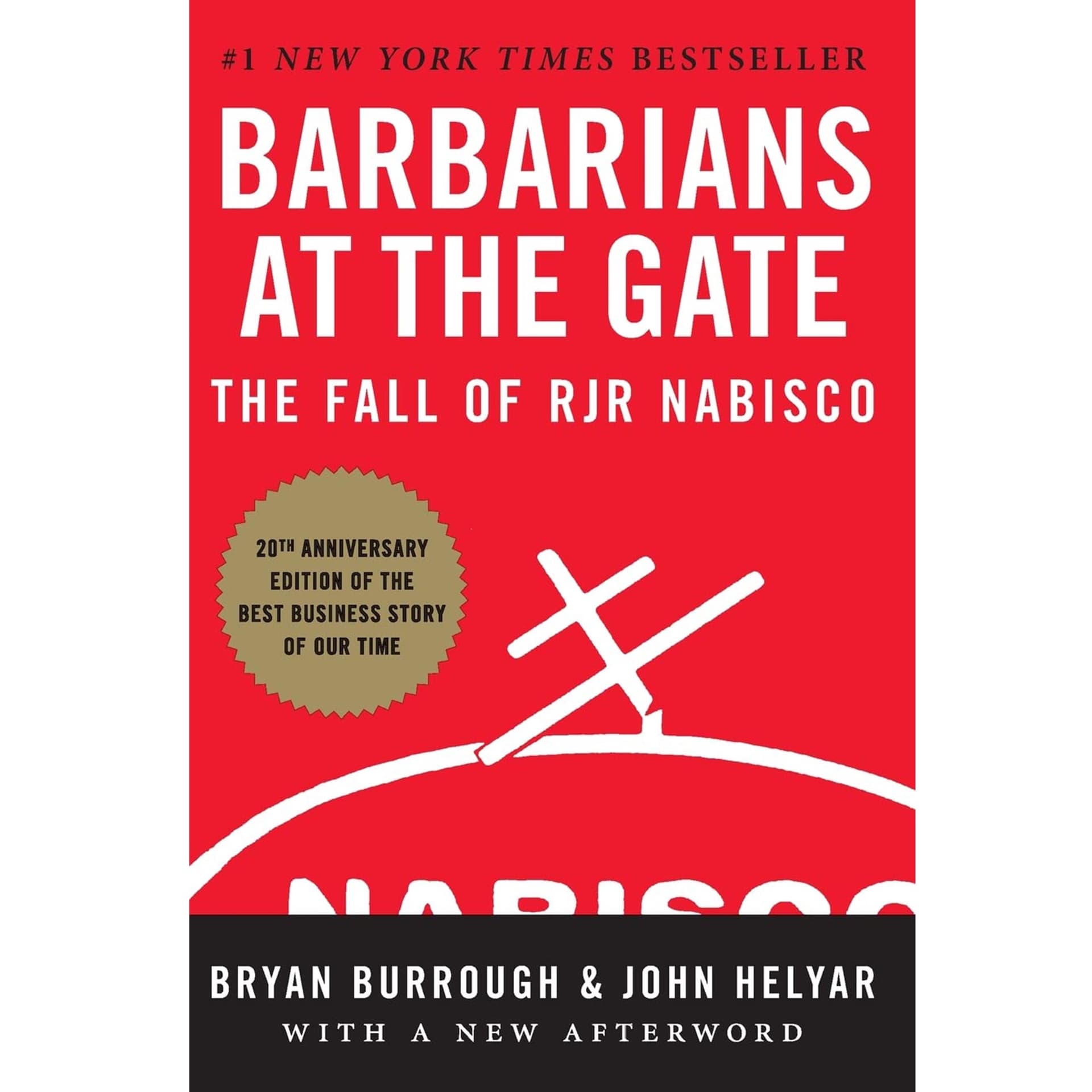
Podcast Episode Notes: Bryan Burrough - Barbarians at the Gate
Podcast Overview Title: A Book with Legs Host: Smead Capital Management Description: The podcast explores value investing through literature, featuring authors who discuss books that have influenced investment decisions. It aims to engage all levels of investors, business professionals, and thinkers.
---
Episode Details Episode Title: Bryan Burrough - Barbarians at the Gate Description: Author and journalist Bryan Burrough discusses his book "Barbarians at the Gate," detailing the high-stakes battle for RJR Nabisco and the complexities of one of the largest leveraged buyouts in corporate history.
---
Key Themes and Discussions
Background of Bryan Burrough
- Career: Special correspondent at Vanity Fair, author of five books including "Days of Rage."
- Journalism Experience: Former Wall Street Journal reporter covering mergers and acquisitions.
Historical Context of RJR Nabisco
- Significance: The largest takeover battle in American history at the time (1989).
- Investor Perception: Aimed to explain Wall Street complexities to ordinary Americans.
Character Analysis
Ross Johnson
- Background: From Canada, rose through Standard Brands to become CEO of RJR Nabisco.
- Management Style: Viewed companies as "poker chips," focused on shareholder value.
- Personality Traits: Casual, loved to socialize, and brought a more relaxed lifestyle to corporate culture.
The Merger and Its Implications
- Standard Brands & Nabisco: Merged to create RJR Nabisco; known for popular products like Oreo cookies.
- RJ Reynolds Tobacco Company: Sought partnerships to mitigate tobacco's declining reputation in the late '80s.
The Role of Mergers and Acquisitions
- Leverage Buyouts (LBOs): The emergence of LBOs in the '80s, with RJR Nabisco as a key example.
- Industry Shift: The rise of corporate raiders and the public's increasing interest in stock ownership.
Key Players in the Buyout Battle
- Henry Kravis (KKR): Counter bidder with a significant financial backing, focused on maximizing shareholder value.
- Peter Cohen (Shearson): A critical banker whose firm was involved in the buyout process.
- Legal and Ethical Considerations: The absence of clear precedents surrounding management buyouts.
The Announcement of the Buyout
- Timing: The management buyout was surprising to analysts and the public, showcasing the volatility of corporate America at that time.
- Media Impact: The coverage of the deal emphasized the changing landscape of business.
---
Key Concepts
- Leveraged Buyouts (LBOs): Using borrowed capital to acquire a company, expecting future cash flows to repay debt.
- Corporate Culture Shift: The evolution of management styles from traditional to more informal and engaging approaches.
- Investor Awareness: Growing public interest in corporate governance as a result of high-profile mergers.
Lessons Learned
- Capital markets can create transformative opportunities but also lead to controversies and ethical dilemmas.
- The importance of effective communication and transparency in corporate governance is highlighted throughout the story of RJR Nabisco.
---
Conclusion The discussion emphasizes the profound impact of Ross Johnson's management style and the complexities surrounding RJR Nabisco's leveraged buyout. The episode reveals the intertwining of corporate strategy, finance, and culture during a pivotal period in American business history.
For listeners interested in a captivating narrative surrounding a key moment in corporate America, Bryan Burrough's "Barbarians at the Gate" serves as a valuable resource.
---
Additional Resources
- Book: *Barbarians at the Gate* by Bryan Burrough and John Hellyer
- Website: [Smead Capital Management](https://www.smeadcap.com)
---
This episode provides a rich exploration of a defining moment in corporate history, offering insights relevant to investors, business students, and anyone interested in the dynamics of capital markets.
Written by AI. May contain mistakes. Listen to the episode to check what was said.
Transcript
Automatic transcript. May contain errors.0:02You're listening to A Book With Legs, a podcast presented by Smeed Capital Management. At Smead Capital Management, we advise investors who fear stock market failure. You can learn more at SmeadCap.com or by calling your financial advisor.
0:20Welcome to A Book With Legs podcast. I'm Cole Smead, CEO and Portfolio Manager here at Smead Capital Management. At our firm, we are readers and we believe in the power of books to help shape informed investors. In this podcast, we speak to great authors and their writing. The late, great Charlie Munger prescribed using multiple mental models and analysis. We analyzed their work through the lens of business, markets, and people. We are going to talk about a time in American history and the history of Wall Street. This book, which spent 39 weeks on the New York Times bestseller list, has been hailed as one of the most influential business narratives of all time.
0:56Brian Burrow is joining us to discuss Barbarians at the Gate, The Fall of R.J.R. Nabisco, which he co-authored with John Hellyer in 1989. A little background about Brian. Brian is a special correspondent at Vanity Fair Magazine. He is the author of five other books, including his latest, Days of Rage, and one that I'll look forward to jumping into at a later date also, The Big Rich, since we're oil folks these days. He is a three-time winner of the prestigious Gerald Loeb Award for Excellence in Financial Journalism. From 1983 to 1992, he was a reporter for the Wall Street Journal, where he reported from Dallas, Houston, Pittsburgh, and during the late 1980s covered the mergers and acquisition beat in New York.
1:40He has written for Vanity Fair since 92, as we mentioned. He graduated from the University of Missouri School of Journalism, better known as Mizzou, in 1982. Brian, thank you for joining us to discuss this story. I kind of want to just kick it off. This might be more obvious to an older crowd, like a boomer who's lived and witnessed this or yourself that, you know, you were in the middle of your career with this. But can you explain to a millennial or maybe even like a Gen Z person, what inspired you and John to write this story particularly? I would love that. Well, on one hand, it's easy, right?
2:17This was the largest takeover fight in American history at the time. There had never been anything like it. It was the closest thing to a civil war that Wall Street had ever experienced, meaning every major fund, every major investment bank had a hand in this. It monopolized Wall Street and the business world's attention for what, three, four months that fall? There just had never been anything like it. But the broader idea is I was a newcomer to Wall Street to this point. I was not really a businessy guy. I was 27 when I wrote this, and I took the job at the Wall Street Journal because it was the best offer I got out of school, not because I was particularly interested in business.
3:03So I get to Wall Street. I'm covering the takeover market. And literally every Monday morning, you've got$3 billion to$5 billion LBOs and takeovers. This was in 87, 88. And as kind of a normal person, not a business student, I thought not only A, is this amazing, but B, most of the rest of the country, people like my parents, smart people know something crazy is going on Wall Street, but don't understand what it is. And I thought there would be value there in explaining the complexities of what was going on in lay language to normal people. And every now and then in this publishing lightning strikes and it was a success.
3:48So let's start out with one of the main characters in this story, Ross Johnson. Teach our listeners about his background up to standard brands. And then how did he become CEO? At standard. At standard. Oh, goodness. Ross Johnson was a nobody from nowhere. Nowhere Canada. He was about as obscure an up-and-comer in the corporate world as you can get. He had a nice career there in Ottawa and Toronto. I'm going to lapse into a Canadian accent at any moment here, as we used to do when John and I would talk about Ross. We would always take on Ross's accent. exit. He went up through a series of mergers.
4:32He went to Standard Brands, a long forgotten American company, and then Nabisco, and then ultimately merged it to become CEO of this entirely new firm, RJR Nabisco, which was, we all know Nabisco products. And then he merged it with RJR Reynolds, the cigarette company. And this was supposed to be the great new company for the 21st century. And for a number of reasons, it was a disaster. But Ross was, I can't say unique, but he was definitely ahead of his time in the ways he thought of shareholder value. He really didn't think his, he loved his job, but he moved so often he didn't think it was the job, the desk, the chair he was sitting in at the minute was the be all end all of his career.
5:27So he had no problem buying and selling in companies like poker chips. And that's kind of the mindset that he brought to American business that was a little bit interesting in the late 80s. So one of the, you know, because he came from, if I remember correctly, the sales side of this. That was kind of his background was sales and the idea of creating products, you know, is where he came through standard brands. But he was a lifestyle person. This wasn't a job, to your point just a second ago. This is a lifestyle, I think is what Ross makes me think of. And we'll touch more of this later when we get into more of the Nabisco part of this.
6:07But, you know, he ends up in standard brands in New York. What was the lifestyle like for Ross? How did he look at who he should hang out with, who he should get drinks with, who he should get dinner with? What was different about Ross stylistically? He was more casual than a lot of CEOs at a time where he really, we still thought of CEOs. This was pre-Bill Gates. This was when people were expected to wear coat and tie still on Friday even. We thought of CEOs as silver-haired white men in charcoal gray suits. Ross was a little bit younger, a little bit hipper. He wore jewelry, which many people on his board hated.
6:50He cursed. And he, Ross was so full of life. He, I don't think the man ever frowned. Every other sentence was laughed. He just seemed to be loving his life and wanted you to love it too. I mean, his unwritten mantra was, we can make a lot of money and have a lot of fun. Coming up from the marketing side, as you say, the people he palled around with tended to be less the business roundtable types than Ross particularly loved celebrities. And Ross was one who definitely loved hanging out at celebrity golf tournaments with the PGA. Sure. As far as marketing with Standard Brands and then with Nabisco, he found ways to bring in sports friends from Reggie Jackson to Frank Gifford to Don Meredith to help sell his products.
7:52And that's who Ross hung out with. He had a good time and he didn't mind displaying it. So he comes in as CEO of Standard Brands, which you talk about some of the story of how he got to that point. Standard Brands gets put together with Nabisco. Can you explain some of the brands that were coming together at that moment? And even then, he wasn't the foreknown CEO of what was going to be the new Nabisco. Ross was a long time number two. And he always made very clear to the number one that he didn't want his job, that he was very comfortable where he was. I have not read the book in about 10 years.
8:34So I'm not calling up this. What were the standard brands brands? I can't even remember now. I remember the Nabisco brands. Yeah, I remember the Nabisco too. But to your point, I think it was one of these like mergers that were put together on the idea they'd be selling to the same customers. And we all can name Nabisco brands, but standard brands was in today's role, I think it was an afterthought. Well, and that's what made sense about the tobacco business. It's all convenience stores, grocery stores. That's who they were providing product to. Yeah. So let's pivot then. And could you teach our listeners about the history of Nabisco then?
9:06Well, Nabisco, as I recall, was a creature of the early 20th century. And, you know, it's one of the great American companies. I think most of us know it from rich crackers, but pretty much it was the P &G of chips and crackers. It was typically, you know, much of the early manufacturing in the later headquarters was in, you know, New Jersey. it was like P &G. It was that big of a monolith. And Ross comes on via this merger. Nobody really pays too much attention to him. Standard Brands is about as dull as the name. Is there a duller name than Standard Brands? The Bisco, actually, which stands for the National Biscuit Company, as I recall, was a much jazzier company.
9:55And Ross did what he always did. He came on as the number two, telling everybody he didn't, want to be number one. But suddenly, you know, he was best friends with everybody on the board, taking them out to breakfast, taking them out to the right golf clubs. And crucially, he, you know, this is not to suggest that Ross was all gloss and flash. In fact, he was a pretty hard-nosed business guy. He, you could even say was merciless in that he'd learned in Canada from one of his many mentors up there, that the businesses that they oversaw always did better the more they were constantly shaken up. He always told guys, his subordinates, you don't have a job, you have an assignment.
10:42He would do things like take one division and, you know, lop off the top 10 executives, assign them and switch them up with the executives of another division. And he found that as long as his subordinates going down several levels kind of were always on edge and always concerned that they could not be content, that they were constantly trying to prove themselves. He found that a powerful motivational tool. And I, looking back, think Ross, well, you know, Ross was as smart financially as any CEO of his ilk. His real genius was for brand and personnel management, particularly. He was very good with people, mostly because he kept the best.
11:32He was smart about it. And he ended up through these years from Canada up through Standard Brands into Nabisco with a coterie of guys around him that he knew he could trust, that he could throw at Dole Pineapple one minute and some cracker company the next minute, and they could do almost anything. And they would do almost anything for Ross because he also motivated people by being the purveyor of all corporate goodies, not just bonuses, but flights on the jet, playing around the golf with OJ. He kept his people having fun where he could. So let's go to the company that he probably made the most upset and disrupted the most, which was R.J.
12:20Reynolds Tobacco Company. Teach our listeners about the history and begin to flush out the future conflict that occurred there. Well, R.J.R. was R.J. Reynolds Tobacco Company. And it was one of the big trusts coming out of the early 20th century. It dominated with its brands. Oh God, Winston and Salem and all of them. And it was in Winston-Salem, North Carolina for Pete's Day. The problem that RJR Reynolds had in the 1980s was that tobacco was beginning to be heavily discounted by stock analysts. People just, as long as there was this cloud of government and civil litigation hanging over that industry, the stocks were just never going to take flight.
13:09So all the tobacco companies in the 80s, at a time where it seemed like every company was looking to mergers for growth, all the tobacco companies began looking for partners. And Ross was always willing to have an open mind about these things. Among his many friends were essentially the senior investment banker at every house on Wall Street. They all knew that they could just drop in on Ross and talk deals, and he'd always talk. Ross was an inveterate tire kicker. He kicked a lot of tires without necessarily buying a lot. But when RGR Reynolds came along, it had something that very few merger targets had offered him, and that was obscene cash flow.
13:57It had EBITDA like OJ had charisma. And the idea was by marrying this colossal stream of cash to Nabisco, you could lose the tobacco discount while just having crazy cash flow. I mean, it seemed brilliant. But of course, it was predicated on the idea that subordinating tobacco into another company would diminish or remove the taint of tobacco, the tobacco stock discount. And long story short, y 'all will get here. That didn't happen. Sure. Yeah, Cole's great-grandparents smoked those brands. And people younger than 60 or 65 to realize that when I was a child, the vast majority of adults smoked cigarettes.
14:51And then secondly, the machines and the process of making the cigarettes, the cost didn't change. I mean, all you had to do was oil the machines and keep the machines running. There's almost no cost associating in rolling those cigarettes. And so, like you said, it was a massive stream of cash. So, so. Well, the other two, RJ, RJ, you give a wonderful history in the book. And I, we have to tip our cap to you on this, Brian. You give the story of RJ, you know, he did a deal with Duke, put together in a trust where they effectively did like a profit sharing off of the joint companies. And then you tell the story of Teddy, Teddy Roosevelt, the trust buster coming in and busting that up and putting RJ Reynolds back into its own world.
15:38It was where RJ got to have his cake and eat it too, eventually, which was really unique. So I was going to say, Winston-Salem is off on its own. You had in other parts, you had like the Philip Morris world. But one thing you noted, we were just talking about beforehand, I was in Raleigh-Durham last week for some meetings. Can you tell people how colleges ended up in places like Winston-Salem and Raleigh-Durham, because they weren't always born there. Well, in many cases, and my memory on this is dim, but I remember the anecdotes about, look, the tobacco companies were trying to make North Carolina more attractive to white collar management from the north.
16:21And that meant gussing up the state. And that meant there are a lot of ways you can do it. Today, sometimes people want to, Saudis right now are doing it with professional golf. back in the day, the tobacco companies brought in an awful lot of universities. Duke, I think, was one. What were some of the others that were born or moved? You talk about how the Reynolds family brought in Wake to Winston-Salem, which was, and I think in both cases, those came from somewhere in the area. But I think in Duke's case, you mentioned that it was 100 miles away and they picked up and moved the university 100 miles.
16:54Yeah. I mean, this was the heft that tobacco had in North Carolina back in the day. It was close to a perfect business. Ross said, had some pithy take on it, but it was something on the like of, you know, you've got addicted customers. You have, we can do anything with the price that we want. Pretty much every year, we'll just bump the cost of a pack, a nickel. And the fact was, you know, until the 50s, until the Surgeon General and other people got involved with science, You know, this was an unstoppable business. And, you know, tobacco, much like oil today, fought off the reality of the damages its products were inflicting on people for, what, 30 years until ultimately it all caught up with tobacco in the 90s.
17:49But at the time of our story, Barbarians at the Gate, some of this is being driven by kind of tobacco trying desperately to reestablish itself as go-to public stocks the way they always had been. Yeah, and by the way, you mentioned that the Cipollini case was the big case at that time, which I think was a$400 ,000 verdict in a single case. And then the question throughout kind of ruminating through your book is, well, what does that mean from a larger picture? Even though Cipollini didn't get a lot, it showed a generation of port lawyers that there was money here, that in fact tobacco was vulnerable.
18:25And everybody knew, everybody that was smart, realized that the lawyers, the private lawyers would be coming after them big time. And that was the main reason behind the tobacco discount, the reason that their stocks just weren't selling at the multiples they ever had before. I was just going to say, Brian, I've never heard of a toilet lawyer. I've heard of an ambulance chaser, though. Hey, they have billboards all over the place now. So let's. Hi, I'm Cole Smead, CEO and Portfolio Manager here at Smead Capital Management and host of this podcast. If you enjoy this podcast, I'd like to invite you to check out SmeadCap.com.
19:04At our firm, we are stock market investors. We advise investors who fear stock market failure with a discipline that has proven success over long periods of time. Learn more about our funds at SmeadCap.com. Past performance is not indicative of future results. Investing involves risks, including loss of principal. Please refer to the prospectus for important information about the investment company, including objectives, risks, charges, and expenses. Read and consider it carefully before investing. Smead Funds Distributed by UMB Distribution Services, LLC, not affiliated. Tell us about the leaders of R.J.
19:41Reynolds prior to Johnson's arrival and the way— The culture around that. And how that played out as we go forward into the land of the leveraged buyouts. Well, R.J. Reynolds was kind of the classic, exceedingly parochial 20th century American corporation, which until the 1980s had had its way with pretty much with unions, with the government, with state government. it had just not operated under appreciable threats. And so they were as fat and happy and complacent as you possibly could be. They weren't even particularly worried about the discount to their stocks until their largest shareholders began grumbling.
20:34So you had an older gentleman like Paul Stitt, who then gave way to a guy named Tylee Wilson, who finally saw the light enough that he was willing to pair up with Ross. But as kind of new feeling, newish as Ross felt, Ross felt very of the moment. He felt like somebody that you could see in the pages of a magazine. The guys, his opposite numbers at R.J.R. Reynolds seemed like people off a magazine from the 1950s. They were guys far, you know, you were not going to see them on Park Avenue. You were not going to see them at the Stork Club or God forbid Studio 54. These were guys in golf shirts at the country club who didn't, you know, who pretty much thought that if the rest of the world wanted to do business, they should come down to Winston-Salem because they were used to being on the unchallenged poobahs, if you will, in the 80s with this new ethos of shareholder value.
21:45This was scary stuff to them. This suggested change to a world there in Winston-Salem that really had not undergone significant change in decades. Yeah. Teach our listeners all the businesses that RJ Reynolds was in at that time. I was going to say that all of RJ are Nabisco. Like in other words, can you, you know, you talk about the tobacco. Guys, we help me tick them off. I mean, obviously you've got tobacco and all the tobacco brands, obviously about crackers and all the chips. And then you've got stuff like Dole Pineapple. It just goes on and on and on. There was a, they were shipping at one point.
22:28I mean, Nabisco did churn through a lot of businesses, but Ross was pretty smart about keeping only the best ones. What am I leaving out? What other products that people would know? The other one that I mentally noted, Ryan, because – Oreo cookies were enormous. Was in there. The other one that I just – I fell out of my chair rereading. again, thing I would have missed if I hadn't reread it, was they owned the other 20 % of ESPN that Capital Cities didn't own. And you wrote in the book, you guys wrote that they offered $780 million to buy out Capital Cities piece of ESPN. And I could not even fathom how much cash flow has come off of ESPN since 1987 or 88, whenever they offered on that.
23:19So to your point, The cigarette business was a reason to print money. And with the glad handing of Ross, they just ended up buying multiple businesses over and over again, whether or not it was reasonable. Is that fair? Oh, absolutely. This was literally the story of two companies that had more cash flow than they knew what to do with. Looking back, might they have been better served, channeling more of that into a yield, into a dividend? before they were forced to by the markets? Yeah, maybe, but not a lot of the corporate world was thinking that way before 1985 or so. I mean, the 80s were a time of spectacular change in the way we thought of what corporations were supposed to do.
24:11Up until then, I think most people thought, most people were not investors for one thing, investing in stocks and bonds, that really didn't become a thing for most Americans until the 80s. Before 1980, you guys remember, stocks and bonds were for people in New York who were rich. It didn't really become a thing until the 80s. And when it did, more people began expecting more of the companies that they were investing with. We got for the first time, you've got things called corporate raiders, which we live with today, but which was a relatively new phenomenon. And of course, you've got leveraged buyouts, which was the birth of private equity there in the 70s and the 80s.
24:59yeah so we just got done watching nelly corda win the chevron uh lpga championship this was called the dinah shore prior in rancho mirage what was it like for these executives from winston-salem to walk into johnson's world of golf and celebrities well the dinah shore was one of ross's big weekends you know i think they had a pga tournament as well but the dinah shore they they all but owned, they all but created. And this was a classic Ross moment where you've got a four or five-day golf tournament there in Palm Springs, I think it was. And Ross was kind of brilliant. Years before Sun Valley, years before Mike Milken started having the Predators ball, Ross would invite everyone associated with both companies, every celebrity he conceivably ever met, put him up at the greatest, you know, hotels, best champagne, the best everything.
25:56And essentially, you know, he acted as not just host. It was beyond host. He was concierge. He was the one making sure that everybody had a great time. As silly as it may sound, at the time, it generated spectacular goodwill, not only for the companies and their brands, but for Ross and his board members. And he, you know, he made sure that, you know, the board members always came first. He was, in all the 40 years I've written about business, he was the best at taking care of a board I've ever seen. In ways today that might be frowned on, Ross would, let's just say, always make sure that each board member had what they needed.
26:43We'll get to that later, Brian, because that's a great point. I mean, like, there's some stuff where, now, Gavin, to your point, this is still the Wild West. I mean, some of the stuff had never been done. So someone said, hey, what's the legal precedence? And what should you do? The lawyers are like, well, here's our best guess at how you should go through this. But I totally agree. And to your point, when the RJ Reynolds guys came in to their first done ashore they thought this was like studio 54 these were guys who lived and were happiest in small town north carolina and here's ross with his bracelets and his chains and his late pneumatic ladies and they thought it was like uh you know woodstock or something i mean they were i think they were stuck between being horrified and before and quietly having a pretty good time themselves.
27:40It's like somebody running a business like a fraternity rush chairman, in a way, right? Let's show these people the best. That's a great line. No one wrote them a letter and said they were too well to attend. So he becomes CEO to the detriment of others like Ed Horrigan, but more so Ty Wilson. His first order of business was to move the location. Explains the change that happened to the corporate headquarters in Winston-Salem itself in the few prior years and what this move meant for RJ Nabisco, Johnson, and the town. Well, Ross was very aware that the bringing together of Nabisco and RJR Reynolds, two of the great American brands with, as we've said, obscene cash flow, was a new paradigm.
28:31This was a new titan of American business, 2X bigger than the brands that he had taken on. And I think he wanted something that suggested that this was neither Nabisco nor RJ Reynolds, that it was something bigger, newer, and very much looking forward. And that meant a lot of things, but primarily it meant a new identity, much like you would see, it was not only the renaming, which Google or any number of modern companies had done, but for Ross, the signature move was a new headquarters. So no more Nabisco headquarters in New Jersey, no more RGR Reynolds in Winston-Salem. The new company of RGR Nabisco became headquartered in Atlanta, which is entirely new for Ross and for just about everybody.
29:28And, of course, the guys in North Carolina were horrified because Atlanta was, you know, sin city to them. But Ross felt it was necessary. And, you know, he brought in, as he assessed both companies, especially assessing the new people at RJR Reynolds, he bought in the best and the brightest. He left most of the tobacco guys, like Ed Horrigan, who was running tobacco at the time, there in North Carolina, where they wanted to be, and gave them pretty much autonomy, which was smart. But he also knew, much as he'd had at Nabisco, and he sized him up pretty quickly as yesterday's guy. You know, he was generational.
30:23He was generational. Ross knew he was the next generation. He saw that Ty Wilson did not want to romance the board as he, Ross, was happy to. And I think he knew, as it happened twice before in his career, that if he just hit his numbers and showed everyone a good time and seemed he was also a plus-plus communicator, both with the press and with investor relations, that the board would come his way. And of course they ultimately did. And he became CEO in what? I want to say 87. Yeah. Well, the other thing that came his way in the process was the RJR Nabisco Air Force, which I think you noted was like a Lear 45 and a Falcon 30 or something like that.
Read the full transcript
31:10And then if that wasn't good enough, he had to give them a palace too, which was the hangar, which I think you noted always stayed RJR Nabisco because nobody else wanted it. And that was incredibly unique for then. That's still very unique for even today's corporate culture. Would that ever be allowable today like it was allowed for him back then? Honestly, I'm saying no, just because I have not covered the corporate world in any detail in about 10 years. But I know it's always been something you would look askance at. But Ross understood, first off, if you take care of your board in those days, the board was not, and you're hitting your numbers, the board's not going to complain a lot about baubles.
31:56And Ross understood that one powerful way to motivate not only the board, but his people was he had power of the plane. So if they had, what, at the height, 14 jets or something? If Ed Horrigan over at Tobacco in Winston-Salem wanted to go play golf in New York one weekend, and Ross gave him a plane, well, that was a very big deal. That was a way where someone like an Ed Horrigan knows where his bread is buttered. If he wants to live like that, if he wants the plane, and Ross was very good in leveraging that. But let's be clear, the person who loved the planes the most was Ross. Ross, there was this great story about, I mean, Ross used these planes like taxis.
32:42There was this one story before, I think it was at the Dinosaur one year. He had a German Shepherd. He bit someone. His German Shepherd bit someone. And so they spirited the dog out on the plane. And it later came up in either a lawsuit or something my partner, John Hellyer, found that on the flight manifest, he was entered in as Mr. G. Shepherd. So Ross had it pretty sweet there, especially with the planes. To your point, I mean, he was using these with the celebrities. So, you know, again, rereading it, Jack Nicklaus was one of his preferred guests. I mean, he was paying Jack Nicklaus a half million dollars in 87.
33:21I mean, that is so much money relative to what even pros get paid today on the PGA for sponsorships like that. So, I mean, my mind was just like, to your point, he knew how to butter people's bread. But we want to pivot to the other thing he did prior to we get into the buyout land. Yeah, the precursor to the idea of a management buyout was that Johnson was a glad hander and was always talking to bankers. I believe you had explained they were buying shares back. Why didn't they continue doing this more aggressively? We have thought about this in comparison to the culture of buybacks today. Yeah, I think they spent a billion one is what you pointed out in the book.
34:03That was, if I remember correctly, it was a large percentage of the existing shares outstanding. Why wouldn't someone back then just continue to use that prodigious cash flow and buyback stock to squeeze the shareholders? And that was the question that got asked afterwards. Look, when the new company came together and Wall Street did not reward it with the multiple that Ross expected, he was not thrilled. And so the buybacks were among the first weapons. And the stock did not move the way he thought it should. I think there's a case to be made that it wouldn't have stayed as high as it had without the buybacks, but I'm probably not the guy to answer that.
34:48So he started a little Frankenstein's lab there with a couple of his buddies, a guy named Andy Sage and one other guy and some assistants to start looking at, think outside the box of ways that we could increase value. So they're looking at all sorts of recapitalizations, just all sorts of kind of – I remember thinking at the time when we learned about all this afterwards, this was the type of stuff that back in those days was being looked at in business schools and investment bankers were constantly trying to sell it as a way to gin up fees that very few companies were doing. I mean, the classic way of it.
35:35I mean, and so they looked at a lot of crazy stuff. And eventually, as they started seeking more advice, word got out on Wall Street, as it does, to all the top M &A departments. And that's Morgan Stanley. That's first Boston. That's Drexel. All the big names in the day. You get a whiff that, oh, this Johnson guy, he'll talk with us. He'll consider. He's not an old Monopoly man who's going to kick us out the door because we've come up with something daring. He seemed to welcome daring. So every major firm had its guy who was a Ross guy. And every single one of them, all of whom end up being minor characters in the book, thought they were Ross's guy.
36:20I think later they were all horrified to learn Ross had about 10 guys. And so they, Ross, by 87 and into 88, Ross is the subject of, you know, more or less constant wooing by investment bankers. And by that, I mean, just the deal flow. He got to look at everything that was coming, that came across Wall Street desks. He wasn't doing much. But as the stock didn't move the way he'd expected and candidly the way he'd promised it, bored it would, he had to keep saying, we'll fix this. But Ross, I believe, knew that the grand idea of RJR Nabisco, that you could put these two together and they would perform as a consumer products company and not a tobacco company.
37:14I think he came to realize that that idea was not going to happen. It was a non-starter. Even so, later, a lot of people asked, why on earth did you, what was the hurry? Why did you feel you had to take these drastic measures when things, as you say, like buybacks might have gotten you there eventually? And I think the answer lies within not financial analysis, but it lies within Ross and his character. The fact that he was not one to lie back. Say what you will about the planes and the golf tournaments and all the money he lavished. He wanted more. He wanted to get that. He woke up every day.
38:02He likes CEOs today, but less so back in the day. And every day, from 9 o 'clock, what is it, 9.30 to 4 o 'clock, every day Eastern time, he knew where he stood with the public. That was his stock price. But he wanted it now. That's the other thing, the LBO. It was a now thing. Because buybacks, you'd have to do that over years because you wait for the cash flow to come in, then you buy back, which over time you could rectify. But now you can't. But you also have to add in the context that in 1982, at the bottom, public participation in the stock market was at all time lows. And so this stuff is happening with a relatively unknowing or disinterested public, right?
38:47What happened in the stock market in the 1980s was just a small part of the American wealthy that were caring about this. So you've got that weird combination where these executives are dealing with the fundamentals of business and trying to get their stock up. But yet you didn't have all these shows, all these touters, all these research analysts that you have today, which is kind of a segue. I would actually argue the opposite. That while attention on public companies then pales before what it is now, there was no Jim Cramer then. There was no CNBC. But the public glare on public companies in the 80s was exponentially more than it had ever been before.
39:34For the very first time, I mean, you had corporate raiders and takeover battles became, they were like sports contests. right fortunate in Forbes and the Wall Street Journal where I was working you know their their their circulation swords because so many normal people were pouring into and getting some sense of there's something going on here I need a part of so while it's nothing compared to today it was still a pretty a bright glare by the standards of that day and I would argue that that was part of the reason that Ross felt a little heat because a business press and institutional investors that didn't have much history of looking at companies and saying, why isn't that stock doing what it should now suddenly were?
40:26That was an element of the pressure he faced. We hope you're enjoying the podcast. You know, we work hard putting together this show, but we work even harder for our investors at Smead Capital Management. At Smead, we believe in disciplined investing, which is why the Smead funds have a proven track record of long-term outperformance. If you're an investor who fears stock market failure like I do and want to invest in wonderful companies to build wealth, we invite you to visit SmeadCap.com. Past performance is not indicative of future results. Investing involves risks, including loss of principle.
40:59Please refer to the prospectus for important information about the investment company, including objectives, risks, charges, and expenses. Read and consider it carefully before investing. SME funds distributed by UMB Distribution Services, LLC, not affiliated. So that takes us to the prior LBO, Beatrice. Explain how large this was to even contemplate for a management buyout. Well, Beatrice, I want to say was, I remember in the end it was$6 billion, but it was - Yeah, 6.2. Yep. Yeah. Look, what happens is you start when a guy named Jerry Colbert more or less invents the LBO in the 1970s. And then, as y 'all remember, there was that initial one called Gibson's Greetings around 80, 81.
41:50And, you know, when they turned it in, they'd made 60x on their money or something. And suddenly - That was a treasury secretary or somebody. Yeah, in 82. And suddenly everybody and their mother is asking, what is this leverage buyout thing and how do we get in that business? And so suddenly every corporation begins at least studying what it would mean if they did it. You know, obviously a minority did it, but it becomes part of the ethos. It becomes part of the communications. and a number of firms, obviously led by Colbert, Kravis and Roberts, but there's also Forsman, a little and several others, you know, spring up to help companies do that.
42:38And by the time of Beatrice, which is like 85, 86, these companies are start, there've been so many LBOs in the first half of the decade that the companies that are best suited for LBOs, those with an awful lot of fat to cut, have been done. And a lot of the firms and a lot of the Wall Street firms start to look at companies, Beatrice being a big one, I would suggest, that looked very appealing and in fact did not possess all the qualities that you would want in an ideal LBO candidate. Worst, Beatrice had this knot of liabilities, somewhat like a tobacco discount that nobody knew quite how to get rid of.
43:22I can't even remember what they were right now. All I remember is that I did a news story every Tuesday on the trouble with the Beatrice deal. So companies like KKR, which tried to do Beatrice, start looking at bigger and bigger deals. The idea being that all the low-hanging fruit in the LBO and takeover market, the easy targets, the soft ones, the$1 billion, the$2 billion, the$3 billion deals have been done. And one of KKR's pretty smart things that they decided around in 1985 was, A, they started being more aggressive and started maybe nudging some companies into doing LBOs instead of just waiting for them to come their way.
44:05That was one. And the other was the idea that it doesn't cost any more to do a$10 billion LBO, heck, a 12, than it does to do a one. So why – so they started thinking about going even bigger. And that brings – suddenly brings in companies like General Motors and U.S. Steel that never would have thought of this type of thing suddenly begin to. So there was an inventive or I'll call it inventive in quotes product that was being put together at RJR Nabisco. I was – when I was reading this, Brian, again, rereading this, I was like, oh my gosh, this is like the modern day vape. as we know it, right?
44:47That's right. We're taking tobacco and supposedly making it quote unquote better for you. So can you teach our listeners what was this product that they call Premier? And then my second part that I'd love you to explain is why was it problematic as a product? And then why did it also become problematic for Ross Johnson when the board finally found out about it? Well, the problem here, Ross thought that, okay, if our combined company is not going to shed this stock discount, we're not going to have the multiple. We need to somehow deal with the tobacco problem. How do we make that go away and still keep the tobacco business?
45:27Their idea, not a crazy one, was how about a healthy cigarette? something that we can project forward will be a gangbuster. It will be the future of tobacco and get people to stop thinking about cancer and all this yesterday business. We're going to take cancer and all that out of it with a smokeless tobacco. And their scientists, actual scientists actually, came up with this product, which was kind of a tube. I want to say it was a synthetic tube and a little bit of nicotine. And instead of burning the nicotine, they had a little device in there that heated it so that it would produce smoke. And Ross heard about this early on and thought, this, this is what saves us.
46:19This changes the day. This will shed all the negative thought. And what happened, long story short, is there was a presentation, as I recall, before the board learned of it. And he was presented to Ross and a stable of their senior executives, and one or more of them sampled the cigarette. The premier is what they were going to call. And as I recall, I don't remember the quote that they said that day, but the marketing study that came out afterwards internal was that the main drawback to the product was that the overwhelming view of those who used it is that it, quote, tasted like shit. It was awful.
47:17It didn't taste like a cigarette. and Ross realized, you know, I mean, we present in the book that this was kind of the final straw. That this was Ross's last chance to realize the promise of the combined company. And it was taken off the table when he realized Premier was not going to be - And you're right, Cole. You're right. He was just way ahead of his time. Yeah, or just the product. Yeah, they couldn't develop the right product. Because I think in the story, when they finally do disclose this to the board, the board asked the question, how did you never explain this to us in advance? And the reason was because the business was so profitable, they were hiding it in expense accounts that would never raise it to a level of board disclosure in the financials.
48:02Yeah. And this was one of the few times that I can remember the board actually saying, hey, we're a board, you know, maybe we should have known about this. But I think Ross had a legitimate point is the cash flow was so big. This was like, you know, a fairly minor project. But I think what they were upset about y 'all was the idea that, oh, you had a secret plan to kind of solve the central problem of this combined company and you didn't share it with us. And I think Ross didn't share it with them because he didn't want it to blow up in his face if, in fact, it didn't work. Sure. Yeah. So Henry Kravis is working for George Roberts at Bear Stearns before KKR is invented.
48:55Private equity was primarily built on bootstrap deals. Explain what the bootstrap deal is or was. Bootstrap deals were an idea of Jerry Colberg's at Bear Stearns in the, I want to say the early 70s, where essentially he would work with private companies, those who had an aging CEO who was looking to cash out. and Jerry came up with a structure in which he, one of his funds or bear would buy the company from the guy under the right circumstances that they would take on a good deal of debt to buy it but they took on candidates that had a lot of sheddable assets, if you will and back in the day when there were the conglomerates like Textron made up of 18 different businesses.
49:52Who cared if you got rid of eight of them? They weren't dependent upon each other. So it was a small little business that Jerry did. Bear Stearns thought it was stupid. It didn't make enough money for the firm at the time. So Jerry ended up going out on his own. He took his two young acolytes, Henry Kravis from Tulsa and George Roberts, who had taken an office in the Bay Area. The three of them started a new firm in the late 70s called Colbert, Cravis, and Roberts. And they also had a rival, a guy who noticed the business and thought, hmm, that makes sense, a guy named Teddy Forsman, who ended up being their arch rival for years.
50:33And these two firms, along with LBO arms of several of the investment banks, began doing larger LBOs in the early 80s. Gibson's greeting being the one, the thunderclap that alerted everybody to the products to be made here. And typically what they did. Yeah. Yeah. I have an anecdotal story on exact that. I became a broker in late 1980. And in early 81, my uncle Les called up because my dad and my uncle were vociferous grocery shoppers. And if you lived in Washington, you drove across the bridge to go to Oregon because there was no sales tax. So my uncle calls up and says, Bill, what's Fred Meyer trading at?
51:17And I looked and it was like$21 a share. And I didn't, you know, I'm just a brand new stockbroker. I don't know anything about the company, why it would be a good idea or anything like that. And so we didn't do anything with it. Well, we wake up about a month or two later and And Colbert, Kravis & Roberts has taken it private at$37 a share with the help of one of their major investors was the Oregon pension plan, which I think you mentioned. And throughout the book. In the book as one of Colbert Kravis' early investors. And so there's a great history there. And I never want to miss one of those again.
51:58That's just what a young stockbroker is looking for,$21 stock going to$37 in a couple of months. Yeah, and early on, there were a lot of Fred Meyers out there, a lot of companies that were fat and happy that you could borrow to buy and then repay your debt by selling off their lesser divisions and such. and people made a lot of money without a lot of attention there in the early 80s. And obviously, once these tactics became more widespread, once unions became more attuned to the jobs that they felt that they were losing, they began to get some political and cultural blowback on all that. But that really doesn't start until probably the mid-80s.
52:48You know, back in the days of Gibson's greeting and Fred Meyer, you know, that was – those were the good old days. You introduced Peter Cohen who, you know, besides Ross and Horrigan and maybe, you know, Charlie Hoogle, he's one of the central characters in this whole thing because he's hand-holding Ross almost the entire story. He was a banker at Shearson. More importantly, Shearson had been acquired by American Express in 81, so had this large financial backer, which was unique for its time. They'd also merged Shearson with Lehman. So it was Shearson-Lehman brothers, part of American Express.
53:26How important was that relationship for this story? And it was looking back, how big do you think that was to have Shearson sitting under the umbrella of American Express? And also, was that Amex world of then really more of a predecessor to what we see now in the large commercial banks combined with the investment banks? And I think the only other thing I could ask off that was, could you maybe just touch on the Robinsons because they were just a novelty in your story? Well, Peter Cohen is the critical factor here. Peter is a very young, very aggressive CEO of Shearson Lehman. He's a little Wolverine of a guy.
54:06Peter's tough. And we all knew him. He was smart. He knew the press. And he brought in Lehman. And like every other CEO on Wall Street, they wanted a chunk of the LBO business. They didn't have an LBO business, but they were determined to get it not only for the equity returns, but for the colossal fees that it brings you. Investment bank for putting together a deal and then your bond desk for you creating and selling the bonds. I mean, an LBO, especially a large-scale LBO, creates fees for almost every sector of investment banks. So Peter was there early on as among the suitors for Ross. And Peter was the most desperate and the most willing to give Ross the store, if you will.
54:57They didn't really know each other that well, but Ross wanted the best. Ross is not stupid. He wanted the best deal he could. And, you know, maybe a Drexel or a Morgan would give him, and you guys will remember these numbers better than I do right now, a 5 % equity stake in his group or whatever. I want to say Ross's was something like 30%. And when later people did the math, you know, they found that his little management group in this LBO were going to make billions of dollars. And, of course, that redounded to everyone's horror. So, you know, Peter Cohen and Shearson Lehman were just the most aggressive and the most desperate here.
55:38And that's how they managed to get in. Peter, of course, was, while he was CEO of Shearson Lehman, he had to report not just to his own board, but to his corporate parent, which was the American Express Company, which was led by Jim Robinson, who just died, what, two weeks ago? and Jim Robinson was a singular figure in corporate America at that point. He was sometimes called the Secretary of State for America, for corporate America, because whenever anything, any law or anything to do with the corporate world came up in Washington, they always sent in Jim Robinson because he was Harvard, he was country club, he was from nice southern Georgia guy, as smooth as you can get.
56:22you know, a Jim of a guy, candidly, but he was Peter's boss. And Peter knew that, you know, he had to keep Jim happy. And by and large, he did until this deal. Yeah. The one thing I'll note before Bill asks his next question is for all the millennial men or call it Gen Z men out there to tie it up to your world on social media. I think Peter's prior deals at Shearson were primarily with Paul Bilzerian, who you note in the book, Brian, who most of these kids nowadays are familiar with his son, Dan Bilzerian, out on social media, just to bring it back to today's world. So go ahead, Bill. Yeah. So Stephen Goldstone was another central figure.
57:07He was the lawyer from David Polk and Wardell working with Johnson's Buyout Group. In the 2022 buyout of Continental Resources, our investors were the largest minority block of investors. We had a conversation with David Katz at Wachtell, Lipton, Rosen, and Katz. It seems the banks have changed names more often than the white shoe legal firms that have been doing M &A work. Is that fair, and has that surprised you? I think the brand names matter more for the law firms. You know, I think people freak out more when a law firm changes its name than when, you know, on Wall Street you just get used to it every five years.
57:42You know, everybody's going to have a new name except for Morgan Stanley and one or two others. everybody's going to change. You get used to it. The only constant on wall street is change. Right. Um, but yeah, if you, if you look back, Davis Polk is still Davis Polk, um, um, and, and most of the others, you know, Scadden is still Scadden. Yeah. Yeah. I think T. Rowe price said change is the stock market's only certainty. Yeah. Uh, so there's more legal precedents around these transactions now. How much law was there around these transactions at the time? But also, before announcing their management buyout, Johnson essentially bribed, I think you talked about how he goes to Hugel, he practically bribes him.
58:26You know, I would say it was a bribe, but, you know, I'll let the readers think about that. Because he knew that Hugel would be the chairman of the special committee. Charlie, he said that, he came off saying, effectively, that was unethical and asked him if it was a bribe. But, you know, there weren't a lot of, we're not talking about decades of history and the legal precedents for this. I know there's more regulation around it now. How much of this was an ethical or business decision for the trustees or the directors versus it being a legal precedents? Well, I, you know, that's a really good question.
59:00I don't remember that we spent an enormous amount of time back when we wrote this in 89, fully appreciating the lack of legal precedent. And perhaps that law has developed. Back then, there seemed to be fewer bright white lines. When Ross offered something to Charlie, you know, Charlie didn't say there's a law against that. He said, I don't feel morally I should do that. You know, they had. Which should be the standard, by the way. Well, yes. And, you know, they had the special committee brings in the guy from Skadden. He gives them their marching orders. Ross brings in Davis Polk, this guy, Steve Goldstone, who tries to teach some sense to him.
59:42But by and large, other than the special committee, the lawyers are subsidiary. The lawyers, they just don't. It seems like the principals, Ross and others, just ride roughshod over the lawyers. And there's some sense that, OK, there's not a lot of law here. And if we're going to pay a price, it's going to be in some lawsuit eight years down the line. Well, I'll have eight bonuses by then, and I'll have my house that Hampton's paid for. The special committee was a little different. These were people who were not getting a ton of money off being on the board. A board member might make guys what?
1:00:17$300 back in the day? You know, not bad money, but not enough money to really want to undergo years of legal fees, defending your work on that special committee. And so what we saw was that the members of the special committee and to extent the board really listened to what the lawyer said. And each time Ross would ask them during the process, how am I doing? What are you guys going to do? You know, they said, Ross, we can't do you any favors anymore. We're going to get sued out the wazoo if we do. That was the one place where you saw the lawyers having a real effect on the process. And it probably made for a better process.
1:00:59So starting one of the later chapters, you open the chapter with explaining to the readers the morning that the management buyout was announced, you noted that the Atlanta Constitution's business section ran a story under the headline, quote, analysts say RJR isn't likely to be involved in any merger, end quote. I love that because in our job, we're stock pickers. We don't expect the analysts to have the right answers. And so it's one of those reminders that like, you know, you know, these things are highly unexpected as you, as you and John are covering this, how unexpected was this to, to the media and to the world?
1:01:36Um, John covered the company. I covered the deal guys in New York. Uh, to me, every company was a potential target because that's all I did was cover the deal retardants. To John, I think it's no knock against John to say he probably believed the same thing the local paper did, and that is R.J. Arnabisco was too big for anybody to come after. So the only way they're going to be pushed into play is if they did it themselves, and a company that big has never done anything remotely like that. This would be a deal, and it ended up being a deal, more than three times larger than Beatrice. So the idea that RGR Nabisco would be anything other than buying some small company, it was beyond imagining at that moment.
1:02:24When it came out, it wasn't as stunning because just the day before, Kraft was involved in a$10 million deal, a big merger. um but with rjr with now yeah we have philip morris i think that was when they were putting together craft with philip morris philip was trying to solve its own tobacco problem when after was was gonna do the deal with craft and that was at maybe the first 10 billion dollar deal so when rjr came along a few days later yes it was a shock but it was at at a time where you got a sense that old barriers were falling. The shock here was that this was not a merger of equals, another one.
1:03:08This was an LBO. There had never been anything remote. This was a multiple of the size of anything that came before it. Along these lines. Because in many ways, RGR was a perfect candidate. With that cash flow, all those divisions it could get rid of. Along those lines, parallel with the work Brian would have been doing at the Journal at that time, is CNBC had a guy named Dorfman who would come on and share rumors about - Yeah, Dorfman was in the book. Yeah, Dorfman was in the book. What deals were potentially out there? And when you think now how risque all that was and how new all that was, it just kind of blows your mind a bit.
1:03:47Nobody remembers today Dan Dorfman who started off in like the New York Post and then went to the USA Today for about during the mid 80s. he did have this unique thing where he wrote a column about who was in play and who was going to fall next. And it raised all sorts of legal problems. And people weren't always, you know, paying small fines or having SEC settlements because, you know, they, they, they sent Danny, you know, word that they shouldn't have, you know, ultimately I think he, he fell by the wayside because that was a little on the sordid side. It was so entertaining though, Brian, it was so entertaining and I could only report that if I had like solid evidence that that was happening which you almost never got it because it was illegal to leave and but Dan Dorfman could say anything it often did well I just think now I mean think about where they are now on CNBC they they they they bring people on that that I mean you either have to have good gossip or you have to have years of experience to represent.
1:04:50And now it's just loaded with people, just people that they're bringing on to say what they think. At least Dorfman had some good, juicy gossip. Well, I was going to say, we have a saying here in our office, Brian, and this is something I learned from dad. Dad said, listen, 90 % of rumors in this business are true. Okay. And so whenever we hear a rumor, we just assume that there's some validity and then we have to prove otherwise. Well, the only thing a ruler tells you is it's somebody's thinking of the possibility. And if somebody's thinking of the possibility, there's some young analyst somewhere, you know, running the numbers already.
1:05:29That's one step away from reality. Yeah, no, I agree. So management opens, and by the way, I'll say this to our listeners. We cannot do the meat and potatoes of this book Justice in the podcast. I mean, we were talking about beforehand, page like 250 or 300 to 500 is the most intense, exciting parts of a book you'll ever read. You'll just be flying through 200 plus pages because of the intensity of the back and forth, the sausage making, the inside baseball of the R.J.R. Nabisco. Shakespeare could not come up with better characters that Brian had to work with. So, you know, so just to kind of tap at some of this, management announces their deal at 75.
1:06:11They try to do a quick deal and not provide much information to even the board, which I think Hugel does a good job of, and you guys do a great job of writing about that. Kravis is, in comparison, starts to do a lot of work now that he knows it's in play. One of his primary financiers was Jeff Mad Dog Beck of Drexel Burnham Lombert fame. Drexel has had its issues already with the government, though, with Dennis Levine, who you comment on the book, and Ivan Boski, who both were going to be indicted. did Kravis carry a lot of credence to the idea that Drexel wouldn't be able to deliver to get a deal across the line?
1:06:49Because the sense, going back to reread the book, was Henry was not that worried about Drexel performing or not versus other people threw that out as a possible problem. Let me just say one thing about what you dealt with first, and that is what makes the narrative of the book different. Why are we talking about this book rather than any number of other great business books? And there have been many. This was the first book, and it's still rare, to literally have the cooperation of every single person in the book. I can think of one minor character who wouldn't play ball with us. Part of this is we got lucky.
1:07:27We were two reporters from the Wall Street Journal. Most of them read us every day. We seemed to be credible. and so when we went in afterwards and called Henry Kravis and called Ross Johnson and called each and every one of them, sometimes after lengthy negotiations, but we got every single one. Peter Cohen, for instance, sat with me for a weekly hour and a half long interview for four months. We interviewed Ross for over 20 hours. So the point being, we were able to reconstruct at conversations in a way that business journalism or business books hadn't done before. It still is really difficult to do today.
1:08:07I would put together a conversation based on what four participants had told me and then read it back to them and say, guys, does this sound right? And, you know, of course, they would say, well, not every single word. There might have been some ahs and buts. So we had a pretty – we felt like we were prepared to take business journalism, a business narrative, if you will, to a new level. So that's one of the reasons that the book was so popular. In terms of Henry and Drexel, this was a time when, along with everything else going on, there was an enormous amount. There had been the great insider trading scandal centered on Ivan Boski that had given way to an ongoing government investigation into all sorts of insider trading and similar activities at Drexel.
1:08:57Drexel was the engine that fueled all takeovers. Everybody paid for takeovers and LBOs with junk bonds at that time. And there was only one place that you could reliably know you were going to get enough. And that was Mike Milken at the famous X-Shake desk in LA. You know, people debated, would Milken be there for this deal? And Henry was willing to hire other people to bring people along. But everybody that wanted to attack Milken's monopoly, and this was chiefly Solomon Brothers, which was tearing their hair out that they couldn't, wanted to do this deal for Henry. And Henry would. He was like, I will only do this deal with Drexel.
1:09:44And ultimately, they did. But there was a lot of concern here. But that was just part of the extracurricular concerns that go beyond the feasibility of the deal. You had not only could the deal be funded, a deal this side. You had the idea that consumed George Roberts of KKR. Is this the deal that is so obscene and so flashy and so headline-packed that Congress gets involved and somehow regulates private equity? so there were a lot of big picture concerns that came to be associated with this deal there was this Brian can you disclose the person that didn't allow you to interview them because now that you said that I'm kind of intrigued who it was Andy Sage Ross's financial part of Ross's team to your point on the politics you talk about Ross goes to meet Reagan while this is going on and Reagan says to him You know, you said something about, you know, you sure got a lot going on or something along those lines to him in the book.
1:10:47Yeah. To back what Brian's saying, Drexel had 90 percent market share in junk bond issuance at that time. 90 percent market share. And here's what's interesting about the way things played out was normally in the industry. And you pick that up from Brian's book. There actually was quite a bit of rivalry but camaraderie among these major players in your book, right? There was both animosity but camaraderie at the same time. So when things went haywire for Drexel, the fact that they hadn't shared— Flow. Deal flow. Deal flow with these other players meant that they virtually had no friends when the government came after them, right?
1:11:34In other words, yeah, that put them to death because if there was 60 % market share and they were helping making all these other firms profitable, when they had their troubles, there might have been a way to put them, keep them together. I think the other thing I want to mention on this – oh, go ahead. Sorry, Brian. I was just going to say, all Milken would have had to do is just give a taste to most of the other firms so that they felt they had a seat on his wagon. And I think things might have turned out very differently for Drexel Burnham in the end, as a decide. We agree. One of the notes I'll make for listeners when you're reading the book, you guys did a wonderful job.
1:12:13Whenever there was a discrepancy in an event, you always footnoted it and commented on how if someone saw it differently, what that footnote was. And us being financial statement people, the details are always in the footnote. So I want you to know I really appreciated that. Do you want to pivot? Because, again, this is a nuance for today. You want to pivot to the commercial banks? Yeah, the commercial banks and the investment banks were not the same as they are today. There was a distinct line. Explain the financing role that Citibank, Bankers Trust and Manufacturers, Manny Hanny had at that time as compared to the way it works now.
1:12:51I don't know how it works now. What I remember of this is that, look, the financing for an LBO is trunches, right? And if you need$15 billion, everybody knows that the commercial banks will ultimately lend all they can. And let's say if they max out every one of their ratios, all the banks together can give you$10 billion. But you need all the extra. If you need another$5 billion, it's going to come from milk it. So the commercial banks were given. Everybody understood that at the right rate, all the banks would partake because they always had. There was some concern here from commercial banks about political blowback and everything.
1:13:37But by and large, the commercial banks were, I don't know, in my experience, once one of them went along, somebody else would. You know, if Chase did something, Sidney would say, well, we'll just follow behind and do it too because they'll get all the heat. You know, there was rarely any sense of jeopardy at the commercial banks. I mean, because it seemed like they just had endless money. And investment banks even, we never took jeopardy seriously until Lehman fell in 08, right? We never thought it could happen there. Yeah. So we thought you did a fantastic job, very entertaining in the back and forth of the deal-making process.
1:14:20The readers will have to read the book themselves. This is the essence of the book. Kravis counter bids at 90 without knowing much about the business. As they begin their due diligence, explain what the employees teach them or not teach them about the business. Well, the key for Kravis, the key problem for Kravis coming in as the outsider here is Ross Johnson holds all the cards at his chest. And with an LBO, the key to your bid, the key to funding your bid is knowing what can be sold, what can be cut. You can bid as much as you can ultimately raise later. So Ross held on to all that. Ross knew everything.
1:15:01You know, Henry puts$10 billion on the table, or$15, I think it was initially, before he has any clue whether the deal actually makes financial sense. He just does it to get in the door. Lucky for him, of course, that securities law at that point does mandate that all the R.J. Arnabisco executives must sit and be interviewed and answer questions. and those that were loyal to Ross would sit there and Henry Kravitz's guys would come into a conference room and say, well, tell me all about this business. How much fat is there? And those loyal to Ross would go, there is no fat. It can't be sold. There's no money.
1:15:41You're an idiot. And they just stonewalled it. So the key thing for Henry came with the first of several betrayals, And that is those at Reynolds and Nabisco at the divisions who were not invited into Ross's management group, which would make billions, were less than pleased to be left on the outside. And the young guy who ran Nabisco, a very smart, very sincere young exec named John Grinness. When Henry's guys came in to interview John Grinness, they had been through, let's say, 25 stonewalled questions in a row. And they sit down with John Grinness and say, so your business can't cut anything, right?
1:16:30Can't sell anything. And John Grinness looks at him and says, you could sell everything. There's billions in free cash flow. if you would just do X, Y, and Z. And Henry's guys look at each other like, you know, John Grinness, he ended up being Ross's Judas. He betrayed him by doing the legally correct thing, I might say. And that, what John Grinness told KKR, allowed KKR to bid as high as it ultimately did because it was able to have the certainty that the savings was there, the money was there to be raised with a larger bid. And you pointed out in the book that the reason why Grinness had no problem doing that is because he already knew even in the management buyout that Ross Johnson had already told him that we're gonna sell you.
1:17:14So he knew he was gonna be sold up river no matter what. The last round of bidding comes back in the end with KKR management's buyout offers very close, but Kravis had more secure financing because he would reset the bonds if they went down in value was the catch that they had to deal with, but it made the financing more secure. Kravis got his trophy animal, but the funny part was, I think you even kind of, you guys, at the story point, couldn't the board have just gone on for days to let the bidding go up and up and up? They didn't have to stop it there, but was it just exhaustion by everyone's part that finally ended this, you know, auction?
1:17:54Well, I think you're right. I want to circle back to the very smart question you asked earlier, and that is about legal guidelines here. One of the hardest things with takeovers back in the day was there was no legal framework for how you ended one. If you wanted to take$100 a share bid, but the other guy out there still wanted to do 105, could you say no to that? In this case, what happened was at the very end, both bidders have a package of cash and securities on the table. And obviously, the valuing of those securities is an art more than a science. So the investment bankers in the And more or less say it's a tie or, you know, it's so close you really can't tell.
1:18:40And in the end, you get a sense that they gave it to Henry because to give it to Ross smelled. It's after all he'd been through. Remember this six weeks period where every day the headlines, front page of the New York Times, but dominated by this deal, is chock-a-block with criticism of Ross Johnson. Time Magazine puts him on the cover famously with the headline, A Game of Greed. Everybody believes that what he's doing is somehow evil and untoward. And so there was a real sense on that board that, boy, it'd be a lot easier on us if we could somehow get this company to Henry Kravis. And ultimately, that's what happened.
1:19:27Yeah. There's a lot we didn't mention, like Buffett, OK, of Solomon's involvement, Linda Robinson as a queenpin, rather than a kingpin in the story. What else have we not talked about that needs to be mentioned? well um i mean there are a lot of good characters linda robinson who was after mary cunningham probably the second uh i mean one of the first most prominent uh women on wall street and not as of nance here but in public relations she really uh played people like me uh to a way in a way that had never been done before warren buffett does make a cameo guys everybody makes Ronald Reagan, who's not in this book that lived in the 80s from Giuliani to Milken.
1:20:16I mean, everybody's in this book someplace. I will say, I go back and read it about every 10 years. I'm sorry, I don't remember the early corporate stuff, the corporate history as clearly as I once did. But I found that the joy of this book for me is I know it's still being taught. It's still in business schools. and the one thing that I, and I find that very little, as opposed to other books I've written, less of it embarrasses me than some other books. The best thing anybody's ever said of it, like years ago, maybe 10 years ago, the FT took a poll of its readers about the greatest business book ever.
1:20:58And the greatest ever was Adam Smith, Wealth of Nations, of course. And this was number tip. I want that. And somebody reminded somebody, I want that in my own get. That's what I want. Yeah, that's awesome. Let's see other, other kernels that I, I, I, you know, was, was captured by. I totally love the first Boston bid with a little tax sweetener before your end. I mean, I, that had just like awesome business savvy parlance all over it. And you know, that ended up becoming, they made a really good run the following year in their underwriting and it was kind of their big comeback. Unexpectedly, they partnered with the Pritzkers, obviously.
1:21:41So I just, all that. And I think of now, like, you know, they're calling Credit Suisse to see if they can get a line of credit, you know, for them to help back the bid. You know, what used to be known as Credit Suisse, First Boston, you know, obviously First Boston went away and now Credit Suisse has gone away too. This has been so pleasurable, Brian. I was going to ask you, Where can our listeners follow you going forward? Where are you most active? Anything you're interested in? Where can they catch what you're interested in nowadays? I'm pretty much withdrawn from journalism just because I'm at an age where I don't want to work that hard anymore.
1:22:14So I write books. I write occasionally. I'm an editor at large at Texas Monthly. I live down here in Austin, Texas. I've got a book coming out next year about Old West gunfighters, which old guys like me will like. and my most recent book was a book that came out, what, two years ago, three years ago that was a top 10 New York Times bestseller called Forget the Alamo, the Rise and Fall of an American Myth. Very proud of that book. I did it with a couple of buddies. You can find me on Twitter and on Facebook. Beyond that, that's all the social media I have time for. Nice. Well, this has been a blessing for us, Brian.
1:22:49For our younger listeners, you must read Barbarians at the Gate by Brian Burrow and John Hellyer for the first time, if you're an older listener, go buy another copy and reread this classic. Our takeaway is that capital markets often create gestalts that capture the mind of an era, but leave pain in some cases in their wake. Also, I'm more sanguine. I didn't mention this earlier, Brian, but I'm more sanguine about Ross Johnson rereading this book as he took a stock from the 40s to over 100 in less than a year, which in our world, that's quite a great thing. if you can do that with a private jet fleet like he had as well, I would argue.
1:23:26If you enjoyed this podcast, go to Apple, Spotify, YouTube, or wherever you listen to a book with legs. Give us a review. Tell others about the books and great authors like Brian Burrow and John Hellyer that we have the opportunity to understand and study the world with and through. For our tribe, if you have a great book that you'd like to recommend, email us at podcast.smecap.com. That's podcast.smecap.com. You can also send your suggestion to us on X, formerly Twitter. Our handle is at SmeadCap. Thank you for joining us for Book With Legs podcast. We look forward to the next episode. Thank you for listening to A Book With Legs, a podcast brought to you by Smead Capital Management.
1:24:04The material provided in this podcast is for informational use only and should not be construed as investment advice. You can learn more about Smead Capital Management and its products at SmeadCap.com or by calling your financial advisor.
1:24:21Thank you.
From the publisher
In this episode, author and journalist Bryan Burrough joins Bill and Cole Smead to discuss his classic work, "Barbarians at the Gate." The book is a detailed narrative of the high stakes battle for RJR Nabisco. Burrough explores the complex negotiations behind one of the largest leveraged buyouts in corporate history, highlighting the strategies by the major players involved.


