
In short
Podcast Summary: A Book with Legs - Episode featuring Daniel Schulman
Podcast Overview
- Title: A Book with Legs
- Description: A podcast by Smead Capital Management that explores value investing through discussions with authors about influential books in finance. Aimed at curious-minded individuals seeking wisdom in investing.
Episode Details
- Episode Title: Daniel Schulman - The Money Kings
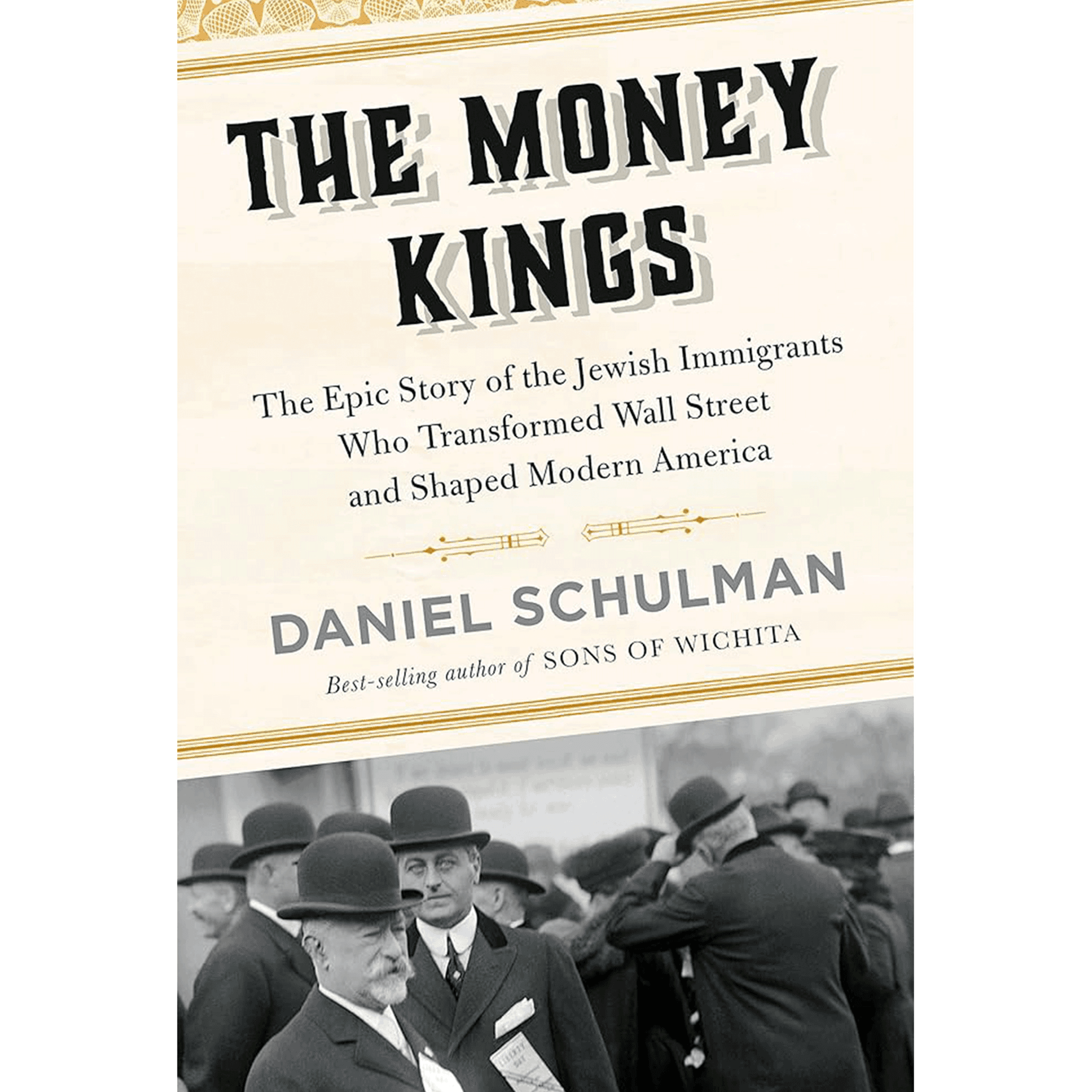
- Description: In this episode, Cole Smead welcomes author Daniel Schulman to discuss his book *The Money Kings*, which delves into the impact of German Jewish immigrants on Wall Street and the modern economic system.
Key Themes and Discussions
Introduction to the Episode
- Cole emphasizes the importance of reading for investors.
- The podcast aims to explore multi-faceted perspectives in investing.
- Daniel Schulman's *The Money Kings* focuses on the legacies of Jewish immigrant families in finance.
Daniel Schulman's Journey
- Schulman shares the personal inspiration behind *The Money Kings*, revealing a connection to Jacob Schiff, a prominent figure in finance and philanthropy.
- The book took nine years to write, influenced by personal history and broader historical narratives.
Historical Context of Jewish Immigrants
- Seligman Family Background:
- The Seligmans fled oppression in Germany in the 1830s.
- They became successful merchants in America during economic upheaval, particularly the Panic of 1837.
- Immigrant Success Pathways:
- Emphasis on entrepreneurship over traditional employment.
- Initial roles as peddlers leading to ownership of businesses.
Socio-Economic Dynamics in America
- Panic of 1837:
- A critical event that shaped the economic landscape for new immigrants.
- Role of Jewish Businesses:
- Jewish merchants played significant roles in commodity trading and banking, particularly in the South during the Civil War.
Notable Figures
- Jacob Schiff:
- A pivotal figure in Jewish finance and philanthropy; his life illustrates the intersection of wealth and social responsibility.
- Advocated for the rights of Jews facing persecution, particularly in Eastern Europe.
- His approach to leadership within the Jewish community was seen as both influential and controversial.
- Warburg Family:
- The Warburgs had a longstanding banking tradition in Germany and played significant roles in shaping American finance.
The Evolution of the Financial Sector
- Transition from Merchants to Bankers:
- As the economic landscape evolved, Jewish firms transitioned to more sophisticated banking roles, influencing major financial policies and systems.
- Paul Warburg's Influence:
- Warburg's ideas were crucial in establishing a modern banking system in the U.S., leading to the creation of the Federal Reserve.
Legacy and Philanthropy
- Impact of Jewish Immigrants:
- The legacy of these immigrant families is evident in the modern financial landscape.
- Philanthropic efforts helped many immigrants assimilate and thrive in America.
Contemporary Relevance
- Modern Parallels:
- Emphasis on how historical financial practices and social issues resonate today.
- Discussion of ongoing debates regarding Jewish identity, anti-Semitism, and the implications of historical decisions.
Conclusion
- Daniel Schulman's *The Money Kings* not only narrates the history of Jewish immigrants on Wall Street but also highlights their lasting impact on American economic frameworks and societal structures.
- Cole invites listeners to reflect on the themes of legacy, opportunity, and the importance of understanding historical context in modern finance.
Key Takeaways
- Investing is portrayed as a continuous learning journey influenced by historical narratives.
- The immigrant experience underscores resilience and adaptability in the face of economic challenges.
- The narrative showcases the intertwined nature of politics, finance, and social responsibility.
Call to Action
- Listeners are encouraged to read *The Money Kings* and explore the historical influences that shape today's financial systems.
- The podcast invites recommendations for future readings and discussions through their communication channels.
Written by AI. May contain mistakes. Listen to the episode to check what was said.
Transcript
Automatic transcript. May contain errors.0:02You're listening to A Book With Legs, a podcast presented by Smeed Capital Management. At Smead Capital Management, we advise investors who fear stock market failure. You can learn more at SmeadCap.com or by calling your financial advisor.
0:21Welcome to a Book with Legs podcast. I'm Cole Smead. I'm the CEO and a portfolio manager here at Smead Capital Management. At our firm, we are readers and book junkies. It can be said that leaders are readers and we believe books provide us a great source of information for filtering what is and isn't important for us as investors. Investing is the last great liberal art and the best way to spend a lifetime of learning. This podcast is for readers, thinkers, business-minded people, and investors who want to grow their knowledge from great authors and their writing. Charlie Munger often talks about using multiple mental models and analysis.
0:54Our aim for this podcast is to help listeners test Munger's theory in business, markets, and people. Thank you for joining us for this episode of A Book With Legs. I'm very excited to welcome this episode's guests, as I have treasured not one, but now two of their works. I believe this book's central theme is legacy, an important idea for each man and woman to contemplate for their own life. Daniel Shulman is joining us to talk about his newly released book, The Money Kings, the epic story of the Jewish immigrants who transformed Wall Street and shaped modern America. A little background on Daniel.
1:26Mr. Shulman has written for Boston Globe Magazine, Politico, Vanity Fair, The Washington Post and Mother Jones. He previously published the bestselling book, Sons of Wichita, which I commented on earlier. And that's a wonderful story to understand really the Koch family. And as I mentioned earlier, this idea of legacy. So Dan, thank you for joining me today. It's my pleasure. Nice to be with you, Cole. So we always ask authors what inspired you to write this book, but I feel that wouldn't make do for this book. I think a better way to ask this to you would be, did you make this book your magnum opus?
2:04Wow. This book has been nine years in the making. I thought it was going to be two years in the making, but life intervened, a couple kids, a pandemic in the meantime. And I sort of fell into this story. When I finished my last book, I jotted down probably a hundred ideas for another book. And one thing I started researching was this wave of anarchist violence at the turn of the century. And I came upon a fellow named Jacob Schiff, who had been the recipient of some mail bombs that they thought were from the anarchist underground at the time. And I just became fascinated by this story of Jacob Schiff, this tycoon who I really knew very little about.
2:51And as I learned more about him, I realized that my family story connected to Schiff, and I'll explain why. My father was a son of Jewish immigrants who immigrated from what is present-day Ukraine, but was then part of what they called the Pale of Settlement, which was sort of this fringe of territory on the Russian Empire where Jews were permitted to live. And now Schiff, during his lifetime, in addition to his financial impact, basically made it possible for millions of persecuted Jews to immigrate from Russia and Eastern Europe. And that would have included my grandfather and grandmother. So this story is extremely personal to me.
3:36And I was just fascinated by how a tycoon like Schiff who lived on Fifth Avenue and my relatives who lived in Williamsburg, Brooklyn in a tenement were nevertheless connected. Agree. And we'll talk about that because, I mean, there's so much of this book that it even stretches into today. I mean, there's a lot of the parallels of this book that I thought, well, that's still going on or, you know, you've heard that before. So I will come back to some of those themes. So let's start your story where you do with the Seligman family in Germany. What was going on in the 1830s in Germany at the time?
4:15I mean, at that time in Germany and in other parts of Europe, Jews were living as an underclass. In Germany, many Jews could not own land. They were barred from most professional careers. You couldn't be a lawyer, probably not an academic. And there were places where you couldn't live, even people you couldn't marry. So these were the conditions that Joseph Seligman and his family were living under when he immigrated to the United States in the 1830s. So Joseph decides to go to America and walks directly into the Panic of 1837. It's not like we sit down and say, oh, yeah, the Panic of 1837. Can you kind of teach our listeners about what that panic was like?
5:01Because it wasn't a problem just in business, but governments too. You know, at that time, the financial system in the United States was pretty primitive. We didn't have a central bank, and it took very, very little to touch off bank runs, which would quickly lead to a financial panic. Our currency system, I mean, this was before it was a uniform currency system. A lot of it was based on gold. So if a ship were to go down carrying a big load of gold, that could cause a depression. In this case, there had been years of sort of easy money, and that came to a very quick halt and caused a financial depression that lasted for a number of years.
5:43And that's what he ended up walking into in the United States. Well, and I think you mentioned that eight states and the territory of Florida declared bankruptcy during that panic. So it just showed how dangerous it was for all entities. Now he arrived and then kind of what I would consider based on what I read in your book, a very typical process for others to follow him began. So who followed Joseph from the family? So there were sort of chains of migration that ended up happening. And in fact, Joseph wasn't the first. There was a cousin who was living in Pennsylvania and based on his tales of life in America, that's what sort of ended up drawing Joseph.
6:27But based on Joseph's stories of the opportunities that were available to him and the money that could be made, his brothers slowly started following him over until eventually the entire family came over to America with the exception of his mother, who died. But there were eight Seligman brothers, and over the course of their careers, they sort of had this divide and conquer strategy where they would more or less fan out to various locations, first in the United States and then eventually in Europe. and it was, you know, their numbers gave them a lot of advantages in business. Yeah, these people, though, they didn't go find jobs in most cases.
7:04They created a business, which is a pretty typical immigrant success story. You think of like language barriers and things of that nature. Being your own boss is much easier than having someone else be your boss. So what business did the Seligman family go into? They followed a trajectory that was very similar to a lot of Jewish immigrants from Germany of that era. In the old country, their fathers and grandfathers had been merchants and peddlers. And so oftentimes that is what the new arrivals would do in the United States. So one of Joseph's first jobs when he struck out on his own was as a peddler.
7:39And basically you would just venture far from the local, the nearest commercial centers, often selling goods that they were sort of luxury goods to the wives of miners and farmers. and that sort of thing. And the next rung on the economic ladder was often to open up a business once you had amassed enough capital. And that's what Joseph and his brothers ended up doing. And they ended up doing that in Alabama. Now, it's funny because one of the relatives of a great grandson of one of the Lehman brothers, who also ended up in Alabama and also followed this peddling to shop dry goods store trajectory, described peddling as the Harvard Business School for Jewish Boys.
8:25And there was an element of truth to that because that's where they learned the English language. They got comfortable with American customs. They were able to develop rapport with the local population. And this is what sort of, you know, kick-started their business careers. Yeah. And throughout your book, you have just really great German words and phrases sprinkled throughout the book. And I think the word that you used in the German was Handelsmann, this idea of a merchant. Don't ask me to pronounce any of that. I'm taking my best shot, so I appreciate you saying that. I think, yeah, I think that's right.
9:02And yeah, Handelsmann, I believe that's merchant. And oftentimes, as I mentioned, the fathers and grandfathers of these immigrants had been in these professions in Germany, which were really the only professions where they could earn a living at that time. Sure. Because I think the other thing was really interesting, to your point, both the Seligman family and the Lehman family ended up in the South. And was there a particular draw to the South? Or did people just think, oh, there's more opportunity there? That was one of the things I was walking away thinking about was, it's strange that these powerful families went south first, but obviously ended up in New York in the end.
9:42Yeah, I think there was a couple things happening. In the case of the Lehmans, from what I can tell, they had a connection in Alabama of some sort, a family connection of some sort. And that's one reason why they ended up gravitating there. In terms of the Seligmans, they started out in first New York, then Pennsylvania, and they sort of were expanding their terrain more and more. But they were really looking for places where there were opportunities, where there wasn't going to be too much competition, and where there was going to be a market for their goods. In many cases, you know, it was really this whole sort of idea of arbitrage, because they were buying goods, you know, in New York or in other locations, and, you know, selling them at a profit in places where these goods were hard to obtain.
10:31And I think, you know, Alabama was attractive for that reason, because it was both developing quickly, but they also found it was not like totally full of competitors at that time. I mean, I think at the time when the Lehman's ended up in Montgomery, it was, you know, the population was pretty small. It was, but it was growing rapidly. So I think one of the more beautiful stories in your book is what you explained when Joseph was accused of a crime. Could you kind of tell that story and how it had repercussions again from a legacy perspective to many years later? Well, it's interesting. You know, there is this old Seligman story about how when the Seligmans were sort of settling in Selma, Alabama at that time, Joseph's brothers scattered out to pedal and he was holding down the shop.
11:22And at one point, and it's not clear exactly what happened, but it might have had to do with the fact that he was Jewish, gets into a fight with a local. And they had a pretty good bout, it sounds like. And he ended up going to jail, I think. Finally, the son of a local jurist ended up intervening on his behalf and saying, this guy didn't cause the fight. And he was released. And as the story goes, after the Civil War, when Alabama was desperately looking to raise loans to rebuild, somebody showed up at Joseph's office in New York looking for a loan. And he recognized this man immediately as the man who had intervened on his behalf.
12:02But this guy didn't know who Joseph was. And Joseph invited him to dinner at his home that night where he was having a number of guests over. and he sort of tells this elaborate story of what happened and stands up and says, and this was the man who intervened on my behalf, you know, when I was a lowly Jewish immigrant, you know, falsely accused. So that's kind of a funny story. Yeah. And I think it was like an engagement party, if I remember your book correctly, to where it was, this is not like just a dinner. It was a very special dinner to honor their guest. Right. Right. Right. So now also one other thing, and I think you touch on this, is kind of this idea of old world, the old world monarchies of Europe.
12:45Can you also explain what was going on in 1840s in the upheaval of Europe that also kind of was driving some of this movement and change? Yeah. In the late 1840s, the causes ranged from place to place, but there were a series of revolutions that overtook Europe, including in Germany. And basically a lot of it had to do with just a push for basic civil rights. And I mean in terms of the Jews of Germany, this also had to do with this concept of emancipation. So the revolutions of 1848 ended up sending a lot of Jews and other immigrants over to the United States. And they're called 48ers as they fled these revolutions that were being pretty brutally put down.
13:36So while they're in the South, Andrew Jackson had pulled the plug on the Second Bank of the United States in 1832, which kept much of the South on a barter system, as you wrote. I think of the commodity trading businesses. Some of these Jewish institutions ended up dominating, but their origins were in these commodities, not necessarily because it was virtue. It was necessity that caused them to be in those industries. Is that a fair way of thinking about why they ended up in commodity-oriented businesses at times? I think in terms of the Lehman's, our currency system, again, was such a mess at that time.
14:10Banks could willy-nilly issue currency. And there was so much forgery that it was unclear if you had the real thing or a fake. And so in their case, a crop like cotton, which was a cash crop, that's how they did business in Alabama in that era. So they transacted a lot of business just through barter, through cotton for goods. And that's how they gradually got more and more involved in this business. Yeah, and I think off of that, I think you also explained, and I was wondering where you got this tidbit because I thought it was a very interesting way of looking at commissions. But you also explained that when they were doing these transactions, they were taking real risk.
14:54If you sold to them, let's say you were selling cotton, for example, they would give you a price and they would do everything tied to the transaction. And I think if I remember correctly, you had said that what they got collected on that was about 2.5 % of the transaction. Yeah. And I mean, this was the typical role of what they, I think they called them like cotton factors or commission merchants where you would handle every aspect up to ensuring the cargo and making sure that it got to the right place at the time. So there definitely was risk, but obviously there was quite a bit of reward tied to that too.
15:31And another business that they got into was the business of just storing cotton. And that became particularly important during the Civil War. So the Seligman family decides to end up, they head north to New York. And you note that, for example, they did not agree with slavery in the South. And so they leaned Republican from a political perspective versus, you know, I mean, these are Jewish families. They're from similar places in Germany. And yet the Lehmans didn't have that same view of politics as the Seligmans did. It's quite interesting, I think. You know, I don't think slavery was the main reason why the Seligmans ended up in New York.
16:13Sure. But it was certainly one of them. A factor. It was certainly a factor. It was lost on nobody at that time that there was a certain amount of hypocrisy involved with Jews being in the South and involved with slavery. In terms of the Lehman's involvement, they owned slaves. Cotton formed a major part of their business. And certainly after the Civil War, they played a role in actively managing plantations. And they certainly were not alone in this. there were many Jews that were able to sort of overlook this basic fact of their story. And I think part of it had to do with trying to assimilate more into the local culture and follow the local customs.
17:06And the Lehman's absolutely very much integrated into the fabric of that community. Yeah, because I think you posed it as like, were they accepting of it or were they embracing it? And I think you really pointed towards they embraced the culture because to your point, that was the community. Absolutely. I mean, I think if you certainly look at their activities, managing the plantations after the Civil War is fairly significant. And part of the basis of their fortune does come from slavery. So Jesse strikes out to go out west. And if I remember correctly from your writing, the family fronts him goods to take with him.
17:50He went via, I think, the Panama route, if I remember correctly, to go around to San Francisco. And so here he is taking all this risk. And yet while he's taking all this risk, he shows great pragmatism and thoughtfulness in where he chooses to put his store and the building that his store sits in, in San Francisco. I think this is a really good point actually to make about all of these guys because in terms – the risks that they took while they could be large, they were often very cautious at the same times and pragmatic. So what had happened in Jesse's case is that when he had a shop in northern New York state and it had burned down and the whole – basically the whole town had burned down and they lost basically everything.
18:38So when he went to San Francisco – and this was sort of a trade of his. He was kind of an adventure seeker and that's what propelled him to San Francisco during the gold rush in the first place. But there were two things. Instead of following the gold bugs into the hills to pan for gold, he realized that in San Francisco, which was a sort of rough and tumble place at that time, there was a fortune to be made just by being able to get goods there because it was so difficult. Remote. It was remote. There were only a couple of ways to get there, one of which you could go overland. It took a really long time.
19:25It was incredibly dangerous. You could go around South America and also extremely dangerous. Or you could transit through what is now the Panama Canal. Basically, it was a very – the isthmus of Panama, it was – you would get off on the Atlantic side, walk with mules loading your goods over to the Pacific side, board another boat, and then continue your journey on to San Francisco. And that's what he ends up doing. And in San Francisco, it was a city that had almost sprung up overnight and a lot of the buildings were rickety. They were built of wood. There were very few buildings that were made of brick.
20:12And the building he decided to house his store in was one of the few brick buildings that was there at the time. And of course, when there was very soon after that, there was a fire that wiped out a good part of the city. His building ends up being one of the few standing. Yeah, that's a great, as an investor, I think about when you can buy a business that has more surety, you should pay a higher price for it. In retrospect, you would have paid a higher price for the rent in a brick building because your goods were safer. Because I also like to your point about rough and tumble, some of these side stories you pulled out, I thought was awesome.
20:49So here's, you know, you point out Jesse's walking around San Francisco one day and has a bullet like zing past his ear. And he turned, and by the way, you mentioned he carried a Colt revolver on him and he turned to face the fellow and he's like, oh, I'm sorry, you're the wrong guy. Exactly. It was the Wild West out there at that time. Another interesting story about him is that he ends up joining up with the local vigilantes because there was no law and order there. They meted out their own justice in sometimes controversial ways. Yeah, it makes me wonder if people are going to read your book and cities like Seattle and Portland and L.A.
21:34decide to just use precedence. But let me pivot because I think right around this time is when you really get into some of the undertakings also of like, okay, there was prejudice in Europe, but then even with people where Jewish people had a really good relationship, there were all these precarious moments. So the Civil War became one of these precarious moments for Jewish business people really in the South because of Order No. 11 handed down by U.S. Grant, who was considered in many respects a friend of the Jewish people. Explain what that did to the Lehman's and other people in your story.
22:12I mean, that was a sort of interesting episode. I mean, that was one of the first episodes of really official anti-Semitism in American history. And this order was very quickly rescinded, but it basically expelled all the Jews from the territory that Grant oversaw, which was a large swath of land. And this was based on his belief that Jews were disproportionately involved in the smuggling of black market goods, including cotton. There was sort of another part of this piece of this story was that Grant's father, Jesse, who was sort of a ne 'er-do-well, linked up with some Jewish brothers and went to go see, Jesse went to go see his son and tried to convince him to allow a shipment of cotton through.
23:04And this just enraged Grant. And the order came very soon after that. So it seems like there was a linkage. But in terms of, you know, there was a stranglehold on southern cotton at that point, and the price just fluctuated hugely during the Civil War. It seems pretty clear that the Lehmans were involved in some sort of black market trade in order to get cotton out of the south. But to them at that time, that would have been a patriotic thing to do. Yeah. Northern war finance was going on at this time and also just the procurement of goods. You had a really great story about Joseph, how he was willing to be creative for payment from the north.
23:58Do you recollect that story? Well, I mean, at that point, they were sort of accepting payment. The Seligmans had entered into a contract with the United States government to provide uniforms and other material to the army. And there was very little like – they were accepting payment in bonds at that time, which they would resell and use as collateral with their banks. But the financial situation in the United States was so precarious that at one point, you know, Joseph gets a letter from the Treasury Department basically saying, like, we're not sure if we're going to be able to pay you the million dollars that we owe you.
24:42and he sort of lost it because that was going to mean potentially the end of his business, but also this daisy chain of subcontractors that they were employing to perform all of these contracts. And apparently it ended up working out. Yeah, because when you talked about the treasury bonds, I immediately was thinking, he goes from this crazy situation where how am I going to get paid to, okay, wait a second. if I take these treasury bonds, I can sell them at a discount to someone else. But then again, there's a new transaction that I've never thought about. In other words, it was like your problems became your opportunities immediately.
25:21Right. And that was often the way some of these guys seemed to look at things. And that was what sort of helped in their business careers. And soon after that, he was approaching the treasury about actually, I think he actually did not want to underwrite the bonds. He wanted to sell them. And so he ends up working with Jay Cook and Company, which was a major investment bank at that time, which was really running the northern bond selling operation. So this is how they sort of end up dipping a toe into finance and setting themselves up to transition from merchants to investment bankers in the post-Civil War era.
26:07So your ultimate protagonist, like the biggest character in your story writing, is Jacob Schiff. And he was the son of a handlesman, like we talked about earlier. He was the son of a merchant. But he was a fairly wild child. Explain some of the issues that his father Moses and concerns he had over his son Jacob. I mean, he was extremely ambitious from a very early age. And even in Frankfurt, which was a major city at that time and had a major banking industry, felt as if it was too small for him. He was raised in an Orthodox Jewish family. And the story is that during Hebrew lessons as a child, to escape them, he jumped out a window and shimmied down the drainpipe to the street below.
26:57As a teenager, and this was sort of similar to Joseph Seligman as well, he starts sort of begging his parents to let him go to the United States and sort of make it on his own. And eventually he does that. But there's some question as to whether he obtained his parents' consent before going or whether he sort of traveled on his own and sent them a letter from England when he was halfway there. So this wild child, though, ends up becoming this incredibly private person in the end. What caused that shift? I mean, it's a good question. There are some things that you can certainly point to, one of which was he comes to the United States, forms a brokerage with two others before the age of 20.
27:49And they very rapidly establish themselves. And this is – That was Bud Schiff. Bud Schiff and company. And this is likely because of a connection with Budge's father back in Germany who was also a banker. But these were in the – this was in the post-Civil War era where, you know, it was a real financial wild west on Wall Street. You know, people were floating all sorts of securities that were worthless. There was a lot of criminality going on. And they end up getting involved with a railroad enterprise that – and they're vouching for this company and basically, you know, marketing their bonds in the United States as well as in Europe.
Read the full transcript
28:41and this railroad very soon goes bankrupt. And it causes a substantial controversy that affected Schiff's reputation. I mean, you could certainly see, and this was one great resource for me, the R.G. Dunning Company credit reports from that era where credit reporters would just jot down notes about all of these businesses. And that's how I was able to - Which, by the way, was the predecessor, I assume, to Dunning-Bradstreet. Is that fair? Yeah. Yeah, because I was wondering where you got these. I mean, I was sitting there thinking, wow, this is like a treasure trove of information. And that's how credit was passed then.
29:19It was. And I mean, it's amazing to see the sort of things that are jotted down there. I'll come back to Schiff in a second, but in terms of the Lehmans, just in Alabama, you can see the way that people viewed Jews at that time and how their reputation changed. You know, there went from being notations about how they were members of the tribe and you could not trust them to, you know, to transact business with to later on, you know, a decade down the road being, you know, like, you know, they're trustworthy, almost as good as white men, which was – so it's just absolutely fascinating. In Schiff's case, from the credit report volumes, you can see that the business definitely tarnished his reputation to some degree and certainly the company.
30:13And what happens after this controversy is that he and other members of the firm end up going back to Germany. It's not totally clear that the dissolution of the business was the cause of that, but it seems quite possible. And my theory is that this is one of the reasons why Schiff became quite private later on in his life and very guarded about his exposure to the press, which is not to say he didn't give interviews. He did. But he, like any person of that type of stature, was very careful about managing his reputation. so the goldmans were originally a commercial paper operation and you you talk about that in your book i've also read before um dan i've read uh the partnership the making of goldman sachs which is another great book that kind of touches on that um you might have used that for some background but so what did a commercial paper transaction look like back then to the goldmans I mean, it was so primitive.
31:21He was basically making short-term loans to merchants in New York City at that time. And he had just come from Philadelphia where he had been in the clothing business. And all the people I write about sort of make this big transition from being merchants to bankers in this very defined post-Civil War era where there was just a lot of opportunities to be had. But he would go down to the financial district and make loans to the local merchants at a discount. And then he would sell them later on in tranches to a variety of banks. where he would replenish his capital for the next day's transactions.
32:09So Jay Cook failed, I think, in the panic of 1873, if I remember correctly. And they were really one of the white-shoed firms in the securities business at the time. That was a highbrow name to be using for underwriting. And they were big in railroads. They were big with the government. I know no panic is good, but didn't this open the door wide open for really these Jewish firms in general to go out and do new underwriting? Well, I mean, I think it did to some extent. I mean, it's sort of like, it definitely opened new opportunities in the railroad business. But it also, it very easily could have wiped some of these firms out at the same time because it just so happened that Bud Schiff and Company, the predecessor of Kuhn Loeb that Schiff was working for, was doing business with Jay Cook and Company at that time.
33:02Yeah, they were selling securities for them. They were selling securities in what I think, I believe, the Northern Pacific Railroad at that point, which Jay Cook had become highly involved in. So it was – but certainly Jay Cook was a huge name at that point and a lot of doors, I'm assuming, would have opened at that point. It was sort of many years later that Goldman Sachs and Lehman Brothers would get involved in bonds and securities. But certainly for Kuhn Loeb, which Schiff would join in the 1870s, and the Seligmans, who were getting more and more involved in bond selling, it was – there were new opportunities for them there.
33:52Well, because I think another thing that we'll – and we'll touch on this later as we think about the trust busting era. But really the board roles, like getting onto those boards with these firms, that was really kind of the keys to the kingdom, wasn't it? It gave you quite a bit of control over a variety of things. And in many cases, it's not unusual if you're a major investor to want a seat at the table. But in some cases, Jay Gould is a good example. He often had a disproportionate role with certain railroads that he was part of. And he and his partners did sometimes shady stuff in terms of watering the stock, just basically getting a printing press and just printing new shares of stock.
34:45I mean, printing money, basically. But yes, it did give them quite a bit of control And you alluded to the trust busting error But this would later become quite controversial When it became clear that A fairly small group of investment bankers Held board seats We'll come back to that Because I have the number I wrote the number down I thought it was incredible I think you might have finally given me the number to say this is the trust era. But we'll come back to that. So a couple other things. Let's see. The next two questions will also be kind of foreshadowing of the future. Jacob Schiff marries into the Kuhn-Lobb partnership through his wife, Therese.
35:31Okay. But wasn't this wedding really like the ultimate foreshadowing of the relationships that these banking families would have to follow? Absolutely. I mean, what's so interesting about the, you know, Jewish banking sector at that time is that so many of the relationships were through family. And within this group of dynasties that I read about, there was a lot of, there was intermarriage, but there were also, you know, friendships that formed between, you know, Philip Lehman and Henry Goldman, for instance. So there was just a lot of their lives were intertwined, not just in business, but their personal lives as well.
36:18And, you know, this was both sort of a good thing and a bad thing. Because then the best man and the maid of honor, they were out of the, if I remember correctly, was it out of the Goldman part of the family? Samuel Sachs is one of his daughters. I'm sorry. It was either his daughter or hers. No, it was his wife. His wife was the maid of honor at that wedding, which sort of shows you how closely interwoven these families had become. And part of this was because, you know, there weren't that many Jews living in the United States at that time. All of these people came from a similar culture. there you know there was there certainly was interaction between Christian and Jewish society but it was it could be a little bit insular and I mean these people were part of the same temple they you know sat on the same boards and from really the very first moments that they were in New York they were they were doing they were doing business together as well well yeah because I think if you watch the HBO TV show, The Gilded Age.
37:32And I think you did a good job of kind of building this up in my mind in a way that I didn't have present before. But you kind of have the, I'll call it the Morgan slash Astor Christian part of the business community, right? And then you had, you know, the Kuhn Loeb, the Seligman, the Goldman part of the business community. And where they interacted was in business. It was on the companies like Gould with these firms, obviously, where that was a huge interaction. And a lot of your book talks about how JP Morgan interacted with these firms. And it was like, they did business with each other. They respected each other, but they were still divided in many cases.
38:07Absolutely. You know, Morgan and Schiff were really the, you know, most important bankers of that era. And as such, they would often do, they would often do business together. I mean, technically they were competitors, They were rivals. But at that time, you know, previously, in terms of the railroads, there had been a lot of competition in the industry. And it had gotten to the point where, you know, people were building tracks within like 100 yards, you know, within yards of each other. And they were, you know, there was violence that was erupting between rival railroad companies. And I think Morgan and Schiff saw themselves as being a little bit more civilized.
38:53And because of that, they worked to build what they called the Interdiction of Interest, which were basically monopolistic arrangements where competitors would sort of buy into each other's businesses so they would have an incentive to cooperate. But when it came to sort of major transactions, I think as a matter of courtesy, Kuhn Loeb would often offer Morgan participation in these deals and vice versa. So in another foreshadowing of events to come later in your story, can you explain how the Seligman family and the Kuhn Loeb organization assisted Sherman to get America back to the gold standard and really solve the Civil War debts?
39:39I thought this was interesting. I'd never heard this story before. Well, it's interesting because in the post-Civil – I didn't mention this earlier, but the Seligman family ended up becoming good friends with Grant. And this came through Jesse's shop that he owned in New York State, which just so happened that Grant was posted there and would often play checkers with the Seligman's brothers in his off time. So they befriended him. And, you know, the story goes that Grant even ends up offering Seligman the Treasury secretary position, but he turned it down because his brothers didn't want him to – he was such a factor in the business and his brothers didn't want him to get involved in politics.
40:31So, yeah, Schiff, but also Seligman, mainly Seligman, were sort of among the bankers that ended up advising the administration on how to deal with the Civil War debt. And they played a major role in that. Yeah, I think you said they raised something like$140 million from primarily European investors. And that was more than obviously the debts were. But they took a portion of the excess and bought gold, which obviously gave a lot more confidence to anybody that wanted to turn their paper in for gold, which I thought was. And we'll come back to that because when we talk about Paul Warburg later, we're going to take that.
41:14That was just a foreshadowing event in my mind. So let's talk a couple of questions on the principled nature of Schiff. because he was private, but yet he was a very principled person. Grant had a lot of friends that were Jewish, like you mentioned with the Seligman family. And Grant had to deal with some issues that were very sticky with Russia. What was Jacob Schiff's issue with Grant's decision-making with Russia? I mean, I think what ends up happening is that the conditions in the Pale of Settlement, which was this area that I described earlier, on the fringe of the empire where much of the Jewish population of the world at that time lived in that area.
41:55And conditions were getting quite desperate for the Jews there. Again, in this area, like Germany, they were barred from holding many jobs. They were forced into living in these shtetls, which were little villages where they were just basically subsisting. And increasingly, in places like the Pale of Settlement and in what is today Romania, they were facing growing anti-Semitism and instances of mob violence where their towns would be ransacked, people would be injured and murdered, what we call – what you've heard of as the series of pogroms. and Schiff and other leaders in the Jewish community were really pushing for Grant and eventually other presidents to sharply rebuke the Russian czar to end the persecution of the Jews and allow them to live freely.
42:59And part of this was over just passports too. In other words, if they went with an American passport, they were not considered a person like other Americans. Exactly. Exactly. And this ends up becoming a major issue for Jews and particularly for Schiff. But it was, as you said, it was sort of a matter of principle. Because Jews were treated as a second class citizens in the Russian Empire, if you traveled there as a U.S. citizen of Jewish descent, you did not have the same privileges as other American citizens. At that time, we had a treaty with Russia allowing reciprocal rights of travel and commerce.
43:40But this was not extended to Jews. Now, there were very few Jews that really wanted to go to Russia at that time, travel there. But to shift, this wasn't the issue. He just felt as if we allow this to take place, then we're showing the Russian Empire that it's okay that they treat Jews unequally. But if we force them to the standard that the treaty set, they would not be able to uphold this two-tiered system anymore. So what ends up being called the passport issue was really something that was pushed pretty heavily, especially in the early hundreds by Schiff and others. when obviously this didn't that you know the idea of the pale settlement and the issue with russia that continued on for decades to follow all the way up you know through the bolshevik revolution and then obviously you know once once the i'll call it kaiser wilhelm's kingdom ends obviously poland becomes its own country and the pale settlement is still you know tied up in the negotiations of the post-world war one era so it's it's interesting that like these i'll call them demons, these demons don't go away.
44:54They're not going to go away on their own. And I think Schiff was really thoughtful about, you know, what's the long run consequences of what we're debating here. But also while he's that principled, he also was very graceful. And the story you told of him on the Mount Sinai board, I think also teaches people that he was human. He was a pragmatist as a principled person. Yeah. I mean, I think Schiff, if I'm remembering this story correctly. I think, you know, he was serving on the board of the Mount Sinai Hospital in New York, and I think Meyer Lehman, one of the Lehman brothers, was also involved with the Mount Sinai at that time.
45:32And, you know, Schiff had a reputation for being generous, for being principled. He could also be extremely rigid and see the world in very black and white terms. And when he learned that one of his fellow board members had gone bankrupt due to some unwise financial speculation, he basically said, you know, I don't want to serve on the board with someone like this. How can they manage the finances of this nonprofit organization if they can't manage their own finances? And it turned out that this guy would later go commit suicide. Was it Hanauer? I think Hanauer was his name. Yeah, his name was Moses Hanauer.
46:16He committed suicide, leaving behind a wife and children. And after Hanauer's suicide, Schiff seeks out Hanauer's son and ends up giving him a job at Kuhn Loeb. And Hanauer ended up becoming the first partner that was not related to the family in that firm. And I would love to know, but I was never able to discover whether Hanauer was aware of this whole backstory with Schiff. Schiff's granddaughter only learned this decades later when she was approached to become a member of the Mount Sinai board. and she inquired of someone who had worked there for many years, like, you know, why hasn't anybody in my family been serving on the board all this time?
47:10And she learned the story of what had transpired with Schiff and Moses Hanauer. Well, since we're on a Schiff role, I think, you know, to go back to another Schiff thinking and the way he lived his life, Schiff looked at leadership among the Jewish people very interestingly. I'm going to quote your book. You quote him saying, quote, Jews do not elect their leaders. One becomes a leader among them, end quote. Based on your writing, he looked at his role in a manifest way as though God had put him there at that moment. Is that fair? Oh, yeah. I mean, I think he, yes, I think he did. I mean, there's also, he could be humble, but he also could see himself in sort of grandiose terms as if he was almost a Moses figure.
47:58leading the Jews out of, parting the waters to lead the Jews out of Egypt. But it was interesting at that time, you know, again, the Jewish population was small. Its leadership was really dominated by these tycoons, mainly German Jews, who composed a lot of the leadership of these various Jewish organizations. But due to his role in finance as really – he was really becoming one of the nations and the world's most famous investment bankers. Due to his role in finance and due to his philanthropy, his interest in it, his leadership, as well as his donations, he ends up really assuming this role of leadership within the Jewish community that, very true, it was not elected.
48:59And this would later become controversial as the Jewish community expands, it fragments, there are many competing factions and people start to wonder, why do you get to make the rules? Yeah. You mentioned the crime of 73 as a term. And when you mentioned that, it kind of just snapped into my head that like the all these like just crazy conspiracy theories of like a cabal and everything like that. It seems in my mind to emanate from the crime of 73 and really what became the future popularity of the Silver Cross and Williams Jennings Bryant. Can you explain what happened in the crime of 73 according to people at the time?
49:44That's interesting. I mean so what had happened is that initially the United States was on the bi-metallic system. It was not on the gold standard. It was both gold and silver were redeemable for cash. The crime of 73 was when the government sort of low-key places the United States back on the gold standard, but silver is no longer redeemable. Now, at the time, there were huge silver deposits being discovered out west, allowing you to basically mint money yourself. And so mining interests, but also Midwestern farmers and populists were really opposed to this idea. And they blamed the eastern bankers, the quote unquote sound money crowd for this development.
50:37So like using as an example, like the Comstock load had just been found by folks like George Hurst, which we did a book with on George Hurst by Matthew Bernstein. and those big deposits are being found while this took place. And I think of, I mean, I know this sounds overly simplistic, Daniel, but I mean, this is how my head works. I like to boil things down to simple pictures. You could just see like these redneck farmers or people out in the sticks going, see, it's these Jewish firms that prefer gold that have talked the government into this, which is not true. But that's the kind of conspiracy theories that I would almost point and say, here's where American conspiracy theorists started when economics changed because of these government decisions.
51:21I mean, there were certainly a lot of conspiracy theories. What's very interesting, though, is that in terms of anti-Semitism in the United States, it certainly was not as prevalent as it was in Germany. And it's sort of, you know, I mean, the one thing Schiff and others viewed the United States as a promised land because Jews were able to live, work, and worship freely. There was no bar on what they could do with their lives. And I mean, I think in terms of the gold-silver issue, again, it comes back to this, our economy was, the United States was an emerging market at that point where Europe was operating like many European nations were operating on the gold standard, the fact that we would have a bimetallic standard caused issues because European nations could dump their silver in the United States for gold.
52:30And gold would flee across the ocean. And that would end up causing financial problems. So that's why the Eastern bankers were, and of course it was, you know, Not just the Jewish firms, but the Eastern Bankers are pretty united in their belief that the U.S. should be on the gold standard. So one really telling story you had of Jesse Seligman was when Jay Gould died. And I found this really interesting because we did, like I said earlier, American Rascal with Greg Steinmetz. And I found a whole new appreciation for Gould. you know most people paint him as a huckster and i i learned a lot more about him as a railroad owner and an investor and when you quoted jesse in your book he said quote i can't say that mr gold was in his moral nature more better much worse or much different than any other shrewd player of his generation i've known them all i've known jay gould better than most and i can tell you he deserves no more notoriety than those against which and with which he played end quote just such pragmatism that I don't think you read in a lot of even modern literature about Jay Gould.
53:43Is that how you read Jesse's statement on that? Or was he just have a lot of respect for a competition? Because ultimately that's what these gentlemen played in was a competition for money. I think that quote was – when I found that quote, I thought that was just extremely revealing about the waters that they swam in at that time. Jay Gould was an extremely complicated figure, And I think you're right that he is painted pretty one dimensionally. There's no question that he did things that were questionable at the time. Or are what we'd consider unethical nowadays. But at that time, we're part of the game.
54:19Right. I mean, there was not there really were not many rules. I mean, this is this is part of the issue. You know, he was playing in a system where there were not any rules. So, you know, he would – he and his allies would try to corner the gold market at a time when doing so, he could force short sellers to settle on his terms. And the economy was just a lot smaller and you were able to sort of pull off these shenanigans. I mean he dueled with Cornelius Vanderbilt and ends up escaping across the Hudson River in a rowboat. So he was, you know, to an extent, he was a bit of a scoundrel, but he was also operating in this system where there were not many rules.
55:05And I think that's why you see Jesse Seligman say, you know, this was just the name of the game at that point. And as Jesse said, he was, you know, he rubbed shoulders with all of those fellows during that time. And Gould was a client of J.N.W. Seligman and company. And I think in this huge unpublished manuscript that was written as a corporate history, they note in a very understated way that, you know, whenever Jay Gould made an investment, like, you know, Seligman would make one for their own account because they knew they were going to – they sort of turned a blind eye to whether it was fully an ethical thing that he was up to.
55:52So that's – I think it's a funny quote. Yeah, another telling story of Jesse that we won't go into, but I just want to mention for readers that they should really, you know, get into against in this idea of like Jewish prejudice. He was a member at the union club and he goes to get his son in and they don't take him, even though he's been like a club vice president. And I think that was a really interesting story to understand. You know, there was bias against people that were successful even in their own institutions. But I want to pivot actually because much of the latter part of your book is – it has touched as a shift, but it's really about the Warburgs.
56:26So I just want to kind of pivot just quickly. They are a German family. What were their roots? Because it seemed like it had a little more money trappings than a lot of these other families did from their origin. Yeah, the Warburgs ended up establishing a bank that went back to, you know, I think the late 1700s in Hamburg, which was the free state of Hamburg. So it was like, you know, it was a place where Jews were able to have a bit more freedom. And the bank was called MM Warburg. It was steadily successful. Remarkably, it exists today. And Schiff had actually gotten, after the dissolution of Bud Schiff and company, Moritz Warburg, the patriarch of the family, offers him a job.
57:17And he very briefly moved there to take it and then had to go back home to Frankfurt when his father died. But later on, his daughter and Moritz's son, Felix, would marry. And that was sort of the beginning of a family connection. Later on, Felix's brother, Paul, would marry Teresa's sister through – it's a little bit complicated, but ends up becoming his brother-in-law. It's kind of a mess of all these family relationships. Correct. So in the Goldman Sachs story you tell, Sam Sachs had his brother Harry join him at Goldman Sachs. And it's kind of like the beginning of the Sachs family. Obviously, if you're Henry Goldman, you're watching all these Sachs people show up and you're thinking like, what are we, chopped liver?
58:10Explain how deep that grudge was. I mean, that's another interesting story about how blood and money doesn't always mix that well. Um, so Marcus Goldman ends up making Sam, uh, Sachs, a partner who had married his daughter, Louisa, a partner in the firm. And at the time, uh, Henry, uh, had wanted nothing more to join his father in business, but this very much showed him, uh, you know, where he stood. I think Marcus did not feel that Henry was ready for, ready to be a partner in the firm. Um, he had dropped, Henry had dropped out of Harvard and, you know, I think he felt had a bit of an inferiority complex.
58:55When he eventually joins the firm of Goldman Sachs, Sam has established himself, his brother Harry is part of the firm, and Sam then sort of starts admitting his sons to the firm to the point where the Sachses are very much outnumbering the Goldman faction. And I think Henry really resented that. And I think he also resented the fact that by this time, Sam Sachs was pretty wealthy. He had just sort of built a major estate in the Jersey Shore. They had bad blood for that reason and many others, including the fact that they were really quite different people. And they seem to have, you know, the opposite point of view on basically everything.
59:41So Schiff's history with the Union Pacific blew my mind, you know, because obviously I know that I knew Gould's, you know, experience with the Union Pacific and a lot of the railroads from the past. But this is a part of the history that I'd never heard. So are you telling me one of the most valuable companies in America sold at an auction in Omaha, Nebraska with a single bidder? That's what happened. It's funny because at that time, the railroads were going through these boom and bust cycles. Even the government subsidized Union Pacific, Northern Pacific, Southern Pacific, they were going through these boom and bust cycles.
1:00:24And there were railroads that would go through multiple periods of bankruptcy. And at the time Schiff had entered the picture, There had been yet another financial panic that this one had sent a number of railroads into receivership. So there were great opportunities to be found in the railroads for people who could raise enough capital to obtain these railroads. In the case of the Union Pacific, it was complicated because of the government funding that had been used to subsidize this road basically during the Civil War when Lincoln was trying to knit together the republic through transcontinental railroad lines.
1:01:13So he ends up being approached by a representative of the Goulds who – Jay Gould had been running the line before his death and his family were still major investors and asked to consider reorganizing the railroad. And at that time, he thought J.P. Morgan was the one that was heading that up and J.P. Morgan had been involved. But this was sort of an example of the courtesy that – the deference that Schiff would have shown Morgan at that time that he went to go see Morgan and ask him before he entered this business. And Morgan basically said, you know, I've washed my hands of this. This is too politically intractable.
1:01:59It's all yours if you want it. And over the next, you know, couple years, Schiff ends up creating the conditions where it could be sold at auction. And then he and Edward Harriman, who sort of enters the picture serendipitously, I suppose, end up rebuilding the Union Pacific, which at that point had been sort of dismembered of a lot of its most important lines at that point. Yeah, because then later following that, you kind of talk about the Burlington saga. I grew up in Seattle, which is very near Burlington, Washington, obviously the namesake of the railroad itself. But the whole idea was, you know, how do I get goods or really, you know, I'll call it natural resources in most cases out of the Pacific Northwest, out into the rest of America via either the northern Pacific or what we now know also as the Great Northern was the other railroad line there.
1:02:59And to your point, I mean, those games were all won and lost nowhere near the railroads. They were all won and lost in New York via these banks and, you know, I'll call it industrialists. Oh, you know, absolutely. And what's interesting is that at this point, you know, the railroad lines, 180 ,000 miles of track of what was basically 200 or 220 ,000 miles of track were controlled by pretty much six factions. So things are consolidating very rapidly. And where there had been these monopolistic communities of interest in the past, it becomes very hard to maintain order when each of these groups is gobbling up more and more real estate and coming into conflict with one another.
1:03:50so let's go back to the Pujo committee real quick because we talked about this earlier but I just gotta I just gotta get this number out because obviously you know Sherman as a political person also you know this is really what his career ended up becoming about but so and I'm gonna I'm gonna pull these numbers from your book the vast combination of power is so great that the banking organizations that we're talking about had 746 combined directorships in 134 corporations that collectively had resources or capitalization of more than$25 billion. I think Sherman called it concentrated power in vast combinations.
1:04:27Isn't this exactly what he was referring to when he called it this? Yeah, and it's interesting because the Sherman Antitrust Act does not end up being used for, you know, very frequently for a decade, and it's never wielded against a corporate combination. But the test case for this ends up being a company called Northern Securities, which J.P. Morgan, Schiff, Edward Harriman, and J.J. Hill ended up forming. It was a massive holding company that included the Northern Pacific, the Great Northern, and also controlled the Burlington. And it ended up giving both the Union Pacific and their investors a seat at the table there too.
1:05:15So this was sort of like a community of interest on a vast new scale. And Roosevelt ends up using the northern securities as a test case for his trust-busting crusade that follows. And the Pujol Committee probe, what they called the money trust probe, because members of Congress believed that the most pernicious monopoly of all was bankers that held control over money and credit. You know, the breakup of northern securities ends up sort of indirectly leading to this major investigation into the control of money and credit in this country. And what ends up coming out of this is if there wasn't a money trust in a literal sense, it was absolutely clear that firms such as J.P.
1:06:10Morgan, Kuhnlob, and a very small group of investment banks held a great amount of control over not just railroads but utilities, trust companies, insurers, a huge amount of businesses. And I think I did the math recently, and I think they sort of controlled, you know, probably 13 % of the nation's wealth at that point, including land. Wow, that's crazy. So Paul Warburg, I kind of touched on this earlier with some of the fixing of the capital system for the government post the Civil War. But Paul Warburg walks right into that kind of foreshadowing of building the monetary system that we see today.
1:06:52And I love how you tell it through, you know, he's walking to work with Jacob Schiff and Jacob's like, hey, I like your ideas. So I just say that because like here again, here's Jacob being pretty pragmatic where he's like, yeah, I'm a bank. You know, I'm pretty good at banking, obviously. But he's like, I can see framework that's missing because we don't want to have panics all the time. And so can you kind of tell the story a little bit behind where Paul got those ideas and then how pivotal he was with Rhode Island Senator Nelson Aldrich as well? So when Paul Warburg ends up coming over to the United States and he enters the partnership of Kuhn Loeb, he had been a partner in M.M.
1:07:33Warburg, and he actually would remain one. That was the deal for him coming to the United States. He had married Nina Loeb. And he comes out of the German banking tradition. They have a central bank. The system is just much more advanced. And then he comes to the United States, and there's no central bank. The currency is inelastic, meaning it does not contract or expand based on demand. And you have these conditions where any small shock can really send the economy into a tailspin. So I think from the outset, he is saying he's saying to himself like this is I mean, this is a crazy way to operate.
1:08:19And, you know, he comes to the United States. He can't really you know, he's learning English. He feels a little bit self-conscious. So he sort of keeps his ideas about banking to himself for a while. Um, and eventually through these daily walks that he takes with Schiff, um, you know, starts sort of, uh, elaborating on this. And I think, you know, Schiff at the time, you know, it's like, well, you know, Schiff is, comes out of the German banking tradition as well. Um, and he said, well, you know, this is, these are, these are great ideas, but you might want to keep them to yourself because I don't think it's going to go over well, uh, in the United States at this time.
1:08:57But he ends up slowly sort of like articulating this and eventually writes a very big New York Times piece basically detailing his ideas about modern banking. And eventually he becomes involved with this effort to overhaul the banking system that Senator Nelson Aldrich, who was a very powerful lawmaker at that time, ends up playing a vital role in. So, you know, when the Federal Reserve, as we know it, was sort of sketched out at a private club in Jekyll Island with a handful of bankers and Nelson Aldrich, Paul Warbrick was actually there. And he would play a really vital role in refining the concept of the Federal Reserve and then would go on to serve as one of the first members of the board.
1:09:56And I think a really nice asterisk on that was the idea of regionalism. Like I always wondered myself, why in the heck is there a Federal Reserve Bank in Richmond, Virginia? I mean, is Richmond, Virginia that important in the modern economy? And the answer was, well, it actually, we wanted people to understand that it wasn't a federal system solely, that it was made up of regional components. That way they felt they had a role and a voice, which I thought was a really interesting way of thinking about the Federal Reserve. It's interesting because it kind of comes back to this idea of the money trust too.
1:10:32There was so much suspicion about bankers. And part of the reason for the decentralized central bank with what Woodrow Wilson would call the capstone, which is the Federal Reserve Board in Washington, was in order to sell this to sort of populists who did not want the eastern bankers to be able – or the money trust, as they called them, to control the Federal Reserve. So then Paul goes on after being that brilliant. Obviously, that ends up getting passed. He becomes good friends over time with Carter Glass, which of the Glass-Steagall fame, Carter did a really good job of kind of teaching Paul about DC.
1:11:14And there was a lot of kind of mentoring that I think Carter actually did that I picked up through your book. He goes on to then interact with Keynes post-World War I as they get together in Amsterdam and crack up ideas, drink drinks together and go out and kind of try to proselytize people on the idea that reparations are going to cause a lot of future danger, which they prophesied World War II in effect. I mean, World War I was just tragic on many levels for the Warburg family, for German Jews in America, for Germans, you know, and many like people around the, you know, obviously throughout Europe as well.
1:11:57But it was just, it had just been such a reckoning. You know, they were unable to communicate with their family in Germany for, you know, a couple of years. And Paul, his brother Max ends up representing the German government at the Paris Peace Conference. And, you know, the demand for reparations went far beyond what even the Germans thought was within the realm of possibility. And it just ends up being so much more than they can withstand. So, yeah, as you mentioned, after the – and Keynes was negotiating on behalf. He was a representative of the British Treasury and ends up actually quitting the role because he believed that he could just see the disaster on the horizon and just thought the demands that were being placed on Germany at that time were just unreasonable.
1:13:00So as Germany starts to – conditions in Germany deteriorate, Warburg, Keynes and some others meet in Amsterdam where they begin sort of like talking about some ideas about how –
1:13:29And potentially cause, you know, nationalistic uprisings. They needed to heal Germany. And they could only do so by, you know, reducing the amount that was being – by – he wanted to basically wipe out the war debts. And of course the United States, which during World War I had really ascended to superpower status, did not want to do this because they held a lot of – they were owed a lot of money from the Allies. So when while this is going on abroad, obviously, you know, there's this kind of personal anguish that you just touched on a second ago going, you know, for Jewish people in the United States.
1:14:19You gave the example of Henry Goldman obviously was not well liked by some of his family and colleagues because of his very strong German feelings. and then even Schiff commented on it. I think it was with, he was in front of a Jewish communal workers group and he had a kind of a famous line, I thought from your book that I didn't know if you had offhand to comment on and what his response he got back from the workers group. Well, it was interesting because German Jews had existed very harmoniously in the United States and Schiff often used to talk about the Trinity of his background as both a German, a Jew, and as an American.
1:15:06And he made this comment at one point. And, you know, the other piece of this is that this is at the time when the Zionist movement is really whipping up in New York. But he makes this comment and a Zionist activist stands up and say, you know, well, you say you divide yourself three ways. Is it horizontal or vertically? And if horizontally, which piece do the Jews get? And it's a funny quote, but it was prophetic because in the World War I period, Schiff would be virtually drawn and quartered because he felt a kinship to the country of his birth, Germany, and initially supported the German side in the war.
1:15:57But it became – these pieces of identity came into conflict. Now, while Schiff really becomes disillusioned by Germany eventually, Henry Goldman was staunchly pro-German. And this became controversial within his firm because the Saxes were pro-ally. And this was often what would happen. And it's sort of, you know, people who had immigrated from the old country typically still had some allegiances. But the newer generation who were born in the United States did not. The United States did not. In Henry's case, he was born in the United States, but they used to go back to Germany every year. And he was just very, very pro-German.
1:16:44And increasingly, this became problematic, especially with one of their business connections in the UK. And eventually, he leaves the firm in a very dramatic fashion during World War I. And that was the end of Goldman working at Goldman Sachs. So also to fight back on the conspiracy theories, you pointed out just a second ago that Jacob Schiff was not a Zionist, and he did not agree with the Zionists, like Louis Brandeis, who obviously was on the court, for example, was a massive Zionist that you pointed out in your book. And obviously this is going to come to the point of the Balfour Declaration, and I did not know that my birthday, December 11th, is actually the anniversary of the British showing up at the Jaffa Gate in Jerusalem and entering the city, which is really interesting.
1:17:36I thought, wow, I feel that there's something more important about that. But I mean, just think of how important that discussion is where here's this Jewish business person who has a lot of control over what happens, what decisions are made based on his, I'll call it his financial power and his cultural sway. And yet at the same time, he was really an anti-Zionist where he did not consider that to be the end goal for the Jewish people. And I mean, I just think right now, Daniel, while we sit in the middle of what is a war on Jerusalem, those questions are still being asked right now among Jewish people.
1:18:11It's very interesting that you mentioned that because I sort of just wrote a piece that's based on this, about the long history of the debate over Zionism within the Jewish community, which dates back to the inception of Zionism. And basically, Basically, Zionism was in part a reaction to rising anti-Semitism in Europe and also this flood of immigration from the Russian Empire. Schiff and his fellow philanthropic stewards end up making it possible for millions of Jews to immigrate to the United States. And they very much saw America as their promised land. And they thought that Zionism, which started as kind of a wild-eyed movement, they thought it was risky because it could both inflame anti-Semitism and it would validate this longstanding trope that Jews were loyal only to themselves and would never be true or trustworthy.
1:19:22To another country, yeah. And that's why he thought this – that's why he opposed Zionism. Gradually, he started to warm to the movement to some degree. And this was based on the fact that during World War I, you know, the bulk of the Jewish population lived within the conflict zone. Um, there was eventually a backlash to mass immigration in the United States and, uh, there were constantly laws being floated to restrict immigration. So I think, you know, Schiff could see the writing on the wall there. Um, but, you know, Schiff ends up saying, you know, like, well, I could support a, um, a religious, uh, and cultural homeland in Palestine, but he never was able to get on board with the idea of, um, of a Jewish state.
1:20:17And I think obviously he dies in 1920 well ahead of the events that would pave the way for Israel to become a nation. But I think the debate is quite interesting. And there's really always been a debate within Judaism about Israel and Zionism and a Jewish state. Well, I think the other thing you pointed out, I did not know that part of the agreement with the Nazis was that if Jewish people wanted to get their money out, effectively the Nazis would collect a fee if they went to Israel. They were like money changing in a way where they could do it profitably if they ended up in Israel, which was just the strangest incentive structure I've ever seen.
1:21:02The other thing you said when you touched on America was really kind of like the dream of the Zionists. Well, if someone says to me, what do I find, like just as a non-Jew looking at Israel, what do I find so peculiar about Israel? It's the most entrepreneurial place plausibly in the world outside of America. Yeah, I mean, there's definitely a lot of, I mean, you know, the whole history of Israel and like the kibbutzes and settlers sort of making nothing from, making something from little, that's sort of ingrained in that history. And it's sort of, I mean, it gets back to the same, I think, entrepreneurial spark that you saw with Schiff and some of his contemporaries as well, who were also fleeing something.
1:21:57Yeah. So, Dan, there's a lot we didn't go into. I'm even looking here at my notes. I mean, like, just the Warburgs and where they got to intern, I was like, oh my gosh, I would have died to be a Warburg, just so we're on the same page. You know, we didn't talk about Ernest Castle and his relationship with King Edward VII. You know, we didn't talk about things like the vast philanthropy. We didn't go into all that, which is just incredible for Jacob Schiff's life. Some of the inequities that came, there was even some, you know, problems that just came in the family, whether it would be personal problems or health problems.
1:22:29The Kuhn Loeb's relationship with Japan, Henry Ford's anti-Semitism. I mean, and on and on and on. So I kind of want to throw it out to you. Is there one last thing that we didn't touch that you do think needs to be mentioned and highlighted for your story? Yeah. I mean, we talked a lot about the financial component. And while Schiff is not well-known today and J.P. Morgan is often seen as the pivotal figure in American financial history, I would actually argue that Schiff's legacy is more consequential because his legacy went far beyond finance. He was – as I mentioned, he and a small group made it possible.
1:23:17If you come from a Jewish family with a Russian or Eastern European background as I do, your American story would not have been possible without Schiff. He made it possible for millions of Jews to come to the United States. But it wasn't just that he was politically connected and he was helping to pave the way on the political front. They also built a huge network of philanthropic organization that was dedicated to taking care of the immediate needs of the immigrants. So, you know, English lessons, hospitals, those sorts of things, but also anticipated what it would take for them to thrive and quickly assimilate to American culture.
1:24:01And so, I mean, that part of his legacy and the legacy of the tycoons I call the money kings is just, once you know where to look, you start to see it all around you in present day life, whether it's the Federal Reserve Bank, whether it's the company Goldman Sachs, whether it's all of these iconic Western Union, Westinghouse, these types of companies that were capitalized by these firms. or whether it's these philanthropic organizations, including the Henry Street Settlement or the American Jewish Committee or the Joint Distribution Committee that exist today. It's remarkable how the degree to which we are living in this world that they helped to build.
1:24:48I love it. I totally love it. This has been just so much fun for me, Daniel. So I really appreciate you. Thank you again for joining me. To our listeners, I see this book, as I said earlier, as a story of legacy building and multiple steps in the right direction over decades in these people's lives, in these people's families, through pragmatism and opportunity and ultimately trumping the idea that we should want to foreknow the future. They didn't. And yet they created a massive legacy like Daniel just mentioned. If you enjoyed this podcast, go to Apple, Spotify, YouTube, wherever you listen to a book with legs.
1:25:22Give us a review. Tell others about the books and great authors like Daniel Schulman that we have the opportunity to understand. and study the world through. For our tribe, if you have a great book that you'd like to recommend, email podcast at smeedcap.com. That's podcast at smeedcap.com. You can also send your suggestions to us on Twitter. Our handle is at smeedcap. Thank you for joining us for A Book With Legs podcast. We look forward to the next episode. Thank you for listening to A Book With Legs, a podcast brought to you by Smeed Capital Management. The material provided in this podcast is for informational use only and should not be construed as investment advice.
1:25:57You can learn more about Smeet Capital Management and its products at SmeetCap.com or by calling your financial advisor.
From the publisher
“Once you know where to look, you start to see it all around you in present day life. Whether it’s the Federal Reserve Bank, whether it’s the company Goldman Sachs… It’s remarkable how the degree to which we are living in this world they helped build.”
In this episode, Cole is joined by author Daniel Schulman to discuss his book, The Money Kings. Daniel’s book is the story of the German Jewish immigrants who revolutionized Wall Street and shaped today’s economic system. The conversation covers names like Goldman and Sachs, Lehman and Seligman, Kuhn and Loeb, and Warburg and Schiff.


