In short
Podcast Episode Notes: A Book with Legs - Dror Goldberg - Easy Money
Podcast Overview Title: A Book with Legs Host: Smead Capital Management Description: The podcast explores value investing through literature and discussions with authors who have influenced investment decisions at Smead Capital Management.
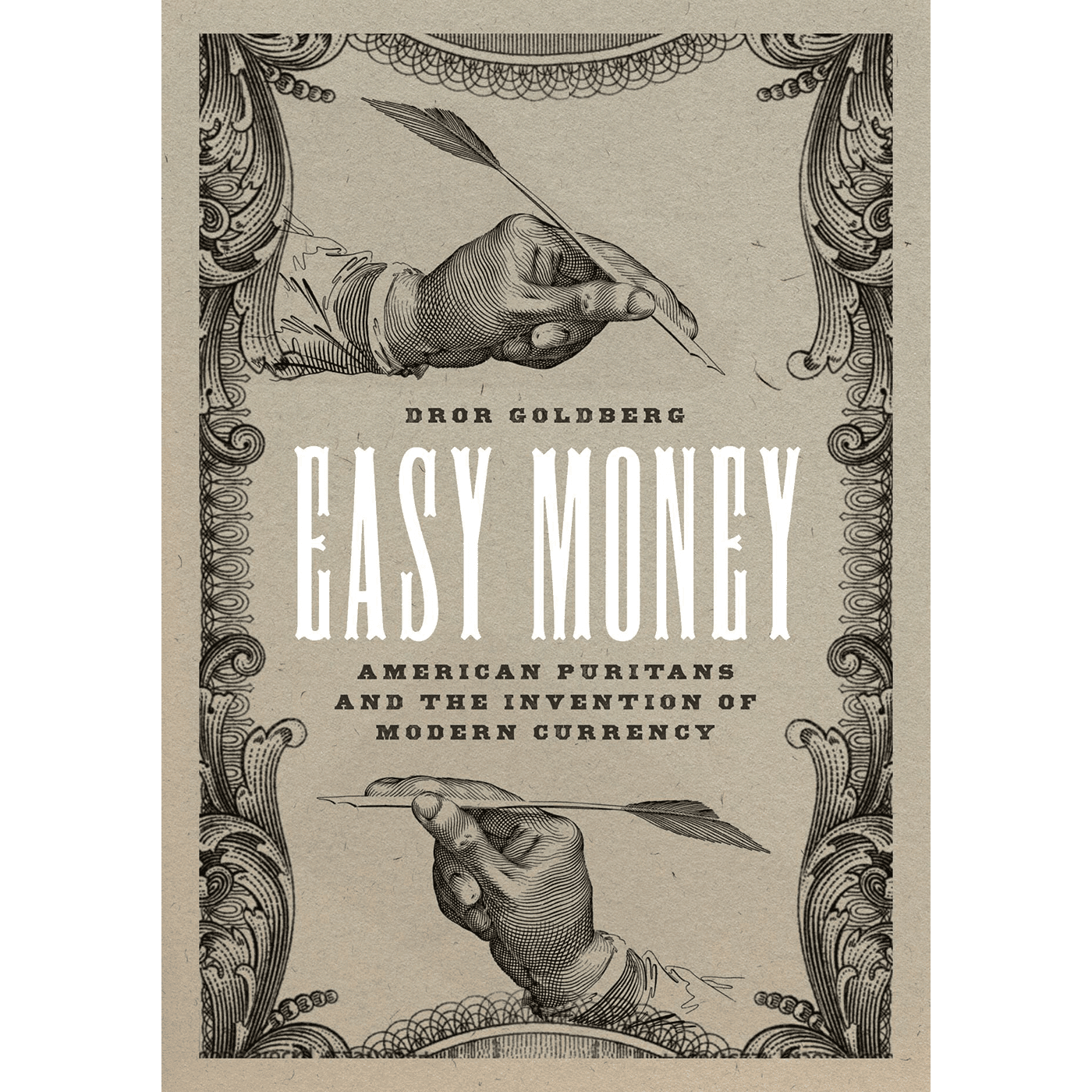
Episode Details Guest: Dror Goldberg Episode Title: Easy Money Episode Description: Dror Goldberg discusses his book *Easy Money: American Puritans and the Invention of Modern Currency*, exploring the origins of modern currency in colonial America, the concept of "siege money," and the historical role of Massachusetts in the development of the dollar system.
---
Key Themes and Ideas
Introduction to Dror Goldberg
- Background:
- Senior faculty member at Open University of Israel.
- Co-founder of the Economic History Association of Israel.
- Published in multiple prestigious economic journals.
- Personal history of experiencing high inflation which sparked his interest in money and economics.
Historical Context of Money
- Siege Money:
- Introduced as a concept during sieges where traditional currency was scarce.
- Importance in maintaining soldier morale and supply during conflicts.
- Massachusetts' Role:
- Pioneered the creation of modern currency through innovative practices during the 17th century.
- Faced challenges from British authorities that regulated currency issuance.
Key Concepts
- Money as a Prerequisite for Civilization:
- Dror emphasizes the necessity of money for urbanization and advanced societies.
- Money facilitates trade and specialization, which are essential for civilization development.
- Set-off Principle:
- A method to settle debts without the physical transfer of coinage.
- Enabled smoother economic transactions and reduced the need for physical currency.
The Puritan Influence
- Spiritual and Economic Contracts:
- Puritan society emphasized the importance of contracts, mirroring their covenant with God to their economic dealings.
- This religious undertone influenced their approach to money and contracts, fostering a culture of trust.
- Community and Trust:
- The small, tightly-knit Puritan communities allowed for a level of trust in financial transactions that is difficult to replicate today.
- Compared to modern cryptocurrency systems, which lack such personal connections.
Evolution of Currency
- Transition from Wampum to Paper Currency:
- Discussion of how Native American Wampum served as a precursor to paper money in colonial America.
- Demonstrated an early understanding of currency's abstract nature, leading to the eventual acceptance of paper bills.
- Legal Tender:
- Massachusetts' early paper money was not initially forced as legal tender for debts, marking a significant step in monetary history.
- The evolution towards making paper money legal tender was crucial in establishing trust and operational stability.
Modern Implications
- Historical Parallels to Current Events:
- Drawing connections between past monetary crises and contemporary economic challenges.
- Emphasis on how the management of war debts often leads to inflation and increased taxes, mirroring potential future scenarios post-COVID-19.
Regulation and Control
- Role of Regulation:
- Highlighting that much of Massachusetts' monetary innovation was a response to regulatory constraints imposed by England.
- Suggests that modern regulations must be carefully assessed for unintended consequences.
---
Conclusion Dror Goldberg's work sheds light on the intricate ties between economics, history, and societal development, particularly regarding the evolution of currency in America. He illustrates how the Puritans’ unique approach to money laid foundational principles that resonate in modern finance.
Listening Recommendations
- Follow Dror Goldberg:
- Website: [www.drorgoldberg.com](http://www.drorgoldberg.com)
- Twitter: @DrorGoldberg
Call to Action Listeners are encouraged to explore *Easy Money* for a deeper understanding of these historical insights and their implications for modern monetary systems.
---
End of Notes
Written by AI. May contain mistakes. Listen to the episode to check what was said.
Transcript
Automatic transcript. May contain errors.0:02You're listening to A Book With Legs, a podcast presented by Smeed Capital Management. At Smead Capital Management, we advise investors who fear stock market failure. You can learn more at SmeadCap.com or by calling your financial advisor. Welcome to A Book With Legs podcast. I'm Cole Smead. I'm the CEO and a portfolio manager here at Smead Capital Management. At our firm, we are readers and book junkies. It can be said that leaders are readers and we believe books provide us a great source of information for filtering what is and isn't important for us as investors. Investing is the last great liberal art and the best way to spend a lifetime of learning.
0:40This podcast is for readers, thinkers, business-minded people, and investors who want to grow their knowledge from great authors and their writing. Charlie Munger often talks about using multiple mental models and analysis. Our aim for this podcast is to help listeners test Munger's theory in business, markets, and people. Hosting this episode along with me is our chairman and chief investment officer, my dad, Bill Smead. Thanks for joining me. Thanks for having me. So we're going to have some fun today. This is a piece of history that I had never had unwrapped and told. And so I really appreciate it.
1:15We're going to discuss some of the modern history also of the dollar versus coins and the quantity theory of money through the lens of 17th century America. Dror Goldberg is joining us to talk about his book, Easy Money, American Puritans and the Invention of Modern Currency. A little background on Dror. He's joining us today from his home in Tel Aviv. Dror Goldberg is a senior faculty member in the Department of Management and Economics at the Open University of Israel. He is the co-founder and secretary of the Economic History Association of Israel. He has been published in the Journal of Money, Credit, and Banking, the Journal of Monetary Economics, the Journal of Economic History, and the Journal of the European Economic Association.
1:55He received his Bachelor of Arts and Master of Arts degree of economics, as well as a bachelor's degree in law from Tel Aviv University. He also has a master's of arts and a PhD from the University of Rochester in New York. Before we get started with talking about easy money bills, is there anything that you enjoyed out of this book or things you're looking forward to on our discussion? It fabulously lays groundwork that I needed filled in, and I think you feel the same way. Yeah, I think, I also think, and this is something we'll talk about later, but it makes me think about the dollar system even differently as kind of the father of all the modern currency.
2:34So, Dror, thank you for joining Bill and me. We're excited to talk about your work. Thank you. So to start us out, the question we love to ask authors is, what inspired you to write this incredible work? I did not plan to write a book about American history. Definitely. I grew up with very high inflation. It kind of amuses me when Americans speak of the 70s as high inflation. It didn't even make it to 20%, I think. I grew up with 450%. Let's say 3 % a week. That's kind of crazy. I was a teenager. I didn't really know what was happening. It didn't affect my business or anything. But I realized there was a lot of fuss about it.
3:23And then almost immediately when the government decided to kill it, it went down to 20%. And after a few more years, it converged to normal levels. So that got me interested about paper money, the power of government to decide to have inflation or not to have it. And that brought me to study economics. and in economics, I began with the mathematical models of money, which is what people usually do in academia, in economics departments. And after I was done with the theory, I became interested in the history and went down that rabbit hole, and it took me many years to emerge back. So in your introduction, you point out something that's prima facie and it's just true on its face.
4:16I'm going to quote your book. Money is therefore a prerequisite, not only for specialization, but also for urbanization and therefore advanced civilization. Can you kind of simplify this idea? In other words, I get where you're going, but can you explain what you mean by that sentence? I mean that we are still biological creatures. We have to eat every day, even a few times a day, and we have to get food. and if we don't have an easy way to obtain food, we are in trouble. The easiest way to obtain food is simply living in a village or hunt or something like that away from cities. Cities rely on our ability, the assured ability that we think we have that whatever good or service we produce, we will be able to get in return if not food directly then something that could be immediately exchanged for food if we don't get this assurance we are in trouble so I will give lectures and get I don't know in return I will get candles or books well that's not very useful if the grocery store will not accept candles and books when I try to buy food.
5:40So this somewhat pathetic need for food we humans have, that actually forces us to either live away from cities or to live in cities that have money in some form. It doesn't have to be physical money, but something like money or credit that is related to money. That was my point. And without cities, you cannot have advanced civilization. Dror, in the book, I'm going to quote you here. It says, The need for money could lead to inventions, but it will not necessarily do so. You mentioned that Joel Marker argued, History is full of losers that had the incentive to invent but failed. Ability makes the difference between winners and losers.
6:24We think the invention that has caused our paper dollar system has been taken for granted as other countries didn't succeed making this model. We believe this invention propelled us to the dollar system today. Is that fair in your assessment, or would you disagree with a statement like that? Yes, that's a fair statement, definitely. So in the book, you can actually see many cases, especially in England, the 17th century, where military forces stopped marching because of lack of pay. And it could have happened in Massachusetts as well. And the results in such cases were mutiny, defection, plundering the employer's own people.
7:07This was the standard thing because of the increased military expenditures after the 16th century. So it could have happened in Massachusetts. But those Puritans were wiser, and they came up with something that allowed them to pay soldiers, even when they ran out of gold or silver coins. And that became the standard for the colonies and directly to the dollar system. Absolutely. Explain what siege money was to bring the lines of war and currency together. So it happens sometimes in European history that some town was under siege. That terminology actually comes from numismatics. They find these really peculiar objects of odd shape and odd material that existed only in a very brief period in one particular location.
8:03So they call it siege money. So during the war, you have a siege of some city and they kind of have to get along. After everyone has hoarded the coins, the real coins, they had to come up with something different, especially to pay the soldiers. Soldiers were normally paid, and this payment was supposed to buy their own food. They didn't have the modern logistics of military forces that we have today. So the soldiers needed pay. And in various such cases, in Europe and later in America, whoever was in charge in that particular location often came up with some improvised solution to give the soldiers some objects with which they could go shopping for the siege money.
8:55So using that line of logic, I mean, what you just made me think of, Dorn, this is not in our script, were stimmy checks in the United States, was that just siege money? Right, because we were under siege, we were under attack by a virus, and the only outcome was to just hand out whatever you could to fight what was going on. much like siege money was used. Is that a similar kind of thing that we just saw? Well, the stimulus checks were kind of more of the same. In numismatics, when they talk about siege money, they refer to a new type of coin or something that looks like a coin, especially for this occasion.
9:37So this is in numismatic terms. In economic terms, I guess it's fair. I guess you can say that. Yeah, you got me a new term. because people call them stimulus checks or stimmies, as they were referred to affectionately here. And I'm going to start calling it siege money. And someone says, why do you say that? I'm going to immediately hand them a copy of your book. So one of the main principles in this discussion of how we got to modern currency is the principle of set-off or the idea of set-off, which was something that was being wrangled with even back during coinage in the Royal Mint. Can you explain Sadov and why it was important to any contractual obligation in the 17th century?
10:24So Sadov was one of the ways to settle debts that were denominated in normal units, like pounds and shillings, but it allowed you to cancel the debts without using coins. And not using coins had very large benefits, even in England, because coins were of precious metal and they were worn and torn. Sorry, they were just worn. And, you know, you could be robbed if you had too many coins and there was a significant cost of transferring many coins. So it was always better to set up things on paper. And set-off was one of those ways. and that way you could just get rid of most of the mutual debts if these were kind of a contracting party that operated together for a long period.
11:20And that was very useful. And this habit definitely made it to America and it actually allowed the use of, let's say, the Treasury's IOUs in tax payments, that is actually set off. That was the whole point there in 1619, maybe I'm getting the end of time here. But that allowed this operation that did not require coin. So the basic idea came from England. Most of the, I mean, if you take this invention and you take it apart into its smallest components, you find everything in England a century earlier. The brilliance of the Puritans was to put these things together to create something new. And that happens quite often in inventions.
12:08Sure. Yeah, because I think you mentioned in your book that the parliament in England did not formalize the use of set-off until 1729, so much later, as you're pointing out, than the Puritans. You also, I just, I found this very interesting. You discussed the kind of, I'll call it the spiritual relationship of money and contracts, because to your point, set-off is a contractual issue. and you through the lens of these Puritans you explain what credo and creed have to do with the framework that contractual obligations and payments are made on can you explain how Puritans looked at these contracts I do not understand much about Puritan theology I had to read some in order to understand the spirit of the time because they were very spiritual times.
13:04It was quite amazing. I'm Jewish. It was quite amazing to me to see how much they used the contractual terminology. So they had the covenant with God. Covenant was the main word that they used. And it was all the time about obligation and contracts and all this commercial financial terminology that I did not expect to see in religion. And it's possible that But this made them, I mean, this was most of the middle class people. They were very accustomed to trading at high levels. But I think this made the whole issue of contracts and obligations made it a bit more lively than other societies. Something that I did not expect to see in a religion.
13:55That was kind of unusual. So I'm going to ask kind of a strange question off that because I think you're touching at a very interesting subject. when you brought this up, our modern system, even our modern system relies on trust. You have to trust the system. You have to trust your counterparties. You know, this idea of covenant, it still holds true. So, you know, so you mentioned you're Jewish. You know, the faith that you have in the system, you know, to the Puritan point is not dissimilar to the faith that you have in God. Do you think that that tie to faith in God has had a binding effect on the monetary system or I'll call it the paper currency system that we have today?
14:42Well, your paper money says in God we trust. So maybe there is something to it. And by the way, I also think a really good point you point out is there was a religious zeal. There was a religious zeal among these Puritans to where, you know, to not fulfill your obligation was immoral. And versus we don't have that same feeling of immorality. There is much more of a culture of, you know, fake it till you make it or, you know, if I go broke, I go broke. Well, and these were massive risk takers. Yeah. I mean, that's one of the great things about your book is you get this incredible sense as you kind of walked through the various places that people landed in the United States.
15:28So we're going to continue. We've got a lot of good stuff to cover. You made a footnote about an unpaid debt of King Charles II. Today's sovereign, King Charles, then Prince Charles, repaid the debt without interest for 453 pounds. He didn't pay 47 ,000 pounds with interest. Isn't this the problem from focusing on the government debt markets instead of paper currency? They aren't money, and they'll get ruined by inflation. And with some governments, you never get paid back? Yeah, that's a problem. Trusting the government is kind of a tricky business. The Puritans, they had this covenant with God, and the paper money failed to circulate.
16:11At first, Pastor Cotton Meadow actually said, well, this is our government. It's not England, it's our government. And they had a covenant with the government that was equivalent for them to the covenant with God. And it was a covenant for the entire society. The church was a covenant among church members. Yeah, they trusted each other. It was, to paraphrase, I think it was Lincoln. It was the government of the people, for the people, by the people. So definitely, I mean, it was also a very small community. So trust for them was very tangible. They actually knew the people that issued the money.
16:53They knew the representatives, and the representatives knew them. I don't know if you could make something like that work, if you could invent something like that in a society of 300 million people. You could with 50 ,000, well, I don't know, like 7 ,000 of them live in Boston. You could pull it off. I'm not sure you could do it today, invent something like that. Such a very large and far more open society like you have today in the US. I wonder if there's 7 ,000 Puritans in Boston now. Well, yeah, by the way, George, you made me think of something when you're mentioning that. Think about the difference between that against, let's just use Bitcoin as an example.
17:37You don't know anyone that owns it. Right, that's great. That's a great analogy. I mean, Bitcoin can definitely work if we all knew each other and we all trusted each other. Yeah, that's a superb example, definitely. The problem with Bitcoin, you have these maybe, I don't know, a million supporters, but they are spread across the entire planet and they really don't know each other. I don't know anyone who ever tried to use Bitcoin. I never saw a price tag in Bitcoin. Nobody ever offered me payment in Bitcoin. Yeah, right to the point here. Reminds me of the tulip mania of 1636. Debentures were attempted as payment for soldiers.
18:20Teach our listeners what went wrong with this. So giving soldiers debentures was the normal routine. A soldier was discharged. The treasurer's IOU, which was called a debenture. and he stated the entire debt of the treasurer to be soldier for the entire period of service. So that's something nice to have. It kind of reminds of a receipt given by the first goldsmiths in medieval Italy. And the problem is that you cannot really use it as money because if you talk about a long period of service, in this case it was three months, that's too big of an amount. It's too big of an amount to go to a grocery store.
19:10Well, let's face it, they had more specialized stores back then. They had the baker, the shoemaker. It's too much to take to one single store and expect the seller to accept. It's just too much. Maybe if they had Walmart back then, where you can buy literally everything, including food, then maybe you could do your shopping with a single debenture. But in terms of the shop structure they had back then, it was just too large. So it couldn't function as money, even when they made it a legal tender for taxes. Just too big. So that's kind of the answer to our next query. Exchequer orders were during the second angle of Dutch war, were tradable, interest-bearing bonds.
19:58You point out this was not paper money. Is that for the same reasons you just stated? Yes, it was too large. Some of it was also not around denominations. That also makes it difficult. And they also had a problem there. They couldn't technically get too low denominations because they had a competition from the Mint. The mint was very strong politically, and it wouldn't let anyone persistently get into its range of denominations, which was up to five pounds. Well, and the exchequer still had to record the owner, though. If I remember, there was a general ledger, I think you pointed out. And again, and that's, you know, if I hand Bill a$20 bill or I hand him a$100 bill, there's no record that's needed, right?
20:52That's why drug dealers keep suitcases of$100 bills. There's no general ledger. And again, that was the same problem for the exchequer then. And I would argue is Bitcoin's problem. There has to be a ledger. The problem is, has that ever worked? Right. So for the exchequer orders, that was an additional complication. Even when the denominations were low, such as one pound, and that rarely happened. So that was an extra complication. What's the problem with the ledger? In the exchequer orders, you had to go to the exchequer physically in London and register it. That's a problem. It's okay for financial instruments.
21:35For money, it's not practical. As for Bitcoin, the problem with the ledger, well, there are different problems. Well, there is the cost. So they say that the transactions in Bitcoin are expensive. both in dollar terms and in terms of energy. And there is the problem of, you know, you're actually registering audio transactions and the police can actually find out eventually who you are. So audio transactions are on record somewhere. Initially, criminals thought they could get away with it, so that nobody could decipher this ledger. But actually, I spoke when I was in D.C., And I won't disclose any more information, but someone who works in BC told me, yeah, we can actually know who these people are.
22:25These stupid people that are actually registering their transactions on modules, and yeah, we can figure it out eventually. It takes some time and effort, but we can do it. So different problems, but yes, money needs to be anonymous to work perfectly. In the new country area, the land was tried as a backer of bank bills in a number of the various locations you mentioned where people came to this side of the pond. But it failed too. What was the problem with having land stand behind the currency? There was this English idea, to back paper money with land. in England it never made it probably because the land market there is so incredibly complicated if you really want to punish someone tell them to study traditional English land law, it's a nightmare and in America it was all very simple they just came there and started from nothing and somehow got land from Native Americans and that's it they got the land The complication was that, so specifically in Massachusetts, they tried twice going to pay their money back to their land, and they ran into the problem that exactly at that time, England was pressing hard on them, both on the political structure and the property that emanated from it.
23:55So they tried to have two land banks in the 1680s. I mean, this idea really fit America far better than England. So the idea was that you have a lot of property and you have a little liquidity. The profile was exactly that of the American settler. And you could deposit your land title and get paper money in return from the bank that issued it. There was no other paper money. and Peckermann was in small denominations. So they tried this, but England initially threatened and eventually did void all the land titles in Massachusetts. So that was the problem. The problem was not the ancient land law that made it impossible for this idea to arise in England.
24:46The problem was the political dominance of England. It was a very unfortunate coincidence that Massachusetts charter was indicated exactly at that time, in the 1680s, it might have worked. It was just bad timing. And actually in the 18th century, some of the colonies did not adopt Massachusetts legal tender paper money. They actually employed a system of land-backed paper money. That actually worked, but only in the 18th century. So you pointed out something that, you know, just on its face, I didn't think of, but you talked about during the 17th century, even though these people were, these were intellectuals, this was during the scientific revolution.
25:34But they had some weird conspiracy theories, I'll call it, not dissimilar to what some bright people have today. they thought a lot about things like witchcraft demonology and other weird subjects that you point out in your book I liken it to hearing a brilliant technology person then go off on a tangent about how we might plausibly have aliens as an example to today but I guess can you kind of explain about this phenomenon and do you think this helped kind of the imagination of the paper currency that we came to? Yes. So in the scientific revolution, they tried to understand many phenomena, which they thought really existed, but only then they actually succeeded in proving some of them and understanding some of them.
26:29Some of them ended up not being proved or being actually disproved. So there was a gravity. We all know about Galileo and Newton. There was air pressure. We had Torricelli, the theorist, who actually understood there was air pressure. There was von Gericke, who did the famous experiment with the horses that tried to separate a ball. You had the magnetism that one Englishman actually tried to understand and figured out that actually Earth was a big ball of iron. And you had astrology and you had witchcraft. For us, these are two separate lists. One is science, real facts, and the other is nonsense.
27:18But they were still in the process of figuring it out. And for them, astrology was evidently a true force. And same with witchcraft. So believing in witchcraft was not something for crazy people or for, let's say, the poor parts of society. Actually, that was top scientific activity. And at Harvard, you had people, the best case is the same pastor, cotton medal. So he was actually kind of an exorcist two years before he wrote a pamphlet. Yeah. Two years before he wrote a pamphlet about paper money and disclosing there that he had theoretical conversations about money with Brejerov, his father-in-law.
28:10He was actually an exorcist. He tried to cure a family of witchcraft and he wrote a best-selling book about it. Just two years later, he was one of the main forces behind the Dorselian witchcraft tribes. So that was part of the same intellectual phenomenon that was Harvard College. And I mentioned that Newton wrote his famous book just three years before my main event in 1687. And he spent as much time about biblical prophecies and alchemy. So they were still in the process of figuring it out. Now, did it help them understand paper money? So, well, actually, one scholar actually came up with something different.
29:05I quoted her in the book, Michelle Bernham. She's actually a literary scholar. And she thinks that there was some spiritual metaphysical relation. So, Cotton Maddow's main offense was that he advised the judges to send witch trials to use what they call the spectral evidence. It was dreams. Afflicted people, they could submit it as evidence that they had dreams that their neighbors were tormenting them. Just dreams. It's all in their heads. and this literary scholar Michel Bernhard said well that's pretty much like two years earlier he told the people in Massachusetts forget about the physical character of money as you are used to thinking about it, the gold or silver think about the spirit behind money the spirit behind money is that it kind of circulates magically between all of us between us from us to the treasury and from the treasury back to the government's creditors.
30:17That's the real spirit or the spectral appearance of money. It's not about the coin. Forget about the physical appearance. Look at the essence. They teach some pretty weird things in American colleges nowadays. I was going to say that's your point. I mean, as you're saying that, I'm thinking, wow, that requires a lot of faith. So let's move to currencies tried before they arrived at the dollar. Wampum worked far better for trade. Explain what Wampum was and why it caused the mind to imagine what could be for money inventions. So Wampum was, well, it was a sea shells produced by Native Americans in northern areas.
31:03and it was definitely jewelry for the Native Americans. Whether it was money or not among them, that's disputed. The colonists and today economists would say, yes, it was money, you could buy everything with it. Anthropologists disagree because for them, by definition, traditional societies could not use money. That's an invention of the evil white man. So they kind of categorically rule out this possibility. But in the book, I don't have to get into this debate. The main point is that colonists in the northern colonies decided to adopt wampum as money for themselves. So they did not see any aesthetic value about wampum.
31:52They did not use it as jewelry. But they knew that there were all these Native Americans nearby who would always accept rampant from them in exchange for beaver furs. That was actually the economic foundation of all the northern colonies from the Dutch colony of New Netherlands that became New York on the way up to Canada. So it all relied on buying beaver furs from the Native Americans. So that's how actually the northern colonists started using money, which for them had no intrinsic value. So for them, if you look at intrinsic value, it was more like paper money and less like the silver coins they were used to.
32:39So I think this might have opened the door, at least intellectually, to the idea that you could use an object that has no intrinsic value for you under some conditions. So unlike Bitcoin, it is purely speculative. There was some economic foundation here. There were these Native Americans nearby who did value it for aesthetic reasons and would always give you something valuable for it. It was kind of like redeeming later on, redeeming paper money for gold. The colonists knew that they could practically, not legally, but practically redeem wampum for different firms. So it was kind of simple. Maybe nobody realized it in real time.
Read the full transcript
33:29I don't have a smoking gun where people say that. Maybe that's my ex-post reading of the facts, the causality, but it's possible. So I mentioned it. I figured it would be better to mention it than ignore it. So let's talk about the structure of the Massachusetts Bay Company. Was it a traditional structure for a royally chartered company? Also, was it common for a young company one year into its existence to have its governor live in the colony versus be in London? So the structure was kind of typical. Trading communists in England were less than 100 years old. The ability to trade in stocks and to have a stock market, that was even much younger.
34:17happened in the United Provinces, the Netherlands, in 1600, actually. So this was all something new, but there were definitely various companies beforehand. There was the Levant Company, Moscow Company, Bermuda Company, Virginia Company. And because it was new, they tried to kind of play around with the ingredients of the structure of the companies. but they definitely had a few basic features. And one of the basic features was that you had a governor. In Virginia, they called it treasurer for some reason. And you had this kind of, let's say, a board of directors. And you had a larger assembly of shareholders.
35:06And they had basically all the authority to do everything. and all the colonial charters actually specified that the company resided in England. And for some reason, the Massachusetts charter lacked this line. Maybe it was on purpose. The Massachusetts charter is extremely long when you compare it to others. It is very repetitive. It is very annoying to read, actually. And maybe it was on purpose. So that's kind of a conspiracy theory. The only company, trading company whose charter did not mention England, actually fled England one year later. So maybe it's not a coincidence. And it came as a total surprise to the royal court at Whitehall that they relocated entirely.
36:01The governor with some of the directors and the seal of the company. That was a total surprise. And they even made some attempts in England to kind of call it off or abolish the charter and finish the entire experiment because they did not expect it to happen. They did not plan to have a Puritan refuge. They wanted it to be just a commercial company based in London, very close to the king. What was unique to the Puritan communities of the Massachusetts Bay Colony that wasn't true in other colonies like Virginia? in terms of society yeah the community because I think you do a really good job of pointing out how important pastoral ministry was in the context of the community which wasn't true in other parts like Virginia and the tobacco dominating things in Virginia so Virginia was basically a colony of poor people even before the slaves arrived There were just these planters who were dispersed geographically because of the properties of tobacco as a plant.
37:19There were no cities throughout the century. Jamestown was just an administrative village. There were no cities, no serious middle class, no community life. You had these isolated plantations, the master, his family, and all these servants and the little slaves. And you didn't need to pay wages to these servants and slaves, and not much production of pretty much anything other than tobacco. They got everything they needed from European ships. And Massachusetts was much more a normal society. It was really like a new England. So you had these villages and you had one big town that was Boston and the society was very close spiritually.
38:15Many of these villages were just replications of all the England communities that migrated together. They were close geographically. that is like a real village life and if you had some non-agricultural profession like a shoemaker then you went to Boston and that was fine so it was more like England and London it was very very similar only smaller and homogenic in terms of religion which made it actually a better version of England in terms of the cohesiveness of the society. It was far better than Virginia in that sense. So Massachusetts did make a run at a coin. You noted that it was accepted by most English colonies.
39:11And if I remember correctly from your notes off the top of my head, Montserrat made it illegal to not accept the Massachusetts coin. but obviously there was that tension of minting in light of the king. Obviously, King Charles II being as an example but it also gave you a discount on taxes if it was used for that. This discount idea continued on even to the bill. Was the failure of the coin just the lack of ability to create a large quantity? They did have a problem of quantity of coin. They did not have a lot of coin going into the Massachusetts Mint. According to experts who investigated the Mint, the output was fairly small.
39:59And they had all these other problems that England did not allow them to mint coin. And the coin was so useful throughout English America that other colonies adopted it. So that was a problem. They gave discount tax payments to anybody who used the coin. because they wanted to encourage tax payments in the coin. The alternative was usually grain. And as much as they wanted to have the coins circulating in the economy, they also wanted the treasury to have more convenience when collecting taxes. The treasurer, in his capacity as the financial officer of the colony, did not want to have all these storage facilities for coal.
40:51It was all at his expense, and it was extremely inconvenient to have all these facilities. So he preferred to have coins, and the legislature went along with it. So if you paid your taxes in coin, you got a serious discount on your tax payments. And that definitely helped the treasurer. It did not help the circulation of were occurring in the private economy. War debts always caused monetary issues for government, including the Massachusetts Bay Colony. You have a chart of the explosion of debt in the 1670s in your book, and then another chart of the taxes in 1689 and 1690. Do higher taxes that follow war give us a roadmap for the journey ahead for investors?
41:38In other words, with all the debt built up from COVID, let's just call it, isn't that probably the best signal of future tax increases? Yes. So, yeah, I mean, like you said before about the siege money, we can treat COVID as an attack, not by humans, but by virus. And yes, you have all these high debts. Now the question is, what do you do with it? Do you default it? Do you default on it like with the debt ceiling? Do you monetize it with inflation? The inflation itself actually erodes the real value of the debt. Or do you increase taxes? So definitely there is some room for alarm. Absolutely. You have to be careful once you have these debts.
42:26You have to be careful in real time. What to do about it as investors? I'm not sure, but you definitely... We have some pretty strong opinions associated with too many people with too much money chasing too few goods. Yeah, we think it's your point. I think we can already see the hand's been tipped. It's been monetized. Let me jump to Edmund Andros, who came in as the governor of the Massachusetts Bay Colony by royal creed. He came in as the governor and he was the outsider. He wasn't part of the Massachusetts. He came from London and he went on a full scale tack of private land, arguing that they were nothing more than crown lands.
43:10At that time, as you point out, in both England and then in Massachusetts, land was really the sign of wealth in those societies. I looked at this as, you know, he was really, he was in good favor with the king and the court. so he was coming from nobility in some respects and yet at the same time he wanted to redistribute wealth, let's call it. Was he just a liberal ahead of his time in kind of a soak the rich tax? Bernie Sanders. Was he a Bernie Sanders way ahead of his time? No, he just wanted to make money for himself and for his cronies. He did not want to redistribute the land to the poor.
43:54He wanted to redistribute it to either his cronies or to the original owners if they only paid high enough fees. That was it. He just wanted the red tape. He just wanted to get an increase for his salary in that method. And actually, he took the trick from King Charles I, who did something similar in the 1630s, when he had a dispute with Parliament and he couldn't collect taxes. He also went after some land titles, and all he really wanted was to get a fee or fine until the title wasn't perfect. So it was an old trick. Gotcha. Gotcha. Sounds kind of like a lot of the stock-based compensation in public companies today.
44:42Jacques Demille did something very inventive as the French regent in Canada. As is always true, necessity is the mother of invention. Teach our listeners about his card money that he created and why he created it. So that was the importation into North America of the siege money that we discussed earlier. So his colony was basically under siege by Native Americans. He had some disputes with them. And France sent him many soldiers without going to pay the soldiers. and still, like in the Middle Ages, soldiers relied on payments, not on the government providing food and shelter for them. So he had these debts to soldiers, and in order to keep them from a mutiny and from dissolving, from just disappearing into the private economy, he had to pay them.
45:38He didn't have coins. He knew that coins were supposed to arrive from France. So he decided to issue money. Unlike Massachusetts, he didn't have a mint. unlike Mr. Chostet, he didn't have a printing press so he took playing cards that were made from well, just paper basically maybe a bit hard paper and wrote on the back denominations and signed and sealed that's it, now you have paper money made of cards and just like siege money in Europe he said two things, first of all when the coins arrive from France will give you coins for this card money. Second, all the sellers have to accept this money or else.
46:26Because we are on the siege, we're not going to play games here. You just have to give soldiers food, once the entire colony is doomed. So that was it, just importing the siege money idea into North America, to Massachusetts' neighborhood. That was important. If anybody in Massachusetts was not aware of the siege money idea, by 1685 when it happened, they became familiar with it. Another interesting character of your book is Elisha Hutchinson, a man named after an Old Testament prophet. Explain him to our audience and how important his... But also the blood lineage that he came from was just interesting history.
47:13And rounded background. Tell us about Elisha. Elisha is not well known to colonial historians today. He was never a governor. He was not involved in any serious outrage, but his family was. So his grandmother was Anne Hutchinson, a religious reformer, maybe the first American feminist. She was banished from Massachusetts and co-founded Rhode Island. His grandson, Thomas Hutchinson, was the last royal governor of Massachusetts and was practically also banished by the people right before the revolution. So this colony, I call it a, sorry, this dynasty, I call it a dynasty of troublemakers, even more so when you go to their roots in England.
48:04So the descent from King Edward I of England was quite an esty character. And if you go in history to the more recent times, Anisha Hutchinson's descendants include the presidents of FDR and the Bush presidents. So quite a dynasty relating the presidents to royalty over 800 years. and within the colonial period quite an unusual dynasty. And Elisha Hutchinson was just in the middle. And I was interested in him because he led the committee that issued paper money. You would expect the colonist treasurer to do this. The treasurer was in the committee that issued the paper money, but he was listed second.
48:55And in the history of Massachusetts committees, and I looked at all of them, hundreds of them, This was extremely unusual. So it had some significance. But first, it was not a coincidence. And so I wrote an entire chapter about his biography. But it wasn't just the argument that, well, he led the operation, let's know him better. The idea was to try to use his biography to explain what made Massachusetts legislators different. because he was not just the head of the committee that issued paper money. He was one of the councillors whose name was the executive. He was also a legislator because the executive was also like the Senate, was the upper house of the legislature.
49:46He was also, well, so that was his role, his main role at that time. The point I'm making is that at the same time, he was also the commander of Boston's militia. He was also the chief tax commissioner of Boston. He was also one of the biggest taxpayers in Boston as a merchant. He was a large seller of goods as a merchant. So, Dror, was it just that he gave, in other words, what you're getting at is he brought the term heft, right? He brought heft or gravitas to that order. Yeah, he could understand money through multiple lenses is really what you're getting at. Yes. So, once it was the prestige of him and his fellow merchants, when they issued this new type of money, but more than that, he and his colleagues, it's not just about him, he and his colleagues could actually understand the bigger point about money.
50:54So, today, if you have a legislator in the U.S., or most democracies, I guess, they're just former lawyers, Well, they just take this position as legislators and they know what they do with money or with finances as lawyers and taxpayers. But Hutchinson, he was both a tax collector and he was a commander of many of these soldiers and he was a taxpayer himself. he could see the entire big picture that what you really needed here was not taxpayers paying silver coins to the treasury, then the treasury paying silver coins to the soldiers. What you really needed was some way of settling the debt, multiple debts to the treasury and from the treasury.
51:44And you could do it very simply. you could take some object, have the treasury give it to the soldiers, soldiers use it to buy from the sellers, who as taxpayers return it to the treasury. So this is a circle, this is a circulation of money literally, money circulating between all these nodes and he was there, he was in all these nodes, he did not have to think what they would think about it, whether they would want to use it. He was in all these places at the same time at that moment. So he knew he could make it work. In December 1690, the Massachusetts court passed an order for printing, quote, bills, unquote.
52:29You have four important points for what they had in the preamble of this order. What were those? So in the preamble, they say four things. and it was important that they were in a difficult situation. They were between a rock and a hard place. On the one hand, they had to please the soldiers. They had to give the soldiers something, some tangible object with which the soldiers can go shopping. Otherwise, they could mutiny. On the other hand, because the king did not allow them to issue money, and definitely not force anyone to use it, they had to make this object not look too much like mine. So already in the preamble, they do four things.
53:23First of all, they say that this entire financial mess they're in, it wasn't for them. It was for England, it was part of a much wider Anglo-French war. and they got into this mess because they tried to increase the English possession of lands in North America. They tried to occupy French Canada. They all did it for the kingdom. It wasn't for them. That was one thing. Another thing, they said, well, we have these debts to the soldiers and we contracted these debts. That's a sacred obligation. We talked before what was the meaning of contracts. And we had to solve this problem. We cannot just default.
54:13That's impractical. It's immoral. And they also mentioned that there were various types of creditors who needed to be paid. So there were the soldiers themselves. There were some people who saved their property. For example, ships. There were other people who provided the expedition with food and other items that could be used in the expedition. And the problem was not that they had the problem of money in general in the colony. The problem was that they lacked money in that particular moment in order to pay soldiers. So these were the critical components of this operation. They kind of apologized and explained both to the king and to the soldiers why they had to come up with this new device.
55:12And then they tried to play it down as if it wasn't something very extraordinary. Yeah, to your point, because they weren't coining, which is what a mint did. They were actually producing bills, which in our current modern structure, is actually a call on the Treasury, not the government. It's the Treasury, which was different than, obviously, the Royal Mint, to your point. I think it was in the following chapter, you discuss how 1692 was kind of the finality of this because they did make adjustments in 1692 to these bills. I think some of the things you noted, and I wanted to make sure that I caught all these correctly.
55:56first off you have some great great dialogue from increase mather and john blackwell on the bills and and their discourse and dialogue about it and then the modifications that followed allowed they went from 7 000 pounds of bills in the original 1690 proclamation to an unlimited quantity quantity which that sounds familiar um i i know that system um and then they continued to give a discount on taxes, which they had done prior in coins. And I think very important, and I want you to mention this, the new governor of the colony, Sir William Phipps, as you argue, gave it this idea of legal tender.
56:46Can you explain that legal tender idea? So when they issued coins in the 1680s, they did not just issue coins, they made the coins legal tender. Legal tender means that you can discharge any monetary obligation with the object that is declared legal tender. It holds for taxes, but it also holds for private debts. And that was a source of complaints by English merchants who expected to be paid in English silver coin and will instead pay in a debased Massachusetts coin. So that was the problem. So England was upset not only that they minted silver coins, but that they forced creditors to accept these coins in discharging the debts.
57:34So in 1690, when they had to come up with payment to soldiers, they avoided it. They did not force the money on anyone, not on spot sellers like in Canada, and not even on contractual debtors, they forced the money only on themselves. So that was a legal tender for taxes. And they did this because they awaited the king's decision about their charter. They wanted their own charter restored or they wanted to get a new charter, and the following year they did, get the new charter. Once they got a new charter, they no longer had to behave nicely told. They could practically do whatever they wanted.
58:19So they upgraded these new bills to make them not only legal tender for taxes, but also legal tender for debts. Making something legal tender for debts is very useful in society, not for monetary reasons, but for judicial reasons. You don't want parties to contract to border courts all the time about which objects can discharge debts. If you own someone$10 today and you offer them$10 in potatoes, well, can the creditor refuse to accept$10 in potatoes? So it can be a source of never-ending judicial disputes. So every modern society, definitely modern society, always wanted to designate some objects as legal tender for debts, at least to prevent all this waste of time in courts.
59:19Because the private economy obviously, even back then, it totally relied on contracts and credits. and you have to make it function properly without never ending results. Yeah, I think to your point on being able to use it for obviously debts and taxes, I think the best theme, one of the best themes that people can take out of your book is how powerful taxes are on the value of paper money. The fact that it's what's accepted. I can't pay my taxes in Bitcoin, for example. which gives huge power to the dollar bills we have today. You also quote Benjamin Franklin early in the book, kind of setting the stage for this, which is that there's two things you can't get past.
1:00:08It's death and taxes, which shows you the power of that concept. Let's see, Dror, I was going through my notes here. There's a lot of things we didn't talk about. We didn't talk about things like the Virginia company and how the stranger coming in with the ship could cause trouble for coinage because they would export the coins. We didn't really talk at all about John Blackwell. We didn't talk about effectively the importing of citizens in Massachusetts Bay being a big business. I'd love to just kind of throw it out to you. What didn't we talk about today that you do think needs to be mentioned to our audience?
1:00:49Okay. So one thing is that the Puritans were really different colonists. Now, I have no bias here. I'm a complete stranger. I mean, only someone coming from outer space will be more of an outsider. Sure. I don't have any bias here towards any region or religion, not even towards Harvard. Usually when I email people at Harvard, they never reply. So I have no bias here. But they were really different. Massachusetts was a different colony. It was the mercantile financial and intellectual center of English America. They had the biggest community of merchants. They had Harvard College, which was the only college at that point in English America.
1:01:44It was a different colony. The witchcraft thing, so it can somehow be related to the point, as we discussed earlier, but it was definitely not the most distinguishing feature of this society. It's kind of a red herring, if you ask me. It was a different society. It's not a coincidence that it became one of the centers of the American Revolution many years later. It was different in many ways. So that's one thing. Another important thing is the role of regulation. I think that's a big part of the book. So almost all these developments in Massachusetts can be traced to regulation. Why did these very unusual people, very unusual immigrants, even make it to America?
1:02:37Well, regulation of religion in England. Why couldn't they issue their own coins in the first few years? Because of the regulation of coinage in England. Only the king could do it. Then they minted their own money when there was no royalty in England. Then the king comes back and he regulates the mint out of existence. Then he regulates their polity out of existence. The new dictator from England regulates land ownership out of existence. So you have regulation all over the place, kind of driving the process all the time. And in the very moment that they had to issue this new type of money, you had some of these regulations playing a significant role.
1:03:29They still could not issue anything that looked too much like money. They still could not issue anything backed by land because that was regulated. So that was a very important part of the story. The water regulation itself, obviously related to the Latin or the regis, it was created in the 17th century. It was becoming a very important force. so that's kind of a dominant force in the story and in one of the concluding chapters I say regulator beware so I think whenever you have regulations you have the regulator in the best case looking at the potential benefits looking at the potential negative side effects weighing these things and if the benefits outweigh the costs then you go for it I think we should have a slightly different approach.
1:04:29You should have the benefits vastly and definitely outweigh the costs because there is this risk premium that you need to add on the side of the costs. These are the costs that you cannot even imagine. These are the unexpected costs who will definitely be there, but we're not smart enough to predict them in advance. So don't just do a balance. Make it a very decisive balance. Yeah. Cole, I'd like to just mention to our listeners how, what a wonderful blind spot this book fills for both economic history, monetary history. It's just - Well, revolutionary history, to Dror's point, you can understand.
1:05:13I mean, if you look at the charter and the tension, it's surprising that we didn't have revolution in the 17th century instead of finally having it in the 18th century. And Dror, I think as I think about American history and the bedrock of the revolution, I now will think 100 years prior, which is something I, to your point, it's a blind spot. It's short-sightedness on the part. This has just been a superb conversation, Dror. I was going to ask you, where can our listeners and our audience follow your work and follow you online going forward? I guess the best place would be Twitter. I just went on Twitter a year ago.
1:05:54I'm still very active now only to tell people about the book I have no interest in Twitter beforehand I have a website with updates about podcasts like yours and short articles that are spread across the internet relating to the book www.drawgoldberg.com www.drawgoldberg.com you can find some things all the time like a link to your podcast when it's up. Yeah. And then what's your Twitter handle, Dror? Just my name, Dror Goldberg. If you can figure it out, I'll write my name. Awesome. But it makes your website and your Twitter handle really easy. They're not going to mix that up with the other Dror Goldbergs, are they?
1:06:41Dror, this has been a blast. To our podcast listeners, go make the investment to buy easy money. Dror Goldberg gives a wonderful history of the financial innovations that America tinkered with, not out of arrogance, but out of necessity and political ingenuity. I also believe his book lends the idea of why the dollar system is so powerful. It was the granddaddy of them all from a paper currency perspective. Dror, thank you again for joining us. We've had a lot of fun with you. If you enjoyed our discussion with Dror on his book, go to Apple, Spotify, wherever you get your podcasts. Give us a review, rating, a recommendation for other podcast listeners out there.
1:07:22For our audience, if you have a great book that you'd like to recommend, like Drawers, email podcast at smeedcap.com. That's podcast at smeedcap.com. You can also send suggestions to us at our Twitter handle, at smeedcap. Thank you for joining us for A Book With Legs podcast. We look forward to the next episode. Thank you. Thank you very much. Thank you. Thank you for listening to A Book with Legs, a podcast brought to you by Smead Capital Management. The material provided in this podcast is for informational use only and should not be construed as investment advice. You can learn more about Smead Capital Management and its products at SmeadCap.com or by calling your financial advisor.
From the publisher
Author Dror Goldberg joins Cole and Bill to discuss his book, Easy Money: American Puritans and the Invention of Modern Currency. Dror’s book explores the history of modern money and its origins in colonial America. The conversation includes the idea of “siege money”, the role Massachusetts played in creating modern currency, and why the dollar system is so powerful.


