
In short
```markdown A Book with Legs - Episode Summary
Podcast Title
A Book with Legs
Episode Title
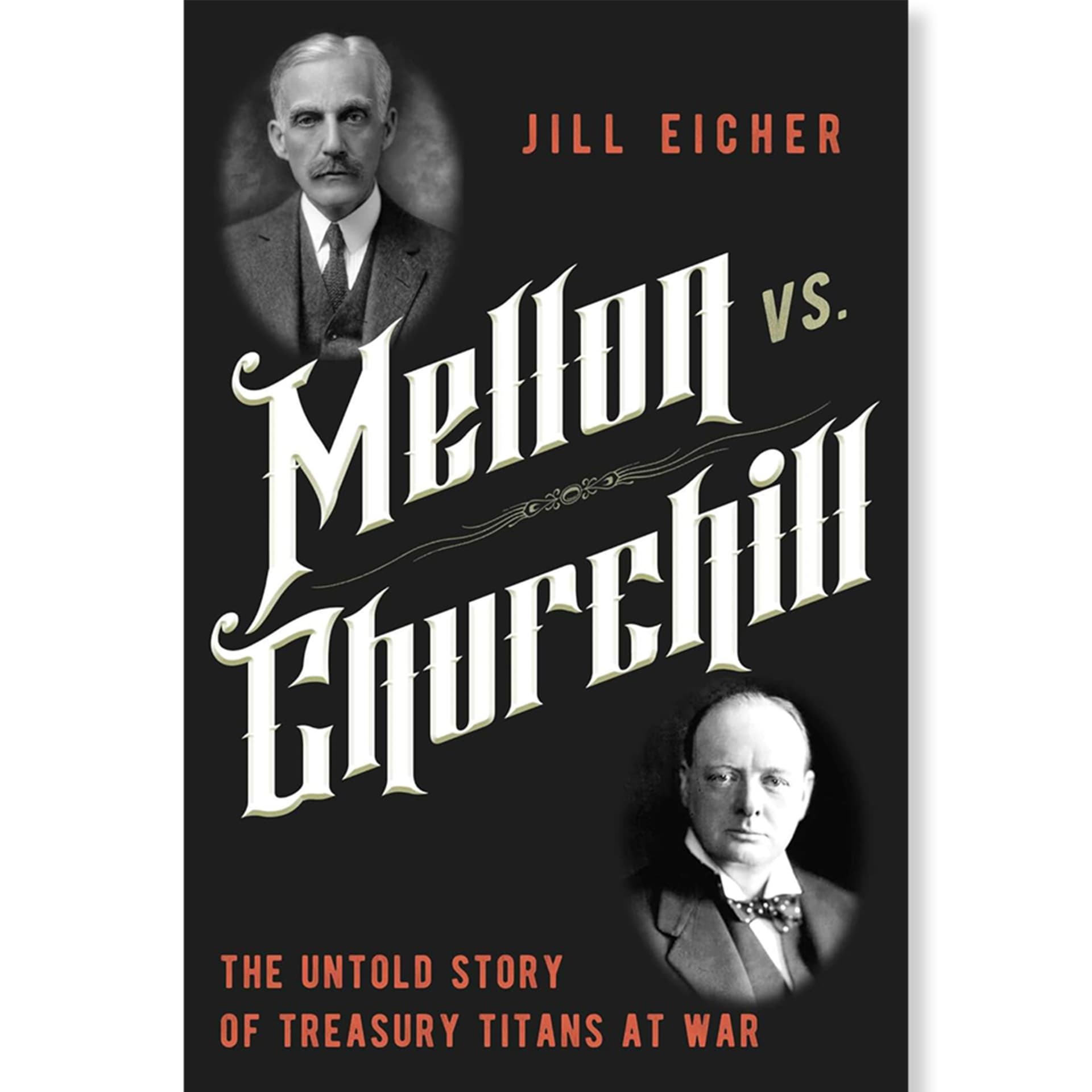
Jill Eicher - Mellon vs. Churchill: The Untold Story of Treasury Titans at War Host: Cole Smead Guest: Jill Eicher Date: [Insert Date]
---
Episode Overview In this episode, Cole Smead interviews Jill Eicher, independent scholar and author of *Mellon vs. Churchill: The Untold Story of Treasury Titans at War.* The conversation revolves around the historically significant yet underexplored tensions between Andrew Mellon, U.S. Secretary of the Treasury, and Winston Churchill, the Chancellor of the Exchequer, particularly regarding post-World War I debts.
---
Key Themes and Discussions
- Introduction to the Guests
- Cole Smead introduces Jill Eicher, highlighting her extensive background in finance and history, including her work at the U.S. Department of the Treasury and the Bipartisan Policy Center.
- Eicher’s inspiration for writing the book arose from her research into public-private partnerships, leading her to uncover the intense dispute between Mellon and Churchill.
- The Context of the Dispute
- Post-WWI, the U.S. extended loans to the Allies, which became a contentious issue as the Allies struggled with reparations from Germany.
- The discussion highlights Mellon's pragmatic approach to debt restructuring versus Churchill's insistence on the moral obligation to repay loans.
- Leadership Philosophies
- Mellon viewed debts through a practical lens advocating for restructuring, while Churchill’s philosophy was rooted in the belief that the U.S. owed a moral responsibility to support its allies.
- Their contrasting views on leadership and handling economic crises are deeply analyzed throughout the conversation.
- Public Opinion and Political Maneuvering
- Churchill’s understanding of the importance of public opinion contrasts with Mellon's more conservative and business-oriented approach to finance.
- There is an exploration of how both leaders sought to sway public sentiment in their favor to support their respective positions on debt repayment.
---
Key Takeaways
- Public-Private Partnerships: Both Mellon and Churchill created lasting partnerships that have had significant impacts on infrastructure and the economy.
- Differing Perspectives on Debt: The episode emphasizes how the political and economic landscapes influenced their respective views on handling post-war debts.
- Individual Roles: Eicher discusses the pivotal roles played by lesser-known figures, including Mellon's daughter, Elsa, who helped navigate the social dynamics of the time.
---
Concluding Thoughts The conversation concludes with reflections on how the historical interplay between Mellon and Churchill remains relevant in today’s discussions about debt, responsibility, and international relations. Eicher's insights into the personal and political dynamics involved provide a unique perspective on the undercurrents that shaped an era of economic negotiation.
---
Additional Resources
- *Mellon vs. Churchill: The Untold Story of Treasury Titans at War* by Jill Eicher
- Visit [Smead Capital Management](https://smeadcap.com) for more insights into value investing.
---
Call to Action If you enjoyed this episode, consider subscribing and leaving a review on your preferred podcast platform. Share your thoughts and book recommendations with the Smead Capital Management team via email at podcast@smeedcap.com or on X at @smeedcap.
--- ```
Written by AI. May contain mistakes. Listen to the episode to check what was said.
Transcript
Automatic transcript. May contain errors.0:02You're listening to A Book With Legs, a podcast presented by Smeed Capital Management. At Smead Capital Management, we advise investors who play the long game. You can learn more at SmeadCap.com or by calling your financial advisor.
0:21Welcome to A Book With Legs podcast. I'm Cole Smead, CEO and Portfolio Manager here at Smead Capital Management. At our firm, we're readers, and we believe in the power of books to help shape informed investors. In this podcast, we speak to great authors about their writings. The late, great Charlie Munger prescribed using multiple mental models and analysis. We analyze their work through the lens of business, markets, and people. We're going to have quite a bit of fun today. In this episode, we are going to learn how to settle matters that you don't create, you can't control, and you need to abide by the powers that be around you in an international conflict.
0:57Jill Eicher is joining us to discuss her newly released book, Mellon vs. Churchill, The Untold Story of the Treasury Titans at War. To introduce our listeners and our viewers to Jill, Jill previously served in the U.S. Department of the Treasury. She also worked at the Bipartisan Policy Center. If I remember correctly, Jill, out of my notes, that was the research lab that you worked with there. She has been a visiting scholar at Stanford University and also at the International Churchill Society. She also worked in the investment management business like I do or our firm does, Hellman Jordan Management, a Boston-based investment management firm.
1:31She is a graduate of Wellesley College and did postgraduate work at Strasburg University. She also, I don't know if I've had this before, but she holds a patent to her name as well. I found that little tidbit out there, Jill. So thank you for joining me. Really glad to have you today. Thank you, Cole. Deeply complimented to be on your podcast. Yeah. How many people have ever done that kind of research and found the patent? Well, you just dig around. It's not AI. It's just what the human brain can do with a little search. So, you know, this is your first book. You know, we were kind of talking offline about, you know, people that had, you know, pushed you or given you encouragement on this.
2:09Why this story for your first writing? It's always like for an author's first book. It's like this is a lot of energy. It's like taking off on a spaceship. You know, this takes a lot of work, I assume. But why was this story so important to you for that? Actually, the story found me. Okay. I wasn't looking for it at all. As a matter of fact, I was looking for successful public-private partnership models out at the School of Engineering at Stanford. And I discovered that Winston Churchill had created a wonderful public-private partnership, which was the Anglo-Persia Oil Company on behalf of Great Britain.
3:00Churchill formed this partnership to give Britain a secure source of oil. This was, of course, as the Royal Navy was transferring from coal fuel to oil. And, of course, that public-private partnership eventually became British Petroleum. I also found that Andrew Mellon had created a very successful public-private partnership here in Washington, D.C., of course, the National Gallery of Art. And so I found it very interesting that two men not known in the world of infrastructure finance had created these wonderful, lasting public-private partnerships. And then I came upon an article, a very short article in the New York Times saying that Winston Churchill, the chancellor of the exchequer, had hosted Andrew Mellon, the U .S.
4:04secretary of the treasury for dinner at the Ritz. I, of course, thought, oh, my gosh, you know, maybe they are friends. and I thought they have you know this wonderful kind of shared interest Mellon of course had big oil interests in Gulf Oil then I found out of course that that Gulf Oil had done a deal with the Anglo-Persia company both men liked art I thought oh my gosh I bet you they're friends I could not have been more wrong. And that's when I came upon, having done some more research, this epic battle of wills between the two of them. And my husband, who's an investigative journalist, grilled me for several nights about this.
5:00he said you know everything's known about Churchill this can't possibly be and after about three nights he decided well you know you better dig deeper and I reached out to the International Churchill Society and they said no Jill they they never met the and I said actually I think they did and the International Churchill Society was wonderful Lee Pollack I was the director at the time and they offered me a grant and that's how I started. And then as I met people along the way, they just offered encouragement. Um, and the story, uh, just became, uh, took on a life of its own. It's just, as you said, it was a spaceship rocket over several years.
5:48When the other thing about that story, uh, cause I, obviously that comes later in your book. Um, I have, there's, there's, there's a restaurant that's no longer at the Ritz there in London. And it's now, I think it went out, I'm sure someone's placed that, but I remember it was like the restaurant to kind of go to for the West End. And I had, you know, kind of like a Churchill Mellon moment where I'm sitting there with a partner of ours. It's our outsourced trading group who's based there in London. And we look and Damien Lewis of like Billions fame, like walks in the room with Anna Wintour, like the Vogue magazine editor.
6:20And I'm like, well, that's crazy. And another person goes, oh, and that's like Nancy Pelosi. That lady looks like Nancy Pelosi. I was like, there's not a chance in God's name that's Nancy Pelosi up there. We laughed it all off. No, she was in London for the, you know, talking with, you know, the PM at the time about the Friday Accords and how they need to keep with, you know, what was going on with Brexit and whatnot. And it just cracked me up because as I'm reading your story, I'm like, I can just imagine this kind of grand dinner at the Ritz. And I've seen a small piece of that before. So let's jump in.
6:52Teach our listeners how Mellon became the Treasury Secretary under Harding. You know, he wasn't necessarily the first choice is what I took away from your book, but he was considered to be kind of like a good choice for the role. Well, Harding had said that he wanted to bring the best minds into his cabinet. He had said that publicly for quite a number of weeks. And Philander Knox, who was a senator from Pennsylvania, I think he was really the idea of Mellon becoming Treasury Secretary. I think it started with Philander Knox. And he went to talk to Mellon. Mellon, of course, at this time is 65, retirement age.
7:41He's made millions in dollars in multiple industries. You know, he really was one of our original venture capitalists. And he and Knox had this heart-to-heart talk at Mellon's house. And Knox walked away realizing if Harding asks Mellon, Mellon would say yes. The economy, the post-war economy had really destroyed many industries. Unemployment was rampant. The men coming back from the war, there were no jobs. There was rampant inflation. The national debt had quadrupled. Mellon knew that these were going to be very challenging economic times. And I think the idea that he might be able to do something to the good, as he said, was what made him think, maybe I can lend a hand.
8:46Yeah, because he reminds me of just a very conservative banker. You know, obviously, it's all these business interests. I think you mentioned in the book he was he resigned from over 60 corporations, many of those bank corporations that he was involved in. And so I also kind of thought about his life as like, you know, he had a connection to really that was a gilded age thing. Like, you know, the kind of the trust busting of the Teddy Roosevelt era where a director and the cross holdings. He was on a lot of businesses. I was going to ask you, did you get the if you become the treasurer secretary today?
9:16What I do know is if you have business interests, you could sell those tax free. You don't pay capital gains because you're doing something good for the country. Is that what he would have if he divested those interests at that point? Or do you have any information on that? Because I just I was kind of wondering that I don't know. I'm sorry. I can't help you. Just because I've seen that nowadays. I know that they get like a special provision for that. So it's March of 1921. The Germans, you know, are they stopped making reparation payments to the allies. Explain to our audience why they were doing this.
9:48You know, where was Germany at? Because they're really kind of the bottom of this scheme in much of the story. Well, Germany was as devastated as the rest of Europe. And economically, they really had destroyed their currency. They had no credit anywhere in the world. And they were desperate. They could not pay reparations. There was no possibility of that. There was no possibility of the allies repaying the United States either, which is why the Wilson administration had to extend a moratorium on repayment of the loans to the allies because it was just the economic conditions in Europe were so dire.
10:39People were starving. There was no possibility for any of the governments to make payments. Sure. But that's not where obviously Mellon started out. I mean, he came in and Harding's view was these are debts and very much Congress's view, too, was these are debts. You know, how do you look at their view at the beginning of this discussion? And I think Mellon played a very large role in shaping that view. He was perhaps one of the most talented credit managers of his era. And he was pragmatic in the sense that he believed that both creditor and debtor could only do what they could do, and they had to meet in the middle.
11:27And that was his area of expertise. He did believe in forgiving loans in certain circumstances. He believed primarily, though, in restructuring loans because he thought that the debtor would want its credit to be rehabilitated as much as the creditor wanted to be repaid. And so that was always his point of departure is how to restructure a debt so that the debtor can repay and the creditor can be as patient and as forgiving as possible. But that is generally the course. And so I think he played a very large role in the early Harding cabinet to say that restructuring the debt, keeping the debt as a live asset would be not only good for the United States, but good for the credit of the allies.
12:29Sure. Because I think you point out in the book early on, even in 1920, David Lloyd George, the British PM at the time, he asked the Wilson administration to cancel the debt. So that becomes also a kind of overarching theme is Britain more than other allies are saying, there's no point to this. Let's just cancel it. And I think maybe the best echoing of this comes from Keynes later in the book. I think I have a quote for Keynes if we bring it up later. But again, they're really the ones crying out the whole time being, I'll call it more honest, because you have Germany who's like, we just can't pay anything.
13:06And then you have the other allies like, oh, yeah, we're going to come. Yeah, we're going to somehow make this work. And the UK for a long time during the arc of your book is saying, there's no point to this. Don't we just need to cancel these debts? Right. And that voice was the real voice, I think, carrying that sentiment was Churchill and Lloyd George. Both of them, they knew that all of Britain and all of France always assumed that the United States would cancel the debts. Sure. And they were shocked when not only the Wilson administration, but then the Harding administration, both said, no, wait a second, these were loans.
13:55You signed the loan documents. You promised to repay with interest. And the idea that the United States was intent on collecting was unimaginable to the Allies for a very long period of time. You begin the Churchill discussion in your book not with him riding in on a horse and kind of gallivanting to the rescue. He's out on a camel in the Middle East with all people, T.E. Lawrence, who most people would know as Lawrence of Arabia. So how does Churchill – I mean you give a little bit of the history of the UK or actually Britain effectively took over African and Middle East assets from Germany post-World War I.
14:40And, you know, that's part of what they started getting. How do you look at, you know, his entrance with kind of almost like a Hollywood-esque touch to it on a camel falling off and, you know, letting everyone go away and he's still riding the camel because he's so tough in like a Hemingway fashion? I just, at that moment when I found that part of the story, I just thought this is too good to be true. And to think of him, you know, being, first of all, he is away from Great Britain when the job he most wants becomes available. He's been dreaming of being chancellor of the exchequer all of his life, and he is over trying to find a way to make it economically feasible for Britain to oversee these new territories that it's been awarded.
15:41And he promised when he left that he promised the then chancellor of the exchequer that he was going to find these great savings and to prove his mettle as a good money manager. And what happens while he's over there, you know, riding across the desert on camels with Lawrence of Arabia, of course, his dream job becomes available. And it just I thought, oh, my goodness, you just can't imagine this. Well, great. And so it's not given to him, but he ends up in the cabinet, you know, even though he doesn't become the exchequer, the chancellor of the exchequer. you know they they then they have a cabinet meeting up at the dunroban castle that you talk about in the book and they're up in scotland which is interestingly obviously churchill's backyard of his constituency he is a member of parliament from dundee and so he's juggling this cabinet meeting you know with nobles up in the northern part of the country in scotland at the same time he's out really campaigning and pressing the flesh as they say with his people you know it's chaotic but at the same time Churchill's a very charismatic person and is able to juggle a multiplicity of things in a way that others won't is what I took away from your writing is that kind of a fair way of looking at this period of his life that's exactly true you're you're completely correct Cole he really was able to do that and on top of that he had just lost his daughter and his mother and his brother-in-law.
17:25So there was a great deal of grief, family loss on his shoulders at that moment. The policies of the Lloyd George government were very unpopular. There were demonstrations in the street, shop windows being broken, And Churchill had to go and try to save his seat as a member of parliament and defend the policies of the government, even though his constituency was suffering greatly because of those policies. Sure. The other character you introduce, and she kind of floats through the arc of this story, is Andrew Mellon's daughter. And I don't want to butcher this, but is it Elsa? Elsa. Elsa. So she comes off as capable, social, good at getting things done.
18:20I mean, she, you know, I have three daughters myself, but this is kind of an incredible, he had his own marital problems, it sounded like in his past, you know, through his wife and infidelity. But this daughter, through that storm of his marriage, seems to be, she loves her dad, she blesses her dad, she does things that are beneficial to her dad. It's a really kind of like, it's like a little breadcrumb that I took away. I was like, wow, what an incredible daughter and really makes things easy for his future roles as those come about. Oh, I'm so grateful to you, Cole, for thinking of Elsa. She's I know she played a minor role in this story.
19:00And you're so wonderful to put the spotlight on her. She is one of the most accomplished philanthropists of the United States who is, I believe she's not been properly recognized for all that she did. And it began during this period as she became a young woman. She was 20, 30, 40 years younger than all the other women who she was, you know, not required, but it was tradition at that point that the cabinet and wives would open their homes and host teas and host dinners. And this is at a time when politicians socialized with one another on grand scale, got to know one another. And so Elsa played a very large role as a hostess.
20:01But of course, that required hosting foreign dignitaries, people from all different walks of life. And so she had a front row seat to her father becoming involved in politics just as he was. And I believe they really they helped one another. They are both very reserved, shy people. But this this move to Washington for both melons, I believe they they helped one another greatly. And they had, I believe in the early years, they both had the times of their life. I agree. They had, I just, like, as I was imagining Elsa in this, it's like, wow, what a great opportunity to go out and live life, bless other people, you know, et cetera.
20:54And I think it was a wonderful story inside of this book. Hi, I'm Cole Smead, CEO and portfolio manager here at Smead Capital Management and host of this podcast. If you enjoy this podcast, I'd like to invite you to check out SmeadCap.com. At our firm, we are stock market investors. We advise investors who play the long game with a discipline that has proven success over long periods of time. Learn more about our funds at SmeadCap.com. Past performance is not indicative of future results. Investing involves risks, including loss of principle. Please refer to the prospectus for important information about the investment company, including objectives, risks, charges, and expenses.
21:33Read and consider it carefully before investing. Smead Funds distributed by Smeet Funds Distributors, LLC, not affiliated. So in January 22, they handcuff Mellon really is what they do. They box him in by saying, OK, the debt commission, so not Congress, but this debt commission has to agree to everything that you put together. It really is just kind of a voting group behind Mellon to control his powers, isn't it? Congress was very adamant that they wanted the power that they had back. During the war years, a lot of typically congressional power had been ceded to the executive branch. And Congress wanted to reclaim that power, even though, of course, it was a Republican Congress.
22:28as even one of Mellon's Pennsylvania supporters, Senator Penrose, said, it doesn't matter who's in the White House, we are going to control foreign policy in the Senate. And they did not. They believed Mellon's request to be able to negotiate the settlement of the debts with complete autonomy was too much power for the treasury secretary to have. And they not only formed this commission, but they also required that the terms that they gave for Mellon and the commission to negotiate, everyone knew that they couldn't possibly achieve those terms, but they also required congressional approval for all of the settlements.
23:25So they really did tie the hands of the Mellon and the commission. Leffingwell had a very precinct quote in the book. He said, quote, the international war debts do not represent wealth created, but wealth destroyed, end quote, which is just an incredible statement. Can you kind of just briefly explain what he meant by this because of what happened in the war? Grant, I'm so grateful for you to bring up Leffingwell. He really was a very forward-thinking man, brilliant, absolutely brilliant. And of course, he had structured the lending for the Wilson administration. And so he held the institutional knowledge of war debts.
24:16And he continued to try to help. He was very discouraged and really was trying to persuade Congress to listen that the path that they were taking was unworkable, that what they had asked the commission to do was impossible. And he was trying to explain why there needed to be forbearance on the debts. And this whole notion that the debts, normally loans, he was trying to explain the difference between commercial loans, which are made to generate wealth, to help a business grow to the next level, which was not the case at all with the money loaned to the allies. It was loaned to them to fight German aggression, to prevent them, literally to save their lives.
25:16And that all of that money is just blown up in armament, literally blown up. And that's what he was trying to make that case, trying to get Congress to listen, that trying to force the Allies into repayment when they were so devastated was just an unproductive path to take. Well, yeah, and I was also thinking about, and you didn't talk about this in the book, but I was also trying to think about kind of the social structure because you have Leffingwell, I'll call it like high-end intellectuals, right? That people that understand big problems are arguing that, you know, they need to let the guard down.
25:58In fact, of the United States of America, let your guard down, let these just go away. When if you go to Joe and Jane Six Pack on Main Street, They're like, no, these are debts. They don't discharge my home loan or my loan for goods that I purchased for my business. And on Main Street, these were looked at as just straight debts, commercial or not. They were just debts that need to be repaid. You're totally right. And that was the mistake that the U.S. government made by not helping the regular people understand the level of destruction in Europe and what the United States should consider doing.
26:43Churchill, of course, was trying. Churchill understood that public opinion really matters in politics. He believed, of course, with Churchill's gifts, he could change hearts and minds either on paper or through oratory. He had both those gifts. And that was a piece of education that Leffingwell realized had not been given to the American people for them to understand that difference between commercial loans and the loans to the allies. And of course, he was writing in the Yale Law School Journal. And unfortunately, you're so right. That was a mistake on the part of policymakers in the United States.
27:37Well, it reminds me a lot of if you're, you know, let's say you're a politically minded person and your sole goal is to get reelected. That's all that matters to you. Okay. Just to call a spade, a spade, whether economic policy is good or bad, if you can get elected every two years or you can get elected every six years, it doesn't matter. You can live forever to a certain extent in politics like that. And so I was thinking a lot about like, oh, you know, if we just tax everyone else right now, we'll just pay off all of our entrenched debt here in America. It's like that sounds good in a soundbite to your constituents.
28:08In the real world, it just doesn't work like that. Let me pivot a little bit because, you know, Britain's trying to address this in a formal way through the Balfour note. They're trying to come and say, hey, you know, here's we want to give you want to give our allies some honest criticism about their debt. But this is just a big scheme. You got Germany at the bottom. You got the allies in the middle and you got the United States at the top. And UK is in some way at the higher part of the scheme because France owes them money, but they also own the United States money. And so it's like Britain's turning to everyone else in the scheme and saying, hey, you need to you need to be thoughtful about what you pay back.
28:44And we'll be you know, we'll be fair about that. But what they're really saying, United States is you need to do the same. And everyone knows it's a backhanded statement. Is that is that how the Balfour note should be looked at? The Balfour note was for the benefit of the United States policymakers. You're absolutely right. The allies were taking their cues from Britain. And Britain wanted to lead on it, particularly Churchill, who really did provide the conceptual framework for the Balfour note. And the intention of the Balfour note really was to put the United States in the position of seeing itself as a greedy creditor.
29:30And so the Balfour note essentially said, we, Britain, will forgive all the debts of our allies if the United States will do the same. There were only two creditors for war loans, and one was Britain, who funded most of the Allies' needs in the early years of the war, and then the United States. So there were only two creditors. And Britain said, you know, they were trying to set the bar that he will do this magnanimous, generous gesture of forgiving all of those allies who owe us money if the United States will do the same thing. It was disingenuous because virtually none of the debtors that owed money to Britain, there was no possibility of Britain really being able to collect much of the money owed to them.
30:39Sure. So there's the social game of this, you know, so it's like you have you tell the story of King George sitting down with William Howard Taft, who is a former president sitting chief justice at the time visiting England. And it might as well be like we're letting one of our dukes of the United States come over, sit down with the king of England. And this comes up as subject. And I think Taft kind of pans it off as like, oh, well, you know, you know, kind of like here's the policy. And, you know, I think we're just going to stick to what's the status quo. So you have that going on. You then have like people like Basil Blackett who asked the most precinct question also maybe during this.
31:19He said, quote, is it worthwhile to begin by pillaring American selfishness? End quote. And so you have this tension of, you know, do we mock and ridicule the Americans for this because they are our allies and they've been very helpful in the season. That tension also comes to I think you talk about Churchill where he's like, hey, we shouldn't fear them on this because ultimately he knows that if no one pays, it's America's problem anyway. Right. And therefore he didn't fear America, I guess, like other British politicians did, because on one hand, they were worried. I think the Balfour note debate was really around the Britain's credit.
Read the full transcript
31:58Are we going to hurt our credit standing in the world? And yet, if we can't pay off this money, maybe does it matter what our credit standing is because this is our primary creditor? Right. Churchill was strong form on this point. He had no fear of pushing the United States as hard and as long as possible to shame the United States into doing what he believed in his heart was the right thing, was to cancel all indebtedness related to the war. Churchill passionately believed that. He never wavered on the point. He wrote the Will America article. While in government, he wrote that piece, Will America Fail Us?
32:51That really was how Churchill felt about it. His resolve on the point only strengthened as the years went on, that that was the right thing to do. And that the important thing for Britain was to just keep pressing the United States to come to realize that in every way that they can, by shaping public opinion, by British policy, by influencing the allies. Churchill decided, we'll just play the long game until they figure out this is the right thing to do. To your point, I mean, isn't that kind of the question being asked by our own allies now is like, you know, as uncomfortable as it is. And you're talking to like your classic right wing conservative evangelical who voted for Trump.
33:44Isn't that kind of the awkward question is like, what are our allies going to think about us in the aftermath of this? And that's really what the tension of this book is, is, you know, very tough economic terms with your allies. That is the question that this story, what I took away from studying the language and the arguments back and forth was it came down to the question of what nations owe to one another. And the recognition that we live in an interdependent world, like it or not. Sure. And how can we have discussions to tackle these tough questions? If you think of, Mellon and Churchill were two brilliant men.
34:40They had extraordinary work ethics. They were both patriotic. They both wanted to do good things for their country. And they could not figure out how to come together and represent their two points of view and and perhaps give the world a blueprint of how to answer this question. We're still struggling with it today. Sure. So France is causing a lot of pressure. They're going to occupy the Ruhr, which is going to create a whole other problem and chain of reactions. In late 22, Churchill loses his seat in parliament, and parliament is taken over by the conservatives, which funny enough, Churchill helped found the conservative party originally.
35:28At this time, he wasn't a conservative. How does this really lead to the Mellon-Baldwin agreement? Because you have new government coming in, and you have Mellon that, to your point, he's a banker. He looks at this as a restructuring. And the Mellon-Baldwin agreement is really just a debt restructuring. It is. You're exactly right. It was a debt restructuring. Stanley Baldwin, who was chancellor of the Exchequer at the time, was sent over by Boner Law to negotiate with Mellon. And the two of them had very productive conversations. A lot of the negotiations took place at Mellon's home. And Baldwin was then, unfortunately, Boner Law did not like the terms.
36:18He thought that they were not fair. But Mellon had faith that Baldwin would be able to persuade Boner Law that this was the right thing to do. And of course, from Mellon's point of view, Britain was really the only solvent debtor that the United States has. And so this was the most important settlement. And he wanted it to be completed first. He was then going to use it as a model for all others. and Mellon sent Baldwin on his way with confidence that Baldwin would be able to persuade Boner Law that this was the best deal that Mellon would be capable of getting congressional approval for because it was far more generous than the terms that had been dictated to the Mellon and his commission by Congress.
37:15And so Mellon was going to have to use his political capital, if you will, and the support of Coolidge to persuade Congress to agree to these terms. Yeah. And let's see, I was just going through my notes here. The other, I'll put this out as a, you know, a little tidbit for listeners and viewers. Let's see, Boner Law penned an anonymous op-ed in the papers. And so I just thought like, what if a major world leader penned an anonymous op-ed? I mean, you'd be called out on the carpet for effectively, you know, lying and hiding things and whatnot. And at this time it was like, this is the way I got to like go out and explain to the public versus now people just go out on social media and tell them how they think.
38:01And you have to have a lot more transparency. So I thought a lot about the inner workings of societies in that piece. You know, when you turn to Churchill at this time, I mean, he's out of politics. He's about to publish a book. He is, you know, hanging out at his home. He's remodeling, you know, working on in the Mediterranean. He's hopping a train back and forth between Britain and the South of France. I mean, he's jet-setting, but he's still as important to this issue, even though he really is almost superfluous from a political perspective. to the central dialogue, he is still one of the central figures.
38:39And I think there's a magnet around these two gentlemen. The whole time, it doesn't matter what their role is. Well, I came to think of Churchill as wanting to be recognized as Britain's foremost expert on American foreign policy. And, well, actually, America in general. Okay. I would agree, but I want you to explain your view first. I really felt that he knew that he had a lot to contribute to British policy because he made it his, he could see that the United States was going to be a great power, a great force. And he realized that Britain needed to partner with that, needed to not try to resist, but join forces.
39:36And Churchill had, of course, great political ambitions. And so therefore, he took on the mantle of being the best thinker on American foreign policy, on America in general. and of course, during this period, how to influence American public opinion. Yeah. We hope you're enjoying the podcast. You know, we work hard putting together this show, but we work even harder for our investors at Smead Capital Management. At Smead, we believe in discipline investing, which is why the Smead funds have a proven track record of long-term outperformance. If you're an investor who plays the long game and want to invest in wonderful companies and build wealth, We invite you to visit SmeadCap.com.
40:22Past performance is not indicative of future results. Investing involves risks, including loss of principle. Please refer to the prospectus for important information about the investment company, including objectives, risks, charges, and expenses. Read and consider it carefully before investing. Smead Funds distributed by Smead Funds Distributors, LLC, not affiliated. I think, you know, after reading your book, of what I've known of Churchill prior and other books I've read and then reading this, I think Churchill was more American than most Americans. I think he understood the vision of America.
40:56And I would think he really understood what Pax Americana was far before it entered the lexicon. In other words, he just had such an optimistic vision of America and it was like he knew what was right for America and he was eventually gonna push it to that rightness or that right place. And I think your book argues that He wasn't going to force them to do that. He was going to use his humanity and his prose and his logic and his ability to connect with others to draw them towards their position of greatness. Is that a fair way of putting it? Absolutely. And his tours, when he would be selling his book, he would pack auditoriums, interviews.
41:42Everyone wanted to talk to this British writer who was traveling on private trains across Canada and then coming across the United States, having dinner with the Hearsts and the Astors. everyone wanted to hear what he had to say and he was he was one of the greatest orators of ever but he could he could change hearts and minds and he knew it and he wanted to use that that gift for the good but it also was a way for him to learn about the United States he was captivated by all that he saw on his tours. He admired the United States, whether it be Hollywood or the leaders of business or just the woman who was taking care of his hotel room who was talking about what stock she was buying.
42:41He found that all fabulous. Yeah. Well, yeah, to your point, when he did his visit, it was in the late 20s, right near the top of the stock market. So he thought the gambling going on the stock market was quite an interesting thing. and it was gambling to call a spade a spade. He also, he loved Banff. He talked a lot about Lake Louise and the Banff Springs Hotel. And I love Banff. So this is not like sponsored by visitbanff.com or something like that. But I totally understand that the Canadian Rockies are a totally beautiful place. Coolidge obviously becomes president, you know, because Harding unexpectedly dies in 23.
43:18You know, things change. how does the Dawes plan come about? The Dawes plan came about because the United States realized that they would not be able to reach any settlement agreements on the war debts until the issue of reparations was resolved. It was just this elephant in the room and everyone knew it. And the allies could not come together and resolve it, which was what the United States was hoping. They decided they would leave reparations to the allies to resolve. But that was just not possible. They needed some type of intervention. And the Coolidge administration realized that the United States was perhaps best suited.
44:15But of course, the Quillage administration didn't want to have the government be involved in this. And so this was part of the way that foreign policy worked in these years was to bring in the best minds from the private sector who would work on behalf of the government and go to the meetings so that it wouldn't be as though the U.S. government was officially participating in these discussions, but brilliant American bankers, businessmen, were there representing the government. And so Charles Dawes, who chaired the Dawes Commission and helped with the drafting of the Dawes plan, which was meant to be a temporary plan, And the idea was to find some way to structure a way for Germany to start to recover as well as the Allies.
45:17And then also, of course, for everyone to be able to repay the United States. And so that was the goal of the Dawes Plan. Yeah. And in the Dawes Plan, you mentioned that Parker Gilbert ran the Dawes Plan and the Germans called him the emperor of Europe. up, which I just love. It's like, hey, you want to be the person in that chair? Great. We hate you too. Yes, exactly. So there's a couple of things I want to jump into here. I consider this a tautological argument. When the US said they didn't have any stake in reparations, that's tautological because we all know that they do, just not directly.
46:02They were not a party to the Treaty of Versailles. It's not uncommon for the United States to not sign agreements that the other parts of the world make. That's actually pretty common. We write our own rules in a lot of cases. But to say that we're not a part of the Treaty of Versailles, that's for Germany and the allies to deal with. When we have the allies owing us money that they're getting from Germany, it means we are collecting reparations. Isn't that what's really going on is we were trying to build a structure to benefit from payments that were ultimately at their core. It's like, what was the underlying payment for the bond?
46:32Well, it was German reparations. Actually, no. No. The United States was trying to collect on its debts to the allies. And so that was the real intent. As far as reparations, the United States did not want to claim any reparations. Congress did push Mellon at one point, though, to put a bid in to be repaid for monies related to the direct costs of the U.S. military contribution to the war. But the United States did not want it didn't want to claim any territory. It was not interested in the money coming back from Germany had to do with the loans. And most of the money lent to Germany came from private American banks.
47:37And they, of course, wanted to be repaid for that money. But as far as reparations, Germany was to make no reparations to the United States. Well, correct, directly. But everybody else that wanted to get reparations from Germany were the same people that couldn't pay back the United States. Yes. So essentially what happened with the Dawes plan, it did create this circular movement of money where the money going to rebuild Germany, whether it be its central bank, its railroads, all of that was allowing Germany to make reparation payments to the allies. The allies then were able to make payments on their war debts to the United States.
48:20So, yes, it was a circular system that people finally realized. Sorry. Yeah, Mellon made a very interesting – again, I just put this as a footnote that I just found really interesting. So under the first Trump administration, Keith Kroc was the undersecretary of state, and he had to deal on the China issue in technology. So like think of Huawei and all that kind of stuff. And I'll never forget, I was at a talk he was giving at a tech conference called Cosm, and he said, oh, we looked at our allies on the technology issue with China as our customers. Well, then I'm reading your book, and what did Mellon call the allies on these – ultimately these debt payments?
49:02And he used the same term. He said these are our customers. Do you just look at that as his practical, pragmatic business sense saying, hey, how do I address and meet your needs? And that's part of what really caused him to be pretty pragmatic in his work. Well, that was his way of responding to the chart. There started to develop groups. There were people who believed that the loans needed some type of revision, that they needed to be restructured. Some people believed they should just be totally forgiven, primarily Wall Street bankers, of course. And on the other side, there are people that there should be, every penny should be repaid.
49:49And Mellon was trying to forge a middle road between these groups. And this was part of the education. It was Leffingwell who first put this idea forward, resonated completely with Mellon. And so Mellon tried to get people to see that the United States needed Europe to recover just as much as Europe itself needed to recover. And that's those were the interdependencies. And that's what he meant, that the American farmers wanted to sell their goods to Europe. Well, the Europeans had to recover economically in order for that to happen. And so to have them seen not as debtors, but instead of as customers.
50:37Yeah. Elsa comes up again later in the book. She obviously gets married to David Bruce in May of 1925. He is dispatched as the vice consul of the American consulate in Rome. And so here's her father back in the grind of these discussions. And he's got the ultimate social cover to go visit for, you know, not state reasons, which is go to see his daughter in Rome. And obviously at the time, Mussolini is in power in Italy, which obviously we now think it was like a really bad name. But that's who the power was post-World War II was, you know, in Mussolini's hands. You know, isn't just, again, she's the right daughter for the right person at the right time.
51:22And she's so important to his ability to get things kind of pushed forward while he really is using as a reason to go see his daughter. Well, there are two parts to that. First of all, it's 1926. Oh, it's 1926. Pardon me. And this is at the height of just the worst possible point in the battle between Churchill and Mellon. And Britain has launched this campaign, casting the United States as Shylock. The American press is casting Britain as spongers. and of course the face of this discussion is Churchill and Mellon. And Mellon, he was not a man who could express emotions. You have to think of Mellon through what he does.
52:22And he was devoted to his children. Elsa was in particularly important to him because she had played such a large role in seeing him evolve. But she also understood the pressures he was under. And the truth was, he missed her. She got married and David Bruce wanted to be a great diplomat. He was very well suited for it. But it took Elsa away from A.W. And so Mellon missed her greatly. And in those days, people took summer vacations of, you know, one or two months. And the other side was that Mellon really wanted to see how Europe was recovering through his with his own eyes and talk to people, trusted bankers that he knew.
53:23and so he was doing I came to believe that he was doing research which is what Mellon always did but he was also visiting genuinely wanted to see his daughter yeah let's see so on this trip that's when they visit obviously famously at the Ritz in 26 Mellon realized at this point the Allies were not good for the debts he's really coming around to the idea that this is almost pointless Um, Keynes has a quote in your book. He pointed out that, uh, that he said this after the meeting, if I remember correctly, he said at that meeting that on the current structure, quote, nothing really passes and nobody is a penny worse, end quote.
54:07Um, the bonds were getting bought by American investors at its origin, or again, when they restructured, they still had to go out and sell these. So it was really, as long as their liquidity was present in the American bond market, you could restructure and these kind of stayed all up. Obviously, if that scheme collapses, if there's no investors, none of the debt matters because the market's effectively voting with their feet saying these debts are worthless. The realization that summer that when there would be no appetite for those bonds in the United States, that would be when this whole debt restructuring and reparations, all of it would collapse.
54:55That's when that awareness was starting to grow from just bankers and certain people in Europe. That is when Mellon realized that, oh my goodness, this is not going to be workable going forward. Mellon's response to this was, of course, never articulated. But Mellon realized that two things could happen. One, for some reason, Congress could actually forgive the debts, if for whatever reasons. And also that Europe could default. And Mellon's goal was to build what Jamie called, Diamond calls the fortress balance sheet. Mellon was a great believer in that. He wanted to protect the economic strength of the United States.
55:51And so those two risks were huge in Mellon's mind. And so that's why he was aggressively running surpluses and using every penny to pay down the debt to protect the credit of the United States. And his intent was to pay off the entire national debt in, say, 20 years so that the loans from the allies wouldn't matter, wouldn't harm the U.S. taxpayer, because, of course, the government had promised U.S. taxpayers that there would never be any economic consequence to them because of the loans. And Mel was intent on honoring that promise.
56:59for funds with a proven track record give the smeed funds a look or better yet reach out at smeedcap.com and don't forget to mention your fan of the podcast past performance is not indicative of future results investing involves risks including loss of principle please refer to the prospectus for important information about the investment company including objectives risks charges and expenses read and consider it carefully before investing smeed funds distributed by smeed Funds Distributors, LLC, not affiliated. Let's take what you just said about Mellon, and then let's put our Churchill lens over the top of that, okay?
57:36Because I think it's kind of like those two views put together. So let's just say I look at the world today through those two lenses, okay? To your point, you know, we have to be fiscally responsible. We obviously have not been, okay? That's like case in point. But if you look at from the Churchill lens on top of that, Isn't it interesting that our past commitments, we are not holding, we're trying to renegotiate those, our willingness to stick our neck out there for the rest of the world is going away. Okay. In other words, we're retrenching back to our own shores on some level in some way. so am I surprised that like the goodwill we typically get through the treasury markets is somehow eroding when Pax Americana and our willingness to step in and do the right thing is also coming at the time where we're in the worst fiscal position we've been really in my lifetime since I was born in 1983.
58:29And yet we don't look at those lenses together and say, wait, what if they're actually tied to each other? Is that a fair, you know, kind of two lens view of what Mellon was saying and at the same time what Churchill thought to be right for America in its purpose in the world. Absolutely. Churchill believed that because the United States had become the greatest power in the world, with that came responsibility. That was at the core of Churchill's, all of Churchill's arguments to get the United States to see, well, great, you can be the supreme power. We, Britain, used to be the supreme power. But with that comes a responsibility.
59:18And part of that responsibility is making the world prosperous and bringing peace to the world. That's part of the responsibility that Churchill saw. That's what he was hoping the United States would realize. OK, you're a great power, but it does come with responsibility. Yeah. The stock market crashes after Churchill's visit, not long after. Two years later, Hoover passes in 1931 a moratorium on debt for France. And this was like, hey, you don't have to make any payments. But Congress, shockingly, still has this hope that they're going to get the money at some point. Funny enough, so I think you said in your book they put a provision that it was not a cancellation.
1:00:09So like they're being ideological on this, right? We're not canceling your debt. We're just not making you pay for the foreseeable future. Is there any difference? Well, it was a one-year moratorium for all war debts that was extended by the Hoover administration. And so it did have a time. He did set a time limit of one year. But Mellon and all the bankers knew that once you issue a moratorium on a, you know, to a debtor, the likelihood of resuming payments is very low. And so that was the opportunity for the Allies and Germany to get together and come up with a plan of, okay, so how do we get the United States to cancel their debts?
1:01:11And they thought for sure this was the opportunity to do so. Unfortunately, they were wrong. But they then put forward that plan that they created saying, we're going to walk away from all our debts. All is forgiven if the United States will. And that was their proposal. The United States declined. Yeah. And I mean, just them even throwing the idea out that this is not a cancellation of debts. This is like a paper tiger. I mean, that's what this is. It's a paper tiger. You're putting something on paper. It's absolutely worthless in meaning or consequence. The other thing, too, is with the stock market crash, it exposed exactly what Keynes got at, which was that these were worthless if they couldn't be financed.
1:02:02And once liquidity disappeared, it showed you how uneconomic this was because without liquidity, no one's going to pay anybody. And so it makes me think as an investor, how often schemes like this go on for quite a long time and then liquidity goes away and everyone says, oh, wait, that doesn't work anymore. Yeah, we're just going to forget that happened. And, you know, to quote Charlie Munger, he says, you know, why do we create new ways to lose money? I think the old ways work just fine. OK. And that's what I was thinking of as I was kind of going through this part of your book.
1:02:34Because at the time, you know, Mellon goes from Treasury secretary to ambassador to the UK. So, again, it's not that they disliked Mellon and didn't think he was a nice guy. He goes on to work directly, you know, with the British government on many things. Mellon was very respected in Europe because he was very honest always with them. And he had, Churchill got under his skin. They did have this epic battle, but both men, And there was merit to what both of them were arguing. And people knew that. And so when Mellon came as ambassador, of course, he was totally disgraced in the United States. But he was welcome in Europe.
1:03:27They wanted his financial expertise. They thought this was a wonderful thing to have him on their shore so he could see what they needed and how they could partner with the United States. So they welcomed him with open arms. Yeah, because the other book that I've read with a U.K. ambassador, British ambassador, is actually Joe Kennedy, who ended up there during the FDR years. It was very different. Very different, but again, like, you know, had political ambitions. It was a very different character, but, you know, also played a very social role, I would call it, not dissimilar to Mellon. Let's see, Churchill, you know, compared to Mellon, you know, again, I think he just he holds a very unique space, more in the American, you know, thought and lexicon.
1:04:18lexicon. You know, Mellon's kind of an afterthought, which that's what I really thought your book did such a good job of, was taking Mellon and, you know, really elevating him as an American, as a statesman, as a leading, you know, official in the financial world on behalf of the United States. But Churchill, he ended up playing a silent war. I think a lot of the book, later in the book, You talk about how once public opinion rose up against the United States, he just was mum because he knew he didn't have to say anything. The wheels of time were, you know, propounding or expounding to where he wanted them to go.
1:04:57Is that right? It is. And Churchill's attention had turned. He was very concerned what was happening in Germany. And he was focused on, he understood that the ill will, the bitterness that had played out for the last 10 years, that it was still percolating there. And he was very intent on keeping an eye on what he saw as warning signs. And so his focus had turned to monitoring what was happening policy-wise in Europe and in particular in Germany. Where can our listeners and viewers follow you going forward so that you're going to tell us what your next book is? I'm teasing. I'm just kidding. Oh, you're so kind.
1:05:54That's so kind of you, Cole. I'm sorry, I don't have a website. Okay. This is my first book. I apologize. I don't have anywhere to tell you. Well, I was going to say also, do you expect to write more on the subject as you come across more with the Churchill Society or anything like that? Well, there's a part of the research that I did for this book that doesn't fit into this story because I really wanted to keep the focus on Mellon and Churchill and Wardetz. but there's a wonderful story uh that i'm i'm trying to summon my courage uh this is my first book it took four years um i had to negotiate see if my husband be okay with this but i would i would love for that story uh to be told it is the it's a piece of uh american uh history it has to do with the National Gallery of Art.
1:06:54And I very much would like to have the privilege to do it if the fates allow. Well, I think you had that at the very end of the book because they, you know, kind of pushed Mellon for tax evasion. And he ended up giving his art collection to the National, you know, went to the, you know, National, now part of the National Mall and went there. And I could tell it was just like a little, a little breadcrumb you left at the end of the story? Because it's such a, it's an important story and it's also beautiful. I mean, there's all kinds of intrigue and this is Melon. So of course there's intrigue and that's, I, I, I appreciate your kind words and encouragement.
1:07:36Thank you. Well, Jill, thank you for your time. Your book argues that learning and pragmatism as we saw through Melon are the inescapable values that we need in business and politics. You'll further gain life lessons out of the people that Churchill and Mellon were with. Mellon has defined what I believe is the new American century in the centrality of work and its value. He said, quote, the purpose of life is to be occupied and serve in the most useful capacity, provided it is an honest endeavor. The question is to find where one can give the most service. My main pleasure in work is being able to accomplish results, end quote.
1:08:20I love that quote. You have to read that. You should go out and buy a copy of Mellon versus Churchill today. If you've enjoyed this podcast, go to Apple, Spotify, YouTube, wherever you listen to a book with legs. Give us a review. Tell others about the books and great authors like Jill Eicher that we have the opportunity to understand and study the world with and through. For our tribe, if you have a great book that you'd like to recommend, email podcast at smeedcap.com. That's podcast at smeedcap.com. You can also send your suggestions to us on X. Our handle is at smeedcap. Thank you for joining us for A Book With Legs podcast.
1:08:54We look forward to the next episode. Thank you for listening to A Book With Legs, a podcast brought to you by Smeed Capital Management. The material provided in this podcast is for informational use only and should not be construed as investment advice. You can learn more about Smeet Capital Management and its products at SmeetCap.com or by calling your financial advisor.
From the publisher
In this episode, Cole Smead sits down with independent scholar and writer Jill Eicher to discuss her book, “Mellon vs. Churchill: The Untold Story of Treasury Titans at War.” Their conversation explores the never-before-told story of heated debates between Andrew Mellon and Winston Churchill over post-WWI debts. Eicher and Smead discuss how each side of the dispute crafted narratives to shape public opinion, their differences in leadership philosophy, and more.


