In short
Podcast Notes: A Book with Legs - Episode with John Oller on "White Shoe"
Podcast Overview
- Title: A Book with Legs
- Host: Cole Smead, CEO and Portfolio Manager at Smead Capital Management
- Description: The podcast explores value investing through discussions with authors regarding influential books that have impacted investment decisions. Aimed at curious-minded individuals, it seeks to illuminate the intersection of business, markets, and literature.
Episode Details
- Episode Title: John Oller - White Shoe
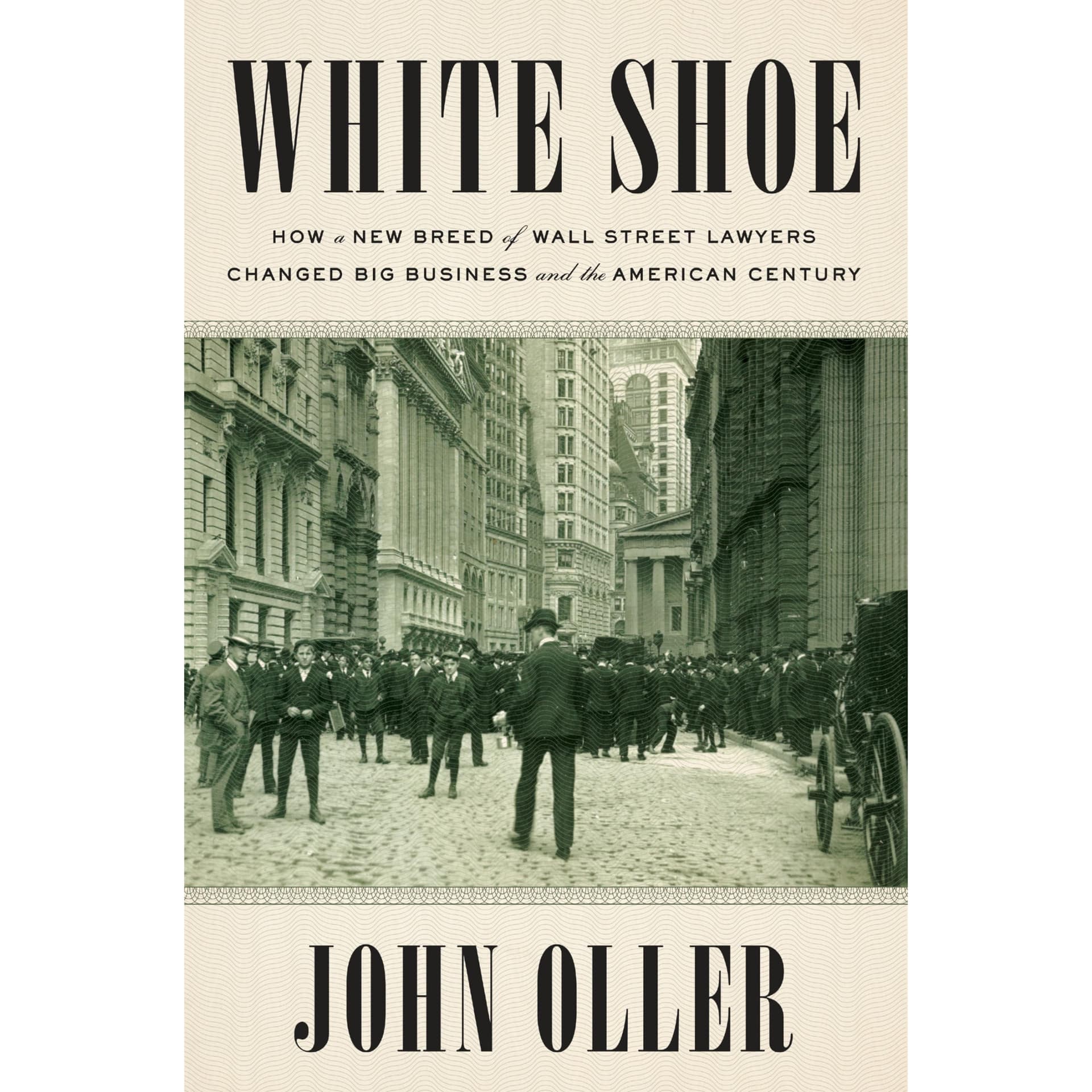
- Episode Description: John Oller discusses his book "White Shoe: How a New Breed of Wall Street Lawyers Changed Big Business and the American Century," focusing on the evolution of elite law firms and their influence on corporate America.
Key Themes and Discussions
Influence of Corporate Lawyers
- Corporate Lawyers' Rise: The episode traces the ascent of corporate lawyers and how they shaped business and political landscapes in America.
- Historical Context: Oller draws on historical figures and pivotal legal cases that helped develop the modern corporate law field.
John Oller's Background
- Background: Retired lawyer and journalist, with multiple published works. His experience in law provided a foundation for writing about the history of Wall Street firms.
Major Firms and Figures
- Paul Cravath:
- Important figure in the establishment of the modern corporate law firm.
- Developed the "Cravath System," which emphasized hiring from top law schools and creating a meritocratic structure within law firms.
- William Nelson Cromwell:
- An innovative lawyer known for restructuring bankrupt companies and his pivotal role in the Panama Canal negotiations.
- J.P. Morgan & Legal Maneuvering:
- Oller discusses J.P. Morgan's influence and the legal strategies employed during market upheavals, including the Northern Securities case.
Historical Legal Cases
- War of Currents: The battle between Edison's DC and Westinghouse's AC technologies, where Cravath played a significant role in litigation.
- Northern Securities vs. Sherman Antitrust Act: Highlighted the legal challenges of monopolies during the early 20th century, showing the tension between corporate power and regulatory oversight.
Regulatory Developments
- Interstate Commerce Commission: Established to regulate railroads, marking a significant step toward federal oversight of business practices.
- Antitrust Legislation:
- The Sherman Antitrust Act and subsequent acts like the Elkins Act and Hepburn Act aimed to address monopolistic behaviors.
Modern Implications
- Current Relevance: The discussions draw parallels between historical corporate lawyers and today’s tech giants (e.g., Amazon, Google) and the ongoing debates about corporate influence in politics and economics.
Key Takeaways
- Evolution of Law Firms: The discussion illustrates how corporate lawyers transformed from small practices to influential entities shaping major business decisions.
- Morality and Law: The episode explores the ethical dimensions of lawyering and the balance between client interests and societal responsibilities, touching on Brandeis's advocacy for the people's lawyer versus the corporate lawyer.
- Role of Regulation: The necessity of regulations, highlighted by historical events, speaks to the ongoing discussions about corporate governance and the impact of large entities on society.
Conclusion The episode with John Oller provides a comprehensive look at the historical significance of corporate lawyers in America, their evolving role within society, and the implications of their influence on modern business practices. It encourages listeners to reflect on the intersection of law, business, and ethics as essential components of understanding contemporary economic challenges.
Written by AI. May contain mistakes. Listen to the episode to check what was said.
Transcript
Automatic transcript. May contain errors.0:02You're listening to A Book With Legs, a podcast presented by Smeed Capital Management. At Smead Capital Management, we advise investors who fear stock market failure. You can learn more at SmeadCap.com or by calling your financial advisor.
0:21Welcome to A Book With Legs podcast. I'm Cole Smead, Chief Executive Officer and Portfolio Manager here at Smead Capital Management. At our firm, we are readers and we believe in the power of books to help shaped informed investors. In this podcast, we speak to great authors about their writings. The late, great Charlie Munger prescribed using multiple mental models and analysis. We analyzed their work through the lens of business, markets, and people. Today, we are going to look back at the height of influence that corporate lawyers had in America. We will also learn what underpins many of the elite law firms of America today.
0:58Joining us is John Aller to discuss his book, White Shoe, How a New Breed of Wall Street Lawyers Changed Big Business in the American Century. He published this in 2019. To introduce our listeners to John, John is a retired lawyer and journalist. He has published numerous titles, including his most recently published book, Gangster Hunters. He received a law degree from Georgetown University and a bachelor's degree from The Ohio State University. John is a member of the Biographers International Organization and the Ohio State University School of Communications Advisory Board. John, thank you for joining me today.
1:35Thank you for having me. So, I mean, obviously your background lends itself to writing about lawyers, but what inspired you to write about these individuals? You have some really key figures, but did you come across a name that kind of got your mind going or how did that all come about? I would say it sprung from the fact that about 10 years before I started this book, a dozen years maybe, I wrote a history of my own law firm, Wilkie Farr and Gallagher, which was one of the Wall Street law firms discussed in the book. Actually, it used to be called The Hornblower Firm, and then it became Wilkie Farr.
2:15But that was just about my firm and its history. It was a short book, internally published, a little bit tongue in cheek here and there. But then I sort of got the idea, well, why don't I expand that and sort of write the history of all of the major or the most major Wall Street firms from their beginnings to at least through a certain period of time. And then I had to choose when to cut it off. And I sort of chose a time period that kind of overlaps between – some people call it the progressive era. Some people call it the gilded age. It was the gay 90s. I mean, it goes by a bunch of different names, but roughly 1880 or 90 to about 1915 or 20.
3:08And that was really when the modern mega law firm was born. They weren't mega back then. You know, a 15-person law firm was considered a law factory in 1905. But so I really wanted to, you know, pick the major law firms. And then they each had associated individuals who ran them and started them. And some of them were pretty big names, at least within the legal world and to some extent outside people like Paul Cravath of the Cravath firm, William Nelson Cromwell of Salvo named Cromwell, Charles Evans Hughes, who ran for president with chief justice of the Supreme Court, became Hughes Hubbard and Reed.
3:55Eli, Eliud Root, his firm, his son formed a firm that later became Dewey Valentine. So anyway, all these big firms usually are affiliated with some some fairly major Wall Street legal players in the early years. Sure. So you started the book with, with Paul Cravath, like you just mentioned a second ago. He's doing his corporate work for George Westinghouse. You know, I, I, I wondered why you opened with Westinghouse other than, obviously it was early in, in, from a timeline perspective, but also Westinghouse had to do with different areas of politics, local politics in particular, as you lay out in your book.
4:34And then also this idea of competition. He was directly, you know, fighting the AC current idea or the alternating current idea against the direct current idea and obviously the repercussions of what was seen in New York. So can you teach us about his work with Westinghouse? Yeah, Westinghouse. He actually was introduced to Westinghouse, I think, by an uncle or there was some family connection. And Westinghouse was out of Pittsburgh and Cravath had some relative there. And anyway, so he hooked up with him when he was just a young lawyer. I'm not even sure he was a partner yet in his law firm in New York.
5:11But he was an up and coming lawyer, very smart, very charismatic, a very imposing physical presence, Paul Kravath. And he meets Westinghouse and Westinghouse enlists him in this battle against Thomas Edison in New York City. There were two sort of parallel battles. One was a bunch of patent suit infringements that Edison filed against Westinghouse and other people over the light bulb. And then there was the battle, they call it the War of Currents, where Westinghouse's AC or alternating current was vying with Edison's DC or direct current to basically light the world, starting with New York City.
6:03And Cravath worked with Westinghouse and handled all his litigation against Thomas Edison. A lot of it was not successful. Edison had very powerful lawyers. He had a very powerful PR machine. And Westinghouse was the underdog and suffered some setbacks. But ultimately, although some of the litigation went Edison's way. Ultimately, the technology went Westinghouse's way and alternating current became the thing and the way to light the city streets and beyond. So this was, you know, he was a young man at the time, but I mean, he was making a lot of money. I think you discussed his home on the North Shore of Long Island as kind of a picture of, you know, what kind of wealth was being accrued from his work.
6:54Yes. He became wealthy maybe a few years later when he took over the firm that became Cravath. When he started representing Wessinghouse, he was with a smaller firm and he eventually goes to the firm which became known as Cravath. Yeah, he made a lot of money. He had a big estate out in Locust Valley on Long Island. His one-time friend and colleague, William Guthrie, had a place not far from there called Moudon. It was patterned after a French castle, a French royal monarchical castle. And so they were neighbors out there. And all of these guys were very wealthy or became very wealthy, representing the wealthiest men in America, people like J.P.
7:47Morgan and John D. Rockefeller and George Westinghouse and others like them. Yeah. So to your point, Guthrie and Cravath come together to form in 1901, Guthrie, Cravath and Henderson. But these are not the same personality type of people, but they're still joining together as partners, if you will. How would you explain Guthrie in comparison to Cravath? Well, Guthrie, he was more old school. In the beginning of the book, I explain how lawyering, even in big cities, even in New York, around the turn of the century, that is the turn of the 19th into the 20th century, most firms were small. They were two or three-man operations and everybody kind of worked for themselves.
8:36They might share office space, they might share clerks, but they were really kind of free agents. And Guthrie was content or would have been content to stay with that system. Cravath was more of an organization man. He saw the limits of small proprietorship law firms. He thought law firms needed to be more like their increasingly large clients. And they needed to grow. They needed to become hierarchical. They needed to become more bureaucratic. And so, he systematized the big law firm practice in the early 1900s in a way that Guthrie would have been happy just doing it the old way. Politically, they were not that far apart.
9:26I'd say, like most of the lawyers I profile in this book, not all of them, but most of them I would say were kind of moderate conservatives. Guthrie was a farther right conservative. And then there were a couple farther to the left. But by and large, most of these guys were conservative instincts, although they adopted to greater or lesser extent some more liberal reforms as Jim went on. Sure. So using – you mentioned the Cravath system, which is really – that's the modern architecture for law firms today, as you would note. Paul Cravath, though, you commented on how he was so different than the people he hired.
10:16He was hiring from the top law schools, you know, very bright people. But that was not Paul Cravath from an educational perspective, was it? No, he had gone to Oberlin College, I think, was where he went to school originally. And he was not from, I'm trying to remember where he graduated from law school. I think it was, I think it was Columbia. He was not from Harvard or Yale. but he it was considered unusual when he started this rule that he only wanted law school graduates from the top law schools sure um yale harvard columbia um eventually it broadened out a little bit they went to miss university of michigan and uva and university university of chicago but in In the beginning, it was those big three.
11:08And he hired pretty much exclusively from those three law schools. And he wanted law review types. You know, that's the ultimate. That's the cream of the crop of law school. Cravath had not been a law review man. In fact, he was kind of a C student in law school. But he wanted a meritocracy and he instituted it. Um, and he developed a number of other innovations in the law firm management system, which became known as, you know, the Cravaff system. Yeah. You, you, um, early in the book, you open, uh, you know, with, uh, Philander Knox who filed to stop the Northern Securities merger. Yes. As you noted, it shocked the markets because this was kind of unprecedented and also the prominent financier, JP Morgan was surprised by this.
12:03Who was J.P. Morgan's man that he worked with the legal issues like this on? His main lawyer, he was known as the attorney general for J.P. Morgan, was a man by the name of Francis or Frank Stetson from upstate New York. He was the man who his firm eventually morphed into what's known today as Davis Polk and Wardwell, one of the top few firms in the country. and Stetson was, began as many of these guys did, began as a litigator. You know, in the early days of the law, people were kind of generalists. They did litigation. They did a little corporate work. There wasn't really a lot of corporate work as we know it today.
12:48It didn't really exist so much in the late 1800s. It really became a thing more when corporations started to grow in size and became more complex, had more complex legal problems, and needed to set out their affairs or organize their affairs in a way that would minimize the amount of time they were in litigation. They wanted to make deals, and they didn't want the deals to be sued upon. Most people would end up suing them over their deals anyway. So, the big corporations were in need of lawyers who could structure them. And I call them conference room lawyers as opposed to litigators. They drafted documents.
13:36They drafted agreements. They tried to make them airtight so that they would stand up to legal scrutiny. And that was kind of Stetson's forte. He was instrumental in helping J.P. Morkin form U.S. Steel, which at the time was the largest company in the world, International Harvester. And then the Northern Securities, which you mentioned was another one, a railroad merger. Sure. So in the Northern Securities merger, this came about because E.H. Harriman, and to connect up the dots for our listeners, this is of like the Harriman family, you think of Brown Brothers Harriman today, same family. He owned the Union Pacific and the Southern Pacific Railroads.
14:19James Shea Hill owned the Great Northern Railroad and also controlled via an alliance with J.P. Morgan, the Northern Pacific Railroad. Harriman was outbid by the Morgan Hill Alliance for the Chicago, Burlington and Quincy. And this is an issue because obviously, you know, like you just pointed out, someone else is vying for power while a Morgan backed entity is seeking power to what what did Harriman do to follow that? Well, you know, back up a little, the Chicago Burlington was what was known as a hub. It was a small railroad. But it was very critical because if Morgan and Hill together could control the Chicago and Burlington, which was in the middle of the country, they could link up their railroads, which ran from New York to Chicago and then from sort of St.
15:15Louis area on to the West Coast. through the Chicago and Burlington and they could have almost a monopoly of the transcontinental railroad industry. Harriman wanted to stop that. He didn't want to be pushed out of that competition. He was mostly in the West. He had some railroads in the East too. So anyway, he decided to one-up them and when he got outbid for the Chicago and Burlington hub, he said, well, okay, I didn't get the small railroad. Let me just buy the bigger one, which had bought it. So it was kind of, he was the, he was the big fish swallowing the bigger fish, uh, to get a hold of the minnow in, in between.
15:58So, and that set off a huge uproar. It was a huge battle between them. Uh, the stock price veered back and forth, very, very volatile. People lost their, you know, Their shirt, depending on whether they shorted the stock or bought it long. But anyway, they reached, as so often happened a number of times in my book, they reached a truce. Sure. And decided that cooperation was more profitable than competition. so so they all got together hill and morgan and harriman and said let's all be friends and let's form this new company called northern securities which will own everything all of those railroads and each of us will have a piece of it i think harriman had a minority piece but it was substantial and that's what caused the roosevelt administration teddy who became known as teddy the trust buster Yeah.
16:54Instructed his his attorney general Philander Knox to bring suit against this northern securities corporation. And I don't know whether they named JP Morgan and Harriman and Hill individually, but they were involved in the suit as de facto defendants. Yeah. And I think it was also interesting. I mean, we were obviously a very young country. So the idea of federal law against state law was a line you could draw to some of the lawyers points as you so see. So I think in the case of the Northern Securities, I think you talk about in your book how they went to New Jersey and asked that a trust could hold all the securities.
17:38Therefore, they don't have any of the issue of the antitrust because New Jersey says that a trust looks like an individual. Therefore, it's not a company. Is that a fair way of looking at it? Well, the Northern Securities was structured as a holding company. And what's interesting is that for many years, well, fundamentally, a corporation was not considered a person. It could not hold by stock of another company for many years. And then the Supreme Court ruled that, oh, yes, a corporation is a person. It can own stock. It can do a lot of other things that individuals can do. And one of the devices that these lawyers came up with, it was actually probably William Nelson Cromwell, most responsible for inventing this holding company device, which allowed one big umbrella company to own the stock of a bunch of subsidiaries.
18:30And that's where the whole, you know, parent company subsidiary structure comes from is the holding company. And initially, it was viewed as a way to insulate the companies completely from the federal antitrust laws. And it did work for a while. But in the Northern Securities case, it was sort of the Supreme Court kind of pushed that aside and found that it was an illegal combination in restraint of trade or tending to create a monopoly, regardless of the holding company structure. Sure. So you mentioned William Nelson Cromwell. He was quite the enterprising person. I mean, he he again, he drew his own lines.
19:14He worked with Algernon Sidney Sullivan. And what we know of today is obviously Sullivan Cromwell. How did their partnership come about? I think Sullivan was the older partner. I think he had a drinking problem. And as he got older, he ceded authority to young Cromwell, who was kind of a numbers whiz. He was an accountant by trade and became a lawyer. And Cromwell was just – he was maybe the most creative of all the lawyers I talk about in the book. He was just a brilliant thinker. He was a rules bender. He invented structures. He was really a turnaround artist is what he really became. They called him the physician of Wall Street.
20:09Because he would take ailing companies or bankrupt companies, help rehabilitate them, put them back on their feet, work out an arrangement with the creditors and have everybody happy going forward. He was a wheeler dealer. Looked kind of like Albert Einstein, you know, with big white hair and a big fluffy white mustache. became incredibly wealthy and had many had a love for and many connections to the country of France, which led him to his his most famous venture as a lawyer, which was and we may talk about, which was the Panama Canal. Hi, I'm Cole Smead, CEO and portfolio manager here at Smead Capital Management and host of this podcast.
20:57If you enjoy this podcast, I'd like to invite you to check out SmeadCap.com. At our firm, we are stock market investors. We advise investors who fear stock market failure with a discipline that has proven success over long periods of time. Learn more about our funds at SmeadCap.com. Past performance is not indicative of future results. Investing involves risks, including loss of principle. Please refer to the prospectus for important information about the investment company, including objectives, risks, charges, and expenses. Read and consider it carefully before investing. Smead Funds Distributed by UMB Distribution Services, LLC, not affiliated.
21:34You mentioned the idea of him restructuring in bankruptcy. You refer to it as the Cromwell plan. Yeah. Did he really kind of build what I would consider, I'll call it modern day bankruptcy proceedings, or at least I'll call it stakeholder proceedings in those situations? Yeah. Or to your point, was he forcing it on certain parties? A little of both. I think the first federal bankruptcy act came in in 1898, or it may have been a revision of a prior bankruptcy act that had become obsolete. And so that spurred a lot of it. It gave companies the ability to rehabilitate rather than being forced to liquidate once they became insolvent.
22:17And he would take over the company and basically he would threaten the creditors. He'd say, you know, I can liquidate this thing. I can put this thing out of business and you're going to end up with nothing or, you know, two cents on the dollar. Sure. Or you can accept, you know, 22 cents on the dollar and we can all go forward and keep the company in play. And so usually the creditors would fold. Sure. And he was able to keep a lot of companies going. He did things like, you know, he'd file papers all over the country in different jurisdictions. Back then, bankruptcy jurisdiction was kind of local and it was kind of a hodgepodge.
23:01So he would file simultaneously papers in, you know, 50 different jurisdictions and then bring them all together in one spot to run the bankruptcy. He was just incredibly creative for his time. Sure. I'm going to ask a question here. Would it be fair to say that Cromwell was the father of the Panama Canal? And can you teach our listeners how Panama was not a foregone conclusion for commercial traffic? Yeah, well, originally, as I think I said, I have a line in the book. I said, if it weren't for William Nelson Cromwell, we would probably be talking today about the Nicaragua Canal, not the Panama Canal.
23:49Nicaragua had always been, from the get-go, the favored place in the U.S. and particularly in the U.S. Congress and in several, at least a couple, presidential administrations going back to McKinley and Teddy Roosevelt initially, viewed Nicaragua as the place for a canal.
24:16It was not optimum from a number of standpoints, but one thing it had going in its favor was that the Nicaraguan government basically told the U.S., you got carte blanche, you pay us the money, you can run the thing. We're not that concerned about our sovereignty. and whereas Panama was more of a stickler for you know they wanted to attach a lot of strings if the U.S. was going to build the canal Panama actually Colombia the country of Colombia of which Panama was a subset at that time was which was much more provincial and wanted to retain control that was not to the liking of people like Teddy Roosevelt who wanted to go in there and bulldoze and, you know, own the thing.
25:01So, Nicaragua was favored for a long time. But Panama had some geographic advantages, like it was a shorter route to construct a canal through, less digging involved. And it had a railroad system that was superior to Nicaragua. But anyway, the early votes in Congress were overwhelmingly for Nicaragua, 202 to 2, something like that. And Cromwell, it was an extreme uphill battle, but what he did was he created a huge publicity organ and machine to tout the virtues of Panama, and he sold it to congressmen. And eventually, you know, he had some help. He had some help from a Frenchman, Philippe Bonneau-Varela or Vanilla-Bereau.
25:53I can't remember which way his name went, but he was a proselytizer from France on behalf of the Panama Canal. Now, the French had originally tried to build up a canal in Panama and it went nowhere. It stopped. But they still had rights and they still had some infrastructure. So what happened was Cromwell got the U.S. to buy out France, take over their assets and rights so that the U.S. could build the canal and sign a treaty with Colombia, which ceded control to the U.S. for 99 years. And so, yeah, Cromwell was probably as or more responsible than anyone for getting that canal in Panama, along with obviously Teddy Roosevelt, who took over the country with gunboat diplomacy at one point.
26:48Yeah. When I remember in your writing, you talk about, I mean, he's dealing with these sovereign nations. He's obviously dealing with the French Canal Company, which was trying to figure out a buyout price. And he was negotiating that really between the US government and, and, you know, to your point, the politicians on what that price tag was. And that took him quite a long time. I think the most interesting part of your story in that was, you know, he's getting these letters to put together to Congress to really kind of push through the idea of Panama and to show the danger of, was it Nicaragua?
27:22He sent the letters with stamps and the stamps show the, I think the, you know, the, the natives fighting there in Nicaragua to remind them that there's a danger to going to Nicaragua versus Panama. You know, if, you know, with independence from Colombia would gladly lay down and do whatever the United States want. And that's what we now know as modern day Panama. Yeah. And when the stamp actually had a volcano in the, in the background. Oh, that's right. Yeah. And one of the selling points for Panama is that, by contrast, Nicaragua had a series of volcanoes and they just happened to have erupted not long before the final Senate vote.
28:01And so, Cromwell says, look, even Nicaragua recognizes that they have a volcano issue there. And so, you could build a canal down there and a volcano would take it out at any time, moment's notice. And then what Cromwell also has been accused of over the years is actually helping to foment the Panamanian revolution against Colombia, which led to the U.S. coming in to help the rebels and take over the canal and take over the country. You know, it's not clear exactly what role Cromwell played in that. He certainly aided and abetted, encouraged the rebels in Panama. But I think to maintain plausible deniability, I don't think he was caught in any direct conversations, you know, plotting a revolution.
29:00He was too smart for that. Sure. And I think in that part of your book, your readers walk away with the idea that Cromwell, in some respects, when it came to that, even the politicians thought he could do almost anything, which in some respects he was able to. So let me pivot. The Supreme Court, in a 5-4 vote, decided that Northern Securities was in violation of the Sherman Interest Act. Stetson wasn't done. He attempted to thwart this after the court event. But I love this Teddy Roosevelt line that you have in your book. Roosevelt said, quote, the big corporation people and lawyers who, like Francis Stetson, are good fellows but are incapable of taking anything but the corporation attitude, end quote.
29:47This is a fellow Republican commenting on Stetson. Stetson was actually a Democrat. Oh, he was. But he was a conservative Democrat. Oh, correct. And there'll be a conservative ilk. But I say it because, you know, really, I mean, Roosevelt's fairly unique in this. I mean, you know, the idea of him kind of pushing back on the corporate moves. I mean, J.P. Morgan was a Republican. Yes. All these people like Harriman are Republicans. Yes. And it's interesting. He's touching on this idea that I was trying to think about this contextually in light of today is, you know, you know, what is that today?
Read the full transcript
30:26And what was was Roosevelt saying, hey, we need to have a morality, even though we love business? What do you think that was for Roosevelt? I think – and there's several letters back and forth between Teddy Roosevelt and Paul Kravath on this subject. Teddy Roosevelt was – yes, he was Republican. He was – but he came from wealth. He was conservative in many ways. But what he really felt was and feared was a revolution from below. He feared the masses and the mob, if they became too just disenchanted with the inequality of wealth, with the power of large corporations over them, that they would rise up, maybe not in a physical violent revolution, but would vote in people like William Randolph Hearst, who were quasi-socialists at the time.
31:26So Roosevelt was kind of felt like the conservative businessman needed to bend a little so that the system didn't break. And he worked with – and Cravath kind of shared that attitude. And Cravath, you know, he represented his clients zealously to the best of his ability and, you know, defended them ardently against lawsuits and the like. But Cravath also came to believe, as did Roosevelt, that you needed some ameliorating forces to begin to make for greater transparency in big business and regulate stock purchases and stock issuances a little more, regulate the railroads a little more so that the whole system didn't collapse of its own weight.
32:23And people like J.P. Morgan were kind of of the view, no, no, no, let's leave it as is. We can ride out this wave of communist socialist agitation that was kind of brewing around there. But I think ultimately the gradual reformers, maybe very gradual at times, but the gradual reformers won the day in the end. Sure. Because to quote to quote Sherman, I think Sherman put it as he put it as power and vast combinations that disrupt the social order was the idea behind the Sherman Antitrust Act. And to your point, I mean, the power, I mean, again, I'll use Cromwell. Cromwell is shaping really foreign policy in a part of the world and really dictating government more than even the government would like.
33:14And so you could understand lawyer. He was just a private lawyer. Correct. He had no former formal government position, but he was negotiating, you know, with John Hay, the secretary of state and Teddy Roosevelt, the president, and then the president of Columbia. And he was, you know, who is he to jump into here? It was just kind of I'm William Nelson Cromwell and, you know, I'm here to do it. Try to stop me. Yeah. I think it makes me think of he stayed in a Holiday Inn last night. But so Elihu Ruth, though, was kind of more of a Rooseveltian touch where he, you know, he was not a corporate lawyer.
33:52He was a lawyer that served corporate clients. Yes. That's how you put it. Yeah. That was his own self-assessment. Yeah. He was he was an institution man. He believed – he was a conservative in the sense that he favored the status quo for the most part. But he, again, like Roosevelt, allowed for some reforms around the edges to kind of take the edge off a little bit of the unbridled capitalism favored by people like E.H. Harriman and J.P. Morgan and Johnny Rockefeller. So the Interstate Commerce Commission comes about. Okay. What would you liken this commission at the time to today? And, you know, was a commission like this at that point, anything real?
34:46Was it just written up by politicians with not much teeth to it? Or how do you think about the ICC? It started without a lot of teeth. I think it was the first real federal agency, 1887, I believe it came in. And it had some ability to set maximum and minimum railroad rates to try to bring some semblance of stability and consistency and predictability to what had become the major transportation mode in the country. And it was really Teddy Roosevelt who strengthened it through a series of acts which gave it greater regulatory powers. and it became, it was sort of a precursor to some of the more powerful federal agencies that came up during, you know, starting with a little bit with Teddy Roosevelt, but then more so with Woodrow Wilson and then even more so with Franklin Roosevelt in the 30s.
35:50Sure. Because to follow that, there were other, you mentioned the Elkins Act in your book that followed. You also mentioned on its coattails came the Hepburn Act. Again, were these adding to the kind of the preponderance of the weight of the regulation without teeth? Or how do you look at those that followed? I think they had more teeth than the original ICC. But they never got to the point, quite to the point, of treating railroads entirely as common carriers, the way We would view telegraph and telephone and the like. And but they did set a precedent for which morphed into the administrative modern administrative state, which was kind of a steady progression from 1910 or 12 or so up through the at least through the 30s and beyond.
36:46Yeah. To your point, when you were talking about the railroad and you mentioned the common carrier in that part of the book, I mean, I immediately was thinking of like regulated monopolies as allowed and, you know, thought of telecoms immediately as that common carrier principle, which obviously is applied all throughout time. Yeah. Yeah. So Frank Stetson, he was not only an interesting creature for who he worked for, but I mean, he liked being involved in a lot of things. his alma mater was Williams. And I think you comment on how involved he was even at Williams, I think down to the landscaping, if I remember correctly.
37:19Yeah. Where were they going to plant the tree on campus and stuff like that? Yeah. He didn't have children, but Williams College was kind of his child. And he was active with it his entire life. His best friends were fellow alums from Williams College. He had some other interests. Another thing he was known for was he was instrumental in forming the first set of legal ethics, nationwide legal ethics in the country. And he was kind of, as I said, a conservative Democrat. and by the end of his life, he had almost become a Wilsonian Democrat. Maybe not quite, but he had moved in that direction a little bit.
38:12And was that because of his pacifism? You know, that's interesting because, and we'll probably talk about this later, but most of these Wall Street lawyers were, if anything, were anything but pacifists. They were strongly inclined to get the U.S. involved in World War I. Stetson was not, at least initially. He was a pacifist and he opposed any sort of intervention. But I think he turned around, you know, beginning with the Lusitania and then when the famous Zimmerman message was intercepted, you know, the Germans telling Mexico that if you help us in World War I, we'll help you get back Texas, You know, that was exposed.
38:56And I think that was the last straw that led to Wilson, who had been resisting war. He'd been a neutralist. We're getting maybe a little ahead of ourselves now, but then Stetson kind of came around to Wilson's way of thinking on internationalism and the war. And he did get involved, Stetson, with the Carnegie Endowment for Peace. He was a great friend of Andrew Carnegie. They shared – Stetson stayed at Carnegie's castle in Ireland, I think, or Scotland. And Carnegie stayed at Stetson's place in upstate New York. They were great friends. So you talk about Louis Brandeis, obviously the future justice.
39:40you know he's like one step further down from root or you know really I'll call it like the Rooseveltian look his quote that I found really interesting we hear much of the corporation lawyer and far too little of the people's lawyer and quote was you know what you reference in your book I guess I was trying to think about this in light of the lawyer because the lawyer is paid to do what's in the best interest of the customer. And yet he's arguing that the lawyer should have a view above that, that may not be in some respect in the interest of the customer. Is that a conflict that you can have?
40:18Well, Brandeis's view did not prevail. He thought that lawyers should have a dual duty, not only to the client, but to the public. And when Stetson got around to bringing the Bar Association to form these canons of ethics, they rejected that view. And it's pretty much been rejected ever since. I mean, the lawyer's primary duty was, is, and always has been to the client, to represent the client zealously within the bounds of the law. I mean, you have certain parameters, but there is no duty on the lawyer's part to serve the public against the interest of your own client. We hope you're enjoying the podcast.
41:06You know, we work hard putting together this show, but we work even harder for our investors at Smead Capital Management. At Smead, we believe in disciplined investing, which is why the Smead funds have a proven track record of long term outperformance. If you're an investor who fears stock market failure like I do and want to invest in wonderful companies to build wealth, we invite you to visit SmeadCap.com. Past performance is not indicative of future results. Investing involves risks, including loss of principle. Please refer to the prospectus for important information about the investment company, including objectives, risks, charges, and expenses.
41:41Read and consider it carefully before investing. Smead funds distributed by UMB Distribution Services, LLC, not affiliated. Obviously, Roosevelt was president. Taft, you know, ends up running for president. And there's this rift that that is that comes about between Roosevelt and Taft, because obviously they were friends, they knew each other. And yet, you know, they're they're separate on on from a Republican perspective. This really divides the lawyers between, you know, who do you support? Right. And it's I think you talk about your book where some people give money to one and vote for the other.
42:21And the line I love that you quoted from Roosevelt, you know, he creates the the bull moose party because I think he said he was as fit as a bull moose, which I loved. But, you know, did that cause a lot of consternation between these parties like it did for Taft and Roosevelt? Or was it just, you know, a fight between friends? No, I think it was a real consternation. It split Roosevelt and Taft obviously. It also split Roosevelt from Root. Root had been in Roosevelt's cabinet. And Root, like most of the Wall Street lawyers who were Republican, went with the party which had nominated Taft. Taft.
43:02Sure. Roosevelt lost in the nomination battle. And so while they liked Roosevelt and they may not have thought Taft was the best man for the job, but he was the party's choice and they were going to support him with money. And whether they secretly voted for him or not, I don't know. But the ironic thing is that this led to the election – one of the most interesting elections in U.S. history, 1912. Yeah. And Roosevelt and Taft together, we put their votes together and they would have beaten Wilson. Sure. So if they'd run one Republican, they probably would have won. But Taft was kind of a bread and butter Republican by that time, kind of took the general Republican line.
43:59Roosevelt actually ran well to the left of Taft and Wilson, at least on the major issue in that campaign, which was, what are we going to do about these giant corporations, the trusts? And Roosevelt really went – favored a more radical program in that respect than probably any major candidate in any presidential election in our history, including Franklin Roosevelt and the New Deal. Roosevelt really wanted to set up a federal corporation's czar, which coincidentally would be him, at least while he was president, which might have the power to set prices and license corporations and basically regulate corporations almost as a common carrier in the public interest.
44:49And that was a bridge too far for some of the standard Republicans who favored Taft. And I mean, they didn't call the Bull Moose Party the Progressive Party for no reason. It was very progressive, at least on that issue of corporations, which was the major issue in that campaign. It's the only campaign in U.S. history where sort of federal antitrust policy was the major issue in the campaign. I mean, you can't point to any campaign since 1912 where the number one issue was not the economy, not immigration, not foreign policy, but antitrust policy. Sure. So George Wickersham is in the Taft administration.
45:38administration, he becomes a real firebrand who, you know, disenfranchised. And I think you said ruffled feathers in your book. What was his role and why was he just so different compared to what had happened prior? You know, he was another guy who was, you know, basically conservative. He was a Republican all his life. He had defended corporations in New York City. He helped a guy named August Belmont of the Belmont racetrack fame, set up the New York subway system in 1904. He was basically a corporate lawyer, but he was a very literate man. He studied the Greeks and the Romans, and he could quote Cicero and all this sort of stuff.
46:25And so, he had a very expansive of mind and Taft picked him to be his attorney general. And Taft said, well, I don't see any reason why, you know, I can't have as my attorney general, a good corporate lawyer. Sure. You know, he, he knows where all the bodies are buried. So, so Wickersham kind of turns and becomes this really aggressive prosecutor of corporations under the antitrust laws, much more than Roosevelt. They called Roosevelt Teddy the trust buster, but the Taft administration led by Wickersham brought many more antitrust suits than Teddy Roosevelt had, including against a couple companies that Roosevelt had pointedly decided not to sue.
47:14And it was kind of embarrassing to Roosevelt because when the Taft administration and Wickersham sued these companies, it kind of implied that Teddy the trust buster had been had gone easy on them and he didn't like that and so that was part of the rift between him and Taft so two of those um um uh companies um ended up there was the American tobacco the tobacco case yeah and then there was um uh the other famous one with the, yes. And Wickersham won those cases and those companies were broken up into many different parts. Standard Oil became, you know, Standard Oil of New Jersey, Standard Oil of Ohio, Chevron, all those different companies that we've heard of.
48:04And American Tobacco became Chesterfields and Kent's and da-da-da. But in the Supreme Court case that broke those companies up, they also decided, and this was really the most important aspect of the ruling that people had been anticipating which way it would go. They decided, the Supreme Court did, that not all combinations in restraint of trade would be illegal, but only unreasonable restraints of trade. And unreasonable is a kind of a vague term that's subject to court interpretation. But basically, there was one point of view which said, no, no, any corporation that is big or beyond a certain size is bad and needs to be broken up full stop.
48:53Sure. In those cases, I mean, to your point, you touched on something that I don't have my notes, but I think is important. Ultimately, let's say the Sherman Antitrust Act, as an example, isn't it ultimately in the best judgment of the Supreme Court of whether that's true? Isn't that really the legal standard. I think it was kind of like, I can't remember one of the, I can't, if I remember the story goes, I think it was like the people versus Larry Frenn. You know, I think it was like brought up as pornography and they said, you know it when you see it is kind of how I think about that. Yeah. I think over time, the Supreme Court has gravitated to more to conventional economic analysis, analyzing an arrangement to see whether it's really beneficial economically to the consumer.
49:39And you see those debates today with, you know, Amazon, Google, et cetera. People like getting their Amazon packages in 24 hours, right? Well, yeah, but it's a freemium now. So what's the price? It's kind of like one of the, it's like, we're back to an age old debate of power because price is not a thing like it was in the past. Yeah. And, and, and is, if you're a big company, does that mean you have the money to do research and development and innovation, so to improve the business generally? Or does it mean you have a disincentive for there to be innovation because things are great and you control things as it is?
50:17So it's a endless debate. But the Googles and Amazons of today were the Standard Oils and American Tobaccos of yesterday. And the JP Morgans and John D. Rockefellers of yesterday are the Jeff Bezos and Mark Zuckerberg of today. Yeah. Again, I don't have this in my notes, but I've been we've been thinking and talking about this a lot. I think of like a Cicilline from Rhode Island today. I think of Josh Hawley, the senator from Missouri on the right side of the political spectrum, because it seems I mean, you know, I was born in 1983, but at least in my lifetime as a now 41 year old man as a day ago, I think this issue couldn't be bigger.
51:01Looking back 40 years, maybe, you know, compared to, you know, 100 years prior or a little more than 100 years prior. Do you have that same view of this? I mean, debate, because we can all easily name names. And I don't think they're so discernible. It's never been so easily discernible in the scope of the world is my how I might think about it. Yeah, well, you mentioned Hawley. I think he said some favorable things about Louis Brandeis and Brandeis' view of antitrust. Brandeis, in addition to being the advocate of the people's lawyer, he was of the view that big is inherently bad. He wrote a book called The Curse of Bigness.
51:47And in his view, once a corporation got beyond a certain size, it should be broken up regardless of how efficient it was, regardless of what claims it made to benefiting consumers and lowering prices for consumers and all that sort of stuff. And so there's this movement afoot today and there's kind of a split, I think, even among Wall Street and businessmen and Republicans as to, you know, there's kind of like the new Brandeis movement. And it's favored both by people on the left and some on the right who just don't like big companies and think they need to be brought to heel, Google being a big example.
52:28Sure. So one of the things we don't have today that was cleaned up, I mean, you tell a story of Samuel Untermeyer and his work with the Pujo Committee. J.P. Morgan said, you know, I think this is the title of your chapter, money cannot buy it. What was Morgan talking about in those committee hearings? And can you explain what the committee was trying to get at at that time? Yeah, well, this was at the height of public rancor over big companies, bigness, big businessmen like Morgan. There was a sense that the handful of men like Morgan really were running the country. Sure. And controlled money in particular.
53:18And so there was this phrase that they talked about, the money trust. you know a monopoly on money as opposed to a monopoly over railroads or maybe they had monopolies over railroads and oil and tobacco etc but ultimately the problem according to some critics is that they they had a monopoly over money itself sure and so they formed this committee in congress to investigate the money trust whether there was a money trust who controlled it how How did they control it? Sure. And the star witness was J.P. Morgan himself and Samuel Untermeyer, who was kind of the rare Jewish Wall Street white shoe lawyer.
54:00I guess you wouldn't call him a white shoe lawyer because he was a waspy and it wasn't a Jewish firm, but he but he but he was a very successful lawyer. And he began just like most of these guys as a corporate lawyer defending, you know, some practices that were considered somewhat shady. and he kind of flipped and became a crusader against big corporations. And so he was appointed the head of this Pujo committee to investigate the existence of the money trust. So he puts JP Morgan on the stand and he asked JP Morgan, now you control your company, don't you? And he says, no, I don't. What do you mean?
54:40Oh, I report to our board of directors. They control the company. Now, the board of directors would lay down their lives for J.P. Morgan. Yeah. And of course, you acknowledge that you have great influence over money in this country. No, I don't acknowledge that. But what if you're going for a loan? Somebody comes into the bank for a loan. Isn't the first thing the banker looks at is his assets? How much money has he got? Can he repay the loan if necessary? No, that's not what they look at. well what do they look at and he says character character is the first thing he said i would you know i won't uh all the money in the world won't cause me to lend money to a man of poor character yeah um and that became a very you know he was celebrating the newspapers for having stood down samuel untermeyer who was you know practically in his face wagging his finger at him you know um uh interestingly jp morgan died a few weeks later and some people blamed untermeyer for the stress that he was put under.
55:46By the Morgan testimony that you have in your book, it reminds me of actually the 1998 government, you know, antitrust investigation of obviously Microsoft and Bill Gates. And, you know, I think of back, Bill Gates is, you know, obviously one of the smartest people in the world. He reads constantly, he's photographic memory, most would argue. And then the government goes to put him on the stand and they ask him details of events. And he says, you know, I just can't remember that. Right. And it's the same kind of thing where it's like, no one's no one's fooled by the statement that knows. It's just what he could say to get through that period.
56:24So I want to part of the thing out of the Pujo committee findings. I'm going to I'm going to pull up some numbers from your book really quickly was the the interrelated directors, which was an issue for that time. And let me just make sure I got the numbers here. Probably the most telling statistic concerned the Morgan Stillman Baker trio, as you write. Just a few firms controlled by them had 341 interlocking directorates in 112 companies with total resources of more than$22 billion, an amount equal to almost 60 % of the nation's gross domestic product. Now, we don't have that in interlocking directors.
57:04And that's really what the FTC, or the Clayton Act, sought to remedy was this idea of these overlapping interests. But we do have, in some respects, this oddity of having companies that are bigger than most countries in the world from a total economic activity perspective. Do you, again, are there any rhymes there that you think of? Or do you think it's just circumstantial success? Well, if you ask Morgan, it was due to his superior morality that people trusted him. And so, leave me alone. I know how to do things. I don't need regulation. Just trust me. But ultimately, the country wasn't willing to just trust four or five guys who owned 60 % of the money in the country or controlled 60 % of the banking in the country.
57:57The other thing that came out of the Pujo committee hearings eventually was Morgan himself had been called upon and did a couple times essentially rescue the nation's financial system. Sure, like the Panic of 1907, you talk about the Knickerbocker Trust. Yeah, there was another one in 1893. There was a problem with gold, a shortage of gold, which he propped up and Stetson helped him on that. But the way they solved panics and runs on the bank back then was J.P. Morgan would call a dozen other bankers into his giant library on Madison Avenue in New York and say, here's what we're going to do. We're going to save that bank.
58:42We're going to let that one go. We're going to give$30 million to that bank. That should put the finger in the dike. And that's how panics were dealt with back then. There was no central agency or organization to provide liquidity to the system in a panic when it was needed. And that's what led to the Federal Reserve and the Federal Reserve System, which was enacted after the PUHO committee hearings and partly as a result of the findings there. Hey, I want to give a big shout out to everyone who's been working so hard on the show. You know, we recently hit the top 10 investing podcasts on Apple Podcasts and even number one in the business category in several countries.
59:28As you may know, this show is brought to you by Smeet Capital Management. Smeet Capital Management understands how frustrating and illogical the stock market can be. If you are searching for funds with a proven track record, give the Smeet funds a look or better yet, reach out at SmeetCap.com. And don't forget to mention that you're a fan of the podcast. Past performance is not indicative of future results. Investing involves risks, including loss of principal. Please refer to the prospectus for important information about the investment company, including objectives, risks, charges, and expenses.
1:00:02Read and consider it carefully before investing. Smead funds distributed by UMB Distribution Services, LLC, not affiliated. So you also in the book discussed Charles Evans Hughes, who was a lawyer. He ends up becoming governor of New York. He's then put on the Supreme Court. And I love this because, you know, everyone thinks that we're this idealistic country. And, you know, we're discussing like these conflicts and whatnot. So he steps down from the court to run in the Republican primary as president. Okay. Yes. I totally love this because it's like, it's a young country. There's no written rules.
1:00:38How do you think about the rules that we, you know, there's no line that says you can't do that. But effectively, we've drawn, I'll call it social lines to say, hey, that's not respectable. That's not what you should do. Do you think those lines will be crossed at some point for people to do that? Maybe. I think one of the reasons you had somebody like Hughes step down, Sam and Chase had done the same thing. He was Lincoln's Treasury Secretary. Then he gets on the Supreme Court. He stepped down to run for president. Sure. Part of the reason is Supreme Court justices much more than today. Earl Warren was another example.
1:01:20He was a former governor of California and had been a vice presidential candidate under Tom Dewey. People who were appointed to the Supreme Court up until, I don't know, 50, 60 years ago maybe, were often politicians or ex-politicians. So they were kind of naturally inclined toward the political world to begin with. And so they were less disinclined to jump off the court and run for office. Most Supreme Court justices today, just like most federal judges, have been judges. They're not politicians. They came up through the judicial ranks and they're picked now because they adhere to a certain judicial philosophy.
1:02:03That wasn't true back then. It was more of a party thing. A Republican president picked a Republican for the Supreme Court, but he didn't really pay that much attention to his judicial philosophy because he just figured he would follow whatever the party's philosophy was. And then, you know, that didn't always work out as in the case of Earl Warren and somewhat in the case of Charles Evans Hughes. Well, and obviously we had Taft, who was probably more interested in being a Supreme Court justice than he was in be president. Yeah, exactly. So he ends up in the Supreme Court. Yeah, because I also started, I had all these other kind of thoughts of like, think about Merrick Garland.
1:02:44He almost gets put on the court. What does he end up becoming? He ends up becoming attorney general. And so we're kind of like, it's not perfectly the same, but we're somewhere closer to that conflict potentially than we'd been at other times. Yeah, I think so. But yeah, Hughes, he's a big character in the book and he had an interesting career, very successful career. Probably he and Root were the two foremost, became the most best known government statesmen of the group that I talk about in the book. The other person you bring up late in the book is John Foster Dulles. Dulles is interesting. He was obviously a lawyer at Sullivan and Cromwell.
1:03:29He goes to do work for his corporate customers in places like Cuba, Nicaragua, Costa Rica, and Panama during World War I. And he ends up having these conversations, to your point about these countries, where it's effectively, if you do not ally with the United States of America, you're going to have trouble. Again, is it a sovereign job? Is it a corporate job? Wasn't that super blurry for Dulles? Yeah. Well, in most cases, those threats he made to these countries were to advance the interests of his Sullivan and Cromwell clients who had business in those countries and wanted to expand that business or at least protect it from being expropriated by those countries in South and Central America.
1:04:18And then even more controversially, Dulles starts doing business with the Germans in the 30s and kind of, in some people's mind, cozies up to the Nazis a little too much. Sure. To the point where some of his some of his Jewish partners, you know, protest and and force Sullivan and Cromwell to close its Berlin office right on the eve of World War Two. And then he becomes the secretary of state for Eisenhower and was most known for his being very anti-communist and his view that not just containment of communism, but rollback. Sure. That mentality that led to Vietnam, things like that. Sure. I was trying to kind of come up in, you know, if I've looked back from your writing to today to ask the question, you know, why do we not have these larger than life figures in the legal profession?
1:05:25I mean, I think you kind of leave it with it at the end of the book where you talk about, you know, there's just not these people that dominate multiple aspects of society like they did then. I had thought a lot about like in the New Haven scandal, Stetson's like on all sides of the issue and yet has no conflict. And so versus like conflict is the first thing that's checked by a lawyer. Do we have any potential conflicts? Doesn't that really mainly limit the power of the lawyers themselves from an ethical perspective? Hence, they don't have as much influence over various subjects. Is that a fair way of understanding that?
1:05:59I think that's true. I think also the, while lawyering does involve some creativity, there are just many more rules today that direct what you can do and can't do. Back then, it was virgin territory. You know, in 1890, what was the Sherman Act? What did it mean? What could you do with a corporation? How far could you go? And so you had these handful of guys working with these handful of titans of industry. Sure. And they were kind of making up the rules as they went along. You know, they decide once in a while, they decide to throw a crumb here and there and say, yeah, okay, we'll bend on this.
1:06:42We'll give there. But basically, we want to keep things status quo. And I don't think – there's not as much room for that kind of power and creativity today. And then the politics is different as well. I think that most of those lawyers were kind of from the moderate wing of the Republican Party and that doesn't really – it doesn't exist. It's not as strong today. There was the Eastern – the Rockefeller Republican. Yeah. These were kind of Rockefeller – I call them court conservatives. That's how I think about it. Yes, yes, yes. And that's not a political philosophy that's too much in favor today.
1:07:34Now, maybe it will be again someday. Sure. But it started to recede in the 60s, 70s, and then 80s even more. And it's, you know, the old Rockefeller wing of the Jacob Javits wing of the Republican Party doesn't exist anymore. And that's people like Tom Dewey and Wendell Willkie came from that part of the part of the political sphere. Yeah. The other thing when you were going through the Pujo committee hearings, it reminded me a lot of the PCOR hearings, which obviously came after 29. and so I thought a lot about it going from antitrust to really, you know, securities. And I'm a Whitman College alum and William O.
1:08:18Douglas, obviously first of the SEC and later of the court, became really the, you know, the binding spirit of the SEC to today. And so I think a lot about that. I was going to ask you, John, where can our listeners follow you going forward? Are you on social media? Do you write from time to time outside your books? I have an author website. It's www.johnollernyc.com. That's all one word, J-O-H-N-O-L-L-E-R-N-Y-C.com. It's got all of my books, some background on me, reviews, where you can buy the books on Amazon and et cetera. I'm also on Facebook. I have an Instagram. So I'm findable if you just Google.
1:09:02I'll warn people, there is another John Oller author. I think it's John W. Aller. I'm not sure he's still not still he's alive. I'm John R. Aller. But anyway, I think he writes about language, you know, and and I write about American history, biography and true crime and true crime. Awesome. Well, John, thank you for your time. This has been wonderful. Our listeners should go buy a copy of your book. White Shoe makes me think of many of the businesses that made modern day commerce and the regulations that shaped modern day commerce, but expose the people who really shaped all these things together.
1:09:37I also feel more enlightened to the reality of an associate entering a high powered law firm to forward their career. And also what today limits those people personally. If you enjoyed this podcast, go to Apple, Spotify, YouTube, or wherever you listen to a book with legs, give us a review, tell others about the great books and authors like John that we get to visit and share the world with and through. For our tribe, if you have a great book that you'd like to recommend, email podcasts at smeedcap.com. That's podcasts at smeedcap.com. You can also send your suggestions to us on X. Our handle is at smeedcap.
1:10:14Thank you for joining us for A Book With Legs podcast. We look forward to the next episode. Thank you for listening to A Book With Legs, a podcast brought to you by Smeed Capital Management. The material provided in this podcast is for informational use only. and should not be construed as investment advice. You can learn more about Smeet Capital Management and its products at SmeetCap.com or by calling your financial advisor.
From the publisher
In this episode, author and former lawyer John Oller joins Cole Smead to discuss his book, “White Shoe: How a New Breed of Wall Street Lawyers Changed Big Business and the American Century.” Oller explores the evolution of elite law firms in America and their influence on business and politics, delving into key historical figures, pivotal legal cases, and the rise of the modern corporate lawyer.


