
In short
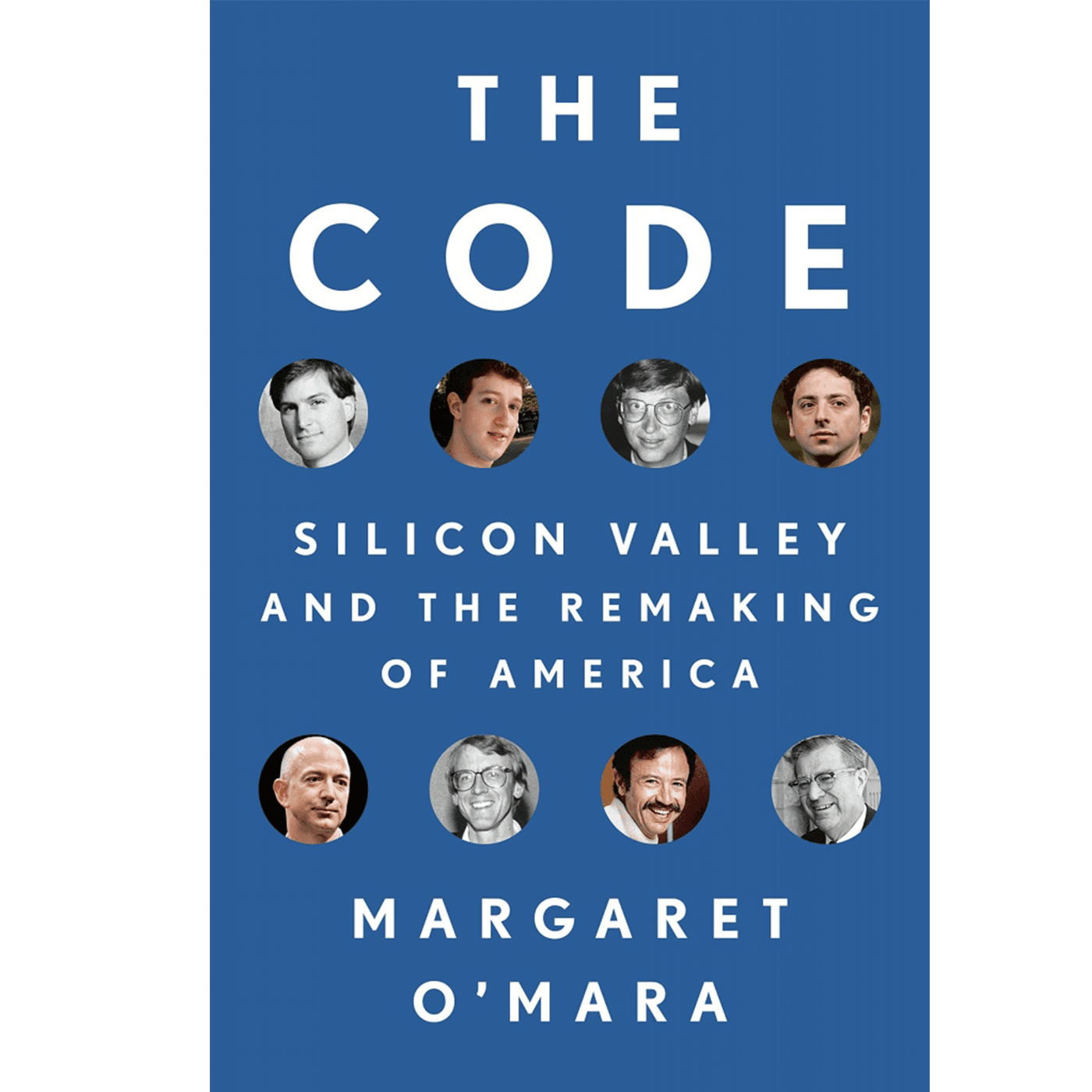
Podcast Summary: A Book with Legs - Margaret O'Mara - The Code - Part 2
Podcast Overview
- Podcast Title: A Book with Legs
- Host: Smead Capital Management
- Focus: Value investing through the lens of literature and historical insights that influence investment strategies.
- Target Audience: Investors, business-minded individuals, and thinkers interested in expanding their knowledge through literature.
Episode Details
- Episode Title: Margaret O'Mara - The Code - Part 2
- Episode Description: This episode continues the discussion with author Margaret O'Mara about her book *The Code: Silicon Valley and the Remaking of America*. The conversation delves into the evolution of technology in Silicon Valley, emphasizing early software developments, AI manufacturing, and the dynamics of technology communication.
Key Concepts and Discussions
Introduction
- Cole Smead introduces Margaret O'Mara, a prominent historian specializing in the history of technology and its impacts on American society.
- The discussion focuses on how historical events shaped Silicon Valley and the broader tech landscape.
Early Computing and AI
- Key Figure: John McCarthy, who coined "artificial intelligence" and influenced early computing thoughts.
- Shift from mainframe access to interactive computing.
- Development of time-sharing networks, enabling multiple users to access powerful computers.
The Rise of Network Computing
- The transition from mainframes to mini-computers allowed smaller businesses to access computing power, fostering innovation.
- Discussion on the dismantling of AT&T's monopoly, which opened the market for various internet service providers.
The Birth of Venture Capital
- George Doriot, a key figure in the establishment of venture capital and his impact on tech investing.
- The evolution from personal investments to structured venture partnerships that supported early tech startups.
The Go-Go 1960s and the Space Race
- The excitement surrounding technology stocks during the Space Race. "Space age stocks" became synonymous with investment opportunities.
- A comparison with modern tech booms where phrases like "easy money" have emerged, highlighting cycles in investment enthusiasm.
Economic Shifts and Downturns
- The 70s saw significant downturns in the tech sector, particularly influenced by government spending cuts and the Cold War's end.
- The experience of Seattle's job market decline, particularly tied to Boeing's layoffs, serves as a case study for economic dependency on a single industry.
Cultural Influences on Tech Development
- The countercultural movements of the era influenced the ethos of companies like Atari, reflecting a shift in how technology could be perceived—fun and empowering rather than strictly utilitarian.
- The cultural clash between traditional corporate structures and the more casual, innovative environments fostered by young tech workers.
The Impact of Xerox PARC
- The establishment of Xerox's Palo Alto Research Center (PARC) led to groundbreaking innovations in computing, even as the company itself struggled to monetize those advancements.
- The lessons learned from PARC highlight the challenges large corporations face in adapting to innovation.
The Internet Boom and Government Regulation
- The 90s brought about pivotal changes in internet regulation, driven by the need for self-regulation as tech companies grew.
- The discussion of net neutrality surfaces, reflecting ongoing debates about the balance between regulation and innovation.
The Future of Silicon Valley
- O'Mara emphasizes the collaborative relationship between government and technology, arguing that both play vital roles in driving innovation.
- The historical context provided in *The Code* serves as a reminder of the interconnectedness of various players in the tech landscape.
Conclusion
- The episode reinforces that understanding the historical context of technology is crucial for investors and entrepreneurs.
- Margaret O'Mara's insights challenge listeners to appreciate the broader ecosystem that fosters innovation and the importance of learning from past mistakes and successes.
Key Takeaways
- Innovation Requires Collaboration: The interplay between government support and private enterprise is crucial for technological advancement.
- Cyclical Nature of Tech Industries: Historical patterns reveal that tech booms and busts are part of a cyclical process that investors should understand.
- Cultural Impact on Technology: The values and attitudes of tech innovators shape the direction of technological development and its acceptance in society.
Final Thoughts Listeners are encouraged to explore O'Mara's *The Code* for a deeper understanding of Silicon Valley's history and its implications for future technological advancements. The interplay of history, culture, and technology remains a vital area of study for investors and tech enthusiasts alike.
Written by AI. May contain mistakes. Listen to the episode to check what was said.
Transcript
Automatic transcript. May contain errors.0:02You're listening to A Book With Legs, a podcast presented by Smeed Capital Management. At Smead Capital Management, we advise investors who fear stock market failure. You can learn more at SmeadCap.com or by calling your financial advisor. Welcome to A Book With Legs podcast. I'm Cole Smead. I'm the CEO and a portfolio manager here at Smead Capital Management. At our firm, we are readers and book junkies. It can be said that leaders are readers, and we believe books provide us a great source of information for filtering what is and isn't important for us as investors. Investing is the last great liberal art and the best way to spend a lifetime of learning.
0:41This podcast is for readers, thinkers, business-minded people, and investors who want to grow their knowledge from great authors and their writing. Charlie Munger often talks about using multiple mental models and analysis. Our aim for this podcast is to help listeners test Munger's theory in business, markets, and people. In this episode, we continue our discussion with Margaret O'Meara on her book, The Code. Margaret is the Scott and Dorothy Bullitt Professor of American History at the University of Washington. There she teaches the history of technology, industry, the history of capitalism, modern politics, and urban and metropolitan history.
1:15Margaret is a distinguished lecturer for the Organization of American History and a past fellow of the Center for Advanced Study in the Behavioral Sciences, the Council of Learned Societies, and the National Forum on the Future of Liberal Education. She has an MA and a PhD from the University of Penn and a BA from Northwestern University. Continuing to host this discussion with me is our Chief Investment Officer, Bill Smead. We discussed the first part of Margaret's book on our last episode. We continue this conversation with her, so let's jump in and continue that now. Thank you for joining us.
1:49John McCarthy is who coined the phrase artificial intelligence. Explain how computer mainframes were accessed at the time and what McCarthy saw instead for how users should access information. Yeah. So John McCarthy is a great example of somebody who is – I talked earlier about the connections between Boston and the Bay Area, the connections of people and ideas and technology. And he is exactly one of those connections. He was at MIT and then he goes to Stanford. And he and other researchers are grappling with this question that really is a question that begins with digital computing. It's a question of artificial intelligence and how humans and machines can interact with one another and how computers can augment intelligence.
2:38That's something that McCarthy and others were always emphasizing as well, not just artificial. It was something that they were pursuing for quite some time. And a lot of that was also related to computers talking to one another and networked computing. And so network computing has its genesis in this sort of group of researchers and thinkers that are both East Coast and West Coast in the 50s and early 60s. And the first iteration of that networking is through timesharing networks, which were not the Internet. This is before the Internet has been developed, but it is a more hub-and-spoke system of networked computing where you have one powerful mainframe and you have a lot of terminals that people are sharing time on, taking their turns using the computing power for the batch processing they need to do.
3:26And there were actually commercial time-sharing networks, a set of companies that grow up in the 1960s in Palo Alto and elsewhere that are providing that service. So you don't have to buy a computer because keep in mind, computers are tens, if not hundreds of thousands of dollars. And one thing that's also happening at the same time is a Boston based development, which is the mini computer. This is digital. It's the big superstar company that comes out of Boston. Mini computers, if you may recall, they weren't mini by our standards. They were pretty big, but they were smaller than mainframes. And they were something that at a price point where you actually could, you know, a company that was offering a timesharing service could buy a mini computer and offer a timesharing service to multiple users with that core machine at the center of it.
4:17So you talked about how Big Ma Bell being taken down with Carter Phone and the NASDAQ dealers. explain these situations and how important they were to open up access to the internet service providers that we later came to know, like CompuServe, Prodigy, and others. Yeah, this is a really important story. And it's, you know, this is, look, coming into the 1950s and 60s, Ma Bell is Ma Bell, right? It's the telephone service. It's, you got to get your telephone service from Ma Bell. You got to buy your telephone and lease your telephone from Ma Bell. Like even the equipment on every end of the line is something that maybe a lot of listeners who are under the age of, I don't know, 45, may not recall.
5:01I'm 39. I would say anybody under like 35. Anyone under 35. Like you had the big clunky phone that was, you know, you leased from the phone company. And so there was AT &T really wanted to keep that monopoly. and this was something that the FCC kind of went back and forth. It took a long time for the FCC to figure out, like, how are we going to define the type of communication that happens over phone lines? Because this is what time-sharing networks are doing. They're using the phone lines. But communication not between people, but between computers. And that's essentially what starts happening in the early 60s.
5:41You have the academic networks, for sure, and those are kind academic networks, separate, non-commercial. But you start to have financial, the financial industry starting to use some of these services, use this technology to do trades by computer. And so is that, what sort of communication is that? So AT &T is like, aha, that's, we should be in charge of that. Like they should not be able to do that. And a lot of back and forth ensues. And ultimately, the combination of this, the sort of the outcome of the FCC's, the FCC's answer to that question is like, no, AT &T doesn't get to be the computer utility as well as the telephone utility.
6:23And also, there are court cases that are challenging people who are essentially manufacturing and marketing devices that go on the end of the line that aren't made by AT &T. And this is the Carter phone decision, which was actually a device that was used for communication on Texas ranches, long distance communication. And this kind of device that was allowed, sort of a combo walkie talkie telephone. And AT &T is like, no, no, no, no, no. That's a little too close to being a phone. No, no, no, no. You can't use that. And the courts actually said, no, this is fine. So that opens up the gates for every kid in the 1970s to have a Mickey Mouse phone.
7:04or maybe not every kid, every kid wanting one, but for manufacturers other than AT &T to be able to manufacture telecom equipment. And so those two things are kind of opening up the market and creating this whole new kind of set of industries and opportunities for companies, whether they're providing networking services or hardware to kind of do their thing. And then, of course, that really goes, flings wide open with the breakup of AT &T in the early 80s. Sure. So George Doriot was a faculty star at Harvard. He coined the term venture capital. And you explain about him, H. Rowan Gaither, and William Draper setting up their investment vehicle, which was a closed-end fund, which is kind of funny to think about closed-end fund being the vehicle for VC back then.
7:55But then they set up their partnership together as what we now know is like a limited partnership. I think Doriat was, I'm trying to think, remind myself what his big investment was. He put$70 ,000 in digital, which was obviously in a Boston based company. So this was kind of, we're starting to get where VC is going from, okay, I'm just going to put some personal money in to now we're going to try to kind of structurally build ourselves and set ourselves up to do more than just one off investments. Yeah. And I think that the sort of structuring it where it wasn't the people with the money being the ones who were the actual investors actually was part of the secret because this was a really specialized industry.
8:37Um, and it also, these were young companies. They were run by, often run by very young people with very little corporate management experience. They were engineers. Um, and they needed not just money, but they needed management. They needed VCs to bring management in, which they often did for a very long time, and also just to mentor these young founders and also to provide – link them up with law firms who can do their contracts for them and real estate developers who can – who are building a building they can move into. and banks that they can bank with. That's the genesis of Silicon Valley Bank, which was not founded until 1983, but that's part of it.
9:21It's one of those specialized firms. The VCs that really, you know, Draper, Gaither, and Anderson, who are these very well-established power players in the military-industrial complex and politics and business in the late 50s, they come out and sort of establish a shop in the Valley, And actually, you know, it's there for a bit but is not enduring. In fact, it's Draper's son, Bill Draper, the young guy who actually makes a go of it with his firms. And then now we are, I think, into our fourth generation of Drapers as VCs in the Valley. But that, you know, it's interesting because those establishment people had some success, But they actually could not do that hands-on mentorship or be able to identify really promising deals or have enough willingness to take on risks to do the risky business that was, I think I'm going to make a bet on these guys who are operating this funny thing in a prune drying shed.
10:28And that's what the younger guys did, not just because they were young, but the first generation of Silicon Valley VCs were, by and large, mostly coming out of these companies themselves. They were engineers. They had worked in the companies. They were operators. They understood how they worked. They understood how the tech worked. They knew people who knew people. They knew how to connect people like Fred Derman knew how to connect people. And that was their value. They didn't have money, much money at the beginning. They were, you know, borrowing money from getting a loan from their father-in-law and getting, you know, and playing with other people's money.
11:04They're using their own, you know, connections. But it's interesting that Dorio, who was, again, rightly so, kind of heralded as the father of venture capital, this Boston-based, he was an HBS legendary Harvard Business School professor. And actually a lot of very important and influential VCs were connected to Dorio in some way. They were his students or mentees. He was a father figure to many. But actually, digital was his one big hit. And he got in really early, really, really early and just made an enormous, enormous hit when it went public in 1966. But that kind of was it. I mean, he was in business for a very long time, but he, again, was sort of part of an older generation.
11:49And the people who are bringing together that firm in the 40s were kind of really Boston establishment and the leaders of MIT. And, you know, again, they had their they understood that the electronics industry was not getting financing from the traditional institutions and they needed to there was a gap there. But they weren't these young guys who were willing to go drive around the orchards and sort of see a prune shed with a sign on it and knock on the door and say, hey, what you doing? And that was the value add. The go-go 1960s technology stock mania, which was kind of spawned by the space race, was a great decade for VC investors of the Valley.
12:31You point out that all someone had to do was walk into a room and mention a few exciting words. What were those exciting words? And if we look back at the cycle that just ended in technology stocks about a year, year and a half ago, what would those words be this time as compared to that time? What were the exciting words? Space age stocks. Space, space, space, space. That was driving the market. And space age stocks were kind of a shorthand for defense-related and NASA-related, aerospace-related spending. Onyx. Everybody put Onyx on the back of their name. Yes. Yes. Onyx. Yes. Everyone had kind of a weird like, you know, X's and sort of sci-fi names that didn't really tell you what you were actually was actually being.
13:17Well, you didn't need to because Wall Street could sell it. Did you say SpaceX? Did you just mention SpaceX? Yeah. No, that's a good point. Good point. Well, you know, the other important thing to think about these go-go 60s is this is all enterprise business. There was no consumer facing. Sure. To speak of. And that's a really important distinction. You know, this is a time when Silicon Valley, you know, well, Silicon Valley got its name Silicon Valley in 1971, given by a local journalist in a trade paper reflecting the concentration of silicon semiconductor manufacturing there that had grown so much in the 60s, thanks to the go-go stock market and the space race and all that.
14:00But it was not something that was, you know, being that the rest of the world was paying attention to. It was pretty it was just off on the side. And, you know, the Wall Street Journal wouldn't even write about public companies that weren't public. And they until, you know, now that's all they talk about. Now that's all they talk about. Yeah. Yeah. So, you know, you had to be publicly traded to get a mention in the journal. And this, you know, just very, very different world. And and so this is just kind of at a different, you know, really important. And lots of really generative things are happening and really important to how we get to now.
14:35but so different than now. And so the last boom, what would be my shorthand for the last boom? I mean, we can talk about the products and the search and social and cloud and mobile and all those things, sort of the technologies that are fueling growth. But really, I think the words that most come to mind are easy money, fire hose of money, money, money, money. Yeah. We call it the rhymes. You never get things to happen again exactly, but the rhymes are what matters. The stock market peaked in 68, 69 and went into a nasty bear market. The 1970s were a downturn in tech as the government money slowed.
15:12This was especially true in a town like Seattle at the time. Explain to our listeners what happened at Boeing and tell us about the billboard that ended up being so famous. Yeah, yeah, this was a perfect storm. The things that had made the tech industry as it was go, all kind of went sideways at the same time. And so the billboard you speak of is, and it's hard to realize, it seems so strange to think about now. So foreign, yeah. Seattle is what it is. But things got so bad in Seattle that there was a billboard erected in 1970, 71, along a main artery kind of as you drive up from the airport than as you drive towards downtown saying, well, the last person leaving Seattle, turn out the lights.
16:05And apparently, this is kind of a funny, the guys who put it up were, it was actually kind of a joke that didn't land with anybody. It was supposed to be, the people who put it up were actually commercial real estate brokers and they were kind of making fun of all the doom and gloom thinking about Seattle and trying to make a point that actually there was a lot of good things happening there. And the fact that nobody has got the joke for 50-plus years, I think, attests to the fact that maybe commercial real estate developers shouldn't be erecting jokey billboards. But that's another story. But what actually happened in both Seattle and the Bay Area, which were some of – and L.A., intensely defense-dependent economies.
16:49But I think particularly in the South Bay and Seattle that had this kind of mono industry. So, you know, Seattle was Boeing's town. Boeing was the biggest employer by miles. This is before Starbucks. This is before like any other big brand name. Before everything, yeah. Before anything. I mean, you know, Nordstrom was here, but it wasn't big. The auto companies were just waiting. All the retailers were waiting for those bonuses to come each year. Well, I was going to say, let's kind of pivot because like, you know, the government spending wasn't just backing off in Seattle. It was LA. It was San Francisco.
17:23It was other places too. So you opened your book up with David Morgenthaler, which I absolutely loved. Um, cause as we were chatting with before, I got to run into David's son, Gary by random chance on a ski chair. And I, I met his wife at the time. This is four years ago in Lake Tahoe, very random. And that's why I was like, Oh, your book was made for me, Margaret. I love this. Um, he pointed out that there were three prior booms to me when we were visiting. He said it was 69 was a boom that ended up busting 87. And then 1999. How slow did the financing in the tech business get in the 70s? Because I think you do a good job of explaining how bad things got for financing and funding and going public.
18:05Yeah, it was really slow. It was painfully slow. You know, this happens at a time when the commercial side of the industry is definitely getting its legs, for sure. But it still is pretty new. And so the combined one-two punch of defense spending declining sharply. So again, Lockheed, biggest employer in the Valley, lays off thousands of people. And then these newer companies, look, Intel was founded in 1968, so it's pretty new. and other companies like it kind of once the stock market dries up there and there aren't IPOs and there aren't you know there's just not money coming particularly for early stage ventures it's real desperation they are just the VCs are sitting there like the Maytag repairman waiting for someone to show up and give them money it's really really hard and takes it's It's like, you know, blood from a stone.
19:01In some cases, some firms, some companies actually go and license their technology to Japanese companies, which they regret. And so they are trying to find resources any way they can. And so this really kind of slows down the market. Now, that being said, the early 70s sees companies like Intel grow and have great success because what is happening is that there has been a technological inflection point where miniaturization has gotten – they've gotten small enough and affordable enough that these can be really popular enterprise products. So this is the beginning of putting chips in where there used to be springs and mechanics.
19:44Sure. Well, you point out how the chip business really boomed, and that's what kind of grew out of tech. And this begat in response, like kind of the miniaturization of tech is what we started to see increasingly pick up. And you get into – I love your conversation around Atari because this is really the outcropping of that growth in semiconductor technology. And also, again, to kind of set a legacy point, the Californication of tech, if you will, comes out of Atari. Yeah. Atari and its hot tub parties. Yeah. Can you explain? Yeah, it's very bro-y, to put it in other parlance. Can you explain just briefly the culture around Atari?
20:23I mean, you tell some stories in there, Margaret. I was just thinking like, wow, men are bad. They're just bad. Some men are bad channel. Oh, yeah. Well, so the other thing, what else is happening in California in the late 60s and early 70s? It's the counterculture. It's the new generation. It's the baby boom. It's this new generation is coming up. And and and within that generation are a few people who have, you know, they go to college in the 60s. They get exposed to computing for the first time. They get really hooked on it. Some of them have been, you know, science nerds, proud science nerds their entire lives and playing with stuff in their basement and, you know, making radio sets.
21:02And they're also simultaneously, you know, swept up in the many of them in the anti-war movement or kind of the anti-establishment spirit of that era. Even if they aren't actively protesting the Vietnam War, they are very much kind of anti-establishment rebels, whatever, and kind of anti, you know, anti all politics. Right. Sure. Saying, you know, these institutions have failed us. Governments failed us, you know, and then you have Vietnam and then you have Watergate. So really it's, you know, those two together make wherever you are on the political spectrum, you're disillusioned with your leadership.
21:36You're feeling like the people in charge are not are not doing the right thing. And and so that kind of those that new generation is so different temperamentally and politically and culturally from their elders, even people 15 years older. They've just kind of it's a totally new approach. And so they are kind of coming at this not only, you know, how can technology be something that isn't just in a government lab or in a, you know, university or in a big corporation, but how can computer power broadly defined be something that can be fun and empowering and entertaining? And so Atari is, you know, Atari is sort of it takes a existing industry, a kind of, you know, not very reputable industry, you know, pinball machines and games that are in dive bars.
22:26Not very wholesome then. And it digitizes them, turns them into transistorized tech and takes advantage of this miniaturization of computing and computing power and the cheapness of chips. increasing, you know, you can get some pretty cheap chips and do some pretty basic stuff. And first starts creating arcade games like the actual, you know, the original Pong and the original hits of Atari were actually, you know, video games in bars and arcades. And and but the culture there, the people working there are are of this young generation. They are kind of very consciously like this is the tune in dropout generation.
23:06They're not like I want to go nine to five, put on a suit. They want to get high on the assembly line and they want to have hot tub parties and they want to. It was wild. And it was. It was hot tub time machine. Hot tub time machine. And quite honestly, fortunately for Atari's business, they were a huge hit really early. So much so that by 1976, Warner, what's now Time Warner? Well, whatever it is now. But anyway, they're brought by Warner Brothers or Warner Communications. And so they're acquired. And then they have to kind of grow up from a corporate side of things. I think if they've been allowed to just keep on hot tubbing it, we might not be talking about Atari.
23:47I just don't see quite how they could have kept on going. Let's not pick on asteroids and Pac-Man anymore. No, no, no. Boston lost a lot of jobs and government contracts as the 1960s ended. Quote, look out, Massachusetts. Unquote, worn a pamphlet shooting out of the Bank of Boston in 72 with the state's high taxes. Big ticket welfare spending. The bank argued business and residents were getting crushed, unquote. This worked in fat years, but not in lean times. Couldn't this line be used right now with Silicon Valley? Well, and also, like, as this is happening in Boston, the geographical center of tech is also moving.
24:24It is moving west. So how do you look at, as a historian, how do you look at the business circumstances that Boston had and compare that to, say, a California today where it's no question whether tech is moving plausibly to right now? Well, I think there are a couple of things. One is business from an ecosystem perspective. You know, one of the things that what Boston was was, you know, Boston was Boston. It's been around since the 17th century. It had a really mature business and industrial and multivariate, right, like a lot of variety. Tech was one piece of what Boston did. There are many, many, many other things going on.
25:05Tech was kind of the only game in town except growing fruit in the South Bay. And that kind of removed from the economic headaches of big cities in the 60s and 70s and 80s was a real advantage for Silicon Valley. Um, the fact that you didn't have to worry about, you know, an urban renewal program to get yourself 50 acres of land to build a research park, which is what the cities of the East did, um, and actually did not do successfully. Um, it, it were, the, the products were not initially successful. So just having that kind of monoculture of the valley, strangely enough, even though that made it really subject to boom and bust, was a help.
25:53Now, there was a, you know, it was a high tax environment. People have been complaining about taxes in California since the first semiconductor. I mean, so that's, you know, I don't have a lot of, when people are like, oh my gosh, everyone's going to leave California because of the taxes. I'm like, I don't know if that's I think they would have left by now if that were the question, that were the thing. But the other thing that I think the real Boston story here is is very much a it's a business. It's a tech business and technology story, which is that Boston's big hit was many computers, minis, huge and workstations and, you know, and weighing and, you know, word processing that generation of computing.
26:35really, really important and huge and way bigger and more visible than most of the things that the Valley was producing at the time. Sure. And so that market matures in the 80s, struggles. And by the end of the 80s, not only the companies that are at the top of that market that have been the real leaders are themselves struggling, but also the technology is being superseded by desktop computing and buy workstations like Sun workstations, and they don't have a second act. And by the end of the 80s, the Cold War is over, and that in Boston, like the Bay Area, has a huge defense business in tech that's buoying its tech economy the whole time, and then they don't have a second act, whereas the Valley gets its second act in software and internet.
27:28Sure. So let's pivot to Xerox's park idea, which is just this really, it's kind of like the Stanford had the research lab and then Xerox goes and does park. There's so many great technologies come out of park. There's so many great thinkers that come out of park. Here's what I don't understand. If you could explain this to me, I really appreciate Margaret. How did Xerox not make a lot more money from that? I just, I don't, I don't get that. It's like they created this great think tank of ideas and they made no money from it. I know it's a great business story. Well, I think this is really revealing, and I think it's revealing of what went down the way it did and also kind of a bigger lesson for business.
28:05So Xerox opens its Palo Alto Research Center Park in 1971, and it kind of followed a leader thing. It's a big company. Xerox is making lots of money making copy machines. That's their big success. And they see all these other companies, East Coast companies, opening facilities out west in Palo Alto near Stanford as kind of research labs. labs. They're like, okay, we should have one of those too. Cool. We're going to do that. And they didn't really have a plan. But I think the idea was we should get into computing of some sort. We should diversify. We should kind of think about getting into more of this hardware.
Read the full transcript
28:42So they opened this thing up. And this is hitting right at the time that the stock market's going sideways and the tech is going into this slump. And so what you end up with is you, and you also have a lot of young people who the last thing they want to do when they're graduating from Stanford or Berkeley, is go work for Lockheed. So they're trying to figure out some way to not be part of the military industrial complex because they're, you know, they're baby boomers. They want to have nothing to do with it. They're virtuous, right? Yeah, yeah. So they're like... They're very virtuous. Yeah. And well, and they're also kind of in this, they don't have a lot of economic pressure on them.
29:15They've graduated without student debt. I mean, this is the 60s, right? So Berkeley costs 50 bucks a semester. It's, you know, this is a very different economic reality. The valley itself is pretty cheap. There's a lot of, you know, hippies in the hills. There's Ken Kesey's Merry Pranksters. There's a lot of kind of stuff going on there. And and so you end up with a lot of really smart people that might otherwise have been scooped up by industry that are because of the economy and because of politics are just, you know, kind of doing something that's a little more removed from the market and and playing around.
29:50And so a lot of them end up at Park. And then other people are kind of hanging around that come and hang out on the Park beanbag, the famous beanbags that they have where people sit around and talk about tech. And what comes out of there in the course of the 70s, it's remarkable. It's this concentration of talent and innovation that essentially the building blocks of desktop computing and graphical user interface, the computing we know today. And it also is working in symbiosis with an existing research institute, the Stanford Research Institute, which is where a guy named Doug Engelbart is a researcher, an academic, you know, research guy, never a business guy.
30:33But he's the guy that in 1968 does this, what becomes known as the mother of all demos, which is this demonstration of a computer that you use a, what he dubbed a mouse to navigate and point and click and to use for very personal uses. The demonstration, among other things, shows him making a grocery list to go get groceries. I mean, this is just this incredibly intimate and personal use of computing at a time when – this is the same. 1968 is when 2001, A Space Odyssey comes out, which is about, like, how? Like, that kind of computer is what people think of when they think of computers in 68. So a lot of Engelbart's people come over to work at PARC.
31:16It's just this great kind of – it's a perfect sandbox. The sandbox metaphor really works here. And in the case, it was Xerox that did it. Now, once Xerox starts cluing in to the fact that they start paying attention to like, oh, what's going on here? Are they actually building something that would be useful to us? In part because there's an article in Rolling Stone that appears in 1972 that's written by Stuart Brand, who's this kind of legendary Silicon Valley figure. He's the guy who's behind the Whole Earth Catalog, which is this kind of countercultural tech Bible. and uh and brand writes this this uh article for rolling stone this talks about how all these hackers at and calls them hackers um it at uh at park are sitting around on beanbags playing and playing video games all night and how that's you know this hacker culture that's kind of hippie loose freewheeling playing around culture and so the suits back in the back at hq and xerox are like, what the what?
32:15What are you doing? So there's a real culture clash. I think to the core of you're like, why didn't they make money? It has to do with this cultural dissonance, but also it is the classic innovators dilemma of big companies, which is that Xerox was making so much money on copiers. Why go do that? Yeah. Why go do that? And then they eventually do indeed market that what comes out of PARC, the Alto, a desktop, very powerful desktop machine that incorporates this innovative technology. But they really, and it comes to market and they sell them, but they never really get traction because they just, you know, they were a really good copier company.
32:56Their core competencies up and down the organizational chain were not in that. And so they missed the boat. And I think that's a real important lesson for large companies and kind of the expectation that true innovation can come out of large companies. And this is not because large companies are clueless or the people who work there aren't good. It's that the people who work there are there because they're really good at doing the thing the company already does. Sure. Let's go a little deeper than that. Let's go into what technology wasn't doing good at, which was software in the 1970s. Well, software wasn't an industry.
33:33The idea that you have a firm that you'd make money from software was rare, was not something that the way the computer industry worked. Margaret, let me get you started on this with a little preface. Bill Gates is two years older than I was. My college roommate was going to Lakeside with him, and he was a Lakeside-educated Harvard drop-hat whose dad was a successful lawyer and whose mother was not only a great philanthropist, but a power broker in Seattle. And so he didn't enjoy being at Harvard, although he did make some money playing poker. He starts producing software for Altair, but didn't move to Seattle.
34:12They went to New Mexico. Teach our audience about why New Mexico and what's the background of this thing. Yeah. So Bill Gates and Paul Allen meet in high school in Seattle. and a couple years into Bill's time at Harvard, they decide that Allen had graduated and Bill drops out and they move to Albuquerque, New Mexico. And why did they do that? Well, Gates and Allen had been playing around with working together and trying to make money building and selling software for a little bit by the time they do this. But Albuquerque is where this little company named Altair is founded by this one guy. And what Altair does is it sells kits that you can build your own desktop computer.
35:04The analogy I like to use is, you know, those meal kit companies like Blue Apron where you, you know, you get the ingredients, they're all pre-measured, but you still have to cook the thing. That's kind of what Altair did. The state of the art at this point, personal computer companies do not exist yet. The state where things are are people getting out, they're soldering iron and making something in their basements. Old school. Totally old school. Going to Radio Shack, getting parts and starting from the ground up. And what the Altair did was like, oh, we're just going to get you a little further down the line there.
35:41And then what Microsoft did was we're going to write an operating system that will work on this Altair. So you do not have to know kind of the pace computer languages to do this. Sure. And so it's just making it a little more accessible to the still very small community of passionate computer, you know, tinkerers and homebrewers. And so that was a huge. So they they moved to Albuquerque to be next to Altair, to physically be next to it. And they're there for about three or so years. And then they moved back home to Seattle, partly because they, you know, the logical place would have been California.
36:24They knew that they would have a lot of competition for personnel in California. You know, a lot of other companies trying to hire people. That Seattle had engineers because it had not only Boeing, different type of engineering, but still had a technical workforce and also had the University of Washington with a computer science program. So they felt like they could kind of get a little bit of an edge there. It was home. It was familiar. Paul Allen allegedly declared that since it rains so much, people will just stay in and work all the time. I'm not quite, you know, I think people work all the time in California, too, even though it's sunny.
37:01But that's how they ended up back in Seattle. And they knew how to break into the computer at the University of Washington. Yeah, they did. Yeah. They did. So in the background of this, so again, this is like, that's the micro. In the macro background, you have Morgan Thaler, David Morgan Thaler, who is running around DC and various tech places because the 70s were really a nightmare for investment. You had the Erysalah changes that happened during the decade, kind of like taking the prudent man rule of Bostonian fame and taking it to like steroidal level of prudishness. And then you also had this real class warfare dialogue politically.
37:42Can you explain where the capital gains rates started for the VCs and where they were going to eventually go during that decade? Yeah. So capital gains tax rates, which had been the bane of business and investors since the 30s. Sure. There have been a long, long complaint about them. But really at the highest levels, there were some that went up to 50 percent. It was a lot. and now they're down, you know, we get down to how do we get to 15? Like how do we get from there to here? Well, the beginning of that starts in the 70s when the National Venture Capital Association, the Trade Association, Professional Organization of Venture Capitalists, is actually formed largely for this purpose to get together.
38:28And keep in mind, venture capitalists were not just in tech. There were venture capital investors all over the country and also working in a whole range of industries that kind of traditional finance was not serving. So a lot of growth industries is the way that they talked about it, kind of newer growth industries, which turned out to be have grown a lot. And so they're, you know, not now much more established, but that was what they were doing. So they get together and, again, kind of all of the stagflation, there were so many things that were really creating these disincentives for investment and particularly what was then called risk investment.
39:05So investment in industries like tech that were kind of like, this is a new market. This is a new thing. We just don't know how it's going to work. So they are they start lobbying Washington and start doing it in this kind of, you know, really just to have no they have no idea. You know, they're not lobbyists. They sort of just show up and, you know, think that they can go and, you know, show up at congressman's office and be like, so like, you know, we got this problem. Can you help us fix it? And then they realize, oh, we need to get a little more savvy about this and get a message and get the electronics industry involved.
39:39And there was the American electronics industry was also kind of a big lobbyist for this. And so that kind of together, the tech community, investors and entrepreneurs go to Washington and really press Congress to do something about capital gains taxes And to reframe the argument as not just about rewarding the fat cats, because that's definitely how it was understood, that anyone who's paying those taxes is someone who's as rich as Rockefeller, so why should we give them a break? And saying, no, actually, this is the future. So this is the thing that is going to seed the next generation of industry.
40:15These are these electronic companies. It's all this potential. And so what else is happening in the late 70s? Not a great time for American business, right? The car companies are coming to Washington asking for bailouts because they're so beleaguered from overseas competition. Lawmakers are really, really worried about the state of the American economy. There's a lot of concern about small business and the economic burdens and regulatory burdens on small business was a refrain in the late 70s. Both the Carter White House is convening a White House conference on small business. Like this was the kind of bipartisan concern, although it kind of took different dimensions depending on where you were sitting on the political spectrum.
40:59But nonetheless, there's a lot of interest in this. Oh, let's help these little guys who are starting these companies and being entrepreneurial. And oh, yeah, this is going to be the future. And so that ultimately leads starting in 1978 to a – the tax law of 78 is pretty significant in kind of setting all this in motion even before Ronald Reagan was president. but then continues with tax reforms during the Reagan era and beyond. So it was, you know, and it's interesting because like causality is, you know, part of this is psychological too. So this is a great lead in to the IPO of one of these little guys, Apple.
41:38It's funny to think about them being a little guy. How did that capture the imagination of the VC funding crowd and the tech engineers themselves? Yeah. So it was, again, Apple. So Apple is incorporated in 1977. It was it was one of many, many companies in garages at the time. There were a lot of personal computer companies that were these these sort of homebrewers start being like, oh, yeah, we could sell these things. I think the thing that sets Apple apart is, one, you had this pair. You had the two Steve's. So Steve Wozniak was sort of technologically, his wizardry allowed a really, really beautifully designed, it's just a beautifully designed machine on the inside.
42:20And he had a relatively cheap chip that was built around and a really beautiful architecture that made it a kind of really good machine. Not the best machine, but a really good machine. And you had Steve Jobs. And Steve Jobs was, at the time, you know, had his wispy beard and went barefoot and was very kind of presented as this young hippie. But what he had that pretty much was exceptional, I think he and Bill Gates kind of stood out about this whole crowd, is that they were like, we're going to be big, and this is what we need to do to get there. And in Jobs' case, he's like, we need venture capital from the best venture capitalists.
42:57We need management help from someone who's seasoned and knows how to run a company. We need the very best marketing and PR and advertising in the Valley. We need the establishment of the Valley, essentially the microchip people, to help us grow. And he got that. He got early venture capital funding from people like Don Valentine, co-founder of Sequoia. Sure. Semiconductor guy who went to the garage and visited them and was like, oh, my God, who are these people? But he saw that this was a really good product and that there was something special there. They hired Regis McKenna, who had been the kind of the ultimate marketing PR person for Intel and was kind of, again, someone he had to persuade to take them on because Apple was this little nothing operation.
43:49So by 1980, Apple has become this hit. The Apple II is the first big hit. It is not the biggest personal computer maker. Texas Instruments and Radio Shack and Commodore, they all have bigger market share. But when Apple prepares to go public on Wall Street in late 1980, there's incredible enthusiasm about this particular company. They go public in December 1980, a month after Reagan's elected. There's sort of this wonderful kind of connection there. And then a month before that, before Reagan's election, in October 1980, Genentech had been the first biotech company to go public. And so that kind of combination and he had a huge run up.
44:38And so these two really successful IPOs of these new industries get investors so excited. There's just so much hype around Apple's IPO, around Genentech's IPO, just leading up to it and then during and after. And this sets off a boom that is kind of redefined Silicon Valley in the early 80s. We're jumping over some things just to make sure our listeners know. We're skipping over the Japan conversation that you did an eloquent job of, Margaret. We're skipping over Dave Marquardt and Charles Simone and the GUI interface and the word processor. You must read this book. You can't do justice to it in two hours.
45:19I want to make sure readers know that they have to go read. But let's jump forward to kind of get back to Stanford. Okay, so the Stanford Review was founded by some interesting people. Explain who they were at Stanford and what was interesting about them. Yeah, the Stanford Review is a conservative student newspaper that's modeled on other papers that are founded around the same time in the late 1980s. Dartmouth Review is probably the first and most famous of those. That's trying to provide an alternative student voice on campus, founded by students who felt that there was just too much campuses have become too liberal.
45:55Sure. Never heard that before, by the way. Never heard that before. Yeah, never. And behind the founding of the Stanford Review, a key co-founder was Peter Thiel, who then goes on to become, you know, noted investor, venture capitalist and founder, co-founder of Palantir and behind other enterprises as well. Board member of Facebook. Famous, outspokenly conservative. The one kind of most prominent Trump supporter in Silicon Valley in 2016. He speaks at the Republican convention. So this is founded at a moment of, you know, when campuses across the country are, there is this kind of new kind of ideological struggle that's going on and debate over that's triggered by a lot of things, but particularly by decisions by universities to kind of change the core curriculum away from the kind of so-called great books or kind of a Western civ focused requirements of every student must take Western civilization or must take these certain things.
46:57to something that was looking at all regions of the world and thinking more broadly about the, you know, cultural, political, literary influences over, you know, sort of a broader span of human history and geography. And it also is kind of an outgrowth of the what begins the 1960s kind of pressure often led by students to create programs in things like African-American studies and ethnic studies and women's studies and things that were looking at groups that had previously not been as focused on in the core curriculum. So those culture wars are going on. This is about the time that the closing of the American mind, Alan Bloom's bestseller, is hitting the bestseller charts.
47:41The other thing that's going on at Stanford at the same time is there's this big, hot debate over the location of the Reagan Library. Ronald Reagan is still president, but they start preparing for the presidential library when you're still president because it takes a while to get it going. And so there were a lot of Ronald Reagan supporters and allies, including people at the Hoover Institution, who wanted to see it located right next to Stanford in the hills right behind Stanford. And so there was a lot of pushback back and forth about that. And ultimately, you might know that – remember that the Ronald Reagan Library is not at Stanford.
48:19It is in Southern California. So that didn't work out. But those politics are just a fire in the valley. And so there's this small group of Stanford students. Peter Thiel is there as an undergrad and then later returns as a law student. And then there are a bunch of undergraduates who are at various times on the masthead of the early Stanford Review. And they are, many of them, people who are well-known names in tech now, including David Sachs and Keith Rabois and other really prominent venture capitalists who also are prominent for their outspoken libertarian-ish, techno-libertarian views. And also they have become very successful.
48:59But that's how the PayPal mafia got started. That's how these people knew each other because they knew each other from working on a student paper. So you talked about Sun Microsystems at certain parts of the book and Scott McNeely. Let's see, I had the pleasure of doing a podcast with Scott about Karen Southwick's book, High Noon, which I don't know if you've read before, but really is the history of Sun Microsystems. Their phrase was the computer is the network. Wasn't this just time sharing on steroids?
49:29Well, it was time sharing, but actually desktop computing on steroids. Sure. But the idea that the shared resources, the network's creating greater shared resources. You're accessing that individually. You're not having to go with your punch card and wait. You know, it's like your time right now for you. Yeah. Yeah. And creating really, you know, kind of a further miniaturization and decentralization and really altering the office environment, allowing kind of really powerful computing to to come on your desk. I mean, at the same time, you know, this is also the basic idea behind Steve Jobs is Next, which is the company that he founds after getting fired from Apple in the middle of the 80s, which he had more of an academic market that they were going after.
50:13But these really powerful workstations are kind of the next gen. Again, this is going back to Boston. You know, what really is part of why Boston fades away is because you don't need a mini anymore. You can you just need sun. Back then it was like Sun versus Digital. That was the big fight. It's like they underpriced digital. And I loved digging into that because, again, you're back to this old school. Like there's still that vestige of Boston and its fight with Silicon Valley. Yeah, yeah. And digital had the same, you know, the guys who had made digital so successful kind of could not, you know, like failed to adjust to the new market in the 80s.
50:56Yeah, they didn't adapt. So we're going to jump ahead again. Bill Clinton and Al Gore came to the White House as the unexpected tech evangelists. Gore saw an internet that allowed openness for business to roam and grow, including telecom and cable companies. Homebrewers and hackers didn't see it like this. They wanted a utility. We now know this to be the question of net neutrality. What do you see as the two sides of that coin? Well, it's interesting. You know, we're still living in a world or an Internet world whose regulatory regime was set in place in the 90s. Correct. And the choices made to allow the tech industry, the Internet industry, to self-regulate, then they made a lot of sense then.
51:39Like a lot of lawmaking, right, policymaking kind of made sense at the time. And the market's very different. Look, Mark Zuckerberg was in middle school when Section 230 in the Telecom Community Act was passed. I mean, the Telecom Act had, like, just profound effects in terms of the sort of infrastructure. You know, we talk a lot about social media and kind of that legacy. But there's also kind of the basics, kind of sets in motion, kind of the actual physical infrastructure, incentivizes the physical infrastructure, build out the expansion of broadband that kind of has allowed so many other things to go online.
52:17You know, one of the kind of the story of the 90s is also the kind of boring but important part of creating rules of the road at the Web. You know, everything from URLs to, you know, domain names and kind of rules of kind of, you know, how is information moving and how do you create some order out of this chaos in this very decentralized network? And also kind of letting these then very young Internet companies to grow and to kind of take care of themselves and self-regulate. I mean, keep in mind that Section 230 is actually what it does is it allows – it gives companies the power to moderate content without penalty.
52:59It not only doesn't penalize them for what someone does on their platform, but it also allows them to kick people off, which is sometimes lost in the free speech debate. But I think that one of the things that this reflects is the fact that what were the platforms that Section 230 was thinking about? It was Prodigy and CompuServe. When's the last time you did Prodigy or CompuServe? Trust me. Totally different world. Well, and to fast forward it, I mean, I think one of the most interesting things going on right now is, so let's use another platform company to your point. Bill Ackman is out suing Visa and MasterCard for providing credit card services to the porn industry, arguing that it's damaging society.
53:39There's a real cost that's not being accounted for. And if you took the same logic. How about web hosting the porn industry? How about web hosting? Who does that? So there's these real, like, to your point, the moral hazard that some of this has caused where we just haven't said, hey, let's come back and revisit the dialogue. It's so far off base. It's crazy. So let's kind of, because we get to really kind of the boom time of what really made Silicon Valley today what we know it. John Doerr of Kleiner Perkins could see where the internet was going with browsing the web and place money with Netscape.
54:14was the first huge, I mean, their IPO and their success was massive. It was like the second coming of Apple in so many respects. But again, there wasn't revenues because it was just a browser, but there was, you know, growth and eyeballs and it kind of got that whole excitement going. So I guess, you know, if I use them and then I use like the success of Yahoo, again, these were huge platforms, but really their only outcome they could find to make money was ultimately where Google landed, which was advertising, wasn't it? Yeah. I mean, that was like, you know, okay, the internet's great. How do you make money on it?
54:50And how do you make money beyond just raising money on the public markets and getting everyone really overheated about your stock? How do you make money on it? And the answer initially was, okay, I guess we're just going to barrage people with a lot of pop-up ads, right? Because, you know, what do we do to get people's attention? And that was kind of created another problem of its own. And then Google comes in and, you know, think about the late dial back to the late 90s. And when you open your browser and you get a million pop ups and and you or even if you can get rid of the pop ups, you still have a very crowded space that you're looking at with a lot of ads surrounding the information you want to see.
55:33And then you switch over to the brand new google.com and it's all white space. It's like a Zen garden. You're just like, it's like a trip to the spa. And it also was really good search and getting kind of good search as the Internet got larger. Yahoo in the very beginning was a web directory that was human created. They hired people who were human surfers who went and, like, found all the websites and created these directories. And that works to a point, and then you can't do it because the scale is too big. So Google has really good underpinnings, and it is beautifully designed. And so it hooks all these people in, kind of similar, and it gets this user base.
56:21And, of course, it needs to find a way to make money. And then what Google does, and it gets this technology from another company, which is it embeds the ads in the search results. So you can keep the trip to the spa, but you also are getting advertising, the paid advertising that is then bringing revenues into the company. In retrospect, that's when they turned their customer into the product. Because I can remember, Margaret, I can remember this like it was yesterday. day, you used to go into Google and what it would do is give you the response to your inquiry based on the most hits that come in their system.
57:01And so what would come to the top was the company that was meeting customer needs the most often, and that's automatically what you got. And then without telling anybody, what they started doing is putting three or four advertisements for a number of years, a lot of, you know, dumb boomers like me were thinking that that was still the random search that had been originally when they turned us into the customer. It's those dumb boomers, I'm telling you. They've done it all, Margaret. And that is the point when good antitrust people would have stepped in and said, oh, time out. Well, let's jump to the next question, though, because that's kind of getting back to this federal government question.
57:36So let's ask another question on that, because I think you touched on the Sherman antitrust, which, by the way, we really appreciate that. Breaking Rockefeller is a book that we've done. Peter Dorn's book is terrific on this. Peter Dorn and John Rockefeller. So let's go back to this idea of government. So Sun and Scott McNeely attacked Microsoft in court, as did the federal government. They prevailed, yet it didn't hurt Microsoft. Now, I would argue, Cole, that spending 15 years without a new high in your stock is pretty punishing. Yeah, but they didn't have to break up the company like Ma Bell did.
58:05No. Do you think the government didn't go far enough in that instance of dominance? Well, you know, what antitrust suits do is they, you know, even if they don't end up with a company breakup, breakup, they definitely slow, slow their role. So you don't have to be broken up to have it have a really meaningful effect. And, you know, the irony of Microsoft is that the judge ruled, indeed, they should be broke up, it should be broken up, and then got in trouble, it got the judgment got thrown out because the judge talked to a couple of reporters when he wasn't supposed to. And so and then by the time it's kind of by the by then, the Clinton administration's left, the Bush administration's coming in, and the tech landscape has changed.
58:48I mean, one of the arguments against tech antitrust enforcement is the market will take care of itself, right? And now, you know, Facebook or Meta is kind of pointing to TikTok being like, see, we told you the market's going to, you know, we're not a monopolist. Like, look at TikTok. Yes, fair point. But I think that what it does do is, you know, yes, it was incredibly costly for Microsoft. It was costly in terms of its public image. It forced Microsoft to not be as hyper aggressive as it had been in swooping in and replicating things and kind of just squeezing the oxygen out of the competition, taking advantage of its platform dominance.
59:27It was. That was the way it became great. It did that and was kind of often unapologetic about doing that. To your point, too, it also when the government did throw down their verdict, it made the browser a profitless product. Yeah. And, you know, the irony, of course, is that by that point, Netscape had basically been, you know, is dead. They did succeed in killing Netscape, being the Netscape killer. And they, you know, and then they did, you know, and there's a whole like, you know, they're sort of bigger things at work than just only the case. But that definitely was a factor in kind of having to downshift the speed that Microsoft moved to preoccupying management.
1:00:15And then, you know, kind of being, you know, it was already late to the Internet, which is why they did the Internet Explorer the way they did and kind of bundled it in and sort of wanted to move really fast on that. And then they kind of ended up being late to and missing out on mobile. And, you know, again, it's kind of hindsight's 2020. You know, the Apple iPhone, Steve Ballmer, the then CEO of Microsoft, his initial reaction to the iPhone was like, he's going to buy this$600 thing. Like, this is, you know, this is crazy. He would not allow his employees to own and be seen at work with an Apple device.
1:00:50And what they should have been doing is spending all the time they could thinking about that. So, by the way, just to go back to it, the bulletin board system that you talked about, Margaret, I remember playing role-playing games in the mid-'90s on bulletin boards. I mean, like, I love this because this is like right – Ancestry. Gen X and all that kind of stuff. I did Ancestry stuff. So there's a lot that we had to skip over just because you got too much information, so I maybe need to become your publicist. Is there anything that you haven't that we haven't talked about that doesn't even be mentioned about your story writing and your storytelling?
1:01:26Well, I think the bigger thing I wanted to do with this book was I wanted to write it for people who, well, people in the industry who often don't know that longer history because you're so busy looking forward and building the future and you're so busy working and Fred Terman style, never taking a break, having too much fun working that it's harder to just take a breath and say, how did we get here? And also just to make the bigger point that how you got here, how we all got here, whether you're in tech or you're in finance or you're in business, other realms of business, every company is a technology-enabled company now.
1:02:01Everyone needs software engineering, right? So it's very relevant to everybody. This history actually does matter. It's not necessarily predictive information necessarily, but it really is so valuable to understand patterns, to understand constraints, to understand kind of what you have to be looking at as you are building the next thing. Because when you are looking at those other things, that's when you get in trouble. Yeah. They matter. And I just wanted to bring these stories forward of people that you've heard of and also people that you haven't and remind everyone that the success of the tech industry and of the Valley in particular is not just like singular genius, you know, individuals who just made everything happen.
1:02:56And it actually is a story with a cast of thousands that there are a lot of people that made the people we know and the companies we know possible. And their stories need to be recognized and told, too, because I think that also is, you know, for all of us who aren't engineers, it's a good reminder to, you know, that tech is a story that involves lots of core competencies and lots of people. And that also, I think, you know, the other thing that really animates this kind of going back to where I came, where I started in this journey, coming someone who like knew about political history, but didn't know much about tech to actually put the political history back in and show that this is not just a kind of it has not been an adversarial relationship, nor has it been something that is kind of necessarily government intervention kills innovation.
1:03:50In fact, it's been more often the opposite. Opposite, yeah. Opposite. And to sort of recognize that. And also for people who are on the side of like government should be in, to recognize that entrepreneurial, there's a real symbiotic relationship, an incredibly generative relationship between entrepreneurial capital and companies and government actors and programs. and that everyone kind of, you know, may not like each other all the time, but it really is important to have a dialogue and recognize that one needs the other and vice versa. I didn't get to say this earlier, but you mentioned George Gilder in your book for a quick snippet.
1:04:27And I'm on the board of Discovery Institute there in Seattle. I just joined the board in the last year and their big technology conference is called COSM. And I'm going to put this out on tape because I'm going to hold me and them to it. But I really want you to come speak at Cosm because I think what you're laying out is so right. Back to this idea of like libertarianism without government. It's never actually happened. It sounds good, but it's never happened. It sounds so nice. It sounds so quaint. So we thank you so much for this, Mark. This is a fantastic market. I want to say to our audience and our listeners, if you're an investor, if you're an aspiring technologist, if you're a venture capitalist, if you're a history buff, you have to get a copy of this.
1:05:10You've got to read this. You've got to read this book. You will never understand how we arrived at the brightest minds helping teenagers make TikTok videos without this book. I'm going to be downright honest. You can't understand DocTalk without this book. So for our listeners, if you enjoyed this podcast, go out, rate it on Apple, Spotify, wherever you get this. If you also have great books you'd like to recommend like Margaret's, email us podcast at SmeadCap.com. That's podcast at SmeadCap.com. You can also send your suggestions to us on Twitter. Our handle is at SmeadCap. Thank you for joining us for a Book with Legs podcast.
1:05:45We look forward to the next episode. Thank you for listening to A Book with Legs, a podcast brought to you by Smead Capital Management. The material provided in this podcast is for informational use only and should not be construed as investment advice. You can learn more about Smeet Capital Management and its products at SmeetCap.com or by calling your financial advisor.
From the publisher
Part 2
The second part of Cole and Bill’s conversation with Author Margaret O’Mara on her book, The Code: Silicon Valley and the Remaking of America, covers early software, manufacturers of AI and computers, and communications between technologies and people, as well as different technologies themselves. They take a deep dive into what really made Silicon Valley as we know it today.


