
In short
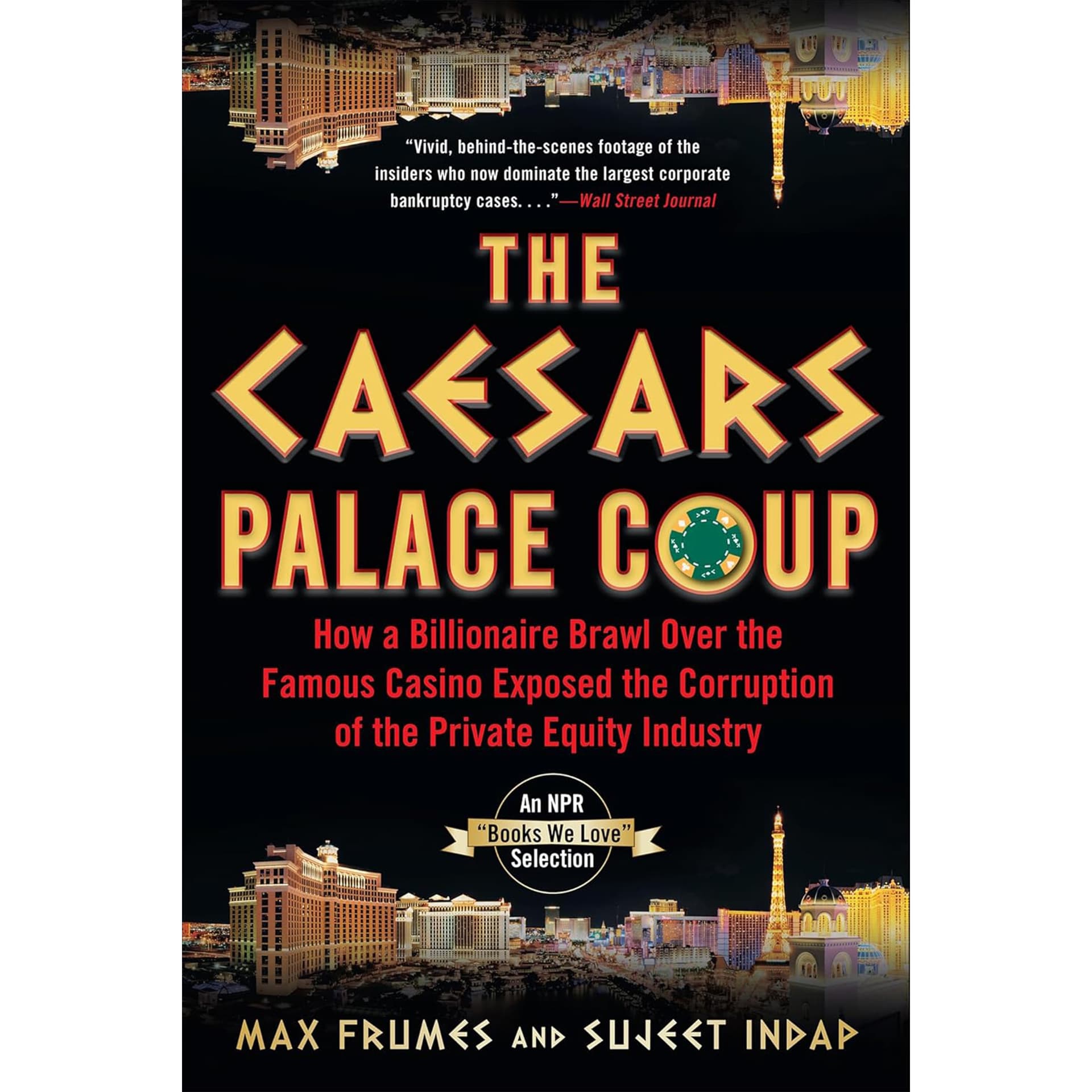
Podcast Summary: A Book with Legs - Episode with Max Frumes on "The Caesars Palace Coup"
Podcast Overview Title: A Book with Legs Host: Smead Capital Management Purpose: Exploration of value investing through the lens of influential books and authors. Target Audience: Investors, business professionals, and curious minds seeking wisdom on investing.
Episode Details Guest: Max Frumes, Author and Global Head of Distressed and Restructuring at 9Fin Episode Title: The Caesars Palace Coup Episode Description: Discussion on Frumes' book, "The Caesars Palace Coup," which details the tumultuous bankruptcy battle of Caesars Entertainment in 2015 and the powerful figures involved.
---
Key Themes and Discussions
- Background on Max Frumes
- Max Frumes worked in journalism specializing in distressed debt and corporate finance.
- Collaborated with Sajid Indap to write "The Caesars Palace Coup."
- Emphasis on the importance of narrative structure in recounting complex financial events.
- Overview of the Caesars Palace Bankruptcy
- Focus on the 2015 bankruptcy struggle for Caesars Entertainment.
- Involvement of private equity firms like Apollo and Oaktree, and key players in the drama.
- The book was highlighted as Charlie Munger’s recommendation at the Berkshire Hathaway Conference.
- Evolution of the Casino Industry
- Transition from a blue-collar industry to one dominated by MBAs and data-driven marketing.
- Gary Loveman's pioneering of the total rewards program using data analytics to enhance customer loyalty.
- The Role of Private Equity
- Discussion on the leveraged buyout (LBO) of Harrah's and the implications for Caesars.
- Analysis of the competitive landscape and the financial models used by private equity firms.
- Corporate Structure and Legal Challenges
- Exploration of the Opco-Propco structure used in financing.
- Concepts of fraudulent conveyance and the implications of asset transfers during bankruptcy.
- The role of special committees and fairness opinions in evaluating corporate transactions.
- Political and Legal Intrigue
- The influence of the Trust Indenture Act of 1939 and its implications for the bondholders.
- Apollo's lobbying efforts in Congress to alter laws favoring their restructuring plans.
- Distressed Investing Landscape
- Current trends in credit markets, including the effects of low interest rates and tight spreads.
- The strategic maneuvers firms engage in during periods of financial distress.
- Outcomes and Lessons
- Reflection on the lack of consequences for major players involved in the Caesars story.
- Debate on the ethical implications of insider trading in credit default swaps (CDS).
- Final discussion on the impact of personal relationships and reputations in the finance industry.
---
Key Takeaways
- Complexity of Distressed Debt: The episode emphasizes the intricacies of distressed investing and the lengthy negotiations involved in restructuring.
- Ethics in Finance: Questions the morality of financial practices and the culture within the investment community.
- Resilience of Key Players: Many individuals involved emerged unscathed, highlighting how financial missteps can sometimes lead to professional growth rather than repercussions.
- Narrative Importance: The storytelling aspect of finance and how personal relationships influence business decisions.
---
Conclusion Max Frumes provides a detailed and engaging perspective on the bankruptcy saga of Caesars Entertainment, reflecting broader themes in the world of finance. The episode serves as a reminder of the interconnectedness of personal ambition, corporate strategy, and the complexities of the financial system. The discussion is not only insightful for investors but also for anyone interested in the mechanics of business and the moral quandaries that often accompany it.
Listeners are encouraged to read Frumes' book for a deeper understanding of the events and characters involved in this compelling financial narrative.
Written by AI. May contain mistakes. Listen to the episode to check what was said.
Transcript
Automatic transcript. May contain errors.0:02You're listening to A Book With Legs, a podcast presented by Smeed Capital Management. At Smead Capital Management, we advise investors who fear stock market failure. You can learn more at SmeadCap.com or by calling your financial advisor.
0:21Welcome to A Book With Legs podcast. I'm Cole Smead, CEO and Portfolio Manager here at Smead Capital Management. At our firm, we are readers, and we believe in the power of books to help shaped and formed investors. In this podcast, we speak to great authors about their writing. The late, great Charlie Munger prescribed using multiple mental models and analysis. We analyze their work through the lens of business, markets, and people. Hosting this alongside of me is our newly minted chief operating officer, who comes from Wall Street, sure enough, Conor O 'Callaghan. Good to be here. Glad to have you, man.
0:53You ready to jam and have some fun? You know it. I'm ready. Let's do it. Here we go. In this episode, we will discuss deal-making, financing, legal, and maybe most interesting to our listeners, the masters of the universe. Max Frooms is joining us to discuss the Caesar's Palace Coup that he co-authored with Sajid Indap. Little background on Max. Max is the global head of distress and restructuring news at Ninefin. He previously was a global head for Levfin Insights, part of Fitch Solutions. Max has a master's in journalism from Northwestern University, probably one of the most famed journalism programs in the country, I might add.
1:26And more importantly, maybe a bachelor's degree in cognitive science from the People's Republic of Berkeley. Max. Really glad you're here with us today. Thanks for having me on, Cole. Good to be on here with you and Connor. Yeah, this will be fun. And just for our listeners, this book is, there's a lot. It's fast-paced, lots of people. And I think, Max, you did a really good job of keeping structure in people's mind. And we'll look at some of that structure discussion. Also, just the opening where it's like, hey, remind me of who is who and who's tied to what. You did a wonderful job. So let me just kind of kick it off.
2:03What caused you and Sajid to come together? Obviously, Sajid was a writer at the Financial Times, I think, at the time. How did you guys connect, and how did this story become your story you guys write together? It's a great meet-cute. And also, I'll say, in reference to your opening, that the Caesar's Palace coup was Charlie Munger's pick of the year unveiled at the Berkshire Hathaway Conference. I agree. In fact, I'll add to that. So we have a listener. his last year or second to last year yeah second to last year so our we have a listener to your point uh we call him super fan steve he's a he's a you know uh a personality i guess in the podcast um and he said oh charlie munger recommended this book you guys have to do it and i thought well uh if super fan steve and charlie munger agree on it then we better do it so i agree um and that was i think what that's four years ago now that charlie mentioned that three years ago something like that.
2:59Yeah. Yeah. So we appreciate him, appreciate Steve for reading the book and recommending it. And yes, we would be remiss not mentioning just the extraordinary business journalist, Sajid, who co-authored the book with me. And the way we met was on the social media platform, formerly known as Twitter. My career has been very niche in journalism, specialized journalism. Probably the most general interest I got was reporting on private equity for the deal and the deal magazine in New York. And from there, I specialized more and more into corporate finance for a publication out of Standard & Poor's and covering distressed debt, where I got the attention of a businessman who actually helped invest in debt and high yield for an insurance company.
4:02And he had the idea to start up a company that focused on distressed debt investing for an audience of hedge funds. And so we launched that company together in 2013. And then my reporting became a lot more technical. We hired former bankruptcy attorneys and credit analysts and ultimately produced highly specialized content for an audience of hedge funds and investment bankers, lawyers, et cetera, and trying to get at all the complexities of these distressed companies and ultimately the trading prices of the debt securities throughout the course of a Chapter 11 restructuring. And so while I was doing, you know, after four years of that, that company wanted to be a great success.
4:53My shares invested. I always want to write a book. I thought it was a super interesting industry. So I put together a proposal and started shopping it around. And, you know, at the time, Sajid was writing for the Financial Times as the editor of the Lex column. And he'd been super interested in the Caesars story from the perspective of the intersection of corporate finance and corporate law. And he's like – and he used to be an investment banker at Lazard. And so he wrote this great capstone piece for the Financial Times that really kind of got into some of the behind the scenes of like the angry negotiations between Apollo and Oaktree and others.
5:42And I had been covering Caesars from like the front lines of like live blogging, the bankruptcy hearings and litigation and reporting on the groups that were forming behind the scenes. And he heard about me writing, you know, proposing this book from one of his sources, a mutual source, reached out on Twitter and said, hey, I heard you're writing this book. I love this story. Anyway, I can be hopeful. Like, you know, it would be great, right? So he slid into my DMs. I messaged back. I'd be like, man, I'm, you know, a big fan. Let's meet up. We did. It was clear. He was amazing. And I said, let's just write it together.
6:23He said yes, and the rest is history. Nice. It's really fun. So you started with Gary Loveman at the beginning. You kind of give his background at Harvard. Can you just kind of briefly touch on some of that background that brought him really to the casino business ultimately? Right. You know, this is a – an MIT-trained economist, Gary Loveman, extremely smart, actually. He came from a much more blue-collar background and made a name for himself in economics and then went on to teach at Harvard and while there did some consulting work on the side for what was then Harrah's. And then he was brought on by the CEO at the time, like where the CEO of Harrah's really identified that, okay, this industry, like the casino industry is kind of in just olden times, right?
7:32Like the movie Casino was going on at the time. Great movie. Yeah, really good movie. Yeah, it is, right? I researched that and watched it and read it because I was like – I was hoping when we were like looking into the Caesars and like what became Caesars and this grand casino operating company that I would find a bunch of ties to the mob, right? There's got to be something in here, right? Like Love Middle, he must have struck a bunch of backroom deals. No, like the truth was by that time, it had transitioned from this illicit industry with a lot of shady dealings going on to one that is upfront about what it's doing with a bunch of MBAs running it, right?
8:21And so this was where they started bringing in mathematicians and Harris was really the first to do this and Gary Loveman was really a pioneer in taking all the data and the numbers that they were getting from the casino business because they could track it like to a T of how many people were using which machines, what their ages were, what their demographics were, what their day jobs were. how often they win and what brought them in. So he took all of this data and turned it into the total rewards program, hired a couple of other really smart mathematicians to do that work and then pioneer what is now de rigueur in any industry really in sending, like targeting people with the promotions that are most likely to bring them in and keep them loyal.
9:23And that wound up being very successful for Harrah's and that attracted Apollo and other private equity investors that ultimately wound up doing this deal at the time between 2006 in 2008 when there's private equity firms were writing humongous checks to load up relatively healthy investment grade companies, even public companies with debt in order to just grow into that debt and make a huge return on investment. So that – like a lot of men was the attraction there. You could turn – if they just kept on buying casinos and plugging it into the total reward system, you didn't have to compete with the Venetian and like the big attractive box model that some of the other ostentatious competitors would apply.
10:26Yeah, it was pretty cool reading about Loveman. It was a captivating read. And by the way, as Cole mentioned, I have about 20 years of background in structured credit. And so your book was fantastic. Even for me, though, understanding all these things, understanding all the terms of art, I still found myself going back, referencing the players in the front and trying to keep it all straight in my head because it was no doubt very complicated. So, yeah, Loveman was basically kind of doing AI, like before AI. He was sort of like a forerunner of big data and using that to his advantage. So, what I'm curious about, though, is more on the corporate side.
11:00So, the 90s, I think for all of us, unfortunately, feels like not that long ago, but it was a long time ago. So can you just talk a little bit about how the industry as a whole was transforming? It seemed like it was tied in with legacy businesses like Holiday Inn. And then how did that evolve? Obviously, you talked about MBAs coming in and being more involved and sort of making it more technical. But talk to us a little bit about the landscape and then also how that looks different from today. Because clearly, back then, it was just Vegas and Atlantic City. And that's clearly changed a lot, too, over the last 30-plus years.
11:31The casino industry, you're saying? Yeah. Or like the hospitality industry? Both, both. Like how did casino ownership evolve and the business model evolve? Disclaimer, not a casino analyst whatsoever. But like for the – for this book, we tracked the transition. And it was kind of a twofold transition from, right, like, you know, just high school grads, buddy system, nonprofessionals running the industry who knew people could break some legs to MBAs and then from MBAs to PhDs, right? So that was kind of – that was like the transition and Loveman really led like that, the transition into like the PhDs who would put the most complicated like formulas into practice in order to really make sure that anyone who liked gambling would be loyal to their brand.
12:41And like – and then since then, I think there's been another transition to more like entertainment, right? So it's like at the height of it, it was – there was a big – like there was a way to draw people for the gambling itself and like get people who were really hooked on it to come back time and again. And then there was this understanding that they wanted to bring in families, events, start the residency over at Planet Hollywood, which we talked about a little bit. They brought in Britney Spears, who wound up being incredibly successful and then building the big attractions across the street from Caesars as well.
13:39So that was a transition as well. So I kind of like described that as being how the casino industry changed over time. about the time that it became legitimate. It's like then it's an LBO target. And this is like – and this was the interesting thing whereas private equity firms, they're so sophisticated. They have so much money to throw around. They pretty much think that they can overcome anything. And the licensing process to become an owner of casinos in Las Vegas and elsewhere is very, very, very rigorous. We describe how they had to go through this process of getting interviewed by the local authorities there and make sure that they didn't have a criminal background, being mistaken for somebody with tattoos.
14:38So it was a very high bar to break into that industry. But as you'll notice, now that they have, Blackstone owned a bunch of those casinos. Apollo has come back and they own the Venetian and it became something that was very investable from non-specific casino investors. So let's talk a little bit, if we can, about Drexel, because on its surface, this is a story about Apollo, but really everything has its roots pretty much in Drexel, Burnham, Lambert in this story. So, you know, in some respects, Cole and I were joking, you could call it Predator's Ball Part 3 or, you know, Barbarians at the Gate Part 2.
15:26But if you could just tell us sort of a little bit about Drexel, obviously that was kind of going back to the 80s. But that really felt like the nexus that all of this really proliferated. Well, in full disclosure, Max, my dad, who we obviously work with, was a retail broker at Drexel. So I grew up a Drexel kid. Wow, cool. So it's like one of those things where everything tied to Drexel. I was like, in your book, I was like, oh, this is amazing. Well, and just a quick point on that. You know, Bill Smead talks about how when Drexel went under, that was one of the toughest times of his life. He thought his career was over, his life was over.
16:01You know, it's an age-old, once one door closes, another opens. And clearly things have gone very well for Bill Smead in the ensuing decades. But it was quite a time. So if you could elaborate on that a little bit, that would be awesome. Yeah, it was a fascinating rabbit hole to dig into and really you could trace a lot of the entire – first the high yield and the jump bond market as well as distressed debt investing and like the explosion of just corporate credit and all the facets of it back to Mike Milken and Drexel. Really being the ones that pioneered arranging and trading these bots for riskier and riskier companies.
16:53And you know you can study it at Berkeley. Yep. Yeah, yeah.
17:27And so that really created this world and they were the favorites of Milken who – the junk bond king giving people these huge amounts of high yield debt including barbarians at the gate to complete humongous LBOs. And when it blew up, it didn't go away. It spawned a bunch of successors, including Apollo. And Leon Black was one of the major lieutenants of Mike Milken. He went on to – he's really like the senior founder of what became Apollo with some distressed assets after they started trying to relaunch a firm. And then he brought on Mark Rowan and Josh Harris as well who are named co-founders but they were a little bit junior at the time.
18:30But they're so brilliant in and of themselves. They got titles as being co-founders of Apollo. But they all came out of Drexel and as did Bruce Karsh and others at Canyon and across a number of different firms that knew how to invest in risky debt. And then ultimately that knew how to invest in distressed debt and how to navigate a Chapter 11. And before a lot of the information in Chapter 11 has been democratized by various services including Fitch and DebtWire and 9Fin where I work right now, making it really easy to access court documents and people summarizing them and live blogging court hearings.
19:23Like all that stuff was not accessible to most people. And so firms like Apollo or Oak Tree or eventually Canyon and we're able to – Silverpoint, a number of the firms that are mentioned in the books, make a much better risk return than other funds for quite some time because they understood the process of bankruptcy. And then where to buy into a capital structure at a huge discount in order to either come out of a bankruptcy with a company – owning debt of a company that has been delevered and de-risked or owning that company at a discount to what its actual value is. And that is the crux of the distressed debt investing industries like origins.
20:22The other thing it made me think of was I think Milken's first job at Drexel. He was a REIT analyst. So it's like funny that in this deal, we effectively have a REIT in the Propco, Opco structure that I'm sure we'll talk about later. But again, it's like you can see – it's like you use a blacklight and you see Milken's name on the wall everywhere. But in broad daylight, it's just a wall. Well, the other thing that's amazing is to be the number three person effectively at a firm like Josh Harris, kind of like the junior co-founder, and you end up owning multiple sports teams. That's a pretty good sign that the company you started went pretty well.
21:00Yeah. Hi, I'm Cole Smead, CEO and Portfolio Manager here at Smead Capital Management and host of this podcast. If you enjoy this podcast, I'd like to invite you to check out SmeadCap.com. At our firm, we are stock market investors. We advise investors who fear stock market failure with a discipline that has proven success over long periods of time. Learn more about our funds at SmeadCap.com. Past performance is not indicative of future results. Investing involves risks, including loss of principle. Please refer to the prospectus for important information about the investment company, including objectives, risks, charges, and expenses.
21:37Read and consider it carefully before investing. Smead Funds Distributed by UMB Distribution Services, LLC, not affiliated. Trevor Burrus There's also some interesting tie-ins here, right? So it was really Bonderman via Tom Barrack, who clearly became more nationally known during the first Trump administration. That's what really got Bonderman into the casino business because, if I'm not mistaken, Tom Barrack at one point had bought a casino from Donald Trump. Is that – am I remembering that correctly? Tom B. I was right, yeah. Trump is – he gets a couple mentions here for the casinos and restructurings.
22:12Well, and I think it's part of the overall arc of the sort of book, to your point, about knowing when to buy in, where to buy in, where to play in the capital structure. Because I think Trump's foray into the casino business didn't go great, but overall casinos did well. It was really a timing and a capital structure issue. And just so you know, Max, we also talked to Wilbur Ross on his book, Risks of Return. And how he got to know Trump was via the Atlantic City Casino that they actually – he was part of the restructuring in that. and the reason why their incentives aligned was back to this idea you had in your book which was that you have to sit in front of the gaming commission to get approved to be the owner and so like Wilbur said, we were the capital he was the license and that's what made this work and that's how some of these oddly symbiotic relationships began or accrued over time Should we talk about the timing a little bit?
23:01Yeah, timing, I think it's a good question So it's interesting, it feels like 2006 kind of when this got going, clearly the timing ended up being bad. But it was sort of a golden era for LBOs. Obviously, TXU was around the same time. That went horribly badly as well. But talk to us a little bit about what sort of the market looked like in the lead up to the financial crisis, and obviously the relativity of it too. Because I think what was happening then seemed huge at the time and record setting at the time. But in a modern construct, these are relatively small, I guess, compared to what we see now.
23:33Including what were the credit spreads at the time because that's something we think a lot about right now. And interest rates. Yeah. Well, I think they're lower now than they were then. But it's – there had been relatively cheap debt for quite some time under Greenspan. And with the thesis that continued subsequently as well that eventually it's going to be good to keep the capital markets flowing. So at this time, it really – this whole process even kicked off in 2005. And then it was – there was the bid and then the agreement in 2006 where it was ultimately the Apollo TPGT bid over the strategic competitor that wound up winning out at an extraordinary number.
24:38Sure. $32 billion valuation at the time. It was$90 a share I think was the deal price for the public stock. Great, great, you know, great thing for the shareholders at the time. And, you know, and they thought that like this was a no-brainer, that even with all the leverage, it was ultimately going to be like$25 billion in debt. that they would be able to pay it off with the excess cash flows and then grow it by acquiring other casinos and applying the total rewards program to it. So at the time, they did have to stretch quite a bit with a combination of loans, keeping the investment grade debt that was already on the company there in place that wound up getting primed by all the other secured debt and priority debt.
25:38And then in order to really juice the leverage, they had to use the CMBS financing. That's the opco-propco structure that was created in order to get financing off of the real estate itself, the underlying real estate of the casinos. So the buildings wound up being the collateral for these CMBS structures that gave it the total leverage that it needed. And at the time, it was cheap because that was bubble financing, right? Yeah, well, housing was asset-backed in people's minds too. Exactly. It was just like, oh, wow. Real estate is going to do nothing but increase in value. That was the era that we were talking to.
26:25Let's see. Well, by the way, AAA spreads on CMBS in that era were in the 20s, like 27 over. Yeah. That gapped out to like 1 ,000 at the height of the credit crisis to put that in perspective, right? Yeah. And you also do a really good job of just explaining some of the mechanics of this from a structural perspective. So you talk about, for example, you explain a hung bridge. Obviously, these banks that were financing a lot of the leverage tied to this, they were getting an origination fee. They made some nice fees at the start of the deal. The question is, will they make money in the end, which tends to be the banker's dilemma, as they say.
27:00It actually reminded me of Twitter's buyout. Like, I mean, we're still looking at the debt. It's a hung bridge on Twitter, and they're starting to market the debt finally. It's hot right now. I mean, it's amazing that they think that they're going to sell it at 90 cents. Maybe they already have. We've been able to fund it. I agree. But again, analogously, to your point, spreads are tighter now. Now, spreads are tighter, but the nominal cost of money is much higher today, right? But the spread's tight. And so, you know, we were, as we were reading through your book, it was such a helpful thing to think about because it's like, okay, where are we at in the cycle?
27:37And, you know, like the idea of like, you know, payment in kind, which you introduce to your readers to make sure they understand how that's used, that just elongates the runway. But that's all it does. You know, sooner or later, things have to be dealt with. And so, yes, spreads can help get things financed. The amount of demand, as you pointed out, with Twitter's debt right now can help things, but it still has to get sold to someone. Yeah. Well, in the secondary, at a discount generally. So investment banks, they're going to get their big fees and they're going to give a commitment letter, not just a highly confident letter.
28:18Yeah. Which come from the – The Drexel days. The Drexel days, right? And they'd have to follow through with it or they'd have to deal with Apollo and never get in Apollo's business again. So they funded this and they couldn't syndicate it all out because the deal closed right in 2008 before Lehman's bankruptcy. And the market fell out, right? And they had all this paper on their books and they ultimately did sell it to a lot of investors. The secondary held on to – they took big losses on it, held on to some, exchanged some. And then that gave Apollo the ability to start capturing discount, right?
29:06Like exchanging debt at discounts with those who had bought it at even a lower discount and extend the runway. So you can do anything to push it off if you think – push off a reckoning if you think the business is going to recover, which they did. And ultimately they were right. It was just like this business is solid. It is cyclical. This is cyclical. This is not a fundamental change. and so for the most part that was true except for in an atlantic city because atlantic city that you know uh uh ebitda was cut slash by 60 never came back because all the casino licenses that came on board in in in new england in the northeast uh after after the um mohican sun right i think of like i don't think that that was that was already you know that was already permitted because i I think that was on reservation land.
30:04But that was a successful casino operation that competed in a prior era. Atlantic City didn't have any competition. I think the other thing, too, you talk about the idea of assets or A is equal to equity plus liabilities. And so when they're exchanging this debt, what they're doing is actually reducing their liabilities, which makes the value, obviously, of the equity bigger, hopefully. And it's a little bit of a math game of like what is your value. And that becomes obviously a contention point in this. Do we want to jump ahead to looking at structure? Yeah, I think we should do that. As you were talking there, Max, it's funny to think about, and you're completely right, the banks had no choice but to go through with this financing or Apollo would have been, for lack of a better term, so pissed and they never would have done business with them again, blah, blah, blah.
30:54But I think Apollo's breakup fee was like$350 million. So there is kind of a deep irony that they should have just paid the$350 million. In hindsight, everybody would have saved a lot of money. It's just kind of funny to think about sometimes how these things end up working out versus the emotions at the time. So we'll jump to the first slide that we have here, just so our listeners can kind of look at this while Connor mentions it. So this is post-LBO for those of you watching at home. And so you had Opco, Propco, which was pretty typical. you know somewhat pioneering at the time but had been done before and we're seeing this now even to this day like literally as we speak Lenar the home builder is doing the same thing they're setting up a prop co for their land called Milrose but can you talk to us a little bit about you know the the basics behind these models what they are you know why people like these and why you know Apollo and TPG wanted to to try this as sort of their first structural foray first of many but their first one?
Read the full transcript
31:57Yeah. I mean, the short answer is that the financing is cheaper and the tax treatment is favorable. All right. So with a real estate investment trust, you'll get better tax treatment than the corporation that is the operating company. And then you'll get cheaper financing as well through the CMBS market. And that's the gist of it, and that's still true to today, even though there was some loophole that was closed off for some of the tax treatment that Caesars was grandfathered in for. Yes, if it was already in the pipeline, they were going to allow it. Well, yeah, because to your point, just to note for our listeners, a REIT by IRS definition has to distribute 90 percent of its income.
32:52income um it can retain 10 but uh because they pay no corporate level taxes from a veil perspective it can service a lot of debt because it's all cash flow um and it's not you know there's no tax taken out until the investor collects the you know obviously the taxable statement at the end of the year correct i you're the expert yeah i that's i got why you you wrote the book i was hoping you're the expert i got into it for the brook but i am not a read expert by any stretch of the imagination But I do not like – the basics was though that, like you said, you can take a lot more leverage as a REIT relative to the same exact amount of revenue.
33:36Totally. So we'll jump – Max, let's go – we'll jump to the next slide here because obviously as they're going through this, things deteriorate. They do this deal. The old banker's dilemma is you borrow the money when the bank will give it to you because when you really need it, they won't give it to you. And that reminds me of this deal to a certain perspective. So they then do this, things get bad in the Opco Propco model. And then they're like, hey, we're going to go to a growth model. Let's take core assets. But they were really aggressive. They went out and got Planet Hollywood. That's a deal they did.
34:07and we show the next slide here, which shows Planet Hollywood, the Horseshoe in Baltimore, and then Caesars Interactive Entertainment. I don't think we have a question here, but I do want to, can you maybe mention how interesting was this asset? Because this might have been beyond the Planet Hollywood story. It's really one of the more interesting assets that kind of woke up. It ended up being the crown jewel. In some respect. Well, yeah, for the final deal cash, I would say yes. It was a solution, yeah. So the season of interaction was actually – it was the rebranded Playtica that I think has now been changed back to Playtica.
34:43And it was meant to be online gaming. And they hired this tremendous entrepreneur from Canada to take advantage of what they thought was going to be the legalization of online gaming. And then when they realized that that wasn't happening and they weren't even – they weren't going to be able to get online gaming legalized for quite some time, they pivoted to just video games. Pretend. Pretend gambling. Yeah, brand to play online gambling. You pay for extra access to like coins or whatever. So there was no money at stake in the gambling form, but it became wildly popular in the Candy Crush era.
35:34And that was moved over at the time without the hope of it being as valuable as it wound up being into this growth structure. And the growth was, yeah. To your point, in the online gambling, I mean, I know I'm an old man for one second here at the age of 41. But, you know, like to you young bloods out there, you know, when Chris Moneymaker won the World Series of Poker, that's what caused online gambling to explode. And to your point, it's like it wasn't legal in every jurisdiction. So I remember being in college. Let's just say I might have played some online poker. These were still very emerging business models.
36:13They were not set. Today, gambling is accepted. To your point, it's institutionalized. It's very invested in. But at this point, these were emerging ideas, not known. Yeah. It's now sports betting and everything. All these things are in motion and much bigger and less regulated as they were. Even going back into casino days, you're like, what the hell are they? What was so illegal about everything? It was cross-border sports gambling. That's the fucking crux of the mafia's business. It was like so illegal, and now it's just like perfectly legal. It's crazy. It's funny. It's funny, yeah. When Reggie Bush gets his Heisman Trophy back, we all can kind of laugh because it's insane to think about this prior time.
37:00Let me – when they start – so again, structurally, parent companies, Apollo, TPG, and their investors, most of that's their investors. But again, they're present in that stack. If you go below that, you've got the Opco bondholders. You have the Propco bondholders. Can we throw that slide back up again? Yeah, because I just want to show this. When this growth transaction comes up, this is where the incentives for various parties get very perverse. Because obviously this new growth company causes a new shareholder or I'll call it equity owner class to show up. And this is really what opens Pandora's box, the idea of fraudulent conveyance, I would say.
37:34I think this is what I took away from your book. Can you explain briefly what the idea of fraudulent conveyance is? and how applicable it was beginning with this. And I would say in addition to that too, there was almost like a comical aspect to this. That might not be the right word, but I was sort of like mentally rolling my eyes when you'd see like, oh, the new structure, the new structure, and it just kept getting more and more ridiculous. So yeah, if you could talk about fraudulent conveyance and just sort of overall, this like really was pushing the boundaries, I think. I didn't, you know, in retrospect, you know, yes.
38:06At the time, I mean like it was so opaque and so complicated. But yeah, on a high level, fraudulent conveyance is the concept that a company that is insolvent is not permitted to transfer assets away for anything less than reasonably equivalent value or sell assets. And if they do that and then they file for bankruptcy, then that asset should be clawed back for the benefit of all the creditors underneath the company. And so what happens here and who that's relevant for are all the creditors at that opco structure. The original structure you saw there, it was parent company, Caesars, the operating company with a lot of the bonds, the high-yield debt, and then the rest of the investment-grade debt, and then the Propco that has the CMBS debt.
39:13But ultimately, all the assets are together and all the creditors at Propco would get the protection of the excess value of the real estate in Propco were the company to file for bankruptcy and all the CMBS recovered. What started to happen was Apollo led by Mark Rowan and his lieutenant, David Sambur, were ultimately the architects of this brilliant strategy to like, OK, the company is struggling under the weight of an enormous amount of debt. And we're not going to get more money to invest in the existing structure right now. So we're going to create the Caesars Growth, right? And this is a great title.
40:05And we're going to put new money into Caesars Growth, right? And we are going to move the best assets or some really like valuable assets that we believe with additional investment can float all the boats, right? And that's the idea. And if they had done that and been like, OK, we're going to give X amount of money, we're going to raise a billion dollar and we're going to pay for these assets and we're going to give that the amount of money that they're worth at the time, then that still would have been fine. It would have been reasonably equivalent value. The problem was that they were moving some of these very valuable assets at what was ultimately determined to not be near what their value was, including the whole – like the all of planet Hollywood that they were using the numbers that didn't include the Britney Spears residency, which was like just incredibly valuable.
41:05And then, yeah, they moved the four properties over there, which was kind of the last straw along with this refinancing of the term loan. And that's what created this potential argument for fraudulent conveyance when the company ultimately did file for bankruptcy. Well, the Britney Spears residency, to your point, was so transformative that somebody on this podcast actually went to see Britney Spears at Planet Hollywood in this era. Yeah, but it's a big draw. It's your point. How much were the tickets? It was so long. So I did not know. I mean, I knew it was a popular show as a man who married a millennial woman who was born in 1983.
41:53I know that that was a massive draw for that, you know, call it category. And to your point, millennials started to go to Vegas really precipitously with that. But they were they way underpaid her in some respects because she was worth a lot more than that. But she became a meaningful EBITDA contributor to the growth company, which is funny to say that, like, Britney Spears, in some respects made the growth company work. So if Mark Rowan is listening, just let it be known that Cole Smead did his part to try to keep Caesars afloat as long as possible. Well, you know, but you touched on something that I wanted, because this is a nuance.
42:28In your world, this is not crazy, and we've ran into this in the public markets, but do you want to touch on the idea of special committees and whatnot? Yeah, so this is sort of an underpinning, I feel like, or an undercurrent of the book, where a special committee was put together to value the growth company, and they also needed a fairness opinion. So can you kind of talk to us, as somebody who's seen a lot of these transactions, what does that all really mean? I think we all know what a fairness opinion is, but the takeaway that Cole and I both had is those things aren't even worth the paper.
42:58They're written on. And curious for your view as somebody who's clearly seen a lot more of these than we have. Yeah. These investment banks, they're very sophisticated. But sometimes they'll only perform the analysis on the financials that they're given. So in this case, if they're given old financials that don't include the growth of a company, then they can only give a fairest opinion saying, well, it's only worth X amount. And they're giving fair value for these assets that are being moved over. So that's what's needed for these types of transactions that are intercompany transactions or others that are – even for M &A if it's required for the expenditure of major amounts of capital.
43:58And yeah, if like they have current financials and it's a lot more transparent, then like it's important for a board to make the decision to proceed with a certain transaction. In this case, I think they came under scrutiny because they sided a lot more with Apollo's valuation work than they did with the independent directors that were appointed to negotiate the transaction on behalf of the Caesars, the Remain Co. And then I think the other thing that became problematic about this was that the OPCO creditors did not have representation. There was no – for the longest period of time, there weren't independent directors for OPCO.
44:58Sure. Well, because to your point, Apollo and TPG's council was the OPCO, which is Paul Weiss. And I think we have a little – we'll come to your footnote later because your footnote was very interesting. I think what Max just said was that was the crux of the whole case. Really, the Opco creditors didn't have any representation, and they should have many years before they got it. Well, and to your point, and this kind of rolls into our next question, and actually I want to put up our third slide, which is kind of the final structure slide that you show in your book. Apollo and TBG at this point, they can't say this.
45:30So like Sambur, he's playing bulldog in every conversation with everyone when in reality, they're just buying time. They're trying to buy time to realize the value of their equity and trying to in every way do that. The oddity is as this story gets more perverse, the asset structure actually gets bigger. In other words, like by the end of this, look at all the casinos. They have the link. You know, you got the Cromwell on there, by the way. Life hack, 101 odds behind the pass line at the Cromwell. Probably my favorite place to throw dice. You know, but like Dre's nightclub at the Cromwell is getting thrown into this because Mark Rowan knows Dre and therefore the nightclub comes about.
46:11The asset base is getting bigger and bigger and bigger. But those are all transactions to buy time. Is that fair? Well, you know, they want to do bull. All right. I think that's the – the interesting thing about this was that you had TPG and you had Apollo. You had like – they are connected. They have all these ways of adding value, right? And they do. They do create a ton of value. They push for these – the Dre's Nightclub, those connections. TPG brings in all of its operating experts to maximize the efficiency of changing the rooms. They called the getting strong guys to go in and change the sheets to make it quicker.
47:01They'd strip it. It's like a McKinsey solution that you'd get. It was. That's exactly right. Those things are helpful. They made the organization more efficient. They made it grow. You have the Caesars Interactive Entertainment growing its user base and value this whole time. So they don't need to do creative. They create a ton of value while they're doing this, and that's been the whole idea. While they're doing all this liability management so that they don't lose control of it before that value rebounds from. from the big hit that they took for a number of reasons during the great financial crisis.
47:46We hope you're enjoying the podcast. You know, we work hard putting together this show, but we work even harder for our investors at Smead Capital Management. At Smead, we believe in disciplined investing, which is why the Smead funds have a proven track record of long-term outperformance. If you're an investor who fears stock market failure, like I do, and want to invest in wonderful companies to build wealth, we invite you to visit SmeadCap.com. Past performance is not indicative of future results. Investing involves risks, including loss of principle. Please refer to the prospectus for important information about the investment company, including objectives, risks, charges, and expenses.
48:22Read and consider it carefully before investing. Smead funds distributed by UMB Distribution Services, LLC, not affiliated. I do agree that it was a time game insofar as I think the strategy was, to your point, Max, add value, kick the can down the road. We all know from basic options that an out-of-the-money option, time is your friend. And so the longer they could stretch it out, maybe they got lucky. And they almost did. And also markets are a confidence game. And as long as you showed confidence, people wouldn't question you. It's when people had a lot of facts against you that they questioned your confidence.
48:57That's right. That's right. So another interesting, again, story is fascinating. And there are all these like sidebars. And just when you thought it couldn't get weirder, it got weirder. And Max, if you had written this as a Hollywood script, fiction, you would have gotten laughed out of the office. They would have been like, this is too ridiculous. This could never happen. We're a pass. So let's talk a little bit about the Trust and Denture Act of 1939 and one, kind of what that was about, what those sort of lawsuits there were about, and then how this really reached the highest levels of politics in Washington.
49:30Yeah. This was interesting, right? It came into play in part because of a very aggressive deal that David Sambor structured in order to deal with the investment grade bonds that had been at Harrah's at the time before the LBO. And so all of these were essentially unsecured debt and they had just been decimated by getting primed and then the great financial crisis. They're all trading at a discount and a lot of them wind up trading in the hands of a bunch of distressed debt investors. And so when time comes to try to refinance them or take them out, David Samper is trying to do it a way that can – you take out as many as possible with as little money as possible.
50:36And Caesars itself had actually been buying some of these up at a discount. You called that whack-a-mole. He was playing whack-a-mole, I think is what you referred to in the book. Right. Yeah. And so the investment-grade bonds, they weren't secured, but they did have this depression-era protection called the – under the Trust Indenture Act. And so when like – when Sambra orchestrated this transaction that essentially was done with two-thirds of the bondholders leaving out the other third, exchanging for new debt into like a better piece of paper at growth, like they went to almost zero. Sure. The one-third of the bondholders just went completely to zero.
51:37Meehan Combs at the time led the charge in organizing, hiring counsel. Jim Millar from Drinker Biddle at the time, now Fager Drinker, to look at what can we do here to try to capture – get some more money back, right? Maybe – I don't know. It was like$94 million left. It wasn't that much. That was the irony of this. And there was this argument that the Trust and Denture Act made it so these bonds should still avail themselves of the parent guarantee of the parent company. And so at the time that the – like all these different transactions happened, Apollo did a number of things to remove the parent guarantee.
52:36At least they thought that they did. And so they tried to strike this deal with two-thirds of those creditors in order to get it. And you made this – like Jim Millar made this argument that was kind of a long-shot argument that you're not able to treat one portion of these bondholders different than the others because we have – because of the Trust and Denture Act. And it was a long shot. It had to be unanimous. Right? Like it hadn't – they didn't think it was going to go anywhere. But at the time, there was actually another lawsuit going on with education management with a similar argument that had been made by Marblegate who had bought up the debt of this for-profit education company.
53:21And that had actually made it past a motion to dismiss or it made it to like the next phase in the lawsuit where it seemed as if the courts were going to honor the debt that had been left behind in these types of transactions. And so all of a sudden, like you have this argument that pops up. And then so like Apollo is looking at this and they're thinking, like where did this come from, right? Like this is – like you know what? If that's all that's holding us back from completing these discounted coercive transactions and leaving some of our creditors behind, well, let's go change the law. So they get lobbyists together to go to Congress and at the time – I mean there's no actual lawmaking that's being done besides the must-pass legislation, right?
54:21Like transportation funding or Zika funding to fight the Zika virus or whatever. And so that's what they wind up doing, and this is how I learned how things are done in Washington, is they just – they lobby whoever to put in these riders in must-pass legislation that don't have anything to do with that legislation like a transportation act, like a virus act, like whatever. But the budget. The budget. The budget. Exactly. The omnibus budget that must pass. They put all these little riders in. They're supposed to be non-controversial. You know, they got one senator, one couple congressmen to say like, oh, sure, I'll put it in as a favor to these people.
55:07Like Apollo is super important. Harry Reid wound up being one of the supporters of it. And Elizabeth Warren at the time had been suspicious of inserting the language. But she backed off when it was – it in fact came from Harry Reid. And Shelby was the Republican congressman who was initially found to be backing it. Senior senator from Alabama. Right. Yeah, yeah, exactly. So it was like – it was – it was one of these things. It was almost about to go through until this other case that was going on in education management, Marblegate. He found out about it. Andrew Milgram at Marblegate. And he had a friend who had actually owned some of the bonds at Brigade who had gone to college with one of the congressmen.
56:00He alerted them to it. He got a lobby firm. Oaktree got some lobbyists together, and they like convened on anybody that they could to say that this is bad law. This is bad – like you can't include this language. And it was about to pass, but they ultimately got enough people to listen to them to just cut it from those must-have pieces of legislation and verify – and so the argument still held what? Right. Like that that law was still a threat to Apollo in in the Caesar's case because of this this lobbying. So they're trying to change the law in order to, you know, continue to perform the restructuring, you know, the way that they wanted to.
56:48So there's a little bit of a spoiler alert here. But for those of you at home who may not read the entire book, something that's super fascinating is that this this whole threat of the TIA, you know, the Marblegate lawsuit. That's what really scared Apollo and TPG ultimately, because had that kind of gone all the way through and become sort of settled law, they would have been on the hook for double digit billions of dollars. They found out literally the day they were signing off on everything and moving forward that actually MarbleGate was going to be unsuccessful. And so this fear, this sort of Damocles sword they had hanging over them this entire time ended up being nothing.
57:27And they found out at the 11th hour and they're like, you know what? It's over. Let's throw in the towel. The other odd – again, this has been talked about in the last five years, so this is not unique to discussion in I'll call it legal forums or in credit forums. But the other thing that you talk about is what Elliott did through the CDS. You called it – I think it was your chapter on it. It was called First Derivative. And they bought CDS. They obviously owned bonds as well, but they bought CDS. And you went to the company and said, you know, you should go into bankruptcy. Well, now you're not required by law at this point in our lives to go out and say, oh, by the way, I'm long the CDS, so I make a killing if you do that.
58:11And so it's this whole idea of like insider dealing. Is it insider dealing or not? And is there any ethical standards for that? That's been debated a lot the last five years because there's more instances of this coming up. But isn't that an inherent issue that's maybe since the Bankruptcy Act of 1978 really has not codified the rules around a derivative like that? Is that fair? Yeah, and to my knowledge, there's no rules against insider trading in CBS right now. That's not a joke. There's nothing to laugh about there, by the way. That's actually true. And again, just to expand on that, what Elliott really did was it was all a timing play.
58:51I think the markets kind of knew that a bankruptcy was coming, but the markets were pricing it in much later than it ended up happening. But Elliott had debt that needed to be restructured, and so they kind of had Apollo right where they wanted him. They loaded the boat on the timing of the CDS, betting that it was going to be sooner rather than later on the bankruptcy filing, then went to Apollo and said, hey, we're willing to cut you a deal and renegotiate this debt contingent on you filing for bankruptcy now. Yeah, it was slight of hand. And they did that and it ended up paying off to the tune of hundreds of millions of dollars.
59:23And so, yeah, I agree with what both of you are saying. It feels like insider trading, but legally it's not. It's the rules. It's the rules as they're set. Yeah. So there was some – there's been some pushback around that. The counterparty to Elliott for a lot of that at the time was GSO and then they later got into a big fight over another seat in manufacturer default. and Hovnanian is what they became called. Yeah, like it was, you know, this is what hedge funds do, right? It was a very, you know, very ballsy, but very savvy move to buy into the first lien bonds as Elliott Management, like Paul Singer and the investment professional who was doing a lot of this is Dave Miller.
1:00:12You know, he's now one of the heads of distressed investing there. And it – like to then become Apollo's only friend, right? And that's what happened is that they – Caesars wound up filing with just one creditor class signed on to a restructuring support agreement. And that was the first lien bonds. There was a lot of them. It was$5 billion plus in first lien bonds, but out of an$18 billion capital structure, it wasn't going to be enough to get the thing done.
1:01:05and illogical the stock market can be. If you're searching for funds with a proven track record, give the Smead funds a look, or better yet, reach out at SmeadCap.com. And don't forget to mention that you're a fan of the podcast. Past performance is not indicative of future results. Investing involves risks, including loss of principle. Please refer to the prospectus for important information about the investment company, including objectives, risks, charges, and expenses. Read and consider it carefully before investing. Smead funds distributed by UMB Distribution Services, LLC, not affiliated.
1:01:41Well, the other thing that struck both Cole and I when we read this was there was a lot of sort of personalities in the story, obviously. But there were also a lot of personal relationships that went back, in some cases, many decades. You know, you had Howard Marks trying to rein in Ken Liang because he was friends with Leon Black. So if you could talk a little bit just about how you feel like that impacted it. And things also got deeply personal, too. I mean, there was that one time where Sambur wanted to do something very graphic to Ken Liang's oatmeal. So, you know, just curious how the personalities and the interpersonal relationships behind the scenes sort of had an impact for better or worse on this entire affair.
1:02:24Yeah, and that was part – the most gratifying as a journalist and being able to delve into the personalities behind these transactions. Business journalism, a lot of it is, oh, there's XYZ Company does this, that, or the other thing, right? Or like a lionizing profile of a master of the universe. In this case, we really like – because both Gene and I had such good reputations and sources and then like there was a group of winners that really wanted to talk about how brilliant they were. And then like once we got that story, the other side was like, well, it wasn't quite like that. We got to get into a lot of these personalities and like the relationships.
1:03:11You know how like three of the main players here went to the same finals club at Harvard, right? Two of them, you know, between Cheney and Dave Miller were like really good friends from, you know, from boarding school.
1:03:55Sure. People that take things personally or – a lot of things are irrational and that's part of doing business in this industry and in all industries I think. Yeah. To your point, it just gets messy. As Jim Milstein put it, and this might be my favorite quote in the book, quote, this mess had many fathers, end quote, which is his way of explaining. meaning it is my client's fault, but there's a lot of faults, in effect, is what he was saying, because he didn't want to admit that Apollo and TPG had done something wrong necessarily. Milstein is this very tenured, successful person in his field and what he does, and even he, at some point, ends up looking, I don't want to say foolish, but just not ready for the moment that he's in.
1:04:51and I feel like everyone that, you know, at one point someone looked like an idiot and they ended up looking like a genius and some other people started looking like geniuses and ended up looking like idiots. Was it just the fact there was so much competition in the intellect of these people and that's why there was such movement during your story? Yeah, I mean, I'm like, hopefully we just captured people fairly, right? I think like our book is not Manichaean. It's not like there's good and bad people. It's not like that – it's not that anybody was like an unqualified successor or winner and somebody was an unqualified failure or loser, right?
1:05:31Like Apollo was ostensibly an antagonist here who got called out by the examiner for orchestrating along with its co-investors and executives potentially upwards of$5 billion and like very strong claims for fraudulent conveyance and breaches of fiduciary duty, et cetera. And at the end of everything, all they had to do was give back their equity check and they raised the largest fund in private equity history and they got on to be continuing like biggest – like one of the largest and most successful investment firms in history, right? So it's like we wanted to capture all the nuance and like the individuals for who they were in this industry to the extent that we could and their history, right?
1:06:26Like Jim Milstein, he did become like an important pioneer in the infrastructure industry, but he was also the son of Ira Milstein. Like a domineering figure at Weil in like leading that firm to become what was once the dominant debtors council practice. And he was interesting because he had worked for the Obama administration. served as essentially like a function advising on how to deal with the great financial crisis. So it was one of those things where you come out of like doing these things on a big picture level to what the hell – like this petty squabbling between two funds that actually have the same LPs, The same pensions or insurance companies might like – it was – it seemed kind of small time in some ways.
1:07:30And so it was – we tried to capture that like that was the context that he's dealing with it while you have a lot of younger, ambitious, aggressive, mid-level executives. They're trying to prove themselves and this is their whole world. So they don't care or respect anybody who's come before them. Yeah, Max, I appreciate you saying that because Cole and I talked about this a lot as we were reading the book. To your point, I know it wasn't your intention. Apollo kind of comes off as the villain. Like they're the evil empire in the story. But then when you really take a step back and think about it, some of the original investors in the LBO financing, like the Michael J.
1:08:09Fox Foundation. That you mentioned in the book, yeah. They were sort of genuine victims, if you will, in all this. But the players, to your point, that were left standing in the end, as they say, there's no honor among thieves. And these are all the sharpest elbows, brightest minds in the room. Including the lawyers. Yeah, going at it. So in the end, and I don't mean this in a bad way, it was sort of like hard to feel bad for anybody. Like everybody was sort of reaping what they sowed for better or worse. So you talked about Richard Davis, the examiner. Curious, you know, that was clearly sort of like the pivotal point in this case.
1:08:46You know, do you think that he was fair in his work and his assessment? Do you think he was biased going in? Because I think there's little doubt that if Davis had had different findings, you know, this whole affair probably would have turned out quite differently. Yeah, very much so. You know, Sajid and I joke that Richard Davis, the former Watergate prosecutor, a very respected professional, was our third co-author. And because we relied heavily on his 1 ,800-page examiner's report and because he had the sway to get interviews with everybody who was involved. And they didn't require Sabino. People did it voluntarily, but they were not going to not talk to him.
1:09:40So everyone kind of treated him as the judge to begin with, and so he got access to everybody. And then his report was the result of these hundreds and hundreds of interviews and reviewing millions of pages and having his own team of lawyers pouring through all of these documents and understanding the transactions. So that – and like obviously we think that his work was done fair-minded, right? I think that there's legitimate criticisms of some of the valuations here, conclusions there. But it was very helpful, very revelatory and then re-reporting some of it. it seems like he made fair criticism.
1:10:35The smoking gun for him with Apollo was that in their mindset, they had this slide that was presented internally where it said, okay, well, we're going to move all these assets so we can grow the good ones and we'll be able to maybe save the company. But in the case that things don't go well, we'll be in a better negotiating position with creditors in the event of a bankruptcy. So we can have our cake and eat it too, right? And like this was all being done without there being anyone that was looking out for the creditors of Opco at a time where ostensibly that – it was insolvent, which you need – you have a fiduciary responsibility to the creditors of the company at the point that it might be insolvent.
1:11:22So he put those together fairly thoroughly, wasn't afraid to take positions on it. And yeah, right? It was a really interesting character, like his motivations too. He just wants to do a good job. Well, to your point on an interesting character, at this point in the book, we know who the winners are, right? So, for example, if someone says, walking away from your book, there's no good, there's no evil, but who won a lot? And I will dub this. I don't think anyone's done this, but I'll call it the Yellowstone Club rule. It's not the first owner that wins. It's not the second owner that wins. It's the third owner that wins.
1:12:05And that third owner most magnanimously was ultimately Appaloosa. They come out with such an obscene reward from this, even relative to Oak Tree or others was what I took away from your book. Yeah, percentage return-wise. Percentage return. And I was thinking like, well, I wonder if David Tepper hadn't done this, would he be the owner of the Panthers right now? I was kind of like playing that out through my mind. But this was a massive winner in the billions for Appaloosa, and they weren't involved very long compared to others. Yeah, probably around a billion. Yeah, exactly. And like I – but it's so – I try to – so this is just pure kind of speculation by memory.
1:12:44Sure. But like we tried to quantify everyone's like absolute dollar amount. So we estimated that like Appaloosa, Elliott, and Silverpoint actually all made upwards of a billion plus on this. And Canyon in the end. Probably IRR was a little bit better because he was invested for a shorter amount of time in the second. Oak Tree, because they were par investors, their IRR might have been lower, but they still wound up – they bought in when things were distressed and they got more than par eventually. Ironically, the bonds that were represented by White and Case, the senior guarantee notes, wound up having some of the best returns relative to where they were trading.
1:13:38Not too many people bought in at that level, but maybe there were some who might have just gotten better returns. So there was a enormous amount of value here because the company was valuable, right? And it did wind up being worth more than the entirety of its debt eventually. So Apollo's thesis was right and just timing was not good. I think that's super well said and Cole and I were talking about that this morning. you know, TPG and Apollo thought they could make billions off this trade. And it turns out there were billions to be made off this trade. And to your point, several firms and even individuals ended up making billions, but it just wasn't Apollo and TPG.
1:14:21So to that end, you know, there's a lot of players in this story, a lot of names in the book. You know, what struck me just sort of a cursory looking people up on LinkedIn, it seems like a lot of people, like most people in the story, are still at the same firms they were at. If anything, they're more senior, more wealthy now. So I'm curious, both from the investment firm's perspective, the lawyers, the bankers, how did this impact people and their careers? Because to a large degree, this was a debacle, but it doesn't seem like it had a profoundly negative influence really on anybody professionally.
1:15:00So curious for your thoughts on that. Yeah. You know, I think one of the interesting things about this book now is that, like, it's still so relevant because, like, it's – you know, we hear that there are trading desks and law firms and investment banks that, like, hand it out to their juniors and just, like, look, each one of those people, those are our potential clients and colleagues right there. and everyone acquitted themselves well David Sambri is the co-head of private equity at Apollo and it's like you look at what he did he was going into boardrooms with a bunch of other aggressive investors a lot of them were older senior and he's like alright maybe the best strategy was to throw a tantrum and walk out, right?
1:15:52It's like, you know, you're not going to get anything by just sitting there and negotiating rationally. You know, Daniel Kahneman even says that, right? In Thinking Fast and Slow and some of his subsequent studies. So, you know, like all these, all the characters and the people in there, right? Nobody dies, nobody goes to jail. It was, you know, a highly interesting, you know, like discrete period of time where there were winners and losers monetarily. But like, you know, but ultimately everyone's a lot, most of the people are still in the same industry and continuing to make money off of it in, you know, in other ways.
1:16:40So you said that you tried to not take shots at firms or individuals in the book. And I agree, you did a good job of avoiding that. You did take a parting shot on the very last page of the book at Paul Weiss, and I think it's relevant today. We talk about disinformation. The right thinks the legacy media is liberal biased. The left thinks X is all conservative bias. And you kind of touch on that indirectly on that last page where you felt that you and your co-author were stifled from sort of telling the story and trying to tell the truth. So I was wondering if you could expand on that because I think it's really quite relevant today.
1:17:23Yeah. Again, it's – I guess I don't – it was Paul Weiss in there at the behest of – maybe at the behest of Apollo, maybe not. I don't know. It was just – I think it's a standard thing to do when like you're powerful, influential and worth a lot of money to try to control the narrative in the media space. And part of the strategy of doing that is to cut short potentially negative coverage or a narrative that doesn't favor you. And so Paul Weiss did send some menacing letters over asking to see our manuscript and that if we published anything that was untoward, there could be consequences. And I think – I do know a lot of that happens, right?
1:18:22The intimidation of the media. There's a power imbalance obviously and most journalists are not making a lot of money and they're just trying to get to the heart of things. And so I think that that – like I hope that people are discouraged from intimidating journalists. I think it's like the one thing the journalists can do is report on what you've just done accurately. And if you're sending threatening letters, then there's nothing to prevent us from publishing them. So it's an end like tons of great relationships with people who work at Paul Weiss then and presently. And so I think that that was something that happened.
1:19:08I think it's misguided. I don't think that firms should do it. And I think it is inevitable that they're going to try to if they think that it's going to help them shape the narrative or prevent negative coverage. Let's see. Another kind of parting question. The nominal level of rates is obviously higher today. We just used the 10-year treasury right now as an example. Spreads, like we talked about, are really tight. Junk bond offerings way oversubscribed right now. So even though it seems like the money's tighter, things are fairly loose out there in credit markets from what can be seen and exhibited.
1:19:50Do you have any view on that as we move forward? In other words, we would say here that there's a big risk the government might have some trouble in their own funding over the next, say, two to three years with our deficits. So, again, we would say maybe 10-year wakes up at five and a half or six. how how do you look at the lax covenants lax spreads lax underwriting right now because in some respects i can say it looks more like oh six in certain parts of these markets than i would say it looks like the bottom in oh nine yeah well i mean especially in private credit If there's a bubble anywhere.
1:20:31Look, my day job is I am the head of a team of analysts, lawyers, and journalists that cover distressed investing, restructuring. And the most in vogue thing is liability management exercises. And that is essentially taking advantage of this like covenant light era and this era of really like open, loose capital markets. Because regardless, the quantum of fixed income is just growing, like trillions in high-yield debt, leveraged loans, private credit, and more, all these derivatives, other credit facilities. It's the largest asset class there is, more than there is equities at this point. And nine thin and what I do is to cover when there is alternative financings or restructurings in those credit facilities.
1:21:23Sure. So the loose covenants, they give sponsors the opportunity to kick the can, capture discount, pit creditors against each other and do innovative things in order to keep their equity options alive. And that provides opportunity and that makes things super interesting. It provides a lot of jobs for lawyers and bankers. And bankers, yeah. So like that's the constant – that's what's happening right now. There's not going to be – in this environment, there's fewer Chapter 11s like free fall, like defaults. And there's a lot more negotiation and out-of-court debt restructuring. It's not traditional.
1:22:14It's just like ultimately you've got too much debt. and you have to do something about it and you have all these options. Yeah, I was talking to a former colleague of mine who's a banker now and he was talking about how the cramdowns, I mean, the cramdowns are happening and the only thing that usually stops this mechanistically is these are contractual obligations. So it would be contract law and courts that would decide. And so to your point, that's the arbiter of these ultimately is what the contracts do and don't allow for and hence the covenants are super important. outside of your work are you active on x where can our listeners follow your your work max i i not too terribly active but i i'm there you know max frumas uh you know linkedin uh uh and you know in nine fin right nine fin.com go there uh we have we have free insights that we post all the time uh and if you know anyone wants to reach out it's max.frumas at nine fin.com i have a weekly newsletter that goes out about all the interesting liability management and restructurings called The Default Bonus.
1:23:20Happy to send it to you. That'd be great. And Max, I know Connor and I are speaking for both of us. We really thank you for your time and also appreciate you and Sajid's work. Our tribe should go out and buy a copy of the Caesar's Palace coup to understand how big pools of capital and different incentives can cause sustainable businesses, like we talked about, with temporary crises. Munger said one time that there are three ways to go broke, liquors, ladies, and leverage. We definitely learned how leverage can cause that. And I think in future editions of the podcast, we might explore the liquor and ladies side of that equation as well.
1:23:59So maybe we'll have you back for that, Max. If you enjoyed this podcast, go to Apple, Spotify, YouTube, or wherever you listen to a Book With Legs podcast. Give us a review. Tell others about the books and great authors like Max that we have the chance to study the world with and through. For our tribe, if you have a great book you'd like to recommend, email podcast at smeedcap.com. That's podcast at smeedcap.com. You can also send your suggestions to us on X. Our handle is at smeedcap. Thank you for joining us for A Book With Legs podcast. We look forward to the next episode. Thank you for listening to A Book With Legs, a podcast brought to you by Smeed Capital Management.
1:24:38The material provided in this podcast is for informational use only and should not be construed as investment advice. You can learn more about Smead Capital Management and its products at SmeadCap.com or by calling your financial advisor.
1:25:09Thank you.
From the publisher
Max Frumes, author and Global Head of Distressed and Restructuring at 9Fin, joins Cole Smead and Conor O’Callaghan to discuss his book, “The Caesars Palace Coup: How A Billionaire Brawl Over the Famous Casino Exposed the Power and Greed of Wall Street.” In this episode, they discuss the 2015 bankruptcy brawl for Caesars Entertainment in Las Vegas, the key figures involved, and more.


