
In short
Podcast Summary: A Book with Legs - Episode with Megan Gorman
Podcast Information
- Title: A Book with Legs
- Host: Cole Smead
- Description: A podcast exploring value investing through discussions with authors about books that influence investment decisions.
Episode Information
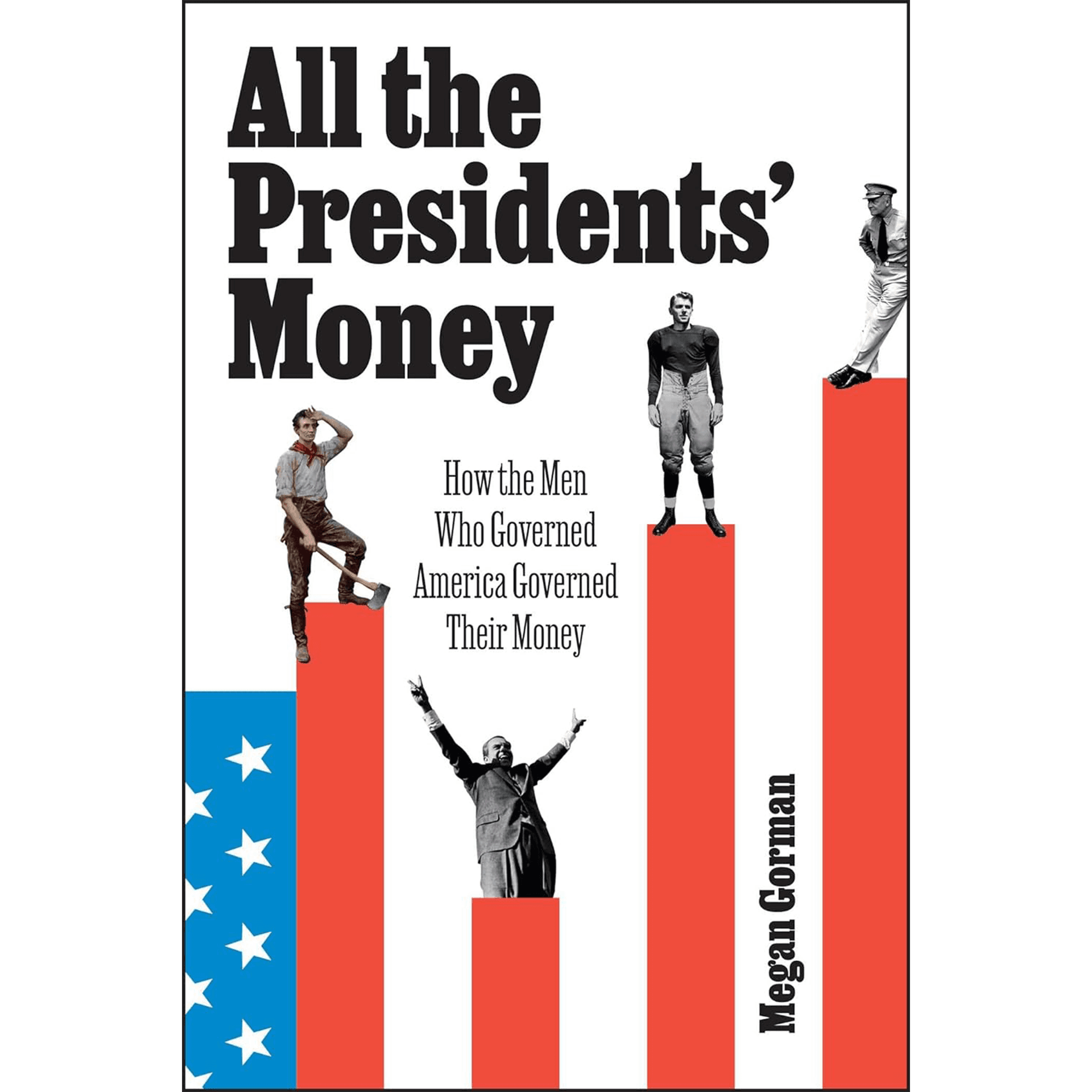
- Episode Title: Megan Gorman - All The Presidents' Money
- Guest: Megan Gorman, Wealth Manager
- Description: Discusses her book "All the Presidents' Money," which investigates the personal finances of U.S. presidents and how their financial decisions influenced their leadership.
---
Key Themes and Discussions
Introduction
- Host Background: Cole Smead introduces the podcast and its purpose, emphasizing the importance of reading for informed investing.
- Guest Introduction: Megan Gorman, founder of Checkers Financial Management, is introduced. She is experienced in wealth management and aims to provide historical context around presidential finances.
Megan Gorman's Motivation for Writing the Book
- Historical Fascination: Gorman has been interested in presidents since childhood, often gravitating towards history.
- Financial Patterns: She noticed commonalities in stories from wealthy individuals, which fueled her curiosity about how presidential finances reflect broader economic themes.
Key Presidential Financial Insights
- Thomas Jefferson:
- Grew up wealthy but struggled financially later in life due to poor money management and an extravagant lifestyle.
- His illiquidity led to significant debts, culminating in a near auction of Monticello.
- Example of the misconception that wealth guarantees financial security.
- Warren G. Harding:
- Raised in a humble background, became a successful newspaper owner.
- His financial acumen was shown in his estate planning, ensuring his family’s financial well-being posthumously.
- Despite scandals, demonstrated strong business skills.
- Joe Biden:
- Personifies the "real estate poor" concept; he has valuable properties but struggles with liquidity.
- Financial mismanagement and emotional decisions influenced his financial outcomes.
The Role of Education in Wealth Accumulation
- Education is explored as one of several ways to achieve wealth, with Gorman arguing that experience and opportunity may outweigh formal education.
- The importance of financial literacy is highlighted, suggesting that knowledge and practical experiences are crucial for effective money management.
Lady Bird Johnson vs. Mary Todd Lincoln
- Lady Bird Johnson:
- An example of a savvy financial partner; her business acumen contributed significantly to their joint wealth.
- Their partnership maintained open communication about finances, aiding in their success.
- Mary Todd Lincoln:
- Demonstrated the pitfalls of financial mismatch in marriage; her extravagant spending contrasted with Lincoln's frugality.
- Their lack of alignment and communication on finances led to challenges during and after Lincoln's presidency.
The Importance of Relationships
- Gorman emphasizes the role of connections and mentors in financial success.
- Ronald Reagan's Story:
- His relationship with Lou Wasserman opened doors that propelled his career and financial success.
Conclusion and Listener Engagement
- Final Thoughts: The podcast concludes with reflections on the importance of understanding financial behaviors and the lessons learned from historical figures.
- Engagement: Listeners are encouraged to reach out with book recommendations and feedback.
---
Key Takeaways
- Historical Context of Wealth: Understanding presidential finances provides insights into broader economic patterns and personal finance.
- Wealth Management Lessons: Effective financial management is rooted in communication, education, and strong relationships.
- Diverse Paths to Wealth: There are various ways individuals can achieve financial success, and personal values play a significant role.
Additional Resources
- Guest Website: [All The Presidents' Money](http://allthepresidentsmoney.com)
- Twitter: [@Megan_E_Gorman](https://twitter.com/Megan_E_Gorman)
- Instagram: [@AllThePresidentsMoney](https://www.instagram.com/allthepresidentsmoney/)
---
This summary captures the essence of the podcast episode, highlighting key insights and discussions that can be beneficial for listeners interested in the interplay between finance and history.
Written by AI. May contain mistakes. Listen to the episode to check what was said.
Transcript
Automatic transcript. May contain errors.0:02You're listening to A Book With Legs, a podcast presented by Smead Capital Management. At Smead Capital Management, we advise investors who fear stock market failure. You can learn more at SmeadCap.com or by calling your financial advisor.
0:21Welcome to A Book With Legs podcast. I'm Cole Smead, CEO and Portfolio Manager here at Smead Capital Management. At our firm, we are readers and we believe in the power of books to help shape informed investors. In this podcast, we speak to great authors about their writings. The late, great Charlie Munger prescribed using multiple mental models and analysis. We analyzed their work through the lens of business, markets, and people. We are deep in the political cycle right now. What better than to talk about presidents and money? Megan Gorman is joining us to discuss her newly released book, All the President's Money, How the Men Who Governed America Governed Their Money.
0:59A little bit about Megan and her background. Megan Gorman is the founder and managing partner of Checkers Financial Management in San Francisco. Megan's past experience, including working at ACO, a Goldman Sachs company, Boney Mellon Wealth Management. She is also a senior contributor at Forbes. She is a trustee to the National Endowment for Financial Education. She graduated from Bryn Mawr College and as a JD from Rutgers School of Law. Megan, thanks for joining me. I have to ask off the top, how did you come to such a unique history like presidential finances? Well, first of all, Cole, thanks for having me on.
1:33You know, I've always loved the presidents, right? I mean, since I was six years old, those were the books I was the one I gravitated to in the library. And as a side note, when I was in third grade, it was the election of 84. And I even dressed up as Geraldine Ferraro as my Halloween costume. So you can sort of guess how old I am right now. But, and by the way, I was the only person shocked in the country that she didn't win. So I think they won one state. But, you know, so I've always been reading about the presidents. I'm a history reader. That's what I'm drawn to when I'm really trying to relax.
2:09And, you know, you, you were in the field too, working with very wealthy individuals. And, and when I first started at Ako Goldman, I was young. I was working with people who were CEOs, CFOs who were incredibly successful. And I was fascinated in learning their stories. And this has covered, continued on through my 24 year career. And I would always listen to the stories and they had a similar pattern, right? You know, went to the right school, you know, got the right job, worked really hard, was comfortable with risk, married the right person. And then there was always that element of luck that sort of layered in there.
2:48And you could start to understand why some people were really incredibly financially successful. So when I sort of was thinking about this, you know, I've always been interested when I'd read history books, when like it said, you know, the president, you know, Abraham Lincoln bought a house, I would be like, hmm, I know that's a really complex psychological trend, like transaction, right? As somebody who's bought houses and helped client build buy houses. So I was sort of curious, like, okay, well, how, how are the presidents been with money? And one thing I'll tell you about Lincoln is around that time, I had gone to Springfield, Illinois with my father.
3:24And when you go to Springfield, they take you first to the town of Old Salem where he had the log cabin, right? The famous, you know, he had the shop that didn't succeed. He was postmaster there. And then you go to Springfield and you go to town and on the corner of one of the nicest streets in town is probably one of the nicest houses in town and it's his house. And what you get really struck by is it's only a 10 year period from the log cabin in old Salem to the best house in Springfield, Illinois. And so there's something about that jump, that ability to climb in the U.S. socioeconomic ladder that I find really interesting.
4:10So all of these different things sort of came together and that's what sort of motivated me to write this book. But I'll tell you, it wasn't easy to write. Yeah, you drew it from a lot of sources I took away. And by the way, you're touching it. I don't have this in my notes, so I will say this kind of off the cuff. You're touching it. One of my most sensitive subjects is American, but I also say like the one of the subjects I'm the most proud of as an American. And we're gonna come back to that idea because when we come back to it, I'll talk about some of the other authors we've talked about that.
4:43But we will hit that for nail on the head of this idea of going from not the situation you want to be in to your point 10 years later with Lincoln being the man or the woman in that case, where it's just an incredible opportunity in your life to go out and take advantage of that. So let's start out. Jefferson is thought of as one of our great founding fathers. He was a young man in comparison to Franklin when our country declared its independence. and he's very interesting to think about wealth. I mean, you deal with wealthy people. What I appreciate about this book also is like we work with a lot of folks like yourself that are working with very wealthy households.
5:24And what I enjoy about this is I think about how they make their money, how they take the risk. And that was the part that intrigues me as a stock picker and as investor. I do appreciate that I don't have to deal with that day to day. And I have a huge amount of blessing poured upon us by serving the people like you or others that do that. And so can you kind of teach us, you know, why in some respects, Thomas Jefferson seemed like he was so, you know, gonna succeed financially. And yet, that doesn't seem to be the story you teach us. Yeah, so one of the things I did with the book is the book, you know, each chapter is a certain characteristic, and I hop around in time periods, because, again, those issues that they had, that Thomas Jefferson had, people have today, myself included, right?
6:07So one of the things I think with the presidents is we assume they were all successful, right? Because once they retire and actually once they die, they become mythical, right? And they're part of the American mythology of, you know, how we are who we are today. But Jefferson's story, I find to be very common in the sense that he's someone who grew up with money, grew up with assets. Sure. You know, father had a huge plantation. They owned slaves. And he grew up in a society that was very class focused. Right. And he was educated and his father dies relatively early in his life. His wife dies early.
6:49He loses children. but Jefferson is what makes Jefferson great as a founding father is the fact that he's a dreamer and he's able to articulate the dream in a way that's inspirational. But those same skills make it very difficult for him to focus on sort of the mundaneness of money. Right. And anyone who is successful with money will tell you money management is actually quite boring. It's not supposed to be hopping around and really exciting. But when you have the type of asset base that Jefferson had, you have to really be managing liquidity pretty much perfectly because he was incredibly illiquid.
7:33And he had a series of things that happened to him over the course of his life. First of all, finding a good manager of his lands was incredibly hard to do at that time period, right? It just, there wasn't a lot of people with that skillset. And he was absent a lot of the time, right? You know, when we think of Jefferson, we often think of him in France, right? During the Revolutionary War, working on diplomacy and gaining more French taste. So here's someone who's sort of absent, you know, he's overseas, he's caught up in the revolution of his day, and he's not very present with his money and the mundaneness of it.
8:09And so what you start to see is, and we see this with people who are incredibly illiquid, is they either don't want to deal with it, they put it off, or they're sort of negotiating with themselves in their heads, right? Like, okay, I'll pay this this way and that way. Sure. And so I opened the book up with a dinner party that he has because his dinner parties, he had political reasons for them. He liked to gather groups of people. He thought that it was a good way to foster discussion. But his dinner parties were fabulous, right? If you could have gone to any White House, I would have told for like dinner and the arts, it was either Jefferson or Kennedy's, right?
8:46Those guys nailed it. but Jefferson is living a lifestyle that he really can't afford from a liquidity standpoint. And instead of having an advisor who'd come to him and say, look, we got to make some choices here. He wasn't, he wasn't having that happen. And so the debt starts to occur and spiral out of control. And I talk about this in the book, but he gets to a point, um, at the end of his life where he's in so much debt, he has to consider putting Monticello up for auction. Now today, if I said, Donald Trump is putting Mar-a-Lago up for auction. You'd be like, really? And I can buy a ticket?
9:20That's crazy. But that's what he was doing. They were selling tickets. And when I was in the primary source documents, I found the actual newspaper article with the ad offering the tickets. And then I actually found the tickets, which you could buy. They were a couple thousand dollars. I was like, no way. But this was what he was going to do to solve his money problems. And what ends up happening is a group of Americans come to him and they're like, Thomas, not a good look, not a good look for us to have an auction. And so they convince him to not do the auction. They're going to raise money for him.
9:51And it never really happens. But what he ends up doing is, you know, he ends up dying in debt. The second to last letter he writes in his life, really, uh, for last letter he writes in his life is about democracy and everything. Second to last letter is about buying wine on credit. But what's really interesting is he was aware that the debt could undermine his family. And when you look at his estate plan, there was language put in to protect his daughter and his son-in-law from any creditors trying to attach certain assets. So he's a good example of what you shouldn't do. And I think it goes to also our perceptions about money and our perceptions about people who seem to have it all and that they don't have any worries.
10:40And the truth is, and you work with this space as well, regardless of your net worth, everyone has money worries. It's a universal thing. It's something that binds all of us. And I think it's one of these things today that, you know, in a weird way, because they've sort of pitted everybody against each other and the media, right, between the wealthy and the, you know, lower income and the middle class, we don't realize it, that we're all living a common experience. I agree. I mean, I always point out to people, everyone knows who's ahead of them in line, okay? Which is just the weirdest thing to think about.
11:13It's a great way to put it. You know what I mean? Everyone can tell you what they have better. It's like Charlie Munger says, you know, coveting is the worst of all sins because you can never have any, or envy is the worst of all sins because you can't have any fun. But the truth is, to your point, we're human. We all envy someone or something else in some way. And it makes it a very human experience to think about who's ahead of us in line, say, when it comes to net worth or income or things of that nature. Let's pivot. So Harding's an interesting character because he's known for having one of the greatest presidential scandals of all time, the Teapot Dome Scand, which was a Wyoming oil and gas asset, which obviously was very disastrous.
11:51I would argue from a historical perspective, not part of your book, but it retarded oil and gas development federally for years because of the scandal. But how different was that scandal really compared to him as this really strong business person? Yeah. Yeah. You know, Harding was a surprise. And by the way, I'm sitting here in San Francisco and he died in San Francisco. Yeah. I stayed there. Yeah. Yeah. And so I've heard I've heard from other historians. I've not done this. Sometimes the palace will let people in to go see the suite in which he died in, which is sort of wild. But oh, wow. Harding's an interesting story, right?
12:23Like, so there is this common story in the U S and with the presidents of, you know, a guy grows up in a small town, takes a chance, builds a fortune, right. And then finds himself president. And Harding's an interesting guy grows up in Ohio, father's a doctor, and he tries all these different career paths, being a teacher, selling life insurance, and it just doesn't interest him. And then he gets a chance to buy a struggling newspaper. Now, we live in a day and age of social media, but back when he was a boy, newspapers were often the way that the world connected. And newspapers, like they are today, were often politically affiliated.
13:05And so he gets into this business with a couple of friends. They spend$300 to buy the newspaper. And he chose his friends strategically. One was like a printer for a printing press, and one had money. And one of them drops out fairly early on. But Harding figures out he's got a knack for the newspaper business. He's entrepreneurial. He comes up with different ideas for advertising. And the paper takes off. And he does something that a lot of other presidents did in terms of his wealth. He does marry up. And he marries a woman who's very good with money as well. Sure. And she helps with the financing, running the finances of the paper with him.
13:45But what you hear in talking to people who study his paper is Harding was a really great boss. He cultivated, predominantly men because of the time period, he cultivated young men to get into the industry, to take passion in the newspaper business and really grow the paper and its circulation. And what Harding loved was that with having a newspaper, he got a train pass. And so he would be all over the place, taking the train to figure out what was going on. So he builds this newspaper operation that becomes a really significant newspaper in the country. And it actually helps propel him politically.
14:24And he did certain things that, you know, today we take for granted for. He, you know, had an ESOP for his employees. So they were owners as well. They own 25 % of the business at the time. Yeah. Right. Like who would have thought this of Warren Harding? And so, you know, I think the thing that Harding really has a very good skill set of is unlike Jefferson, he's very present. And he's very present with the mundaneness of his money. And so at the end of his life, when, you know, he's taking the train, they go to Alaska and then they do a Western tour and then he dies in California. But right before this goes on, he's in the middle of selling his newspaper.
15:02And it's going to sell it for a significant sum to a conglomerate that owns papers. but he decides in that moment, he's going to rewrite his estate plan. And, and what's fascinating with a lot of presidents is a lot of presidents wrote their own estate plans, but he really thinks through his life and what's going on. And, you know, if you ever want to see something fun, look up John Oliver and Warren G. Harding. He does a little skit on it, but Harding, you know, had scandals in the sense that he had love affairs outside of marriage. The relationship with his wife could be challenging at times.
15:34And so he drafts this estate plan where he basically says, look, if I pre-decease my wife, give her a life estate, but at her death, reversion to my family line. And so he really thinks about this and how the money's going to flow. And that's one of the things I see with people a lot with estate planning is unless you're actually mapping out what direction it's all going in, things can sometimes go a little awry when someone dies. And of course, Harding dies and the newspaper still sells. The wife gets her life interest and then she dies the next year. And so reversion to his family. And so what I liked about Harding is one, this is so contrary to what we believe and who he is.
16:16And part of why we believe what he is, is he had the scandal, but then he and his wife died fairly quickly together. So there was no one, there was no Jackie Kennedy going, oh, it's Camelot. But, you know, it's so he I think he's, you know, he wasn't a great president, but he showed strong financial skills and more importantly, strong, strong financial values because he cared about the people around him. And, you know, there's things that didn't make it into the book. But when I talk to one of, you know, the people at the Harding Library, they talk about the fact that Harding would often personally answer letters to people, you know, and really share with them.
16:52It was, you know, it was post-World War I, you know, right back to people who'd lost family members and, you know, often did things to help them. So he's one of those people in history that the money story is completely opposite of how we experience him historically. Sure. Yeah. Because you mentioned, obviously, the way he had structured his estate is what's referred to commonly as a Q-tip, you know, from a structure. And that comes up. I think you have that one other time in the book where you comment on the Q-tip. Washington and Eisenhower. Yeah, you comment on the Q-tip structure. So that's a pretty common structure.
17:27So we met Jefferson, who was illiquid. You bring up another more current day example of what I'll call, I deem it as real estate poor, if you've ever heard that term, where there's these assets, but there's not much in cash flow or liquidity. So let's maybe use Joe Biden as a picture of this idea of real estate poor. And again, what I like about the story is it really teaches you about why do they come to these conclusions and why do they come to these assets ultimately compared to, say, like a Harding? Yeah. And Biden is, you know, an interesting story because also we're living with his money today.
18:01Right. Correct. Yeah. But Biden, you know, he's the last of our silent generation. Is he silent? Yeah, he's silent generation president. And, you know, he grew up in an era where, you know, he didn't come from money. The family struggled in Scranton, make their way to Wilmington, Delaware. And anyone who's been to Wilmington, Delaware, that is old school U.S. money. Sleepy, sleepy money. Sleepy money, right? But it's stunning down there. And here's somebody who grows up. The GI Bill had happened in the U.S. You know, the home ownership is increasing across the country. And he becomes really fascinated with beautiful homes.
18:38And this happens even before he loses his first wife. but you know, he gets into the real estate game early in his life and then he loses his wife and his daughter. And I bring this up because, you know, if you're a practitioner working with clients and you are trying to, you know, I would tell you part of my job, nine, you know, 30 % of my job is numbers. 70 % is managing decision-making prioritization emotion. When you work with someone who's gone through such a tragedy, you know, you're really trying to slow them down. And Biden doesn't really have that voice of reason slowing him down. And he ends up buying this house, which is nicknamed the station.
19:21It's an old DuPont mansion. And he buys it, but it's a house he really can't technically afford. He could buy it, but he couldn't afford to keep it up. Because he was making$40 ,000 as a senator at the time. Yeah, senator, right? that's old and squirrels are in the attic and the pool's falling apart. And so he's constantly doing crazy things to keep the house going. And so he, he's a good example of someone who's very illiquid. But if I move it more into present day, you know, and I don't want to get into the political part of this, but when you hear some of the stuff that is going on with him financially, right?
19:58So he borrows against his life insurance policies, right? He makes loans to siblings. I will tell you as a tax person, he is not good at taking advice. And this is really, really important because when you give someone advice, you expect them, particularly with complicated tax, you need them to execute well from beginning to end. Sure. Right. So if I made a loan to a family member, I need a note, an interest rate, I got to secure it, right? I got to have payments. He will hear only half of that and execute on half of it. Sure. So this whole thing of going through periods of time of being illiquid, making money at the end because of the book deal that he had when he left the vice presidency.
20:39And, you know, now he's helping family members out. I think part of the challenge with Biden is he doesn't take advice well and he's a little sloppy and he has his vision of what wealth is. And I think that this is a very common thing when you have people who are self-made, who make these wealth jumps like he made. So, you know, I feel for whoever's advising him because I'm sure half the time they're like, oh, my God, he didn't listen to the last thing he was supposed to do. Well, aren't you glad he's not your customer? Oh, my God. Yeah, there are a lot of these guys. I'm like, no way. But I think it just, I always tell people, think through, if you're going to work with someone who's going to help you with decision making, you can't cherry pick pieces of advice.
21:21You need to either buy all in or don't do it at all because you can only get burned. And I think that's what happens with Biden over time. Although he's got a great house in Rehoboth now. Hi, I'm Cole Smead, CEO and Portfolio Manager here at Smead Capital Management and host of this podcast. If you enjoy this podcast, I'd like to invite you to check out SmeadCap.com. At our firm, we are stock market investors. We advise investors who fear stock market failure with a discipline that has proven success over long periods of time. Learn more about our funds at SmeadCap.com. Past performance is not indicative of future results.
21:56Investing involves risks, including loss of principle. Please refer to the prospectus for important information about the investment company, including objectives, risks, charges, and expenses. Read and consider it carefully before investing. Speed funds distributed by UMB Distribution Services, LLC, not affiliated. I actually thought a lot about the house in Rehoboth because, I mean, think about, you know, think of the last four years. And this is something that I was, you know, and I'll talk about this later, but I internalized a lot of your book, which I think it's a very, it's a healthy exercise to ask, who am I like?
22:29Who am I not like? What are the decisions I'm currently making in my life that are analogous or similar? So for example, post pandemic, I mean, let's call a spade a spade, Megan. If you're a wealthy person, you don't own a second home. I mean, you're just not living. Okay. And the funny part is my wife and I, we do very well and we don't own a second home. We just don't. And so So I spent, you know, lots of time up in places like Truckee, California. I was just at Marta's camp not that long ago, golfing with a friend with beautiful place. And you feel these like social pressures. So I'm reading about Biden buying his place in Rehoboth Beach.
23:02And I also think to myself, well, don't confuse brains of the bull market. Like, you know, these houses have gone up in value. To your point, Biden ended up making good money on his real estate. He just had to be very poor. And so these are also situations where it's an asset and yet it's a liability at the same time. and it's kind of a give and take on both. And so, but to your point, we conform to what we think we know. So for example, if you were him, he looked at those estates as that's what wealthy people had. Now, by the way, they had like DuPont stock too, but they had those houses. And so it's like what you attach to is what you ascribe to being the determination of wealth, if that's fair.
23:40Yeah, and look, you know, Jill Biden, Jill, his wife is from Hamilton, New Jersey. And so that's South Jersey where I'm from. And I will tell you, if you live anywhere in Southern New Jersey or Delaware, the ultimate status symbol is a house at the beach. Yeah. So Jersey Shore. Yeah, totally. But not like Snooki Jersey Shore. This is, you know, Rehoboth is quite elegant and so on. Yeah, it's higher end. So I do find it interesting as you see them, you always see them on the bikes and everything. To them, they have achieved the American dream. To me, when I'm looking at it, I'm like, ooh, it was a bumpy ride.
24:12And like, you're probably, you know, you're 81 years old with a mortgage. Like, so clearly you've got, you know, you've made choices along the way that might not be the choices I would have made or had a client make. Totally. So so I also think you really contextualize because you talk about education. It's obviously important. But you and I both know we can run into a myriad of people that have what you'd consider is a lack of education. And yet they're incredibly wealthy. So how do you look at education through these presidents? and the question I want to ask is your writing really argues it's not the most important thing.
Read the full transcript
24:51Would you agree with that? I think that there are ways around it. Okay. Right. So, you know, we have a number of presidents who didn't go to college, right? One of the great tragedies of George Washington's life is his father, when he died, didn't leave him money to go to college. Yeah. Right. And think about it. If you're George Washington hanging out with Jefferson and Madison and Monroe who are all very elegant and educated, you're feeling like, I'm going to just keep my mouth shut. Yeah. Or I'm going to drink wine. Yeah. Right. Right. So, you know, I think the thing about education is it depends on where we are in the cycle of American history.
25:22Okay. In the early days of the U S you either had a very classical education or you weren't educated and it was both paths were acceptable. Sure. Where you really see the divergence is post-World War II, right. With the development of the GI bill. And one thing that we ever talk about a lot, but when World War I ended and all the boys came home from Europe, there was rampant inflation, unemployment, you know, picketing in the streets because there was nothing here for them to build off of. And so FDR and his team came up with the GI Bill, you know, the boys and gals come home from World War II, they take advantage of it.
26:00And that starts to really change education because all of a sudden education, which was really in the past more for, you know, the land of class, the Theodore Roosevelt's, the FDR's, right? The John F. Kennedy's, right? The gentry. All of a sudden, the average American could get access to it. And right, when we think about the average American, Joe Biden is a good example, right? Born in the 40s and goes to college. So what I would tell you today is, you know, where, you know, what happens with all the presidents is we're only now starting to get presidents that have student loan debt. We've had two so far, right?
26:36Bill Clinton had law school debt. And Bill Clinton talks in his book about being on a budget at Georgetown. And the other one is Barack Obama. So, you know, the presidents reflect where we are in terms of the historical cycle in the U.S. So what I would tell you is, I think we are going to get to a point, not in the next 10 years, but it would not shock me in the next 30 or 40 years that we have another president again who might not have went to college. Right. And I think it's because we're starting to get to that moment in the United States where we're thinking about, is it really appropriate for everyone to go to college and spend 90 ,000 a year and take on these loans?
27:15Or are we better positioned looking to see what people want to do with their lives and maximizing what they call the net worth premium? Right. So if I don't, you know, if I, you know, want to be a plumber, which by the way, you know, these guys make money, these guys and guys make money. Why would I go to a four-year college? Why wouldn't I go to a trade school and take a business class so I can run a good P &L and set up the right entity, right? So I think we're starting to have these discussions because people are angry at the cost of school. They're angry because they're not able to build net worth.
27:45And some of the promises of the GI Bill and that generation was, if you go to college, you'll get a house and you've built this great salary and have net worth. So we've got to talk about it more as a nation. And I think if we can get away from this political divisiveness, that is one of the things in the forefront because the student loan crisis just decimates everybody today. So I know that's sort of a weird answer to your question. But let me touch on that because I also – we've looked a lot at that data. And that was something – I was going to actually ask it later because I'll come back to the education versus strategy question.
28:18But so when you look at it, a lot of the debt is accrued. I mean, you went to a graduate program, so you're going to accrue debt. And to your point, that's where Barack Obama accrued his debt was in really a law degree. Strategically. Strategically, yeah. So I actually have very little issue with the debt where, because like, again, I'll use Barack Obama. Did he pay it off based on the investment he made unequivocally, right? Because he made a wonderful salary. So to your point, the income premium and thus the wealth premium over time. And who isn't going to want to be like, gosh, I hate that I had to do this five years in or 10 years in.
28:50but the income and wealth premium that they attained out of that was very good. So it doesn't bother me when people do graduate programs and collect debt. So think of like the two-year MBA for$150 ,000, okay? Because your income is going to pay it off. Or where, you know, the other place it's accrued is private colleges. They're very expensive, frankly. And so I think a lot about what's the best use of our capital and society to educate people at the cheapest cost. You know, private colleges aren't really that, but if you look at the incomes of private colleges, they're higher than their non-private college cohorts.
29:22Those are not the real dangers. The real danger is what you touched on where I think about, I went to college for a year, I borrowed money for it and I had no business doing it because someone told me that all that mattered was education, right? That's the real danger because the truth is, all that matters is finding opportunity and creating a business in most cases and that's most people's paths. And to your point, that would get into more of like the Lincoln experience, wouldn't it? where it wasn't about education. It was about his willingness to learn and be what you called bookworm. I call it bookish.
29:56Yeah, exactly. And look, some of my conclusions when I came in writing this book was that there were institutions that worked in the past that have not become nimble enough to serve us today. Sure. So, so, you know, whatever your political party affiliation is one of the things that I've never been able to understand is as universities and colleges have built up huge endowments. Yeah. Having 501c3 status may have made sense when we first granted that. Oh, I totally agree. You're hitting one of my very important topics. I agree with this. Right. And so I'm like, okay, if you want to have 501c3 status, then we should talk about where how it's used.
30:35Yeah. Right. These were not, these were not created. These were created excess surplus. And what we've created is effectively a massive nonprofit, to your point, we're pooling assets in a nonprofit world where they're not addressing the needs that they were given for right away. Right. But here's the thing, right? When you, when you, when they survey most Americans, most Americans feel there's too much money in politics and that politicians are only in there to make money. Sure. The question I think most Americans are struggling with today is with the way, you know, especially after Citizens United, how do you change institutions when you realize you probably don't have as much a voice as, as the money does.
31:14Sure. And, and so when you think about that, you know, clearly some of these institutions need to change. Yeah. But it's hard for a single individual to change them. So what I challenge people to think about is, you know, how do you make your own opportunity set with how the situation is today? Sure. You know, when I talk about the book, you know, for some people, and I know this has worked for some and not others, maybe it's a couple of years of community college and then, uh, you know, a private school. Maybe it's doing an associate's degree in high school. There's different ways around it. I think we've got to stop telling everybody they need to go to college.
31:49And I think we need to start focusing on financial literacy in schools to talk about what is net worth? How do you construct net worth? And what are the steps that can help you build it and that can help you potentially be it could be a burden to building net worth? So I'm going to I'm going to jump around because you're getting you're hitting on so many good topics that are causing my mind to melt. So Charlie Munger was doing an interview at Caltech. This is, say, in late 2020. And given he, you know, to your point about post-war, so he was at Caltech as a meteorologist for the military. And so he had done what he called very empirical work.
32:26You'd look at what was coming on a radar and say, well, here's what's going to happen. And so the professor was saying, well, you know, Charlie, we're doing all this behavioral work here at Caltech to make people better investors. And Charlie said, well, the question is, is it going to matter? Which is like, I mean, it's one of the best institutions in America being almost mocked by this very smart man, Charlie Munger. And he brings up the idea of poker, which is a central discussion in your book. You bring up a couple instances of this. And he says, listen, he pretty much said, will you teaching people how to be a better investor, make them better investors?
33:05He said, I don't think it will. and he said, you find out whether or not you're good at playing poker by playing poker. And you evidence in this. But so here'd be my question to you. Isn't part of the financial literacy also, would you say, and we can go into the poker because I think it's great stories. Isn't part of the financial literacy also just, again, this is a lot of evaluation in your book that I think is so good. What are you good at? What are you not good at? And therefore, how do you build your life around your strengths and around your weaknesses? Is that a fair assessment in that financial literacy?
33:36Yeah, I think the biggest struggle with financial literacy, and I'm on the board of a huge financial literacy endowment, financial literacy needs to happen where you're educating people about it. But financial literacy becomes powerful when you're in the middle of a transaction. Totally. Yeah. You know, you could read about how do you buy a house, how do you apply for a mortgage, but until you're applying for the mortgage, you're putting the offer in, you're getting the insurance, you're going through the transaction, you don't have those muscles, right? Yeah. It's like reading about lifting and so on.
34:05Yeah. So, you know, what I've always wondered is how do you make financial skills, how do you make them happen for the average American, right? Because the wealthy Americans hire people like me and we figure out what they're good at and where they need to be challenged. You focus them. Yep. Right. So one of the things that I think we overlook a lot in financial literacy is use of the tax community and the tax code, right? To function in the U.S. system, you need a credit score, you need a tax return. You don't have those, you don't exist. And there are large percentages of Americans who don't have those, which is shocking.
34:40But I think that we need to be like, and I'll use this, it's in one of the proposals, Kamala Harris wants to give a credit for first time home buyers. Both Trump and Harris have focuses on the fact that we're four and a half million housing units short in this country. Agree. And a tax credit's great to buy a house for a first time person, but how do they know that they're actually using it the correct way? Sure. Right? How do they know how to like properly apply for it? What does it mean to the bottom line? And so this is where I think with financial literacy, I think if we could find a way for the tax community to help people more, that to get that credit, you've had to work with a CPA or something.
35:21You have to show that. There needs to be more engagement in flexing muscles because so much of financial education today is a focus on K through 12, but the people who need it are often adults. And I'll just give you one quick story. I was speaking at the Herbert Hoover library a few weeks ago, talking about Hoover and Hoover was great with money. He's awesome. He's awesome. We'll come to that later. Yeah, that's great. Like not a great president, amazing with money and really about giving. But we're talking about his money and how he learns to budget and everything. And the people in the audience are coming to ask me questions.
35:52And finally, someone said, hey, listen, I know we're here to talk about Hoover and his money, but how do I know when to claim Social Security? And then another person was like, yeah, yeah, wait, how do I do this for retirement? Yeah. And I was like, whoa, the thirst for middle class Americans to know when the right financial decision making happens. It's there. They just don't know how to flex the muscles. Sure. And that's the thing I think we have to think about as we move around institutions that have become too rigid to serve us well. Sure. When I think let's, let's pivot to that. Cause you talk about Coolidge, you talk about his housing decision.
36:26So here to your point, he's so sweet. And by the way, I'll give a shout out to Amity Schlaes, who actually has a foreword in your book. She's amazing. She's amazing. Both her books, The Forgotten Man, and then her other is The Great Society, all about LBJ and Nixon and JFK. You know, she's a big Coolidge. I mean, she's with the Coolidge Institute. And so I know a lot about Coolidge via her. But you talk about his housing transaction, where he's the kind of person that should know why you participate in housing. I think you frame it the right way, which is how most Americans should think about housing.
37:00It's a forced savings plan. You are, by nature, in a typically after-tax way, benefiting from savings that will accrue at a rate that, yes, there's costs, but you'll generally defend inflation from your savings better than a lot of other things. And to call a spade a spade, many of us need that, if not almost all, because if you look at the studies on wealth accrual, it's typically where people get their money to start a business ultimately. So there's just so many positive benefits that even though Coolidge knew that he didn't buy a house. He didn't buy a house. Yeah. You know, it's funny. Amity, when we were chatting once, she told me, look, Megan, think about Coolidge like a missionary.
37:37Right. That's how he went through the world. And, you know, he had a lot of trauma growing up, lost his mother and his sister. and he was in small town in Vermont. And, you know, he goes out in the world and he becomes an attorney, but he works with banks and yet he's living in a time period where a lot of Americans were buying and building houses, right? You could buy a house from a kit back then, you know, and houses cost, you know, between 4 ,000 and$6 ,000 on average, something he could definitely afford. But what you see with him is he describes himself as thrifty. And I think at times he was thrifty.
38:15He thought it was prudent to be frugal. And he was like that as a president. But I also think that we run sometimes into people who are often afraid to act, right? It's too overwhelming, the action of buying a house, the financial anxiety of it, the fear of not succeeding. Sure. And Coolidge also mentioned he was concerned about having a conflict of interest. And what he was afraid of is that he was working with the banks and then doing a mortgage. He probably knew a little too much. And would that make him favor one bank over another? By the way, he banked all over town because he didn't want to be seen as favoring.
38:52So I think he was a little overthinking a lot of this. And it made it hard for him to act. And so to your point, he was a renter for pretty much all of his life. He only, and he rented the same house, this duplex, which is still, you can still go see it. He only buys a house near the end of his life because people are showing up at the doorstep of the duplex. So they buy a house that has a gate, which is a big thing. But there's a lot to Coolidge's story that I think a lot of Americans really should take to heart because he thought about things a lot in terms of wanting to be more fiscally responsible.
39:30Like, I love it. There's this woman named Elizabeth Jeffrey, and she was the head housekeeper for like five presidents. Sure. She loved Harding, thought he was awesome. You know, and in her book, she wrote this like scandalous book at the time. She like told you what they like to eat, which was sort of like a big deal back then. And the one that she like struggled with was Coolidge. Like she was like, oh, my God, this guy, he was so persnickety and he was always in the kitchen asking, well, why are we serving, you know, seven or eight hams? And she'd be like, because we're having 60 people for dinner.
39:59Like there was something in him that was just always almost wanted to be frugal and thrifty and, and like a missionary to Amity's point. And, and I know people like this and I'll tell you my own practice. I have gotten to a point because of the state tax laws and so on. I often will point out to people like we can do all these bells and whistles and Delaware and Nevada trusts and grats and all that stuff, or you could just spend the money. And it's a very shocking idea to them because so many of them have become wealthy because they've had the big opportunity set to build wealth over a period of time, but they're not good at spending.
40:34There's that fear. And that's very Coolidge. We hope you're enjoying the podcast. You know, we work hard putting together this show, but we work even harder for our investors at Smead Capital Management. At Smead, we believe in disciplined investing, which is why the Smead funds have a proven track record of long-term outperformance. If you're an investor who fears stock market failure like I do and want to invest in wonderful companies to build wealth, we invite you to visit SmeadCap.com. Past performance is not indicative of future results. Investing involves risks, including loss of principle.
41:07Please refer to the perspectives for important information about the investment company, including objectives, risks, charges, and expenses. Read and consider it carefully before investing. Smead funds distributed by UMB Distribution Services, LLC, not affiliated. Coolidge, to your point, and this is exactly how I think of it. So I really, there were so many things you touched on this. I was like, oh my gosh, someone finally said it. You called thriftiness being a blessing and a curse. And let me, I'll give you a little inside baseball. So I talk about this with my father. I won't give too much away, but my dad still thinks of himself as another person at another time in another era.
41:49And I think, to your point, every season of life brings different needs, requirements, financial responsibilities, et cetera. And so I joke back and forth with dad where, you know, and I was talking about this with someone the other day where it was like, ha, you know, my dad still thinks he's this other person making X amount of money. And the truth is he's not making X anymore. He's making a lot more than that. And so it's funny to work, you know, in this kind of like, again, I internalize a lot of your book. And I was thinking about Coolidge because there's times where I'd say in some seasons of life, thriftiness, as you laid out with numerous presents, is a blessing.
42:24But in other seasons of life, it's a curse and it actually greatly inhibits their ability to lead, make decisions and accrue wealth. Right. It's funny. I had a situation with a client recently where they're going to leave all these assets and they don't have kids. And I said to them, we got to start spending. right? And I said, let's, let's talk about some ideas. And one thing was they had a sibling who wouldn't be able to pay to go to Hawaii. And they're like, let's all, let's just take them to Hawaii. And, and then, so it's funny. I've been getting texts. One was a text to them golfing, um, at, um, in, uh, Carmel, what's a Pebble beach.
43:03Right. And they're writing me like saying, we're spending the money, we promise. And then I got a note when they were in Hawaii and they said, thank you for pushing us on this because this is an experience that we can't even tell you what how valuable it's been it's it's worth more than money to watch the joy of bringing someone to give them a chance to relax and spend time together it's so valuable and and that's that's the sadness of coolidge because he didn't have a lot of money until the end and then he dies very young yeah you know and and doesn't really ever get to enjoy it and so i always tell people look the end of the you.
43:40So you got to have a little, if you've, if you've been fortunate enough to have money, you've got to have some enjoyment with it because you can't take it with you. When also, I think there's a transition. This is, um, there's a transition that goes on where the value of your time is the most important component. Cause you can quantify, I mean, to your point, we have a limited set of time and money is the actually only, the only way we accrue, for time in society that we can account for. So for example, the more value I add in society is the more wealth I get paid because I'm saving other people time to do what I do for them, okay?
44:17And so it's really the information theory. And so there's that transition where it's like you're thrifty and then you don't need to have as much thrift because the value of time is so much greater. You're actually better off paying other people to do certain things because they leverage your skills and you're able to serve more in society and do greater things, et cetera. and it's like they're still back in the thrifty stage like coolidge stayed um one of the things i want to pick that's why they became successful right so correct correct you've had a trait that's made you successful and it's serving you 80 of the time yeah it's sometimes hard to have that moment of oh yeah i should maybe take the risk and and and relax yeah well so you in ford you brought up this idea that people are moving on a spectrum between financial anxiety and kind of financial well-being, okay?
45:03We did a book, The Myth of American Inequality by Senator Graham, okay? And he does, he touches on the same thing as your book, where he says, listen, every American that's wealthy today, at one point was in the lowest income bracket of America. And really, I think this is what makes America great, is that when you're a college kid, you're poor, you don't have any income, you look like a fool. And you wake up 30 years later, and you're like, Like, hey, that was the person that was poor. And then you think of transactions, to your point about transaction, when someone sells their business, that's when they go typically most often to the highest income bracket.
45:38And then it's very common that they actually shrug back to a lower income bracket. And so this dynamic where you can have Gerald Ford as this financially anxious person, and he ends up very much later making that a payoff post his presidency. He had a quiet confidence in him, right? Right. Jerry Ford's very, very interesting. And it's sort of a miss for America because all the presidents say it takes two years to understand the job. Sure. And he got to the two year part and he gets voted out. Right. Yeah. And so but when you look at the course of his life, you know, he grew up and he talks about it.
46:15He read a lot of these Horatio Alger stories. He actually in his oral histories talks about being up late at night in bed, reading these stories. And over the course of his life, even though he came from volatility, right? He, his actually, his original name wasn't Gerald Ford. It was Leslie King. His mother left his father because there was abuse. And so, and even though he grew up in a very volatile household, he grew up very secure in himself. And when he would come to decision points, he wasn't afraid to take an alternate path. And he's very similar to Eisenhower that way. Again, this is more of like the poker mindset, right?
46:50Which we were starting to talk about before. the ability to understand the opportunity set. And for Ford, you know, when he graduated college, he had two offers to go play NFL football. Now today you'd be like, of course he's going to do it. But at the time the NFL didn't pay that much. And Ford reflected on the offers and he was like, you know, I had one really phenomenal game and I lucked out that that's when those agents were there. He's like, I don't think this is going to work for me in the longterm. And I really want to be a lawyer. So I'm going to turn down the Lions and the Packers, and I'm going to go to Yale and coach their football team and hope I can get into Yale law.
47:28What a weird decision, right? Like it doesn't, but again, he was unafraid, but from that, you know, from when he becomes a lawyer to when he becomes president, he lives paycheck to paycheck. Ford is not creating great wealth while he's a congressman, while he's, you know, a leader in the house. Right. And what was really interesting is right before he gets to be vice president, he had told his wife, Betty, because she did not want to be in Washington anymore. She wanted to go back to Michigan. She wanted him to have a regular job because in his role as the whip and as the leader, he used to have to travel like crazy.
48:02And he was like, great. If I don't become speaker of the house, I'm retiring pretty quickly. And then he gets the call to be the vice president. But what's really funny about Ford is he becomes president. And the first week he's president, he's still living in his house. And Betty Ford is like, why am I still cooking you dinner? Aren't we supposed to be in the White House? So they were still very regular people. And then Ford gets a chance when he's leaving the presidency to do a good pivot again and build more confidence and go into speaking and books and being on boards. And the last thing I'll say is he saw something that now makes a lot of sense to us.
48:38But Sandy Wheel of Smith Barney did an oral history in the Ford library. And he said, you know, When we had Jerry Ford on the board of Smith Barney, it was the most invaluable thing we could have asked for because he sees the world so differently because of the job he has. And I think that Ford was unafraid to go in different directions with the presidency. And at the same time, I think we're seeing this a little bit today with the Obamas. They're starting to move into this idea of being a media brand and a media company. right? Very different from anything we've seen presidents do in the past.
49:16Sure. What's your point? I mean, Ford was really the first to leverage his, you know, his American presidency into money. And he did that via, you know, William Morris was the agency he worked with and you commented on your book. I'm going to ask you a question because I was trying to, again, I'm trying to think a lot about this of like, okay, what is the story then? How is that analogous today? So Millard Fillmore, even though he wasn't a big part of your book, you're the first person who's asking me about Fillmore. I love it. So this is great. I because I again, I'm an analogous thinker. I think in, you know, I it's why, you know, I'm a bookish person.
49:48I would say I'm a way better student today than I was in education or in college. And so I thought a lot about this. So Millard Fillmore, he signs the Fugitive Slave Act. OK, highly contentious. He's coming from Buffalo. It's like the last place in the world you'd expect someone to sign the Fugitive Slave Act. And so I'm going to read a quick quote here because it's right out of your book. It comes from one of his fellow church members, which I found very interesting. She said, Yet nevertheless, I think I cannot consent that my name shall stand on the books of a church, which will countenance voting for any pro-slavery presidential candidate.
50:22Speaking of Fillmore, obviously. Think of a woman whipper and a baby stealer being countenanced as a Christian. My anti-slavery sympathies burn stronger and stronger, end quote. Great quote, by the way. She was clear. Very clear. But here's why I liked it, because I was I was saying, OK, obviously, that is not the problem of our day. But what is analogous to it right now? So I thought a lot about, you know, in the 2020 election, I thought a lot about what Catholic priests started saying towards Joe Biden, because obviously he's he's a Catholic. And you have these priests, you know, that would say I would deny him communion as being a pro-choice candidate.
51:01Do you do you kind of see it on those? It's not the same issue, but it's it has an analogous feel to it where it's like where religion or I'll call it in that case, like the church is running smack dab into politics. Yeah, I was really fascinated by Fillmore in the sense that you could take this with the Biden thing is when they take positions, right, as presidents, they live with consequences that we don't see. People who turn away from them or who shun them in places where they had once felt very welcomed. Sure. You know, for Fillmore, what's interesting is Buffalo was one of the last stops on the Underground Railroad, very anti-slavery town.
51:36And when he did this, people turned away from him. People were not happy with him. And he didn't believe in slavery. He just felt this was the best way to handle the South. He wasn't a strong president. And this was a woman who wrote that letter to the pastor of the church. And it's so striking because for a woman to write this, you know, in the 1850s, when women didn't have the same level of rights and to be shunning someone who's a president is huge. Right. And I imagine Fillmore, you know, look, we all have been in situations where we haven't been the best at something. Sure. He's probably struggled with the decision he makes.
52:14His wife had warned him it was a disaster to sign the Fugitive Slave Act. And now he's starting to really feel this sense of shame in his normal life. And I suspect probably Biden has felt some of this with what was said to him about, you know, some of his pro-choice stances. So there's some of these things that happen to them privately, which they keep behind, you know, closed doors, also does eventually have an impact on what they decide to do with money. Sure. And, you know, Fillmore's papers, a lot of the presidents in that time period, their papers were destroyed. So there's not many Fillmore papers.
52:48I think Chester was one of the examples you used where they're gone. They're gone. Yeah, he was in an earlier draft of the book. I had to cut Chester Arthur and his 80 pairs of pants out. Yeah. But the thing about Fillmore was, you know, coming back to his hometown where, you know, he is our second poorest president ever. Buffalo had helped pull him up and now people were turning their backs on him. I think it motivated him to do something from a charitable standpoint and be a civic leader and to donate to those organizations. And so from newspapers and from the church historian there in Buffalo, I was able to get data to show that he really got engaged and really tried to give back.
53:30And I've come to the conclusion of the book is he was looking for redemption. And I work with a lot of clients who donate to charity and everybody donates to charity for different reasons. I've had people donate and build endowments because they want to keep people from having to go through the same pain of an illness that they watch their spouse die from. Sure. I have some people who are trying to promote social causes because they don't want people to go through what they went through. And I think with Fillmore, there was a feeling of Buffalo gave me everything that made me who I was. And now Buffalo is turning its back on me.
54:01But I want to give back to Buffalo. And so I feel sad for Fillmore. And in recent years, he's been shunned. You know, they don't even do any ceremony around him anymore. But he's a very challenged guy in what he went through. And, you know, what and by the way, what he did was horrible. The slave slave act is just gruesome as legislation. But I think he he paid a personal price significantly for it. When I think your best example to kind of pivot to, you know, because we're talking a lot about these men and what they do. but you know I think LBJ has a very mixed legacy in some respect but I think Lady Bird Johnson doesn't have much of a mixed legacy I think she's brilliant she's brilliant and she's loved still to this day correct so could you kind of tell the story of why she's so brilliant you know especially particularly from a financial perspective because I think this is a great example of where and you talk about this is more common today whether it be among your your your clients or just in society today, where you find these ladies that they are the breadwinner, they make their smart decisions, they are really running the financial household.
55:10And I also, you know, think about it in light of, well, what is the guy doing to gum that up or screw that up? And I'm sure you've seen that too. Right, right. So first of all, a lot of the presidents built wealth, but one of the big tricks a lot of them had was marrying up Washington, Lincoln, Eisenhower, Clinton, right you can name a whole bunch of them um and so you know lbj and lady bird are interesting sometimes to understand the presidents you have to look to their spouses right the spouse to understand barack obama you have to look at michelle right that's a good example but lady bird um born claudia john but when claudia taylor um she was born and her mother died to a to a pretty well-off family in texas and her mother dies when she's like four and it's her nanny who nicknames her ladybird.
55:55And as she's growing up, her father and her uncle are giving her business education. They're teaching her stuff about money. And she has an inheritance from her mother. And when she, she goes to college, she's incredibly successful at college, wants to have a career. And by chance she meets Lyndon Johnson and they really run off and get married very quickly. And he's very besotted with her and their letters are adorable in how they write each other. But she has these this money from her mother and it's separate property money. Texas is a community property state. And, you know, in the early 40s, there was a radio station and it hadn't done well.
56:37But radio was up and coming and she buys it. And it's a little bit controversial. And it's still I mean, we talked about it's controversial because here he's in Congress and she's buying a radio station. and this would be like, you know, some congressperson's wife, you know, buying the AI today. This is like Nancy Pelosi's trading account that goes up on the internet all the time. Yes. Oh, my goodness. I really wish they would all be conflict-free. It would make everything easier. So, you know, Lady Bird gets involved. She's running a radio station, and look, she's got to make tough decisions.
57:09She lays people off. She's running a budget. She buys a building. It's all of this stuff. Now, does LBJ help? Yes. I mean, you see it in their letters, right? They're talking to each other about it all the time, which you would expect. And he does help smooth the way. They bring in certain entertainment into Austin, Texas through the radio stations. They evolve this radio station. It becomes an incredibly big radio conglomerate down there. And the family eventually sells it at the early 2000s for like nine figures. But what I do think is interesting is the library shared a letter or shared me a segment from Lady Bird's diary.
57:47the day after Kennedy is killed. And she's talking in the diary entry about, we're meeting with all these advisors, we're figuring out what we're doing about the money, you know, and I'm being told like, well, you know, she talks about like blind trusts and so on, but she mentions, they think we may have to sell the radio station. And she's really upset because this is some of her life's work. Plus like their lives are upended by the Kennedy assassination. nation. And so, you know, I think the thing is Lady Bird was incredibly savvy. She was incredibly smart. She would, LBJ would not be who he was today, but for Lady Bird as an advisor.
58:23And I think how they danced together and had similar values in growing wealth was what allowed them to be incredibly successful financially. By the way, they didn't end up selling the radio station. They did put it in a blind trust. But, you know, you you a lot of these presidents have to also struggle with the idea that they have to give up something of their self in order to be patriotic. We've moved away from that as a nation. You know, back in the day of Carter and Reagan, they all had blind trusts when they were president. Yeah. Today, those vehicles don't work as well because we live in the day and age of social media and influencers and branding.
59:03it's not the same thing when, as it was when Ronald Reagan put his money in a blind trust. Sure. So, so I think the thing to take away from LBJ and, um, Lady Bird is matching values and a constant communication about money really, really, um, allows it to do well. And you and I were talking about this before the show, but like I talk about in the book, one of my favorite scenes is from the American president. I love that movie. Every time I was going to bring him next. Yeah. It's a great film. It's fun. But, you know, it's Michael Douglas and Annette Bening. And they're talking about like the fact that she's very uncomfortable with him sometimes because he's president.
59:41He's like, look, all the other first ladies weren't. And they talk about the fact it's because they were sleeping with these guys and married to these guys before they became the president. And so to them, they're just a regular guy. And that's probably how Lady Bird viewed LBJ. And, you know, Nancy did worship Reagan, but or Barbara and George. Right. And, you know, they knew these guys before they were president. And so it was it's a very different relationship. Hey, I want to give a big shout out to everyone who's been working so hard on the show. You know, we recently hit the top 10 investing podcasts on Apple Podcasts and even number one in the business category in several countries.
1:00:19As you may know, this show is brought to you by Smead Capital Management. Smead Capital Management understands how frustrating and illogical the stock market can be. If you are searching for funds with a proven track record, give the Smead funds a look, or better yet, reach out at SmeadCap.com. And don't forget to mention that you're a fan of the podcast. Past performance is not indicative of future results. Investing involves risks, including loss of principal. Please refer to the prospectus for important information about the investment company, including objectives, risks, charges, and expenses.
1:00:52Read and consider it carefully before investing. Smead funds distributed by UMB Distribution Services, LLC, not affiliated. So since we talked about an example of where, you know, LBJ is, you know, dealing with this woman who's financially superior to him in so many respects. Let's use the opposite example. Can you explain how Mary Todd Lincoln, you know, caused a lot of problems in their financial marriage, I'll call it. Oh, my God. And side note, I'm dying to see the new Broadway show, Oh, Mary, because it's all about her. So, you know, this is a good example of people who have some things in common, but not all their values match up.
1:01:32Sure. So I'm not going to diagnose Mary Todd Lincoln. Historians have over the years from bipolar to untreated diabetes to whatever. Yeah. But you had two people who came together, Lincoln, who was from a poor background. And Mary Todd came from a wealthy family in Lexington. Right. She had her family had slaves and they meet in Springfield. She's living with her sister who's married to the son of the governor. And the household she's living in is very high end, very classy. You know, they have dinner parties. It's a very, very high socioeconomic group there. And Lincoln is working his way in because he becomes a lawyer in Springfield, self-educated, and he gets introduced to her.
1:02:13And what they have in common is politics. But what they don't have in common is financial values. And there's a lot of struggle between, you know, when they start first meet and they get together and then they get married because they may break up and so on. But when they get married, Lincoln moves her from her sister's house that's gorgeous to a boarding house where they're paying like four dollars a month. And Mary Todd like freaks out because now she's living in a room. She doesn't even have like a sitting area to have guests come into. She's in a boarding house. With champagne taste on a beer budget.
1:02:50Exactly. You've nailed it. Right. And by the way, Lincoln is still out traveling doing court cases. Yeah. You know, so you've got this mismatch and I think it creates this, whatever issues she had in her money, it amplified it. So when they finally, her father finally, you know, steps in and this goes back to my original story. How does Lincoln get from, you know, a log cabin to the best house in town in 10 years? Yeah. Some of it is his financial success as an attorney, but her father does come in and help them buy that house. Sure. So again, very common with today. But what we see with them over the course of their marriage is you've got two people who are not talking about money and she's going out and spending.
1:03:30There's a story I find about when they were living in Springfield. She's at a dressmaker material shop and she finds this beautiful bolt of silk. Now, she doesn't need the whole bolt for a dress. She needs a certain amount. Yeah. She buys the whole bolt because she doesn't want anyone else in town to have a dress like hers. So a little bit of weird thinking. And so you see this when they become president, when he becomes president. Now she has access to New York. They're sort of looked down upon, right? Because they're from like Illinois and he's from Kentucky, right? They're Westerners. You know, in the East Coast, prim and proper don't feel the same way about it.
1:04:05But she's off in New York spending. But what's interesting about Lincoln, when he left Springfield to become president, his net worth was about$15 ,000. When he becomes president, the government is issuing bonds, bonds and notes. The bonds were paying 6%, the notes about 7 % to handle the Civil War. And so every paycheck he gets, he's saving them in the bonds, diligently, putting it away. Meanwhile, his wife's out spending. She's messing with the White House ledgers. There's a very big disconnect. And what's really tragic is, you know, they never really find a way to come back together. In fact, right before he's reelected as president, she does express to her maid, Mrs.
1:04:48Keckley, or her dressmaker, oh, my God, if he doesn't win, I'm in trouble because he's going to find out about the debt. But on the day he dies, right, he ends up dying and he ends up being worth about$85 ,000, which is about$2 million today. And what I found really interesting about this is this beyond this disconnect is this is a guy who was an attorney who had premonitions of death. Right. Dealing with a woman who didn't spend money well and he was saving and she's spending. Yeah. And he doesn't have an estate plan. And so his son, Robert Todd Lincoln, has to call the chief justice of the United States to come in to administer the estate.
1:05:25And then by all accounts, that does a great job on it. But what ends up happening is because there's no pension for people at this point in the presidency for widows or for the presidents when they leave. So Mary Todd Lincoln gets a third. Robert Lincoln gets a third of the estate and Tad Lincoln gets a third of the estate. And Mary Todd Lincoln, you know, burns through that. It's just a big mess. And so, again, it's a lack of planning, a lack of connection to people who are very much not on the same page, same values, who really, you know, had done a good job of building wealth, but not a good job of what we would say preserving and transferring it.
1:06:03And that's a miss on Lincoln's part. Well, and you point out that Lincoln knew this. I mean, my favorite joke in the whole book is when he's talking about his in-laws and he comments, I think you said in the book that he comments to someone, well, you know, God only needed one D, the Todds, obviously her family, they needed two. And it was kind of his picture of like, they need more of everything. And was also at the same time, you know, he picked her to call a spade a spade. So it was his choice. And so he's also, in a way, he's making fun of himself, which is that like, hey, she's got a lot of financial needs and I picked her and I make fun of them, but she's my problem.
1:06:39And so he knew that this was kind of like there the whole time. And I think you did a good job explaining he just chose to, you know, just deal with it however he could and get past it. I talk a lot with my kids. I always tell them, you know, there's three ways to become wealthy. You can be born into it. You can make it or you can marry it. And I always say the more of those you do, the better off you are, generally speaking. And so I have that conversation all the time with them because it's like, listen, you know, you're going to have all these worldly problems and you're human. But there are some things that money can solve, but it can't create, as we know, happiness.
1:07:16And it can't solve anything because life's imperfect like that. And so I thought a lot about that in your book because some presidents did marry it, right? Some presidents did make it. Some presidents tried to make it and failed. I mean, Nixon in his Minute Maid experience was a good example of that. But I would love to just kind of put that out there and ask, is there any other story that we didn't talk about? And I have outside of that. I mean, I thought a lot about the Quaker upbringing of Hoover and how that taught him a lot about how he dealt with finances. You just had so many good stories out of it.
1:07:47But, you know, what was there one other that kind of captured your mind that we didn't talk about? Well, you know, there's one that's not in the book. I had to cut a lot from the book. OK, the book's like 300 pages. Right. And so, you know, one of the chapters I had done a lot of work on was the idea of relationships. Right. Because one of the things I see with my clients are these super connectors. And Reagan was a really fascinating person to study. You know, growing up poor with an alcoholic father, you know, finding a way to get a scholarship to play football. at Eureka College, making his way to Hollywood and so on.
1:08:20For a girl. For a girl. For a girl. Yeah, he went to take his girlfriend to college. Yeah. And there was a little machinations by her father. Her father had a big influence on Reagan, but he shows up at college and the football coach is like, I want this guy on my team. Right. And they create a scholarship on the spot. This does not happen today. Yeah. Not that I know about. And don't make that your plan. But Reagan, one of the stories about Reagan that doesn't make it into the book is Reagan went through a period of time when as a B-list actor in Hollywood, as the studio system's being dismantled, he's struggling.
1:08:53Like he literally did a show in Vegas at one point. And he has a relationship with a gentleman named Lou Wasserman, who is a huge agent, huge Hollywood player. And Wasserman helps connect Reagan. Reagan at this point is, you know, SAG, helps him become SAG president. And then there's an interesting opportunity set that because of his relationship with Wasserman, Reagan gets access to. And that is they had decided they were going to do something called the GE theater. Okay. And this was going to be a show where they would have some of the best actors and actresses putting on plays and so on for the American public on TV.
1:09:32And they needed a host. And this seems like something very quaint today, but at the time this was revolutionary in television. And so they pick Reagan, they get Wasserman gets Reagan, you know, considered for the job. Reagan gets it. He hosts this show. And then GE has him travel the country, basically speaking to GE employees and bringing the message forward. And he gets paid by GE. He's making like 125 ,000 a year. And at the same time, GE then puts him in commercials. And if you go on YouTube, you can see some of these commercials about the Reagans and the kitchen of the future. And, you know, it's all about Nancy and their little daughter, Patty.
1:10:10And they're like, oh, she's like, oh, mommy, you know, look at the stove and stuff. And what was really interesting is Reagan's connecting with Lou Wasserman, who made this open doors for him from SAG to GE to, you know, the expansion of the GE relationship allowed Reagan to really grow a lot of wealth in the 50s, which without that experience, he would have not have ever been propelled forward in the 60s, being governor and then running for president eventually. So I bring this up because I always think when I've watched my clients, I have some clients that it is a key relationship that opens the door that changes the whole wealth dynamic.
1:10:51And Reagan, look, Reagan was a good budgeter. He was a hard worker. He had a lot of, he was a smart guy, but that relationship was a game changer for him. Yeah. And I think it also points out how different people in any organization have different roles and therefore, you know, to your point, their connection points or their relationships are just cause different needs to be met out of even a business. Like you can't have everybody be that, for example, but if you have one person like that, it really pivots a business to do far different things. Um, by the way, that story is in Shlae's book, uh, great society.
1:11:24Oh, she talks a lot about, you know, that really catapulted his political career. Cause he was a, I mean, when I think of Reagan, the actor, I think of bedtime for Bonzo. Yes. And what's the one where he was the football player? Oh. Win-win for the Kipper. Yeah. So, you know, to your point, that was pivotal because it also gave him the chance to then go out. He was going to GE sites and talking about what he thought politics should be. And even GE was like, hey, you know, he's saying some things that might hurt us. But they said, you know what? The fact that it's original, it doesn't look like it's our words.
1:11:56It's truly his. And therefore, what he does say good about us is a very different thing. Let's see. I want to ask you first, Megan, where can our listeners follow you going forward? Because, you know, obviously you love reading. You love history. That's what drew me to this. It's kind of like this eclectic history of little snippets out of all these presidents that only give you a picture of their life, but then also their financial world. Yeah. So, I mean, you can find me. My website's allthepresidentsmoney.com. I'm on Twitter, Megan underscore E underscore Gorman. And I'm on Instagram. You know, I don't know how to do TikTok.
1:12:31I'm too old. But I'm on Instagram at all the president's money. And so that's how you can find me. You know, read the book, reach out. I love hearing how people react to the presidents. Take away the current political environment. Sure. When I start to talk to people about the presidents, at first people are like, oh, politics. And then people remember being a kid and learning about these people. And it taps into something that I think we all are in love with the story of America. Sure. The presidents are just vehicles and telling you the story of America, but there's something that we all connect to.
1:13:04And that's what I love about studying the presidents. Can I ask you a quick question? Yeah, please. If you had to, I'm not asking politically, but who is your favorite president over history? Is there one that like when you see a book come out, you're like, oh, I got to read that. That's a really good question. And, you know, I mean, to your point, I think everyone naturally I think a lot about Reagan for what he was in the West. Right. I mean, we the history of the presidents isn't very Western, if that makes sense. And so I think a lot of the presidential history is being a non-Western story.
1:13:36It's really an East Coast story or an Eastern seaboard story. So I tend to think of like, you know, presidents who came out of that. I think of more I think of pieces of presidents. Your point, I don't really think of a president at large, you know. And I also, you know, another book, again, I just love books. So Inside Money, which is a story of Brown Brothers Harriman. There's a snippet of Prescott Bush, who was a banker at Brown Brothers Harriman. And before he was the senator eventually. And so when I think about these stories, I don't think about the person. I think about, to your point, the connections.
1:14:10Like what got them there? Is that repeatable? Is that something that was more random? I think those all factors, I think about the process of it rather than I do think of the person because I can't be that person, but I can think about the process of what they ran into en route. And so that's what I tend to think. And that's why this book is like, oh, you kind of dabbled around some of the processes of it. And you also broke up these people into almost like, well, here's what happened in this season or here's what really gave them that advantage then. And by the way, here's the train wreck that came next.
1:14:38Exactly. Exactly. And I didn't make it chronological because I want people to understand the struggles that they've had in 1790 or 1840 or 1890 or 1930. All the emotions are the same. It's it's a common struggle for people is money. And even those who become president, it's not easy for them either. Yeah. When I also work with my dad, so I think about the Bushes because, you know, for one president to walk into another president's office and say to his own father, look, good to see you, Mr. President. That's bizarre. We had it happen twice, right? With the Adams and the Bushes. But the Bushes are really interesting because I think they're very understated about money and they are very, they have a clear family mantra that each generation must make its own.
1:15:27Yeah. So if you think of Prescott Bush, you know, Wall Street, you think of George H.W. Oil, George W. Baseball, Jenna Bush Hager Media. Like it is you're watching when you watch Jenna on Jenna and Hoda, you're watching the family money legacy play out. And I actually really enjoyed reading George H.W.'s letters. He's very sweet during World War Two, you know, and a really, really good hearted person. um you know it's funny studying the presidents there were certain presidents i came to care about more like really like dwight eisenhower i've always adored but eisenhower's awesome i mean he's just i wish he could come alive today and run the country he'd be amazing um you know and jerry ford was a lovely surprise and i'll say this last one because we're taping this the day after his 100th birthday but jimmy carter is a fascinating guy because he makes you think he's a peanut farmer The guy is awesome with money.
1:16:22And there was articles when he ran against Ford about how much money he had and how much money Ford didn't have. Yeah. So it's very interesting. I also think about the parallel of Iran attacking Israel on his 100th birthday, who ended up being really his biggest problem politically was in the fall of Iran and the Shah. And so again, like the historical parallels were just, I mean, running through my head all day yesterday. Let me just say this in closing, Megan. Your book makes me think of my own life, my own kids, my own family, and all the things that drive people internally. And to your point, externally, I think about incentive structures, the risks they create.
1:16:58Your book, All the President's Money, will help people internalize and be honest about who they are through the lives of our commander in chief. For our listeners, if you enjoy this podcast, go to Apple, Spotify, YouTube, wherever you listen to a book with legs, give us a review, tell others about the books and great authors like Megan Gorman that we have the opportunity to understand and study the world with and through. For our tribe, if you have a great book you'd like to recommend, email podcast at smeedcap.com. That's podcast at smeedcap.com. You can also send your suggestions to us on X.
1:17:28Our handle is at smeedcap. Thank you for joining us for a book with legs podcast. We look forward to the next episode. Thank you for listening to A Book with Legs, a podcast brought to you by Smead Capital Management. The material provided in this podcast is for informational use only and should not be construed as investment advice. You can learn more about Smead Capital Management and its products at SmeadCap.com or by calling your financial advisor.
From the publisher
In this episode, wealth manager Megan Gorman joins Cole Smead to discuss her newly released work title “All the Presidents’ Money”. The book offers a fascinating dive into the personal finances of U.S. presidents, revealing how their wealth (or lack thereof) shaped their leadership and policies. Gorman offers a compelling mix of history and financial insight to reveal the impact of money on American politics.


