
In short
A Book with Legs Podcast Episode Summary
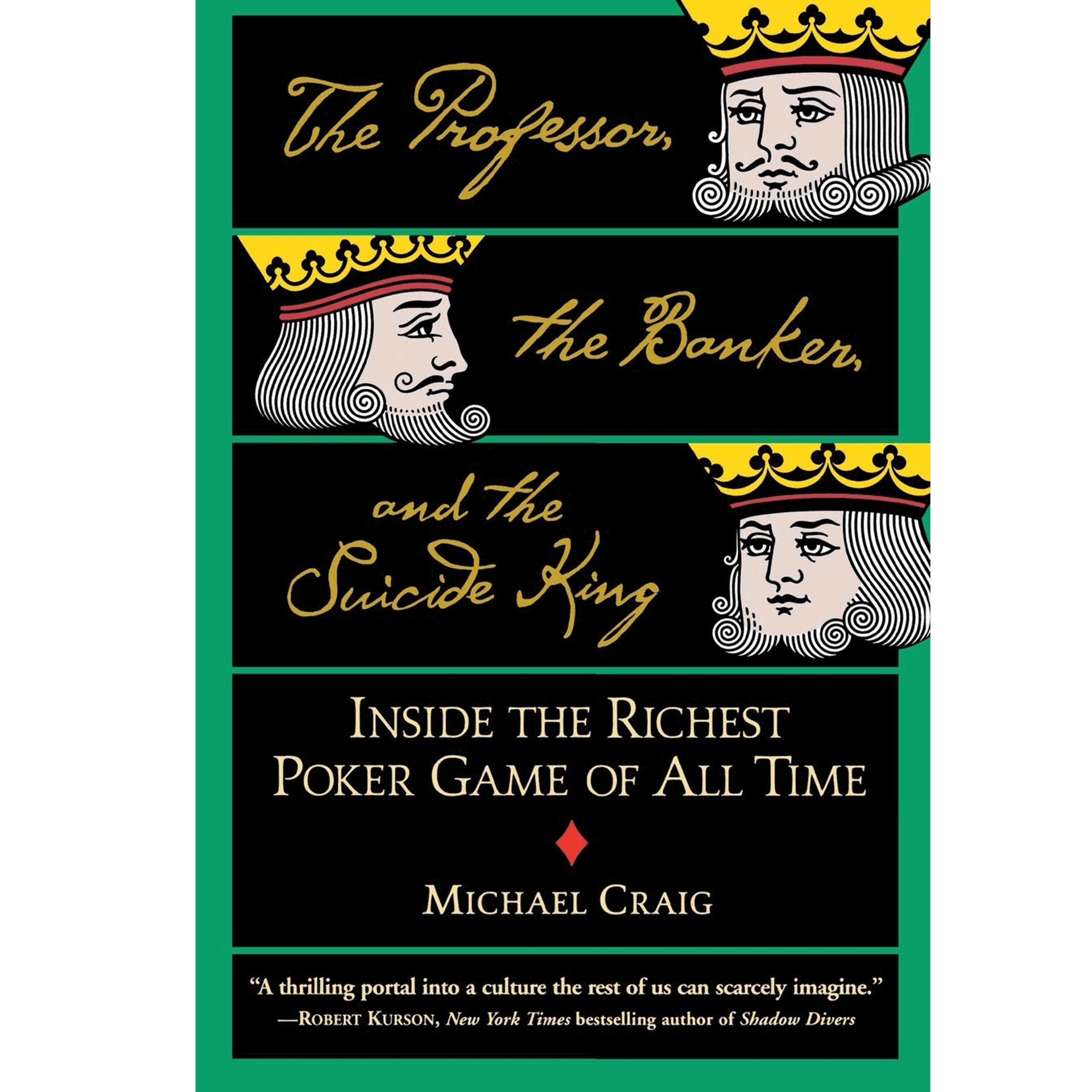
Podcast Information Title: A Book with Legs Host: Smead Capital Management Episode Title: Michael Craig - The Professor, The Banker, and the Suicide King Episode Description: In this episode, author Michael Craig discusses his book, *"The Professor, The Banker, and the Suicide King,"* which explores high-stakes poker and the legendary showdown between billionaire banker Andy Beal and top professional players.
---
Key Themes and Discussions
Introduction
- Hosts: Cole Smead (CEO and Portfolio Manager) and Bill Smead (Chairman and CIO) introduce the episode and guest Michael Craig.
- Purpose: The podcast discusses the intersection of literature and investing, utilizing books that influence investment decisions.
Guest Background
Michael Craig
- Profession: Securities lawyer, author, and former professional poker player.
- Motivation for Writing the Book:
- Sparked by a high-stakes poker game he learned about while playing in Las Vegas (2003).
- Influenced by his curiosity and previous readings on poker narratives.
The Poker Game Narrative
- Setting: The episode centers around a significant poker game involving Andy Beal and professional players, which showcases psychological tactics and strategies.
- Structure of High-Stakes Poker:
- Discussion on the importance of bankroll management in poker akin to investment strategies.
- Introduction of early characters such as Ted Forrest, Chip Reese, and Andy Beal.
Key Characters
- Ted Forrest: Noted for his versatility in different poker games and his status as a top player.
- Andy Beal: Billionaire banker who entered the poker world, promoted by his mathematical inclinations and desire for excitement.
- His rise in poker involved significant wins and losses, showcasing the volatility of high-stakes gaming.
Psychological Aspects of Poker
- Discussion of risk management in both poker and investing, emphasizing the psychological elements that drive decisions.
- Exploration of how poker players view risk and strategic decision-making, drawing parallels to business and investing.
Historical Context
- Evolution of Poker: The podcast addresses the changing perceptions of gambling from taboo to a widely accepted pastime.
- Cultural Impact: The rise of televised poker and its influence on public perception and the celebrity status of professional players.
The Poker Community
- Insights into the camaraderie and competition among high-stakes players, including anecdotes of side bets and challenges among them.
- Example of humorous bets involving eating challenges and living arrangements, illustrating the playful nature of the poker community.
Conclusion
- Takeaways from Andy Beal's Journey:
- Discussion on the concept of risk and its relevance in both gambling and investing.
- Reflections on the allure of high-stakes environments and the motivations behind pursuing such risks.
Final Thoughts
- Michael Craig’s perspective emphasizes that finding value in risk and the randomness of life can lead to significant insights in both poker and investing.
---
Key Quotes
- On Risk: "You have to have access to a bunch of money. It's a little bit of a mystery how most poker players do it."
- On the Nature of Poker: "If you’re playing at a table in Las Vegas, the house is raking off a certain part of the chips all the time."
---
Listening Information Listeners are encouraged to subscribe to *A Book with Legs* on platforms like Apple Podcasts, Spotify, and YouTube, and to explore more discussions on literature and investing.
For more information about Smead Capital Management, visit [SmeadCap.com](http://SmeadCap.com) or contact your financial advisor.
Written by AI. May contain mistakes. Listen to the episode to check what was said.
Transcript
Automatic transcript. May contain errors.0:02You're listening to A Book With Legs, a podcast presented by Smeed Capital Management. At Smead Capital Management, we advise investors who fear stock market failure. You can learn more at SmeadCap.com or by calling your financial advisor.
0:21Welcome to A Book With Legs podcast. I'm Cole Smead, CEO and Portfolio Manager here at Smead Capital Management. At our firm, we are readers and we believe in the power of books to help shape informed investors. In this podcast, we speak to great authors about their writings. The late, great Charlie Munger prescribed using multiple mental models and analysis. We analyze their work through the lens of business, markets, and people. Joining me to host this episode is our chairman and chief investment officer, my dad, Bill Smead. Dad, thanks for joining me. Glad to be here, as always. And I'll give a lot of credit to our colleague, Will, who came up with this book.
0:55For the Smead family, there is a legacy of poker players that have won their fair share of pots. We, like many others, think a lot about the odds of investing in common stocks. It's your hand versus all the other players a la Mr. Market. Joining us is Michael Craig to discuss his book titled The Professor, The Banker, and The Suicide King Inside the Richest Poker Game of All Time. A little bit about Michael. He's a securities lawyer by background, has written three other books. He played professional poker himself and ran into a lot of the people and characters that we'll talk about today. He received his JD in law from the University of Michigan and a bachelor's degree in history from Wayne State University.
1:33And he is joining us here from, I believe, Mesa, Arizona. Actually, Gilbert now. Gilbert, Arizona. So thanks for joining us today. It's great to be with you. Oh, it's a pleasure being here. Thanks for asking me. What's the Wayne State mascot? The Wayne State mascot is a different one than when I was going there. Back in the 70s, it was the Tartars. Okay. And I think that somehow politically became something that was out of fashion. Sure. I'm not sure what they are today. Okay. That happened to our alma mater. We were the fighting missionaries. And so they changed it to the name of a mountain range, which is bizarre.
2:10So to kick us off, we'll get to a little bit about your own backstory with poker, which you share in the book. But did someone come to you and say, I can't believe this went on. You got to write about this. Or how did you come into this? Just the idea of writing this book, I think, is a great starting point. Well, it started at the Mirage, which apparently is being demolished and is going to become a hard rock casino. But back in 19—no, actually, this would be like 2000—is it 2003, 2004? It was a famous weekend because the illusionists Siegfried and Roy had their show there. Sure. One of them was mauled by a tiger.
2:50I remember that, yeah. That weekend, I was in Las Vegas playing poker with a friend of mine, Ted, and we were just playing different casinos in town. And when we were at the Mirage, people were palming the Siegfried and Roy chips that were in collection. Because they're collectors. Yeah, they were going to be collector's items. But all the talk was about a poker game that was going on up the street at the Bellagio. And the story was that there was a poker, the son of a poker world champion was playing a billionaire and they had five million dollars a piece on the table. And that to me, that sounded like one of those stories that gets bigger, you know, that bigger.
3:34Yeah. That, you know, if I go a couple of properties over, it'll be ten million dollars on the table. And if I go all the way downtown, it'll be there were one hundred million dollars on the table that it, you know, I knew a little something about high stakes poker. I read a bunch of things about it. It was something that interested me as a subject, although I was recreationally a pretty low stakes player at the time. And I knew that the stakes that I was familiar with in the past, the guys had played for, there wasn't any through line between the stories that I heard about from the 70s and the 80s and two people playing with$5 million on the table.
4:10And so I thought it was just an urban legend in the making. But after I got back home, I looked online. And again, this is ancient online times. Yeah, bull bulls and boards. 2003. And there was a poker bulletin board where people were asking about rumors about this game. And one of the people who was writing on the board was a woman who had dealt at the game. And she said she couldn't talk too much about it, but she passed along a few details. and I was curious, you know, what was going on. I just, you know, I had read a couple of great poker narrative stories, one of them, The Biggest Game in Town by Al Alvarez, the other one, Big Deal by Anthony Holden, and I loved those books, and I would have loved to have read a book about this poker game that was going on that practically nobody knew anything about, and I wanted to learn more about it, and that's kind of how I ended up writing it, because I wanted to learn it.
5:10That's great. So I think back to playing nickel dime poker in eighth grade with my buddies. Again, my dad played every Wednesday night. They rented a room at the Camas Hotel in Camas, Washington. And the hotel brought a big table in and about 10 guys played. And some of the same things you describe in the book, like playing freeze out at the end of the night was going on. And so, obviously, I picked that up. My parents were mortified when they found out one of my eighth grade buddies was the pastor's son. And my parents thought they were going to go to hell because their son was taking his son with them.
5:52But anyway, so tell us how you started playing poker yourself. Well, the strange thing is, is that I grew up in a gambling family. My father was a poker player. He was also a crapshooter, horse racing better. and my parents got divorced. We had some financial troubles and there was always sort of like some sort of stain of gambling in our family. But my dad, basically his idea was, well, I'll just earn enough money so that I can continue gambling. And he and his older brother went to Vegas a lot. They went to the horse races a lot. And so we had kind of like a troubled legacy in our house. It seemed interesting and glamorous, but it also seemed like it was potentially ruinous.
6:38And then when I started practicing law, I was in an office with two guys who, whenever there was nothing really pressing going on in the office in the afternoon, would play poker against each other. And I didn't have anything to do with it. And then after that, kind of as a result of this book and another book I tried to write before it, not poker related, but I was trying to write a mainstream bestseller type book, and there was no interest in the subject that I had written about. A friend of mine had started playing online poker. Ted, I mentioned him to you briefly. And so we started going to the local casinos and playing, and we went to Vegas, some playing, and we played some online.
7:23And I thought, well, I wanted to write a book, but maybe what I'll just do is I'll play poker. And while we were playing poker in Las Vegas, this is when the book hit me in the face. And so I continued playing during that time. I think I subsequently became a very good player. I should probably be less modest, although I don't really play for real money anymore. But while I was working on the book, I got to meet a lot of good poker players, but we weren't talking about strategy and things like that. After this book came out, I was asked to write a follow-up book, not about the story, but something else about poker.
8:08Poker was really hot at the time. and I decided to, I pitched a book called The Full Tilt Poker Strategy Guide because I was close with the people who had started Full Tilt and a lot of their pros and they seemed to be interested as a promotional idea and being involved in it. And I really liked the idea, especially because I was really getting to enjoy playing online, of getting these guys to teach me how to be a better player. And so I spent a year with them working on this other book, Full Tilt Poker Strategy Guide, and I became a really good online player. And I also had some successes at the World Series of Poker and more or less stopped playing after online poker shut down in the United States.
8:53I've occasionally gone - Back when it was still illegal. Right. Right? It's funny to say, but it's a different world we live in today. By the way, we're already hinting at what is so attractive about a career picking stocks because it's a positive sum game, right? In other words, when you play at a table in Las Vegas, the house is raking off a certain part of the chips all the time, and you are winning what's left of what the losers lost minus the rake. And so, therefore, it's a different mentality. Yeah, but you talk about this. I mean, you come from a securities law background, like I opened up with.
9:33You mentioned that poker is a capital intensive business like banking or securities trading. I guess, can you explain that? And I think, what would be the asset light way of being in the poker business, selling poker strategy books or, you know what I mean? Well, yeah, there are a number of ways you could be, you know, a number of top poker players, strategies, dealers. Sure. But I think they all were just dealing to make enough money to go play. To go play. Right. So they could go play. They were dealing the$3,$6 game. And when they made enough money in tips, they would go across the street to the other casino and play the$3,$6 game and eventually became good enough to not deal anymore.
10:20When you get higher up in poker, I mean, it's expensive. I mean, you know, different periods, the big games in poker, of course, different amounts. But, I mean, let's say if you're playing some kind of mixed game where the stakes are$400,$800 or$1 ,000,$2 ,000, or it's a combination of a limit game where the stakes are$1 ,000,$2 ,000 and then pot limit or no limit hold them mixed in there where the blinds are lower. But, you know, you could be playing that game with$100 ,000 or so. Yeah. And, you know, if you have a bad hour, you can lose the entire$100 ,000. And you can't say, well, I guess I'm going to go home and start again at$3,$6 poker.
11:01So, you know, you have to have access to a bunch of money. It's a little bit of a mystery how most poker players do it because there are some poker players who are known for being very good at managing their money. And they're also very good investors. I think Eric Seidel is a wealthy poker player, wealthy from poker and wealthy from investing. Chris Ferguson, likewise, and definitely a bunch of other ones. But the people who become poker players because they're action junkies and poker is something they can happen to win. And then you're kind of teeing up the first character of your book, which do you want to jump to the first question?
11:44Well, Jesus, Ferguson, Jesus, because of his long hair. Yeah. Okay. So let's talk about Ted Forrest as you do to open your book. Teach our listeners about how Chip Reese and Ted Forrest came across Andy Beal, maybe with a little background on who Ted is. Well, sure. Ted Forrest, and I haven't been in touch with him in the last few years, but Ted Forrest during the time of, you know, when I was involved in poker and when I was writing this book, was one of the best poker players in the world and considered a very good all-around player. He had some sort of reputation that he wasn't really a no-limit hold 'em player, but he was considered the best or at the very top of the short list of Raz players, seven-card stud players, stud high-low players.
12:29And he's the suicide king of title sake. Yes. And he just bounced from game to game. I mean, he was playing in a game with Larry Flint in Los Angeles. And so he would drive from Las Vegas to Los Angeles and play in this game at Larry Flint's casino, although it was originally at Larry Flint's house. And he might play in that game for like a day or a day and a half. And when that game would break up, as he was driving back to Las Vegas, he would call the poker room at the Bellagio and say, you know, what's the biggest game going on? And even though he had driven four hours to L.A., had stayed up 24 hours in a row playing and was now driving back four hours, if they said there's a 2 ,000, 4 ,000 game and blank is in it, blank being like some – A big name, yeah.
13:21Yeah, somebody like – Alex Rodriguez is in the game. Like George the Greek or, you know, like, you know, a guy who, you know, who drop in every so often, bring a lot of money and wasn't necessarily a good player. Yeah. The, you know, he would he would go right to the he would go right to the Bellagio and play. And, you know, the is I got to know him better and I got to learn more about his life. And a lot of those stories are reflected in the book. there was one time he got into a game he was playing heads up with a former world champion Hamid Dasmalchi who was also a high stakes player and they played for 100 hours straight and this is back when you this is back in the mirage days and this is also back when you could smoke at the table and so Ted said to me he said Hamid smoked he smoked 10 packs of cigarettes a day because they were playing 24 hours a day.
14:18Gosh. What a good customer for the tobacco company. So he smoked 40 packs of cigarettes. And then Ted said to me, but he only used one match. Now you know why Peter Lynch made so much money on Philip Morris. So do you want to jump to the next one too? Teach our listeners about Andy Beal's background. What brought him to Vegas and how did he win his first$100 ,000? Andy Beal was a, went to Michigan State University. He had dropped out. He had gotten involved in, you know, kind of like, you know, doing some rehabbing of houses and things like that. And he was like, you know, he was looking to, you know, use some sweat equity, turn around some, you know, some, you know, some houses for a profit and get into something bigger.
15:10And he had built up a little bit of money. And I think this was during the, you know, during the original SNL crisis. So there were there was a lot of foreclosed properties. A lot of distress. Right. And so he he he was able to bid on something in, I think, in Plano, Texas. I could have the city wrong, but he it's in the book. He ended up winning the bid. I mean, I don't think I think he was the only one bidding. And, you know, that was kind of how he got started in real estate and, you know, building, improving, trading, looking for, you know, looking for, you know, good times to get in and became quite wealthy.
15:54None of his companies were public, and so he was usually flying below the radar. But around the time, maybe even a few years before the Professor of the Banker and the Suicide King, he had become so successful in Texas that he was starting to make the Forbes 400 list. He'd come to their attention. For Beale Bank, his bank. Yes, yeah, for Beale Bank. And when I got to be friends with him later on, in fact, actually, after writing the book, kind of an excuse for me to stay in touch with him is when the new Forbes list would come out each year, I would call him up and I'd say, I've got bad news for you and bad news for me.
16:34The bad news for you is you're on the list. Bad news for me, I didn't make it again. Yeah, that's funny. So he shows up the first time. Was it – I'm trying to remind myself. Was it Chip Reese or Lange that brought him – that he was friends with? And so he kind of was starting to float a little bit around the poker table. He was kind of a stranger to the games. What happened is he had some – I don't know if he was in town at the time for something banking. But he also had a, you know, like a Nevada corporation that did some things through. So he was in Nevada some, but he was there and he used to be a blackjack player.
17:17Gotcha. And, you know, I think he got tossed out of some casinos for counting, but it wasn't something he did there. But that was kind of intelligence. He was a mathematics minded person, I think. And this is early 01, I think is the first time he made, what, about$100 ,000? Yeah, he went into the Bellagio poker room and just kind of looked around. I think the game that was going on that seemed like it was the highest one was a 75-150 limit hold 'em game. And so he started playing in that. And he was kind of enjoying it, but it's like the stakes weren't enough. It wasn't enough to matter. Yeah, it's like he wanted it to matter.
18:05He wanted to motivate himself to play his best, but it really didn't matter. And he met a guy named Mike Lang at the table. Mike Lang was a sort of a legendary, I don't want to say typical Vegas guy, but this is like a guy who plays for however much money he has, plus a little bit more. and has won a lot of big times, but is always broke. And this was right after Mike Lang had won a World Poker Tour event. And when I talked with the other people playing at high stakes around that time, they said that Lang was always out of money, but he won so much money in this event that his safe deposit box at the Bellagio couldn't hold it all.
19:00And so, like Jennifer Harmon said, he asked if he could park some of his money in my safe deposit box because he didn't have any more room in his. And again, these are people not putting it in the bank. They're keeping it at the casino. Right. Well, this is the thing. It's hard to take money off the table because, I mean, ideally, as you're making profits, you're investing it in businesses or you're investing it in stocks or just saving some in the bank. And obviously, it's pretty liquid if it's in the bank. But if you're used to making poker-type returns, that's a little bit too boring. I mean, most poker players don't have that much money in the bank.
19:40And the ones that have been successful in investments have been successful in fairly high-risk investments or big-return investments. But then the ones that aren't successful end up giving their money to a guy who said he's got this new type of water that has a complete— Penny stock. Yeah, that has a completely safe type of caffeine. Near-death experience investing.
20:27of future results. Investing involves risks, including loss of principle. Please refer to the prospectus for important information about the investment company, including objectives, risks, charges, and expenses. Read and consider it carefully before investing. Speed funds distributed by UMB Distribution Services, LLC, not affiliated. Andy plays, makes a little bit of money, and he goes back to Dallas. And you talk about in his book how he really studied a different game of poker because he's a mathematically minded person. You're pointing a card count, which is a skill in itself. But he's not practicing like, how do I get better at poker in general?
21:04He's really playing for a certain type of poker, which is like more of a heads up or shorthanded poker as you make the case. Right. And to some degree, it was just for a sense of excitement as well as having some more control over the game. The first time he was in Las Vegas after playing the 75-150 game for a while and he had run out of chips and Mike Lang had a bunch of stacks of chips and they got into, they were flipping a coin. I think the chips, there might have been, let me think here. There might have been like$4 ,000 in chips in each rack. They were flipping a coin, like Andy wanted to buy the$4 ,000 in chips, a rack of chips, and they flipped a coin for it.
21:55and they did that several times and just like a fun weird Vegas type thing and so Andy was somewhat friendly with Mike and said are there any bigger games around here and for Mike it's like what did you say yeah and so Lang told him upstairs there's the way the Bellagio was set up then the room was kind of like a square or a rectangle. And in one corner, there was on a riser, like one or two steps up, an area of four or five tables. And that was upstairs. That was where they had the highest level games. And so I don't think there was anybody playing there at the time. But Lang said, if you want, I could make a call and see if anybody wants to play if you're going to be in town for a couple days.
22:55So, so Beal played in a, you know, a ring game, of course, you know, because this is like a guy who nobody ever heard of before. He's an outsider. Yeah, he's an outsider. And, you know, by definition, they knew he couldn't be that good. And so the, you know, there was like, the table was filled up and, you know, to play the, you know, the thousand, 2000 game. And then there was like another game of all the people who were waiting to get into this game playing like, I don't know, like 500 and 1 ,000, hoping a seat would come open in this game. Yeah. And they played, you know, and so they played Limit Hold 'em, 1 ,000, 2 ,000, and played for several hours.
23:35And Beal enjoyed it. He was a little bit bored by it. Sure. You know, he didn't like playing, you know, where there are eight or nine people. It's like, you know, in Blackjack - There's a lot more competition for hands. Yeah. You know, in Blackjack, you get to play every hand. Yeah. In poker, you know, a lot of the skill is that you only have to play some. Or you shouldn't. Right. Patience waiting for good cards. So you also, in your book, you do a really good job of telling kind of the history of the poker business in Vegas, which, you know, like I was born in 83. You know, poker, from what I understand, based on society at one point, this is a faux pas subject in general.
24:12Right. You were kind of like a kind of a bad person if you're into gambling. Right. It was a vice business is how it was looked at. Then you go from that era to where, like, as I'm getting out of college, that's, you know, this is like right when I'm in college. And now today it's like gambling is just an accepted part of American life. Yes, yes. And the period in which the book was written was one of the turning points in that. As I told you, to me, the classic books about high-stakes poker are Anthony Holden's Big Deal and Al Alvarez's The Biggest Game in Town. Those were written about periods in the late 80s and late 70s, respectively.
24:59And those books shed light on this world that people barely knew existed. Yeah, it was a dark corner. Yeah, and I mean, I was sort of familiar with it because when I went to Las Vegas, I was traveling to Las Vegas a lot, both playing Blackjack or Craps and then also learning to play poker a little bit, that there were a couple of bookstores of gambling books. and I would buy books there because like you guys, I think reading is important. And then also they had VHS tapes of the final table of the World Series from past years. Yeah, which is like, this is like, I mean, like no one has this stuff.
25:45Right. And this was before they had whole card cameras or anything like that. We'll get to that later, by the way. That's all good stuff. Wide World of Sports, I think you used to broadcast it in the early years. Yeah, sometimes it was Wide World of Sports. There were a few years where the Binion family, because the World Series of Poker was at Binion's Horseshoe, that they would just pay somebody to record it and do voiceover, and then they would try to sell it someplace. So there were some times it would go on some sort of regional sports network months and months after. Sure. But I got a bunch of those tapes and so, you know, got to watch, you know, again, without hole cards and stuff like that.
26:31And, you know, very spotty kind of coverage. But it was just fun. It was fun to see. And that was how I was learning about poker. Not even so much how to be a great player, but just the lore and the history of the game. And, of course, when poker went online, that caused a big bump, which led to more interest in the World Series of Poker being covered. And, of course, in 2003, when an online amateur player, Chris Moneymaker, won the main event, that got a gigantic amount of publicity. Because anybody could do it. You see a chip in a chair, right? Right. I mean, that fueled both online poker tremendously as well as televised poker.
27:19Yeah. And so all of a sudden poker players became TV stars. Yeah, and we'll come back. So you wanna jump to that? So since we're doing the history, let's go right. Teach us about Doyle Brunson. Give us a little background on Doyle and then take that into what his role in March of 2001 One was for building a cartel to play Andy Beal. Okay. Doyle Brunson passed away last year, and I believe he was either 87 or 89. One of the great things about Doyle, countless great things, is that based on health problems he had over the years, he made bets with a lot of people over how long he would live. And he always took the over and apparently made a small fortune on people who thought he would be dead before he would be.
28:15And I got that. And so Doyle was a gambling man. He was an athlete when he was young. He was a basketball player in the early 50s. I think he might have gotten drafted by the NBA, but suffered a serious knee injury that left him with a limp for his whole life. and tried to become a school teacher, but then got involved in playing poker games in, I want to say Fort Worth, but it could have been somewhere else in Texas. Again, these are backroom kind of games. These are not like where you sit down and tell your parents what you're doing. This is 1953. And poker, it's like some sort of gambling is legal just about every place now, But it hasn't even been until the last few years that it was considered legal to play a poker game in Texas.
29:10Even with Texas's historic role in poker. And so these were underground games. And it was a rough time. You had to worry about getting cheated. Then you also had to worry about the game being broken up by the law. or other players in the game tipping off the law to break up the game and take the money off the table. And so it's like you needed to be way, way better than the game just to make a living because if you were playing it fairly regularly, it just wasn't that unusual thing that somebody would come and hold up the game or the cops would seize all the money on the table. And so Doyle Brunson became an extremely successful poker player with a few other players in that same circuit.
Read the full transcript
30:06And around 1970, he moved to Las Vegas. And this was more than a decade after a friend of his, Benny Binion, had moved to Vegas and started Binion's Horseshoe. Brunson came to Vegas because, you know, he was starting to have difficulties as a high-profile gambler. Sure. Not in Vegas. And so— To find a game. Yeah. I mean, the story with both those guys that I hear in various forms is they got sentenced by judges to move to Vegas because, you know, they were running afoul of the law. And they both ended up making their way out to Las Vegas because it was legal there. And Brunson became a big sports bettor and he was a big poker player and supposedly made and lost several fortunes and was during the 70s considered the best of the high stakes players.
31:14And really before then as well. and his contemporaries had long passed away or as they got older, became mediocre players. He was playing pretty high stakes until the very end of his life. And I think you talk about where they thought he had Alzheimer's and I think you even commented that he had trouble, maybe, was it recognized you or recognized someone else? And then he goes in and wins a massive game a day later. Yeah, oh, this was remarkable. When I was working on the book, actually, Doyle helped put me in touch with Andy Beal. And Doyle was also helpful in getting me in touch with some of the other players in the game.
32:02And it's kind of like, you know, Doyle was like a calling card. If I was talking to somebody I didn't know and I said, I'm working on this book. And they said, I don't know. I don't really want to have anything to do with any book. And I said, well, Doyle's helping me on it. That was your goodwill. Yeah. So that was my calling card. Doyle was helpful to me, and I saw him at several tournaments over the course of the summer in, I think this is 2003, although it might have been 2004. And we would always – I interviewed him a couple times, and a few times we just kind of like – So I would just see him in the hallway and say hello.
32:44And one of the times before a tournament in Los Angeles, I forget if it was the Bicycle Club or the Commerce, but it was a World Poker Tour event. I saw him and I said, Doyle, I had a few follow-up questions I wanted to ask you. Is there a time this weekend when you're not playing, when I could just have a few minutes of your time? and he kind of looked at me like he wasn't exactly sure what I was talking about. And he says, you're writing a book? I said, yeah, the Andy Beal game. Remember, you introduced me to Andy Beal. And he said, oh, I don't want anything to do with that. That's just going to be everybody talking about how we all cheated him or how we're all a bunch of crooks or something like that.
33:31I'm not having anything to do with that. And he was up to that moment and after that moment always super friendly with me. But I thought, oh, my gosh, here he's playing in this World Poker Tour event, and they're playing these high-stakes games at night. And this guy's just completely lost his mind. Well, he ended up winning that World Poker Tour event that weekend. Well, by the way, there's a fine line. We've now learned there is a fine line. Between genius and insanity. Yeah, well, when I started playing in World Series events, I sat at a table several times with Doyle during events. And we were playing this one event.
34:06It started, they have events that start at noon, then they have ones that start at 5 p.m. And the ones that start at 5 p.m. tend to either be the higher buy-ins or the ones that are other than No Limit Hold 'em. And so I think this was a horse. I forgot if it was horse or stud high-low. But it started at 5 p.m. And they had a dinner break like at 7. And then it went until 3 a.m. And so we just started playing. And then there's a dinner break. And we get back from the dinner break. And Doyle's grumbling. And he says, I don't know. I don't know why. We play for 45 minutes and we have a dinner break.
34:47Now I spent a half an hour eating. I feel like I just want to go to sleep now and it's just kind of good natured grumbling but he's grumbling complaining anybody will listen and he starts yawning and you know how yawns are contagious and so at our table everybody's getting tired he cleaned up for the next three hours maybe it was a coincidence but I think he planted the seed that way. Yeah. He was, he was, he was crafty. So, so, so Doyle helped kind of get the cartel together and Beal shows up three weeks later. This time there's a wait list. Johnny Chan, Barry Greenstein and others are there.
35:36Teach our listeners about Barry as a picture of the intelligence that's floating around in these high stakes games. Okay. Well, the, well, the, The first time Beal had played, and I apologize because I don't remember. It's like I know that book like the back of my hand, but I don't know the back of my hand so well anymore. I don't recall whether Andy played some in the 1000-2000 game during his first time out after Mike Lang introduced him to some of the high-stakes players or whether he came back and with the expectation that he was coming back. That's when they played the game. But yeah, there was, as I mentioned before, when he first started playing, it was a ring game.
36:19It was eight or nine seats, and all the seats were taken. And all the seats were taken at the next game at half stakes, waiting for one of these seats to come open. And Beal actually won in this game, but it was boring to him. Yeah. And, you know, and, you know, and also he, you know, he had a, you know, a dose of skepticism, like, you know, these guys all know each other very well. Are they up against me? Yeah. And so, you know, the so the combination of being able to get into a game where he could play every hand, you know, like heads up and where he didn't have to worry about some possibility that, you know, that these guys who were experts were trading some sort of signals or something like that.
37:12that he wanted to play heads up. And then that was, he had talked, I think, with Doyle about it. Or it might have been Chip Reese. Andy was, it's like the two biggest names in Las Vegas in poker, in poker history then and to some degree now. You know, or Ted, I'm sorry, Chip Reese and Doyle Brunson. And while Andy played a lot of high stakes players and had some great matches with them, to him, it was always like, you know, get me to that. Yeah. I got to play Chip Reese. I got to play Doyle Brunson. You know, he's a little bit of a fan that way. And so he had gotten it worked out with Chip Reese where he was going to come and they were going to play heads up at the Bellagio.
38:08And to keep other people from playing in the game, and this is one of the reasons that the group was formed, is that so that people wouldn't flood the game. because, and I understand it might be a little bit different in Las Vegas now, but back then the ethic was, you know, if the game's open to the public, anybody can play. Now, obviously, if it's, you know, if it's, you know, a$10 ,000,$20 ,000 no-limit hold 'em game. There's certain people that won't want to play. Right, yeah. You know, you and I aren't going to walk into that game. Yeah, we're not going to be like, hey, I want to lose, you know, a good$500 ,000 cold.
38:44Right, but the point is, is that while that was higher than anybody who was playing at the time, they couldn't really assure that somebody wouldn't come into the game. So what happened is a group of players, about eight players, pooled their money together and they decided they would take turns playing him. They didn't formally decide they were freeze outs. The point is if you were winning or losing you could quit at any time. But the idea was that more or less they would play until one of them. But they'd be fresh all the time. Well, I wouldn't say that. well here's the other thing too is like I thought because I thought about how he changes poker playing so he plays this you know format to your point and then he goes home and you talked about how he was trying to think about okay how am I going to so you know read a lot of poker books on playing shorter hand but then he went out and this I thought it was really interesting you talk about in your book questions so he went out and had he wrote his own poker program in basic I thought this was great so he asked some certain questions because again he's trying to ask like how can I get an edge or continue to give myself an edge right so here are the questions he asks what is the lowest high card you can have in your hand expect to win more than half the time regardless of second hand second card pardon me what is the unpaired unsuited hand with the lowest high card that could win more than half that time um because again you think about like an like a 10-handed game is a vastly different game than a three or four-handed game uh the other questions he asks is what is the lowest suited hand that would win more than half the time.
40:16Fourth was what are the highest suited hands that would win, not win half the time. And lastly, what are the worst hands that would win more than half the time? So just asking yourselves, what is likely to win that you wouldn't normally play in a 10 handed game, but in a shorthand situation, you need to know the odds of winning. Where's their value? Yeah. And so like, again, I was like, that's what I got done with your book. I was like, oh, King Deuce offsuit. I would, I would never like, if we're playing typically games, Ten-handed, you never touch it. Three-handed, you got a majority winner.
40:47Yeah. Yeah. I mentioned before we started, I'm not playing for real money these days, mostly because I'm too lazy to leave my house to go to a casino and I can play online. He's not there yet. I'm just teasing, right? Because you played last night. I thought, gosh, if I'm going to talk about this book and talk with you, I need to be reminded of what this is like. We hope you're enjoying the podcast. You know, we work hard putting together this show, but we work even harder for our investors at Smead Capital Management. At Smead, we believe in disciplined investing, which is why the Smead funds have a proven track record of long-term outperformance.
41:29If you're an investor who fears stock market failure, like I do, and want to invest in wonderful companies to build wealth, we invite you to visit SmeadCap.com. Past performance is not indicative of future results. investing involves risks including loss of principle please refer to the perspectives for important information about the investment company including objectives risks charges and expenses read and consider it carefully before investing smeed funds distributed by umb distribution services llc not affiliated your book has a lot of touches of an era of an american history okay um think of what we talked about in the chronology of poker and gambling that's that is its own history.
42:10Yes. Secondly, you start, you know, this is starting in early 01. And obviously, by September 11th of 2001, the world was changing quickly. So Beale is coming back later in 01. 9-11 attacks had happened. What was the mood and the atmosphere in a place like Vegas? It was, you know, it was gloomy. I mean, you know, you know, the, I guess, you know, more recently, you could, you know, you could analogize it a little bit to, to the pandemic that the, it's like, you know, you know, no one's going to want to go there anymore. Nobody's going to, you know, you know, Vegas is dead either because people didn't want to fly or because Las Vegas would be such an obvious target, you know, for terrorists.
42:53And so, you know, you know, and, you know, of course the economy, you know, with all the uncertainty at that time, you know, was also hurt. And so the, you know, the pros in Vegas were, you know, they're pretty much like shuffling their money among each other. Well, yeah, all the suckers are not showing up. Right. And I, you know, and I don't think of this so much is that these guys are teamed, you know, that it's the pros against the suckers. And if you're unlucky enough to be the sucker, then you don't have a chance because the pros are ganked up on you. It's just that, you know, if you, you know, if you've got to, you know, if you're a pro player and you've got to, you know, and you're in a game and there's like three of the best players in the world, but then there are two players that are just, you know, like big money tourists.
43:41Yeah. You know, that's a good game for you. That doesn't mean you're not going to be in hands with the top players that are in the game, but the, you know, your positive value is greater. And these players are all very proud. I remember talking with Eric Drake, who was the longtime manager of the poker room at the Mirage in the early days and director of the World Series of Poker back in the 70s. and he said that, you know, if you ask, if you get eight players in a game, a high stakes game, and you ask them all what their edge, you know, like what they think their edge is, they all think they're 50 % likely to win.
44:29Yeah. And so the, you know, it just, you know, it's a much easier living, you know, like, I mean, they'll play against each other and they think they're all better than each other. But, you know, you toss in a couple people that, that are just like high stakes gamblers that enjoy poker a little bit, that changes the equation quite a bit. And so it makes the games much better. So the games in Las Vegas were terrible. There's like no chance to win a whole bunch of money off somebody. Yeah, well, you're going to take it from one of your longtime professional colleagues. Do you want to jump to the Johnny Moss?
45:10Because I love this one. Yeah, a lot of this book is about risk. which, again, we like positive summaries, but can you tell our listeners the story of what the late Johnny Moss told his wife one time? About the house? Oh, yeah. Oh, yes, of course. I apologize. I'm thinking about the one where they got married, and on his honeymoon, he went somewhere where there was a poker game, and she was sitting next to him, and she was holding his hand, and she noticed he wasn't doing so well in the game. And at one point, he started tugging at her hand. He was trying to take her wedding ring off. I was thinking of that story.
45:53I don't think that one's in the book. But Moss had a big win or a series of big wins. And he had won a significant amount in a short time and went back home to, I believe it was Odessa, Texas, which is where his wife lived and said, you know, I want you to take this money. And again, I don't know if it was$50 ,000 or$75 ,000 or$150 ,000, but we're talking about like— Good sum of money. And it's in like the late 40s or something like that. So, you know, you could buy a nice house for a lot different amount than you can now. But he said, you know, I'm going up and down in money. I can't promise you we'll ever have money or not have money, but take this money and buy a nice house and that'll be yours.
46:47And then no matter what happens with me, you'll always have this house. And so he gave her the money, you know, like in cash, like in a bag. And she said, you know i don't i don't feel comfortable carrying this money around uh i'll uh you know let me go look around for a house and then i'll uh come back to you and so so she went with a friend and they just had a blast because uh you know she didn't come from money yeah it's first world living she's doing yeah and yeah and and you know and he you know was making money but you know a lot most of it was going back into poker comes and goes this this was this you know this was like Like, you know, this is like baby's day out.
47:29I mean, she's going and looking at houses and, you know, like everything's in their price range based on the amount of money she has. And she spent like a week or so touring all the houses in the area. And she finally, you know, she finally picked out the one that she wanted. And she said to John, can you give me the money? And John said, it's not around anymore. Yeah, it's not longer there. So let's keep on going on that with these people because, I mean, these people just love taking risk. I mean, there's something about it that really drives them. So you talk a lot about the person. Like there's these side bets.
48:02I love these side bets. These are all just great. So can you explain like Huck Seed and Howard Letters' personal side bets they made with each other, for example? Yeah. Well, you know, Ted Forrest was involved in a lot of these and John Hannigan. And there was one of the bets. I don't think this one made it in the book because I was told about it later on. But Huckseed and Ted Forrest were working out a proposition bet where for a million dollars, Huckseed would live in a closet in Ted Forrest's house for a year. And they got close to doing it. But eventually, you know, and Huck was ready. You know, he was ready to live in a closet for a year.
48:50Pretty tall, wasn't he? What? He was pretty tall, wasn't he? Yeah, he was like 6 '7". It's got to be a sizable closet. Yeah. Well, Ted had a nice house at the time, so it probably was. But, you know, what happened is that Ted decided he didn't want Huck living in his closet for a year. So he ended up not doing it. But, I mean, there was a version of that bet that a number of guys were involved in. and this is one, this has even happened in more recent years, where guys would bet whether, you know, whether you could live in a bathroom for a month. Or like Ted Forrest, like what was a Ted Forrest bet was like to run a marathon with someone and then like he runs it in the dead of like a Nevada summer at the UNLV track and he almost kills himself.
49:38Yeah. Yeah. Yeah, yeah. He told me that story, and I reminded him of it a couple years later. And he said, oh, yeah, that's a time when my then-girlfriend tried to kill me. Because what happened is she was supposed to meet them there with water. Yeah. She never shows. She never woke up. And so they ended up, there was some guy who was walking by, and they ended up, like, you know, bribing him to bring them water. but they didn't get nearly enough water. That happened. The bathroom one was, and I think this was done more recently, where a couple of guys rented a room at the Bellagio for a month and then one of the guys lived in the bathroom of this room for a month for, I think it was$300 ,000 or something like that.
50:35But the original version of it, which wasn't in Las Vegas and it was older, it was like for$25 ,000. And the guy whose apartment it was, who was betting, was trying to influence the outcome to get the guy who was betting, who was living in the bathroom, out. He was bringing people by to use the toilet in the room. The other really famous bet, and we'll jump to another question here, but you talked about Howard Letterer. He's like a vegetarian. Yeah. And so there's this bet that he won't eat a burger. Yes. Right? And I can't remember what he got paid, but he said during the book, you write about it.
51:20He says, order the burger. He eats the burger, and they're expecting he won't be able to take it in. His body will give it up. And in my mind, I'm thinking, Letterer's mind is saying, I hate the burger, but I love caffeine. The money. Yeah, I love the money. Hopefully it was in and out because that's pretty close to the strip there. It was David Gray who was a regular high stakes gambler, poker player in Las Vegas and a good friend of letterers. And it was just one of these idle things because they had food service at the tables. The poker director would call somebody from one of the restaurants to bring menus to the table and they would order and the food would be brought over.
52:02and uh gray said uh you know i'll you know i'll bet you know i'll bet you won't eat a cheeseburger for ten thousand dollars and and howard says i don't want to eat a cheeseburger but so i don't want to bet you but uh you know if you're saying you're going to give me ten thousand dollars to watch me eat a cheeseburger i'll take it and so david said let's order it and and so they ordered it. And Howard said, you know, you don't have to go through with this. This isn't a two-way bat. They thought he'd get a couple bites into it and bail. Right. But, you know, it wasn't, you know, it wasn't strictly speaking a bat.
52:41It was, you know, it was David paying to watch Howard eat it. And he was hoping that Howard gets sick. Not because that would somehow invalidate the bat, but just because that was, to him, that was winning. So let's jump to Lyle. Let's jump to the question on Lyle right below because I think that's the, he was super important. Okay. So how fundamental was Lyle Berman to the transformation? And explain how these poker kings and queens turned into stars. Well, Lyle Berman was a longtime player in the World Series and a high-stakes poker player. He was, I believe, he started a leather store that swept malls across the country.
53:29It was like a reasonably priced leather store, and he had hundreds of locations, and he had sold it. And so he was a high-stakes amateur, but considered a very good player. I mean, one of the things is that if you play against the best players in the world and you show up pretty often, you're going to become pretty good. So even if we talk about, oh, this guy was no good. He was donating to the games. The point is that these guys who like to play the best players in the world, they recognize that they're not necessarily getting the best of it. that if they moved down a couple levels, they would clean up on everybody else.
54:13And I think the common understanding when the top players talk about, you know, somebody who's like an amateur who joins their game, you know, oh, this guy stinks. That means he's really a bad player. He's actually better than everybody except for the people he's playing against. Except for the best. Larry Flint, the late Larry Flint, was like that. who was an outstanding seven-card stud player, but he only wanted to play against people like the caliber of Ted Forrest. Yeah, that way he said, who did I lose? So I lost the best players in the world. Which means he was an excitement junkie is really what that amounts to.
54:51So we're going to jump ahead. Doyle's son, Todd, who himself was a well-respected professional, busted Andy up pretty well, as did Jennifer Harmon, Kind of interesting, brings back to watching this stuff on TV. In the spring of 2003, teach us about Todd's background. I happen to work with my son. Was Todd's success foreknown? Not really. I mean, it's possible that, you know, I mean, I've got the story from the horse's mouth. And, you know, you never know exactly how good that is. But, I mean, Doyle said that when Todd was growing up, they never played poker. They never talked about poker. I kind of think Doyle was, you know, to some degree an absentee parent because he was, you know, he was on the road a lot playing.
55:41And Todd, you know, so I don't know, you know, Todd said, you know, he played like in local games, but he went off to college. And the first year, he won enough money playing poker his first year in college where he didn't go back for the second year. and that was kind of how Doyle learned that his son was playing poker. Probably disappointed in a way. Yeah, it's like the godfather thing. You work your way up so that the next generation has it easier and the next generation doesn't have to get their hands dirty the way you did. And so his son was going to be following in his footsteps, which he didn't necessarily want.
56:24To quote Don Corleone, I apologize. I spoil my children. Yeah. So Beal leaves Las Vegas having lost millions in late 03 on a commercial plane. Why was he disgusted and why was he flying coach? Subsequent times, I think Beal was, you know, because they played some more after I wrote book and I was and it actually would be a subject for an even better version of this book I had written about because I was I was allowed to sit at the table while they were playing and I was at least unofficially an intermediary between the two sides of them you know when one's the you know Beal's being unreasonable the players think Beal's being unreasonable they'd say you know how you know how are we going to get you know is Beal really serious about wanting to play this amount or something like that or is he really serious that he won't let us sit at the you know he's letting You sit at the table, but he won't let one of us sit at the table and watch.
57:24And so it was a phenomenally interesting set of games. I couldn't get the publisher interested in doing a second book or doing an expansion of this book. But they had played again back in 06. But in 03, I guess the thing I would say is that Andy's problem as a poker player, and this is one of the reasons why I, in my own tournament playing, and in my own poker playing, I prefer playing in tournament formats than cash game formats, is that Beal's two biggest problems were he didn't know when to quit when he was winning, and he didn't know when to quit when he was losing. And this is a highly underrated skill.
58:16Sleep or take a nap. I mean, didn't he go without sleep a lot? Well, but he'd set rules up. I think you talked about he'd set rules where he'd say, I'm not going to play in this situation where I get tired. Yeah. And then he'd still play. And he'd play through being tired and make mistakes. Right. And he tried to tilt things in his favor where he could. He always wanted to play early in the morning. And poker players, they play late at night. And so it was usually, you know, one of the reasons people were so reluctant to, I mean, you know, it's like they were reluctant to play him because they weren't used to playing with other people's money.
58:53But they were also reluctant to play him because they didn't like getting up at eight o 'clock in the morning. As a business person, business people are morning people. Poker players are nighttime animals. Absolutely. Hey, I want to give a big shout out to everyone who's been working so hard on the show. You know, we recently hit the top 10 investing podcasts on Apple Podcasts and even number one in the business category in several countries. As you may know, this show is brought to you by Smeet Capital Management. Smeet Capital Management understands how frustrating and illogical the stock market can be.
59:23If you are searching for funds with a proven track record, give the Smeet funds a look or better yet, reach out at SmeetCap.com. And don't forget to mention that you're a fan of the podcast. Past performance is not indicative of future results. Investing involves risks, including loss of principal. Please refer to the prospectus for important information about the investment company, including objectives, risks, charges, and expenses. Read and consider it carefully before investing. SMEED funds distributed by UMB Distribution Services, LLC, not affiliated. Beal was creating max pressure through not just the blinds, but also other events in Vegas at the time.
1:00:03was distraction one of the other plays that he made beyond the stakes. In other words, he wanted to up the ante on the stakes. He was trying to find ways to give him an advantage over these. But at the same time, this is like 2004. The World Series of Poker has taken off. World Poker Tour. I mean, these are celebrities in American culture. And so, you know, he's coming into town out of nowhere. Right. Saying, here's my high limit stakes. And oh, by the way, you need to get out of your World Series of Poker event to come play me. Yeah, and it's, you know, and it's kind of a conflict, conflict among individual players and almost a conflict among generations is that the, you know, part of the ethic, you know, of poker players, you know, high stakes players, and there's really not just one, but, you know, part of the ethic is, you know, we make our living off of amateurs that come into our games.
1:00:56And so we don't ever want to turn those people down. And we don't even want to turn them down when they beat us because— They'll be back. They'll be back. They'll be back. They'll be back. Or something like them. Or, you know, the word that, you know, some nobody came and won a million dollars off us. They're going to tell everybody. Yeah. You know, and so, you know, it's like, you know, never turn down a game. On the other hand, the more modern view is, no, we should play when we have the edge and not play when we don't have the edge. And maybe you could argue, well, we always have the edge because we're the pros, but let's not play them at these highest stakes if we have to bring a whole bunch of people in to get us enough money to play.
1:01:45and we're worried our bankroll's not enough, let's not play at those stakes. And so there wasn't any, it wasn't so much that they were afraid of the stakes or there was fear of being ruined because one thing is poker players don't really care that much about being ruined. That's part of the swings though. Yeah, most poker players go broke many times. I remember hearing stories about guys in the book who, you know, I'd heard about like, you know, these, you know, these big mansions that they had. And when I was following poker, like five years later, I would, you know, I would see him and I'd say, you know, I, you know, do you still have like, you know, the home next to the Pacific?
1:02:30And he said, you know, I said that, you know, lost a couple million Chinese poker to Ted Forrest and I had to sell that house. Oh man. Yeah. So, so they sit down for this, you know, really the biggest game of all time. Andy has his runs during the game. He was down by 7 million and then up by 8 million. And then in the middle, he breaks for lunch with Steve Wynn, which is like, I mean, this has just got to be such a fun and interesting time in the game of poker. Yeah. Because it was still, it was cloistered enough that they were very tight relationships, not as big as it is and wide as it is today.
1:03:04So, you know, he takes over 6 million in the end. He was back two weeks later playing Phil Ivey, another big name very successful player Phil you know side note for our listeners if you want to go look into like playing the games you want to play there's obviously his game in London that he set and he brought the lady along and he's very famous for that Tiger Woods of poker Tiger Woods of poker and Howard Letterer is the other player he plays after Letterer ends up taking him for nine million and obviously Letterer's sister Annie Duke is a you know famous poker player in her own right with many books as we talked about before Beal says he would never be back I was trying to think about what's my takeaway from your story because it's terribly intriguing all the dynamics of these interesting people their education whether it be Andy Beal or Harmon or Letterer for their education they're terribly interesting people one of the conclusions I want to ask you about is there's been a lot of research on humans in that we have all this logic and then we just do things for doing them we don't do them for logical reasons is that your kind of takeaway from Andy Beal or do you draw away something else from Andy Beal like you know he likes risk and he's just going to be driven to find risk even it doesn't make a lot of sense yeah I mean that that's part of it also part of it that the times when Andy was most involved in poker back then tended to be periods where there wasn't a lot of uh there weren't a lot of good deals in the type of banking he was doing.
1:04:34He got bored. Yeah. And so the, you know, one time I was visiting him in Texas and, you know, we were talking and, you know, I was trying to ask, he didn't really answer deeper questions. Like when I asked him, why are you doing it? I didn't really get real thoughtful answers. But I mean, he would say things like, you know, what am I going to do? Go to work, go home at one o 'clock in the afternoon, go to sleep at seven. You know, it's like the, you know, he was bored by some of the stuff he was doing. Now, that, you know, that goes in ebbs and flows. Yeah, it goes away. You know, suddenly, you know, there's a shift in the market.
1:05:11And, you know, that's, you know, by far the most exciting thing you could be working at. I don't know, didn't know much about Andy Beal before I read your book. Reminds me a lot of Mark Cuban. That's the first thing I thought of. No, not bad. Way more private. Not even, I would say. Well, no, way more private. But you know what I mean? In other words, seeking thrills in other ways. Yeah. Why? I just say, cause like, uh, why don't you mention to, uh, uh, why don't you mention to Michael what your picture of heaven would be on the craps table? Cause I think it's a better way of thinking about what you're saying.
1:05:39Well, now you're asking me about something I haven't thought of for a long, long time. Okay. Let's say heaven would be like having an infinite amount of money to sit to the cold streets of the craps table. That's right. That's what it was. And Andy had the money to sit through the cold streaks to your point. Yeah. He could sit through the cold streaks. Uh, and, and that's basically, in our positive sum game that we participate in investing that you sit through the cold streaks. Our discipline works most of the time. A lot of the time it doesn't work. Sometimes the guys that are playing the worst poker in the investment world are hot as a pistol.
1:06:16And by the way, kind of reminds me, everybody worried about somebody getting drunken on a hot streak because nothing was more damning than a dangerous drunk. And that same thing happens in the investment world that the people buying the most aggressive stuff, by the way, that's kind of happened for the last 15 years, that momentum has been the best trade. Right, yeah. So let's see, there's a lot we didn't talk about. I was just going through my notes. First off, I'm really glad that the movie Rounders never came up. I consider that a badge of honor for all of us because obviously Johnny Chan is pretty famous in that movie for him winning the World Series of Poker.
1:06:53We didn't go into a lot of the history of the Binion family, which I think you did a wonderful job of teaching people about the history of the Binions, the breakup of the Binion family with Benny and his son and the family. And it's a great history. We didn't go much into Harmon's background, but again, really good stuff. I was trying to look to see if there's anything else. We didn't talk about Jennifer's husband and how that would suck to be married to a professional poker player. But I just want to ask, kind of put out to you, is there anything else that comes to mind that you would like to mention to our audience?
1:07:24Yeah, this is the most trivial thing I can think of, but one of the ones that always brings a smile to my face. David Gray, consummate gambler. And yes, it's like I talked to a bunch of high-stakes players, and they'd say, oh, the guy we least wanted playing with our money was David Gray. David Gray sucks. Well, David Gray was a successful player for decades and successful in every sort of game and in every sort of gambling. and a great storyteller. And he told me a story when he was first starting as a gambler. He was betting on horse races in New Jersey. And there was like another group of horse players that, you know, you kind of get to know the same people.
1:08:09And most of them were bigger bettors than him. But, I mean, he was like he was guarding like a few thousand dollars trying to grow it. And after the races would end at night, and they would go to dinner or something like that. Well, one night they went bowling and there was this one guy in the group, Ira the Whale, who was a great bowler and, as David says, a whale. I love the name. And after they bowled for a while, they decided to get something to eat. And based on the time and the neighborhood they were in, the only thing that was available was White Castle. And so they got into this discussion about whether Ira the whale could eat 100 White Castle hamburgers.
1:08:52Oh, my gosh. And what happened, this is a group of like, I don't know, like 10 or 12 guys. And they were talking about different numbers. And when they finally got to like 100, they said, oh, there's no way the whale could eat 100. And just about everybody agreed. The whale said he could do it. And David thought he could do it. And so they set up a bet. Did they take odds on it? No, I think it was a straight bet. Wow. And David said at the time, like$20 to bet on a horse race was a lot for him. And I think he said he had$2 ,000 with him, which was a substantial amount of all the money that he had.
1:09:36He bet$2 ,000 on Ira the Whale. Ira the Whale, I think, bet$10 ,000 on himself. and then everybody else took a piece of the other side. And David told me that they went into the White Castle and Ira went to order and he was afraid about him getting cold. So he ordered, he was going to order them 25 at a time. So he said, 25 White Castle cheeseburgers and I'll take a large order of fries and a chocolate shake. and David said to me David said to me that was the moment that I knew I was a lock yeah I knew I was a lock that's so funny okay so I have another idea for you so I just I was thinking of this whole story because it's like it has a it has a feeling of like a Hollywood movie where it's like you got the outsider coming in to play the pros and it's just it's you know you got this billionaire have you ever had someone come to you to say like can we turn this into script and make a movie out of this oh like every year Every year.
1:10:38And what's happened is the people who have like the best ability to get a movie made haven't expressed interest. It's mostly been people that have been either amateurs to filmmaking who were avid fans of the book and had some money or, you know, people who were, you know, involved in production companies. But, you know, it wasn't, you know, it wasn't Universal Studios or Sony Pictures or anything like that. And so, you know, it's been optioned several times. People have expressed interest several times, but it's just never – none of those projects has ever gotten off the ground. There's one I think that somebody has an option on it currently for, I don't know, another six months or another year.
1:11:22And I don't think it's going to go anywhere. Well, because I also think like that, taking your book and then kind of using as a storytelling of, you know, poker in America, you know, because it touches so much of that history. I was trying to think about like who'd play Andy Beal. And I was like, well, I mean, I think of, I think of, you know, like a Matt Damon or someone like that showing up to play like an Andy Beal. And at the same time you could have like a, I'm thinking of who played in Barbie, but you'd have someone sitting there dialoguing about the story of all this. And then here's what happened.
1:11:52And then, and then he walked in and then Johnny, you know, I mean, you could see all this playing out. I think Rob Reiner should make it because he looks a little bit like Rob Reiner. Yeah. So I was going to ask you, Michael, Well, where can people follow you going forward on either any of your books or just your thoughts on life? You know, I keep in circulation, but I tend to not leave my house that much. I am working with Annie Duke. And so all the writing that I do is really like researching and editing for her books and her posts on Substack and when she had a blog, her blog. And so I'm mostly working with her.
1:12:34I'm on Twitter, but I don't even think I updated the software when X took them over. Gotcha. And so I'm not even sure if I'm available. I mean, if somebody wants to reach me, I'm reachable. My email address is write, that's W-R-I-T-E, dot Michael Craig at gmail.com. So you just write Michael Craig at gmail.com. It's been too hot to go outside lately. Yeah, it's been pretty hot. Well, that's the other thing, too, is that it doesn't seem like the summer is ever going to end. I, you know, I'm hoping. I mean, I do look somewhat like Rob Reiner, but I want to look like Rob Reiner from early days of from the early days of, you know, of All in the Family by walking more outside.
1:13:21But I haven't been able to do it. He's trying to build studios here in Arizona. Yeah. Good for him. Yeah. I have to find out if he's interested in the book. Yeah. Well, let's see. First off, thank you for joining us. This is like total treasure. And I'm trying to think you are our second in studio guest. So it's just like nice to have a fellow native Arizonan to come in and talk about their work and discuss this with you. Bill, thanks for hosting me alongside of this. Michael your book makes me think a lot about risk money the value of time you know was this worth Andy Beal's time is what I kept asking myself as an example and it was worth the players no question because they could make a lot of money off him I also think about the randomness of life that we try to find meaning in but as we know from Andy there might not be any our listeners should go out and buy a copy of The Professor The Banker and The Suicide King to think of a world inside the mind of a billionaire really against the pros If you enjoy this podcast, go to Apple, Spotify, YouTube, or wherever you listen to a book with legs.
1:14:19Give us a review. Tell others about the books and great authors like Michael Craig that we have the opportunity to understand and study the world with and through. For our tribe, if you have a great book you'd like to recommend, email podcast at smeedcap.com. That's podcast at smeedcap.com. You can also send your suggestions to us on X. Our handle is at smeedcap. Thank you for joining us for a book with legs podcast. We look forward to the next episode. Thank you for listening to A Book with Legs, a podcast brought to you by Smead Capital Management. The material provided in this podcast is for informational use only and should not be construed as investment advice.
1:14:58You can learn more about Smead Capital Management and its products at SmeadCap.com or by calling your financial advisor.
From the publisher
In this episode, author Michael Craig joins Cole Smead and Bill Smead to discuss his book, "The Professor, The Banker, and the Suicide King," which dives into the world of high-stakes poker. The story follows the legendary Texas Hold’em showdown between billionaire banker Andy Beal and a team of top professional players, and explores the psychological tactics and strategic decisions behind each move.


