
In short
A Book with Legs Podcast - Episode Summary
Podcast Details
- Title: A Book with Legs
- Host: Smead Capital Management
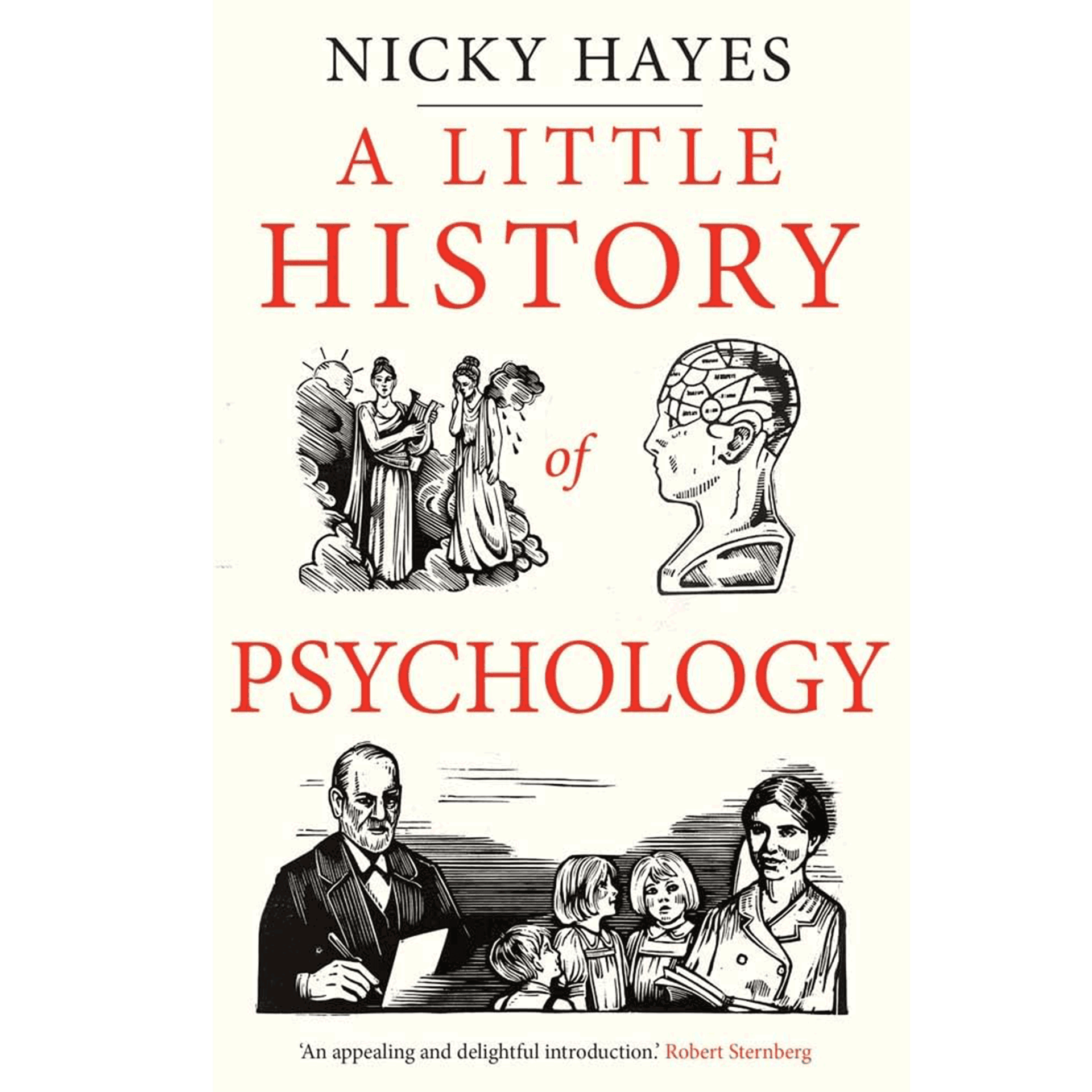
- Episode Title: Nicky Hayes - A Little History of Psychology
- Description: Psychologist Nicky Hayes discusses her book "A Little History of Psychology," covering key figures and concepts in psychology and the evolution of psychological thought.
---
Episode Highlights
Introduction
- Host Cole Smead introduces Nicky Hayes, a psychologist with over 50 years of experience and author of 25 books.
- The discussion revolves around the history of psychology and its implications for understanding human behavior.
Motivation Behind the Book
- Hayes was approached by publishers to write the book, allowing her to compile historical changes in psychology she's observed over decades.
- The book comprises 40 bite-sized chapters, making complex topics accessible.
Key Themes in Psychology
- Logical vs. Human Decisions
- Historical thinkers like Plato and Aristotle emphasized logic, but Hayes argues humans often make decisions based on emotions and social context.
- The contrast between human intuition and logical reasoning is explored, highlighting the limitations of technology in understanding emotional nuances.
- The Influence of Historical Practices
- Discusses bloodletting as a historical medical practice and its relation to contemporary investment practices, likening passive indexing to outdated methods of treatment.
- The Evolution of Psychological Thought
- Cartesian Dualism and Hobbes: Explores the shift from a religious and fixed view of humanity to one that acknowledges adaptability and learning.
- Helmholtz’s Contributions: Introduced measurement of mental characteristics, challenging the notion that the mind was unstudied.
Critique of Freud
- Freud's concepts of the unconscious and the impact of societal taboos on sexuality are discussed, as well as his overemphasis on sexuality as a motivator for behavior.
Importance of Talking Therapies
- Joseph Brewer introduced the concept of the "talking cure," highlighting the therapeutic value of discussing one's problems as part of psychological healing.
The Development of IQ Testing
- Alfred Binet's work on measuring intelligence was initially politically motivated, leading to misuse and eugenics in broader societal contexts.
F.W. Taylor and Labor Productivity
- Taylor's experiments highlighted the alienation of workers treated like machines, emphasizing the need for human connection in the workplace.
Gestalt Psychology
- Explores the contributions of the Gestalt school and key figures in the understanding of perception and insight in both humans and animals.
Ethical Concerns in Psychology
- Little Albert’s experiment is cited as a significant ethical failure, raising questions about manipulation and informed consent in psychological research.
The Role of Kahneman and Tversky
- Their work on system one (intuitive) and system two (deliberative) thinking informs our understanding of decision-making processes, particularly in high-stakes situations like investing.
Mental Disorders and Over-Medicalization
- The conversation highlights the historical treatment of mental illness and a concern about the current trend of pathologizing normal variations in behavior, particularly in children.
Final Thoughts
- Hayes emphasizes that psychology should focus on human flourishing and the positive aspects of mental health, while also acknowledging the darker chapters in its history.
Closing Remarks
- The host encourages listeners to explore Hayes’ book, "A Little History of Psychology," and highlights the importance of understanding psychological principles for personal and professional growth.
---
Key Takeaways
- Psychology's Evolving Nature: Over time, the field has shifted from punitive and restrictive practices to a focus on human wellness and adaptability.
- Human Decision-Making: Emphasizes the gap between logical thought processes and the emotional influences on human behavior.
- Ethical Responsibility: Acknowledges past ethical failures in psychological research and the need for responsible practices.
- Individual Differences: Encourages acceptance of diversity in human behavior and the potential dangers of over-medicalization.
Conclusion Hayes' insights offer a profound understanding of the human psyche, emphasizing the balance between historical context and contemporary practices in psychology. Her book serves as a guide to understanding the complexities of human behavior and the potential for flourishing in a supportive environment.
---
Listeners are encouraged to explore these concepts further by reading *A Little History of Psychology* and engaging with the discussions presented on the podcast.
Written by AI. May contain mistakes. Listen to the episode to check what was said.
Transcript
Automatic transcript. May contain errors.0:02You're listening to A Book With Legs, a podcast presented by Smeed Capital Management. At Smead Capital Management, we advise investors who fear stock market failure. You can learn more at SmeadCap.com or by calling your financial advisor.
0:21Welcome to A Book With Legs podcast. I'm Cole Smead, CEO and Portfolio Manager at Smead Capital Management. At our firm, we are readers and we believe in the power of books to help shape informed investors. In this podcast, we speak to great authors about their writings. The late, great Charlie Munger prescribed using multiple mental models on analysis. We analyzed their work through the lens of business, markets, and people. Today, we will study the history of thought about really how humans learn, adapt, and deal with the issues that arise in our world. Nikki Hayes is joining us to discuss her newly released title, A Little History of Psychology.
0:59A little bit about Nikki, for those of you that aren't familiar with her. She's been involved in psychology for over 50 years and the author of over 25 book titles, including What Are You Thinking? Your Brain and You? and Fundamentals of Social Psychology. She is currently the president of the British Psychological Society, where she also was awarded the award for distinguished contribution to the teaching of psychology in 1997. She was also elected as a fellow of the UK Academy of Social Sciences in 2022. Nikki, thank you for joining me today. I just want to start this off. You've obviously written a lot of books.
1:32You're very learned in your field. What caused you to write a history of psychology in particular? I suppose the short answer is that the publishers approached me and said, would I like to? And I went, yeah, I'd love to, because having been involved in psychology for so long and writing about it all the time, particularly writing entry-level books for people who didn't know anything about it but it's it's meant that I've kept up to date over the it's you know 50 years plus since my first psychology lecture when I went went to college when I went wow this is really fascinating and um and I've watched it change over that time and so when I got a chance to look at those changes and put them in perspective and go further back to the start It was just a dream, really.
2:23And the format the publishers use, which is a very strict one of 40 chapters of 2 ,000 words each. So it's usefully bite-sized and easy to read. I love that format. It's great because it keeps it in perspective. Yeah. And I think also for a history buff, you give a lot of information. I mean, there is like 50 topics that come to my mind that someone, if they want to go down the rabbit hole of learning a lot more in psychology, it's like you're giving these little, you're putting crumbs out there, if you will, so that the mice can follow behind. And I think that's a wonderful aspect of this book.
3:03I also think there's certain themes that run across the book, and we'll talk about some of those themes. In fact, the first one I'd kind of like to touch on because I think this is a hugely interesting question in psychology, but that also in our world we deal with, which is investment markets. You point out that in the history of psychology, like using Plato and Aristotle, the Greeks were very – they prized logic. That was the paramount issue for them. You point out, though, that, quote, in fact, we don't make logical decisions. We make human ones, and we don't have objective memories or perception.
3:36we interpret and recall experiences in terms of their human feelings, end quote. I completely agree with you on this. I think it's interesting in our day and age with our technology. We assume that we're in a C.S. Lewis chronological snobbery kind of a way. We assume we're at a point where we've progressed, evolved, etc., to a certain level, not attained prior. Some people might disagree with your statement on this. Can you explain this idea to our audience, though? Well, I think there's quite a lot of people around the world who would disagree with that, really, because in a sense, the logical world that we've created through computing and investment and other areas of life is really quite not only new, but quite inhuman.
4:26it doesn't really take account of the various ways that various loads of factors that influence our decisions, you know, and it doesn't allow for the fact that as human beings, our mental structures are all to do with being with other human beings and making decisions in those kind of contexts. We've evolved in small social units, as it were. We're really, really sensitive to the little nuances of conversation. But those aren't the sort of nuances which translate into formal logic at all. You know, if you're saying, well, I shouldn't have mentioned that because Carolyn is still sensitive about the fact that her husband left her 15 years ago.
5:15You know, that's not the sort of thing that an AI system can take into account. It is the sort of thing that a human being takes into account if they know about it. Well, yeah. But I also think, I mean, you're bringing so many things to mind. I think of a discussion with my wife earlier this week where I said to her, I said, hey, I don't think that's very logical. But to your point, it's experienced. And that's the difference between something being wrote and experienced or understood through looking back at experiences. Is that a fair way of thinking about it? Yes, I think so. But we also have to bear in mind, though, that we're probably the most adaptable animal that's ever been on the planet.
5:55And I think the brain adapts. If you look at, for instance, reading, learning to read, that's not something that people do easily. A child has to work quite hard at it. Once they've got it, it's easy. But it has to. And the reason for that is because it's reprogramming a part of the brain. And that part of the brain is the part of the brain that if you're not in a literate society, will be devoted to interpreting facial expressions. and what people are communicating. And what happens as you are a child learning to read is that some of it is redirected, if you like, reprogrammed into being able to interpret the written word.
6:42So we can adapt. We can adapt and change. But there's a limit to how far we can do that, I think. Sure. So you kind of touch on one of these early, I'll call it paradoxes of humans. And I found this terribly interesting. So you talk about bloodletting in your opening chapter, which I love this. So we did another podcast on another book, another UK person, Thomas Morris has a book that's called The Matter of the Heart. And why I think bloodletting as a practice in, I'll call it health or sciences is so interesting is because we did it for centuries. and in many cases, we couldn't actually prove that there was any benefit to it, but we still did it, okay?
7:27And so let's use bloodletting as an interesting way of thinking about this. Doesn't bloodletting expose the paradox we're talking about where other people did it, so therefore it was accepted by the wider group, let's just call it, but we didn't know whether there was any benefits, but the humans continued to do it. Doesn't this give a pretty good picture of logic versus experience? Well, only partly because don't forget that it looked as though it worked. You know, people who they when they were bloodletting, it was it was in response to fevers where people were flushed and very, you know, agitated and hot.
8:10And so when they had the bud removed, they became paler and more quiescent and things. So it looked as though it worked. And I think that's the thing, you know, that people, it's not just a question of only listening to what other people have told you. It's also a question of making your own sense out of what's happening. And so it had this kind of superficial, what we call face validity, that kept it going in addition to the fact that it was custom and practice. And you can never tell a doctor anything really unless they want to listen to you. Sure. I like that. By the way, I'll give you the reason why I found it so interesting is because I pointed out that I think passive indexing on certain levels from an investment perspective is like bloodletting.
8:58bloodletting. And so what you're saying is as long as it looks like it works, it does. And so I think that's an intriguing thought. I'll put that there, but it's interesting to think about. Yeah, but hold on, because when I say it looked as though it worked, doesn't mean it really did work. Just because the patient appeared to get paler doesn't mean they were better. And it probably weakened them quite a lot. And it was probably quite a bad thing to do. So it looked as though it worked, but it doesn't mean it really did. So let's, and I'm going to kind of work chronologically through the book.
9:32Let's start out with Cartesian dualism. Okay. What was the view at the time before Thomas Hobbes challenged this view? And what was Hobbes' perception to the contrary? Well, I mean, I'm not a philosopher, so I don't get the detail. But the general principle was that at the time, I mean, God made man and God made the animals and they were different things. You know, it was a totally no connection between them and that human beings were a soul incorporated in the body. So the soul was totally separate. And what Descartes did was to A, show that the body could be viewed as a kind of a machine, you know, to reinforce that idea.
10:17This is not Hobbes, really. This is Descartes, you know. Sure. to emphasize the idea of the machine, which was quite, it was new really, because people didn't think about this kind of separation very much. But he also did kind of reinforce the separation between human beings and animals, which I think was, you know, not really challenged until Darwin. Well, but so how did Hobbes, how did his view, you know, really change that? Because I think the dualism was kind of flipped on its head ultimately by Hobbes. Yes, I think it was. And I think really it was the whole learning thing. You know, the way that, if I've got it right, that because people were able to adapt and learn, that it wasn't a question of just, and to do different things, that it wasn't a question of just the universe being fixed, but we could also change it.
11:23I'm not sure. I'm sort of a little bit flaky on the early philosophers because it's not my subject. When I say that, because to your point, it was like treating it like it was a providential thing versus a human-experienced-adapted thing, to your point. Yes. And so it kind of brings this idea back to the idea of stasis. There was a stasis of idea at that time, Cartesian in form. And yet Hobbes was walking in and asking the question, is the stasis correct or is it more dynamic than we think? But the whole thing about empiricism, the whole thing that you could measure stuff, you know, and you could learn from it and you could maybe adjust it.
12:02That was the really key idea there. Yeah, I was just going to say from empiricism, like to your point at the time, there was the protruding thought was that the shape of your brain was what decided intelligence. It's funny, there used to be the old term, and you don't hear this very often anymore, but when I was younger, you heard the term egghead, right? It was kind of like the way to describe someone of intelligence, which is really just the end roots of the prior thoughts of the brain being large for intelligence. But isn't that how most thought was at the time, as though the brain was enlarged, and thus that was the view of someone's ability to think?
12:43I'm not sure that before the empiricists that people thought about the brain much at all there was certainly for a long time the idea that the core of being was the heart not the brain and the interest in the brain sort of came later really partly that's all tied up with Harvey and anatomy and studies of how people worked But the whole thing about people making decisions wasn't an area that people invested in at all. I mean, the Catholic Church didn't want anybody to invest in that one, obviously, because it wanted to make all the decisions, you know, for its people. Sure. So you're talking about the whole change in mindset that came with Protestantism and with Hobbes and empiricism and all those kind of things.
13:42And they all happened at the time of the Renaissance and continued to grow after that. But before that, people were certainly people. And so they were making sense of their own experience, but largely in the way that they'd been taught. you know human with the body as the seat of the soul and it's all about the soul really and so on it's worth pointing out though that that only applied to about a quarter of the world and that you know very large parts of the human race as it were didn't Chinese Indian and so on didn't subscribe to any kind of belief of that sort I was gonna say let's talk about Herman von Helmholtz, he had a strong belief in the interpretation of our sense versus the senses themselves.
14:34How was his view of this? Because again, you're talking about like what people have been taught versus what he's perceiving and what he gets a sense of. But again, he has to go from this sense to an actual theory of belief. Yeah. I mean, now we are on psychological grounds and I'm happier here. But yes, I mean, what Helmholtz did really was to open up the idea that you could measure and study and measure mental characteristics. And he did that almost as a byline. He was such an incredible inventor and investigating electricity and all sorts of other things that were new at the time. But he opened up that area of inquiry because before that, you know, the mind was considered to be unstudiable.
15:22It wasn't material and therefore you couldn't study it. And he showed that you could study some things, you know, you could measure perception. I mean, it started perhaps with Descartes, but it was really developed by Helmholtz with his inventions of different forms of machinery. I've seen some in the basement of the Science Museum in London. They've got some incredible Victorian and pre-Victorian machines, which can all brass and, you know, ball bearings and things. but they can measure time to a hundredth of a second and things like that. They could do amazing things without the kind of technology we have now.
16:04Gotcha. And Helmholtz was a great inventor and one of the people who was actually able to do that. So one of the biggest names in psychology from a popular culture perspective, obviously, is Freud. I guess, what would you say Freud had right looking back now? And what would you just say, you know, Freud had, you know, some things unequivocally wrong? How would you critique Freud, you know, today? He certainly, Freud certainly had the idea of the unconscious mind right and the idea that people are often motivated by conflicts or, you know, that they're not aware of, motives that they're not aware of, emotional traumas or whatever.
16:53that's unquestionably that's so much accepted I think now that we'd find it hard to imagine people in any other way the the problem of sexuality is one of the things I'm not very sure he got right um and nor were quite a lot of his followers because well the way I think of it is if if if we were living in a society where eating was something you had to do privately and secretly, you'd get obsessed with eating, wouldn't you? You know, you'd think about it. It would be taboo. It would be one of those things that you kept secret. In the society he was in, sex was like that. It was one of those things.
17:30It wasn't talked about. It wasn't, you know, expressed. So not really surprising that he found a lot of his patients were kind of obsessed with sexuality or had issues of sexuality. And the other thing, which I think I do mention in the book, is the fact that most of his female patients had memories of being sexually molested as children. And what we have been finding over the years is that that was a practice that was much more common than we realise. And so it's possible. At first he thought they were telling the truth. And then he was convinced that they couldn't all be telling the truth. There couldn't be that much sexual abuse of children going on.
18:13so he he he thought well if it's not true it must be unconscious wish fulfillment and and hence you know that that fed into his theory about how sex was the prime motivator for everything i i wouldn't agree with that in in the slightest nowadays i think uh for some people of course it is but for other people it's different but the unconscious mind that was a big step yeah because to your point it's like he baked everything down particularly for men to be the Oedipus complex, as you noted in the book. And I kind of, I mean, I know this is an oversimplistic view of Freud, but my critique of him is it seemed like he was always mansplaining in his view of psychology, which was that like sex is God and therefore we can explain everything through sex, which I don't doubt whether there's some males that believe and think that.
19:03I just don't think that applies to all of humanity. And I think that was my primary critique of, you know, as I was reading your book of Freud. No, I agree with you. I think that's absolutely right. And I went to a very interesting lecture about Freud's inherent sexism as well and the way he regarded women. But unfortunately, what I didn't do was take notes and take enough notes to be able to draw from that information in my book, because I have made very sure that what I've said I can substantiate. But I was quite shocked when I read the original Freud account of Little Hans. And what you had there was a child who had been clearly traumatised by an event that had happened as he was out walking with his nurse.
19:49They had these horse-drawn buses and this horse had just collapsed in the street, made a lot of noise, and the child was terrified. And yet Freud had to convert that into a sexual thing. And it was very straightforward as far as I could see. You know, I read that whole account in the original and no, well, I say in the original, in translation, obviously. But yeah, it seemed to me it got twisted a lot to be sexual. Hi, I'm Cole Smead, CEO and Portfolio Manager here at Smead Capital Management and host of this podcast. If you enjoy this podcast, I'd like to invite you to check out SmeadCap.com.
20:28At our firm, we are stock market investors. We advise investors who fear stock market failure with a discipline that has proven success over long periods of time. Learn more about our funds at SmeadCap.com. Past performance is not indicative of future results. Investing involves risks, including loss of principle. Please refer to the prospectus for important information about the investment company, including objectives, risks, charges, and expenses. Read and consider it carefully before investing. Smead Funds Distributed by UMB Distribution Services, LLC, not affiliated. So let's talk about Joseph Brewer that worked with him.
21:05And what did Brewer bring that was different than Freud? The talking cure. What he identified, well, what he realized was that sometimes things get better just by talking about them. You know, sometimes actually being able to surface these things helps you. And that's the basis of an awful lot of counseling therapy nowadays. It's one of those ongoing insights. And people, well, if you had a society which assumed that the mind was always rational, there'd be no need for that. You know, once you know there's an unconscious mind and that what appear to be physical illnesses or physical problems can be solved by psychological treatments, you know, and they come from the unconscious mind.
21:57That's revolutionary in itself. And that's what Brewer brought to the party. And Freud worked with him, learned from him, you know, was they had a very positive relationship for quite a while. And I think that's that's really been one of the things that's helped us no end over the years. I was going to say could also the other thing that Brewer brought out was, you know, we noted earlier that the mind is highly adaptable. Doesn't also the talking, you know, the kind of the client as the center and the talking method that he brought, wouldn't that also allow the mind to think about how it needs to adapt?
22:40Is that a fair way of thinking about that therapy that he brought to the fore? It allows the mind time to like sort all the details out in one place. and get it in perspective and get it organised. And that's really very important. Absolutely, I agree with you there completely. I think that's what really, if you talk to psychotherapists and psychologists, often that's often what they're doing really is helping their client to restructure themselves cognitively, to reorganise how they feel about it and to get it all out and put it in perspective. and from then on they can find their own way. Sure.
23:22They can find their own solutions. So can you teach us a little bit about the history of IQ tests and while you do that, can you also explain the problem that Alfred Binet was seeking to solve in France that was similar to the IQ tests? Okay. I mean, it's riddled with politics, really, the IQ test. Binet, who started the whole game of trying to measure intelligence, was actually employed by the French government to... What they'd done was they'd set up special schools for kids who were what we would have called subnormal a few decades ago and now talk about having special learning needs or whatever.
24:06Sure. And what they did was to develop a scale based on what you could expect children to be able to do at certain ages. So at a certain age, they can say the days of the week. At another age, they can count to 100, you know, that sort of thing. And he developed a test based on that, which meant you could tell more or less how normal a child, whether a child was up with the rest of its peers or whether it needed special schooling. And the reason he wanted to do a test like that is because, quite unlike today, what the parents of France in those days wanted was the special schooling for their kids because it involved free board and lodging.
24:51They didn't have to pay for them and free education. So they were trying to coach their children into appearing less capable than they were. Bizarre incentive structure, yeah. Yeah. So that was Binet's contribution and that was quite valuable. But on the other hand, on the other side of the Atlantic, you had already a very powerful movement that was arguing that society. OK, America had been growing. It had had a lot of immigration and it wasn't always the promised land for everybody. And there were a lot of enclaves of very poor people. There was criminality. There was all sorts of things. And people were looking to explain that.
25:37And one of the popular theories right through the second half of the 19th century and after was that some people came from inferior genetic stock. and there were books and things that sort of illustrated that and some of which pretended to be real research but were found later to be a bit dubious. But it was very much a shared perception, the idea that there were some people who were more intelligent than others, that intelligence ran in families. And so when Binet found a way of apparently measuring intelligence and developing this idea of the IQ, It was seized on as being, here we've got a way of distinguishing all these inferior people, all these people who are, what was it, mentally retarded, mentally feeble, feeble-minded, that's the phrase that they used.
26:41And so they could argue. In fact, it says in the first edition of the Stanford BNA intelligence test, it says this will allow us to identify those people in society and prevent them having families. You know, it will contribute directly to making a better society. So the idea was it was a eugenic idea from the start in America and it was spread right across lots of societies. You know, it was common in Britain. It was common in, well, very common in Germany. I mean, Adolf Hitler was a great admirer of the advances that they'd made in terms of sterilizing people who were feeble minded so they wouldn't pass on their inferior genes.
27:28so it's very political it was all very very political and because it was political it was very difficult for researchers to investigate it who didn't already have a vested interest in it if you see what I mean. The other thing too you point out is the eugenicists that latched onto this because they could see that it was an ideal framework for you know implementing how they thought the world worked, which obviously, you know, could espouse itself in various ways, including, as you noted, like this is a pretty good framework for Adolf Hitler, who was obviously wrong, but he had at least some part of the scientific community willing to back the idea at some level in some perverse way.
28:10Let's I want to kind of pivot because you talked about stimulus. Can I just add to that last point? Because it wasn't just the scientific community. These ideas were really widely shared across society. Sure. I read a children's book called The Enemy, which is a follow-up to Daddy Longlegs. And that idea is explicitly talked about in there. And apparently that was a best-selling book up until the Second World War. They were very, very widely shared, these ideas. It wasn't just scientists. And one of the reasons why the concentration camps were such a shock to everybody was because it was, in a sense, their dinner party conversations that have come to life.
28:51you know oh it'll be much better if we get rid of these inferior people um what oh no they were doing it so it's not just scientists that one yeah no i agree by the way if i was going to add if i was going to add to that theory um how has that theory morphed to today is what i always think about and how that theory is morphed today is not a question of race because obviously we've proven that. It's not a question of like ethnology or anything like that. We now bake that question down to wealth. If you are wealthy, you should have children. If you are poor, you shouldn't have children because you're poor and therefore you could be wealthier without them.
Read the full transcript
29:33I think it's, and this is my own two cents. Obviously, this is not from your book. I think that is a miserable, terrible, hopeless way to look at the world. To give you, I don't know if you've ever seen the movie Idiocracy. It's kind of like idea ran amok for 20 years where all the dumb people reproduce because that's who reproduces supposedly, even though it's not statistically proven. But it's kind of like, what did society get to the end? And the funny part is, society actually starts adapting. They do smart things in the end. And so, I think this is a very interesting question because, to your point, how it's changed in discussion and dinner parties in science has been pretty marked compared to, say, 100 years ago.
30:12But it's showing up in other ideas that I think are still very damaging to human psychology and are damaging to the choices we make at a higher level, I would argue. So I agree with you. And I think humans find a despotic way to take these ideas elsewhere is what I've learned in my lifetime. My own research when I was in academic practicing was in social representation theory. And that's how people represent the world to themselves. And one of the things about that is it changes over time, but there's always this central core that doesn't change. And that's exactly what you're saying, I think.
30:49The peripheral aspects of the theory have changed. You know, it's not race. It's not this, something. But the central core that some people are inferior, basically, to others, that hasn't changed. Correct. I totally agree. And the idea that because someone doesn't have wealth, they shouldn't be able to do all the things that humans do to flourish, I would argue, is just insane. I want to jump to F.W. Taylor, who he looked at the law of effect via labor productivity. And I found this really interesting because this gets to a very human element. What were the experiments that F.W. Taylor ran? And what was the conclusion they drew away from these labor experiments?
31:32Well, his experiments were all about what we call ergonomics now, I suppose. They were to do with showing that if you actually got people to act like robots, you could get more productivity. His major study that he's famous for was loading pig iron into trucks, and they would only do a certain amount in the course of a day. and F.W. Taylor approached one of those people and said, do exactly what I say. Move when I say, stop when I say, do it exactly the way I say. And at the end of the day, that man had loaded four times the amount he normally would have done. But the problem there, of course, is that people don't like being treated like machines.
32:20And so although that had quite an extensive effect in terms of production line work and breaking it down into small units, what it also did was to really start the process of alienating people from their work so that they felt that anybody could do their job. There was no sense of pride in it and there was no sense of involvement, which was fine for the first few years while people were earning more money. But after a while it wears off a bit and you started to get discontent, unionisation, all sorts of other issues coming up. And that was the sort of lack of the human side. That was, as I say, treating people like robots.
33:06It was disregarding the fact that people are people and they like to take pride in their work and they like to be able to do things well. And so it wasn't until you got to Elton Mayo and Rothlisberger and Dixon that they started actually talking to people at work and making changes and found it made a huge difference. You know, you could increase productivity more effectively that way and in a more lasting manner. So the human relations side of work was something that came up maybe 20 years later. The study they did was with tea time, I believe it was like they gave the ladies more tea time. And what their takeaway was, was that it was the human appreciation was actually the change in labor productivity because they felt valued.
33:58That's right. It was it was the fact that somebody sat with them, talked with them, respected what they were doing. And yes, they gave them increasing numbers of tea breaks. When they got to having six tea breaks in a day, the girls complained. The women complained. They said, concentrate. concentrate but so it was all right up to a point but um but it was being listened to there was another time you know that uh somebody came along they were interviewing people in the factory and somebody came along complaining about the works canteen and how the awful how awful the food was and then he came back a week later and thanked them for for making such an improvement and they hadn't done anything but they listened to him you see that's the sort of thing that doesn't get taken into account when we're when we were talking about human beings at the beginning of this this conversation you do yeah so one of my favorite disciplines that you introduce is one of my favorite german words which is the word gestalt um i absolutely love the idea of gestalt but can you explain the gestalt school the three gentlemen that really created it um and can you teach us about the ape study that you kind of open this chapter with in your book yes well that was that That was Kola, who found himself stuck on this island.
35:15He was studying great apes, chimpanzees mostly. And it was at an outpost, I think, of the Berlin Zoological Society, something like that. And he got trapped there when war broke out. So he carried on with his studies and he started looking at problem solving and the way that they would appear to be thinking about things. You know, the classic study that I opened the chapter with was Sultan, the ape who, and he replicated this several times, he would suspend a banana from the ceiling of his cage and there would be boxes strewn around the cage, but none of them were big enough for him to climb on them and reach the banana.
36:01And there's a lovely description of how he sort of raged around the place, tried to reach the banana several times very cross and then he sat down and got very glum about it and then all of a sudden he jumped up and started piling the boxes one on top of the river and climbed on them and got the banana and what Guller was showing was that this was a sudden insight that the animal had been thinking this is at a time when people said animals couldn't think but the animal had been thinking and he got a sudden insight into his problem and he'd seen it and he solved it not by trial and error not a little bit at a time, but by seeing it and just doing it, you know, seeing the solution.
36:43And that's a facility that we have as human beings, which is understudied and underrecognised, I think. Sure. The ability, you know, we respect it when we see it. You know, we have many accounts of highly creative people having insight. But, you know, highly uncreative people can have insight too. It's all to do with, well, it's to do with a lot of things really, but it's to do with allowing the mind to cogitate and think about it. It's why we make decisions better having slept on them. Sure. I was just going to say the ape had a nice incentive. He was going to get a banana. Yeah, the banana was going to come to the ape no matter what, if he could do it.
37:22And so I think it also points out that, you know, and I think your book does a really good job of this. There's a lot of studies that look at incentives. So we think of like Pavlov's dog. There was an incentive and that caused us to understand the response. But also, I think the other part that you talk a lot about is the perverse incentives. In other words, humans will do whatever it takes to fight a negative problem or a negative event in their life, too. They will, in all ways, adapt to those negative events as well. Yes. I mean, see, this is where our disciplines disagree. I remember having a prolonged argument with my nephew, who is basically an economist, or at least was in this argument, who was saying how you get people to do things.
38:10And I said, well, how do you do that? He said, well, you give them a reward for doing things. I said, fine. How do you do that? And he said, you fine them if they don't do it. And I said, that's not a reward. And he said, yes, it is. And I said, no, it isn't. That's a sanction. That's not a reward. And it works differently. And it does work different psychologically. And we argued about this, yes it is, though it isn't, for about a 15-minute walk while he was walking me to the station. But it is a fundamental difference because there are some economic theories which treat it as if it's the same.
38:41And yet that was one of the positive things we learned from Skinner and the behaviourists, that actually rewarding people for doing the right thing is completely different from punishing them if they do the wrong thing, because there's nothing stopping them going off and doing something else equally wrong. You know, sure. And people respond much better. I still don't understand why the traffic control people don't use smiley faces on their on their signs that tell you you're going too fast. Sometimes you'll see a smiley face that tells you you're going the right speed. And that would be much more of an incentive to people than this than the frowny space that says slow down.
39:17Sure. Or rather than charging congestion pricing, they should pay people that go to the city at the times that there is no congestion. Yes, yes. Incentives, real incentives. That's right. We hope you're enjoying the podcast. You know, we work hard putting together this show, but we work even harder for our investors at Smead Capital Management. At Smead, we believe in disciplined investing, which is why the Smead funds have a proven track record of long-term outperformance. If you're an investor who fears stock market failure like I do and want to invest in wonderful companies to build wealth, we invite you to visit SmeadCap.com.
39:55Past performance is not indicative of future results. Investing involves risks, including loss of principle. Please refer to the prospectus for important information about the investment company, including objectives, risks, charges, and expenses. Read and consider it carefully before investing. Smead funds distributed by UMB Distribution Services, LLC, not affiliated. let's pivot because i want to go i want to keep on this theme to explain little albert i think this was so intriguing to me because i think it asks a wider ethical question that obviously psychology has had to deal on and i think we're now asking this question in a wider society so can you kind of you know tell the little albert story what what happened to little albert and what we can kind of draw from a wider human um understanding for this okay okay i mean i i think most scientific disciplines went through a major ethical crisis in the second half of the 20th century.
40:52Little Albert is before those ethical crises, but it's a horrifying story, I think. What they did, this was two extreme behaviourists. Well, J.B. Watson was, if you like, the behaviourist. And they were very opposed to the psychoanalytic approach, which basically said traumas and fears and things all come from hidden conflicts, usually sexual in nature, and they're all sort of manifestations. So what they did was they got this extremely calm 11-month-old child who was sitting playing with his toys quite happily in their lab, and there was a pet white rat that he liked to play with. You know, it just struck it and he found it very exciting.
41:39and then what they did was every time he touched a rat they hit a great big iron bar with a hammer right behind the child so the child startled being 11 months old fell over you know and generally was frightened and they didn't have to do this very many times before Albert would cry when he saw the rat you know first he would reach out and touch it tentatively and then they'd make this noise again And then he would start to cry when he saw anything white and furry. And basically they managed to turn a calm, phlegmatic child into a nervous wreck pretty well before his mother took him out of the experiment.
42:25And that was a shocking experiment to do. But they were jubilant. They thought it was brilliant. You can read their paper. I mean, it's online. They're so happy about it. They say, well, this is, you know, this shows that psychoanalysis is rubbish because Albert got his trauma from learning, not from, you know, from physical learning, not from any buried wish fulfillment or unconscious conflict or ediful conflict or anything like that. It's a horrible study. And it's one of the ones that shows really clearly that you can't trust scientists just to do their own thing without some ethical controls on them.
43:02I thought about Little Albert in the wider lens of like, I mean, here we sit in a world where we have very big businesses, particularly Americans and technology companies. And do I think they have built certain ways to affect people's decisions unequivocally, just like Little Albert? And the question is, do they like that? And does the wider society like that? And I think that's a I think little Albert's a picture of do we want people to be as known as as little Albert was known by the end of the study? Yeah. Yeah. And it's about choices. Are people choosing to do this? You know, I mean, there are people who choose that sort of thing to help them to recover from something.
43:43But they're also I don't know, you know, most of the people who have phobias about spiders have learned it from their parents who have gone. there's a spider, you know, they've learned it when they were very small. Children that were exposed to peanuts as children are less likely to get an allergy to peanuts. And even small dosing later in life causes their allergy to go away. To your point, the human adapts, but the human can also be manipulated based on its adaptability. Yes, yes. Although there's also a link as well with genetically modified peanuts, isn't there, on the allergy front, I think.
44:20in the sense that those sensitivities, well, I mentioned it to a dietician. She said, oh yeah, we know about that. And I said, well, why isn't it more widely known? But it's the, think of the lawsuits. Yeah, so Chomsky was very interesting. So I just, in full disclosure, I have two daughters who have dyslexia. And so I thought a lot about what Chomsky brought to the table as a linguist, where he's understanding linguistics and how the mind works based on linguistics. And to your point, so there's a term out there, and again, I'll use my experience with my daughters. There's a term out there that, to your point, though the mind isn't aware of reading when it's born, it uses other ways of deciphering what it needs to know, like you're pointing out in nonverbal communication, for example.
45:09The brain is fairly well wired to read versus a dyslexic child, their brain isn't wired the same way. and therefore reading is something they have to rewrite their programming in a way from thinking about their brain. Is that what Chomsky was getting at? Is that the brain is inherently ready to learn those patterns? You're equating language and reading. Okay. And they're not the same thing. Okay. A dyslexic child might have no problem at all with spoken language. And Chomsky was mainly about spoken language. Mainly about, okay. He was talking about the way that we can learn, we decode. Yeah, and that's what I was trying to understand, coding language versus coding reading, to your point.
45:50Well, coding reading is, it's like I said at the beginning, we have this part of the brain that has to be trained. You know, one of the things we know from brain scanning is the neuroplasticity, is the fact that the bits of the brain can be trained to do certain jobs. and in fact there's some researchers who who are training the brain to do all sorts of interesting things but um that we wouldn't normally do like be able to be consciously aware of temperature we have thermoreception we're dimly aware of temperature but not to the point where we can sort of actually use it consciously in the way we can use our eyesight but um so the brain is it's about training the brain to be able to understand those visual symbols and and that comes easier to some people than others.
46:36It always has done. But it's not a, that's not inbuilt, you see. I mean, people have only been reading for the last 500 years, 600 years. I mean, there's been scribes, you know, special people reading, but the general population hasn't been reading for very long at all. And I think what's happening with, I think, with dyslexia is that some people need much more training than others and don't necessarily get it at an early stage. Or they just find it very hard to do that particular bit of neuroplasticity, you know, that it's just very, very difficult. Sure. There's lots of theories about dyslexia, but there's lots of theories about all sorts of different aspects of the brain, you know.
47:27Sure. People got on fine for many, many, many years. without reading you know and a lot of people can function very well in our society without reading even though they cover it up you know but it's amazing how many people do have difficulties or dyslexia it's it's good that people recognize it because it takes the pressure off but it's how far it's a real disease and how far it's just individual differences i don't know we're all different let's go to solomon ash another problem is our role in a wider society and so his studies in the 1960s looked at us in a group can you explain how he used some of his studies to teach us about not as us as individuals but us in a group of people yeah what he what what I mean, the procedure was very simple.
48:23He had very obvious tasks, like, you know, you had to say which was the longest of three lines, which were very obviously different and you could see. And he would set people up in groups and every member of the group, apart from the one person who was the real participant in the study, would give the wrong answer. And he was looking at how people react when they're asked to give, when they're in a situation where they'll be the only person saying one thing and everybody else is a bit disagreeing. And to me, the important thing is the strain that it put people under. Even if they went along with the group it put, they were under strain.
49:05And if they chose to go along with what they believe is right, you know, what they could actually see, rather than disagreeing with them. the stress levels got through the roof you know and that that tells you an awful lot about people but it tells you how much it costs us to break consensus how much how important it is that we get along with people you know and and there's a lot of assumptions which are that oh people will just say if they disagree well no they won't people will only say if they disagree if it's really, really, really important and it matters a lot to them. It's certainly, they won't do it in just a focus group or something like that.
49:46Not if everybody else is agreeing with each other. And so I think we make a lot of bad decisions that way. We don't take that into account. When you're explaining a very natural need to conform, which again, like in our day and age, Nikki, I mean, we're so smart. We can't be controlled by those basic human needs. And And, you know, I would agree with you. But, you know, again, I work in the investment markets. And I think the need to conform is always out there. And yet we treat it as though it's been kind of like fixed in a way. No, no. But it's very real and it's very natural. And I think, you know, we like to go through our lives without having to disagree with other people.
50:29You know, I mean, it's as simple as that. And I think that's part of us being social animals, you know. It's part of us being able to get on with other people. And part of getting on with other people is not necessarily confronting them directly. Sure. And it's a problem in organizational life, I think, because people will disagree, but they won't say what they will do is mutter behind the scenes and go and influence other people, you know, covertly. Yeah. If you want to find a spouse or a mate, you don't go find someone that disagrees with you. That's just not how you go about life. It's just absurdity to believe that people would go find a spouse by doing that because you typically want to be around people that make you feel good.
51:14And that's agreement that causes people to feel good. So I want to pivot slightly to the idea of monotropy, which, you know, why did Balby – why did he believe in this idea? What was the experiment that came out of this? because, you know, he hit on something, but he didn't hit on the exact truth, but he kind of hit on a partial truth in this process. Yeah, I think so. And it goes back to the mechanistic ideas that, you know, the behaviors that, you know, mother love comes from, and affection comes from feeding and feeling good, you know, because you've been fed and made comfortable. And there were studies, the monkey studies, that showed that that wasn't the case, you know.
51:59where they had two wire monkeys, but one was covered in terry toweling and the other one fed it, but the baby monkeys would cling to the toweling one and use it for security. But that was a very mechanistic approach to, you know, to understanding relationships. And what Bulby was drawing on was other research with animals, which was about relationships, which was the imprinting stuff. You know where you've got a mother hen and you've got little chicks following her or a goose or a duck and you've got little ducklings follow them around? Because that's a very rapid bond that's made almost as soon as the things are hatched.
52:46And it's a survival mechanism because they can walk around as soon as they're hatched. And if they didn't have that, they'd probably wander off into the undergrowth and get eaten by predators. So, but it's, that was the model that Bowlby was taking. And when he was, when he was working after the war, where there were an awful lot of orphan children, there were a lot of children whose family bonds had been disrupted. And there was also, in the 50s, a big moral panic about juvenile delinquency and, you know, rebel without a cause and all that sort of thing. older people not understanding the youth culture and so on.
53:29So he was trying to explain that. And he concluded that it was probably disruption of this important filial bond that was made. And that's monotropy. Well, the thing about monotropy is he thought that the bond was just with the mother, right? It is the case that human beings thrive by having attachments with other human beings I mean, that's important. What others like Rudolf Schaffer showed was that actually you can have multiple attachments and you can be just as fond of your daddy as you are to your mum, even if you're with your mum most of the time. If your daddy is the one who seems to be most sensitive to you and responds to you, you make your bond with them.
54:12So Bowlby's idea of monotropy was right in some ways and misguided in others. But he did open up the whole area of attachment and the whole idea that, you know, the kind of practices they were doing with orphaned children, you know, like keeping them in long wards without any contact with adults and all that sort of thing. That was not a good way to bring people up. He did give the scientific evidence for why that was a bad thing. So it was useful at the time. Sure. Because another field you touch on is like mental disorders and schizophrenia and kind of the history of how we've dealt with those issues in humans.
54:56Can you kind of give our listeners a view of the spectrum of how we used to deal with those, which I think you detail pretty well, versus how we deal with those today? And then I'm going to ask kind of a follow-up question to that, too, because I think it's a good way of understanding the history of that to then also understanding the history of other patients. So just kind of on the mental disorders, how did we deal with that eons ago or 200 years ago versus now? Basically what we used to do was to confine people who were, well, decree that people were mad lock them up in places, usually in chains or shackles give them really horrible treatments like purging them of the fluids that were probably making them mad but really keeping them in places that were as bad as prisons and in a lot of ways worse and it got challenged after the French Revolution with Pinel and his colleagues who decided, well, who used the revolution in social practices, all the new experiments, to remove the shackles, to start treating, quote, mad people as human beings with thoughts and talked to them as sensible and irrationally.
56:21And lo and behold, he had a huge success rate. Well, it's not really surprising knowing what we know today. But with schizophrenia, you see, very difficult. There are, if you go back far enough in history, schizophrenia didn't sort of exist. It was regarded just as another example of individual differences. Every village had somebody who was a bit strange and you just accepted it and they got on with their lives and so on. Whereas I think it's... One of the French philosophers certainly argued that it wasn't until you got capitalism that you got schizophrenia. I don't know about that. But certainly some people have been totally out of touch with reality and in the past sometimes they were saints, sometimes they were religious heroes, you know.
57:12As society got more structured, it came to be regarded as an illness Maybe it always was. I don't know. I'm not going to pronounce about that. But the principle, again, was confinement. They had these great big asylums that they kept people in. I used to work in one in the 70s in my vacations to do voluntary work in the psychology department. And there were huge, great wards of people, and some of them were acutely disturbed. and some of them weren't. But some of them had been in there for 30 or 40 years, you know, because they didn't, I don't know, know what was wrong with them. Sure. And they used to deal with it with electroshock theory, therapy, and often just, yeah, things like that.
58:02Sometimes brain surgery that turned them into vegetables, like one flew over the cuckoo's nest. Yeah, but I was just going to mention, That's one of my favorite references to a movie that touches on that. I mean, I think of that. It's one of my dad's favorite movies, just so you know. It was filmed in Oregon. And so I'll never forget. He's sitting with a psychologist and he's got like kind of, I'll call it inappropriate, but sexual playing cards. And he asks him all these questions and he thinks, gosh, this guy's so rational. He's like, the doctor asks, well, you know, is there anything I can do for you?
58:35And he turns over a card of a naked lady and says, yeah, doctor, where does she live? to kind of prove that he was insane, right? He was a weird person. And let me ask you a question off that because to your point, we're studying humans. You're pointing out that this might just be part of humans. We're gonna have weird people. It might not be an illness. It's just part of who we are as a wider group of people. My question is, as I think about children today, like I said, I have four kids. So I think a lot about children and there's weird children or there's issues with children and they all have their behavioral problems.
59:09in various forms. Would you make the argument or do you believe that we are over-medicalizing or maybe over-medicating children at times when the truth is they're just being children who behave in all kinds of ways? Yes, I absolutely do. I think the whole thing about neurodiversity is that we've started to pathologize individual differences. We've started to make what would normally be an individual difference into an illness or a syndrome or a problem. you know and I really worry about that a lot you know um I mean I think I give the example in the book about how kids that were hyperactive you know they used to send them out to get them to run around the playground four times and then come in and settle down to their work you couldn't do that now that would be that would cause a big fuss if you did but but now we medicate them and that's worse you know so yes I'm very I'm very very worried actually about the tendency to pathologize you know individual individuality you know there's a sort of norm that we're all supposed to subscribe to and that one of the things that makes human beings wonderful is the fact that we're all different you know we've all got different talents we've got different interests we've got different ways of thinking you know that's that's a great thing about people we don't want to squash it all down to it to some sort of standard stepford wives kind of robot anyway that's a hobby horse of mine as you mark Heather well no I agree but I think we also all have a purpose and so it's like the purpose of a child might not be known at the age of 8 or 10 or 14 but their purpose in how they were made is very important when they're 40 for all that energy and if we disguise that energy they will never reach their purpose as a human on this earth and that's a real danger in my opinion Carl Rogers called it self-actualization But yes, absolutely.
1:01:03I agree with you.
1:01:31at smeedcap.com. And don't forget to mention that you're a fan of the podcast. Past performance is not indicative of future results. Investing involves risks, including loss of principle. Please refer to the prospectus for important information about the investment company, including objectives, risks, charges, and expenses. Read and consider it carefully before investing. Smeed funds distributed by UMB Distribution Services, LLC, not affiliated. Yeah, so you touch on Kahneman and Tversky in one of your last chapters, okay? And I thought a lot about this because, again, on that hand, we're talking about the potential of humans.
1:02:09And I think of Kahneman and Tversky dealing with the reality of humans versus the actualization. So can you just briefly explain their system one and system two thinking and how those are different than each other? and then i i would ask the question to you that all makes sense we've read a lot about that they've obviously won prizes based on that and does it change anything ultimately other than knowing what we do okay first off system one and system two system one is the default mode system one is our normal way of thinking that doesn't involve any effort you know it includes jumping to conclusions, it includes doing routine things, it includes not really paying a lot of attention to what we're doing.
1:02:55And most of us go through most of our days in that kind of way, you know, with system one thinking. System two thinking is when we really hunker down and work things out and think about it and reason it. So, you know, what you would want if somebody was making an investment decision is that they're using system two thinking and really sorting something out but in fact what what mostly happens is that they're using system one thinking so sure and it's system one thinking that has the fallacies and the problems and the the heuristics that we use to which work perfectly well in a normal everyday social situation they were that's what i mean by them being human they they they they are very good for our lives what they're not necessarily so good for is when we're making technical decisions and I think it's no accident that Karnaman and Tversky published their papers in economics journals at first rather than psychological journals because you know psychologists largely knew we did this sort of thing they didn't really realise how important the impact was in the economic world you know it's all about being sequestered in your ivory towers I suppose but so that's What was the second part of your question?
1:04:17Has it changed? You know, most of, I'll call it the history of psychology, it's actually been able, there's a lot of it that's been able to improve our decisions or improve our thought or improve our understanding. So it has obviously changed our understanding. But I guess, you know, back to kind of the paradoxical question, can Kahneman Tversky actually change the humans? What they've taught us, can it change the humans at all? No. But it can change the way we deal with humans. I mean, it can change the assumptions we make about what people are capable of. You know, it's like I was saying, when I did this consultancy work with the AI people about decision making, what we did was to leave the logical need for the decision making.
1:05:07That could be done by the AI. the relevance for people and the application of it in terms of the real world, that had to be done by a person because the AI doesn't understand that. So you can team up AIs and people quite well. We've got machines that will do the automatic stuff for us. If you need to work out probabilities, better... Well, it depends on the consequences, you see. I mean, it's like that study that showed that if you present a problem where you've got a new medical treatment and it might save a third of the people with the problem. Or you say, well, we've got a new medical treatment and two-thirds of the people might die.
1:05:52People obviously go for the first solution, even though they're exactly the same, logically, because the one has the emotional nuance and the other doesn't. And what we have to do is to recognize that because sure as hell, the people who are trying to influence our decisions, advertisers and so on, they know all about it. They use it quite happily, you know. But what we need to do when we're making important decisions like investment is to bear that in mind, is to know what they are. How far we are doing that, I don't know. Sure. But if we need things like probability assessments, we should go to machines.
1:06:38And if we need things like human judgments, we should use humans. I agree. Let me ask you, I've asked people in very learned fields this because I think it's a perplexing way to understand people. It's a simple question, though. So here's my question. There's really two schools of thought in humanity today on a subject. You have the Elon Musks of the world or the late Charlie Munger who said that we don't have enough people in this world. And then you have kind of the Paul Ehrlich, you know, segment of the world and others that would be in that camp, too, that say we have too many people in the world.
1:07:16I guess this is purely this is obviously not your book, but I had to ask it subjectively to ask, like, where do you fall in that camp? Do you think we have too little people in the world or do you think we have too many people in the world today? Ouch. What I think doesn't have a solution because I think that we have too many people, but I don't know any way of not having too many people that is even faintly acceptable. Does that make sense? That makes sense. I think it's a more truthful way of putting it versus I think it's easy to punt to one side or the other and not explain your reasoning.
1:07:55You know, I mean, there are ways we should maybe encourage people to have fewer children, maybe encourage countries that are worried about getting underpopulated to import people from overpopulated countries. I don't know. You know, there may be ways of doing it, but mostly any solutions I can see would be inhumane and unacceptable. Can. So although I do worry about it. And I think, but you see, at the same time, I support even Elon Musk's ideas. I mean, the idea of if we are going to improve people's lives, it's going to be through technology. It's not going to be any other way, I don't think.
1:08:28So that's important. Well, because I think I touched on this earlier, but I think in reading your book, what I really, I think, you know, underwhelmed about just understanding the field of psychology. Psychology is ultimately the study of human flourishing, in my opinion. That's what I take away is like we're trying to understand what could potentially be diseases to the mind or impacts to the mind or how to create systems that, you know, cause people to have better working productivity because they're in a better environment. It's all about human flourishing. And so I thought a lot about that is like how do we cause humans to flourish, which I'm biased, but I would say if psychology does what I think it will do to human life, we'll have way too many people.
1:09:15because we'll actually make incremental changes in how we do things over time. And we're kind of propounding. And you touched on this. We're in the long run, we're running towards more people, even if we don't like it more than likely, because to your point, we're solving needs and things over time in a better way than some cases than we had in the past. And child death rates would argue that, for example, and other things like that. So I, now, by the way, a couple of things, I'm gonna ask you the question, like is there anything that we haven't talked about that you would like to mention but the couple things that like really good tidbits um i i think your your talk of carl young and his touch on kind of almost like uh spirituality or almost like a kind of an alternate dimension of of a little bit of what he dealt in i think is interesting i think we're spiritual beings i'll leave that on the shelf there but i think young was onto something that hasn't been fully explored it's the non-emotional the non-physical aspect of a human i think is very interesting I also love the fact that taxi drivers have larger hippocampuses, yeah, compared to other people.
1:10:20I'm like immediately like next time I see a taxi driver, I'll say, hey, I really like how big your hippocampus is. It's crazy. It is the neuroplasticity of the mind, to your point. So those are great tidbits that I want to mention for our listeners that they'll love in the book. They're great stories and understanding, you know, how humans adapt and the interesting parts of where we can go in psychology as well. But what else do you think we didn't talk about that you would love just to mention to our audience for your book? Well, I think there was the MKUltra things, you know. There was the abuse of psychology that took place during this Cold War.
1:11:03I think that's – I agree with you. Psychology should be about flourishing and is about flourishing. For me, the most important development in the last 50 years that I've lived in psychology is positive psychology, is, you know, the way that we have brought together the better aspects, you know, positive emotions, positive ways of going about living our lives, you know, flourishing, as you say. And I think that's really key. But we shouldn't try and pretend that the negative things didn't happen, you know, like little Albert or like the Cold War experiments. I think they're important. But can I say one thing about this?
1:11:48It's a little history of psychology, and it's my take on that little history. And I'm quite sure that there'll be things in it that other people say, oh, I don't agree with that, you know, because academics will always argue about everything. Um, so it is, it's, it's, it's, as I see it and I've done my best to explain the ideas rather than boring old who, who had what meeting and, and so on. But, um, but it's psychology as I've seen it and experienced it rather than a definitive history. Sure. And I, and I think as, as someone like us, where we're liberal arts thinkers and I always tell people, you know, um, we're trying to learn a little about a lot.
1:12:29I think your book does a wonderful job of kind of carrying us through the anthology of that. How did we get from point A to point B in psychology? You know, to your point, how have we adapted to more of a positive psychology compared to the, oh, let's lock them up. We think they're a problem to society and they're a danger versus how do we meet their needs in comparison. I think it's a this book is a great way to understand humans. It was how to think about the progress of understanding them. This is a copy of A Little History of Psychology. Our listeners should go out and buy a copy of that today.
1:13:03You will finish it thinking about the ways we adapt our approaches to improve the lives of people and those around us. And ultimately, like I said, I would argue your book is a picture of human flourishment in the end. For our listeners, if you enjoyed this podcast, go to Apple, Spotify, YouTube, or wherever you listen to a book with legs. Give us a review. tell others about books and great authors like Nikki that we get to meet the world and really address our understanding of this world with. For our tribe, if you have a great book you'd like to recommend, you can email us at podcast at smeedcap.com.
1:13:36That's podcast at smeedcap.com. You can also send your suggestions to us on X. Our handle is at smeedcap. Thank you for joining us for A Book With Legs podcast. We look forward to the next episode. Thank you for listening to a book with legs, a podcast brought to you by Smead Capital Management. The material provided in this podcast is for informational use only and should not be construed as investment advice. You can learn more about Smead Capital Management and its products at SmeadCap.com or by calling your financial advisor.
From the publisher
In this episode, psychologist Nicky Hayes discusses her newly released title, "A Little History of Psychology," which offers an engaging overview of key figures and concepts when it comes to the study of the mind. Hayes explores how psychological research has been applied both positively and negatively throughout history while focusing on the evolution of psychological thought and practice.


