
In short
A Book with Legs: Episode Summary and Insights
Podcast Details
- Title: A Book with Legs
- Host: Smead Capital Management
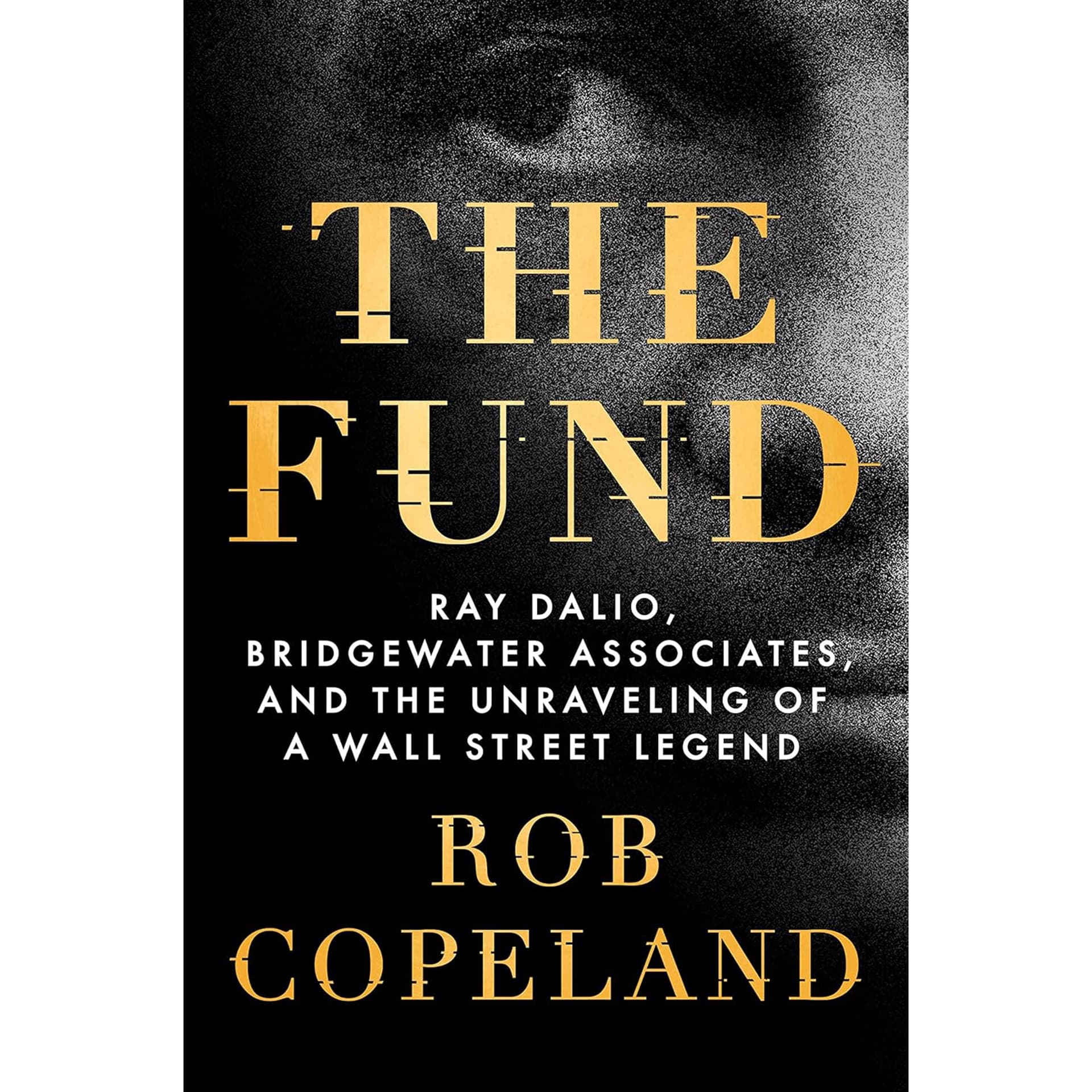
- Episode Title: Rob Copeland - The Fund
- Description: This episode features Rob Copeland discussing his book, "The Fund," which chronicles the rise of Ray Dalio and Bridgewater Associates, a prominent hedge fund.
Key Themes and Discussions
Introduction to the Episode
- Host: Cole Smead, CEO and Portfolio Manager of Smead Capital Management.
- Guest: Rob Copeland, finance reporter and author of "The Fund."
- Objective: Explore the intricacies of value investing through the lens of Dalio's principles and Bridgewater's strategies.
Rob Copeland's Background
- Former hedge fund beat reporter at the Wall Street Journal.
- Recognized for investigative work on Bridgewater Associates.
- The book explores both the financial narrative and the personal dynamics surrounding Dalio.
Ray Dalio's Origin Story
- Dalio's Narrative: Claims a humble beginning, with roots as a jazz musician's son and a golf caddy who learned about investing through rich clients.
- Copeland's Insights: Discloses omitted details in Dalio's story, including connections to wealthy families that aided his early career.
- Key Concept: Wealth and intelligence are often conflated, leading to public adulation of successful individuals without acknowledgment of their true starting conditions.
Bridgewater's Foundational Strategies
- Early Operations: Initially began as a research firm offering economic insights rather than functioning strictly as a hedge fund.
- Advisory Focus: Emphasized risk management and hedging strategies over aggressive wealth accumulation.
- Clientele: Attracted major corporations and wealthy families concerned about preserving wealth.
Dalio's Economic Outlook
- Predictive Nature: Throughout his career, Dalio consistently forecasted economic downturns and crises, which garnered both attention and clients.
- Investment Philosophy: Positioned himself as a protector against impending calamity, making his firm an attractive option for those fearful of market fluctuations.
The Evolution of Bridgewater's Funds
- Pure Alpha Fund: Focused on extracting alpha through systematic investment strategies and economic principles.
- All Weather Fund: Created to provide stable returns across different economic conditions, reinforcing Bridgewater's ability to adapt to market changes.
Organizational Culture at Bridgewater
- Radical Transparency: All actions and decisions within the firm are recorded, creating an environment where feedback is constant and public.
- Management Committee Cycle: The process of bringing in new executive talent often resulted in public trials of their capabilities, resulting in high pressure and turnover.
Critiques of Dalio's Approach
- Principles vs. Reality: Dalio's principles, such as "pain plus reflection equals progress," often seemed difficult to apply consistently within the organization.
- Feedback Mechanisms: The rating system for employees led to instances of manipulation and bias, undermining the intended transparency.
Legacy and Impact
- Dalio's Marketing Genius: Despite a history of inconsistent performance, Dalio maintained his reputation and the size of Bridgewater through effective self-promotion and branding.
- Cultural Implications: The book raises questions about the cost of success and how wealth can distort perceptions of intelligence and integrity.
Key Takeaways
- Success Doesn't Equal Wisdom: Wealth accumulation does not always correlate with greater intelligence or moral authority.
- Cautionary Tales: The narrative serves as a guide for what to avoid when cultivating business culture and leadership practices.
- Complexities of Human Behavior: The interplay between personal ambition, organizational culture, and ethical considerations is highlighted throughout the discussion.
Conclusion Rob Copeland's exploration of Ray Dalio and Bridgewater Associates offers deep insights into the complexities of wealth, power, and human behavior within the finance industry. The conversation raises essential questions about the nature of success and the potential pitfalls of a culture driven by relentless ambition and the pursuit of wealth. The episode ultimately challenges listeners to reflect on their values in the context of investment and personal integrity.
Written by AI. May contain mistakes. Listen to the episode to check what was said.
Transcript
Automatic transcript. May contain errors.0:02You're listening to A Book With Legs, a podcast presented by Smeed Capital Management. At Smead Capital Management, we advise investors who fear stock market failure. You can learn more at SmeadCap.com or by calling your financial advisor.
0:20Welcome to A Book With Legs podcast. I'm Cole Smead, CEO and Portfolio Manager here at Smead Capital Management. At our firm, we are readers and we believe in the power of books to help shape informed investors. In this podcast, we speak to great authors about their writing. The late, great Charlie Munger prescribed using multiple mental models and analysis. We analyze their work through the lens of business, markets, and people. We're going to talk about quite an interesting firm, maybe one of the most successful money raisers, I would say, in the history of hedge funds, one of the most interesting characters from an executive and a firm to lead that.
0:58We're going to be talking to Rob Copeland on his book, The Fund, which is really the story of Bridgewater and Ray Dalio. A little bit background on Rob. Rob is a finance reporter for the New York Times. He was previously the longtime hedge fund beat reporter at the Wall Street Journal and also covered Silicon Valley and the hidden worlds of the wealthy and powerful. His front page investigation into Bridgewater won a New York Press Club award. He also has won an honorable mention twice by the Society of American Business Writers, was named a News Media Alliance rising star. He has also appeared on ABC's Good Morning America, NPR, and other major networks.
1:33More importantly, I'll throw this out as like your newest one to add to the role, is Rob was also a guest for a fireside chat at the Arizona Fund Manager Association's Lift AZ event here in March this year, and which we got connected with our common friend, Jack Selby. So Rob, I really appreciate you for doing this. Thank you for having me. So just to start out, you know, you You were the hedge fund beat reporter, so I make an assumption of why you wanted to talk about Ray Dalio and Bridgewater. But, I mean, there's a lot of investigative work that I took away from this book. You had a lot of conversations.
2:08You talked to a lot of people. What made you wake up one morning and say, this is it. This is where I'm going to spend my time writing a book on. Well, it's a bit of me and it's a bit of him. So I started my career in business journalism at a hedge fund trade publication. called Absolute Return. And Bridgewater is and was the world's largest hedge fund. So I knew what Bridgewater was, and I had heard of it, but I don't think that the public necessarily knew as much. And then over the course of the past few years, really the last five, six years, Ray has become world famous for what he calls his principles.
2:46And so he's become more and more of a sort of celebrity guru figure. So when I come to the story of Ray Dalio and Bridgewater, I think of it as much of a story of finance. I think of it as a story of, you know, sort of our era, where if a billionaire tells you that he knows how you should live your life, a lot of people say yes. when I think the other I just one of the great mysteries I love exploring when people get wealthier to your point the public or people around them ascribe a higher level of his intelligence than they did prior when they were less wealthy and I what I love about your book is as you think about wealth and intelligence or wealth and pragmatism they don't necessarily correlate like that and we'll get into that but I think that's a really interesting question that that I ask myself constantly as we're going through the book.
3:38So just kind of from a, you know, from a framework perspective, give our listeners just a background on, you know, how did Dalio grow up, you know, as a child, what was his upbringing? So I'm going to tell you two versions of this story. I'll tell you the version that Ray Dalio tells, and then I'll tell you sort of the version that I, that I uncovered for, for the book. So in the version, and there are similarities between them, by the way, there's always a germ of truth, even in fiction. So the version that Ray Dalio has said over and over again in his autobiography and hundreds of interviews, you know, on CBS This Morning with Gwyneth Paltrow, etc.
4:13What Ray says is that he's the son of a jazz musician, that he started, he grew up in Long Island with a very modest means, and that he was a golf caddy in high school and middle school, and that he picked up on the golf course, these stock tips, and he got his love of investing and found his way to Harvard Business School, started Bridgewater out of his two-bedroom apartment with almost nothing, and grew it through his own success and his ability to predict macroeconomic trends, grew it into the world's largest hedge fund. So that's Ray's version. And it is true, he's the son of a jazz musician.
4:53He did grow up on Long Island, but he leaves out two really important things from his origin story. One is that he, and I didn't know this, by the way, until he's never brought it up in any interview. He ingratiated himself to a very wealthy New York family as a teenager. And he became sort of their surrogate son. And he helped their grandchild, who was going through some struggles, helped sort of straighten him out. And that helped get him his start and his first investors. So it wasn't just total luck. There was some hard work but you know he got this huge leg up from this this very famous family and then the other thing that he never talks about is he married into the Vanderbilt Whitney family so his his wife from one of the most famous wealthiest families in in America so the story the origin story of Bridgewater isn't simply one of of gumption but it's also one of of this young man who really struck it struck gold with these two very famous American families when your other points to that are, you know, I think what I took away from Ray as a person and what he wanted to do in his life, you know, I mean, kind of like, where did he want to go?
6:05Those were intentional more than we probably can assume. In other words, like he was looking for opportunities. And to your point, those were two very early opportunities. And for our listeners, if you're not familiar with like the Whitney side, this is like New York Stock Exchange, you know, Hall of Fame type of personality and family looking back over the last 100 years. So Dalio was interested in the advice business. the one thing you mentioned on the stock tips that I have in common with Ray Dalio is yes, I've caddied at a very well-to-do country club. To your point, Rob, I got to caddy for Steve Ballmer while I was there.
6:38And we talked this like late, late 98. We're talking about Microsoft Network versus AOL at the time. It like makes you laugh to even think about that. And then I also got to caddy for Bill Gates' sister, Libby Armentrout, and she was just the nicest lady in the world. So I did understand that. I obviously went to the advice business. There was a touch of this that I was like, Like, gosh, Ray kind of makes sense because I've lived small pieces of that. But he goes into the advice business. And can you teach our audience initially what his advice business was? Who was he working with initially? Because now we know all about Bridgewater, but that's not how it started.
7:11It wasn't a hedge fund at the beginning. Exactly. And this is one of the more fascinating economic parts of this history, which is that Ray, after sort of some stop and go efforts at Bridgewater, he really starts it as a research shop. He's a very bright man. And this is, you know, the pre way before the computer era, he's sending out detailed faxes every day with macroeconomic research. So the first thing you can think of as from a marketing perspective is, you know, oh, he's not even trying to sell you something. He's just giving you ideas. And you can imagine how attractive that is to people.
7:47And the other thing is he's giving you advice on not how to make the most money necessarily, but he's advising you on what's called hedging, on how to sort of minimize your exposure and how to minimize your potential losses. And again, it's easy for us now to say, well, this is obvious. Wealthy people are scared of losing their money. But it wasn't obvious at all back then. And he signs up as some of Bridgewater's first clients, you know, big corporations who are just trying to not have their earnings, you know, go up and down and zigzag because of, you know, the markets and wealthy families who aren't necessarily trying to get so much richer, but are definitely very worried about the next generation sort of squandering the fortune.
8:32So, but even at this time, like to your point, he's providing advice and then he gets into effectively the futures market on, you know, selling commodity contracts and whatnot with some of these big corporate clients that he was able to pull in. But he had a pretty dour view of the world, even at that time, right? I think you talked a lot about during the 1980s that he had a pretty negative view. Can you teach our listeners more about that? And what, where did that come from? Was that just his view constantly? So this is fascinating. And it was a bit of a reveal for me. And by the way, as someone who has written a lot about hedge fund managers, it's not uncommon among hedge funds for them to sort of constantly tell you that danger is around the corner.
9:12Sure. And the solution to that is a hedge fund. Yeah. Or me. Exactly. Or that Walt Disney World says you need to take your family on vacation more. And by the way, we are a vacation destination. But what Ray does starting literally in the 1970s, so it's been going on now for 50 years, is he's just constantly been predicting calamity around the corner. And this has two main effects. One, it gets him a lot of attention from people like me, from journalists, because he's always willing to say, oh, there's going to be a great deleveraging or the American family is too indebted. He gets on the Oprah Winfrey show and just her third season in the late 80s.
9:58And this is all the way up to today, by the way. He's still predicting World War III, a civil war. So he's constantly getting attention as, oh my gosh, this very smart guy is telling you that there's bad things coming. And the flip side of that, it makes him directly rich because his solution is always, literally always, because there's danger coming, you should give me your money and I will help protect you. and he's been fabulously successful at that. So early on, Paul Tudor Jones gives him capital to run. Okay. And I'd never heard this story. This was like one of those, like it's kind of like reading a footnote in the financials.
10:35This was like one of those footnote moments, just incredible to think about this. So how did they get introduced? How did they start doing business together? And how did that all end between the two of them? This was a reveal to me too. I'd heard it for years that these two were friends. They are sort of contemporaries. And keep in mind that Paul Tudor Jones was for decades even more successful than Ray Dalio. He became very famous sort of predicting Black Monday. And now, later in their lives, Ray has leapfrogged past him. He's worth many multiples of Paul, though they're both billionaires, so I'm not too upset for either of them.
11:10It's a small problem. Exactly, exactly. But he very relatively early on in the story of Bridgewater, I found out that Paul actually sort of hired Ray as a consultant and said, why don't you try to design me a fund? And Ray designed him this fund based on these secret investment rules that he claims to have. And Paul actually rejected him. He actually said, this isn't useful. This isn't, I don't think that this will work. I don't think that it is, it's risk adjusted return is appropriate. And he threw it right back at Ray and kicked him out. It's one of those, like you said, it's almost a footnote, but it's one of the great, terrible decisions in my mind in Wall Street history is that Paul Tudor Jones could have hired the world's most successful largest hedge fund manager, but told him that he basically was worthless.
11:58And well, Ray gets the last laugh. Yeah. The other thing early on in the story, as you were talking about, you know, Ray's going out and telling this story of, you know, a very negative view of the world that, you know, the roof is, the sky is falling kind of story. You mentioned Wall Street Week with Louis Rukeyser. Okay. So again, I'm 40. My dad worked at Drexel. So I completely know what Wall Street Week is, but just, let's just say someone is 35 or younger. Could you kind of, you know, make sure our listeners understand what was Wall Street Week? You know, how valuable of a show was that to someone like Ray Dalio at that time?
12:35Well, this was way pretty CNBC or Fox business. And this was really the only, the one big, I mean, almost think of it like a late night show with great Wall Street investors. And the fact that Ray gets booked on it in the mid 80s is a very big deal. But it goes back to what I was saying earlier. He gets booked on Wall Street week because he's willing to predict this disaster coming around the corner in the early 80s. And that disaster does not come. So, it's sort of like if we had all remembered right then, this guy had a big busted call. His career might have turned out very differently. But instead, what happens, and again, history repeats, a few years later, everyone's sort of forgotten and he stopped mentioning that he had this huge failed call.
13:27In the pre-internet era, It wasn't like there was a YouTube clip of all these Wall Street Week episodes. It was just like, well, this happened and then years passed. Yeah, because you can still find clips. I mean, we've gone back and watched like Sir John Templeton's clips on Wall Street Week. I mean, to your point, this was the who's who. It was limited shelf space. It was a Friday night showing on PBS from Owings Mills, Maryland is where they recorded it. And Louis Rukeyser was obviously that, you know, he was a small G God in the financial media at that time. So Ray attracts pension customers.
14:02That's one of his earlier coups, I would say, from a marketing and a customer-based perspective. Why were these pension customers particularly attracted to him versus, say, other types of investors? I think you mentioned Kodak as an example. Was he really helping Kodak to do something they couldn't do otherwise? Well, that's a$20 billion question, really. In the late 80s, early 90s, this is the very early days of the hedge fund industry. And most other hedge funds at that point were funds that said that they could sort of shoot the lights out. No, sort of like a George Soros type guy, or even Steve Cohen, who always claimed to be able to read the ticker tape to sort of just feel where stocks were going.
14:45By the way, no disrespect to either of them, but that's very different from what Ray was promising. So he was promising that he had the ability, that he had these secret investment rules. They were automated and that he could apply them to your portfolio to sort of prevent you from losing a lot of money. And this was very attractive to something like a pension fund, which exists, you know, to be able to pay out its beneficiaries for decades, but doesn't necessarily need to double, triple its money in any timeframe. frame. So Ray goes out to them. His first client was actually the World Bank pension fund.
15:23And he signs them up. He's offering them a relatively inexpensive way to sort of assure, as he would put it, that they'll be able to pay out their beneficiaries. It's not until, frankly, decades later that other hedge funds figured this out at scale. Gotcha. Because the other person you mentioned, again, it's a small tidbit, but I think it's important for people to understand. You mentioned who is really kind of deemed to be the creator of what we know as the modern day hedge fund, which was Jones. And even in, because there's stories of like, you know, where Buffett and Jones are getting interviewed because, you know, Buffett was obviously running a hedge fund of his own, a GPLP structure.
16:07You know, to your point on the growth of the hedge fund industry, In 92, Bridgewater had$1.2 billion in assets, which was a big hedge fund at that time compared to hundreds of billions of dollars today. So I just say that because I think people look and say, oh, someone that's been big has always been big. And the industry has really never had the size and scale it has today. Would you say that's fair? Absolutely. And in fact, there's reams of data which will tell you that as hedge funds get bigger, their performance suffers. There's also a wonderful phenomenon that I've always appreciated as sort of a chronicler of the space, which is, you know, Ray starts Bridgewater, let's say that the fund that we're talking about now is maybe starts in the late 80s.
16:55Sure. There are tens of thousands of funds which start over this from the late 80s until now. You know, a few of them will wind up having great performance. Even if you just flipped a coin, you know, you will find a fund that performs, you know, 20 out of 25 years positive. And that fund will raise money off of that performance. But you haven't proven anything. You know, every year it continues to be independent. So the great question for me about Bridgewater and its terrific long-term track record was always, you know, did it get worse over time or was it just always a bit of a luck of the draw?
17:34Sure. That makes sense. So the early 1990s were still a period where market operas were becoming more aware of modern portfolio theory. And you discuss this in your book with concepts like alpha and beta. How did Ray use that new nomenclature to his advantage? That's a great question, first of all, because even if you're a finance guy now, you might have heard of alpha, which is the extra juice or the skill that you or I might have as a stock picker. Alpha would be the extra bit that you get over what is called beta, which is just the market performance. So if the market is up 10 % and my portfolio is up 15%, my alpha would be 5 percentage points.
18:21Now, when Ray starts his first main hedge fund, he actually doesn't use those names. He starts calling it just the top 5 % club. He calls it the top 5 % of his ideas. And that wasn't too attractive a fund for a surprising reason to him, which was that as it turned out, no manager is going to tell you I'm giving you my bottom 5 % ideas. this. So he comes up with a different name. He calls it Pure Alpha. He says, this fund is just Alpha. It's Pure Alpha. And that isn't 100 % true, by the way, but it's a great name for it. And so he just keeps talking about it. He says, we're giving you Alpha, Alpha, Alpha.
19:03And to his credit, he is part of a very small number of people who sort of bring this term Alpha into the forefront to the point where now, you know, it's all over the place. Sure. Yeah, because in comparison to the kind of risks he was taking, obviously you talk about how George Soros was, he was the known person in the hedge fund space at the time, but that was a very different bet mechanism. I mean, George was trying to find ways to make a lot of money in a very unique bet, but that wasn't what Ray was trying to do at Bridgewater in the Pure Alpha fund in comparison. Correct. So what Ray has always said is that pure alpha is based on his study of economic history and that it has these hundreds of rules and that no one person, let alone Ray, could go in and say, hey, we should go in and buy up, you know, a bunch of euros, bet on the euro or bet against this stock.
19:58that it's all based on sort of the interconnections between economies so that that way, you know, you can, if you're a pension fund, you can go to your investment committee and you can say, oh, we're not invested with, you know, one dude. We've got this, it's a huge investment system. And again, you know, I just have to harp on it. This is before the internet era. This is before Microsoft Excel. So this is an incredible discovery, frankly. We hope you're enjoying the podcast. You know, we work hard putting together this show, but we work even harder for our investors at Smead Capital Management.
20:33At Smead, we believe in disciplined investing, which is why the Smead funds have a proven track record of long-term outperformance. If you're an investor who fears stock market failure like I do and want to invest in wonderful companies to build wealth, we invite you to visit SmeadCap.com. Past performance is not indicative of future results. Investing involves risks, including loss of principle. Please refer to the perspectives for important information about the investment company, including objectives, risks, charges, and expenses. Read and consider it carefully before investing. Smead Funds Distributed by UMB Distribution Services, LLC, not affiliated.
21:11So then later he creates the All Weather Fund. You know, we talked about how he had this really negative view of the world, generally speaking. was the all weather fund just a chance for him to espouse his really negative view in a hedge fund structure? Is that how you walked away with it? Because as a reader, I thought, oh, he finally got what he wanted, like a bear market fund. It is. So all weather is, and it's now known as sort of a risk parity fund. It's essentially just an automatically rebalanced collection of what we now call ETFs. It's just, you have broad exposure to a lot of different markets so that You're never going to be too tilted in any direction.
21:52It is, to an extent, a bear market fund to the extent that, as even Bridgewater would say, it's designed to perform through any number of markets. You wouldn't want this fund if you thought the market was going up. You'd want a fund that would really benefit more from the market going up. Now, it's another thing, though, which is all weather is all beta. So he's got a fund called Pure Alpha, and then he's got this fund, which is essentially pure beta. So it allows him to capture to, as a marketer, say, I can do both sides of your portfolio. I can charge you a little bit less for this all-weather fund, which is just quote-unquote beta.
22:29And it's an incredible, incredible product because he can close Pure Alpha to new investment periodically. He can say, oh, I don't have enough money, but I don't have enough space for you there, but oh gosh, don't worry. I've got this other product for you. He then later sort of combines the two funds into an even third fund. And it's really sort of like a one-stop shop asset manager. And it's part of the reason why Bridgewater is able to eventually grow to be four times as big as any other hedge fund firm. Sure. So another idea I had kind of taking away from the book is I felt like there's a lot of times where Ray's interacting with people, whether it be colleagues or investors, and he's talking about things as like, hey, I've got wealthy doing this.
23:12and that's why you should do what I'm doing, except that, you know, the old saying is, you know, Wall Street has an incentive to sell you something, but you might not have the same incentive to buy it. On a two and 20 structure, Ray was going to get wealthier than everybody else, almost regardless, and they don't collect a two and 20. Did you get the sense also that there was that real detachment between what his incentives were and him kind of, I don't want to say maybe obfuscating isn't the right word, but conflating that with what his investors' incentives are. Does that make sense? Sure. Well, I have a few different answers for that.
23:45One is I can tell you as a finance reporter, it's always struck me that asset management is a great way to build wealth for the asset manager. Yeah. I'm not sure. Amen to that, by the way. I can speak to that. Yeah, exactly. So hedge funds traditionally charge 2 and 20. They charge 2 % of your assets under management every year. Plus they take 20 % cut of what you earn, even the beta, by the way, even just the market performance. You don't have to beat the market to be paying them a lot of money in performance fees. Now, what Ray does is, and this gets to be really so important as a part of his story, which is that because he's getting wealthier and wealthier, he's able to tell people, and he literally says this phrase to people in the book.
24:30He says, if you're so smart, why aren't you rich? He's saying that the fact that he's getting wealthier and wealthier is making him more and more of an authority on things in life, and not just, by the way, in investing. And in this way, he's one of the more relatable figures. He can even remind you of, say, former President Trump, who when he was running for president, he was saying, you should trust me because I ran all these very successful businesses. I can run the country too. Ray really has a similar approach, but just inside his own fund. Well, yeah, and I think when he was obscuring the idea of I'm wealthier, therefore I'm smarter, and the wealthier I get, the smarter I am than everybody, the way to profit in a society doesn't necessarily always require intelligence.
25:20It just means you found a way to profit in society. And I think those two things get confused very often, I would say, even by the public, not uncommonly. So here he is, he's getting wealthier. In his mind, he's smarter and smarter and smarter. And this begats, you know, a long discussion of the book. I feel like a lot of the book and maybe even as the author, I don't think you totally understood this because the reader walks away not understanding it. But these principles, he's espousing these principles. I'm wealthy. I'm smart. Here's my principle. So here's my kind of bizarre question. Were these principles or rules, were they just created as rules?
25:58Were they supposed to be guidelines or in many cases, they almost came off as cliches. How do you look at these ideas that he was saying as ways for people to go out and live and make decisions based on? He would be very offended to hear you call them cliches. I won't argue. I don't think he cares probably. No, I don't think he, well, he cares very deeply actually about his reputation. So after he becomes incredibly wealthy after he becomes a billionaire. Around 2005, he starts to search for sort of a higher level meaning in life. And he starts to come up with these things called principles. And he calls them nothing short of principles for life and work.
26:38And they start out as, say, five. There's about five or 10 of them inside Bridgewater. And then they expand to dozens. Then there are hundreds. And these are, as you would put it, these are aphorisms, essentially. and their instructions for how we should act. So what they come down to, and I'll get back to your point on cliche, is the greatest summary of these is actually a principle itself. One of his principles is that pain plus reflection equals progress. So that if we are willing to put up with some pain, then if we think about it afterwards, that it will sort of improve us and improve our lives.
Read the full transcript
27:16So the great fun of the book for me, frankly, is not necessarily just the story of his investing, but it's the story of these principles just running wild and how he applies pain plus reflection equals progress. Now, do I think that Ray truly buys into this all? My answer to that is I have to believe he buys into it because the cruelness of them and the way that he acts for the subsequent, for the majority of this book is it would be so monstrous for someone to act that way if they didn't fully believe in it that I just I choose to believe that he he believes but I truly don't know well and I think to your point I I don't think a reader or understander of his story to your point would say oh I don't think he believes in this but I think even you know through your writing it's it's easy to understand why Ray had trouble applying all these principles because it's like You say, hey, here's the things you need to know.
28:18And I think there was one part in the story where someone comes in and says, like, there's 10 commandments. There's 14 principles of these other companies. There's 200 rules in this case. It's almost not applicable because there's a lot of things that contradict each other. So how do you apply these principles? I think even for Ray, that becomes the trouble on a day-to-day basis. You think that's a fair way of putting it? Definitely. And by the way, the man who comes in and tells him that is not just anyone, it's the CEO of Bridgewater who says that to him. And you would think, by the way, for a man, Ray Dalio, who says that he's, you know, I can put up with the pain.
28:57I want the reflection. I want your feedback. Anyone can give me feedback. When he is given that feedback by his own CEO, by John Rubenstein, who was a top deputy to Steve Jobs at Apple, Ray just ignores it. And again, I find it very, very relatable as part of the reason why I love the book. And I think that it really has lessons for us all because, okay, if I were a multi-billionaire and I had staked my entire career on the invention of these so-called principles, I too would probably, my instinct would be to ignore the feedback. Why would I want to listen to you? You work for me. This is my whole reputation.
29:35This is my whole legacy are these principles. You know, it's funny. One of the reviews that I got on the book was, I think it was a New York Times review, actually, or New Yorker. It was said something like, this is a book where Ray contemplates retirement on page 70. They're basically saying I skipped his life story because I was more interested in sort of his and what he does after he's thinking about his legacy. And I would say, absolutely. That is what I'm most interested in is what would you do if you had achieved everything possible in life, every possible economic advantage? You had bought the most expensive home in Connecticut, and then you bought the second most expensive home that was next to yours and left it empty so that no one would live next to you.
30:22You honestly might act a lot of the ways that he does. You might just focus on your own reputation. And that's what I find so fun about this book. Well, to your point, it wasn't, you know, like he could do anything he wanted, but yet the, you know, running Bridgewater, the legacy of Bridgewater, that continued to be his biggest work regardless of the net worth. In other words, there was nothing that he could buy that would please or fill that legacy building. Who am I affecting? Where is this going? And how can people draw from my experience and my knowledge? And that drove him a lot. So you mentioned a little bit about the management team.
30:58So can you teach us about the management committee or what you call the MC cycle at Bridgewater? This was just intriguing. So in order to explain that, I think it's important just as a brief reminder for anyone who hasn't read the book, and obviously everyone should. You should buy 20 copies each. It's even better with the 20th. Is that at Bridgewater, everything is recorded. So it's called radical transparency. And what Ray and Bridgewater say is that things at Bridgewater are more open and that decision making is public to everyone inside Bridgewater. So keep in mind that everything, even this conversation would be recorded right up to the management committee, essentially the board of directors for the company.
31:42And so ostensibly, this is an opportunity for, you know, sunlight is the best disinfectant, that everyone can see why we make decisions and you can agree or disagree, but at least you know, right? But in practice, what Ray starts to do is what others call the MC cycle, the management committee cycle, which is he will bring in an employee to be, say, CEO or to be a top deputy to him, put them on the management committee, make sure the cameras are rolling, and then start to embarrass them. Start to give them tasks that they obviously can't do. Start to put them on trials, on videotape trials, and to show people that they're messing up.
32:21And again, this is a principle. This is pain plus reflection equals progress. So there's a case very relatively early on where he brings someone in who's a friend, by the way, a friend of the firm, who's a former investor of the firms. And he brings him in to be CEO. And on one of his very first days, Ray says to him, he says, you're not CEO. He says, you're going to have to earn this. And of course, he never does earn it. And he's gone six months later. Sure. Did Ray really care about wilted peas in the cafeteria? So there's a bit in the book, well, there's a lot, frankly, about Bridgewater invents what they call an issue log, which is this constant running, say, spreadsheet of complaints.
33:11Because one of the principles is that there's no such thing as a small problem. And that applies even to wilted peas in the cafeteria. So one of the complaints that comes in on the issue log one day is that the peas in the cafeteria are looking a bit sad. And Ray does get involved. And he turns this into an excuse to investigate the cafeteria staff. I'm not sure that he actually, if you hooked him up to a lie detector test, cares about the peas. But he definitely does believe that wilted peas are a sign of some greater rot, no pun intended, in the organization. And I think, though I never say it in the book quite intentionally, what I definitely want the reader to think is, why is it that everyone and everything at Bridgewater can be investigated for rot, you know, except for Ray himself?
34:06Sure. The other thing I drew away, because you don't, and I appreciate this a lot, you know, a lot of times you read, you know, a hedge fund story, And it's really about the track record, the performance. Just so our listeners and audience know, you will not find that in the book. I mean, it's not part of the story. You touch on aspects of it, but to the bigger relation of the employees and the organization is really what you focus the discussion on. So I'm going to ask a question on this because I didn't know if you thought about this particularly. I was trying to ask myself that. I was even looking up like what is their track record and things like that.
34:38without 2008-2009 being a huge coup for them, would Bridgewater be who they are today? The answer is no. I would actually correct you on one thing, which is 2008 was a great year for them. 2009 was not because, of course, he was so bearish. Marcus were up. He never mentions that. Actually, in his own book, he skips right from 2008 to 2010, just conveniently forgets that 2009 happened, I would say it would not be as big a fund because the fact that Ray ostensibly, and I do get into this in the book of why I'm calling it ostensibly, the fact that he's so called able to predict the 2008 financial crisis gives him this incredible public reputation as sort of a seer who can see around the corner.
35:27And then for years afterwards, when he's unable to predict virtually anything, he's constantly able to say, okay, okay, but but when the big one came, when 2008 happened, I was right there and I saw it coming. So it becomes such a part of the narrative of Bridgewater more even, frankly, than the overall numerical performance. Sure. There's obviously a lot of people who work at Bridgewater. I mean, I just, the number of people that Bridgewater goes through, has, et cetera, it's just a massive number of people, there were also a lot of locations. I mean, it's like you have the headquarters and then you have, you know, raised properties and then you have like a Vermont house that people will retreat to and, you know, trying to take these all these all in.
36:17Part of your book was also in my mind, like a how to guide, like, or I should say how not to guide, how not to do things. You know, I think you tell a story of going up to the Vermont house for Paul McDowell. I just can't imagine. It's like, we're not talking about something 30 years ago in the 1980s, which all kinds of nefarious stuff happened back then. We're talking about in the last 15, 20 years that this stuff is going on. Was that, when you unearthed that, I mean, was that a head scratcher? Was that like, ah, I see this before. You know, this is just hedge funds. I'd love to hear your thoughts on that.
36:50This is part of the reason why I loved writing the book, frankly, is, and I'm a big fan of books about business and finance, but to me, this isn't really that. I'm a little, I can sometimes lose interest in a book when it just is a bunch of guys or it's almost always men, you know, sitting in an office talking about how smart they are or how they saw around the corner or even, you know, how they blew up. But in the case of Bridgewater, because the culture is so strange and because it's located in Connecticut in Westport, it's not in New York. And so many people sort of like left their families, literally left their families, destroyed their lives and sort of became a part of this greater organization.
37:31They spent so much time together. They went to Ray's house in Vermont, as you mentioned. They go to these retreats at the Mohawk Mountain House at a beautiful resort. Ray flies around the world with his friends, you know, chasing the giant squid and going scuba diving and going to the Western Wall. I love that you get to see Ray and this collection of characters in sort of outside of the office. So I had heard about these retreats. Actually, the first time I heard about Ray inviting staff to his house in Vermont, it was even stranger. It was that there was a paintball – they did a paintball tournament in Vermont where Ray had a paintball gun and was shooting the employees with it.
38:13So I thought, well, that's a little bit too on the nose, right? And then I heard this story that you mentioned, which is someone who's in the book, Paul McDowell, who's one of these classic MC cycle guys who's brought in, thinks he might be CEO and is then quickly embarrassed. He's an adult and he goes to this retreat and he winds up stuck sleeping on a sleeping bag on the floor while two other people in the gym, in Ray's gym in Vermont, have sex next to him. And again, this is a place of radical transparency, but Paul is forced to ask himself, you know, do I want to say something or do I just want to put up with it for the money and for a lot of other reasons?
38:56Well, I guess you'll have to read the book to find what happens. But so much of Bridgewater is the story of these small decisions of people who have a choice to follow sort of their own morals, their own values and sort of make their own thoughts. But they they make they come to a path in the road and they have to choose, you know, whether to do it their way or to do it to do a Bridgewater's way. Hey, I want to give a big shout out to everyone who's been working so hard on the show. You know, we recently hit the top 10 investing podcasts on Apple Podcasts and even number one in the business category in several countries.
39:34As you may know, this show is brought to you by Smead Capital Management. Smead Capital Management understands how frustrating and illogical the stock market can be. If you are searching for funds with a proven track record, give the Smead funds a look, or better yet, reach out at SmeadCap.com. And don't forget to mention that you're a fan of the podcast. Past performance is not indicative of future results. Investing involves risks, including loss of principle. Please refer to the prospectus for important information about the investment company, including objectives, risks, charges, and expenses.
40:07Read and consider it carefully before investing. Smead funds distributed by UMB Distribution Services, LLC, not affiliated.
40:17So when people would leave Bridgewater, it was not easy. I think you lay that out in the book so succinctly. Why do you think Ray would go after his former colleagues or these former employees like he did? And you give various stories to this. I guess my question I was asking myself is, isn't being rich enough? Like in other words, like we're really wealthy. Why trying to ruin the lives of other people when in many cases they're not even trying to seek to do what Bridgewater was doing? Well, isn't being rich enough actually could have been the title for the book, frankly. Maybe that'll be the paperback.
40:56It goes back to what is Ray's animating impulse, right? What is his motivation? Is it simply to become rich? Even he would say in interviews that he doesn't care about wealth, although I think his actions suggest otherwise. But there does become a point where he's really committed to not being Ray Dalio, successful hedge fund manager, but Ray Dalio, successful leader of men and women. Ray Dalio, inventor of these principles that will help you lead meaningful lives and meaningful relationships. So what strikes me so much about how aggressive he is to people who leave Bridgewater and frankly how aggressive he was to me in even writing this book is I don't believe it's because I or any individual employee pose any threat to his fortune.
41:49But together, I think that we all do pose a threat to his reputation and to this completely Alice in Wonderland through the looking glass version of himself that he's put out there. And if you have$20 billion and it would cost you only a few million dollars to threaten employees and journalists and just to make sure that no one ever has the sort of balls to go out against you, I think a lot of us would do the same. Well, I've seen a small piece of that, Rob. I ended up in Harold Hamm's book after we got bought out as a minority shareholder. I wrote him a personal note. We disagreed with him on price, but you know what?
42:30He played the game, such is life. You go on. and to see your thank you note end up in someone's book as they make fun of you, I thought, God, if I'm that wealthy, I don't care. Anyway, so I totally understand. But I want to pivot one more place because I was asking kind of a, I was trying to ask a second level question myself. You know, you talked about the pain plus pleasure. Dalio talked a lot about evolution, right? It's kind of like we're evolving. You know, these principles will help you evolve. Get somewhere you're trying to get. was that his core religious view in your opinion i mean would that would that make him like an agnostic was he the kind of person that you know had this evolution view but thought there was a god that was the one thing i was trying to get a sense of because the other thing i asked myself was was he trying to make a religion out of this in a way there was these principles he wanted to be a religion for some people and obviously it couldn't work out like that how did you look at I'll call it the religious or spiritual aspect of Ray.
43:31Well, he definitely demands a religious fervor for the principles. And the way that he talks about the principles is very similar to, you know, how someone would talk about, frankly, the Bible. It's like, let's just, he would constantly, if people disagree or people, if there was a decision to be made at Bridgewater, he would say, well, let's look in principles for the answer. in the same way that your priest might say, let's look in the Bible. I would say as a religious figure, though, he was very, very conscious of outlasting him, of there being something at Bridgewater beyond Ray Dalio. In fact, a big portion of the book is him trying to turn the principles into this automated software that will literally give you the answer to what Ray would have done after he is gone.
44:23So it's interesting. He is not a religious man, to my knowledge. He has a longtime partner at Bridgewater, Bob Prince, who is religious. No one has ever told me anything that Bob has ever sort of admitted aloud that he's sort of at these two great religions in his life, Bridgewater Associates and Christianity. But I would say it's just very striking to me, not just Ray, but tech leaders now, other billionaires, how much they want to be your whole life and your value system. How much Bridgewater becomes and the principles become sort of your Judeo-Christian values. It's one of the scariest things to me, frankly, about the billionaire class.
45:07And by the way, I'm not anti-capitalist. I'm not anti-billionaire. I'm not anti-success. But I am anti-you. putting aside your family or your religion or your culture or whatever and embracing your employers is. I think that's very scary. I write for the New York Times, but I'm not sitting here in a New York Times t-shirt. I don't walk around with a New York Times tote bag. This is my job. It's my employer. But I think it's very scary now how a lot of companies demand more. I agree. And it's an interesting thing. I mean, you mentioned the New York Times. I think of think of what the editors are going through at the New York Times right now.
45:43It's an interesting thing to think about for an organization. Does that make an organization better or does it not? I would agree. The other, you mentioned the system to kind of get this. They wanted to use like a Siri-like system. He was big into Steve Jobs. There's a lot of, I'll call it Elizabeth Holmes touches that not as the same as Elizabeth, the kind of sprinkles of that in your book that I think the audience will find very interesting. The other thing I wanted to mention on this whole uh, idea was the rating system. Okay. You know, the rating system was, you call that they were referred to as these baseball cards with, with dots.
46:17And it was like a positive or negative feedback system based on the employee. But you point out there were kind of two big flaws in the system. One, there was no independent testing to say, Hey, what's the validity to this system? But then secondly, at the kind of the hierarchy would say, well, you know, there's gotta be a kind of an Oracle or a top player in the system and everything would emanate from that. And I I think early on in the story, you talk about how Ray found out that he wasn't the top in that system. So he just like took that person out and put himself at the top and it didn't really fit the system.
46:51That's what also made me think more about the religion idea. I'm at the top, regardless of what your shortcomings are, I'm God. Well, that was such a tremendous reveal for me. And it's not a spoiler because I put it in the introduction of the book on purpose, which is that Bridgewater and Ray have this rating system where we should be constantly inputting data on one another. And I would say Cole is a good interviewer, or I could say right now in real time, he's a bad interviewer. And our numbers would adjust. And then eventually over time, in theory, this should reveal for everyone around us which of us is what they would call more believable at various attributes, at various skills.
47:33And so, when I found out early on – no, I didn't find this out early on, excuse me. When I found out as part of the reporting for the book that this whole system had actually been rigged from the start to make sure that Ray Dalio was the most believable in various categories, the most important categories, one sense I thought, oh, this is, I can't believe that's true. But I also thought, well, of course, like, of course, if everything else, if I were the founder of this system, I would want to rig it. So the interesting thing about that for me is I tell you that in the book on purpose in the introduction, I tell you it's rigged from the start, but I actually never mentioned it again.
48:14I need you to then see the development of this tool and to have it just always be, you're almost forgetting while you're reading the book, you know, wait, isn't this the same thing that is total bullshit? That's what I say, you sprinkle it. You did a really good job of sprinkling it throughout the book. You were leaving your readers breadcrumbs throughout the book and you're kind of following that breadcrumb path. And I think you did an excellent job of it because you're kind of thinking, oh, we're coming back to the system. And does it make any sense? And I think you get to the part where you talk about like Ferrucci, they bring in Ferrucci from IBM, who obviously created Watson, and they're still trying to systematize, you know, this whole concept.
48:52And Ferrucci's like, this doesn't make sense. You can't build an algorithm based on this. And it's effectively a problem that, you know, you cannot solve for mathematically is what I think I took away from your writing. It's 100 % that and even more than that, it is Elizabeth Holmes, as you say, there's a fraud aspect to this. The rating system is fraudulent. The rating system is horseshit. And in Bad Blood, in the great book about Elizabeth Holmes, she's sort of over and over again, she's breaking the law. She's like over and over again, ignoring, not doing the right thing. Bridgewater is so much more complicated and I think more fun just as a subject because he's always bending the rules for himself.
49:40It's very rare that Ray will come out and just flat out do the wrong thing. It just like sort of is a, it's a waterfall effect where it's like over and over again. And then by the end of the book, you, you hopefully realize that so much of it has, is an artifice that even, even is possible. He doesn't even know where the truth begins and fiction ends. So I would say based on your writing, I personally believe that Ray Dalio is the greatest sovereign wealth fund marketer in the history of the investment business. What would be your reply to that? I can't name a better one. I would also say I don't know of another investment manager that could, despite 15 years of pretty poor performance as he and Bridgewater have had, is still the world's largest hedge fund.
50:32And that comes right back to his ability to market himself, his ability to position Bridgewater as a firm that even when it does poorly is learning from its mistakes because pain plus reflection equals progress. You know, I've written about so many successful hedge fund managers who have one or two poor years and then they just all the money leaves. It's almost like the worst that Bridgewater does, the better they are able to do in fundraising because they say, well, we're pushing down on a spring now. You know, we're adding more data to our system. We're learning from our mistakes. I mean, it's a ridiculous argument, but it's one that they make and very successfully so.
51:11I never knew that Larry Culp worked at Bridgewater Associates. How did you find that out if it's so hidden? That's what the money's for. That's why I write the book. No, I didn't. So Larry Culp is now the CEO of GE. And I didn't even know when he was at Bridgewater and I was writing about Bridgewater for the Wall Street Journal. I didn't even know that. I didn't find out until years later. And it turns out that he had his own sort of showdown with Ray that ends up – you'll have to read the book to find out. What's so interesting about that too is, you know, I asked Larry for an interview. I told him about this book years ago.
51:48He's had all this time to prepare for this reveal in the book. He still has never mentioned Bridgewater, doesn't put it in his biography. He skips it on his resume like it never happened. But he was there. I mean, hundreds of people are aware of this. But because he got embarrassed and he's not the only one that Ray sort of executed professionally, but it's just another part of the myth-making is that even Larry Culp can just ignore it and just pretend it never happened. Sure. You thinking about Ray's legacy, you talk about how he thought about that and how he looked to others for that. I mentioned, you know, the whole idea of Siri and Steve Jobs.
52:29You know, he looked at Steve Jobs as someone who built this incredible legacy. Now, a lot of people that dig into the Steve Jobs legacy, you know, from afar, a good way of putting it, it's kind of like a professional athlete. They're good from far, but they're far from good. Steve Jobs was known to tear people apart, be very mean. But we all look and say he created this great product. Buffett was another person that you talk about Ray looking at and his advisors that said, well, you know, Buffett procured his message through these particular journalists. You know, I think it was four or five journalists that he procured his message with, you know, Carol Loomis would be one of those, for example.
53:04You know, how valuable and important was that to him to say, who are those people? Who are those places? And was that really successful for him like it was for Buffett or jobs in comparison. Absolutely. It's an aspect of this story that honestly gives me chills as a journalist is you can see Ray make an active decision to ingratiate himself to people like Charlie Rose, who, you know, he sort of had a fall from grace, but he was the guy, the interviewer, and Ray becomes someone who's very accessible to journalists, even to me for many years. He was very easy to get on the phone. He would always give his opinion.
53:45And journalists don't want to lose that access. They don't want to lose that ability. It can be very intoxicating, frankly, to talk to very successful people and have them answer your questions and appear to ask you about your life and your thoughts. The Steve Jobs comparison is interesting too, because he's probably raised number one role model. And Steve Jobs very successfully portrayed himself as, yes, he was a very hard-charging boss, but he said also, you know, I needed to demand this of people. I needed this in order to have these amazing products. Elon Musk now is the same way. I'm not sure I 100 % as a biographer always believe that.
54:28I don't think the ends always justify the means. I also know plenty of very successful people who are not like that, who managed to get great work out of people. Sure, you can be a demanding boss without being, you know, a dick as Ray so often is in this book. So at this point, it's almost become a sort of part of the myth of successful people that, you know, if you're not so awful to people, it's like, well, then you're not getting the best outcome. So there's a lot we didn't talk about. I'm going to throw some breadcrumbs out there for your book like you did. We did not talk about James Comey.
55:05My mind was blown. That was just incredible reporting. I love that, Rob. So I just, I never knew that. And I thought of Comey in a completely different light after reading your book, which I think is to your credit. We don't talk about the Adam Grants of the world who got kind of wrapped up in this Dalio hype and excitement. You know, we didn't talk about his want to meet Putin and, you know, his great views of Lee Kuan Yu and all these people that I think you really unearthed for me as a reader. I just wanted to throw it to you. Is there anything we didn't talk about that you think our audience and our listeners should understand about the book or what you wrote?
55:44I guess the one thing I would add is just, I really made an effort in the book to put you in the shoes of the people at Bridgewater and the people who follow Ray. And it's so important to me that people don't look at this as, oh, these are just some people who fell for it. There are so many aspects to Ray and the principles that are designed to appeal to all of us. This idea that you can reprogram your brain and your value system to live a more meaningful and a higher performing life. I really over and over again sort of challenge people not to read the book as just like candy. And there's a lot of fun, this Jim Comey and everything.
56:23But it's also just like a lesson of, you know, could you fall for it? Could you do the wrong thing over and over again? And I can just tell you as, you know, as the unauthorized biographer here, even I, there are so many moments in this book where I say like, oh, I could have, I could see myself doing that too. Yeah. With how many asterisks you had in your book, I cannot imagine what the lawyer's emails were in length or in repetition. So I want you to know how much I appreciated that. Rob, this has been a total treat. For our listeners, you should go buy a copy of The Fund, Ray Dalio, Bridgewater Associates, and the unraveling of a Wall Street legend.
57:06My biggest takeaways are that success at the expense of others can only go so far. And wealth doesn't make you smarter. It only makes you wealthy. Like I said earlier, I think it's an HR how not to guide as well for thinking about building a business, building a culture, things of that nature. If you enjoyed this podcast, go to Apple, Spotify, YouTube, or wherever you listen to A Book With Legs. Give us a review. Tell others about the books and great authors like Rob Copeland that we have the opportunity to understand the world with and through. For our tribe, if you have a great book that you'd like to recommend, email podcast at smeedcap.com.
57:43That's podcast at smeedcap.com. Send your suggestions to us on X, formerly Twitter. Our handle is at smeedcap. Thank you for joining us for A Book With Legs podcast. We look forward to the next episode. Thank you for listening to A Book with Legs, a podcast brought to you by Smead Capital Management. The material provided in this podcast is for informational use only and should not be construed as investment advice. You can learn more about Smead Capital Management and its products at SmeadCap.com or by calling your financial advisor.
From the publisher
In this episode, reporter Rob Copeland joins Cole Smead to discuss his book, "The Fund," which provides a detailed account of the rise of Ray Dalio and the founding of Bridgewater Associates, one of the largest hedge funds in the world. Copeland provides insights into Dalio's impact on the finance industry through his unique approach to economics and risk management.


