
In short
```markdown A Book with Legs Podcast Episode Notes
Podcast Title
A Book with Legs Description: This podcast, hosted by Smead Capital Management, explores value investing through discussions with authors whose works have influenced investing decisions.
Episode Title
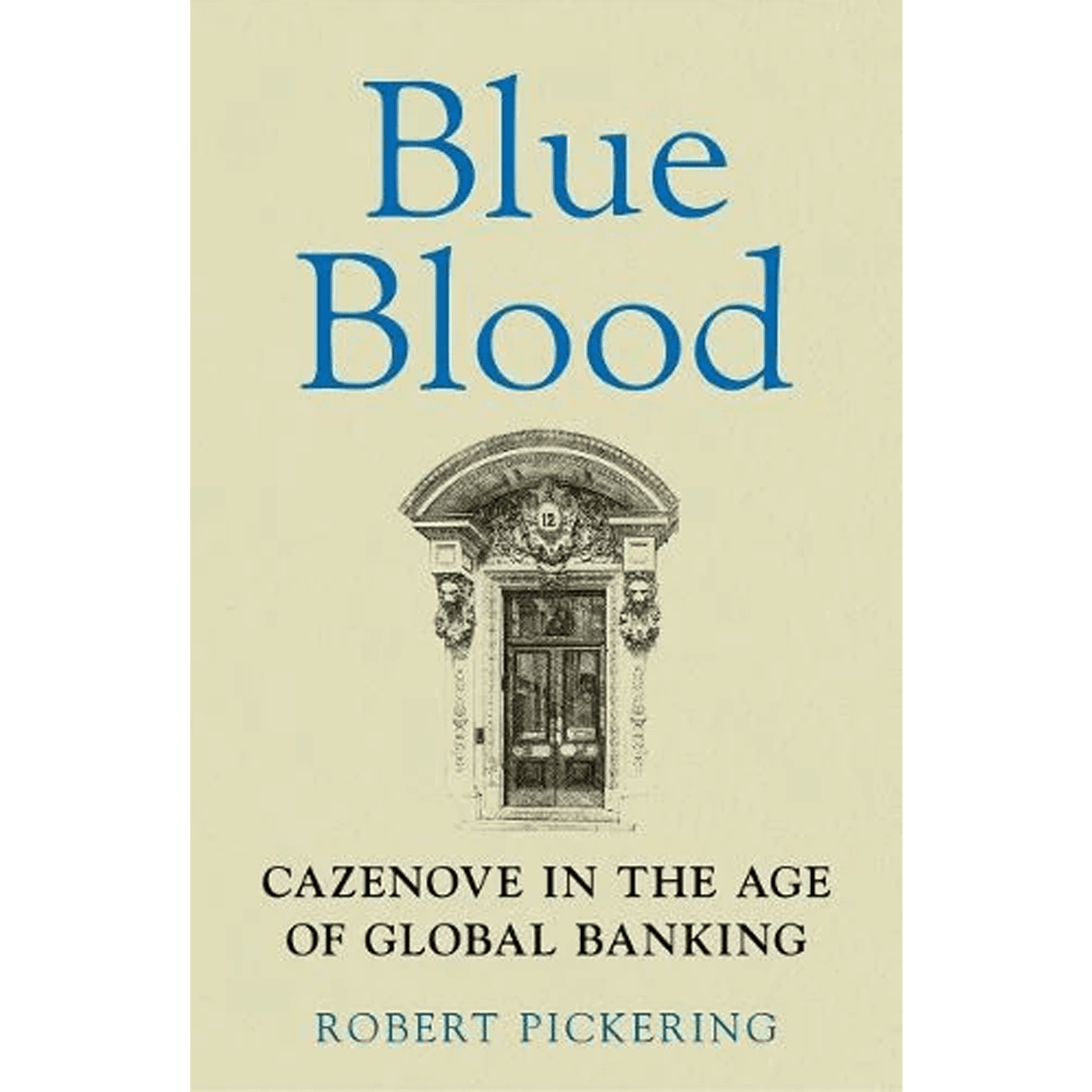
Robert Pickering - Blue Blood Description: Former Cazenove Chief Executive Robert Pickering discusses his book, *Blue Blood: Cazenove in the Age of Global Banking*, which covers the history of Cazenove and its transition into J.P. Morgan.
---
Key Speakers
- Cole Smead: CEO and Portfolio Manager at Smead Capital Management
- Bill Smead: Chairman and Chief Investment Officer at Smead Capital Management
- Robert Pickering: Former CEO of J.P. Morgan Cazenove and author of *Blue Blood*
---
Key Themes and Discussions
- Cazenove's Unique History
- Founded in 1823 by Philip Cazenove, the firm evolved from a family-run stockbroking business into a notable investment bank.
- Pickering highlights the firm’s social and professional networks, emphasizing its reputation and cultural prestige.
- Personal Journey into the Firm
- Overcame initial cold feet about joining Cazenove, which was characterized as an elite and family-oriented organization.
- Discussed mentorship experiences within the firm, highlighting the informal training environment that fostered learning through observation.
- Big Bang and Industry Changes
- The Big Bang in 1986 revolutionized the UK stock market, allowing outside ownership and abolishing fixed commissions.
- Pickering reflects on Cazenove’s decision to remain independent during this tumultuous period, countering the trend of consolidation in the banking industry.
- Corporate Broking
- Defined as advising companies on relationships with shareholders, including raising equity finance and handling mergers and acquisitions.
- Cazenove’s role in corporate broking was pivotal; they worked with a significant percentage of the FTSE 100 companies, establishing a dominant market position.
- Transition to J.P. Morgan
- Discussed the joint venture with J.P. Morgan in 2004, allowing Cazenove to enhance its capabilities while maintaining a semblance of independence.
- Challenges included cultural clashes between Cazenove’s traditional approach and J.P. Morgan's corporate culture.
- Change Management Insights
- Emphasized the importance of effective change management when transitioning from a family-run firm to a more institutionalized environment.
- Shared lessons learned about navigating organizational culture and managing stakeholder expectations.
- Personal Reflections and Anecdotes
- Pickering shares personal anecdotes, including experiences with notable figures like Sir John Templeton and Jamie Dimon, illustrating their leadership styles and influence.
- Noted the complexities of maintaining relationships in a high-stakes, competitive environment filled with personal and professional dynamics.
---
Key Takeaways
- Cultural Identity: Understanding and maintaining the cultural identity of an organization is crucial during transitions.
- Change Management: Effective leadership is vital in guiding organizations through significant changes, balancing historical values with modern demands.
- Networking's Importance: The significance of personal relationships in business, particularly in high-stakes environments like investment banking.
---
Closing Remarks Robert Pickering’s discussions around *Blue Blood* not only encapsulate the history and evolution of Cazenove but also serve as a broader examination of change management in corporate structures. The lessons extracted from this narrative resonate beyond finance, applicable to various industries facing transformative changes.
For more insights, check out the full episode on Apple, Spotify, or your preferred podcast platform, and consider exploring Robert Pickering’s book for deeper knowledge on the subject. ```
Written by AI. May contain mistakes. Listen to the episode to check what was said.
Transcript
Automatic transcript. May contain errors.0:02You're listening to A Book With Legs, a podcast presented by Smeed Capital Management. At Smead Capital Management, we advise investors who fear stock market failure. You can learn more at SmeadCap.com or by calling your financial advisor.
0:21Welcome to A Book With Legs podcast. I'm Cole Smead. I'm the CEO and a portfolio manager here at Smead Capital Management. At our firm, we are readers and book junkies. It can be said that leaders are readers, and we believe books provide us a great source of information for filtering what is and isn't important for us as investors. Investing is the last great liberal art and the best way to spend a lifetime of learning. This podcast is for readers, thinkers, business-minded people, and investors who want to grow their knowledge from great authors and their writing. Charlie Munger often talks about using multiple mental models and analysis.
0:53Our aim for this podcast is to help listeners test Munger's theory in business, markets, and people. Hosting this episode along with me is our chairman, chief investment officer, my father, Bill Smead, thanks for joining me, Dad. Thank you. We're going to talk about the legacy and final transaction of one of the premier stockbrokering turned investment banking institutions in the history of the United Kingdom. Robert Pickering is joining us to talk about his book, Blue Blood, Casanova and the Age of Global Banking. Robert was the CEO of J.P. Morgan Casanova 2008 and the CEO of its predecessor organization, Casanova Group Limited, from 01 to 05.
1:29He joined the firm in 1985 after working as a lawyer prior. Mr. Pickering is a senior independent director currently for Merix and was a senior independent director for Hikma Pharmaceuticals from 2011 to 2020. He was also a non-executive director for ETAO BBA, CLSA, and Neptune Investment Management. Before we get rocking with Robert, is there anything from his story that you're just excited to talk about? Yeah, my early era in the business and all the things that most people don't know now that are useful. Yeah, and I think what I'm looking forward to is I think his experience in watching Big Bang up close, where most millennials that are 39 years old don't even know what Big Bang is.
2:13It's kind of fun to get into a subject matter and create a lot of interesting discussions. So, Robert, thank you for joining us. We're delighted to have you. No, it's my pleasure entirely, and it's great to be with you. So to start us off, Robert, what inspired you to write this story? Well, it was something I'd meant to do ever since I left the firm back in 2008. And I kind of thought about doing it, but the whole experience, and we'll get on to explain why that is, the whole experience was a bit raw in time. and I'd been working flat out for 25 years or so and I felt I needed a rest. So as is often the case with books, it sort of got shunted aside by other things.
2:56But a couple of years ago, I was just shooting the breeze with some friends of mine and we were just reminiscing about stuff. And one of them just said to me, he said, you know, you should really write this stuff down while you still can. And it was just a jolt that I needed. And I said, you know what? He's right and I'm going to do it. So I did. And I just thought it was a, you know, it wasn't a kind of therapy or catharsis or anything like that, which some of my friends had suggested. It was simply that I thought that it was an interesting story about a firm which held a very special place in the financial services firmament in the UK, and that somebody ought to tell it.
3:32And realistically, there were only two people who could tell it. There was me and my chairman, David Mayhew, who was and still is a legendary figure in the London market. and David wasn't going to write it. So I guess it had better be me. So I did. So let's start by talking about how you said no to the firm you worked most of your career for. Explain to our listeners the story of you turning Casanova down earlier in your life. Yeah, I mean, I kind of applied out of the blue for a job at Casanova when I was a six-month qualified lawyer in the UK. You know, Big Bang, which I think Cole just referred to, was on the horizon.
4:14It had been announced. It was a great era of excitement and growth in financial markets in the UK. And I figured maybe it was time to try something different. So I sent a letter out of the blue to Casanova, which was by far the leading firm in this thing we call, in the UK, corporate broking, which we can come on and talk about later if you like. But it was basically an old line family firm. And most of the partners and people who worked there were either related to the families or they were part of a kind of loose social network of people that all knew each other. It was quite unusual for somebody like me just to chuck in an application out of the blue.
4:58Anyway, cut a long story short, they followed up my application and offered me a job. and I kind of hummed and hearted about it. And, you know, I was only 25. And I basically got cold feet. I just thought, you know, these people are so successful, they're so charming, you know, am I really going to be able to fit into this firm? So, you know, and, you know, I wasn't exactly from the other side of the tracks and I'd been to Oxford University and I'd been to Westminster School, which is one of the sort of, you know, big private schools in the UK. But my parents were both born in small country towns in Australia and were, you know, first generation immigrants.
5:38So anyway, I got cold feet is the long and the short of it. So I turned them down. I rang up and I said, look, it's very kind of you to offer me this job. But, you know, I think I'm going to stay where I am at my law firm for another couple of years, get a bit more experience, and maybe we can, you know, talk again. So I put the phone down. I put the phone down. The partner I spoke to was a chap called Christopher Smith. Anyway, I put the phone down to Christopher. As soon as I did that, I realized I'd made a dreadful mistake. Now, by the way, real quick, Robert, are you telling me that 25-year-olds are not the smartest people in the world and they do foolish things in their 20s?
6:14Too right, too right, too right. And, of course, at that age, you realize you made a dreadful mistake. You're not going to pick up the phone and say, I'm sorry, I made a dreadful mistake. Can I change my mind? I mean, that would be inconceivable. So, basically, that was in the morning. of whatever day it was. Anyway, I spent the rest of the day feeling pretty depressed and down about life. And I was sitting in my office about six o 'clock and the phone rang. And it was Christopher Smith, the chap who I'd spoken to earlier on. And he basically said to me, look, I've listened to what you said. I didn't find your reasoning particularly persuasive.
6:49And, you know, would you like a chance to reconsider? So, of course, you know, I resisted the temptation just to say, oh yes please right there and then so i said could i think about it at the night but of course at that point the decision had been made and i rang him back the following morning and accepted the offer but yeah so he was your guardian angel in effect yeah i mean it's it i've thought about it on and off many times since i mean it's it's in in life often really quite major outcomes depend on random things like that that christopher chose to pick up the phone sure and um you know i'm As I say in the book, I'm forever grateful that he did.
7:29You wrote about an early interaction you had with Anthony Forbes of, obviously, Casanova when he told you, quote, we are not so much a business, he said, more like a group of friends who happen to work together and ambition is good, but don't be too obvious about it. End quote. This leaves the reader to see Casanova and, you know, see what you saw in the 1980s as almost like a fraternal organization while getting along and making money were two primary principles. Would a fraternity be a good characterization for the culture of Casanova? And I don't mean from a negative perspective, but I mean, in other words, here's who we are.
8:07You better bind to the organization because this is who we are. Yeah. I mean, I think that's, you know, if you say fraternity to a British person, they tend to think of Animal House and it wasn't like that. Hey, what's wrong with Animal House? Well, that's more of a frat, not a fraternity. No one wrote us a letter and said we were too well to attend. There's a time and a place there. So, yeah, I mean, I guess the way I would put it, as I said a minute ago, I mean, it was very much a family firm. And of the, I think there were 37 partners in the firm when I joined. 50 % of the partners roughly had been to Eton College, which is, I'm sure your listeners know, is the kind of smartest private school in the UK.
8:50It's where you become prime minister. Absolutely right. and many of them were either related to the Casano family or some of the other families that had merged their firms with the Casano business over the years and or were secondary and third-generation partners. So it was very much an old, what you would call in the U.S., an old-style white-shoe firm. Sure. And I think that's... Anthony was... In fact, his mother was a Henderson, as in Henderson administration, which you may have heard of, which was a big money management firm here. Yep. And they had merged with Kazmog in the early 20th century, I think, in the 30s, something like that.
9:26Anyway, so I think that was his way, basically saying that, you know, we are exactly, as you say, a kind of fraternity. We're a family firm. This is the way we do things. And not exactly if you don't like it, don't come. It wasn't that kind of conversation. It was more simply giving me the heads up about what the culture was likely to be in a firm like that. Yeah. Can you teach our listeners a little bit about when was Casanova originally founded? Because I think just the history, I mean, just the amount of time this company was an independent firm and going out and doing what it does and what kind of cachet they carried in the culture in London.
10:11Sure. I can talk a bit about that. And I think I will talk about the cachet, but I want people to be clear. I'm not boasting because this completely predated my joining the firm. Sure. So the firm was founded in 1823. So this year is actually the 200th anniversary of the founding of the firm. And we're going to have a few events to commemorate that. And it was founded by Philip Casanova. And Philip Casanova was descended from a family of Huguenots. And Huguenots were Protestants who left the continent because they were being persecuted by Catholics at that particular point. So they were religious refugees, came to the UK.
10:53A lot of them became very successful business people. Plus, I think there was a sort of silk or lace industry component to it as well. But anyway, so Philip Kasimov was descended from Huguenots, and he built a stockbroking firm up over the generations. He merged it, as I said, with a couple of other firms over the years. And his descendants merged it most notably with the firm of a man called Alexander Henderson, who became the first Lord Farringdon. And he was an extremely rich Scottish financier who financed railroads in South America and all this kind of thing. And it really built up this very broad-based and successful business advising companies, in particular, on what we would today call equity capital markets.
11:47It was basically raising money, raising equity finance principally to invest in their operations. And I forget exactly the timeline, but at one point I think a lot of their clients had been nationalized. So a lot of the railroad companies and what have you were nationalized. So they then started focusing more on corporates. and really just over time just built up this enormous list of corporate clients that they advised. And so if you fast forward to 1985 when I joined, Casano had an absolutely unique position among not just broking firms or investment banks but any professional services firm.
12:33Basically, its list of clients, I think it acted for 50 % of the FTSE 100 index. and it's had more clients than its next two competitors combined. I mean, it was not just head and shoulders. It was like streets ahead of any other firm in that particular business. But it had also this kind of aura and cachet about it as well partly because of its success, but partly because it had this sort of air of exclusivity because it was a private family firm, because so many of the partners had been to Eaton. And so it had this sort of combination of this kind of social cachet, but also the fact that it was a very successful business.
13:18It was quite a powerful combination. Were the Huguenots from Switzerland or France? Gee, I was hoping you weren't going to ask me that. I'm trying to remember. I don't think it was Switzerland. I think it was France. Yeah, I agree. Of course, it's France. It's a French name, isn't it? Yeah. Yeah. So in October of 86, the new rules of the London Stock Exchange took effect under Margaret Thatcher. You pointed out that outside ownership was now allowed and fixed commissions went away. How drastic was this new landscape in the stock brokerage and banking business at that time? Well, it was a huge shakeup.
13:53I mean, the stock market or the stock exchange had really been a closed shop up until that point. There was no outside capital allowed. only members of the stock exchange were allowed to be partners in stock exchange firms. And then, as you said, you had fixed minimum commissions. And Big Bang was essentially the result of a settlement of an antitrust case brought by the then government against the London Stock Exchange, saying that these practices were restrictive and wanting to see them ended. So the settlement that was broached was that fixed minimum commissions would be abolished and external capital would be allowed into stock exchange firms.
14:37Now, the abolition of fixed minimum commissions, you know, that was quite a big deal because obviously once you had negotiated commissions, commission rates tended to go down. But I think by far the bigger factor was the admission of outside capital. Because what happened essentially was that all the broking firms and all what we used to call the jobbing firms, which were essentially market makers. Stock jobbing, yep. Exactly. A bit like the specialists on the New York Stock Exchange, slightly different. But you get the picture. that they essentially all, because they could, they all sold themselves to a whole range of both British and international banks to form these big financial services supermarkets, the idea being that these would take over the industry and push out any other independent firms.
15:24And Casanova was the only stockbroking firm of any size at all that didn't sell itself. The partners at Casanova at the time, as I said, this predated my joining the firm. The partners said, no, we don't hold with this. We think there's going to be a demand from our clients for independent, impartial advice. And so we're going to stay independent and satisfy that demand. Well, so real quick question on that, because was this the right assessment at that time? Because you're pointing out that there was going to be a lot of scaling above the banks that were going to scale up to get a lot bigger, and that did happen.
16:06Was that a moment in time that if they had sought to be more entrepreneurial and bolder, that Casanova might not have needed a partner later? It's an interesting question, Carl. I actually had never really thought about it. I think the answer is almost certainly no.
16:25Because really none of the, I'm trying not to overstate the point here, but I think it's fair to say none of the big financial conglomerates that were formed in the wake of Big Bang was a success. Okay. They didn't really have the, they didn't have the know-how, they didn't have the people, they didn't have the capital, they didn't have the staying power. And in fact, what happened is approximately sort of 10 years later, one by one, they either withdrew or the parent companies sold the investment banks off or they got bought by other firms. It was always referred to at the time, this is in the mid-90s, as the second barrel of Big Bang.
17:05so um and in fact um as i go on to describe in the book casenove did extremely well in the wake of big bang and picked up a lot of clients and as a business performed very well because the market you know it didn't it didn't change the structure of the market didn't change in the way that the the conglomerates a predicted that it would change and b wanted it to change because the clients had their own view about how they wanted to sure you you you wrote quote if a firm could secure enough corporate broking mandates, they had a virtual monopoly on all their clients' business, where this involved raising money for new and existing shareholders.
17:40Explain to our listeners what a corporate broke mandate was. We still see this today is in some of our UK holdings. For example, next corporate broker is UBS. Or like we had IWG's corporate broker is Barclays who just reported and so they were reaching out as an example. Explain to our listeners also how corporate broking evolved with the investment banks over time. Yeah, it's funny. You know, I spent two years in America in the late 80s talking to U.S. clients and investment banks about corporate broking. And I don't think I ever managed in two years to come up with a really succinct explanation of what it is.
18:15Yeah.
18:18It's a function which exists, you know, in other investment banking markets, but it tends to be subsumed within the investment banks. It's basically what it is. It's only the UK where it's a distinct, you know, distinct product line or role, you know, role or product line in modern parlance. And basically what it is is advising companies on anything to do with their relationship with their shareholders. And it can be anything from the most mundane thing through to making sure that they, I don't know, list the shares that they issue to their employees by way of stock options through to making sure that they're complying with their ongoing obligations to the exchange.
18:56getting their announcement of their quarterly results out, this kind of stuff, right through to the most important transactions that companies do, which involve involvement or acquiescence of their shareholders. So, for example, the obvious example is raising equity finance, but also takeovers and mergers, because if you're advising a company on market-related aspects, then if a company is doing a big deal, it's important that they understand whether their own shareholders are prepared to back it. Sure. And whether the shareholders in the target company are going to be prepared to accept the offer.
19:32And the whole intermediary role between the company and its own shareholders and other shareholders in the market generally. So it encompasses, in modern terms, equity capital markets, obviously. And in fact, many of the U.S. banks who entered the U.K. seat corporate broking within equity capital markets. But equally, at the mundane end, it's the kind of stuff that maybe a proxy solicitation firm or something like that would do in the US. The extreme of that for us is – I'll use this as we mentioned next. Lord Simon Wolfson, I don't think we'll talk to anyone unless the corporate broker does it.
20:10And even then, it's only on rare occasion that the corporate broker does it. So to your point, some people we see, they use it as their only interaction with shareholders. And in other cases, they're more American in their approach, which is that they'll interact with shareholders straight up or also do things to the corporate broker. So we've seen both. To follow on the culture at Casanova, it seemed very entrepreneurial from your writing. There was no manual either. You learned quickly or you weren't there for long. In other words, there was just no training manual laid out. Was it really a monkey see, monkey do where you'd watch successful partners?
20:44They would teach you. You'd learn from them because it seemed also, to your point earlier, it was very familial to where you were engaging with these people in your work on a very collegial level. Yeah, I mean, it was very much an environment where you had to make your own way. And it was actually, I found it a very benign environment despite its kind of snooty, upper-class image. I found it from the very first day I joined. I found it a very welcoming and friendly firm. but you know you sit down you're given a desk I mean no one sort of tells you what to do really I mean so you have to sort of ask a lot of questions make your own way and you know really grab responsibility and that suited me that suited me fine I think partly because I was lucky in the time I joined the firm because you know big bang hadn't really started and we were just at the beginning of a growth wave, but also it just suited me temperamentally.
21:44But it didn't suit everybody. And for example, there was no formal appraisal process for employees. I mean, for years, I think we probably didn't introduce it well into the 90s. Well into the 90s. And it was a partnership. And people were wanting to know whether they were going to be made partner or not. And you were completely flying blind. There was no performance appraisal. You got pretty much no guidance or indication as to how well you were doing. You just sort of had to have your eyes and ears open and say, well, gee, I'm being put on these big transactions. I must be doing something right.
22:24To your point, Robert, I love so much of this because I think we kind of teased about earlier that certain parts of this book remind me a lot of our organization where it's like, yeah, quarterly reviews, annual reviews. That's not what we're called to do. Also, to anybody listening to this that wants to get a job at Smead, to your point earlier, no one's going to - Better be a self-starter. Yeah, you got to learn yourself. It reminds me of Howard Behar helped start Starbucks. He said, let the janitor pick his own broom. Yeah, so you pick your way in the firm, and there's so much about that that we can understand and appreciate.
23:00And all the way out to your point about partner, we always joke with people, listen, if you want to be a shareholder, you'll ask. If you don't ask, he'll never be a shareholder. Yeah. You tried to wear Gucci loafers into the office early on in your career at Casanova. Explain how important dress code and being accepted by others was. Curiously, there actually was no formal dress code at Casanova. What there was was a huge peer pressure to conform. So there was a key standard uniform at Kazmo, which was a plain gray or blue single-breasted suit. I'm not saying no one ever wore pinstripes or double-breasted suits, but it was pretty unusual.
23:45Plain gray, plain blue, pretty much always bespoke suit. A plain white or plain blue shirt, never striped. A plain tie and black lace-up shoes. So the old cliche was, you know, shoes have laces. And so wearing slip-on shoes, I don't know what I was thinking. But I went into the office after I'd been at the firm a few months wearing this pair of, you know, Gucci, black Gucci horse bit loafers. And I had to go and see one of the senior partners about something or other. And it was very Casmo. Nothing was said, but all through the conversation, he just kept his eyes fixed on my shoes.
24:31That's funny. That's great. I love that story. I say in the book, I never wore them again, but that's actually not strictly speaking true. Once I became chief executive many years later, I wore a little like on my shoes, on my feet. You became Rick James. You could do what you want. You won the mandate to take British gas public, but were required to be market makers in that stock. This was a new business line for Casanova to take on. Explain what transpired with that. You'll be familiar with the fact that there was a big privatization program in the UK in the late 80s, running into the 90s. And just after Big Bang, when everyone said Casanova was going to go out of business because it hadn't sold itself to a bank, the firm was fortunate in being appointed as the lead broker to the British government in the privatization of British gas, which was the gas utility.
25:18And Christopher Smith, who was the fellow I was talking to you about earlier on, who rang me back after I turned the job down, he was the partner in charge of that. and he was a very good corporate financier, but he didn't find it easy to delegate. So he basically did pretty much all the work. I was his bag carrier, but he did pretty much all the work on his own. And, you know, after 18 months of this, he looked completely exhausted. Anyway, we got to the first day of dealings. And as you said, the government mandated the fact that all the brokers to the offer had to make a market in the shares.
Read the full transcript
25:53Now, Casanova was really purely an agency broker. In other words, it just dealt on commission. We weren't really a risk business at all. Very small market making in small cap shares. But we thought, okay, we'd better have a go at this. And unfortunately, one of our market makers on the first day of dealings, when dealings opened, put the wrong price in. So the opening price in the British gas privatization was something called the backwardation, which is basically when the, let me make sure I get this right. the bid price is higher than the offer price. So theoretically, you can... You can arbit.
26:25You can arbit and lock in a profit. Anyway, which was embarrassing enough on its own. The other market makers realized they were dealing with a novice and we got completely mugged. And the market makers managed to lose the entire corporate finance fee that Christopher had taken 18 months to earn in 15 minutes. I was actually in London at Bloomberg on TV when the mail service, the Post, went public. And I remember the question they asked me was, well, what about the Postal Service in the United States? I thought, God, no one would want to invest in that. It's a disaster area. A deeply money-losing nonprofit organization.
27:10So, Robert, you went off to New York and you went out to seek out really M &A opportunities for Casanova there in the U.S. And what I took away was where you'd be really, you know, you guys would still be prevailing on your U.K. expertise to kind of build relationships, you know, in effect transactions in or out of the U.K. is what I took away as what you felt the opportunity was. One thing you learned a lot from the U.S. and banks at the time, you talked about the people you got to meet, you know, the cultures you got to learn from. But did you also learn that they might be unstoppable in the long run.
27:45In other words, think of what we've seen in the retrenchment of, I'll call it European or, you know, if we call it UK, but just Europe-wide banks in those markets compared to the dominance of the American investment banks. Could you have seen that then? Or do you think that you couldn't have seen a picture like we have today? Well, I went out to New York in 1987. And at that stage, the domestic firms were still very strong in the UK. And so I think that when I went out there in terms of learning, it was really more about how the US firms did business and how they have built their own businesses over time.
28:31So the one that really struck a chord with me was Morgan Stanley because it was different from us in many ways. But Morgan Stanley had been in the 70s, had been a partnership, relatively small. White shoe. Yeah, exactly. White shoe, mainly focused, I think, at that point on what we would call today equity capital markets. Yeah. And I used to read these stories, you know, of people like, you know, Bob Greenhill, who was at Morgan Stanley at the time, talking about how a couple of relatively young partners had said, well, you know, we need to build this M &A business. And so, you know, I kind of looked at that and I thought that was quite similar to us.
29:11And we didn't do M &A at all at that point, other than these, you know, big public transactions as corporate broker. We didn't do any, you know, traditional M &A ourselves. and so really that's what I took from New York was, you know, could we build an M &A and broader financial advisory business, a la Morgan Stanley. But in terms of the U.S. banks, at the time, I think we all recognized their power, but they were kind of nowhere really in the U.K. market and, you know, they got involved a bit in privatizations. John Thornton from Goldman Sachs was out in the U.K. doing a bit of that, doing a bit of takeover defense work.
29:50But it was really only much, much later that they, you know, I use the expression in the book, they just watched and waited. They overflew the UK. Sure. Went to continental Europe where they felt that, you know, the opportunities were more tangible. And they just kind of watched and waited the UK market until one by one these kind of conglomerates I was referring to earlier on, which were formed in the wake of Big Bang, sort of blew themselves up. And at that point, the Americans were there to pick up the pieces and either take high people to build their own teams or buy businesses. Didn't that have a lot to do with how incredibly high rates were and how depressed stock prices were in the 80s as a leftover from high inflation, high interest rates?
30:37In other words, there was so much to do in the 80s in the U.S. Was there really any reason for them to look outside? It's an interesting question. I mean, I think they were definitely active. I mean, no question. I mean, you know, they all had quite big offices. I mean, I used to sit around wondering what the hell they did all day long, to be honest. They weren't in the businesses that we were in. And, of course, they'd all been in London since the 70s in this thing called the Eurobond market. So, yes, they had a sort of big, you know, obviously they had a big profitable home market. And that, again, is one of the reasons why these UK conglomerates didn't really work out, because they didn't have that big profitable home market to enable them to fund expansion elsewhere.
31:24But no, I think they were all, you know, the Goldman Sachs, the Morgan Stanley's, the Merrill's, I think they were always quite focused on international expansion. It's just they were disciplined and cautious about it and didn't want to sort of go headlong into markets where there was very strong domestic competition, which was the case of the UK at the time. So Kasanoff took Sir John Templeton's company public in 86, if I remember correctly from your book, and then turned around and brokered the sale to Franklin in 92. I mean, I think about this now. I mean, I think of what his focus was geographically.
32:02You just don't see publicly traded companies like Templeton's going public. Nowadays, they're getting swallowed up by bigger money management firms. So I think just some of your experience and context on that would be interesting to discuss that transaction. But the flip side would be, you know, the transaction with Franklin. And then your interactions with Sir John. I mean, I find him a captivating figure in the sense of the money management business and what his willingness to just not conform to anything at times. But we'd love to also hear just about him as a person with your interactions.
32:31Yeah, I mean, I was privileged to see quite a bit of Sir John Templeton. I mean, the first instance in 1986, as you say, we actually IPO'd his company, which was called Templeton, Galbraith and Hansberger. And basically, John Templeton ran the mutual funds business. Tom Hansberger ran the institutional business. And John Galbraith ran the distributor, which is based in Florida. And John was, as you probably know, he grew up in a fairly humble way in Tennessee. Yeah, dirt poor. Sure. And but he was I said in one draft of the book, it got cut out. But he said he was he was as Anglophile as only someone born in Tennessee could be.
33:15He was a huge fan of the UK. He loved the, you know, the sort of ceremony of it and the great, you know, huge royalists and all the rest of it. But he'd moved to the Bahamas sometime previously. I mean, the stated reason was that, you know, he was out of the hurly-burly of Wall Street and it gave him a place to think, and I'm sure that was partially true. But I think the reality is it enabled him to become a UK citizen, and he didn't have to pay US tax. Amen. Or indeed any tax. Yeah. So when he came to float his business, to IPO his business, he didn't want to do it in the US for those reasons, and he decided to do it in the London market.
33:55And I can't prove it to you, but I think what happened was that he asked around his friends, who's the sort of grandest investment bank in the UK, and they said, well, that's Casanova. So he came to see us. And, of course, in those days, we didn't IPO businesses on our own. We tended to work alongside a merchant bank, which is what the investment banks tended to be referred to here. But he asked us if we'd do it on our own. So the senior partners kind of shrugged their shoulders and said, OK. So I did that with, I mean, again, I was just a youngster, but I did it with two of the partners in charge.
34:33And that was really fascinating because John Templeton was obviously extremely well-known in the U.S., but he wasn't really that known in the U.K. So taking him around to see institutions and, you know, he was a fantastic communicator. And he had all these enormous fondant stories about companies he'd invested in and his philosophy and all these sayings about if you can buy when others are despondently selling and sell when others are greedily buying and all this kind of stuff which you'll be familiar with. If you can see the light at the end of the tunnel, it's too late was one of his favorites.
35:07All of this stuff. And then fast forward to 1992, he was about to turn 80. And he had decided that the company had been doing pretty well. It sort of happily sort of existed on the London stock market. There wasn't much trade because I can't remember. He owned the majority of the business. So the free float was quite small. And, you know, he basically decided that it was time to sell the business. And really what it was, again, with John or Sir John as he was by that time, because he was knighted by the Queen. And that was really for his, you know, philanthropic and, you know, kind of religious type work, not his investment work.
35:53You know, the stated reason was that he wanted to put his affairs in order. because he was about to turn 80 and, you know, he wanted the future of the business to be assured. But what it actually was, and I got to spend much more time with him because I was that much older and more experienced in you than that, was that he started, he got very concerned that his business model was obsolete because of the advent of no-load funds. When we'd flow to the company in 1986, the front-end load on the Templeton Growth Fund was 8.5%. And, you know, obviously as a distribution strategy, that became less and less tenable.
36:34So he actually was very concerned that he was going to not go bust, but essentially his business was becoming, the words he used were dependent on a distribution strategy which is becoming obsolete. So he decided to sell a business. And we talked to a couple of people. We talked to one or two big private equity firms. But Franklin really, they made the running. They really established momentum. And he ended up doing the deal with them. And I think that they probably felt they had a hole in their value lineup at the time. Well, they were mainly a fixed income firm at the time. They were known for bonds.
37:21And obviously, he brought equities there. Yeah, all the money management firms today pretty much ended up as bond shops. Everybody made their living between 80 and 92 in the States in the bond market. You were tasked with leading the firm's advisory business. How tough was it to rebrand Casanova from a stockbroker to being bankers? You pointed out this was a quasi-religious distinction by some at the firm. Yeah, I mean, well, there were two things. One was the internal battle, if I can put it that way, and then there was the external projection. and internally it was, I think like a lot of these things, it was a question of chipping away until the time was right and building a consensus.
38:02And essentially what it was about was that when I joined the firm and for quite a number of years afterwards, the senior partners said, you know, no, we're not investment bankers, we're stockbrokers. We don't have the skills or the capital or the risk appetite to get more involved in the advisory business or underwriting deals ourselves, we'd rather just distribute, give the market-related advice and let the investment banks do that. And I didn't really think that was the right strategy for us, but for a variety of reasons. For a start, most of the investment banks were trying to eat our lunch by either buying or building corporate brokers themselves.
38:38Secondly, I didn't think they were any smarter than we were. And I thought that it was looking at it the wrong way. I thought there was an opportunity for us. Really going back to what I was saying earlier on about what I'd seen in the States, in the late 80s. You know, you think, well, Morgan Stanley turned themselves into this M &A powerhouse. Why can't we do that? And we should, instead of saying, well, we can't do it because we don't have the resources, actually, that's the wrong way around. Let's say, do we want to do it? And if the answer to that question is yes, let's get the resources.
39:08And I think what it was was that there was a lot of nervousness about that. But I started the advisory business, the M &A business, and we started to make some headway. So people sort of looked at it and they thought, you know what, maybe we can do this. But I think the most important thing was in the 90s when this so-called second barrel of Big Bang was fired that I was referring to earlier. And suddenly, you know, you had all these big investment banks which were integrated, a lot of them from the US, a lot of them from continental Europe. And I think just staying as a sort of pure broking firm just simply wasn't an option for us.
39:47So anyway, we sat down and talked about it in, I guess, 97, something like that. We'd done more and more advisory work, more M &A work. And so then we'd had a change of senior partner who said, well, let's actually sit down and discuss this, because that's not something Casanova partners did. They never sat down in a formal way and discussed business and strategy. And once they did that, you know, I think people felt, you know, this is something we need to do. We need to build our advisory business. And because I'd been the guy who was kind of whinging about it for so many years, they said, OK, if you're so clever, go away and make it happen.
40:26So I was put in charge of the corporate finance business in 1998. You point out that Goldman and Morgan Stanley made a market in being defense advisors to large U.K. corporates. They pushed that this would help because the aggression was more likely to come from the U.S. side. You pointed out there was a flaw with this argument because the rules in the UK were different than defense was in the US. Explain what you mean by the difference in defense. Also, explain some of the stark differences in regulations tied to buyout and large shareholders that are different in the UK than the US. Yeah, but I think on the sort of takeover stuff, as I said, you had John Thornton at Goldman Sachs and John Stodzinski at Morgan Stanley, who were both very good at inserting themselves into UK boardrooms.
41:15And, you know, if a company was on the receiving end of a takeover bid, they'd say, well, you know, we're at the best of this in the US and, you know, we can help you with our experience. And it actually was quite successful, in a way, at establishing them in UK boardrooms. But, in fact, almost all the techniques that US companies use to defend themselves in takeovers, So poison pills, for example, all the stuff that lawyers like Marty Lipton and, you know, all that stuff basically isn't allowed. There's a thing called the Takeover Code in the UK, which is designed to prevent people doing that stuff.
41:52So, but it didn't really, as a marketing initiative, notwithstanding that, it was very successful. But, you know, generally in the UK, in terms of regulations on things like, you know, both fundraisings and also the regulations that apply to you as a listed company, it isn't that different. We do have this thing called preemption here. So if you want to raise equity finance here, you have to go to your existing shareholders first. That's quite a big difference. From the States. And we have quite strict rules about what listed companies can do without obtaining shareholder consent. So very large transactions, and there's a variety of different ways of measuring that, you have to get shareholder consent to do, which isn't the case in the US.
42:44And also, if you want to do related party transactions, other than those which are de minimis, again, you have to get shareholder consent to do that. So I think those are the ones, and there's a variety of other sort of technical things, But, you know, those are the principal regulatory difference. Yeah, because we've seen other things like, for example, you know, if you go above a 30 percent threshold as a large shareholder, you have to trigger an offer. I mean, others, obviously, every time a company is buying back stock, they usually have to provide a filing. In the United States, as long as it's public information that you're buying back stock, you don't got to file your transactions day to day, which is, you know, pretty stark differences.
43:21Was it Skadden Arps that you were trying to think of? Scadden Ops, exactly right. And I forget the name of the partner who was... Exactly, Joe Flom. Well done. Thank you. Yeah. Let's see. So your IPO research for clients took you into the brokerage research business as well. You were already producing some of this research for the IPO process or the equity financing process. Was this just low-hanging fruit where you could continue to develop the tools you were creating? Yeah, pretty much. We had this peculiar policy at Casanova in the 80s where we did not publish research at all, written research at all.
43:59And the justification was, well, it might conflict with the interests of our corporate clients. I mean, every other firm in London that did what we did published research in the way that you would be familiar with. But for some reason, Casanova didn't do it. We had plenty of analysts, and they produced research, but they would talk to the salespeople or send them internal notes, and the salespeople would get on the phone, and they'd try to generate orders. But the real reason that the firm didn't do it was that it didn't really want to incur the expense and overhead of a fully-fledged research team and all the production costs associated with that.
44:39And also, it didn't really think it needed to, because the business model at Casanova was different because institutional clients didn't really deal with us because of the quality of our research, at least not at that point. They dealt with us because we had huge numbers of corporate clients and were producing huge numbers of deals. So they were offered underwriting and allocations in these deals and essentially they had to do a certain amount of secondary market business with us or they were worried they'd be cut off from this flow of new issues. So for quite a long time, the firm held this line, but it became untenable really in the sort of mid-90s again.
45:19And it did become a sacred cow anyway, which had somewhat outlived its usefulness. So we did start to get into it. We built a much more conventional secondary market research product, which actually did pretty well. Robert, you had strong research analysts that were stolen away by a higher fee payer, hedge funds. You point out a few names that made it bigger as investors, including Nikolai Tangen, who founded the quality growth shop AKO Capital and now runs Norges Bank Investment Management. Were there any opportunities missed with these people to get bigger in investment management with your private client brokerage offering at the time?
45:58Well, yes and no. I mean, there were opportunities for us to grow much bigger in the investment management business, but it wasn't based on that team. The team that Nikolai Tangen was part of was a small and mid-cap European research team. And the issue for us was that we couldn't, you know, we had this fantastic research product with all these amazing analysts. And we had a gentleman by the name of David Croft who ran that team. And he was just a genius at identifying and training young analysts. But the thing is, we were trying to monetize this by doing secondary market business in European stocks.
46:36We weren't members of the exchanges, so the clients had to pay double commission. So we didn't have competitive execution. Gotcha. And so we couldn't really make any money off the product. And so some of the big hedge funds here, people like Lansdowne, Edgerton, they looked at these guys and said, you know what? these could be really, really useful people for us in running our hedge funds. So they basically just poached them all the way. And several of them, including Nikolai, made tens, if not hundreds of millions of dollars in the hedge fund world. The dot-com bubble bursting ended careers and ruined profitability for investment banks.
47:14Teach us about the before and after of that bubble as it pertains to Casanova. Well, the dot-com boom was a very, very strange time and really a very uncomfortable time for anybody running an investment bank. And it really, you know, like a lot of these things, you can look back on it and you can see where, you know, clearly the internet was a real thing and has, you know, become absolutely a real thing. And there were some ideas which germinated that time, But there was a huge amount of white noise and chaff which went with it. But at the same time, there was a real sense that things had changed and that, you know, the old rules didn't apply anymore.
48:03Sure. And it didn't matter. In a sense, however hard-bitten and sort of cynical, and I've seen it all before you were, it was very hard not to get caught up in all that stuff. Can you compare that to 2021? I'm not active in that business anymore, but I can imagine that if you're running an investment bank in 2021, you would have had a very similar experience, whether it's crypto or whatever. But I do think the dot-com boom was an extreme example of that. And you had fundraisings. Guys with nothing but a business plan were raising millions and millions of dollars in finance and taking their companies public in a matter of months.
48:52The London Stock Exchange has a rule that you have to have a three-year track record as a business before you can IPO. And suddenly you had all these businesses wanting to go public when they'd only existed on paper for three months. And so the Stock Exchange itself had to scramble around thinking that it had to introduce a parallel market for these companies, otherwise they were all going to get a NASDAQ or whatever it was. and equally it was very unsettling for the employees because every day they opened their newspaper and read about all these people who'd become millionaires overnight and they thought, well, these people aren't any smarter than I am.
49:27Why can't I do that? And they transferred that pressure to the banks and to people like me trying to manage departments. So it was very difficult to understand what sort of business you should do, what sort of business you should stay away from. To your point, the market, I mean, at least the UK had some standards. Us Americans, we tend to put the bar at the floor and say, come one, come all, let's make some money. Well, I think there's a certain amount of truth in that. But I think if you want to put it less, you know, if you want to put it slightly less pejoratively, I think that the difference between the US capital markets and over here still is that the philosophy in the US is we'll disclose everything, if you still want to buy it, go nuts.
50:14Go ahead, yeah. Whereas here, they say, no, no, you can't do that. We're not going to have businesses on the London Stock Exchange that don't have a three-year track record. Sure. So that is the underlying philosophical difference between the two markets. So to follow on this discussion, I'm going to jump to another question. You said in your book, quote, this fear of missing out was fueled when they saw people who they regarded as their peers, amassing huge paper wealth, end quote. As Munger says, envy is the worst of all sins because you just can't have any fun. Let's see, you explain how tough the partnership structure was for recruiting.
50:53You couldn't make them partners right away, which made it tough to attract talented people. It also didn't allow you to reduce the compensation of partners who weren't real contributors to your writing's point. Was there more that could have taken advantage of in the partnership structure if it had gone away earlier? In other words, were there a lot of great people that could have blossomed earlier if you had moved away quicker? It's a great question. I didn't know about that. I think I'd put it slightly differently. I think the partnership structure was difficult for us when we wanted to grow the business for two principal reasons.
51:28One is, as you mentioned, it made it difficult to recruit at senior level because we refused to bring people in as partners. Now, we could have done so if we chosen to. It wasn't a constraint, but that was the way we operated it. And the reason is, you know, all this stuff about, well, we've all got unlimited liability, you know, we're all responsible down to our, you know, liable down to our last shut button. And therefore, if you take somebody into partnership and they go rogue and bankrupt the firm, you know, they're going to take me and my family down. So, you know, you have to know who these people are, you have to trust them.
52:04It was this kind of philosophy. And the other thing was that because the partners had unlimited liability, the feeling was, well, they have to be remunerated for that. And which is, you know, which was absolutely right and understandable. But it meant that there was a huge gap between the lowest paid partner and the highest paid executive, non-partner. and and it so it made there was a whole area of the market sorry when i say gap i said gap in terms of compensation sure so there was a whole area of the market where we were unable to um to hire people because they were too expensive to be employees and they were too cheap to be partners if you see what i mean yeah well also to your point the limited company limited risk Obviously, it changed how you'd run a business because, you know, I always remember that the banking organizations in the UK originally were all unlimited liability companies.
53:05They were like the partnership for even banking. And that's how all the old line financial services in the UK always had been partnerships in effect. And that's absolutely right. And all the stockbroking firms were partnerships. And so the stock jobbing firms were, too, until Big Bang, as I was saying earlier. Yeah. You're quite right. I mean, there's still today, you have Hawes Bank, which is quite a well-known high net worth bank in the UK, and they are an unlimited liability partnership. Crazy. So Merrill Lynch told you when you were discussing possibly getting bought by them, that they were going to take your best people and steal your clients.
53:44So why would they ever pay a big premium to own you? I love this story, because I think what you were saying in your writing is how illogical their statement was in a negotiation like this. You saw simple logical flaws in their argument. What were those logical flaws in what they were telling you? Well, I mean, the obvious logical flaw was if it was that easy, why haven't they done it already? We've been competing with them for years.
54:15And it's not that easy in a business, is it? I mean, people buy businesses and pay good world premiums all the time when theoretically they could just steal the people. But I mean, A, the people don't necessarily go along with it. B, you reckon without the clients, and clients tend to have their own opinions about stuff. And it's notoriously difficult in many businesses, even for very high-performing executives, to take their clients with them when they move. Clients tend to have institutional loyalty in many cases as well. And that was certainly the case at Casanova, which was a firm that had been around for a very long time, and many of their, whose client relationships were of very long standing.
54:59Do you have any thoughts on the suitors you talked to that no longer exist? Lehman comes to mind. I started my career in 1980 with Drexel Burnham Lambert, which, of course, died in 89. So I'm always interested in the evolution of the firms on Wall Street. Yeah, we had – we ended up – as you know, we ended up doing a deal with J.P. Morgan. But when we looked at our future in 2004, we had quite extensive discussions with Lehman's. And I actually really liked the guys at Lehman's. Funnily enough, I still sit on the board of a company here in the UK, which is controlled by a private equity firm owned by one of the – Jeremy Isaacs, who used to run the European business here in Lehman's.
55:47So we're still friends and colleagues. And I liked a lot of the people at Lehman's. And, you know, with hindsight, obviously, selling our firm to Lehman's would have been a disaster. But, and even at the time, you know, the cultural differences between a firm like Casanova and a firm like Lehman's made it a pretty bizarre concept. But, you know, the idea at the time was that, you know, they were doing better in the U.S. They were building their equities business. and that if we put our corporate franchise together with their equity business, which had fantastic technology, we could build a business which could challenge the bulge bracket firms in London.
56:31Now, the idea didn't really stand up to analysis, but on paper it looked quite attractive at the time. Explain the joint venture transaction with J.P. Morgan that you put together, including the management and board oversight. Yeah, so what we ended up doing is that in 2004, all the big US firms decided to get much more aggressively into our core business of corporate broking. And so my chairman, David Mayhew, and I decided that it wasn't realistic for us just to fend them off and say, no, go away. when, as inevitably would be the case, they all started knocking on our doors and saying, well, you know, can we buy you?
57:14And we thought, well, you know, we have an obligation to our shareholders and our people to listen to what people have to say and to make an informed decision rather than just sticking our fingers in our ears and refusing to engage. So we talked to most of the big US banks and some of the non-US banks at different points. But the deal we ended up doing was a rather unusual deal with J.P. Morgan. So effectively what they did was they injected their U.K. corporate finance business or investment banking business into us, and there was some cash as well, in exchange for 50 % of our investment banking business.
57:55So we ended up forming a thing called JPMorgan Casanova, which consisted of the Casanova Investment Banking and Equities businesses and the JPMorgan UK Investment Banking business. And JPMorgan owned half of it and the Casanova shareholders owned the other half. And the former partners did get, what,$100 million kind of in a recap dividend as well? Yeah, because basically the way it worked is that JPMorgan took all the balance sheet risk. So we were able to repay virtually all the capital to the shareholders. So I can't remember. I mean, so I think it was like, well, I can't remember. It was$200 million or$300 million.
58:33It was a lot of money. So is that what you loved about the structure? Or what did you love and what did you dislike about the structure? Well, the reason that it appealed to us is that the firm was still in rebuild mode because the years after the dot-com bubble burst were very, very difficult in investment banking. And so we were still really at some way off our pace. And if we had just sold ourselves to the highest bidder for cash, we didn't think we would get value for the business. And the beauty of the J.P. Morgan deal was twofold. One is that it gave us continuing participation in the upside.
59:12And also, strategically, we thought it made a lot of sense because you have to remember J.P. Morgan was not the bank in 2004 that it is today. Today it has this fantastic reputation for management, financial strength, and all the rest of it. In 2004, it was a pretty unwieldy thing which had been cobbled together out of Chase Manhattan. And they'd bought a business over here called Robert Fleming. And, of course, they'd also bought J.P. Morgan itself, which rumor has it, I don't know whether it's true, but J.P. Morgan itself was in quite some difficulty. And I think it had been in talks with Goldman Sachs, which then didn't go anywhere.
59:53And I think they were on the verge of a kind of corporate nervous breakdown. So Chase bought Flemings, bought J.P. Morgan. So the whole thing was really still working its way out. And, of course, Bill Harrison, who at that stage was the chairman and CEO, was under pressure from shareholders. So when he bought Bank One in Chicago, which secured him the services of Jamie Dimon, everyone thought this was an absolute masterstroke. And of course, Jamie, that deal had just been done when we did our joint venture. So Jamie had just started in the summer of 2004, I think, just as we were talking to JP Morgan.
1:00:30So the point is it gave us continuing participation in a business that we felt was going to be very successful. The concept being is that you have the Casanova client relationships, but you had a hugely enhanced product suite from JP Morgan, you know, derivatives, debt capital markets, loans, all this kind of stuff. Plus you had, you know, their relationships with the financial sponsors and private equity firms and their capital base. So we thought this is going to enable us to transform our competitive positioning in things like IPOs and M &A and what have you. And that was true. That's exactly what happened.
1:01:08Robert, I worked with Jamie Dimon when he was at Smith Barney and Citigroup in the 90s. How do you look at him as a business leader and person that you interacted with? Well, I thought he was great. I mean, we were sent over to New York, me being David Mayhew, my chairman and I, was sent over to New York in the summer of 2004 to go and be introduced to Bill Harrison and Jamie Dimon because the deal, the joint venture deal, needed their sort of sign-off. And I was a bit apprehensive about meeting Dimon because of his reputation. I thought he was going to be one of these kind of technocratic and slightly humorless, you know, slightly wonkish American bankers.
1:01:53But, of course, he wasn't like that at all. I mean, the first question he asked us, when we met him was he said, gee, where did you guys have dinner last night? And, you know, that was the kind of person he was. And, you know, he's very engaging. He's very friendly. You know, he's full of anecdotes and stories. His dad was a stockbroker. Yeah, absolutely. I'm sure he would have made a great stockbroker in another life. But, you know, he was and he was very good to us. I mean, I never worked for him. So I never had him breathing down my neck about performance and all that kind of stuff. He was, you know, A, the structure, you know, we had an independent board of the joint venture, so I didn't work directly under J.P.
1:02:32Morgan. So I didn't see that side of him. But I had quite a lot of interaction with him in those years. I mean, I'll tell you an anecdote which tells you something about Jamie. So when I wrote this book, my book Blue Blood, about the whole episode and the whole last third of it is really about the joint venture with J.P. Morgan. And I haven't seen or spoken to Jamie for quite a number of years. is I sent him an email. I thought I'd send him a copy of the book. So I sent him an email. I said, Jamie, I hope you're well. I haven't spoke to you for years. I've written this book. I'm going to send you a copy.
1:03:04He emails me back within half an hour, personally, saying, thanks, Robert. That's great. Great to hear from you. Thanks very much for sending me the book. I mean, he really is a remarkable person in that respect. And, you know, that for someone of his level of, you know, of occupation of business to be able to do that consistently year in, year out, it's quite remarkable. So another really interesting character that I was not aware of until I read your book was Ian Hammond. I found Hammond fascinating. Not only it seemed like he was a major profit creator in the JV, and obviously he came from the J.P.
1:03:44Morgan side. um and but i mean just the markets he dealt and i think you were talking about you know him paying for a private jet to kazakhstan to go do a banking deal and you talked about the extrada deal that he was involved with with a canadian uh company and um you know teach us a little about ian as this kind of swashbuckling commodity banker yeah ian hannan was a bit of a legend in the the london market. I mean, he had an unusual backstory because, you know, most investment bankers in the UK have been, I'm exaggerating slightly, but, you know, they would typically be privately educated, you know, been to Oxford or Cambridge, you know, very polished and that kind of thing.
1:04:30Ian was from a completely different background, started off as an engineer, and then actually when he started off his career as an investment banking at Salomon Brothers and ended up moving to Robert Fleming and then Fleming got bought by Chase, which then becomes J.P. Morgan. So that's how he ends up at J.P. Morgan. Anyway, he's the closest thing to a, I mean, he's a maverick, but he's pretty much of a genius too. And his ability to conjure revenue up out of thin air was really quite extraordinary. I mean, he was an equity capital markets guy. But his big thing was he was very, very good at natural resources companies.
1:05:13And obviously, if you're in natural resources, you're in a lot of very far-flung locations around the world. Yeah. But certainly in that time we did our joint venture 2004, 5, 6, a lot of these companies were listing in London. So he started off doing South African companies, moving their listings to London. and then as the market developed, it became, there was a lot of stuff in Kazakhstan and then you had a lot of former Soviet Republic type stuff. Oleg Deripaska, you've probably heard of. All these kinds of companies, plus a lot of smaller and even more speculative stuff. And he did a huge number of deals and it was slightly uncomfortable for us as Casanova because he came into the joint venture, the JP Morgan Casanova joint venture.
1:06:00Um, so we would, you know, he brought his deal flow with him. And to be honest, a lot of this stuff was the kind of business that rightly or wrongly Casanova itself would not have done. But he was also that senior person that you could never recruit in either. So that, you know, kind of your point, it was, there was the awkwardness of that. Yeah. I mean, he was, uh, yeah, I mean, by that, that point we were no longer a partnership. So that wasn't so much the issue, but, you know, culturally it was a very, very different experience for us. He was an extraordinary revenue generator. Yeah, because this, I mean, just so you know, Robert, I mean, this, we've been doing a lot of work in the commodity space, whether it be oil or other places.
1:06:41And this, based on reading your book, this feels like an Ian Hammond era. As we're watching, you know, Glencore go after tech resources in Canada right now. I mean, I was thinking to myself, man, maybe Ian's in that discussion now. Yeah, it's perfectly possible. It's perfectly possible. Yeah, at the height of the tech bubble, what people should have mentioned was was China. Based on your book, it seems like the way you describe it as the JV was pretty tough sledding as you ran the JV and was not as rewarding in that you weren't going to be part of it once it got bought out. Anyone can understand the disappointment of this, but someone had to lead this venture.
1:07:23Did you get paid well enough to do that suicide mission? Yeah, probably. I did, actually. Okay, because that was the one thing we were asking, Robert. It was like, gosh, man, this seems frustrating. I hope he got paid really well. Well, yeah, I wouldn't feel too sorry for me from that point of view. It's ironic, really, I think, in business. Certainly, the time in my professional career, which was most stimulating, was the initial period back in the early 2000s when Casino stopped being a partnership and became a company when I became CEO. And yet the business was doing terribly. So I wasn't getting paid very well at all, but it was very stimulating.
1:07:56The joint venture did extremely well pretty much from day one. And in financial terms, it was fantastic. It was fantastically profitable. In 2007, I'm trying to remember, we made something like£185 million pre-tax profit on revenue of about $450. And that's after paying market-leading bonuses to all our people. It was quite extraordinary, the profitability of it. And the concept was proved very, very early on. Essentially, the harnessing of the J.P. Morgan product strength and balance sheet and ability to, knowing how to deploy a balance sheet with corporate clients. And of course, the J.P. Morgan brand, because Casanova was very well known in the UK, but it wasn't so well known in international markets, whereas obviously J.P.
1:08:49Morgan is, and the Casanova distribution strength and corporate relationships in the UK, it proved to be very, very powerful. And the problem was that despite the fact that we, I mean, the joint venture structure was actually Ian Hannum's idea when he was working at J.P. Morgan, and he took it to Bill Winters, who at that stage, who's now the chief executive of Standard Chartered, but was at that stage the co-head of the JP Morgan Investment Bank. And he persuaded Winters to back it. And then Winters went and talked to Bill Harrison and Jamie Dimon in New York and got them to back him. And so the joint venture structure was their idea.
1:09:26Frankly, we thought the whole thing was a bit overcomplicated when they first brought it to us. And then we had months and months of negotiation over this thing, you know, about how do we have an, you know, operational independence, an independent board, non-executive directors providing oversight, you know, joint venture agreement, all that, there were three executive directors, all of whom were the old Casanova executive directors, so they had no executive on the board. There was David May, who my chairman became chairman of the joint venture, I was the CEO, and Michael Power, our our CFO became CFO of the joint venture.
1:10:03So, you know, and this was not an accident. As I say, this is something that was planned over months. But really within, you know, we had a lot of fairly predictable teething trouble with the joint venture when it started. You know, people felt disrupted. Some of the JP Morgan people, you know, didn't like the idea of going off and working for a broker. They thought they were being kind of marooned in this sort of UK-focused boutique. bankers regarded themselves as superior to brokers in the UK. So some of the bankers that moved over from JP Morgan thought that we were all a bunch of kind of work-shy layabouts and they were going to take over.
1:10:41We thought they were arrogant and kind of exaggerated the strength of their relationship. So it was quite a lot of tension to start with. And this manifested itself in the boardroom. So the JP Morgan representatives on the board started to get very jittery about this and then they put pressure on me. When they also, they didn't have any incentives, you know, based on your story, you know, like I'll use Klaus. Klaus didn't have any incentive for this to be wildly successful because, you know, he wasn't being compensated to run it either, right? So there was just incentives that didn't mismatch for those JP Morgan representatives is what I took away.
1:11:17Yeah, I think, and I think there was a bit of that. Bill Winters actually was very clear. He didn't want to have a separate incentive pool for the joint venture. And the reason was that because, the Casanova people, by and large, were pretty well incentivized anyway because we had a lot of shares as a result of our, because we'd swapped our partnership interests into shares in the company, which became shares in the joint venture. The JP Morgan guys didn't have that. So there was an extent to which they felt, you know, we're working our buns off here to generate profits to enrich all these ex-Casanova people.
1:11:51Now, obviously it was more complicated in that because they were very well compensated themselves. Sure. But these things are usually partly emotional. They're not just logical. So that became a big thing. And cut a long story short, my relationship with Bill Winters, Bill Winters in particular, but also Klaus Diedrichs, who was the European head of IB at J.P. Morgan, became increasingly difficult. Yeah. And, you know, it was essentially a battle about control. and in a joint venture, if you want to get control of a joint venture without buying it out, how do you do that? You get the CEO out and get your own person in.
1:12:32So I became the lightning rod for a lot of that kind of battle for control. Yeah. Things in your book that we haven't tackled, you did so much change management. I mean, my head was spinning. I thought, gosh, you should be teaching a class at LSE on change management or at a business school because what you did structurally and then also what comes with people, even out to moving offices, which is not an easy thing. And I think you really did a good job explaining how even those transitions become big road bumps. Other things that our readers should go find, they need to find your Michael Corleone reference, which I absolutely loved.
1:13:13And I really appreciated that in dealing with saying no in discussions. So there's quite a few things we didn't talk more about. But, you know, is there anything else that in this story that you think our listeners and our audience should know? Well, wow. That's a good question. I'm trying to think, you know, we, I mean, I think the, hard to pick specifics, but I think the story, I mean, on one level, the story is just is the story about Casanova which was a yeah which is essentially a UK focused firm but I think there's a bigger narrative in there which is the main reason I wrote the book really which is exactly as you mentioned this whole thing about change management how you take an old line owner managed family firm and convert it into something which is more institutionalized yeah and that has application in a lot of professional services and other people related businesses.
1:14:09And, you know, the cultural differences between those kinds of firms and large banks like J.P. Morgan and how you navigate that and the things you can do to mitigate that from a management point of view. So I think, I like to think that there are kind of lessons in the book which are general application, which is one of the reasons I wrote it. And as you say, funnily enough, I have had quite a lot of interest from the business schools to go off and do talks there. And I don't know about teaching a class, but certainly go off and talk to him about it. And it's been gratifying because, you know, the events I wrote about, I'm writing about, you know, took place, you know, 15, 20 years ago.
1:14:49And yet there does seem to be a kind of younger audience for this that can see how it resonates with them today in their own lives and careers. This has been just a wonderful conversation for us. I'm going to implore you, and if I have to do it over dinner with a drink, I would ask you to write the appendix that you are going to insert on Search on Templeton, because I would love to read that somewhere out on the internet. One of the questions I wanted to ask you is, to your point, if people want to follow you or follow what you're writing or doing, or if you do end up at a business school teaching a course, where can they follow you out there?
1:15:29The best thing is LinkedIn at the moment, Cole. I'm not a big social media user. I haven't got my own website, but I'm pretty active on LinkedIn. So I think that's probably the best way to do that. Nice. This has been such a pleasure. And we want to thank you, Robert, for joining us. By the way, if I was Jamie Dimon, I could call you Bob as I took away from your book. But I won't do that because I'm not Jamie Dimon. I also want to thank my dad, Bill Smead, for hosting this with me today. Robert's book, Blue Blood, is a marvelous book that tells a unique story, a unique history of an illustrious investment banking firm, but also a book that, like we just talked about, will make you think about change management, corporate structuring, and deals for aspiring business people.
1:16:10His writing will make you think also about the pathways and alternative decisions businesses and leaders must contemplate at times. If you enjoyed our discussion with Robert on his book, go to Apple, Spotify, or wherever you get your podcasts. Give us a review, rating, or recommendation for other podcast listeners to check out. For our listeners, if you have a great book like Robert's that you'd like to recommend, email podcast at smeedcap.com. That's podcast at smeedcap.com. You can also send suggestions to us on our Twitter handle, at smeedcap. Thank you for joining us for A Book With Legs podcast.
1:16:43We look forward to the next episode. Thank you for listening to A Book With Legs, a podcast brought to you by Smeed Capital Management. The material provided in this podcast is for informational use only and should not be construed as investment advice. You can learn more about Smead Capital Management and its products at SmeadCap.com or by calling your financial advisor.
From the publisher
Former Cazenove Chief Executive Robert Pickering joins Cole and Bill to discuss his book, Blue Blood: Cazenove in the Age of Global Banking. Pickering’s book dives into the distinctive history of the former prestigious investment bank. The conversation touches on Pickering’s first-hand experiences managing the company and how it ultimately became part of J.P. Morgan.


