
In short
A Book with Legs: Episode Summary
Podcast Information
- Title: A Book with Legs
- Hosted by: Smead Capital Management
- Focus: Value investing through discussions with authors.
- Target Audience: Investors, business-minded individuals, and curious thinkers.
Episode Details
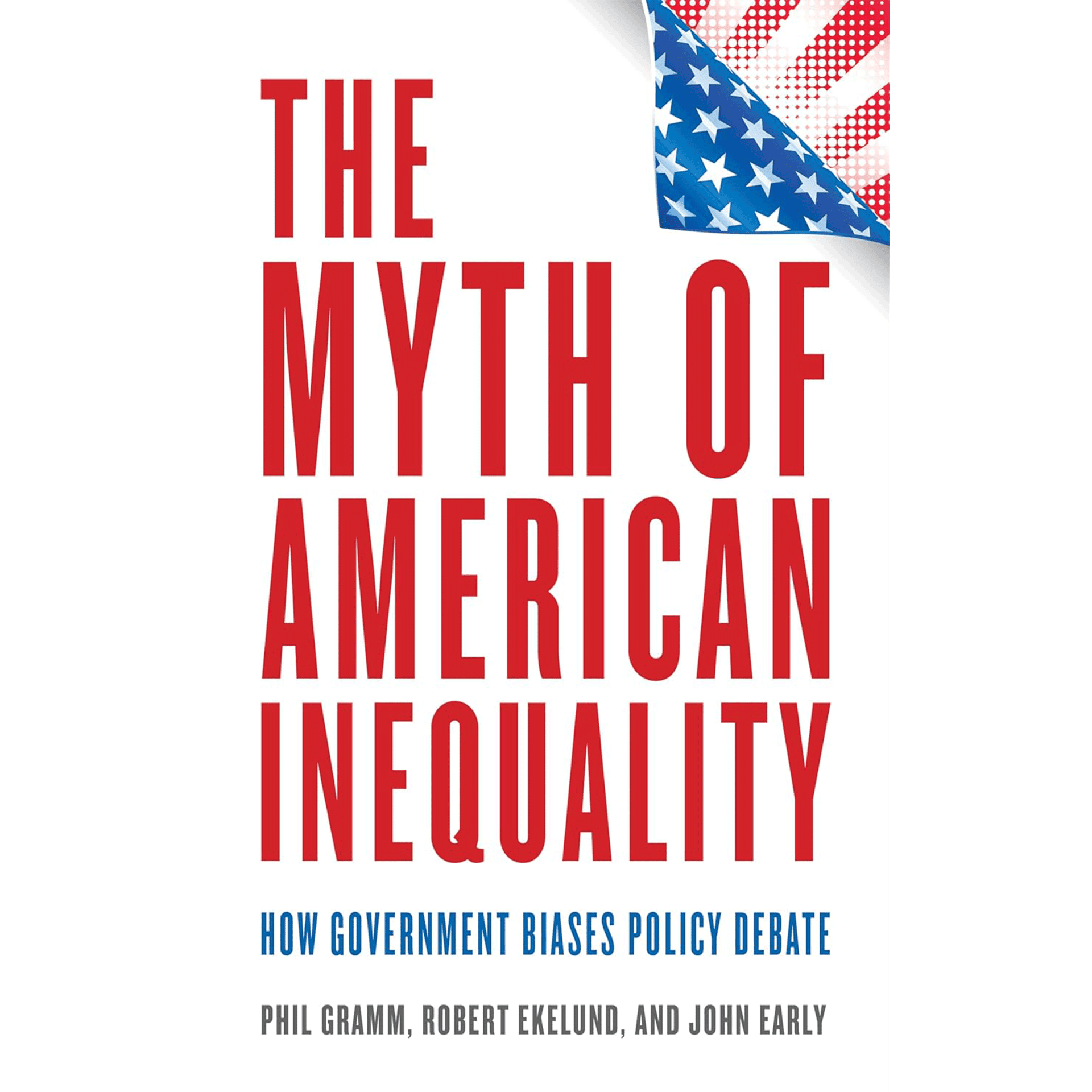
- Episode Title: Senator Phil Gramm - The Myth of American Inequality
- Episode Description: Senator Phil Gramm discusses his book "The Myth of American Inequality," arguing that income inequality in the U.S. is exaggerated and that the American Dream remains intact.
Key Themes and Concepts
- Overview of "The Myth of American Inequality"
- Authors: Senator Phil Gramm, Robert Eklund, John Early
- Central Argument: Income inequality is significantly overstated; when accounting for transfer payments and taxes, the reality of economic disparity is much less severe.
- Statistics Highlighted:
- Bottom 20% of earners consume more than their income.
- Ratio of income between the top 20% and bottom 20% is 4:1 instead of the reported 16.7:1.
- Actual poverty rate is around 2.5% rather than 12.4%.
- Historical Context
- Comparison to Victorian England during the Industrial Revolution.
- Wealth creation benefited all social classes, despite appearances of inequality.
- Misinterpretations of economic data historically skew public perception.
- Influence of Enlightenment Ideas:
- Emphasized ownership of labor and capital, leading to economic growth.
- Current Economic Dynamics
- Labor Market Trends:
- Discussion on decreasing labor force participation rates, particularly among low-income families due to government subsidies.
- Historical parallels drawn to the Black Death reducing labor supply leading to higher wages.
- Government Incentives:
- Critique of welfare systems that may disincentivize work, leading to long-term economic dependency.
- The Role of Education
- Education as a significant factor in economic mobility and income levels.
- Emphasis on the importance of school choice and charter schools in improving educational outcomes for low-income families.
- Perceptions of Wealth and Class
- Addressing the belief that wealth is zero-sum and that the success of one individual comes at the expense of another.
- Discussion on the societal benefits of wealthy individuals and how their success can lead to overall economic improvement.
- Charitable Giving in America
- Americans donate approximately 1.44% of GDP to charity, a significant amount that supports low-income individuals.
Key Takeaways
- Reality of Income Inequality: When considering all factors, income inequality is less severe than commonly perceived.
- Impact of Government Policies: Current welfare structures may inadvertently hinder economic progress for lower-income groups.
- Emphasis on Education: Access to quality education and school choice plays a critical role in breaking cycles of poverty.
- Cultural Perspectives on Wealth: The perception of wealth needs to shift from a zero-sum game to a recognition of mutual benefit in a capitalist society.
Concluding Thoughts Senator Gramm's insights in "The Myth of American Inequality" challenge prevailing narratives about economic disparity in America, highlighting the importance of recognizing systemic factors and the real benefits of capitalism. The discussion encourages a reevaluation of government policies and their impact on economic participation and mobility.
---
Additional Notes
- Recommended Reading: Senator Gramm's book is advised for those looking to understand and discuss the nuances of American economic inequality.
- Engagement: The podcast invites listeners to provide feedback and suggest future book topics, fostering a community of engaged learners.
For more information, visit [Smead Capital Management](http://smeadcap.com).
Written by AI. May contain mistakes. Listen to the episode to check what was said.
Transcript
Automatic transcript. May contain errors.0:02You're listening to A Book With Legs, a podcast presented by Smeed Capital Management. At Smead Capital Management, we advise investors who fear stock market failure. You can learn more at SmeadCap.com or by calling your financial advisor.
0:20Welcome to a Book of the Legs podcast. I'm Cole Smead. I'm the CEO and a portfolio manager here at Smead Capital Management. At our firm, we are readers and book junkies. It can be said that leaders are readers and we believe books provide us a great source of information for filtering what is and isn't important for us as investors. Investing is the last great liberal art and the best way to spend a lifetime of learning. This podcast is for readers, thinkers, business-minded people, and investors who want to grow their knowledge from great authors and their writing. Charlie Munger often talks about using multiple mental models and analysis.
0:53Our aim for this podcast is to help listeners test Munger's theory in business, markets, and people. Thank you for joining us for this episode of the podcast. we are going to talk about the importance of work, incentive structures as we think about the United States of America, and we will all understand, despite our shortcomings, why this is the greatest country in the world to be poor, middle class, or rich. Phil Graham is joining us to talk about the book he co-authored with Robert Eklund and John Early, titled The Myth of American Inequality, How Government Biases Policy Debate. Senator Graham served six years in the U.S.
1:28House of Representatives and 18 years in the U.S. Senate, where he was chairman of the Banking Committee. Mr. Graham is a visiting scholar at the American Enterprise Institute. He was vice chairman of UBS Investment Bank and is now vice chairman of Lone Star Funds. He taught economics at Texas A &M University and has published numerous articles and books. Senator Graham lives in Helotus, Texas. Senator Graham, thank you for joining me today. Thank you, Cole. So I can make some assumptions. And just so you know, I love this book. I think your information, it's probably the most data-related book that we've done on the podcast ever.
2:02So I love the data. But what inspired you and Robert and John to build this story together? Well, it really started when I was chairman of Commerce State Justice Appropriation. And I was working on Graham Rudman and the Reagan budget. and in my capacity as a subcommittee chairman, I oversaw a bunch of agencies, including the census. And it struck me that the numbers I was dealing with in the budget seemed very different than the numbers the Census Bureau was putting out in terms of household income. Household income is a building block of all of our statistical measures of well-being, from poverty to income inequality.
2:54And so I started looking at it, and then a seat opened on the finance committee, and I took off and left to go to the finance committee. But I came back to it in 2017, when I happened to look at the Census Bureau puts out once a year what household income is, and they break it out into five different quintiles, the bottom 20 % up to the top 20%. And also at roughly the same time, the Bureau of Labor Statistics puts out consumption by quintiles. And in 2017, the income level, average income level, the bottom 20 % of earners was$13 ,000, and they were consuming$26 ,000 worth of goods and services.
3:50And the second quintile was consuming 11 % more than its income, and the top quintile was consuming only about half of its income, even though there was no evidence that such thrift levels exist anywhere. aware. So that's when I started working with Eakland to figure out what in the hell is going on here. And in that process, we discovered John Early. Eakland was a prominent scholar who stayed in academics when I left to go to government. John Early is a mathematical statistician who was twice assistant commissioner of the Bureau of Labor Statistics. So in any case, we went back and figured out that in 1947, when the census set up its procedure to estimate household income, that almost all payments were made in cash or cash equivalent.
4:54And so for simplicity purposes, they just counted cash payments. And that produced about a 95 percent accurate picture. But in 1967, when the war on poverty ramped up, almost all of those benefits were paid in kind. You got a debit card that was charged with food stamps. You ran up Medicaid bills the government paid them. You got housing subsidies the government paid, over 100 federal programs. That's when the census made an extraordinary set of decisions in deciding not to count the very payments that we had put in place to deal with poverty, including food stamps. And remember that we define poverty in America as a multiple of the amount that it costs for a nutritionally balanced diet.
5:57So a poverty number based on consumption of food didn't count food stamps as being a benefit in dealing with poverty. So anyway, and also we found the census does not take into account taxes, which means it doesn't count refundable tax credits when you get a check from the Treasury. In total, the census doesn't count two thirds of all transfer payments as income. It doesn't take taxes into account. So about 40 % of the economy of the United States is not counted in the measure of household income. So the census tells you the top 20 % makes 16.7 times as much as the bottom 20%. But we show using government data that if you count all transfer payments as income gained and all taxes paid as income lost, The ratio of the top 20 % at the bottom is not 16.7 to 1, but 4 to 1.
7:06We also show that the poverty rate is not 12.4%, but about 2.5%. And then some other blockbusters are, you know, The Economist magazine has said income inequality is high in the West and rising. Senator Sanders has told us that it's obscene, un-American, and unsustainable. Well, in fact, we show that when you count all transfer payments and taxes, that income inequality is actually a little less today than it was in 1947. Now, we show a lot of other things in the book as well, but that's the core of the findings of the book. So one of the parallels for historical eras you draw early in the book is you talk about Victorian England, which was obviously the explosion of the Industrial Revolution and really kind of what I consider modern business.
8:08To quote Dickens, he said it was the best of times. It was the worst of times. How are the circumstances of then a lot like today where you see a lot of wealth, and at the same time we know that there are people that aren't as good off, but the question is, is this a good thing? Well, first of all, what Dickens thought he saw was not true. Okay. You've got to realize that poor people in rural England were across the creek, off the main road, away from the city, and even a mud hut where you're sharing it with your farm animals from the veranda of a manor house that's across the creek from you looks quaint.
8:59Rich people had never seen poor people up close and personal, except when they were cleaned up to come to work. When the Industrial Revolution came, people chose to move to the cities because they sought a better life. And they were all too visible then. And you've got to realize that the established parliament and the landowners were losers from the Industrial Revolution because it pulled labor into the cities. and the bottom line was even though Dickens could not understand why Scrooge, for example, in the Christmas Carol, how his wealth did any good given he didn't spend it, well that wealth was going to fund the Industrial Revolution in Great Britain so the bottom line is that But in the Victorian era, from 1830 to 1900, the economy grew faster, wages grew faster, the lifespan grew faster, literacy grew faster than at any other time in the history of the world.
10:24and in America, despite all of it, you pick up any textbook in America and it tells you that in our gilded age, the rich got richer, the poor got poorer. Well, the reality is everybody got richer. Now, there were 4 ,500 millionaires in 1890, but 66 million people had the fastest growth in their living standard that any people on the face of the earth had ever achieved. And the writers of the era were so preoccupied by the 4 ,500 millionaires that they totally turned a blind eye toward the 66 million workers. So the truth is, the rich got richer, the poor got richer, and everybody got richer. To go back to the Industrial Revolution, you mentioned, though, that because a lot of what your book's trying to address is how do we set up a great environment and the right incentives for people to succeed in their own choices, right?
11:33What they want to do in their life, right? In other words, we can't force them to do anything. And we don't want to set up a structure that requires them to do anything. We want to give them the situation for them to succeed. So in the case of Victorian England, there was a major change in terms of the regulation around businesses. Can you explain how royal charters worked and when they went away, what that allowed for? Well, royal charters basically were a system whereby the crown made money by granting charters to people who wanted to engage in business activity. That corrupt system was discredited by the South Sea bubble, where investors just lost huge amounts of money.
12:21And the parliament set up a system that over 150 years evolved into anybody could get a corporate charter that could put up the money. There were two major changes that made all this possible. The enlightenment, which basically established the principles you had the right to worship God your own way. You had the right to your own opinion. And you own your labor and the fruits of your thrift. You got to remember in the Middle Ages, you owed theity to the crown, the church, the guild, the community. And these had become leeching powers that leached away people's incentive to work and save. But with the Enlightenment, people came to own their own labor and own capital, and it changed everything.
13:24And then the Industrial Revolution, that unleashing of effort and capital and entrepreneurship and energy created the Industrial Revolution, which changed the world, and those changes have never stopped. Correct. So one other thing you mentioned during that time was you talked about how the Black Death reduced the labor supply at the same time, which obviously produced higher incomes from less available labor. I think a lot about the post-pandemic world that we sit in, where people have left the labor force. You talk a lot about some of the incentives that caused them to do that. But also it's been noted that, for example, baby boomers pretty much retired during the pandemic at some point.
14:13Many left the workforce for, I'll call it finality, that they're not coming back. Do you see any of those similar labor supply reductions being a symptom that we're seeing right now, even outside of what we'll debate in the policy side, tied to what's happened post-pandemic? Well, what I was saying about the Black Death was that for the thousand years prior to the Industrial Revolution, that there was no significant economic growth and that wages pretty much were flat. In fact, there have been a lot of studies of this and that they would spike occasionally because of a reduction in supply like the Black Death.
14:59But then population grew and wages fell. The beginning of the rise in real earning power for ordinary people occurred in the Industrial Revolution in Great Britain and then spilled into the United States and now has gone all over the world. The important point about labor force participation rate in America today is that in 1967, when the war on poverty ramped up, the average family in the bottom 20 percent of income earners was receiving$9 ,700 worth of payments from the government. By 2017, 50 years later, they were receiving$45 ,400. And labor force participation rate for the bottom 20 % of earners had fallen from 67 % to 36%.
16:08Sure. And the reason it fell is the rewards for working, given that you could get as much from government by not working as you got from working, were so small that the amazing thing is that 36 % still work. And during the pandemic, remember that these benefits were being paid to people that were making as much as$150 ,000 a year. And so many of them just decided, well, I won't go back to work. Now, it's beginning to change somewhat as those programs expire. But clearly, we have had a dramatic decline in labor force participation rate as the amount of subsidies the government provides through transfer payments have grown.
17:08if you pay people not to work you can't be shocked that they don't agree and and i think a lot anecdotally when you drive around you know places like texas places like arizona any any you know business that needs low skilled wages or unskilled wages uh you know working there you see now hiring signs everywhere i mean it's hard to find a business that's not hiring, to be downright honest. And yet they go unmet or someone's there for a while and then doesn't stay because either they find a better job or to your point, they recognize that, you know, this isn't as good. And so, you know, I want a question I want to ask you kind of from a bigger picture perspective, because you mentioned Senator Sanders earlier.
17:56Why? You know, I think a lot of the framing to think about, you know, what incentives do we want? I think a lot of the framing comes down to really two views. Some people in American society look at the prosperity available to all as a zero-sum game. In other words, if I succeed, Senator Graham, if I succeed, you lose. Versus I look at capitalism and economics and to your point, what we've benefited from the Enlightenment and our ability to use our human creativity, it's more like a game a golf it's me versus me that's what decides whether i succeed or not it's me and that's it i would maybe throw in god's provision and blessing as the only thing that really helps me ultimately but i pointed out because your success has really nothing to do with mine it is that that that is that really where the debate is let's go let me just give you a very brief history.
18:57Plato, huge wealth and income is zero-sum game because you had a city state. Wealth was almost totally based on land ownership, and it was a relative zero-sum game. All collectivists since the time of Plato implicitly assume that the world was zero-sum game. you take Thomas Piketty in his book Capital in the 21st Century he never uses the term earns or creates to talk about the income that high income people get he talks about them taking income demanding income seizing income but never earning income Well, look, I don't own an electric car. I don't expect I ever will. But Elon Musk has never taken anything from anybody.
20:05He's rich as he can be, but he created every penny of it. And I'm no poorer because of it. How does Bill Gates being rich make me poorer? I'm richer. I use his products. my pension fund owns part of his company. He owns only 7 % of Microsoft. Pension funds, 401ks, ours, annuities, only about 70 % of Microsoft. He didn't get to the top of the mountain alone. He took the rest of us with him. So if you want to be envious, you can always find a reason But please understand this. When people, and let me say, I admire Senator Sanders because he believes what he says. Sure. He's wrong. The facts don't bear him out.
20:59But he's a sincere member. And I've always admired that about him. But the bottom line basically is that when you're talking about billionaires, and if billionaires paid more, we could have all these things. If you took every penny of income from every bill, every person in America who is in the Forbes 400 that the government doesn't already take, we couldn't have funded a week of federal, state and local spending in 2020. OK, the problem with rich people is that too few of them. So this idea that, A, they don't pay their fair share of taxes, which is preposterous and verifiably false, and B, that we could somehow have all this stuff if they only gave us their money is just totally false and made up.
22:02Well, so let's go to – you talk about the U.S. Census Bureau, to your point, and how they laid out what they did in 1947 to use cash payments. OK, well, you know, you started that kind of begets in your writing about the federal transfers and why we really look at the bottom income quintile or the bottom two income quintiles poorly based on that. But I thought a lot about, you know, on the other side of that chart that you show where, you know, federal tax is being taken away. I, as an American citizen, am legally obligated to pay my federal, state and local tax. I cannot get around those. And to your point, there's nothing discretionary about that.
22:43I can't say, well, you know what? I'm not going to pay you this year like I didn't want to buy a car this year. So therefore, I have no say over the money. I am liable. It is held as a liability until tax day arrives, ultimately. And so I was kind of shocked that people don't look at income that already has a call on it. They're treating it as though the rich have that money to play around with and the poor don't. Is that another way of looking at that? Yeah, well, and look, people that are making over a million dollars a year are paying about 41 % of their total income in taxes. Okay.
23:26The, the, the, the tax system is, is we have the most progressive tax system in the world. on four more progressive than Germany, France, or Sweden. And tax rates rise up until the income level of about$30 million. And then for a very small number of people who give away vast amounts of money and who earn mostly through capital gains, it dips into the high 30s. But this idea that rich people don't pay their fair share taxes is false. And if you look closely at, for example, ProPublica, that's had that stolen tax data and put out the thing about how Warren Buffett didn't pay much taxes. if you look at what they write, it's clear that it, or at least it looks as if they took what Warren Buffett actually paid in taxes, but they didn't take his taxable income.
24:43They made up an income based on what that income would be if he sold every asset he owned every year and paid taxes on the game. Sure, sure. And the same thing is true of Saves, who've done all this work with Piketty. If you look at their tax data, what they do is they don't, when you look at high income people, they're not talking about taxes on their income. They're talking about what their taxes would be if they sold all their assets every year. Well, nobody taxes on that basis. What even people, you know, ordinary people would have massive taxes if they sold their house, cashed out of their retirement, sold all the assets they own and paid the taxes on it.
25:40And in one given year, they would pay extraordinary taxes. But no country in the world taxes that way. When I thought a really wonderful point, a wonderful point in your book, Senator Graham, is you talked a lot about who sits in those income quintiles across the five. And it's actually a fairly mean reverting system. For example, can you teach our listeners how, let's use me. I, in my lifetime, am likely to be in the lowest income quintile at some point. And by God's grace, I could end up in the highest quintile at some point. Can you explain how these quintiles don't really tell us much about what's going on in America?
26:26Well, they tell us what's going on at the instant the photograph is taken. Sure. But, you know, you could be in the bottom quintile while you're getting an MBA at Columbia in finance. Sure. And you could be in the top quintile by the time that you have started your own hedge fund. And you're the same person, of course. and look the level of mobility in America is very large a Pew study looked at what percentage of children that were born and grew up in the bottom quintile ended up making more money than their parents in real living standards 93 % 64 % make so much more that they move up into a higher quintile, including a not insignificant number that go all the way to the top.
27:39So look, there's no denying it. If you can be born rich, brilliant, and beautiful, do it. I mean, there are big advantages to all three of them, But the point is, you can be none of them and still succeed in America. And people do every day. But the welfare system, as it is now structured, has basically delinked the bottom part of the income distribution from the economy. And the economy is where most people find success. so they don't ever get on the escalator that takes them up and then they can rise faster if they're climbing and that's the downside we never debated poverty in my 25 years in government that I didn't start to debate by saying the great tragedy of our welfare system is that we've never found a way to help people help themselves and in trying to help them, we have destroyed their incentive to help themselves.
29:00Yeah, let me, because I think you comment in the book, if I remember from memory, that a middle class income in America would be a household with about$50 ,000 to$90 ,000 of income. That would be considered middle class. and to your point when you adjust for federal transfer payments the lowest income quintile makes almost a middle income when you count all the benefits and government largesse they receive so i guess my question is do we really have a low income quintile in america yeah it's about 2.5 percent of the population and there are people that because of middle or physical disability or because of drug addiction can't take care of themselves and the people they're supposed to take care of and that basically have fallen through the cracks in system.
30:00We show in the book that the distribution of income in America really flattens out at the bottom and that 60 % of Americans basically have very similar incomes. And if you adjust for the number of people in households, it gets even flatter where you've got people that live in the same neighborhood that have basically the same or similar resources and you got one household where both adults are working and another household where nobody's breaking a sweat and needless to say there's resentment about it and it's justifiable resentment well so beyond beyond the federal transfer payments that you you comment and write a lot about in the book like You know, just to name a couple, just so our audience has a feel for what we mean by federal transfer payments, food stamps would fall into that category, Medicare, Medicaid, HUD, the housing and urban development programs, the earned income tax credits, which are effectively negative tax liabilities.
31:10So another part, there's also private assistance with their charitable endeavors all across this country seeking to improve and benefit the lives of their communities. You point out that Americans donated 1.44 % of the GDP in aggregate to charity. I was kind of appalled at this number, to be honest, Senator Graham, because where I come from, 10 % is the floor. That's the kind of legacy that I live in, right? So I say that because I was shocked. I mean, I was utterly astonished to find out that that is the highest giving of any country in the world, according to your deal. Oh, exactly. By far. By far.
31:52America far outships any other country in the world in charitable giving. And this— And most of that giving helped poor people. Yeah, so I thought, you know, to your point, I mean, the really, I think it's incredible because you point out the imbalances. There are imbalances. Those are creating perverse problems. But, I mean, the other thing that your data does a great job of telling is what an incredible country this is. And just to put some, you put some numbers on this. I mean, you point out that these charity transfers are obviously not counted in the federal transfer payment number to adjust for incomes, but they represent another$3 ,313 per household.
32:42You know, I would say we're throwing more resources at poverty than any nation in the world. Is that a fair way of looking at it? Other than France, we're second. in terms of the percentage of our GDP that is redistributed. Now, poor people in America are much better off than poor people in France because our whole society is richer. The Pew Foundation did a study where they defined low income or poverty as two-thirds of the median income. And by that definition, since the median income in America is so much higher than in France and Germany, when you apply our standards, a huge percentage of their population, a larger percentage, is poor than in our country.
33:43so if you don't want to be poor anywhere but if you want to be poor anywhere you want to be poor in america now again there are people living on the streets in austin and in san francisco and the left loves these little examples there's somebody living on the street in san francisco And Warren Buffett is rich. But the reality is that our welfare system is not reaching that person street in San Francisco because no matter how much we spend on food stamps or refundable tax credit, it's not getting to them. What we need to be doing instead of spending$45 ,400 to every household in the bottom 20 % on average, is we need to go out and ask that lady or that person sleeping on the street in San Francisco, what is their problem, and try to help them solve it.
34:53I agree. Simply throwing more money at it doesn't do it. And look, my hostility is toward the system, not toward the people. Sure. There are poor people every day who succeed in America, and God bless them. So you're touching at something. Just so you know, Senator Graham, we moved our company from Seattle, Washington, back in the middle of 2020. we had worked on the work to do that prior to the pandemic, you know, coming about and we continue with our plan. And I look at my own hometown, Seattle, Washington, downtown Seattle has been completely ruined by the phenomena you just mentioned. And, and it's a really interesting, like to your point, how do we want to help our fellow man and woman in those cities, you know, using Austin, like you use the example, they'll say, well, this is a, this is a housing issue.
35:50and the irony is no, because you get into some really interesting data from studies that have been done. I think you referenced, and I was trying to pull this out of my notes as we talk about it, but you referenced studies done on, say, food stamps, for example, right, where people had, you know, I think it was the US DA had gone in and done studies looking over a decade where they asked people that were on food stamps how they felt about their food situation. And I think you talked about how the food stamps didn't change their feelings. Yeah, the point I made was we see these things in the paper and people get very upset about them.
36:35And if they were true, they'd be reasonably upset. 40 million people in America are hungry. During the pandemic, when we just had an explosion in food stamps, you had advocacy groups putting that out. Well, where did it come from? Well, where it came from was the U.S. Department of Agriculture does a survey that asks, in any one day in the year, did you ever have a concern that you might not have enough money to eat? And if somebody says yes to that questionnaire, everybody in their household is defined as having food insecurity. And then these advocacy groups take that and say that many people were hungry.
Read the full transcript
37:32A Harvard University group related to their medical school did a study where they looked at that questionnaire immediately following an expansion in food stamps. and basically concluded that the people that said they felt insecure before they got more food stamps felt insecure after they got food stamps. The point being that you're talking about what somebody feels, not what their stomach feels. And that's a very important distinction. Sure. Well, and to pivot, because you have a great FDR quote in here that I have to read. He said this in 1935, and I'm quoting from your book. To dole out relief in this way is to administer a narcotic, a subtle destroyer of the human spirit.
38:34It is in a medical to the dictates of sound policy. It is a violation of the traditions of America. Work must be found for able-bodied but destitute workers. The federal government must and shall quit this business of relief, end quote. even someone that was considered to be you know a provider of government largesse in some circles fdr um he would have looked at at at this largesse as rot wouldn't he have well look he would have he would have been not the least bit surprised by the results of war on poverty you pay people $45 ,400 in benefits household. And the average poverty household's got 1.7 people in it.
39:28And if they've got if they don't have any real production skills, many of them are going to decide not to work. And they're never going to discover the ability they have. And then you add to that the failing of inner city schools. You know, I'm a firm belief based on my own life experience that there's extraordinary ability in ordinary people. And there's a lot of talent in these inner city schools that is never discovered and that does not serve them and doesn't serve the country. Sure. So God worked for six days and then rested a seventh. Based on that, Senator Graham, I think a two-day weekend is a lot, especially, you know, but if you're a parent, you figure out that you don't really get a full two days on weekends.
40:30So let's pivot a little bit. Can you talk about how much better it is to be a high school graduate today than a college graduate would have been in 1967? Yeah, 50 years later, the economy has grown so much that a high school graduate today makes roughly the same amount of college graduates made 50 years ago. We don't take into account, people don't pay attention to this. Now, I'm old, but I go back to the little town I grew up in. and I looked at the houses, my paper route. I had 105 newspapers, and I threw the papers in the richest part of Columbus, Georgia, where I grew up. My dad was a sergeant in the Army.
41:27I was born at Fort Benning. And I go back today and look at the houses in what 50 years ago, well, now 60 years ago, were the houses of the richest people in town, and most of them roughly look like middle-income American houses today, except they're older. We do not take into account how well off we are. The gal who runs my office just bought her first house, and the timing couldn't have been worse, but she's got two little children living in a small apartment. But anyway, so she bought this house, and I was talking to her about the economics of it. And I said to her, you realize, you stop to think that this house you're buying is a nicer house than your parents ever lived in and a nicer house than your husband's parents ever lived in.
42:32And it's the first house. You know, people say to me all the time, on college campuses especially, why is it that people have so much trouble making ends meet if we're so rich? Well, because the ends keep growing. That's why we have trouble making ends meet. Ends keep growing. I have trouble making ends meet. And I haven't been poor in a hell of a long time because we keep, the ends keep growing. We keep wanting more. We keep expecting more. You know, I look back at the house, one of the houses I grew up in. You had to go on the back porch to go to the bathroom. It had four coal burning fireplaces.
43:22We only burned one. Water would freeze on a table by the bed. at night in the winter, hell, nobody lives in a house like that today. I can't sleep if I'm cold. I mean, we just don't realize the changes that occur. And I talk to people, and they forget what it was like. I had a guy trying to tell me that his son was paying more for his new house than his grandparents had paid And I said, well, first of all, if you adjusted, and it's no nicer, he said And I said, well, if you adjusted for inflation, and you looked at quality I know your grandparents didn't have air conditioning, and I know your son does.
44:22I know your grandparents didn't have central heat or insulated house. Your son does. I mean, again, we just lose perspective. We're so blessed because the country is so productive, and it's so productive because it's incentivized people to do, to incentivize ordinary people to do extraordinary things. I agree. So there's another book, Senator Graham, I don't know if you've come across, it's out there called Super Abundance. But it talks about, if you look at time prices, how much cheaper every product in our life, to your point, has got in the amount of time it takes the average worker. And so that's caused the goods to get better and better in the houses.
45:08But I also, I just think, you know, I think a lot of what your book addresses is, let's not look at incomes. Let's look at consumption to understand how good America is. And to your point, I mean, the average size of a house would make anyone in the 1960s cry at how poor they lived, even in the middle or upper classes. Their houses were small. Their houses weren't that nice. 42 % of people who are classified as poor in America own their own home. it's on average three bedrooms one and a half baths a carport and a patio 88 % of those houses have air conditioning
45:56and you know some of these houses may look run down on the outside but when you compare them to what people lived in 50 years ago 50 years ago a significant number of poor houses did not have indoor plumbing interesting I mean we don't you just don't realize how much the world has changed and all of the none of this progress came from government you know 80 % of the people in the world were in abject poverty 50 years ago And now that's declined to almost to about 10 percent because of the growth in world trade and because the growth of market based economic systems. Sure. None of that was produced by government's good intention.
46:55It was all produced by people working to advance themselves and their families. So I would think a lot about this, Senator Graham. So let's just use a practical product. So I have an iPhone. I assume you have an iPhone as well. Think of what the net worth or income someone would have had to have in 1970 to have a product that does as much as that does for us today. I remember as a kid, you used to have to do your AAA maps, right? That's what you used to have to travel around when we were kids. you know we'd have our triple a maps out and you know your parent might call ahead to the to the hotel or motel that you're going to go on in your road trip and you know you didn't know what this place looked like you just do what triple a told you i mean that those just seem like utter waste of time and not even a billionaire if if there was a billionaire in 1970 that could have attempted it not even the billionaire in 1970 has the technology available to them like we do today on to your point on a on a low income with federal transfer payments included what we get is miraculous yeah well look first of all when the the smartphone came on the market it didn't even come into the consumer price index for 15 years it had declined in price by 75 percent before it was ever taken into account in terms of affecting our well-being and measure its cost it improved dramatically um we've got or i've got on my iphone i i can find out what the weather is like anywhere in the world and how to get there and what to do when i'm there I've got more information than the local library.
48:55And the relevant question is not what a billionaire could have had. If it came right down to it, what would you pay to not have to give up your iPhone? Okay, I've thought about that. I had an old iPhone. The company I worked for took it away from me because it was increasingly incompatible with their system. And I got a brand new one now. I'd have trouble figuring out how the hell it works. But the point is, I would give a tremendous amount of money. I couldn't live as I live without this iPhone. I couldn't do the work I do without this iPhone. It's worth hundreds of thousands of dollars to me.
49:50Sure. You know, very few things other than my sainted wife that I depend on more than this iPhone. And again, nowhere in our measure of well-being is that fully or even significantly taken into account. So again, we made great progress, but we could make so much more. I remember I was the author of the Reagan program in the House. And so I had the wonderful opportunity as a congressman who had been in Congress for only three years to get to work with, on a very close basis, with President Reagan. and you know it was just wonderful because I'd say once our program went into effect I'd show him the numbers of what happened to the number of disabled Americans and it was just falling like a rock and I would say to him people are getting up out of wheelchairs and going to work well it was somewhat of an overstatement but he would say to me you know can you imagine if we really had good government, what we could have?
51:09And I often ask that question to myself today.
51:17You know, if we had better policies and we had all of our people working and we were discovering all of our talent and we were incentivizing it, But, you know, how many Warren Buffetts are out there in some inner city school that just never have their talents discovered? Sure. Let's pivot to that because I think you did a really interesting job in this section. You had a chapter on the super rich. can you just teach our listeners what kind of professions make up the top 3 or 4 % of incomes in America? Well, they're heavily involved in business and finance. Some of them are in entertaining. But they're people who excel at what they do.
52:16And the market is willing to pay them very large amounts of money to do it. And so we show that data in the book. But the most important thing we do in that chapter, in my opinion, is basically point out that what is contributed to the world as people become super rich. Warren Buffett is often criticized for not paying taxes because he doesn't pay himself income because he doesn't sell anything and so you might say well what good does he get out of all that wealth well the right question is if he's not getting good out of it who is who benefits from all that investment he makes. We do. The economy does.
53:22The economy is more efficient because he's the greatest investor in the world. The huge amounts of capital he's plowed back into developing new businesses, create new jobs. When he dies, the government will take 40 % of what he's got and they'll probably squander most of it. But even if they spend it as efficiently as government can spend it, they will never do as much good as he's done creating all that wealth. And even if Bill Gates gives every penny he ever made away, he did more good making it than he'll do giving it away. that's the untold story that you know we ought to be saying to these people thank you I appreciate you made all this money now I would rather I made it yeah but I'm richer because you're richer that's the point and you're so right Cole in that deep down in every collective argument for redistribution, they have thrown a switch where they've turned to view the world as a zero-sum world.
54:46That if Warren Buffett's rich, that means somebody else is poor, and he took it from somebody else. Well, Warren Buffett didn't take it from anybody. When a person graduates from MIT in electrical engineering and goes to work for$250 ,000 a year, they're not taking that$250 ,000 from anybody else. They're creating it. And we're all richer for it. They'll invent something, and I'll be using it a couple of years. So it's funny. So as a younger man, I think I was, if I remember correctly, I think I was in college at the time, Senator Graham. I actually had a really fun opportunity. My dad was a member of the number four Rotary in Seattle, which was at that time the largest Rotary in the world.
55:42And Bill Gates Sr., who obviously is of K &L Gates fame, was a lawyer, came to speak because he was out advocating for the estate tax at that time. And he was explaining how it's really good for America. This would be, call it early 2000s. and interestingly he used Warren Buffett as his example and he got done making his presentation there at Rotary and you know it's a big group but my dad raises his hand and asked the question he said you know you're advocating that we should be willing to pay these estate taxes but then he pointed out that Warren Buffett didn't plan to do anything other than give all the money away, which means he wouldn't pay any estate tax.
56:25And so I thought a lot about that because again, you know, the incentive is if you do keep the money and pass it onto your heirs, you do get taxed. And I also think about, you know, what kind of incentive structures a tax like that could create. So you talk a lot in your book about the disincentive to work and the incentives that we've created to cause people to do that. But I also think about it for, let's say you're the wealthy people. To your point, we want a lot of wealthy people here. They pay their taxes. They tend to not have crime issues, things of that nature. They do all these great things outside of it.
56:59But currently, our structure in America is set up to where above$23 million exclusions, to your point, you're going to pay a marginal rate on your estate over 40%. If I woke up tomorrow and said, hey, I could get a passport from somewhere else in the world, and I've decided to go post up somewhere in the Caribbean for the rest of my life, I could go pay capital gains rates at 25 % on my assets and plausibly never pay taxes again in the jurisdiction I go to. Isn't it a perverse incentive to cause an American citizen that's wealthy to look at the tax rates and compare them later in life like that?
57:38Well, and also, people don't take risks because of rewards or muted because of taxes. And with older people, a big problem I have is that I'm accumulated. You know, I'm a saver, accumulator. I still work. I lie and tell people that I work because I have a young wife and she wants money and she put me in a cheap nursing home. But actually, I have an old wife who would very much like me to quit working, but I don't quit working because I like working. I like accumulating. I like making money. We're going to never spend it. but I hold a lot of assets that I can't sell because when I die, I get a step up in basis before I pay the death tax or my heirs pay the death tax.
58:46And if I sold assets now and then died tomorrow, they would end up paying both the capital gains tax and the death tax. So in my case, it hardly changes the economy. But nevertheless, I've tried to get Congress to let people, when they turn 80 years old, have a one-time chance to take their step up in basis then rather than at death and rationalize their asset holdings. it would make the government money. But I've not had any luck getting it done. Yeah, and I've had ideas on that too, Senator Graham, not that anybody cared, but I've also thought, why do we give such preferential treatment when people give their assets like Warren to a foundation versus their kids?
59:40Shouldn't we be a lot more, no matter what, it's going to get spent in the economy, to your point, as long as it doesn't go to the government. And so should we be as choosy over where the money goes to get a tax free transfer? Or should we just be a lot more excited that it doesn't go to the government? But let me let me pivot a little because I. Well, I've got to tell a story. I got to tell a quick story. Yeah. OK, exactly your point. We're writing the Reagan tax cut. OK, and the Democrats are putting all every every giveaway they can into their alternative to try to keep the Reagan tax cut from passing.
1:00:23OK, sure. And so we're at a meeting at the White House. And so a friend of mine who was a congressman in Texas has this amendment that he has been trying to get adopted where if you give your business to your employees, you can do it tax exempt. And so I've been out of the college classroom all of three years. And so I say, now, wait a damn minute here. if you give your business away you cannot pay taxes on it but if you give it to your grandchildren the people you build it for you're going to have to pay taxes what the hell kind of policy is that and so I got up and I walked out in the hallway and walked around a minute to try to gain my composure and so So when I came back in, when the meeting was over, Jim Baker, who was the best staff guy I ever worked with, he was then chief of staff, said, now, what were you saying about indexing for inflation?
1:01:44And so anyway, I don't know it for a fact, but I think because of me getting up and walking out of the room, he listened again to my argument that people were being killed by bracket creep during the nine years where the inflation rate had been 9.2%, and that we ought to index the tax brackets, and we did. So some good came out of that problem. That's awesome. So you had you had the data point here that I just Senator Graham. I love this. This was just so awesome. I'm going to quote your book and then I'll kind of I'll tease you around when I'm bringing this up. So when I visit New York, Senator Graham, I tell people often there, I say, listen, I don't think you understand how middle America works.
1:02:36Because to be honest, I don't really think there's much of middle America in New York City. Well, then, as I got into your book, I'm going to quote, data from the current population survey shown that in 1967, the top quintile of households was overrepresented by the Northeast by 12.3%, and the bottom quintile was underrepresented by 12.5%, a clear skew toward higher income in the Northeast. But 50 years later, in 2017, the top quintile was overrepresented even more by 18.8%, but the bottom quintile had shifted from being significantly underrepresented to being slightly overrepresented. The 60 % in the middle of the income distribution was underrepresented in 2017, end quote.
1:03:24So when I read your book, I realized, oh, no wonder they don't understand things like housing for most of America. They don't even know most of America in the middle, to your point. No, that's right. Look, New York is full of rich people and poor people. It's interesting that demographic data we do in talking about what's happened in the last 50 years to the races and on a regional basis is very interesting stuff. Another amazing thing about this book is the progress of Asians. Extraordinary. Many of them came to the country recently. Many of them hardly spoke English when they got here. And with hard work and family support and good values, they have achieved a differential with white Americans that's astonishing.
1:04:29it just goes to show you if you work, America works for you. So the last thing I'd love to touch on, because you touch at this early in the book, you talk about how education is important for income. It's an important component, though you note it is not an end-all component because you can find super rich people that obviously don't have anything more than a high school education. But just so you know, Senator Graham, my kids attend a government-funded charter school here in Phoenix, Arizona. It's part of the Great Heart system that's also in Texas and Louisiana beyond our state. It's a classical education that I wouldn't be able to find among any other private schools if one of them did produce it in the area.
1:05:11We have here ESA vouchers, which allow for a family to elect to take a voucher of$7 ,000, and they can pick whatever private school they want, or they could go to a charter school, or they could go to a public school. And the public schools here cost us$15 ,000 a student. That ESA voucher only costs$7 ,000. So you talk a lot about the charter model. You talk a lot about school choice. I kind of feel very blessed to your point earlier. I mean, I live in a state where we're on the cutting edge of school choice and the ability for low-income households to make decisions for their household to better their household.
1:05:51How do you see that evolving? In other words, do you look at Arizona as this is a model and this is going to replicate? Because you note also some of the success in places like New York with charter schools, for example. Well, the point we make in the conclusion of the book is that the two big drivers of income inequality are work effort and education. as my mama, who was a practical nurse, once told us she was nursing the richest guy in town. And so my brother asked her, well, how is he different than us? And my mother said, he works harder than we do and he's got sharper tools. And by sharper tools, she meant he was better educated, okay?
1:06:42I don't know that school choice, charter schools, vouchers. I don't know they're the ultimate solution, but I do know they're the only things that statistically move the needle. There's no correlation between public funding or public education in general and quality, and there's no correlation internationally between national funding for public education and achievement. the only thing that has moved the needle in America in the right direction has been more freedom, more options, more choice. And it's something I feel very passionate about. Again, there's talent to be discovered out there. And for all kinds of reasons, Moral and economic, we have an obligation to discover that talent.
1:07:49And school choice is working. We've got 11 states now that have opted to have more school choice. It just failed in Texas now. I'm sure we'll die again. But again, our problem here is the school system, especially in rural areas, It's far and away the largest employer. It hires more electricians, more painters, more carpenters than anybody. And they realize that school choice is going to change their way of life. They don't want it changed. Choice and freedom will work, and they will prove to be so much better that ultimately I believe Americans will have more choice in education. It's strongly supported by blacks in the inner cities that have experienced it.
1:08:48Their politicians don't support it because they're afraid of the teachers union. But as I told a bunch of our state reps when I was calling, asking them to support school choice, I know you think that while 82 % of Republican primary voters are for this, that next year they'll move on to something else, but the school system will never forget your vote. But as I told them, this issue is not going away. Yeah, agreed. Your careers are going to be broken on this system, on this issue. And you're either going to get right on this issue or you're going to get on about your business. So it's a big deal.
1:09:32And I feel very strongly about it. And when I was in the Senate, I was the only member of the Senate at the time that had ever had a child in public schools in the District of Columbia. and I was it was a anomaly we had the school right across street from my house we thought the boy was clever and it didn't make any difference and you know he's got to live in the world but in the third grade when they had the union bumping the rule and he ended up with a new teacher in the middle of the third grade we decided what the hell this we're fighting a losing battle here. Yeah, because to your point, there's no correlation between the quality and the cost.
1:10:20And I think the other place that that shows up beyond the education is you just point out the fact that there is no connection between, say, unemployment and federal transfer payments. In other words, we have the lowest unemployment of all time, and government largesse has never been bigger than it is right now, which makes no economic sense. no that's right look we're subsidizing we have substituted we've eliminated Walt except for a very small group of people with special problems but the price we paid for it is idleness and dependence was it a good deal I don't think so let me make one pitch for you guys I don't need the money So buying the book doesn't do what I want done.
1:11:14Sure. Reading the book does what I want done. The myth of American inequality. It is a concise book. I think it's pretty well written. Don't get put off by the numbers. If you're trying to convince people that everything they thought they knew was wrong, you got to provide some proof. Exactly. But it's easy to read. If you read it, you will realize that many of the arguments that are being made against American capitalism are invalid. And you'll have the ammunition to defend them. And you'll realize that this country of ours is even greater than you think. You Google it, and up it'll come, and they'll have about four or five or six different people selling the book.
1:12:07take the lowest price buy it and read it well san agram this has been just a treasure i really appreciate your time today you know your book has reminded me that we live in a blessed society and that blessing is so large that some have forgot that it's a reward it's not the process that gets us there though you know i am i am proud to be an american despite the imperfections we have and it is the best system for human progress thus far in the history of the world. Our listeners should go out, get a copy of Senator Graham's book, The Myth of American Equality. The Myth of American Equality. Yep.
1:12:45What a book. So for our listeners, if you enjoyed this podcast with Senator Graham, go to Apple, Spotify, YouTube, or wherever you listen to a book with legs. Give us a review. Tell others about the books and great authors like Senator Graham that we have the opportunity to understand and study the world through. For our tribe, if you have a great book that you'd like to recommend, email podcast at smeedcap.com. That's podcast at smeedcap.com. You can also send your suggestions to us on Twitter. Our handle is at smeedcap. Thank you for joining us for a Book with Legs podcast. We look forward to the next episode.
1:13:16Thank you for listening to A Book with Legs, a podcast brought to you by Smeed Capital Management. The material provided in this podcast is for informational use only and should not be construed as investment advice. You can learn more about Smeet Capital Management and its products at SmeetCap.com or by calling your financial advisor.
From the publisher
“If you read it, you will realize that many of the arguments being made against American capitalism are invalid. You will realize that this country of ours is even greater than you think.”
Senator Phil Gramm joins Cole to discuss his book, The Myth of American Inequality. Gramm’s book explores the data which prove income inequality in the United States is far lower than what most Americans are led to believe. The conversation covers the statistics that support Gramm’s position and how the American Dream remains strong.


