
In short
A Book with Legs - Episode Summary: Stephen Clapham - The Smart Money Method
Podcast Overview
- Title: A Book with Legs
- Hosted by: Smead Capital Management
- Description: The podcast explores value investing through the lens of influential books and authors. It aims to engage curious-minded listeners across all levels of investing.
Episode Details
- Guest: Stephen Clapham
- Founder of Behind the Balance Sheet, an investment research and training consultancy.
- Former equity analyst and partner at notable investment firms.
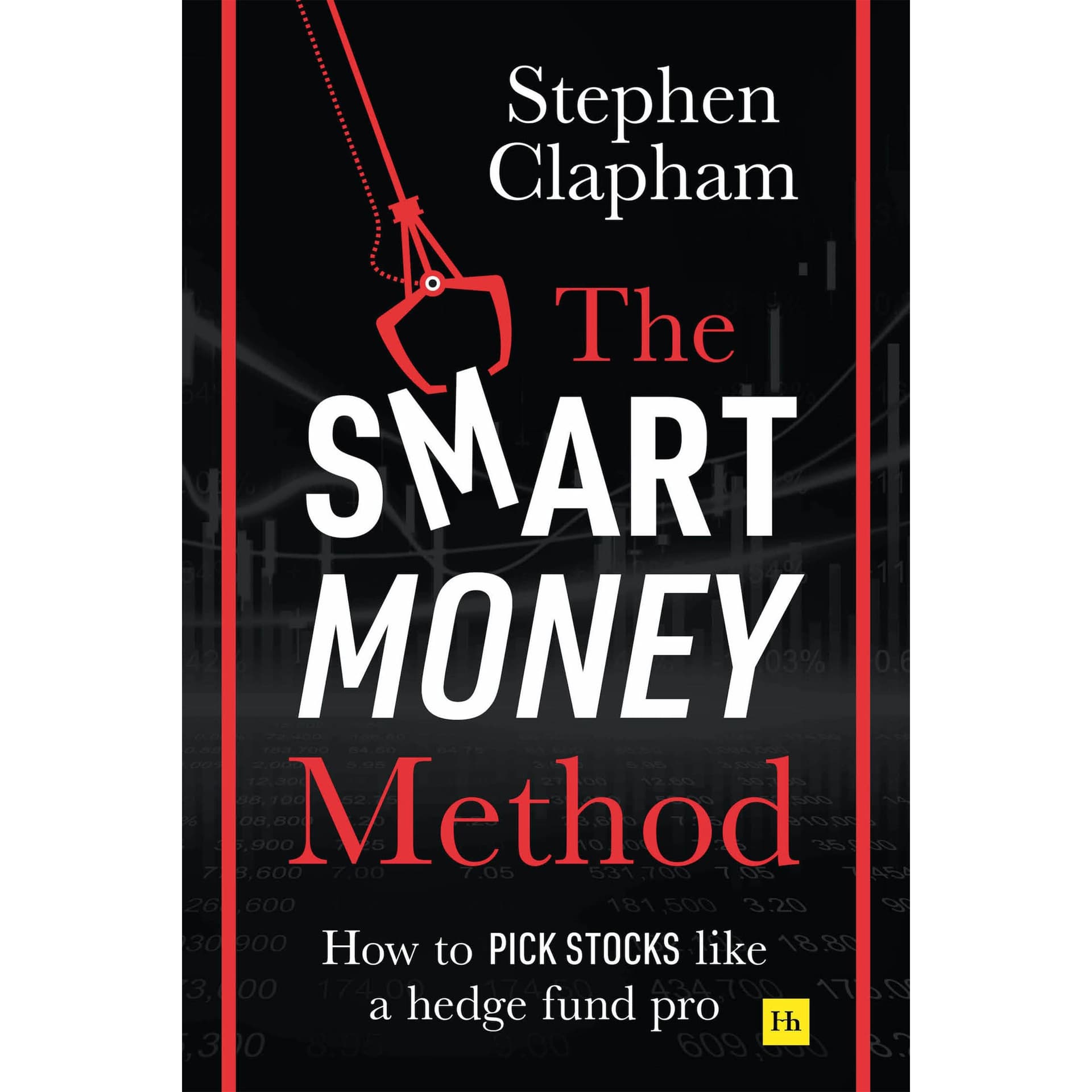
- Focus: Discussing Clapham's book *The Smart Money Method: How to Pick Stocks Like a Hedge Fund Pro*.
Key Themes and Insights
- Investment Philosophy and Writing Journey
- Clapham's writing was influenced by his extensive career in investment, noting that he maintained a notebook of lessons learned from various investors.
- His goal was to share practical insights accumulated over his career, which culminated in his book published in November 2020.
- Investment Idea Generation
- Clapham emphasizes the randomness of investment ideas, suggesting that they often arise from unexpected sources rather than structured processes.
- He encourages a diverse approach to sourcing ideas, avoiding rigid investment frameworks, and being open to novel insights.
- Value of Relationships and Networking
- Networking events, such as dinners with other portfolio managers, can provide valuable insights into market sentiment.
- Clapham shares experiences where consensus among investors can lead to profitable insights or caution against potential pitfalls.
- Understanding Shareholder Composition
- Analyzing who owns a stock is vital; Clapham points out that respect for certain investors can lend credibility to a stock's potential.
- He warns that a crowded trade with many high-profile investors may indicate risk, especially if the stock is already performing well.
- Analyzing Business Moats
- Clapham discusses the concept of moats in businesses, particularly focusing on pricing power as a key indicator.
- He encourages investors to understand how companies maintain their competitive advantages over time.
- Concerns Over Capital Allocation
- Special dividends are seen as a mark of good capital allocation, showing management's willingness to return excess cash to shareholders.
- Clapham criticizes the reliance on share buybacks as they may not always serve the best interests of shareholders.
- The Role of Debt in Valuation
- Understanding how debt is represented on the balance sheet and its implications for company valuations is crucial.
- Clapham notes the importance of evaluating when and how debt matures, and its potential impact on future cash flows and profitability.
- Impact of AI on Investing
- The potential for AI to enhance productivity is acknowledged, but Clapham remains cautious about its current capabilities compared to human analysts.
- He highlights the importance of human insight in the investment process, cautioning against over-reliance on technology.
- Bezel and Fraud in Investing
- Clapham discusses the concept of bezel, as described by Galbraith, which refers to the inherent risks of fraud and earnings manipulation in corporate reporting.
- Understanding these risks is essential for investors to protect themselves.
Conclusion
- The episode emphasizes the complexity of investing and the need for a multi-faceted approach.
- Clapham’s insights provide valuable lessons on how to navigate the investment landscape effectively.
- Recommendation: For those interested in deepening their understanding of value investing, Clapham's book *The Smart Money Method* is suggested as a resource.
Resources
- Stephen Clapham's Work:
- Website: [Behind the Balance Sheet](https://behindthebalancesheet.com)
- Podcast: *Behind the Balance Sheet*
- Substack: Weekly insights on investing topics.
Final Thoughts This episode of *A Book with Legs* showcases the importance of continuous learning in investment and highlights how traditional methods intersect with modern challenges in the financial landscape.
Written by AI. May contain mistakes. Listen to the episode to check what was said.
Transcript
Automatic transcript. May contain errors.0:02You're listening to A Book With Legs, a podcast presented by Smeed Capital Management. At Smead Capital Management, we advise investors who play the long game. You can learn more at SmeadCap.com or by calling your financial advisor.
0:20Welcome to A Book With Legs podcast. I'm Cole Smead, CEO and Portfolio Manager here at Smead Capital Management. At our firm, we are readers and we believe in the power of books to help shape informed investors. In this podcast, we speak to great authors about their writings. The late, great Charlie Munger prescribed using multiple mental models and analysis. We analyze their work through the lens of business, markets, and people. In this episode, we are going to learn about the many ways that you can skin a cat. Investing is a complex, multidiscipline process, and we'll discuss many different parts of that sausage making.
0:55Stephen Clapham is joining us to discuss his book, The Smart Money Method, How to Pick Stocks Like a Hedge Fund Pro. So, before we get started with Stephen, I want to give you a little bit of background on him. He's the founder of Behind the Balance Sheet, a London-based investment research and training consultancy. Also a podcast with the same namesake. Mr. Clapham spent some 20 years as an equity analyst at different investment banks, covering various sectors, and was highly rated among institutional investors he served. He then moved to the buy side of the industry, where he was a partner at Tosca Fund Asset Management LLP, and then head of research at Ultima Partners LLP.
1:29He holds a degree in technology and business studies and is also, I would note, a member of the Institute of Chartered Accountants of Scotland. Thanks for joining me, Steve. How are you today? Well, thanks for joining me. I mean, I'm very surprised by the introduction because I've never been described as a member of a group of great authors. and it's the only time that anybody has ever introduced me with my degree and the fact that I'm a member of the Institute of Chartered Accountants of Scotland, which is the best institute if you have to be a chartered accountant. Well, you know what? So since this is really a liberal arts podcast, we're learning to learn.
2:06And by the way, I would say as investors, as you point out in your book numerous times, you're learning to learn. I like thinking about education not for the purpose of, to your point, degrees, but for the purpose of what we have attained on a cumulative basis, you might say. So I wanna throw a plug in for your podcast. I mentioned it shortly, but obviously, Behind the Balance Sheet is the name of your podcast. I know my dad's been on that. And just for our listeners, that's out there. You should really check out his podcast. I kind of feel like I'm reversing the role right now, Steve, if that makes sense.
2:39In other words, I'm doing a Charlie Munger inversion, right? You're not interviewing me. I get to interview you. But I wanted to ask you, you wrote this book and published it five years ago. This is a cumulative collection of things you've learned over your career on both sides of the industry. But I wanted to ask you, what caused you to write this down? Was it a great check from Harriman House or did you just feel that this was the right time and season for you to explain what you've learned? Well, no, actually, none of those things. So I, as a child, I always wanted to write a book. I don't know why, but I imagined myself, you know, signing books and I imagined my book on the bookshelf.
3:21The irony of all this is that my book came out in November 2020 and it was never stocked in the bookshops in the UK. So my my vision was dashed and Harriman were the only people that were even remotely interested in the book. But how it came about was I used to keep a notebook, you know, of things that I learned. So I would go to a conference and I would talk to some other investors and somebody would say, oh, when I have that problem, I do this. And I used to go home and write that down at night. And I had this notebook with 80 pages. OK. And each page was something I'd learned. and I thought, well, I should really do something with this.
4:08And so I got home each evening and I typed this up into a Word document. Okay. And then I thought, what am I going to do with that? And what I did was I produced a set of, so I have these cards, you can see, and they're this size. and I wrote the headings of each of my pages on one of these cards. So I had 80 cards and I put them out in the kitchen table. And then I realized that actually this would make a book. Okay. And what I did was I thought, well, how, you know, what's the structure of the book? It should be about my investing philosophy. So what I did was I took all these things that I'd learned, 80 tricks and tips, if you like, and then just put them in around my sort of investment approach.
5:07I mean, call it an investment philosophy is too grand a term. I never set out to have a plan to be a specific type of investor. I just ended up, I started in the buy side and I figured out what worked. Sure. That makes sense. Well, and to your point, I think the other thing you – I don't want to say litter. That's the wrong term. But you put breadcrumbs throughout your book of other books that also influenced you. So, for example, you talked a lot, and I think I'll reference this at some point today. You talked about Phil Fisher's book, Pass the Wealth Through Common Stock, which is a wonderful book.
5:47He's got a couple books that are out there, and Buffett's often talked about him. So you put breadcrumbs out there about other books and reading that people can pick up, which I, to your point, is just a knowledge of wealth for people. Let me kind of kick it off like in a more interesting way. You discuss in your book that ideas in investing are kind of random. Okay. In other words, they come to you through various ways. Can you kind of explain the randomness of that for you? I have my own thoughts on this, but I'd love to kind of ask you, like when you get an investment idea, I think most people think it's a very rote process where, you know, X happened and you got Y and that's how you got your name.
6:27But that's not been my experience. And it's in reading your book. It doesn't seem to be that's been your experience either. No, I mean, I think this is partly because I was doing. So I should explain. I was a special situations investor. So we were trying to find stocks that had very asymmetric profiles. So the Altima Special Situations Fund was a 25 stock portfolio. Tosca Fund ran a financials fund and I did the non-financial stuff on the end. And so in order to qualify for either of those funds, a stock had to be pretty special. It had to have a very high potential reward and have quite a low downside risk.
7:08And when you're doing that, you can't find those situations through doing screens. And I never had that approach. And I've got this online school call, I don't know if you know, Behind the Balance Sheet has got this, we've got this Analyst Academy course, which teaches you everything you need to become a serious investor. And one of the things we talk about in there is how do you build a portfolio? And I think a very common mistake people make is they have hidden agendas, hidden correlations within their portfolio because they assemble their portfolio in a structured way. And I think it's actually very important to get your ideas from different sources because I think that makes a more robust portfolio.
7:57I agree. Let me ask you this. So like as an example, because I think the randomness of thought can actually cause the uncorrelated nature of the underlying investments. Is that what you're saying? Yeah. And, you know, how do you find an idea? And in the course, we got through, you know, half a dozen, 10 different ways of finding an idea. But usually what would happen would be I would have a watch list of various stocks for various reasons. Some of them would be thematic. Some of them would be valuation driven. and there'd be all sorts of reasons. There would be longs and shorts. There'd be, you know, we might be looking for a short in the United States because we had too long an exposure there.
8:43So I would be focused on that. But what I would find is I would pick up the newspaper or pick up The Economist or pick up a piece of research and I find something was happening. And that happened, you know, something was changing in the world and that change had not been reflected in a stock price. And that would get me interested. and I remember trying to explain this to an allocator, one of the big allocation firms and I was being interviewed about, you know, how do you find stock ideas? And they found it very puzzling that I didn't say, oh, you know, we're looking for stocks with a P below X and, you know, some rote systematic approach.
9:29And, you know, I don't mean to be critical of people that have a system. You know, if you can find a system that works, that's fantastic. But what worked for me was going looking for things that were changing in the world where something was going on and the stock market hadn't really appreciated the impact that would have. Sure. And by the nature of that approach, you're going to end up with quite a random set of stocks. Sure. No, I agree. We're based in Phoenix, Arizona, so this is not very typical for us. But you were in London. Let's say I'm the stockbroker. I call you up. You're a customer of mine.
10:16And I say, hey, Stephen, I'm hosting a dinner on Wednesday night. a bunch of other portfolio managers are going to be there. We're going to share ideas. It's a great place in the West End in London that we're going to have dinner. You show up at that. For you as a place to create ideas or find ideas, how do you look at those occasions and events that our industry will often hold? I'll give my own two cents when you're done, but I'm always interested to ask other people, do you get value out of those interactions with other ideas and people? Well, I like meeting other people and I like hearing the views because I like understanding what the market's thinking.
10:57And so the most useful part of that is where there's a consensus about, oh, the stock market's too high. I can remember one of those occasions where I went along and there was only one person that thought the stock market was cheap. So a bunch of these very sophisticated hedge fund guys from some very big name hedge funds. And the one long only guy said, oh, the stock market's cheap. And of course, he was the one that was right. And it was that when he said that, I was thinking, I'm very bearish right now and I really shouldn't be. It's quite useful for that. I've never taken away a stock idea from one of those dinners.
11:37and um i've often said oh that's quite interesting i remember um going to the to a dinner and i didn't do very many of these i mean there was one dinner one of my brokers did that i we got on very well and i liked his group of clients so it was it was more fun than than than work sure but one One of those dinners, there was a fund management group in London coming to the stock market. And the fund manager tipped his own company and his pitch was so bad, I burst out laughing. I went into the office the following day and said, we should short this. and um so you know often it was uh often the ideas weren't weren't brilliant and it was more interesting where you had somebody and pitching an idea that they'd own for some time and they were you know they were trying to get the stock price up or whatever they were trying to do yeah and you just thought that that argument just isn't very strong and if that's the best argument well, probably we should short it because it's probably reached the end of its life.
12:54But no, I didn't really get an awful lot out of those, but I did find they were very useful for making relationships. And some of those relationships, I have endured to this day. Yeah. Let's see, holders of a security. How do you look at the holders of security? Like if you go into like a Bloomberg and you pull up who owns a security, how do you look at that? and how do you assess information like that in your own investing and how you explain it in your book? Well, I think this is like one of the great secrets of investing. Okay. I mean, I don't understand why it's not like sort of high up on people's priorities.
13:38Because, you know, if I go and look at a stock and it's Smead Capital Management's largest position, Sure. I'm going to look at it and think, oh, that's quite interesting because I understand how you and Bill work. Well, I understand a bit about how you work and I respect you. And so if you've made it your largest position, that makes it much more interesting to me. Whereas there are lots of other people I would be less interested in. So one of the first things I would do when I was looking at a stock would be say, well, who owns it and who doesn't own it? Have they been buying it or have they been selling it?
14:13And, you know, this didn't work hugely well for me as a professional because I was buying things that were generally disliked, unloved, often hated. Sure. And if there were a whole load of, you know, high quality hedge funds already in the stock, it'd be much more difficult for me to pitch that to my bosses because they would be saying, well, why are you not the first? Sure. So usually we're buying things on the way down. and the shareholder register would be pretty scrappy. You know, it would be full of, you know, dull, boring, underperforming institutions. But if you're a private investor, why wouldn't that be the first thing you do?
15:01And if you don't see a Bill Nygren or a Bill Smead on the share register or, you know, a long list of other people, if you don't see any of those, you say, well, hang on a second, how likely is it that I'm the first one to spot this? And all those guys have got large teams of people who are really smart, who are getting all the best intelligence in the stock market. How likely is it that none of them have spotted this? And I think that's really, really useful. Sure. I also think a lot about the institutional pressure. So for example, let's say you find something like that. And let's say in a special SITS fund that you dealt in, you might be not liquidity constrained, for example.
15:43Well, part of the reason why they might not be there to your point is either it's a falling rock and therefore liquidity is, you know, diminishing quickly in the security, which means that like, you know, large institutional investors couldn't be present. But I also think about it, you know, I think back a lot and you touched on this actually, I think in your book, but I think back to like Valiant. When Valiant was going on, I mean, to your point, it was a creme de la creme list of who's who in smart money. And I won't name any names to protect people, but I just say it because I remember we looked through the roster and it was like, gosh, there's a lot of smart money.
16:20And so to your point on the dinners or holders, one of the things we always think to ourselves is we might be learning something to not do more than we are learning something to do. And I say that because if all the smart money's there, who's going to buy next, right? And there's like, where's the marginal buyer going to come from? And we try to, you know, that's why on some level, I mean, I'm really glad I live in Phoenix, Arizona, because I don't know a lot of people that are PMs per se. But at the same time, we always kind of try to give a different read into that data than I think we've seen in the past, if that makes sense.
16:57Yeah, I mean, sorry. if you've got, you know, a stock that's a hedge fund at all and everybody's in it, it's actually quite, usually quite risky. Very risky. Yeah, I would agree. But, you know, what I like are to see, you know, some names that I respect. And there's a couple of them on the register, two or three of them. And it's still early, you know, the stock's just turning. Yeah. And it's still early and the rest are going to come in. If everybody owns it and it's already gone up quite a bit, then it becomes very dangerous. As you say, I completely agree. But I do think I've had this conversation with a few people on my podcast.
17:38Chris Pavees and I had a debate about whether it was better to live in the Blue Ridge Mountains or in London. And I'm sure you have a high quality of life in the Blue Ridge Mountains, and I'm sure the air is cleaner and the water is better. But if you're an investor, being in London, yes, you do have a lot of noise or being in New York, you do have a lot of noise, but you also have the opportunity to see a lot of companies. And I think seeing a lot of companies gives you a huge fabric of information that is really, really valuable. Not necessarily about current trading, but it's more about the trends that they see, more about the things that they they tell you about their competitors or their suppliers.
18:29And I found that visiting a lot of companies, even if just going to a conference and listening to a lot of companies, gave me a view on what was happening in the world so I could identify those changes which were going to be reflected in stock prices later. Sure. So on that, what was a typical question that you liked to ask the company to ascertain something about their competitors? In other words, like, When I ask that question, I will often ask a company, hey, if I had to give you a silver bullet to kill one company in your industry, who would that be? And in a commodity business, they might say, well, the commodity, that's what I would kill.
19:09But in other industries, they will give you a name. They'll say, here's the company I'd love to kill, which, as you talked about in your book, that's very good information to understand. What was your favorite question that you enjoyed asking companies that, again, to your point, would come through town? Well, I would usually be asking this question after doing some research, and it would usually be, I would have identified there was some difference in the financial characteristics of their business versus their competitors. So typically it would be your sales are growing more slowly than a company XYZ.
19:43Why is that? What's enabled them to grow faster? Are they being more aggressive in price or similarly on margins? Occasionally, it would be qualitatively. I mean, I would, you know, if it was a company producing widgets, I would be trying to understand how they perceived their product versus their competitors. So I would say, you know, when the customer switches from yours to your competitor's product, what typically is the reason? Sure. And that sort of question, I think, can be quite helpful if you frame it in such a way that you can understand how they approach it. Because if they say, oh, we don't know, then you think, well, creaky, I don't want to invest in that.
20:30Because, you know, the one thing that you want to be laser focused on is customer losses. Sure. So if a customer is switching to competitor, that'd be something you'd be right on top of. And so the way they answer the question is almost as informative as what they actually say.
21:10is not indicative of future results. Investing involves risks, including loss of principle. Please refer to the prospectus for important information about the investment company, including objectives, risks, charges, and expenses. Read and consider it carefully before investing. Smead funds distributed by Smead funds distributors, LLC, not affiliated. Let's pivot. I wanna talk about moats. You have like an interesting section on the book where you discuss moats. And I wanna ask you, I wanna kind of be a little more philosophical in how I ask this because I love this discussion. It's something that we've gotten to a lot over the years talking about.
21:47So when I usually ask people about a moat, they don't explain to me how the moat got built or what the moat is. They usually can tell you about the attributes or the byproducts of the moat. And so I wanna ask you, how do you like, you know, just as a general framework, you know, to, well, I always think about the moat. it is the drawbridge that goes across the moat and you either get in or get out of that moat based on, you know, whether you can get through it. And that's the perfect picture of a moat. How do you think about the moat of a business? And then do we often confuse the benefits or the features or the byproducts of the moat with the moat itself?
22:32I mean, that's a difficult question for me to answer. Let me just explain why. Okay. You know, doing special situations investing, you're obviously interested in the quality of the business, but it's not the primary driver as to why you want to be in the stock. Okay. This is something that I've developed more after the hedge funds, actually, and I've become more interested in, more curious about. And I think there's a lot of, I think a lot of people get very confused about this. So one of the things I often hear people talk about is, you know, economies of scale and natural mold. Sure. And to me, you know, if you're Amazon or Walmart, your scale might be a mold.
23:21Sure. But it's very, very unusual. And I think there's lots of things that people talk about that aren't really molts. And the thing that I really tend to focus on is pricing power. Okay. And, you know, I just ask myself, well, you know, why is this company not raise prices more? And sometimes it can have very strong pricing power and have a very legitimate malt. Sure. But it simply not increasing the price allows it to widen the moat. So that would be the argument in favor of Costco, I suppose. You're effectively gaining market share in lieu of profitability. Yeah. And so I tend to start off with pricing power and ask myself, well, you know, can this company put out prices and why is that?
24:15Sure. Sure. And your drawbridge and moat is quite interesting. I've not really thought of it in those terms. I really tend to focus on pricing power and why a company would have one. But I think this is something, you know, for me, this is still a learning process. I listened to a podcast with Sir Chris Hohn by Nikolai Tangen in the In Good Company podcast. Nikolai's been an incredibly successful investor, a founder of AKO Capital, now runs Norgas Bank Investment Management. He's just been reappointed as CEO, and he does this fantastic podcast. And he was talking to Hohn. And Hohn, interestingly, he described physical infrastructure as a mold.
25:02Now, I'd not thought of this before. So Chris has been a big investor in airports and in toll roads. And, you know, obviously, if you've got a toll road or an airport, it's a monopoly type product. Sure. It's a monopoly business. And in fact, you know, having done the transport sector, when I talk about quality in my course, I talk about the difference between British Airways and BAA, the formerly publicly quoted owner of Heathrow Airport. Sure. And it's obvious if you own Heathrow Airport, nobody's going to build another airport next door, right? Correct. I mean, they can barely build another runway.
25:43And I hadn't thought of that as a moat, but obviously it is a moat. Sure. Well, it's your point. So it's funny. And here's why I say it. So most people like to talk about a moat of a business after it's done really well. and they have trouble identifying what a moat is when there is consternation or headwinds. So to your point, let me just use the analogy you're using. If I asked you, okay, Steve, I'll use the U.S. as an example because I know the U.K. and Europe are a little bit different on this. But if I said to you, hey, Steve, do you think anyone's going to build a retail mall in America over the next three years?
26:24What would be your response? Well, my response would be, I'm sure there'll be someone somewhere building them all, but probably not very many. And so here's why I say it, because there's two things I always think about. And I think people often get confused in the money. And then there's a big aspect of our life that we have to account for, which is the time. So to your point, there is the, well, you can't build one next door. There is the outright cost of what would it cost to do that. But then the point that no one would do it next door is what would be the entitlements and the time needed to actually get all the approvals to build an airport next door?
27:03And it's not the money. It's actually the time that keeps most investors out because in a time value of money, if it takes 10 years and you have to put up all that money, you have opportunity costs that are going to haunt you over that period. And so to your point, I think a lot about those things, the time it takes beyond the money, because I think in this world where it's like, you know, there's so much capital out there and so much wealth and, you know, there's so much, you know, private and public money. But then the one element that we have trouble getting around in almost every case is in some cases, it's not the capital, it's not the money, it's the time.
27:39Right. And so we think a lot about that. And I don't, you know, to your point, I think if I use Terry, Terry Smith, he looks a lot at gross margins as a way to understand pricing power, right? If you have high gross margins, you have the ability to raise price and any pricing pressures affect you less. So to your point, I think that's what Terry writes a lot about in his past. Let me pivot a little bit. So you talk about Coca-Cola in your book, okay? And a lot of people have talked about Buffett with Coke. So now let's talk about a feature or a benefit of strong moats. Historically speaking, strong moats exhibit high returns on capital or sustainable returns on capital.
Read the full transcript
28:25So let's use Coke. How do you look at Coke, at least using the example used in Buffett? because I guess I have a very different view of Coke as like a 41-year-old versus I think when I talk to a lot of baby boomer PMs, they talk about Coke as this incredible investment looking back when Buffett bought it in the late 1980s. But as I fast forward for most of my adult career, it's actually been a laggard. And if you look at the returns on capital, they actually don't really tell you what's gone on in the business. And so how do you look at those kinds of situations where there's a preponderance of huge investment success off of returns on capital where everyone can perceive the moat and then you wake up 10 or 15 years later and that moat is less perceivable and therefore the returns have gone to the wayside.
29:14Well, I'm not sure that Coca-Cola's moat is any smaller, narrower, however you define it, than it was 20 or 30 years ago. You know, it's got an incredibly powerful brand And, you know, it's a well run. I mean, clearly a well run and attractive business. The problem with Coca-Cola for me is, you know, when I look at Coca-Cola. So I did a project for a wealth manager here. And they felt they had a lot of expertise in the UK stock market. But they didn't really know anything about stock markets outside the UK. And they felt that they needed to have a product for their clients, international stocks.
30:05So I built an international model portfolio for them. One of the stocks they had in their portfolio was Coca-Cola. And I said, well, you need to get rid of that. And they said, well, why? And I said, well, it's not healthy. You know, if you look at a stock like Coca-Cola, it's making people less healthy, more obese. And that sort of negative externality today, or when I looked at it, didn't have a cost. You know, over time, this will have an increasing cost because every Western country has got an aging population. And what happens in an aging population? You have more health care costs. And you've got, you know, we've got an aging demographic, fewer young people working, more old people in the, you know, taking medical aid in the National Health Service in the UK.
31:09Sure. And Coca-Cola has got a very high externality cost. And therefore, I think that cost is going to be a bigger risk for it going forward in time. And I said, I can't remember what the valuation was at the time. You know, it's not that cheap. And how is it going to grow? You know, it's already got a very, very high penetration. Sure. So, you know, I think Coca-Cola is well managed. and they've done clever things about broadening their product range and so forth. But to me, it wasn't a stock that a wealth manager should be recommending for their private clients to have in their portfolio and own for 10 or 20 years because of those issues.
31:55Now, does that mean it's got less of a moat? When we think about the moat, that externality doesn't really factor in. And so, you know, all I'm trying to say is that, yeah, a moat is useful, but you've got to look at the total picture. Sure. And I'm very wary, particularly, you know, when I'm thinking about doing long-term investing, which wasn't my speciality when I was at the hedge funds. But when you're doing these long-term investments, I think you've got to really factor in how those sorts of things may change. Sure. Because those are the sorts of things that come from left field, sometimes very explosively and spectacularly, more often gradually, and they just erode your valuation.
32:46Sure. So you see the valuation shrink over time. Well, yeah, because when Buffett originally bought it, it was producing like 25 % return on equity. That then jumped up as like the German – the Berlin Wall fell in 89, and the emerging markets of the world expanded massively as a customer. So it went to 50%. And so I always point out to people like Buffett made incredible money from a 10-year perspective. And then I don't remember this, but he wrote about – he talked about Coke and Gillette as the inevitables, right? It's just inevitable that they're going to be the ubiquitous product in their category.
33:17You know, we'll call that a wide moat, you know, in our parlance that we're using here. And it was like the kiss of death because if you look since like 98, I think Coke's produced a single-digit return. Even though, to your point, it's had a strong moat. It's produced high returns. They bought back stock, et cetera. And to your point, I think it can show that you could take an incredibly high moat business like Coca-Cola and you could take high returns and you could take what could be OK capital allocation. And you can still take a security that over 20 years does terrible for volatile common stock risk.
33:51And I think that's something that, you know, especially with the era we're coming out of, most people are like, oh, it's a great moat. It's high returns. I'm going to make money. And it's like, that's not why the stock market was formed. It wasn't formed to find those two things and get rich. Like that's not the point. It's now, are there times I can do that more often than not? Yes. I want to pivot a little bit. So insiders, you talk about insider buying. I also love it because you're like going through a bunch of my hit list of like people I've followed. So you talk about like Mark Dixon, IWG, full disclosure, we used to own it.
34:24I got tired of watching Mark take margin calls, which also you commented on your book in that. I think the last iteration of the margin calls, like that's it. if he can't run his own personal balance sheet appropriately, I'm just kind of done with this. Because if he can't do his personal balance sheet, how can he run his corporate balance sheet? But then you also mentioned like Lord Simon Wolfson, who is, you know, obviously an incredible capital allocator at Next. We own Next. How do you think about insiders like them, you know, in both in transaction form, but also ownership form as you analyze investments?
34:54Well, I think, you know, director's dealings, I think, are slightly dangerous because I think people are people follow them blindly sure and you know the most dangerous thing is you get the the chief marketing officer buys a stock after it's been cut in half and nobody else does and he's never bought a stock before and he doesn't actually have a clue what he's doing he doesn't understand investing and you know the thing carries on falling i like to see you know more than one director buying. You know, I like to see them all, you know, all believing in it because then it's much more likely to be right.
35:37But, you know, if you've got genius capital allocators, genius managers like Lord Wolfson or my favorite is Michael Leary at Ryanair, you've got to be quite careful. You know, Michael Leary sold chairs every single year. And I said to him, Michael, why are you selling shares? What are you buying with the shares? That's actually why I asked him. And he said, I'm buying gilts. And what he was doing was he was de-risking his portfolio. And although Ryanair has been an incredible investment, he was buying gilts and made quite a lot of money out of zero-risk government securities. Sure. So, yeah, I mean, I think it's quite easy to identify now that Michael O 'Leary is a genius.
36:30It was actually quite easy 20 years ago. I mean, I tell this fantastic story about, you know, I used to do transport. So I initiated in Ryanair with a sell recommendation. And I sent the draft of my note to the company, to O 'Leary for comments. Okay. and he sent a fax back. I don't know why he didn't like to use email, but he sent a fax back saying, Steve, thanks for your note. You're wrong and we'll prove you wrong and good luck, you know. By the way, I love that. You know, we want the ball because we're going to score and win the game and we'll see you later. Yeah, no, absolutely. And the stock fell by 40 % and I upgraded from a sale to hold and I emailed him and I can't remember what he said.
37:27He writes the most funny letters. So, you know, he said something about, well, how long will it be before it's a buy sort of thing, you know? Yeah. We hope you're enjoying the podcast. You know, we work hard putting together this show, but we work even harder for our investors at Smead Capital Management. At Smead, we believe in discipline investing, which is why the Smead funds have a proven track record of long-term outperformance. If you're an investor who plays the long game and want to invest in wonderful companies to build wealth, we invite you to visit SmeadCap.com. Past performance is not indicative of future results.
38:05Investing involves risks, including loss of principle. Please refer to the prospectus for important information about the investment company, including objectives, risks, charges, and expenses. Read and consider it carefully before investing. Smead Funds Distributed by Smead Funds Distributors, LLC, not affiliated. There are very few of these people, and they're hard to identify before their scale is reflected in the share price. The problem with most of these brilliant managers, Mark Leonard at Constellation Software, you're paying quite a few turns on the multiple for the fact that it's Mark Leonard.
38:45Sure. And he's got to continue being Mark Leonard, delivering on a much larger scale. Totally. I agree. I agree. So so to your point, where these are really valuable is where their industry has gone into a downturn. You know, I look at it as like you want to buy those people when they were a swear word. Right. So to your point, when no one wants to touch Ryanair, that's the time to be interested in the great capital I'll cater. And I think people tend to use that as a reason to pay up. And the danger in that is paying up might already inhibit their better capital allocation. You mentioned, and I want to make sure I got this right, in your book, you mentioned that special dividends are a mark of a good capital allocator.
39:33I think you commented on that in the book. Explain that because I totally agree with you. But there's also a balance sheet implication that I think people often miss when thinking about dividends, specials versus regulars, but I'd love for you to kind of comment on that. Well, I think the attraction, so if you put yourself in the shoes of the director, put yourself in the shoes of the CEO, he's not necessarily a stock market expert. You know, obviously there have been amazing people like at Teledyne where they were very good at reading the share price. But not everybody is. And, you know, I've talked to a number of CEOs where they feel very uncomfortable about buying back their shares because they genuinely don't want to overpay.
40:18Sure. This is, you know, in the US, you buy back your shares and it doesn't really matter because the stock market has gone up and nobody's going to hold you accountable. Correct. If you pay a special dividend, you're accepting that your balance sheet isn't as efficient as you would like it to be. And you're just saying to your shareholders, look, I'm going to give you the money back And you can buy more shares if you want. The buyback is, you know, I think too many people buy back shares for the wrong reasons. They buy back shares because they've issued a load of stock to their employees and they don't want the share account to go up.
40:57That's a stupid reason. It's a stupid reason to do stock-based comp in the first place, I might add. In other words, like, why do you stock-based comp if you're going to do that? Well, I mean, that's a separate argument. I mean, I can understand why people want to give their employees stock. I think, yeah, I think. From an accounting perspective, to your point, like I can understand why the employee wants it. But from a pure business accounting perspective, it's a net net nothing if you buy those shares back. In other words, like, in effect, nothing really happened on the balance sheet. No, exactly.
41:30And but cash has gone out the door, but it's kind of evaporated. Sure. And nobody, I mean, the problem is that investors find it difficult to see that money going up. I liken it to stealing money out your back pocket, you know. But I think the, I like special dividends because it shows, one, that management are thinking about their balance sheet and they're thinking about their shareholders. So it's evidence that you've got shareholder-friendly management. And the other reason I like it is because buybacks only work sometimes. Sure. And, you know, I can't tell you how many times I've heard people say, oh, you know, it's a great company, great management.
42:18They're buying back shares. Nobody ever looks at what price the shares are bought back at. Sure. No, I agree. And, you know, and there's some amazing examples of this. Xerox. Xerox bought back. I mean, I can't remember how much their share count shrank. And the stock still tanked. If Xerox had given special dividend every year, their shareholders would be rich and happy. Why wouldn't you do that as a management? I mean, I know that there's this excitement about share buybacks. But, you know, buying your shares back when the stock market is collapsing, that is a good idea. Nobody ever does that.
43:01No, no, no. Because I'd often have to borrow money or do something like that to get enough excess cash to meaningfully move the needle. And here's why I like the special dividends. So let me give you an example today. So we own U-Haul. It's ran by the Schoen family. They do specials. That's just kind of the nature of the beast there. And they own 50 some odd percent of the business as a family. So I agree with you. I always find specials interesting because I actually don't like regular dividends. Now, why? Because you're a balance sheet person. I'm a balance sheet person. When I state a regular dividend and people expect it every quarter, you and I both know, Steve, that that is a recurring liability when it comes to the balance sheet.
43:43And as we all know, if your liability gets too high, what we call a high dividend yield, eventually those usually get cut because it costs too much in your capital base, right? So what I don't get also, let me go one step, like the second level of that liability is I don't even get the entire liability as the equity owner. If I own a stock in the UK, the UK government, as a US holder, is going to take, I think, 15 % of my dividend. And then my government's going to take another 8.6 % of my dividend. So as I point out to people, I don't even get the full amount of that dividend when I get it. The governments of the world are in the dividend business.
44:19But to your point, if we can buy stock to press, they're actually not in the buyback business in the same way. So I think about like the all flow through after tax effect of these capital allocations. And so at least on the special, you're saying, hey, I can't use all the capital and I don't think my stock is attractively priced. So you're saving me from two problems. One, the overpaying for the stock, but two, just sitting on it and doing nothing with the capital as an opportunity cost. Obviously, I lose part of that. So, but I just, I don't hear, like, I'll give you an example. We just watch a bunch of oil and gas businesses lower their leverage from high leverage ratios down to low.
45:00So they reduce their, call it their debt liabilities. And then some of these people, not all of them, but some of them, stupidly turn around and say, and we're going to raise the dividend, which is like lowering my liabilities on one side of the ledger to increase my liabilities on the other side of the ledger. I mean, the Martians would look from space and say, what are these guys doing? To your point, or it's just as foolish as a company that has an obscene multiple saying, hey, don't worry, we're going to buy back stock because we're good stewards. And to your point, it's like, what does that mean?
45:32I mean, there's a couple of things in dividends. So I often see people talking about dividend yield as a measure of valuation, which I think is very, very dangerous. I agree. I really don't think it's a measure of valuation. I don't mind companies with high dividends, especially if I don't really trust the management. Because I feel that a high dividend liability is a constraint. It's hard for the management to go out and do anything stupid. so you know they've got that in the back of their mind they've got to pay that dividend and so it it it makes them more conservative so i feel that if you're if you've got that as a as a requirement is in a way it's a safety net for for the investor sure the the other thing i like on about dividends is you know if you've got companies a long history looking at the dividends tells you quite a lot about, you know, is it a good company or not?
46:40Sure. You know, I like to look at the book value per share over a long extended period and the dividend record over a long extended period. If you look at that, that tells you the kind of nature of the company. I don't, I mean, I don't tend to own companies that pay high dividends. I mean, it's not, but I have, I have done an occasion when it's been, you know, something that's been a bit beaten up And I think, well, change of management, beating up high dividend is quite risky because they often cut the dividend. But if you've got a company with stable management, it's a bit sleepy, good chance that it'll get taken over.
47:26Good chance that things won't go badly wrong if it's a stable business. So I do pay some attention to dividends, but I don't dislike them in principle. Sure. Let's talk about debt trading at a discount for an issuer. So, you know, I think you talk about this in your book in light of if the credit markets are showing lower prices on the bonds than they should be. It's a flag, obviously, because there could be a possible credit risk or bankruptcy risk or whatever that may be. But, you know, and I think, you know, in the era of low rates, that was all very plausible. We're now in an environment where everyone's bonds trade for below par because they issued them at lower rates.
48:12How do you think about, you know, bonds trading for below par? Because obviously businesses still carry those at their stated book value, even though they could actually buy them back in the open market at a lower value. In other words, if you do an adjusted book value, you're buying the stock cheaper. But conversely, as we all know, if I adjust the book value, I adjust the returns. So it's kind of like this. I always point out to people, when you get into these situations, what I love about accounting is it's like Newton's third law of physics. He said for every action, there's an equal and an opposite reaction.
48:50So hey, the bonds are worth less than we're showing. Great. We adjust book up. The opposite reaction is it brings return on equity down. OK, how do you think about those? And do you think there's have you seen a lot of things like that out there where it kind of intrigues you and says, but wait, because this is a complex adaptive system, the system has adapted, but not fully yet. Yeah, so I have a very simple way of handling this. When I calculate the enterprise value and, you know, I like to use a series of equity based multiples and a series of enterprise value based multiples. So when I calculate that enterprise value, I use the discounted value of the debt.
49:32So I do it in both bases. I do it on a nominal basis because it's unfair to just do it on the discounted basis because eventually they'll have to repay that debt at the full amount. But I look at it in both ways and I say, well, hang on a second. if I look at it at the discounted value, I'm buying this actually quite cheaply. Yeah, because it's a total capital. There's a total cost of capital, to your point. Yeah. So I should recognize the opportunity. I also look at it as, well, hang on a second. When's the debt maturing?
50:12A parameter that I look at is the weighted average age of the debt. And I look at that over time. So is a company lengthening or shortening its debt maturities? And that can sometimes tell you about the psychology of the CFO, which I'm quite interested in understanding. But today, you've got a bunch of U.S. companies in particular that cleverly extended their debt maturities when money was very cheap. Sure. But lots of them didn't extend it for that long. Yeah. And there's a huge amount of debt maturing in 26, 27 that's going to cause quite a big uptick in the amount of interest these companies are paying.
50:57Yeah. And the thing that I think is quite interesting, Cole, is the Southside is so not switched on to this. So I don't know if you're familiar with global payments. Yeah. Yeah. Yeah. So they bought WorldPay. Yeah. A couple of months ago. and WorldPay is owned by private equities. I mean, I don't know if it's got any publicly quoted debt. I haven't checked that. But in the release, nowhere did it tell you what was the debt in the company they're acquiring. WorldPay is quite an indebted company and it's buying another private equity owned, private equity owned, highly indebted for certain company.
51:40And they're issuing some stock to pay for it, But no point did they tell you, well, you know, what's the total debt pro forma today or based on last year end or any of that, any number like that. In the earnings call, in the transcript, not one analyst asked that question. One analyst asked the question, oh, will you still be buying back shares? I mean, I was like, hello. And I think, you know, the quality of the sell side has been significantly dumbed down over the last 20 years. I don't mean this with any disrespect to, you know, sell-side analysts are listening to this. I'm sure you do a very good job.
52:19You don't get paid as much as you used to, and you have to work a lot harder. Sure. But the job has become juniorized. And if I were at a hedge fund today, I would find I spent, I had much less reliance on the sell side because the quality of the work just isn't what it used to be. And so this whole idea about the balance sheet, you know, balance sheet is completely overlooked. And I was delighted when Mr. Buffett talked about how he looked at, you know, years and years of balance sheets before he even picked up the P &L. And I was hoping that, you know, this would generate a lot of interest for my training courses.
53:05Well done, Mr. Buffett. Please do more of this because it happened. I was at the meeting too. Both dad and I were at the meeting. and when he said that, I had the same thought as you. I thought no one even knows what a balance sheet is today, like in my mind. So to your point, so you have this in your book. I love this. You like mocked the idea in a way of like, you know, dividend yield like we talked about, but also like PE. Like PE tells you absolutely, in my opinion, nothing about a business whatsoever. Because as we know, E can be manipulated. E does not tell you anything about the capital structure of the business.
53:42It doesn't tell you about its ability to grow its returns relative to that capital structure. So I want to, I want to, I'm going to hit at a couple things that I have here in my notes, but I really want to kind of, so returns on capital, we know are important to long-term equity returns. That's provable, you know, using as a general guideline return on equity, but you also talk about some people use like return on, on invested capital. That's typically my preference because I think about total capital structure, you know, that you can also use return on in incremental invested capitals, another one that you see out there.
54:15There's all these ways of looking at returns. But the reason why returns, I think, are so important is because Buffett was asked a question in the Berkshire meeting. Someone said, hey, Warren, what do you think about all this CapEx in AI? Which was like, oh, my gosh. It's hours into the meeting, Steve. And they finally ask a good question this year. This is like actually an exceptional year of the last five. There's a good question. And so Buffett doesn't answer it because that's just not his normal course these days. But he says, you know, that's a good question and we'll see. But he said, we all know the best kind of businesses are ones that don't need capital.
54:55And it's just like, ah, it's like, you know, this is not Jesus speaking, but it's like Paul or John, one of his apostles are speaking. And you're like, let that sink in. Because in my mind, As you and I think about a balance sheet, what he's saying is this CapEx goes onto the balance sheet whether you make money on it or not. One of the questions I want to ask you out of that is you talk about growth CapEx and maintenance CapEx, which are important components to understand. But have you seen more of a history where growth CapEx can be dangerous versus maintenance CapEx, the danger to it is it could be understated?
55:37Well, I think what I've seen quite a bit of is companies that claim more of their CapEx is for growth. When it's maintenance. When it really is. So they understate the maintenance capital expenditure. I always like to think about the maintenance capital expenditure because if you're looking at the free cash flow yield, looking at the free cash flow yield after the growth CapEx is unfairly penalizing the company. Sure. But I had this discussion on my podcast with George Mikulakis about why the tech companies significantly boosting their capex, which almost inevitably will reduce their returns. I mean, it would be.
56:23Just by mean reversion, just pure mean reversion by the spend. Well, I mean, these are all very high returning capital businesses. So it's just impossible that these investments in AI could possibly do anything other than depressive returns, even if they got some profit out of it, can in a million years be equal to their normal investing. so well no real quick let me stop there because i i want to i want to dig in on that because there's so the history of these businesses to your point if we're thinking about analyzing this are opx right they used expenses in their income statement that created the profitability so it was not a hard good um like we're seeing today in how they account for this spend on ai so i tell people like you know if you say cole i'm really good at creating asset light businesses through opx i'd be like, well, that's totally plausible.
57:17And then you come in two years later and be like, you know, I've decided that I'm more of a physical asset person. I'd be like, I'm sorry. I don't tend to see people that can transition that well from being a, you know, non-tangible, or I'll call it a non-tangible person to a tangible. And to your point, they will by nature grow their book value. The real question, like Buffett was pointing to, is, you know, really what's the profitability and or, the second question could be back to our framework idea, is time. How much time will it take for that to grow in? Is that a fair, do you think that's a fair, I mean, I think that's the$20 trillion question today, if you will.
57:56And you want me to know the answer? I mean, come on. I'm expecting you to tell our whole audience that. Well, I think AI is terrible. No, I think AI is terribly interesting. And, you know, I've been trying to learn about it. Sure. And I'm actually writing in my sub stack about how I use AI. And I'm scared. I haven't published it yet because I'm scared people will think I'm an idiot because, you know, what do I use AI for? But isn't that how we make a bunch of money is we choose to look like idiots from time to time? And, you know, once in a while it pays us well to do that? Well, what I find very interesting is I hear people talking about how they're going to use AI to replace analysts.
58:34Sure. And, you know, AI, I mean, there's no question that it's a productivity boost. I mean, no question about that. And you can definitely use it to help you with investing. But it's a long way from having the power of an analyst. Now, I'm sure it will improve over time. But I think it's been slightly overrated. You know, when you think we're two and a half years into ChatGPT. Sure. And it's still not that good. I mean, it's not unhelpful. Don't get me wrong. It can really save you time. It can really help you particularly understand a new area. um you know i was writing about the difference between the valuation of a different american sports teams and obviously i'm scottish yeah and you know we which means you're brilliant but go on we don't play sports very well and we've only got a limited number of them and so just trying to understand what what should be the relative valuation of a baseball team versus a football team versus a nice hockey team chat gpt or perplexity i mean they're very good at explaining that sort of thing i mean that that's fantastic and it would have taken me a long time otherwise but they're they're they're good for the first step they're not good at the the seventh the eighth ninth tenth steps and as you said at the start investments are multi-dimensional very complex game.
1:00:15And I don't think they're very good at multi-dimensional complex games yet. And I always laugh because I hear people say, oh, AI has been amazing for me. And when you ask them what they do with it, they don't really do very much. They use it to summarize a report. Yeah. And I'm like, well, that, yeah, I mean, you know, that's table stakes. Yeah. No, I haven't seen very many examples of investors that have been able to use AI to really make their process more effective. Sure. Hey, I want to give a big shout out to everyone who's been working so hard on this show. You know, we recently hit the top 10 in investing podcasts on Apple Podcasts and even number one in the business category in several countries.
1:01:05As you may know, this show is brought to you by Smead Capital Management. Smead Capital Management understands how frustrating and illogical the stock market can be. If you're searching for funds with a proven track record, give the Smead funds a look or better yet, reach out at SmeadCap.com. And don't forget to mention your fan of the podcast. Past performance is not indicative of future results. Investing involves risks, including loss of principle. Please refer to the prospectus for important information about the investment company, including objectives, risks, charges, and expenses. Read and consider it carefully before investing.
1:01:40Smead funds distributed by Smead Funds Distributors, LLC, not affiliated. So let me walk you through. And again, I joined this because as I was reading your book, I was thinking a lot about our process and things you talked about in your book. So we talked about stock-based comp earlier. So let me just use an example because, again, I think about this as like how do I learn and practically use this in what I do. So when you talk about the spend they're doing, we've tracked this. We're super glued in on this. So these businesses used to do 12 % of CapEx as a percentage of sales five years ago. Okay.
1:02:16This year at last year, they did about 18 % capex to sales. This year they're on target to do 21. If you said, Cole, predict me the future, what's next year going to be in 26. I think Steve, it's going to be 26 % capex to sales among the hyperscalers. Okay. Now you talked about common sizing in your book. I love that. I frigging loved that you had your students common size the balance sheet before you'd tell them what the company was, because you'd ask them, what industry is this? Because to your point, industries overnight usually don't change. And so you can look at common size balance sheets, and you can kind of predict what type of business, what's its capital intensivity, things like that.
1:02:58But using an example like this, if I go out and say, you know, what's an oil company capex to sales, it's about 30%. And so if you came to me five years ago and said, Cole, the most marvelous technology businesses in the world are going to end up being 26 % capex to sales, I'd say to you, well, it sounds like we have holy hell to pay because that's what an oil company does. And those are low return businesses. And yet, to your point, everybody loves that. They love the idea of them spending that money. And I don't get it. Well, I mean, it's a, I'm going to say that AI is a fad in the stock market.
1:03:43AI is clearly not a fad. AI is - Well, we're going to use it. The internet wasn't a fad either. But from the stock market perspective, the stock market's view of AI is that it's the next big thing and everybody's going to profit from it. And that's clearly nonsense. Sure. Let me ask you about a couple other adjustments, because again, the other thing that I think to just touch on, it's multidimensional. So for example, to your point on the sell side, if someone asked me what are sell side analysts good at, I'd say they're really good at one thing. They're really good at predicting quarterly earnings.
1:04:17I mean, they're extremely good at that. That's what, like as a child, they drop crayons and they predict how many crayons they dropped. And the mother is like, gosh, you should be a sell side analyst. You're really good at that. And from then on, they go to great schools and they go through their pedigree and their internships and become sell side analysts. Now, here's why I say it. To your point, how earnings affect returns on capital, I think those are very confused today. I think it's that whole idea of what that is. So, for example, to your point, you talked about in your book how stock options used to not be expense.
1:04:47And as we know from history, Buffett used to say, well, if it's not expense, what is it? And then PCAOB came in, changed that. So, it's now expense and gap. But the sell side doesn't really care about gap earnings. things, what they do is they make their adjustments to get to how they want to view it and how they'll, I'll just use a kind of a primer of this, but they'll commonly say, well, here's the free cash for the business. Now, as owners, you and I would say, well, let's use Google. I think the street's expecting Google to do$73 billion in free cash this year. And everyone says, great, that's awesome.
1:05:17They have a$325 billion book and therefore look at my returns on capital. But you and I are, we're not the village idiots. We're not very smart, but we're not the village idiot. We do know that. And so we might come in and say, well, you know what? But 30 % of that free cash is actually stock-based comp. So let's remove that out of the free cash flow. You know, Buffett used to call this owner earnings. And at$53 billion, that means that Google, one of the most successful businesses in the world, one of the biggest modes, one of the biggest monopolies I've ever seen in my lifetime, is actually only producing about 16 % returns on capital.
1:05:55and this is supposed to be the most climactic opening to the next era. And again, to your point on returns, I can't figure that out. I can't figure out why from an accounting perspective, this is saying that this is not that great. And to your point, from a stock market perspective, people just think this is the greatest era that we're walking into. And here's the other catch. You said this earlier, Steve. It's like you're bringing all my thoughts to a single point. When I walk into a room, and I've interviewed a lot of people on this, and I'd love to ask you this question too. If I asked them, hey, Steve, would you rather take the 10-year treasury at its 4.2 % rate today, or would you take the S &P 500?
1:06:36What would be your response to that? Oh, man, that is a terrible decision because I wouldn't touch the 10-year treasury with a long barge pole. Okay. And I don't think that's – well, you – No, here's what I love about it. So it's funny you say this. This is the same response I get out of everybody, though. That's what's weird to me. Everyone's on one side of the boat. So as a general rule over decades, I'm with you on that. But I don't think the S &P is going to make 4.2%. Well, the thing – so you're confusing return on capital with return of capital. Sure. I think that the U.S. treasuries are going to have an existential crisis.
1:07:21I mean, I agree. Because of the, and you talk about this in your book, the debt buildup is massive. I'm totally with you, but that's the risk-free rate. Yeah, it's the risk-free rate, but it's not a risk-free instrument. Correct. So let's take that one step further. So it's, to your point, there's risk. I mean, do I need to have the S &P 500? Could I not have the ACWI or the UK stock market? No, no, no, no. But here's what I say. When I go across the world, and I don't think most people know this, but I'll go sit with an institutional investor or an insurance company, say, in Thailand. And if I say, hey, what does your equity portfolio look like?
1:07:5370 % of theirs is the S &P too, because it's just a MISC World benchmark portfolio. And so I point this out because this is not like a U.S. investor risk. This is a global investor risk. The S &P is more over-owned. And I find it interesting, like again, back to the dinner analogy. I can't find a stock picker that says, I'll take the 10-year. because I think the equity risk premium is terribly negative today. Terribly negative. Well, I think, you know, I think the issue is that there's actually quite a lot of good companies in the United States and there's quite a lot of cheap stocks, even in S &P 500.
1:08:32Agree. I think the problem is that, you know, it's very, very skewed. And the problem is that I can't see the U.S. Treasury being a market in which anybody should reside in the next 10, 15 plus years. Sure. If you'd said to me, you know, would I rather have German boons? I mean, Chinese government bonds, Indonesian government bonds. I mean, you know, there are loads of government bonds I would rather have less than be 500. The U.S. would be a very difficult call for me. Well, to your point, Steve, I always tell people you could get a monkey drunk, throw a dart on the world map, and you're probably going to hit a stock exchange that's going to beat the S &P.
1:09:28Like that's the preponderance of likelihoods. So I agree with you there. No, I mean, no question. The S &P 500 is overvalued. The U.S. stock market occupies two dominant positions in global stock markets. Your economy is a very small, I mean, it's a large economy, but it's small relative to the global economy. Sure. I mean, emerging markets, you know, if you look at it in terms of population area, I mean, population growth, I mean, any sort of real world parameter, emerging markets look much more like America does as a proportion of the global stock market. Yeah. And, you know, the things are the wrong way around.
1:10:13And I can't believe that in, you know, in 10 years time, 20 years time, where if we were having this conversation, that we wouldn't look back and say, oh, wasn't that exceptional that America was so, so, so dominant? and it seems inevitable that this will decline, but I don't know what the trigger is because when we had these problems with the tariffs in early April, I wrote a long piece for my sub stack because I kept seeing people talk about buy the dip and I said, buy the dip. Have you looked at what's going on? And of course, the people have said buy the dip. We're absolutely right because we're back.
1:10:58And I said, well, hang on a second. I've got no idea what President Trump will do. I actually said, I'm not sure that President Trump knows what he's going to do. But if I look at what people on the other side are going to do, I think that's quite predictable. And yeah, I think the S &P 500 is overvalued. So let me ask you a follow-up to that. So cost of capital is going to be higher. You sound like you have an inflationary air to that sentiment. And I think the history of the world is governments fight wars, borrow too much money, and they figure out ways to pay it off later. The only two ways, ultimately, in the long run are taxes and interest costs.
1:11:40Funny enough, that's the primary driver of corporate profits are interest costs and taxes that changes margins hugely. But because of what's gone on the last couple of years, the other thing that I think, and And you touched on this in your book in your kind of post-COVID notes. Onshoring and supply chain movements do something on the balance sheet, though, which is that they're going to increase the working capital that businesses have to retain because we're out of the cheap money. I'm going to go hire an Asian company to go do it. They're effectively my off-balance sheet financing unit to build my widgets.
1:12:18and therefore I can run negative tangible capital because it's sitting on their balance sheet, I see, whether it be through taxes or interest costs or a balance sheet movement like that in this more fragmented world, that the returns on capital, I'll just use U.S. businesses since we're on the subject, the returns on capital U.S. businesses are going to decline. Corporate profits, percentage GDP will decline because those are real things that anywhere from your 27 debt overhang that we're going to have to roll that debt or out to these capital structure issues, these are going to have to be met and they're just different than the risk that was there 10 years ago.
1:12:57Yeah, I mean, I slightly regret adding that chapter, which I added in at the end after I'd sent everything to the publisher, but I just thought it's daft to have a book come out when we've had the pandemic without saying anything about it. Yeah. And I'm not sure that that chapter stood the test of time as well as the rest of the book. But the one thing that I did think in there was that the reshoring has two implications. It inevitably depresses your return in capital because you've got twice the assets. So before you had one set of assets in China or wherever and nothing here. And as you say, you're extending, you're inflating the inventory.
1:13:42So you're depressing returns in that way. And yeah, I mean, corporate taxes, I guess, have to go up, right? And I guess we're going to have more inflation. So I guess interest rates are going to be higher. So all those things point to lower returns. The only sort of light at the end of the tunnel, if you like, is AI, because AI could remove quite a bit of labor expense. Sure. And I've got no way of gauging how much of a benefit that will generate. But it should generate some benefit. Let me ask you a follow-up to that then. If I said to you that the internet was revolutionary, okay, can anything be more revolutionary than the internet when it comes to access to goods, price discovery, et cetera?
1:14:38can anything really rival that? Because I don't think so. To your point, I think we're going to use AI ubiquitously. I think we're going to use it constantly in our lives, but it's evolutionary relative to the internet. Oh, I'm not sure. I'm not sure. I mean, I genuinely don't know the answer to this. And it's quite a big philosophical question. But, you know, you would have imagined that the internet would have been revolutionary in terms of improvements in productivity, but it wasn't really. And AI does have the potential to improve productivity significantly. It may or may not arrive, but obviously there's lots of processes that can be done by a machine that were previously done by people.
1:15:34Sure, well, to your point, cost came down with the internet. In other words, like the cost of goods came down. So consumer savings went up because of cost of goods sold were coming down. So, you know, it's the expense side that was benefited there versus you're arguing that it's a human activity, human economic progress and productivity. And you're just getting far more. And therefore, maybe that's good for incomes. Yeah, well, I mean, it could be very good for corporate profitability and returns. Although at the end of the day, you know, you need workers to be able to buy the product. Yeah, because we have this other thing.
1:16:14We don't have enough people in the Western world because we seem to not be able to figure out how to mate with the opposite sex anymore. I haven't figured it out myself. I have four children in full disclosure, Steve. So but if we don't have people, I can't see how labor doesn't get more expensive because scarcity always creates value. You would you would imagine so. But, you know, I when I look at the UK, you know, graduates finding it very difficult to get a job. Sure. So, you know, I'm not familiar enough with the situation in the United States, but certainly in the UK, we're not seeing that escalation.
1:16:58And it's only in, I mean, it's very pronounced, the wage escalation is very pronounced in certain sectors, but those are quite narrow sectors. Sure. Well, to your point, I mean, like what we're seeing here is if you're a white collar person, guess what? There's just less demand for you than there was, say, 10 or 15 years ago. Versus if you're a trades person, like you can, you have a trade, you do tile work, you're, you know, a plumber, insane demand for you. So to your point, and it's a very different group of people who are in demand today versus what was 20 years ago, let's just say. Last thing, you quoted a book and a section of a book that I don't ever hear anybody talk about.
1:17:41It's right at the end. You talk about Galbraith's book, The 1929 Crash, and you talk about his idea of bezel. Can you quickly just comment on this? because I love this and nobody, I don't ever hear people talk about bezel. So as I was finishing up your book, I was like, he mentioned bezel. Steve is such a great Galbraith student. I love Galbraith. So could you just kind of explain what bezel is briefly? Well, I mean, it's really fraud, isn't it? You know, one of the things that I've been quite focused on, and when I was writing the book, especially in the latter stages, I was very focused on. I was building my forensic accounting course.
1:18:27So, you know, my main business is I train professional investors and how to be faster, better, more effective at reading 10Ks and annual reports. And I was building this forensic accounting course. I spent six weeks in the British Library. And I was thinking about, well, how do you build a forensic accounting course? I thought, well, the most extreme example of cheating is fraud. And so I studied 60 or 70 frauds. So when I was writing the book, I had fraud in the back of my mind for all time. And that's why I mentioned the bezel. And the bezel is really, you know, stealing from innocent people, isn't it?
1:19:07It's scammed. And I think he points out that when it comes to light, it goes from being bezel to what we refer to as embezzlement, right? Once it comes to light, it's embezzlement. And bezel is always present, I think Galbraith says. and yet it doesn't get exposed until certain junctures. And then we know it as, to your point, embezzlement and fraud. Let's see, you have your courses, Steve. You have your podcast. What are other places people, our listeners can follow you going forward? Oh, sure. And I should just say on the subject of bezel, earnings management and the inflation of earnings by CFOs is more widespread today, Cole, than at any time in my career.
1:19:53It's exceptionally prevalent. But you can find me on Twitter at Steve Clapham. I'm not on there that much. I don't like the environment as much as I used to. I'm on LinkedIn. The website is behindthebalance sheet.com. The top right is a sign up button. I've got a free weekly sub stack where I write on all sorts of subjects. I've got the podcast Behind the Balance Sheet which is on all podcast players. It's much less popular than yours. I'm jealous of your audience but hopefully some of them will be attracted. And if you're interested in learning about investing, I've got the online school which is on the website behindthebalancesheet.com and I do these courses for institutional investors mainly.
1:20:44Again, all the information is there And if you want to get hold of me, info at BehindTheBalanceSheet.com. I appreciate it. And what I haven't said to our listeners yet is to a UK audience, I think you're kind of famous to a UK audience. So I love this because we're taking a bunch of American Yankees and saying, hey, there's a world outside the United States. And by the way, Steve's dealt a lot of his career in that. And you have quite a bit of following there. And so kudos to you. In the UK, I'd rather be you, frankly. So, Steve, thank you for your time. Your book is a great way to process the many aspects of investing, whether you're just starting out.
1:21:25I think you do a really good job of, we're in intern season in the investment business at a lot of the banks. And so if you're an intern and you're, how do I get into investing? I think your book's a gateway drug. Or reminding yourself, like a person like me, great elements of the process that you already use. You provide some great things to think about, particularly in red flags, like we just talked about a second ago, and issues that investors must understand or just frankly avoid at all costs. Go get a copy to The Smart Money Method to dive deeper into your analysis. If you enjoyed this podcast, go to Apple, Spotify, YouTube, or wherever you listen to A Book With Legs.
1:21:59Give us a review. Tell others about the books and great authors like Steve Clapham that we have the chance to study the world with and through. For our tribe, if you have a great book that you'd like to recommend, email podcast at smeadcap.com. That's podcast at SmeadCap.com. You can also send your suggestions to us on X. Our handle is at SmeadCap. Thank you for joining us for A Book With Legs podcast. We look forward to the next episode. Thank you for listening to A Book With Legs, a podcast brought to you by Smead Capital Management. The material provided in this podcast is for informational use only and should not be construed as investment advice.
1:22:37You can learn more about Smead Capital Management and its products at SmeetCap.com or by calling your financial advisor.
From the publisher
In this episode, Cole Smead sits down with Stephen Clapham, founder of the London-based investment research and training consultancy Behind the Balance Sheet, to discuss his book “The Smart Money Method: How to Pick Stocks Like a Hedge Fund Pro.” Their conversation explores Clapham’s investment philosophy and methodology, his perspective on legendary investors such as Warren Buffett, and more.


