Ask ChatGPT

 Alt Goes Mainstream: The Latest on Alternative Investments, WealthTech, & Private Markets
17 Sep 2026 · 1h 16m · 30 chapters
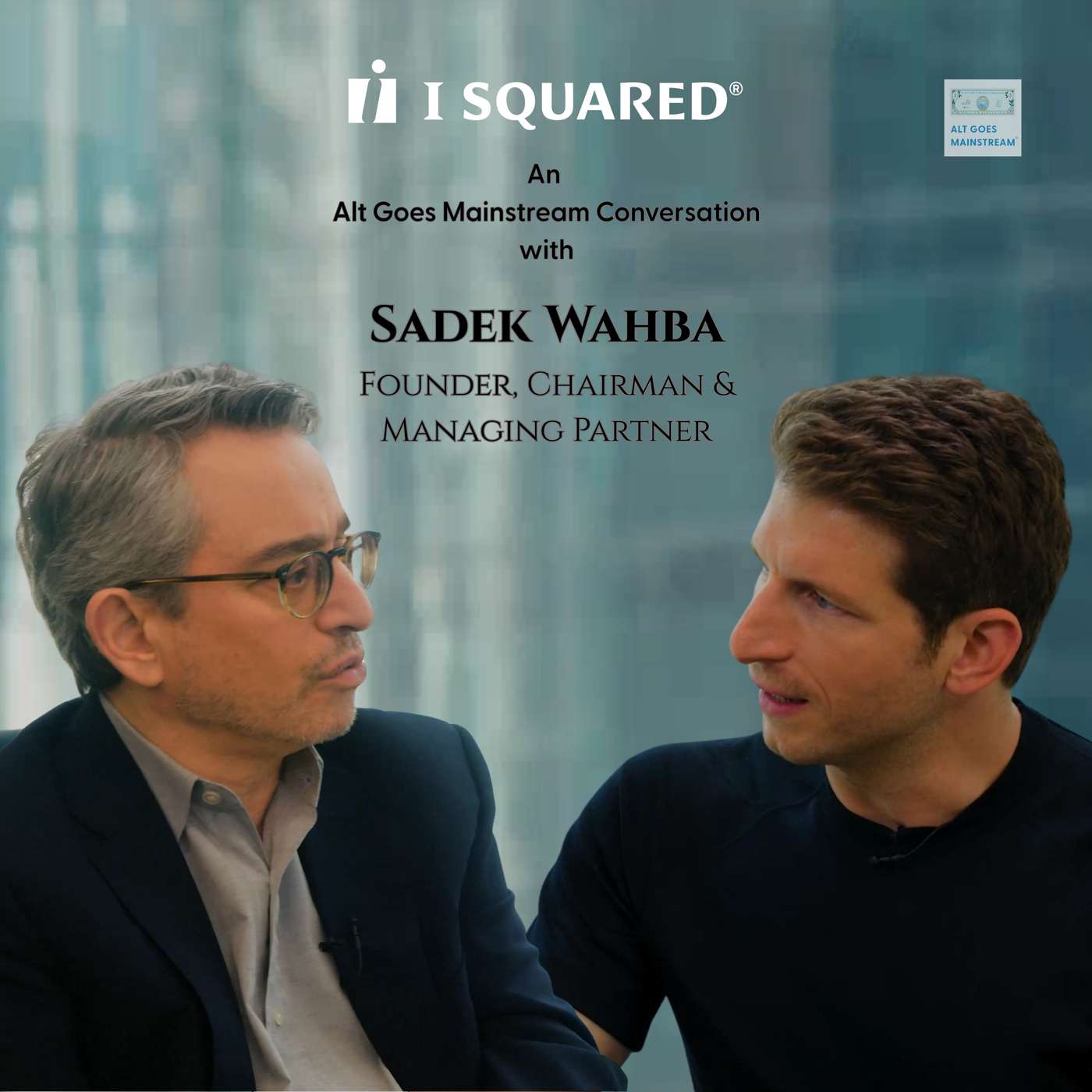
Dr. Sadek Wahba (I Squared) explains how to “Build” infrastructure investing in the mid-market, emphasizing long-term service quality, correct pricing/user fees, and a risk framework that avoids “too good to be true” returns. He links infrastructure to economic growth, discusses government/public-private roles, and argues that regulation risk is the hardest to underwrite.
Dr. Sadek Wahba is an infrastructure investor and academic. He spent three years at the World Bank (IBRD, government-to-government infrastructure lending), worked in infrastructure investing at Lehman and Morgan Stanley, and is now founding/leading I Squared, a ~$60B infrastructure specialist focused on credit, infrastructure equity, infrastructure technology, and energy transition infrastructure.
Written by AI. May contain mistakes.
Introduction of Dr. Wahba and his background in infrastructure investing.
“I'm dressed in my, I guess my Miami uniform.”
Discussion on how Dr. Wahba's experiences have shaped his views on infrastructure investment.
“You have such a fascinating background across working in IGOs at the World Bank.”
Exploring the importance of the private sector in infrastructure investment.
“When I was at the World Bank, the private sector played a very small role.”
Discussion on I-Squared's approach to infrastructure and their investment strategy.
“And the moment you put these variables into play, you look at the investment in a very different light.”
Insights into Dr. Wahba's book 'Build' and its relevance to infrastructure.
“segue to the book you wrote recently, Build.”
Explore the necessity for significant investments in infrastructure to support AI and data needs.
“So before I answer, I'll add a couple of things.”
Understand the political and historical reasons for the current state of U.S. infrastructure.
“It's also because you want to have the infrastructure itself run in a more efficient way.”
Learn about the rise of municipal debt and its effects on city infrastructure.
“as to who ultimately is responsible for delivering that infrastructure.”
Discuss the difficulties municipalities face in funding infrastructure and maintaining quality.
“What has happened since, especially towards the Great Depression, is that government became much more involved.”
Examine the philosophical debate surrounding user fees for public infrastructure services.
“So water or electricity or the road has to have a fee, a user fee, so the people who use it pay for it.”
Investigate the relationships between ownership, management, and regulation in infrastructure.
“whoever it is, manage it in an efficient way, charge whatever it is that you need to charge to cover your expenses.”
Discuss the complexities of finding the best models for managing infrastructure assets.
“Because you have, I hope it seems obvious, but you have a fundamental conflict of interest.”
Explore the relationship between ownership, management, and incentives in infrastructure.
“It could be an independent regulatory body, which is ultimately reports to some state legislator or whatever, but it should be separate.”
Learn how I-Squared Capital aims to provide sustainable infrastructure solutions.
“I want to transition to how you think about investing at I-squared.”
Understand the balance of risk and return in infrastructure investments, focusing on the middle market.
“we do it carefully, intelligently, and we do it in a way that also earns a return for our investors.”
Learn how investing in the mid-market allows for flexibility and control in investment outcomes.
“Or it could be that there is, yes, absolutely higher risk, but the returns are worth it.”
Discover the key traits that make an effective management team in infrastructure investments.
“You mentioned the management team being so critical to the success of many of the businesses you're building.”
Explore how AI and technology can revolutionize infrastructure management and investment.
“And that, I think, is going to be the next generation of infrastructure-type investments, which is combining technology with infrastructure.”
Understand the advantages of building platform companies in mid-market infrastructure.
“enter into a business that is well developed at a very high multiple multiple meeting your ebda to enterprise value or enterprise value to EBITDA is a very high number.”
Learn about the dynamics of competition and capital allocation in infrastructure.
“So rather than put a billion dollars of equity to find out that, oops, something has changed, if you invest 50 million, 100 million and you're able to grow.”
Gain insights into the need for infrastructure investment and its potential challenges.
“We invested in data centers, more traditional cloud-based data centers in growing economies.”
Understanding the critical need for private sector investment in infrastructure.
“There's a massive need to invest in infrastructure.”
Discussing how individuals can invest in local infrastructure projects.
“So I think that's also a great segue to you've built, I squared it into a$60 billion firm you're now building out the wealth business.”
Exploring the potential for infrastructure investments within wealth channels like 401ks.
“that has visible cash flows, and you know what?”
Examining the role of political will in the ownership and funding of infrastructure.
“The first thing I told you was political will.”
How the infrastructure industry can better engage investors and educate them.
“So that equation was resolved in Australia pretty successfully.”
Discussing the necessity of private capital for sustainable infrastructure development.
“There's a whole conversation around that.”
Exploring the reasons behind onshoring investments related to national security and industrial production.
“You want to be able to have access to certain products for national security reasons.”
Discussing how the skill set for infrastructure investors may change in response to current trends.
“So you asked, is this a secular long-term trend or this is shorter?”
Understanding the personal motivations and rewards behind infrastructure investment.
“You've seen it through so many different perspectives from working at the World Bank to being an investor, academic.”

Get the gist, explore an idea or ask about something said.
 Claude
On Alt Goes Mainstream: The Latest on Alternative Investments, WealthTech, & Private Markets, what are the key points of this episode?
Searching your listeningAutomatic transcript. May contain errors.
0:00Welcome back to the Altco's Mainstream Podcast. I'm here live in I-Squared's office in Miami for a conversation with Dr. Sadek Wahba. Fascinating discussion with someone who has really seen it all in infrastructure from working at the World Bank to investing at Morgan Stanley, now starting I-Squared, a$60 billion infrastructure specialist, mainly focused on the mid-market across credit, infrastructure equity, infrastructure technology. We had such a fascinating conversation about the nuances of infrastructure and what it takes to navigate the challenges across government, public-private partnership, and how to invest private capital in a thoughtful, responsible, and risk-mindful way, which speaks to some of the things that Sadek and the team have done around his book, Build, which I think should be required reading for anyone looking to invest in infrastructure, as well as their risk framework, which has really driven how they think about infrastructure investing.
1:00So, so many things that we covered across what's unique about the middle market, how different governments think about infrastructure, regulating infrastructure, what the risks are around infrastructure. Such a great conversation. I learned a ton. So, really excited to get into the podcast. From Wall Street to Melrose Avenue. We're going mainstream. Venture capitalists to athletes to creators. We're going mainstream. To the person who has collected trading cards. We're going mainstream. In a collision of culture and cards. We're going mainstream. In a collision of culture and findings. We're going mainstream.
1:39And now, a word from our sponsor, Ultimis Fund Solutions. This episode of Altgo's Mainstream is brought to you by Ultimis, the full-service fund administrator and transfer agent powering asset managers in private and public markets. As Altgo Mainstream, you need real expertise to handle complex fund structures, connect with key distribution partners, and handle sophisticated compliance, reporting, and transparency demands. That's Altimus. High-tech, high-touch solutions for over 450 clients and 2 ,500 funds with over$775 billion in assets under administration. Backed by an expert team of over 1 ,200 employees, they place client service at the core of their business, helping you navigate complexity during your fund structuring or launch, and then supporting you through every stage of growth.
2:23Whether you're already in the market or thinking about entering private wealth. You can trust their team's deep expertise in retail alternatives to help you reach your goals. Learn more at ultimisfundsolutions.com or email info at ultimisfundsolutions.com.
2:40Sadek, welcome to the Elko's Mainstream Podcast.
2:43Dr. Sadek Wahba: Great. Thank you for having me. Well, no, thank you for having me. I'm dressed in my, I guess my Miami uniform. We're here in Miami. We're in a t-shirt. I usually do a long sleeve shirt, but we're here in Miami. uniform. I don't have a tie. I love it. Okay, good. We're a little more casual, but I think this conversation will be anything but because of your background, the academic rigor, and the approach that you bring to infrastructure investing. So I'm excited to combine a little bit of the more casual framework with a really interesting in-depth discussion about infrastructure. So we'd love to start, I think, just as a foundation with your background.
3:21You have such a fascinating background across working in IGOs at the World Bank. You were in infrastructure investing at Lehman & Morgan Stanley. You started I-squared. You have an academic background as well. So how has your background informed how you think about infrastructure investing?
3:40Dr. Sadek Wahba: I think you're informed when you think about whatever it is that you do, whether it's investing in this case, investing in infrastructure. I think you're informed by lots of things. You're informed by your education, by your community, by your college life, and then by your work experience. And I think in my case, you mentioned the World Bank. The three years that I spent at the World Bank were very informative because it highlighted to me the critical aspects of infrastructure, which one never thinks about. You open your tap water, you never think where the water comes from. You take a shower, it doesn't matter.
4:17Dr. Sadek Wahba: The water has to be there. Electricity, it's there. So you take a lot of that for granted. And what's interesting is when I went to the World Bank, I saw in developing economies the fact that most of these services were either not there or poorly delivered. And that could be whether it's water, electricity, transport. And the lack of that service across the board meant that economic growth was not what it could be. And so for you to have the kind of economic growth you want, you need to invest in infrastructure. For you to invest in infrastructure, you have to have the money and the capital to be able to do that.
5:01Dr. Sadek Wahba: So if you don't have it, you can't invest. Maybe health indicators are not as good as you want. Levels of education are not as high as you want. And so you're in that vicious circle where you can't get out of. So I think that's so illuminating in a number of ways in terms of just thinking about the economic impacts infrastructure investing can have. But then there's some nuance to it in terms of how it is best deployed and how it interacts with government and policies. From your time at the World Bank, what did you see that made you say, OK, the private sector is going to be an important piece of the puzzle to actually creating the right environment and foundation for infrastructure investing?
5:46Dr. Sadek Wahba: So it's very interesting. When I was at the World Bank, the private sector played a very small role. The bank has two groups. One is called the World Bank. There's the World Bank Group and within the World Bank Group, something called the IBRD, International Bank for Reconstruction and Development. Speaking of reconstruction, it was started after World War II as part of the Bretton Woods agreements to rebuild the infrastructure in Europe. And then there's another branch called the IFC, which is the International Finance Corporation that provides private capital or supports the private sector to invest in developing economies.
6:28Dr. Sadek Wahba: So most of my work was at the IBRD, not at the IFC. And there, no one mentions the private sector. This is government to government. If I'm going to build a major infrastructure project, it's the World Bank lending money to the government and saying, OK, you need to build it under these criteria. And the concept of the private sector would have been completely anathema. Like, why should we invite the private sector? What role can they play? So it was at that time, and I'm talking over 25 years ago, was really not that critical. So what was your biggest takeaway from the World Bank that has made you think about investing as you build I-squared in maybe a different way?
7:16Dr. Sadek Wahba: Maybe before talking about I-squared, I talk about infrastructure and how you galvanize and bring about investments. So the World Bank, government to government, deliberately slow, very careful, very large projects. And it can take you multiple years to negotiate and then multiple years to bring in the money and then multiple years to then build it. And the most important thing is, once it's built, how it's maintained and who pays for it is someone else's problem. I'm not saying that at the World Bank they weren't thinking about it, but at the end of the day, that really was not their mandate.
7:58Dr. Sadek Wahba: At the end of the day, the government would take on an asset, include it into their balance sheet and budget and say, OK, we've built a bridge, now I guess we have to maintain it. When the private sector is involved, time is of the essence. Efficiency is important. And then the most important thing is, okay, you've built something, you have to maintain it, and you have to earn some return. And earning a return means someone has to pay for the service. It could be the government, it could be the consumers, but someone has to pay for it. And the moment you put these variables into play, you look at the investment in a very different light.
8:38So you've built a scaled platform focused on the middle market, 60 billion of AUM. Infrastructure is all that you do. What does that mean for how you operate as a firm at I-squared?
8:52Dr. Sadek Wahba: For better or worse, it may say something about us being enormously boring, but the only thing we do is infrastructure. So we invest in equity, where we take control of companies. We build, as we talked about, platforms. That's all about infrastructure across the five sectors. We do infrastructure credit. We do infrastructure technology. We do energy transition infrastructure. We do, basically, it's all related to infrastructure. That has, for us, a huge advantage, I'd like to think, is because, number one, you're a specialist in that topic. So you know it intimately. But then you invest in it not just in infrastructure, but in infrastructure across five sectors.
9:37Dr. Sadek Wahba: And then to simplify three regions, US, Europe, rest of the world. So you really have a matrix of five by three. I don't want to tell you, you know, five by six, seven, eight. But it's really think of it five by three. That's 15 sub areas, sectors we can invest in. And that gives us a huge and rich set of opportunities we can choose from. How much is there cross-pollination between the teams and the strategies as well? Massive. So we developed the cold storage in Europe. U.S. team said, oh, I like the way you did it. There's competition. Yes, there is competition in the U.S. Of course there is.
10:17Dr. Sadek Wahba: But there's a particular subsector that we think could be very interesting. They developed that. And then our colleagues in Asia said, that's interesting. you know what, we have the same requirement. So we've developed a cold storage business in the Philippines with the support of the US government through the DFC, the Development Finance Corporation. So here's an example where an idea is developed in Western Europe, picked up in the US by the US team, working closely with the European team. And then the Asia team says, you know what, I think I can do the same thing and learn from the pluses and minuses as we were developing these platforms and implementing it there.
11:02On that point, you've talked about developing platforms. In that example, and maybe it's not true in this case, but my question will center around, you may develop similar businesses in different regions when learning from what you've done in another region. Given the focus that you have on creating platforms, would you do things like combine those businesses over time to create a much larger global scale platform?
11:27Dr. Sadek Wahba: Great question. And the answer is, depends on the market. You can aggregate it, or in fact, you can ultimately monetize them as separate companies. So you have that option to go to someone who's interested in a global platform and say, that's interesting. I have a nice diversified platform. Or you go to someone who says, listen, I don't invest in Asia. This is It's too complicated for me. I'm really interested in the US or some European investor, a pension fund insurance company. I say, listen, I like euro denominated cash flows. I just want to invest in Europe. And so you have an additional optionality of combining these or not.
12:07Dr. Sadek Wahba: And that's the advantage of having that platform, mid-market platform, because you can do here, here and there, combine them, keep them separate. much more difficult to do if you have a very large investment that is global and then you have to you know cut it into pieces technology, HR, employment to be able to do that is much more complicated. So that's another thing that we like about the mid-market. So I think that's a great segue to the book you wrote recently, Build. I think this should be required reading for anybody who wants to invest in infrastructure. I'm very glad I read it. Thank you and by the way it's available on Amazon at a very decent price for anyone who wants.
12:51I love it. Well, I mean, it was so fascinating to read the books. I think what you just talked about in terms of who pays for what, how they pay for it, and then how it's maintained, I think is important. So if we dive a little deeper into what you just shared about, okay, so the government decides to build a bridge, who maintains it? There was some really interesting, and maybe to some people were afforded a lot of amazing things in the U.S. and very lucky to live here in many ways. But it also feels like American infrastructure is not necessarily where it needs to be in some cases. So a few things from the book that I found interesting and I think people be helpful for context of the conversation.
13:32Less people in the U.S. have access to clean drinking water than in other peer or developed countries, Canada, U.K., Australia, etc. There's like 46 ,000 plus bridges that I think need to be repaired, and that's going to cost 20-something billion dollars a year to maintain, to just get the bridges back to where they are. Same with roads. You talked about railroads, transport, et cetera. What are some of the reasons why American infrastructure is not where it needs to be? And what are some of the structural challenges around that?
14:04Dr. Sadek Wahba: So before I answer, I'll add a couple of things. With the boom in AI and the need for power and data centers, add another five plus trillion dollars that will need to be invested in the building of transmission lines, power generation, data centers, fiber optic, and all sorts of infrastructure that needs to be built so that we can sustain all of that. So everything you just mentioned is correct. And then in the last two years, we've discovered that, okay, there's another layer of infrastructure that needs to be built so that we can effectively leverage that AI, artificial intelligence, across the board.
14:49Dr. Sadek Wahba: Yeah. IoT for traffic lights or just infused in our normal world of infrastructure. Absolutely. So the AI is not just so that we can run models and be smarter, whether it's in science or whatever. It's also because you want to have the infrastructure itself run in a more efficient way. and that infrastructure, which needs to have investments just to be the basic traditional infrastructure, just to be at the right level, then you have to add another layer of technology to make it smart infrastructure. So then where do we go from here? A few kind of data points just kind of lead into the question.
15:31One is, I think you mentioned in the book, and this stood out to me, is for every$100 billion of infrastructure investment creates about$150 billion of GDP growth. So it seems like you need to invest in infrastructure, whether it's core traditional infrastructure, bridges, toll roads, transport, et cetera, power, water, et cetera. There's also an element of who actually is administering the infrastructure investing in it. And like the government, Biden had said, we're going to do 500 plus billion of infrastructure investment. But it seems like there's a five times greater gap, 2.6 trillion or so of new infrastructure investment.
16:10How does that get solved, given what you just shared about there's all this new infrastructure investment that's required, plus all of the existing infrastructure that needs to get upgraded?
16:19Dr. Sadek Wahba: Okay. So there's two parts to your question. The first, which I didn't answer, which is why is it that we're in the U.S., which is the richest country in the world, the strongest country in the world, and we don't have the proper infrastructure. And then the second is, how are we going to go about funding it? I think the first one is absolutely critical, because if you're able to understand why is it we're not able to get that infrastructure, then you can at least try and find the right solutions. And so there's a short answer and a long one. The short answer is, and I don't want to sound as if it's a cop-out, but it's politics.
16:59Dr. Sadek Wahba: in many respects, local politics and national politics. So it's a mix of both. And so one can say, well, that's true about everything. It's true about a health care system. It's true about the education system. It's even more so for infrastructure. And we can talk about that in a minute. And then the second thing is that there is a confusion as to who ultimately is responsible for delivering that infrastructure. Now, to be able to answer that, we need to go a little bit back in history and simply realize that a lot of the infrastructure that were built in the early days, we just celebrated 250 years, in the early days of our republic, most of that infrastructure was done by the private sector.
17:51Dr. Sadek Wahba: In fact, when people would go to Congress and say, well, we need X, Y, and Z, Congress was generally very reluctant. And you know what Congress's answer was? This has nothing to do with us. Each state built its own infrastructure. And if you, Michael, want to build a water company, go for it. Nothing to do with me. Government was reluctant to step in only towards the beginning of the Industrial Revolution when you had major projects and then they said, oh my gosh, we're going to build a rail system and Congress said, nothing to do with me. But then they realized, well, maybe we should come in and step in and help a little bit.
18:35Dr. Sadek Wahba: And so the relationship between government and the private sector started changing in positive way, where government said, I want to support you in developing these kinds of projects, so let's create that public-private partnership, which already existed. What has happened since, especially towards the Great Depression, is that government became much more involved. Private sector went and did other things. So by the end of the Second World War, effectively most of that infrastructure that used to be in the hands of the private sector found itself in the hands of municipalities and so on. So you mentioned municipalities.
19:14You also talk about in your book, and this is something people who certainly in the investment world probably have some understanding of, is municipal bond issuance and municipal debt has risen dramatically, I think from 20-something billion in 1950 to like over 3.2 trillion in 2020 or so. So that's created a massive burden on the municipalities. Correct. What does that mean for these municipalities in terms of their ability to deliver infrastructure and deliver the right outcomes to their constituents?
19:45Dr. Sadek Wahba: So that brings me to the second part of the question, which is, now that the infrastructure is in the hands of municipalities, and traditional infrastructure, is in the hands of municipalities, federal, government, state agencies, multi-state agencies, I go back to what I told you about the World Bank. They build it and they say, it's not my problem. Now you have these assets, whether it's a bridge, a power generation, water, whatever. And the question is, how do you fund it? And traditionally, it's funded by municipal debt. But there's a cap on how much you can put in terms of municipal debt.
20:21Dr. Sadek Wahba: And so if your water company is not generating cash to cover your expenses and the capital expenditure you need, what happens? The asset effectively starts becoming inefficient, quality of water becomes bad, people get poisoned, and so on and so forth. And so how do you deal with that? You either, well, probably you need the private sector to step in, or... By the way, no, not necessarily. Or the government steps in? No, no. You need people to step in, meaning you need to increase the price. So water or electricity or the road has to have a fee, a user fee, so the people who use it pay for it.
21:11But how do people feel about, and this may be a philosophical question to this too, but how do people feel about paying a higher price for something that may be perceived as a public good?
21:20Dr. Sadek Wahba: But you see, that's the problem. It's not a public good. I asked the question that way on purpose because that's, I think, part of the crux of the question here. I put it differently. Let's assume it is a public good. Absolutely. And the government has to pay for it. It has to pay for its service. So either you raise taxes so that you can cover the maintenance of that basic infrastructure and more investments in it. or if you don't want to pay through higher taxes or higher debt and therefore higher interest rates and therefore higher taxes, you have to charge more for the water. And when I say charge, I never said the private sector charges.
22:03Dr. Sadek Wahba: It could be anyone. If it's a water company that is owned by the municipality, charge a higher fee. With that fee, reinvest it. It doesn't have to make a profit, but it needs to at least cover its expenses, pay its employees, and pay for long-term capital expenditure, new technologies, and so on that will improve the quality of the water and the distribution of the water system. So it seems like from hearing what you're saying that there's a perception problem amongst people to some extent as it relates to how they think about the provision of infrastructure. Based on what you just shared, What would you want people to take away from your perspective on how people should think about maybe they do have to pay higher prices through higher taxes or more debt to get the quality of service from their infrastructure that they should get?
22:56Dr. Sadek Wahba: I'm sorry to say, but there's no free lunch. And therefore, whether it's a public good or not, that public good requires inputs, produces an output, and someone has to pay for it. You either pay through it through high taxes or through a user fee. In my view, the ownership has nothing to do with the fact that you need to charge at least marginal cost to be able to cover your expenses. And so my key message is charge a user fee and if you're interested in differentiating among different socioeconomic groups. You can do that in a much more efficient way than to say everyone is penalized, everyone is going to have low-quality water access, but at least your taxes don't go up.
23:59Dr. Sadek Wahba: I would simply say whether it's the public sector or the private sector that operates, owns, regulates it, whoever it is, manage it in an efficient way, charge whatever it is that you need to charge to cover your expenses. It's something that every American household will understand. Basically, balance your budget. The same thing for that water company. And if you want to allow Michael to pay a little bit less than Sadiq, that's fine. And you can do that. And today, AI technology allows you to effectively select whoever it is that you want to pay a little bit more, a little bit less, a little bit more in the evening than during the day.
24:42Dr. Sadek Wahba: If you want to use water during the weekend for your garden, feel free for it. But you know what? We'll charge you a little bit more during that period and so on and so forth. So you can effectively create that special demand curve for every kind of consumer that wants to be able to consume more or less according to their means, according to their capabilities and demand during the day, week, month and year. So how should both, based on what you just shared, both governments and private capital approach in creating quality infrastructure there? So the first thing is the recognition that you, independent of who manages it, prices have to somehow reflect the scarcity value of what you're producing.
25:31Dr. Sadek Wahba: There's no such thing as free water, especially with what we're seeing in terms of fundamental climate change. There's no such thing as free electricity. In fact, we're willing to pay for the electricity and sometimes very high prices. The same should be for roads, for water, for transport and everything else. So I think the core is this. There are three things that matter when you think about infrastructure. There is the ownership of the asset. Who owns it? Then there is another one, which is who manages it? And then a third one, who regulates it? My argument is if the entity that owns, manages and regulates it are the same, you have a problem.
26:17Dr. Sadek Wahba: Because you have, I hope it seems obvious, but you have a fundamental conflict of interest. Like the Flint water situation. Flint water is a perfect example. Right? They managed it, they regulated it, and they owned it. So if I wanted to complain to the regulator, the regulator would say, yes, you're absolutely right. Let me go to the manager. Oops, but the manager is the regulator. And someone says, let me go to the real owner. But the real owner is the manager, who is also the regulator. So, OK, you go to the state. The state has to have the time and the bandwidth to be able to deal with that particular issue.
26:57Dr. Sadek Wahba: or maybe you go to a federal regulator, EPA, but there are something like 50 ,000 plus water authorities and the EPA doesn't have the means to be able to cover everyone. So this idea that somehow some federal regulator is going to come and be involved is not realistic. So is there across ownership management and regulation of infrastructure assets, is there a model in the world that works best? No. Short answer. Why? Because it all depends on the conditions. It all depends on the political environment. It all depends on the capital needs. So let's go back to that troika issue. So number one, regulation.
27:42Dr. Sadek Wahba: In my view, the regulator ought to be always the government. Whether it's light regulation, heavy regulation, that's a separate issue. But whoever regulates what is ultimately, in most cases, like say water distribution, a monopoly ought to be the government. It could be the state. It could be an independent regulatory body, which is ultimately reports to some state legislator or whatever, but it should be separate. Then there's the question of ownership and management. The state can continue, the municipality can continue to own the asset. Does it have to manage it? I don't know. I think it's a case-by-case basis.
28:24Dr. Sadek Wahba: If the existing management is doing a great job, great. If the municipality doesn't have the means to be able to invest in management, then maybe the private sector, regulated by a third-party regulator, can effectively manage, subject to KPIs and targets, But the owner continues to be you and I. We can continue to own it as taxpayers. And someone else manages it for five years, 10 years, 20 years. And if they do a good job, they can continue to manage it. Or if not, we change them and bring someone else. So one place where my mind goes when hearing that is there's the question of incentives. How do you think about incentives as it relates to the Troika question?
29:12And where does the private sector play a role in that? By nature, the private sector is incentivized to create the best outcomes, financial outcomes. But I imagine in many cases, and correct me if I'm wrong, but the financial outcomes will correlate with the outcome of quality delivery of that infrastructure. So how do incentives factor into infrastructure provision from both government as well as private capital investors?
29:37Dr. Sadek Wahba: You're right that the financial incentives are highly correlated to the technical outcomes or the quality outcomes. We drive from A to B on I-95. That component of I-95 has a toll on it. I expect, since I'm going to pay for it, I expect that road to be flawless, no parts, the system works fine as I go through the toll booths, it's electronic, and so on and so forth. So the two are somewhat, not somewhat, are intimately related. The key is in the development of and the expression of what you're looking for. What is it that you're looking for? So social quality, high quality, long-term efficiency of that particular infrastructure, all of these are parameters that are determined by the owners.
30:33Dr. Sadek Wahba: You decide what you want. So some people say, listen, I need to raise$100 million now because I have a budget deficit. Okay, that's a short-term expediency, but the voters elected you. And you made that decision. They may not like it, in which case the next election round, they won't vote for you. That could be one thing. And so therefore you say, I have an asset. I don't want to increase taxes. Let me privatize that asset for the coming 20 years. Whatever money I get, I'm going to use it to pay down my deficit or pay down my debt or whatever it is. You can say, I would like someone to come in and do significant upgrades.
31:19Dr. Sadek Wahba: So they will pay for it. And therefore, they need to get compensated. You can say, I'm not going to increase the user fees. Zero. OK, but the guy who's just decided to spend a couple of billion dollars is not going to do it for free. So he wants a return. So I as a state, I'm going to say, OK, what's your return? 10%. What's your return? 8%. Same quality? Yes, same quality. So I'll go with you. Because you have a lower return, therefore I'll pay you less than if I were to use that one. A third model could be, I want people to start using water in a more efficient way. So I want to increase and jack up the prices of water because it hasn't been the case for the last 20 years.
32:08Dr. Sadek Wahba: So not only am I going to improve the service, but I'm going to, through water, no different than any other thing, signal through prices that you should consume less or be more careful. And you're going to say that's nice, but he earns$200 ,000 a year and this household owns$50 ,000 a year. Why should they pay the same? Okay, they don't pay the same. He'll pay more, he'll pay less. But that's all within the political framework of the political system that we have. I think this is so fascinating in a number of ways because it gets to the nuances of how one as an infrastructure investor has to navigate all these different aspects, the political aspects, the incentive question.
32:54I want to transition to how you think about investing at I-squared. It was great that we started with a very academic and rigorous approach to thinking about infrastructure. And I think that brings us to I-Squared as a firm where you take a very academic approach to investing in a number of ways, which we'll get to. But as you talk about what you just shared about the different nuances of how government plays a role, how incentives play a role, how investors play a role, how did you think about all of that as you decided to build I-Squared?
33:27Dr. Sadek Wahba: What we wanted, and I hope that we've achieved, working towards achieving it, was really build a firm that looks to invest in infrastructure, taking into account the fact that we're delivering, we were having the conversation, is it the public good or not, to deliver whatever you say a public service. So that means you have to respect the community that you work with. You have to understand the logic and the parameters that they have. In many situations, and I've seen that in emerging economies, where they say, I cannot charge fees on water consumption because people don't have the means to pay.
34:18Dr. Sadek Wahba: And that's fine. That is not my decision. My decision is, my role is to be able to provide the most cost-effective way of providing that infrastructure service for the long run. Not, and build it for the long run. Not build it so that three years from now, it needs to be rebuilt again. It's not because my price was the lowest today that you're going to say, ah, I'm going to work with that person. Because three years from now, my service may be terrible. And you know what? You'll have to spend double. And anyone who has done any DIY in your house knows that. You go cheap, you'll have to repair it one way or another.
35:01Dr. Sadek Wahba: So the point I'm making is, we wanted to build that at I-Squared Capital, which is where we invest in infrastructure, taking account everything I just told you. So it's not an academic framework at all. It's a very real one from the experience we've had in dealing with communities where they didn't have access to water. We were providing water. They didn't have access to gas. And the only way they would heat their water or, frankly, get heating for the house was by burning wood. And we were able to bring in gas distribution networks and provide them with that. Here in the U.S., we're working on industrial waste.
35:41Dr. Sadek Wahba: You live in Maryland. We provide school buses to take kids from home to schools. We operate in 31 states. We operate in Maryland. We have over 11 ,000 routes, and in Maryland alone we have over 200. And so you can see that we're extremely active in the provision of that infrastructure. we do it carefully, intelligently, and we do it in a way that also earns a return for our investors. I think that's a great jumping off point too. As I listened to you talk about these different examples of providing clean water in a place that does not have that and maybe people aren't able to pay versus school buses in Maryland.
36:26How do you think about the risk return balance between mean, there may be different places where you invest, may have different regulation, which also has an impact on returns, as you wrote in your risk framework model, which we'll get to. But how do you think about that balance of where to generate the right risk return for what you're investing in in that specific market?
36:51Dr. Sadek Wahba: If it's too good to be true, then it's probably not sure. And so that for me is rule number one. Number two, sometimes you have situations in the short term where you can make an excess return, but it comes to bite you later on. We avoid those because we know that that's not a sustainable outcome. When you invest in school buses, you should make an acceptable return. If for whatever reason a municipality needs investments and you think you can make in that period of time a very high return, know that sooner or later it will catch up with you. So that requires you to have a long-term view and a sensitivity as to what makes sense or not.
37:39Dr. Sadek Wahba: So you talk about risk models, you have to be able to integrate all of this. So you want a stable regulatory framework, we're talking about it. You want a return that is a fair return, but not one which is oversized so that people ultimately are not happy with you. You want to be able to build an infrastructure that lasts. And that's important because there's a reputational element. So people will say, I know I squared capital. I've worked with them before. I'm going to work with them again. So all of these go into the equation on identifying the investment opportunities, identifying the sectors that make sense for us.
38:21Dr. Sadek Wahba: And so when you look at what our biggest market is in the US, and when you look at what we invested, we invested in transport. We've invested purely on private sector investments. We've worked with municipalities. We've generating power across the board. We're building data centers. So all of these are done in a way that we ask ourselves the kind of questions we've just been talking about, put it into our risk framework and say, are we getting fairly compensated? Does that make sense? Do we think after a period of time we'll be able to pass on that investment to someone else in a way that is attractive for someone else?
39:03Dr. Sadek Wahba: Because if it isn't attractive and we took all of the juice out of it, why would anyone buy it? We'll get to that in a bit because you focus on middle market. And I think there's more exit options in middle market than there are in the large cap portion of the market. But before we get there, what is the most challenging risk to underwrite in infrastructure? I think the most challenging risk is regulation. No doubt about it. Because regulation is determined by individuals in a political way. and therefore it's very difficult to predict. And so I can understand why people say the less regulation, the better.
39:43Why?
39:44Dr. Sadek Wahba: Because then there's no uncertainty. In some sectors, it's impossible to have no regulation because then you find yourself as a monopolist and you can charge whatever you want. So you need to have, in some cases, regulation. In some cases, there is no regulation. And so we're happy to work in both as long as we understand what the regulatory framework is, and as long as the regulatory framework is stable and predictable. You have these elements, then you can invest for 10 years ahead. But even in, it seems like, I think you mentioned this in the risk framework book, the Norwegian gas company, Gasled, where I think it increased tariffs, and that changed the returns for some of the investors.
40:24Even in Norway is a very stable country, one where you wouldn't necessarily underwrite some of that risk in the same sense.
40:32Dr. Sadek Wahba: And you know, we passed on that investment. Why? Because it was too good to be true. How can you make a return of 14%, 15 % on something which is 100 % regulated and where you take very little risk? That, to me, doesn't exist. And so that's what I was telling you. You may have high returns for a year or two, but ain't going to last. So better avoid. And I think that brings up another really interesting nuance in your risk framework, which is you look at both risk and return and balancing those things. To your point, as you just said, a low risk but high return, that doesn't seem to correlate for some reason.
41:14how do you then think about underwriting these infrastructure assets? Because maybe in certain places you want to take lower risk and maybe you'll get commensurate lower returns, but you understand what risk you're taking. How do you think about balancing those two aspects of things? And sometimes do you think it actually makes sense to take more risk and then the perceived risk is actually higher than the actual risk?
41:42Dr. Sadek Wahba: So that goes to the core of our investment strategy, which is we do look for investments which have low risk and high returns. I mean, that's our - Everybody does, yes. Correct. Of course, yeah. Everyone wants that, and that's our job, right? I let TrackRack will speak for itself. But the other thing is you could have higher risk and higher return, or you said exactly the right word, perceived higher risk. Or it could be that there is, yes, absolutely higher risk, but the returns are worth it. And then the question is, can you do anything to reduce that risk? And not to jump into the topic, but that's why we like and love the middle market, because the middle market allows you to precisely reduce that risk, much more flexibility, ability to have a greater control of the issues, whether it's management, technical, operational, so that you are much more flexible in turning things around.
42:43Dr. Sadek Wahba: If you have a massive company, chances are there's less that you can do, much more inflexible, whereas mid-market, you can focus on working with the management team. And for us, the management is absolutely critical. When you have a very large company, I'm not saying manager is not that important, but very large regulated companies tend to function by itself. And it's very, very difficult to change. Smaller companies, you have a lot of value you can create. You work very closely with management. And then you can dial up or dial down the size of your investment. So we like to say that we start small and then go big.
43:27Dr. Sadek Wahba: Sometimes it works. Sometimes it doesn't work. But then whatever investments we've made doesn't necessarily have to double and triple in size. It's a great investment. We're happy with what we have. And that optionality is extremely important in the kinds of investment we do. You mentioned the management team being so critical to the success of many of the businesses you're building. What do you look for in a management team in an infrastructure business? And what makes a great manager in the infrastructure space? I think, number one, expertise. People who understand and know the sector intimately.
44:05Dr. Sadek Wahba: Number two, a great respect for the community around them and a respect for health and safety issues. That, I would say, is for me number one. The health and safety of the employees of the community around you. Next is the willingness to think a little bit outside of the box. And that, I think, is what I find enormously exciting about investing in medium-sized companies in the U.S., because there is an entrepreneurial spirit that you find, frankly, nowhere else. And that is in large part because the U.S. economic system is very flexible. Given how much of a role politics and regulation can play in infrastructure in the U.S., Where can management teams and the investors involved in these infrastructure assets innovate?
44:59Dr. Sadek Wahba: Oh, across the board. Think about what's happening today. Technology. Adopting AI technologies into the delivery of infrastructure services. It could be through telematics. We own chassis. A whole fleet, thousands of them. Do you know where they are at any point in time? If it was not for the ability to install proper GPS and data analytics, you have no idea where these things are. But I'm not talking about one, two. I'm talking about 50, 100, 150 ,000. So that's an example. Reefers, you are transporting in cold storage goods. It could be farmer goods. So you want to really control the temperature.
45:47Dr. Sadek Wahba: It could be agri-goods. vegetables, fruits, and you're going to say, yeah, but the box is cold anyway. What's the big deal? Ah, no, not true. Maybe at the top, it's actually cold and at the bottom is very hot. Or the side, depending on where the truck is, becomes too hot and the other one is cold. So half of it is effectively useless by the time you arrive. So how do you control for uniform temperature across that entire facility, and on and on and on. So the adoption of AI technology is probably the single biggest opportunity we see in infrastructure over the coming years. How are you helping your portfolio companies and platform businesses that you own and operate infuse AI and technology and this data science component into what they do?
46:36Dr. Sadek Wahba: We have Infratech that does exactly that. invest in technologies that effectively looks at making these kinds of investments. And that, I think, is going to be the next generation of infrastructure-type investments, which is combining technology with infrastructure. People think of infrastructure as being generally boring, which, frankly, it is. But necessary. But necessary. And then the question is, how can you make it more efficient? How can you use data analytics to be able to do that? And I'd like to think that a lot of people are thinking about it and looking for practical commercial solutions.
47:21How do you think that infratech investing changes the risk framework of infrastructure investing?
47:28Dr. Sadek Wahba: At the margin, I don't think it changes the risk framework. It improves the efficiency. And to go back to a mid-market, it's the kind of thing that you can do in a medium-sized company. You know that with a very large company, for you to introduce anything new is very difficult. By the time you go through 200 committees, the idea is dead, right? A medium-sized enterprise company has the ability to think creatively and to be able to act on it. And that's what we like about infrastructure in the mid-market size. And that has proven to be very successful. I want to jump to something embedded in what you said, but slightly more broad topic around the opportunity in the mid-market is not just the ability to impact the operations of the company, but it's also the ability to create larger platform companies over time.
48:22that's something that it seems like you've been able to do well and also in the process reduce the risk of those investments how have you thought about building platform companies in this space and why and where has it reduced risk i'll give you a very simple example you may
48:42Dr. Sadek Wahba: enter into a business that is well developed at a very high multiple multiple meeting your ebda to enterprise value or enterprise value to EBITDA is a very high number. On the other hand, if you build a platform from scratch, you're essentially coming in at cost. Or you're able to acquire small assets at a lower multiple because it doesn't have this scale that maybe some people would be willing to pay for. So cold storage, we're talking about that, is an example of what we've done. We started with one facility, we have over 20 plus facilities and we're able to come in at very attractive prices.
49:27Dr. Sadek Wahba: So that's what we call the platform development, which we find very exciting. How much, I want to tie a few data points together and connect some dots. So there's recent data by SEPA, which shows that in the mid-market, the outperformance relative to the upper end of the market is, I think, 200 plus basis points, close to 300 basis points or so. How much of that outperformance is driven by, I'm sure it's not entirely, but driven by something like creating a platform company and being able to control the outcome? Coincidentally, the number is about 300 basis points plus. So we're able to create value add by looking at these platforms and building them.
50:10Dr. Sadek Wahba: What's the key advantage? The key advantage is this, is that you may decide to build or you may find as you build that the market has changed, regulation has changed. So rather than put a billion dollars of equity to find out that, oops, something has changed, if you invest 50 million, 100 million and you're able to grow. Now, the counter to that is it's more work, but then I guess you're paying us for that. The counter to that is, OK, suppose you start a business and you invest$50 million, but it doesn't grow. There's a liquidity issue, right? $50 million is small, so you have to deal with it.
50:51Dr. Sadek Wahba: But then, frankly, there's another issue on the liquidity side with very large transactions. And we've seen in the last couple of years private equity not able to monetize these very large transactions because, in fact, the market was not there. That's something that when you're in the mid-market, you don't face. So I think it's a great segue to the market structure of infrastructure investing. So one, there's been significantly more capital in recent years that's been allocated infrastructure investing. And for a number of good reasons, we discussed some of it. And now you have the AI boom, we'll get to data centers as well.
51:21Two is you have many of the large funds getting bigger. How does that impact you in the mid-market in terms of, one, competition, and two, creating different exit options?
51:36Dr. Sadek Wahba: From our perspective, the interesting seemingly paradox is that our funds could be$15 billion in size. And then people say, but really, you're joking, right? That's not mid-market. And the answer is, well, no, it is. Why? Because we invest globally. So we invest in the U.S., we invest in Europe, we invest in Asia. Now, the bulk of our investments are in the U.S. and Western Europe, but we still have the option of investing in these. So that's one thing. So that optionality is extremely important. The second thing is we've been doing this for a long time, and we focus on essentially five sectors.
52:15Dr. Sadek Wahba: Energy, utilities, digital infrastructure, transport, environmental infrastructure. And so we're able to establish patterns across different regions in the same sectors. The third element, which I think is extremely important, is we're not obligated to invest in any particular sector. So we always have the flexibility of pivoting. Renewables in the U.S. a couple of years ago was very attractive. Today, it's less attractive. On the other hand, in Europe, it's even more attractive because of the energy crisis they face. So we're able to shift. We invested in data centers, more traditional cloud-based data centers in growing economies.
53:02Dr. Sadek Wahba: Now you have an AI boom. So we're investing in those type of investments in the US, which wasn't there before. So that flexibility is very valuable. and the abilities, I said, to start small and increase quite a bit. So from that perspective, I don't want to sound as if I'm flippant about it, but there's no direct competition. I can't tell you, oh my gosh, Michael, every time we play a game, I'm in front of you because you're a top player. It doesn't happen because we play here, we play there. So in my view, there's competition all the time. So this idea that there is, oh, wow, are you facing more or less competition?
53:48Dr. Sadek Wahba: Every day we have competition. Competition from the local market, competition from the regulator who says, no, I've changed my mind, I don't want. Competition from the capital markets when they tell you the cost of funding is four, well, now it's seven. So all of that is effectively a competitive dynamic that we deal with and we incorporate in the way we make our investments. How do you think about where the capital has flown to in infrastructure? Has more of it gone to the upper end of the market from an allocator perspective? And that's left the middle market to be less allocated to than some of these larger cap funds and deal opportunities?
54:29Dr. Sadek Wahba: I believe so. And I'll give you a very specific example, credit. it. People are willing to lend today to mega, mega deals. Who wants to lend to someone who requires$100 million or$50 million? 20, 30 years ago, you had regional banks, you had a much more vibrant capital markets for those kinds of investments. And of course, the sizes were not the same. If you lend$200 million,$300 million, that was a larger transaction. Today, it's$10,$20 billion. So the scale has completely changed. The capital requirements on banks, commercial or otherwise, are such that they simply don't have the mechanism to take care of someone who wants to borrow$50 million.
55:18Dr. Sadek Wahba: And so that market is not really, in my view, being properly served. And that's an area that we focus in. How do you think about the growth of infrastructure credit and how that impacts both the ability to finance these companies and platforms through credit, as well as everything you're doing on the infrastructure equity side? I think that the more credit is available, the more liquid that part of the market becomes. The more liquid it becomes, the more transactions, the more transparency in pricing, the more competition. And frankly, the more competition we have, the better it is for everyone.
55:56Where do you think infrastructure goes from here? So there's an increase in capital flows. There's a massive need to invest in infrastructure. Does significantly more capital get allocated to infrastructure to solve some of these large problems? And also then, where my mind goes, what does that do to the returns? More capital flows into that change returns.
56:17Dr. Sadek Wahba: I think that the need for investments in infrastructure are today almost infinite. By that, I mean the amount of capital that you need far, far exceeds the available capital, whether it's government or otherwise. On top of the fact that governments are today facing significant budgetary constraints, budget deficits that are increasing, debt to GDP that's going up. The U.S., when you include contingent obligation for Social Security and so on, you're talking of 300 % plus and above of debt to GDP. So all that means that the capital is simply not available to upgrade, maintain, and then on top of that, deal with all of this AI that we seek.
57:07Dr. Sadek Wahba: So the private sector plays a key role. I think, in my view, households will play a key role. So as we democratize the access to capital, I think it will be a huge opportunity for people to come and say, you know what, my I-95, which I see from my seat right now, you know what, I would love to invest in it. Because it's my tax dollars, I can relate to it. It's not something which is a little bit nebulous, something that I can't quite understand. It's the airport that I use. It's the airport in my state. And I'm a part owner of that. I think that could be very exciting. and what I hope if it happens, what it will do is it will increase accountability.
57:57I think that's such a great perspective and one of the reasons why I love reading the book is because it's just so illuminating in the sense of like we actually can all play a role in shaping our communities around us, the infrastructure, and one way we can do that is direct capital there. So I think that's also a great segue to you've built, I squared it into a$60 billion firm you're now building out the wealth business. That could be in, I think we'll talk about the current context, which is working with private wealth. But I think it would be, you'd be remiss not to talk about 401ks. And 401ks, I mean, infrastructure would make total sense.
58:35It's not for me to determine that from a political perspective, but it would make total sense in a 401k, given the long data nature of infrastructure assets. So I want to discuss both of those things, First, starting with why decide to work with the wealth channel? And maybe it relates to what you shared a bit a few minutes ago.
58:53Dr. Sadek Wahba: I think the wealth in general, if you can have a larger pool of investors, diversified pool of investors, that's a good thing to do. if you're able to invest with infrastructure assets that answer a particular need. If there's no need, then no one should invest. But where there's a need to invest in long-duration assets that protect you against inflation, that has visible cash flows, and you know what? That you can understand. So I don't need to know how an airport functions, but I know that there are landing fees. Planes have to pay a fee every time they land. There is ancillary service, parking, rental from food and beverage facilities in the airport, and all of that pays is the revenue minus the cost, and I get a profit, and I share in that profit.
1:00:02Dr. Sadek Wahba: Or if I have a road, I know how it functions. There are tolls. The toll times the number of cars gives you my revenues. I have to maintain the road over a period of time and I can generate the profit. So all these things are easy to understand. And for someone who says, I'm going to make that investment, you not only can touch it, but you can understand it very easily. I think intuitively people understand that they use infrastructure assets every day. They may not think about it in the same context until it's illuminated. And I think that's what's so great about investing in infrastructure is you can actually see, touch, and feel it.
1:00:41What do you think investors who are not as familiar with the asset class, whether it's individuals or wealth managers, what do you think they should understand about it that maybe they wouldn't if they aren't as familiar with it? I would say you have long-duration assets, you have stable assets, you have, as I said, assets that protect you against inflation, and frankly, you have assets that should give
1:01:09Dr. Sadek Wahba: you a return, which both on an absolute and relative basis to other type of asset classes is, I think, a fair and attractive return. So the biggest challenge is what? Is that who can buy an airport? So who can buy a bridge? So these things are not necessarily available in the market. But if you can find someone who can help you access that. In my view, I hope the day comes where most of the airports in the US are are not owned by funds, but are publicly listed. And so there is a clear accountability. Instead of being owned by a municipality, you and I can buy the shares of that company. What do you think it would take for that to happen in the U.S.?
1:01:58Dr. Sadek Wahba: Political will. The first thing I told you was political will. I think that's the challenge. The challenge is you have had path dependence for the last 70 plus years. So since World War II, So almost all, not almost, all the airports, almost all, I should say, were developed when we started flying by the private sector. Government said, I have no idea what is this flying saucer. I'm not quite sure about it. I don't know what the commercial value, nothing to do with me. And so they basically had the private sector develop all of that. And it's only by the beginning of the war where people said, well, it's an airport.
1:02:40Dr. Sadek Wahba: Why don't we sell it to the state? And they say that I need to buy it because, you know, military and so on. And why do you need it? And people say, yeah, fine, you take it. And they bought it at normal market price. They bought these assets. And so suddenly we find today that under the current system, all the airports are owned by municipalities and people take it for granted. But that was not so. And just to give people some examples, Heathrow, I think, is owned by the private sector. 40 plus percent of the airports in Europe are in one form or another privately owned or listed. And it's 1 % in the US, right?
1:03:14Dr. Sadek Wahba: 1 % in the US, if that. But I'll give you a better example. China. They listed, so they publicly listed companies. The ultimate shareholder, the majority shareholder, continues to be the municipality of that particular airport. So we don't need to sell 100 % of our airports. The municipality or the city of Miami can continue to own MIA, 40%, 20%, have a golden share, 51%, and list 49%, and have it run efficiently, and having the discipline of the market say you need to invest more, you need to invest less. There's another aspect to this too, which is there's political will, but there's also an element of helping individual investors understand the connection between their investment in this infrastructure asset and that they use it every day.
1:04:14How do you think the infrastructure industry can do a good job of helping people understand why it might make sense for them to invest in infrastructure assets and make it really come to life for them?
1:04:27Dr. Sadek Wahba: So that equation was resolved in Australia pretty successfully. In the UK, more or less. You're talking about public transport. A lot of the public transport in Europe is effectively run by private sector companies. And if they don't do a good job, they're kicked out and replaced by someone else. So as long as you have a strong regulator, as long as you have someone who's incentivized to do the good job, and frankly, regulators ought to get paid. If regulators are not paid, they're not incentivized to do a good job. So it requires that entire ecosystem for you to be able to ensure that you can go out to investors and say, this is something that makes sense for you.
1:05:15What are your thoughts on 401ks, retirement assets being invested into infrastructure assets?
1:05:25Dr. Sadek Wahba: One of the suggestions I made, I didn't suggest 401ks, but I said to create the equivalent of 529 accounts or special accounts for infrastructure. So, for example, you'll be allowed to put in$5 ,000 a year,$10 ,000 a year to invest in your own state infrastructure or widen it to federal infrastructure. and that money could then be used by some authority. It doesn't have to be the private sector. It could be used by some agency of the treasury or some state agency to invest in infrastructure and earn a certain return. In addition to the muni bonds and so on, especially if you were to look to do, for example, privatizations.
1:06:10Dr. Sadek Wahba: So if I'm going to sell 20 % of a particular airport, then I can use some of that money to invest in that airport and earn a return on equity. And so I think in principle, these things make a lot of sense because it gives great opportunity for people to invest in different alternative assets and alternative sectors. Okay, how do you put the proper guardrails so it's not abused and so on? There's a whole conversation around that. And of course, that has to be done extremely carefully, but there's no particular reason. All of these things we're discussing are about private capital, whether it's the wealth channel or 401ks or pensions, as you said, Australia, the Maple 8, some European pension plans have done a great job of investing in infrastructure assets, maybe even owning and managing them in some cases.
1:06:59Going forward, how much of a role do you think private sector will have to play or private investment will have to play in infrastructure given, one, how much debt governments have. And two, just this element of... There's also this intertwined element of a bit of deglobalization. Countries also thinking they need to invest in infrastructure for national security reasons in some cases. How does that all factor into how private capital will continue to play a role in infrastructure?
1:07:29Dr. Sadek Wahba: So private capital will per force play a critical role if you want to maintain sustainable economic growth rates. If you don't, if you want to have lower per capita income, if you want to have higher unemployment, then don't have the private sector invest in it. Who's choosing that? Some people are. So that's one element. The second element I would say is, which you bring up, which I think is very exciting, is this administration has done an extraordinary job in genuinely ensuring that you have onshoring of industries funded by private capital, public capital, and so on, in sectors that make sense.
1:08:28Dr. Sadek Wahba: What do I mean by that? In sectors where you're not relying on necessarily an existing tariff so that the tariff may exist today and then disappear tomorrow, but in supporting the launch of these industries where just with a little bit of help, you're able to launch these industries and they can continue to operate profitably without any subsidies. What kind of industries? Batteries. Either the whole battery or, for example, key components of the batteries, like the membranes that separates the cathode from the anode. That's something that we've invested in. We're doing it in the US. Greater employment, 100 % made in the US.
1:09:14Dr. Sadek Wahba: And we receive support from the Department of Energy, one off. And so that's kind of thing that you have quite a bit of those industries that are being developed as we speak today. How much of a secular trend in your mind is nearshoring? I think it's going to be there for a long time, but for valid reasons. Do we have genuine supply chain challenges? And the answer is yes. COVID demonstrated that. So you want to guarantee, not for any particular reason except that for global trade can stop for some reason, and you don't have access to certain key products. So you want to be able to ensure that.
1:10:09Dr. Sadek Wahba: So that's perfectly justified. You want to be able to have access to certain products for national security reasons. That's, in my view, perfectly justifiable. And you want to be able to do that for encouraging employment and rebuilding industrial production in the US and make America great again. But that's a political decision which this administration took on because people voted for them. But there's nothing wrong with that. What I'm trying to say is there are reasoning for making that onshore. I can think of two that have nothing to do with politics. National security and supply chain issues.
1:11:02Dr. Sadek Wahba: And just on those, the amount of capital that is coming into the U.S. as we speak is huge. U.S. investors or even global investors investing into some of those? Both. If you ask anyone, where is the deepest and most liquid market and most attractive market? U.S. How does that dovetail with or conflict with investing in specific national priorities, national security, supply chain issues that may end up being critical infrastructure? How does the flows of capital internationally coming in? And then this could be true for outside investors investing in Europe or Asia or the Middle East or the U.S., but outside or international capital flows coming in to a place when there's also national security interests at heart.
1:11:56Dr. Sadek Wahba: I think that question, that concern is overdone. Why? I'll tell you. That was always the case for the last 20, 30 years was always the case. The US and other governments in Europe always said, OK, we want to be sure that whoever brings in the capital is serious, is long term, and has the right objectives. I think that has heightened over the years because of the massive investments we're doing in technology versus, say, China, which is also investing in technology. And you want to be able to protect the patents, the rights, both for commercial and national security reasons, which is perfectly understandable.
1:12:40Dr. Sadek Wahba: Any other country would do the same. So I don't think it's really impacted the amount of capital coming in. I think what has impacted positively is that you have a clear policy, you have a clear need, and good economic justification for it. Not come and invest because you should. It's come and invest because we have a well-defined regulatory framework, come and invest because we have a real need, Come and invest because we have demand and consumption in the local market, and we don't want to rely on having to import it from 10 ,000 miles away in case something happens. Do you think that, given what you just shared about some of the nuances of investing in the current time with national security, critical infrastructure, do you think the skill set for an infrastructure investor changes today than it did in the past, or does it stay the same?
1:13:41Dr. Sadek Wahba: That's an interesting question. So you asked, is this a secular long-term trend or this is shorter? And the answer is, it depends. So in some cases, it may be short-lived. But these are the ones that we don't want to invest in. In some cases, it will be very much permanent. These are the ones we'd like to invest in. So when we come and tell you we would invest in a manufacturing plant that builds a critical component for batteries, which does not require constant and consistent support so long as we produce, that's the kind of thing that I tell you I would invest in every day. And that skill set doesn't change.
1:14:26You've done that years past. Correct. And so what you need is a good understanding.
1:14:32Dr. Sadek Wahba: Go back to what I said, regulation. Regulation, political environment, call it whatever you want. You want to have a good understanding of what's there to stay and what may disappear quickly. How, as an investor, do you create a sustainable competitive edge in terms of understanding and being able to underwrite that regulatory risk? Work every day. I don't know what to tell you, right? So you have to challenge yourself You have to innovate all the time. You want to be quick at adopting whatever new technologies without being silly and just taking whatever is available. You have to be in the market all the time.
1:15:09Dr. Sadek Wahba: And frankly, you want to be excited about it. I think that's such a great segue to how I want to wrap this conversation up. You talk about being excited. You're clearly passionate about this. You've seen it through so many different perspectives from working at the World Bank to being an investor, academic. and infrastructure is so core to our lives in so many ways. What drives you? What drives me is to be able to produce something that people find useful, people use to better their lives. And if you can do that in any small way, I think that's enormously rewarding. That's such a great way to wrap this up.
1:15:50Rewarding can mean so many different things in so many different ways. that you've illuminated, but that's what infrastructure is and what it's doing and all the things you've done are exemplary of that. So this was a great conversation. Thanks so much, Sadek.
1:16:06Dr. Sadek Wahba: Appreciate it. Likewise. Thanks for listening to this episode of Alt Goes Mainstream. I hope you enjoyed it. You can read more about alts at my sub stack, altgoesmainstream.substack.com. Thanks a lot and have a great day. We're going mainstream.
Welcome back to the Alt Goes Mainstream podcast.
We went to Miami to sit down with the professor of infrastructure investing and Founder, Chairman, and Managing Partner of I Squared, Dr. Sadek Wahba.
Sadek has blended academic knowledge and a practical approach to infrastructure investing to build I Squared into a $60B infrastructure investment firm in 14 years, some of which he has adroitly distilled into the 2024 book that he authored, Build: Investing in America’s Infrastructure.
We had such a fascinating and wide-ranging discussion that I’ve decided to break down our conversation into chapters.
“We are enormously boring by design”: From the World Bank to building a $60B infrastructure investing behemoth
[00:00:00–00:16:19]
Sadek has been investing in a category, infrastructure, that he calls “invsible until it’s missing.” He’s brought experience as an economist at The World Bank and running Morgan Stanley Infrastructure as CEO to bear as he has built out I Squared into a leading infrastructure investment firm.
Some notable quotes from this chapter:
“You open your tap water, you never think where the water comes from … So you take a lot of that for granted.”
“For better or worse, it may say something about us being enormously boring, but the only thing we do is infrastructure.”
“With the boom in AI, and the need for power and data centers … add another five-plus trillion dollars that will need to be invested in transmission lines, power generation, data centers, fiber optics and all sorts of infrastructure.”
No free lunch: ownership, regulation, and the ghost of Flint
[00:16:19–00:32:40]
U.S. infrastructure has shifted from private ownership to overleveraged municipalities. Sadek breaks down what has gone wrong with different infrastructure investment models around the world by dissecting who owns an asset, who manages it, who regulates it, and why collapsing those three roles into one is exactly what happened in Flint, Michigan.
Some notable quotes from this chapter:
“I’m sorry to say, but there’s no free lunch. Whether it’s a public good or not, that public good requires inputs, produces an output, and someone has to pay for it.”
“There are three things that matter when you think about infrastructure: the ownership of the asset, who manages it, and who regulates it. If the entity that owns, manages, and regulates it are the same, you have a problem.”
“They managed it, they regulated it, and they owned it. So if I wanted to complain to the regulator … the manager is the regulator. But the real owner is the manager who’s also the regulator.” (Sadek on what happened in the Flint, Michigan water crisis).
If it sounds too good to be true, it probably is
[00:32:40–00:51:06]
Sadek takes us inside I Squared’s investing playbook. He discusses why they walked away from a Norwegian gas deal promising 14-15% returns, and why regulatory risk is the hardest thing to underwrite. Sadek also shares where he believes value is created in the next decade.
If it’s too good to be true, then it’s probably not true. And that, for me, is rule number one.”
“How can you make a return of 14%, 15% on something which is a hundred percent regulated and where you take very little risk? That, to me, doesn’t exist.”
“The adoption of AI technology is probably the single biggest opportunity we see in infrastructure over the coming years.”
Fishing in a different pond: the mid-market and the democratization of infrastructure
[00:51:06–01:07:19]
Sadek explains how a firm that has a $15B fund to deploy still focuses on the “mid-market,” why banks have abandoned the $50-100M loan, and why individual investors can play a role in financing assets that they use every day.
“Our funds could be $15B in size … people say, “You’re joking, right? That’s not mid-market” And the answer is, well, no, it is … because we invest globally.”
“I hope the day comes where most airports in the US are not owned by funds, but they’re publicly listed. Instead of being owned by a municipality, you and I can buy the shares of that company.”
“If regulators are not paid, they’re not incentivized to do a good job.”
Onshoring, national security, and what drives Sadek
[01:07:19–01:17:15]
Sadek shares why private capital can help fill the gap for funding infrastructure needs as growing government debt makes it harder for governments to keep footing the bill. He also discusses the case for onshoring beyond politics and what motivates him.
“Private capital will per force play a critical role if you want to maintain sustainable economic growth rates. If you want lower per capita income, if you want higher unemployment … then don’t have the private sector invest in it.”
“I can think of two reasons [for onshoring] that have nothing to do with politics: national security, and supply chain issues."
“What drives me is to be able to produce something that people find useful, that people use to better their lives. And if you can do that in any small way, I think that’s enormously rewarding.”
Bio
Dr. Sadek Wahba is Chairman and Managing Partner of I Square Capital, an independent global infrastructure investment manager based in Miami, Florida, with $60 billion in assets under management.
He has worked at Morgan Stanley where he was the CEO of Morgan Stanley Infrastructure, a global platform for infrastructure investment and as an economist at The World Bank. Sadek is an advocate for transformative approaches to infrastructure investment and a frequent commentator about the need for more investment in infrastructure to promote sustainable economic growth. He was a presidential appointment to the National Infrastructure Advisory Council, which advises the White House on reducing the physical and cyber risks and improving the security and resilience of critical infrastructure in the U.S. He was part of the expert committee on the World Economic Forum’s first report on global infrastructure investments and was named Global Infrastructure Personality of the Year twice, as well as Global Infrastructure Personality of the Decade, by Private Equity International (PEI). He frequently appears on Bloomberg, CNBC, Nasdaq, and other networks, including Op-eds in the Financial Times and other leading journals.
He holds a Ph.D. in economics from Harvard University, an M.Sc. in economics from the London School of Economics (LSE) and a B.A. in economics from the American University in Cairo. He is a published author on economic research and one of his publications was selected by MIT as one of their 50 most influential papers in the last 50 years His book Build: Investing in America’s Infrastructure published by Georgetown University Press published in 2024 is in its second printing.
Sadek is a Senior Fellow at the Development Res...