Ask ChatGPT

 Alt Goes Mainstream: The Latest on Alternative Investments, WealthTech, & Private Markets
21 Oct 2026 · 29m · 14 chapters
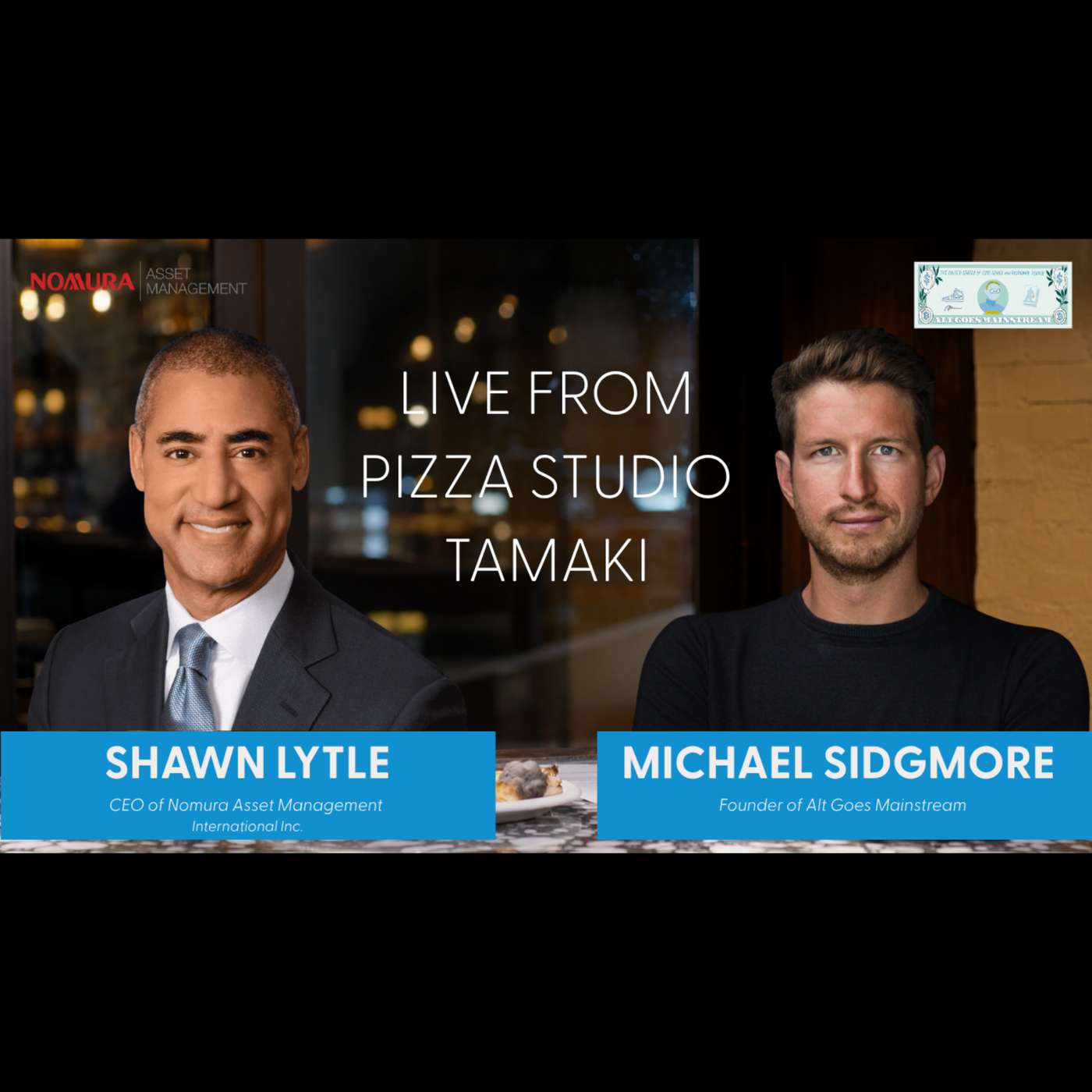
Nomura Asset Management International CEO Shawn Lytle discusses parallels between Japanese Neapolitan pizza craftsmanship and asset management, emphasizing client-first consistency, long-term investment philosophy, and how Nomura is positioning for US wealth investors across public and private markets.
Shawn Lytle is CEO of Nomura Asset Management International. He has 30+ years in asset management: 10 years at JP Morgan Asset Management, 12 years at UBS (including London/US), 10 years with Macquarie and Delaware Investments, and now Nomura. He previously worked in sports marketing.
Great asset managers must deliver consistent outcomes over time (“craftsmanship” and repeatability), not chase “hot” performance. Clients should seek curated choice and specialist alpha around cheap beta. Nomura’s advantage is long-term orientation after acquiring Macquarie’s public investments business.
Tokyo Neapolitan dough flown from Japan to Pizza Studio Tamaki; New Haven thin-crust “Napoleon-style” pizza influences; “beta is free” and private markets need liquidity-aware, evergreen vehicles; private credit noise vs direct lending defaults; prediction of ~50 multi-asset firms and a few hundred specialists.
Written by AI. May contain mistakes.
Discussion on how pizza styles compare to asset management approaches.
“I'm Michael Sijmore, founder of Alco's Mainstream.”
Sean Lytle shares insights on how various cultures shape asset management practices.
“And that's what makes a pizza really good.”
Exploring the importance of focusing on client needs in asset management.
“It's about really looking at the pizza as a work of art.”
Discussion about the changing landscape of investment strategies and client expectations.
“How do you think clients should think about the partner that they work with?”
Insights into creating a strong asset management platform at Nomura.
“But those strategies need to produce more alpha if they're going to have a meaningful impact and contribution to the overall portfolio.”
Learn about Nomura's strategic long-term investment approach in asset management.
“Where do you feel like you have comparative or competitive advantages?”
Discover how sports marketing strategies can influence asset management.
“doesn't know all the elements that need to go into it.”
Understand the differences and strategies between public and private markets.
“But also what was fascinating was that the sports marketing company I worked for at the time was like number three in the country.”
Explore upcoming trends in private market strategies for wealth clients.
“an SMA or a direct indexing portfolio, et cetera, different solutions that fit different types of clients.”
Learn how to discern valuable insights from market noise in private credit.
“evergreen and strategies that clients can really rely on as a key component, one component, or components of their portfolio, we think is very, very important.”
Examine the importance of brand equity in asset management firms.
“So one, you talked about building for the future.”
Join a light-hearted discussion on pizza ratings and wrap up the conversation.
“But I think the key is craftsmanship, longevity, attention to detail, and providing a consistent experience.”
Hear the hosts discuss their pizza ratings and favorites, including Pepe's Pizza.
“So you're going to give me what you think.”
The hosts wrap up the episode, thank the listeners, and provide next steps.
“Thanks for listening to this episode of Alt Goes Mainstream.”

Get the gist, explore an idea or ask about something said.
 Claude
On Alt Goes Mainstream: The Latest on Alternative Investments, WealthTech, & Private Markets, what are the key points of this episode?
Searching your listeningAutomatic transcript. May contain errors.
0:00What happens when you take Tokyo Neapolitan pizza to New York? You get one of the hottest new reservations in a city full of top restaurants and pizza spots. Are there similarities between pizza and asset management? Different styles of pizza appeal to different people. Same in asset management. But there's one constant. The way the pizza is made matters. In a pizza studio tamaki, the Tokyo Neapolitan pizza is made with acclaimed Pizziolo's Tsubasa Tamaki's dough flown in from Japan. Every detail matters. every flavor is unique and it all blends together into a unique pizza experience. That's something Nomura Asset Management International is aiming to do in the US with both public and private markets.
0:37We sat down for a live podcast with the Wealth Channel in the audience at PST with Nomura Asset Management International CEO, Sean Lytle, to discuss pizza, patterns in asset management, and private markets. We ate the pizza while we podcasted, and we even did a pizza rating. Spoiler alert, PST was really good. So was the podcast. We hope you enjoy. Any questions for Sean? It can be about pizza too.
1:03And now a word from our sponsor, Altimus Fund Solutions. This episode of Altgo's Mainstream is brought to you by Altimus, the full service fund administrator and transfer agent powering asset managers in private and public markets. As Altgo Mainstream, we need real expertise to handle complex fund structures, connect with key distribution partners, and handle sophisticated compliance, reporting, and transparency demands. That's Altimus. High-tech, high-touch solutions for over 450 clients and 2 ,500 funds with over$775 billion in assets under administration. Backed by an expert team of over 1 ,200 employees, they place client service at the core of their business, helping you navigate complexity during your fund structuring or launch, and then supporting you through every stage of growth.
1:48Whether you're already in the market or thinking about entering private wealth, you can trust their team's deep expertise in retail alternatives to help you reach your goals. Learn more at ultimisfundsolutions.com or email info at ultimisfundsolutions.com.
2:01Shawn Lytle: Hi, everyone. I'm Michael Sijmore, founder of Alco's Mainstream. I'm here with Sean Lytle, CEO of Nomura Asset Management International, because we're here in the US, which I think says a lot about why we're here tonight, what we're doing. We're here here at Pizza Studio Tamaki, a Japanese pizza restaurant in New York City. They came to New York, they're one of the hardest reservations to get. They brought a lot of the Japanese culture with them in terms of how they think about making pizza. This place is amazing. We're gonna eat some pizza. We are probably not gonna do a barstool style pizza review for anybody who is hoping for that, but it is good pizza though, right?
2:45Very good pizza. Not a pizza stop. Okay, so what's your favorite pizza and why? First thing, two things I love talking about. Asset management, and I love eating pizza. So this is like a perfect combination. So thank you very much for coming to do this with us. But I grew up, I was telling you before, I grew up eating pizza like three, four times a week because I went to school, I went to junior high and high school near New Haven, Connecticut. And so I'd be driving to New Haven all the time. And New Haven is known, and I'm very biased, but is known as being one of the top pizza cities or small towns in America.
3:21In fact, I would say three of the top 10 thin crust pizzas, a Napoleon-style pizzas, are basically in New Haven, Connecticut. And so I grew up loving it. And I ate it all the time. So I'm kind of a pizza snob. But I will say this is outstanding thin crust pizza. and you can just tell the ingredients are super fresh. And that's what makes a pizza really good. Thin crust is super fresh. I think what's so fascinating about that is pizza, there's so many different types of pizza. Pizza, to some extent, is driven by the culture, right? So we're here in New York. They've taken a little bit of a New York-style twist to Japanese-style Neapolitan pizza, effectively, right?
4:06They've taken some of the craftsmanship. craftsmanship, they fly the dough over from Japan. Yes, that's amazing. And you can tell and you can taste it, it's different. Yes. And I think that's a great segue to just one, your background. You've worked at a number of different firms with different cultures, Swiss culture, Australian culture, American culture. What about different cultures do you think express themselves in how asset management businesses are created and evolve and how they work with clients. So I think there's a lot of similarities with pizza as well. Because there's so many different types of pizza.
4:45There's super thin crust. There's, of course, regular kind of, I see, more traditional when you get across most of America. And then there's pan pizza and other types, other styles where there are a lot of different types of ingredients. I was always the biggest fan of the bomb. We called it back at our pizza place in New Haven, Connecticut, because that came with everything on it and was the best mixture of fresh ingredients. So I don't think there's any one type of pizza, but I think it needs great ingredients in it. And I've been very fortunate in my career to work for four firms over the course of, scary to now say it, but now over the course of over 30 years, I started with 10 years with JP Morgan Asset Management.
5:22Then I did 12 years with UBS Asset Management. We can talk about London and the US, but I spent time in both for UBS. Then it was 10 years with the Australians, with Macquarie and Delaware Investments. And now I'm with the Japanese, with Nomura. And each has its own culture. But when it comes to asset management, there is a clear, I think, passion for investments and for having a clear investment philosophy and then executing that over time. And each firm does that differently. But when you look at the main elements of how they're managing portfolios, there's a lot of commonality about how they do it.
5:57And when you see really talented teams and talented managers and when you don't, I think there's a lot of similarities there. But the way that they execute that and business and investment strategy around that is very different from culture to culture. And coming back to the pizza, I think when you look at this pizza, and I think about my growing up in New Haven, Connecticut, it's about craftsmanship. It's about really looking at the pizza as a work of art. and how are we going to produce the best pizza that we can with the best level of craftsmanship, with attention to detail, and with the ability to repeat that again and again and again.
6:34Because that's what people will come back for, is if you can actually do that on a consistent basis. I think it's so easy to simplify pizza as being like, oh, you know, pizza's okay. It doesn't seem that much different. How different can pizzas really be? But when you have a great pizza, you know when it's different. So from that perspective, as you think about taking a firm with a Japanese culture here to the US as part of Nomura, and you also combine a big business combination that gives the platform breadth and depth globally from public side to the private side, how do you think about taking that Japanese culture and bringing it to internationally and specifically to the US in terms of working with the wealth channel?
7:21I want to give you what I think are some of the fundamental elements that all great asset managers have to have. And then I'll talk specifically about how that relates to Nomura and a Japanese firm. I mean, first thing is the clients have to come first and has to be the main driver and focus of what you're doing and trying to produce consistent outcomes for those clients. And that's the beautiful thing about asset management is that if you do a good job over a number of years, it's almost like I always say, you're sitting on the same side of the table. You're eating together because if you're producing good returns, that's helping them to achieve their goals and you get there together.
7:54And you can have a relationship that grows over many, many years. So I think that's a common element of strong investment philosophy, real focus on clients, and ability to repeat that with investment process that has to be there as the fundamentals of the firms. And I've been very fortunate to work now with four different firms where there was a lot of those common elements and a lot of talented people. And you could find those at a lot of different firms. But when you specifically think of asset management now, and we can talk more about how the industry has changed, but the ability to take a long-term view and really build investment strategies over the long term that you know are right and are not the hot dot or the big rocket that you know are really appropriate for what that client's risk and return tolerance is and liquidity tolerances, and that's so important for private markets.
8:41That's the key thrust of what Nomura, I think, brings to this market in the US and the wealth market is that really long-term orientation, that really attention to kind of that craftsmanship and wanting to be in the details and sweat the details to be able to produce good, consistent returns for clients. How do you think clients should think about the partner that they work with? What should they look for in a partner? Because to your point, there's a lot of great firms. You worked at a lot of different great firms. And again, people will choose different kinds of pizza, and they like different kinds of pizza, and that's fine.
9:16But what do you think clients should look for? And what should clients be asking their asset managers in terms of trying to understand and get to the essence of whether or not they want to work with that firm and why? I think it starts with the relationship. And I think it starts with asking the client questions and really understanding their needs. needs. And I think it really is about being able to provide specialist solutions and a number of different asset classes that can meet those needs. But the key is that unlike pizza, which I want to eat the same kind of thin crust pizza all the time, but when it comes to a client and their portfolio, you can't just give them one type of pizza all the time.
9:54That's like Mag 7 right now and what's going on with concentration in US stocks. That's not going to provide an all weather protection and experience for the investors and provide the right smooth ride that they need. What they need is they need different kinds of pizza. They need different types of investment strategies in their asset allocation that are going to provide that smoother ride. And so it starts with, I believe today, a lot of dialogue with the clients and understanding what their needs are, understanding what they have already and what else could complement what they have, rather than just trying to sell them what is a hot performance today.
10:28How do you think that's manifesting itself in terms of how LPs think about working with their partners? Are they looking to do more with less partners? If so, what does that mean and what does that look like? Well, let me rewind the clock 20 years ago. It has completely changed. And I think that means that the clients don't need a big menu of strategies. They need the right strategies in different asset classes to make sure that they can fill their portfolio and meet their asset allocation needs. And so I think that's changed a lot where people thought having a lot of choice in the 90s and early 2000s was the way to go.
11:09But actually, I think what a lot of the wealth platforms have realized now is we need much more curated choice. We need much more where we want the best of the best in any specific asset class. Our challenge and our opportunity at Nomura Asset Management is to be able to be a provider of choice in multiple asset classes and with multiple different types of strategies. And I think that is where the clients really are going, is that they want to be able to go to a smaller number of firms, but be able to get multiple solutions from those firms. How do you think about that in two contexts? One, about making sure that you're providing best-in-class investment experience or product to the clients in multiple strategies or asset classes.
11:54And two, how do you think about then mixing and matching products or as we move towards things like model portfolios? Yes. Do you think that you start to mix and match different asset classes, products together to provide one simple solution for clients because they would rather have less product choice, not more? I think it comes back to, one, you need to have a very clear north star in terms of what you're trying to do for a specific wealth firm or for the individual clients within it and what roles you can play within that client's portfolio. That has to be clear first and how you're going to complement the other asset managers that are in.
12:33I was saying this to you before. You're never going to get a client to eat all of your cooking. They shouldn't. They need the best of the best from a lot of different firms. And that's what's beautiful about this industry. We can all win if we're producing really strong products and good returns for clients. But when you look at the underlying elements of that, and I'll talk about some of the product innovation we're doing in a minute. But when you look at the underlying strategies, I think what has changed is that beta is free. Basically, passive management is basically free or very, very cheap.
13:02And so the alpha opportunities are all at the margins around that, I would say, conservative or passive exposure. And so the ability, though, to get more alpha from that, whether it's private credit or private equity or hedge funds or on the private market side or real estate or on the public side from a very concentrated large cap growth portfolio or signs and tech portfolio or emerging markets equities, having strategies that are going to produce more return but with less allocation is what clients are starting to look for. And specifically with private markets, when you look at it, there's only a certain amount of capacity that the clients can invest in a limited number of strategies.
13:41But those strategies need to produce more alpha if they're going to have a meaningful impact and contribution to the overall portfolio. How do you think about building the platform that you have at Nomura? Because we can talk about this a bit, too. You combine to create a very large business across public and private. Where do you feel like you have comparative or competitive advantages? Where do you feel like, okay, we want to add to this platform to be able to serve clients in the way that you want to? Let me just first say it'll be a year in December since we joined Nomura. And I can't tell you how lucky I feel and the whole team feels on the acquisition of Macquarie's public investments business by Nomura.
14:26Because we weren't going to a firm that is new in this space. or a firm that wanted to cut costs to just try and raise margins and raise profitability. We were acquired by a firm, Nomura, that really takes a long-term perspective on the asset management business and really wants to build a strong business over time. And it's part of Japanese culture, really detailed planning, craftsmanship, execution over a long period of time, having clear plans, investing in businesses. And so they're doing the exact opposite of what you've seen in the industry over the last, I'd say at least decade, where most firms are merging together so they can cut costs, bring the technology or operations or client group or marketing group together and then reduce costs.
15:08Here, actually, Nomar is leaning in and investing in the business. And it's because they are the largest asset manager in Japan. They're the largest ETF provider in Japan. And they're the largest wealth manager in Japan. So they know what it takes to win over the long term. And it was just a great marriage of two firms that needed each other. We needed a new home that was going to invest in the business because it's a very competitive business now and it's consolidating. And Nomura needed a platform that could really help it to grow on the US and Europe. So it's interesting you mentioned Nomura is one of the top ETF providers in Japan in a world where BlackRock, Vanguard, State Street, Invesco are all massive behemoths.
15:52Yes. Why has Nomura been successful in Japan? And what do you think the firm can learn as it tries to become a top player in asset management in the US? A couple of things. One is that they're the largest asset manager in Japan on both the institutional side and on the wealth or retail side. Combine that with their largest wealth manager in Japan, they know what client solutions look like and how to deliver those. And so they were entering the ETF marketplace decades ago in Japan, but that was their only focus. That was the only market they were really in. So they were able to develop a business that was very strong across a number of different equity and fixed income asset classes on the ETF side.
16:32So actually, Nomura is number one in Japan. It's the only market where those other providers we just mentioned are not number one. And it actually has enough assets and top 10 in the world in ETFs. So we're not dealing with a parent company that doesn't know what this business is or doesn't know all the elements that need to go into it. And if you actually go look at their marketing in Japan, mine would blow in terms of just how innovative and forward thinking they are in terms of their marketing. And so they want to bring that to the US. And that was the opportunity for them with us is to be able to then translate that into how do we expand and become top active ETF player in the US.
17:11So let's talk about being innovative and different in marketing. One is you started your career actually in sports marketing. Yes. I think as we approach this continued collision of culture and finance in a number of ways, you see athletes getting involved in sports investing. You see firms sponsoring athletes or sports leagues or tournaments. Some tennis players are actually joining firms as advisors. Novak with General Atlantic. What do you think you learned from your time in sports marketing as you think about marketing in the asset management world? Well, you know, I thought I wanted to be Jerry Maguire when I was in college.
17:46I mean, I really almost went down that path. But through sports marketing, I learned a lot about the business side. And the marketing and particularly endorsements and that side of the world was really fascinating to me. But also what was fascinating was that the sports marketing company I worked for at the time was like number three in the country. And had a lot of the best female tennis players in Michael Chang and David Robinson basketball. It was a great firm. I learned a lot. But they also did a lot of the, of course, all the expenses and taxes and other sides of the finance side of it. That gave me an exposure, started to give me an exposure to the financial world.
18:21But to answer your question specifically on the marketing side, it is about relationships. And it's about creating trust in an individual and a trust in how they perform. That helps to build brand equity over time and make them much more valuable than just what they do on the football field or basketball court or all the golf course. And so I loved that element of sports marketing and how that translates into asset management. I also loved the long-term orientation of building an athlete's career over time. And when I got over to finance, I realized I'm not a trading guy. I don't want to be a global sales and trading.
18:59I don't want to be an investment banker and do deals. I love the fact that you can build long-term relationships and have that relationship evolve as the athlete's career evolves. And so that's why I tilted and it chose me, I chose it, decided that asset management was the right home for me. Why do you think certain firms have won on the public side? You talk about brand, you talk about brand equity, you talk about the ability to build relationships. Part of that is boots on the ground. Why did certain firms win on the public side? And how do you think that will translate to the private side? But I think it will translate in many ways, many similar ways to the private side.
19:41And I think it already has. But on the public side first is going back to the 90s and the 2000s and this concept of just give clients so much choice, right? The mutual fund supermarket from other providers, let's put every fund, there was more funds offered by wealth firms than there were individual stocks listed in the US for many years. And that's finally coming down now, which I think is the right thing. But a lot of players were able to, a rising tide I call lifts all boats, that's what it felt like for a number of years. As individual investors, because of the wealth management firms, becoming more professional about how they manage and how they thought about asset allocation and how they invested.
20:17So that was all good. But then you start to get to the marginal return you're getting from another manager just isn't there. And so I think you've seen now the industry shelf space is consolidating even more than firms merging together. The shelf space is just coming down where they want the best of the best in any category. And I think that's a good thing for clients. But it has to be combined not only with great client relationships and relationship managers and a large sales force so you can cover the whole country effectively and engage with advisors and figure out what solutions they need, but it has to be combined with really strong investment acumen that you can consistently execute and produce really consistent alpha, which a lot of firms haven't done, particularly over the last 10 years.
21:02And that has to be combined with still having that innovation to figure out the right solutions, whether that's an SMA or a direct indexing portfolio, et cetera, different solutions that fit different types of clients. So that's what's happened on the public side. And so if I were to fast forward, I'll give you a prediction. I mean, I really do believe, and that's why this transaction with Nomura was so important. I do believe there will be 50 large players in asset management that provide multiple asset classes and different strategies. And then there will be a couple hundred really specialist players that only do one or two things.
21:33And they do it really, really, really well. How do you think that top 50, you think you want to be a top brand, top 30, maybe top 10, top five? It's going to be a while to get the top 10, but we're getting there. What brand do you want to have? It goes back to, let's lean into who Nomura is. It is about high quality. It is about attention to detail. It is about craftsmanship. It is about longevity and having consistency over time. I mean, you just look at so many aspects of Japanese culture and working with my colleagues there. It's wonderful. I'm really enjoying it because they have that long term orientation.
22:09So that's what we want to be known for in the marketplace. But no one could be able to do that across equities, fixed income, private credit, multi-asset solutions and other solutions that we come up with, public-private solutions. We can do that across a number of different areas because we have a lot of the building blocks in place. It's just how we put that together in the right vehicles. You talk about the building blocks, having those in the right place. What is the next big theme or trend in private markets adoption by the wealth channel in your mind? Yeah. You had real estate, then it was hedge funds, then it's private equity, and then it's private credit, and you have infrastructure, private equity.
22:46There's been a number of chapters in the expansion of private market strategies for wealth clients over time. And each one of those asset classes within private markets has a place to play. However, I think, and this is our philosophy at Nomura, is that we are keenly interested in making sure that we are focused on balancing the focus on risk-adjusted returns with liquidity and making sure that the strategy is right for the clients and the vehicle is right for the clients. And while interval funds and BDCs have a role to play for certain clients, having strategies that are evergreen and strategies that clients can really rely on as a key component, one component, or components of their portfolio, we think is very, very important.
23:31And so the private market's marketplace is still evolving. I think real estate is 30 years old and much more mature. They have the vehicles and the right structure and the way that they invest that fits well with an individual investor. I think for a lot of other areas, I still think there's an evolution that's going to take place in terms of the types of vehicles that they're utilizing and the types of strategies they need to and investments they need to make for an individual client that may be somewhat different than what they do for a long-term buy and hold 10-year to 20-year investor, an institutional investor.
24:09So you talk about income. I had your colleague Robert Stark on the podcast a while ago with Nomura Capital Management, so built out a private credit franchise. Yes, very good. And had him on before a lot of the, let's just call it the things that were happening in private credit. Where do you think people should be separating the signal from the noise in private credit? What Robert Stark and the rest of the team have built, I think is something that is purpose built for individual investors for the future. When you look at the noise that's going on, it is a lot of noise and a lot of speculation.
24:45You should see, by the way, the last month, semiconductor stocks are down like 25%. Software and services are up 20%, right? I mean, you know probably better than I do, right? And so that was the place that was like, that was Deathville six months ago, software. And if you look at a lot of direct lending portfolios, there hasn't been that many defaults. There hasn't been as many toxic waste in these portfolios, and not much at all. but the noise really, but still come back to the main point of like our portfolio is 15 % and direct lending, 15, 20%. Portfolios that have less liquidity and are much more focused on that space for an individual client, it may not be the best solution that one needs to have.
25:24And so I think that there's too much noise and it's been overblown, but I do think that it will lead investors coming out of this to look for more diversified strategies and strategies that have a clear risk portfolio. Let me just make one other point here. This has happened in pretty much every different area of private markets over time. You think about hedge funds in the early 2000s, it was go-go, trying to go for the highest return, risky strategy. But then a lot of clients realized that, no, that's actually not what the role of hedge funds are in a client's portfolio. It really is about just diversified return that I can get a little bit of the premium them to public equities.
26:03And so I think that is what the shift you're going to start to see in private equity and private credit. So I want to tie two things you said together, ask a slightly different question. So one, you talked about building for the future. You have built a platform that is now much bigger firm, bigger footprint. You are now building for the future. You also said a term brand equity, which I love. And I think that's something that asset managers really need to think about. I wrote a piece on Alco's mainstream on June 1 of 25 about the title brand equity. And I asked the question, if an asset management firm were a consumer brand, what would they be?
26:40So I had a picture of the Jumpman logo with PSG, right? Think about what that has done to capture the hearts and minds of people. They think of Michael Jordan, think of the Jumpman logo. And that is now associated with Paris Saint-Germain, the soccer club, they've internationalized their brand. So that is one example. We're here in a pizza place. We're all consumers. We're eating pizza. It's amazing pizza. I don't think I can do a pizza mascot, though. Pizza mascot's not going to work for Nomura, but we can try. You don't have to do a pizza mascot, but if there was a consumer brand, what would you be?
27:09What consumer brand would you be at Nomura Asset Management? That is a really good question. I'm going to have to think about that for a minute. But it still comes back to those underlying elements of culture and of who we are as a firm, which is about longevity. It's about craftsmanship. It's about being able to consistently provide. And so I really have to think about that because it isn't tied to an athlete because they only have a career that spans. It has to be tied to some type of product firm that has been able to stand the test of time and continue to evolve and develop over time and innovate when it's necessary.
27:47I'll come back to it before I eat more pizza and I'll come back to it. But I think the key is craftsmanship, longevity, attention to detail, and providing a consistent experience. One thing we're also going to do that will provide some longevity, we're going to do a pizza rating. So you're going to give me what you think. I know you love Pepe's Pizza. What was tonight's pizza rating? I think this is an 8 to a 9. Of course, my heart is always with the Pepe's or a modern bomb, which is a 10 for me. But this is an 8 or a 9. And I think the crust, the crust is absolutely gorgeous. Eight or nine is pretty good.
28:24What would you all save? Ten? Ten. Okay. There will be a bus next month to New Haven, Connecticut, where we'll all go, and we will do a test. Sally's. White clam pizza. And Snoop. It's Bradley Beach. And cafes.
28:44Shawn Lytle: That's Peter's arm. I love it. Got a lot of opinions here. Sean, this was awesome. Thank you so much for a great conversation. Really appreciate it. Thank you very much. Really appreciate it. I want to open it up for questions.
28:58All right. Thank you. Thank you very much, Dylan. Thank you.
29:04Thanks for listening to this episode of Alt Goes Mainstream. I hope you enjoyed it. You can read more about alts at my sub stack, altgoesmainstream.substack.com. Thanks a lot and have a great day.
29:16Shawn Lytle: We're going mainstream. Thank you.
Welcome back to the Alt Goes Mainstream podcast.
What happens when you bring Tokyo-Neapolitan style pizza to New York?
You get one of the hottest new reservations in a city full of top restaurants and pizza spots.
Are there similarities between pizza and asset management?
Different styles of pizza appeal to different people. Same in asset management. But there is one constant: the way the pizza is made matters.
At Pizza Studio Tamaki, the Tokyo-Neapolitan pizza is made with acclaimed pizzaiolo’s Subasa Tamaki’s dough flown in directly from Japan. Every detail matters. Every flavor is unique. And it all blends together into a unique pizza experience.
That’s something Nomura Asset Management International is aiming to do in the U.S. with both public and private markets.
We recently sat down at Pizza Studio Tamaki for a live podcast with Nomura Asset Management International CEO Shawn Lytle, with the wealth channel in the audience, to discuss pizza, patterns in asset management, and private markets.
Shawn’s deep experience working for a number of the industry’s largest asset managers and understanding of what the wealth channel needs across public and private markets set the table for a great discussion on the evolution of asset management, how culture impacts how firms work with the wealth channel, and how to bring an international brand into the U.S. market.
We ate the pizza while we podcasted, and we even did a pizza rating. Spoiler alert, PST was really good. So was the podcast.
Bio
Shawn is Chief Executive Officer of Nomura Asset Management International, where he is responsible for overseeing the business, investment teams, and strategies for clients. He joined Nomura Asset Management as part of Nomura’s acquisition of Macquarie Asset Management’s US and European public investments business in 2025. He also serves as the President of Nomura Funds (formerly, Macquarie Funds) and oversees registered vehicle governance in the US and Europe. Shawn is a member of the Nomura Asset Management International Executive Committee.
He has more than 30 years of asset management experience. Before joining Macquarie in 2015, he held several management and equity investment roles at UBS Asset Management and various roles at J.P. Morgan Asset Management.
Shawn is a member of the Investment Company Institute (ICI) Executive Committee. He is also a board member of OppNet and Philadelphia Financial Scholars, in addition to being the former Chairman of the National Association of Securities Professionals (NASP).
He earned a Bachelor of Science in marketing from The McDonough School of Business at Georgetown University.
Thanks, Shawn, for sharing your expertise, wisdom, and passion about asset management and private markets.
Show Notes
00:00 Tokyo Pizza Meets NYC
01:07 Ultimus Fund Solutions Sponsor Message
02:05 Meet Shawn Lytle
02:18 Why Japanese Pizza Studio Tamaki
05:09 Four Firms Four Cultures
06:10 Craftsmanship And Consistency
06:52 Bringing Nomura To US
07:21 What Great Managers Share
09:00 Choosing The Right Partner
10:29 Curated Menus Fewer Managers
12:50 Beta Is Free Alpha Matters
13:48 Nomura Platform Advantages
15:39 Winning In Japan ETFs
17:11 Sports Marketing Lessons
22:29 Private Markets Next Wave
27:59 Pizza Rating And Wrap Up
A Word from Our Sponsor, Ultimus
This episode of Alt Goes Mainstream is brought to you by Ultimus, the full-service fund administrator and transfer agent powering asset managers in private and public markets. As alts go mainstream, you need real expertise to handle complex fund structures, connect with key distribution partners, and handle sophisticated compliance, reporting, and transparency demands.
That’s Ultimus: high-tech, high-touch solutions for over 450 clients and 2,500 funds with $775B in assets under administration. Backed by an expert team of over 1,200 employees, they place client service at the core of their business, helping you navigate complexity during your fund structuring or launch and then supporting you through every stage of growth. Whether you’re already in the market or thinking about entering private wealth, you can trust their team’s deep expertise in retail alternatives to help you reach your goals.
Learn more at ultimusfundsolutions.com or email [email protected].
We thank Ultimus for their support of alts going mainstream.
Editing and post-production work for this episode was provided by The Podcast Consultant.