
In short
The episode explores how Dove’s iconic “real beauty” campaigns were built from deep emotional insight and how beauty brands can balance purpose with product performance. It also covers COVID-era relevance (Courage is Beautiful), fighting AI/beauty filters (Turn Your Back), and the shift to AI personalization at Nolly to reduce overwhelm and skincare waste.
Guest backgrounds
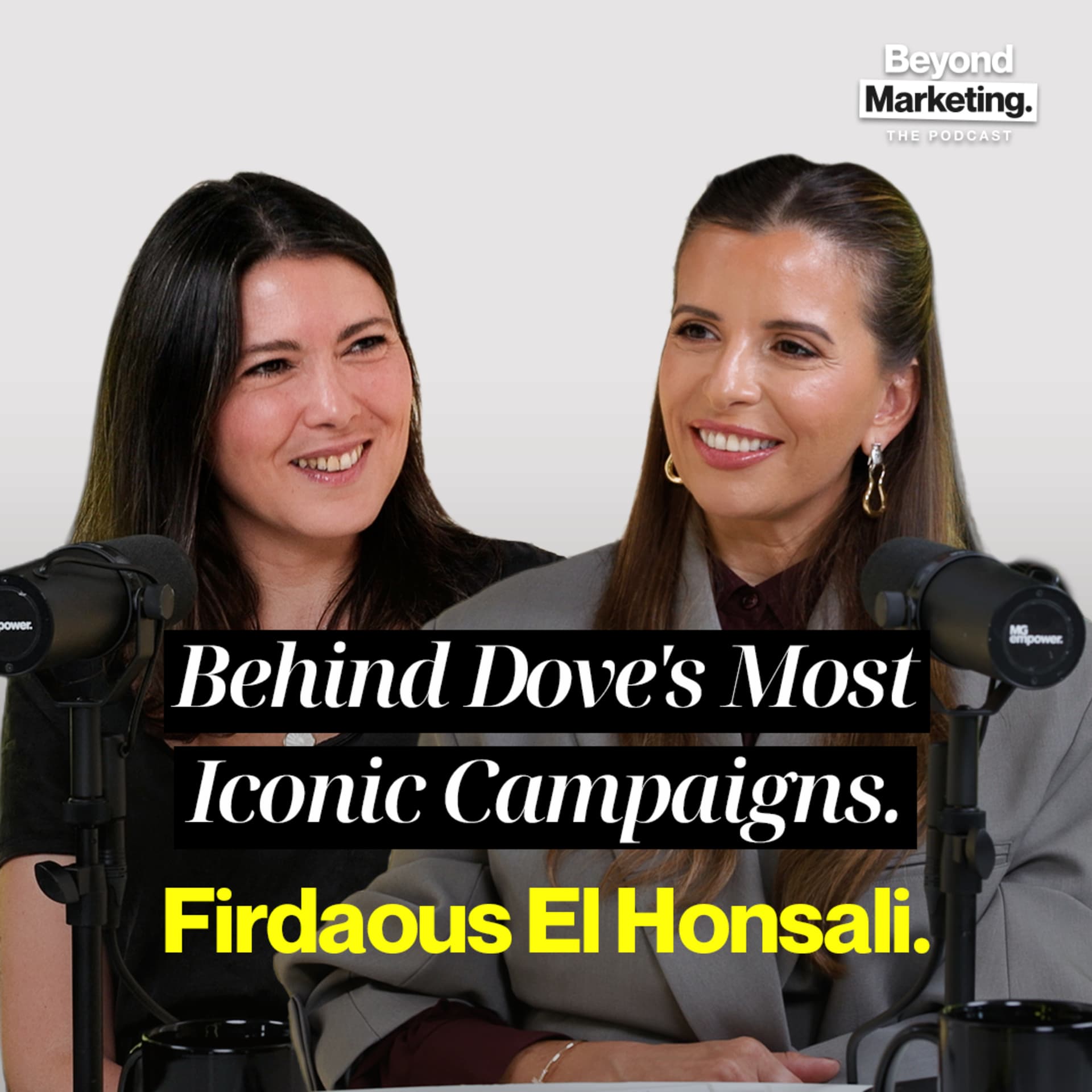
Firdaous El Honsali is a former Global Dove Vice-President and Chief Marketing Officer at Nolly. She previously worked at L’Oréal (including The Body Shop, part of L’Oréal) and started her career through an internship path at L’Oréal.
Key claims
Beauty must be joy and confidence, not anxiety; brands must deliver superior products first, then align a “raison d’être” to support women. Social pressure, not just individual self-criticism, drives beauty anxiety. Filters and retailer access can harm young people’s skin and expectations.
Notable examples
Dove’s Campaign for Real Beauty (2004 research), Courage is Beautiful (COVID healthcare workers with mask marks), Turn Your Back (72-hour response to TikTok’s Bold Glamour filter; “give it your back”), and Nolly’s face-scan + AI advisor that recommends products to prevent unused purchases (80% unused products in UK research).
Written by AI. May contain mistakes. Listen to the episode to check what was said.
Chapters
Tap a time to open that second in VOPassion and Multitasking
0:45 to 2:10
Firdaous discusses her passion for her work and balancing motherhood.
“I'm a big fan of your work for everything that you have achieved and how much you have, you know, changed the perception of beauty through everything that you have done from Dove and now what you're doing for Nolly.”
The Quest for Balance
2:10 to 3:40
Exploration of the challenges women face in achieving work-life balance.
“I would say that I'm a real passionate person.”
Support Systems for Working Mothers
3:40 to 5:00
Importance of having supportive leaders and teams for working mothers.
“but I think it's more about trying to find what works for you.”
Redefining Success and Guilt
5:00 to 6:50
Firdaous reflects on redefining success and overcoming guilt as a working mother.
“Like being like clear about what are my boundaries?”
Empowerment Through Career and Motherhood
6:50 to 9:10
The journey of balancing career aspirations with motherhood and empowerment.
“So it's kind of like it touch you in a way, right?”
The Beauty Industry's Impact
9:10 to 10:40
Firdaous shares her journey into the beauty industry and its significance.
“And every day I think I've learned and the day after it's changing.”
Cultural Perspectives on Beauty
10:40 to 14:00
Discussion on how cultural backgrounds influence perceptions of beauty.
“feeling that you can always inspire other women.”
Early Career and the Power of Beauty
14:00 to 15:10
Learn about the transformative power of beauty in personal and professional growth.
“It's so much more than actually, you know, a pretty face or products that you put on your skin.”
The Impact of Beauty on Society
15:10 to 16:40
Explore the connection between beauty, social issues, and personal experiences.
“And I think the epitome of my career has been when I landed at the body shop.”
Transition from Body Shop to Dove
16:40 to 18:40
Discover the journey from The Body Shop to Dove and the insights gained.
“Well, you see, that's where, like, my passion got in and his passion got in.”
Show all 27 chapters
The Essence of Dove's Campaigns
18:40 to 20:40
Understand the emotional depth behind Dove's campaigns and their societal impact.
“And then I think the moment that you landed there, you made us feel completely different about the way we see beauty.”
Shifting Perspectives on Beauty
20:40 to 22:40
Learn how Dove's approach to beauty has evolved with societal changes.
“Beauty was supposed to make us feel good.”
Dove's Response to COVID-19
22:40 to 24:40
Explore how Dove adapted its marketing strategy during the COVID-19 pandemic.
“focusing on the women being her worst inner critic.”
Balancing Purpose and Profit
24:40 to 26:50
Discover the challenge of merging brand purpose with commercial success.
“But I was French, So I saw France closing.”
Navigating Rapid Changes in Marketing
26:50 to 28:00
Understand the challenges marketers face in a rapidly changing consumer landscape.
“a different length, but I still need to sell the product.”
Navigating Rapid Change in Beauty Marketing
28:00 to 29:10
Learn how rapidly changing consumer behavior affects marketing strategies.
“because especially consumer is changing really rapidly, right?”
The Core Values of Dove's Campaigns
29:10 to 30:40
Explore Dove's commitment to showcasing real beauty and its industry impact.
“No, we're not talking about funding something that we're passionate about on the side.”
The 'Turn Your Back' Campaign's Impact
30:40 to 32:50
Discover the innovative 'Turn Your Back' campaign and its reception.
“But then TikTok was already big on filters.”
Addressing Beauty Standards and Filters
32:50 to 35:40
Examine the influence of social media filters on beauty standards.
“because what happened is that you put your hand like this and it would not move.”
Youth and Beauty Product Responsibility
35:40 to 40:06
Understand the responsibilities of brands and retailers in marketing to youth.
“worldwide but it's to move the needle it requires beyond dove right it requires like a consciousness of just so many other brands and consumers and marketeers.”
Transitioning to Nolly: The Beauty Tech Startup
40:06 to 42:07
Learn about the shift from Dove to Nolly and its innovative approach to beauty.
“It's like, in our case, for example, we never market to under 18.”
Transitioning to Nolly: The AI Beauty Platform
42:07 to 46:29
Discover how Nolly leverages AI to tailor beauty product recommendations.
“This is like, yeah, there's a lot like I'm just really like loving to see what you're doing now because then you went from product to Dove to Nolly.”
Understanding K-Beauty Trends
46:30 to 48:26
Learn about the rise of K-beauty and its impact on skincare choices.
“And I've been also like using some of the products.”
The Importance of Skin Diagnosis and Education
48:27 to 53:41
Explore why understanding individual skin needs is crucial over trends.
“social it's just like having an educational like going back to the to the way that it's always being you go to the dermatologist like in Brazil dermatology is kind of like it's so big on it's So big.”
Navigating Menopause and Societal Pressures
53:42 to 55:53
Discuss the taboo surrounding menopause and the pressures women face.
“It's funny that you said about like after 40, right?”
Crafting Impactful Solutions for Women
55:54 to 56:05
Learn about the desire to create impactful solutions for women's health.
Empowering Women Through Impactful Business
56:05 to 57:21
Learn about the transition from corporate to impactful business focused on women's solutions.
“Let's say that what doesn't kill you makes you stronger.”
Transcript
Automatic transcript. May contain errors.0:04Welcome to Beyond Marketing, the podcast. I'm Marjorie Novese. I'm the founder and CEO of MGM Power, a global integrated market agency. What happens when, after reaching millions, you decide that real impact might be about going deeper, not bigger? Today's guest, Fidal El-Ronzale knows both sides. From leading Dove globally and across North America to now shaping a new AI-powered approach to personalize beauty as a CMO of Nolly. Her career challenges how we think about scale, purpose, and impact. Welcome to Beyond Marketing, the podcast. Thank you for having me today. So excited to have you here.
0:52I was like when you arrived we were talking about how we met yes and then you told me that your kids are nine now yeah I went to see you for the first time at Dove yes and then you just have just had had your triplets exactly with the beginning of a whole new life the beginning of a whole new life yeah and now they're nine years old yeah that's incredible it goes so fast That was so fast. And then we met at Can Lions 2023. That's true. And here we are. Yeah, thank you for having me today. I'm super excited to see you again. No, I'm super excited. I'm a big fan of your work for everything that you have achieved and how much you have, you know, changed the perception of beauty through everything that you have done from Dove and now what you're doing for Nolly.
1:46and you have had so many you know career uh accolade moments awards uh because of everything that you have impacted especially into the beauty industry but before we go into that who how would you describe yourself beyond your career and beyond your achievements I would say that I'm a real passionate person. I do things out of passion. I rarely do them out of necessity because I want to make some impact. I want to make sure that I leave something behind one day when I leave this world. And also I want my kids to remember me with something that I've done, not just something I sold to people. So therefore, yeah, I feel like people would say that I'm passionate and I'm also a crazy multitasker so I do too many things at the same time.
2:49But I think that's something I learned not only from work but from being a mom of three kids and like any mom out there is multitasking trying to make sure she delivers at home what is needed for her children but also delivers at work and tries at the same time to deliver for herself. So I try and make sure that I also, my passion and my envy of doing things doesn't compromise also on who I am as a human being and at the end of the day what I need, like going to my yoga classes. So I think it's passion and this notion of being balanced and trying to do everything, but not too much. And do you think it is possible to have a balance?
3:38I don't think you can. There is no one way of finding this balance, but I think it's more about trying to find what works for you. And I tried to find this for many years and also like to maybe help women that I was working with, colleagues, women in my team, just making sure that we all try and find that balance. If, you know, for instance, one of the things probably I'm the most proud of is not an award or an achievement. It's the fact that at many points in my life, I've had female-led teams with a lot of women. And some of them, I remember asking me like, oh, after 3.30, I would love to be able to spend time with my daughter or my children.
4:24Can I go and pick them up at school and then connect later? And I was like, of course, like, why would on earth, why would you say no? because what matters is that we're all finding that kind of balance. We can achieve and deliver without, I think, overworking ourselves. But the only way to know it is by I have overworked myself. Like I would lie saying like I found that balance. I think that balance I'm finding it now more closer to like beyond my 40, like, you know, I hit a milestone of like being 42 last year. And I feel like now I'm getting there. trying to find that. Yeah. Like being like clear about what are my boundaries?
5:05What are the things I really need to do? Like if I say I need to go to yoga on Sunday at 1130 and I will take no compromise on it. You're not going to get... You used to feel guilty before when you have to do those things? Of course. Like the guilt, I think when you're a woman at work, the guilt is like it would be again a lie to say that the guilt doesn't sit with you on a daily basis. in some cases even you know it's an hourly guilt that you feel not being with your child or not you know they're sick and you're not there and you have to be in a meeting in the office and at the same time like it's the other way around when you're at home and you're not in the office because you're staying and trying to so it's always there but I think it's learning how to silence it there isn't one single response but being okay with ourselves I was being like, I'm not going to, sometimes I'm going to give my 120 % and sometimes it will be my 80 % and maybe that day it's enough.
6:03I don't need to give more. And sometimes it will even be 20 % because I'm tired and I can't bear it. And I have brain fog this morning. And so I can't deal, you know, with doing too much. And that's okay. Yeah. You learn it, but you have to learn your way. There is no, there is no rule. You just have to have people that's leaders that support you in that quest of balance. And do you think that for us as female leaders and, you know, we're full of passion and drive, do you think it's more challenge for us to find this balance, to have less beauty? Because I feel it's harder for us. Yeah, 100%. And also like the judgment.
6:49like the number of times I heard from my friends it was really funny before even I had my children like you're just career driven and I was like I know because you're seeing just a piece of the puzzle you're just seeing a piece of the picture um and then I had my triplets and obviously my life transformed and people were like now you're gonna stay at home because you can't work at the same time and I was like what do you what are you talking about uh so I went back to work and it was tough and it was like sometimes and I remember my leader actually she it was a woman incredible leader and I was very stressed and trying to go and do everything but I had my kids that were sick my nanny didn't show up and I was like I can't go to work and this this it's not as if it was an isolated moment it repeated itself quite a few times when you have young children and the guilt I felt and the feeling of like not being able to deliver and she looked at me and she was like it's okay even if you give me 10 % you know today it will be better than anything else so she she made me feel like very relaxed and I think if you don't have the support system if you don't find those people who are going to tell you it's okay it's harder um but uh but I was lucky and when I didn't find these people I remember I was you know reminding myself of these people that I met and that told me like 10 % today is okay.
8:13So it's kind of like it touch you in a way, right? That is getting you to learn how to, the balance is not necessarily needs to be 50-50, 10%. It's okay. Yeah. It's like, it's not as if we were the same on a daily basis. Sometimes you wake up, you have a headache. I was saying earlier, like now I'm turning 42. Like I turned 42. I'm like, sometimes I have brain fog and it's now I know it's okay. and then you just said like when you had the triplets people say now you're gonna stay at home you're not gonna work i was like no way do you feel like you became more driven after having the kids i mean it's it's really funny because people used to tell me like how how on earth are you able to be here with us and do this work when you have like 18 months uh triplets at home and i was like always like guys what i'm doing here at work is so easy and also i can get a warm coffee.
9:03Like, can you, like, do you realize what, like, come with me at home and you'll see that actually that's where the real game is happening. And that's hard. And I'm learning every second. And every day I think I've learned and the day after it's changing. So really work was, for me, it was holidays. It was almost like a playground, you know? So I took it that way and it made it It's really fun for me to sometimes get out of the house and get that breathing space and do things that really excites me and felt me also feel like I was valuable to society and I was valuable to my colleagues and the brand I was working on beyond just what I was doing at home for my children.
9:49And being a mom is the most beautiful gift. but I think having a career and being you know for me was essential for some other women it's not but for me um I became a VP I was I had the children that were four years old I remember and uh and I was like uh yeah not even like there were three and I was like how did this happen but I think I was I was giving my again I said it earlier I'm like I give my passion and I brought it to the table and it worked out and it gave me even more wings to keep going. And it's such an empowerment thing, right? To know that you can be a great mom, but you also can continue your career.
10:35And then, as I said, being promoted when your kids are three years, it's like such an empowerment feeling that you can always inspire other women. Because I feel like sometimes it is our responsibility that we have been given the gift of becoming a mother. and then they're such a young generation that sometimes they struggle with like but if I become a mom would I'll be able to continue to work will my company I think when when we set an example we can empower other women and be that support system exactly that they need and also it's also like this there there is a word that I hate that people were saying to me all the time and I was like you're a superwoman I was like no I'm not I'm really not a superwoman because actually I'm I feel like internally like I'm failing at everything but actually I I know now I wasn't but I'm just trying to do it one child two children three children it doesn't really matter like we are all trying to figure it out figure it out and uh and we're just trying to be a good mom and a good you know professional I don't think uh when you put that superwoman kind of like a label it makes it impossible to achieve and I think it's it's nothing but nothing by that I don't I totally agree with you and then like being a mother successful career and then comes beauty yeah is beauty something that is always being a passion of you or you just end up being the beauty space and you start getting passionate about beauty it's really interesting um so beauty has always been part of my life because i grew up in morocco where um i would say the beauty the perspective on beauty is slightly different from the West.
12:16It's a perspective where it's something that is being like given to you by your grandmother, by your mother, like, you know, rituals, like use organ oil for this, rose water for that, come with me to the hammam, and you go to the hammam, and you realize hammam is actually, you know, your beauty treatment space at the same time as a social space where you hang out with other women, half naked, so like really no judgment. And so this whole spirits of um you end up you go out of the hammam and actually it's not just your physical beauty that has been impacted but also the the inside the inside and it's truly that it's like this notion of like you care for your body but you also it's a mental health you know investment when you go to the hammam and you feel so much revived and revamped and you've spoken to these women had this moroccan minty like it's so good so i went i was i was very little and i was like i remember the first i mean i don't remember but i remember my mom telling me like the first time i went there and i saw all these naked women around me i was like what's going on and and so you're you're not in a judgment space so therefore that that's how i grew up with rituals with like transmission from all the women so beauty has always been there though i have never thought or never expected even that there was a beauty industry.
13:39I had never looked at it. I was at uni. I thought I was going to be a politician, maybe a journalist. I was like really working hard to get there. And then I got on in my internships, etc. I crossed the path of L 'Oréal at the time for a piece of research I was doing. And they called me like literally three days later. I was still a student. and they said hey are you looking for an internship next year i said yeah well i you know i i didn't know really i thought i knew laurel paris i didn't really know the the the whole business and um and i said okay why not and then how that's how it it started unfolding um and i realized very quickly that beauty has so much power.
14:31It's so much more than actually, you know, a pretty face or products that you put on your skin. It has the power to really transform the way we see ourselves. And that's what I had learned in the hammam. Yeah, so it went kind of back to the foundation of where you're born. But I spent a lot of time really trying to make sense of that relationship between beauty and the actions I was wanting to take. Because my dad used to work at the UNESCO. He was a diplomat. I was really going in that direction. And suddenly I realized that I could do loads of things. And I think the epitome of my career has been when I landed at the body shop.
15:15And then I was like, my God, this is a real reconciliation of the things I wanted to do. Because the first thing I've been asked to do when I was at the body shop was to hand over 200 ,000 petitions to stop child sex trafficking to a French minister. And I was like, God, am I doing this with a beauty brand? And then I started understanding also the ingredients. What is the link? You know, the way women are producing ingredients in cooperatives like around the world, how you get to the best quality ingredients. It's actually rooted in rituals. In Africa, in Latin America, I had the opportunity to go and spend a few days with women in Morocco making argan oil and I did a film at the time like bringing it back to the journalists to say like here is what we're what actually how it's impacting and I remember Samira this woman telling me how she was providing for her family her husband's family wow her daughter sending them to Agadir to a city an hour from where she was living to actually study and become a doctor and then you realize like the impacts the industry you work in is really having down the line so it goes from who contributes to it who is providing you with that beautiful ingredients that is going into your products up to making you feel good not just superficially good and then you stay at the body shop and then when that happened the move to dove so I spent about 10 years at L 'Oreal at the time the body shop was part of L 'Oreal so I had the opportunity to work there for like about three years and that moment of like discovery that there was something very strong in the beauty industry that I wanted to explore I thought I need to look at where but actually I didn't have to look a lot because one day I received a call from someone who used to work at the body shop and said hey you want to join Dove and I was like are you serious and so I met I remember the SVP on Dove at the time Steve Miles and for me one of the best marketeers I've met in my life and I four hours interview four hours four hours straight interview wow there was just one interview it was four hours How many questions did he ask you in four hours?
17:45Well, you see, that's where, like, my passion got in and his passion got in. And then that was it. My English was crap. I was living in France. Like, my English was really bad. And I was so ashamed that he was, you know, Oxford trained, like, incredible. Like, he writes poems, etc. So, and we started talking and we couldn't stop. to that interview turned into like sociological conversation, psychological depth. And then we felt like, yeah, there was a connection. There was a connection straight away. Because like from an outsider, remember Dove from my childhood back in Brazil, right? So I grew up having Dove at home.
18:29But I always seen the product as the soap that I was working on the day-to-day. So I never saw that that specifically brand or product could actually change the way I think about beauty. And then I think the moment that you landed there, you made us feel completely different about the way we see beauty. And then the way we see a simple product and what that simple product actually means to us on our day to day. and I remember like when you did that campaign I think it's beautiful beautiful is courage or courage is beautiful during COVID times yes during COVID time um and for me was just like how where did they come from with these ideas because I thought it was just like genius but I also had a huge like I'm talking about myself had a huge impact on me and then And yeah, so how that all the like, we're going to talk about another campaign as well.
19:34That is for me is like is incredible. The TikTok one, the filter. But let's talk about the COVID one. So where your inspirations used to come from or still come from because you're now working at Nolly. Because it feels like that you have such a deep emotional connection with beauty and the way you see it. and the way you wanted the world to see it in a very purpose-led way? First, thank you for saying all of this and reminding me of these beautiful campaigns that we've worked on. I would say that the first thing that you learn when you join a brand like that is that... I don't want to say this word because actually when you say it, it sounds wrong, but you have to have the humility to sit down and look at this brand that someone else has, not someone else, actually many other people before you have crafted on a real strong human tension and emotional insight, which is that beauty was supposed to be a joy.
20:42Beauty was supposed to make us feel good. Yet in the industry, at that specific moment of campaign for real beauty in 2004, there was somehow a real realization with this big research that Dove had conducted in more than 12 countries, is that actually women didn't feel beautiful. So as much as they were consuming the beauty products, they were not necessarily getting better. They were actually feeling even more anxious because the advertising industry that was portraying a woman that was, you know, an ideal that was almost not existing or making women actually feel bad about themselves, about their bodies, about their beauties, and look at themselves and be like, I don't look great.
21:24I don't look beautiful. And then they kept buying. So that's the thing is that we were sitting on the shoulders of giants. People had done an amazing work before. And so for me, it was how can I make sure that I protect that incredible insight and understand how it plays out today. And the reality was that when I joined actually Dove, it was in 2015, women were not feeling much better. because the that's advertising industry like before you used to walk down the street and see like all these models and the billboards and everyone's so beautiful exactly then it's it suddenly started showing up on social media and you think you go on social media to see real and that was the initial you know thoughts and then you go on social media and you see everything but real and now let's not even talk about the algorithm and as soon as you look at you know something about wellness it shows you all the diet pills and everything that's sitting on the the market and pushes it at you.
22:23So really, I think there was a, for us, a realization that that human insight was still very strong, but the way it was playing out in society was slightly different. And so there was a whole era after Campaign for Rebuty where Dove started really focusing on the women being her worst inner critic. And it was about the women, you know, having a certain judgment on herself and all the campaigns like sketches, etc. were talking about that. For us, there was a realization that that insight was quite at some point quite limited, because if the woman is feeling that way, it was because society was putting pressure on her.
23:04So therefore, that's why we started going back to tackling the pressure in society and looking at ways in which we can address it. So my job has been really about, you know, making this insight consistent, but understanding how it was playing out in society. So being very close to women to understand how they were feeling and what was triggering that. India was arranged marriage, was actually creating a lot of anxiety because they were getting the girls ready for that. So we created a campaign at the time that was looking at that in particular, what was called the beauty test. So, but what we understood is that there were local insights.
23:42So in Brazil, in India, in Saudi Arabia the insights is a bit you know the pressure is coming from somewhere different but still the same still the same issue women were still feeling anxious about their beauty and then the relevance like we were moving into an era of social media so my job was really to make this brand really relevant so that's how you know this this quest for not being relevant for the sake of being relevant but to support women is what created Courage is Beautiful, is what created Turn Your Back. Because in the moment, for example, of COVID, we were ready with reverse selfie.
24:21If you remember this campaign, it was ready to go. Then you have to pause. We've put it in the drawer, came back after, but it was in the drawer because it wasn't relevant in COVID times. But what happened in COVID times is that I think the first four days of COVID, the UK had not locked down at that moment. But I was French, So I saw France closing. And we started that one of my first acts was like I sent an email to our CMO, who was also incredible, Alessandro Manfredi, one of the best talents I've people that have supported me across my career. and and so i uh said to him look i think we need to do something and we we're all about care we have you know people are needing to wash their hands we have soaps we have care packages can we start uh helping and we started helping and um and then we we got those images of the first line you know health workers with the mask the gears like you know on their the gears like leaving marks on their faces because for 12 14 15 hours they were like wearing them to protect people from covid spreading and so we were like this is this is beauty right now this is real beauty and we created this campaign courage is beautiful out of that and the reality is because we were so passionate about it we've put it in billboards but there was no one to look at it it was amazing because it was just like you were just people were in their homes but we were putting billboards and they were like even i think when we bought the billboards where people were like why are you buying billboards there is no one in the streets i mean we were like the healthcare workers are going to come out of the hospitals and they will see themselves and that will give them more courage to continue and show that there is a support that we are here supporting then and what i love about what what you have done is like because as you said there is there is a product but this is like how that product is a beauty can have can have an impact on support women but also have the relevant but also it's a product you need to sell of course so you need to think about the commercial aspect because it's not every brand that can go like beyond the product the commercial and have this initiative of k let's get my insights let's understand how can i support women how can i translate that in a campaign that it's going to have a meaning, it's going to have a purpose and it's going to position the product in a different length, but I still need to sell the product.
26:54Of course, because the thing is that, and I think that's what also happened a lot like when there was this discussion around purpose, you know, you call it purpose, you call it belief system, you call it raison d 'être in French, like no matter the reason to exist, whatever it is. The reality is that doesn't act as a stitch, a replacement of having great products that are superior on the market. And so that was like the essence of the work we were doing is making sure that we had the best products in the market, superior, that are delivering on their promises and delivering on people's needs. But at the same time, having a real strong belief system that allowed us to move in the space consistently, which was we are here, you know, to make sure that women are not feeling anxious, but actually feeling confident when it comes to beauty.
27:37So it's this reconciliation of the two. But the reality is that it was quite obvious because we were like, you know, at least for me, I was really passionate. So it was just happening. And I feel it was the same for all my colleagues. Yeah, because I think this, what you have created within your time there, it's what every brand nowadays is the position that they want it to be. because especially consumer is changing really rapidly, right? The way they consume, the way they, you know, they see beauty. And then we have the social medias. And as you said, the algorithm is every day is a new day for marketeers, right?
28:20So it's not more about, okay, let's plan the campaign for the next. Even as I feel like as an agency, like when we have briefings for January, it's a challenge for us to actually put a strategy in place because I don't know where the world is going to be in January, right? Because it's changing really rapidly, not the industry of beauty, but economic, political, and then all of that. And then you're just like, okay, we can create something, but we don't know where January is going to be. And I think that every brand wants to be in that position that they can create an impact, but also sell the product at the same time.
28:55And it's a challenge. It's not every brand that's were able to achieve that as Dove did. that's true and I'm not saying I don't think it's an easy path yeah but it's one that you need to really strongly believe in to be able to achieve but the first and foremost like the the most important thing that you need to do is first deliver great products yeah if you don't deliver great products then there is no reason for you to do an ingredient in the first place yes and then actually it's really about finding this raison d 'etre this belief system those values that drive view and making sure that they are very tight to what you create as a business.
29:31It cannot be, you know, I sell beauty products and I always struggle with these things, but I'm helping, you know, a cause that is far from what I'm delivering on a daily basis, not to give any examples, but we're not talking about cause-led marketing. No, we're not talking about funding something that we're passionate about on the side. It is really the core of the proposition is that as a beauty brand, that's the decision that Dove had taken is to help support women in the way they see themselves on a daily basis. And that is the responsibility is coming from the industry and from the advertising industry, et cetera.
30:11And we have some kind of responsibility as a brand. At the beginning, what Dove did is that he wanted to showcase a real casting, like real women, so that it is you can identify, you can feel it's yourself there. So portraying women the way they really are versus some kind of illusion that didn't exist. And it was first addressing its needs on how it was going to show up in advertising. And then it started having an impact on the rest of the industry. But it was really tight to the brand. and then i love the fact that um that we go back to the turn your back right because at the time tiktok was it was already of course a platform that was all there but when the covid is when tiktok just became big big right and uh if you think about before covid on instagram with stories There was filter word there, but people are not using filter because it was a stories was a new thing for Instagram.
31:16But then TikTok was already big on filters. And then after COVID, everyone discovered TikTok because it was just like, I don't have anything to do. Let me create a TikTok. And then you start seeing content where the beauty became a huge, huge fantasy to the people on social and TikTok. because the filter was being used like out of control and then you start reading news that how the filters were making an impact on the young young uh girls and uh and you go like wow where this is going and then you start reading news that you know young girls of 15 16 years already doing plastic surgery and then with all my respected the kardashians they're super young but all like full of plastic surgery and then came dove.
32:07Yeah. Turned your back. That was just like genius. I think it's the most, well, thank you so much for saying that, but it was one of the most exciting moments in my career because we turned around the campaign in literally 72 hours. And we had done it once with Courage is Beautiful, but we were super stressed because that was not what was particular, like during tough moments for all of us in the world. but Turn Your Back was like super exciting to create because we've seen actually that's a new filter, Bold Glamour it was called. I remember, yes, that story, yeah. During the weekend with my team and we were like, what is this?
32:49And it was actually the first AI filter because what happened is that you put your hand like this and it would not move. So everyone was like, what is this? there was a real new generation of filters and everyone started using it like there were 200 ,000 people in few hours that had used the filter and then you know people talking about it online saying this is completely unrealistic is this me no it's not me and then and everyone panicking and actually one of the influencers the creators that we were working with at the time wrote to us and said look at this this is not possible Dov you have to do something about it so you got like message It's only fun to the consumer saying, please do something.
33:31Not only that, but we got journalists writing to us and saying, what's your point of view on this? And we were like, what's our point of view? Let's go, guys. Let's make it happen. And so I called our creative agency at the time, Ogilvy, and said, Dan, what do we do? We need to do something very quickly. And they worked on it and we worked together on it. And we came up with this idea of turn your back, which is the only way to fight this filter is by giving it your back not your face genius um and yes the campaign won a lot of awards but more importantly it's created one billion conversations around the world and on like just at that specific moment and we were like this is beyond beyond what we were thinking would happen but it literally like uh i think i will always remember which was really funny the day i got an award and it was given by the tiktok teams really?
34:27yeah on a stage so yeah I think it's it's a fair game but it is it was our we felt it was our duty to say that this was not acceptable and we had a way to address it I was about to ask how did TikTok felt about it when you guys launched the campaign they could not do anything right there's nothing that they could have done to avoid that to be honest I don't know I have no idea what was going on there but what I know is that a voice was needed in this space because everyone was already talking about it and we amplified the conversation saying we don't want our girls to be using this filter and this was 2023 and then we are in 2026 yes since then much more filters it's it's out there and then like snapchat and also tiktok and instagram how do you see where we're going with this social media with filters with distortion of beauty because i think what you guys did for dove make an impact as you said this is a conversation worldwide but it's to move the needle it requires beyond dove right it requires like a consciousness of just so many other brands and consumers and marketeers.
35:54How do you see the evolution of 2003 to now and where we are going within the beauty industry? Look, more generally, I'm not part of the Dove team anymore, but what I can say is that looking at it as a woman that works in the industry, I think we're seeing some movements clearly in different countries of like trying to protect young people from spending too much time on social media. It's the way to prevent in some way is to make them, you know, like there's a whole there. I've been talking to a lot of people around me, around the smartphone, free childhood and things like that. I think there are people and parents that are really taking their responsibility seriously and being like we need to do something.
36:44There are countries that have made some moves on the legislation, but it's clearly not enough. We see more and more filters. And even like now in the job I'm doing, I see the overwhelm and how much like... Products out there. Yeah. It's like more like the volume of conflicting information. True. Where you see one thing from one side and you see the opposites on the other side and you're like, what are you telling me? And on something that is less impactful, which is like sometimes you hear something about a product and you hear something else. But really when it comes to our youth, I think there is still a lot of work.
37:25A lot of work. Because sometimes my view is that, of course, we have the social media, that it is a huge impact on how we women see ourselves because what you're consuming and scrolling. but I feel that there's also a responsibility on the ROL aspect as well when it comes to retailers right so without mention names you go to beauty beauty stores that they sell so many different overwhelming different brands and products and you see kills outside just with youth and then you just go to the shop and then you see 13 14 12 years old just trying the products and then sometimes I go like I sometimes I go like wait a second I do it's like this is for for adults you cannot put this ingredient on your skin you're so young and and sometimes it gives me a little bit of anxiety to go to retailers and see that the product that I'm buying I have someone next to me on the queue yeah that is 12 and 13 years old so I feel like the responsibility now it's beyond social it's beyond the social platform it's the retailers as well that's true that there is a there is clearly something that needs to be done because social media has accelerated the access to beauty information and this industry is very much about joy and excitement and there are loads of exciting new innovations coming to market etc that at no point this was addressed to the you know 10, 11, 12, 13 years old but there is a responsibility to make sure that this is not happening that these girls are not showing up at retail point of sales or on e-com platforms trying to buy products with retinol or ingredients that they should never put on their skin actually the reality is that this this has quite a few impacts there is a physical impact physical impact yeah healthy impact yeah because what these products that these ingredients that they're using they don't need them at that age and so what is going to happen is that the moment they need them either it's not working or it has over sensitized their skin so i spoke to a dermatologist recently and she says like how many women she has or girls, young people she has met that they have like a concern that they need to solve for.
Read the full transcript
39:53And they're like, but I need to reset because they've been oversensitizing their skin. They've put so much on their skin. They've tried so many things that actually nothing can work. So we need to restore a balance. We need to bring back, you know, this balance to the skin before we can do anything about it. So really there is this notion of like young people, even women, too much that is not needed so technically a young girl needs maybe she can have a cleanser you know really if she wants a moisturizer the most important thing is potentially an SPF that's it but ingredients that we you know peptides thank you but no no this is so this is so young but then on top of the ice bag all the brands want to sell right and then the gen z generation is the generation that at the moment there will be the ones that will have the the power of purchase and then coming our kids sage which is the next generation the gen alpha but i feel like the the market of beauty is just so concentrated right now on targeting gen z and then gen z are the young generation yeah yeah so the thing is that I think Gen Alpha, clearly, anyone under the age of 18 should not be, and is not normally a target of the beauty industry.
41:22It's like, in our case, for example, we never market to under 18. And I think it's a responsibility for the industry. That's not right, it's a responsibility of the industry. Yeah, 100%. And I don't think there is anyone that really wants to do it. But I think the thing got also when you see like the access to social media and who is following the 25 years old influencer. That's also a responsibility is to go and look. We have, for example, a screening methodology that allows us to look at every single creator that we work with and who is their audience. And if there is a young audience under 18, then I'm sorry, but we're not going to work with that creator.
42:07Wow. This is like, yeah, there's a lot like I'm just really like loving to see what you're doing now because then you went from product to Dove to Nolly. Yeah. And Nolly is the AI platform. Just tell us a little bit more about that. Because I'd love to hear that transition and what you guys are doing now. So Nolly is a beauty tech startup. So it starts with tech. it is a really built around science of on hair and skin and actually it's backed by L 'Oréal so what has happened is that we have access to more than 100 years of science around hair and skin amazing so really specialist and curated data that allows us to really tailor recommendations for people based on their unique needs and preferences.
42:58So what is happening today is that people, it's coming from a very simple insight that people are super overwhelmed by the volume of products out there. There is a lot of offering, amazing. So great innovations out there. But because there are like too many conflicting advices and because of the volume of things that they are surrounded with and that the algorithm keeps pushing at them, they are in a position where they don't know what to buy. No, they have no idea. So they buy things on hype. or because someone else has said that this product is working for them. And so what ends up happening is that they buy a lot of things that do not work.
43:32They drop them after two weeks. They're like, it's not working for me. And then capture that and buy more. They also overspend. Like last year we did a research that showed us that actually more than 80 % of people in the UK have products that they are not using in their covers. Some have spent over 100 pounds on unused products. I'm sorry, but also thinking about women, And I'd rather, you know, we spend those£100 on products that we don't use to spend them on something else. That makes more sense than on waste. So what is happening is very simple, is that we look at your skin. We do a face scan.
44:07We have a few other tools that we leverage. We have an AI advisor where you can ask questions. And we tailor a recommendation based on your skin and based on your preferences. if you like something or you don't like a fragrance or smell you give us all the preferences and we tailor the recommendation and that's done so that to avoid waste to get you to the products that are going to really work harder for you limit the volume of products you use because you probably don't need all of that uh you know it's like you don't that's it and then get you to the results because you're more likely to get the results if you have something that is tailored to your needs and if you like it there is a you're most highly likely to be using it on a consistent manner and consistency is everything in skincare it's like a routine right like exactly it's like an exercise you have to have a routine otherwise you don't see the the results that's it but also like letting giving the space for those routines to really work because you know you're not going to see the routine work after two weeks you have no you have to have the consistency of the the day to day but how does i i can go to the is like a nap so you can go to the website over the website engage with the ai advisor ask a few questions if you're like for example you come in and you say i uh have uh puffy eyes at the moment like i have dog circles i want to do something about it can you help me the ai advisor will ask you more questions and might ask you to do a face scan and then i can do the face and straight away you can do the face straight away with some rules Obviously, you have to have no makeup, the right lights, etc.
45:39And then get a recommendation. It will give you a diagnosis. It will tell you what you need to tackle versus what you don't need to tackle. Sometimes we also think that we need to do everything that you might not need. And it will tell you your priorities and it will say, here are the products you might want to use within the portfolio that we have. But our portfolio is growing by the day. okay so because then if i do it then that you already recommend the products and i can buy straight away from the website so you can buy and you get them delivered in 48 hours max globally no just in the uk just in the uk this is very exciting and like how do you like when you say we own boarding more brands and then we discuss there's so many brands out there right and then there's this rise of K-beauty.
46:29Yes. How are you seeing this K-beauty fever? Look, I think it's everywhere. That's true. And I've been also like using some of the products. Yeah, because how can you not? The question is how can you not? No, and I was also in Japan this summer and I came back with like J-beauty and K-beauty and I'm trying a few things to understand how it's doing on my skin. The thing I would go, for me, it's like there are so many options on the market. K-beauty, no K-beauty. There is so much innovation. I think the most important thing is to go back to what your skin needs. We need to look at our skin instead of actually keep looking at new product pictures and new products that are coming on the market.
47:19What do you really need? Which phase are you in? Are you going through a life stage? Is it like you suddenly perimenopause is starting to hit? The understanding of our skin is the most important. I see people also now going on the LLMs and like, you know, saying here is what I have and here is what I'm doing. And it will give you recommendations, but at no point it will look really deeply at your skin. At your skin. The most important thing is the skin diagnosis. And that's why we're spending a lot of time on this. For us, it's essential. Then you can, of course, there are many options on the market.
47:51There will be K-Beauty, no K-Beauty. If K-Beauty is really what you like, then you can go for K-Beauty. But what's important is understanding your skin rather than just going purchase after purchase and being in that hamster wheel of trying all the time. I love what you said because there's many products out there. And then there's K-Beauty and then all the other brands that are not necessarily K-Beauty. But we need to go back to the core is what your skin needs. but I think to go back to the core maybe there is a need of more education yes and I think if we can have the educational piss that is not about it's not about buying everything that you're seeing social it's just like having an educational like going back to the to the way that it's always being you go to the dermatologist like in Brazil dermatology is kind of like it's so big on it's So big.
48:43Like, it's just like, I remember like even being very young, I had a lot of issues with acne and black spots and from a young age. And my mom took me to the dermatologist when I was 12, 13. Yeah. But was not for me to get byproducts to put on my skin. It was just for the dermatologist to understand what was happening inside my body. than why I was developing that issue with acne and then how my skin would have need to be treated to not escalate when I get older. And that is the dermatologist essence and that's how we should be looking into your skin is just understanding what my skin needs. But even when you think about dermatologists right now, they are going on social to try to educate people because they're not going to dermatologists anymore.
49:38No. They're just following what TikTok is saying for them to do, or they're just following what the influencer is doing. Oh, my God, if that influencer is using this in high school, I don't need to go to dermatologists because I'm going to buy. So I feel this like education. Yeah, yeah, you're totally right. And actually, in fact, that's where, because, you know, when you work in a startup, it's really interesting. You never have the final finished product. Yeah. It's always an iteration and iteration and iteration. We keep evolving. and so therefore a lot of the thinking that i have at the moment is around that is around how do we help women when they're going through a life state change and actually what you were talking about acne and the fact that he the dermatologist looks at beyond you know i remember i did the blood test of course because that's the reality is that we've been used to looking at the skin as just at the surface versus really thinking about what might be happening because that could be just a symptom of hormonal fluctuation for example and and going myself right now through because i've had triplets i didn't know it was going to come as a gift but perimenopause has hit me way earlier than i thought it would uh i'm going through like those hormonal fluctuations and i'm seeing the changes that are happening and i'm like how can i help women understand how to tackle this versus like just say, hey, here is the product you need to be using.
51:03I think there is way more that we've not been looking at. Way more link between skin, wellness, health. Supplements. Yeah. So there might be more to be unpacking in this space to help women, not only educate them, but also give them the right responses. The right responses and the right tools because I think at the end of the day, everything that happens in your body, in our face, in our skin, in our organs is all to do with your health we're seeing. What you eat. What you eat. What you drink. How much exercise you do. If you smoke. If you don't smoke. You're hydrating off. Exactly. So that's why I find this whole, I find it fascinating.
51:45It's like I think there is a space that, you know, we're entering where we're starting to look at a more holistic. That's the word. Holistic. Version of our beauty. And I'm obsessed with that. I hope I can help very soon with something that is exciting but I find that that's the missing piece yeah and I love that we said about menopause because menopause is another subject that we don't talk much and I feel like now I can find more content around menopause but menopause has always been a taboo to be talked about it yeah especially you know perimenopause because menopause is a taboo but it happens very often it happens around 50 52 and women somehow got used to at that age of like you know starting to they're slightly more confident they're starting to work out things for themselves perimenopause is a really interesting thing because it can last about 10 years you get brain fog in the morning you start seeing your skin like sagging you start seeing like loads of transformation and almost overnight and it's still a moment where if you're 45 you're still looking for jobs and the pressure of society is that you should be like you know go go go go go and never get old because there's a pressure that like never get old and then you buy real products because there's a pressure plus you need to be looking good all the time so that's that's the thing that i'm really interested in i'm like because women have so much pressure when they're around 40 they feel like they're capable their kids are growing up etc and yet this is where it's even more difficult and more taboo to talk about.
53:24I don't find it a taboo now I talk about it. I know my estrogen levels have been playing the moment I got my triplets. So now I'm like, okay, how can I support women going through that transition so they can feel confidence and they feel like they are addressing what they want to address. Yeah. It's funny that you said about like after 40, right? So we just need the pressure of pushing and keeping up. Two weeks ago, I was in a meeting and it was just like so awkward because they asked my age. And I said, I'm 46. And then they said, oh, you're already 46. And I can see that you are traveling a lot.
54:06You're doing so many things. Do you think you're going to keep up with that pace when you're 50? Keep up. And then the other person at the table, kind of like joke, but was just so unrespectful, I thought. oh because when you're 50 maybe you're not gonna be able to be taking so many planes with the energy that you have now and i i was speechless because it's just like they were just saying that i am 46 and i have four years and then i'm done because i'm not gonna have it's so interesting energy to keep going with my travels because the whole point was just like are you taking too many planes you travel a lot with 50 you're not gonna be able to do it it's interesting how like we are quite quick at judging women yeah uh versus uh versus men not that i want to create a gender difference but it is true in our societies uh and i'm like yeah i'm gonna do it in on in on my own terms in my way yeah some some days i as i said i wake up a cup with brain fog and i'm like i'm sorry guys i'm not gonna be as efficient this morning and it's okay that's my that's my way it's my way and there is no need for me to be exactly how you expect me nor you know your expectations are your expectations my expectations are different and uh and and that's it i think just like we need to talk about it so that women feel quite okay uh doing it their way yeah and then uh and then my response was just like i was just like so i'm trying to be so polite i was just like oh interesting point of view uh because it's like interesting point of view because your view is not necessary the way i view myself when i'm 50 but thank you interesting point of view because i could not you know argue in a meeting even though i was just like i can't see there was like a joke thing but i was just as like so not not appropriated 100 percent uh and probably inside that's how they actually think about it women when they're getting old And that's okay.
56:10Let's say that what doesn't kill you makes you stronger. Exactly. And future, like you have had so many achievements and awards. If you could pick one more big thing that you wanted to create an impact, what that would be? Oh, so I want to, that's why actually I decided to go from big business, big brand to smaller business in the making. It's because I want to be able to craft something that is going to have an impact on women in particular. And I think it's just the beginning. so for me I feel like yes I'm not you know the 30 year old anymore but I have never felt so passionate about trying to find solutions that really are going to make our life better as women than ever before love that and I can't wait to see it what is coming thank you so much for being here I could stay here for a more few hours having this conversation because I love listening to you because I can learn a lot from you as well.
57:32Thank you. It's just like such an inspiration. And I'm very sure that whatever comes next, which you're already doing and building, it's going to be a huge impact into the industry, but most and foremost to women. Well, thank you for having me. It was an absolute pleasure for me. It's amazing. So thank you so much for everyone that's listening to us today. I hope you have enjoyed this inspiring conversation with Dallas. And if you're not following us yet, please make sure you do on YouTube, Spotify, Apple Podcasts, and make sure as well to follow us on our Instagram, Beyond Marketing, the podcast.
58:08Thank you so much for being with us and see you guys on our next episode.
From the publisher
In this episode of Beyond Marketing, The Podcast, host Maira Genovese sits down with Firdaous El Honsali, Chief Marketing Officer Noli & Former Global Dove Vice-President, for a deeply honest conversation about purpose-led marketing, female leadership, and the future of beauty.
From growing up in Morocco with beauty rituals passed down through generations, to leading campaigns like Courage Is Beautiful and Turn Your Back, built in 72 hours and generating over one billion conversations worldwide, Firdaous shares what it truly takes to create work that moves culture, not just product. They discuss why great purpose cannot replace great product, what the beauty industry owes its youngest consumers, and why women over 40 are still fighting to be taken seriously in boardrooms and beyond.
A candid, inspiring, and razor-sharp conversation on marketing with meaning, leadership on your own terms, and why the most exciting chapter is still ahead.