 Ask ChatGPT


Michael Birch, co-founder of Bebo, recounts building early social networks (Ringo, Bebo), the engagement/viral-growth mechanics behind Bebo’s UK dominance, and why he sold Bebo to AOL for $850M. He also discusses online safety, competitor dynamics, and his current ventures, including AI-driven app Bluebell and a San Francisco private club called The Battery.
Michael Birch is a technical founder who built social products end-to-end. He previously launched Ringo.com (2003), then Bebo (“take two”) and later moved into hospitality/tech via The Battery and hospitality software (Sonato).
Social networks must optimize engagement, not just viral acquisition. Bebo’s growth came from mechanics like quizzes and address-book importing to create a social graph and drive return usage. He intentionally reduced virality in non-English markets. He sold when user growth flattened and Facebook pull outweighed retention.
Ringo reached 400,000 members in three months; Bebo overtook Google in UK traffic for a month; quizzes like “How well do you know me?” required account creation to reveal answers; address-book import drove 1M users in nine days; AOL acquisition process was handled by a sales president, without Birch meeting AOL executives.
Written by AI. May contain mistakes.
Learn about the rapid growth and achievements of Bebo.
“You're running Bebo for three and a half years and then AOL comes along$850 million.”
Discover Michael Birch's technical skills and how they shaped Bebo.
“He engineered viral growth mechanics that made Bebo the UK's number one most visited website overtaking Google and sold the platform for$850 million.”
Understand how AI facilitates app development and creativity.
“that maybe they couldn't have done before.”
Explore the themes of Bebo's story and current technology.
“This is a massive full circle and also fan moment as we got connected a few weeks ago.”
Michael Birch recounts his journey from Ringo.com to Bebo.
“2005 was obviously very different to where we are today.”
Learn about the challenges and strategies used to grow Bebo.
“And my friend who'd messaged me had this name, ringo.com.”
Understand the importance of user engagement over viral growth.
“What it did do was it allowed us to build a social graph, which of course is behind every social network.”
Explore the viral mechanics behind Bebo's growth through quizzes.
“But then to find out the answers to the questions, you had to create an account.”
Analyze the reasons behind Bebo's success in the UK market.
“Why was the UK such a big market for Bebo, and why did it take off there?”
Get a glimpse into the early operations and dynamics at Bebo.
“I think if I launched a year later, it may have been too late to kind of got the foothold in the way I did.”
Learn about innovations in social networking and the competitive landscape.
“And I think everyone, I mean, you know, copying is the highest form of Flannery, isn't it?”
Learn how early social platforms used address book importers for rapid growth.
“So you'd put your Hotmail, Yahoo initially, and then later Gmail password into a website, which of course you should never do.”
Discover how different social media platforms developed unique identities.
“When you're seeing these competitors, you know, kind of like copycats, right?”
Understand the difficulties in managing a changing user base on social media.
“And then once we started going younger, it was very hard to correct it again.”
Explore how social media interaction evolved during the Bebo era.
“It's so interesting to see how obviously quickly social has changed, right?”
Hear the story behind the decision to sell Bebo amidst rising competition.
“We kind of won against MySpace in the UK and state bigger than them, but we were losing, as I think MySpace were, people to Facebook.”
Learn about the emotional and professional challenges faced after selling a startup.
“And I said, I clearly don't mind if I don't meet them.”
Explore the health issues and personal challenges faced by the founder after the sale.
Discover the journey from tech to founding a private members club without prior experience.
“So it just took me a long time to kind of find that thing that I wanted to do again.”
Insights into managing a private club and the staffing challenges faced during opening.
“And so ended up getting back into tech, building software, open the club.”
How technology and hospitality merge in the founder's current projects.
“I mean, I've all passed it a few times when I'm in SF and some of my tech friends, you know, say, oh, you know, I had the battery last night, right?”
Examine the implications of AI on social interactions and technology's role.
“Obviously two different, very different things, but two different impacts at the same time.”
Discussion on the challenges and implications of AI-generated content.
“You know, I speak to AI all the time in chat.”
Exploration of the significance of in-person interactions amidst rising AI usage.
“people actually meeting in-real-life versus, if we compare where we are today, versus maybe five, eight years ago, people are meeting friends as much.”
A look at the challenges and features of relaunching the nostalgic platform Bebo.
“They enjoy handling the record and putting it on and sitting at home and listening to this crackling second-rate recording more than they do streaming.”
Introduction of new features in messaging apps aimed at enhancing user experience.
“Like I've always still had that kind of aha moment of like, this is so cool.”
Discussion on how messaging can foster deeper connections and experiences.
“And at the end of the trip, it's a nice use of AI.”
Learn about the innovative features of a new messaging app focused on location and social interactions.
“So they're the sorts of features that I want to build in that just make messaging actually more fun.”
Discover how AI empowers individuals to create innovative products without extensive technical skills.
“I've always been able to do what I'm doing now because I've always been technical and I've always been a very fast developer and I can build things end to end on my own for the old school way.”
Explore the dynamics of building a business with your partner and the benefits of collaboration.
“It blew my mind the first time I interacted.”
Hear insights on future aspirations and the ongoing passion for social innovation.
“And I like it that way because I enjoy work and I want to enjoy life.”

Get the gist, explore an idea or ask about something said.
 Claude
On BIG IDEAS BY NEW ECONOMIES, what are the key points of this episode?
Searching your listeningAutomatic transcript. May contain errors.
0:00Michael Birch: You're running Bebo for three and a half years and then AOL comes along$850 million. Yeah, we just ended up growing hundreds of thousands of users a day. Bebo was briefly the largest website in the UK. For one month, we overtook Google in traffic. So the first social network I did was called ringo.com. We've got 400 ,000 members within three months. And this was me working from a tiny office in the East Bay of San Francisco. So Bebo was take two. But the second time I was coming in, MySpace was huge. Facebook were becoming huge. And I was like, this is going to be a lot harder this time around.
0:33But then I realized that the key thing about social network is engagement and not viral growth. You do need viral growth. But if you don't also have engagement, you grow virally, but no one's coming back. So I really focused on like...
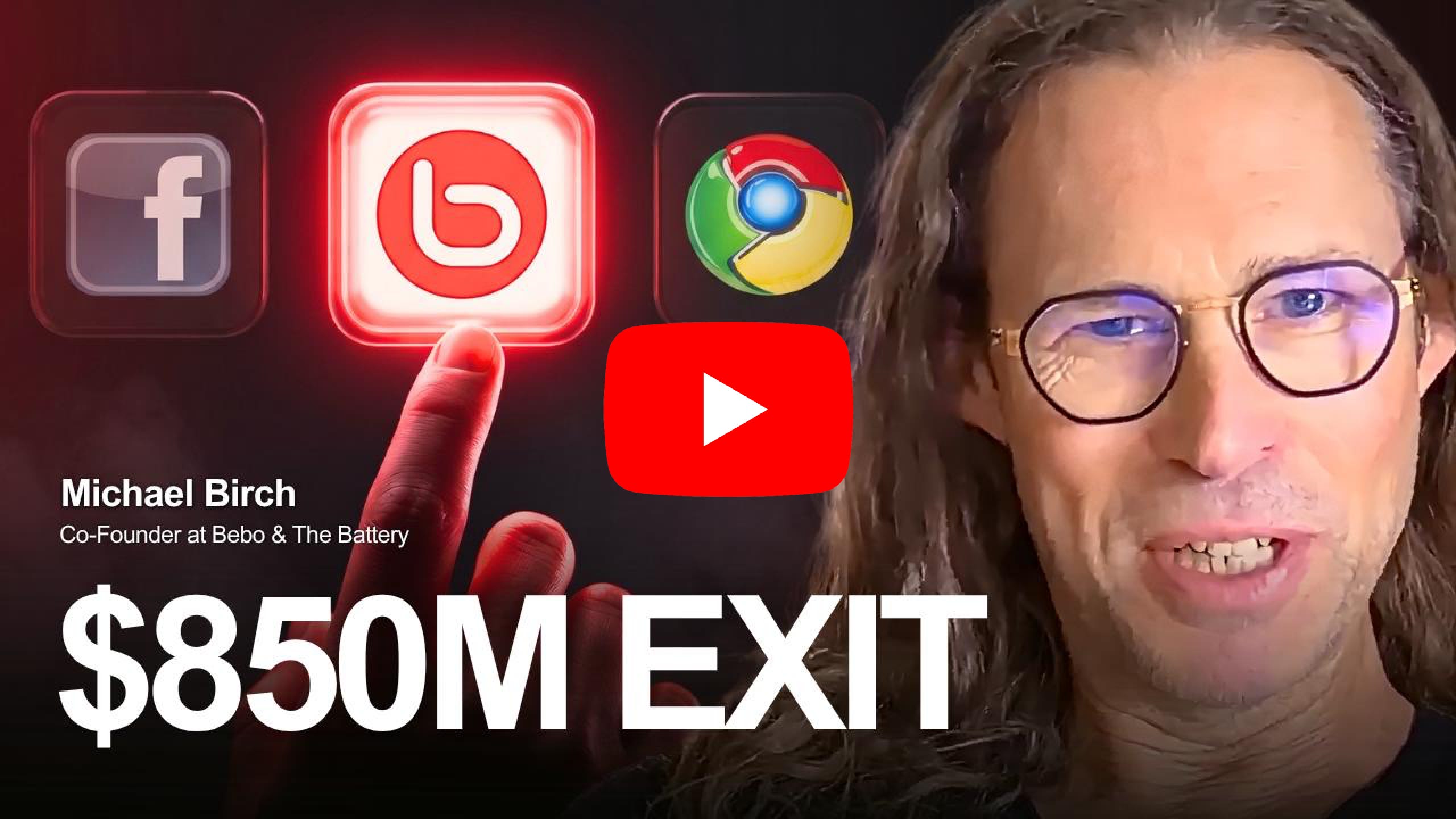
0:45Michael Birch: This is Michael Birch, co-founder of Bebo. He engineered viral growth mechanics that made Bebo the UK's number one most visited website overtaking Google and sold the platform for$850 million. and now he's breaking down the exact mechanics behind explosive user growth and the hidden warning signs that tell you when it's time to sell. I've always been technical and I can build things end-to-end on my own the old school way and that for me has always been a bit of a competitive advantage whereas other friends have ideas and I'm like you're gonna have to pay someone half a million dollars to build that because you can't do it yourself and so it just dies though right.
1:19One of the great things about AI is that everyone can build stuff that maybe they couldn't have done before. I mean, I've not written a line of code since the 1st of January this year. Bluebell, which is our latest app, is 100 % written in AI. But it's not like I just told it to create it and went to bed and have done nothing since. I'm there all day long, interacting every second of the day, curating it and telling it what to do. You're basically the director, but you don't need anyone else now. Whereas directors always need all these people, you don't need those people now. If you've got ideas, you can be a creator now in a way that you couldn't have done before.
1:52I think by the beginning of next year, if you've got an idea for an app or a website, you just tell AI what you want to build.
2:01Michael Birch: Welcome to New Economies.
2:15Michael Birch: Hey, Michael, welcome to New Economies. Awesome to see you. Nice to see you too. This is a massive full circle and also fan moment as we got connected a few weeks ago. And when we spoke for the first time, I put out this tweet asking if anyone could connect us to five incredible founders. And one of those founders was you. So I'm super excited to have you here. And honestly, I've actually been wanting to speak to you for 10, maybe 15 years. So we have a ton to cover. But you know, when I was thinking about the theme of today's show, I thought around two things. One, the Bebo story, but also where we are now in technology.
2:56Michael Birch: Social is obviously changing so much. So why do we begin with the Bebo story? No one's actually heard from you in quite a long time. I don't think anyone's actually heard the full Bebo story. 2005 was obviously very different to where we are today. Why did you want to go down the rabbit hole? of launching a social networking site? Well, I'll wind back a little further than Bebo even. So the first social network I did was called Ringo.com, like Ringo Star. And so that was in 2003. And a friend of mine, Morgan, had sent me a link to Friendster. So I was living in San Fran at the time and he sent me this link.
3:38He said, check out this website. And I went on it and I was like blown away by it. I spent about an hour on it. I was just addicted. And I was like, this is amazing. because this is incredible. I've never seen people just sharing their lives online. Every person could now have a page on the internet and you could see who their friends were. And this was completely new to me. And I just saw the potential of what that was. And so I spent an hour on it. I closed the browser. I'm like, I'm going to build my version of Friendster. And my friend who'd messaged me had this name, ringo.com. And so I messaged him and said, should we do this together and use that name you've got?
4:16And so I spent 13 days coding and I based it on another website that I'd had because 80 % of all website code is actually common to every other website. And so it allowed me to do it very quickly. So I went live after 13 days, but I didn't actually look at Friendster again because I wanted to avoid sort of carbon copying it. So I sort of took the spirit of Friendster and the concept of it and then sort of built my version of it and then i thought before i went live like i better just check i haven't missed anything really obvious so i looked at and i'd missed the ability to like write on each other's profiles and say yeah that's kind of a really obvious way i should probably put that in uh so i put that in which took about two hours and then pushed it live and that one took off really quickly we've got 400 000 members within three months and at the time friends who was one million users.
5:09They'd raised, I think,$50 million in capital. And this was me working from a tiny office in the East Bay of San Francisco. And I just couldn't afford to scale it. So I saved it up at$6 ,000. And I spent it on one database server. This is when you had to go and actually put them in and rack them. And then outgrew it the following day. And I was like, oh, damn. Like, how am I going to do this? So I ended up selling it quite quickly. So we sold it. we agreed a sale three months after we heard about friendster and took three months to close the sale and we sold it to a company called tickle and then i just wanted to do it again so bibo was take two of that same thing but whereas the first time i was before myspace before facebook the second time i was coming in myspace was huge facebook were becoming huge and i was like this is going to be a lot harder this time around it took me six months to get traction on it although i got traction at the very beginning because i did a self-updating address book it wasn't actually a social network because i had a non-compete i wasn't allowed to do a social network so i did a self-updating address book which is the first idea i ever had back in 1999 and that grew to a million users in nine days but no one ever came back like it was me it was me he was the only one that came back.
6:28What it did do was it allowed us to build a social graph, which of course is behind every social network. And so then I spent six months building, then the non-compete expired. So then I added the social networking features and it took six months of really just nothing happening. And then suddenly it took off again and kind of hockey skipped in growth and then the rest is
6:48Michael Birch: history. Why do you think it took such a long time for it to have that kind of J curve to get some traction? Well, I mean, I had this social graph, but no one was coming back at all. And I had to build, I'd spent all of my life up until that point focused on viral growth, right? And the primary driver was, I didn't have any money, right? So I couldn't spend money marketing. And I was only interested in building things that were huge and had scale. And so my only way I could ever do that on my own, because I didn't really want to raise money, and didn't think anyone would ever invested in me anyway so the only way to do that was to focus on viral growth and so i got really good at that but then i realized that the key thing about social network is engagement and not you do need viral growth but if you don't also have engagement you're going to do what i did when i first launched bebo which is you grow virally but no one's coming back so i really focused on like how do i build the most engaging social network and this was before the days of fees so it was a little bit different but and so i kept doing that and then what the thing that actually got the second kind of hockey stick was i added quizzes so you could put lots of different content in modules on your page it's like an old school social network profiles and modules and you just surf from person to person friend to friend and i added one uh quiz and the default quiz was how well do you know me and so you'd we'd suggest questions but it would be you know who was the first person i kissed or something so it's very kind of a playground viral and then so So people would put these questions on, they could share it to non-members, and the recipient would answer all the questions.
8:25But then to find out the answers to the questions, you had to create an account. So this was kind of the viral mechanic. And so most people did because they wanted to know the answers. And then as soon as they'd done that, it was like, would you want to create your own quiz? A very high percentage of people did that. And so that's the thing that got it viral the second time. But by then, these pages were rich. There was lots you could do on these profiles. and by doing the quiz thing you already had some content on your profile and so that's the thing that kind of kicked it into gear and it just yeah it just ended up growing hundreds of thousands of
8:54Michael Birch: users a day because of that that's insane i will be honest 2005 i was only seven years old so i don't quite remember bebo i think not quite i think the first social site i really remember was flicker but bebo when i asked my friends who started older than me they were like Like, yeah, this was massive in the UK, Europe, New Zealand, and it really was starting to take off. I was quite surprised about the UK. Why was the UK such a big market for Bebo, and why did it take off there? I mean, the question, it was only ever in English, so it was always going to be English markets. In fact, we killed virality intentionally in non-English language markets because I didn't want to be big elsewhere.
9:38And High Five and others were taking off globally. So basically, if your IP address was not an English language country, you didn't get all the viral features. So I didn't block anyone. I just killed for all the intentionally. And so it was always going to be effectively UK, US, and so on. But it took off a lot more in the UK than the US. So we had real traction in the US, but not anything close to the same order of magnitude. I think a little bit of it was that the American companies that were dominant at the time of MySpace and Facebook were our two main competitors. didn't really, like the UK was an afterthought to them, as it is with pretty much every American company that launches them.
10:18Agreed. They know they'll get to the UK. They know it's meaningful enough to bother, but it's not what they're focused on. And I think my sensibilities obviously were much more focused on the UK. And so I did a lot of, actually did conditional rendering of language spelling based on whether someone was in the UK because I wanted people to feel like, oh, this feels like a British website. And so I think a lot of it was my sensibilities and actually caring. And I added schools from the UK listings. I don't know if Facebook did early on. And so it was relatively early days, in hindsight, social media, although at the time it felt like social media was owned already by one or two companies, but it was a relatively virgin market to kind of grow in.
11:04And so I think that's why it took off. And similarly, it was huge in Ireland, UK, New Zealand. And I think the core reason was that the other companies weren't at that point focused. I think if I launched a year later, it may have been too late to kind of got the foothold in the way I did.
11:20Michael Birch: Super fascinating. You know, I find all of these incredible companies have like critical moments, right? In the first 12 months. If we were to go back to those first 12 months of building Bebo, was it complete chaos? what was actually happening like inside the company we would do pretend we were walking through you know the doors of the office now well you say what was happening inside the company the company was me myself and my wife we've founded everything together so i was the only developer product person and then my wife would take care of everything that wasn't engineering or product so you know customer support legal finance and all the other things so it was the two of us working on it together i mean it was just 12 hour days seven days a week sitting at a computer and you know it's a very boring it's a very boring thing to watch someone working in tech because they just sit there all day like that it's like wouldn't make a very good movie i mean the social network was a good movie but that's not the reality of what people do they just sit at a desk all day programming so it was just it was it's it's the most fun thing to do though because it's you against the world in a way, sitting at a computer and working out if you can build something that people want to use and then checking and looking at the stats each morning you wake up and seeing whether the thing that you put live yesterday is working.
12:42So continuous experimentation. So I did a lot of A-B trials where I just did two versions of something all the time and then put tracking to see which version was working to find out what the optimum product
12:56Michael Birch: quite boring in a way but kind of fun at the same time did you start to find other social sites were starting to copy you or people were copying each other because honestly like back then there was only what you facebook myspace was anybody else um there was tagged high five pixel or something uh there were quite a few others but the ones that dominated in the markets that I was in, by far our biggest competitors were MySpace and Facebook. And I think everyone, I mean, you know, copying is the highest form of Flannery, isn't it? I think you're, as long as you're not just ripping someone off in its entirety, I think being inspired and looking at other products and seeing, you know, every website I look at, I'm like, oh, that's cool the way they've done that.
13:43And I might borrow the idea and then use it in a different concept on whatever I'm building at the time. So I think naturally that was happening. But one of the things I remember early days of social. So one of the things I did really early on was this importing. If you remember the days when you'd import your address book. So you'd put your Hotmail, Yahoo initially, and then later Gmail password into a website, which of course you should never do. But people did. And then you would import all the Hotmail address book. And then you would offer all of these people as people you might want to invite to your service.
14:20and then you'd email them all using your own mail server. And so that was phenomenally effective. And I first did that in 2003. So I didn't do it with Ringo, but I sold Ringo to a company called Tickle. And they had implemented this. I think they were the first people I ever know that implemented it. And they were doing quizzes, coincidentally. And they implemented it as this great viral idea. And I was there, I worked for them for a bit. So I was kind of in the engineering team and they implemented it and then they put it live and nothing like it didn't do anything and it made no difference to their virality whatsoever but i thought it's a really cool idea like it should work i don't know why it wasn't working for them and so i went home spent the weekend building hotmailing yahoo importers for a website that we had at the time called birthday law which reminded you of birthdays and we were getting about 10 000 members a day at the time.
15:13And then I put it live when I woke up in the morning, Monday morning, and we had 100 ,000 new members overnight from this contact booking porter. And I thought there's no way this is, I didn't know, I wouldn't say it was legal, but there's no way that Yahoo are going to let me do this because I'm asking for hotmail passwords on my website. And then clearly I can keep their password and log in as if I wanted to, which of course I didn't. But I mean, it did, the scraper did to get the context i wasn't looking at their email and i said they just get it and it's all coming from my server's ip address so it's very easy to see you've got 10 000 people a day logging in from one ip address all right they're just going to block the ip address and every now and then i've sort of it would break and i'm like ah yeah they've blocked me now they've blocked me but it hadn't they just changed their html and so i had to like change the scraper to repass the content stuff.
16:08And they never blocked me. So I added 40 million users to Birthday Alarm in one year. And so then when I did Bebo, the second social algorithm in Bebo, was the address book importer. That's why I got a million members in nine days. But at the time, people were starting to cotton on to this. But I remember seeing MySpace went live for this feature. So they'd probably seen us doing it. And they went live with it. And then I looked at the traffic service that used to show how much traffic signs we're getting, begins with an A, forgotten now. And I noticed them totally hockey stick in growth. And then I looked on the media, no one was commenting on why they were hockey and sticking so much.
16:54And I was like, they just put the address book in Port of Life. So it was a hugely powerful thing to do for a period of time.
17:01Michael Birch: And now, of course, no one does it. That's insane. When you're seeing these competitors, you know, kind of like copycats, right? I almost feel that the first person takes the biggest leap, which is you in this case. Then the second is these copycats. And then at the end of the day, everyone kind of becomes the same in some respects, right? Was there a moment in that journey when everyone was basically just the same? In the social media world? Yeah, I mean, I think everyone was looking at one another. And again, you kind of, you borrow ideas and do the things. But I think you also set on a path with a website and you end up with a certain brand and a certain reputation.
17:40And it's very hard to course correct once you're established in a certain way. So, you know, MySpace was just crazy, broken HTML pages. It was kind of, you know, it was like GeoCities, but for yourself. And which I didn't love. But there's a lot of self-expression. And then Facebook was very serious. I would say kind of boring. And it was like, you have to use your real name and cancel your account if you're not a real person and so on. And then with Bebo, we were always trying to be somewhere in between where we had the self-expression of MySpace, but kind of the product quality and execution of Facebook.
18:21And I think we sort of achieved it, but there were certain things like not using real names, which for a period I was questioning because people were using kind of emoji or weird characters. And so if you try to search for your friend, you couldn't actually search for them because if you type their name in, it would come up. And so it sort of felt a bit kind of wrong. And so I tried to kind of course correct and be a bit more like Facebook in that one aspect. But then you get this massive backlash from the community because we've taken away their sense of self-expression. So they all sort of found their little place.
18:56I mean, it's very hard to then say, I want to be Facebook or I want to be MySpace because you're sort of defined in a certain way. And we started not super young in demographic, but then we started going younger. And then once we started going younger, it was very hard to correct it again. We started with university age people predominantly and probably upwards. But then we just took off in schools. And it was unstoppable. There's nothing we could do about that. We were just getting insane amount of traffic from kids. And then it changes the vibe of the thing. So then you start losing some of the older members because they feel it's a kid's place.
19:36And that was quite, I was struggling to manage it. I was trying to make it where they wouldn't see each other in quite the same way. And you could have all of these people coexisting. Then all the media ever wanted to talk about was online safety, which related to children primarily. So all of the media about Biro was about kids. and that kind of just solidified what Bebo became in people's minds.
19:58Michael Birch: It's hard to imagine now, right? You've got these 12, 13-year-old kids, massive social networking site. Like, it's just hard to imagine now. Now, especially a lot of countries are trying to ban social rights. I think some countries are now trying to do like 16, you have to be 16 before you sign up. I'm just trying to, it's hard to imagine like, what are these millions of kids actually talking about? on. Kids can talk all day long about anything you could possibly imagine. And I'm actually supportive of hiring the minimum, like increasing the minimum age for children. I think social media has created a lot of challenges and mental health issues, which we could talk more about.
20:38The industry needs to be responsible. And I think these sort of minimum age things are a good idea. The challenge is then verifying the age because you just say to someone, are you six, and they can just say yes without proving it. So it kind of, the industry really needs to come together and work with governments to allow an accurate way of verifying whether someone meets the age criteria. I think that's in the world.
21:00Michael Birch: Today's episode is partnered with Hostinger. Hostinger are the perfect tool for builders like you and I to turn these crazy ideas we have into reality. Hostinger provides everything we could possibly want to get going. They provide web, email, cloud hosting, and even in today's environment, We need that perfect vibe coding tool to turn these crazy ideas we have into reality. Now, Hostinger providing our audience with 10 % off. All you need to do is head over to hostinger.com forward slash new economies or enter code new economies. Hostinger is trusted by millions of builders and they provide everything at affordable prices.
21:33Michael Birch: And it's time for you to get building. I promise you it'll be worth it. Go and do it. Now, back to today's episode. It's so interesting to see how obviously quickly social has changed, right? now if you look at social platforms they all look radically different you ran bebo for what a couple years three four years was there a massive change in how people were interacting with social back then or was it pretty much the same from the start to to selling it was three and a half years we were doing it from the day we started to the day we in the first six months we were just so it's three years of kind of growth and meaningful numbers.
22:12Yeah, I mean, I think that it was so, so new back then. And, you know, and it felt like it was all mature at the time. It felt, oh, yeah, now social networking is established. But, yeah, I think the biggest challenge of navigation was this kind of the safety thing, really, and the online bullying which would happen. But, you know, it was just another medium for people to do the things that they've always done anyway in many ways, right? Like kids bully other kids at school, but you can't, there's no documentation of it because it happens in the playground and verbally. But suddenly now it was being documented online and teachers could log in and see, you know, on profiles, what people were saying to each other.
22:51So it's sort of, people started blaming social media for these bullying events, but it was really kind of documenting in many ways what was already happening. But I think there was definitely a negative side to it now because everyone could then see these things and you know that may have helped proliferate some of the bullying yeah and that that was just evolved during that period and we hired a safety expert that we found in the uk and she came on and we created all the policies and procedures so honestly that was by far the number one thing i spent my time on and it kind of evolved through those three and a half years and so we did the best we could but and now i don't feel people speak about a huge amount but I couldn't no one would speak to me in the media unless it was about that one topic no one wanted to talk about the British entrepreneur succeeding in Silicon Valley or building what the UK and Bebo was briefly the largest website in the UK for one month we overtook Google in traffic but no one wanted to write about that they just wanted to write about
23:53Michael Birch: online brilliant that's crazy let's come back to that um okay so you're running Bebo three and a years and then like any cool company right it starts getting attention from potential acquirers potential partners and so on there's obviously this famous title famous article which you've probably seen hundreds of times right awl comes along 850 million dollars but before we get into that were you actually wanting to sell or were you just continuing you know wanting to build i i did want to sell because of the circumstances of where we'd got to if i were in facebook shoes i wouldn't have sold it like we felt we were losing at that point like we'd grown exponentially like week over week for years but at the time that we sold we were flat we weren't shrinking yet but we were losing as many people out the back doors were coming in through the front door and primarily to Facebook at that point, less so with MySpace.
24:57We kind of won against MySpace in the UK and state bigger than them, but we were losing, as I think MySpace were, people to Facebook. I spent a few months trying to correct and get it up again, and I couldn't do it. And I wasn't convinced I would be able to do it. And I thought what's coming next is shrinkage. And as soon as we start shrinking, we're downfall. And it happened to, because Hi-Fi and Tagged were huge at the time, not so much in the UK or English markets, but in other global markets. And they ended up kind of shrinking. They didn't sell and they sort of went to effectively nothing.
25:36And so that's why we sold it. But I felt if we were continuing to win, I wanted to continue building it because that's fun. But it's not fun to write something down. It's fun writing it up. So I did want to sell, but only after realizing that we'd kind of reached out our peak at that point.
25:53Michael Birch: It's about the right times, about the right moment, but also, you know, building is hard, right? You may have been working on other ideas or had other things you've been thinking about. When an acquirer of that size comes along, this is obviously different times. How did the whole conversation come about? So we had a president of the company called Jonah Shields, who was a former Google exec. She joined, I think, about a year, year and a half in to the journey. Her background was sales, and she was exceptionally good at it. And so she joined, ran the UK office. I was based in the US, but all of our business opportunities were really UK focused.
26:35So she was kind of running the sales marketing, well, we don't know what we do, marketing, but sales side and the business development side in the UK. I can't remember how she got into a conversation with the AOL Time Warner board and she got invited to present to their board meeting as a guest to one of their board meetings. and she talked about the future of social media and her vision for we were doing uh we created our own little mini webisode tv series i don't even remember lonely girl 15 we did one called we the people who made that did one called cape modern on bbo and she spoke about kind of the future of media and how it interacted with social media and that was kind of her vision for the future it wasn't really my vision for the future but AOL Time Warner being more of a media company obviously bought that vision and so they got interested in buying it because of really that that dialogue I didn't actually meet anyone from AOL Time Warner until after we closed the sale so she managed the entire sale process and we were with Alan and co which is the bank for transacting these sorts of businesses.
27:46And I was saying, so when do you think I'm going to meet the AOL Time Warner people? And they were like, yeah, it's weird. They haven't asked to meet you yet. And I was like, it just seemed a bit strange they haven't asked to meet me. And I said, I clearly don't mind if I don't meet them. I just expect that they would want to meet the guy, husband and wife who founded the company, didn't meet my wife either. And they said, yeah. I said, well, I'm not going to ask to meet them. Because I think if I ask to meet them, I feel if I meet them and they like me, they might want me to work for the company, which I didn't really want to do after.
28:23And I thought, if they don't like me, I might just blow the whole sale up and they won't buy it. So I'm like, I think it's better for me not to meet them. But of course, if they ask to meet me, I can hardly say I'm not meeting you. Anyway, they never asked to meet me. So I never met them once. I did one call with the AOL CTO to go through the tech stack and talk about the engineering side of it. But that was like a video call or audio call, in fact, I think at that time.
28:49Michael Birch: Yeah, so bizarre. Did you ever find out why? I mean, I get it if it's$10,$20 million, but if it's$850 million, you're buying a company. You probably want to meet the team properly. Well, I don't think they maybe like my vision of social media. They liked Joanna's vision of it. And then she became CEO, which I think was great. And then my wife and I were the only two people in the entire company were not offered jobs. And so the day we closed the sale, we were unemployed, having just spent three and a half years working 70 hours a week on this startup. We were suddenly unemployed. And my wife said she was heavily pregnant with our third child at the time.
29:33so yeah we we took we took the day off and went to watch forgetting sarah marshall as a daytime because we hadn't seen a film for years so we went to watch a watch a film at the movie in the in the daytime which is good because they're half price tickets in the daytime so it's
29:50Michael Birch: a great movie second probably quite a nice day to to sell the company but in fact actually is it's super challenging because you've been building this incredible company your identity is attached to this incredible social side then the next day is like you're kind of irrelevant yeah it's really weird and you've obviously got you made a retirement amount of money but i'm not a retiring type of person four months after we sold our child was born and then four months after that I ended up having open heart surgery and I ended up spending Christmas day in hospital and intensive care I was in for four days I had a heart valve repair and then I had ended up back in hospital twice following it because I had complications from the surgery itself and so it was a very weird time we sold this business had our third child had open heart surgery and then we were trying to work out like what do we do next and you know and i think you know in hindsight i would have done things differently but i ended up doing quite a lot of investing which just felt like what that's what you do next and it took me longer than it should have done to realize i don't actually enjoy investing and i haven't done any for years now um i like building stuff so i've always gone back to kind of building things and still do today okay so there's a couple things on back there one basically you and your wife are both going through you know personal challenges right your wife's vats have a baby you're going through heart surgery how are you piecing all of this together are you learning to take time off to kind of just detach yourself from technology for a bit we did i mean i'd been working what year was that so that was 2008 we sold and i'd been working on tech ever since leaving university and so i kind of wanted a little bit of a break in some ways but it was like i mean it was such a strange time largely because of the the surgery took me you know i just had kind of a health anxiety following that for like a year and so it made it quite difficult and i didn't want to get too stressed out by things because I just had heart surgery.
32:05So it just took me a long time to kind of find that thing that I wanted to do again. But the thing we ended up doing, which was to get out of tech, we started a private members club in San Francisco called The Battery. So that opened as a five-year remodel, build, kind of setting up the business, conceiving it, planning it. We knew nothing about hospitality. I'd never worked in a coffee shop. I had no idea what I was doing, nor did my wife. We knew we didn't know. It's not like we came in arrogantly thinking we had all the answers. We knew we knew nothing about what we were doing. But that was kind of the fun of it.
32:39It was like, you know, we would joke to each other. It's like, this is like being a real entrepreneur because we have no idea what we're doing. Whereas with the tech stuff, I felt I had some idea of what I was doing. And it was fun. We did it to get out of tech. It related to what we'd done because it was a community. but instead of you know tens of millions of users we had thousands of members and very focused on quality over quantity which was a lot of the appeal to me was how do we really build a you know an intentional community with highly curated so that you know people get on and have interesting things to talk about and so on and then we just learn about hospitality and then the only thing was we did do it to get out of tech and then before opening i said okay i'll go license to hospitality software now yeah it's going to be a great choice of products to choose from and i'm like is this there doesn't seem to be any hospitality software that i want to use at all it's like terrible so i spent six months working 70 hours a week again writing software and so i wrote the first version of the software that the club ran on and we licensed a product as well so I wasn't going to build a point of sale system in certain parts of it.
33:51I wouldn't be capable of certainly not in that timeframe. And so ended up getting back into tech, building software, open the club. And three weeks into opening the club, we fired the general manager, the chef, and the director of food and beverage, the three most important positions, all on the same day with no replacements. And then my wife and I co-GM'd it for nine months. And we're like, we just need to learn this business. We can't just hire people and expect them to do it for us. We need to learn the business inside out. And so we did that for nine months. And then eventually, obviously, we slowly replaced those positions and found a great management team.
34:29And kind of now it's been running very smoothly ever since.
34:32Michael Birch: Okay, so a couple of things there. Why did you fire the three most important people on the same day? I mean, I'm not a rocket scientist. I'm not on hospitality as well. But the chef, probably the most important. second the GM probably second most important they weren't doing without getting into too much obviously they weren't performing in the way we wanted them to perform it's a very stressful thing opening a club and you we had 200 staff at its peak it's a lot of people and when you open a new hospitality business like a club you're going to churn about half of your staff in the first month and a half because you've hired all these people they've never most of them have never worked together They don't know whether they're going to like the job.
35:16It's a stressful situation because you're working all this stuff out together. And so we just ended up churning a phenomenal amount of staff, and we didn't think they were doing what they needed to do. So there were obviously other people in the kitchen. It wasn't like we weren't doing food. But the chef kind of lost the respect of the rest of the kitchen staff, so it just became ultimately a bit dysfunctional. And he was a very good chef, but I think it was the stress of the opening that created this. It's a melting pot of dysfunction. So, yeah, we got there in the end. 200 people, though, feel like a mama's club.
35:54What's everyone doing? Well, I mean, there's a hotel, there's seven bars, there's a restaurant, one big kitchen. We serve food in multiple outlets. At the time, we had a gym, gym and spa, which we've since turned into a co-working space. And then, obviously, because you're 24-7, and you've got shifts. So it's not like 200 people work at one time, but you might get 60 people in the building working. And then if there's a really big event on, you might have 120 people working. But yeah, it's surprising. It always surprises people how many. There's 14 directors, then another 20, I think 20, 25 managers, and then everyone else is out there.
36:36So it's, yeah, private clubs
36:38Michael Birch: have surprised me complicated business. I mean, I've all passed it a few times when I'm in SF and some of my tech friends, you know, say, oh, you know, I had the battery last night, right? But honestly, I've been quite surprised you've only kept an SF. You haven't thought about maybe expanding it outside of... I don't want to do a server house. I've no interest in that. We actually are opening end of next year, a second location in Oakland, 20 minutes away across the bridge. But I don't, I feel if I did, you know, server house tried to do one in every major city in the world, right? I call that a spreadsheet business because you just end up, oh, let's see the spreadsheet of all the clubs and how they're all doing.
37:18And for me, the idea of running the club, it's very much about a lifestyle. It's a lifestyle business fundamentally for us. And we're part of it. We go there all the time. We're part of the community. And we built it because there really wasn't anywhere that we wanted to be part of in San Fran at the time. So we kind of built it for ourselves. And it's been great. It's been fun. It's been a learning experience. and we're part of it. But I think if you're trying to create a business that makes money, private clubs is not, compared with tech, particularly scalable. I've turned the hospitality that I started writing, more recently we then turned that into a company called Sonato.
38:00So we have seven, including me, seven of us working on that. And so we're working with 100 different clubs around the world. we created a product called sonado alliance which is a bit like the if you're a member of so house you can go to all the clubs so we kind of created that network where if you belong to one you can go to i think it's like 70 80 other clubs around the world but they're all independently privately run clubs so rather than us going and creating them in every city we kind of let people local to those cities create them and then join the network so we kind of do have a competitive network to the solar houses as well.
38:39And so that's been fun. It's kind of tied. It's married my two worlds of now hospitality and tech in one business, which has been great today.
38:47Michael Birch: Which is your favorite? Is it technology or is it hospitality? Obviously two different, very different things, but two different impacts at the same time. Yeah, I've never been into technology for the pure sake of technology. Like, technology is a tool that solves problems right so it's you know doing the hospitality software i really enjoy doing but it's because i'm solving the problems that hospitality has and the challenges you know i mean software again the reality of software is you sit at a computer all day long and you you write code or nowadays tell ai to write code and you know a hospitality business is a little more interesting you get to walk around the club and speak to people and taste the food and so i really enjoy working with people in the hospitality business, I would say.
39:38So it's probably more fun if you look at the day-to-day sort of what you're actually doing. But I do get really into tech, again, not because of the tech, but because of what you can create. I love product. I love building product and the output of the tech versus for the sake of tech.
39:54Michael Birch: You know, when we got connected a few weeks ago and we had an entry record to get to know each other, we were talking around actually like this social opportunity. Do people still use Facebook anymore? Do people still use these social networking sites? The impact of AI? I love to hear your take here. I have so many thoughts around the impact of social with AI. Is it making us less, more connected? I think we're in for a bumpy few rides. I think it's really hard to predict what's going to happen with AI. Incredibly difficult. I'm generally a bit of a pessimist in the valley on it i'm a little bit of the kind of like is it could turn around and kill us all at one point kind of conspiracy theorist type of guy not that i'm a conspiracy theorist at all but i do i do worry about the ultimate implications i use it all of the time i mean i've not written a line of code since the first of january this year that's kind of for me the tipping point where ai got good enough that you just tell it what to do and so it's incredibly powerful and I think in terms of social, I think there's a lot it can add to it, right?
41:05Because it's, you know, I think some people will just develop relationships with AI for sure. So you could call that a form of social. I think the more interesting thing is where it sort of sits a little bit behind the scenes and just sort of makes magic happen, right? It can work out who should meet one another, connections to be made, surface up interesting facts at the right time. So we're using it on our new product. We use it quite a lot to kind of summarize conversations all the time. So, you know, if you join into a conversation, it will give you the one line of what everyone's talking about.
41:42Or you can recap and it will recap and catch you up with what's going on in the conversation and what you've missed. So I think those sorts of things are great. I think it's really important for me that I know when something's AI and when it's not AI. Like I think transparency of that's important. I don't want to think I'm speaking to a person, but I'm actually speaking to AI. But I don't mind speaking to AI as long as I know that it's AI. You know, I speak to AI all the time in chat. So I think that's important. So I think there's a lot it can add. But as long as it's honest and people are, you know, people do create bots.
42:18I think Twitter, I'm not sure. Estimated percentage of tweets are now entirely AI generated. It's, you know, that sort of thing bothers me, I think.
42:28Michael Birch: I think it's really challenging. Even when I'm looking at the social fees, right? The videos have got so good. I think I'm pretty good at identifying if it's AI or not. Some of the videos, I thought they're genuine. They're not actually. It's all done by AI. there is now this big conversation especially with creators right newsletters or videos how much of this content is actually written by ai versus not and there are now new softwares being integrated into these platforms like you say for better transparency on how much of this content is generated by ai but if all of this content is generated by ai in the coming years like what's the point yeah and i think a lot of stuff is i'd call it almost hybrid it's it's directed by human it's curated you know you iterate with ai to create something right and we which coding is a great example of right so you know bluebell which is our latest app is 100 written in ai but it's not like i just told it to create it and went to bed and have done nothing since i'm like i'm there all day long interacting every you know every second of the day curating it and telling it what to do and looking at the product and i brainstorm with it a lot or i get it you know i'll get it if i'm trying to create a particular ui element i'll say create five versions of this and this is what i'm trying to achieve and this is the look and feel i wanted to have and these are the problems i'm trying to solve with it and it will come up with the five versions and i'll say implement number three and then it'll implement so you know does that is that it's an ai generated website but it's done with a person i think and it's in many ways not too different to if you look at a movie director right a movie director they're not an actor they're not holding the camera they're not filming they're not doing the lighting they're not doing the sound they didn't build the set they literally just sat there telling everyone what to do right and he's like yeah they're generally considered the most important person in the movie who literally did nothing other than tell people what to do and i think that sort of if you create a ai generated video it's not dissimilar you're basically the director but you don't need anyone else now like well as directors always need all these people you don't need those people now so it's it's you know again is that is that yes it's an ai generated film and i think it's fine to say it's an AI-generated film, but it's still generated by someone directing and working with AI.
44:59Michael Birch: Yeah, it's going to be interesting what happens. But honestly, all of these in-real-life connections, people actually meeting in-real-life versus, if we compare where we are today, versus maybe five, eight years ago, people are meeting friends as much. I think we're a lot more isolated now than ever before. What happens with in-real-life versus just being surrounded by AI experiences, do you think? Well, we often kind of half joke being in Silicon Valley that it may end up that our private club is actually the best business you can do because it's an entirely in real life business. And I think it's increasingly important to do that.
45:43And people work from home a lot more than they did now, whereas you used to at least interact with people when you went to work every day, but now half of Silicon Valley probably works from home and doesn't go into an office. So having these third spaces that you go to and you meet, and there's nothing more real than being in a room with someone face-to-face conversation. There's no AI in the club. So it's a complete safe haven. I think people are seeking that more. And so I think so many jobs are being replaced and will be replaced by AI. But world of hospitality is probably one that, although the kitchen will probably be all AI machines making your food, but you probably don't want a bot coming to the table and putting the food on the table.
46:30Sometimes you can order from your phone, but you enjoy the interaction with the waiter or waitress or sitting at a bar and chatting with someone. So I feel those experiences. It's going to be like the digital analog world. People, after a while, they went CDs to streaming, and now people are on vinyl again. They enjoy handling the record and putting it on and sitting at home and listening to this crackling second-rate recording more than they do streaming. And I think that's kind of happening and will happen more and more with AI. There'll be a kind of backlash to it where I want the digital detox equivalent.
47:09Michael Birch: Do you think there are any incredible experiences, opportunities that in real life hasn't created yet? Yeah, I mean, I'm sure there's lots. I don't know what they are. I think increasingly, and this has been happening for a while, people are more interested in spending money on experiences than physical things, right? So I think travel, experiences, festivals, Burning Man is something I do a lot. you know those sorts of things is what people really want to spend their time and money on because it's a lot more rewarding and satisfying and i think that sort of plays into the in real life thing and again i think ai is making that more important than ever before but i'm sure there's plenty of businesses around that that are going to be done differently than have been done in the past yeah well you're now back with your latest venture blue bell i checked it out i said before we came on.
48:02Michael Birch: I got the handle at Oli F. Didn't quite get Oli. Maybe it's reserved for somebody else, but it looks super promising. Thank you. Yeah, it's sort of a bit of a full circle moment for me in a way because I'm going back to social again. And I've revisited social along the way and had some, we bought Bebo back and we sold it a second time to Twitch, but I managed to keep the domain name because they wanted the team and the tech. they merge the tech into Twitch itself and I have relaunched it recently I had another go at it so towards the beginning of this year I just got back into wanting to do social again and I have built social into our hospitality software product so all the members have an app that they can log in basically a very focused social network on that which kind of again just got me a little bit kind of interested in social and the thing that thing that I mentioned earlier when I first saw Friends Zoom was just like holy fuck, this is amazing.
49:02Like that's never really left me. Like I've always still had that kind of aha moment of like, this is so cool. And so I do revisit it, but then I kind of realized, I went back to doing Bebo again and the advantage of launching something under the name of Bebo is there's tens of millions of people who have nostalgia about it and they do come back. Not all of them, of course, but a lot come back and they have a play and they look at it. So I get a lot of people coming back because the problem with that is they come back and they expect to find the original Bebo again. And then anything that is even slightly different from the original, they don't like.
49:39And so it's sort of a blessing and a curse using that name. But it really got me back into social. I spent months iterating on new features, trying to innovate. But then I launched it and it had some success and there's a certain number of people who come back every day and spend a huge amount of time on it. But I just realized I keep building social products for what I think other people want. And I hadn't really ever built one entirely for what I want to use. And I was like, I don't think my wishes and desires for social are unusual. And so I'm like, you know, I'm going to have a go. I'm not going to relaunch people yet again.
50:21I'm going to pick a new name. So it has no kind of prior connotations or meaning. So people come in with a completely open mind to what this product is going to be. And it allows me to be able to be completely blank sheet of paper, design a product that I want to use. And I think my realization, I did a sub stack article called The Long Way Back to Friends. And, you know, and it does tell a lot of my story of the early days of social and kind of this realization over time of how we kind of we went from friends. That's how social networking started. and then we just ended up optimizing for engagement but the engagement led to feeds and then the feeds led to a lot of non-friends in the feed and so you ended up going from friends to a feed of content from strangers and then increasingly everything went to a kind of broadcast model so you've got you know youtube and tiktok and twitch and they're all people basically broadcasting out and yes you you can follow friends on it, but you just end up looking at a lot of non-friend stuff.
51:24And that idea of actually developing friendships and, you know, furthering your relationships or going deeper in a, in a friendship with someone to completely got lost along the way. And, and I don't, I don't use Facebook. I have a Facebook account, but I don't use it. I can do self promotional stuff on it occasionally. So I'll post a sub stack link, but that's about it. And I don't really have any friends. I don't think that still use it. You know, so Silicon Valley is early adopters of tech for obvious reasons, but it's also telling when they stop using something because they're the first to use it and they're probably the first to stop using it.
52:00And I don't find people use Facebook anymore. But if you look at the social landscape, you know, the TikToks of the world and the YouTube, they're going to stay around. That broadcast model has a place. I'm not saying it's an invalid model by any means. They're staying around. The thing that I use and all of my friends use is messaging apps. You know, Zuckerberg used to say Facebook's a social utility, and he was saying utility because utility is something you can't live without. And it's just not true. I don't think social networks are a utility. But messaging is a utility that we really can't live without.
52:33So one-on-one and group messaging. So, you know, if you go on a trip, like, okay, which messaging app are we using for this trip? And everyone signs up if they're not on it already, uses it, and you stick for that week on that messaging app. And so that, for me, was kind of like, you know, the two real camps are kind of the broadcast model and messaging and social networking in the way we thought about in the past. I don't think really has a place in that. And so I started building a messaging app. But, you know, I just there isn't a messaging app that I've liked before. You know, I never thought WhatsApp's a great app because you end up.
53:10We went to a friend's wedding recently in Czech Republic and it was 60 of us. I knew 20 of them from before. There's 40 people I didn't know. I end up in this WhatsApp group for the wedding. And it's kind of all these phone numbers. And it's like, maybe John, maybe Mary. And I'm like, who are the 60 people? Why can't I view their profiles? Why can't I see an actual photo of them half the time that I have photos? It's like, how am I going to know from a phone number who this person is? And so for me, it was kind of like, you really want a full-on, fully featured messaging app with more features than the likes of WhatsApp have.
53:44but I also want a bit of a lightweight social network within that like I want the ability to friend people I want to be able to see friends of friends because that's how your your your social network grows in real life is through friends and and so I at least want to see one degree out but I don't want to see everyone I don't want millions of people on it or millions of people finding me I want a kind of a closed universe that's my universe that I that I'm part of and so I started kind of building this and just added features self-expression as we're born we have a lot of effects like i don't think in iMessage if you say happy birthday you get the balloons right but there's not a lot of other effects in most messaging apps so we've kind of added a lot of effects to just make it fun just like fun light-hearted stuff and we're just adding um the one thing i didn't have was video and voice calling so i'm waiting for android to approve my apps that should go live today and so we're fully fully featured comparable with whatsapp but with more features because we built things.
54:42I mentioned traveling. So in trips, you can add an itinerary of events now very easily for the trip that you're going on. And then if there's lots of people on the trip, people can sort of say, oh, I'll go to dinner. Well, there's two dinners that night. You can sort of pick which dinner you're on and then you see everything that's going on. People can share for the duration of that trip. They can share their real location. So you see a map with everyone on that trip in real time. And then you obviously are chatting about the trip on the way, you're uploading photos as you take photos. And at the end of the trip, it's a nice use of AI.
55:16So AI then takes all of your photos, all your messages, your itinerary, your locations, and it creates basically a journal of your entire trip, which is kind of a keepsake. And then it shares it in the chat the day after the trip ends. And then everyone gets to see it who's on the trip and if they want to they can then share that out with friends and so my my wife three of her she's one of six children three of her sisters went on a camping trip recently and did it and then they encountered a bear on the trip so this was all in the messages right and uh and they did this great recap and it was like super fun to kind of see the story of their their trip and zero work for them right it's just a byproduct of the conversation that they've had and the things they've been doing on this little weekend trip.
56:04So they're the sorts of features that I want to build in that just make messaging actually more fun. So it's really building a little bit of a social network where messaging is the course. When you log in, there's just a list of conversations. There's no feed. It's just the most recent message folks to the top all the time. There's no nav bar. That's kind of the golden rule I'm trying to stick to is I don't need a navigation bar because you have conversations and you click into a conversation and you go back to the list and that's it. It's all contained within that. And then we have one button at the bottom, which is a flower because of the name Bluebell.
56:40And that's a, I wanted to do location in an interesting way because I feel locations that would be done well. So if you click on it, if for other friends who've opted in, you can see if any, anyone who's with you. So if we're at the battery, I can see which of my friends are at the battery today. Then I can see ones that are like a 10 minute walk away. So there are other people in the neighborhood who are out. And then I can see which of my friends are in San Francisco. But I don't know where they are. I just know they're kind of local. But then if I fly to New York, I can press the button and see which of my friends are currently in New York that I may not know we're going to be in town at that time.
57:16And so then I might message them in the app and say, hey, I see you in New York. Do you want to meet up and so on and so yeah i just feel location was when i first phones smartphones first came out and you could do location stuff was like oh there's gonna be all the apps are going to be location stuff this is great and then of course this never really worked out people are too scared of sharing their actual location but if you can desensitize it to a point where it's kind of relevant and timely i think people are not as sensitive to doing it so anyway so for me it's just this wonderful product opportunity and i've done it again entirely on my own with ai to just keep iterating and trying ideas out and and my measure is doing my family and friends use it so my wife's family who are very active group messengers are using it all the time and i've i've run many products past them in over the years and i always make them sign up and they always look at it and then stop using it and this is the first time you got me as a user so i'll share it with my friends oh thank you i appreciate it you know i am getting a lot of friends to use it but i'm not naive about the challenge of doing this right you can build a much better product but it doesn't mean it's going to take off because there's just a huge advantage to being established right but i do feel there's a lack of innovation like whatsapp to me hasn't really changed since i started using it what's that 20 years ago or whatever like and a lot of big companies don't evolve they they do what it takes to get them successful and then they just often stop innovating and i think that's ultimately what leads them vulnerable because it's very easy for me to innovate and it's probably quite hard at this point for whatsapp to kind of do some of the
59:05Michael Birch: things that i'm doing so are you uh plenty more gas in the tank is this going to be like the new the new big focus it is at the moment for sure i'm never going to stop doing stuff i'm not a kind of sit around put my feet up sort of person i enjoy building stuff and i think you know one of the great things about ai is is everyone can build stuff that maybe they couldn't have done before. I've always been able to do what I'm doing now because I've always been technical and I've always been a very fast developer and I can build things end to end on my own for the old school way. And for me, it's always been a bit of a competitive advantage to be letting do it.
59:48Whereas other friends have ideas. I've got this great idea for a tech business. And I'm like, yeah, you're going to have to pay someone half a million dollars to build that because you can't do it yourself. And so it just dies though, right? They can't, like, well, I can't get half a million dollars to try this idea out on the off chance. It's a good idea. But of course, now you can, right? If you have an idea, you can go to AI. And I think at the moment, it helps me still that I have a very deep technical understanding. I think by the beginning of next year, I don't think it'll matter at all whether you have a deep technical understanding.
1:00:21So if you've got an idea for an app or a website you just tell ai what it what you want to build and it will take care of all the security and the performance issues which in the moment it's not always the best app which i think if you do if you don't know what you're doing you'll probably create a pretty vulnerable website an app that can get hacked but i think that's going to change very quickly so so that's the great thing about ai it's like if you've got ideas you can be a creator now in a way that you couldn't have done before because you may not have had that in the case of websites deeper technical
1:00:53Michael Birch: understanding and we're only what four and a half years in since gpt launch december november 22 it's frightening just how how quickly it's how quickly and i used it very well for programming but it it used to be kind of you know a bit better than going on google to look up solutions and And it wasn't, it was amazing. It blew my mind the first time I interacted. It was like, oh my God, I can't believe it just did that. But the beginning of this year for me was the tipping point where like when I stopped writing code. Last year, I was still writing code and getting it, asking it questions and getting it to, in a very focused way, improve it.
1:01:34And then it just flipped completely. I used Clawed and then Fable came out as being, again, another step change. Yeah, totally crazy though.
1:01:43Michael Birch: I think it's going to be interesting. how builders continue to use AI. Obviously, everybody can now use it now, but I think what's going to set everybody apart is the taste, the judgment, and also not which tool to build on, but what to build for new builders. You can direct AI, but it's only going to be as good as the way you direct it. But building a company also, yes, it's super hard. Not many people do it with their wife. you've built all your products with your wife over the years what's been the hardest challenge but what's also been the greatest blessing that you have both had together in building all these incredible products yeah we've been married 32 years we met 36 years ago so pretty much two-thirds of our life we've spent together and obviously we've always got on well When we first got married, she moved to England.
1:02:42We lived there for seven years. And she worked. She got a job as a software developer as well at the same company I was working at. So even then, we were working not in the same team, but the same company and spending time together. And you talk a little bit about work and so on. And it just felt very natural when she left work temporarily to have her first child in 1999. I was very jealous of this idea that she'd go on paternity leave. So I said to her, I'm going to take three months off and I'm going to try and build a website. And I didn't, I was a software developer at the time, but I didn't know anything.
1:03:17I didn't even know HTML. I'm not sure I could even spell HTML at the time. And so I took three months off, I said, and I started building stuff at home. And then obviously nothing, zero success. And then we had our first child. She went back to work, freelance software development. And she left for our second child. I was still trying to build websites. I mean, I was building websites. And then she took another time off internally. And three years later, I still hadn't made a single penny building websites. But I'd learned a lot. You know, I was like, oh, it's like waiting for a bus. And like the next bus is coming around the corner in a minute.
1:03:55And of course, eventually it did. And it wasn't ever like this grand plan that we were just going to work together. It was just like when I needed help, she was just like, oh, let me do that. And so we just did. We just sort of fell into working together. And we've always sort of divided and conquered, like, the things that I'm good at or focus on and things that she's good at. She would sort of pick up the reins. It wasn't even like, can you do that for me? It would be like, okay, let me do this. Let me do that. And so we just worked really well. I don't think we've ever had any real challenges.
1:04:31I think I remember one fight ever when we were doing Bebo where it was like slightly in front of other people at the company. And it was like one time ever where we, I kind of remember what we disagreed on, but we don't tend to fight as a couple anyway. And it's just, yeah, it's just sort of being there and supporting each other. But people often sort of say to me, it's like, how do you do it? I remember one time someone said to me, I could never work with my wife. And I was like, I couldn't work with your wife either. you need the right wife it's true yeah so yeah it's just worked out well you know it's just been been very beneficial and then of course there's no i have very little separation between work and i have a good work-life balance but they also merge into one all the time so i never stop thinking about work and so in the evening i'll often just at any moment i'll just start talking about something with my wife and have conversations about it.
1:05:31Michael Birch: And I like it that way because I enjoy work and I want to enjoy life. So there's very little kind of need in a way to separate the two. Are there still any like crazy ideas you have in the back of your mind, which you'd like to build one day? You've got Bluebell, you've got the Badger Now Sonata, which is this hospitality. We haven't even talked about your pub in the UK, a good British pub and fish and chips, always good you've got a bunch of projects but and any so kind of you know you'd love to launch one day no i don't have any burning desire for anything specific at this point i mean during the hospitality stuff as you mentioned we have a we have a pub in north devon in a village called which was my my grandmother was born above the village shop that her grandfather built we ended up buying the shop and so you can now spend a night in the room that my grandmother was born in it's kind of funny and so that's been a very sentimental passion project which has been fun and we have an incredible farm there organic farm and it sort of did it because of the hospitality journey so we did that since doing the battery and so i've enjoyed that sort of thing but i don't yeah i don't have a burning desire to build any one thing at this point i'm i'm really enjoying getting back into social.
1:06:50I actually didn't think I would get back into social. I thought I'd hung up those gloves, but it turns out that that passion that I first had has never gone away. So it's been really fun getting back into it.
1:07:03Michael Birch: Well, hopefully you come back in 12 months, see where Bluebell has gone. Let's see what's going to happen. Social is super exciting. As we said, that hasn't really changed that much. I mean, if we look at the last four or five years, there have been very few new social sites kind of emerge. Most have emerged, but most have gone. So hopefully Bluebell is going to be the next big one. I hope so, yeah. It's a challenge though. I'm not being naive about that. It's very hard. You've got the experience, go and hire or use your AI, get an amazing team together and time to go again. Yeah, yeah. I'll try to.
1:07:47Michael Birch: Michael this has been amazing thank you so much I know you don't do that many podcasts and this is the first one in quite a long time so thank you so much this has been amazing and yeah let's do this again soon great thank you
Subscribe to stay ahead of technology trends. Never miss future editions.
Our latest podcast guest is one incredible founder: Michael Birch, co-founder of Bebo, who shares how he started and scaled the social network into one of the most popular sites of its time before selling it to AOL for $850 million in 2008, how he reinvented himself after Bebo, and what he’s building now that Bebo is closed for good after 21 years.
Watch now - Bebo Co-Founder: How to Build an $850 Million Social Network
During the episode, we learn about Michael’s first entrepreneurial attempt, Ringo.com (another social network), which landed 400,000 members in three months on a $6,000 database server; how Bebo grew to a million users in nine days before going quiet for six months, until a basic quiz feature cracked engagement; and how The Battery, a members’ club in San Francisco, became his next act after the acquisition.
We also explore an interesting question: what happens to a founder’s sense of identity when the company he and his wife, Xochi, spent years building is no longer theirs to run? Michael also shared that, although he’s technical at heart, he hasn’t written a line of code since January, building his latest venture almost entirely with AI, a glimpse of what building without a team could look like for the next generation of founders.
Watch or listen now across YouTube, Apple Podcasts, Spotify, and X
Download the transcript 👇
Timestamps
(0:00) Meet Michael Birch(2:58) The Founding Story of Bebo(8:55) Why Bebo Went Viral(11:19) Bebo's First 12 Months(21:40) How Much Has Social Actually Changed?(23:58) Selling to AOL for $850M(29:50) Reinventing Your Identity Post-Acquisition(31:12) Starting The Battery(38:47) Technology or Hospitality?(39:54) Michael's Take on AI's Future(45:00) Is IRL Being Affected by AI?(47:55) Michael's Latest Venture: Bluebell(1:02:08) Building With Your Spouse
Our notes from this episode with Michael
1. Virality gets people in, engagement keeps them.
Bebo stalled after launch despite a working social graph. A single “how well do you know me” quiz, which required non-members to create an account to see their results, fixed that and pushed growth to hundreds of thousands of users a day.
2. ‘‘We killed virality on purpose outside English-speaking markets.’’
Bebo blocked non-English IP addresses from viral features so it wouldn’t blow up in markets he couldn’t support, staying deliberately focused on the UK, US, and other English-language countries.
3. A password scraper added 40 million users a year.
Michael built a tool that logged into people’s Hotmail and Yahoo using their own passwords, pulled their address books, and mass-invited every contact. One overnight run alone added 100,000 members.
4. The $850M sale.
Although a life changing amount of money to retire on, Michael never actually met anyone from AOL until the sale was officially closed.
5. The day the sale closed, he was unemployed.
Michael and his wife were the only two people at the company not offered a job when AOL took over, despite three and a half years of building it together.
6. He thinks the technical moat he’s built his career on is gone by next year.
He hasn’t written a line of code since January 1st, building his new app Bluebell entirely by directing AI, and expects deep technical understanding to stop mattering for shipping real products within the year.
Links
Follow Ollie on X: https://x.com/ollieforsyth
Follow Michael on X: https://x.com/mickbirch
Sign-up to Michael’s Newsletter - The Long Way Back to Friends:
Sign-up to Bluebell - Michael’s latest venture: https://bluebell.social
About BluebellBluebell is the social and messaging app Michael and Xochi Birch built as Bebo’s successor. It fuses DMs, group chats, and a feed into shared spaces called “pods,” with no public timeline, no follower count, and no feed of strangers to perform for.
Previous episodes include
See all previous episodes here 👉
If you enjoyed this episode, help sustain our work by clicking ❤️ and 🔄 at the top of this post.