 Ask ChatGPT
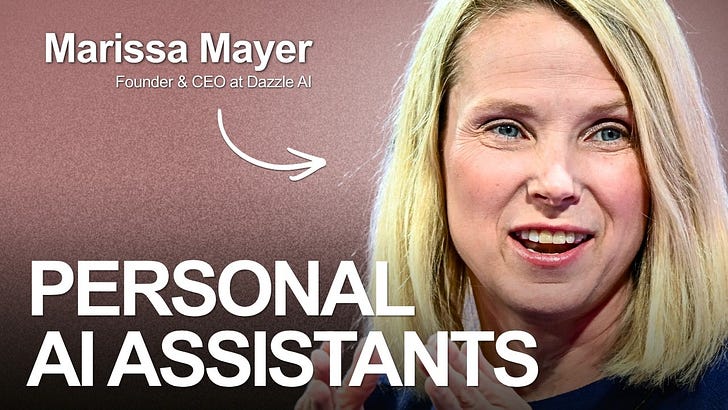

Inflection AI’s CEO Sean White argues that chasing AGI is the wrong goal; AI should be refocused on solving human problems and improving real-life connection. He frames this as “pro-social” and “relational intelligence,” emphasizing EQ/RQ over pure IQ, and discusses how chatbots/AI should appear subtly (voice, subtle interfaces, fewer “processes”) while respecting privacy, security, and user control. He also covers chatbot use patterns, multi-user interactions, and future directions like voice, wearables, and trust/data ownership.
Sean White is CEO of Inflection AI (a frontier lab; Inflection is a public benefit corp). He previously served as Chief R&D Officer at Mozilla, known for pro-privacy, pro-user choices.
AGI focus risks adding cognitive/attention overload and replacing humans’ time; AI should act like a “sparring partner”/coach, enhancing connections. Privacy/trust should be “no surprises” with evolving trust models and user data control.
training Pi on “high EQ conversations”; a study finding people use multiple chatbots weekly; measuring “laughter” in multi-user Pi games; Mozilla client-side encryption; ring/earbud/wearable prototypes; cautionary stories like companies disappearing and leaving devices (e.g., cochlear implants) outdated.
Written by AI. May contain mistakes.
Discussion on the dangers of focusing on AGI rather than solving human problems.
“more attention overload, more cognitive overload to people.”
Sean White discusses the rapid advancements and inflection points in AI technology.
“I'm excited to have the discussion with you.”
Exploration of the need for AI to enhance human connections and emotional intelligence.
“It's very easy to say, what do you mean about AI?”
Discussion on the evolving role and appropriate use of chatbots in daily life.
“And so as we started working with Pi, the focus was training it on examples of high EQ conversations.”
Speculation on the future of chatbots and the importance of user-friendly interfaces.
“Some of it is about whether someone judges you or not, a human, whether it judges you or not, or a system, which is just a tool.”
Explore how chatbots cater to different age groups and their relevance.
“understands and can refer the things you're trying to do, and then helps in those subtle ways.”
Delve into the evolution of communication methods and their implications.
“Well, I'll give you the meta and philosophical part and then maybe some specifics.”
Discuss the ongoing concerns surrounding AI's impact on privacy and security.
“The Morse worm was the first internet worm.”
Considerations for trust, ownership, and control of data in AI models.
“You and I, over time, as we get to know each other, I will build an evolving model of trust.”
Insights into surprising ways people utilize chatbots for engagement.
“and the types of options out on the market, right, is very varied.”
Examining the importance of personalization in AI interactions.
“of it more as how do we make the best possible interface for you to really understand you?”
Discusses the impact of AI on group interactions and the importance of connecting without devices.
“I'm big fans of a number of different labs that are working on voice.”
Explores how AI can foster real-life connections and the importance of design criteria in development.
“And so we're doing experiments with different hardware devices where you don't have to take your phone out or where you take different channels for that.”
Examines the intersection of neuroscience, hardware products, and AI applications.
“And what do these AI leaders need to be doing more of to encourage that?”
Discusses potential advancements in wearable technology and how they integrate with AI.
“and there are a couple of AI companies out there where you can basically put these really interesting neuroscience products on your brain and it will analyze actually what's happening.”
Highlights the complexities and considerations in developing new hardware products for AI.
“soon if we're trying to integrate a bunch of that you know in the next quarter or two which is what some folks will tell you they're like ah great we'll have EEG or we'll have focused ultrasound and all this other stuff.”
Explores new business models emerging from advancements in AI and the importance of innovation.
“And so a system that works really well together amongst those, that respects privacy.”
Speculates on the future advancements in AI, particularly in interfaces and social applications.
“We want to be grounded in what the path is to get there.”
Explore how AI can be integrated into daily life and the importance of trust.
“I'm convinced that folks will lean a lot more into the interface in the world around them.”
Insights from the speaker's collaboration with Reid Hoffman and lessons learned.
“I'd like to believe that there are certain basic tenets we all agree and believe in.”
Delve into the philosophical implications of AI on what it means to be human.
“And this is certainly a vehicle to have some of that impact, again, as a public benefit core.”
Discuss the values and ethics of being human in a rapidly changing society.
“And right now, intelligence, at least leading up to this, has been, oh, you know a lot of things.”

Get the gist, explore an idea or ask about something said.
 Claude
On BIG IDEAS BY NEW ECONOMIES, what are the key points of this episode?
Searching your listeningAutomatic transcript. May contain errors.
0:00The acceleration towards AGI is a mistake. Less because of the dangers and more because it focuses in the wrong direction.
0:06Sean White: AI is so impactful. Just a part of me feels a little bit, it is removing us from society. How can we flip that? What I'd like to see is us focusing on how we solve human problems. We take some of those things we're concerned about, like replacing humans, and we flip it. We're not going to train the AI to somehow steal more of your time and have you stay down in that corner. The focus really is going to be a lot more on... This is Sean White, CEO of Inflection AI, the$4 billion frontier lab backed by some of the biggest names. And today, he's revealing why chasing AGI is the wrong goal and how to build AI that enhances human connections and experiences.
0:44I don't think that we want to add more information overload, more attention overload, more cognitive overload to people. What you really want is a system that understands you and then understands your goals, understands and can refer the things you're trying to do, and then helps in those subtle ways, always under your control, always under your management. But you're not going to want to have something that is basically just throwing up a bunch of processes. If I say I'm building AGI, it says nothing about whether your life is better. It says nothing about whether you should be connecting with people more.
1:17The focus really is going to be a lot more on how do we help you connect with people? How do we help you connect with the world? How do we understand not just the IQ part, you know, how to do thermodynamics and differential equations well, but how do we understand the emotional intelligence and the relational intelligence? One of the reasons I use the terms pro-social, relational intelligence, it means that we build certain kinds of technology. It means we think about certain kinds of interfaces. And so part of the focus is understanding people and less about how good we are at Thermodynamics.
1:50IQ gets you answers. EQ gets you understood. That's important. Relational intelligence gets you.
1:56Sean White: Welcome to New Economies.
2:10Sean White: Hey, Sean, welcome to New Economies. Thank you so much for joining us. Thank you for having me, Ali. I'm excited to have the discussion with you. Likewise. Well, you know, the company you're CEO of is called Inflection. And I think it's a good place to start. We are at this incredible inflection point with AI. We just got chatting before we came live that perhaps since January of this year, this has really been the biggest inflection point for this explosion of this technology. Do you think that's accurate? And where are we right now? A hundred percent. I mean, I feel like I say that every year over the last, let's call it six years, that there has been a speeding up.
2:49I had lunch with a mathematician, ML scientist, and we were talking about some of the different things that have been happening in mathematics. He said, yeah, some of these prizes, they might go, someone might break a new record every 10 years. And then just over the last three days, we've had three new records broken. And to me, that is just yet another sign about how fast some of these things are moving.
3:10Sean White: Yeah, and it's moving quickly. If we just take the last eight months, we've gone from a couple of AI models to multi-models. Agents are obviously becoming horizontal, but also verticalized. I think it's pretty interesting. Dario published this letter last week around the AI slowdown. Do you think we have been moving far too quickly in the last 12 months to four years since GPT came out? And is it right we should be slowing down? So it's a complex question. My sense is that there are many reasons for us to want to continue to move quickly but thoughtfully. It's very easy to say, what do you mean about AI?
3:57Because when I ask people which AI you're talking about, are you talking about the one that is being used to better identify the structure of neural circuits in your head? Are you talking about the one that is making a virtual boyfriend, girlfriend? Are you talking about the one that is being used to create political commentary? I mean, these are all AI. And so in large part, I tend to think about both where I get most concerned and then what the different remedies are. I am one of the people who actually has said before, I think, you know, the acceleration towards AGI is a mistake. less because of the dangers and more because it focuses in the wrong direction.
4:39And what I'd like to see is us focusing on how we solve human problems. And then in my mind, that's not a slowdown. That's a refocusing in the right direction. If we focus on those human problems, how can AI enhance that?
4:56Sean White: And it's not replacing the coaches or the experts who we might want to go and see you with in person, right? this is a sparring partner is how I describe it in very simple terms. Yeah, that's right. And look, I'm not interested in replacing people. I'm a big fan of people. I like humans. I like myself. I like all of my friends. And in some ways, it's one of the things that I have been working with in our own company is that we take some of those things we're concerned about, like replacing humans, and we flip it and say, great, we're not going to train the AI to somehow steal more of your time and grab more of you and have you stay down in that corner.
5:40The focus really is going to be a lot more on how do we help you connect with people? How do we help you connect with the world? How do we understand not just the IQ part, how to do thermodynamics and differential equations well, but how do we understand the emotional intelligence and the relational intelligence?
6:01Sean White: I completely agree. I think the emotional intelligence side of things has become much more accurate. Perhaps in the last 12 months, if we try some of these chatbots four years ago, they were okay, right? But now it's almost like talking to a real human. Perhaps give the audience an update where inflection is. And you've got to say this model right, Pi, which I think is really interesting. Where are we at in the inflection journey so far? We started out, as you know, we were one of the earliest of the frontier labs. And there was a race really around IQ. That is, you know, can we throw more GPU at this thing?
6:38Can we really see how big a model we can make under the sense that that's going to make the system more intelligent? And indeed it did. But you could see that there were different paths for both what kinds of intelligence we're talking about and the races for what folks met with AGI. And for us, if we were really thinking about what it means to be human-centered and build something for people, then part of the focus is understanding people and less about how good we are at thermodynamics and differential equations. And so as we started working with Pi, the focus was training it on examples of high EQ conversations.
7:20And then later on, starting to train and understand what it means for it to be relationally intelligent, to add in agentic intelligence, effectively have almost four different kinds of intelligence. And I expect that we will start to think of different ways in which we think of intelligence. And a lot of it is the process that we take and then how that shows up in the products that we're making.
7:42Sean White: You know, something I actually think about is what is the role of the chatbots over the next 12 months? Because the way you use chatbots, the ways I use chatbots, first of all, there's not just one chatbot. We can use different chatbots for multiple purposes. So that's, I think, an interesting point. And then the second is we have different use cases. I'll take the first point first. It's interesting. One of our researchers did a study about current chatbot use. and AI use in general. And we find it's not just that people use one AI, one chatbot. We're using three, four, five, six across a week.
8:22And, you know, again, we're just at the beginnings of this. I have a wonderful graph that I made that I show the team and other folks around who are willing to see about the changes in search engine usage from 1994 to 2026. You can imagine you have one leader, although several of them in use. And then a few years later, there's a different leader. A few years later, there's a different leader. And it remains pretty varied. My sense is that AI will be even more varied than that. And that's in large part because there are different kinds of uses. As you said, first, the kind of interaction you have, chatbot.
8:59Not everything will be purely a chatbot. Some of these systems, at least my intention, my hope is that some of these actually start to show up in subtle ways. So you do have conversation. We use that. We take advantage of that because our species, we've been practicing this technology for about 100 ,000 years. We're good at conversation. It's how we learn about each other, how we get to clarity on things. But frankly, we want to see that show up in more subtle ways sometimes as well. It's a little bit, I'm reminded, and this dates me, but when the Mac first came out and everybody could actually do word processing and layout.
9:35And so they could put 15, 20 different fonts all on the same page on a flyer. You remember that? So what was funny about it was pretty quickly after that, I think we humans, people, started to realize that, oh, we could be more subtle. And everybody learned a little bit more about design. And you didn't have to have 15 fonts on every page just because you could. And so right now we're in this stage where we're trying to shove AI everywhere. And in my mind, the right way for AI to show up will certainly be in conversations. As a matter of fact, I think that is the most natural way for us to do it.
10:10It's why we lean into a voice in some areas and try and be voice forward on some of those. But in some ways, it should just handle some things that you've asked it to handle and show up in very subtle ways. And I think that'll come out in the interfaces as much as it comes out in the things that it does.
10:27Sean White: How do you think we should just be using these chatbots so appropriately? And the reason why I say appropriately, carefully is four and a half years ago, before GPT came out, we didn't have all of this. You and I would be chatting like this, or if we wanted to get a dating expert or a coach, you know, you go see them and you have that one-to-one. Now, because it's so cheap, we can have those conversations with the chatbots. how should we be using these chatbots then appropriately? And some of those use cases, why people are using inflection? I think there are a couple of things. And we see generational differences.
11:04Some of it is about whether someone judges you or not, a human, whether it judges you or not, or a system, which is just a tool. It's just a machine. It is not a life form. And in my mind, it is one of the many ways in which we get information. Now, the best way for us to use chatbots in my mind, and I shouldn't say just chatbots, but let's say AI, is that it gives us superpowers. It lets us do things that we weren't able to do before. You use the example of talking to a friend or a coach or something like that. I think those are great examples, and we want those for human connections. But even that conversation, We should be able to help it and improve it.
11:51Maybe help me prepare for something, or if there's an area that is outside that one of my friends, colleagues don't know, help with that. And even just availability. You know, there's a certain point where at two in the morning, I need to do something, solve something, work on something, talk about something, or frankly, just even help in my everyday life. It's also one of the reasons why we lean pretty heavily into the notion of not just the conversation and not just EQ, which is certainly how we have built up our model, but how we think of relational intelligence. And that's both in the system we build, the training, the harnesses we are building and experimenting with.
12:35Because I want to take it as a design criteria that we're not actually replacing humans. or finding ways to help us connect better.
12:44Sean White: What do you think this actual experience looks like? Right now, there's quite a lot of speculation around AI and chatbots in general. But if we start seeing these chatbots emerge in subtle ways, will they be associated with these AI models? That's how we first get good access and use it. Or are we just going to have 10, 15 apps which we use on a daily basis, which is just going to cause even more of a potential speculation, you know? I would go back to the design criteria. So my early training, it's interesting, it was sort of this combination of AI and computer science, cognitive psychology, design, but framed in human-computer interaction.
13:27And I don't think that we want to add more information overload, more attention overload, more cognitive overload to people. And I know sometimes folks will say, oh, well, you'll have a thousand agents that you are managing. I can tell you as someone who has been in various leadership positions over the years, managing a thousand people directly is terrifying. Mostly it's going to take a lot of context switching. What you really want is a system that understands you and then understands your goals, understands and can refer the things you're trying to do, and then helps in those subtle ways. is always under your control, always under your management.
14:08But you're not going to want to have something that is basically just throwing up a bunch of processes. I mean, if you open your computer right now, Windows, Mac, Linux, you probably have a thousand processes running. But you don't actually have to think about those. And that's my mental model for this.
14:27Sean White: You know, as we start having all of these chatbots, and you mentioned a really interesting point earlier, which is around actually different use cases, but also for different age generations, right? You can have for people who may be coming out of university, maybe some students, young professionals, my mom, our grandparents and so on, it's going to be different for different people. What is the actual use case, do you think, for chatbots? Why are they still going to be relevant over the next couple of years? Well, I'll give you the meta and philosophical part and then maybe some specifics. Again, the thing that is common to all of us, and even before literacy, is speech and conversation.
15:12You know, maybe as an aside, I work with a nonprofit called Earth Species Project, and we're looking at animal communication. I mean, before writing, we learned to communicate. We learned to communicate through speech. It is a fantastic interface that we have evolved and our brains have evolved with over the millennia. And so I don't see that going away, whether that was language as speech or language as written, even language as gesture for some of us who actually like to use our hands a lot. So I don't see that going away. If anything, it is us getting better at how we use it and a better understanding of that.
15:51But then for some specifics, for instance, my father, who's passed away now, had Parkinson's. and it was infinitely easier for him to be able to communicate verbally than it was for him to communicate by drawing or typing and he lost that ability when we talk to people in other countries some where there are different levels of literacy they're not worried about a computer and they're not worried about typing they know that they have a phone and they're excited about the ability to have that kind of access because they they know what that interface is like and so when you have some of these use cases, particularly where, for instance, we talk a lot sometimes about sandwich generations, right?
16:32Where, you know, someone is caregiving for someone that is older, caregiving for kids, or just trying to, you know, manage your life. The kinds of things that, as Josh Ellman would say, your company won't reimburse you for. These are the kinds of use cases that we think very strongly require the kinds of EQ, the kinds of RQ, the kinds of things that we are building and developing.
16:59Sean White: You know, again, one of the things is I think has been just so intriguing to watch. The level of intelligence has become so smart now, but there's another side to this. People are concerned about security, people are concerned about their privacy, and the consistent and the constant information that is being thrown at us. Should we be concerned about privacy over the next 12 to 24 months? And what role do AI models have to make us feel more comfortable? Well, privacy and security have always been a concern. The moment we connected things up to the internet, even before that, I mean, I've been using the example of the Morse worm recently.
17:42I don't know if you remember this. The Morse worm was the first internet worm. And, you know, effectively it was created by a student who was experimenting and it got out. And it's worth reading up on if you're ever curious about some of the early history for these things. And so from a security point of view, it is actually one of the places that I get very concerned about. Not just security for our systems, security for individuals. The tools that are being used to phish or trick or even spam have gotten much more sophisticated. And frankly, a good countermeasure for that is likely AI, but something for an individual, not necessarily something that is just about the system.
18:25The large model providers and companies like ourselves, we will build out those systems. But when we talk about personal intelligence, something that is for people, that's actually a pretty important role is trying to help and understand that. Everything from identifying spam to knowing that something or someone is trying to get in. The privacy one is interesting as well. So as you know, I used to be the chief R &D officer at Mozilla. although we talk about privacy a lot and made business choices that were pro-human, pro-user, might lose us a little bit of revenue, but in the end, we're better for privacy.
19:08And maybe two thoughts there. One, that is a choice about a business model and a company, not just the technology. So, for instance, here at Inflection, we participate in DTIs, the Data Transfer Initiative. which basically effectively says you can take your data, it's yours, that is giving you control over the data. It's also how the data is handled and the commitments that we make and effectively how we build trust over time. Our co-founder, Reid, has certainly talked about building trust through the value you provide. I would also say it's the actions you take. You and I, over time, as we get to know each other, I will build an evolving model of trust.
19:58And some of that will be about predictability. Some of that will be your behaviors, not just what you say, but what you do. And so I think a lot about the privacy aspects in that frame. One other thing is that, you know, one of the things that makes this different than previous technologies is that some of the magic feel of these models and these systems is actually all of the memory that is created. the sort of combination of digital trails. And frankly, like we have prototype systems that work with multiple users as part of our relational intelligence is the sense that, you know, it's not just one person, it's multiple people in most of these kinds of interactions.
20:39And now you have to actually be more thoughtful about what memory means and where you or the group are interacting and where that comes into play. And, you know, we were doing an experiment last week where you get some magic when you have access to your own memories, but trying to give that then to somebody else. An example about gift-giving, for instance. It really helps you connect with somebody, but of course you don't want to just share everything. And so there's a lot of subtleties in how we handle privacy as well.
21:12Sean White: Who do we think, as the privacy becomes clearer and easier to understand for consumers, what does the ideal setup actually look like from the consumer's point of view, where they do have the trust and they potentially have ownership of the data and what's going into these AI models? Well, I mean, in some ways, you just said it, which is that they have trust, they have ownership, they have control. Now, you could argue there's a technical question about how that gets executed. At Mozilla, for instance, any data that was maintained on the cloud was encrypted at the client. And so there's no way for the company to decrypt or unravel that or understand it.
21:56Some people would argue, okay, well, that means you need everything local. That isn't always necessarily the case. There are good ways to create privacy and trust, although arguably you might get good performance in doing that. But I think the characteristics are the ones that we care about, right? And sometimes just saying it in plain English, right? No surprises. You don't want someone to be surprised by what happens, maybe unless it's a good way and you get some delight in it. But you don't want them to suddenly find that they're hearing the phrases that they said, and they have somehow been added to somebody else's model, or that they find that their memories have now been shipped off to a marketer somewhere.
22:42Sean White: Now as well, like you mentioned, there are so many different use cases. and the types of options out on the market, right, is very varied. Have there been some bizarre, strange use cases on why people actually use chatbots that's taking you by surprise? I mean, at this point, it's hard to say that only because when we were first starting out, it was like, oh, every one of these is new and exciting and fun. So maybe I'll do a little lighthearted one because there are definitely some heavy ones or people trying to have either a tough conversation or they're trying to plan something out or they're trying to figure out how to do something with family members.
23:21You'll know that in our data, we see a lot of engagement when people are also trying to contact other people and we try and enhance that as opposed to steer away from it. But seeing people try and almost create, and we then built a prototype off this, but almost doing multi-user games with Pi where they're sitting around a table and they're asking it questions and it's going off and finding things. And what I note, we always use metrics, right? Important for us to have metrics. But a reasonable metric is how much laughter there was in the system. And so one of the funnier, weirder examples is people trying to play together on something.
24:11Sean White: huh interesting i like the measure how you laugh we want some human element with these models right and chatbots and if you can predict that and make it more conversational you can make it more human related that's potentially you know where where the big opportunity is yeah that's right and i think that may be actually sometimes there's some misunderstanding when we you know, emotional intelligence, and they think, aha, this is the digital boyfriend, girlfriend, or something like that. That's not at all what we're thinking about. We tend to think of it more as how do we make the best possible interface for you to really understand you?
24:58Because everybody, every one of us is different. We talk about personalization historically, You know, we really can do that to the ways that people interact in all of the different diversity of humans, which I mean, it's kind of the great part about humans, right? You know, and these systems will continue to help us ask questions about who we are. We co-evolve with those systems, but building systems that respect and recognize that is an important aspect of what we do.
25:28Sean White: If you're enjoying today's episodes, hit subscribe by the bottom of your screen. The guests on the show are getting bigger and bigger, and we need your help to grow this channel. So if you're enjoying today's guests or any previous episodes, hit subscribe, and I promise you it'll be worth it. Now back to today's episode. Exactly right. And you're thinking about probably new systems every day. You're thinking about actually where does inflection go next to then create the next inflection points and so on, right? How do you think about building this company over the next couple of years? and some of maybe the new tools you're really excited about?
26:04We tend to think both about, as a starting point, how is this going to impact people? As you know, we're a public benefit corp, and even last week when we were sitting around at barbecue and I was just asking people, why are you here? And that was reinforced. And so with that as a starting point then, that means that we're working on different prototypes, different examples, different use cases, and different technology. And it's funny because, you know, at one point, someone was referring to us as a neolab because there was this combination of things like Pi that we release out to the public.
26:46We actually had some technologies that we have licensed, shared out internally. And, you know, those kind of fall into a set of categories that matter for us, at least. The parts that get me the most excited right now tend to be the things that are really leaning into where I think the puck goes, just not more IQ. I mean, certainly people work on that, but how it helps us in our daily life. And so, you know, when I am done meeting you and talking with you, of course, I have work things, but also a lot of life things. I've got kids, parents, all this other stuff. And helping me get ahead of that, helping me see around corners, helping me.
27:31I'm really excited about some of the relational AI work that we're doing in large part because it does actually ask the question, how do we connect people more? And we sort of divide that as pro-social, the things that are not necessarily multi-user and the things that are multi-user in relational intelligence. And that means that we actually are creating some new and interesting technologies around that, particularly around voice. I mean, if you think about how you use voice today, I mean, there's been incredible work. I'm big fans of a number of different labs that are working on voice. There's a lot to do still.
28:10and in particular around what it means when it's more than just me in the room, more than just me in the system. We've also done some interesting things where we are connecting, and this is a little bit more far future, but I mentioned that for the most part, I would prefer that we not all sit looking at these things all the time. And I have hilarious photos from conferences, conferences, won't name the conferences, but you know, where you have rows and rows of people, there's a speaker up top, and then, you know, everybody's looking down at their phone. And yet, I went to a concert recently, a friend playing up in San Francisco, and he asked everybody to put their phones up.
28:51And the difference in how we interacted and how we interacted as a group and with the music, completely different. And that's true in any setting, right? And so we're doing experiments with different hardware devices where you don't have to take your phone out or where you take different channels for that. And in my mind, that's actually a good feature. That means that we're not all sitting here in front of a laptop or a phone. And even though I think Mark Weiser had a lot of really interesting things to say back at Xerox PARC at the beginnings of these things, we have the ability to evolve past that.
29:29And so there are the simple things that we're doing that will show up in Pi, show up in some of our journey experiments show up and new kinds of apps and different things that we have. There are some things that we're testing out with other partners, particularly on the voice front. And then, you know, some of the experiments for other kinds of devices. And so all of those in my mind are a surface area that gets me excited because it means that we get closer and closer to helping people in their everyday life.
29:57Sean White: You actually just mentioned something really interesting around like this uh you know emotional intelligence whereas around okay ai does so much for us but there is maybe a small thing at some point where it makes us distant from society you know i think actually the biggest opportunity right now is in real life connections now where we live on the opposite side of the world so we can't do this in person but imagine like all of these cool events that are happening like just ai is so impactful but i just a part of me feels a little bit, it is removing us from society. How can we flip that? And what do these AI leaders need to be doing more of to encourage that?
30:33Yeah. So, I mean, there's an easy starting point. I gave a talk about this earlier in the year and wrote about it. There are probably better framings for this, but it's just design criteria. One of the reasons I use terms pro-social, relational intelligence, as we build these systems, it means that we build certain kinds of technology. It means we think about certain kinds of interfaces. And so the design criteria, like any design criteria, lead you in a direction. If I say I'm building AGI, it says nothing about whether your life is better. It says nothing about whether you should be connecting with people more or whether you're going to find other people who are interested in travel or interested in new economies.
31:21And so for us, it's starting off with the design criteria because that gets everybody in the company thinking that direction, both from the technologies, the designs we make, the user interfaces, the experiences. And in some ways, I also do a lot of work around neuroscience in the brain and things like this. And, you know, you talk about or you see in the press questions about loneliness or anxiety or these things that are sort of being driven by pretty potentially similar causes. And you don't have to know all the causes to try and design to invert that.
32:02Sean White: It is an interesting question, I think, which is around this whole neuroscience, right? You mentioned the idea around something like hardware products. and there are a couple of AI companies out there where you can basically put these really interesting neuroscience products on your brain and it will analyze actually what's happening. As you started to think about potential hardware products, what does that potentially look like in reality? I'm certainly starting off from the point of view of facilitating the kinds of things we already have with Pi and with Inflection. I'll start there and then we can go way out.
32:33I'm a pragmatist. I once did a startup where we started with Google Glass and then quickly learned that there was a total addressable market of 1 ,500 Google Glass wearers. And we care about the impact that we have, right? And so, of course, we're going to start off with the systems that are around us. And so when I think about wearables, we go back to voice forward. We go back to simple gestures. I actually ran at Nokia Labs these groups on wearable systems, and we were looking at some of the same things like rings and audio devices. and stuff that could fade into the background while you were living your life and, you know, actually looking at other people as opposed to doing other stuff.
33:17And so right now, you know, for instance, there's, I won't talk too much about it, but, you know, I have a ring I'm wearing right now that is an interesting prototype for, not from us, we're not a hardware company, but knowing where we add these things in, but still knowing that there's sort of an AI underneath that that kind of uses it either as a system for perception or uses it as a system for interaction with me and do it in subtle ways. On the neuroscience side, it's interesting. I tend to start with either things that are augmentations. Again, you know, like keep the humans. I like the humans, but you know how we augment folks have we given superpowers or how we deal with different kinds of diagnostics and therapeutics and that there's an incredible amount of work happening there right now and so staying abreast of that I think is important but that's not I think it will be too soon if we're trying to integrate a bunch of that you know in the next quarter or two which is what some folks will tell you they're like ah great we'll have EEG or we'll have focused ultrasound and all this other stuff.
34:29And all of that is a whole other tangent and discussion. But it's definitely something for us to keep in mind and start off with the areas that we think are the most impact and that we can get out to and help the most people with, which will be things that are more audio, more wearable.
34:46Sean White: Exactly. When you think about some of these wearable products, if AI models are starting to do this, there's obviously a very clear opportunity for inflection. You have the distribution. You have the emotional intelligence. So there are obviously clear opportunities to go down that path. If you were to go down some form of wearable, what would that potentially look like? We've thought about this a lot. And like I said, I used to run a group that did hardware and software and wearables and things like that. We have a finite amount of real estate. And I will say, by the way, part of my PhD was involved in augmented reality and these glasses.
35:26It costs millions of dollars and all this stuff. And that was fantastic. I don't see that right now. And I talked to friends and colleagues who kind of know where the state of the arts is and things like that. And so I suppose if I removed all barriers, then it would be something that does address our senses, that is subtle, that is primarily audio and visual like glasses. But here's the problem. Most of those systems right now won't be ready for years to do the kinds of things that we want to be subtle in the ways that we want. most of the stuff you see on stage right now, it might help for certain kinds of use cases, but not for general use cases.
36:12And so if I roll it back, and there's a useful and important way to think about wearables is you, Ali, myself, we only have finite real estate on our body. So you get a watch, not 15 watches. You get one or two rings. you get one pair of earbuds, right? And so a system that works really well together amongst those, that respects privacy. So there's a real thing to be solved in terms of how we record and yet still do memory prosthetics and augmentation. But at least for me, that's the kind of thing that I think would be really useful. Also, we'd want it to be present so other people know that there or something there.
36:58Again, no surprises. Respect all of the privacy parts of that.
37:02Sean White: But you also have physical products, right? I've seen some cool companies doing digital notepads, pens. It sounds very basic, but potentially if these are the types of products being built by these emotional intelligence types of labs and companies, it could be an interesting opportunity. No, I agree. I mean, in some ways, And it's things we already have, mundane things that we already have that are useful for that, mostly because I've seen what it takes to introduce new hardware. I think one of the mistakes is people, particularly new hardware companies, who will try and solve a billion things as opposed to just solving a couple of simple use cases as a starting point.
37:47I mean, there's a finite, and dealing with costs, manufacturing. I mean, there's only a finite number of people who are going to buy a$2 ,000 device, whereas billions of people will have access to, let's say, earbuds, phones, maybe a watch. And we try and track a lot of those companies, even though we try and track some of the robotics ones as well.
38:13Sean White: I'm just excited. we've seen so many of these hardware companies like Apple innovating in this space. Now there's a whole new era of companies where they have so much attention, they have so much distribution and interest from consumers like us. I think it's going to be fascinating to see how do these AI models adapt? Do they start launching their own products? And then in reality, what does that actually look like? it's funny i'll have an ask for that which is you know someone who has worked with hardware a lot in both of them um is that where they can and where the business model supports it leaning towards open source hardware and here's why there are some there are plenty of cases where the company goes away and then the thing that you have is now um a giant doorstop that can be extreme, like a cochlear implant.
39:13So this is a very real case. You have a cochlear implant now stuck in your head that is no longer being updated. The company's gone and you can't access it. And there are even legal things around that. That's terrifying. There was an earbud company that was doing some interesting work, tuning ears, letting you do transfer a little bit before the AirPods. And then the same issue came up. And so I get very excited about these things. I mean, we talk about new economies, understanding what the right economies are for that, I think is really interesting. My favorite part about the early internet days was all the cool things we could create.
39:50But maybe the surprising part, because I'm not an economist, was that there was a lot of innovation around business models. And I think we forget that. But at the time, everybody was experimenting pretty quickly with those. And so, yeah, I get excited about the potential of all these things. We want to be grounded in what the path is to get there.
40:17Sean White: And, you know, just in the last 12 months, the amount of AI that has changed is obviously so awesome and incredible to see. People using it to flourish in their jobs and build new products. You can now be an 18, 19-year-old. You don't need to know how to code. You can get a million dollars in annual coding revenue. This was never possible 12, 24 months ago. That's all incredible. If we look forward in the next 12 months, where do you see AI going, which people may be unsure about and may not be anticipating? That's a good question. I mean, there's a lot of, if you think about the trajectories we have for models, the trajectories for harnesses, the trajectories we have for interfaces.
41:04Like we have, I keep on mentioning relational intelligence. We had one version of Pi that would hop into a group text. And frankly, he was making jokes with us and sort of laugh and sort of kept the momentum and things of those along. I think we've seen so much about work. and we all, I certainly use it at work. Every programmer, computer scientist I know had their lives changed in how we do this. And so if we take the, call it a little long now, which is a year back from today and then go a year forward from today. I mean, a year back from today, we didn't have quad code. We didn't have open quad.
41:52We didn't have a mass of agentic systems. And so my sense is that we will start to see a lot more of that. I'm convinced that folks will lean a lot more into the interface in the world around them. And I don't mean, I mean, there's lots of work going on in terms of world models and physical AI and things like that. But actually, I mean, from a social perspective, it's very rare. I mean, I guess if you're doing an interview, you sit in a room alone and you talk to somebody, it's very rare that we actually are always alone. And we'll see companies leaning into that. I think we'll see some new models.
42:33So some recent publications about our good old human brains and how the genetics of the forebrain and the hindbrain actually are different. In some ways, we evolved with completely different systems. and I mean our company ourselves we lean a lot into LLMs but there are a lot of other things out there that can help us and we may have centers pieces that are focusing on EQ others are working on IQ parts of that we'll certainly see more form factors some of them will end up in more things in my drawer I have a giant prototype door but I think some of them will actually work out and my hope is that we actually also see some lean into, again, the kinds of things that help us not just at work, but in our daily lives.
43:25Because it's been really interesting when I'm, I just like talking to people. And so, you know, standing on the corner at the grocery store or something like that, and you ask somebody how they're using AI, and it's a great reminder, Some people don't have laptops and there's no other reason other than it's just not part of their job. There are folks who don't use AI at all because they think of it as a work thing. And I think we can take some of that goodness and help a lot more people in their daily lives. And so we'll see that and what that's going to require. something you brought up already, but trust.
44:06Enterprise trust and consumer trust are different creatures.
44:10Sean White: And it's going to probably need these AI model leaders. There's maybe five or six of them at the moment. There probably needs to be better collaboration, a bit more openness. And it feels like perhaps that is starting to come together. Do you think that's going to happen a bit more over the next six or 12 months? I suspect it will accordion in certain ways. And remember, it's global. It's not just the U.S. And so there's the extra complications of geopolitics. I'd like to believe that there are certain basic tenets we all agree and believe in. But even so, our pie principles are different than Dario's constitution are different.
44:57And so there will be folks who are more allied on certain things and less on others. But I do think we have to really have to at least come together about what we're doing here in the United States and how we actually, you know, I probably sound like a broken record, but go back to the tools that really help people. I'm not worried about more and better math and fine for us to have the companies that are handling a bunch of other stuff. but I will repeatedly come back and say, how do we make sure that all the things that we are building are human-centered?
45:38Sean White: You know, one of your friends and co-founders of Inflection, Reid Hoffman, co-founder of LinkedIn, who's also been on the show, you spent a lot of time with him. I only spent like an hour and a half of him. But it's just so fascinating, like just getting it inside his brain, right? how do you and Reed work together and what's the biggest lesson you have learned working with Reed over the last few few years? There were a lot of things you know keep in mind I started off purely on the engineering side the technical side building things and it really helped me see that there are many things you can build.
46:19Our conversations range from the philosophical to the pragmatic as much about where things are going as the running of the business. He's not an operator in the company, but we talk often. Sometimes it's multiple times of weeks. Sometimes it goes across weeks because I think he really cares. And this is certainly a vehicle to have some of that impact, again, as a public benefit core.
46:53Sean White: When you last called Reed, what was that conversation and what did you talk about? It might have actually been about books, if I'm being honest. I mean, we both enjoy books and literature. And so I think the last time we talked was actually not about that because there were a number of different things that are, I mean, yes, AI is important in the world, but even how it shows up. I will say if you were asking for the last work conversation, we were digging a bit more into what some of the go-to-market looks like when we are talking about people in their daily lives and how does it reach people and what are some of the framings and the strategy for that.
47:42He is, As you know, he plays a lot of games. That has, I think, been true for a long time. And so I'm often asking myself, what is the theory of the game for the things that we are doing? And it's a good framing, right? Because it forces you to step back for a second and say, okay, well, am I trying to actually build the longest road here? Or am I trying to build out the most cities? remind myself about what our mission is and then what that game is overall and frankly that's dynamic that is that is ever-changing when you're calling reed you have to schedule this in advance
48:22Sean White: or you can just call him and he'll pick up i will say that uh and i certainly don't want to disclose any of the ways in which he communicates but he seems to be able to respond when he needs to and he has a very good system for how he thinks about it um i think he responds faster than almost any entrepreneur i know and i don't understand how he will oftentimes ask i mean i've been in board meetings with him before um uh other companies as well and he's very good at asking the incisive strategic question about what's going on and you know that brings us back like when he was writing super agency or when he even he had gotten access long before i did to chat gpt and we looked at and and and started examining it and asking questions about like what does this mean for human computer interaction and i will say that it was you know what does it mean for human computer action a lot less about you know like i mean certainly talk about agi and the philosophical aspects of that.
49:28Sean White: But what does that mean for people? That also means that other folks that I have talked to, or even some of our antecedents, these are useful questions for us. We didn't have to ask this as much during the internet days, but I think now more than ever, or at least certainly in my lifetime. And interesting to look at historical points where we did this, asking what it really means to be a good human. We probably did that during the Industrial Revolution and the arts created books like Frankenstein because we thought, ah, we're clockwork. We'll be these machines. Turned out that wasn't true. And right now, intelligence, at least leading up to this, has been, oh, you know a lot of things.
50:13But it really is pushing us to ask, what does it mean to be human? I think that's healthy for us.
50:20Sean White: it's actually something i also think about you know what does it take to be a good human when things are changing so quickly things are becoming cheaper easier we're becoming potentially a bit more distant from society it's never been more important to be a good human what do you think that actually looks like in reality well now you're asking me about my values and my morals and my ethics. But I do. I am a humanist. And so I think connection with people, support of your community, what that means for us to be creative in what we do. I think all of these are about participation, engagement in society and with each other, not just us as individuals.
51:15And I think that is part of the magic of humans. I still, we were having a conversation about creativity. I think there's still something wonderful that transports you through time and space when you know a human has created something. And so there's certainly the aesthetics of it. And I appreciate that. I enjoy, you know, a little background music or something like that. but the pleasure, the delight is in connecting with people. And I think it's useful for us to kind of expand our minds a little bit about what that means.
51:52Sean White: And it's only going to become more important, right? Like we were saying earlier, just getting people together, having cool conversations like this, just getting out and seeing people. I speak to some of my friends here in Asia and some of them don't leave the house for three or four days. And I'm like, okay, you've been coding for three or four days, but just get out of the house. And you can see it does take a mental effect. So people just need to get out in real-life connections, be a good human, and just now's the best time to be building and have that emotional side, but get chatting with these chatbots and we just got to use AI to the best to our advantages.
52:33Right. Well, and again, use it as a design criteria, right? I mean, what you were just saying, right? Like IQ gets you answers. EQ gets you understood. That's important. Relational intelligence kind of gets you back to the people in your life. That seems like a mighty goal.
52:52Sean White: That's it. Well, inflection is at an incredible and interesting inflection point now. Hopefully come back in 12 months to see what the latest inflection is. And no doubt there'll be another inflection by then. But Sean, this has been awesome. Thank you so much for coming on the show. Ali, thank you very much for the conversation. Really enjoyed it. And I will look forward to following more.
Subscribe to stay ahead of technology trends. Never miss future editions.
Inflection AI CEO Sean White builds AI that brings people together
As we probably know by now, most of the AI race is about IQ: more GPUs, bigger models, and a sprint towards AGI. Our latest guest thinks that’s the wrong goal. As he puts it:
“If I say I’m building AGI, it says nothing about whether your life is better.”
Meet Sean White, CEO of Inflection AI, the $4 billion frontier lab behind the chatbot Pi. He joined us to explain why AI should be designed around emotional and relational intelligence, why we’ll all use several chatbots rather than one, and why “IQ gets you answers. EQ gets you understood.”
You might not know this, but Sean has spent his career on how people and computers work together. His PhD research involved augmented reality glasses that cost millions of dollars. He ran wearables research at Nokia Labs, then served as Chief R&D Officer at Mozilla, where the company made privacy-first choices even when they cost revenue. He took over as CEO of Inflection in 2024, after co-founder Mustafa Suleyman left for Microsoft. He also sits on the board of the Earth Species Project, a nonprofit using AI to decode animal communication.
Inflection is a public benefit corporation, co-founded by LinkedIn co-founder Reid Hoffman. Pi was trained on examples of high-EQ conversations, and Sean’s team is now building what he calls relational intelligence, meaning AI that helps groups of people, not just individuals.
In our episode, we learn from Sean:
* Why chasing AGI is a mistake. Sean says the problem is less about danger and more that AGI “focuses us in the wrong direction.” He explains why refocusing on human problems isn’t the same as slowing down, and why Inflection designs AI that won’t “steal more of your time and have you stay down in a dark corner.”
* The future of chatbots. Why people already use three to six AI tools a week, and why AI will be even more fragmented than search engines have been since 1994. He also covers why the best AI should work in the background like the thousand processes running on your laptop, rather than leaving you to manage a thousand agents.
* Privacy, trust and owning your data. Lessons from Mozilla, Inflection’s role in the Data Transfer Initiative, and his plain-English rule for AI memory: “no surprises.” He also explains why AI may be the best defence against AI-powered phishing and spam.
* What AI hardware should look like. Why we only have “finite real estate” on our bodies for one watch, a ring or two and one pair of earbuds. He covers why most AR glasses are years away from being ready, and why companies should consider open-source hardware so devices like cochlear implants don’t become “a giant doorstop” when the company behind them shuts down.
* Working with Reid Hoffman. What Sean learned from Reid’s habit of asking “what is the theory of the game,” why Reid responds faster than almost any entrepreneur he knows, and why Sean believes AI is pushing us to ask what it means to be a good human.
Watch or listen now across YouTube, Apple Podcasts, Spotify, and X
Download the transcript 👇
Timestamps
(0:00) Meet Sean White(2:17) Inflection's AI Mission(3:09) Should AI Slow Down?(6:00) Where Inflection Is Today(7:41) The Role of the Chatbot(10:25) How We Should Use Chatbots(12:43) The Chatbot Experience(17:06) Should We Worry About Privacy?(21:10) Who Owns Your Data?(25:47) Building for the Next Few Years(29:56) Emotional Intelligence in AI(32:00) Will Inflection Make Hardware?(40:40) AI in the Next 12 Months(44:10) Will AI Models Collaborate?(45:38) Working with Reid Hoffman(50:20) What Makes a Good Human?
Inside Inflection AI: Sean White on Why Chasing AGI Is the Wrong Goal
Why Chasing AGI Is a Mistake
When we asked whether AI should slow down, Sean’s answer was neither yes nor no.
“The acceleration towards AGI is a mistake, less because of the dangers and more because it focuses us in the wrong direction.”
To him, focusing on human problems instead isn’t a slowdown. It’s “a refocusing in the right direction.” The goal at Inflection is to design against the things people fear most about AI.
“We’re not going to train the AI to somehow steal more of your time and grab more of you and have you stay down in a dark corner.”
He also pushes back on the idea that EQ means a digital boyfriend or girlfriend. For Sean, emotional intelligence is about building the interface that best understands each person.
From IQ to Four Kinds of Intelligence
Inflection started out as one of the earliest frontier labs, in a race to “throw more GPU at this thing.” Bigger models did get smarter. But the team decided that being human-centered meant understanding people, “less about how good we are at thermodynamics and differential equations.”
Pi was trained on examples of high-EQ conversations. The team then added relational intelligence, which means AI that works with groups rather than just individuals, and then agentic intelligence. Sean says that adds up to “almost four different kinds of intelligence.”
You Won’t Use Just One Chatbot
An Inflection researcher found that people use three, four, five or six different AI tools across a week. Sean keeps a graph of search engine usage from 1994 to 2026, showing a new leader every few years. He thinks AI will be even more varied than that.
He also compares today’s AI to the early Mac, when people put 15 or 20 fonts on one flyer simply because they could.
“Right now, we’re in this stage where we’re trying to shove AI everywhere.”
He isn’t sold on the idea of everyone managing a thousand agents either.
“As someone who has been in various leadership positions over the years, managing a thousand people directly is terrifying.”
His model is the thousand processes already running on your laptop: they’re working all the time, and you never have to think about them.
Privacy: No Surprises
At Mozilla, any data stored in the cloud was encrypted on the user’s device, so the company couldn’t read it. Inflection is part of the Data Transfer Initiative, which lets users take their data with them. Sean’s rule for AI memory is simple.
“You don’t want them to suddenly find that they’re hearing the phrases that they said… added to somebody else’s model, or that their memories have now been shipped off to a marketer somewhere.”
He also sees personal AI as the best defence against AI-powered phishing and spam. Tools for tricking people have become far more sophisticated, and individuals need protection too, not just systems.
The Laughter Metric
The use case that surprised Sean most was people playing multi-user games with Pi around a table. Inflection has since built a prototype from it.
“A reasonable metric is how much laughter there was in the system.”
One version of Pi could join a group text, crack jokes and keep the conversation going.
What AI Hardware Should Look Like
Sean once ran a startup built on Google Glass. The team quickly learned the total addressable market was about 1,500 Glass wearers. His approach to hardware since then is pragmatic:
* Finite real estate: “You get a watch, not 15 watches. You get one or two rings, you get one pair of earbuds.”
* Glasses aren’t ready: most AR systems “won’t be ready for years” for everyday use.
* Brain tech is too soon: adding EEG or focused ultrasound “in the next quarter or two” is premature.
* Price matters: only a few people will buy a $2,000 device, while billions already have earbuds and phones.
He also makes a case for open-source hardware. When the company behind a device shuts down, the product can become “a giant doorstop.” In the case of a cochlear implant, that means a device in someone’s head that no longer gets updates.
Lessons From Reid Hoffman
Sean started out on the engineering side. He says Reid showed him how many different things you can build. They talk often, sometimes several times a week. Their last call was about books. Their last work call was about go-to-market.
Reid’s habit of game-playing shaped one of Sean’s favourit…