 Ask ChatGPT

How Klaviyo (and Clay VEO, per transcript) is using AI/agentic software to transform marketing into personalized, omnichannel customer engagement and service; what changes for email, channels, pricing, product roadmaps, and trust/security.
Chano Fernandez, co-CEO of Clay VEO (Klaviyo discussed throughout). Background: leads a marketing/customer-data platform company; focuses on data infrastructure, personalization, and AI agents for marketing and customer service.
Written by AI. May contain mistakes.
Meet Chano Fernandez, co-CEO of Klaviyo, discussing AI's impact on marketing.
“You know, so much has changed just in the last 6 to 12 months across the entire marketing stack, but also across AI.”
Chano discusses the evolving landscape of AI in marketing and customer engagement.
“You know, we are clearly more in the early innings of what is going to happen and what is going to be transformed.”
Discussion on the relevance of email as a marketing channel amidst AI advancements.
“And what are some of those challenges that we should be thinking about?”
Exploration of how Klaviyo is evolving and leveraging vast data sets for marketing.
“then, you know, where does that leave us?”
Chano addresses the challenges brands face in automating marketing and customer services.
“basically was on a very solid infrastructure, right?”
Insights on how brands can effectively understand and engage their customers.
“Clearly, there is an evolution on how customers want to be engaged and interact today.”
Discussion on the importance of owning distribution channels and audience engagement.
“So obviously make sure that those experiences are connected and they will still relevant.”
Explore the evolving concept of owning distribution channels in today's market.
“or a closer transaction, make sure that that is possible, right?”
Learn about the key factors in establishing successful partnerships with AI.
“And what does a winning partnership actually look like with, you know, Klaviyo?”
Discover how Klaviyo is developing its own AI model to enhance marketing strategies.
“So there is kind of one AI model, let's say, if you call like a layer model, like, you know, to increase and improve those customer experience that we call basically composers.”
Understand how Klaviyo enhances campaign effectiveness through automation.
“And I think this is potentially one of the biggest moats that a lot of these AI companies and AI companies that are supporting builders, right, can have.”
Examine how Klaviyo approaches the launch of new AI products and features.
“And I assume also it's around, what is the cost of these campaigns, right?”
Discuss the potential future of headless marketing software and AI integration.
“I think what you need to think in this area is you launch these products and you know the product, again, if you do any decent job, it's just going to get better day over day.”
Discussing the rapid pace of innovation in marketing technologies.
“And innovation is just accelerating as we speak.”
Exploring Klaviyo's significance as a core revenue engine for businesses.
“What are the ones that are going to be, you know, more front end for what is to be determined?”
Examining the importance of trust and security for AI companies.
“So maybe, you know, thinking of almost like a co-worker, co-founder the type of role, right, a lot of these agents can have.”
Discussing the need for adaptability to new AI model updates in product development.
“Giving, you know, take into consideration what's just happened in the last few weeks.”
Identifying gaps in the current AI ecosystem and pricing challenges.
“I might get in trouble for asking this, but I'll ask it anyway.”
Discussing the shift from traditional SaaS pricing to outcome-based pricing models.
“Help me understand something with this whole pricing ecosystem, right?”
Learn about the evolving subscription models in the SaaS industry, including consumption-based and outcome-based pricing strategies.
“they're offering kind of a monthly base subscription, whatever$20,$25,$30, whatever it is.”
Discover how AI is transforming software development and the speed at which companies are now shipping products.
“I feel the whole pricing model for these SaaS companies is changing so much, but also how people hire retaining talent and how much code is being written inside these companies, which is fully AI-generated, right?”
Understand the challenges of launching new products in a rapidly evolving AI landscape and the expectations from consumers.
“So yeah, when you even look at it, like how we just manage companies today compared to two to three years ago, and of course it's all been kind of turned upside down in a good positive way by AI, it's super different.”
Explore the dynamics of having co-CEOs, including responsibilities and communication strategies for effective management.
“I'm talking, you know, you know where I come from.”
Learn about the importance of trust and clear decision-making processes in a co-CEO leadership structure.
“And it was kind of hard for him to have that bandwidth with, you know, let's be honest, right?”
Explore the importance of trust between co-CEOs for effective decision-making.
“because it makes no sense to waste anybody's time.”
Discussion on the prevalence and functionality of co-CEO roles in tech firms.
“If we look at most of the AI companies, if we look at the top 500, 600 software companies globally, actually very few have these co-CEO roles.”
Insights on the pressures of being a public company and managing market expectations.
“You know being a publicly listed company also is pretty hard.”
Analyze how the market is evolving and the factors influencing company valuations.
“of course, when I talk to investors and so, but at the stock price.”
A look into the daily operations of a CEO and strategies for growth.
“then it will be easier for the markets to do a better comparison and understanding, you know, between companies.”
Discussion on the exciting growth opportunities in AI and product development.
“How do you also just spend time thinking about what the next six to 12 months looks like?”

Get the gist, explore an idea or ask about something said.
 Claude
On BIG IDEAS BY NEW ECONOMIES, what are the key points of this episode?
Searching your listeningAutomatic transcript. May contain errors.
0:00We are clearly more in the early innings of what is going to happen and what is going to be transformed. I believe it will become less relevant just because some of those agents will be the ones consuming many of those emails going forward. And certainly it is going to remain, you know, one of the cheapest channels. Two to three years ago, we were still talking in roadmaps of products in years and even in quarters, you know, and the conversations today is where are we shipping this week? Today, we're joined by Chano Fernandez, co-CEO of Clay VEO. In today's episode, Chano explains how AI is transforming marketing, customer engagement, and the future of AI-powered software.
0:37How far do you think we have progressed with these AI models in the last six or 12 months? How much code of the tech stack for you guys today is fully written by AI? Welcome to New Economies.
1:04Hey, Chano, welcome to New Economies. Thank you so much for joining us. Thank you, Oli, for having me. Pleasure being here. You know, so much has changed just in the last 6 to 12 months across the entire marketing stack, but also across AI. Help us understand, what is the current state of AI intersecting marketing, and should we still be excited? Definitely, we should still be excited. I think, though, a lot has changed, as you just said. You know, we are clearly more in the early innings of what is going to happen and what is going to be transformed. If you look industries like ourselves, we see, you know, kind of the commerce and, you know, retail experiences and brand consumer experiences moving more to all of us, having agents going forward, interacting on our behalf.
1:52So, you know, much more dynamic market, hopefully much more specific market, and we will get plenty of new ideas of things that, you know, could make our lives just more enjoyable or more useful. You know, it feels just in the last six months alone, the way we all interact with marketing products and how we think about marketing is changing so much. You know, is email becoming less relevant? Now it's all about personalization. It's about taste. getting access to the customers directly and quickly. How are you guys thinking about this more broadly? And what are some of those challenges that we should be thinking about?
2:33Yeah, it's a great question. I think what is becoming more relevant overall is the overall kind of omni-channel experience, right? And for many of our customers, it's clearly blending together that personalization across the online channel and the physical ones, right? and getting to know those customers. So we understand through the intent and through the signals what are the potential best moves that customers are going to take. But at the same time, what are the relevant kind of moments and offerings that we should be thinking about engaging with them at which time, through which channel, and then kind of measuring and understanding what's the output and what's working on the other side, right?
3:14To your question, particularly on email, Again, when I see a world where there are going to be more agents interacting on our behalf, I believe it will become less relevant just because some of those agents will be the ones consuming many of those emails going forward. And certainly it's going to remain one of the cheapest channels. And that would always make it a very efficient one. But I hear your point, right? if it is just human consuming it, it may be when, you know, it is of this authentic world that we're going to be living and with the agents interacting on our behalf, email is going to remain tremendously relevant, in my opinion.
3:48You know, even if agents do continue and start to interact with all of these emails, right? You know, especially if a person's like us or if there's, you know, SMEs in the middle of America who rely on an email channel to get access to the customers. You know, if all of these agents just start reading emails, then, you know, where does that leave us? Well, I hope that they do more than just reading emails, right? But I hope that by understanding of ourselves and the understanding of what they're reading, again, they can, you know, provide much better insights and much better, you know, basically options for all of us in terms of, you know, what they believe that can make, as I say, our lives more enjoyable or products or offerings or services that we may need that make our lives easier.
4:38But also, that's the expectation that we're having. Of course, doing that at a scale is clearly a challenge that we are working with many of the brands today because it's about clearly personalizing at a scale, segmenting and understanding your audiences really well. But then it's going to be a lot about automation and optimization. And this is where I think these agents and this new world is going to help us too. You know, when I think of Klaviyo, I think of the likes of HubSpot, Salesforce a little bit. There's another new player-ish called Klay, and obviously a few others, Intuit, MailChimp.
5:14I think it's fair to say these legacy platforms have evolved quite a bit in the last, you know, couple of years alone. Maybe just help the audience understand, you know, what is Klaviyo all about today, and how have you started to evolve over the last few years? Yeah, it's a continuous evolving environment. And even with AI, we're going to be living in potentially, we are living in an environment where there are more entrepreneurs. And I think that is good. That is even really good for Clay Video and our business overall. I'm not saying just marketing, entrepreneurship. You know, what about video marketing?
5:47I think what Clay Video was founded on, basically was on a very solid infrastructure, right? And kind of having that data set that is the one, you know, we're using today to create those stunning experiences with our customers. And to give you an idea, it's around 9 billion profiles on our platform. If you understand what profile, but just one email or one user behind it, and around 250 billion transactions a quarter. So that gives a very rich data set. And we've been clearly trying to get a better understanding of the data set as we discussed with that personalization to who should we be engaging with through which channel at which time.
6:28and which audience and what is really relevant, and then trying to do that on-michannel experience. And what I mean by that on-michannel experience is, of course, it's not just email. There's been a big evolution for Clay Video in text and mobile push in social networks. And so that's clearly... So the evolution of the platform has been phenomenal, but always kind of relying on going back to our differentiator on the ability to prove just not marketing, but marketing and service and, you know, the world platform engaging and, you know, and not just kind of the way we, you know, being able to deliver multi-channel, but clearly, you know, our customer data platform, as I said, is the biggest differentiator we do have.
7:10You know, when you think about how companies evolve over a few years, it takes a long time, right? It doesn't just happen like that. What have been some of those key focus points you've been thinking about in order to evolve? but also, to be honest, to stay relevant at the same time. Yeah, clearly a lot today is about how agente commerce and how the experiences, you know, again, on this interaction with agents are one of both. And we spend a lot of time thinking about that. We spend a lot of time thinking as well about where are the right channels and where are the adjacencies and, you know, and where are kind of the levers that we could pull from an administrative perspective to make us a little bit more relevant.
7:51We spend time, of course, thinking how do we evolve beyond retail and we've been clearly becoming much more relevant in all the verticals like hospitality, to mention one, right? But, of course, we're in the process of becoming much more relevant in all the more regulated industries like healthcare with HIPAA and some others. So that's where we're spending time on, right? Clearly, there is an evolution on how customers want to be engaged and interact today. We talked a little bit about that one. There is an evolution as well around all the data privacy and the regular regulation. There is an evolution around those vast amounts of data, again, on being able to deliver in those experiences, very personalized ways and in a scale way.
8:33So that's what we spend a lot of time on. And obviously, last but not least, Clavio has been a company more known for acting more on the lower side of the pyramid of the market, more with entrepreneurs and SMBs, and we engage or we started a very serious journey to move up towards the enterprise. Has it been harder than anticipated to evolve? When I think about the Klaviyo story, it's a ginormous company, look after thousands of customers. It's not an easy fix right to go from a typical marketing solution to then a fully AI-agentic platform. Yeah, no, it's not. But it's almost a requirement, I would say, today to potentially start relevant only because, you know, the boundaries between marketing and services have become a little bit more indifferent or indistinct.
9:24So let me give you some examples, right? If, you know, you just interacted with a customer contact service and you were not happy about a particular product, or you were asking about a refund, most likely you're not going to want that the next thing you get from the brand is a promotion of a new product or a new service, right? One is more kind of service you were interacting with. The other one is definitely more on the marketing side. And the challenge for many of those brands is that they have six, seven different systems that are disjointed and they don't have that visibility. And clearly they don't have that visibility in real time.
9:57That's where I go back of, you know, the differentiator of our core infrastructure, the ability to store and index kind of those huge volumes of data. We are now kind of the ability to have 100 million messages in 20 minutes that we can send, you know, let us sink in for a minute, right? So obviously make sure that those experiences are connected and they will still relevant. And I think we all had that feeling when we have interacted with brands that we feel like they know me, right? And brands like, you know, you're saying these guys are completely lost in terms of what they are suggesting me and, you know, what they think, like it would be a good decision for me to take.
10:35You know, there is also just so much distraction. There's also so much attention going into these type of marketing products, right, for startups. Where is the attention being focused on today for business owners? How are they thinking about marketing? And what are some of those channels they are really, really focused on? Yeah, I would say the attention for the business owner is more on, you know, really, you know, what's the output. And by the output, and again, we've been a good partner in terms of what we call the Clavilla attributed value. It's basically the understanding of the ROI that we are producing in terms of, you know, attribution on the different campaigns that we do on the different, you know, audiences, segments, geographies, products, and how are those different producing, right?
11:26So when I have discussions, it's a lot about, you know, this channel might be a little bit more expensive, but if it produces a little bit more ROI, what I need to get is much better on how we do the targeted audience. And, you know, what am I sending that really has an impact that produces an output? And that output, of course, being at the end of the day in many of the retailers, GMB dollars that they are creating. So those are mostly where the conversations are going. you know brands are pretty wary of you know really being taking care properly of the customers that they do have and is you know one fall is how do i you know increase kind of the profiles and the number of audiences and people that they could be doing business with me and you know maybe i have no reach out properly so help me out with that one the other one is help me out to manage these relationships properly through the long term.
12:23So I'm not blasting them with tons of campaigns and emails or communications or texts that are irrelevant, but the ones that will be really relevant for them that will be meaningful and how we measure kind of those, right? So those are the conversations that are taking place. When you're having these conversations, is there a key focus? These customers are spending time. Do they want to be thinking about building a direct audience? it's all about owning that distribution channel which is going to become more relevant right as these AI models become a lot more integrated into everything we're doing on a daily basis.
12:58Yeah I would say what they're trying is to maximize obviously kind of their share of business right so I think they're pretty open in terms of course of building a direct audience to start with because there is a sense of the data the customers of course it's the data but they're my private customers, I kind of own that. And clearly, we never kind of, you know, act or share that, you know, in any way with other customers, obviously, or managing on their behalf. It's not our data. But the second thing is, listen, if there are other places where I should be meeting customers, where, you know, there is possibility for me to do business and how I can connect with audiences, let's say, as you see, some of the general LLM models, it doesn't matter if it is, the clots of this world or the entropic kind of creating points of entrance for commerce.
13:49If I should be there, what they demand or their request from us is just allow me to be there in terms of providing the right tooling or integration that creates an opportunity for me to have a larger audience or a closer transaction, make sure that that is possible, right? I feel every fan of ISB too, they all say, we want to own our distribution channel. we want to have the biggest audience but what does owning a distribution channel actually mean today so i feel that this evolved yeah to be honest it's a great call out i don't i don't i don't i don't know exactly what it means today because i think owning the distribution channel is at the end is depending how we think the distribution channel right in many of the in many of the you know the b2c kind of consumer brands if that means like you know the pure logistics distribution, that doesn't make much sense, right?
14:39And all of them will be using kind of third parties. It's more like I want to understand what's kind of the best and more intelligent routing and the most cost-effective and the one that creates more customer satisfaction. That I can understand, right? But frankly speaking, all in my discussions, I'm really much more like I want to own the distribution channel is I want to kind of, you know, help me to increase my profiles, help me to increase my user base, help me to increase my ROI, right? Those are more the conversations we do have. There are also now so many AI models which you can partner with and ones which can hopefully, you know, support those customers, get better market share.
15:18When you're thinking about partnering with these AI models, what are you looking for? And what does a winning partnership actually look like with, you know, Klaviyo? Yeah, when I think about, you know, partnering, well, first of all, the way I look at it is, you know, what's the right thing to do for our customers and what are they looking for and how can we help them? That's kind of point number one. You know, I believe one best way to help them is, you know, we look at the world as being open and as being about partnerships because definitely we as Clevillo and many companies, we're not going to be able to fulfill every single thing that they're kind of looking from us, right?
15:57So that's why, if that is like, A, there is a moment where I need to be more open to help them to acquire more profiles on this particular channel, or to close a transaction on this particular channel, or to enrich data on this other particular channel, being those, you know, kind of LLMs, or being those, you know, more typical other third-party providers, right? I can give you example in areas we party with like typical loyalty programs or some others. We see that as our, you know, have to do for them because that's what they need in order to create a better business in order to have a better visibility of the overall audience and customer in order to, you know, help them to create these stunning customer experiences, right?
16:38We're saying it will help you to create these great experiences. it cannot be that I will not be connecting with a loyalty channel where you can exchange your voucher for the sake of buying a new product. And then I owe you to make that experience the smoothest and the simplest one for you. When I was preparing for this show, I actually thought there's a really interesting opportunity for you guys. And that is to create your own AI model for marketing. You mean that you spotted that or you were asking, you know, are we doing that? What I was thinking about, actually, there's a really interesting opportunity for Klaviyo, right, to launch your own AI model.
17:18Is there an opportunity there for you guys to do that? Is that something you've been thinking about? Well, if you think about it, we are. We are. You know, and you kind of have that one today that will keep improving, right? So there is kind of one AI model, let's say, if you call like a layer model, like, you know, to increase and improve those customer experience that we call basically composers. So think about as an AI agent, you know, that we created to help our customers to do a couple of things. You know, one is, you know, when you think about our customers, some of their challenges are like smaller customers are usually like, gosh, I would love to have more resources in order to help me to create more campaigns and more ideas that would be great.
17:57Right. And even larger customers as well. sometimes is gosh uh you know i'm a marketeer but i don't have enough ideas in terms of which should i be creating in terms of campaigns right so so we have an agentic kind of model that we call a composer that it helps customers to do exactly that either to you know uh have you cover for the use case where you're short on resources or you're short on ideas so we can create kind of those campaigns calendars and new marketing campaigns for you to engage with which audience for which product through which channel and kind of measuring and creating those right now of course the challenge there because this is something on the model where when you are leading with marketeers is there is something about taste right if you are a chief marketing officer you want to see that the campaign that an aging is creating when you see it you say wow this is really my brand my image my language this is how i would have done it i'd almost come out of the baking 80 % right or 90 % right, right?
18:57So getting that taste, you know, which we're getting it, is something that requires a lot of domain specificity, is something that requires a lot of kind of AI modeling on top of, you know, the regular or the more kind of LLNs or agnostic models that we might be using underneath, right? The second thing that, you know, that we're helping our customers with is, you know, all of these marketing campaigns. And when you engage, you have something that is called flows, which is basically automatic triggers, right? So think about if a customer is kind of visiting this part of this site or if the customer bought this product, then there should be an adjacency trigger a flow to offer this other particular product, right?
19:37And when you are a very large customer, you know, you usually have many of those flows set up. that sometimes run into a little bit of complexity because we are able to see through our data set which benchmarks and performance on great flows, then the agent will be suggesting you changes that you could accommodate that could provide higher ROI in terms of changing some of those flows. Some cases, the usage can be as well. I don't know, I'm a beauty brand in the US. I'm about to enter the UK. You know, I want to do some WhatsApp campaign for my beauty products, but I've never been in the UK. I've never done a WhatsApp campaign.
20:20What good could look like in terms of the creation of that campaign or the automatic triggering of the flows? And usually automatic triggering of flows deliver 10 times more revenue, so$10 for every dollar, when it is more a marketing statistic, a static campaign. And then it's like, you know, what should good look like? So the agent will be suggesting this is how you should set up this campaign through WhatsApp for this particular agent because this is what we see performing, you know. So, you know, so we do have those pure agent TKI offering for some of our marketing users. We have similar one kind of for the service one, of course, kind of different, more either a little bit revenue generating or helping more with help desk and solving issues where my order is, where is my refund, where is my product, all those sort of things.
21:08I agree with you on the taste element. And I think this is potentially one of the biggest moats that a lot of these AI companies and AI companies that are supporting builders, right, can have. We just had Mayo. He's the founder of Base44, which you might know of. This is Vibe Coding Tool, right? They just got 10 million users, I think, in the last, you know, they've achieved that just in the last few years. We've been talking around, actually, what does taste look like today? How far do you think we have progressed with what actually great taste looks like with these AI models in the last six or 12 months?
21:42I mean, when we look at our own experience and interacting with our customers, it's been a really significant progress, right? Like the way you measure that one is what is our acceptance ratio. Again, the best way is we definitely, when we interact with our customers and when they create those marketing campaigns, you know, we ask them either to rate them up or down. Not everybody will be rating up or down, but, you know, but we get some sort of a statistical understanding of how far is that progressing, right? We said onto, you know, onto our last service call, like, you know, we kind of improved their 11 points in terms of rating up and thumbs up, right?
22:21The other thing, obviously, with, you know, we see how much are they, our customers, using those campaigns that directly are created by the agents and putting those on lines or how many changes are they linking to those. So that gives us a very good idea and understanding. And the third thing, of course, is with some of our customers, we have these conversations in terms of what's coming out and what are the areas that we should be improving. But again, it's something that is not very simple as you can imagine, Oli, because when you think about when agents are writing code, that is kind of predeterministic.
23:00Like usually good code is good code in company A and in company B and in company C. But when we're talking about things like taste, you know, it's like everybody will have their brand voice and their imaging and, you know, how they think about their brand. And they want to see and get that feeling when they are exposed to, you know, to the agent creation output. point. Is there anything in these AI models or as you start thinking about what Grace Tastler actually looks like, what is still missing from the pie here? Yeah, I think, you know, what it is missing is, listen, there is a lot of things that are on the fine tuning on some of this, on some of this modeling in terms of what it's been creating.
23:43There is a lot that is going on in terms of the learning, pre-iterating process. Like every time that, of course, you know, we see changes that a particular brand A is making to a campaign that the agent has created, that is feeding kind of the creation of the next model. So I think what is potentially missing is many more models, many more interactions will do outputs be much better on the other end, because the agents will definitely be learning, right? But we are not yet on the millions, hundreds of millions of automatic campaigns being created by agents, again, being good enough in terms of creating, you know, again, the ratios of the experiences are improving, but many more campaigns created, many more models, many more iterative process, we definitely will be making the outputs better.
24:33And I assume also it's around, what is the cost of these campaigns, right? Are users of, you know, Klaviyo, are they actually thinking in detail, this is going to cost me, $2,$5, is that really still a big focus of them as they start measuring a new way of marketing versus what GMV actually looks like? Yeah, it's a great question. I mean, the most important thing that users want is predictability and understanding, right? And visibility. So what we aim to do is at least have a pretty kind of clear and transparency on that predictability and understanding of what it may cost you and what it is producing, right?
25:12So as far as you are able to provide that, you know, the users are comfortable. That's what we're seeing. Of course, we ensure that, you know, as the industry is evolving, some of these pricing models and everything will keep evolving. But that's what we're focusing on, right? You created this campaign. You know how much it was consumed either in tokens, credits, or transformed that into dollars. You have an understanding of how much that produced. and then you can do a good compare. Is that bringing value to my business or not? Or, you know, how much should I be using and how frequent? You mentioned this awesome new product, a fairly recent product you guys launched, Composer.
25:51You know, so many products are now available on the market. When you think about building AI agents, AI products, how do you think about releasing them to the audience? Is it done in batches? Do you go all out? And will there have been some of that early feedback so far? No, what we think is, you know, I think what you need to think in this area is you launch these products and you know the product, again, if you do any decent job, it's just going to get better day over day. So we clearly, you know, do a lot of collaboration in terms of working with our customers, you know, down to some of these new products.
26:26And then there is a lot of collaboration afterwards in terms of fine tuning, you know, working with them in seeing the areas that we need to, that we need to basically improve, right? In terms of new products lately, yeah, you're right. We've been launching Clevillo Social for helping customers to acquire more leads and more profiles on some channels like Instagram or TikTok or some other areas and helping as well understand some of the content from their users and the segments and how could they think about that one in terms of getting better knowledge of what they should be feeding into their next potential engagements and campaigns.
27:00I talk a little bit about Composer. We've been launching as well. And, you know, customer agent that I talked a little bit before. Think about the customer agent is, you know, think about the sales digital representative for your business. We believe that every business we have a sales digital representative, right? This is kind of the modern version, intelligent version, where it used to be kind of a little bit dumb query database on your, on you basically your frequent questions and answers. But of course, that was not having any kind of real time information and many times lacking a lot of good intelligence, as we discussed before, even in basic things like, you know, not only from the revenue side, what product or what service can you suggest next that would be good for OLE or for channel.
27:42But also, again, even on your current orders or if you want to do a refund or you want to engage in one of the things, provide some answers that are specific to me. So we've been launching that customer service representative experience. And, you know, yeah, so we've really been innovating big time. And innovation is just accelerating as we speak. And we believe, you know, we are working here to create, you know, a really unreinvent some of, you know, the marketing experiences and the marketing engagements that these consumers have with their most lost brands. You know, I'd love to get your take here.
28:18I don't know about you. There are so many distractions around us. There are new AI tools cropping up every single day. There are new startups cropping up every single day, which are cheaper, sometimes better than everybody else. Are we just going to enter a world and era where potentially a lot of these softwares become headless? We use these AI models, and I might be using the likes of Klaviyo Salesforce in the background, but I actually don't know I'm using it. Is that potentially where we're going? It's a great call out. I think, you know, time will take which of those. I mean, the headless experience in terms of, again, you know, make it as simpler to me as possible in terms of, you know, what am I kind of interacting on how I'm interacting with you?
29:01I think it's definitely a reality. What are the ones that are going to be, you know, more front end for what is to be determined? But I think in a generally speaking basis, you are right. Right. And again, we, you know, we try it every day to track it, make it as easier as possible. Like, you know, we acquire many new customers today that have not ever visited Clevio.com or have not used any Clevio login to get into, you know, enjoying and doing some of the experiences and engagements they do have with Clevio. What do we actually need today as a large AI company to stay relevant? You know, Clevio has been around for a long time now.
29:39Is the market very difficult out there? Yeah. Well, you know, I mean, you're relevant as far as your customers believe and see you like, not believe, but see and get the data that you're adding value, you're adding dollars, you're adding ROI to their business, right? So many of our customers, being our partners, they see us as their core revenue engine for them. Meaning like, you know, many of our customers, when we have 205 ,000 customers rely on Clavio, like they basically, that's the way they grow their business, that the way they engage with their consumers, that's the way, you know, we help them to take money.
30:15Of course, on the other side, on the other end, they sell their product and their services, but we help to do those experiences smarter. We help them to sell more. So that, I'm truly convinced, it makes us relevant, right? What we need to keep proving again is, you know, there is value in that partnership in terms of higher relevancy, which is helping to acquire more users, helping to drive more dollars, help me to grow my business, and then you stay relevant. And that was where Fop is on. You know, I kind of think there's an interesting opportunity for a lot of these AI companies where, yes, you can have distribution, you can have taste, but I feel so many of these early builders, they just need a sparring partner, right, to give them some ideas, tell them, maybe have you tried this?
30:59Have you tried that? So maybe, you know, thinking of almost like a co-worker, co-founder the type of role, right, a lot of these agents can have. Is there an opportunity there, do you think, for companies like Klaviyo to enter? I know you're already kind of doing something along these lines, but it feels like it could be a big moat these AI companies, you know, have next. Yeah, it's a good call out. I mean, as I said before, I think there are going to be kind of many, you know, kind of front ends that are a little bit of, they don't have any particular kind of differentiation or any particular moat, right?
31:31We really, from ours, is those 14 years of infrastructure data and understanding that we do have around the different spaces that we play. It doesn't matter if it is on apparel or beauty or home or wellness or food and beverage or some other areas. And that gives us a lot of specificity in terms of providing better experiences, including potentially that co-worker experience or kind of the relevancy of that agent. You know, there are going to be many applications that even in this era that are unfortunately kind of will be lacking kind of that relevancy because there is not just, you know, a sustainable good mode kind of either on understanding or intelligence or on the data to really, you know, ended up providing anything that is doable and don't standing beyond potentially some, I don't know, layers of easiness or better UI that is just not going to be sustainable.
32:26We have the relevance, but we also have the trust element, right? We've had the likes of, you know, Linda from Webflow. We've had a whole bunch of, you know, amazing founders on the show in the last few weeks. And the same point keeps coming up. Trust, security is potentially one of the biggest focuses for these AI companies kind of going forward, especially over the next six months. Giving, you know, take into consideration what's just happened in the last few weeks. There have been a couple of, you know, cyber attacks with these AI models. How does Klaviyo think about that? and is trust really still going to be relevant but important for these companies over the next four months?
33:03100%. I mean, in this world, and as you engage more with customers out there, clearly there are a lot of discussions that we're having about how you manage your data, our own security, basically compliance. And listen, data is sensitive and it's customers' data is not our data and how you handle that one, how you manage that one, you know, makes a difference. So definitely more questions are being asked and are going to be asked. And of course, in terms of the compliance and regulations there with the frameworks, right? So aiming the trust of the customers is like, you know, you're able to do that, especially if you interact with larger brands and scale on a reliable way and a trustable way.
33:48And that is going to mean the difference as well in terms of who would be the relevant players down the road. And of course, to be able to comply with all this, needless to say that you have to be doing because trust is earned during a period of a very long term, is lost quite rapidly or can be lost quite rapidly. And certainly it takes time to work it out and it takes investments to get it there. so yeah so definitely they're going to be and we're seeing examples of new entrants in all categories that are really running pretty fast and that we have the right to basically or they're getting the right to earn that trust and we'll be able to build that compliance and security and safety and be trustable to their customers there will be others that will just not survive some of those tests and they will not be able to figure it out but you know yeah I think time will tell, right?
34:49We're still very early in this AI involvement. We have the security side, but also when so many of these companies are relying on AI models on their product roadmap, that's also a huge challenge for a large amount of companies. These AI models are releasing new updates every few weeks, every few months. When these releases come out, how much of an impact does that have on the Klaviyo roadmap, product roadmap? Yeah, I think for any company that want to keep innovating, want to stay relevant, want to stay competitive and efficient over time, I think it's important that you are as much as possible model agnostic as we do are.
35:33You are as much as possible able to route and do a proper routing to the best model for the best task. And let's be clear, right, there could be better models, you know, overall kind of maybe for imaging. There will be better models for some, you know, other kind of, you know, different practices and so on and so forth. So you just need to be ready to basically how you do the routing of those processes. I believe that intelligence and, you know, and those models, I wouldn't say it's going to become completely table stakes, but there's going to be much more standardization in terms of what each model can do and the availability of the different models for the different tasks.
36:16And you just got to be ready and able to use what you think is the most efficient and the best model overall for the peligro attacks that you can deliver and how you have those routing and understanding capabilities in place. And if you don't, you're just going to struggle to remain competitive. You know, right now we have maybe five, seven AI models available and preferred working, the ones which, you know, companies prefer working with. I might get in trouble for asking this, but I'll ask it anyway. You know, which AI models do you prefer working with and which ones do you most admire? You are not getting in trouble.
36:53We love them all. Meaning, like, as I said, we're model agnostic. And I would say we basically use them all. I will not be able to tell you specifically, you know, which one are we using for every single task kind of underneath. There definitely can be some preference on some engineering teams with one and some with others. But every time I have many discussions with the engineering teams, they clearly, you know, are continuously looking at the evolution of the different models and where they're coming out with new updates, where are those proposing? And then they're very rapidly kind of jumping and testing.
37:29and see, you know, what are the outputs that they are producing and should be making a routing change of this particular, you know, model or on this particular sub-agent, right? You look at, again, an agent like a composer, and, you know, there will be, we talked before about the marketing creation campaigns, and there will be minimum kind of seven or eight sub-agents on those ones. You know, think about someone maybe doing more the email templates, another might be doing more the flow templates, another might be doing more whatever the taste of the campaign. and those sub-agents have to be more specific.
38:00Some of them might be using different underneath models under them. So that's how it's working in practice. If you could meet all of the AI model founders tomorrow and tell them we are missing two things from the Klaviyo stack, what would those two things be? What's really missing? Wow, what a great question, right? Potentially, this part that we talked before but i guess that is for us to figure it out in terms of you know a bit of more help in terms of how we figure out kind of that taste taste that we mentioned before in terms of the creativity part but i believe that is going to be much more for us to to figure out than for them to be honest right um then definitely there are i think you know when you think about without getting into into any particular specifics when you think about in terms of the efficiency or, you know, token consumptions, you know, and basically overall costs at the end of the day for some particular tasks.
39:05I think, and I believe that that will continue to decrease over time, but I believe that much more efficiency can be gained there so we can all deliver, you know, better customers' experiences to overall in a much more efficient way. Help me understand something with this whole pricing ecosystem, right? I've had a ton of founders on the show in the last few weeks, and the same topic also keeps coming up. Where are we heading with pricing? SaaS pricing is potentially fading. Outcome pricing is potentially becoming more preferred. You know, as we start thinking about kind of, I guess, the new pricing ecosystem, what does Klaviyo think about this?
39:43And where do we go? Yeah. Well, Klaviyo was coming from, in all this transformation, right? Oli, we were coming from a very already kind of really head start point of view since we were potentially perceived as a SaaS company, but we were never on a seed pricing base, like many other SaaS companies, meaning that we've been always closer to consumption base, like number of sends or emails or texts without making very complex. Of course, you know, kind of number of profiles, but we'd be much more on consumption and that bearing up and down because of the nature of the business we do with many customers that are smaller businesses.
40:25And of course, you know, they kind of grow with us or decrease number of cents or drops as they get to, you know, kind of heavy seasons like Black Friday, December Monday, and then they go to kind of more quiet periods, right? So we've been pretty close to a, you know, you're investing more with us, it's the level of activity, the level of value, the number of cents is higher, and you're investing less with us if that is not the case, but there is no kind of a flat curve here for many of the customers, right? So that has made it very easy for us to make the change more towards, you know, more pure consumption or, you know, in terms of, hey, if there is a level of intelligence that is required to create a full marketing campaign, it's potentially a higher level of work or intelligence that the agent will do that if you're just doing a fine tuning, so there might be a differential kind of level of consumption there.
41:15That is fair. If it is, you know, more on the customer service side, it's a little bit more, are we resolving the conversation as a customer sales representative agent that I'm having with the consumer on the other side? I mean, we are resolving that satisfactorily. Then you should be paying for it. And you, of course, a percentage. If we are not, then you should not. So it's kind of a little a bit more closer to outcome-based, right? So I believe where we're evolving, clearly we're seeing it, is some level of predictability and that level of predictability meaning, and it's pretty standard today, Oli, where many of, you know, providers, not just generic LMs, but I would say many of the other, you know, AI players or SaaS businesses moving towards consumption, they're offering kind of a monthly base subscription, whatever$20,$25,$30, whatever it is.
42:07And we know that buys me a number of tokens or credits or tickets. And if I go over, I will need to pay. But it starts giving me a little bit of predictability in terms of comfort. And we see that as a very standard model. And then it's a little bit more usage-based or consumption-based, right? And then, you know, that's what we're going to. And then the other flavor is more outcome-based, right? And this is where the moving is, where the industry is moving towards too, right? You could think on outcome-based or someone like Cryvideo, if we are able only because we created this particular marketing campaign with you and we send it to this audience through this channel and we can follow the attribution of the revenue, hey, can we talk what could be a fair percentage share that we could be sharing because we created those outcomes, right?
42:57So that's what the model is. That's where the industry is already a bit today, not fully, but is mostly going. And I think that's mostly a win-win value proposition for the players in the industry, both partners, suppliers and providers and basically the customers. If this ends up working and there's a win-win situation for everybody, what does that percentage take rate actually look like for players like Klaviyo? You mean in terms of the outcome base? Yes, yeah. Well, we are today more on consumption-based, right, to be clear, right, in terms of usage and in terms of resolutions and so on and so forth.
43:36You could think about that resolution, okay, it's already a percentage, right? But what you see, we are not that much of customers that are yet today, though they will come kind of asking for an outcome-based delivery, right? But what you see in the industry, and again, don't take this, is potential is between a 5 % to 6%, you know, what is, you know, in terms of what could be the referenceable kind of kickback. I kind of does, again, that is not a Clavio practice, but when I look at some of the practices that some partners are starting to implement out there, that is kind of an average benchmark of what I do see.
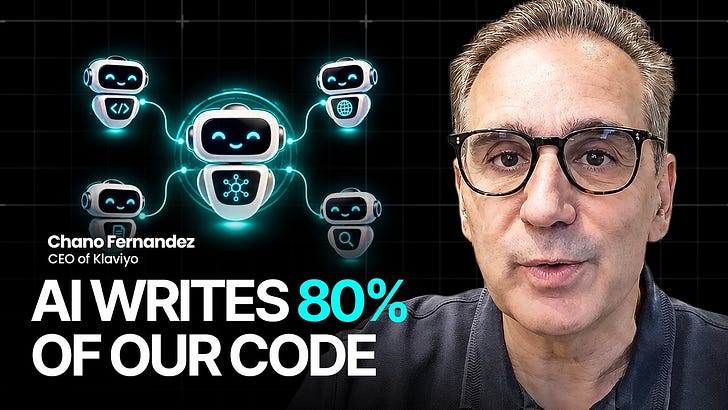
44:11Super interesting. I feel the whole pricing model for these SaaS companies is changing so much, but also how people hire retaining talent and how much code is being written inside these companies, which is fully AI-generated, right? How much code of the tech stack for you guys today is fully written by AI? Around 70%, 80 % is mostly written by AI. You know, when I ask my engineering team, so it's a lot on how it is evolving. Then, of course, you do have your quality, your Q &A, and your supervision in terms of that code before it's kind of, of course, being shipped. But it's changed a lot, totally, right?
44:59I mean, it's changed so fast that, frankly, and I know you heard this most likely in your episodes before, it's kind of, even for people like myself that are in the industry, it's just hard to get pissed off, right? Because you, I mean, two to three years ago, we were still talking in roadmats of products in years and in quarters, and even in quarters, and the conversations today is where are we shipping this week? And trust me, it's where are we shipping this week, right? And even we do have a Friday product meeting that I love to attend where we get a cohort of different engineers over different Fridays and basically they are presenting to the audience like, what have we shipped this week and what do they did this week, right?
45:45And it's quite amazing when you see that that is more kind of daily kind of shipping of what is happening. And of course, AI has enabled that to happen, right? At the same time, you know, most of us as companies used to plan when you think more on a GA basis, in general administrative basis, most to plan on a three-year basis. And we still kind of had to take a look on the planning process, on the long-range planning on three years, but it's pretty hard. It's almost like I have a potentially kind of some good idea what next 12 months are going to be, frankly speaking, I'm quite a bit lost, you know, potentially more on the, hopefully on the positive side of what the impact is going to be in three years from now because we're going to have many more products.
46:30We're going to have these products that are going to be much more mature. You know, it's kind of hard to call exactly the hockey stick kind of curves of pure AI adoption and when is that to happen and at which rate and at which clip is this going to be happening. So yeah, when you even look at it, like how we just manage companies today compared to two to three years ago, and of course it's all been kind of turned upside down in a good positive way by AI, it's super different. This is super interesting, actually a really good point, and not many people talk about that, right? So if you're thinking about doing these updates every six months, or you're thinking about product roadmaps, or thinking about how the company's going to evolve, when the AI is changing so quickly, how do you adapt the pace of change with AI to the overall Klaviyo end direction?
47:22Yeah, what a great question. I think one dilemma that is always a little bit of half of the discussion we have today is when you're thinking about a new product, when is the right time to launches a new product and what is the level of acceptance from your consumer base between, hey, we know this product is going to evolve, but, you know, and it may evolve quite fast, but where are we out of the gate at consumers being willing to upset as a kind of minimum acceptable, you know, quality product, right? In terms of the outposts that are being produced by the AI. And, you know, you always have that a little bit of the discussion in terms, And it's hard for me to know, to be honest, in terms of, hey, do we wait and just wait another two months and add this and add that and whatever.
48:15But of course, the market is evolving and moving pretty rapidly. What's the value of first move advantage? If you have a first move advantage versus potential disappointment on some of your customer base because the product is not, you know, cooked enough. before. So if you compare that to, but again, even if it's not good enough, it might be that in the next three weeks, it's improved a lot. And that's what we're seeing today in AI. But if you compare that towards, I don't know, think about older experiences in SaaS and some of my other experiences, right? You were launching a product and customers were expecting the product is going to become significantly good out of the gate, but it's going to take another 12 to 24 months for big product suites, right?
48:57I'm talking, you know, you know where I come from. I'm talking more ERP suites and, you know, you're launching a new recruitment product, okay? We launch it today. And, you know, there are going to be gaps. There are going to be things that are not great, you know, but on the recruitment, on the ATS product, but in 12, 24 months on the road, it's going to be a good product, right? A, today, potentially there's not that level, well, there's not that level of patience. It needs to get, you know, much quicker, much faster, much better but at the same time again you know when launching it do it go a little bit early or do it go a little bit later and what the impact of that could be again it may sound a little bit detailed but those are some of the things that are a wrestling with or a rumble with when we're thinking about especially if you look today this year you know the number of products that we launch it's such a great point you know i'm a big believer we're founders you've just got to ship fast it doesn't matter if it's not 100 perfect because to be honest most of these products are not 100 perfect right what is that threshold though for somebody to come up with an idea they want to launch a product and they can get out into the market does that have to be maybe 70 80 perfect i would say you know yeah like 60 to 70 perfect i mean what i see that what i see is changing and it's not just the product itself sometimes it's you know as you said before of course out of the gate should be helpless but it's kind of all the integrations that that product is going to be having or it's going to be needed to be complete for customers you know to be basically able to do with the product what they want to do in terms of the more even 360 degree visibility on their own workflows and processes i'm inside so is there are more a lot of things that goes beyond the functions and features is making how even the product interacts with many other applications or on the use cases with a broader kind of set of workflows that i do have here but i would say you know 60 70 but you know the reality how things are evolving today is that you You know, products are never, they're improving at a much faster clip.
50:52They're certainly never complete because you're going to keep evolving. You're going to keep interacting. There are going to be new channels. I don't know, you may launch things. You know, some of the things I'm doing, I don't know, voice become a very significant channel, you know, and you keep working on, you know, getting that product a much better voice and so on and so forth. So things like that, right? You know, something I'm super also curious about is, are we going to see more of these large AI companies having co-CEOs? this is obviously something you and andrew have at klaviyo i'm just gonna decide you know how do you both run the company what are both each other's responsibilities and is this actually a good thing for for companies to have well i think it's a listen um it's not an easy model it's a very effective model that's what i would say right so i believe it's a great model and a great architecture in terms of running a company in the AI era, just because there is so much to do that if you're able to have the right trust, if you're able to have the right kind of division of labor or responsibilities, but once that every one of you is kind of passionate about or have the right skills and experience about, there is a lot to do, right?
52:02So the creation here or the thought process here was more an enablement where we're going into the AI era when I was at the board that Andrew really needed to spend much more time on product vision and creating some of these new products. And it was kind of hard for him to have that bandwidth with, you know, let's be honest, right? A lot of treachery that goes as well with being a CEO. I know that is a strong word, but there are a lot of things that needs to be done and needs to be taken care of that, you know, that just eat time from your day to day and makes it hard kind of to really progress as fast as you need in some other areas, right?
52:40So what I say is not easy is because, you know, clearly trust is very much required there. Clearly, you know, complementarity of skills is pretty much required there. Clearly, low ego is pretty much required there on both sides. So there are kind of minimum ingredients that they either are or they're not. And if they're not, you know, don't go with it, right? How do you orchestrate this? So you and Andrew, you speak once a week on our days. Oh my goodness, we speak like two to three times a day sometimes. Like, you know, I was speaking with him already like 7 a.m. this morning. I'm sure I'm going to be speaking.
53:21I'm doing Buster today in New York. That doesn't matter. I'm sure I'm going to be speaking before we finish the day plus other joint meetings that we do have. But what I think we did well is we talk. Well, first of all, it was good that we knew each other and we had many conversations, of course, because, again, I was part of the board. But we talk about, you know, how we're going to be running the company and we put kind of that in a written paper. And again, that exercise is always good to do. Not that we take that paper out and, you know, we say we're going to do this and this and this is not working or working, right?
53:52Then clearly, again, the goal is give Andrew, you know, if possible, even 100 % bandwidth to focus on product and product vision and me kind of running the rest of the company. But in terms of actually, so at the beginning, in terms of how it actually works, even if, let's say, finance or HR was maybe reporting to me, we were doing one-to-one-to-one meetings with, you know, those leaders to make sure that we're always on the same page, you know, of course, every other weeks or so. So today that muscle is already developed. Our leaders understand pretty well how we make decisions, who they need to discuss with for.
54:32Of course, it's pretty obvious that sometimes, most of the times decisions are on the product side are going to be with Andrew. They're more on the go-to-market side, they're going to be with me. Some other kind of general are going to be to me. But if you think about it, Oli, there are only, again, if you think about trust, if you think about Loigo, if you think about complementary, there are only kind of a fewer number of decisions that companies making a year around strategy, around culture, around organization that are really meaningful. And then there are tons of decisions that, you know, that, well, you know, they do matter.
55:02They're not that relevant. Meaning like if I get it right or wrong in the sense of I maybe would have that little bit different than Andrew here, or I would have thought this a little bit different, they're not going to be having any particular impact or they can be reversed. So on those, we just get them done in the meeting and we just trust and then when we need to sync, we sync. But there is clear understanding of who is responsible for what. There is, I think, a clear model now, again, because we started to have one-to-one-to-one meetings and then those are not needed any longer because the leaders know how to work with us.
55:37And what we need to ensure is that we don't waste anybody's time. And, you know, we can disagree. If we disagree, we disagree sometimes. but we just aim to commit and align pretty rapidly. But we don't want to waste everybody's time. The other thing that we instill, and it works, is like, listen, if you already had this discussion with Andrew for whatever reason, or if you saw it differently, just bring it up. And we sit differently. We'll talk among the three of us because it makes no sense to waste anybody's time. We all want the same, which is the best for Clavillo. So it works. That's what I said before, that it's not easy.
56:09It might not be for everyone. Certain conditions have to be given. And it starts by that trust. between Andrew and I. And that trust goes like, if it is a meaningful decision and that can be one, it doesn't matter if it is on the auto market side, I'm going to bring you in and we're going to discuss that maybe before us. And then we agree like, I'll go and execute or we agree and go and fine tune, right? The saying if we're going to be investing on creating a new product and why, you know, what's required as investments is going to be doing. I fully trust that I'm just going to have that discussion with me before, right?
56:40But that in between, there are tons of many other things. Like, honestly, you know, I don't bother if there's really those auditions that are not going to change any particular outcome. Why do you think more companies do this co-CEO role? If we look at most of the AI companies, if we look at the top 500, 600 software companies globally, actually very few have these co-CEO roles. Yeah. As I say, many of them start with co-founder's role. then some of the co-founders tend to, you know, some of the co-founders take more kind of in the CEO role. You may, you may, you have to go beyond the title itself.
57:19You may have to go and see how they're really operating, you know, into some of those, like, are they really operating? Like they share almost everything and they're making kind of joint decisions, but they want to have kind of more kind of one clear head. So, which might be a, the role naming might be a little bit different, but the actual working model is not that different. You have companies as well, you know, where you have sometimes the CEO and you have an executive chairman that is pretty much involved in the business and the executive chairman is having a lot of a saying. Again, you know, it's different roles and one might be perceived more as CEO, but, you know, but there is a lot of involvement in different areas and different decisions, right?
57:58So I would say that, you know, beyond the pure role description, potentially the operating model itself with the demands that all of the companies do have today in particular in this role is happening more than potentially the just kind of the naming of two co-CEOs if that makes sense. What keeps you off at night? You know being a publicly listed company also is pretty hard. I don't want to put words in but you know if you see your share price down 35 % since the beginning of the year as a CEO and as a founder, I would be pretty disappointed. Right. Yeah. I think, you know, what keeps me out of night is like, I always ask myself, are we doing the right things?
58:41Right. Because I'm a strong believer that if you take care of the right inputs, the outputs will take care of themselves. Right. So if I take care that we are innovating, if I take care that we are creating happy customers and referenceable customers, if I take care that we are creating the right culture, right, if I take care that we are making those, you know, big decisions for the business from any strategic or organizational or cultural perspective in a year, those are right in terms of for our long-term. The outputs, including share price, you know, will take care of themselves, you know, usually over the long-term.
59:18Usually my best cure is I don't look that much at the, of course, when I talk to investors and so, but at the stock price. I certainly know where things stand and I certainly know how that matters and how it's relevant as well for our employees. But I try to double down and put focus more on this. Let's keep doing the right things and let's build a great company over the long term and focusing on the right inputs. Do you think we've just faced a correction potentially in the market where you see incredible companies like you guys, the likes of Salesforce, HubSpot, they're having a bit of a reckoning right now.
59:53You look at the likes of their table where they were doing a couple hundred million dollars, four or five hundred million dollars in revenue, but the acquisition was very small. Is this just where we are in the market right now? I think the market is going to be evolving, right? The market is trying to understand where are the durable winners and the long-term winners over time, right? And I know I talk to both guys, you can imagine, with a lot of investors all here, right? I know it's not easy for them. It's not easy to understand, you know, like someone is just a shiny, toy, you know, AI one, and there is not a durable moat over there.
1:00:31or if you have these 14 years of data and infrastructure and all the plumbing and the whamming that we do have. And when I talk to many of my peers or many people I know in some of the most or great LLM companies, they will tell me that's not replicable, that's very strong, that's very durable and sustainable with any bike coding. But again, the market is trying to understand those things. Of course, it is for us to A, explain it better and B, show it on the results. if you see there's already been some sort of change between kind of the first half this year and the second half this year, I believe that it's going to continue.
1:01:08But yeah, but it's going to take time. The other thing is, you know, as we get many of these more AI pure native companies, and of course, one of the largest one is, I guess, soon to go public, but going public, but many more others, you know, then it will be easier for the markets to do a better comparison and understanding, you know, between companies. but we are not yet there, right? So I think that's what we're going through. It's a little bit of a cycle. It can take two, three, four quarters to sort out. It can take six quarters, but that's what we're going through. But, you know, keep focusing on building great company over the long term, and that will always be a winner.
1:01:46You know, one of the questions I love to ask on the show is, if I was to join as your chief of staff for a week, what would we be doing together, and how do you run the company on a daily basis? Well, you would be having some fun, right? I would say you will be spending a fair amount kind of engaging and talking to customers like 7, 10, 15 a week depending on the week right customers or prospects right um you will be having a number of thinners um you know I like this week it all being kind of thinners and a one-to-one with some of my direct reports but then more than my direct reports people that reports to people that are working with me you will be spending of course time on the regular cadences in my case, you know, weekly forecast call, but, you know, some of the planning meetings, for example, that we do start right now for next year in terms of what is going to be about growth model and the levers and where the initiatives and the investments we're going to be doing.
1:02:41We'll be talking to some partners, right? So we'll be doing a number of things and then hopefully, you know, we will be having some time for thinking and reflection because that's very important and that's usually kind of the hardest one to keep, right? Sounds a pretty fun role. So if this creator side of my journey doesn't work out, I know where to come, you know, maybe one day. How do you also just spend time thinking about what the next six to 12 months looks like? What are you most excited about as we enter this incredible new chapter for AI, but also I just think for builders in general? Yeah, I always tend, you know, thinking about the growth model and the growth levers for the company, right?
1:03:24I'm in this case for Clevillo, if you ask me, you know, they clearly keep working on improving some of our core products is definitely a huge top priority. And, you know, we discuss continuously with our customers. But if you say the biggest growth levers for us are clearly, you know, the enterprise by itself is a significant segment that we aim to win and to conquer and to be a very, very meaningful player over time, over there and there. And then the agents rise. So those two kind of agents, both composer, customer agent, and enterprise are very exciting for us and represent a tremendous growth opportunity.
1:04:03Well, I think it's fair to say there is so much opportunity. We'd love to have you back in 12 months. Super excited for you guys. Thank you so much for coming on the show. I really appreciate you. Thank you so much, Oli, for having me today. I really enjoyed the conversation. Good questions.
1:04:15Chano Fernández: All the best. Thank you for having me.
Subscribe to stay ahead of technology trends. Never miss future editions.
Two to three years ago, software companies were still planning product roadmaps in years and quarters. Today, as one of our guests put it, the only question that matters is “what are we shipping this week?”
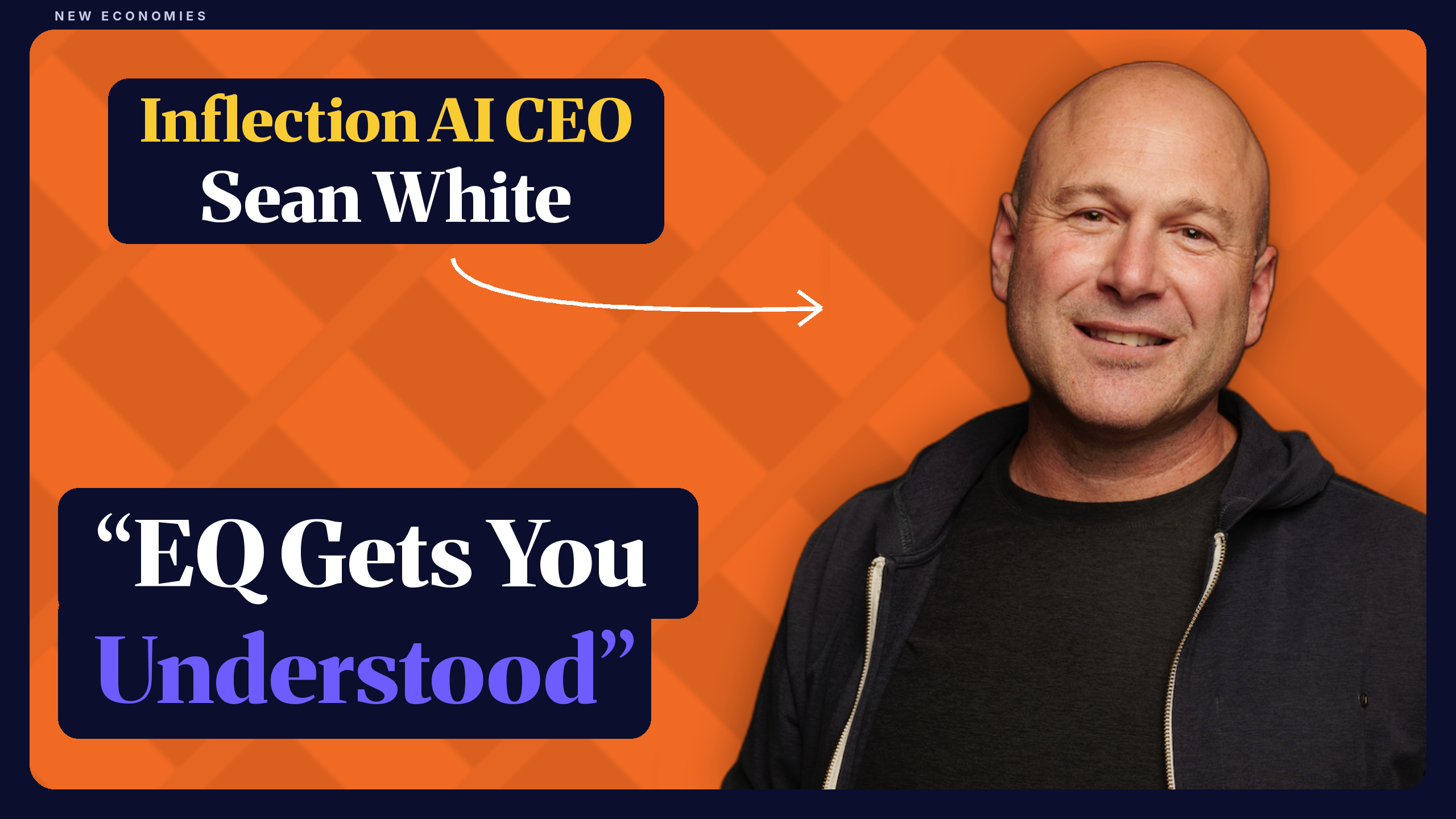
That guest was Chano Fernández, co-CEO of Klaviyo. He joined us to explain how AI agents are reshaping marketing and customer engagement, why taste may be the biggest moat AI companies can build, and what it really takes for a public software company to stay relevant when the ground keeps moving.
Chano held senior leadership roles at SAP before becoming co-CEO of Workday, where he helped expand its global and enterprise business. He was then co-CEO of the AI-native talent platform Eightfold, and spent two years on Klaviyo’s board, most recently as interim executive. In January, he became co-CEO alongside co-founder Andrew Bialecki. Andrew focuses fully on Klaviyo’s AI vision and products, while Chano runs go-to-market, operations, and G&A. Klaviyo now serves more than 200,000 customers, with around 9 billion profiles and 250 billion transactions a quarter on the platform.
In our in-depth episode, we discuss:
* Why email may become less relevant as AI agents start reading it for us, and why Klaviyo’s 14 years of data and infrastructure can’t be replicated with vibe coding
* Inside Composer, Klaviyo’s agentic marketing tool: seven or eight sub-agents, and why getting a campaign to come out “80% or 90% right” for a CMO comes down to taste
* Where software pricing is heading: from seats to consumption to outcome-based deals, and the 5% to 6% revenue share Chano is seeing emerge across the industry
* How 70% to 80% of Klaviyo’s code is now written by AI, why its Friday product meetings show what shipped that week, and why a new product only needs to be 60% to 70% ready at launch
* How the co-CEO model works in practice: a written operating agreement, two to three calls a day, and why only a handful of decisions each year really need both of them
Watch or listen now across YouTube, Apple Podcasts, Spotify, and X
Download the transcript 👇
Timestamps
(0:00) Intro(1:10) How AI is changing marketing(2:24) Is email dead?(5:15) How Klaviyo has evolved(7:10) How Klaviyo stays relevant(10:35) Where business owners are focusing(14:10) What owning your audience means today(15:07) Building AI model partnerships(16:54) Would Klaviyo build its own AI model?(21:32) What great taste looks like(23:23) What great taste is missing(24:32) Are customers worried about pricing?(25:46) Shipping Klaviyo's latest products(28:17) Is the future of software headless?(30:43) An AI co-worker for Klaviyo users?(32:38) Is trust the new moat?(35:05) The role of the product roadmap(36:33) Klaviyo's favorite AI models(38:10) What's missing from the Klaviyo stack(39:22) Is SaaS pricing dead?(44:19) How much code AI writes(47:05) Keeping up with the speed of change(51:10) Will more companies have co-CEOs?(58:17) Running a public company(59:42) Is the market correcting?(1:01:45) Ollie becomes Chano's Chief of Staff
Lessons from this episode with Chano
1. Agents will read your emails for you Chano thinks email’s role changes once AI agents start acting on our behalf.
“I believe it will become less relevant, just because some of those agents will be the ones consuming many of those emails going forward.”
Email won’t disappear. It will stay one of the cheapest and most efficient channels. Chano also expects agents to do more than read: they will use what they know about us to surface better products, offers and services. For brands, the challenge is personalizing at scale, and that is where automation and agents come in.
2. Marketing and service are becoming one Moving Klaviyo from a marketing tool to an AI agent platform wasn’t optional.
“The boundaries between marketing and service have become more indistinct.”
If a customer has just complained or asked for a refund, the next thing they want is not a promotion. Most brands can’t see that, because their data sits across six or seven disconnected systems with no real-time view. Chano says this is where Klaviyo’s infrastructure gives it an edge: around 9 billion profiles, 250 billion transactions a quarter, and the ability to send 100 million messages in 20 minutes.
3. Taste is the hardest thing to automate Klaviyo’s agent, Composer, builds campaign calendars and campaigns for brands that are short on people or ideas. Getting the output right comes down to taste.
“If you’re a chief marketing officer, you want to see the campaign the agent is creating and say: wow, this is really my brand, my image, my language.”
Code is fairly deterministic: good code is good code at any company. Brand voice is different for every customer. Klaviyo measures progress through thumbs-up ratings, how many campaigns go live without edits, and direct customer feedback. Each edit a brand makes feeds the next model.
4. Stay model-agnostic and route by task With AI labs shipping updates every few weeks, Chano says no company can afford to lock itself to one model.
“It’s important to be as model-agnostic as possible.”
Composer runs on at least seven or eight sub-agents, covering email templates, flow templates and campaign taste, and each can sit on a different underlying model. Klaviyo’s engineers test new releases quickly and change the routing when a better model appears. Chano expects model capabilities to become more standardized, so routing well will matter more than picking a winner.
5. Pricing is heading towards outcomes Klaviyo had a head start on the shift away from per-seat pricing.
“We were never on seat-based pricing like many other SaaS companies.”
Klaviyo’s pricing has always tracked sends and profiles, rising and falling with seasons like Black Friday. Its customer service agent already charges only when it resolves a conversation. Chano sees the industry settling on a base subscription with usage on top. Outcome-based deals come next, where the vendor takes a share of attributed revenue. The benchmark he is seeing is 5% to 6%.
6. Launch at 60% to 70% Around 70% to 80% of Klaviyo’s code is now written by AI, and the planning cadence has changed with it.
“Two to three years ago, we were still talking about product roadmaps in years and in quarters, and the conversation today is: what are we shipping this week?”
Every Friday, a group of engineers presents what shipped that week. The hard call is when to launch. Customers have less patience than in the old SaaS era, when a product had 12 to 24 months to mature. AI products can also improve dramatically within weeks. Chano’s threshold is a product that is 60% to 70% ready.
7. Co-CEOs only work with trust, complementary skills and low ego Chano was on Klaviyo’s board when the company decided Andrew Bialecki needed to spend all his time on product vision.
“It’s not an easy model, but it’s a very effective one.”
The two wrote down how they would run the company and speak two to three times a day. Andrew owns product; Chano owns go-to-market and the rest of the business. At first they held joint one-to-ones with leaders, which are no longer needed. Chano’s view is that only a handful of decisions each year, on strategy, culture and organization, need both of them. The rest can be made by either and reversed if needed.
8. Focus on inputs, not the share price With Klaviyo’s stock down 35% this year at the time of this recording, Chano says his answer is to focus on what the company controls.
“If you take care of the right inputs, the outputs will take care of themselves.”
For Chano, the inputs are innovation, happy and referenceable customers, the right culture, and getting the few big decisions right. He sees the market as trying to separate AI wrappers from companies with durable moats. In his view, that will get easier as more AI-native companies go public, and it could take anywhere from two to six quarters.
Where to connect with us
Follow Ollie on LinkedIn: https://www.linkedin.com/in/ollieforsyth Follow Chano on LinkedIn: https://www.linkedin.com/in/chanofernandeVist Klaviyo: https://klaviyo.com
Previous episodes include
See all previous episodes here 👉
Our partners:
Harmonic: Your go-to startup database. Visit Harmonic to learn more.
Prelint: Keeps every decision reviewed, recorded, and traceable. Head over to Prelint to learn more.
VCX: The public ticker for private tech. Head over to GetVCX.com to learn more.