 Ask ChatGPT
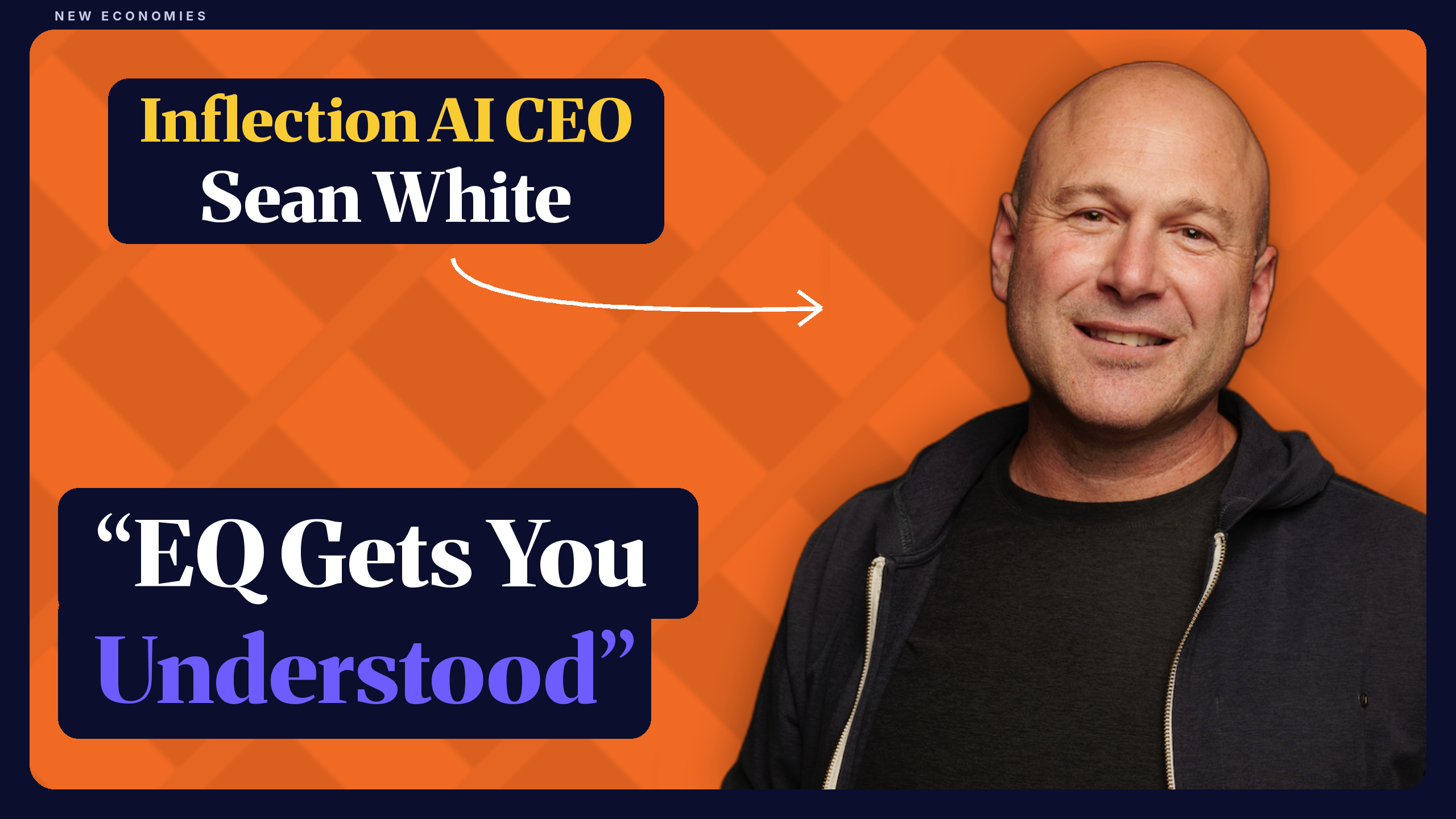

Marissa Meyer explains why consumer AI is shifting from enterprise/B2B to everyday life, and how Dazzle AI turns a user’s camera roll into a proactive personal assistant that can suggest, remind, and even complete tasks.
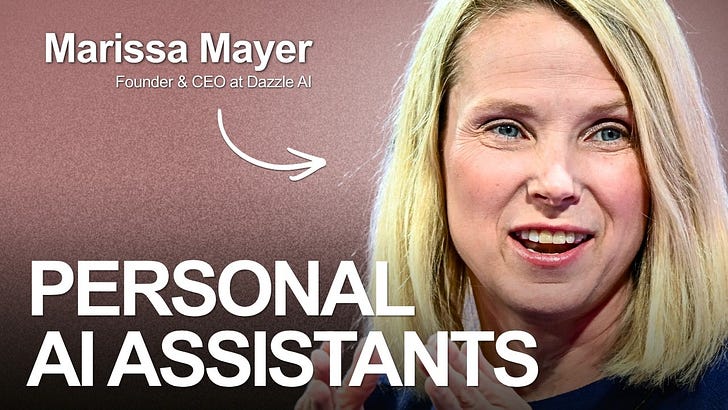
Marissa Meyer is founder and CEO of Dazzle AI. She was one of Google’s first employees and later CEO of Yahoo. She recently raised $8M for her consumer AI startup.
Consumer AI is “underinvested” compared to enterprise; agents become real when models, user data/context, and enough personalization are available. Dazzle is “pictures, not prompts,” learning from photos to understand taste, relationships, and daily needs. It uses two systems: a historical-photo context layer and an “intent engine” that watches new photos to infer why they were taken and what to do next. Humans-in-the-loop handle complex or high-value purchases.
“Get it done” lists from photos (QR codes, screenshots, appointment cards). Daily Dazzle email reminders (birthday gift ideas from summer photos). Booking travel/restaurant reservations and arranging repairs (e.g., roofer quotes; garage door belt repair within 24 hours). Calendar automation from flyers/menus and reminders for kids’ activities and school snack signups.
Written by AI. May contain mistakes.
Exploration of how AI is evolving from enterprise applications to consumer focus.
“and how she plans to win over everyday consumers.”
Marissa explains how Dazzle AI personalizes user experiences through photo analysis.
“So, you know, we have been through this incredible inflection point really just in the last few weeks.”
Discussion about Marissa's career and her motivation for launching Dazzle AI.
“And to me, that's a really exciting side of AI that we haven't seen a lot of in the AI revolution until now.”
Marissa shares her experiences in different company sizes and the challenges of product development.
“Well, I realized across my time at Google, I was at Google for 13 years and then at Yahoo for five.”
Detailed explanation of Dazzle AI's functionalities and how it learns from users.
“But I do find the land of hypotheticals is really tough.”
Learn how Dazzle uses photos to enhance personal assistance and decision-making.
“And we take that photo and we spin up an agent to do it for you.”
Discover how Dazzle analyzes user photos to create personalized assistance.
“So if we go behind the scenes, you know, I become a user of Dazzle.”
Explore how Dazzle provides tailored suggestions based on user interactions and photos.
“Because I don't know about you, but I take all these photos and I'll be like, oh, don't forget to do this.”
Discussion on how AI can tailor shopping experiences based on individual preferences and behaviors.
“And if I take it myself or friends who may be using this, we can have multiple streams.”
Exploration of how Dazzle interacts with brands and the potential for future partnerships.
“So these are the brands, it could be the hotels, it could be the experiences.”
Explanation of how Dazzle integrates into daily life, helping users manage tasks and reminders efficiently.
“and photo history, I think could be a really compelling idea.”
Insights on how Dazzle improves travel experiences by offering tailored suggestions based on user preferences.
“And if we think about it, truthfully, we've actually always wanted this.”
Discussion on the fundraising process for AI companies, exploring strategies and investor selection.
Explore the evolving trends in AI investment rounds and computing costs.
“Frankly, I had an investment on the show last night and we actually just came to the conclusion, these rounds actually just don't matter anymore because some of them are crazy, some of them are not so crazy.”
Learn about Dazzle's approach to integrating human assistance with AI agents.
“And over time, we're going to try and constantly push that line towards more and more agentic behavior.”
Discuss how Dazzle determines when human involvement is necessary in transactions.
“should be able to handle those types of transactions.”
Understand Dazzle's strategy for establishing trust with consumers in AI interactions.
“and we actually go ahead and charge your, we are the customer that buys it from the vendor for larger purchases.”
Envision where Dazzle aims to be in the next 12 months regarding user base and trust.
“maybe as we started out, we weren't like, wait, we think we can get so far with photos.”
Explore potential future features of Dazzle, including multiplayer interactions.
“I think that one of the things that we'll see happen over time is we'll see more users willing to trust us with more context.”
Discuss the role of AI in major corporations and its impact on business strategies.
“Do you think if this was to happen, the multiplayer type of route, is this six to 12 months away or are we talking actually a few years away yet?”
Learn how traditional companies are increasingly adopting AI in coding practices.
“And now most of them are like, you know, nearing on 90 to 100 % just because the coding case is so compelling.”
Explore how AI changes the factors influencing product development.
“I think AI is going to be really interesting.”
Get insights into Dazzle's vision for personal AI and user engagement.
“Thank you so much for coming on the show.”

Get the gist, explore an idea or ask about something said.
 Claude
On BIG IDEAS BY NEW ECONOMIES, what are the key points of this episode?
Searching your listeningAutomatic transcript. May contain errors.
0:00Marissa Mayer: Until very recently, I felt like the consumer world had gotten left behind. AI really went to the enterprise and B2B first. And as a businesswoman myself, it's great to see these kinds of productivity gains. But I feel like to really make AI tangible for people, you want to understand how does it make me better at what I like to do, at what I want to do, at what I want to do in my personal life. How can you take AI and help humans become even more human? And that's a really exciting side of AI that we haven't seen a lot of in the AI revolution until now. And to do that, you need... This is Marissa Meyer, founder and CEO of Dazzle AI.
0:36After being one of Google's first employees and CEO at Yahoo, she just raised$8 million for her new consumer AI startup. And today, she's revealing why the AI boom is shifting from enterprise to consumer and how she plans to win over everyday consumers.
0:51Marissa Mayer: Dazzle is a personal assistant that is proactive and personal AI, and it learns based on your camera roll. 40 to 50 % of people's camera rolls weren't shareworthy, and we were like, what is that? What's in those? And the answer is, it's photos of things they need to do, it's screenshots of things they want to buy. And so there's essentially instructions that could be good instructions for a personal assistant. So we basically break our task into two parts. One is we look at your historical photos and build a context layer from that. And that means we can provide that context layer when you chat with us.
1:27Marissa Mayer: The second part of what we do is we essentially have an agent that watches for new photos. We call it our intent engine. It basically asks the question of why did they take this photo today and is there anything we can help them do? And so like it often observes things about you that you might not even observe about yourself. I felt like there was so much happening in B2B and I felt like consumer AI was incredibly underinvested in. It was pretty clear to me that in 2030, I think enterprises' AI is huge. I think consumers three to five times bigger. One of the things that we'll see happen over time is we'll see more.
2:00Welcome to New Economies.
2:14Hey, Marissa, welcome to New Economies. Thank you so much for joining us.
2:17Marissa Mayer: Thank you so much for having me. So, you know, we have been through this incredible inflection point really just in the last few weeks. Personal assistants and agents are exploding across the internet. Why are they exploding and why is this kind of a new moment for us to be consuming and engaging in new types of technologies? Well, I have to say, I think it's been a long time coming. I remember in my undergrad degree, like back in the mid-90s, reading about personal assistance is something that's been conjectured about for a long time. I remember it captured my imagination. But we just finally hit this inflection point where all the tools you need to build a really compelling one are here, from the frontier models to enough data being collected about a user to provide context if they give you access to those sources of information.
3:07Marissa Mayer: And so I think that's why you're seeing there's a real moment happening here. But I think it's been hypothesized about for a long time. And this is the first time that we're starting to see things become really real. Is this a good thing we're having through the ecosystem? AI has just been exploding, obviously, just so much in the last four years since GPT came out. To maybe set the context to the viewers, when it first came out, We went from generative AI to AI agents to super intelligence to all different kinds of AI. Now it feels like AI assistants. How about just break down the mold? What is actually happening?
3:42And is this all a good thing that we're currently experiencing?
3:45Marissa Mayer: I think it's generally a good thing. I tend to be an AI optimist. I will say one of the things that I've noticed is AI really went to the enterprise and B2B first. And I think that makes sense. And as a businesswoman myself, like it's great to see these kinds of productivity gains as a computer scientist to see these kinds of leaps forward in coding abilities and agentic work there has been really exciting. But until very recently, I felt like the consumer world had gotten left behind. And, you know, how agents would help you in your personal life. Because, yes, productivity gains and better business processes are incredibly important.
4:25Marissa Mayer: better customer service all of those things are incredibly important but i feel like to really make ai tangible for people you want to understand like how does it make me better at what i like to do at what i want to do at what i want to do in my personal life how do you because how can you take ai and help humans become even more human right leaning into the things that they want to do with their personal times into their personal likes and dislikes and i think that this the ai agents and in particular Dazzle are really good at trying to understand what you value, what you think is beautiful, how you want to spend your time, how you want to spend your money.
5:05Marissa Mayer: And to me, that's a really exciting side of AI that we haven't seen a lot of in the AI revolution until now. Why do you think we haven't seen that kind of, you know, huge explosion in the early days on the consumer side? Like you said, it was very quickly went to B2B, consumer wasn't really there. Now it is here. Why did we just kind of get forgotten about? I don't think you really get forgotten about, but I think that when people think about AI, they think about automation. How do we automate processes and things like that? And whenever you get to the words like automation and processes, again, they're very important, but they tend to play more towards business than the personal life.
5:42Marissa Mayer: People don't think about like, how do I automate the processes in my house or in my morning routine? You know, that's kind of an unusual thing to do. And so So it takes a different feel of the technology and a different lens in terms of how you can deploy it to have that softer, more personalized feel that's really critical to, you know, providing a really useful tool for consumers. What I love about your story, we've kind of known each other for a few years now, but first time we're meeting, we've always been in touch on email. But when I reflect on your story, you know, you had one of the first employees at Google.
6:17You did a bunch of things in between there for quite a few years. then, you know, some years later became the CEO of Yahoo for a couple of years. And then, you know, that was in a couple of ideas and now launching, you know, this kind of personal AI assistant. Out of all the things that you wanted to do, why did you want to go down the road of actually launching an AI assistant when you probably had tons of other opportunities out there?
6:39Marissa Mayer: Well, I realized across my time at Google, I was at Google for 13 years and then at Yahoo for five. And the common thread in those companies is a fewfold. One, they both really changed the world. There's a lot of successful companies. There's a lot of profitable companies. But there's very few that change the way people think and live their everyday lives, whether it be at work or in their personal lives. And Google and Yahoo really did that. And I have to say, to me, being able to be part of that, whether it's in a leadership role or as an individual contributor, but basically just as a builder and as a product thinker, I think is just really electrifying.
7:15Marissa Mayer: And so, you know, when I thought about what I wanted to do as I left Yahoo, I really wanted to take a stab at building companies and continuing to go back to my product roots and really work on innovation, work on building things that people enjoy and love. And as I said, I've been fascinated by the idea of having an AI assistant, you know, something that learns you and really understands you and can support you in those fundamentally, you know, human endeavors of, you know, what do you want to be for Halloween, right? What do you want to get your mother for her birthday? those types of things, I think, you know, that that is a particularly fun challenge to think about your taste, culture, you know, how you actually want to, you know, live the sort of the nicer niceties in life, and those elements that really reflect your personality.
8:09Marissa Mayer: So for me, you know, that was I wanted to be with an entrepreneur, and I couldn't think of anything more exciting to work on than this. And the other core theme across all of those companies is I love taking complex technology and presenting it in a way that's really simple. The Google homepage was emblematic of that because it's incredibly complicated and by far the most sophisticated search engine. It was in 1999. It still is today. But to be able to present it with a really clear, clean, simple face is incredibly important and compelling. And that same element of being really approachable that pervades all of Yahoo's technologies, I think, is really important.
8:46Marissa Mayer: And so that was something that we really wanted to bring to Dazzle is how could we have something that delights people, something that they want to use every day? It doesn't feel like work because it's not. That's not what is there. That's not where it's their support. It does help you get things done more easily and perhaps better. But it's in a fundamentally different context. You know, what's so cool about the show is when you speak to all these amazing CEOs who go from CEOs to founders. part of me just thinks how hard is it actually to adapt the mindset from running an organization with thousands of people or being part of an organization with thousands of people to then really going to a tiny team with basically only a handful of people and you just got to grind through the days together how have you adapted to that and are you enjoying this side better or do you prefer you know being a CEO of a much larger company i have to say so i mean i had the benefit of interviewing at Google when there were seven people there and then joining when there were 20.
9:46Marissa Mayer: So I've been in startup land before. And I will say what I've learned over the course of my career is I love all phases of companies. I like small, I like big, I like, you know, being an individual contributor. I like being a leader. I like hyper growth. I like turnarounds. You know, I like, you know, all of these different phases and pretty much every order of magnitude, tens, hundreds, thousands, tens of thousands in companies in terms of people. And I love thinking about scale in terms of user bases. And it's a blessing to have a small user base like we have at Dazzle right now where you can really learn and get really deep and really understand the user journey for particular individuals today.
10:27Marissa Mayer: But I also love thinking about scale and what works across a really large number of companies. I think for me, the one most challenging company phase is the one that we just transitioned out of this week, which is what some people refer to as pre-product or I now kind of affectionately or disaffectionately refer to as the land of hypotheticals, right? Where you don't yet have a product in market and you and your team are sitting there and saying, if we do this, will they like it? If we do this, will they understand it? Like, does this make sense? Right. Will they find it if we put this functionality here?
11:05Marissa Mayer: And so I love having a product in market because big, small, fast growing, you know, you know, distribution methods, even how, you know, the business models, all of those, I think they're all fascinating. and I'm enough of a student about technology and business that I enjoy all of the different phases of those companies. But I do find the land of hypotheticals is really tough. And so I was really happy this week to transition into actually having a product in market that people could use, that I could get feedback from. Because we've obviously been testing, we've been testing at scale across hundreds of users, but it's different when it's people you really don't know and you don't have an ability to connect with.
11:49Marissa Mayer: And all you can see is, you know, the aggregate efforts of what they're doing on the product and letting that, but letting their real usage, right? Their real native usage actually guide your product thinking. You know, for me, I, you know, I obviously have instincts in terms of what should, you know, what, how a product should evolve, but I want that to be guided by actual data from users. And that's a real gift. Well, super awesome news this week. When I saw you just raised$8 million, I was like, I've got to have you on the show, been wanting you for so long. What is Dazzle all about? And let's help the audience pay the pitch of actually what it's all about.
12:30Marissa Mayer: Sure. So Dazzle is a personal assistant that is proactive and personal AI. And it learns based on your camera rule. So right now there's lots of different ways you can interact with Dazzle. You can text it. You can use the website. But we also have an app. And the app gives us particularly special insights and makes us particularly useful. Because with the app, we can ask for permission for your camera roll. You decide what levels of permissions you want to give us. And then we do two key things. One, we look over your historical photos. And we understand your context. Where do you live? Do you have a partner?
13:12Marissa Mayer: Do you have children? Where do you like to go when you travel? What do you like to eat, right? What do your surroundings look like? You know, what do you wear? All of those types of things. We get a real sense of that from, you know, from your photos. And that helps us do two things. One, it means that when you chat with us and ask us questions on AI, we know who your kids are. We know what they like. We know what they like to do. All of those types of things. and the other thing that it does is allows us to bring you proactive ideas because you've been to these three places we think you'll like that place so we have an ideas feature in the application and then we also have keep that agent running on your camera roll so when you take a new photo you it gets added to your get it done list and we call it a get it done list as opposed to a to-do list because you as the user don't need to do it what happens is we see a picture of something you want to buy, something you want to fix, something you need to put on your calendar, something you need to add to your wallet, a QR code, what have you.
14:15Marissa Mayer: And we take that photo and we spin up an agent to do it for you. So we ask you like, is this what you need done? And then we have, you know, the agent do it for you. So those are the core functionalities in the product, but it really comes down to use us by iMessage, use us in the app, but we are an assistant that learns from your camera role and the insights from your camera role are incredibly rich. And our thesis is we think email is important and provides great context, but it tends to, again, skew more towards work-oriented and productivity-oriented pieces for sort of the softer, more taste-driven parts of personal assistants.
14:54Marissa Mayer: You actually want the visuals and that is where Dazzle is playing. We probably ultimately will offer email as a data source as well to connect to your personal assistant. But, you know, that's the core thesis of the product is photos, that your photos can provide that great context. And they can also provide insights into what you need help with today. You know, what I think is so interesting about photos is, you know, if you go out and about and you see someone's wearing a nice pair of shoes or someone's got a handbag or you like a painting, right? You're not going to write down the description.
15:27You can take a photo of it. And I think this is where it's really interesting, why the types of technologies without being emerged, how did you actually land on photos versus you could have very easily just gone down the text route and being another typical agent?
15:41Marissa Mayer: Sure. We call it pictures, not prompts. And yes, you can always text a picture to a frontier model. But we think the core insight there is why? Why did Ollie take this picture today? And sometimes it's just because it was a happy moment and you wanted to remember it. But sometimes you're like, no, it's an appointment card from a doctor. You know, no, it's a pair of shoes that I like that I saw on the street and I didn't want to stop the person and ask them where they got them. And so, you know, that is, you know, one of the, what we think one of the key value propositions is. In terms of how we ended up here, my previous startup was looking at photo sharing.
16:20Marissa Mayer: And we were building an AI model that tried to understand when something was share worthy. And when I say share worthy, I don't mean necessarily like Instagram or public posting, but even if you just wanted to share it with friends or family. And what we realized was our shareworthy model, when we went and kind of looked at it and analyzed it in macro numbers, it didn't, there were about 40 to 50 % of people's camera rolls that weren't shareworthy. And we were like, what is that? What's in those? And the answer is it's photos of things they need to do. It's screenshots of things they want to buy, right?
16:54Marissa Mayer: There's all of these things intermixed with those happy memories that we're trying to save or share. And so to that end, we were like, wait, there's a lot of stuff you need to do. There's essentially instructions that could be good instructions for a personal assistant that are getting written down to your camera roll. And when you start to think about the upcoming dawn of wearables, right, eventually what we're going to have is we're all going to have millions of frames a day. but from that you know the transformers paper headline attention is all you need your camera roll is literally what you've turned your attention towards in fact you turn so much attention towards that you actually use that camera button to capture it so we like to say that dazzle takes your camera button and turns it into a get it done button but you know that was the key insight that's why we started in photos because we were already working on photos but we had this i think really deep insight to the fact that a lot of people just are like oh they're happy beautiful memories.
17:50Marissa Mayer: They're a great archive of your life. But you're like, actually, they're an instruction set on what a personal assistant should do, who matters, what matters, how it should look. You know, how you like to spend your time, how you like to spend your money. It's all there in your camera roll. How does that actually work? So if we go behind the scenes, you know, I become a user of Dazzle. You're analyzing all these 25 ,000 photos or something on my phone, right? what is that what actually goes on behind the scenes and how do you start analyzing actually the the type of profile what he could be yeah so we basically break our task into two the two parts i've talked about a little bit one is we look at your historical photos so photos that are like a month or more old and we basically build a context layer from that the people in your life that matter the places that matter you know aesthetics and colors and fashion choices and brands that you surround yourself with, you know, all of those types of things, whether you have pets, those types of things all go into that context layer for you.
18:54Marissa Mayer: And that means we can provide that context layer when you chat with us, because then when we go to the LLMs, we have this rich context. So I can say things like, Marielle is off of school on Friday. What should she do? And Dazzle literally will come back to me and say, Marielle lately has been really into magic. She should go to the Misdirections magic shop in San Francisco with her best friend and knows the best friend's name. And because it's learned that too. And they should, you know, go there where the owner teaches tricks with every trick sold. Right. And, you know, it's really deep. It's incredibly personalized based on that history.
19:34Marissa Mayer: Like it knows that I'm a skier. It knows that my kids have gone through a huge escape room phase. Right. It finds all these things that aren't just like, oh, they like mystery. Oh, they're very sporty. It's much more pointed. Where, for example, last year, I asked my mother wanted skis. And I ran the career of where kind of ski should my mom get? And it knew the brand. It knew her age. It knew where she skied. It knows her style of skiing. When she pushed on it and was like, I think I need longer skis than that. Because I kept recommending shorter skis. and she's like my friends have longer skis it was like actually but you're you're shorter and slighter in your frame than your friends right so it was incredibly personal there so there's you know that's what we're building that context that you're and that helps us really provide both the ideas and a very personalized chat where you aren't you know sometimes I've noticed with some of the frontier models it's more question than answers which I get my son for his birthday it's like, how old is he turning?
20:36Marissa Mayer: What is he into? How much do you want to spend? Right? Where, you know, Dazzle can just, you know, skip all those parts and get to pretty good answers right off the off the bat. The second part of what we do is we essentially have an agent that watches for new photos. And when we get that new photo, we call it our intent engine. And the intent engine does is it basically asked the question of why? Why did this person take this photo today? Based on the context you have on them, based on what you know about them, is this a photo that was taken at home? Are they traveling? Why did they take this photo today?
21:08Marissa Mayer: And is there anything we can help them do? And so that is what forms the foundation. Those in the moment photos, these very recent photos form the get it done list. So when you first come into the product, we form a get it done list over say your last few weeks of photos and a context layer over as much of the camera roll as we're able to analyze and process quickly. But moving forward, we keep watching the new photos that you're taking to help keep that get it done list populated. And we can also tell when your kids are going through new phases, or you're going through a new phase of different things that you're getting into, it'll realize, you know, okay, you just went to this concert, did you know that there's another concert like it or a different band that people like this concert, they also like that concert, people are really surprised, like, wait, it's photos, how can it tell your musical taste.
21:55Marissa Mayer: But between, you know, band t-shirts and concert pictures, it actually can do a great job of understanding your musical taste. And I was wondering, like, can it even tell, like, local bands versus big bands? And sure enough, one of our users was a mother of one of the people on the team, and she's really into the symphony playing in the park close to her house. And Dazzle pulled up the schedule for the symphony nearby and said, you know, hey, you know, we know that you go to this symphony concert. This is what's playing at the park for the next month. You know, I've been waiting for like the moment for a personal intelligence consumer app to come out and it potentially feels like it's here, right?
22:38And when I was thinking about the types of opportunities and the questions in preparing for this episode, on the B2B side, the same type of topics keep coming up where it's around, are we going to go down headless software where all of these websites we use on a daily basis is just going to be integrated into these AI models? It sounds like, and I'd love to give you a take, the same could happen on the consumer side. If I think in the last 14 days where I had to look at all my photos, I've been in a couple of new countries, been hanging out with friends, been seeing new places, went to an art gallery, a piece of art I really like.
23:11I actually found someone's got a really nice pair of shoes on when I was going for a walk around in the park. So you start by building this out, but then a day later, you forget about it. Whereas if you have someone like Dazzle, it can give you those reminders for it. So it's the end goal. Dazzle obviously helps us prepare for all of this and then helps us buy, purchase, book entertaining experiences all through the Dazz Lab. Is that kind of what you're thinking?
23:37Marissa Mayer: And by the way, we do that today. So we're already for our users buying things. We're booking travel experiences. We're booking restaurant reservations. We're doing fixes. We helped one of our super user testers re-roof his house. So he hired a roofer through Dazzle, got quotes out to his house, picked them, and then we hired the roofer. We fixed the garage door example that's in our video. Obviously, that's a recreation of it, but that actually happened. And one of our CTOs realized that his garage door belt was getting frayed and took a picture of it. And Dazzle had an on-site repair there within 24 hours.
24:16Marissa Mayer: And so, you know, these things are already things that the software is capable of today. And as with all things AI, it only gets better from here. So, you know, there's more and more that we ultimately will be able to do. But yes, one of the things we've seen that people like the best about Dazzle is that it reminds you. Because I don't know about you, but I take all these photos and I'll be like, oh, don't forget to do this. Don't forget to do that. And then, you know, I'll forget about it. And what we do is we also send an email once a day called the Daily Dazzle that sends me any new ideas that's come up with for me.
24:51Marissa Mayer: But at the very top are the photos I took today and what Dazzle thinks I need to do with them. So even if I don't open the app in a given day, it brings it back. And so my son had a birthday earlier this week, and it brought me back all these pictures I had taken over the course of the summer. I was like, because it was always that thing where you get up to the birthday and you're like, oh no, what can I get them? And then you're like, wait, I actually did have all these ideas over time. And so I asked Dazzle, what should I get McAllister for his birthday? It was like, oh, here's some ideas. Here's some ideas where I'm extrapolating from pictures that you've taken.
25:29Marissa Mayer: and pictures of him. So, you know, that element of being able to build that memory and also remind you of these things, I think is a really powerful engine. I will say in terms of the headless question, I think that there's a lot of different pieces that go into that. I think headless is a great way to try software out. It's low commitment. You can just iMessage with it. But I also think that what you really want for these assistants, Dazzle and others is you want a model that works like a person, right? A personal assistant should be, you should be able to text it. It should, by the way, we actually, and I'll get into this in a minute in terms of, we think it's really important to have humans in the loop, not just the users, but also humans here for when we exhaust the capabilities of the AI agents.
26:16Marissa Mayer: And we also don't think it's reasonable to enable your personal assistant to impersonate you, right? So giving it credentials, giving it credit cards, it should have its own credit card. It It should have its own credit card, phone, email address, iMessage, its own computer. It should be able to act as itself. But the other thing that we're seeing is, you know, people lead complicated lives, right? Our super user that got his roof done through Dazzle, you know, last week, he has got like four or five other projects going on, right? He just moved into a new house and like, and it gets really confusing in a single iMessage thread to keep track of all of the different projects.
26:56Marissa Mayer: So just like an assistant would probably have a project board, right? Or some sort of, you know, task list that's working in the background, an app or a website is a great way to go and get that visualization. So if you've got multiple streams going with your personal assistant, where if you're really using them as a personal assistant, you're going to have multiple streams going, you know, it's great to be able to look at that broader board. But at the same time, it's also really helpful to be like, I want red, not yellow. And just to be able to iMessage that when you think of it. So that multimodality in assistance, I think is incredibly important.
27:31Marissa Mayer: So I do, I think headless is important. Absolutely. Do I think it's the only mode of interaction? No, I think that most people, when they actually start using these assistants, their full capabilities are going to very quickly realize that you can't go all headless, nor do you want to. It'd be almost impossible to manage a person who is your assistant entirely through iMessage. It's why Slack has channels. It's why email has threads with different subjects. It's easier to be able to segment based on project or idea. I agree. And if I take it myself or friends who may be using this, we can have multiple streams.
28:12I'm just like, find me a nice pair of red or blue shoes from converse or something, just get it to my door. I don't really mind what the price is. Don't really care when it turns up, just make it happen. But then some of my other friends may be very picky, right? They want this with this type of lace, with this type of color, shade, and so on. How do you personalize the experience when people have different taste buds and also they just have different expectations as well?
28:39Marissa Mayer: Well, I think it's actually much easier from photos than it is from emails, right? From emails, yes, you might get the specific product model number or something like that, but you don't necessarily know, you know, where were they when they saw it? What were the other choices that were there in the store at the same moment where they snapped the picture, you know, in the middle, right? What were the other things they screenshotted as they were considering this purchase? We get an insight into all of those types of things, which makes it really easy for us to see what does this person surround themselves with you know what do they when they when they've got this as a consideration set what do they pick those elements of it are you know brands qualities expensive inexpensive price points all of those things are reflected sometimes explicitly in or implicitly in your photos and your screenshots and so that element of personalization of you know realizing you know And it tells you sometimes things that you don't even know about yourself.
29:38Marissa Mayer: Like, I always think I like colors to wear and I do like, I generally like things that are colorful, but you know, it also figured out that I also really like florals, right? And I didn't even think about it, but I'm wearing florals today, right? And so like, you know, I think that it often observes things about you that you might not even observe about yourself. If you're enjoying today's episode, hit subscribe at the bottom of your screen. The guests on the show are getting bigger and bigger and we need your help to grow this channel. So if you're enjoying today's guests or any previous episodes, hit subscribe and I promise you it'll be worth it.
30:14Now back to today's episode. Short and long term, how do you think about the vendors? So these are the brands, it could be the hotels, it could be the experiences. How do you work with them at the moment in the early days? And how are we thinking about that kind of long term?
30:30Marissa Mayer: Well, right now we just observe the brands that are in your photo role because because we know that that will influence and give us better quality suggestions in the future. I do think that we've seen particular strength in purchasing, in travel planning. And so I think there's natural partnerships there that we could explore and we can provide a lot more context to those people, which is one of these reasons you're starting to see the rise of the connectors. and I think that being able to be a consultant to and have that kind of connector or an MCP to some of those bigger brands is going to ultimately be important.
31:13Marissa Mayer: And by the way, we do have an MCP for Dazzle and it's pretty fascinating. You can plug it into Claude, you can plug it into Codex. And for example, it knows the dietary preferences and restrictions of pretty much everyone on the team because people take pictures of food. Even if you don't take a lot of pictures of food, you take them from time to time. So we generally can get a sense of what kinds of foods you like to eat, So we actually, it's kind of interesting to see when, you know, Clutter Codex call on our agent via the MCP to get personal preference information. So for somebody who already is, you know, well versed and well set up on and has their agent of preference, they don't want to try another agent.
31:50Marissa Mayer: You can still get the benefit of Dazzle there. So the connectors work there. But if you start to think about, I'm on the boards of Hilton and Walmart, among other companies, but giving ideas to them in terms of what this customer might prefer based on that rich set of context and photo history, I think could be a really compelling idea. Do you think the biggest opportunity here for Dazzle, e-commerce, obviously huge, holidays and traveling, probably second, what comes next? Are those the two biggest categories, you think? I do I think those are probably the two biggest categories in terms of GMV obviously but I also think there's lots of of nice things that just happen on the administrative side you don't really think about the administrative side of your personal life but you know like the calendaring piece I have just found incredibly compelling right my daughters are dancers at the dance studio they publish the list of studio closures and they put on a flyer on the wall.
32:53Marissa Mayer: I just take a picture of it and Dazzle says, do you need to put all the dates for the studio closures on your calendar? And I'm like, yep. And it just does it, right? You're leaving the doctor's office, you know, it just snaps, you just have a picture and it just does it. I was catering an event for a friend. I brought a menu. I brought the order in and had written in the top corner, you know, pick up at 5.30 on this date and Dazzle set a reminder and literally like reminded me they're like you know you're 10 minutes away from the restaurant you said you were going to pick up this food at this time like you need to head to the restaurant now to go pick it up so that that notion of scheduling and scheduling reminders that may not even be the event themselves but something critical that you need to personally do is important and the other great example I saw the other day is my fifth graders just got laptops at school.
33:42Marissa Mayer: So they're learning about tab management. They had like way too many tabs open. So I was closing all these tabs. And as I closed them, one of those is spreadsheet. And I looked at it and it was advisory snack sign up. And so I saw that my daughter had signed up to bring snack like a day and I just snapped a picture of it. And of course, Dazzle knows that my daughter is Marielle and it doesn't recognize all the other names in that snack signup list. And so that night, my Daily Dazzle mailed me and said, do you need to put October 16th on your calendar? I was like, yes, yes, I do. So are those high GMV moments?
34:20Marissa Mayer: No, I'm not selling you something. I'm not booking a vacation. Are they something that helps build a relationship and are deeply useful to users because they actually make you look good, right? You remembered to pick up the food. You remembered the snack advisory. You didn't bring your kids to dance class on the day the studio was closed. And so, you know, threading those things together and making sure that they're like, you know, a personal assistant is designed to one, give you suggestions and purchasing that is in line with your taste and values. But they're also, their fundamental job is just to make sure that your life is smooth.
34:56Right.
34:57Marissa Mayer: And that smoothness of life is really, you know, what comes together when you start to say calendar, communication, coordination, like we're checking into an Airbnb. Does my mom have the code that gets in the gate? Right. And like, I mean, you know, of course, like I'll screenshot it and I'll forget to text it to her. Right. But Dazzle doesn't let me do that anymore. It realizes like, wait, you took a screenshot of, you know, a gate code for an Airbnb. Like, do you need to send that to someone? Right. And, you know, it's, it's, it's really terrific that way in terms of just helping things be smooth.
35:31Marissa Mayer: So you're not always, you know, trying to do things last minute or right when they need it. You can be, you know, it basically, it anticipates that you don't need to. I love it so much. The convenience is all going to be endazzled. The things we do on a daily basis, the things we hate to do, please fix traveling. Traveling is so tedious. You know, it was like in the next four weeks, I think I'm doing 15 flights or something. and having to book all the flyers, all the accommodation, all the visas, vaccinations, pick up times, different time zones. No one's really done it yet to a high level degree that people are satisfied with.
36:11So I think probably e-commerce, yes, huge, travel, huge, but also just getting dazzled bait into the daily lives of everybody.
36:17Marissa Mayer: And part of it is there's the, what people already do in doing it better. And honestly, for that part of it, email's great and is probably critical. But for doing what, you know, for doing, you know, just like making the logistics smoother, there's that element of it. But then there's like taking what you want to do and amplifying it, giving you more bang for your buck. And I will say that, you know, I've had the benefit of planning the last two trips that my family has gone on using Dazzle. And in my household, they're like, there was pre-Dazzle trips and post-Dazzle trips. And like, by the way, like vacations we go on are all great.
36:54Marissa Mayer: But I will say like post-Dazzle, they're like the interactive experiences that we do are just better, right? Because Dazzle knows my kids are obsessed with escape rooms, right? When we were in Italy, we didn't just do a city tour. We did a scavenger hunt escape room style city tour, right? That taught us the historical facts while we were solving puzzles and things like that. you know I love art and creativity and you know they found us this off the beaten path and Dazzle found us this off the beaten path you know mask making shop that was just incredible you know just terrific value and just an amazing souvenir and you know it does that where it just was like hey if this is where you're going I know the types of things you like to do on vacation let me help you take that to the next level and you know it's it's been really amazing to see just how much more rich and enjoyable the vacations are, right?
37:53Marissa Mayer: Same dollars spent, but even more personalized to you in terms of the suggestions and like what Dazzle can help you go find to do. It's really, it's been incredible. And if we think about it, truthfully, we've actually always wanted this. I just don't think we've thought about it hard enough. And we've always made me thought it's too complicated to go and find you know the a small art gallery in italy right which we all should go to it's just it just takes too much time right but now with like a dazzle and maybe a few others cropping up just makes the experience so much better and it makes us probably want to do more things bringing people together trying new experiences and really you know just um using using this new type of technology in our daily lives i think it also creates more varied recommendations you know for years people relied on in the olden days, like travel books.
38:44Marissa Mayer: And then, you know, you started relying on like travel websites to get travel recommendations. But that meant that, you know, there is a one size fits all element of that, right? Where everyone's going to the number one suggested activity or the number one suggested restaurant. And, you know, there's real power in saying, wait, you know, these are the top 20 restaurants, but here's the one that's really great for you, given what you like to do and how you like to eat or what activities you like to do. Exactly right. We mentioned earlier just around the fundraising, you know, just raise a million dollars.
39:17And let's just get inside that kind of round. You know, how did you actually decide on the figure? And really, actually, this is for founders listening. You probably have a Rolodex of many, many investors. How did you decide the investors to select for this round?
39:32Marissa Mayer: Well, for us, we wanted to start small. And we did our raise last year. So we raised our seed round last October. I wanted someone who really understood consumers. I felt like there was so much happening in B2B, and I felt like consumer AI was incredibly under-invested in. And it was pretty clear to me that in 2030, I think enterprise's AI is huge. I think consumers, you know, three to five times bigger than even the enterprise applications. I just think that, you know, it's going to, it's going to have a huge amount of investment. So I was like, let's start small, but I wanted to work with investors that were really consumer committed to the consumer space.
40:13Marissa Mayer: And Kirsten Green was at the top of my list. She's got such a great reputation for what people like, how consumers like to, you know, consider different new offerings, how to build. So I was really excited at the idea of getting to work with Kirsten on this. And she saw our pitch, saw the idea. As a busy mom, she too snaps pictures of all kinds of things she needs to do. And she was like, she's like, I do this. She's like, I need this for my camera roll right now. And she was just great. So it's terrific to find a lead that's just that incredible of a fit and just immediately understands the thesis and the product.
40:48Marissa Mayer: And then we rounded out the remainder of our round with other people who have been really supportive overall of my career and of my journey. So I was really excited to have Kleiner Perkins in the round as well. Graycroft is in the round. And they also have great insights there. I've been working with Dana Suther and Marcy Vu at Graycroft, and they've been terrific beta testers too. So they've been putting us through our paces of finding the things they need to find on Dazzle that are aligned with their preferences. So, you know, we wanted, we, you know, we did, we kept it smaller in terms of the number of investors.
41:33Marissa Mayer: And basically we had our lead and then we had people that we felt were really going to be very additive to our process of building the company, either because they were going to have great insights with the product or really, really committed to helping us test it and, you know, and develop it, you know, or, or other terrific insights in the space. That's how we created the round. Now with rounds,$8 million you guys raised last year, we're seeing some rounds with AI companies,$30,$50,$100 million pre-CEC Series A rounds. Frankly, I had an investment on the show last night and we actually just came to the conclusion, these rounds actually just don't matter anymore because some of them are crazy, some of them are not so crazy.
42:14But when you're thinking about the cost of compute in particular, that obviously has to be factored into the fundraisers. Do you think the cost of computers is going to come down over the coming years? And what do you think that actually looks like?
42:26Marissa Mayer: I think that, you know, already the cost of tokens is coming down, you know, in line with Moore's Law, if not faster. And I also think there's incredibly, you know, in new incredible models, Jev in particular is one that, you know, we've got early seats on and are playing with and is something that we think can fundamentally change how quickly and efficiently we can make different decisions and recommendations. So I think there's, you know, obviously the dollars here are heady and compute costs are significant in all things related to AI. But I think that, you know, there's new models and help on the way.
43:04Marissa Mayer: I think this is also a good moment for us to talk about the fact that we do have humans in the loop at Dazzle. So we do almost everything with agents. And over time, we're going to try and constantly push that line towards more and more agentic behavior. But we know there are some things that are either too hard for agents or can be more efficiently done by humans in terms of just asking the right question earlier. So we have humans in the loop and we have a mechanism that allows our AI agents to hand off to, you know, customer experience specialists that if you're like, you know, trying to find, you know, the last bicycle of that size and color in the country and, you know, it's only at a small bicycle shop that needs to be called.
43:52Marissa Mayer: right uh and you know you have to verify like 15 different dimensions in it to make sure that just the right thing shows up you know those are things where we have a human in the loop and also i would say we have a dollar value threshold as well so if you're making a purchase over a certain amount we generally want to have a human in the loop just because we've all seen the stories of the ai agent that triple booked the credit card required restaurant reservation or canceled the expensive airline ticket that you can't get back. And so we think that there's a moment coming where agents should be able to handle those types of transactions.
44:33Marissa Mayer: But at this moment, and especially at our smaller scale, we think it's a great moment for us to actually have humans on the wheel, be able to capture that data, learn from it. We'll be able to push agents into handling more of that in the future. But right now it's a real value add for our users that we actually have humans there to both assist and to make sure that we are getting things right. I agree. People want that human connection, but also just someone they can actually get a hold of or they know something's complicated, right? Somebody is at least helping them along that process. When you think about the threshold in terms of dollar spend, what is that right now inside Dazzle?
45:14And how do you think about that, adjusting that as the technology gets better? I just think people feel more comfortable giving their credit card details over.
45:24Marissa Mayer: Yeah. And I think that, as I said, right now, what we do is you give your credit card through Stripe's link API, which is very secure. We don't actually have the credential then on our side. and we actually go ahead and charge your, we are the customer that buys it from the vendor for larger purchases. But the way we thought about it is really time expectation. If I want to order my Starbucks while I'm on my way walking there and I'm going to be there in three minutes, we don't have time to bring humans into the loop. And also, it's going to be like a$5 Americano and it's just so straightforward.
46:03Marissa Mayer: Agents should be able to do something like that. At the same time, our super user that had his roof redone, we definitely want to have a human looking over a six-figure purchase to make sure that they're doing it right. And so it's a bit of a factor of both time expectation on the user as well as dollar value, where we know that when people have agents, they become, in fact, in our experience, more price sensitive. because they're just like, wait, the agent should be able to find me the best deal. They should be able to find me the best value. They have all this time. They have all these tokens available.
46:42Marissa Mayer: So people tend to be really less tolerant of, you know, things. And especially as those dollars start to multiply or get bigger, making sure that you have that element of it right to meet the user expectation that you really have found the best deal. It matters. Yeah. And I think people just want, they want the best deal. and they just want to secure agent rights, something they can trust. You know, we didn't mention earlier, but photos are obviously a lot more personal than text. You know, if it's family, if it's stuff, traveling, relationships, whatever it might be, right? How do you think about like actually just building that trust with the consumers?
47:18Perhaps that human in a loop element does actually help a lot in that grand scheme of things.
47:23Marissa Mayer: Yeah, well, I think that building the trust of just like, we're going to get it right. It's not going to be like you were expecting green and got red. or you paid$100 and you could have gotten it for$80. So the human helps on those types of things. But we will say in the personal assistant space, trust is incredibly foundational, which is why we let people decide how they want to share their photos with us. Do they want to just do select photos full or no photos at all? We also have a view because we know email is very personal and we're not sure that, as I said, maybe as we started out, we weren't like, wait, we think we can get so far with photos.
47:57Marissa Mayer: We'll probably come back to email, but we're not going to do it at first. But on photos, we have the view, and I think we'll take the same view on email. When in doubt, leave it out. It turns out, as you pointed out, you have 25 ,000 photos on your phone. I have 52 ,000 on mine. We don't need every single photo to be able to do a great job for you. So when we're processing your photos, if we think for any reason, because of personally identifiable information, because of an intimate nature of a photo, there's anything that we think might be sensitive about it, we immediately delete and discard it from our analysis.
48:30Marissa Mayer: We know you as the user probably don't want us to have it. We know that we don't need it. So our interests are very aligned that way. So we discard those details and we just don't need them in order to do a great job. And we think that that provides some amount of comfort to a user who's like, look, I don't have time to go through all my photos or all my emails and see what this agent's getting access to. And, you know, we don't need to pry into those details and analyze those photos in order to do and offer the types of services that I've been talking about. Okay, so this is super exciting, but the more we speak, the more ideas and opportunities that I see actually Dazzle can become.
49:13If we take 12 months out, where would you like Dazzle to be from where it is today?
49:20Marissa Mayer: Well, I think that we obviously want to have a much larger scale of user base. I think that one of the things that we'll see happen over time is we'll see more users willing to trust us with more context. Whether that's photos or email, we'll start to see people saying, okay, I was on select, but I think now I should do all. And the other thing that we've seen, and we've seen even in early moments in our user test, even after users have been using it for a week or two, is they take different photos. They're like, wait, I know that Dazzle is going to see this photo and it's going to send me an email about it or send me a notification or a text about it.
49:58Marissa Mayer: So I can take this and I don't have to type up a big description. It's smart enough. It's just going to figure out, you know, I took this picture of this consumable item I'm at home and it looks somewhat depleted. So probably I need to buy another one. I, you know, took this picture that, you know, was seemed to be zoomed in or focused on a product while I was out. I probably want to buy it. So, you know, I think that we start to see changes in user behavior that really starts to unlock more of Dazzle's possibility and opportunity. I think that, you know, seeing our user base scale up and seeing that movement of people really beginning to rely eye on Dazzle, offering more and more context, which allows us in turn to offer even better service to them.
50:41Marissa Mayer: You know, that's really where I want to see us push over the next while. And obviously, we want the team to get bigger. We want to be, you know, pulling in revenue and doing bigger and bigger GMV. You know, all the types of markers that you want to be looking at in a consumer startup have to happen too. But for me, it's really about the user value proposition. Are we delivering on that? And are we deepening it? what is the craziest concept you would like to have in dazzle one day well it's not necessarily the craziest concept but i think that the notion of multiplayer is incredibly interesting right uh being able to have you know my assistant coordinate with my husband's or my mom's or eventually my kids when they when they have devices i think or my friends to like pick a place and agree on you know something that we're going to all do together and coordinate plans and you know, text that Airbnb code to my mom without me even being, you know, part of the interaction.
51:39Marissa Mayer: I think that's incredibly exciting. I don't think that that moment is here yet. I think that it's coming quickly. We've seen lots of times where, you know, I saw a report of an agent, you know, spoiling a surprise party last week. The AI agent didn't really understand that, you know, what a surprise really meant. But that's one of the reasons why we're like, wait, we don't think we're ready for that moment where you should just really give it your full digital identity. We're not necessarily ready for that moment where it should interact without you guiding it with, you know, a friends or loved ones agent.
52:14Marissa Mayer: These are fun and exploratory. And we're definitely the things that we're playing with here. We don't think they're ready to be part of the core product, but those things are coming soon. And I think that when you start to talk about that, that's when you can really, when you get to a point where there's high fidelity and quality in those interactions and you can actually delegate them between your agent and other people's agents, I think that's when things get really interesting. Do you think if this was to happen, the multiplayer type of route, is this six to 12 months away or are we talking actually a few years away yet?
52:46Marissa Mayer: No, I think it's probably sometime in the next year that we start to see multimodal and multiplayer work at scale. I also think that the whole, you know, some of the wearables and some of the things that further out, right? The ability to like use technology, like we've developed at Dazzle to figure out of the millions of frames that my glasses took a day, that these are the moments that really mattered. And this is why I stopped and looked at them. And we know what, what that context ultimately meant, I think is really exciting. And, you know, I think that, you know, the, the, the, the neural links and chips are coming for all of us where, you know, eventually if you're like, okay, like, you know, can I, you know, the number of things I think about each day, like, oh, I need to send this email.
53:28Marissa Mayer: I need to send this text, right? I need to remember to go and buy this or do that is high, right? And so if you start to say like, no, there's that, you know, notion, one of our investors is Mark Pinkett, he just wrote that book, I think it's called Play at the Speed of Thought or something like that. But I mean, like, work at the speed of play. But I think that, you know, when you start to think about, you know, life at the speed of thought, like how fast you can think, I think that, you know, being able to really unlock, that. And to do that, you need, you can't, you know, people have just too many thoughts.
54:00Marissa Mayer: So you need to understand what's important. You need to understand the context. Otherwise it just becomes an overwhelming amount of data. And I think that what we're seeing at Dazzle is there's a real opportunity to take things like photos, things that have intention and attention and translate those into action and they hold real possibilities in the future. So five years from now, you know, I hope that we have wearables, we might even have some implants, and we have the ability to, you know, take thoughts, take things that you just glance at and turn them into useful actions for people. This is going to be one of my questions.
54:40Hardware, wearables, glasses, implants, what would that look like?
54:45Marissa Mayer: I think they're all exciting. I think that they are, those are probably in my view a few years out. But what we're seeing now are the underpinnings of the technology and the analysis and the processing of what you need to have, I think, to ultimately make those modes and mediums useful. You're also part of a few companies that boards Starbucks, Hilton, AT &T, you know, these massive organizations, similar to Yahoo, obviously where you're a CEO of, they must be thinking about AI in a lot more detail and obviously on a much larger scale. how are the Starbucks thinking about AI's adoption and what's going on from their horizon or some of the companies, of course?
55:27Marissa Mayer: Well, I'm not going to speak to particular companies, but I will say, yes, it's at the top of the boardroom agenda, how it should be changing the way we work, how it should be changing the way we serve customers. The opportunities and the possibilities, as well as some of the risks, are things that are top of mind. Now, I don't often play the role of a technical board member on those boards. But now it's top of mind for all the board members. So, you know, there's robust conversations happening there and a lot of excitement, right? You know, I remember when people started announcing the percentage of lines of code that were being generated by, you know, by agents as opposed to by engineers.
56:05Marissa Mayer: You know, a lot of the more traditional companies found that really intimidating. Could they ever be at 25 % or 50 %? And now most of them are like, you know, nearing on 90 to 100 % just because the coding case is so compelling. And so it's been really fun to see some of those, you know, more traditional older organizations and more traditional spaces to see them, you know, be able to adopt and respond to this moment and the challenge and the opportunity as well as they have. You know, I just think also it's such an incredible time to be building. We just mentioned how much of code is written inside companies.
56:45We just had the CTO of Coinbase on the show. 99 % of their code is now written completely by AI. We've had investors on the show. You've got 19, 20-year-olds building, getting to a couple million dollars in annual coin revenue, the future of education, the future of wearables, in real life experiences. It's never been a better time to be building. It's never been a harder time to be building at the same time. I think AI is going to be really interesting. obviously trend to watch and it's just going to keep changing over the next six or 12 months
57:14Marissa Mayer: it brings the role of the product manager both into it brings it into focus right because what to build because it used to be you had to really size and scope like how much did users want it how hard would it be to build how long would it take to build but hard and long are like no longer the you know necessarily the constraints so it really becomes what to build and so So understanding your user base, having great product taste and sensibilities, these things start to really matter. Well, we're super excited for Dazzle. Really nice to finally meet you. Thank you so much for coming on the show.
57:49And consumer AI is now here and personal AI assistants are also now here and they see where it's going to go in the next six or 12 months and then come back and tell us how it's gone.
57:58Marissa Mayer: Sure. And I just want to encourage people, it's early and we're open to feedback. We want to see what our users are doing with it and how we can help. so if you go to dazzle.ai you can get started with us on either the app or by text amazing let's do it thank you so much for coming on the show thank you
Subscribe to stay ahead of technology trends. Never miss future editions.
Former Yahoo CEO launches Dazzle
Two to three years ago, the AI boom was almost entirely a story about the enterprise: coding agents, productivity gains and automated workflows. Today, as one of our recent podcast guests put it, the real question is how AI can “help humans become even more human.”
Meet Marissa Mayer, founder and CEO of Dazzle. She joined us to explain why the AI boom is shifting from enterprise to consumer, why your camera roll may be the richest asset a personal assistant could ask for, and what it takes to build an AI agent people will trust with their most personal data.
You might not know this, but Marissa joined Google when it had just 20 people and spent 13 years there, shaping some of its most iconic consumer products, including the famously simple search homepage. She then spent five years as CEO of Yahoo before returning to her product roots as a founder. Her previous startup worked on photo sharing, which led to the insight behind Dazzle: 40% to 50% of people’s camera rolls aren’t shareworthy at all. They’re screenshots of things to buy, photos of things to fix and appointment cards to remember.
Dazzle raised an $8M seed round last October led by Kirsten Green at Forerunner, with Kleiner Perkins and Greycroft also participating.
In our episode, we learn:
* Why AI went to B2B first, why consumer AI has been “incredibly underinvested in,” and why Marissa thinks consumer AI could be three to five times bigger than enterprise by 2030
* Inside Dazzle’s two engines: a context layer built from your historical photos, and an “intent engine” that asks why you took each new photo. That turns your camera button into a “Get It Done” button that books restaurants, fixes garage doors and even hires a roofer
* Why Dazzle keeps humans in the loop: dollar-value thresholds, the “time expectation” test, giving your assistant its own credit card and phone number, and a “when in doubt, leave it out” approach to privacy
* How Marissa built her seed round: why Kirsten Green was top of her list, why she kept the investor group small, and why falling token costs and new models matter for compute-heavy consumer AI
* What comes next: why going fully headless won’t work, “multiplayer” agents coordinating with friends’ and family’s assistants within the next year, and why product taste matters more than ever when “hard and long” are no longer the constraints
Watch or listen now across YouTube, Apple Podcasts, Spotify, and X
Download the transcript 👇
Timestamps
(0:00) Meet Marissa Mayer(2:17) Why are personal assistants exploding?(3:19) Are assistants good for the ecosystem?(6:05) Why Marissa wanted to be a founder(9:08) From mega CEO to founder(12:17) What is Dazzle?(15:32) Why photos beat text(18:05) How does Dazzle work?(22:31) Dazzle already buys for users(28:05) Personalizing experiences(30:16) How Dazzle works with vendors(39:10) Raising $8M(41:51) Will compute costs come down?(45:08) When will agents buy for us?(46:57) Building trust with users(49:12) Dazzle 12 months out(51:02) The craziest concept for Dazzle(52:36) How far away is multiplayer?(54:37) Hardware: what would Dazzle build?(55:03) How Marissa’s boards think about AI(56:36) AI’s current inflection point
Inside Dazzle, Marissa Mayer’s $8M Bet That Your Camera Roll Is a To-Do List
40% to 50% of Your Photos Aren’t Memories. They’re Instructions.
Dazzle is a proactive personal AI assistant that learns who you are from your camera roll. It was founded by Marissa Mayer, who interviewed at Google when it had seven people, joined when it had 20, spent 13 years there and then five as CEO of Yahoo. Users can text Dazzle over iMessage, use the website or download the app, which reads the photos they choose to share.
Dazzle raised an $8M seed round last October, led by Kirsten Green at Forerunner, with Kleiner Perkins and Greycroft also in the round. After months of testing with hundreds of users, the product launched publicly the week of our interview. It is already buying products, booking travel and restaurants, and hiring contractors for its users.
Why Consumer AI Got Left Behind
Marissa says AI went to the enterprise and B2B first, and the reason is partly linguistic. When people hear “AI,” they think of automating processes, which is a business frame.
“People don’t think about how do I automate the processes in my house or in my morning routine.”
She believes consumer AI needs a softer, more personal lens, one that helps people do more of what they already enjoy.
“How can you take AI and help humans become even more human?”
She thinks consumer AI has been badly underinvested in. By 2030, she expects it to be three to five times bigger than enterprise AI.
From Shareworthy to “Get It Done”
Dazzle grew out of Marissa’s previous startup, which was building an AI model to predict which photos people would want to share. When the team analyzed the results, 40% to 50% of people’s camera rolls weren’t shareworthy at all. They were photos of things to fix, screenshots of things to buy and appointment cards from the doctor.
“There’s essentially instructions that could be good instructions for a personal assistant that are getting written down to your camera roll.”
Dazzle’s motto is “pictures, not prompts.” Marissa borrows from the Transformers paper, “Attention Is All You Need”: your camera roll is a record of what you turned your attention to, and you cared enough to press the button.
“Dazzle takes your camera button and turns it into a Get It Done button.”
A Context Layer and an Intent Engine
Dazzle splits the work in two.
* The context layer: Dazzle builds this from photos a month or more old. It captures the people and places that matter to you, your aesthetics, the brands you surround yourself with, whether you have pets, and more.
* The intent engine: this watches new photos and asks why you took each one today, and whether Dazzle can help.
The context shows up in the answers. When Marissa asked what her daughter should do on a day off school, Dazzle suggested the Misdirection magic shop in San Francisco, where the owner teaches a trick with every purchase. It suggested bringing her best friend, whose name it had learned from photos. When Marissa’s mother pushed back on Dazzle’s recommendation of shorter skis, it explained that she is shorter and slighter in frame than her friends.
“It often observes things about you that you might not even observe about yourself.”
Every day, a “Daily Dazzle” email puts the photos you took that day at the top, with what Dazzle thinks you need to do about each one.
Already Buying, Booking and Fixing
One super-user re-roofed his house through Dazzle: it gathered quotes, he picked one and Dazzle hired the roofer. Dazzle’s CTO photographed a fraying garage door belt and had an on-site repair within 24 hours.
Much of the value is administrative rather than transactional:
* Dance studio closures: Marissa photographed the closure flyer and Dazzle added every date to her calendar.
* School snacks: a snapshot of a snack sign-up sheet became an October 16th reminder, because Dazzle recognized her daughter’s name.
* Food pickup: a handwritten “pick up at 5:30” on a catering order became a reminder when she was 10 minutes from the restaurant.
* Gate codes: a screenshotted Airbnb gate code triggered a prompt to send it to her mom.
“A personal assistant’s fundamental job is just to make sure that your life is smooth.”
Travel is where the difference shows most. Marissa’s family now talks about “pre-Dazzle” and “post-Dazzle” trips. In Italy, Dazzle knew her kids loved escape rooms and booked a puzzle-based city tour. It also found an off-the-beaten-path mask-making shop. “Same dollars spent,” she says, but more personal.
Why Headless Isn’t Enough
Marissa thinks texting is a great low-commitment way to try an assistant, but not a complete interface. Her super-user had four or five projects running at once, which became confusing in a single iMessage thread.
“It’s why S…