 Ask ChatGPT

TVPM (a live, daily 3-hour tech variety show) discusses why it was acquired by OpenAI, how it monetizes “unskippable” live ads/sponsorships, and how it builds a niche but high-value audience and media platform alongside legacy outlets.
Dylan Abrascato, president of TVPM; former tech media executive (SNL, CNBC, HQ Trivia) who scaled the bootstrapped 10-person show to $30M+ revenue and now advises sponsors/brands.
OpenAI acquisition was driven more by TVPM’s brains and sponsor/marketing advisory model than the show itself; live ads can’t be fast-forwarded, enabling premium pricing; niche focus (tech founders/AI audience) makes sponsorships self-funding; TVPM treats itself as a “companion show,” not a competitor to legacy media.
Super Bowl stunts (logo compilation ad; “cloggedwithads.com” Claude-like rotating sponsor reads); Mark Zuckerberg appearing at MetaConnect with a direct Ramp ad read; Dev Day co-branded “Mod Retro Chromatic” campaign; ad model modeled on F1 with category exclusivity and year-long deals.
Written by AI. May contain mistakes.
Dylan Abrascato discusses the circumstances and details behind the acquisition by OpenAI.
“sell unskippable sponsorships, and build media companies that tech giants can't ignore.”
Exploration of TVPN's niche market strategy and how it stands out in tech media.
“they also have the Pat McAfee's and Stephen A.”
Insight into the operational aspects and chemistry behind the live tech show.
“And it was essentially a logo compilation.”
How the show handles guest bookings and the structure of live episodes.
“All right, so it's been a couple months since the acquisition.”
Discussion about the significance and future of live streaming in media.
“I don't think many people actually understand what goes into hosting a dating live show, right?”
Insights into how TVPN integrates ads and the pricing strategies used.
“We made a pretty conscious decision early on, unlike CNBC that might describe every acronym to their audience and think that the viewer at home might not know that AWS stands for Amazon Web Services.”
Explore the strategic importance of sponsorships and ad placements in podcast growth.
“founders, whoever's watching, like is it ready to make a switch or a decision about the product?”
Learn how the hosts managed sponsor relationships during a significant acquisition.
“When you joined, it was for the acquisition of roughly$25 million in revenue.”
Discuss the show's role alongside legacy media and new media platforms.
“And like, it's just like a long term relationships business.”
Examine innovative media formats that could engage tech audiences.
“I think you have one or two in the UK, you have one or two in the US.”
Understand the marketing strategies employed after the acquisition and collaboration with OpenAI.
“Do you think we'll see another acquisition like this?”
Delve into effective distribution strategies for reaching a wider audience.
“You're posting clips on X, you're posting on YouTube, all different channels.”
Hear about aspirational guests and the future direction of the podcast.
“John's dream guest I think is Jamie Dimon.”
Discuss the advantages and challenges of transitioning from legacy media to new media.
“Yeah I mean in terms of it being a positive like John and Jordy kind of went into this cold.”
Learn how AI tools are utilized to enhance media production workflows.
“So oftentimes we'll hear about breaking news from the chat and then either interrupt a guest or pivot to whatever the folks want to hear.”
Explore how innovative approaches to advertising can outperform traditional firms.
“and show prep hey thanks for doing this parash several c-suite stack i find it really interesting that you, in addition to building a new media company, you also disrupted advertising at the same time.”
Discussion on how elite access and exclusivity enhance advertising value.
“And like, there's literally nowhere else where you can get a path read read directly to Mark Zuckerberg.”
Insights on the unique consulting services offered that differ from big ad agencies.
“And now on to the next plan on with Jim.”

Get the gist, explore an idea or ask about something said.
 Claude
On BIG IDEAS BY NEW ECONOMIES, what are the key points of this episode?
Searching your listeningAutomatic transcript. May contain errors.
0:00Six months ago, we were acquired by OpenAI. I think what a lot of folks got wrong about the deal is that it had very little to do about the show itself. Truly had no plans to sell. It's a very profitable, bootstrapped, 10-person lifestyle business, essentially. And Fiji Simo reached out. I've been saying live is the future for 10 years now. It's a truly unskippable ad format, and that's kind of allowed us to command such high prices. Even though our viewer numbers aren't as large, they're just such quality eyeballs. because, at least from an advertiser standpoint, you can't fast forward the podcast steps.
0:33This is Dylan Abrascato, president of TVPN. He helped scale a bootstrapped 10-person tech show to over$30 million in revenue, leading to an acquisition by OpenAI. And now he's breaking down how to monopolize industry attention, sell unskippable sponsorships, and build media companies that tech giants can't ignore. There's just very few things that people are watching live. Now, we went intentionally niche. What's unique to tech shows and tech sponsors is that it really only takes one or two founders watching the show to switch to this platform for the advertisement to pay for itself. So it is niche, but also very valuable.
1:11An unskippable podcast ad is on Herodes elsewhere. The audience that we were reaching is just insanely hard to reach. recent example is mark zuckerberg came on the show at metaconnect and he took his seat and john basically said break four we can talk to you let me talk about ramp time is money stable get started with corporate cards built in a whole lot more ramp.com and like there's literally nowhere else where you can get a path read directly to mark zuckerberg we find that like reputation is just
1:42Dylan Abruscato: incredibly important for whatever the founders the ad level whoever's watching like is it ready to make a switch or decision about a product. Our viewers were actively asking for the ad reads, which is insane. I mean, we never viewed ourselves as competitors to legacy media properties. What has worked so far is just to keep focusing on it. Welcome to New Economies.
2:16Thanks for having me. Bye. Okay, so along until you heard of the show, TV PM, the live show, you guys had some really surprising news which came out this year. I was really surprised when this company called OpenAI, I think most of us are there, decided to actually acquire you guys. Yeah. So take us for a moment. Okay. The news came out that perhaps, you know, by addition to the board, what was actually happening? What was on those conversations? Yeah. So I guess in case you're not familiar, TVPF is a live tech talk show. The comment that I always give if you're a sports fan is Pat McAfee Show for Tech or Sports Network for Tech.
2:58The kind of hole in the market that we saw was that there were a ton of tech news shows, tech news programs, podcasts, et cetera, but really no variety show. Our hosts, John and Jordy, they're non-journalists. They're former founders and investors themselves. So in the same way that sports has the Adam Schefters of the world that break news and get scoops, they also have the Pat McAfee's and Stephen A. Smith's of the world that kind of have that commentary layer on top of it. So that's what we are in a nutshell. It's a live daily three-hour tech variety show. And yeah, six months ago, we were acquired by OpenAI.
3:36I think what a lot of folks got wrong about the deal is that it had very little to do about the show itself and much more about the interesting kind of us and the kind of brains behind the operation. At the time of the deal we had 30 sponsors and baked into a lot of those sponsorship deals were actually marketing and comms advisory services. It was an early tactic that we used to kind of get our first
4:02Dylan Abruscato: crop of sponsors and opening eye caught wind of that. So the impetus behind the deal was basically keep doing the show, but in lieu of those, you know, 30 or so comms and marketing advisory clients, shut those down and we'll be your essential like client. So we still do the show every day. show rapsed to the Pacific, but instead of helping on calls from someone like ramps to help them come up with a Super Bowl campaign or drop idea, we're not doing so. So, because there were so many other acquirers, right, why OpenAI in particular? And who reached out to you? How did that conversation come about?
4:40Yeah, they reached out to us, truly had no plans to sell.
4:43Dylan Abruscato: It was a very profitable bootstrapped, 10-person lifestyle business, essentially. we didn't raise any money had no plans to sell and Fiji Simo reached out it was the morning after the Super Bowl so if you remember if you're a fan of TV again you might remember a couple pre-viral like Super Bowl stunts that we did one was we took out a hyper hyper local very very early in the day 15 second ad it ran San Jose at like noon but counted as a Super Bowl spot so So that's how we do it on our budget. And it was essentially a logo compilation. It's spelled out TVPN, but it had over a thousand logos of all of the founders and folks that had been on the show.
5:28Dylan Abruscato: And so we had this pre-bucket moment of all these founders sharing our Super Bowl ad and being so happy that they were part of a Super Bowl campaign. So that did really well and kind of was filled up within the community. And then we also shipped cloggedwithads.com, which was kind of two claws. Super Bowl campaigning around the fact they were never going to have ads. So we're always trying to do different bits and drops as a variety show. And so we re-skinned Claude and looked just like Claude. The first answer that you got when you typed in a prompt was a real Claude answer. But every answer after that was a different rotating ad read for our sponsors.
6:09Dylan Abruscato: And yeah, both of them did really well. And the next morning they reached out. Cheeky. How do you find it? Do you get one of those ideas? There's a whole team behind it. The Super Bowl idea was initially mine and the clock with ads. I think it was Sean or Jordy's. The truth is we're just building the show that we always wanted to watch. Our brainstorming sessions are basically like if we have an idea that we like or makes us laugh as the audience we're all former founders let's just run with it. So those two ideas in particular we liked personally, and so we knew that our audience would as well.
6:48All right, so it's been a couple months since the acquisition. Six months. Six months. Will this change since the acquisition, both in Tavvy and Vexat?
6:59Dylan Abruscato: Honestly, internally nothing's changed. We have separate phones, separate devices, separate emails. We're offering a show completely independently. A couple of guests of OpenAI competitors that we had booked backed out after the deal, which I think is understandable. But we just had Sam on at Dev Day, and I was expecting the same kind of amount of, I don't know, blowback that we had when we announced the deal to happen. And we saw very, very little. I think people have a very short attention span of space. They kind of realize that the show itself hasn't changed, and people are tuning in to watch John and Georgie more than anything else.
7:37Dylan Abruscato: Fiji led the deal right after the deal closed, won a medical leave. So honestly, nothing's changed. When an acquisition like this happens, and obviously there are only a few front-end models, are you going to see a world where maybe at some point some of your competitors to open AI will eventually come on to VPN? Well, now that acquisition has happened, is that a reflection? No, I mean, we want to do this forever. It's our life's work and so I hope, I think that all the other labs and others who want the show. We're already making good progress with a few of them and hope to announce something soon, but I think there are a few that might not.
8:15Dylan Abruscato: But at the end of the day, I think that makes or breaks the show. What's been so interesting, you know, TVP and it's actually a few years old. You guys are very based into Second Party now, really across the line of technical system. Many people talk about you. What makes the magic juice between the host and maybe the show so vibrant? because it allows you to go where you are today. Yeah, I mean, I just go back to, like, the chemistry between John and Jordy. They are genuine friends. They meet every single morning religiously at 6 a.m. at the gym. They essentially start, like, workshopping what eventually becomes, like, the lead story of the day in the gym.
8:53Dylan Abruscato: They're in the sauna together, reading the journal object cover. It's like they don't miss a day. The show goes live at 11. and it's basically like a more refined version of all the conversations they've been having up until that point. The show ends at two and then they're in their cars, you know, by three-ish and they call each other. And it's just like, I can't imagine a world in which you're talking to someone three hours a day, every day, and then get in the car and want to call that person. But I think the audience and the viewers see it. Like when one makes a joke, the other laughs. It's like a true one-of-one friendship.
9:29Dylan Abruscato: and it's just so relatable. I don't think many people actually understand what goes into hosting a dating live show, right? If we were to go in tomorrow, for example, how does that one of the shows actually work? From getting in the morning, booking the guests, is this all happening 24 hours before? Yeah, I see a lot of former guests in the audience, so you'll know better than others, but most of the guests these days are very last minute. It's such a new driven show, and things, especially in AI, are just breaking and happening in real time. That morning of, if there's big China news, we kind of quickly text each other and it's like, who do we know that can come on and speak to this?
10:08Dylan Abruscato: We're the first to admit that John and Jordi aren't experts in every single thing. And so we'll typically bring on journalists, bring on creators that can speak to stories a bit more in depth. The bigger names are booked once in advance, I'd say anyone that's like of the MAG-7 caliber. It's usually a six plus month back and forth. Yeah, so it's a combination from a guest-focused standpoint of big name guests that are tied to specific industry events, embargoed news that we kind of have the founder on to talk of, and then last minute scrambles to cover the breaking news of the day. You know, it feels like ever since TTV brand launch, you have copycats now, live streaming is becoming like a new thing in this new media space.
10:54Why is live streaming so interesting versus printing media, newsletters, typical podcast shows, is live media going to be a new, all going to do much, you think? I think so.
11:04Dylan Abruscato: I mean, I started my career in live TV. I was at SNL out of college and then went on to CNBC, was in an app called HQ Trivia, The Rising Fall, built my own live interactive TV game show between HQ and TVPN, and now at TVPN. And so I've been saying live is the future for 10 years now, maybe even longer than that. But it's a truly unskippable ad format. And that's kind of allowed us to command such high prices, both at HQ and now at TVPN. There's just very few things that people are watching live now. Sports is obviously the big one. But even award shows, you know, 10 years ago, I was watching award shows live as they happened.
11:47And now I just watch the recaps on X. So even though our viewer numbers aren't as large as some of the numbers that we had at HQ, they're just such quality eyeballs because, at least from an advertiser standpoint, you can't fast forward the podcast steps. When we think about the new media, it's all about building the biggest audience, building the biggest amounts of impressions. But I think TTVB actually showed that by building a very niche community, you can actually build a great audience. Yeah, we went intentionally niche.
12:20Dylan Abruscato: We made a pretty conscious decision early on, unlike CNBC that might describe every acronym to their audience and think that the viewer at home might not know that AWS stands for Amazon Web Services. It's part of Amazon, et cetera. We just say AWS GPU, whatever acronym, and I think the audience kind of respects that. but what's unique to tech shows and tech sponsors is that it really only takes one or two founders watching the show to switch to this platform for the advertisement to pay for itself. So it is niche but also very valuable. So a lot of people would be wondering about these ads, right?
13:02You have the tick at the bottom, you have a percentage of I, you have a sponsor. How did this ad integration actually work? How do you price? How do you think about that kind of long-term position? Yeah, they're all year long deals. We essentially set out to replicate F1's approach as it relates to ads.
13:21Dylan Abruscato: So we defined a couple dozen categories with the goal of offering categories specifically to everyone in tech and especially now in AI. I think everyone's slowly becoming competitive everyone. So it's probably a little harder now than it was a year ago, but we essentially went to market with these spots. Everyone was on the same tier. And then that was RAMP, which is our presenting sponsor. And they have the presenting logo, but everyone got 100 % share of voice in their category on everything that we did over the course of the year. So there was a ticker on the bottom. Everyone got the same ad read in every single episode over the course of the year.
13:57we find that like reputation is just incredibly
14:01Dylan Abruscato: important for whenever the founders, whoever's watching, like is it ready to make a switch or a decision about the product? We dropped a bunch of merch that had the logos of all of our sponsors on it. All of our newsletter sends have links to all of our sponsors, all of our show notes, all of our tweets have sponsor end cards. So we were never going to go out to brands kind of halfway through the year and try to upsell them on net new placements or products. I essentially asked them to lock in this rate and know that whenever we launch over the course of the year, whether that is a drop like a cloud of ads or our show itself, they'd be a part of.
14:35Dylan Abruscato: And we were just like incredibly commercially minded. The first show ever when we had one viewer, it was called the Technology Brothers. John opened the show with Welcome to Technology Brothers, the most profitable podcast in the world. and he did fake ad reads for sponsors that we didn't have just because we love ads so much. That's clever. There you go. How many of those offers do you think you can actually have? I mean, what's nice about a show that is three hours long and oftentimes goes longer than that is there's kind of unlimited ad inventory. The ad reads are about five seconds and John is so good at saying that in between conversations.
15:17so I think 30 felt like a lot that's where we kind of agreed that we were sold out but technically there's unlimited inventory if you're enjoying today's episodes hit subscribe at the bottom of your screen the guests on the show are getting bigger and bigger and we need your help to grow this channel so if you're enjoying today's guests or any previous episodes hit subscribe and I promise you it'll be worth it now back to today's episode So I think before you joined, the show was saying like$5 million in revenue. When you joined, it was for the acquisition of roughly$25 million in revenue. Next one.
15:54So it's interesting now because part of the thesis for the acquisition was that we kind of longed down those sponsorships in lieu of the comps and marketing advisory work for OpenAI.
16:03Dylan Abruscato: We walked that back a bit and brought back a couple of sponsors just because our viewers were actively asking for the ad reads, which is insane. I don't know yet. I don't have a revenue goal for next year and I'm not actively selling for next year. When you did take away those ad reads, and obviously you went to those partners before the acquisition happened, you heard 12 month agreement. When you went to them and said, okay, this is an apposition happening, how did they take it out? How did you detract, I guess, those new ad reads? Yeah, the day the deal launched, I called all 30 sponsors and basically told them their non-cancellable year-long commitment that they probably was overperforming.
16:40It's no longer. It was most of them were not fun conversations, but all of our sponsors are founders themselves.
16:48Dylan Abruscato: And every founder's dream is to get acquired by a frontier lab or IPO. So I think at their core, they were excited for us as friends and partners. And now that we'll be back and we'll do another show. You know, we're not going anywhere. And like, it's just like a long term relationships business. So it was more so just like the thought of having to like reallocate those funds and do so quickly. but most folks were really happy for us. Well, you know we're here now, we have a ton of creators in the room, there's this whole era of new media. How do you guys think about building a new media platform alongside the legacy media companies, which are always going to be around?
17:23How do you guys think about building that in a long time? I mean, we never viewed ourselves as competitors to legacy media properties.
17:31Dylan Abruscato: We always viewed TDPN as a companion show. So founders would come to us and publicists would come to us all the time looking for us to break news or agree to exclusives. And like every time we would refer those founders to the Journal of Bloomberg and basically have the scoop journalists and the scoop hall of famers, like we call them on the show, do their job. And then they can come back on a few hours later and just like break it down with us and talk a bit about the product and things a bit more fun in more detail. So we open the show every morning with a hard copy of the journal. We have journalists on all the time and we see it as a vital part of the ecosystem.
18:12Dylan Abruscato: And we're never trying to be a new media company, just another media company. What's been pretty interesting is there's now been some copycats. I think you have one or two in the UK, you have one or two in the US. Yep. That's the great thing. One or two. Yeah. That's a great thing to have, right? Yeah. But do you see TPPM maybe going outside of the media, maybe into sports, maybe doing this in different countries? No, I think what has worked so far is just to keep focusing on the show and staying incredibly niche so we don't cover sports, we don't cover politics. We stick to what our core audience knows and loves.
18:46Dylan Abruscato: on the copycat front I think like I personally as a viewer and consumer of tech media I'm hungry for and hoping to see new formats like I think what founders fund put out with mafia which was essentially they did a version of the traders with tech founders and vcs it was so highly produced and I loved it I watched every episode sent it to all my friends even though it's outside of tech because it was just such impelling content. All this to say is I think there are dozens of other traditional TV shows and formats that can fit within tech Twitter as the demo. I don't think we necessarily need another live, three-hour daily talk show.
19:31Dylan Abruscato: I hope to see a late-night tech show or an interactive Shark Tank. There's a thousand ideas. Do you think we'll see another acquisition like this? I don't think so because it was essentially like a marketing and comms play more so than a distribution play. It was very important to us to keep doing a show and to keep doing it independently. But I know Means was like opening eye trying to get into the podcast world. So I can't speak to anyone else, but this was just about like a unique situation. You mentioned the idea around some of the marketing services, which you now do with OpenAI. What does that actually look like?
20:14How you're advising companies to think about different marketing strategies? So before the acquisition, after the show, we just had weekly recurring meetings with
20:23Dylan Abruscato: all of our sponsors. The ramped campaign centered around Kevin from the office was kind of dropped up in one of those post-show marketing sessions. and now we just do the same with OpenAI. At Dev Day last week, we launched a co-branded Mod Retro Chromatic, which is like a modern day Game Boy that came with a cartridge where you could essentially build your own games using codecs and then play it on the Chromatic and that was an idea that I had and slapped it to the team and we kind of went with it and it's very liberal and brainstorm friendly. You know, another thing that people are thinking about is all these different platforms.
21:06You're posting clips on X, you're posting on YouTube, all different channels. How would you think about the distribution side of things? How did you start building the channel, where to post and so on? Yeah, so our goal is basically to reach our audience wherever they are and however they consume content.
21:21Dylan Abruscato: So we have the live show, which is three hours a day. I'm a realist, I know most folks aren't sitting down and watching a three-hour show every day. We have a bunch that do, and we're seeing it kind of play in the background of startup offices and VC firms, similar to how CNBC would play, like a banker or a bunch. But then we also have a cut-down version called Diet TV PM that's hosted to all podcast platforms. It's like our version of the daily. We're probably most well-known for our clips on X, which we kind of splice and dice in real time and put out and see millions of impressions a week. We are now experimenting with different Instagram reel templates and meme templates to just capitalize on the content.
22:00Dylan Abruscato: But we've been all posting on LinkedIn a lot more, which has been doing well for the show. So just really trying to take all the amazing content from the core show itself and then just cut it up and distribute it everywhere. Do you have a dream guest yet? A dream guest, Kris Jenner. That's me personally. I thought about that. John's dream guest I think is Jamie Dimon. I think Jordy would probably want a head of Ferrari or something along those lines. Warren Buffett is still on top of the list. Why Christiana? Oh, I don't know. I was mostly joking. but she's incredible. I mean, she builds an incredible media empire.
22:49She's an incredible manager to all of her kids. I'm just a big fan. There you go. Well, we have some time for some questions. So think about any questions you have with Dylan. Maybe one before though is, you know, TBPN has done so well in the last few years. What does the next one look like? Is it a team? Is it just growing revenue? you now just keep doing the show every day that's it yeah awesome cool okay well question time if you have a question maybe just say who you are and good question and we have five minutes we'll take hi thank you so much for sharing your insights so i'm kristen martin i've come from the legacy media space as a news anchor and reporter and i've just transferred over into starting a media company co-founding one so my question for you is how do you see a legacy media training being a plus for someone going into this new media space and how do you see it also being a weakness that you have to overcome?
23:46Yeah I mean in terms of it being a positive like John and Jordy kind of went into this cold. John had a YouTube channel that he kind of built and created a half million followers over time so he was a bit more comfortable on camera I think initially, but there was a natural learning curve over the first few months of the show,
24:10Dylan Abruscato: and it was Technology Brothers, that I would say someone that's used to being on camera and on air does not have. So you're kind of immediately ready to go. And then on the flip side, I don't know, like, because John and Jordy aren't journalists or anchors, they're just themselves and like they're able to be sometimes exaggerated versions of themselves they're able to lean into bits like they don't have the you know I was at CNBC for a long time and always in the back of my mind I'm trying to like perfect the look and feel of the show and sometimes John and Joy are like no just ship this like countdown to Christmas graphic that we made even though it's October 6th and like I don't know I just like they were just building whatever they think is funny without that like newsroom voice in the back of their head.
25:01Hello, I'm I'm the founder of Cauldron. I'm judging recipe predictions for media. So removing the gambling from prediction markets and plugging it into media. And the question for you, I'm producing daily. How do you decide the cadence to what you're going to cover and choose which is more important to cover that day? Yeah, so every show has the same format, which I think is a great guiding principle. So the first hour of the show was always just John and Jordy talking about the current thing. John sends out a newsletter every morning, which is basically like his personal take on whatever's top of mind to him.
25:43And that's usually our opening story. And then after 15 or so minutes of that particular story, we'll just like open up Twitter, scroll through the timeline and like pull up tweets and live react to them. the second hour from noon to one is usually one to two tier one interviews that's when we'll slot in someone like sam or mark zuckerberg or satya and then the third hour is very quick hitting lightning round style like early tech crunch days uh i start up on racing news and so that that structure and schedule really helps us but a lot of the times it's live we're winging it
26:18Dylan Abruscato: and it's just, we also have a live chat that I haven't really spoken too much about, but we can tell from the chat, at least of those who are listening and watching, what they want to hear from and what news is actually breaking. So oftentimes we'll hear about breaking news from the chat and then either interrupt a guest or pivot to whatever the folks want to hear. Hey, how's it going? I've seen from Test Ventures. You mentioned making the game that you handed out on Dev Day, on the old sort of Game Boys. And I'm curious in what other ways you use AI in your everyday workflows of the show? Yeah, so we use it as a tool to basically crack.
27:01Dylan Abruscato: Whenever we have guests on the show, John and Jordy will kind of use chat to give a quick background bio overview of the founder, VC, whoever's coming on and kind of what they're here to talk about. So it informs like the rundown that we eventually print out and put on the desk. We also have a full-time engineer, which sounds insane to say as a new media startup, but because of AI coding tools and all the capabilities from things like Codex, we're able to basically build internal tools that make the show better. So our timeline app for John, Jordy, or I, or anyone on the team kind of sends tweets to this app and we'll kind of aggregate it in real time from the prompter.
27:42our ad read kind of software was five coded and built in house our external partner dashboard where all of our sponsors can log in view all previous ad reads download them was built in house all of our drops are five coded drop sites so i'd say marketing engineering newsroom tools and show prep hey thanks for doing this parash several c-suite stack i find it really interesting that you, in addition to building a new media company, you also disrupted advertising at the same time. So I'm curious what your 30 advertisers and OpenAI, what was the value that they found in you and your team that they couldn't get spending the same money with big ad firms to get their minds to focus on their advertising?
28:35Yeah, I mean, I keep going back to the live viewership, the unskippable podcast ad is on her notes elsewhere. The audience that we were reaching, it was just insanely hard to reach. I mean, a recent example is Mark Zuckerberg came on the show at MetaConnect and he took his seat
28:54Dylan Abruscato: and John basically said to camera, basically took Mark, like, Greg, before we talk to you, let me talk about ramp, time is money, save, we'll get started with corporate parts built in, a lot more, ramp.com. And like, there's literally nowhere else where you can get a path read read directly to Mark Zuckerberg. And I would say, yeah, other examples is like, we would be lying that John and Jordy would be debating, you know, the future of AI ads and what it means to bring ads to the platform. Like in real time, we're getting emails and texts from very high profile founders and VCs. And so I think it's the, like, elite access to also the, like, category exclusivity meant you were blocking out your competitors by signing on with us great answer uh my question was like on the services side like on the consulting services side that you're doing i see after the show or yeah why opening obviously said yeah we want to your brains what's the gap like why why can't they get that with hiring a big ad agency like what was What's the gap there?
30:00Dylan Abruscato: Yeah, I mean, they slash we have big ad agencies that come up with probably 99 % of the campaigns. I think with everything that we've built in our careers, including TPPN, we have a unique ability to just like break through on tech Twitter specifically. so a super viral drop that we either did at Party Round or at STVPN or John Bill Soylent which was a very viral tech Twitter brand just if it helps close an incremental researcher hire or if it helps convert a handful of customers the team will just pay for itself So it's like a deep expertise Yeah, we didn't like tech Twitter specifically Cool, thanks Awesome, Dylan, congrats on everything so far Yeah, yeah We're super excited.
30:47Thanks, Jon. Thanks so much for coming. And now on to the next plan on with Jim. Cool. Thank you for coming.
Subscribe to stay ahead of technology trends. Never miss future editions.
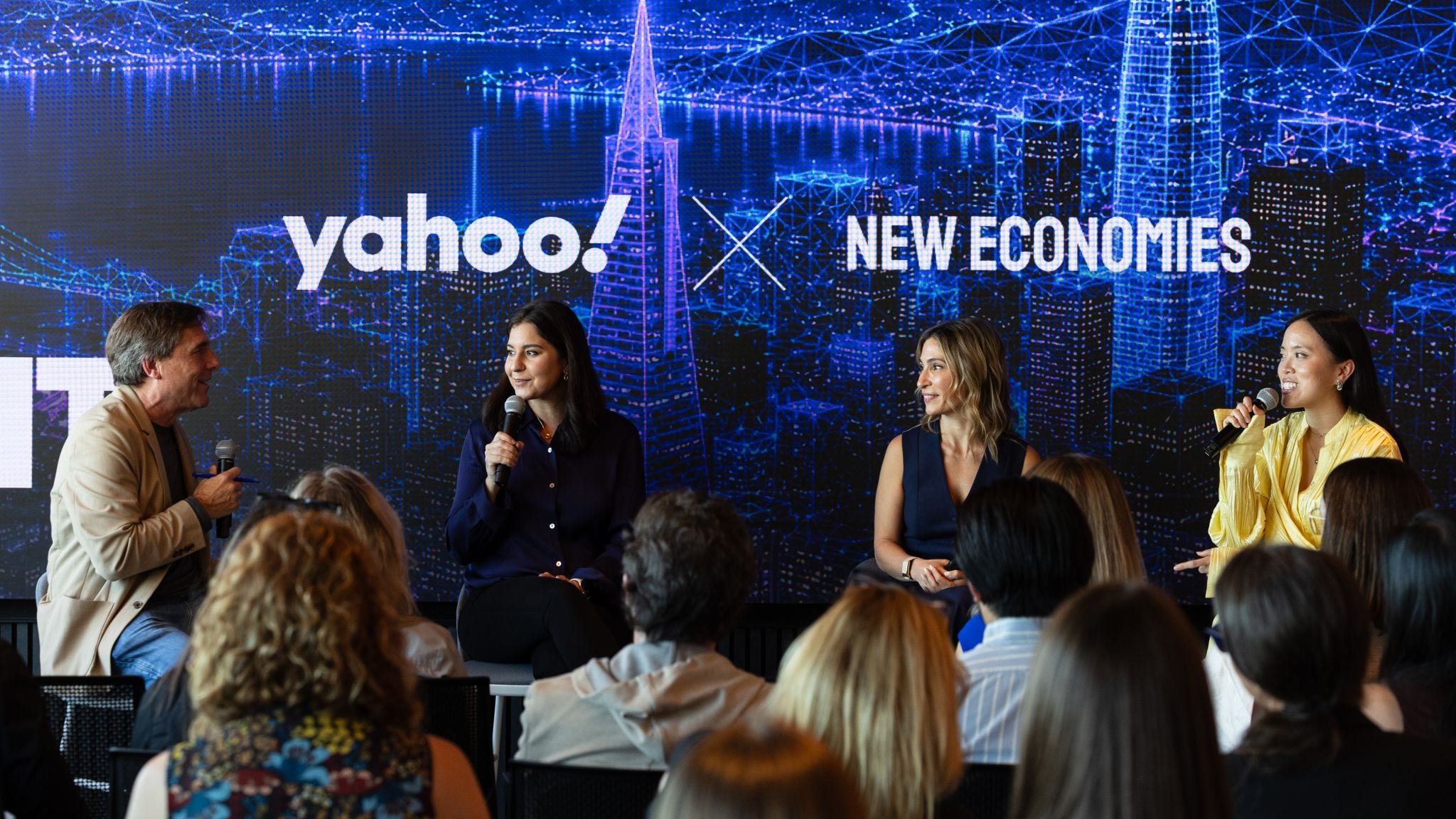
During San Francisco Tech Week a few weeks ago, we co-hosted our first New Media Summit with Yahoo, bringing together media’s biggest names for candid conversations on where the industry goes next.
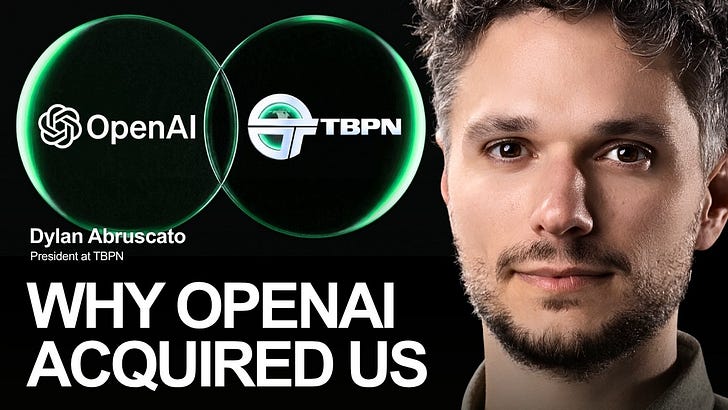
One of our speakers was Dylan Abruscato, President of TBPN, which has had a huge year. He joined us to share how a bootstrapped, 10-person live tech show became one of the most valuable ad slots in Silicon Valley, why live remains “a truly unskippable ad format,” and why reaching a niche audience can be worth more than reaching a big one.
Dylan began his career in live TV at SNL and CNBC. He then helped run HQ Trivia through its rise and fall, and built his own live interactive game show before joining TBPN, a daily, three-hour tech variety show hosted by John Coogan and Jordi Hays. Under Dylan, it grew to roughly $25 million in annual revenue with 30 year-long sponsors, led by presenting sponsor Ramp. Six months ago, it was acquired by OpenAI.
In our in-depth episode, we discuss:
* Why the OpenAI deal had little to do with the show itself, and how the marketing and comms advisory work built into TBPN’s sponsorships became the real reason behind the acquisition
* The Super Bowl stunts that preceded the deal: a hyper-local 15-second spot built from over a thousand founder logos, and claudewithads.com
* How TBPN copied Formula 1’s sponsorship model: year-long deals, category exclusivity, 100% share of voice, and an ad read to Mark Zuckerberg as he took his seat
* Why the show stayed intentionally niche, and why it only takes one or two founders switching platforms for a tech sponsor’s ad to pay for itself
* Inside a daily live show: the 6 a.m. gym sessions, the three-hour run of show, last-minute guest booking, and the vibe-coded internal tools that power it all
Watch or listen now across YouTube, Apple Podcasts, Spotify, and X
Download the transcript 👇
Timestamps
(0:00) Meet Dylan Abruscato(2:20) Why OpenAI acquired TBPN(6:48) What changed after the acquisition(7:43) Will frontier models come on the show?(8:17) What makes TBPN so vibrant(9:32) Prepping for a daily live show(10:46) Why live streaming is hot(12:04) Are niche audiences more valuable?(12:58) How the ad integrations work(15:44) Calling partners post-acquisition(17:10) Building alongside legacy media(18:17) The copycats(19:38) Will another TBPN-style acquisition happen?(20:08) OpenAI’s marketing services(21:02) Thinking about distribution channels(22:10) Dream guests(22:59) TBPN’s next 12 months(23:22) Audience Q&A
Lessons from this episode with Dylan
1. The OpenAI deal was for the team, not the show Dylan says most people misread why OpenAI bought a live tech talk show.
“I think what a lot of folks got wrong about the deal is that it had very little to do with the show itself and much more to do with the interest in us and the brains behind the operation.”
Many of TBPN’s 30 sponsorship deals included marketing and comms advisory work, a tactic the team first used to win sponsors. OpenAI’s offer was simple: keep doing the show, wind down the advisory clients, and make OpenAI the only one.
TBPN was profitable, had raised no money and had no plans to sell. Fidji Simo reached out the morning after the Super Bowl.
2. Build the show you’d want to watch The two stunts that came right before the deal both started as ideas the team found funny.
“The truth is we’re just building the show that we always wanted to watch.”
The first was a hyper-local 15-second ad that aired in San Jose at noon but still counted as a Super Bowl spot. It spelled out TBPN using over a thousand logos of past guests, and those founders shared it everywhere. The second was claudewithads.com, a reskinned Claude that gave one real answer and then rotated through sponsor ad reads.
The team’s brainstorming rule is that if an idea makes them laugh, they run with it.
3. Live is the last unskippable ad format Dylan has worked in live TV at SNL, CNBC and HQ Trivia, and has argued for live for a decade.
“It’s a truly unskippable ad format, and that’s kind of allowed us to command such high prices.”
Almost nothing is watched live anymore. Sports is the exception, and even award shows are now consumed as recaps on X. TBPN’s audience is smaller than HQ’s was, but advertisers value it more because no one can fast-forward.
4. Go intentionally niche TBPN never explains the jargon. Where CNBC would spell out what AWS stands for, John and Jordi just say AWS or GPU, and the audience respects it.
“It really only takes one or two founders watching the show to switch to this platform for the advertisement to pay for itself.”
A small audience of founders, CFOs and VCs is worth more to a tech sponsor than a mass audience. As an example, John once read a Ramp ad straight to Mark Zuckerberg as he took his seat.
5. Copy Formula 1’s sponsorship model TBPN sold only year-long deals, split into a couple dozen categories with one sponsor per category.
“Everyone got 100% share of voice in their category on everything that we did over the course of the year.”
Sponsors got the same ad read in every episode, plus the ticker, merch, newsletter links and end cards on tweets. Dylan’s view is that repetition is what counts when a founder is finally ready to switch products. TBPN also never tried to upsell new placements partway through the year.
The commercial mindset was there from day one. On the first episode, with one viewer, John did fake ad reads for sponsors the show didn’t have. When TBPN wound down its sponsors after the acquisition, viewers asked for the ad reads back.
6. Chemistry plus a fixed format The show depends on the friendship between its two hosts.
“It’s like a true one-of-one friendship, and it’s just so relatable.”
John and Jordi meet at the gym at 6 a.m. every day and work out the day’s lead story in the sauna. They go live at 11, and after the show ends they still call each other on the drive home.
The format never changes:
* Hour one: John and Jordi on the current thing, then live reactions to the timeline.
* Hour two: one or two tier-one interviews.
* Hour three: a lightning round of startup fundraising news.
Most guests are booked last minute. Mag Seven–level names take six months or more of back-and-forth.
7. Be a companion to legacy media, not a competitor TBPN never tried to beat traditional outlets at breaking news.
“We always viewed TBPN as a companion show.”
When founders or publicists offered scoops, TBPN sent them to the Journal or Bloomberg. The founder would come on a few hours later to break the story down. Every show opens with a hard copy of the Journal.
Dylan doesn’t want copycats making another three-hour daily show. He would rather see new formats in tech media, like a late-night tech show or an interactive Shark Tank.
Where to connect with us
Follow Ollie on X: https://x.com/ollieforsyth
Follow Dylan on X: https://x.com/DylanAbruscato
Watch and follow TBPN: https://www.tbpn.com
Previous episodes include
Our partners:
Harmonic: Your go-to startup database. Visit Harmonic to learn more.
Prelint: Keeps every decision reviewed, recorded, and traceable. Head over to Prelint to learn more.
VCX: The public ticker for private tech. Head over to GetVCX.com to learn more.