 Ask ChatGPT
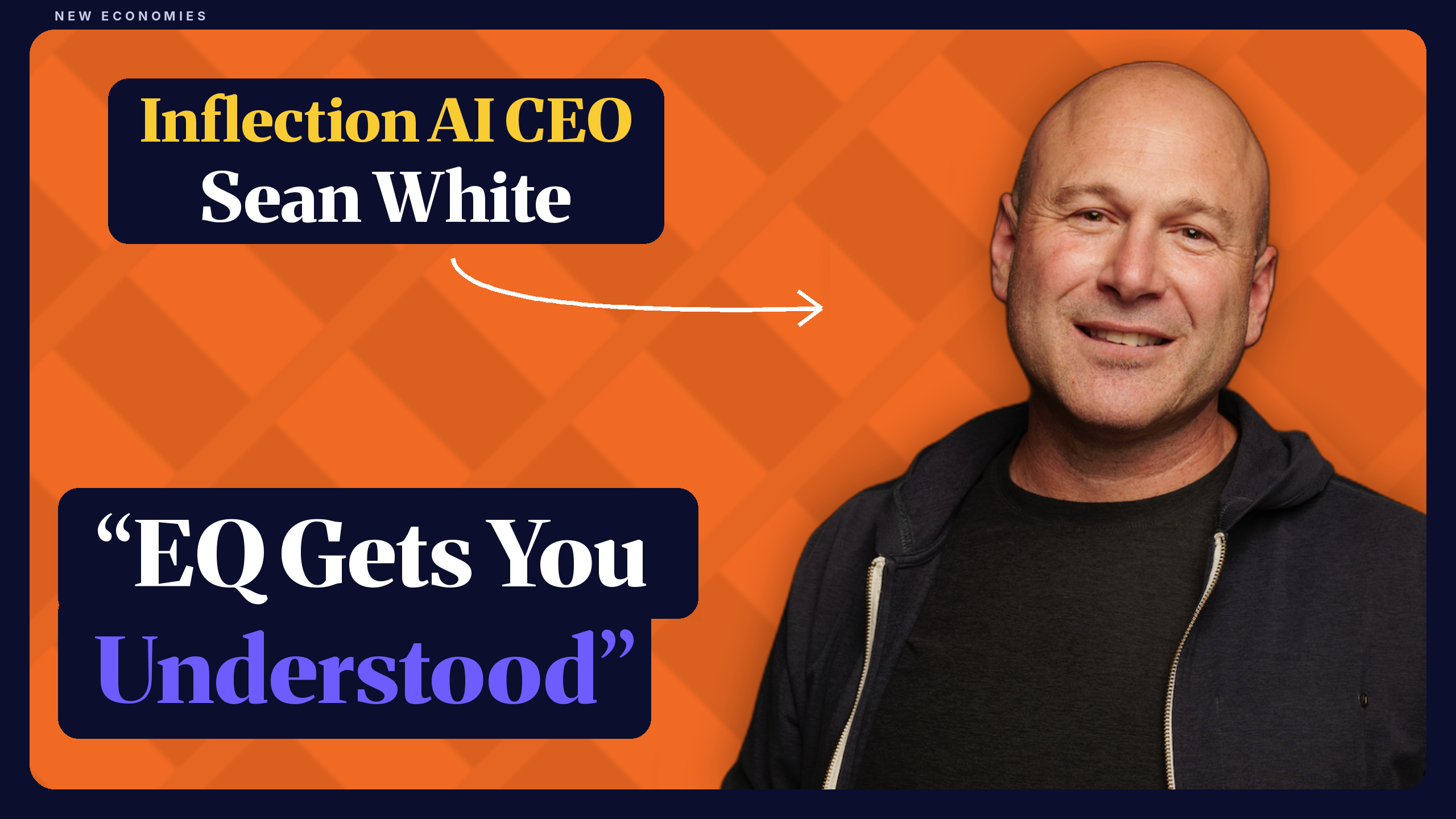

How creators can build sustainable businesses by focusing on lifetime value (LTV) and “true fans,” using taste (unique perspective + craft) to stand out in an AI-abundant content world, and designing communities around a clear member transformation (not just a comment section or group chat). Also discusses the creator economy’s startup consolidation and Circle’s growth approach.
Sid Yadav, co-founder of Circle. Background: immigrant from India (grew up in New Zealand), teenage blogger about startups; joined Teachable (designer-engineer → product roles) and helped shape creator education; later co-founded Circle with two ex-Teachable co-founders. Circle scaled past $60M annual recurring revenue.
Audience growth alone is “hard mode” (optimize for LTV = what buyers pay over time). Viral/shallow attention is fickle; sustainable attention comes from long-term association. Communities succeed when they define a 3/6/12-month transformation and orient rituals/events toward it.
“Nurse coaching collective” community (training nurses to move beyond nine-to-five; concrete transformation). YC as a model community business (rituals like office hours and demo day; monetization via pre-seed investments). Circle’s early growth: viral tweet waitlist, founder demos, and product-market-fit tracking (Sean Ellis-style “very disappointed” score).
Written by AI. May contain mistakes.
Exploring the importance of lifetime value for creators and community success.
“And now he's sharing the three rules you need to do as a creator to build an audience of buyers.”
Discussing the relevance and dynamics of the creator economy today.
“Well, you're the founder of Circle, obviously one of the biggest go-to community platforms for creators.”
Examining the healthy consolidation of the creator economy startups.
“and then just over time, there's kind of winners and losers.”
Strategies for creators to succeed in the evolving landscape and the role of AI.
“And kind of being in this almost discovery phase of what is the next thing.”
Understanding the challenges and strategies for effective content distribution.
“I have a very simple model for creator businesses.”
Strategies for creators to capture and maintain audience attention.
“How should creators be thinking about actually the attention economy in the way platforms think about it?”
Learn strategies for creators to capture audience attention beyond platforms.
“Or to capture that audience in a way that they can reach them.”
Understand the importance of selecting a niche and its long-term implications.
“But I also think it's probably part of the creators team.”
Explore how creators can leverage audience value beyond just attention.
“and as you start to then develop that audience and you find that kind of audience content fit, then it might become a little more about, okay, well, what are they resonating with?”
Discover the significance of taste in content creation and audience engagement.
“We knew media is going to become a big trend.”
Learn the difference between audience and community, and how to foster true connections.
“And I honestly think what comes next is community.”
Hear the personal journey of Circle's founder and insights into building communities.
“You know, I remember when Circle launched, 2019, 2020, I remember you did a thousand demos in your first year.”
Learn about the unique value proposition of creator platforms.
“And really kind of grew up there, as does the creator economy at the same time.”
Discover the motivations and insights behind starting Circle.
“There's almost no negative externalities.”
Understand Circle's early growth metrics and strategies.
“quarter of a billion dollars and i was not a founder but i was on the founding team so you I did okay, but not life-changing money.”
Explore the importance of culture and community in scaling businesses.
“What did the following years look like from where you can share what's being shared publicly from an ARR point of view?”
Learn about the key factors that impact community success for creators.
“the next day you get an automated email circle from Sid and I think Superhuman did this or maybe still does it quite well how impactful was that founder product-led growth to activate customers?”
Learn how defining a clear transformation is essential for community success.
“And first, you have to ask yourself the question, like, what is a transformation?”
Explore examples of thriving communities and their unique transformation models.
“yeah, maybe it doesn't have to end there, right?”
Discover how AI can streamline community management and support growth.
“And going back to what we were saying earlier around how creators can be successful, thinking like a founder.”
Gain actionable advice for building and monetizing a successful community.
“And by having these super useful, hopefully, AI partners along the way, that's going to help.”
Learn how to redefine business success by focusing on audience transformation.
“So there's a community business, there's a education business, there's a course learning business, there's a consulting business, coaching business.”
Discussion on the pitfalls of focusing solely on ad revenue without broader goals.
“imagine someone failing by doing all of that.”
Exploring influential figures and companies that inspire the guest's entrepreneurial journey.
“But before we go, my favorite part of always on these episodes is the quick fire rounds.”
Insights on companies to disrupt and the importance of innovation in the creative space.
“and can finally unleash that creativity in millions of people.”
Discussing the evolution of Circle and envisioning the future of digital businesses centered around community.
“And really, from this perspective of thinking about going beyond the ad business model and maybe factoring in the LTV opportunity and helping creators kind of build businesses around the content that they built.”

Get the gist, explore an idea or ask about something said.
 Claude
On BIG IDEAS BY NEW ECONOMIES, what are the key points of this episode?
Searching your listeningAutomatic transcript. May contain errors.
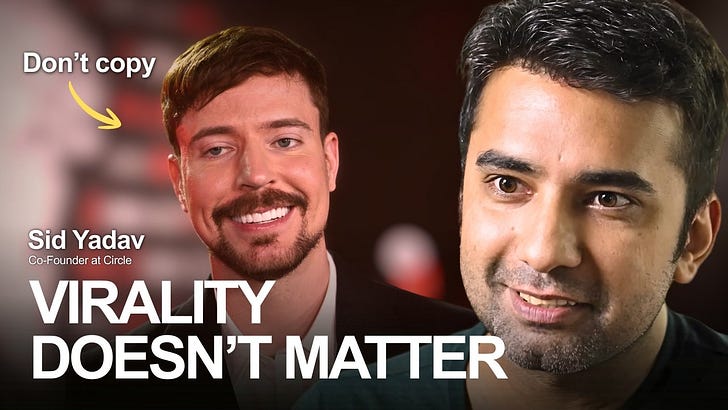
0:00Everyone wants to be a Mr. Beast, but to me, that's almost playing the game on hard mode. There's this very heavy bias towards growing your audience. It's all about numbers, numbers, numbers. But what most creators tend to have a blind spot around is the other part of the equation, which is lifetime value or LTV.
0:17Sid Yadav: It's a very simple equation, which is really about... This is Sid Yadav, the co-founder of Circle. He scaled his community platform past$60 million in annual recurring revenue. And now he's sharing the three rules you need to do as a creator to build an audience of buyers. Really, if you want to go beyond and you want to monetize and thrive and still have a business in five years, 10 years, the thing you have to think about is how much money will that audience pay you over the course of their lifetime? There's like the shallow attention on a piece of content that you produce. Let's say a video goes viral on Instagram or YouTube.
0:51Do you know who those like 10 ,000, 100 ,000 million people are? Most likely not. And to me, I don't know if that's the type of attention anyone should be optimizing for because it's so fickle. Where a lot of people get this conflated is they think of their audience as a community, which it definitely is not. And so we obsess a lot about failed communities. And the first thing we notice is that so many of those just don't have a defined transformation. So if someone joins you as a member, who are they becoming in three months and six months and 12 months? That's really where a community comes in.
1:21So much of the failure that we tend to see comes from people who just aren't even thinking about the LTV or the transformation.
1:27Sid Yadav: If you could get a free piece of advice on how to build a really successful community, what would it be? I would say number one. Welcome to New Economies.
1:49Sid Yadav: sid welcome to new economies we've been kind of in touch over the years we've known about each other but this is the first time we're speaking and oh my god the creator economy it seems to be still here it's kind of not relevant anymore so we have a lot to talk about but big welcome to the show and thanks so much for being here. Yeah, thanks so much for having me. It's great to finally chat. Likewise. Well, you're the founder of Circle, obviously one of the biggest go-to community platforms for creators. Before we tap into that, the creative economy, you know, we've both been in this space for the last four or five years.
2:21Sid Yadav: And to be very honest, we were just chatting before we came on. It's kind of like, is the creative economy still relevant and is it a thing? Yeah, I think it depends on how you look at it. So if you look of creators that are in the creator economy monetizing, I kind of feel like that is very obviously a thing and even more so than, you know, back in 2021, 2022. I mean, if you think about the number of podcasts out there, the number of newsletters, the number of communities, all of that has just exploded. And I think maybe where the sentiment comes from about, you know, is the creator economy a thing is more from like the startup ecosystem perspective, And it's this thing of, you and I were talking about, where are all these creator economy startups gone that launched in 2020, 2021?
3:08And from that perspective, there's been very much a consolidation. But I almost think it's been like a healthy consolidation of, and crypto has gone through this era. Maybe AI will go through this kind of phase as well of you just have this explosion of companies out there. and then just over time, there's kind of winners and losers. And I feel like that's what we've seen over the past few years.
3:31Sid Yadav: We used to do all these market maps, right? Which we're just saying, you know, putting all these logos together and just before we're coming on, we're also saying like, we include you guys a few times. And like, when we look back now over the last five or six years, 2020, I think we did our first piece. We can try and find it put on the screen now. And you look back and it's just like, where are all these startups? But also the trend has changed every single year. What do you think made the creative economy kind of go through that up and down, up and down for the last four or five years? Was it just as simple as probably the VCs fold to us?
4:03Sid Yadav: Was it just following the hype before it actually became realistically viable? Was that part of the challenge, you think? I mean, if we were to look at it from the tech ecosystem perspective, so not the actual creator economy, which to me is more about like the number of creators, number of newsletters, podcasts, communities, et cetera, right? Which again, I kind of feel like that's been exponential. But if you're looking at it from the perspective of what happened to the startup ecosystem in the creator economy, I think my sense of it is that, you know, before we had AI, it was almost like the VCs were looking for what is the next thing, right?
4:37And so I think the creator economy was one of these big kind of, and you made these landscape maps and that I think Like that usual, yeah, they summed it up pretty well. Like that was the landscape or one of the landscape opportunities, as I think was crypto, right? But I think maybe that was more a result of kind of not having the next thing beyond SaaS, beyond cloud, etc. yet. And kind of being in this almost discovery phase of what is the next thing. And I think AI has probably filled that slot pretty well for them. and now there's just a very clear next thing that the VCs can get around. But the benefit that had is that startups like Circle got to be funded.
5:22And so while not every startup made it, I'm still kind of grateful that we went through this phase because that's what allowed us to have our very lucrative pre-seed, seed, Series A, etc. And then thankfully, we were able to take that financing, turn it into a profitable business. And then as these startups die, it's definitely sad from the perspective of those startups, the employees, etc. But I do see some of it as a healthy consolidation. I don't know if the world needs hundreds of community platforms or creative platforms.
5:52Sid Yadav: It's true. Maybe it's a good thing that not as many of these startups are still here. But on the flip side, millions of creators are now starting to actually earn really good revenue and building amazing products. So there are a couple of things we can tap into here. I've ordered the title for today's episode, how can creators become really successful from 2026 and beyond. Because it feels like now's an amazing time to become a creator. It's never been easier. There's never been a harder. And to help us break this down, you know, there is so much AI stop out there. Content is so easy to generate.
6:27Sid Yadav: Building community, I think, is potentially the next big moat for companies and creators. So we should talk about that. But also it's all about taste now. How can you build amazing content that actually has taste? So if we look at this from a top level point of view, how do you think creators should be thinking about being successful in 2026 and beyond? I have a very simple model for creator businesses. So I look at it as it's basically audience times lifetime value or LTV, right? So you can look at any creator business or you can look at almost any business from this perspective. But I think when you see from that lens, what I see in the world is there's this very heavy bias towards growing your audience.
7:12Everyone wants to grow their audience. It's about you have 50 ,000 subscribers, 100 ,000 subscribers, how many views. It's all about numbers, numbers, numbers. And what most creators tend to have a blind spot around is the other part of the equation, which is the lifetime value. which is really about how much money will that audience that's tuned into you, that loves your content, how much money will they pay you over the course of their lifetime? It's a very simple equation. And so where this blind spot usually occurs is I think because the creator economy grew up in an era of ad-driven revenue models, so you would start a newsletter or maybe a YouTube channel, and the way you would monetize that is through sponsorships, CPM, ad dollars, etc.
7:57there's been this extreme bias towards just growing your audience. Everyone wants to be a Mr. Beast. But to me, that's almost playing the game on hard mode. Because if you take the concept of the 1 ,000 true fans seriously, basically what that's telling you is you don't need tens of thousands, hundreds of thousands of subscribers. What you actually need are those true 1 ,000 true fans that will pay you for the value that you deliver that likely exists beyond the videos that you produce, beyond the newsletter that you have. I mean, those are great for catching attention and as a way to keep that audience tuned in.
8:36But really, if you want to go beyond and you want to monetize and thrive and still have a business in five years, 10 years, the thing you have to think about is LTV, which relates to what are the products that you're selling to them. So are there memberships, events, courses, newsletters? There's so much value that can be delivered outside of just the content that you make.
8:57Sid Yadav: Is LTV hard or easier today in the age of AI for creators? I think it depends on how you look at it. In terms of the process of going from having a good idea to actually executing on it, it's now just easier than ever. When I started in this space, maybe more than 12 years ago, my last company was a company called Teachable. we had you know we used to call it actually democratizing education because the the creator economy phase was not there in like 20 2014 but you know back then we used to really fret so much about how much work it took to build an online course right and we would think about how is this thing ever going to be democratized if it's just so much work and now i look at you know there's like billions of courses in the world um i look at you know there's still course creators out there, though that industry has also changed and morphed a little bit.
9:55So really, it's like the cost of production and the cost of getting yourself out there has really gone down. It's just way easier now to build a course. In fact, if you want to make a simple one, you could probably, you know, work with Claude and get something out in a day. But it's really the distribution that's gotten even more challenging because you're now competing with so many different creators for the same amount of finite attention. And that's really become a lot more challenging for creators.
10:50Sid Yadav: to hostinger.com forward slash new economies or enter code new economies hosting is trusted by millions of builders and they provide everything at affordable prices and it's time for you to get building i promise you it'll be worth it go and do it now back to today's episode how do you think talking about distribution and attention let's talk about attention because it's becoming easier with different types of formats but also the attention span of people like us right and the audience members is so finite now. How should creators be thinking about actually the attention economy in the way platforms think about it?
11:29I tend to think there are two types of attention. So there's like the shallow attention on a piece of content that you produce that an algorithm can get you that distribution. And you can look at a view count and you can be impressed by it and feel like, oh, I really got my kind of word out there. But to me, I don't know if that's the type of attention anyone should be optimizing for because it's so fickle. And if you just ask yourself the question, like, do you know who that audience is? So let's say a video goes viral on Instagram or YouTube. Do you know who those like 10 ,000, 100 ,000 million people are?
12:03Most likely not. And then if you ask yourself, will those same people, if they were to see a video from you again in their feed, will they watch that other video and have an association to you or your brand? It's like, maybe, right? And maybe for that, you have to have a ton of things go viral over time. So there's like the short kind of fickle type of attention, which again, to me, it's more, I mean, it's obviously everyone needs to have stuff go viral and it's how you start getting distribution. But if that's all you have or optimizing for, I don't know if you're going to build that sustainable audience, community, et cetera.
12:38Whereas there's this other type of attention, which really comes from tuning into a creator or a brand, but tuning into them from the perspective of who they are and really having this long-term association. If I'm watching a video from Ali, I kind of know what Ali is about. I know what he cares about. That interests me. So if I see that again in my feed, I'm going to be interested. If Ali launches something else, if he launches an event, podcast, newsletter, I'm going to be interested. And that's more the thousand true fans. type of attention that can be better monetized, I think, over time. But a lot of creators kind of mix up the two and then maybe only focus on the former versus the latter.
13:20Sid Yadav: I agree. But also on the distribution side, I think so much of this comes down to the platforms providing really good data to the creators on actually who their distribution is right. We're on a couple of platforms, maybe 80k to 100 ,000 subscribers. I'm not going to mention the platform names, but the data you get on that distribution is so bad. What do platforms need to be doing more of to help creators win in this market? I would actually look at it from the other perspective, which is, what do creators need to be doing? Because I don't know if it's the platform's job to go above and beyond.
13:58I think it's the creator's job actually to, for example, build their email list. Or to capture that audience in a way that they can reach them. whether it's the email list, having an app, having a community. And so I would almost look at it as, forget what the platforms will do, just assume that they're not going to help you understand the audience. Because quite frankly, the way the platform is, that's their audience. You're just there serving attention fodder to their audience. And I would look at it as a creator of, hey, yes, there's a platform. Yes, I need my content to be out there to get that distribution.
14:34But what am I doing to capture that audience so that that audience turns into my audience? And the simplest thing anyone can do, I think, is just launch an email list, a newsletter, and provide a CTA in their videos, in their video descriptions, just so you start capturing those emails. And I'm sometimes shocked when I'm talking to some big YouTubers. I have a friend of mine who's a top three podcaster in India. And so he has these like, basically millions of people watch his content. And one day I asked him, I was like, hey, do you have an email list? And he goes, no. And I was just so shocked that there's this cohort of creators that because they found distribution through YouTube and because they've done well, obviously he's been very successful.
15:21He has the best guests on his show. Millions of people watch him. But the idea of him not even knowing who those people are or having any kind of access to them outside of YouTube was just kind of shocking to me. But it's such a simple blind spot that I think a lot of folks who find distribution on platforms kind of forget to solve for.
15:44Sid Yadav: That's super interesting. But I also think it's probably part of the creators team. How many resources do they have? I mean, creators only have a small number of people, right? And going back to the title, the show is around how can creators become successful? So if a creator's got even 10 ,000 followers, 20 ,000 followers, 100 ,000 followers, how should they be thinking about actually building an amazing audience? And then we'll talk about community next. Yeah, so I think maybe building your audience just starts with what is your niche? What is your expertise? What is your interest? Because the idea of building an audience is it's a long-term journey.
16:25It requires a lot of content production. I mean, God, it's so long. Yeah. And it's just the volume of content that you have to produce is immense. And so what that means is whatever it is that you want to build that audience around has to be something that you find just internally motivating, captivating, interesting that you can sustain your own interest on for years to come. So it kind of all starts there, which is to say that the niche that you pick, the topics that you pick, the people that you care about serving, you really have to first start by identifying what that is. Will you still care about it in a couple of years, in five years?
17:09Is it kind of fickle or temporary? If you're making, let's say, AI vibe coding videos today, that might be a great need of today. Will that still be relevant in a few years? So I think it kind of starts there. and as you start to then develop that audience and you find that kind of audience content fit, then it might become a little more about, okay, well, what are they resonating with? What are they not resonating with? And what more could they want from you that then gets into the LTV equation, right? And this is where, again, that blind spot exists of because most people don't think about the LTV part, they think the only thing that's there to be harnessed is their very finite attention on your videos or on your newsletters through CPM, through ad dollars, through sponsorship dollars.
17:59But the reality is, imagine if your niche is something as lucrative as, I don't know, venture capital, right? And it's almost like, for example, let's say you're a Harry Stebbings or one of these VC podcasts and you've got these thousands or tens of thousands of VCs and founders tuned into your show or newsletter. imagine if you kind of just stopped at the attention part of the value chain and didn't think about the fact that hey they're vcs they have money they have needs and desires right they want to be connected to an ecosystem they want to be discovering founders there's so much more that you could be offering them beyond just a podcast with with a few of these sponsors right and and i think that's where i really encourage creators to think creatively about what is it that your audience needs from you beyond just your content and how can you give that to them?
18:54Sid Yadav: I agree. I did a talk earlier this year around creators should be thinking like founders. They have a massive audience, they have distribution, and they should be thinking about every single piece of, and this is actually how we do it, every single piece of content we produce, we build it like a product. So those big market maps we do. We just did one around new media, for example. We knew media is going to become a big trend. and for any creators listening that, I think actually this is quite a good framework and playbook. So you start with a content site. We put all these new media creators together, right?
19:25Sid Yadav: I think it was like 130, 150. It went super viral. And then we thought, hang on, let's do a new media site. Went to GoDaddy, newmedia.co was$20 ,000. Screw that. New-media.co was like$15. Launched that. Now you can do so many different types of products from that. You could do like a PR platform for PR firms looking for new media creators. We're doing some like new media summits. All of these things like becomes a product, right? But at the end of the day, yes, it becomes easier. But it's all about taste now. What's your whole concept and thinking around how can we as creators be thinking about all these amazing products we want to do?
20:08Sid Yadav: It's all about taste at the end of the day. I feel if you have taste, you have potentially distribution, and then you have those fans and true fans, which we've been talking about. Do you think that's roughly accurate how we're thinking about it? A hundred percent. I mean, if you think about the impact of AI on content creation, basically what it means is anyone who wants to generate content can now generate content, right? So if I want to make a video or if I want to draft tweets, I can do that using AI. Now, there's a matter of like, is it actually going to be good? Is it actually my perspective?
20:42Will it actually resonate? And I think that's where the taste factor comes in, you know, maybe from a different lens, because I talk about taste all the time internally at Circle. And that's just like my go-to word for a lot of things that I care about. And, you know, I've spent a lot of time thinking about like, what is taste? I've kind of broken it down to these two things. I think there's a sense of perspective and taste. So there's like a unique perspective that you bring to the table because of just who you are inherently. that some creators can tap into and others maybe don't go as internal.
21:17And so maybe they might have a more kind of homogenized, commoditized view on whatever it is that their niche is, right? So that's kind of very undervalued, which is just what is your unique perspective that comes from your background, your sensibilities, etc. I think the other part of taste is just there's a craft and sensibility to the quality of whatever you're doing, right? whether you're making videos or writing newsletters, etc. And that's just something that can be honed over time. That comes from having very fine-tuned attention to detail about what's good, what's not, the nuance behind it, etc.
21:57But I really agree with your larger premise about if AI commoditizes the cost of, let's say, content creation, What is the type of content that stands out to capture the attention? I think a lot of that has to do with the taste, which is your perspective, your craft. And then I think when we think about, well, what then turns into the community that sticks around for you? I think a lot of that has to do with that taste element. Because once you figure that out, just from the content you're producing, you can then think about, much like you did with new media, you can think about, well, what are the events that I could be running?
22:34from that very tasteful perspective to take that further. So what maybe starts off as like a viral tweet or one of these landscape maps can turn into so much more because it's resonated, because you brought your own unique perspective to it, your own taste, your craft, your judgment. And then now that can serve as inspiration towards your next business, whether that's, again, a membership, events, courses, etc.
23:00Sid Yadav: etc and i'd also say thinking big how can these creators like you're not just thinking about your small ecosystem right you're thinking about like truly how big can this go but also thinking about like what can you own in this category when i say to this the fact to creators like they should be like thinking like founders and like you can own this space they're like really yeah own that category right like these market amounts we do they take a ton of time they're all human creators but I didn't see anyone doing these anymore. Like we can own that space, right? And I honestly think what comes next is community.
23:34Sid Yadav: I've had a bunch of really cool fans on the show recently. We just had Judy and Kevin Haas, the co-founders of Eventbrite. And we were saying like in person is coming back, amazing events and so on. But for creators who have massive fans across the world, community is the only thing I think that will make them win and stay relevant aside from content. And what's your perspective on that? Yeah, I mean, you're preaching to the choir. Obviously, I think that's 100 % true. And I mean, we can just think about like, why is that true, right? And it almost seems like an obvious thing to say these days.
24:09So it's not even that controversial. Whereas I feel like when I was saying the same thing in like 2020, 2021, it was like, huh, like what's community and why is that important? But if you think about like, okay, why is that true? So we spoke about how with AI abundance, there's going to be a ton of content, the type of content that stands out, that captures a finite attention, is tasteful, has that unique perspective, etc. But then if you think about, okay, let's say you build that audience, let's say you've completely cracked the YouTube algorithm or your newsletter, email list growth, funnel, etc.
24:43Now the question is, what will make that audience stay? And then what will solve for that LTV equation? And I think that's really where a community comes in. So where a lot of people get this conflated is they think of their audience as a community, which it definitely is not, right? So the audience, to me, are the group of people that are consuming your content. Really, it's as simple as that. They're watching your videos, they're reading your newsletter, etc. That's not the community, right? The community is the subset of the audience that connects to each other with shared purpose, shared goals, a shared kind of sense of identity and belonging, and will actually, you know, let's say show up to an event or show up to any kind of an avenue where they get to meet each other.
25:33So you have to ask yourself, like, what percent of my audience will do that? Not for you, the creator, though you could be the impetus, or let's say if you're hosting an event, like, yeah, one of the attractions could be that they get to meet you, but they really have to be willing to show up for each other, right? And that's what true community is. So again, where a lot of these creators get tripped up is because they're just building their business on, let's say, a platform like YouTube, or they just have this newsletter, you know, they might have a comment section, right? But again, the comment section is not the community either, because you have to ask yourself, what percent of that comment section will show up for each other?
26:13Probably a small percent. But where you really tend to crack communities when you think about, okay, what is it that I can offer a subset of my audience that perhaps they will pay me for, which will warrant that feeling of shared identity belonging towards a shared purpose. And I think that's when the community, the actual community part of it really starts.
26:35Sid Yadav: You know, I remember when Circle launched, 2019, 2020, I remember you did a thousand demos in your first year. I didn't do a demo with you but I did something from your team and it's first of all cool to see you guys still here right we were talking about earlier around the Krayt economy has had its fair share ups and downs many startups haven't made it you guys are still here maybe just want to give a couple minutes around the actual finding story of Circleland then we can talk about how can Kraytors build awesome communities so kind of brief background I'm a two-time immigrant born in India I grew up in New Zealand, moved out to the States at age 21.
27:16I was a teenage blogger growing up in New Zealand. So I'm very obsessed with the tech ecosystem. My joke is that I was facing the wrong direction because New Zealand is beautiful. I was living in a place called Queenstown, beautiful mountains, lakes and everything. But I was obsessed with computers. And so I found myself kind of just randomly, I skipped the whole, like as a teenager, what are you doing on a computer? You're most likely gaming or just doing fun things. And what I found myself doing is just blogging and writing about startups. And I did that from age 13 to 19. And that eventually gets me to America.
27:51I joined a company called Teachable, which was really an online course platform. It still exists the way we described it as the Shopify for online education. And really kind of grew up there, as does the creator economy at the same time. So from 2014 to 2019. So I joined as designer-engineer, get promoted to product manager, head of product, and really fall in love with the ecosystem. So because I had this benefit of having written about thousands of startups growing up as a teenager, I had kind of, much like your landscape maps, I kind of had a version of that of the tech industry just as I grew up, just forming in my head throughout childhood development.
28:35So I knew, at least back then, I could name pretty much every top 100 consumer startups, top 100 enterprise startups. And what I found fascinating about the creator ecosystem when I joined it is it was kind of neither. You're not building a creator platform to limbic hijack attention from hundreds of millions of consumers so you can monetize via ads. That's not the goal. And at the same time, it's not an enterprise product. So you're not building up the sales force and you're not building this whole process around RFPs and just all the stuff that enterprise companies have to do. it's such a simple value proposition as a creator platform which is you're building a platform for entrepreneurs to build their own business on top of you so that either they can quit quit their nine-to-five or have a passive income business or really build and grow a a thriving business with multiple team members on top of your platform and something about the telos or the purpose of that for me as a engineer designer founder just really appealed like it's like Like there's just like in a world where pretty much every company has a negative externality.
29:50And, you know, back then we might think a lot about like, what is Facebook's negative externality? Like, yes, they're successful, but what is all the harm that they might've caused? It just felt to me like a company like Circle, or you could look at Shopify in the same category. There's almost no negative externalities. It's just like you're empowering entrepreneurs. They build these businesses. Those businesses attract people. those people's lives are changed and the entrepreneur's life has changed. So long story short, basically after I left Teachable in 2019, really kind of got back to the drawing board.
30:27And the line I had in my head is, I didn't move to America to become a VT product. I moved here to start my company and now I want to finally do that. And really when I got thinking about it with my co-founders, both of whom are also ex-Teachable, So really, I think the core insight we had is that the better organizing principle for the creator economy, then let's say education is how we were looking at it from Teachable, is community. And we just kind of forecasted out. And really, a lot of this actually came from the inspiration of having watched teachable creators succeed and having observed that the best course creators built these communities, offered something way more than static video courses like a Udemy or Coursera.
31:13and kind of extrapolated that out to, hey, isn't that going to be every creator? And isn't that actually going to be every brand? And then who's building the Shopify for this massive opportunity? It was kind of the initial impetus. And that kind of led us to starting circle. And then you're right, in year one, the thousand demos is how I really got connected to the full ecosystem and then realized the value of the potential.
31:41Sid Yadav: when in those thousand demos in that first year when in that first year did you actually realize we have an amazing opportunity here we have to go all in i think that was pretty early on actually because i mean we all we we honestly started with this like with this grand sense of vision because one of the other things that i was thinking about is you know teachable as a company sold for a quarter of a billion dollars and i was not a founder but i was on the founding team so you I did okay, but not life-changing money. And the thought that we had was, hey, for our next company, we have to tackle an opportunity that's going to be worth billions that we can work on for at least, I would say, 10 years, ideally 20 plus years.
32:25And one of my biggest inspirations in tech is Toby from Shopify. And so the way I looked at it is I have to build my own Shopify that I can imagine working on in 20 years, maybe in 30 years, etc. And so the opportunity has to be of that scale. So we kind of started off with that almost grandiose sense of purpose and kind of wanting to go long term, etc. And we had, you know, the first thing we did actually when we started the company is we wrote this values doc. And if you can imagine like a Google doc with hundreds of comments and rewrites to every word, before we had a line of code, before we had a single customer.
33:05That's kind of what started the company. It's like our founding document, which still exists today, has morphed slightly. But honestly, that was the real kind of committing to this thing that we're going to build and obsessing about every word, every sentence of how we could describe the shared values, the shared vision, etc. And so when we were doing these demos, there was almost a sense of validation, honestly, that I would get. So whenever a demo would go well, customers sign up, it'd be like, oh my God, we are so right about this. And there's something here. And back then, a lot of our early customers, when they meet me, they'll often comment on the fact that back then, I was very dogmatic about the roadmap.
33:45So if someone would ask me about, let's say, payments or courses, are you ever going to build this? I'd say, no, for now, we're just focused on building the best community product. And then they laugh because obviously what happened over the years is we built everything. So we did build payments and courses and events and chat and all these things that I said we wouldn't do in year one. But really, that was a matter of really focusing in year one of saying, we have to get this one thing right, which back then was having this very clean space for people to have more async conversations. And that's what the early customers loved about it.
34:21But then as we grew, the vision expanded, the product surface area expanded.
34:28Sid Yadav: And you got to like a million dollars, right? In RRI in your first, was it like three to four months? Yeah. So, you know, the way we built the product is for the first nine months, we were in private beta. And really where all this started actually is, you know, I sent a tweet announcing that, you know, I've left Teachable. I'm starting this company called Circle. I remember this. It went super viral. Yeah. And it went viral. And really, I owe a great deal to, you know, my former boss, Encore, who started Teachable, also someone I worked with, Sky Hill from Gumroad, and I contracted with him for a bit because they helped kind of amplify that message.
35:03And we're also early investors in Circle. But really what that did is that kickstarted the waitlist. So the platform barely existed. I think we were just, we might've had a POC, but we now have started building up this waitlist and almost some attention, some hype that existed for about nine months. And then let's say, We start building in November of 2019. By March, I'd say we had a product that we could onboard a few folks to. And so really, our life from March of 2020 to September was, we had this waitlist. We would reach out to about 20 folks a day. Some percent of them would reach back out.
35:46And then we would offer them a demo. And we'd say, hey, the only way to onboard to this product is to get a demo from us. But it's going to be like 20 minutes, 30 minutes. We'll walk you through it. And then if you like it, you can buy. And that was just super informative because we had this feedback loop of basically wake up, I do like five to 10 demos. My co-founders would do the same. And then we would build for the next four to five hours. And then we'd end the day doing support tickets. And we did that for the first year. So when we finally launched in September and we had processed a bunch of this wait list, I think we went from like 200, 300K ARR to about a million in ARR in three months.
36:25because we had all this kind of interest built up.
36:28Sid Yadav: Wow, that's insane. What did the following years look like from where you can share what's being shared publicly from an ARR point of view? Yeah, so we had this honestly very classic trajectory, which I don't know is common, but we basically went from like 1 to 4, 4 to 8, 8 to 16, 16 to 30, et cetera. Now we're a little north of 60. and it was almost like it felt too good to be real, but it's been like that ever since, which is we've never had a bad month or bad quarter like knock on wood. We've also never had, by the way, like just insane, exponential, crazy growth that we can't keep up with.
37:11It's always been kind of manageable, sustainable. It's helped us actually build and grow a team around it. So we're now a team of, I think, 280 or so people. and from team size perspective, I think it's like in year one, we were maybe, I don't know, eight to 10 people and 10 to 40, 40 to 80. And so that's also been kind of linear and it's mapped very well to the revenue growth. And I wouldn't have it in any other way because when we do these offsites, we're a remote international company, but we meet twice a year in locations like France and Mexico, Thailand, Italy, et cetera. And it's really fun to just fly everyone out.
37:49kind of feels like a UN convention with everyone coming from over 40 countries. I mean, the thing I reflect on is we thankfully ourselves, because we're a community platform, we believe in this stuff. We've been able to keep the sense of community intact, even as we've scaled way past the Dunbar number. And I think an aspect of that is we didn't grow too fast. And I almost see that as a blessing because again, going back to our founding principles, one of the things we said from the beginning is, hey, we want to work on this for 10 years, 20 years. We don't want to just flip this thing, right?
38:23And I kind of feel like this has served us well because we're in no rush to get to crazy numbers like a billion in ARR, et cetera. We definitely want to get there, but we care less about is that in three years, four years, 10 years, et cetera. And that allows us to scale the company while keeping that sense of culture and community.
38:43Sid Yadav: I remember when I signed up to the platform the next day you get an automated email circle from Sid and I think Superhuman did this or maybe still does it quite well how impactful was that founder product-led growth to activate customers? Yeah actually so Superhuman was actually a massive inspiration and I'm grateful that Rahul from Superhuman is actually a seed investor in Circle as well because essentially he had this blog post that went viral back in the day about how to find product market fit. And I kid you not, I think we literally just followed that playbook. Great. So the broad strokes of that playbook were you build up this wait list, you want to onboard these customers so you don't want to launch the product prematurely and you want to iterate on this feedback and you want to mandate that everyone gets a founder demo and you want to track this one metric he had.
39:40I think it's the Sean Ellis score of product market fit, which is basically you ask your customers, how disappointed would you be if you were to no longer use Circle? And what you are to track is the percent of people who say very disappointed. And I don't know if this stuff is true. It sounds too simplistic, but at least in that post or in Sean Ellis' framework, what it said is if your score is above 40%, say very disappointed versus somewhat versus not disappointed, you have product market fit. And so we just kind of, we set up the survey. So everyone got the survey, I think, a month in and then six months in, et cetera.
40:20And we just tracked that score over time. And we kind of used that as a measure of how much of a product market fit we had and kind of worked beautifully, actually, where I'm sure there's better frameworks and I'm sure it was too simplistic, but it really gave us this very kind of simple framework and model to follow. And I think anything beyond that was just actually the rigorous execution of actually following it.
40:45Sid Yadav: To build a community, it also takes a similar approach, right? It's relentless and takes so much time. And very honestly, when I saw all of these community platforms crop up in 2021, I was super fascinated by it. But the biggest challenge I always found from even the vessel, just as a creator, is as a creator, it's easy to launch a community to get your fans to come back So you've got to remember like neweconomies.cycle.com, whatever it is. It's like a whole consumer psychology approach, right? Do you think that's been one of the hardest challenges for creators, but also platforms to grow and make communities really successful?
41:23Yeah. And I think, you know, as Circle has grown, because we're now in year six, we've actually figured out. And I think our communities have figured out really what works and what doesn't. And I'll give you the highlights there. So, you know, what I've come to believe, having observed like tens of thousands of communities at this point, either succeed or fail, is it really starts with what we call now the transformation, which is, you know, as the creator, what is the transformation that your community is offering your members? So if someone joins you as a member, who are they becoming in three months and six months and 12 months?
42:00And first, you have to ask yourself the question, like, what is a transformation? You have to define it. You have to map it out. And then everything your community offers, so it's the rituals, the events, cadences, is it the weekly office hour, monthly office hour? Is it a prompt every week? Whatever those things are, have to now be oriented towards that purpose of, are they getting those members into the transformation? And so we obsess a lot about, obviously, churned communities or failed communities. And the first thing we notice is that so many of those just don't have a defined transformation.
42:39So when they start, it's almost a sense of, okay, I've done the hard work, I built the audience, now I'm going to build a community. and I will start a circle or a Slack or a Discord and I'll get those people in there and then that's my community. And those are the communities we see fail all the time because if you ask yourself, well, if I'm a member, why am I sticking around in three months and six months? The creator hasn't clearly defined it and then it ends up being no more than a glorified kind of comment section or a fun group chat for some group of people who eventually stick around, but most of them leave, right?
43:13versus the ones that we succeed these days. And I'll give you an example. One of our most successful communities, really like from a GMB revenue perspective, is a nurse coaching collective. So they attract nurses with nine to five jobs and they train them to be kind of nurse coaches who can offer their guidance as a nurse to people who need it without the in-person nine to five angle to it. Right. That's the transformation. And what I love about that is it's so concrete. It's so simple. It's a massive TAM. Right. Think about the probably tens of millions of nurses out there who don't want to be glued to their nine to five, who found themselves in this profession that is very taxing and demanding.
44:02and they've captured that demand. And the value that they offer is basically, they take these nurses and they put them in these communities. So you get to now know all these nurses that are much in the same boat as you. And then they take you through this curriculum that turns you into a nurse coach that can then basically monetize. And then you now get to have the second career that doesn't rely on you being a nine to five nurse. And so communities like that, I love because they're so tangible, real world. There's a there there beyond just join this group chat or join this community. There's a transformation.
44:45And then through that, there's shared purpose, meaning belonging, which is, as a nurse, I imagine you get to meet all these other nurses that are like you. You make friends that you're probably going to keep in touch with. as you all kind of tap this new career path together, you're going to keep in touch with them. And then for this community, it's like, yeah, maybe it doesn't have to end there, right? Now it's about what does your one look like as a nurse coach? What does your three look like as a nurse coach, et cetera? That's where the LTV equation again comes in because you can now imagine starting different types of memberships or events for that different cohort.
45:22Sid Yadav: Super fascinating. It feels like the communities which do incredibly well maybe is like one super, super like hyper niche type of, you know, community. Like we've thought about launching a community, but I'm like, there's so many tech communities out there, like how would we actually be different? Maybe we get all the previous podcast guests to come on and they give like an hour to the community, like once a week or something. But it's super hard. But I feel like even niche, like nurses, how to get over the nine to five, cooking. I know you think you guys got a few cool creators like in that kind of front.
45:54Sid Yadav: feels like that's where potentially the real opportunity is. Is that maybe accurate? I think that's accurate, but I wouldn't discount any niche. So even within tech or the founder ecosystem, I think there's very lucrative communities to be built. But maybe more the framework is going beyond just, let's say, the content that you'll offer them. So if it's about founders, the nurse version of that would be, okay, what is a transformation that a founder could want from the community that we build? And then if you kind of niche down there and you think about, okay, is it the YC type phase founder getting to product market fit?
46:35So I just gave this example of the Sean Ellis product market fit superhuman framework. You can imagine a community, which is just a group of founders following a framework that's like that and getting to the transformation of finding product market fit. Right. And so if you niche down in that way and say, okay, what is the thing where there's latent demand for some group of people to become someone else or establish themselves as someone else? We know that demand already exists, right? And likely there are already communities out there for this demand. But if you take that opportunity and then you say, okay, what is the unique thing that I can bring to this group of people.
47:18And one of my favorite examples of community, actually, I think is just YC. I think YC is a community business that monetizes through that 7 % pre-seed investment that they make in startups. And I think it's just genius because if you think about the YC model of there's office hours, there's the founder network that you tap into. There's the alumni network. And then there's a goal or transformation, which really kind of ends or starts in some ways at the demo day. Right. And that's really the key ritual that everything is oriented around. You know, it's just massively successful community that's given birth to these like multi-billion dollar businesses.
48:00And I think more people who want to start communities need to be thinking about models like YC versus the kind of average group chat that exists on a Discord or WhatsApp, etc. Because really the potential of a fantastic community business is something more akin to a YC. Maybe not at that scale, but at least closer to that level of impact.
48:22Sid Yadav: Yeah, it's so interesting. And going back to what we were saying earlier around how creators can be successful, thinking like a founder. We don't promote this very much, but we actually run the largest community ecosystem of YC founders outside of YC. And again, it's all through those market maps. So these market maps are put on the screen. It's hyper niche. They take so much time. They put all these YC founders on a batch for each batch which YC runs. They go super viral. There are so many things you can do with that, right? And again, it's just hyper niche. But yeah, we don't share that much.
48:58Sid Yadav: Maybe we should do more. I know we did this, by the way. That was just a random example. But I mean, that really kind of proves that point. And one thing it makes me think about with your market maps, because we keep coming back to it, is my co-founders and I talk about just the value of providing ontology to a group of people, which is, I think, what you do super well with these market maps, right? Which is the world is extremely dynamic. There's just so much going on, especially in spaces like AI, where there's new startups rocking up every day, especially in boom cycles, etc. And there's something about the idea that as a creator, if you can provide that ontology to a group of people, you can almost start to define it.
49:40And then those group of people almost start to congregate around you, which I think you've done super successfully. Because you're almost providing them the service of kind of really zooming out, looking at the entire ecosystem, identifying that ecosystem. And then what they're doing is maybe identifying themselves as a part of that ecosystem. And then really, as that starts to happen, you can imagine a community starting to form around that. And so maybe I'm preaching to the choir, but it just made me think of something so simple as this service of ontology that you can provide to pretty much any landscape.
50:14Sid Yadav: There you go. Maybe all these market maps on Circle comes at some point. We're going to go a bit more time. And you've got some cool news today. One of the hardest parts of running community always is that community management side. But now with the age of AI, I imagine there are some great opportunities. You got some cool news. So what's the latest with Circle AI? Yeah, so a couple of weeks ago, we had this launch called Circle Eclipse. And it's really kind of three things. Circle AI, Circle Discover, Circle Studios. Literally the crown jewel there is Circle AI. So the idea with Eclipse was about a year ago, my co-founders and I were thinking about the future of Circle and really how we'd always envisioned Circle as this platform.
51:02And the thing that we started thinking about is with AI, is it really the platforms that are going to, let's say, figure out a type of company that you can build that gets a company like Circle to the scale of millions of communities? or is it maybe more of an ecosystem with AI at the center? And it's almost like a different way to conceive of your company. But if you go beyond, hey, it's just this tech product with the UI and you go to, well, what is this ecosystem that we can almost enable around it? And so the goal of Eclipse was to kind of take that step in the next direction and build that ecosystem.
51:43And so a lot of this started with AI, frankly, and thinking about, we've talked about it a bunch here, but just those challenges in terms of building these thriving community businesses. So I talked about a lot of these failure points of one, not having an audience, two, having the audience, but not having defined your transformation, three, defining your transformation and having your audience, but not having the key rituals, avenues, events, et cetera, to back up the transformation. And then four, maybe it's like having all of that, having community market fit, but maybe feeling a sense of burnout because there's too much engagement that you have to now keep up with.
52:28And then maybe seeing that as almost a distraction to what you want to do, right? So there's all these failure points. And the idea with Circle AI is, you know, what if we build that kind of one AI partner that you can have with you next to you throughout all of that? And so if you rock up the circle and let's say you don't have an audience, the first thing it'll tell you is just build that audience. And whatever the failure points are, whether it's strategic or it's at the level of your strategy's on point, but you just need help getting the work done. So setting up your website, checkout, email funnel, your community area, your membership, access groups, all of that.
53:08Whatever it is, you should just be able to talk to the product and we should be able to guide you these outcomes. So really that's what Circle.ai is about. And the reason I'm excited is, I used to always think about, okay, if we're at, let's say we're now at 20 ,000 communities, what is the path to getting to a million communities or 10 million communities? That's always been the question in my head. And now I finally see this path because what Circle.ai solves for is wherever you are in that journey, so long as you have this desire to build community, which I think a lot of people now do and will because of what we've talked about with community being remote, it can get you to that next step and then that next step and so on without you having to, let's say, build a team or hiring a community manager or maybe, I don't know, attend summits and workshops about community building, right?
54:01Because those take up a lot of your time, investment, etc. But what if this AI partner can just kind of tell you like it is, wherever you are, whatever you need, and then guide you through that journey. And that's kind of what we launched with Circle AI.
54:15Sid Yadav: Very cool. And you know, it's so important and so helpful for creators because we're already juggling so many different things. Some of us are doing like 19, 20 hours a day, right? Seven days a week. And by having these super useful, hopefully, AI partners along the way, that's going to help. If we could leave creators, maybe because of Think Alive founders, founders who maybe want to become creators with one takeaway and with one action, on how to build a really successful community, if you could get a free piece of advice, what would it be? Yeah, so maybe number one is to build your audience.
54:49Start by building your audience. So I would say, even though it's self-serving for me to say everyone should build a community, I would say if you don't have an audience, don't build a community yet. Build the audience, right? So do the work that it takes to build that newsletter, that social following, make videos, et cetera, number one. Maybe number two, focus on LTV once you've built the audience, which is go beyond the CPM, the ad dollars, the sponsorships. Get creative and to your point, and I think you said it beautifully, think like a founder about this thing that you've built, which is the audience.
55:28And maybe follow frameworks like the kind that I described around building products for that audience. And so identifying their needs, thinking about what is it that you could offer them with this audience, with this community as a value prop that they would be willing to pay for and not just pay for, have a very successful experience and then talk about it to other people. So that gets in the next batch of cohort of your members, subscribers, et cetera. right? So really get creative around the LTV and then think about, okay, there's all these things you could build, right? So there's a community business, there's a education business, there's a course learning business, there's a consulting business, coaching business.
56:16There's so much potential out there if you really kind of expand your thinking beyond ad-driven business models. and maybe the last piece of advice is then define and build towards a transformation, which is to say that go beyond this idea that you have this audience and if you just open up a group chat or circle, they'll show up and then think deeply about what can you help that audience become for which they will pay you for and again, have that successful experience. And I think if you do all those three, so if you build that audience, define that LTV, and then figure out the appropriate business models, and then define and then build towards the transformation, it's almost hard to imagine someone failing by doing all of that.
57:05Now, it's a lot easier said than done. But again, I'll point out that so much of the failure that we tend to see comes from people who aren't even thinking about the LTV or the transformation because they have this very myopic view about, I want to build a YouTube channel with X number of sponsors and Y amount earned in ads and just are not going beyond that.
57:28Sid Yadav: That's such an awesome takeaway, you know? And actually something we should probably be doing more of, to be honest, what is that transformation and what is that long-term goal, what we want to create? This has been awesome. Thank you so much. But before we go, my favorite part of always on these episodes is the quick fire rounds. So I say a quick question and you give me your immediate thoughts. There are so many incredible people out there now. If you could have one person join your board, who would it be? And what would you like to learn from them? It's an easy one for me. I think it's probably Toby from Shopify.
57:58Sid Yadav: I thought you might say that. I don't think you're kind of really being inspired by Shopify, studying Shopify, loving that style of a business. And maybe what I'd want to learn from someone like him is, and we spoke about Wade before, who's my coach and mentor, Wade from Zapier. He's also in year 12 of building Zapier. And what fascinates me about guys like Toby and Wade is just how long-term oriented they are. And just having seen all of these cycles of like the booms and the busts and various transformations, I wanna know what does his day look like? What does his week look like? How does he plan?
58:39How does he keep up with the ever-changing trends? you know there's so much just operational or kind of tactical things that i respect about founders who are like in year 10 year 15 year 20 of their business uh that i think would be kind of
58:53Sid Yadav: fascinating to learn from have you met toby yet i know i haven't we've i think exchanged an email or so but no someday one day that's good okay we'll try and make that happen at some point there are so many amazing ai companies out there now which ones are you most admired of anyone in particular that stands out for you? Maybe the class of company I love are the platforms like Lovable, Replit. There's one called Pulsia. I just love this class of platform. And I get circles now one of them, which is the AI business slash app platform. And I love it for the reason that I have this personal mission of empowering creators, entrepreneurs.
59:36And I think we live in such an exciting era where those platforms exist and can finally unleash that creativity in millions of people. And so if you're not someone who's coded before, you can now code. If you're a coder, but you lack maybe your marketing chops for building your marketing site or email funnel, you can now do that. So I just kind of love what these platforms are empowering. And again, the thing about negative externalities about building products like these, it's just hard for me to imagine that there are any with that class of product.
1:00:07Sid Yadav: It's true. And now it's also just so easy, right? We're talking around earlier, you know, what creators do. It's so easy now just to build, which I just, you know, is so awesome, right? 100%. If you could disrupt any company, and the reason why I say this is, we just had the founder's argument earlier from Eventbrite, which is sold to Bending Spoons. There are so many interesting companies I think Circle could disrupt. If you could disrupt any company in the creative economy, in the consumer landscape, who to be? Yeah, I mean, disrupt is a harsh word, but I would say like if I could aspire to be like a company and maybe that involves kind of disrupting them in some way, right?
1:00:49I think honestly, it'd be like a YouTube because I think about what YouTube has done for the creator economy. And I just kind of feel like they're like in a very different league from every other company that exists in this space. And so, you know, think about, and by the way, I was one of these people, because I was a tech blogger, I actually broke the YouTube Google acquisition story back in, I think, 2006 or 2007. And so I've really followed that company's trajectory over the past few decades. And I just love and respect the work that they've done to build the creator economy, essentially, and to give millions of people an avenue to express themselves, to monetize that.
1:01:31And maybe inspired from that would be the idea of wanting to disrupt them in some way or maybe go beyond what they've done. And really, from this perspective of thinking about going beyond the ad business model and maybe factoring in the LTV opportunity and helping creators kind of build businesses around the content that they built. I think also you could go down the route of, if you look at Meetup, their tech hasn't really changed that much in the last five, 10 years.
1:02:01Sid Yadav: There are so many tools creators just use on a daily basis. I love what Superhuman have just done. Superhuman are now known as Superhuman Mail, as of today, Superhuman Docs, which just relaunched. They've got all these amazing products bundled into one. I kind of feel Circle can do something similar. 100%. And again, Superhuman, also a massive inspiration. I just love founders with scope and expansive vision around a space. That's what inspires me about Rahul Shashir, who was also at YouTube. Toby, etc. Which is, you know, just this idea of thinking in decades, wanting to build not just a platform, but the ecosystem.
1:02:40And then just really kind of putting their heart and soul into that over many, many years, which, you know, as someone, I mean, you're sixth of running circle. It's just like, it's not easy at all. And I'm so in awe of anyone who's managed to do that at scale and just kind of keep at it and also sees their their company as almost like a life mission versus one of these businesses that they're just going to build and flip and then they're going to be on to the next thing.
1:03:06Sid Yadav: I agree. It's almost like you're creating your life's work, right? You just got to go at it and just not think about the dollar signs. If you think about taste and distribution, just building for the fans and audience, I think you'll be able to make the product. That's what creates the founders. Yes, totally. And if we finish off, what's the big goal? Five, 10 years? and what's the goal for next 12 months then we can invite you back in 12 months. Yeah, so something we didn't speak about actually is I do think Circle's evolving beyond just community into this concept of what we're calling the digital business which is we want to build the AI platform or rather the AI native ecosystem for all digital businesses because I think what's happened or how we see it is because community as a mode is so important and it's so necessary it's actually now to me it's like the the kernel of every digital business is the community and then there's various expressions of it so there's the obviously there's direct community membership business that's the most direct version but if you think about an events business well what is that that's the community it's just being expressed in the form of a events-based medium and business model if you think about coaching group coaching consulting etc and you ask yourself what is that?
1:04:23That's also community. And so the way I see it, everything except for just monetizing your content through ad dollars requires you to build a digital business. And if you're building a digital business, you're most likely going way beyond just static content. You're bringing people together. Those people are probably paying you for the value prop. And that's a community oriented digital digital business so you know the dream is to build the shopify for digital businesses every type of digital business out there with community or people at the center which i think will be honestly most if not all of the types of digital businesses that exist in the
1:05:04Sid Yadav: future wow love it and you're the first hopefully and you'll be continue to be the best the biggest and the best so let's make it happen yeah that's the hope amazing said this was awesome thank you Thank you so much. I think the creators and founders can learn so much and so many great action points. So thanks so much for coming on the show and come back in 12 months. Thank you so much for having me on.
Subscribe to stay ahead of technology trends. Never miss future editions.
Sid Yadav, co-founder of Circle, joins the podcast to break down what it takes for creators to succeed in 2026 and beyond: building real communities, capturing attention through audience-building, and using taste as a creative edge. Sid also shares what creators and platforms should be doing more of, how to actually start building an audience, and the possibilities that open up once you do.
About Circle
Circle is a technology company helping creators, entrepreneurs, and brands build and monetize thriving online communities. Every day, tens of thousands of communities turn to Circle to run memberships, courses, events, and discussions - all in one place. With over $60 million in annual recurring revenue and a growing suite of AI-powered tools through Circle AI, they help creators go beyond content and build real, lasting businesses.
Watch Now: Sid Yadav - co-founder at Circle
We also cover why chasing audience size is “playing the game on hard mode,” and how most creators have a blind spot around lifetime value, never building products beyond the content itself. We get into the Sean Ellis product-market-fit framework Circle borrowed from Superhuman’s early playbook, why a nurse-coaching collective is one of Circle’s most successful communities, and why Sid thinks YC is secretly the best community business in the world, monetizing through a 7% pre-seed stake rather than membership fees.
We close on Circle AI and the Eclipse launch: the shift from platform to AI partner that guides creators through every failure point of building a community: the one board seat Sid still wants, and where he thinks digital businesses go over the next 10 to 20 years.
Watch or listen now across YouTube, Apple Podcasts, Spotify, and X
Our notes from this conversation
1. Audience and LTV are two different equations, and most creators only optimize one.Circle’s model for creator businesses is audience × lifetime value. Everyone obsesses over growing the audience side: subscribers, views, virality - while ignoring LTV entirely: what products, memberships, or experiences you actually sell to the people already paying attention.
2. Chasing viral reach is “playing the game on hard mode.”Sid draws a hard line between shallow attention (a video going viral to an anonymous crowd) and durable attention (people who recognize your brand and follow you across formats). The 1,000 true fans who’ll pay you repeatedly beat 100,000 people who saw one video once.
3. An audience is not a community, and conflating the two is where most creators fail.An audience consumes your content. A community is the subset that shows up for each other around a shared transformation. Sid’s biggest predictor of failed communities: no defined answer to “who is this person becoming in 3, 6, and 12 months?”
4. Circle’s own founding came from watching Teachable’s best creators outgrow static courses.Sid and his co-founders noticed the strongest course creators were building community around their content, not just selling video modules. That became Circle’s founding thesis: community, not education, is the better organizing principle for the creator economy.
5. They borrowed the product-market-fit framework from Superhuman.Circle’s early growth process: mandatory founder demos, a curated waitlist, and tracking the Sean Ellis “how disappointed would you be” score, came directly from Rahul Vohra’s public playbook. Rahul later became a seed investor in Circle.
6. One of Circle’s most successful communities is a nurse coaching collective.Nurses with demanding 9-to-5 shifts join, get trained into coaches, and build a second income stream outside their original job. Sid holds it up as the model: concrete transformation, massive addressable market, members who stay for years.
7. YC is the best community business that’s never called itself one.Office hours, a founder network, an alumni network, and one unifying ritual (demo day) - monetized through a 7% pre-seed stake rather than subscription fees. He thinks more community builders should study the YC model instead of the average Discord server.
8. Circle AI is a bet that the platform itself should diagnose your failure point.Rather than a generic feature, Circle AI is built to sit “next to you” and identify exactly where you are in the failure sequence - no audience, undefined transformation, missing rituals, or burnout - then guide you to the next step.
9. Taste has two components, and AI abundance makes both more valuable, not less.Sid breaks taste into perspective (your unique, non-commoditized point of view) and craft (fine-tuned execution quality). As AI makes content production free, he argues taste becomes the only differentiator left.
Links
Follow Ollie on X: https://x.com/ollieforsythFollow Sid on X: https://x.com/sidyadavVisit Circle: https://circle.so
Partnership: Harmonic is the go-to startup database - https://harmonic.ai
Partnership: Hostinger is a go-to tool for builders. Subscribers receive 10% off here - https://hostinger.com/neweconomies.
Previous episodes include
See all previous episode here 👉
If you enjoyed this episode, help sustain our work by clicking ❤️ and 🔄 at the top of this post.