 Ask ChatGPT

Europe’s innovation strength and how to build global companies from outside the US; capital isn’t a moat, and investors should add value beyond money. Saul Klein argues Silicon Valley is at “peak,” the UK is the third-largest innovation economy after the US and China, and Europe should be treated as many distinct domestic markets (not one “single market” for digital services).
Saul Klein is a veteran tech founder and investor behind European successes including LoveFilm (Video Island), Skype, and other scaled companies (zero to hundreds of millions in revenue). He’s also associated with Phoenix Court and has backed seed-to-100M+ revenue “thoroughbreds” in EMEA.
Most investors are “sheep” and provide little or value-destroying help; capital is becoming a commodity. The most valuable investor contribution is non-dilutive access to contracts/customers, then the right talent, plus capital formation and peer learning.
LoveFilm’s Netflix-like queue/wishlist demand signal; powering DVD rental via Tesco/ITV/Odeon/MSN distribution; Skype’s viral network effects (400k users/day; Skype Out revenue to $200M in ~12 months); London’s AI talent density and major AI firms opening offices.
Written by AI. May contain mistakes.
Discover how Saul Klein transitioned from being an employee to founding Love Film.
“24 years ago, the DVD rental company, I was like six or seven years old.”
Understand the inspiration and strategy behind founding Love Film and its early challenges.
“And I remember, you know, using and looking at the catalog, right?”
Explore how Love Film's unique logistics and marketing strategies differentiated it from competitors.
“And then, you know, you would send them two or three titles, depending on what package.”
Learn about Love Film's growth trajectory and its eventual acquisition by Amazon.
“Like all of a sudden I can watch art house, documentaries, you know, like more choice than anyone had ever seen in a video store, DVD store.”
Hear the story of how Saul became involved with Skype and its groundbreaking technology.
“because, you know, what Netflix ended up being worth was a lot.”
Learn about the explosive growth of Skype and its marketing strategies.
“You know, I joined Skype to really help Nicholas and the team, you know, build the business.”
Discuss Europe’s position in the global innovation economy and unicorn creation.
“What were some of those characteristics, do you think, that made Skype scale so quickly?”
The UK ranks third in global innovation after the US and China.
“So we prefer everyone to think that the whole world is about America.”
Explore the historical context of innovation in the UK over centuries.
“Venture capital, mythical horses, unicorns, real horses, thoroughbreds, 100 million in revenue or more.”
Discuss the future landscape of global innovation and the role of values.
“Sweden, I think there's obviously some pretty interesting stuff happening there.”
London is becoming a hub for AI talent, attracting global companies.
“Anthropic, OpenAI, Revolut, obviously, I think Lagora, all of these leading AI companies, if they've been founded outside the UK or not, are opening massive offices.”
Explore why London remains a hub for innovation despite criticism.
“You know, why is Coinbase saying that there are rats in the streets, it's Dickensian Britain, you know, to sort of try change crypto policy?”
Discuss the complexities and misconceptions of scaling businesses in Europe.
“You know, nowadays, a founder doesn't have to go to the Bay Area to raise money from Lightspeed, General Catalyst, Sequoia, Iconic, you know, obviously, Accel's been here for 25 years, Index has been here for 25 years.”
Examine the challenges for investors in providing distinct value to founders.
“And unless you've got a product that is, you know, pulling you to the US and you see demand there, I think it's a, you know, just a catastrophic error for most founders to sort of just blindly go west.”
Learn about innovative approaches and the changing landscape of venture capital.
“Capital, you know, maybe provide some connections, provide some talent.”
Explore how media platforms are reshaping venture capital dynamics.
“it's actually something we've been thinking a little bit about.”
Understanding the advantages of being a limited company in venture capital.
“So, you know, we're not that bad at innovating in the innovation economy.”
Learn how equitable profit sharing can benefit all employees in a firm.
“Anyone who works in a services business will know this, whether they're a partner or not.”
Discussing the importance of long-term goals and stewardship in investments.
“because if any of us were told by a portfolio company we're only going to give options, RSUs or equity to VP level or above, we'd say, hang on, when YouTube sold to Google, the receptionist became a millionaire.”
Highlighting the impact of young founders in the startup ecosystem.
“I mean, obviously, I mean, the people who inspire us are people like Novo, Welcome, you know, Maersk, Lego, you know, people who are building for sort of centuries, not just for decades.”
Discover groundbreaking technology that outperforms traditional methods.
“You know, James started a second business about 18, 24 months ago, Olex.”
Learn about how SporeBio leverages AI for comprehensive microbial analysis.
“And rather than a Petri Ditch, which is sampling, or, you know, a lateral flow test, which we all got to know during COVID, which is also sampling, the consumable in this business is light.”
Explore the technological opportunities emerging in European cities.
“You know, I'm just talking about London and Paris so far.”

Get the gist, explore an idea or ask about something said.
 Claude
On BIG IDEAS BY NEW ECONOMIES, what are the key points of this episode?
Searching your listeningAutomatic transcript. May contain errors.
0:00It is just a catastrophic error for most founders to sort of blindly go west. Every single piece of evidence demonstrates that after the US and China, the UK is the third biggest innovation economy in the world. Silicon Valley defining the global innovation economy is not over, but we've hit peak Silicon Valley. And we prefer everyone to think that the whole world is about America. I'm going to say this quietly because I don't want many people to know. This is Saul Klein, a veteran tech founder and investor behind some of Europe's biggest success stories. He has scaled multiple companies from zero to hundreds of millions in revenue.
0:47And today he's revealing why capital is no longer a moat and what it actually takes to build a$100 million company from anywhere. The truth of innovation is that great innovation now can happen everywhere. Unfortunately, most investors are sheep. And if you're starting a fund and your value proposition is we have money, you're in a line of 20 ,000 people who say we have money. So standing out is incredibly hard. And the reality is that most investors give no value add. In fact, they're value destroying. And so capital is just a commodity. When we think about what do we deliver beyond capital, and I mean, this is something obviously been thinking about for 20 years now, the most malleable thing you can offer a founder is...
1:43Welcome to New Economies.
1:58sol welcome to new economies thank you really excited to be here i have been a massive fan of some of the companies you have founded but also help found the likes of love film back in the day we're just saying before we came online 24 years now which is insane and obviously the likes of Skype, which was growing like 400 ,000 new users a day. You know, I remember Love Film, right? 24 years ago, the DVD rental company, I was like six or seven years old. And I remember, you know, using and looking at the catalog, right? On a Sunday night, I think you could have up to two or three DVDs at a time, if I remember correctly.
2:40What was the idea for starting Love Film. And what was that moment for you knowing this was actually going to work? I mean, to be honest, the idea for starting Love Film or, you know, the first iteration of this, which was Video Island, because Love Film was a sort of a Frankenstein's monster of a number of different companies that sort of we merged together, was Netflix, obviously. And, And, you know, I'd lived in the U.S. in, I guess, from 94 to 2001. I came back to the U.K. in 2002 to get married. You know, my wife was living in Johannesburg. I was living in New York post 9-11. And I came back and, you know, everyone was dancing on the grave of the Internet.
3:34the idea that you could build a consumer internet company was a joke everyone was like oh you know those stupid kids who told us you know traditional businesses were dinosaurs they're all gone now the bubbles burst silly them and i didn't really know what to do is is the honest truth i didn't have a job so i thought you know the best thing to do is to create a job i.e. start a company and I'd seen Netflix in the US, you know, as a listed company at the time. So it's actually relatively easy to explain to investors what it was. And, you know, on its most simple level, you know, we just were doing Netflix in the UK and, you know, we had a playbook.
4:24What I learned very quickly, and it's kind of been a life lesson, is that, you know, the way that a business works in one geography versus another geography is not cut and paste but you know i mean generally i mean honestly the insight was netflix is working it's listed nothing like this exists in the uk or in in europe and i love movies so it was kind of that when you guys were first launching i was thinking how's it actually where do you just have a massive warehouse filled with millions of these dvds well i mean what was like really interesting about that business and i was explaining it to to someone the other day is you know what we did was this was sort of part of the genius of netflix is you would get people to create a a wish list or a queue you know and people would put a queue of like 20, 30, 50 titles on.
5:27And then, you know, you would send them two or three titles, depending on what package. And they didn't know what they were going to get. So it was like, whoa, it's really surprising. Something's coming through my letterbox that I'm looking forward to. It's not a bill. You know, it's the movie that I wanted. And there were 30 movies I would watch, and here are two or three that arrived, and I can keep them for as long as I like and I don't have to pay late fees. It's like the value proposition compared to Blockbuster was brilliant and obvious. But what it was doing on the back end was creating a demand signal for what you would then go to the studios or suppliers and say, I know exactly what people want to watch.
6:16and and you know what was smart about it was that you know you were using that wish list that playlist that queue to basically create insight into demand that allowed you to go into a supplier conversation and say i know what people want and the only way that became a hard conversation is when new releases came out. Because obviously, you know, people were delighted to watch this sort of long tale. Like all of a sudden I can watch art house, documentaries, you know, like more choice than anyone had ever seen in a video store, DVD store. But you still want to see Spider-Man. You still want to see Star Wars.
7:03You still want to see Mission Impossible. And that's where one ran into the challenge. of, you know, lacking negotiating leverage, even though, you know, you kind of knew exactly what people wanted. And then the other thing is, which is a kind of a very subtle point is that unlike retail, where you are stocking things, and not really knowing what the demand is, not only were we, you know, only buying things, we knew that there was demand for, our inventory was all sitting in people's living rooms so you know it was a very interesting kind of reverse logistics so actually when people like amazon try to compete with us they knew how to send stuff out of a warehouse they knew how to buy in bulk what they didn't know how to do was to effectively you know have their inventory sitting in people's rooms uh living rooms that were kind of on a return cycle and it was so easy for the customer right i mean and to prove i was a customer the love film packaging would be branding would actually be on the envelope and you're making it so easy right for the user to send back where actually you include a return and delivery uh you know return right yeah free post so easy is and was that just how you grew because it kind of fell the group very very quickly organically i mean look i think there'll you know there are a lot of hard yards in those businesses and and the different businesses that ended up being the merged entity took slightly different routes to market i mean one of the routes we took to market was to effectively be a powered by solution to people who had very big distribution channels so we powered Tesco's DVD rental.
9:02We powered ITV's DVD rental. We powered Odeon's DVD rental. We powered MSN's DVD rental. And, you know, that allowed us to kind of help do, for want of a better word, category creation, because everyone's like, what the hell is DVD by post? It's like, that's crazy. Like, what are you talking about? And so actually, the approach that we were taking in video island which was the business that i had started was yes let's have a direct to consumer brand but let let's actually achieve scale and category definition by working with people who have massive distribution channels and you know in tesco's case they would send out an email to two million people and it'd be like a denial of service attack you know if msn put us on their homepage is like shit the site went down if you know itv put a sort of a tv ad on or odian a film trailer you know that's what drove demand and then you had you know screen select that was building a direct brand you had love film that was building a direct component and all of this ended up coming together when we kept the the name love film because what a great name we kept you know most of the screen select technology.
10:24And, you know, we kept a lot of the Video Island investors. So, you know, when I say it ended up being a bit of a Frankenstein's monster, it was. And by that point, the company that was acquired by Amazon, you know, it was doing over 100 million in revenue, you know, about 10, 15, 20 million in profits. and, you know, was still growing 30, 40 % a year. And AfterSky was probably the largest consumer subscription service in the UK. So, you know, Amazon got it for a steal because, you know, what Netflix ended up being worth was a lot. Should we just put it that way? Then this amazing technology comes along and this amazing app comes along Skype.
11:14How did Skype come around and what was that story all about? I think there are a couple of things that made me recognize Skype for want of a better word, because, you know, I was very lucky to be an early person on the internet instead of 93, 94. and um you know my first real experience with the internet was at least professionally was was going to visit the offices on university avenue in palo alto of a company called mosaic communications and the day i went there they changed their name to netscape and they shipped the first internet browser and it was like a mind-blowing moment for me because it just sort of felt like, oh my God, like there's a way to kind of navigate this incredible interactive information space.
12:11And that was my entry, if you like, to the world of technology and innovation. And I say this because when I first heard about Skype from, you know, someone I'd worked with during the Netscape days, again, I mentioned him before, Danny, Danny Reimer is a friend, And, you know, in Boston at the time, I was in Boston, he was in San Francisco, and he was an analyst at Netscape. And I was at a spin out from MIT, which was a kind of a autonomous agent spin out AI. And we sold the company to Microsoft. But, you know, Danny in 2002, 2003, he led investment in what was Video Island became Love Film when he started the index office in London.
13:08And then, you know, a year or so later, he said to me, hey, you know, I'm thinking of investing in this company called Skype. You know, will you meet the founders? I'm like, yeah, of course. I mean, obviously, I know Danny has a good nose. And I met Nicholas and Yanis actually kind of like to walk them around our offices because they were looking for a place to start their London operation. And I ended up meeting with Nicholas maybe every two to four weeks, you know, talking to him about marketing, et cetera, et cetera. And, you know, eventually he kind of said to me, why don't you come and join us?
13:53And I'm like, you know, I'm running this company that I'm the founder and the CEO of. But, you know, I mean, the honest truth is that what I saw at Skype when I first downloaded it was the most exciting piece of software I'd seen since downloading the Netscape browser. that I said to Danny and to Nicholas, obviously, if I can replace myself as I'd love him, which I did, and there was a brilliant team in place anyway, and I was probably had outgrown, in all honesty, my ability to lead the business. You know, I joined Skype to really help Nicholas and the team, you know, build the business. But, you know, the honest truth is I had never seen a piece of software this interesting since Netscape.
14:47And, you know, I would have joined Skype to sort of stick stamps on envelopes because I just felt like this is a rocket ship to the moon. And, you know, this is kind of a kind of an unprecedented opportunity to grow something with global scale outside of Seattle or Boston or the Bay Area. I know Skype was probably one of the first tools I had. at a time where you can actually call basically anyone around the world i remember the kind of that first experience you know you have to buy credits get you a like username which was so exciting and then oh my god you can actually call your friend like in america for like maybe one or two dollars yeah no look at the when i joined skype the tagline because i was running marketing and and and e-commerce at skype the tagline was p2p telephony that works and with my friend jason goodman who was running a really great agency albion at the time and they worked with wise and they worked with innocence and they you know they kind of were an embedded marketing team at skype you know prior to me joining is you know one of his creative directors came up with the line, the whole world can talk for free.
16:05And, you know, that kind of nailed it because it was just crazy. Like you could talk to someone for free that was using the software. And then, you know, the product you're talking about, Skype Out, was you could pay a very small amount of money. You could create a credit, an account. and then you could Skype out to a phone. So all of a sudden, the long distance calls that cost an absolute fortune, you could call anyone anywhere in the world, either for virtually nothing, Skype out, or for free if you persuaded them to download the software. So yeah, it was a really remarkable product and business.
16:56And even within the year that I 18 months that I joined, we probably went from 20, 30 people to 500 in 12 months. I'd never experienced growth like that before. And we went from about zero revenue to 200 million in Skype out revenue also in 12 months. So, you know, people talk about lovable, etc. I mean, this was like sprinting up a mountain. I mean, it was just an incredible experience. Obviously, back then, it's very different versus what we have today. What were some of those characteristics, do you think, that made Skype scale so quickly? Was there viral network effects that were just working?
17:45Definitely. I mean, massive network effects. I mean, you know, one of the either interesting or frustrating things I experienced running marketing is that, you know, Nicholas would say to me, listen, you know, we've raised this money, you know, how big do you want your budget to be? And I'm like, I literally can't spend any money beyond PR and partnerships because there was no point in doing paid marketing because we were just, as you said, you know, we would grow like 400 ,000 users a day. And I'm like, well, that's crazy. And so, you know, it was like product was driving the growth. So we would kind of optimize product to drive growth because we knew if we got seven people on a contact list, then that was sticky.
18:43And then we would kind of try to upsell Skype out. And then, you know, we would use PR. I think I had about 17 agencies in countries across the world. and partnerships. We had a great business development team and, you know, wherever it was, you know, like Taiwan or Poland or Brazil or wherever, you know, we just build out the three P's and the product was just kind of self-fulfilling. And so, you know, the product, which is as it should be, drove growth and drove the brand. And then, you know, the PR and the partnerships were just really about shaping the trajectory. When we look at these companies scaling today in comparison, it's obviously very different times.
19:35But there probably are some characteristics. As mentioned before we go on to the call, I left UK Europe five, six years ago now. So I have a few friends and a couple of expats. And the consensus question, which keeps coming up, is Europe still a great place to build a unicorn? and I know you probably get asked this a lot so we'll reverse the card do you think Europe is still a great place to build a unicorn and why is there so much negativity around the ecosystem? I'm going to say this quietly because I don't want many people to know after the UK after the US and China the UK is the third best innovation economy in the world but if you tell too many people You know, it'll mean that our advantage backing these now 700 thoroughbreds, companies that have gone from seed to 100 million in revenue in EMEA, other people would be paying attention.
20:40So we prefer everyone to think that the whole world is about America. and if they don't think it's about america they think it's about china so we'd like to keep europe quite quiet if that's okay there's obviously much more attention now on europe which is a good thing right but it's got to be more well i mean look every single piece of evidence and i know people don't like evidence very much, demonstrates that after the US and China, the UK is the third biggest innovation economy in the world. Venture capital, mythical horses, unicorns, real horses, thoroughbreds, 100 million in revenue or more.
21:32And the UK alone has four of the world's top 10 universities, not Europe's, the world's. Everyone thinks everything is coming out of Oxford, Cambridge, Imperial and UCL. You know, Manchester won a Nobel Prize for graphene. A third of the quantum spin-outs come from Bristol. One of the world's best computational chemists is in Glasgow. Southampton is the centre for UK photonics. Surrey is the centre for UK space. So, I mean, the capability, and it's not even the capability, the amount of capital, the outcomes, or the, you know, is third only to the US and China. You know, if one was looking on a per capita basis, and we really don't like to say this out loud, because, you know, I mean, I'm South African originally, so I can be a little bit more blunt.
22:33But, you know, on a per capita basis, Britain has the gold medal for global innovation. So, you know, we've got 2 ,000 venture-backed companies in the UK doing over 25 million in revenue. so listen i i know people don't like to hear the bad news that in the uk and in you know increasingly in europe as well we're really good at innovation but you know the reality is we've been really good at innovation for about a thousand years so you know whether that's the industrial revolution or the scientific revolution or the Enlightenment or IKEA, you know, we're pretty good at this stuff. So, you know, I think if I were to have an unpopular take, I'd say the era of narrative domination, and that's what it is, of Silicon Valley in the last 60 years defining the global innovation economy is not over but you know we've hit peak silicon valley and i've kind of felt this for 10 or 15 years is that while an empire doesn't die overnight it might take decades you know you don't have to go very far to see nero fiddling while rome is burning You know, maybe 12 months ago, 18 months ago, I was still pretty bullish on London.
24:15Sweden, I think there's obviously some pretty interesting stuff happening there. Paris. Would you say those three regions, are they still probably the best to go and launch a company? Well, I think if you look at just the numbers again, I think if I stick to the facts, there are only the two cities in EMEA that have more than 100 unicorns, so London and Tel Aviv. So you start there. Then if you want to go to a city that has 30, not 50, you go to Paris, you go to Berlin, you know, you go to Stockholm, you go to Amsterdam. But, you know, London plus Tel Aviv, London plus Paris, That's kind of the mother load.
25:04And then, yeah, I mean, there are great companies in Amsterdam. There are great companies in Stockholm. There are great companies in Barcelona. I mean, there are great companies in, you know, as UiPath, you know, proved in Eastern Europe. You know, look, the truth of innovation is that great innovation now can happen everywhere. You know, the Silicon Valley playbook of innovation has been, you know, promoted, studied, etc. And what's happening, and this goes back to sort of my, you know, Netflix to love film point, is that every ecosystem, every geography requires a different approach to innovation.
25:49And again, you know, my unpopular take would be if you look at where we are in terms of Silicon Valley innovation, obviously, I mean, eight out of the 10 biggest companies in the world are venture backed and didn't exist 50 years ago and combined are probably worth, I don't know, 20, 30 trillion dollars. I mean, from an economic outcome, that is extraordinary. From a founder and investor outcome, that is extraordinary. From a social outcome, it is toxic. So was it worth it? Maybe, but probably not. so if you want sustainable innovation and that's clearly not sustainable innovation you know you have to think about innovation in different ways and that's why you know we've talked about the five-hour train ride from where we're based in King's Cross is new Palo Alto not just to be annoying because you know after the Bay Area it's the second biggest innovation cluster in the world, but it's because new means not the next.
27:08It just means a different one. And our thesis is that innovation without values, or to swear, inclusive innovation is, you know, sustainable innovation, not just economically, but socially. And, you know, you say that in Silicon Valley and you would be called woke. And you know what? I am. You know, what I think is interesting to see is maybe just in the last six months, Anthropic, OpenAI, Revolut, obviously, I think Lagora, all of these leading AI companies, if they've been founded outside the UK or not, are opening massive offices. Revolut's a UK company. and you know it started in the uk it was a seed camp company yeah it's incredible to see the companies outside of london coming to london right star companies i know a lot of people love to give london the flag but it's on the positive side you know what's london who likes to give london flack other than people who it is in literally their economic interest to talk it down.
28:22You know, why is Coinbase saying that there are rats in the streets, it's Dickensian Britain, you know, to sort of try change crypto policy? It is so nakedly self-serving, it's ridiculous. You know, I'm seeing a wave car drive past me in the neighborhood, you know, wave around the corner from this. XTX, DeepMind, Isomorphic, Anthropic, Google, Meta, the list goes on. So I mean, there's, again, just from an evidence base, the talent density on AI here is higher than anywhere. It's the most dense AI square mile on the planet. And it's applied to, you know, genomics, I've got the crick outside, you know, it's applied to advanced materials, cusp is both in London and in Cambridge and in Japan.
29:28You know, it's obviously applied to fintech, it's applied to fashion. So I think there's, obviously, it really helps to drive prices down by talking London down. And I'm not a conspiracy theorist or a cynic, but anyone who actually looks at the data can see that again, after probably, or certainly the Bay Area and probably New York, London is the third biggest city for innovation globally. And if you add London and Paris and Oxford and Cambridge, you know, like this new Palo Alto cluster, it's second only to the Bay Area. So again, you know, what I would say is that don't tell too many people how good it is, because then you're going to make our job harder.
30:25Every single American fund is already here. You know, nowadays, a founder doesn't have to go to the Bay Area to raise money from Lightspeed, General Catalyst, Sequoia, Iconic, you know, obviously, Accel's been here for 25 years, Index has been here for 25 years. So smart money is here at all stages, not just venture money, you know, PE money, obviously, KKR, Silver Lake, I mean, everyone. I mean, the fact of the fact, You know, if people want to pretend that something else is going on here, that's up to them. They're welcome not to visit. You know, when you're coaching a lot of these founders and as they think about scaling either in a local market or internationally, what are some of the hardest challenges still do you think in scaling in Europe that should and hopefully will change in the next couple of years?
31:28I honestly don't think scaling a company is any, you know, easier or harder in any particular geography. I mean, last time I checked, the U.S. was not a single market. I mean, a lot of businesses in the U.S., you have to do state-by-state legislation, you know, in fintechs, in retail, etc. So, I mean, the idea that the U.S. is a common market is just rubbish. and you know the thing that a lot of people I think underestimate and we've seen this with some of our investing is how big domestic economies are so you can be the second biggest player in the UK like Zoopla were and we were seed investors in Zoopla and you can still have a multi-billion dollar outcome and by the way this is in a market that most people like the TAM is too small for one company, like classified properties, 400 million pounds.
32:30Why would you ever want to be number two to right move? Well, you know, because it's like a big market and you can be crazy profitable. So, you know, I think most people underestimate how big domestic markets are. And then the second thing they do is they don't think strategically enough about what their second or third market should be. I think, you know, people follow their investors or the water cooler blindly to the US. And I would say in most cases, or in many cases, the US is a terrible second market to go to because typically it's a red ocean. The competition is really strong. And unless you've got a product that is, you know, pulling you to the US and you see demand there, I think it's a, you know, just a catastrophic error for most founders to sort of just blindly go west.
33:35in a lot of home markets. Even I've seen this, we have an Italian portfolio company that is just super dominant in Italy. And guess what? It's a G10 economy. And you can do really well selling to some of the biggest, most strategic companies in Italy. And if you do that, many of them have international operations and they'll say, oh, can you do this in my German operation? or, you know, my Asian operation or my LATAM operation. So I just think, unfortunately, most investors are sheep. And, you know, when you have sheep leading founders, you can often lead founders astray. It's true. And, you know, we've seen this in quite a few multiple cases over the years.
34:31Europe is still a great market. Well, I would just double click on that. And I would say Europe is not a great single market for digital services. But European economies, you know, France is a great market. Germany is a great market. Italy is a great market. Spain is a great market. Poland is a great market. You know, Sweden and Denmark for certain businesses are great markets. But I think if you think about Europe as a homogeneous whole, then again you will make a mistake just like thinking of the US as homogeneous or Asia as homogeneous because you know Japan is completely different from Korea and Vietnam is different from Thailand and you know the greater Bay Area is different from Beijing and India is definitely different from all of them.
35:25When investors are thinking about backing founders and founders are thinking about which investors to choose from. You mentioned this kind of allergy here. All the investors are like sheep, which is, I guess, somewhat accurate. But now for founders, right? Founders have unlimited capital anywhere and they can decide exactly who to choose from. It feels like pretty much all the investors are kind of providing the same value add that they've always been pitching to founders. How difficult capital provides networks? That's just capital. What's the value out of it? Capital, you know, maybe provide some connections, provide some talent.
36:06Has much happened there, much changed? Is it difficult to stand out? Look, whenever someone talks to me about this, and, you know, in Phoenix Court, you know, we manage four different fund strategies. The one that most people know us for is Local Globe, which is our pre-seed and seed fund. and then we have an early growth fund latitude and a scale-up fund solo. But we also have a, we're an angel LP in probably around 80 solo GPs, emerging managers, micro VCs across the world, 45 % US, 45 % EMEA, 10 % APAC. And, you know, we've been doing this for 15 years. I mean, being an angel LP. and a lot of emerging managers, angels, will say to me, okay, I'm going to start a fund.
37:05And the first thing I would say, because obviously it's something we think about a lot, is that 20 ,000 VCs in the world, 20 ,000. As far as I can remember, 28 VCs, Out of the 20 ,000, 0.14 % have picked more than 11 thoroughbreds, companies that got to 100 million at seed. So I mean, like, that's the 99th percentile. We're one of them. So, you know, that's a reason to stand out, is like we picked$100 million revenue companies at seed and we're in the 99th percentile globally at doing that. But if you're starting a fund and your value proposition is we have money, you're in a line of 20 ,000 people who say we have money.
38:08So as a marketer, I would say to any manager, any GP is like, how do you stand out when just imagine a sort of 20 ,000 barbershops in a line, all saying, we cut hair? No, no, no, no, I cut hair. No, no, no, I cut hair. No, I cut hair, but I give a head massage. No, no, I cut hair and I give you a free coffee. So, you know, standing out in a market where the product capital, as you say, is just incredibly cheap and the barrier to entry is incredibly low, is incredibly hard. And the reality of value-add is that most investors either give no value-add, in fact, they're value-destroying, or, you know, if they do, they do it in a very unsystematic way.
39:15So, you know, when we think about what do we deliver beyond capital, and I mean, this is something obviously we've been thinking about for probably 20 years now. You know, SeedCamp was, you know, one iteration of that. Zinc, which we co-founded with the London School of Economics, was another iteration of that. A platoon in the music industry was an iteration of that for musicians rather than founders. And I think, you know, the real value adds, which unfortunately investors really are just not very good at doing, the most valuable thing you can offer a founder is a contract or access to a contract, i.e.
40:04a customer, a purchase order, something that is non-dilutive. And I'm not talking about access to grants, which you should be able to do, or access to, you know, credits or working capital or contract financing or all of the things that people would be like, what are you talking about? Is that just not equity? I've heard of primary, I've heard of secondary. So, you know, the range of capital formation options that people offer. Most people, both on the investor side and quite frankly, unfortunately, on the founder side, just don't know most of these options exist. But the most valuable thing you can offer, in our view, is access to a contract.
40:53The second thing you can offer, as you said, is access to talent. And not just talent, but the right talent. And then finally, I think there's this capital formation piece. And then, you know, there are all of the things that, you know, that are maybe less hard, contracts, talent, capital formation and soft, like, you know, just peer learning. A physical environment, you know, where founders can meet and get together. so you know we try to do these things and we try to do them very systematically and you know we call this venture plus but you know we recognize that capital is just a commodity and like you said right it's becoming so cheap there are so many options out there for founders now they have you know you if you're raising a pre-seed seed you can partner with creators who are now investing in creators, who are investing in founders, angel investors, early stage VCs, it's actually something we've been thinking a little bit about.
42:02We invest in a tiny amount in a few startups off our balance sheet, and we don't do massive checks, but we say that we've got a million and a half, two million followers across all of our distribution channels. Hopefully that is somewhat of a value add that other VCs can't provide yet. Look, I think this is obviously You know, Harry Stebbings has done an amazing job of turning his audience, his media platform, you know, the network of people that he's interviewed into this incredible asset. And I think, you know, it's one of the great innovations in venture over the last decade or so. And I think most people didn't see it coming.
42:47I mean, Fred Wilson had obviously used ADOTVC as a source of, I guess, unfiltered, unstructured deal flow and had done that brilliantly. And then Andreessen, you know, really created a kind of a media operation. But I think, you know, Harry's, the way Harry has sort of translated not just the content in the audience, but the structured network of relationships into, you know, kind of, for one of a better word, venture plus is really, really creative. And by the way, where's he based? Exactly, right? London. London. We'll put the volume up on that. London. Where was EF created? There you go. London.
43:40So, you know, we're not that bad at innovating in the innovation economy. You know, I think one trend we're going to start to see also is how do these VCs continue to stay relevant, but also how do they think about encouraging their current and future employees to become long-term shareholders and get some form of, you know, carry in all the funds, right? This is something Phoenix Court has been doing for a while. I know you have some updates here. We'd love for you to, you know, just explain how you're thinking about this. And why is now a great time to be doing this? Well, I don't know if now is a great time to be doing this or not because we did this 11 years ago when we started.
44:27So, you know, we made a very, I think, contrarian decision when we started to be a company, a limited company, not an LLP. And, you know, for people listening, you know, the choice is very significant because, you know, A company obviously generates income in the case of venture capital through management fees. You have costs, your facilities, your staff, your systems, etc. And if you hit a certain scale of income, you generate profits. Now, literally, out of the 20 ,000 venture funds in the world, there are maybe less than one or two hands that are companies, not LLPs. and you know this is not this is not unique to venture you know most private equity firms LLPs most hedge funds LLPs most law firms accounting firms it's a limited liability partnership and the purpose literally of a limited liability partnership is that any profits and some of these companies or partnerships become incredibly profitable In an LLP, the structure rewards full distribution on an annual basis and no retention.
46:07That's what the tax structure is designed for. So if you are fortunate enough to be a partner in an LLP and you have a share of annual distributions, boy, you get rich. However, in most partnerships, that profit share doesn't cascade down to everyone. In fact, it's normally with an extremely small and elite group. Anyone who works in a services business will know this, whether they're a partner or not. And so, you know, what we did by choosing to be a company rather than an LLP is when we made profits, which was about year four, we started to distribute profits on a quarterly basis to every employee from front of house to senior, everyone, to our foundation, 10 % of our profits.
47:09and then we did the same thing with carry so every fund regardless of strategy regardless of you're working on this fund you're working on that fund we just don't think like that you know we work together everyone gets carry regardless of seniority again front of house to to senior person. And then the foundation gets 2 % of carry in every fund. So from day one, we have, you know, had beneficial distributions to everyone in the company, every FTE, and the foundation. And then obviously, if you want to see our P &L, if you want to see our balance sheets, just go to companies house Phoenix Corp group limited and by the way you know if you want to see other people's P &Ls at least the ones that are have a UK LLP you can go see that as well but most the ones that have a UK LLP also have many other LPs so whatever you see in the UK LLP times by three or five.
48:23So, you know, that was a very big decision. And then the sort of the thing that we decided to do this year, which is really about baking in long term stewardship and long term thinking into the business, is that up until this year, the two shareholders in the limited company where myself and my dad, we co-founded Phoenix Court together. And what we decided to do was to share ownership with, you know, not just all of the team, but, you know, the foundation will become our largest shareholder at around 30%. The team will be our second largest shareholder block and then the two of us after that. And I think, you know, what we feel is that by having a foundation as your largest shareholder, which, by the way, is not that weird, you know, in Europe or in Asia, and then having your team as shareholders is also not that weird.
49:35because if any of us were told by a portfolio company we're only going to give options, RSUs or equity to VP level or above, we'd say, hang on, when YouTube sold to Google, the receptionist became a millionaire. When Facebook went public, the mural artist became a multimillionaire. So why would VCs, PE firms say, it's good enough for you, but I'm going to just do it differently? I mean, that just doesn't feel consistent to me. And is this something you now bring up when you're pitching to founders? Not really. I mean, I think founders have always, I think, recognized that we have a purpose and we are really not compromising on performance.
50:43And, you know, I think the best founders think like that. You know, the best founders I've worked with over 30 plus years, the best founders we've backed are missionaries, not mercenaries. And of course, they want to do well. And of course, they want to have incredible economic outcomes. But more than anything, they want to really solve a problem. And they want to solve a problem that matters, not just a problem that is going to help them make money. So I think, you know, it's very aligned with our founders. We're also very aligned, hopefully, with our LPs because the LPs that we like to work with are super long-term, are very value-aligned, and they understand that, you know, this is an asset class that pays out over decades, not just over quarters.
51:38I mean, it's been around for a while, right? But not many VCs do this. I don't know if anyone does this. I mean, you know, when I was interviewed by PitchBook recently, they didn't know of anyone who did this. I know that, you know, there's a hedge fund or two that does this, like Children's Investment Fund, British. There is, you know, sort of growth equity slash crossover vehicles like Generation that do this where they have, you know, I know a percentage of their management company, you know, goes to philanthropic ventures and to their foundation. I mean, obviously, I mean, the people who inspire us are people like Novo, Welcome, you know, Maersk, Lego, you know, people who are building for sort of centuries, not just for decades.
52:37You know, there are so many opportunities out there now. If you was going back to building, like you did with Love Film and all those, you know, various early adventures, what company would you go build tomorrow you know firstly we are building you know we're building a business and you know that's why it deliberately is a business and we're in the business of you know allocating capital creating value driving returns for our our lps and then you know now that the foundation is our largest shareholder and 80 of the grants go within a mile of our office, which is one of the poorest neighborhoods in London, you know, we're not just working for ourselves and driving returns to the LPs, we're working for the neighborhood.
53:24So, you know, we're building something here. I mean, there are definitely other businesses, you know, I have in me. But again, you know, the Phoenix Core platform, you know, in 2015 with Platoon in 2017 with Zinc, you know, with the Newton Venture Program, you know, has the Black Venture Network that my partner Remus, you know, operates, you know, we're constantly, we're constantly building. And, you know, that's, that's what's exciting. But, you know, the incredibly exciting thing is, you know, like the literally, not even tens, you know, 100 or more founders that we work with in AI, in science, in, you know, the 59 cults and thoroughbreds in our portfolio.
54:17I mean, it's just incredible to work with these founders and their teams as they try and grow value. And then it's extraordinary when I see just like how innovative and ambitious founders are these days, you know, including 17-year-olds. And, you know, one of the most exciting founders we've backed in London, we first backed as a 17-year-old, James Dacom, when he started CoMinds. You know, James started a second business about 18, 24 months ago, Olex. He's running both businesses. You know, these are two extraordinary companies, you know, both based on photonics that are literally world-changing businesses run by a 25-year-old who's around the corner from us in King's Cross.
55:13So, you know, what's not to like about that? So much opportunity, London all the way, even if people disagree. But, you know, I'm also just to stick on photonics, you know, we backed a spin out from the Pasteur Institute in Paris, which is, you know, two and a half hours away, that, you know, this week, you know, was recognized scientifically that their technology, you know, performs as well in sort of microbiology as a Petri dish. So a Petri dish is 120-year-old technology that kind and it came out of the Pasteur Institute. And, you know, what these guys have done is they've taken Photonics Light as the consumable.
56:04And rather than a Petri Ditch, which is sampling, or, you know, a lateral flow test, which we all got to know during COVID, which is also sampling, the consumable in this business is light. And they, instead of sampling, they look at everything. and they use AI and machine learning to understand patterns and anomalies to understand, you know, microbes. And this is now scientifically at the level of a Petri dish. Why would you use a Petri dish when you can use SporeBio? Insane. Insane. I think that demonstrates the opportunity for Europe and London, right? Just the Anton Cordial. I can go on to Aachen.
56:48I can go on to Zurich. I can go on to Stockholm, Barcelona. You know, I'm just talking about London and Paris so far. London all the way. This has been awesome, Sol. Thank you so much for coming on the show. And we'll have to do another episode. We'll have to do another episode next time. And we'll do a lot more. Next time we can talk about the unpopular idea about Asia. Let's do it.
57:20You
Subscribe to stay ahead of technology trends. Never miss future editions.
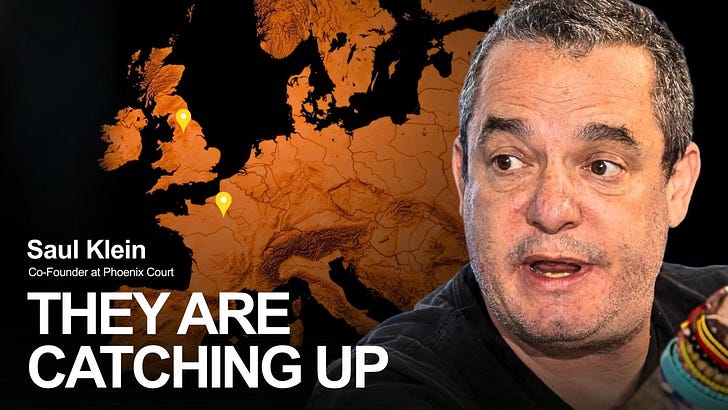
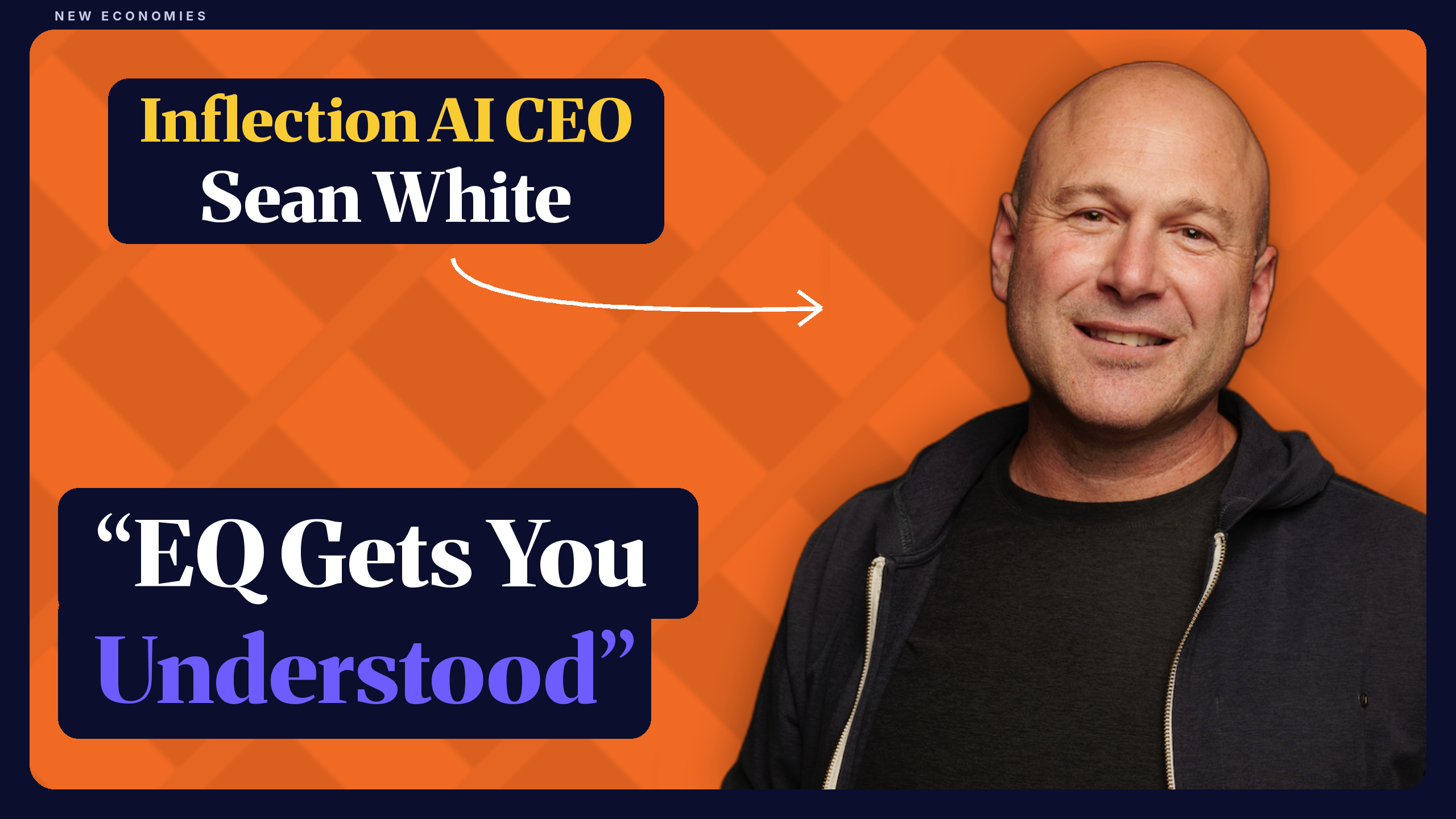
Saul Klein, co-founder and Managing Partner of Phoenix Court, joins the podcast to make the case that the UK is quietly the third biggest innovation economy in the world after the US and China, why capital has become a commodity, and what real venture value-add looks like when every fund says “we have money.”
Saul also walks through building LoveFilm as a scrappy answer to Netflix, joining Skype during its 400,000-users-a-day growth spurt, and how he things about venture stewardship.
About Phoenix CourtPhoenix Court is the London-based home of LocalGlobe, Latitude, and Solar, backing entrepreneurs building global businesses from pre-seed through scale-up. Founded in 2015 by Saul and Robin Klein, the firm has helped back over 700 companies that have grown from seed to $100 million-plus in revenue, and LocalGlobe ranks as EMEA’s number one seed fund.
Watch Now: Saul Klein — Co-founder at Phoenix Court
Watch or listen now across YouTube, Apple Podcasts, Spotify, and X
Download the transcript 👇
Timestamps
(0:00) Meet Saul Klein(2:21) Starting LoveFilm(8:48) LoveFilm's Route to Market(11:10) Building Skype(17:30) Skype's Early Network Effects(19:29) Is Europe Still a Great Place to Build?(24:10) Which Are the Best Regions to Start?(31:10) Hardest Challenges in Scaling in Europe(35:26) How Should Founders Select Investors?(43:47) VC Stewardship & Shared Ownership(52:36) What Would Saul Build Tomorrow?
Our notes from this conversation
* Capital is a commodity. Access to a contract is not.
With 20,000 VCs in the world, “we have money” isn’t a value proposition, it’s the line every fund uses. Saul’s actual differentiator: nondilutive revenue, a real purchase order or contract, then access to the right talent, then capital formation most founders don’t know exists. His analogy: 20,000 barber shops all shouting “I cut hair” until someone breaks the pattern.
* Netflix’s real innovation wasn’t DVDs by mail. It was demand data.
LoveFilm’s (the company Saul founded) edge wasn’t logistics, it was the queue: people ranked 20-50 titles, giving the business live demand data that became leverage with studios. The company hit $100M+ revenue growing 30-40% a year, largely by powering DVD rental for Tesco, ITV, Odeon and MSN.
* Skype grew 400,000 users a day, and Saul couldn’t spend a marketing budget.
Product-driven virality was adding users faster than paid acquisition could. In 12-18 months the team went from ~20-30 people to 500, and Skype’s revenue went from zero to $200 million.
* Blindly chasing the US as market #2 is what Saul calls a catastrophic error.
Most investors are “sheep,” and following them west assumes the US is one easy market, it’s actually fifty fragmented jurisdictions and usually the toughest “red ocean” to enter second. Zoopla, a strong #2 to Rightmove in a market worth hundreds of millions, is his proof a well-chosen home market often beats the US by default.
* Phoenix Court’s & venture stewardship.
Structured as a company, not an LLP, since year one, a rarity among ~20,000 global funds - Phoenix Court has always shared profit and carry with every employee, not just partners.
Links
Follow Ollie on X: https://x.com/ollieforsyth Follow Saul on X: https://x.com/cape Phoenix Court: https://www.phoenixcourt.vc
Our partner for today’s episode is Harmonic - the go-to startup database: https://harmonic.ai
Previous episodes include
See all previous episodes here 👉
If you enjoyed this episode, help sustain our work by clicking ❤️ and 🔄 at the top of this post.