 Ask ChatGPT
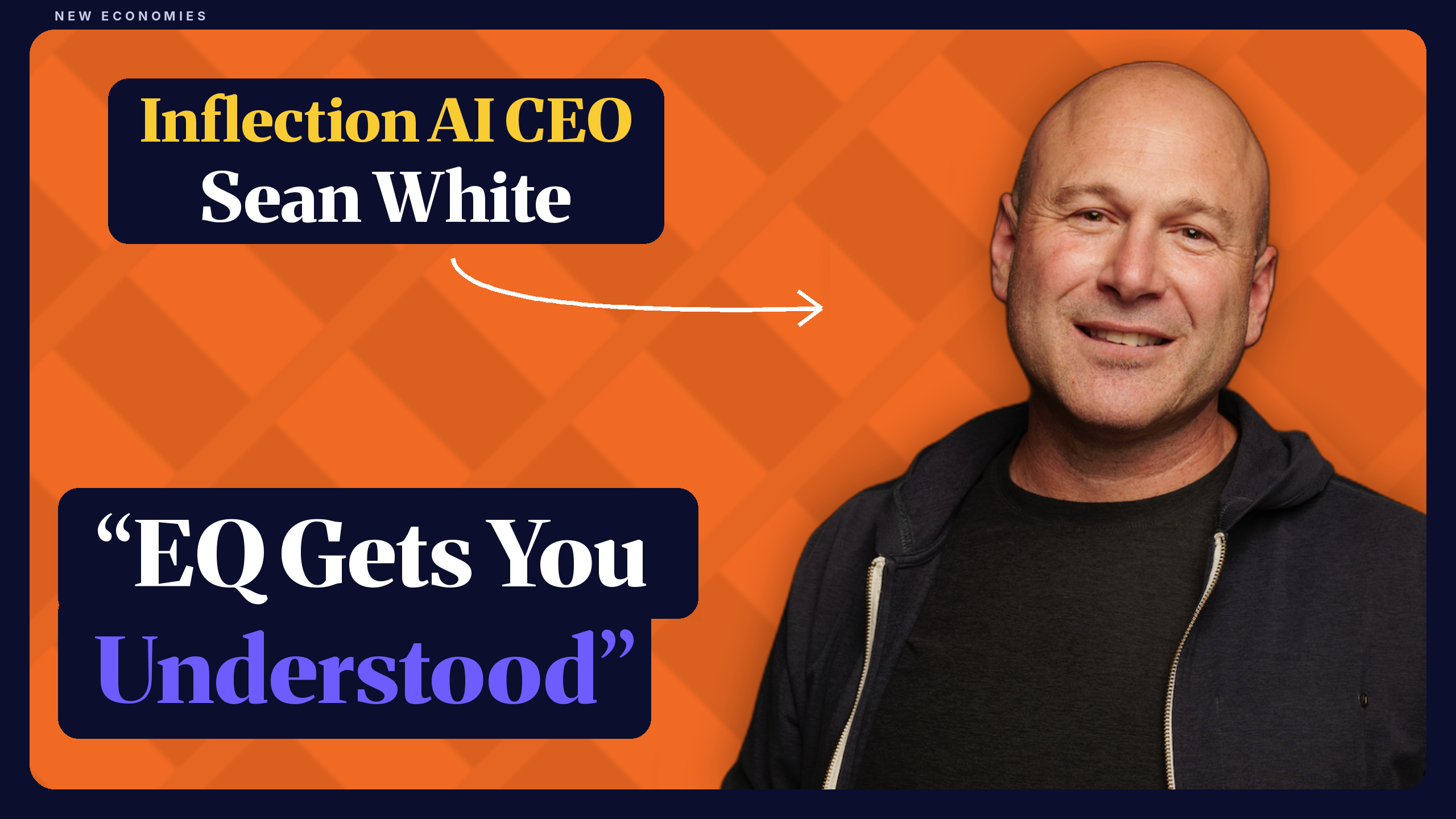

Aidan Senkut, founder of Felicis, discusses venture investing lessons from 20 years in the field, including how to spot outlier founders, why “10X” thinking matters, how to keep founders focused on the few metrics that drive longevity, and how Felicis builds trust (including the 1% Founders Pledge). He also covers current venture market conditions and Felicis’s focus on “global resilience” mega-markets (space, defense, manufacturing, energy).
Aidan Senkut is a VC with 20 years of investing, backed 50+ unicorns, and has appeared on Forbes Midas for 13 consecutive years. He previously worked at Google when it was ~30 people and describes himself as an outsider (born in Istanbul, not an engineer).
Great founders/executives identify 1–2 needle-moving priorities under extreme pressure; breakthroughs require order-of-magnitude (“10X”) improvements; investors must be both people-person and number/idea person; success requires reinvention (“repotting”) and measuring the right benchmarks; Felicis earns trust through actions, not promises.
Early Google decisions like focusing on search, adding email despite no monetization engine, and a secret book-scanning project to capture knowledge. Felicis examples include Shopify (Ottawa), Canva (Sydney), Adyen (Amsterdam), Rovio (Finland), and N8N (Berlin).
Written by AI. May contain mistakes.
Discover the essential qualities founders need to succeed in building billion-dollar companies.
“and the key things founders need to build a billion-dollar company.”
Examine the current landscape of venture capital and the exciting opportunities it offers.
“You know, this whole venture world, it is changing every single freaking day.”
Understand how Felicis Ventures differentiates itself and the philosophy behind its approach.
“We were able to start a franchise from scratch with a dream and an idea that we can build a new type of venture firm that issues some of the venture adages, maybe break some of those orthodox rules.”
Insights into the early culture at Google and what made it a groundbreaking company.
“You know, speaking of great waves in technology, you were unbelievably lucky because you were one of the first employees at Google.”
Explore the concept of the 10X philosophy and its significance in achieving groundbreaking results.
“But honestly, if I were to group everything they did right and all the principles, I think one of the great signs of a great founder and an executive is under extreme pressure to do something that is not conventional.”
Learn how to recognize and foster unconventional entrepreneurs.
“that is very open to imagining what can go widely right.”
Explore the impact of diverse life experiences on professional success.
“where you need to like know your numbers cold.”
Understand the blend of skills needed to excel in venture capital investing.
“Honestly, like my favorite anecdote, Steve Jobs at this Stanford commencement speech He said, sometimes in your life, you have to faith the dots will connect after the fact.”
Discuss the importance of adaptability and continuous learning in investment.
“And I think that's kind of the secret to the performance as well.”
Examine how market conditions affect investment decisions and success.
“If you get that right and if you understand the timing of like, hey, is this the time if this company executes and things really work out, if these founders truly outperform, is this thing going to move the needle?”
Learn about the concept of mega markets and their significance in venture capital.
“where sometimes the simple question I ask, if this product really worked, would every person in the world use it?”
Discuss the unique characteristics of a successful startup in today's climate.
“1 % of the market, that would easily account for over 100x revenue growth from where they are today.”
Explore how founder qualities and market conditions impact startup success.
“Looking at the last 50 companies, the 50 unicorns which you've backed, are there some very clear early characteristics that make early companies great companies, which then hopefully become unicorns?”
Understand the importance of focus and the right metrics for startup longevity.
“And maybe like one other element that I can add is my team knows that I'm obsessed a little bit with F1 and speed.”
Learn how to ensure the sustainability of venture funds over time.
“One is, by default, the fewer things you do, the better you can be at them and the less distraction you'll have.”
Learn why longevity is crucial for venture firms and how to achieve it.
“you that initial endorphin rush of, oh my God, we're doing something great.”
Discover the significance of team bonds and shared victories in company culture.
“I think the most important thing, number one, you need to have a culture and values that inspire people.”
Explore the unique support system for founders through the Founders Pledge.
“So that's something that I pay a lot of attention.”
Learn how venture firms can differentiate themselves in a competitive landscape.
“It's something that I'm really proud of.”
Understand the evolving challenges that founders face in today's market.
“I mean, I don't know about the number one player, but when we are talking about the topic of standing out, I feel there are a couple layers.”
Learn how context and data influence decision-making in investments.
“And if I'm ever in a position where like I know what they're going through and I don't have the answer, I most likely know somebody who has the answer or can give them the perspective.”
Explore the challenges and dynamics of today's venture capital landscape.
“I think like, hopefully there's been enough work already where people know that at least the market, like, hey, like we've been spending a lot of time researching this market.”
Discover what limited partners seek in venture capital firms.
“I'm sure one of your next questions might be then, is it still worth being in venture?”
Learn about the criteria used by investors to assess venture managers.
“They're looking at how powerful the brand is.”
Discusses how AI impacts the venture capital landscape and the necessity of human involvement.
“which are cropping out, but also the way these venture funds are shaping, I think is going to be very different.”
Explores the importance of personal trust and relationships in securing investments.
“AI, it's 10 to 100 times more difficult to earn somebody's trust.”
Identifies the difficulties faced by emerging managers in gaining traction.
“my dream was like to constantly have hit after hit.”
Insights into the host's personal interests and how they influence their professional life.
“I'm a voracious reader, but I also love experiences.”

Get the gist, explore an idea or ask about something said.
 Claude
On BIG IDEAS BY NEW ECONOMIES, what are the key points of this episode?
Searching your listeningAutomatic transcript. May contain errors.
0:00One of the requirements of being in the upper echelon of venture is to be an original, to be unconventional. When somebody asks you to do something that is 10x better, faster, cheaper, almost 100 % probability that traditional conventional methods are not going to suffice, which means now you have to think of something completely out of the box. We are seeing one of the best vintages I've ever seen in venture in terms of company scaling. And I don't know if I would have imagined having trillion dollar IPOs when I started. To be successful, you know, dozens of times, like 50, 100 times in a row, you have to...
0:35Aydin Senkut: This is Aidan Senkut, founder of Felices. He's backed over 50 unicorns and has been featured on the Forbes Midas list 13 years in a row. And today, he's sharing his biggest lessons from 20 years of investing and the key things founders need to build a billion-dollar company. I think what you need more than anything else is have this way of thinking that is very open to imagining what can go widely, right? and a brain that is extremely tuned to recognize and foster outliers. It's a very difficult thing to do. By default, the fewer things you do, the better you can be at them and the less distraction you'll have.
1:11It is much more difficult to say, well, in a list of 10 things, do I have the courage to take nine away and only focus on that one remaining thing? I don't think you can get to excellence if you don't know what you're measuring and you don't know what the benchmark and the goal is. But if you get it right, it truly shows you that the company will have longevity. I think one of the great signs of a great founder and an executive is under extreme pressure, in a sea of 100 things, figure out the one or two things that truly can move the needle. And especially when those one or two things are not obvious at all.
1:43Aydin Senkut: You have banked more than 50 unicorns now. What is your secret, Aiden? I think there is definitely a mix of factors. It's hard to narrow it to just one. And one of the things that I learned in 20 years is you have to be very... Welcome to New Economies.
2:13Aydin Senkut: Aydin, welcome to New Economies. I'm super excited to have you here. So thank you so much for joining us. Oli, thanks for having me. Such a pleasure to be here. You know, this whole venture world, it is changing every single freaking day. You've been at this a long time. What do you make of what's happening in the markets right now? And should we still be excited about venture? The markets are always going to be the markets. There's always going to be change. Some things are timeless and some things are always going to hit you with a curveball. In my opinion, there are some great positives right now.
2:45I think we are seeing one of the best vintages I've ever seen in venture in terms of company scaling. And I don't know if I would have imagined having trillion dollar IPOs when I started in this business 20 years ago. On the other hand, you know, some of the things have gotten a lot harder and more complicated. My son is varsity football. And sometimes I like this example of if you ever watch a Buffalo Bills game in upper state New York in the winter in negative 30 degrees and sleeting snow, your body is screaming, even watching TV, like I'm cold. Like I don't even want to be watching this game.
3:20It looks painful. And there are people actually playing the game out there. And so my way of thinking is, even if things are super difficult, super challenging, the people who truly love the game will play the game. And I think that's when you find out who truly loves venture and want to be in venture and want to make the most out of this incredible vintage versus people that were basically essentially riding waves and more following crowds. So it's a very interesting time right now.
3:50Aydin Senkut: You know, there are so many opportunities right now, but you've been at this a long time. Felicis is one of the most notable venture funds out there, right? What is Felicis all about and what are you most excited about right now? I feel we're very lucky. We were able to start a franchise from scratch with a dream and an idea that we can build a new type of venture firm that issues some of the venture adages, maybe break some of those orthodox rules. and on the other hand also stand for something that really means something important. And that is we wanted to build a venture firm that truly is focused on the founders and truly focused on building trust with the founders and not do so by mere words, but by actually showing them and earning that trust.
4:35In the meantime, I also feel one of the requirements of being in the upper echelon of venture is to be an original, to be unconventional. It's very difficult to do that if you're copying others and just following the rules, meaning that, hey, it's very difficult to create that alpha, that edge, if you essentially do what people think you should be doing. Because in essence, venture is very simple. You need to be right in an environment where other people are not seeing the truth, are not seeing the potential and the dream that you see. If you do see the right thing, if you do the right thing, but the crowds are also seeing it, it's very difficult to get that edge, to get that alpha.
5:20So for Felices, that meant finding founders outside of Silicon Valley 20 years ago when people thought Silicon Valley is it. It's very difficult to find great talent or great companies. And yet a lot of our early big winners were in places like Ottawa, Shopify, which is$100 billion,$150 billion plus company, Canva in Sydney, Adyen in Amsterdam, Rovio in Finland. These days we have N8N in Berlin. So we have companies in very unusual locations. And one of the things that I love, I almost feel as a VC who was born in Istanbul, Turkey, that I'm kind of like a Jamaican bobsled player in Olympics. It's a very unusual background.
6:02I'm not really supposed to be a VC. I'm not an engineer. And yet somehow I made it. And what I really believe is a lot of great things in the world are invented by people that are outsiders. And sometimes you need that outsider perspective to do something truly original, which is what we did. And we basically found some waves in technology and companies and founders that were not from the usual background, did not have traditional ideas, did not follow the conventional rules, and somehow we're able to create great companies and we're super fortunate to be a part of that.
6:36Aydin Senkut: You know, speaking of great waves in technology, you were unbelievably lucky because you were one of the first employees at Google. Back in that moment, what was Google like and what did people not quite see that you saw in Google that made it the company it is today? Well, let me paint a picture for you. Google was about 30 people when I joined. Everybody looked like they were in a college frat party. People were smart off the charts, so much so that I think they would break IQ tests. They had an incredibly ambitious dream and mission. They were very smart, funny people in a very diverse team and a company with a funny name in a very important sector that already had six or seven existing players.
7:24So to the outside eye following conventional wisdom, why do we need another search company with a funny name started by a bunch of PhDs from a famous university? What can they possibly do that the others haven't already figured out with decades, if not centuries of experience? And yet Google was the exact opposite of all these companies. Even though the founders never worked for a commercial company, they had more commercial insight and killer instinct than almost any executive that I ever met in my life. And being part of that live in that era, actually seeing them go through the motions, make those decisions, make the trade-offs, and seeing their principles in action is probably one of the most formative moments of my career.
8:09Aydin Senkut: What's the greatest lesson you learned from Larry and Sergey that you now take into the venture practice? I mean, there are a number of them. But honestly, if I were to group everything they did right and all the principles, I think one of the great signs of a great founder and an executive is under extreme pressure to do something that is not conventional. and to, in a sea of a hundred things, figure out the one or two things that truly can move the needle. And especially when those one or two things are not obvious at all. And they have done this not once, not twice, repeatedly. That really stayed with me.
8:54And the other thing that also stayed with me is Larry and Sergey, I mean, I summarize this as the 10X philosophy, but they said, anything that's worth doing has to be an order of magnitude difference to the status quo. Order of magnitude better, order of magnitude faster, cheaper, sometimes all three in one, even better. So that's something that always stayed with me. It sounds very simple, but to repeatedly do that, to repeatedly push the edge, it was just something they were really good at. And the philosophy was very simple. If they ask us to do something that's 50 % better, You can take conventional methods and stretch it and somehow get close to it.
9:35But when somebody asks you to do something that is 10x better, faster, cheaper, reality is almost 100 % probability that traditional conventional methods are not going to suffice, which means now you have to think of something completely out of the box. It is very stressful. It requires a lot of creativity. it requires a lot of ambition and confidence, but somehow they did invoke that in all the people that worked in the company and they encouraged us and they guided us and they were always right with their instincts. So it wasn't very hard to follow them.
10:12Aydin Senkut: You know, you see all these incredible photos of these iconic companies which get started. The likes of Alibaba, the likes of Google, Yahoo, right? 20, 30 people just like scrapping it together, trying to get this thing going. Tell me about to the early days, actually, like of Google, when you were all building. Was it we just focus on 5, 10, 15 products at a go and we just see what sticks? Or was everyone just very focused on building one product? No, I mean, it was like one product for the longest time when everybody wanted to do like 10 more things. And that was like one of Larry's biggest secrets is that I like telling people, first of all, he didn't talk very much.
10:49when he talked, 80 % of his conversation was the word no. And about 1 % to 2 % of the time, he would say some version of yes. And that was so valuable and so rare that people really paid attention. And because that one thing he honed on, he focused on, was truly something that was not even 10x, I would say is maybe like 100 or 1 ,000x. We just didn't realize at the time how important that was going to be. Let me give you an example. And this is, by the way, not something like, it's not something you can ask your customers. It's not they can do surveys and find out. I remember we had this existential moment where we were starting to get really successful in search.
11:34And we were wondering, what other things can we do to essentially make progress from here? they did two really unique things. One was we basically realized the only thing more popular than search in the world was email. And it was very controversial because we didn't have a monetization engine for email and we were not an email company, we were a search company. So people are like, what the hell are we doing? This is a distraction. But by doing email, we took away the one thing that gave people a reason not to come to us for search. And from then on, Google almost became impossible to catch. I think the second thing is just the lengths that Larry and Sergey went to foster creativity and innovation.
12:19There was a moment when they're like, the only thing that can possibly threaten us is the knowledge that is captured in books and libraries. and they had a secret project for a whole year where people were locked into like a warehouse and they invented a scanner that could speed scan books like tens of thousands of pages, like in minutes or like an hour or something. Because the idea was like, if somebody somehow captures all the knowledge that is not yet at Google, that could be a threat to Google. And it was amazing. They literally found five to 10 people, gave them like literally an impossible task and they managed to actually come up with something.
12:55And the funny thing is not even just that, is that that kept happening at Google like virtually every month. Every month they would have this insane idea. They would pick five to six people and then they would, lo and behold, figure out a way to make this happen and to make it possible.
13:11Aydin Senkut: You know, I'm always super curious. We see so many venture investors out there who are former founders or former operators. To be a great venture investor today, do you think they need to be a good founder or a better operator? I mean, look, you can find positive and negative examples for every case. I think if that was the case, you would have one profile of investor and that would be it. The reality is when you look at the successful investors, you have a journalist like Mike Moritz. You have operators. You have people that come from pure financial background. I mean, I'm probably missing some examples of people that are scientists, people that are, I don't know, like great writers.
13:53There are so many varieties. I think what you need more than anything else is somehow have this way of thinking that is very open to imagining what can go widely right. And somehow a brain that is extremely tuned to recognize and foster outliers. It's a very difficult thing to do. And sometimes there is correlation, but correlation is not causation. Oh, like I didn't work at Google, of course. The reality is it was just one exposure to an extreme outlier company. And the companies I've invested were not necessarily related to Google. But the things that I have seen at Google and the profiles of Larry and Sergey helped me understand what an outlier founder can be like.
14:42and it was anything but convention that allowed me then find unconventional aspects of people's backgrounds, people's thinking, people's ideas. And by the way, you can see it, that doesn't mean that you're gonna pick it. There is also this conservative side to us. So it's not easy. You need to put it all together. It's almost like a multidisciplinary business where you need to like know your numbers cold. You need to understand technology just enough to be able to know what's gonna work, what's not gonna work, or at least have the probabilities. You need to be a dreamer. And then I think the last, most underrated aspect of it, people always think that this, because you make money in this business, that it's all about the numbers, but it's all about the people.
15:24And nobody talks about the charisma needed, the personality needed to relate to the founders. I mean, you can find all the best companies in the world. If you have no ability to convince the founders to trust you and work with you, that is not going to result in greatness in venture capital. You absolutely need to be a people person as well as a number and ideas person. And you need to combine all of these things. And you need to be much better than just mediocre or just good in all of these disciplines to really be a great investor altogether.
15:57Aydin Senkut: This probably explains why you've been on the Forbes Midas list for the last 13 years in a row, right? 13 years and counting. Honestly, like my favorite anecdote, Steve Jobs at this Stanford commencement speech He said, sometimes in your life, you have to faith the dots will connect after the fact. And all my life, I did all these random things. I lived in crazy countries. I did all kinds of different jobs. I did all these things thinking, oh my God, this is never gonna amount to anything. Little did I realize that every single one was a great preparation for what I'm doing today. And when I started doing what I'm doing today, I truly found what I loved.
16:37And I'm like, this is what I meant to do with my life. this is what I was put on this earth. I'm good at it. I love it. I would do it 24 seven, even if I weren't getting paid. And I think that's kind of the secret to the performance as well. Like you can always say, of course, luck is a factor. Of course, hard work is a factor. Of course, ideas is a factor. But one of the other aspects of this that is not often talked about, people come in and talk about the score and an investment and a win and how things have gone right and sometimes how things have gone wrong but little is talked about of do you truly love this is this what you're meant to do you know like is this like even if like the whole thing is like going to ashes and you know you're the last person standing is this still the one thing that you would do and for me that is that is what i'm doing now i love being a venture capital investor i can tell
17:30Aydin Senkut: I would love to borrow your magic juice. You have bagged more than 50 unicorns now. What is your secret, Aiden? Honestly, the secret is not that big of a secret. Sometimes the things that are your weaknesses, your Achilles heel could be your strength. For instance, when I was starting in this business, people are like, you've never been a VP in a company like Google, or you're not an engineer. You're not gonna understand technical things. The reality is I don't have to be as technical or as proficient as the founders we back. But what I do need is to truly understand in very simple terms what will make a company successful and what needs to go right.
18:12If you get that right and if you understand the timing of like, hey, is this the time if this company executes and things really work out, if these founders truly outperform, is this thing going to move the needle? Is this going to have a dent? Is this going to make a dent in the world? And to me, there is a really important element to this, which is even when you're right, the next day you have to second guess yourself and say, OK, what enabled me to be right yesterday, is that still true? Because today the conditions might have changed. And the thing that's going to allow me to be right today, tomorrow, and the week after might be something different.
18:50So we have this interesting term that we use. We call it reinvention. actually Alfred Lina de Sequoia calls it repotting, is that part of this is not just being successful once, but to be successful, you know, dozens of times, like 50, 100 times in a row, you have to like forget what you were right about and find like a different area that you're not an expert, catch up, you know, get up to speed on that and then find something that really moves the needle on that. So what we love using inside Felices is a surfing analogy. You know, we catch these mega waves and you ride them and then you're on the beach and then you have to have the hustle and the courage to go out and catch the next mega wave and do so repeatedly dozens of times.
19:32And at the end, you need to find companies where sometimes the simple question I ask, if this product really worked, would every person in the world use it? Would every company in the world use it? Is it important enough? Is it critical? And if you look at every single one of our 50 companies, whether they're in biotech, health, defense, Hence, consumer, commerce, financial markets, fintech, energy, every one of those companies, the product really does matter. And if it does work, it is critical enough that at the time we invested, we're like, this is going to matter. It's a very much needed and important product for the world, if not for the people.
20:12Aydin Senkut: You know, there are so many incredible ways out there now, right? but being completely focused and identifying which markets to go after is actually probably pretty hard for venture investors how do you think about where to spend your time and to place those crucial bets i think look one of the things that i learned in 20 years is you have to be very smart to focus on yield that you're focusing you know you're spending your time wisely but now not so narrowly focused that you have so many guardrails that you might essentially give up or be unaware of an incredible outlier that is literally right next to you.
20:48Having said that, to more directly answer your question, at the moment, we are obsessed with global resilience. Global resilience is this area that basically comprises of four markets, space, defense, manufacturing, and energy. Every single one of them is what we would like to call mega markets, truly, and mega waves. And there's definitely different factors that make them very attractive right now, especially given the geopolitical reality that we're facing, what is happening in the world, not to mention what is happening in the markets. So what we like to do is we like to concentrate majority of our time in what we think is going to yield the best outcome.
21:29And the way we measure that is simply, which one of these markets, if we were to make a bet today, the growth potential is so enormous that there is incredible margin of error for a company to grow 100x in revenues, so much so that even if they captured 1 % of the market, that would easily account for over 100x revenue growth from where they are today. And what I love about that is like, even if you didn't capture majority of market and you capture the tiny piece, it would still create meaningful revenue growth, which is essentially the purest form of guaranteeing that there will be solid value, solid business value in the company that we're backing.
22:08And then we basically say, okay, well, how many markets are there where that would be true? And then we try to make as many bets in those markets as possible.
22:16Aydin Senkut: Now is like just the best moment, right, to be building. If you look at these YC companies, you have 18, 19-year-olds building AI companies reaching$1,$5,$10 million in annual current revenue. Now is such a big time and best time to be building. But it's also, at the same time, the most difficult time, right? Looking at the last 50 companies, the 50 unicorns which you've backed, are there some very clear early characteristics that make early companies great companies, which then hopefully become unicorns? I think there is definitely a mix of factors. It's hard to narrow it to just one. I do think that the founders in the equation really matters.
22:59I think the founders grit, their timing, the way they hire their team, the way they go about the problem area. I mean, obviously it's not uncoupled from the market. If you pick a really small market, no matter how good you are, it's difficult to succeed. So you can always make the argument that one matters more than the other. I'd like to say that it's really two sides of one coin. I don't think you can decouple founder personality and grit, and yet you also can't underestimate the importance of the markets. And when the idea is really unique and there is an element to it where the question you have to ask, why now?
23:39And there is a great answer to that. And so you take that excellence on both like the potential in the market and the outlier founder traits where you meet a founder and the kind of things you're learning, you're hearing. The first reaction is, I've never heard that anywhere else, that it's very interesting or I never thought about this problem or this market in that way. And then all of a sudden, And it's not that difficult to say, if we were to stretch it and dream what can go right, that's where we get into the timing of, wow, if there is criticality, you can definitely imagine that insane growth that hopefully is about to ensue.
24:16And that doesn't obviously always happen. But essentially, that's it. That's what we are trying to catch. And to be honest with you, we've been able to do that in so many different sectors. And it sounds like it's not related at all. But it is related in the sense that every one of these companies were able to find something, focus on that thing and not other shiny objects. And maybe like one other element that I can add is my team knows that I'm obsessed a little bit with F1 and speed. I always say everything is a race against the time. And I feel that the very best founders are not just good at what they do, are not just a little bit lucky, don't just have a good idea.
24:55but they also realize that it's a race against time more than anybody else, which means that not only do you have to be right, not only do you have to execute, but you have to do that ahead of everybody else that is either existing or new competition that might enter into the market. So I know that I touched on a variety of different things there, but the reality is all those things have to be right for those companies to get to the level and scale you have mentioned.
25:23Aydin Senkut: How do you coach your founders to stay completely focused? Again, using the sporting analogy, right, is a race against time in order to be number one. At the end of the day, you can move as quickly as you can, but these companies only have so many resources, team and capital available, right? When new founders come to you and they're maybe a little bit scatty, how do you just coach them to stay completely focused, but you have to move very quickly? I think there are two aspects to that. One is, by default, the fewer things you do, the better you can be at them and the less distraction you'll have.
26:01Sometimes what's difficult for founders, it feels very rewarding to have a long list and say, I'm working on these 10 things. It's very easy to add things to a list and feel like you're doing something important because, well, look at that list. It has so many items. Certainly, it must be important. it is much more difficult to say, well, in a list of 10 things, do I have the courage to take nine away and only focus on that one remaining thing? Sometimes you need that outside coaching, that outside mentoring of like, number one, if you do that, it is the right thing as hard as it is. Number two, it is helpful for somebody from the outside to say, well, why don't I help you?
26:44Why even if you don't do it yourself, I'm going to guide you. And by answering these questions, much more likely that you will arrive at the same place and say, you know what, based on that, we should probably be doing only a few things or maybe just the one thing. After that, honestly, the other nuance that I've been obsessed with, let's say that we're focused on the right thing and we're trying to execute. I don't think you can get to excellence if you don't know what you're measuring and you don't know what the benchmark and the goal is. And so one of the things that I do a lot is, let's say that the founders have realized what they need to focus on because of the pressure they're under.
27:25They're constantly talking about, well, look at this, like this is going really well. And I'm looking at it. I'm like, well, is this stat something truly important to the mission we have? Oh my God, I got like 10 ,000 page views or 5 ,000 people responded to the email and opened the product. And I'm like, well, have they used the product for a year? Are they real loyal users of the product? And there are so many other things where that measure is a hundred times harder, but if you get it right, it truly shows you that the company will have longevity. It's much easier to look at other lighter, easier things that gives you that initial endorphin rush of, oh my God, we're doing something great.
28:07Look at that. It's going up. Things are getting bigger and we're getting more attention. We're getting more love, but that doesn't always translate into longevity of success, which is very important because people talk about, oh, like, let me just be successful. I do this one thing and everything is going to be great. And the reality is it's not just about success, but longevity of success. And that's a string of doing a hundred things and doing them all right in sequence.
28:30Aydin Senkut: You know, one of the interesting observations I've also seen is talking about longevity. We have longevity in supporting companies, but also inside venture funds, creating longevity around stewardship and, you know, making sure these venture funds actually like outlive the founders, right? How do you guys think about building that? You know, we've seen the likes of Sequoia, you mentioned Alpharillin earlier, Pat Grady, who are now taking over Sequoia. I think they've done a really interesting job. And it's not talked about enough, I don't think. How do you think about creating longevity and stewardship?
29:02I think that's one of the most difficult things to do. I feel like I'm not really qualified to comment on it because we still haven't gone through a successful generational transfer. I don't have any plans to retire anytime soon. However, I am obsessed with building a team. And the term that I like using, which we used at Google at later stages of the company, is that we are celebrating our 20th anniversary. And yet to me is day one, day zero of the new founding moment of this firm for the third decade and beyond. So in some ways, we have a 20 year of history, great track record and success. yet I feel the things that are going to make us successful for the next decade and beyond could be totally different, might require different people.
29:51I think the most important thing, number one, you need to have a culture and values that inspire people. I have seen that at Google and I'm really hoping that we can practice that at Felicis. I'm going to remain humble and say, it's very hard work and it's ongoing work. It's not like there's a magic formula and you get it right one day and that's it. It's ongoing, repeated hard work to keep it up. Values are only as good as the extreme cases where when you're tested, what do you do matters more than the values you talk about. And the culture of the firm. And a lot of it is the examples that I use is mostly from military and sports.
30:29I use military because in military, when something goes wrong, somebody's life is at risk. In venture, when something goes wrong, maybe we have bad returns or we lose money. But I feel like when people's lives are at risk, the stakes are so much higher. And I always look at that. And the one thing that always stays with me is the only way you can be a true leader in an environment like the military is you need to be a role model. You need to be the first one that's running into bullets or people will not follow you simply. Right. And so I take that to heart a lot. And not only is it important to have values and a culture, but I really do value a culture where you have to do things and demonstrate it as a role model first.
31:11I think that's inspiring to people. I will say that one unique aspect of our culture and what matters to me, I mean, I've been in business school. I've read like countless dozens of books. The one thing that I found that truly solidifies culture and a strong culture is winning together. And that is, honestly, we can say so many things and use so many strategies. When you tackle a very difficult problem and challenge and you overcome it together and you win together, I feel like that team, the bond will be strong and it will be long lasting. So that's something that I pay a lot of attention. So this team mentality, valuing everybody's talents, cherishing them, showing them that, you know, one really big win can have multiple people contributing to it is very important to me.
32:00And then you need to choose really great people. The same way we talk about companies, you can say the same thing about people. A lot of times, I don't think the great investors are masquerading with a sign saying, if you choose me, I'm going to generate great returns. They're very unusual people. They're very quirky characters, just like the founders we back. And you need to see something beyond who they are. And you have to see this potential of, oh my God, I see something, this little glimmer that nobody else is seeing yet, that this person has such an instinct, has such a personality that I can see them 10 years in the future that they're going to be doing great investments.
32:37Aydin Senkut: If you're enjoying today's episode, hit subscribe at the bottom of your screen. The guests on the show are getting bigger and bigger and we need your help to grow this channel. So if you're enjoying today's guests or any previous episodes, hit subscribe and I promise you it'll be worth it. Now back to today's episode. You know, so much of all of this is about winning together, right? Winning as a team, but also winning as a founder community. One of the aspects I love about you guys is you do this 1 % founders pledge where you actually support the founders through if they're going through a bit of a crisis, if it's like personal or just like getting through those difficult days.
33:16Aydin Senkut: What is the founders pledge all about? It's something that I'm really proud of. So our co-CEO Dasha came up with the original idea. She's amazing. She was one of our earliest hires and she had this dream. She was obsessed with coaching and mental health. One day she comes to us and like, I do think that we can do something unique that no other venture firm has ever done. And I think one of the things that inspired us, for instance, I'm obsessed, one of the sports that I'm obsessed with is tennis. And when we include tennis, the very famous players have a team of like five, six coaches, and one of them is a mental coach.
33:50They're literally just there to make you mentally stronger. And we realized that the startup sport is not unlike tennis. There was a lot of pressure on the founders. We had this idea, but we still weren't sure. So we took about two years and interviewed several dozen founders. It was very difficult to get them to open up to us. We said, listen, we want to do something special for you that no other venture firm has done. What could that possibly be? And after so many conversations and probing, what we found is that they were really stressed about not being successful, not being able to realize their dreams.
34:27and where they really needed support was not always a supermarket bureau of like, we're going to help you with a business connection. We're going to help you with a unique hire. At the end of the day, like the very good people have to figure that out. And yes, we do help with that. But what we found is something more profound, which is they wanted unconditional support, which we also like do with our voting proxy, where we tell them we're not going to vote against you. I think the most important thing you can demonstrate for people to trust you is for them to know that you're not going to go against them.
35:03And the funny thing is, it sounds like, well, after you do that, you have zero leverage. So why would you do that? But then because they trust you, you start talking about the hard things. So now you're talking about the real conversation of things going really hard, things going sideways. And the founder pledge honestly was just an extension of it where we said, we know you're going through so much mental stress and all this pressure, why don't we spend our own money to help you? And it could be, you know, paying for your coach, paying for anything where like we want to remove stress and mental difficulty so that you can be the strongest version of yourself and we will pay for it.
35:41So you have no guilt of doing this. And what we're really proud is a hundred plus founders have used it today. It's not a gimmick. They still love it. Every founder mentions it when they are talking to Felices. They love the fact that we were a pioneer to do this, and they think it's very important. And many times when we ask founders the three or four things that matter, the fact that we earn their trust and we do these things that make them truly trust us in an authentic, original way is one of the most important factors that they choose to work with our firm, Felices.
36:15Aydin Senkut: That's super interesting. 100 plus people. 100 plus founders. very interesting you know i think is being obviously a venture firm today is so difficult standing out is even more difficult right how do you actually think about providing that insane value at you know a lot of these venture firms they have these talent community operator business connections but you kind of alluded to a little bit if you're the very best founders very honestly you don't always need that right what does it actually take to stand out in the venture world today to be a number one player on the game field? I mean, I don't know about the number one player, but when we are talking about the topic of standing out, I feel there are a couple layers.
36:56One is, I alluded to it earlier, but the personality of the investor really matters. For instance, I have this personality where I wear my emotions on my sleeve. Mostly it's good, sometimes it drives my team crazy. But the reality is, one of the first things that the founders realize is that I do not have layers. I'm not hiding anything. It literally is what you see is what you get. The first element to that success is you need to have a connection of trust. Without that, no matter it is that you do, you are not really truly going to stand out because the reality is most founders think that the VCs or investors are not trustworthy in general.
37:38It's very difficult to earn their trust. I think the second thing is they really do appreciate if you've truly come to the table with original ideas and you've done your homework. They do not want their time to be wasted. And it's a huge difference when you come to the table with a prepared mind and homework and ideas and say, you know what? We thought about it. Maybe not as much as you do, but we're also not tourists. That goes a long way. The third one is very simple and very counterintuitive. everybody wants to think that there is one thing. And if you do that one thing, that's going to work.
38:12And the reality is I do something that is probably the least scalable or unscalable thing that is asking the founder, what is the hardest or the most important thing that you want? That if we did that, you can say, well, Felicia stands out because they truly helped us with this one thing that at that time was one of the most important and critical things we care about. Honestly, it's very scary to ask that question because there are chances that the founder might ask you something or like, oh, my God, there's like no way we're going to be able to do that. And I cannot tell you how many times we've been in that situation.
38:49But then your founder instinct kicks in and like, well, this is why we are what we are and I'll pay us the fees. Our job is to figure it out. And you know what? A lot of times your job as a founder is to figure it out. You're in a very difficult situation, seemingly with no obvious solution or no obvious easy solution. And so what you need to do is be creative, put your game face on, figure it out a way. Even if that way doesn't exist, even if it's not obvious, honestly, it's fun. And that's where the team approach really comes into play. If you value your team, and it's not just about you, but the whole firm, it's really fun and engaging that you can take something that seemingly is an insurmountable problem.
39:33And yet then you engage everybody else's ideas and creativity along with the company, like all our firm. And that's been really fun for us. And when that works and you see the glimpse that shine in the founder's eyes, oh, like, wow, like that made a real difference. Honestly, like if you ask, that's what I live for besides my family. It's not the checks and the investments and the rankings and the money. I mean, I'm not gonna lie. Like, obviously it's nice to have that, But the most important thing that we truly strive for is for founders to say, you know, you got my back when I really needed it, or you've done something that truly matters to me.
40:12That has to be earned. It's not like one simple button, one simple thing. And by the way, like we have to keep earning it over and over with each and every founder we back.
40:21Aydin Senkut: You know, I'm loving this winning approach, but building a company today as a founder, man, is so hard. But it's also very different, right? when founders are coming to you asking, Aydin, I really need some help on this type of factor. You know, what are some of the hardest challenges founders are facing today versus, you know, five, 10 years ago? The challenge is different in every different context. I mean, the challenges are different earlier versus later. Scaling challenges are different when you're just like going zero to one. If you're in Silicon Valley, you're dealing with like insane stuff, like being in the same market with Google and Entropic and OpenAI.
41:02When you're in foreign countries, you have different challenges because again, everything has some benefits and also some disadvantages. What I like to do where the one benefit I bring to the table and early on, this is something that it was hard for me to appreciate, but I was having a hard day with Larry and Larry said, listen, I spent 10 ,000 plus hours and I barely graduated from PhD program. Like it's very difficult for somebody who has not spent that much time and come up with like an original idea that's going to move the needle. So like I think one of the things that I can bring to the founders is that I spend so much time working at startups and with startups that I have seen probably every curveball.
41:47I've seen like every like industry and sector and like stuff. And so I have context. So at least I can like provide that context for them and say, yes, like this is indeed difficult. And normally this is the framework that helps here. And if I'm ever in a position where like I know what they're going through and I don't have the answer, I most likely know somebody who has the answer or can give them the perspective. One of the things that I found most helpful is that everybody thinks, oh, like all you need to do is find the answer and that's it. Sometimes what it is, is they need the context more than the answer itself, because it's more valuable if they get to the answer themselves.
42:27So what they're expecting is not for me to give them the answer, but to give them enough data or context or information where they all of a sudden have this like moment of understanding and then they know what to do from there on. They might not get to the answer, but they know what to do. And so a lot of times what we do is we give them statistics, we give them data, we give them context. So then it becomes more natural and more simple in the sense that once you know the elements of what you're trying to do and you have better context, you have better data, it's going to be, I think, easier to make that hard call or the hard decision and solve the challenge that you're facing.
43:09Aydin Senkut: You know, there are so many incredible opportunities out there, but also for venture investors now is a pretty hard time. You know, DPI is compressed. If we look at secondaries in the IPOs, there are more secondaries happening than the IPOs. What keeps you up at night when, you know, you're trying to build an enduring fund, but also deliver a great return to your other customers who are the LPs? I mean, look, let me give you some real stats and paint the numbers. 20 years ago, when I started in this business, I think almost every week or nearly every week, like one of the companies were getting bought by Google, Facebook, or like a company like that.
43:49And in fact, when I first started in the business, I'm like, oh, my God, this is too good to be true. Like I invest in companies and a year, two year later, like all of a sudden I hear like they're getting acquired. It's almost too fun, like almost too easy. and fast forward 20 years later, I don't think that I can say that it could be more different than when I started. I mean, just like you said, let me give you a crazy stat. So we just had our annual meeting a few months ago and we found this interesting stat that looked at 20 years of exits. And what it found is that the top 1 % of exits doubled in value every five years.
44:29So let's say that the top 1 % exits were 1 billion and it went to a couple billion and then from there 10 billion and it kept increasing. But the top 10%, so that's top 10 decile, meaning that there is still 90 % of exits that is inferior to you, stagnant over 20 years. Now, we can argue what the official inflation rate is. Stagnant is not good. It means that it's not like you're staying at the same level, is getting worse. So essentially, you went from an industry where maybe like the top 20 or 10 % of exits mattered to a point where that only top 1 % of exits matter. And exits overall is probably a smaller percentage of all the investments.
45:14So when we use the term finding a needle in the haystack, I cannot think of a better analogy of what we're doing. And that has now gotten a lot more difficult. Maybe now instead of the haystack, it's the whole farm. And the farm is a couple acres. It's very difficult, which means that you need to be more opinionated. You need to be more prepared. I mean, our business is more complex. We have data science group. We have people that are doing AI stuff. And we have so much more complexity now. We're dealing with, I don't know, dozens of data sources. We're running analysis on them, on billions of data points.
45:49I mean, When I started, like we were doing things in Excel spreadsheets and we still talked about stuff and, you know, we read paper newspapers. Like it was a different era. I almost feel we had more time. And now things are happening so fast that I think this is a very underestimated aspect is that when people say, oh, it's gotten so hard. One of the aspects that I don't think people call out is that the time that it takes or it's required for you to make the decision has shortened drastically. If you're even a little bit late, there are so many ambitious and aggressive people out there in venture that if you're even a tad bit late, chances are that somebody else is going to see the light and they're going to run past you and just win, even if you feel like you earned it and you're right.
46:36And yet it doesn't matter. And somebody else was just a little bit faster, just a little bit more aggressive. And not to mention that you're now also dealing with completely different odds. Imagine going to Vegas and you went from 10 % odds to 1 % odds or 0.1 % odds. I mean, that's a completely different math.
46:54Aydin Senkut: The speed of meeting a founder to providing a term sheet, what does that look like today versus 12 months ago? I mean, things happen a lot faster. For us, one of the things that we like to do is we obviously want to win the deal. But the thing that we want more than winning the deal or the investment is that we want the founders to feel special, right? Like, do they feel we truly heard them? Do they feel we truly care about them? And obviously, there are some aspects of the term sheet like valuation and terms, and there's other aspects. But what we want more than anything else, and the founders like to say, you know what?
47:37More than anything else, we really want to go with you and you've earned this. Whatever it is, right? like with the terms. So I think there is this element, and especially when you're doing this at this kind of compressed time scale, it becomes so much more important that you really need to go get to know the founders and the founders, you know, getting to know you much faster, which means that you need to ask the right questions. You know, when they do like when they do references on you and you do references on them, everything that you do, you have to do it at a larger scale much faster. But if you still keep this attitude of we're here for the founders and we're trying to do something that truly matters to them and something that needs to be memorable and still think of those 1 % of details where they're like, yes, there was the element of X, Y, and Z, but Felicis did something that no other VC has done.
48:28And so what I'm really obsessed with, can we still capture that magic where the founder is like, you did all X, Y, and Z, and I was expecting it. And thank you for asking me the question and thank you for getting things right. But you also went about and beyond and you found that extra edge and the extra detail that nobody else figured out or nobody else bothered to ask or nobody else cared to find out. And you did and you brought it to the table. And that to me is the magical moment. I would say that it was never like super easy. It has gotten more difficult, but that also means that when you get it right, it is more
49:02Aydin Senkut: rewarding i'm loving the energy the fleece's energy is like obviously like very apparent right if we have to go inside though fleece so a deal is coming onto your table it's a monday morning you want to win it what does that process look like from start to finish i think one of the most important thing is just all hands on deck i think we do a lot of work or obviously that what i care about is that things are so complex that it's very important that we have some kind of a prepared mind that when we're discussing it, if people are like, why are we discussing this company or why this? I think like, hopefully there's been enough work already where people know that at least the market, like, hey, like we've been spending a lot of time researching this market.
49:47We've been asking a lot of people. So first, I hope that when we're discussing the company, it's not a huge surprise to people. I think the second thing is we do a lot to work, and this is where the team mentality really comes into play, being able to divide and conquer really does matter. I mean, obviously, you need to have conviction. Somebody has to slam the table and say, this company matters more than anything else. I think people see the transparency with which not only do we say, this is a really special company, but we are never making these decisions in vacuum. So there's always a list of other companies, too.
50:23and to be able to say, you know what, in a sea of 10 companies or 20 companies, this is the company that matters. And then going the extra mile of like, okay, like, have we really cracked the puzzle? Do we know everything that's going on? And most importantly, I think majority of the workers, do we know what really matters to the founder? And do we know the elements that's going to help us win? Just because we want to do that doesn't mean that it's always easy to find out. So it takes a lot of work, like you need to draw it out from the founders. And it's fun. I think what's really cool is like, you know, you have those scenes in the movies like Star Wars when, you know, like an attack is imminent.
50:59Everybody's running to their ships and like, you know, all the things are beeping. You know, you're kind of in this like endorphin rush and, you know, you're ready. Like you're ready for the race. You're ready like to hit it. And, you know, it's great. It's a great moment. There's still a lot of unknown, but we tackle it. And, you know, it's just like a really fun journey of kind of keep solving the puzzle and keep, you know, finding like new layers of the onion and keep peeling it until we get hopefully to the heart. And that heart is, you know, us partnering with the founder and the company that we really want to partner with.
51:32Aydin Senkut: We can always partner with great companies, but also the LPs have so much to do with this as well. That's why, you know, all these venture funds exist. Are LPs concerned about the venture environment right now? I think they are. And if I can say one of the things that's different about Felices is one of the most misunderstood aspects of venture capital is people forget it's a two-sided marketplace. We talk about the funders a lot, but we don't talk about LPs enough. So what does that mean? We actually have an amazing leader in our team that came from the LP world and she has two decades of experience.
52:09So first of all, just her being here, we have somebody who represents the LP perspective. Honestly, no matter how much we've been in this business and no matter how many meetings we have, it's never the same as somebody who comes from that world and understands what those people truly care, what's really important to them. I think the second thing is we go to great lengths to have them exposed to our firm and our founders in a way that transcends business reports and numbers and presentations. We basically like do a lot to show them like, hey, the thing that we presented you in the reports and the numbers, actually, here's a live event.
52:47You're going to spend two days and a subsegment of those founders are going to be there. So even if you have seen the stuff, even if you read our reports, our newsletters, our content, there is no proxy for actually meeting the founders and spending time with them and see what makes them tick. and also what makes our team tick. I mean, they might know me really well, but there might be people in our team that they are not as familiar with. So this is kind of like a little bit of inside baseball game. I think what is most difficult for LPs right now is just this crazy environment where you have gone from like much worse odds of the exits, but the exits has also gotten much bigger.
53:27So it's not all difficulties and complaints and hey, things are getting worse. there is actually one bright spot, which if there is an exit and if things work, these companies are now starting to get 10 to 100 times bigger. The issue is it's taking twice as long. They always underwrote venture with a time lens. And if that time lens is drastically different, has a real impact on IRR. And a lot of these LPs, just to kind of be fair to them, they are basically required to make tough trade-offs, right? Like public markets liquid, I don't have to wait. And here's the IRR. Venture, there is a probability aspect.
54:09I am not guaranteed a return. And by the way, it might take a really long time. If that period is long enough, it's going to have a huge impact on IRR. So then the question is, do I still continue with this or not? I'm sure one of your next questions might be then, is it still worth being in venture? I'd like to say yes. And there is a really important answer or really important data to back this up is that a lot of the most important companies in the world are not public and will not be public for quite a while. And so if you want to participate in the overall growth of humanity and all the amazing things we will do together as humanity, I think one of the best ways to do that is participating in venture capital.
54:52The stark reality though, is that only maybe similar to what we said about 1 % of exits mattering, probably a very small percentage of venture funds matter as well. And so then the question is, you need to be in them to truly benefit from this asset class.
55:08Aydin Senkut: There are something like 20 ,000 venture firms out there that LPs have the opportunity to invest in. All different types of financial vehicles these LPs can invest in. What are these LPs actually looking for when they have so many different types of asset classes? They have the likes of Felices, who's been around for a while. You have some amazing emerging managers who are just coming out trying to raise their first$10,$30 million fund. What are these LPs actually looking for? I think in some ways what they're looking for is very simple. In some ways what they're looking for is very tough. It is very simple in the sense that all of them have metrics and they have certain criteria.
55:47And so when they're looking at venture managers, they have an allocation and they're trying to fill that and they have very specific criteria. For instance, they're looking at predictability of returns. They're looking at their assessment of how much longevity the fund is going to have. They're looking at how powerful the brand is. They're looking at what we call manager strategy fit. I mean, I might come in front of them and I could be extremely charming and have a great narrative and they're going to look and say, well, your background has nothing to do with the strategy that you just outlined.
56:19And so the similar concept of product, you know, founder market fit, the founders come and tell you a story. And one of the things you're doing is, okay, well, I believe the story. Do I believe that this is the right founder to execute and go after that market? I'll please do the same. They look at you and like, do I believe that this venture manager is the right manager and the manager that I want to back to go after this market? Is it even in my bucket? Like, is it in my area of focus? And so in some ways it is very structured, but what's difficult for them is the lag time. So if you wait for enough data where you're like, wow, like this manager already has score on the board, it takes eight to 10 and now more like 12 to 15 years to generate exits.
57:01And the bitter and brutal reality is if you look at the past exits, those are also not guarantee of future exits. So you need to look at very sparse data points. You need to extrapolate and say, how much confidence do I have from what I see and say, oh, not only make a call on whether the manager is going to be successful, but how long will that success last and how much longevity it will have? So this is what they're dealing with.
57:28Aydin Senkut: You know, the types of venture funds which are cropping out, but also the way these venture funds are shaping, I think is going to be very different. We had an investor on a show a couple of weeks ago and he actually made a really interesting point. He thinks the likes of, you know, senior associates, principals, you know, what AI can do now, where does that leave young talent coming into venture? Yeah. I'm going to have probably a completely different take on it. Look, there is no doubt that we need to use more AI and incorporate them into workflows. Just because you have AI simplifying some things does not mean that humans are completely out of the equation.
58:08And I'm going to go back to a point that I made earlier in our conversation, which is people always think that this business is all about numbers and complexity. You have AI. Great. Like, why do you even need people? However, go ahead and poll founders and ask how many of them have actually received money from AI. All of them have received money from people. And all of them probably receive money from people that they establish trust with. So if anything, there are some aspects of what humans do where AI is so good, it's very hard for them to add value above and beyond. They're right now more like orchestra conductors.
58:46Like it used to be that, oh, like I'm a great violinist. I'm a great pianist. And now it's like, no, actually, we want you to be a conductor. And it will be a mix of like human artists and AI artists. And you're conducting an orchestra now. You're no longer a soloist. You're no longer a master soloist. It's all about the orchestra and conducting. The second thing is more than ever in my 20 years of doing venture, people are really important because essentially like trust has become so difficult in the age of AI, it's 10 to 100 times more difficult to earn somebody's trust. So you know what's happening?
59:24They're going to the people they went to school with. They're going to people that they work with. They're going to people they know from their family backgrounds or childhood. Because you know what? That is something that AI can never replace. And that is real trust where you don't have to like, I went to school with you. I know who you are. Like, I don't know, we were in the same group or, Or we started a company together. Or I knew you from high school. Which means that even though we are talking about some great things, like, Felice, it's not amazing things. We have these commitments. We are great people.
59:56Look at our track record. At the end, there is that one last element where the founder is like, well, I don't know you. I don't know if I can trust you. Which means that there is still a very important human element in this equation. And we are still bringing people. And in fact, if anything, I feel we need younger people more than ever, because especially for the younger founders, if you do not have people from their tribe, from their generation, from their circles, you're pretty much like out of luck. Like it's going to be very difficult to get into those companies.
1:00:29Aydin Senkut: I agree. And I also think just these venture funds, we touched upon earlier a little bit. You know, what is that one thing that's really going to make them stand out, right? For Felicis, you've got like the founders page, an incredible team and so on. But I also think like when I look at so many of these incredible emerging managers, they have one thing they are super good at. If they're the best expert in cancer research or if they have a massive following, is there still an opportunity, do you think, for emerging managers? I mean, there will always be. I was an emerging manager, so I'm not going to go and say, hey, I lost hope in all the emerging managers.
1:01:02All I will say is it's kind of one of those things like, oh, like I want to sign up for the army. And then after a few battles, like, well, what happened? And, you know, you have the battle scars and, well, things did not go as expected. I'm just going to say that, look, I love the fact that we have entrepreneurial spirit. There are so many more emerging managers. I think the business has gotten so much more lopsided. There is something that draws people in. There is so much more money, but it is concentrated. But it's the same thing with movies, too. I mean, it used to be that there were like 100 ,000 great movies.
1:01:36And now I think like only the blockbuster movies really make money or very rare movies make money. Like it's become so much harder to stand out. You use this word a couple of times, stand out. It's become so difficult. And so in my mind, I think it has become so much more difficult for emerging managers to stand out. And that is, look, it's going to be very hard for LPs to trust them. And they think I have this great advantage. I have an audience. I have this operator experience. I have a bunch of these really great bets and I have great instinct, but the reality is you need to show that over and over and over again, like dozens of times over time for that to have credibility.
1:02:14It's not that one time you were lucky or that one time you were really great. You need to not only keep doing it over and over again, but the one thing that I'm very proud of at Felice is going back to the beginning of our conversation and to the origins of Felice's is that my dream was not to succeed once or to have one hit. my dream was like to constantly have hit after hit. I wanted to build the hit machine. I was not interested in an individual hit. And so that means that we had to always cherish growth mindset that means learning and adapting rapidly. And that's why we were able to find great stories and great successes in all geos and all sectors.
1:02:56And that is very difficult to do. And I think it's hard for the emerging managers to grasp that. The last thing I will say is the human aspect of this business is hard. Hiring people, managing them, building a firm is very hard. It sounds easy. Oh, we have AI. How difficult can it be? Well, I have to say, try it. You'll see. It's very, very tough. And to do that over a long period of time is pretty tough as well.
1:03:21Aydin Senkut: It's super hard. It's never been more exciting, though, to buy companies. It's just such exciting companies, right? And founders. Never been more exciting. undeniable fact exactly right it's like a it's like a sports match um we never know who's gonna win but we're in this together you mentioned you're a big sports fan how do you spend time outside when you're not meeting incredible founders i am so driven that i like to do a lot of different sports like this summer i picked up wake surfing one of the things that i really cherish is that learning something new especially like later in life in my age is not as simple but doing it feels more rewarding.
1:04:01I like to stay sharp. I'm a voracious reader, but I also love experiences. It helps me bond with my family. I'm very lucky that my wife and two sons are very athletic and very fun. We're crazy like different people, but we love spending time together. And honestly, I also cherish my team at Felices. It's a really fun bunch. It's a little bit like a Brady bunch, but we also try to bond over different experiences. People have many different talents. I honestly like have a very strict regimen. I work out six days a week, sometimes seven days a week. I have a very strict regimen of diet. I think to be sharp and to really be the best at what you do, you don't have to be a professional athlete in some ways.
1:04:45Like what we do is truly professional as well. So that means if you're in good shape, your mind is sharper. If your diet is really good, that helps you stay even sharper and deal with stress much better. And I'm very data driven. Like every morning I wake up and I do at least five different brain puzzles. So it's kind of my way of like, hey, I'm doing physical training for my body, but what am I doing for my brain? So the two most important things that I focus on is doing brain puzzles and learning new things. I think those are the only things that are challenging enough for the brain to react and, you know, keep the growth even at our age.
1:05:22Aydin Senkut: You know, if you're a big sporting fan, which sounds like you are, we just have Maria Sharapova on the show. He's obviously a huge tennis icon. So when you've next got a long haul fight, if you want to listen to another British accent, then you should check it out. Absolutely. I'm looking forward to it. I'm obsessed with tennis, especially not only is it an exciting sport, but it's a very mental sport, kind of like golf as well. So I can't wait to catch that episode. Thank you for suggesting that. I didn't. I appreciate you. Thank you so much for coming on the show. What a cool story. And we can't wait to see where Policis goes next.
1:05:54Thank you, Ali. Appreciate the opportunity. I'm sorry.
Subscribe to stay ahead of technology trends. Never miss future editions.
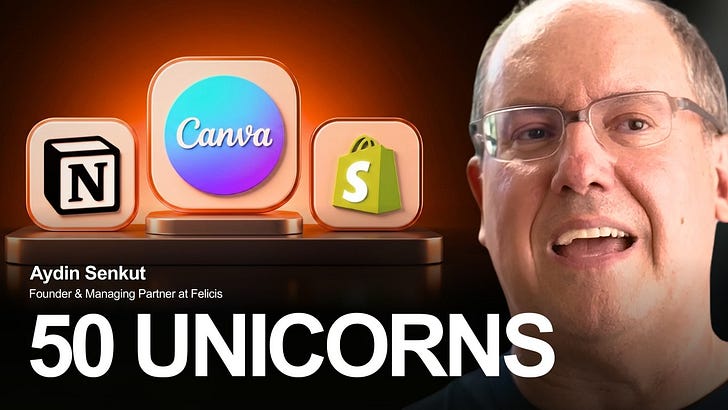
Aydin Senkut, Founder and Managing Partner at venture firm Felicis, joins the podcast at a pivotal moment in tech to unpack what’s happening across venture, whether LPs are concerned, and how to win as a firm in the current environment.
You might not know this about Aydin, but he was actually one of the first employees at Google, working directly alongside Sergey Brin and Larry Page, with a key lesson: “Why the clearest signal from Larry Page wasn’t what he said yes to but the 80% of the time he said no.”
About FelicisFelicis is a venture capital firm that backs iconic founders starting at Seed, with early bets on Notion, Canva, Shopify, Adyen, n8n, Supabase, and Mercor. Over 20 years, Felicis-backed companies have driven more than $300 billion in market value, and Aydin has appeared on the Forbes Midas List for 13 consecutive years.
Watch Now - Investing In 50 Unicorns
Throughout this episode, we also cover the origin of Felicis’s 1% founders pledge, a co-CEO’s idea borrowed from tennis mental coaching that now covers health therapy and coaching for 100+ founders with no strings attached; why Felicis is obsessed with “global resilience” and the four markets (space, defense, manufacturing, energy) big enough that 1% share still returns a fund; and the stat from Felicis’s own data showing the top 1% of exits have doubled in value every five years while the bottom 90% have stagnated.
As venture faces its own AI challenges, we asked directly whether AI is coming for the junior analysts and associates learning the trade underneath Aydin. We learn why he thinks trust, not analysis, is the one thing AI can’t replicate, and why founders keep telling him they picked Felicis for the person across the table, not the term sheet, and much more.
Available everywhere you listen to podcasts: YouTube, Apple Podcasts, Spotify, and X
Download the transcript 👇
Timestamps
(0:00) Meet Aydin Senkut(2:21) The State of Venture Today(3:49) About Felicis Ventures(6:35) Google's First Early Employees(8:09) Lessons from Larry and Sergey(10:11) Building Google from Nothing(13:10) Great Investors: Operators or Founders?(15:57) 13x on the Forbes Midas List(17:28) What Makes Felicis Successful(20:11) Navigating Crucible Bets(22:16) Characteristics of Unicorn Companies(25:22) Coaching Founders to Stay Disciplined(28:30) Longevity and Stewardship(32:56) The 1% Founders Pledge(40:21) Founders' Hardest Challenges Today(43:07) Building an Enduring Fund(46:52) From Meeting to Term Sheet(49:02) Inside Felicis(51:32) Are LPs Concerned About Venture?(57:28) AI and the Future of Young Venture Talent(1:00:29) The Opportunity for Emerging Managers(1:03:39) How Aydin Spends Time Outside Venture
Lessons from this episode with Aydin
1. Being ruthlessly focus: “Cut nine things off your list” The core operating principle: it feels productive to work on 10 things, but real focus means having the courage to kill nine of them and go all-in on one.
2. “Your weakness can be your strength” Aydin wasn’t an engineer, never worked at a big tech company, and built a philosophy around not needing technical depth, just needing to understand what makes a company succeed.
3. Authenticity, trust, and doing the homework: “The personality of the investor really matters” Three concrete, teachable behaviors for building trust fast: no hidden layers, a track record of not going against people, and showing up with a prepared, original point of view.
4. Market-sizing lesson for founders and investors: “Chase markets where 1% share still wins” The math behind why Felicis is focused on “global resilience”: pick markets big enough that even a small share of them clears the bar for a great outcome.
5. Where does AI leave young talent in venture? Why he believes relationships, not analysis, are becoming the scarce resource in venture, and the “orchestra conductor” framing for how humans and AI should actually divide labor.
Previous episodes include
See all previous episodes here 👉
If you enjoyed this episode, support our work by clicking ❤️ and 🔄 at the top of this post.