 Ask ChatGPT


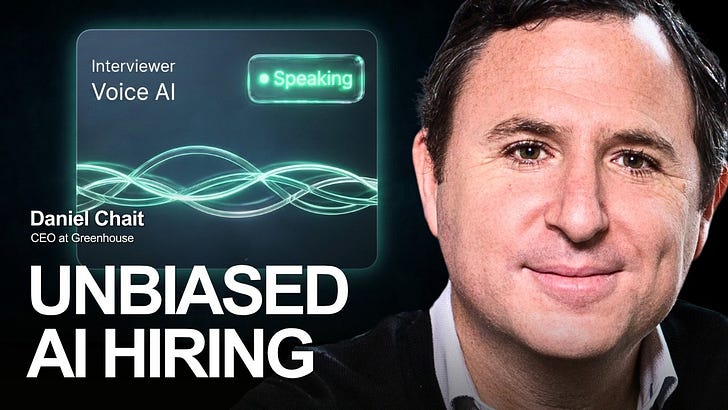
The “AI doom loop” in hiring—AI-driven job applications and AI resume screening have reduced trust and signal for both job seekers and employers. Greenhouse CEO Daniel Chait argues AI can instead improve hiring by increasing signal and rebuilding trust.
Daniel Chait is CEO and co-founder of Greenhouse, a hiring platform used by 7,500+ companies.
Written by AI. May contain mistakes.
Explore how AI complicates trust in the hiring process for job seekers and employers.
“Using AI to automate a job search hasn't really worked on the behalf of job seekers.”
Daniel Chait discusses the potential advantages of starting hiring with AI-led interviews.
“Unfortunately, what history shows us is that gatekeeping process of who even gets to qualify to have an interview is incredibly expensive.”
Daniel Chait shares insights on the challenging hiring environment for both job seekers and companies.
“I'm looking forward to the conversation.”
Discussing how AI tools are creating a flood of applications that lack quality and relevance.
“but yet they're having trouble trusting what's in their pipeline to actually deliver the hires that they need.”
Analyze how AI customization results in similar-looking applications, complicating the hiring process.
“In fact, I was talking to somebody last night who very much echoed a very common experience across all of our customers.”
Exploring the implications of AI in hiring, including biases and trust issues in job applications.
“you get this flood of applications, in addition to just having a huge amount of volume, what they also are saying is that those applications are starting to look more and more alike.”
Discussing the concerns employers have regarding the authenticity of candidate responses in interviews.
“Is this candidate who they say they are?”
Explore the implications of AI on job applications and trust issues.
“are seeing with regards to job seeker use of AI.”
Discover the potential of AI to improve hiring processes.
“What are some of those first early signals to potentially identify?”
Learn about new features designed to help job seekers stand out.
“I think it takes some effort and some conscious decisions and designs on the part of folks like me who are making these systems and employers.”
Explore the challenges job seekers face and strategies for employers.
“And so we looked at other areas where that was the case.”
Discuss how AI is reshaping job categories and market expectations.
“leave university, coming out to university and trying to get their dream job.”
Examine historical shifts in the labor force and their modern implications.
“I grew up in, I was born in Detroit and raised in the Detroit area.”
Analyze the value of university education in the current job market.
“So everyone is on equal footing with learning.”
Debate the implications of job hopping and employer biases.
“I mean, if you think about, again, I mean, I'm referring to these older jobs, but I I mean, if you train as an accountant or a hat maker, like that's kind of what you were.”
Discuss the evolution of hiring platforms like Greenhouse amidst technological changes.
“So I think having that awareness is wise of you, but I wouldn't let it limit you.”
Explore new entrepreneurial avenues emerging from rapid tech advancements.
“not have to wait for a time when I can take off work.”
Understand how Greenhouse is adapting to the new paradigms in hiring.
“How does Greenhouse think about staying relevant?”
Learn about the current disruptive moment in hiring practices and the importance of adapting to new technologies.
“And so we're not delivering value by clicking around on buttons and workflows at all anymore.”
Discover how Greenhouse is redefining their mission to enhance hiring for everyone involved.
“And you might be great at building, you know, shelves in strip malls and renting out, you know, videotapes.”
Understand the advantages of using AI in hiring and how it can reduce bias in the process.
“You know, our mission had always been to help make every company great at hiring.”
Explore the balance between human involvement and AI in the hiring process and its implications for job seekers.
“There's a little bit of an emotional feeling to overcome as society, as we all adapt to these technologies being everywhere in our lives.”
Examine how roles in hiring are evolving towards orchestration and the significance of human judgment.
“So if it takes a company, I don't know what, two, three weeks to hire now versus six to eight weeks, you can move twice as quick and you can hopefully, you know, that velocity of speed, there's so much better.”
Learn how human oversight is essential when using automation tools like ChatGPT.
“done in an automated way, it frees you up to think at a higher level, to make more observations, to think more critically.”
Explore the concept of integrating AI agents into the hiring process.
“That is going to be a big thing that I think stands out with a lot of these people.”
Discuss the potential challenges and opportunities of hiring AI agents.
“to say we could be really dealing with some of those things for real in the near future.”
Understand how companies can balance customer requests and visionary projects.
“One thing I'm very fond of saying to your question is, you know, here at Greenhouse, we can do anything.”
Examine the importance of clear communication and vision in leadership.
“That's going to be a bet we're going to place.”
Discover how meaningful work and teamwork drive motivation in leadership.
“How do I hold accountable the organization so that we all know where we need to get to so that they can all apply their energy, creativity, and passion in getting to the finish line as fast as possible?”

Get the gist, explore an idea or ask about something said.
 Claude
On BIG IDEAS BY NEW ECONOMIES, what are the key points of this episode?
Searching your listeningAutomatic transcript. May contain errors.
0:00Using AI to automate a job search hasn't really worked on the behalf of job seekers. Job seekers tell us it's making things harder and worse. And it's kind of the first time that I can remember where neither side is really happy. For both job seekers and for companies, there's a real issue of trust on both sides. Is this candidate who they say they are? Is this job posting real or fake? And AI has made a lot of that also a lot harder to trust. But I'm actually a huge AI optimist. I think AI has the potential not just to make hiring less bad, but actually to make hiring radically better. So I can tell you a little bit about what I think that looks like.
0:37Daniel Chait: This is Daniel Chait, CEO of Greenhouse, the hiring platform trusted by over 7 ,500 companies. And today he's sharing how AI has broken trust in the hiring market and his plan to use the exact same technology to make the hiring process better for everyone. I think starting your hiring process with an AI-led interview has a number of real advantages, both to the company as well as to the job seeker. Historically, one of the biggest problems of bias in hiring was actually at that very first stage, resume review. Unfortunately, what history shows us is that gatekeeping process of who even gets to qualify to have an interview is incredibly expensive.
1:16It's very, very slow, and it's super biased. So there was a study done in 2003 demonstrating this resume review bias. They sent out a few thousand resumes, identical resumes, by changing only the name at the top of the resume. And they changed it so that the name was either stereotypically white or stereotypically black sounding name. And then they measured who got interviewed. What they found was about a 50 percentage point difference. So that's a huge problem for job seekers as well as for companies who are missing out systematically on top talent. And so by starting your process with an AI-led interview, what it does is it lets you remove that gatekeep.
1:54Today, like the pace of technology is so fast and so dramatic that really it's more about what I call.
2:02Daniel Chait: Welcome to New Economies.
2:16Daniel Chait: Daniel, hey, welcome to New Economies. Thank you so much for joining us. Thanks for having me here. I'm looking forward to the conversation. Likewise, you know, this whole AI category has been changing so much. Just in the last six months alone. You're the co-founder of Greenhouse, which is one of the largest hiring platforms for companies. Seven and a half thousand companies now use it. And I imagine you guys have been pretty busy just in the last eight, nine months alone with the hiring. Everything is now changing. Help me understand something. What is the whole hiring, the state of hiring right now?
2:49Daniel Chait: Are people concerned? Yeah, I would say in a nutshell, it's a really difficult hiring environment for both job seekers and for companies. And so, you know, typically the hiring market is a pendulum where kind of, you know, there's a hot labor market or there's a cool labor market and sort of one side or the other, it feels like they have the upper hand. And it's kind of the first time that I can remember where neither side is really happy, where people are saying it's getting harder and harder to get a job, even as it's getting easier and easier to apply for jobs. And where employers are saying, you know, they have more candidates than ever, but yet they're having trouble trusting what's in their pipeline to actually deliver the hires that they need.
3:30And so it's really difficult. Of course, AI has had huge impact on all of that. And so that's the kind of thing that keeps me very busy during the day.
3:38Daniel Chait: Why are companies finding it so difficult? Because there's tons of talent available, but then the opportunity and perhaps the scope of work is no longer needed as much inside these companies. Yeah, well, a bunch of things going on in there. I think, you know, So historically, if you go back to, say, when we started Greenhouse in 2012, right, the sort of big factor was kind of, as you mentioned, it's like, is there available talent when I want to make a hire? And that was the big thing that kept employers up at night when they opened up a role was how do I get in front of anyone that I can hire?
4:12I'll send as many emails as I have to. I'll buy as many job ads as I have to. I'll go to meetups. I'll host pizza parties. Like, what do I have to do to get anyone to pay attention and apply to my job? And I think if you fast forward to today, that is very much not the problem. Companies open a job. In fact, I was talking to somebody last night who very much echoed a very common experience across all of our customers. He said, you know, we opened up a role for a job in my company. And this was not a particularly well-known company or a particularly famous brand. And they got a thousand applications in the first day.
4:45And so it's almost the opposite problem where you're awash in job applications from the minute you open up a role. And yet when you start to look through them, what he found in this case, it was for a in-person manufacturing job in the Midwest was all kinds of unfit, unqualified stuff. There were people from overseas. There were people with, you know, graduate degrees, you know, looking for technology jobs. There were just very, very few people that were in the market for the type of job that they were advertising. I think it's very common. It's like, where are these resumes even coming from? Why are these people even in my inbox?
5:25What you find is that often people have set their job search on autopilot. They've given, job seekers have given their job search over to SurveyI to run on autopilot. And so they're applying automatically on the behalf of the job seeker to thousands of jobs with very little care about which jobs they're applying to. And then it kind of fills up everybody's pipeline with noise. And so it gets harder to find the right person in all that noise. And so people send out more applications and so on and so on. And that's kind of what we've referred to as the AI do-move. This idea that the more each side is using the current generation of AI tools to help themselves, the worse the overall system has gotten for everyone.
6:10Daniel Chait: I have two questions there as a follow-up. So if you've got a bunch of individuals who are just selling all of these job applications on autopilot, I think we're entering this area. It's all about taste and it's all about personalization, right? But the ones who are just going around applying for jobs on autopilot, like, is the success rate even high? Well, let me just start by saying, you know, I have a ton of empathy for JobSeeker today because as we just started talking about, like, it's really hard out there to get a job and to stand out. And so they're using the tools that they have available, which are largely inexpensive and don't require a lot of effort to try to boost their chances in today's market.
6:56And I have a ton of empathy for that. I get it. It's depressing trying to find a job today. Unfortunately, to your point, what these tools often does not deliver is just a spray and pray approach. The promise is, hey, we need to increase your visibility as a job seeker. Let us do that for you. But the reality is you end up getting this kind of indiscriminate firehose of job applications that go out there to every and any job that the agent can find, often without the slightest relation to a job that you actually might want or might be qualified to get. And then to make matters worse, what you also see are those same AI application tools customizing at scale the job application materials.
7:43So think your cover letter and your resume are getting now tailored and customized to each job description based on the keywords that the AI finds in the job post itself, which, again, sounds from the position of a job seeker like something you ought to do. Hey, I'm applying to a job. I should sort of tailor my application. But when that happens at scale right across tens of millions of job seekers all using the same AI in the same way is all the resumes end up starting to look the same. And so if you look from the other perspective, again, if you open up a role as an employer and you get this flood of applications, in addition to just having a huge amount of volume, what they also are saying is that those applications are starting to look more and more alike.
8:27It's getting harder to tell them apart because they're all generated with the same AI. And I think we all see this in our daily lives. If you've ever read an email or seen a snappy video online, they kind of have the same AI slop character to them. It's just like this fire hose of content that all sounds the same. Resumes are starting to look like that also. And so I just think the sort of first pass at using AI to automate a job search hasn't really worked on the behalf of job seekers. I think job seekers tell us it's making things harder and worse. And so there's a need to make things better.
9:01I think AI can play an important role in that. But so far it hasn't happened.
9:05Daniel Chait: Yeah, let's talk about that. And the second part of the question was, even for the job seekers who are using AI, you have the other maybe 1-2 % who want to do it the traditional way, sending handwritten letters or they're sending the cover letters, which are actually very personalized. It's very then difficult to stand out right. So I'm assuming a lot of these companies are using their own AI filters and some of those top talent might not make the cut as well. Yeah, that's right. I mean, I think the advice has been, and I've said this myself, is look, rather than just kind of indiscriminate AI, slop, fire hose, spray and pray, spend time on the jobs you want, deeply research the company, get to know people there, network your way in, find a warm introduction.
9:55Those are the things that work. and have always been, you know, been successful. Unfortunately, those things, number one, don't scale. Like it's not really, you know, you know, you may only know so many people and companies and it takes a lot of effort to expand this. And number two, it's uneven. Like not everyone has the same access to, you know, those type of jobs and networking opportunities that everyone else has. And so it's good advice, but as far as it goes, and unfortunately, it's the best advice that there is. and then yeah i think what the other half of the ai doom loop is what the companies are doing in response and to your point you know they're kind of and you see this you can go look on on linkedin and people you know will will write these pieces that say hey you know i was here here's the solution i was flooded with applicants and so i handed it to you know to to chat gbt and i said look through all these resumes and give me the 20 that are the best fit and it'll happily do it i I mean, if you've ever talked to Jetty, you'd be like, hey, great question, boss.
10:54Here you go. You know, I got it. I got you. But what you find when you look at it is like the results of that filtering are deeply problematic and don't really serve either the job seekers or the company really in necessarily the best ways. And so that kind of just makes the bar higher. It makes the filter tighter to get through and kind of results in the continuity of the doom loop more than anything.
11:18Daniel Chait: Well, there's some of those problematic challenges. Yeah, well, I mean, firstly, it should be said, I think people are deeply suspicious and rightly so that AI often magnifies the existing biases that exist in the systems that they're meant to represent. And so there's famously been quipped as the Jared problem that, you know, naively, AI will look at all the past applicants that got through and figure out that the ones that got through are more likely the ones named Jared. And then when you just say, hey, like pass me through like the next likely resume, it'll find the ones named Jared. So a little bit, you know, maybe maybe facetious, but but I think it points to an underlying truth, which is what is the pattern?
11:59Like what is the where is the transparency and accountability for how those those impactful decisions are actually being made is often very, very cloudy. I think the other thing worth saying is – so the one problem is just bias, right? The other thing is as job seekers are using these tools, as we talked earlier, to kind of make their resume – kind of polish up their resumes and make it look like the job description and they're all starting to look more and more alike, is the amount of signal is going down, right? If your resume and my resume and everyone else's resume are all customized with the same AI to the same job post and start to look more and more alike, what actually is – what is left for the AI filter to sort of filter on?
12:43And it turns out there's just a missing amount of signal. And then on top of all that and amongst all this kind of just noise and larger and larger sort of haystack with less and less needles in it is the trust gap. In addition to just not being able to find the person that they want, there's a real issue of trust on both sides. Is this candidate who they say they are? Is this job posting real or fake? And AI has made a lot of that also a lot harder to trust. so those are some of the challenges that companies are facing in today's job market
13:21Daniel Chait: I've been speaking to some founders and some companies and they're starting to use a lot of these AI hiring platforms now and kudos to them, it does a lot of the heavy lifting for them maybe the first, second stages then I've heard scenarios where you get to the final interview stage and although the person may seem very good the person on the other side is actually someone camping in Cambodia, Myanmar, or I think I've heard cases like in North Korea before. This is like a big problem for AI. Yeah, absolutely. So you have kind of, I would say, maybe a spectrum of worrisome impact that employers are seeing with regards to job seeker use of AI.
14:04So on the sort of less worrisome, but maybe more common aspect, what we already talked about. is this application in my inbox because the person really wants the job or because it just auto applied like there's just a lack of real trust that in kind of the meaning behind a job application or is the stuff on their resume stuff that they wrote or stuff that ai wrote and as we all know ai sometimes makes stuff up then you go like a little bit further down and you're like there's the worry that when i'm interviewing a candidate am i getting the candidate's answer or am I getting AI's answer? There are these kind of category of like AI co-pilot tools to help candidates answer job interviews.
14:45And they're up on screen. They try to stay invisible. And so you'll see these recorded interviews where someone will ask a question, hey, tell me about a time when you ran a complicated project and the person will go, oh, interesting question. I'll kind of hem and haw for a minute while the AI turns away. And then they'll read off like a perfectly scripted answer. And so there's a lack of trust that like, I'm actually getting the person's answer versus the AI sort of answer. And then on the farthest end of the extreme kind of stuff you're pointing out are there are these true criminal, industrialized criminal enterprises to infiltrate organizations through the hiring process and place someone from these criminal rings inside of a company, typically in a remote job, to either do espionage or theft.
15:29And so obviously, if that happens inside of a company and you realize you've hired a North Korean spy, it's really worrisome. It doesn't happen that often, but when it does, of course, it's a big problem. So in our data, about 1 % to 1.5 % of job applicants hard fail an ID check. So in other words, when asked to prove with their ID that they say they are on their resume, about a point or a point and a half of applicants just simply are not. So it's a meaningful amount, but it's a small amount. But I mean, if you think about that example we talked at the beginning of this conversation, you open up a role, you get a thousand applicants.
16:12There's probably 10 or 15 in there that are literally not who they claim to be.
16:16Daniel Chait: When the individuals fail the ID checks, what are you guys looking for? Is this IP addresses or how do you actually overcome that? Yeah, so it's actually layers in the security community, which now we get to be part of in hiring, which is a very new thing. They talk about the Swiss cheese model, right? That, you know, any layer that you have in security is going to have some holes in it. And so they layer up like multiple layers. So that way the holes don't line up and you stop more and more of the bad guys. That's the mental model. And so for us, what that looks like is at the very top of the layer is simply using techniques that kind of bad guys don't like.
16:53So think about like in your home alarm system, like putting the sign out on your lawn tends to be like, well, I'm going to go burglar the house next door that doesn't have the sign, whether or not you've actually turned on your alarm. Right. So things like using a voice, I interview at the start of the process, which the current version of voice, I interviews, unlike the first version, are very candidate friendly. They're very effective. They're very transparent. But the bad guys don't like them. So just starting the process with an automated voice interview, where you invest 20 or 25 minutes of your time, you know, talking and answering questions.
17:25Typically, the scammers drop out right away. The next layer down is kind of stuff you're asking about where when you apply to a job in today's world, there's all this kind of digital exhaust, right? All this other stuff that comes along with that. Just you think you uploaded a resume. What you also have is an IP address that you connected from, device fingerprint that you're on, geographic location of where in the world you might physically be as distinct from where it may say you are on your resume. All this kind of information, a couple dozen different data points that our software looks at to establish some red flag, yellow flag, green flag about the quality or characteristics of that job application.
18:05So things like if you're applying from an IP address or an email address that's known and proven to be part of previous scams, that's going to flag. So things like that. And then the third layer is truly ID verification. So presenting just like you would at, you know, an airport security checkpoint, or when you show up for a physical interview at an actual office building, you often have to stop at the front desk and show your ID and sign in. So similarly, you know, you're asked to show your ID in the interview process and do a selfie with your phone, and the software will link those two up and you can prove that you are who you say you are.
18:41And again, each one of these layers gives more and more confidence that the person is genuinely who they say they are. And not only who they say they are, but when they say they are. Because also keep in mind with deep fakes, you now have the question of, is the person that I'm interviewing the same person that I interviewed last week in stage one? And is the person that I'm sending an offer to the same person that I interviewed? You know, and I've talked to companies, many companies who have had that experience where they realized only after the fact, when going back and looking through the forensics, that multiple people are collaborating through this hiring process to get to get hired.
19:18Daniel Chait: I mean, surely these people rise. I mean, they've got to have some sense of, you know, intelligence, right? most companies are going to find out at some point. So surely the success rates of actually these criminal gangs getting a job offer, it must be pretty small, no? Well, I mean, it's kind of like if you get those, you see those Nigerian Prince scam emails, right? You're like, no one would reply to that. Well, they keep sending them, so someone's replying. Yeah, I think largely these things get caught. But there's some really nefarious angles to this. So for example, in the security world, historically, they're looking for hackers.
19:59They're looking for someone to break into the system and do bad stuff. And when those people do the bad stuff, that's what you're looking for. Are they downloading all my files? Are they sending all the money out of my accounts? Like the stuff that they're doing is usually itself bad. In this case, what you often have are people typically, especially the North Korean efforts, they're just in it for the wages. Like they're literally trying to get the Western currency into the system. And so when they pass through, they don't stand out. They want to just keep their job. And so they don't do all those things.
20:32And so they get hard to find once they're in the system. The other thing that they do is, you know, I was at a security conference around kind of identity in the workplace and in hiring. And I was listening to this case study. And what they found in this one example where a North Korean had almost gotten hired and they caught them at the end, they went back and looked at the forensics and what they found. Forensics meaning like digging up all the clues of like reconstructing what happened along the way. How did this problem happen? What they found was the bad guys are smart. And so the first interview was a large, darker skinned, heavy sad man with a beard.
21:13The second interview was a slender, fair skinned, clean shaven man. But when you read the interview notes and the discussions among the team, no one ever said that. Why? Correctly so, we all train ourselves. Hey, like, let's focus on the answers to the questions. and the skills that we're looking for. We don't sit around in HR meetings and talk about what did the candidate look like with good reason. Well, the bad guys know that and they use it against you. And so you're right in that it's hard to get through some of these things and it's a numbers game, but it absolutely happens. And when it does, it's a big worry.
21:55Daniel Chait: You know, I'm really glad we're having this chat because I don't think this is A, spoken about enough. And if we were only at four and a half years into this AI transformation, right, for a lot of these companies, and it's only going to potentially get worse in some cases, but also hopefully better in other cases. As companies are thinking about automating their hiring process, how should they avoid these security pitfalls? What are some of those first early signals to potentially identify? Yeah, I'm glad you asked because as much as we've been talking about things like the doom loop and North Korean infiltration and these kind of very scary things, and those are real, I will say that if you're just tuning in now, I'm actually a huge AI optimist.
22:42I think AI has the potential not just to make hiring less bad, but actually to make hiring radically better. I think it takes some effort and some conscious decisions and designs on the part of folks like me who are making these systems and employers. But I think AI has within it the possibility to make things a lot better. So I can tell you a little bit about what I think that looks like. To get to the heart of your question of what can you do today, I do think it starts with understanding the problem as one of signal and one of trust. So how do I get better signal? How do I understand of the applicants I'm getting?
23:22What really is the information I want to see that matters? And then one of trust, how do I know I'm dealing with something that I can believe? On the signal side, there's some promising things that we've already done. So, for example, we released a feature last year in Greenhouse called My Dream Job. And what that is, is it gives job seekers an opportunity to signal across all of the jobs that they're applying to, one of them per month as their dream job. They just designate that application as the one that they want to stand out among all the others. And they only get one a month. So it's like a scarce resource.
23:55So job seekers think really carefully, which one do I want to do? I want one that I actually want the job. And I want one I actually think I can get. I don't want to waste it on a job I have no chance at. And so that's a really useful signal, right? That didn't used to exist. That's not available anywhere else. It's not on your resume. It's not on your LinkedIn profile. But when a job applicant applies and says, this is my dream job, that means something. And so when an employer opens up their inbox, they now see at the top of the list in a separate category, the people who applied with their dream job.
24:26And so that's a really useful signal. So this is a way where if you think about the doom loop as like each side is kind of trying to help themselves, it's making everything worse. This is a way where it helps both sides actually makes the system better. For job seekers, it gives them a way to stand out for the jobs they want the most from all the noise and all the fake stuff. And for employers, it gives you a way to sift through that big haystack and find some needles that are a lot more meaningful. And the data proves it out. We've had thousands of people get their dream job, and they convert from application to hire at about five times higher of a rate than other job applications.
24:59And so you can see how, you know, if we stop thinking about automating the old stuff, like how do I send out more resumes faster and start thinking about, well, this is an opportunity to reimagine how hiring can work all together. We can find new ways to do things, I think, and make stuff much, much better.
25:18Daniel Chait: That is so interesting. So my dream job, five times the amount of kind of, you know, success rate, right? And it's quite cool, right? If I want to apply to Greenhouse and use my dream job, token or coin, it makes the companies feel good. You have amazing talent who actually want to come and work for the company. How easy was that to implement? Was it your idea? Whose idea was it? And how do you actually integrate that into the offering? Technologically, it's pretty simple. It's like a checkbox. The technology wasn't the hard part of that. But it's like the design of it and the systematizing of it, I think, was the magic.
25:57And, you know, for us, it really started from asking ourselves these deeper systematic questions about hiring. Once we started to see these problems coming up, so, you know, 2020, right, you have, you know, COVID disrupting the hiring market in some really profound ways. A couple of years later in 2022, you have interest rate going from kind of the zero interest rate environment, growth at all costs, to this real moment of, you know, do more with less and slower hiring. And then chat GPT bursts on the scene and starts to impact everything. And all the problems in hiring that we've been talking about for this whole conversation started to change dramatically.
26:33All this new stuff started happening. And what that forced us to do at Greenhouse was to think more deeply about the problems our customers were having, right? Typically, our customers are employers, but by the time some of these problems that we've talked about happen at the employer, it's too late. The problem already happened. And so we had to start thinking more holistically about the job seeker and the employer as part of the whole system. And to say, our job is not, I mean, typically what you, the like jargon in our field is like the applicant tracking system. That's like the technical term for this like piece of software that companies use.
27:10is like it's not really what's happening anymore. What's really happening is the company is sort of orchestrating this entire hiring experience. And we needed to step into that role and help our customers really orchestrate a different and kind of more modern hiring experience that took the job seeker's perspective, you know, front and center and said, you know, if we can find ways to solve job seeker problems, problems, but in so doing, solve our customer problem, we attack it at the root instead of waiting afterwards to try to band-aid it after the fact. And so DreamJob came right out of that thinking.
27:48It's like, here's a way where we can really solve a job seeker problem. So you don't have to, you know, you ask 10 job seekers, you know this problem 10 times, right? Like, they're not getting seen. It's a mess. How do they stand out? And so we looked at other areas where that was the case. You think about applying to college. You think about dating applications. They all have this issue of, you know, trying to find some signal in the noise and they all have some version of whether it's, you know, early application or early decision in college application processes or these like super likes or I don't know.
28:24I got married before online data got them. But like, you know. You're right. These kinds of ways to sort of stand out. And so we translated a lot of those things that have already worked in other areas directly to this. But I think the idea of starting from a job seeker and thinking, how do I make it better to get a job? And working from that end has really led us to think very differently about what we can do for our customer. Because if it's easier for people to get jobs, that means that our customers are making hires, right? And so that's the kind of win-win that we've been increasingly looking for.
28:59Daniel Chait: You know, something I've been thinking a lot about is I've got a few friends who are still kind of, you know, leave university, coming out to university and trying to get their dream job. And I'm like, you've been studying law for the last four years and you get an entry job into a legal firm and you're kind of irrelevant now. Where do you think we are kind of on that spectrum? So very AI native companies, are they still trying, are they actually even interested in hiring entry level grads anymore? Because I'm pretty concerned about them, for them. I think a lot of people, including myself, are as well.
29:33I think there's good cause to be concerned. I also think we should be careful about making these predictions too confidently about what's going to happen with the job market and AI. I think we've already, you know, we've already just in the short time that AI has been, you know, pervasive in the workplace, gone through multiple waves of declarations from, you know, the frontier labs about, you know, all jobs are going to disappear. No, all jobs aren't going to disappear. These jobs are going to get bigger. These jobs are going to get smaller. And like every week, it seems new technology comes out from these frontier labs that changes the equation altogether.
30:07And so it is very dynamic. I hesitate to make too many like conference pictures of exactly what's going to happen. I will say this, though. Every technology revolution has created a ton of disruption in the labor force. After all, I would be very surprised if many of your listeners employ a lot of horse buggy drivers or haberdashers in their companies these days. But, you know, those were those were common jobs. I mean, you know, 150 years ago, you know, 90 percent of the U.S. economy was agrarian. I mean, it's just like so technology change, whether it's from the Industrial Revolution or the information revolution, has always created changes in the job market and entire categories of jobs go away.
30:50Entirely new categories of jobs come around in the past that has come with a lot of economic pain, to be clear. So I grew up in the Midwest. I grew up in, I was born in Detroit and raised in the Detroit area. And of course, when my parents' generation post-World War II, that was a tremendous economic boom in the industrial rust belt. And by the time I was born, that was very much on the decline. And those areas, in a lot of cases, still have not recovered from the loss of industrial base. And AI is making it all happen faster. So the jobs that are going away are going away at a faster rate. The new jobs are coming up.
31:29I mean, AI data labelers, you're seeing these jobs now where people are wearing a bunch of like funky headgear with cameras on it and doing everyday jobs to train AI. Like there are, as far as I can tell, several companies that have booked now a billion dollars in revenue just in AI data labeling, which is a job that you couldn't even imagine happening a year ago. So there are new things happening. There are jobs going away. I think the pace at which that's all happening is not a pace that most people can keep up with. And I think it's therefore causing a huge amount of pain and particularly for new college grads.
32:05But it also creates opportunity. And I think the thing that I would – if I was a new college grad, the solace I would take is that with new technology, there's no history. So everyone is on equal footing with learning. And so you can be as much an expert as anyone if you put in the time to go learn and stay abreast of new technology. So I do think there's opportunity there for people who can learn new technologies to play a really leading role in this new wave. And then I think for society, we do need to figure out how are we going to really support people where, to your point, And if I've trained in a field for my whole life and, you know, it's been years or decades and my job category is going away through no fault of my own, like how as a society are we going to help people through that?
32:59Like, that's probably a question above my pay grade, but it's it's one I do worry about.
33:03Daniel Chait: You know, I've met some 18, 19, 20 year olds in the last kind of, you know, few months who are super smart. They're super focused on maybe as one category and AI and you just want to become the very best. And then when I compare that to you go to university for two to three years, maybe get into$50 ,000,$100 ,000 in student debt. Part of my question is, is university actually still worth it for college grads? When companies think about actually hiring entry-level grads or if it's students or if it's people just leaving school, do we actually think university is worth it anymore? I'm probably not the best expert at that.
33:40I mean, I can certainly tell you that I think increasingly the kind of institutional breakdown between labor and, you know, the supporting institutions of kind of companies and universities, like that's getting more and more tenuous. I mean, again, go back a generation, like our parents' generation, you know, the baby boomers, like they kind of had one job and they're, you know, they had a pension. And, you know, the promise was, you know, you work at this job for, you know, several decades and then the company will take care of you for the rest of your life. that doesn't really happen anymore.
34:10Today's, you know, people are changing jobs seven, eight, nine times during the course of their career. And I think that's only increased, that pace is only increasing. And I think it's leaving people more and more individualistic and sort of on their own, which again, can be good and can be bad. It's good if you're able to adapt to that. And if you bring the wherewithal to survive and thrive in that, you can maybe better take advantage of your own entrepreneurialism and not feel as beholden to a system. But I think for most people, it feels like you're in free fall and like the system kind of isn't there for you in a way that it used to.
34:46And I think that's probably true for university education as much as for on-the-job training. Look, I think historically, the skills that you developed early in your career kind of defined you. I mean, if you think about, again, I mean, I'm referring to these older jobs, but I I mean, if you train as an accountant or a hat maker, like that's kind of what you were. And I think today, like the pace of technology is so fast and so, so dramatic that that's not really, it's, it's more about what I call durable skills is like you used to call them soft skills that really sustain you in the workplace.
35:21You know, your cognitive ability, ability to learn and adapt grit, you know, creativity. These are the things that stick with you through your career, whether you're like a Python programmer or a Microsoft Excel whiz or you're great at doing chat GPT prompts or whatever comes next. Those things come and go in sometimes quarters or years. And so I do think that focusing more on those durable attributes and less on particular technical skills that are probably going to be obsolete shortly is the way to go.
35:51Daniel Chait: You made such a really interesting point around people changing jobs more frequently. And this is why I love that there's doing a show where They could ask amazing people stupid questions. But I think this is a really important one, especially for young people. Is it okay to change your job every few years and go and work at a different company? I take great issue with companies that say, oh, this person's a job hopper. I'm not sure. Come on. I think there is that mentality out there. I think it's very unfair and very one-sided. So companies have no problem moving on if they want to hire someone different.
36:25And yet, you know, to turn around and say, well, I don't want to hire this person because, you know, they've had five jobs. I'm like, I don't know, does everyone have five jobs these days? Like, are they obligated to sit in a job that isn't serving them well so that way their resume looks better? Like, what is that going to get them? So, yeah, I very much think that, you know, people ought to, you know, try to find the best job for themselves at all times. I think if I was giving advice to a young person, I would say it's smart to be aware of the, I would call, bias that some employers do have of people who change jobs more often may be less reliable.
37:02So I think having that awareness is wise of you, but I wouldn't let it limit you. I would think make sure that you're good at telling that story and explaining why and finding those employers that are going to be right for you.
37:16Daniel Chait: I just think the speed of all of this is changing so much. The expectations of both the job seekers and the employers is also very different. I also think for the platforms, people like Greenhouse, you guys have been around 15 years and we were chatting before we came online. My previous company I used to work at, we use Greenhouse a lot and we're big fans. I think they are still big fans. I think they still use you. It makes me think people like Greenhouse and Glassdoor and other platforms, they probably have had to change their entire business model, no, in the last, what, two years? Well, not just business model, but, you know, what do we actually do?
37:55I mean, what does the product do? I've been saying lately, I've been saying, you know, if you haven't seen Greenhouse lately, you haven't seen Greenhouse because you're right. The things that our customers need us to be doing, the problems that they're having, the kinds of solutions available, it's all new, it's all different. And again, that comes with downsides and risks. And, you know, there's everything from regulatory concerns around AI and data privacy that didn't used to exist to massive new opportunities. I mean, we're delivering, you know, tens of thousands of interviews through AI at scale in ways that are transparent, that are candidate centered, that give candidates the ability to ask their own questions as much as they want with infinite patience to schedule the interview right now, not have to wait for a time when I can take off work.
38:38Like there's so much possibility as well. And so we've been incredibly busy building new stuff, adapting to the changing world of hiring and work. And the crazy thing about it is AI is never going to be as bad as it is today, right? It's just going to keep getting cheaper, more powerful, more ubiquitous. You know, we're really planning for a world, you know, going in that direction where AI is becoming a lot more wedded to the ways that people are working. both finding jobs as well as hiring people, which means new problems, new risks to be aware of, but also I think tremendous new opportunities to think about how can we use AI as a positive tool of human expression and creativity to help you stand out as more of who you are as a person and to make things more trusted and bring more belief and credibility as we orchestrate these hiring processes.
39:38So it's a tremendous, I'd say entrepreneurial moment right now, because it's not just about how do I sit there and crank out two more points of EBITDA and same thing I been doing for 15 years. It's like, no, the stuff that we were experiencing when we started Greenhouse in 2012 is by and large a thing of the past. And the problems our customers have and the opportunities that they face are very, very new. They've never been solved before. so it's kind of a wide open canvas which is both simultaneously a little bit scary but also tremendously electrifying for if you're the type of person that likes to be entrepreneurial
40:17Daniel Chait: If I can ask how do you think about staying relevant there are now these 18 19 year old kids who are going through Y Combinator and they can spin off a hiring platform trust we've mentioned a big part which is very important, Greenhouse has that but people can now that kind of idea to cloning a website or software is not just days anymore, it's hours. How does Greenhouse think about staying relevant? Yeah, absolutely. I mean, well, let me just start by saying that is not a new question. So when we started going back 15 years, people would say, like, what's your moat, right? You know, we talk about investors in Silicon Valley and the stuff's like, well, you just have a bunch of features like anyone can build features.
41:01And that's maybe more true now than it used to be. But it was always true. I think what's fascinating right now is you look at a company like ours, and sure, we've built a bunch of features over the years, many thousands of little features that customers really want and value that handle everything from data governance and regulatory and scale issues, running a global business and all that stuff. It's probably somewhat hard to copy, but with enough AI and plugging away, I don't know, maybe you could build a bunch of them. What is your value? and what's fascinating as I think about it is, you know, it used to be that the value of Greenhouse was the workflow.
41:37Like you'd log into the tool and it would have a bunch of buttons and a bunch of fields you'd fill in. And what it said on those buttons and what the fields that we showed you, like that was the value. And you would click on that in your web browser. And that's basically not what's happening anymore. What's happening is customers are logging into their own tools. They're logging into Cloud or ChatGPT. And they're connecting it to Salesforce and their accounting systems and Greenhouse and other things. And they're doing their own work. And so we're not delivering value by clicking around on buttons and workflows at all anymore.
42:12It's about bringing the context, bringing the data, bringing the intelligence of like, what moves can you make that are legal, that are in compliance with your government or your corporate policies, that are friendly to candidates, that are not going to annoy your candidates. Can we tell you when candidates need a response from you and haven't gotten one? Can I find of the millions of my greenhouse members, the dozen that you need to talk to right now that want this job, that are active in the job market, that I can tell you are human beings, who they say they are, because we have that data. That's the stuff that's the real value.
42:57And like the green logo at the top and the buttons and stuff like less and less, that's the mode. And so it's a really interesting time. And again, like, look, you're right. There's, you know, every day there's always going to be younger people than me. I mean, that's just math. But I think the opportunity, we're in a true disruptive moment. And in a true disruptive moment, you know, and we talk about it a lot here at Greenhouse, is like, do you want to emerge from this moment as Blockbuster or Netflix?
43:26Daniel Chait: It's just that simple. And you might be great at building, you know, shelves in strip malls and renting out, you know, videotapes. That doesn't matter anymore. And so it's only about how well are you adjusting and adapting to mastering the new world. And what you did in the old world is increasingly in the rearview mirror and doesn't matter anymore. And so, again, it's about applying that entrepreneurial energy and drive towards inventing the future. And I think from one perspective, you're right in that, you know, if you're starting from scratch and, you know, you can be agile in these things and there are advantages to being a little startup.
44:01But also for Greenhouse, you know, to your point, we have 7 ,000 or 8 ,000 customers that make millions and millions of hires. We have tons of information and data. We sit at the center of a very large hiring ecosystem. And so that puts us in position to have a lot of real impact. But it's not easy and I don't take it for granted.
44:21Daniel Chait: You know, when you're having those board meetings, thinking about mastering the next chapter for entrepreneurship for people inside Greenhouse, but also for job seekers, employees, right? And hopefully becoming the Netflix, not the blockbuster. Aside from all these AI models and making it easier, you've got the trust, you've got the distribution. What are some of those big opportunities Greenhouse has today? And what are some of those challenges? Yeah, well, the challenge is, like I said, first of all, everything in hiring is changing. So the things that our customers need and want are new and different, and we haven't already done them.
44:57Everything in software is changing. So the things that we used to do to build great software products are now different and new. And so there's all that. I think on the opportunity side, But for us, it comes back to how do you create and deliver value in this new AI world? And who are you creating and delivering it for? And I think what we've seen, and there's a lot of choices that you have if you're me. And I look around in our industry, and people are making all kinds of different choices. People are saying, well, it's less about hiring, and we're going to go build other kinds of software. We're going to go do payroll software.
45:34There's a lot of money in payroll. Okay. What we've said is we're hiring experts. We've always been hiring experts. Hiring is still going to be really important, really valuable, really hard to get right. But what it means to be successful at hiring is now different. And we've taken a much more holistic read on it. So we made a big announcement at the beginning of this year with an updated mission. You know, our mission had always been to help make every company great at hiring. But as I kind of touched on briefly earlier in this conversation, that wasn't enough anymore. And so we started by sort of expanding the scope of our mission and saying our mission is now to make hiring work for everyone, right?
46:14Which brings the job seeker much more front and center into our field of view and say, I need to make hiring work for that person if I'm going to continue to have the opportunity to create value for my customers that are hiring. And so thinking more holistically and more specifically about the job market and less about hiring software has given us this unique opportunity and unique angle, I think, to solve problems in new and different ways. And so that's our big bet.
46:42Daniel Chait: You know, I just had the Xero CEO on the show, Big Accounting Software, and we got talking around, actually, people still want human intervention. You know, accountants are still going to be relevant at some point. Lawyers always can have their place. And hiring is a deeply personal thing, especially for the job seekers. They're trying to get a job. They're trying to make money. They're trying to land their dream opportunity, right? What does the new hiring process actually look like for job seekers? Is the first stage having some form of AI interview with a virtual companion from one of these large organizations?
47:16Daniel Chait: At one point, does human intervention actually come into play now in today's market? Yeah, I think that's a great question because it is changing quickly. I think starting with – and I've been quite public about this. I think starting your hiring process with an AI-led interview has a number of real advantages, I think, both to the company as well as to the job seeker. So one of the biggest issues, and this is why I talk about I think with AI, hiring can be radically better, not just less bad, but radically better, is historically one of the biggest problems of bias in hiring was actually at that very first stage, resume review.
47:55So traditionally, you would send a resume in an envelope or maybe later put it on a website and apply to a job. And somebody would look at that resume and decide, am I going to give this person a job interview or not? And that was a scarce resource. Companies have only so many people available at a given time who can deliver an interview. And so it's expensive. And so they gatekeep that process. So I don't care how many applications you get. I'm only going to do 20 or 30 interviews, right? And so unfortunately, what history shows us is that gatekeeping process of who even gets to qualify to have an interview is incredibly expensive.
48:34It's very, very slow. And it's super biased. It's maybe one of the most biased parts of hiring. So there was a study done in 2003, so 25 years ago, demonstrating this resume review bias. They sent out a few thousand resumes, identical resumes, by changing only the name at the top of the resume. And they changed it so that the name was either stereotypically white or stereotypically black sounding name. And then they measured who got interviewed, right? Who got invited for an interview? What they found was about a 50 percentage point difference, 50 percentage point if the name at the top sounded stereotypically white or stereotypically black.
49:17So that's a huge problem for job seekers of every persuasion as well as for companies who are missing out systematically on top talent. And so by starting your process with an AI-led interview, what it does is it lets you remove that gatekeep. It lets you interview everyone. You can open up the process and say, if you want to apply to a job here, great. We want to talk to you. Step one, take a half an hour, speak to our AI interviewer. It's going to ask you some questions to get to know you. It's going to let you ask your own question to get to know us. And at the end of that, we'll have a lot better sense of what you're good at, what your skills are, how they match up to what we need.
49:54I'm not going to look, I don't care what your name is. I don't care if you were on the women's volleyball team or the men's lacrosse team, like none of that. It's just about how do you answer the questions. And so I think that's a way where we can define 50 percentage points of racial bias completely out of the process. We just don't have that process happen at all if we start reimagining how hiring can work and using AI in ways that can really make things much better. Now, look, I'm not naive. I'm in a lot of these conversations. People worry about that, and I get it. They say, well, I don't want to talk to a bot.
50:27It's going to sound robotic. It's going to be annoying. And it's true. Certainly, the first generation of voice AI-led interviews was pretty janky and people didn't like them. The technology has gotten a lot better. I think what we see is very low opt-out rates and very high marks for the technology now as compared to even six or 12 months ago. There's a little bit of an emotional feeling to overcome as society, as we all adapt to these technologies being everywhere in our lives. But I think those of us that are thinking about how can we deliver real benefits to people, I'm optimistic that there's enough real benefit to be had that people will go through that change and they'll get there.
51:13Daniel Chait: Do you see this going, turning back the tables? I mean, going back to the old times, do you remember those pre-GPT where we didn't have any of this, right? It was all telephone call and maybe an email to how things have completely changed. Do you see it going back? Look, I think people are asking the question you asked a lot, which is what happens to a human in all this stuff? I think, look, none of us asked for AI to happen to us, right? It's kind of how it feels as a site. You see it in the data center debates in communities. You see it in this stuff. Like, I don't want to talk to your bot. I want to talk to a person.
51:46All this stuff. And I think what people are coming to realize is, like in our case, the question isn't would you rather talk to a person or would you rather talk to an AI? The question is, do you want to have a chance to get interviewed and showcase who you are and what you're about? Or do you want to go into the resume black hole with everyone else and never get a callback? And when you see that that's the choice, yeah, that conversation all of a sudden is something that you want to do. What they don't want to do is spray and pray a thousand of them. Nobody wants to sit through a thousand half hour interviews.
52:17And so again, it starts to bend the curve towards like, okay, I'll do it, but I'll do it for jobs I actually want. And so maybe I'll send out fewer job applications to companies I want to work at more, to jobs I'm more well qualified for. And so, again, I think it has the possibility to sort of return some sanity to the process. And then to get back to your point about what happens to a person in all this, once you get through that screening and you've got like a little bit more of a sane process in place where the numbers make sense, we've got a sense of trust on both sides, this job isn't a scam, this person is who they say they are, then the recruiters get to spend real time with actual humans talking about the person, talking about the job, talking about the culture.
53:00That's what the people can do. And frankly, that's what they've always said they want to do. Recruiters have always complained since time immemorial that they don't have enough time with candidates and hiring managers because they spend too much time on administrative paperwork process and dealing with stuff that's in their way. And so I think, again, we can put them back in that spot. I think that is what people want to do. And I think in a few years' time, we'll be able to get back to that.
53:28Daniel Chait: Especially AI companies now, it's all about moving as fast as you can, right? So if it takes a company, I don't know what, two, three weeks to hire now versus six to eight weeks, you can move twice as quick and you can hopefully, you know, that velocity of speed, there's so much better. That's right. And I think especially when you think about what you get rid of when you increase that speed, there's a lot of wasted time. I don't think most people are listening to this if they're in the job market and thinking, but I love the job market how it is. Like I like this process. No, everyone hates the current job process.
54:01It takes you forever to hear back if you hear back at all. And so I think the opportunity to say you applied for a job and as soon as you click the button, you can take the interview right now. You don't even have to wait for anyone to schedule it. You can do it on your lunch break. You can do it if you're an early bird over your morning coffee at 5 a.m. or, you know, two o 'clock in the morning on a Saturday night. And no one's going to judge you for it. And no one's going to, you know, say, sorry, we're not open right now or we don't have an interview available in your language. You can you can take out.
54:29And so on average, we see that a voice A.I. led interview as the first stage takes about six days out of the process. It makes about six days faster just by not having to schedule it. So I think people like that. I think faster is good. And if it's taking the waste and waiting around out of the process, people do appreciate it.
54:51Daniel Chait: I also just think the types of roles which are becoming available, we just had Reid Hoffman, founder of LinkedIn on the show. We had the head of AI at Replit. And the consensus, I think, is pretty clear. Software engineers, for example, are no longer software engineers. Instead, they are becoming software engineer agent managers. Is this the route we are all going? we're going to become agent managers of some description. You see all these people, so you're probably the best person to ask. Yeah, I mean, I think a lot of work is changing in that way. I mean, we talk about it as orchestration. Like you're not, you know, in the old world, you're hiring men, opening up envelopes and reading resumes and, you know, putting things on calendars.
55:33And I think what people are increasingly doing now is orchestrating that process and those day-to-day things that are happening, schedule an interview, chase my hiring manager, for some feedback, move people through the pipeline. Those things are being done automatically, agentically, sending out emails. And your job is to more orchestrate and conduct that work. And so it's really powerful. I mean, if you can scale your work up by having a lot of the drudgery done in an automated way, it frees you up to think at a higher level, to make more observations, to think more critically. And I think where we've gotten into trouble is when people offload the thinking part.
56:11And they go like, well, look, I don't really want to write all email. I'm just going to put in two bullet points and have ChatGPT write the email. And then they hit send. And then you open up an email and it's gibberish. Like, well, what is this stuff? The person doesn't really stand behind the email because they didn't even read it, let alone write it. And so I think that orchestration, just like an orchestra conductor, they still have responsibility for what the song sounds like. You still have to be in charge of those agents. You can't just let them run amok and hope things are going to go okay.
56:41Daniel Chait: Yeah, it comes back to some conversations we've also been having. Human judgment, right? That is going to be a big thing that I think stands out with a lot of these people. When I was thinking of some of the questions for the show and I was reflecting on using Greenhouse a few years ago, it actually made me think, would Greenhouse ever offer some form of agent managers to also be hired on the platform as a starting point for these enterprise customers? we started to we started thinking about it i mean we asked you know we did a little brainstorming exercise this year where we said you know what would it mean if our customers said well yeah we're hiring you know 100 you know roles this year you know and you know 50 of them are going to be human and 50 of them are going to be agents like what you know you talk about reimagined hiring and we talked earlier about like getting rid of things like resume gatekeeping or how do we change who stands out and applies with the dream job.
57:33But what would it mean to put up a job posting for an agent? What would it mean for the agent to apply to that job or be interviewed or get an offer? It's pretty mind-blowing stuff. Some of it's a little science fiction for now. I don't think that technology is quite there yet, but I don't think it's at all out of the question to say we could be really dealing with some of those things for real in the near future. And so someone in my spot, you know, you better be thinking about that.
58:00Daniel Chait: I'm glad I'm not going too crazy then. So potentially, you know, the opportunity is there. What would that actually look like as a starting point? Yeah. I mean, again, it's never been done before. This is all that new stuff. It's like a blank piece of paper. And so you can just, you can just brainstorm. And so the way I think about it is, you know, you kind of go back to first principles is like, why do I have a job ad? Well, it's like, It doesn't have to be a job ad. The point is I've got a need inside my company and I want whoever or whatever is going to fill that need to find out about it. And so in a world where I'm not hiring people, but I'm hiring an AI, how would I let anyone, you know, any AIs out there know that I need this AI done and what I need done?
58:45Interviews. Interviews are interviews. Why? Because I need to know if this person is capable of doing the job better than my other choices. and I need to let them know that this is a job they actually want to go do. How do I translate that to an agentic world? How do I figure out if this AI that claims to be able to solve my problem can actually solve it? A job offer. That's like me telling you, okay, if you accept this job, I'll give you this amount of money. How do I negotiate what I'm paying for my AI agent? And so you can almost think about a hiring process for AI not as the same steps, because it'll obviously be radically different, but as those functionalities.
59:25And then what would those functionalities be in an AI world? And I admit, if I was listening to this conversation, I might think that Jake guy is a little bit loopy because that all sounds a little bit science fiction. but I guarantee you there's somebody in Silicon Valley who's one of these startups who's thinking like, boy, that J guy's behind the curve. We've already done it. So it's a disruptive time right now where things that never used to be possible are rapidly becoming true and figuring out which direction that's all headed and which bets to make and which ones to pass on. That's a big part of what I think about.
1:00:03Daniel Chait: How do you think about placing bets? This is a question we ask, I guess, a lot of our guests on the show, if I look at Greenhouse as an outsider, you've got distribution, you've got 7 ,500 customers, you've got trust, you've got a moat, you've got a good brand, you can actually very quickly launch this potentially agent, marketplace, depending on what we want to call it, pretty easy for you guys. Sure. I mean, everyone else's job looks easy. Just a bit. One thing I'm very fond of saying to your question is, you know, here at Greenhouse, we can do anything. We just can't do everything. And so it starts with understanding that like, that might be, I mean, we just had a really fun, interesting conversation.
1:00:48And like, there's a ton of more stuff to say and think about that. And there's about a thousand other things like that. I can't do all of them. And by the way, none of my customers are asking for any of that. Right? So I got a lot of customers and they're all asking for stuff. And some of what I can do is those things. And some of what I can do are visionary things that only we are thinking of that's a bet on that the future is going to go in this direction. And some of them are things that, by the way, none of my customers are asking for, but a lot of my sales prospects are asking for. Those are different.
1:01:24And so I got a bunch of stuff on my list right now that I could do and win some sales. And if I don't do those things, I got a customer who's like, ah, look, Dickory now didn't have this thing we wanted. We're not going to choose it. I can do that and win some new customers. But then my old customers are going like, ah, I want this other thing. And you're not building it. You're not listening to your customers. And so, yeah, it's about opportunity costs. And it's about making conscious choices about where you're going to spend your limited resources and making some choices. And I'm always thinking about that balance of like, you can't just be doing one thing.
1:01:54I think a lot of companies, especially in our space, but overall, they fail because they over-focus on one of those only. So there's a lot of companies where salespeople basically give orders to engineers. Hey, I'm in this deal. Customer says they'll buy if we do this thing. I told them we'd do it. Now I signed the contract. Now you got to go do it. And it's a great way to get new customers. And you do that often enough. You got a product that a bunch of people have sold that nobody wants to use. On the other hand, you get visionaries that are like, I see the future. We had this great conversation on a podcast about hiring AI.
1:02:32I'm going to go do it. And you can build really cool stuff that nobody would buy. And so it's about balance. And it's about making key choices to say we're going to choose one or two things every year. That's going to be a bet we're going to place. We're going to measure it. We're going to say it in advance. What is the outcome we're hoping for? What are the metrics we're going to stand by that tell us it's working? and what are the resources that we're going to put behind that bat that we think are appropriate to the scale of the bat and the risk associated with it. And then you make your choices.
1:03:04And I live and die based on whether those choices are, in the long run, good or not.
1:03:08Daniel Chait: We love getting inside the companies. I think it's always so fascinating talking to these fans about their stories, but also just finding out what they do get up to week to week. One of the questions we love to ask on the show is, if I was to join as your chief of staff for a week, if that was to ever happen, what would we be doing together and what would that week look like? I mean, my job is one of those where it really depends on the week. And I think that's, you know, look, every CEO is different. I think for me, I'm a big believer in hiring great people and letting them do great work. And so what that means is for almost everything we do here at Greenhouse, there's someone better than me.
1:03:48You know, I don't book a single sale. I don't handle a single customer support ticket or ship a single line of code or any other million things our company does, I don't do. And so why do I get a seat on the bus? What do I get to do? Well, I mean, it comes down to really establishing the vision, explaining as clearly as I can to all of our stakeholders, means our customers, our investors, and mostly our employees, what it is that we care about, where we're headed, how we need to go about doing it, and why. and there's a great writer and speaker, Fred Kaufman. I wrote this book, Conscious Business, which is one of my Bibles on my shelf, my work Bibles on my shelf.
1:04:32But he tells this story, this sort of anecdote called Great Leaders Have No Followers and I think about that a lot. And the sort of simple image in it is of, if you think about a track meet and you're watching a bunch of runners go around an oval, you might see one of the runners in the front and think, oh, the other runners are chasing that person, right? He's the leader and they're all the followers. But what he says is that's not the case. What's happening is they're all pursuing the same goal. They're all running to the finish line. That leader happens to be a little bit further in front. And so his lesson, which I've tried to take on, is, you know, as a leader, my job is not to get people to follow me.
1:05:09My job is to find the finish line and tell everyone as clearly as I can where it is and what it looks like so that they can run as fast as they can towards the finish line. And so that's how I think about it. It's like a lot of what I spend my time doing is who needs to hear what? How do I communicate? How do I hold accountable the organization so that we all know where we need to get to so that they can all apply their energy, creativity, and passion in getting to the finish line as fast as possible?
1:05:37Daniel Chait: How big is Greenhouse now in terms of headcount? A little over 700 employees worldwide. What's the hardest part about being a CEO for 700 people? Well, let me start by saying, I think there's a lot of woe is me-ism out there and startup founders talking about nobody knows how hard it is to be a startup CEO and everything. I don't buy it. I think it's a pretty great job. And so I feel very lucky. So just to start by saying, I think I have an excellent job. I'm really happy having it as long as they let me. But look, I do think it's a math problem. There's one of me and there's 700 and some of them.
1:06:11And so you got to think like, how do you communicate at scale to a global, diverse team with radically different starting points, career paths, visions, cultures, jobs? There's only so many things I can say in a given day, month, week, year. And choosing what and how to do that is there's just it always it always involves tradeoffs. It's always imperfect. And you're always kind of feeling your way towards towards something a little bit better. And so that's always the case is like whatever I'm doing and saying at a given time, there's going to be people who I'm not able to get it to as fully as I need to.
1:06:48And it's frustrating for them and me.
1:06:50Daniel Chait: Well, you know, you've been there for 15 years now. What keeps you motivated? You want to keep going for another 15 years? I mean, I've said I'll keep doing this job as long as they let me. I mean, I have a lot of energy for it. For me, I'm motivated and inspired by solving meaningful problems and working on great teams. And I think the problem of making hiring work for everyone is an inspiring one, both because, let's face it, there's a lot of money at stake if you get it right, but also hiring is really meaningful to people. I mean, it's of all the things we do at work, getting a job is one of the most emotional.
1:07:25I mean, it matters tremendously to you, to your family, to your future, you know, and the right job can make you feel inspired and happy and fulfilled and healthy. And the wrong job can take all those things away from you or not having a job. So it's both very emotional and very financially meaningful and rewarding of a problem. And I get to work on an incredible team. And so as long as those two things are true, I wake up excited every day.
1:07:50Daniel Chait: Well, we're super excited for you. I really appreciate you for coming on the show. Such a cool episode. Thank you so much. And the future of hiring may feel a huge opportunity, but I think we're going to probably be in for a few challenges. And who knows? Maybe Greenhouse is going to do that marketplace for agent managers at some point. Well, you know, you made your pitch, so it goes in the list with everything else. But look, I really appreciate the conversation. And I'm looking forward to talking again soon.
Subscribe to stay ahead of technology trends. Never miss future editions.
Daniel Chait, co-founder and CEO of Greenhouse, joins us to explain why AI has trapped hiring in a “doom loop” where, for the first time he can remember, “neither side is really happy.”
He co-founded Greenhouse in 2012 and has built it into one of the world’s leading hiring platforms, used by more than 7,500 companies with a team of over 700. His Dream Job feature lets job seekers flag one application a month as their top choice, and he says those candidates now convert from application to hire at around five times the rate of everyone else.
Daniel also shares why 1 to 1.5% of applicants fail an ID check, how North Korean operatives use deepfakes to get through interview rounds, and why he believes starting with an AI interview can remove bias from the most biased stage of hiring.
In our in-depth episode, we discuss:
* How auto-apply tools and AI résumé filters created the hiring “doom loop,” and why job seekers and employers no longer trust each other
* The three-layer “Swiss cheese” model Greenhouse uses to catch fake candidates, and why North Korean infiltrators are so hard to spot once they’re hired
* Why an AI interview at the first stage can take racial bias out of résumé screening, and how it cuts around six days from the process
* Why Greenhouse’s value has shifted from workflow to data and context, and whether it will come out of this moment as Blockbuster or Netflix
* How Daniel decides which bets to place, why “we can do anything, we just can’t do everything,” and what it would mean to hire AI agents through Greenhouse
Watch or listen now across YouTube, Apple Podcasts, Spotify, and X
Download the transcript 👇
Timestamps
[00:00] Meet Daniel Chait[02:16] The state of hiring right now[04:03] Why employers get 1,000 applications in a day[05:31] The AI doom loop explained[10:31] Why AI résumé filters fail[11:35] The “Jared problem”: how AI amplifies bias[13:32] North Korean spies and fake candidates[16:03] 1 in 100 applicants fail ID checks[16:32] The Swiss cheese model of hiring security[20:34] How deepfake hiring rings get caught[22:30] Why Daniel is still an AI optimist[23:34] Dream Job: the feature with a 5x hire rate[26:05] How COVID, rates and ChatGPT changed hiring[29:02] Are entry-level jobs disappearing?[33:00] Is university still worth it?[35:01] Why durable skills beat technical skills[36:00] Is job hopping a red flag?[37:34] Changing business models [40:00] Staying relevant when anyone can clone software[43:03] Blockbuster or Netflix?[45:31] Greenhouse’s new mission[47:30] Why AI interviews can remove racial bias[51:30] What happens to humans in hiring?[53:32] How AI interviews save 6 days per hire[55:03] From software engineers to agent managers[56:30] Could companies one day hire AI agents?[1:00:02] How Greenhouse places bets[1:03:03] A week as Daniel’s chief of staff[1:04:35] Great leaders have no followers[1:05:35] Leading 700 people as CEO[1:07:02] What keeps Daniel motivated
Lessons from this episode with Daniel
1. Why AI has trapped hiring in a doom loopDaniel explains how one unremarkable company got a thousand applications on day one, and why the tools meant to help job seekers have made the system worse for everyone.
* “That’s kind of what we’ve referred to as the AI doom loop: this idea that the more each side is using the kind of current generation of AI tools to help themselves, the worse the overall system has gotten for everyone.”
* For an in-person manufacturing job in the Midwest, the company was flooded with applicants from overseas and people with graduate degrees looking for tech roles.
* Job seekers have put their search on autopilot, so AI applies to thousands of jobs on their behalf. That fills every pipeline with noise, which pushes people to send out even more applications.
2. The Swiss cheese defense against fake candidatesBetween 1% and 1.5% of applicants on Greenhouse fail an ID check. Daniel breaks down the layered security model used to catch them before they get hired.
* “In our data, about one to one and a half percent of job applicants hard fail an ID check.”
* Every security layer has holes, so you stack them until the holes stop lining up: a voice AI interview first, then digital signals like IP address and device fingerprint, then full ID verification.
* Scammers hate a 25-minute voice interview at the start of the process, and most of them drop out right away.
3. The dating app trick that makes candidates five times more likely to get hiredGreenhouse’s Dream Job feature lets job seekers flag one application a month as their top choice. Daniel explains why that scarcity creates a signal that didn’t exist before.
* “We’ve had thousands of people get their dream job and they convert from application to hire at about five times the rate of other job applications.”
* Because candidates only get one a month, they spend it on a job they actually want and think they can win.
* The idea was borrowed from early decision in college admissions and super likes on dating apps.
4. Why Greenhouse’s moat is no longer its softwareCustomers no longer click through Greenhouse’s interface. They connect it to Claude or ChatGPT and do the work there, which changes where the value sits.
* “It used to be that the value of Greenhouse was the workflow.”
* The value is now in context and data: knowing which moves are legal, which candidates need a response, and which of millions of members are real people actively looking.
* “Do you want to emerge from this moment as Blockbuster or Netflix? It’s just that simple.”
5. How AI interviews can design out the bias of résumé screeningDaniel points to a 2003 study showing that résumé review is one of the most biased stages in hiring, and argues that AI can remove that stage altogether.
* Identical résumés with only the name changed showed about a 50 percentage point gap in interview invitations, depending on whether the name sounded stereotypically white or Black.
* When interviews are scarce, companies gatekeep who gets one. An AI interviewer lets them interview everyone.
* “I don’t care what your name is. I don’t care if you were on the women’s volleyball team or the men’s lacrosse team. None of that. It’s just about how do you answer the questions?”
6. What it would mean to hire an AI agent through GreenhouseIn an internal brainstorm, Greenhouse asked what happens when a customer says half of this year’s 100 hires will be agents. Daniel works through the question from first principles.
* “What would it mean to put up a job posting for an agent? What would it mean for the agent to apply to that job or be interviewed or get an offer?”
* Every step of hiring has a job to do. A job ad tells whoever or whatever can fill a need that the need exists, and an interview tests whether a candidate can actually do the work.
* “Some of it’s a little science fiction for now,” but he says anyone in his seat had better be thinking about it.
7. Why great leaders have no followersDaniel shares the leadership lesson from Fred Kofman’s Conscious Business that shapes how he runs a company of 700 people.
* Picture runners on a track: the one in front looks like the leader, but the others aren’t chasing him. They’re all running toward the same finish line.
* “As a leader, my job is not to get people to follow me. My job is to find the finish line and tell everyone as clearly as I can where it is.”
* He doesn’t book sales, answer support tickets or ship code. His job is to set the vision and make it clear to customers, investors and employees.
Where to connect with us
Follow Ollie on LinkedIn: https://www.linkedin.com/in/ollieforsythFollow Daniel on LinkedIn: https://www.linkedin.com/in/dhchait Visit Greenhouse: https://greenhouse.comOur Partner for this episode is Harmonic - your go-to startup database https://harmonic.ai
Previous episodes include
See all previous episodes here 👉